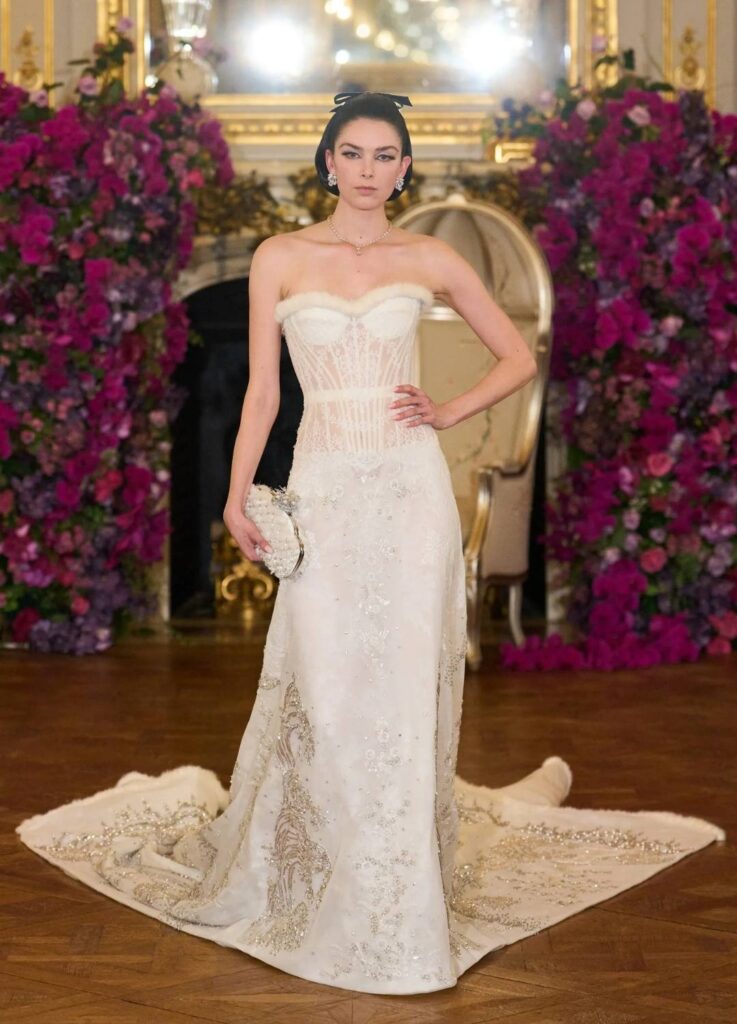
Miss Sohee’s Spring 2026 Couture collection offers a clear explanation of why the house continues to earn sustained trust within the Middle Eastern and global high-end couture markets.
Rather than pursuing spectacle, the collection focuses on balance—between ornament and structure, visibility and restraint, emotion and control.
From bridal to eveningwear, and from architectural embellishment to measured presence, Spring 2026 positions couture not as excess, but as a carefully calibrated emotional framework.
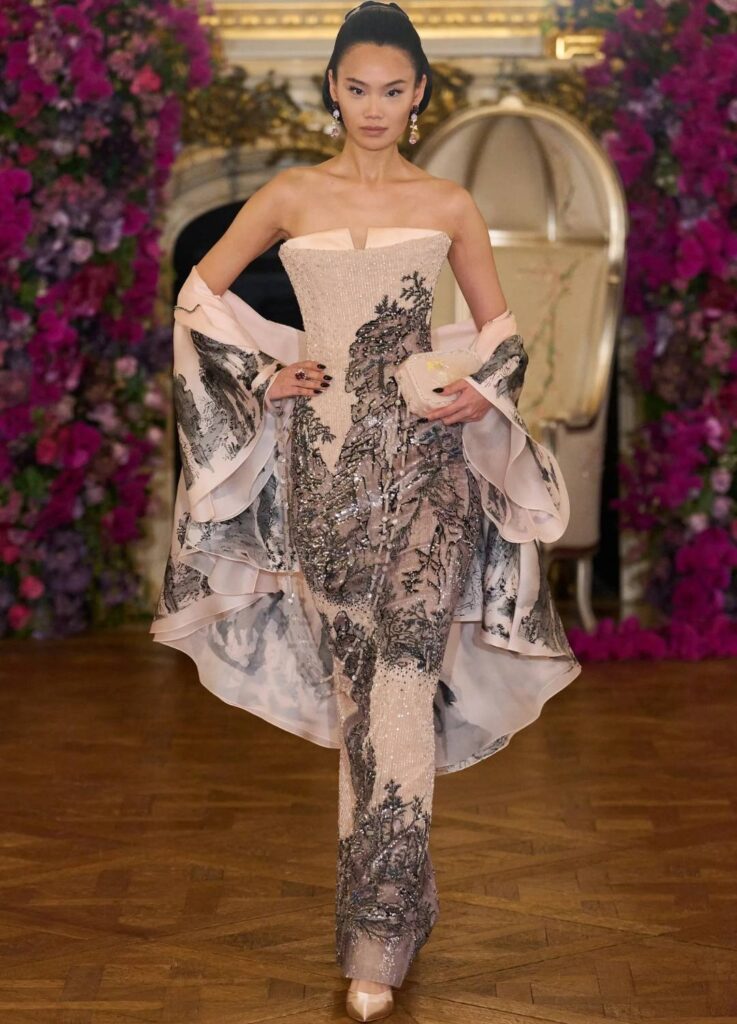
Windows, Gardens, and the Body
How Miss Sohee Redefines the Emotional Architecture of Couture
Couture has grown increasingly performative. Shows are louder, silhouettes larger, narratives more explicit.
Against this backdrop, Miss Sohee’s Spring 2026 Couture arrives at a different pace—and with a different density.
This collection does not introduce radically new silhouettes.
Instead, it asks a quieter, more enduring question: Can couture still function as a vessel for emotion, without relying on spectacle?
The answer, here, is delivered through structure.
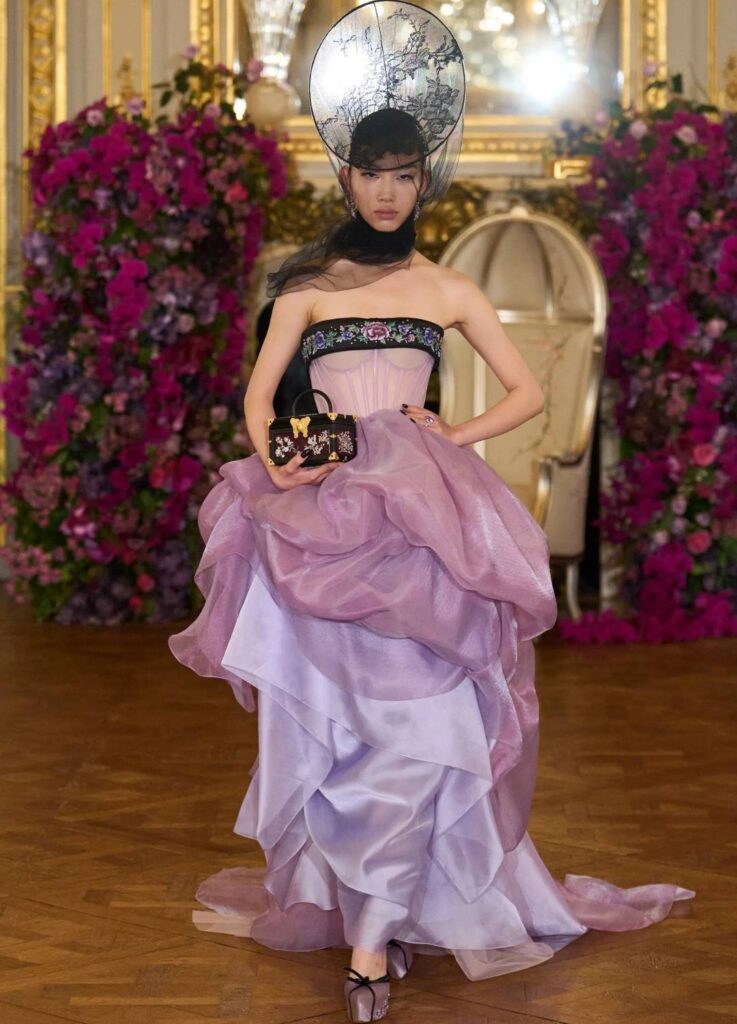
The Designer’s Language: Framing Rather Than Display
Sohee Park is often described as a bridge between Eastern sensitivity and Western couture tradition. While not inaccurate, this framing oversimplifies her work.
Her true focus is not cultural ornamentation, but the architecture of looking.
What is revealed.
What is concealed.
Where emotion begins on the body.
Spring 2026 Couture is constructed around the concept of the window—not as decoration, but as a structural idea.
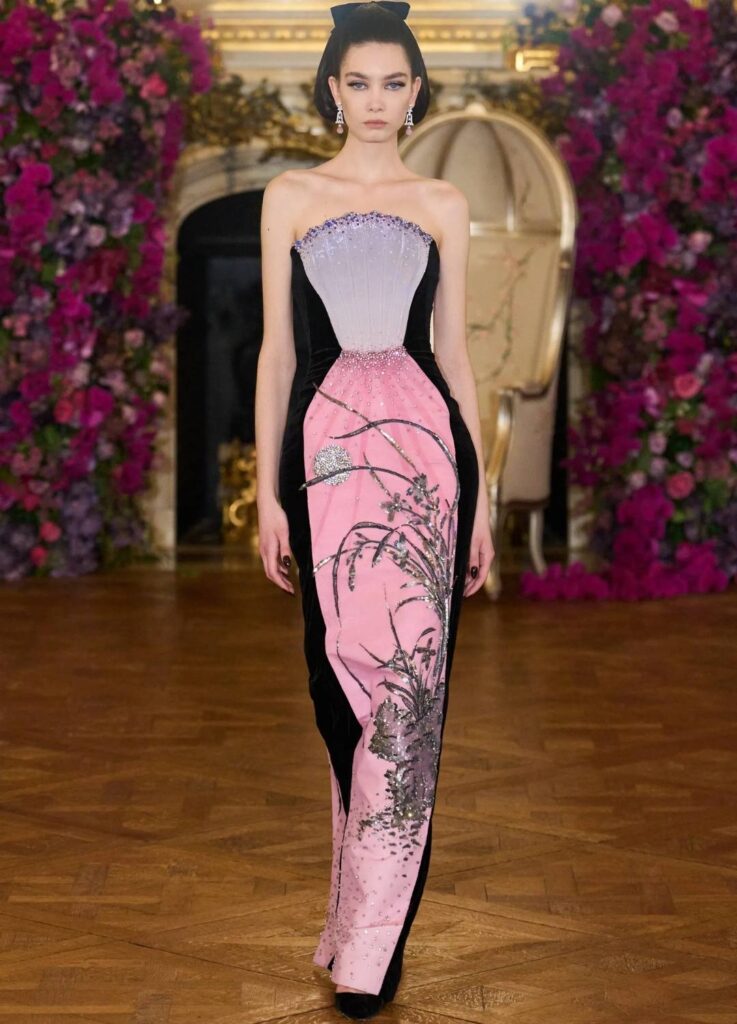
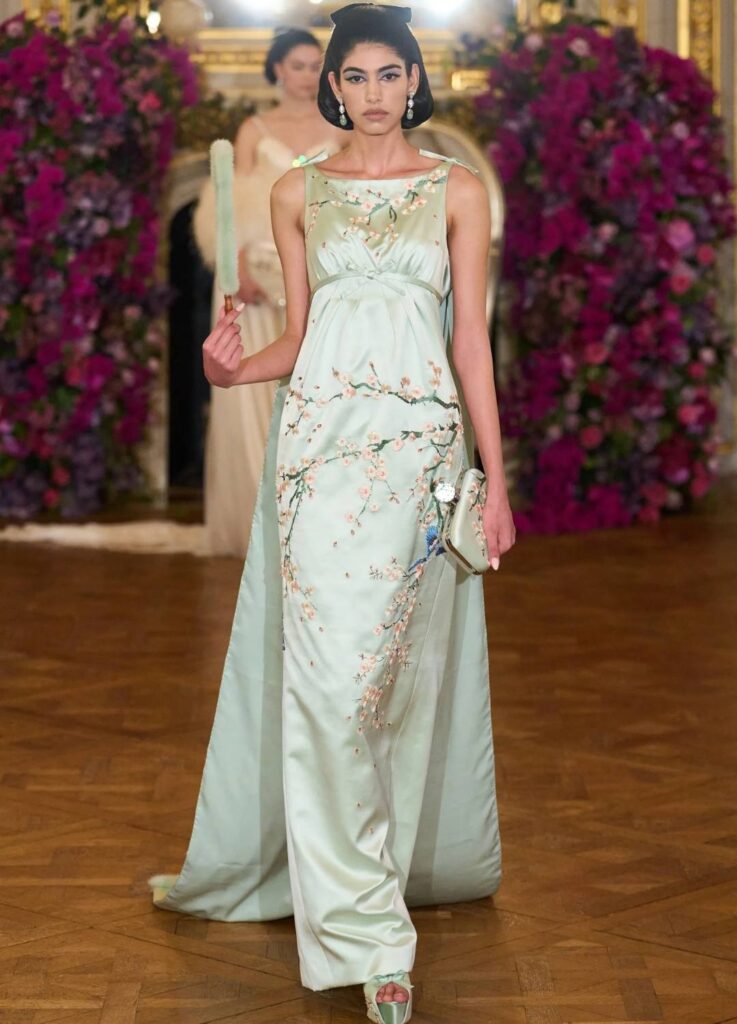
As noted in Vogue, the starting point for this collection was neither Versailles nor a historic salon, but a window in a summer house overlooking the southern sea of Korea. Through it: wisteria in bloom, bamboo shifting in the wind, the slow movement of seasons. These moments, photographed over time by the designer’s mother, became the emotional origin of the collection.
Importantly, the collection does not attempt to reproduce nature.
It translates the act of observing nature into couture structure.
Silhouettes as Frames for Landscape
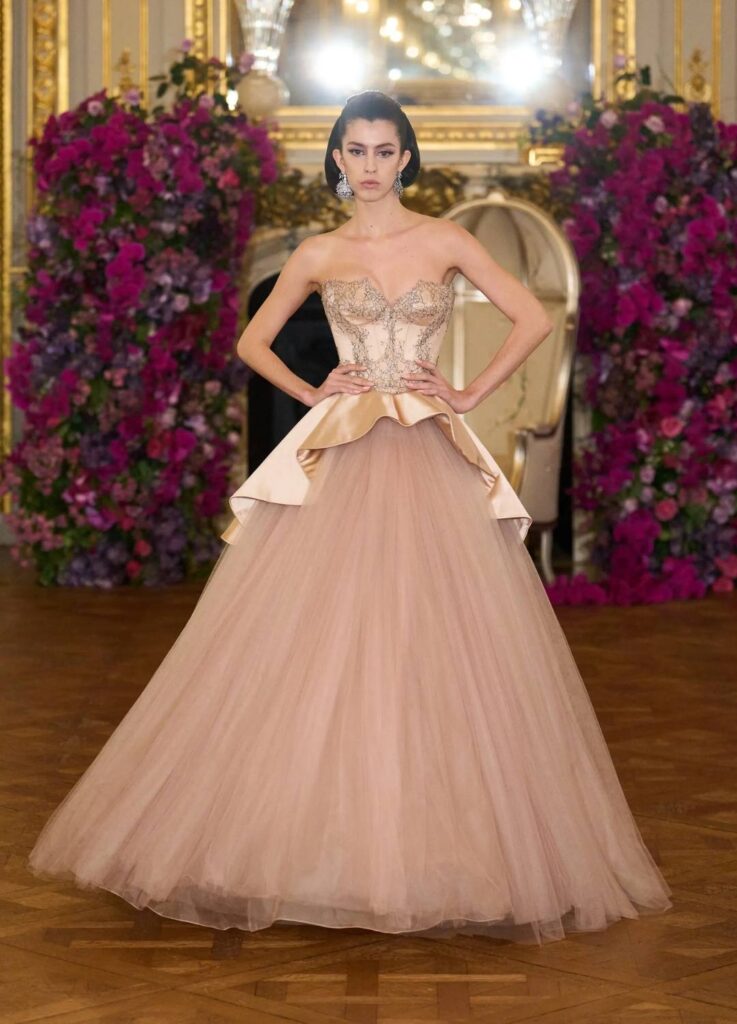
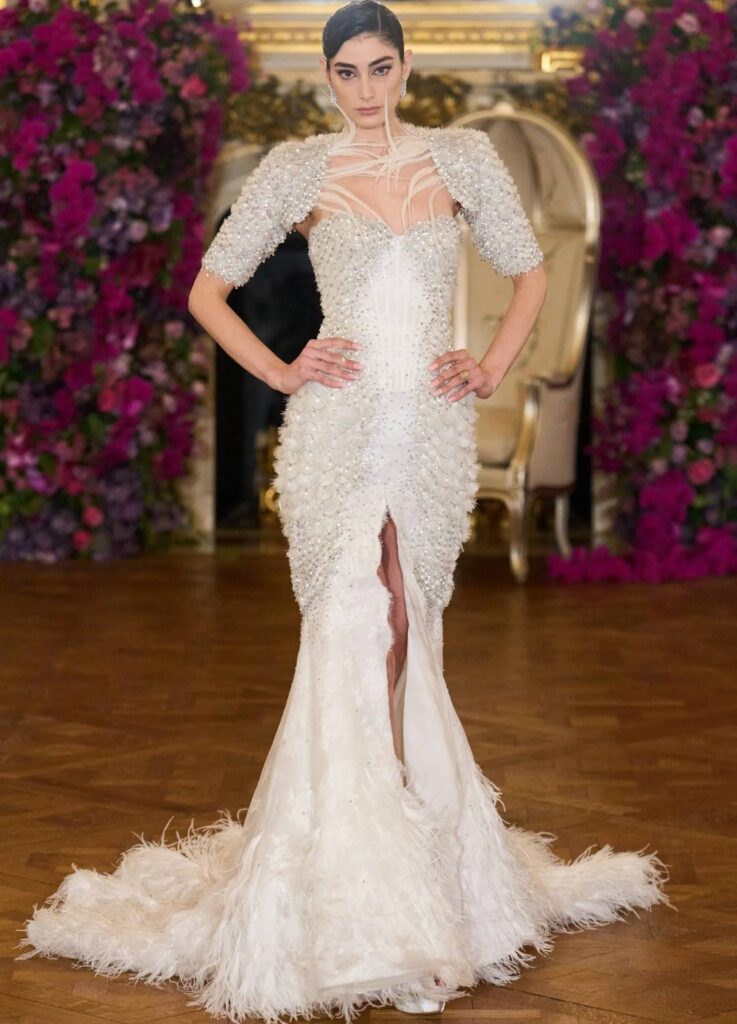
Miss Sohee’s signature corsetry remains central, but its purpose has evolved.
Here, the corset does not sculpt for control—it frames.
Mountain ridgelines.
The curve of orchids.
Gradations of sky at dusk.
These references appear not as literal motifs, but as spatial arrangements across the body. Embroidery functions less as decoration than as coordinates for the viewer’s gaze. Dresses become architectural devices—structures that allow landscape to be perceived through the human form.
In this sense, the garments operate less as “worn objects” and more as constructed viewpoints.
Restraint at the Edge of Excess
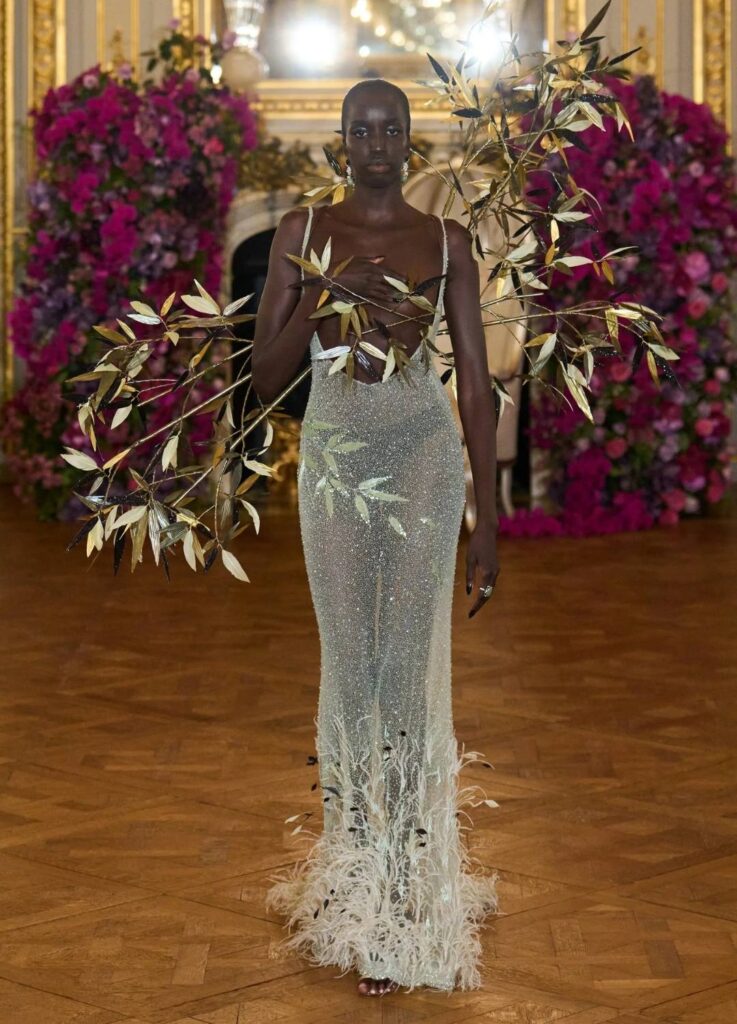
Spring 2026 includes elements that could easily tip into excess:
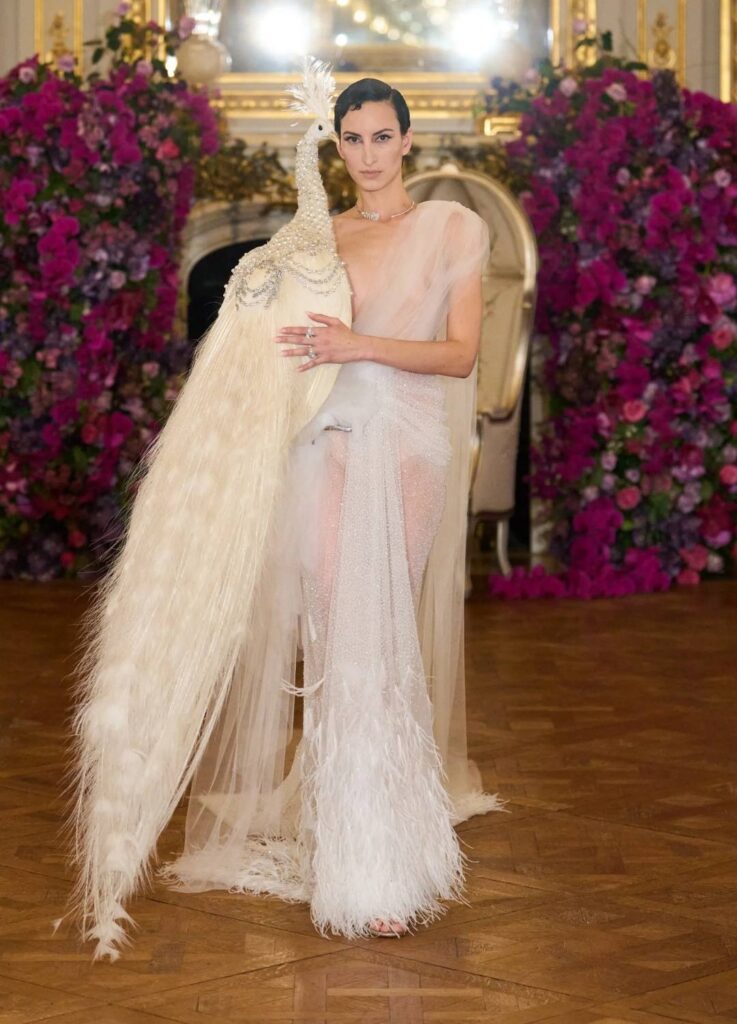
brass structures recalling bamboo, sculptural cherry blossom eruptions, even a model carrying a taxidermied albino peacock.
Yet the collection never collapses into kitsch. The reason is structural discipline.
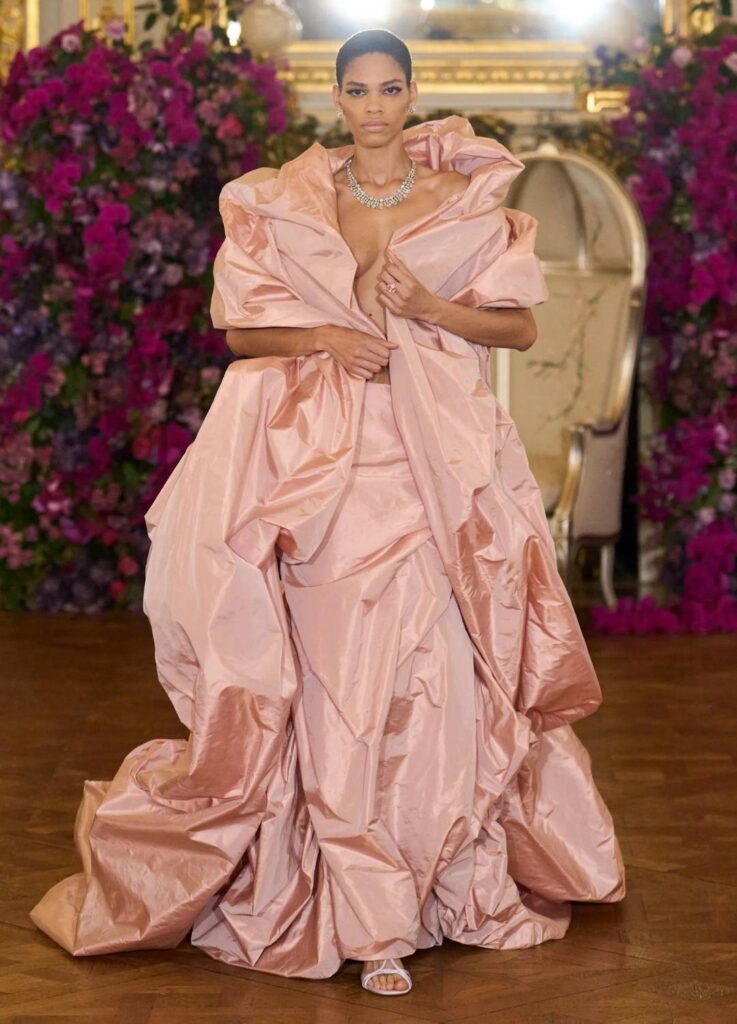
Every embellishment follows the internal logic of the silhouette. Nothing operates independently. Ornament is aligned with the body’s center line, waist axis, and walking rhythm. Movement, not spectacle, governs placement.
Miss Sohee’s couture does not tell a story.
It constructs emotion through design logic.
Bridal: Dressing Emotion, Not Ceremony
The bridal segment drew particular attention—and for good reason.
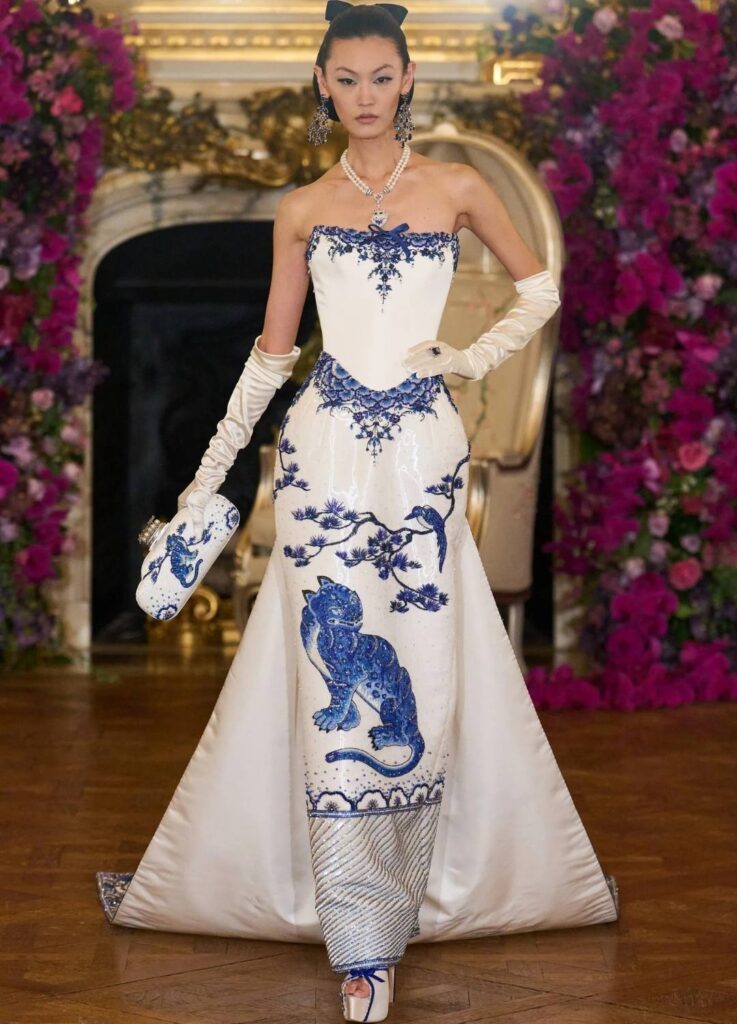
While many couture shows concluded with brides, Miss Sohee’s approach diverged. Her bridal looks do not position wedding dresses as sacred relics, but as garments designed to be felt.
Hooded veils inspired by traditional Korean head coverings.
Embroidery echoing ocean waves.
Sheer silks layered with Swarovski crystals.
These dresses resist nostalgia. In a Vogue interview, Park noted that contemporary brides are uninterested in wearing their mother’s dress. This is not generational rebellion—it signals a shift in how marriage itself is emotionally framed.
Miss Sohee does not reenact tradition.
She translates it into contemporary emotional language.
“Designing for Women” as Structural Practice
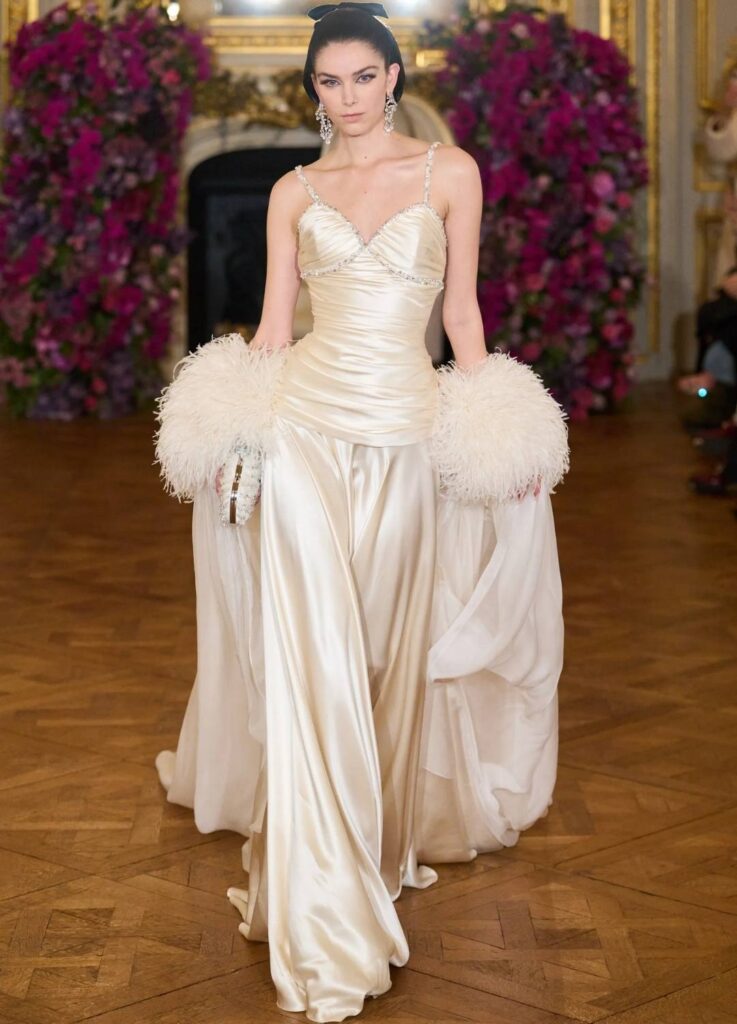
Many designers claim to design for women. In Miss Sohee’s case, the phrase carries tangible meaning.
Her work demonstrates a precise understanding of:
– where emphasis creates comfort,
– where concealment builds confidence,
– how strong structure can still appear light.
Rather than idealizing the female body, her couture respects how women inhabit their own bodies. The result is a delicate equilibrium—between dream and wearability, form and feeling—maintained without collapse.
Why Miss Sohee Resonates with the Middle Eastern and Global High-End Market
Miss Sohee’s growing influence across Middle Eastern and international couture clientele is not driven by surface glamour. It is structural.
First, ornament and meaning are aligned.
High-end Middle Eastern clients value embellishment—but not randomness. Miss Sohee’s embroidery, crystal work, and metal elements are integral to silhouette construction. This resonates with audiences deeply familiar with high jewelry, where value lies in structure as much as brilliance.
Second, her vision of femininity is based on presence, not exposure.
Her dresses command attention through balance—of shoulders, waist tension, and neckline—rather than overt sensuality. This controlled authority aligns closely with the aesthetic preferences of elite Middle Eastern women.
Third, cultural reference is handled obliquely.
Rather than literal motifs, Park works with universal concepts—time, ritual, landscape—translated through texture and form. This leaves interpretive space for diverse cultural contexts, a key factor in global luxury resonance.
Fourth, bridal and eveningwear are clearly differentiated.
Miss Sohee treats bridal not as an extension of eveningwear, but as its own emotional architecture. For made-to-order couture clients, this distinction is critical.
Finally, her couture prioritizes longevity over momentary impact.
These are garments designed to retain meaning over time—objects intended to be remembered, archived, and inherited. This aligns with the values of clients who view couture as legacy rather than trend.
Miss Sohee does not sell spectacle.
She designs understood structure and respected emotion.
What Spring 2026 Couture Leaves Behind
Spring 2026 Couture can be summarized simply:
Couture can still function as a frame through which we see the world.
There is no escapism here. No exaggerated fantasy.
Instead, there is a window—placed carefully between body and landscape.
And what appears through that window is not loud, but enduring.
With this collection, Miss Sohee returns couture to its core function:
a structure capable of holding emotion.
It may move more slowly than trends,
but it remains where memory lingers longest.
All images referenced in this post are drawn from Vogue Runway.
[ Related Editorials ]