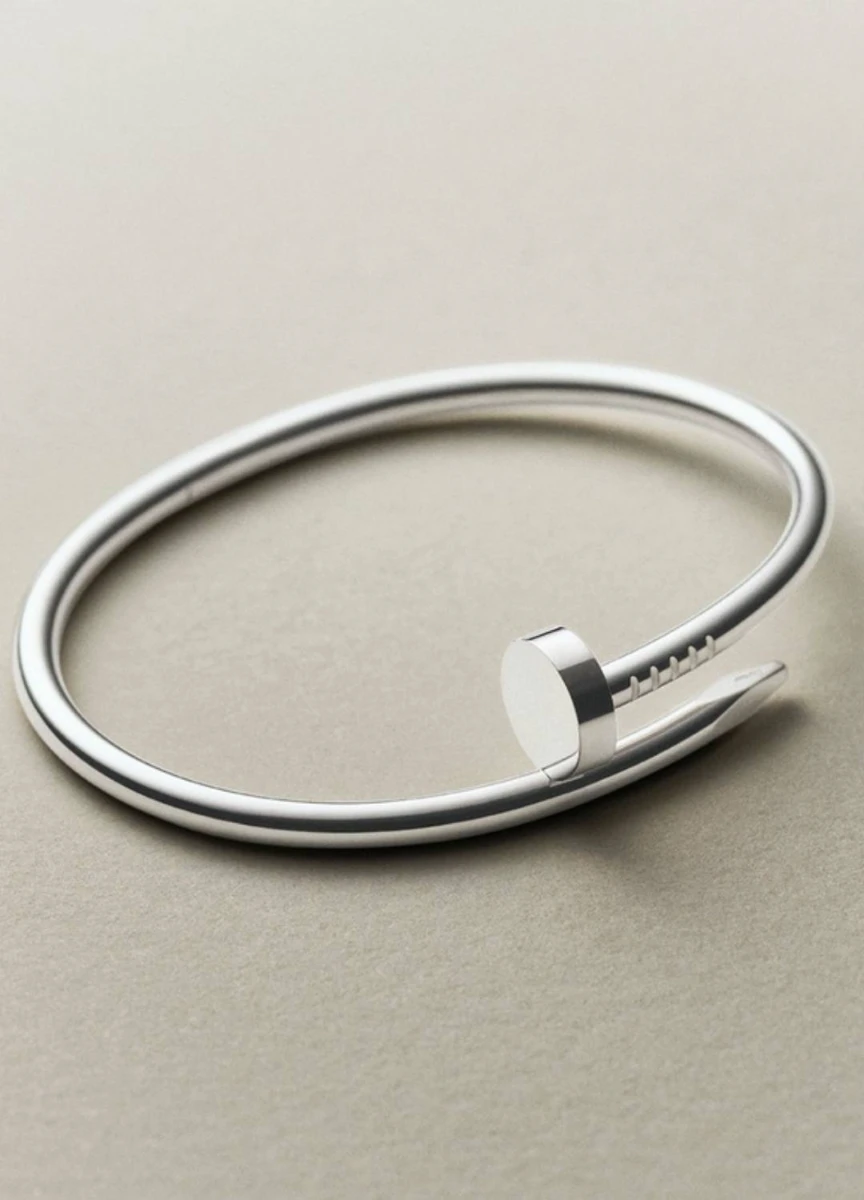
Why Gold Bangles Deserve a Closer Look
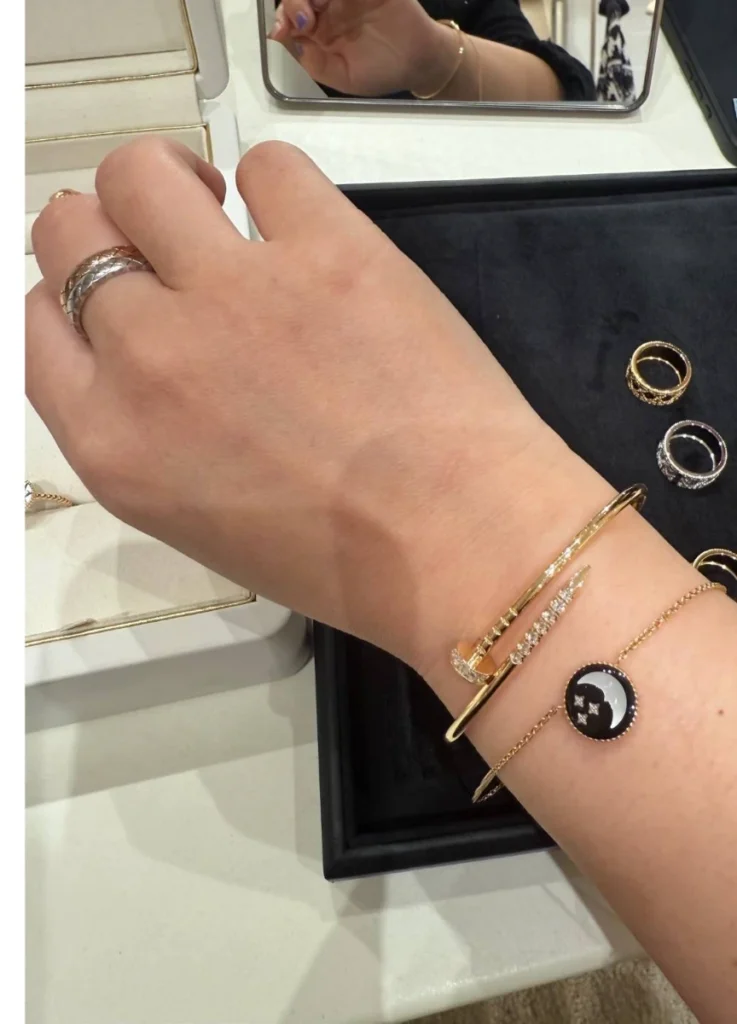
photograph by Lumie
I write about jewelry mostly from the angle of structure and how a piece reads on the body. This essay sits a little closer to the practical side.
In 2025, gold no longer behaves like a simple commodity.
It has become central to emerging-market currency strategy. It’s a private hedge against everything else moving sideways. And, less often discussed, it’s the material around which the major jewelry houses are quietly rebuilding their core lines.
These three movements are often treated separately, but they converge.

The End of Convenient Gold
Roughly 200,000 metric tons of gold have been pulled out of the ground over the course of human history. Of what remains, somewhere around 50,000 tons is considered economically extractable at current technology and price levels. At the rate the industry is operating, most major mining reports converge on a 15 to 20-year window before the surface-accessible portion is effectively depleted.
There is gold in the ocean. Pulling out a single gram costs millions of dollars at present.
There is gold in asteroids. Commercial circulation from those sources is decades away, at minimum.
This places us in a very specific moment: the people buying physical gold today may be among the last to acquire it before most of the remaining supply moves into financial instruments — ETFs, central bank vaults, tokenized derivatives — and out of personal hands.
It’s a context for thinking about what kind of jewelry is worth owning right now.

Why Gold Weight Has Moved Ahead of Diamonds in My Selection
Long-time readers of this blog know I’m a pavé person. Given an unrestricted budget, the calculation tends to land in favor of stones — the visual work of pavé does something solid metal can’t.
Within a constrained budget, the answer has shifted.
For bangle purchases over the last year or two, I’ve been prioritizing pieces with high gold content over pieces with diamond density — assuming the design works on me, which is a non-negotiable.
The shift is structural rather than aesthetic.
Diamonds now function as complicated assets. Stones under a carat lose valuation clarity quickly without certification. Resale haircuts are steep across the board. Lab-grown diamond pricing has compressed the natural-diamond market further than most consumers realize, and the discount continues to widen.
Gold doesn’t have those problems. It trades daily at transparent global spot prices. Its value reads through purity and weight alone. It stays liquid regardless of which house’s box it came in.
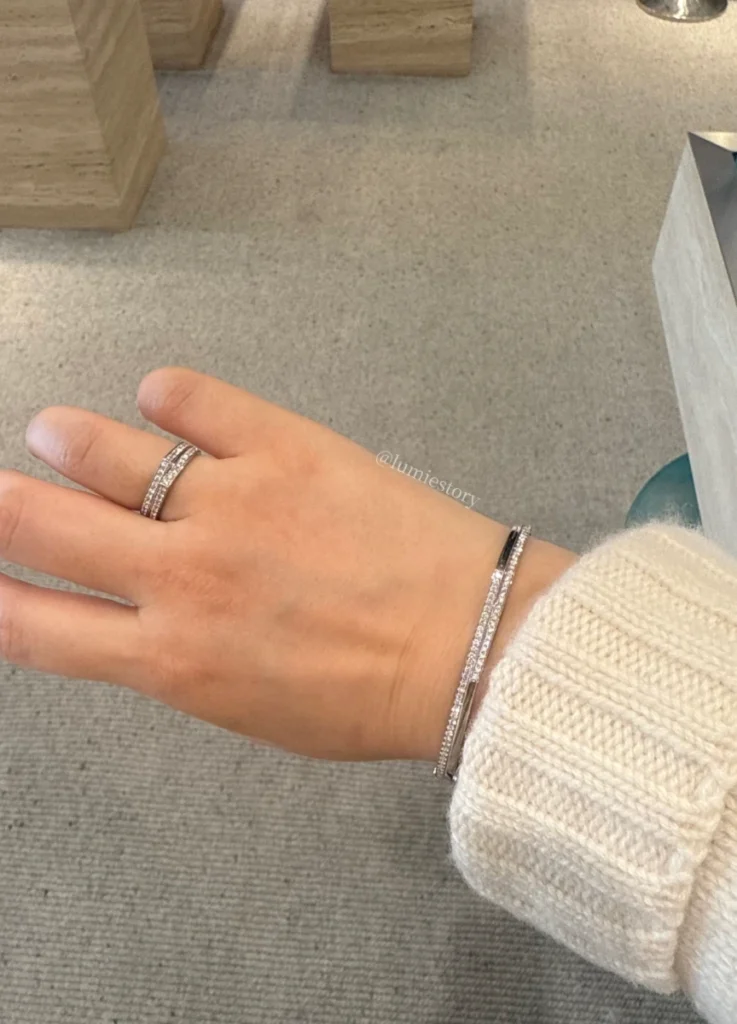
photograph by Lumie
What confirms this is what the houses are doing. Bold rings, solid bangles, uninterrupted chains — designs where gold itself does the visual work, with no diamond support required. The houses are absorbing rising gold costs partly by reducing their reliance on diamonds. Material strategy has become aesthetic language, and that language reads cleanly on the wrist.
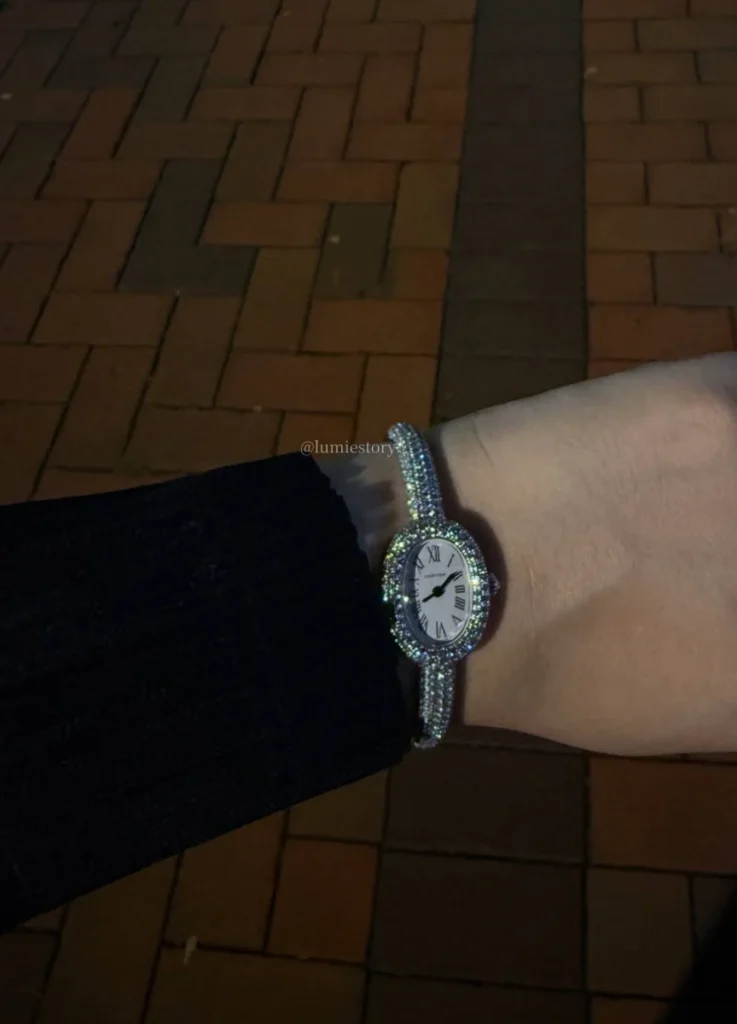
photograph by Lumie
What Central Banks and Luxury Houses Are Doing in Parallel
The clearest signal is convergence.
Between 2022 and 2024, global central bank gold purchases hit their highest levels in modern record-keeping. China, Russia, India, and Turkey have led that accumulation, treating gold as a counterweight to dollar exposure.
The same window saw the major jewelry houses reposition gold as their primary structural material. Chanel, Cartier, Boucheron, Van Cleef & Arpels — all expanded collections built around solid bangles and metal-forward construction. Not as seasonal capsules. As reinforced core lines.
This isn’t trend alignment. The two movements have different motivations — sovereign reserves and luxury design — but they share an underlying read on gold’s trajectory. Material revaluation has translated into form.
When I see Van Cleef releasing more solid Perlée variants and Boucheron bringing the Quatre back into rotation, I take it as the same signal central bank governors are reading from a different chair.
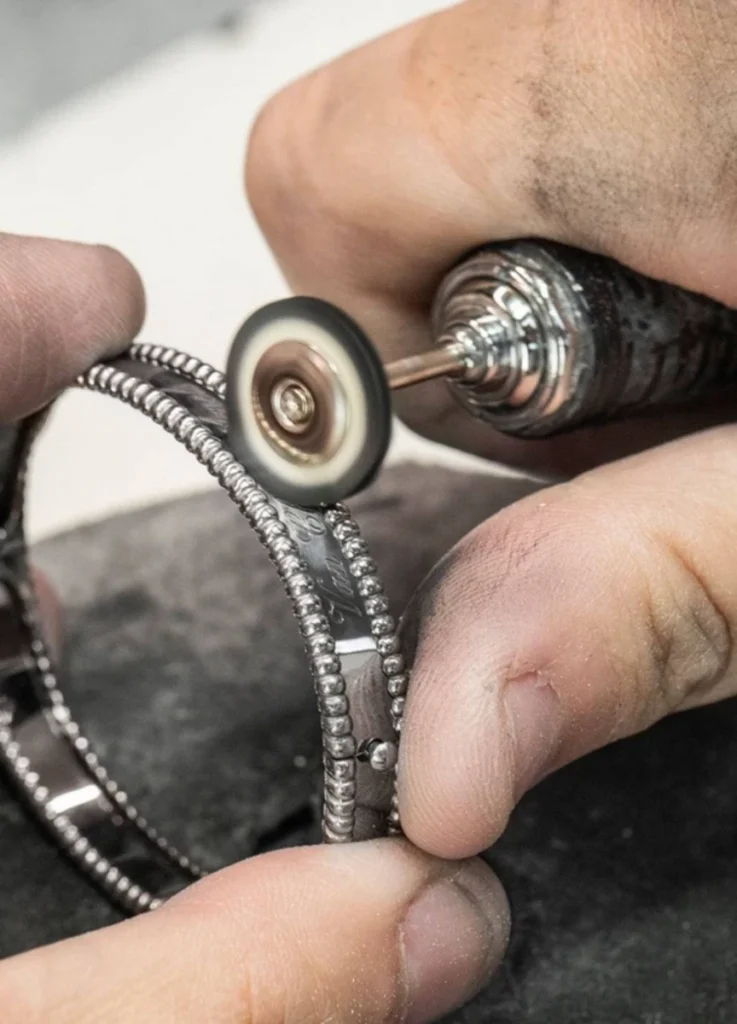
Why the Bangle Is the Strategic Place to Start
There are four reasons the bangle now sits at the top of the list.
First, gold density. A bangle consumes meaningfully more gold than a chain or an articulated piece. On a weight-to-value basis, the bangle converts capital into material mass more directly than almost any other jewelry form. As access to physical gold narrows, that conversion becomes harder to replicate.
Second, structural completeness. The iconic bangles — Cartier Love and Juste un Clou, Chanel Coco Crush, Boucheron Quatre and Serpent Bohème, Van Cleef Perlée — are designed to read as complete without stones. The geometry holds on its own. Diamonds, where they appear in these lines, function as variation rather than as load-bearing structure.
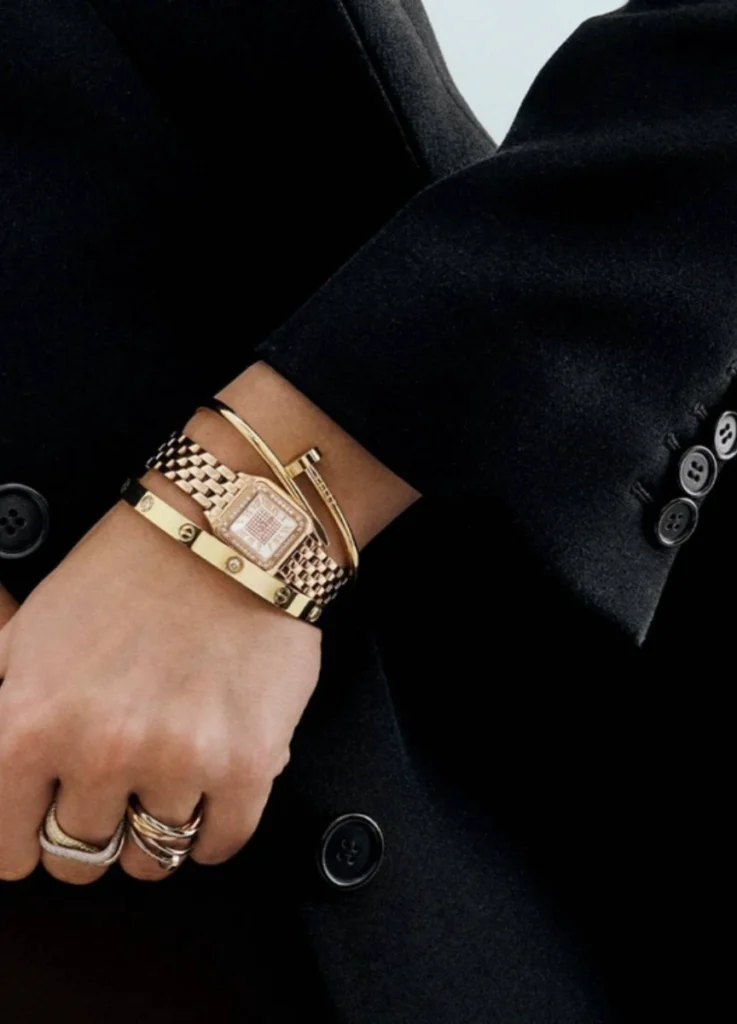
Third, daily wearability without visual interference. The wrist is the most open visual field on the body. A bangle adds weight and presence without competing with the face or the silhouette. Necklaces and earrings sit in a more demanding territory; the bangle anchors a look without asking the rest of the styling to react to it.
Fourth, layering potential over time. A single bangle today doesn’t close the collection. It opens it. The compatibility of a well-chosen bangle with future additions — same house, different house, different metal — extends both the practical use and the archival value of the piece.
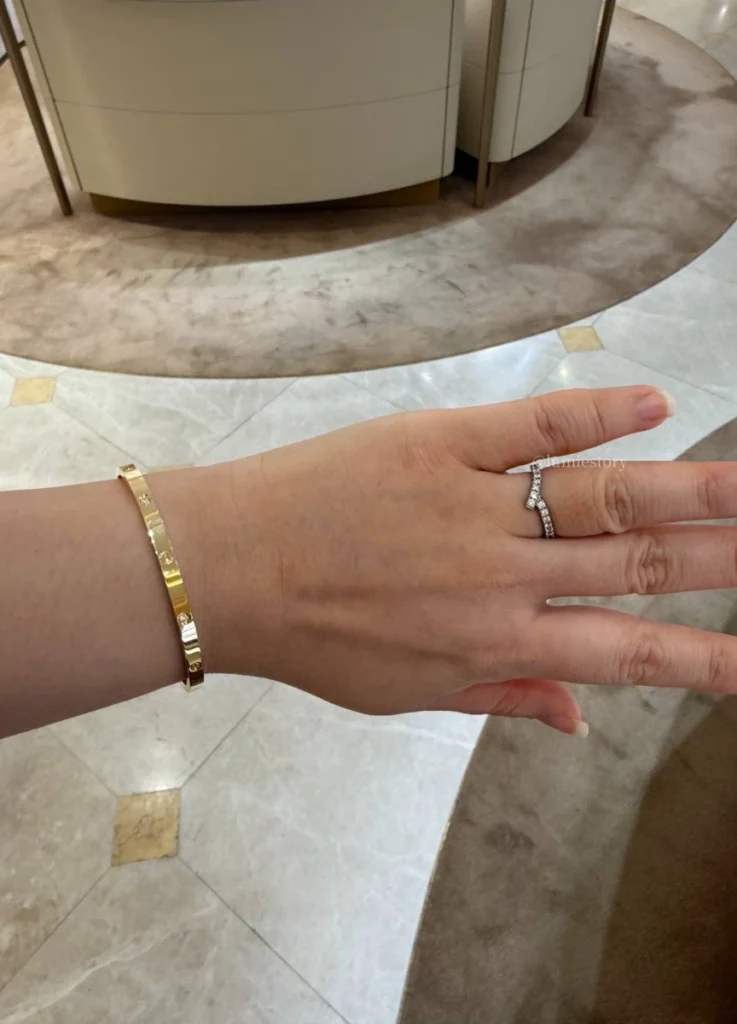
photograph by Lumie
Collecting Jewelry as a Decision About Time
Building a jewelry collection right now isn’t really about accumulation. It’s a quieter decision about which form of permanence to accept.
Gold continues to circulate every day, but the kind of gold you can see, hold, and live alongside is becoming a smaller share of the total. The future of gold is sitting in ETFs, in tokenized form, and in vaults few people will ever enter.
A bangle is outside that system.
It sits on the wrist. It records time through wear. It turns scarcity into something present rather than abstract.
To put it less dramatically: choosing a gold bangle now is less about adornment and more about positioning at the close of one material era and the opening of another. A specific kind of object, owned at a specific moment in the supply cycle, with the design completeness to outlast the moment.
That transition usually starts quietly. Often with a single, well-chosen piece.
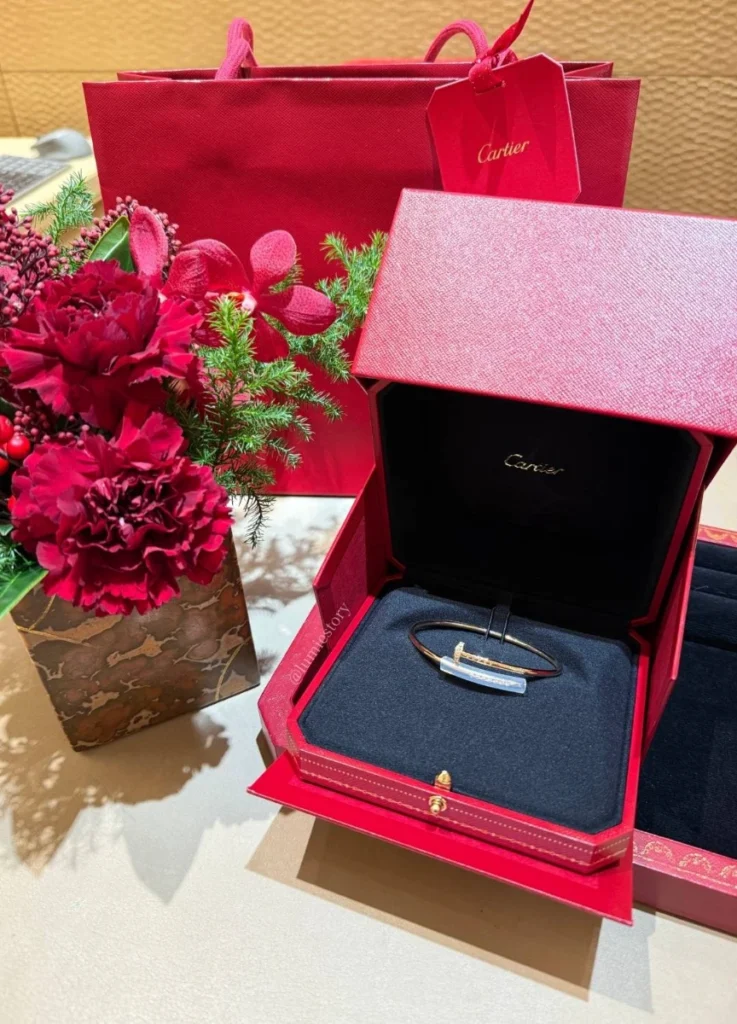
photograph by Lumie
Featured Image via @cartier / Instagram
[ Related Editorials ]