Inside Chanel Spring/Summer 2026
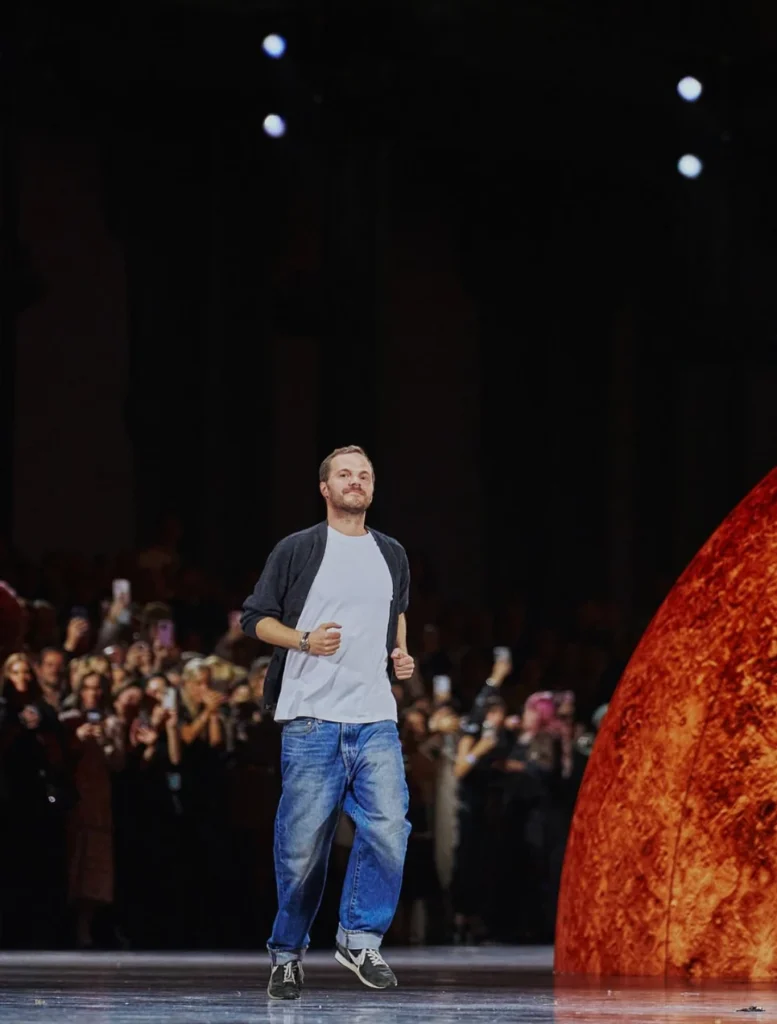
Matthieu Blazy presented his first Chanel ready-to-wear collection on October 7, 2025, at the Grand Palais. The collection landed closer to a full reset than to a recalibration.
The familiar warmth Chanel has carried for decades — the soft femininity, the emotional polish — was deliberately stripped back. In its place, Blazy installed something colder and more structural. Texture moved into the lead, while shape carried more of the expressive work.
Reaction has been sharply divided. Some are reading the show as the start of an identity crisis. Others are reading it as the necessary work of a designer recalibrating a heavy archive.
I’ll be honest: I’m still working out what I think.
Here’s how I read the eight looks that anchored the collection, what Blazy seems to be doing with Chanel’s grammar, and where the unease in the early reception is coming from.
The Setting │ Where Form Replaces Sentiment
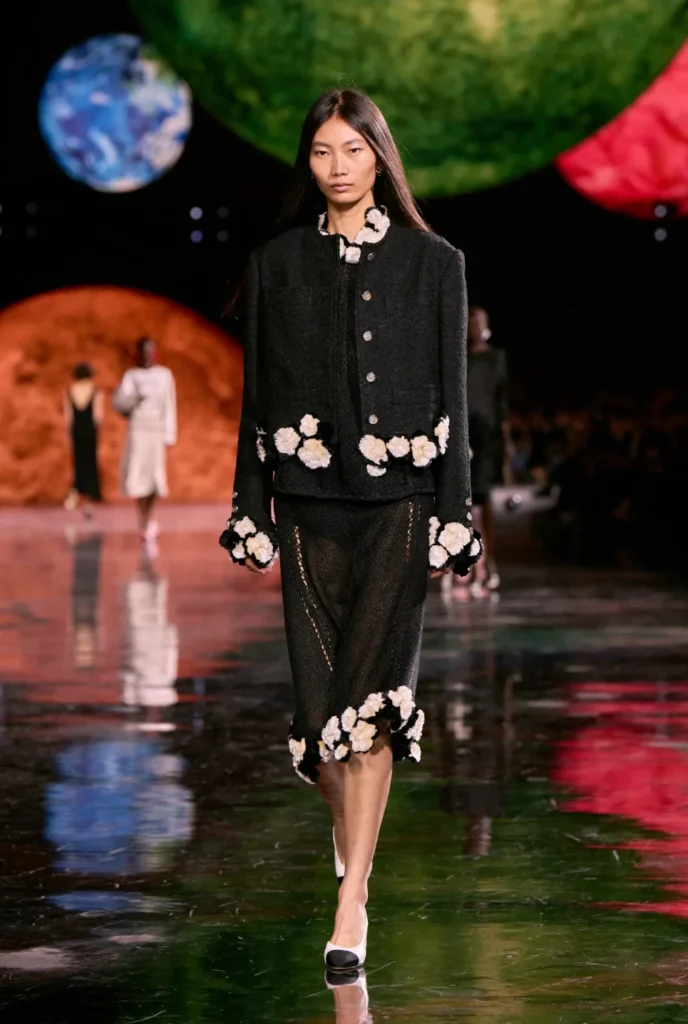
The show ran in the Grand Palais. Blazy’s staging stripped most of the warmth: matte metallic structures, reflective floor, controlled lighting. As models walked, the light traveled across surfaces and emphasized the silhouettes. The architecture was doing most of the work — texture sat in a supporting role.
Where Karl Lagerfeld’s Chanel built drama as performance, and Virginie Viard softened that into daily-wearable poetry, Blazy’s first show went somewhere else: structural tension across the space, structural rigor in the clothes, sentimentality kept deliberately out.
The impression is that Blazy sees the house as a system of balance and texture, and that’s what he wants to reset.
source: Vogue Runway
How This Reads Against Lagerfeld and Viard
It helps to read this debut against the two previous Chanel chapters.
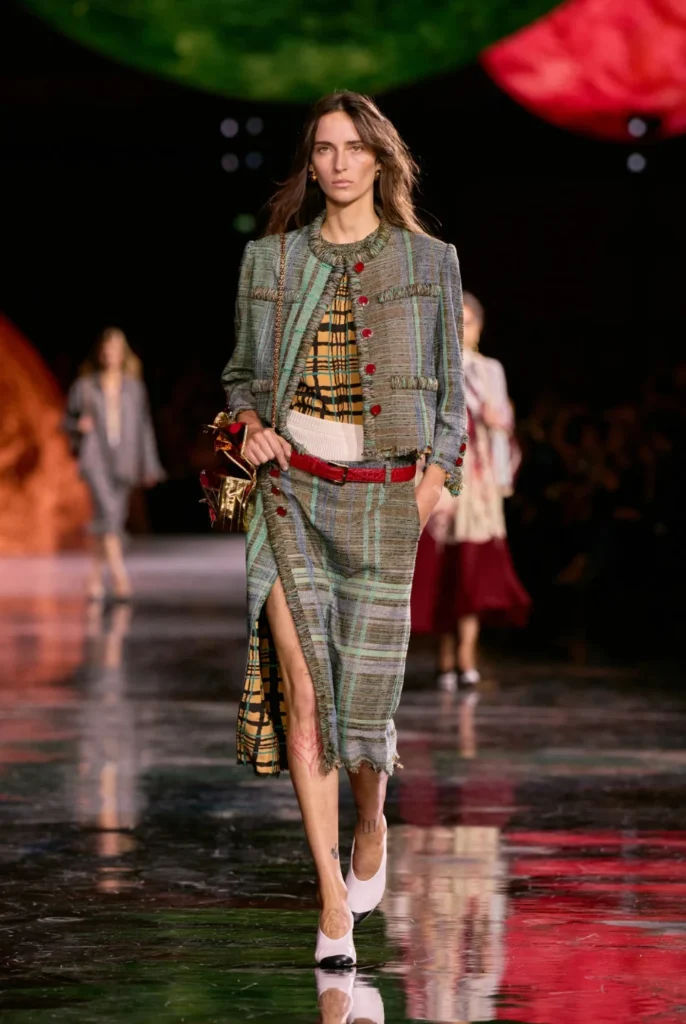
Karl Lagerfeld’s Chanel ran on energy. He treated tailoring like sculpture and turned the runway into theatre.
Virginie Viard pulled the temperature down. Her Chanel was poetry made for daily life — emotional, accessible, low on theatre.
source: Vogue Runway
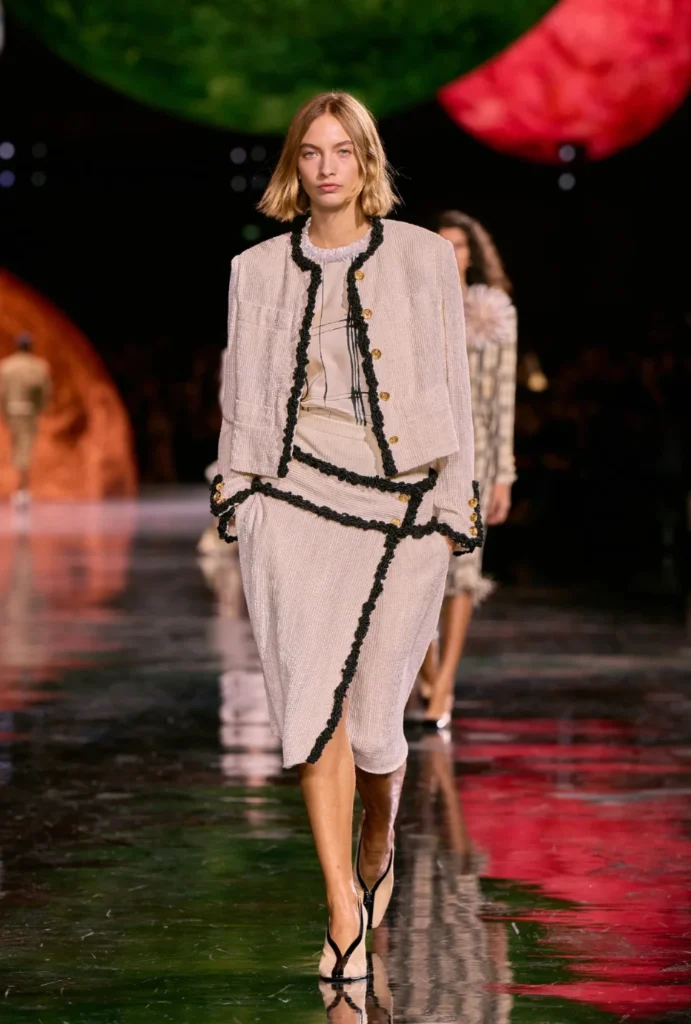
Blazy sits between them, but not in a comfortable middle. He appears less interested in emotional familiarity than in structural rigor. The structural shift hasn’t fully cleared every trace of warmth, but the priorities are clearly different. The result feels emotionally muted — there’s a clear gap where Chanel viewers might expect warmth.
Whether the gap fills in over the coming seasons is one of the questions this debut leaves open.
source: Vogue Runway
How the Clothes Behave │ Weight Redistributed
The biggest structural change this season is where the weight sits.
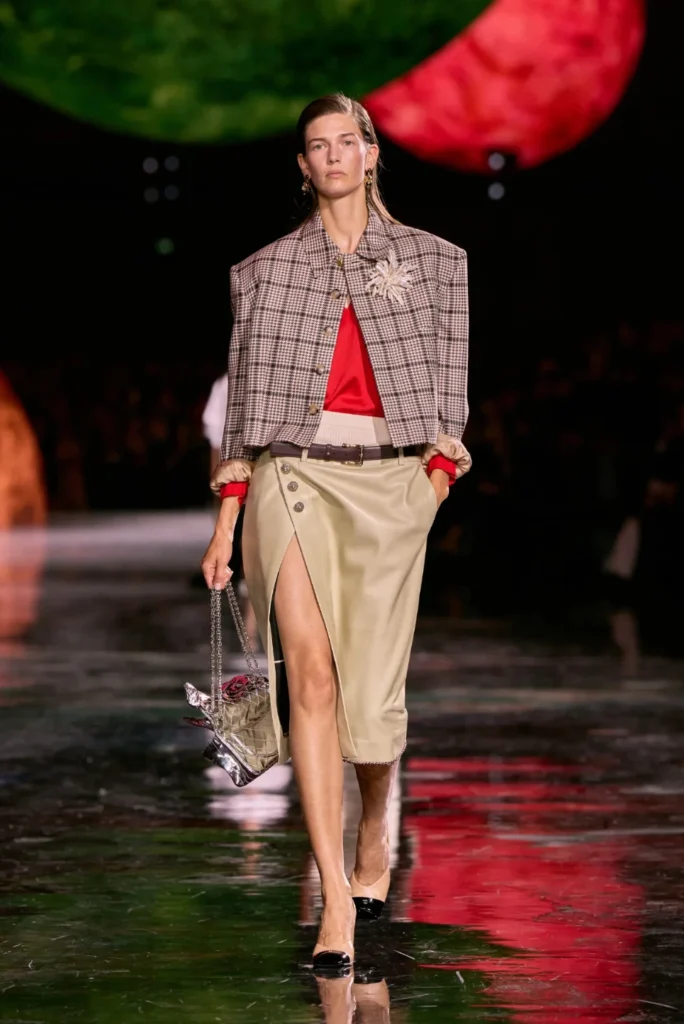
Earlier Chanel — both Lagerfeld and Viard — concentrated visual weight in the upper body. Tweed jackets, shoulder lines, neckline detail, brooches and pearls drew the eye to the chest and shoulders.
source: Vogue Runway
Blazy moved the weight downward. Waistlines drop. Skirts and trousers carry visual gravity. Shoulders sharpen and lock cleanly. The proportions read closer to architecture, with couture’s softness pulled back.
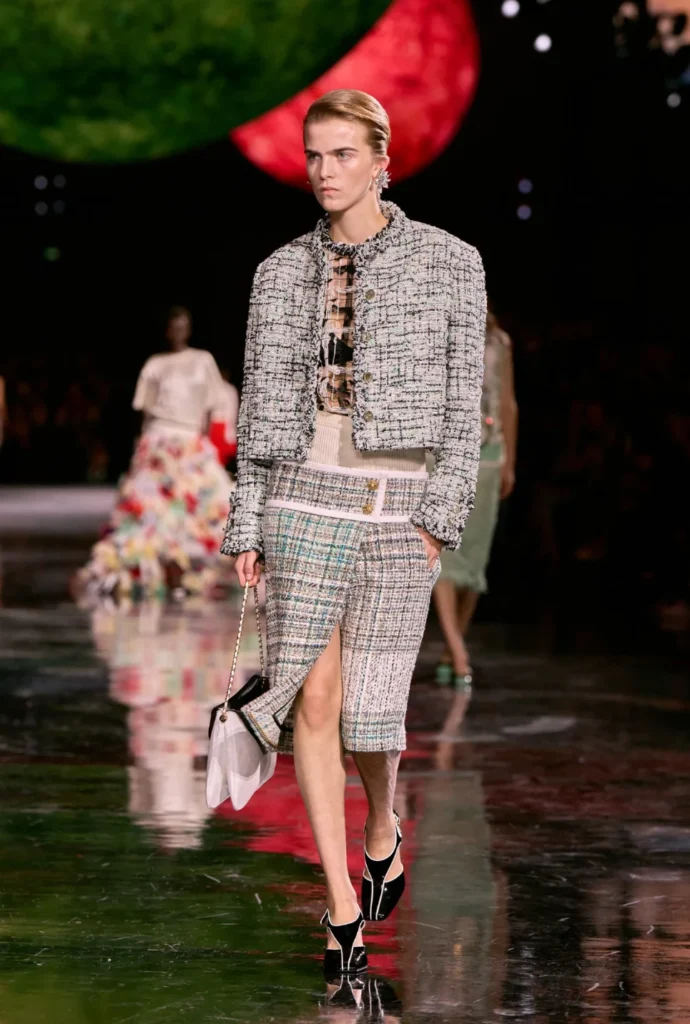
Material choices reinforce the shift. Tweed stepped back. Leather and satin took the weight, and Blazy chose matte finishes — light gets absorbed at the surface, with reflection minimized. The silhouette stays defined even when the body moves.
source: Vogue Runway
The classic feminine softness Chanel has been associated with — ribbons, pearls, decorative trims, the codes that signaled “Chanel” within seconds — was almost completely cleared. Even the color vocabulary lost its softness.
The collection suggests a different kind of femininity, but it hasn’t fully taken shape yet — what’s in place for now is the underlying structure.
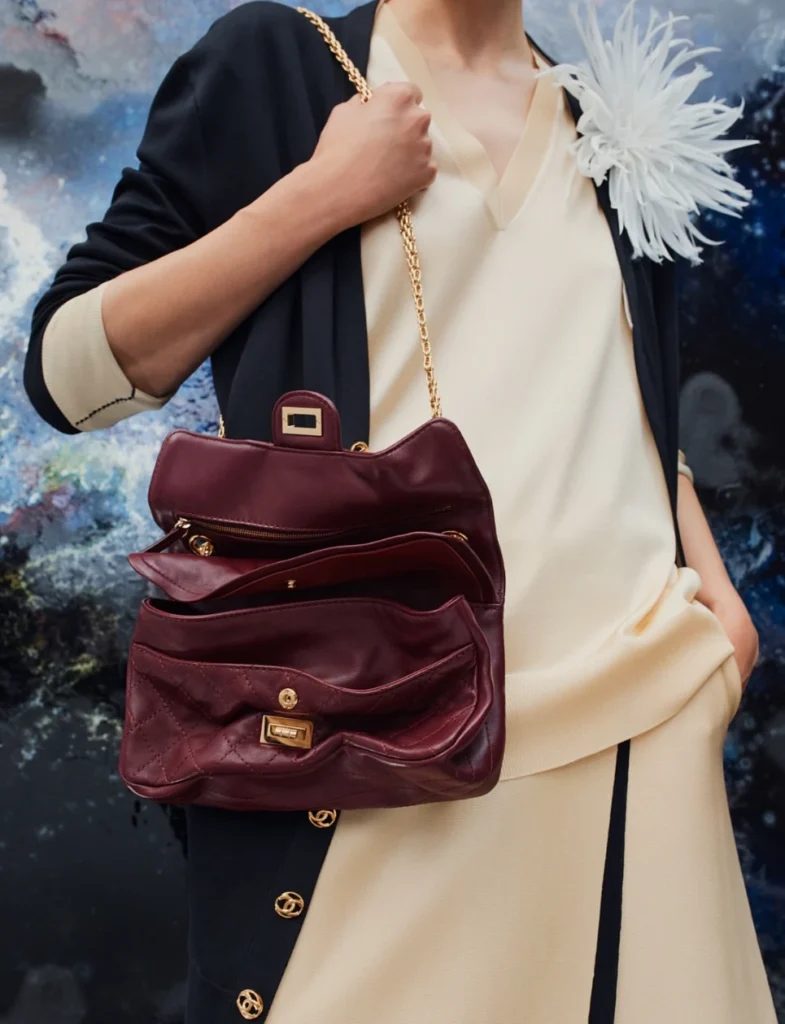
Eight Looks That Defined the Show
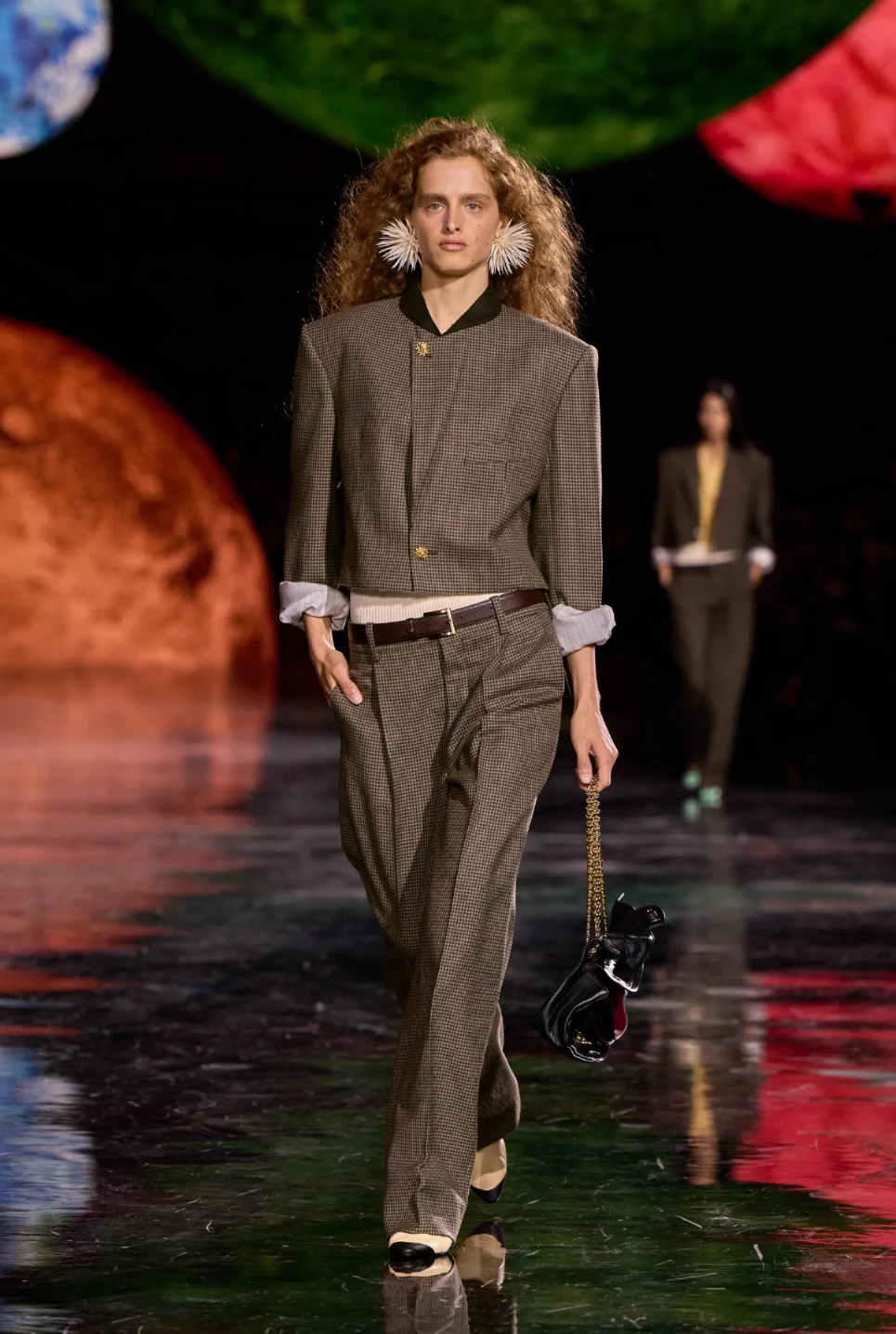
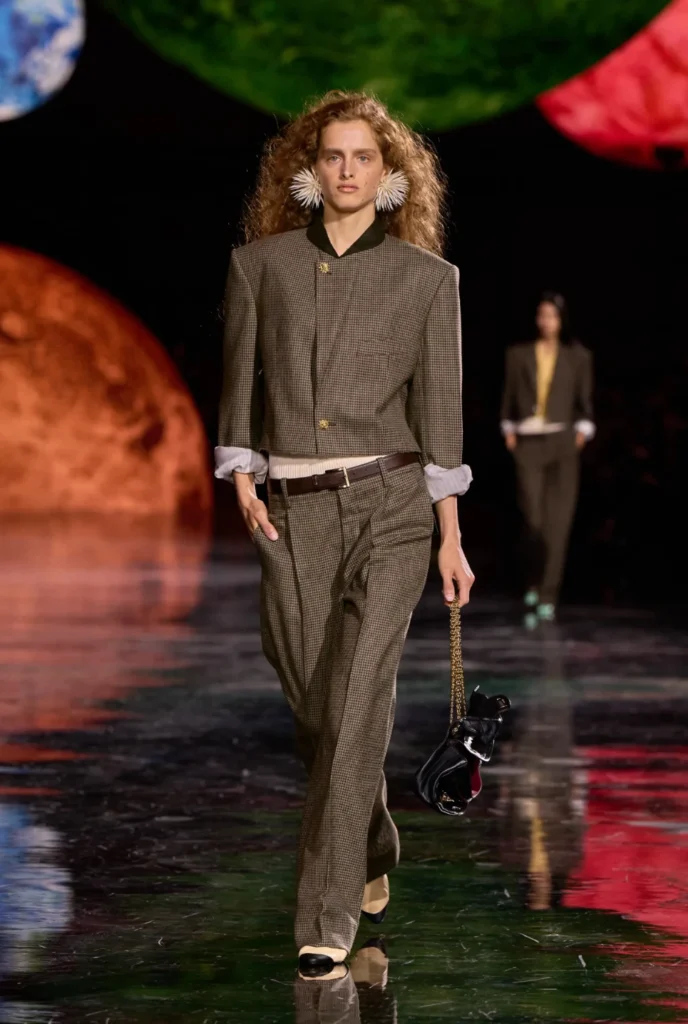
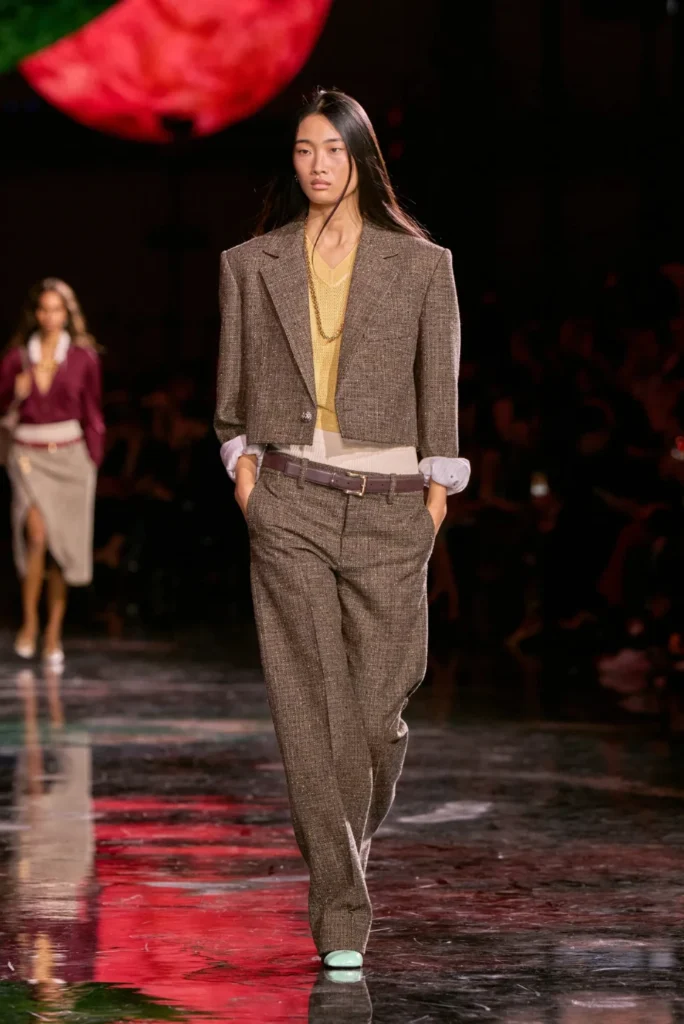
Cropped Jacket + Wide Trousers │ The Opening Statement
The opening laid out the show’s proportional argument early. Shoulders lock cleanly, the waistline drops, and the jacket sits cropped over wide trousers. The silhouette is decisive but unfamiliar — the visual center has moved away from where Chanel traditionally placed it.
On Asian or shorter-torso bodies, the dropped waist combined with cropped volume above can stretch proportions in unhelpful ways. Tailoring adjustment is the practical answer.
source: Vogue Runway
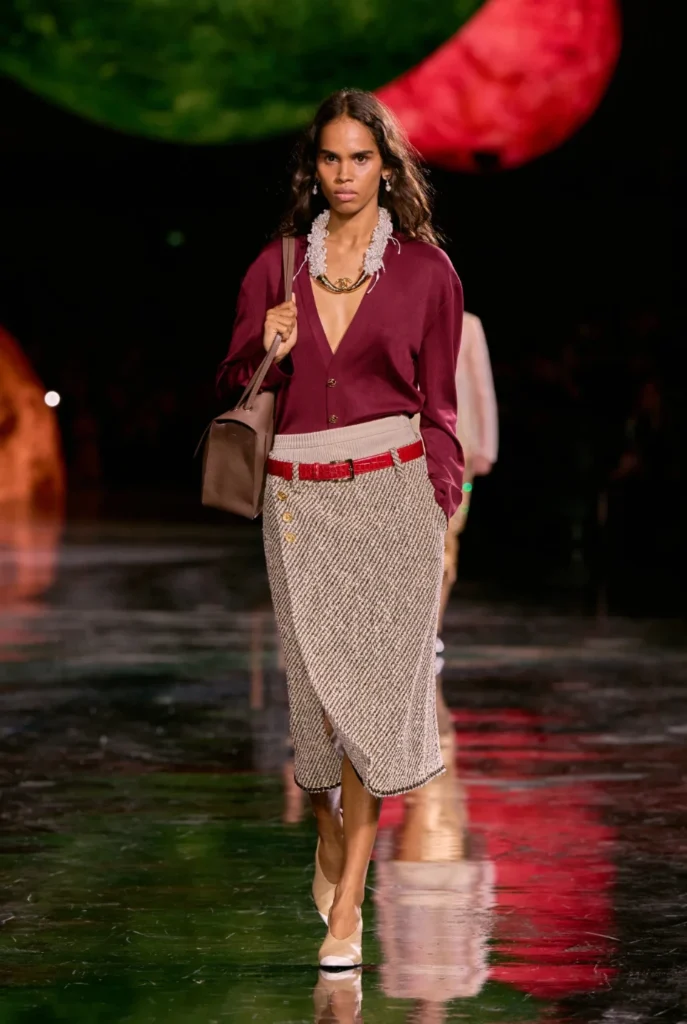
Burgundy Cardigan + Check Skirt │ Color as Rhythm
Color did rhythmic work here. Burgundy against check, with the movement coming through contrast.
Where Viard would have built warmth into the color relationship, Blazy stayed at calibration — the logic comes through, but the emotional warmth stays at a distance.
source: Vogue Runway
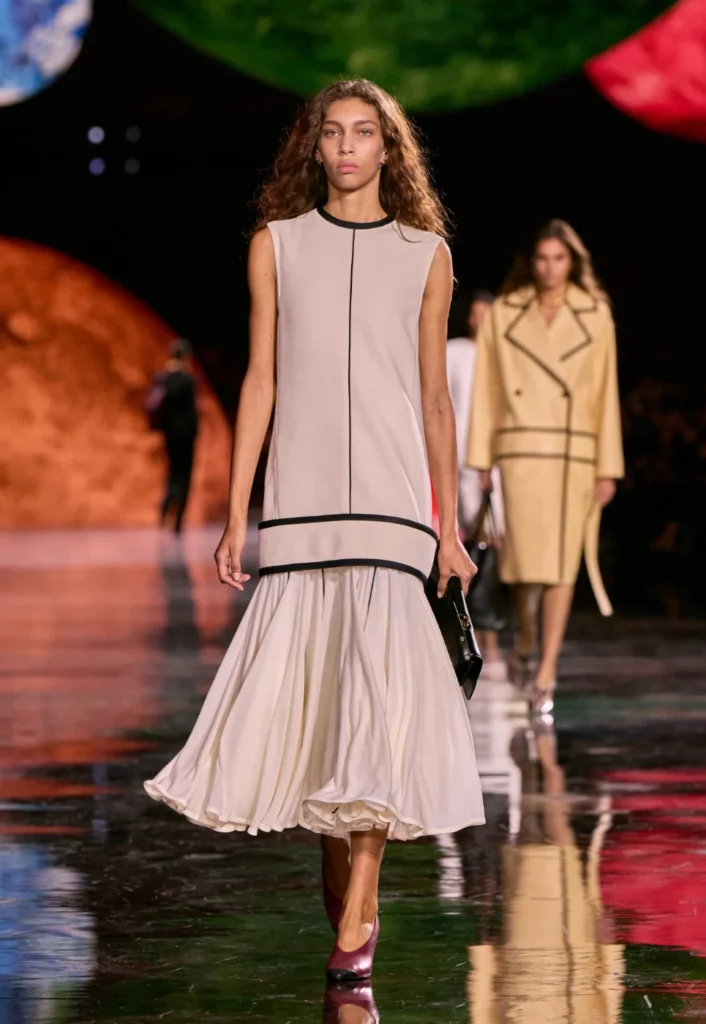
Satin Top + Long Skirt │ Quiet Architecture
Satin took on a different role here. The matte finish built a quiet structural tension — the look reads complete even when the wearer stands still.
source: Vogue Runway
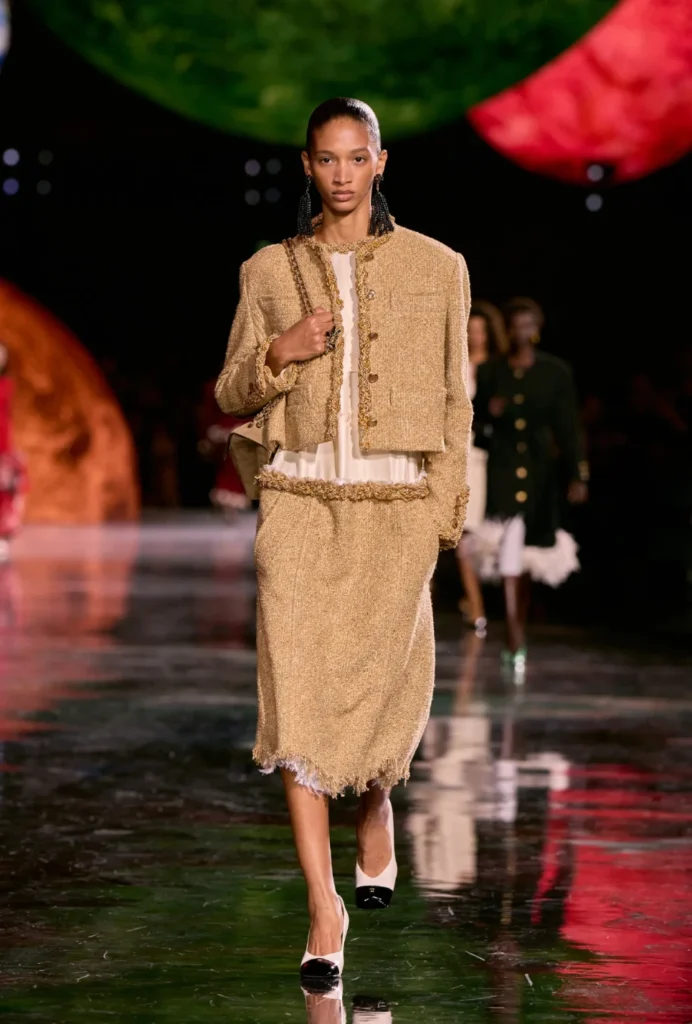
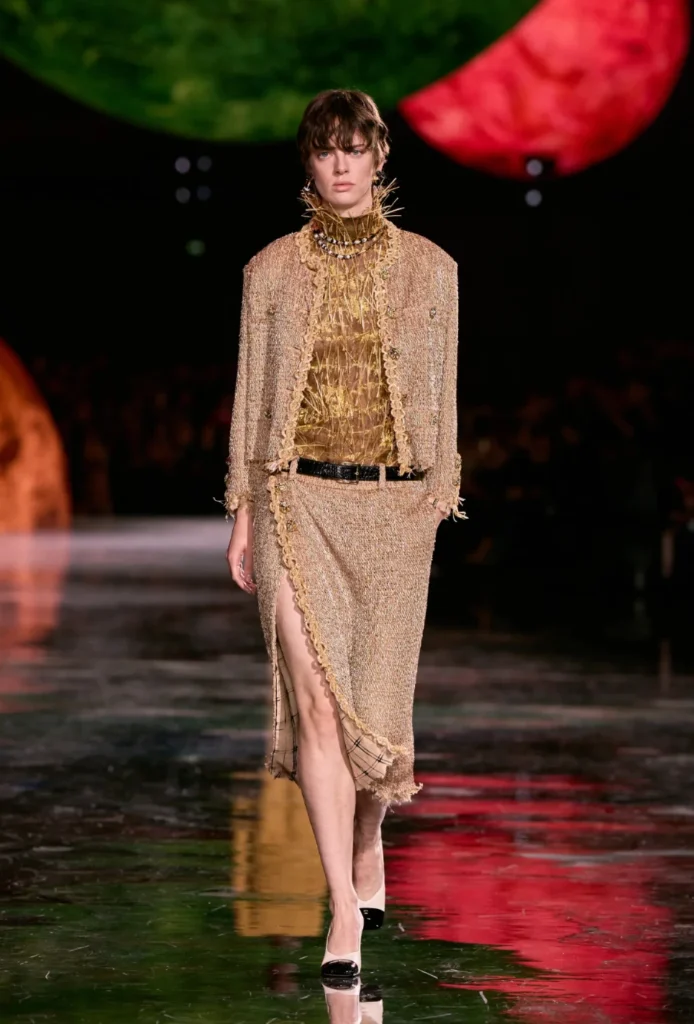
Gold Tweed Set + Sheer Organza Blouse │ The Transitional Look
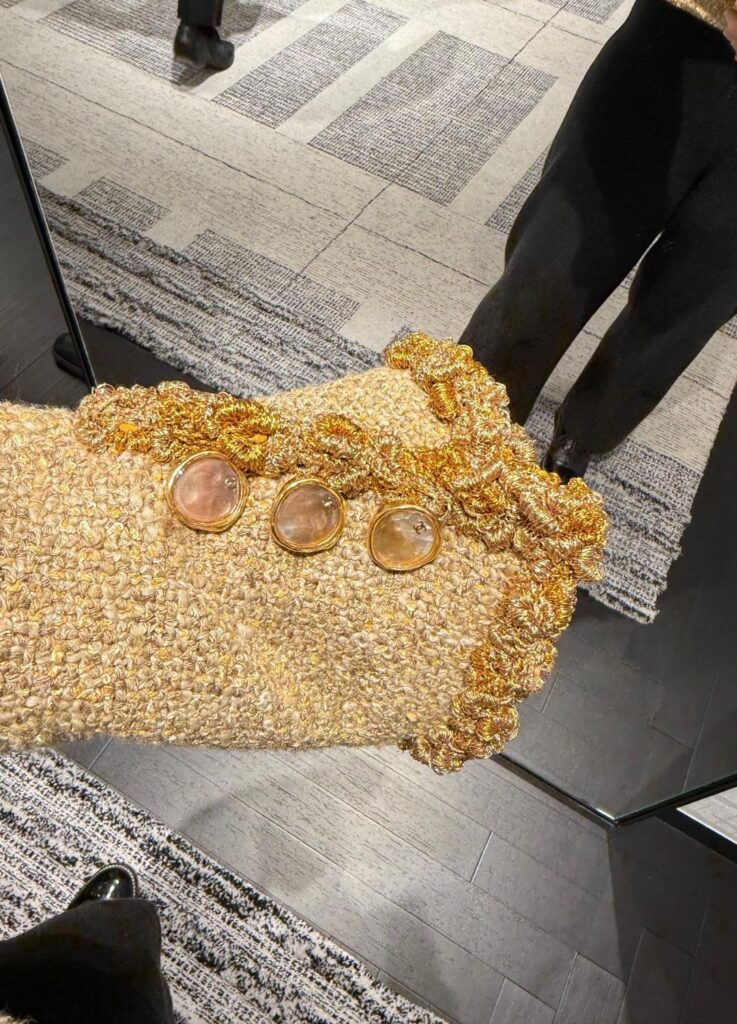
Of all the looks, this one carried the transition most explicitly. A classic Chanel tweed silhouette met a metallic-gold organza blouse — the cut familiar, the texture entirely new.
The cropped jacket and dropped-waist wrap skirt felt like late-Lagerfeld archive crossed with Blazy’s own draping language. The two languages run into each other in this look — the tension is the point.
source: Vogue Runway
For shorter or Asian frames, the leg-line risk is real here. The cropped jacket combined with the dropped waist will visually shorten the lower body.
photograph by Lumie
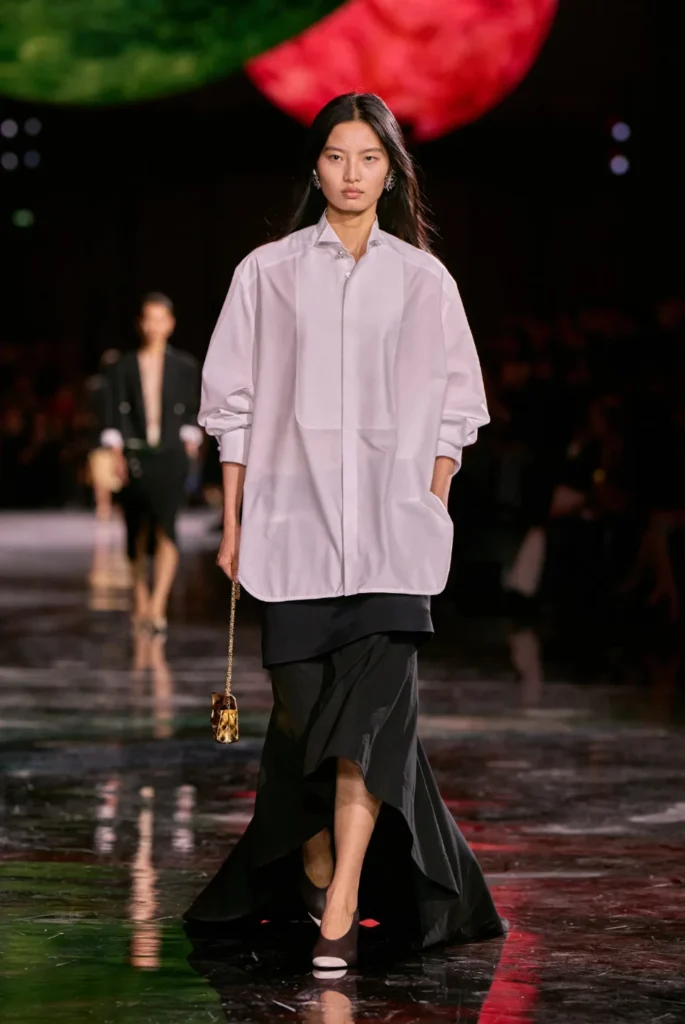
White Shirt + Black Skirt │ Construction Made Visible
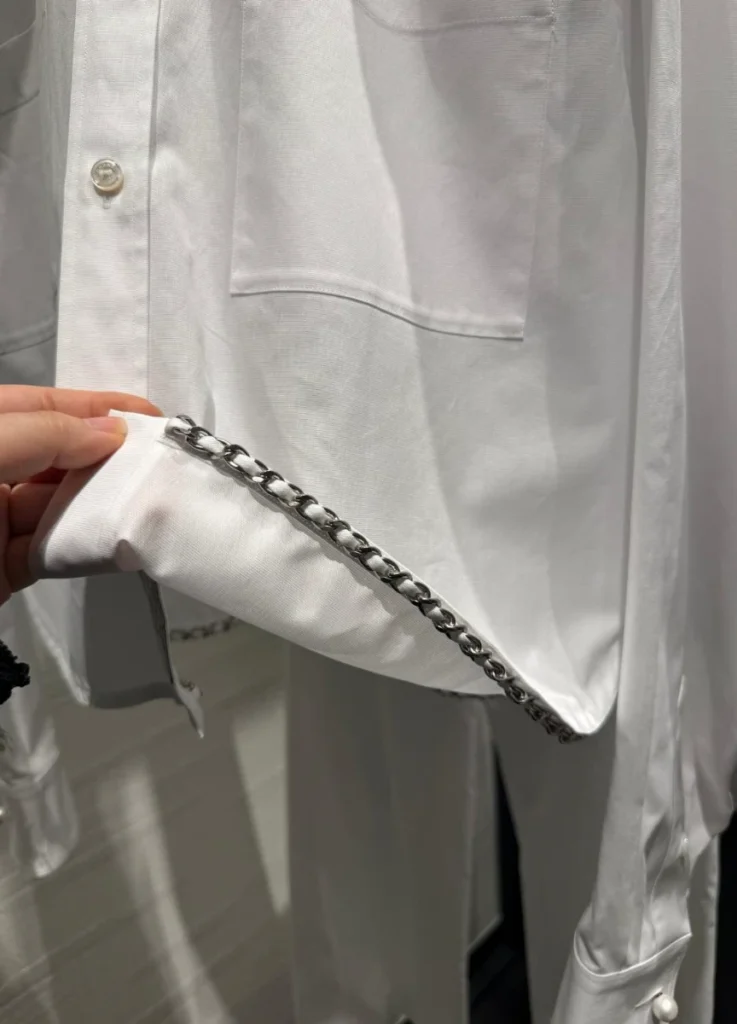
A simple combination on the surface, but the construction logic carried it. The waist seam holds the form precisely, with white amplifying the structural line where black retreats.
source: Vogue Runway
Blazy’s structural hand is what registers in this look. Chanel’s familiar atmosphere has stepped back, leaving clarity in the foreground.
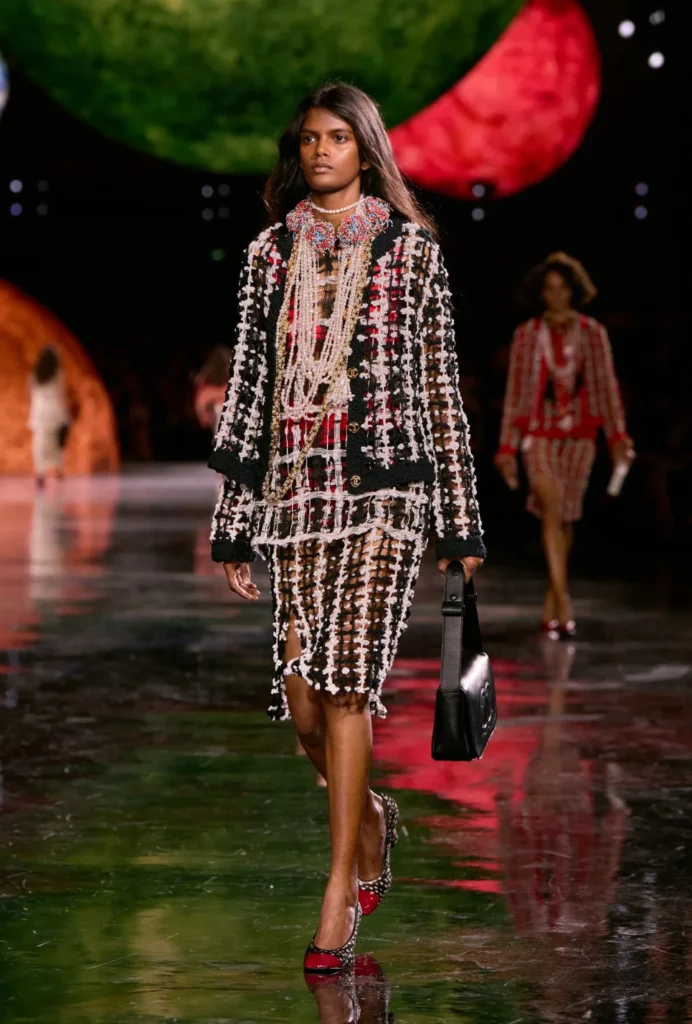
Cream Tweed Jacket + Mini Skirt │ The Closest to Chanel DNA
Of the eight looks, this one ran closest to Chanel’s DNA. The length ratio between jacket and skirt didn’t quite follow Chanel’s conventional formula, but the trace of tradition was still there.
For viewers reading this collection through anxiety about the brand’s direction, this look offers small reassurance: Chanel’s identity is being kept in play, even if the way it’s being expressed is different.
source: Vogue Runway
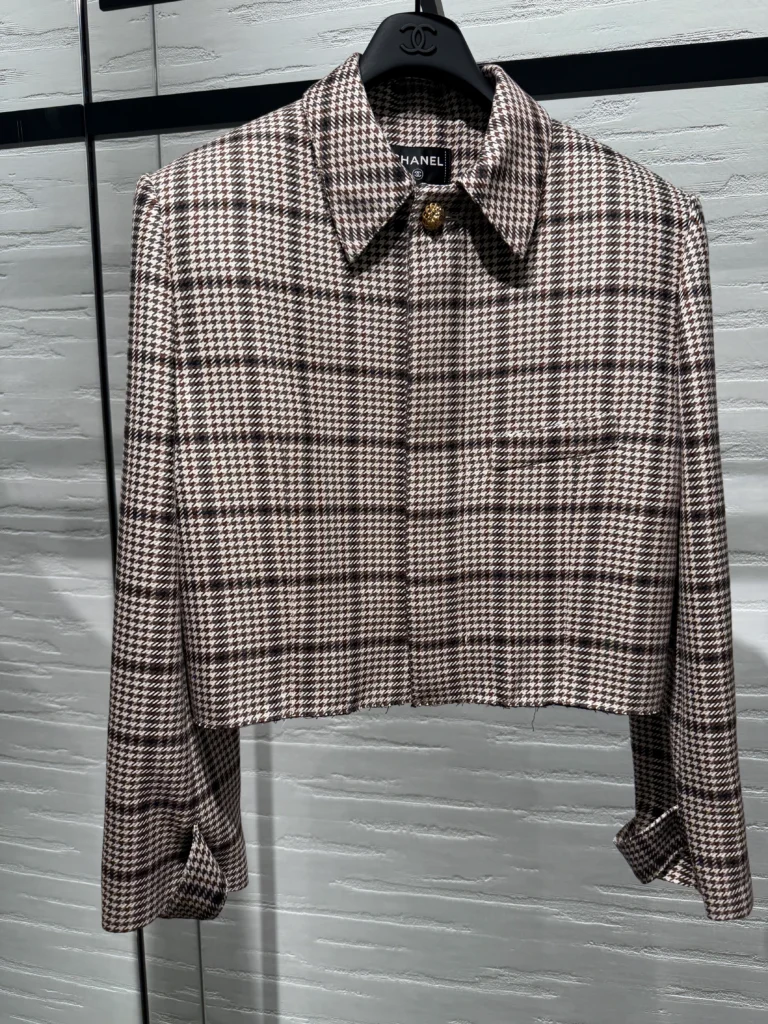
Check Set │ Pattern as Form
The check set expressed Blazy’s deconstructed-tweed idea most directly. The pattern carries the structural work — the fabric and pattern building form, with ornament left aside.
The color contrast runs strong and the look carries clear sculptural force. It’s also one of the most polarizing pieces of the show — confident reinvention to some, the moment Chanel stopped feeling like Chanel to others.
photograph by Lumie
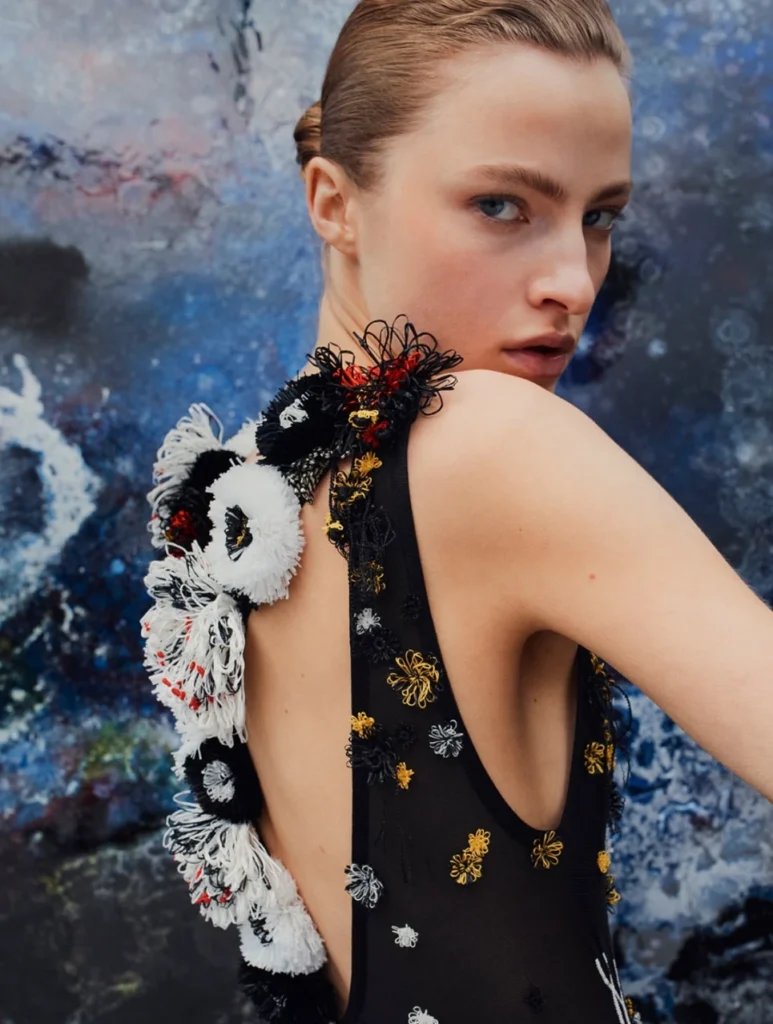
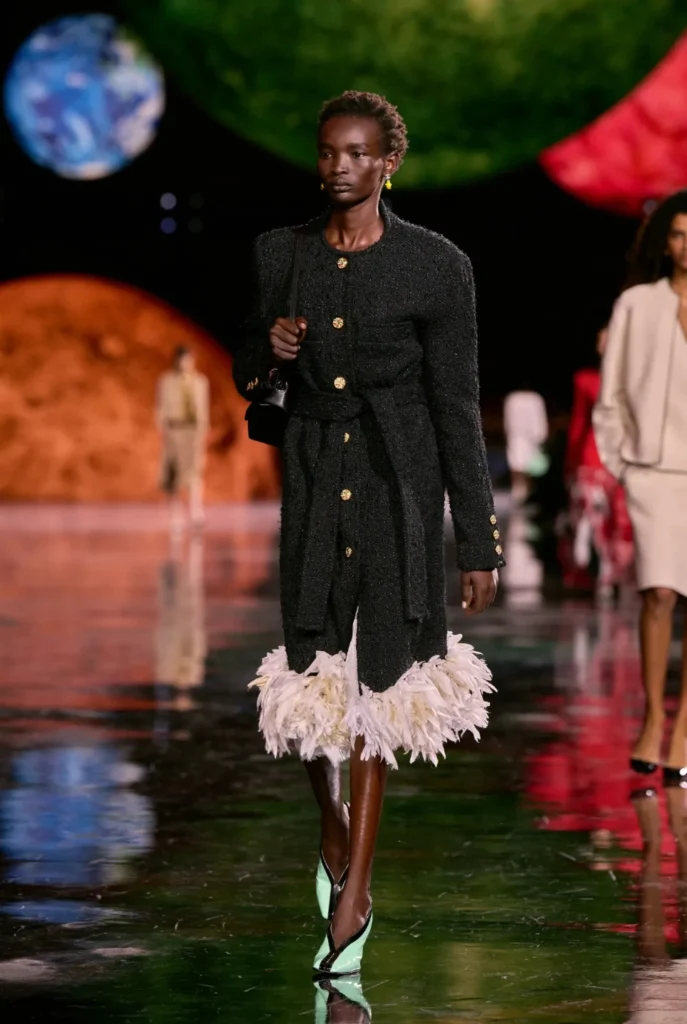
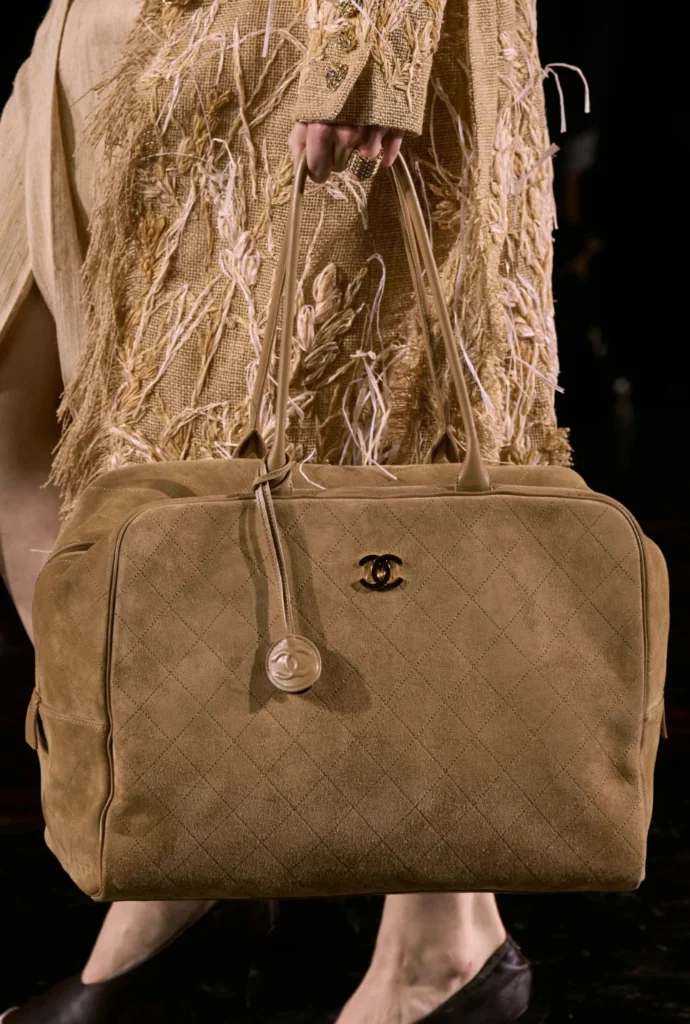
Black Tweed Coat Dress + Feather Detail
The piece ran on silhouette alone. No light play, no surface ornament beyond the feather detail — just the shape, refined to feel almost weightless.
The piece compressed the show’s argument into one silhouette: structure now carrying what emotion did in earlier Chanel.
source: Vogue Runway
Wearability Notes │ Realistic Body Considerations
A practical note before closing.
The dominant silhouettes here favor the proportions Chanel showed in the runway casting — taller, narrower frames with longer torsos.
For Asian or shorter-torso wearers, several looks will need significant tailoring — strong shoulders can read as oversized, the lengthened lines without a clear waist can flatten the silhouette, the matte heavy fabrics need silhouette contrast to keep their shape, and dispersed detailing risks losing visual focus.
Tweed’s softness has been pulled out of the equation, replaced with leather and satin — the contrast against the body becomes more demanding to wear.
These pieces work as runway. In daily wear, these silhouettes favor a narrower frame than many real wardrobes reflect. For now, prior-season Chanel will probably need to do more wardrobe work than usual.
The signal across this debut: Blazy prioritized architectural clarity, with daily wearability a secondary concern at this stage.
There’s also a commercial question. How this debut performs across regions will likely shape how the direction evolves.
source: Vogue Runway
Initial Reception
The split between critical and customer reactions ran wider than usual.
International fashion press largely read the show as an experimental but controlled debut. Several pieces highlighted Blazy stepping away from debut theatrics as a sign of maturity.
Customer response ran more divided. The Bottega-comparison line — that the show looked closer to Bottega Veneta than to Chanel — came up in online discussion, capturing the unease around how far the visual language had moved from what longtime customers expect.
Some critics offered a more measured framing: one season is too early to judge an identity reset. Chanel’s DNA hasn’t been erased in a single show. If this collection reads as the start of a structure-first reset, this debut is the first chapter of that work.
source: Vogue Runway
What Remains After the Familiar │ Closing
This season wasn’t easy.
For viewers expecting Chanel’s familiar emotional register, the show read cold, unfamiliar, and somehow distant. Watching it carried the feeling of a stress test — how far can the name “Chanel” stretch and still hold?
Blazy stripped back much of the emotional familiarity and left the structure exposed.
If the discomfort of this show came from an unfamiliar Chanel, that’s possibly because we’ve held Chanel as an emotional brand for too long. The show is asking us to start reading it as a structural one.
source: Vogue Runway
What I left the show thinking, honestly: I don’t know yet. The unease hasn’t fully resolved for me. But unease at this scale usually signals the brand is moving, and that’s the part I want to record.
Whether this debut reads as the start of a real shift will become clearer once the next Blazy chapters arrive. The familiar beauty has dropped away for now, with the new structure being laid down underneath.
@mattieublazy / Instagram
Featured Image via Vogue Runway
[ Related Editorials ]