Inside Chanel Métiers d’Art 2026
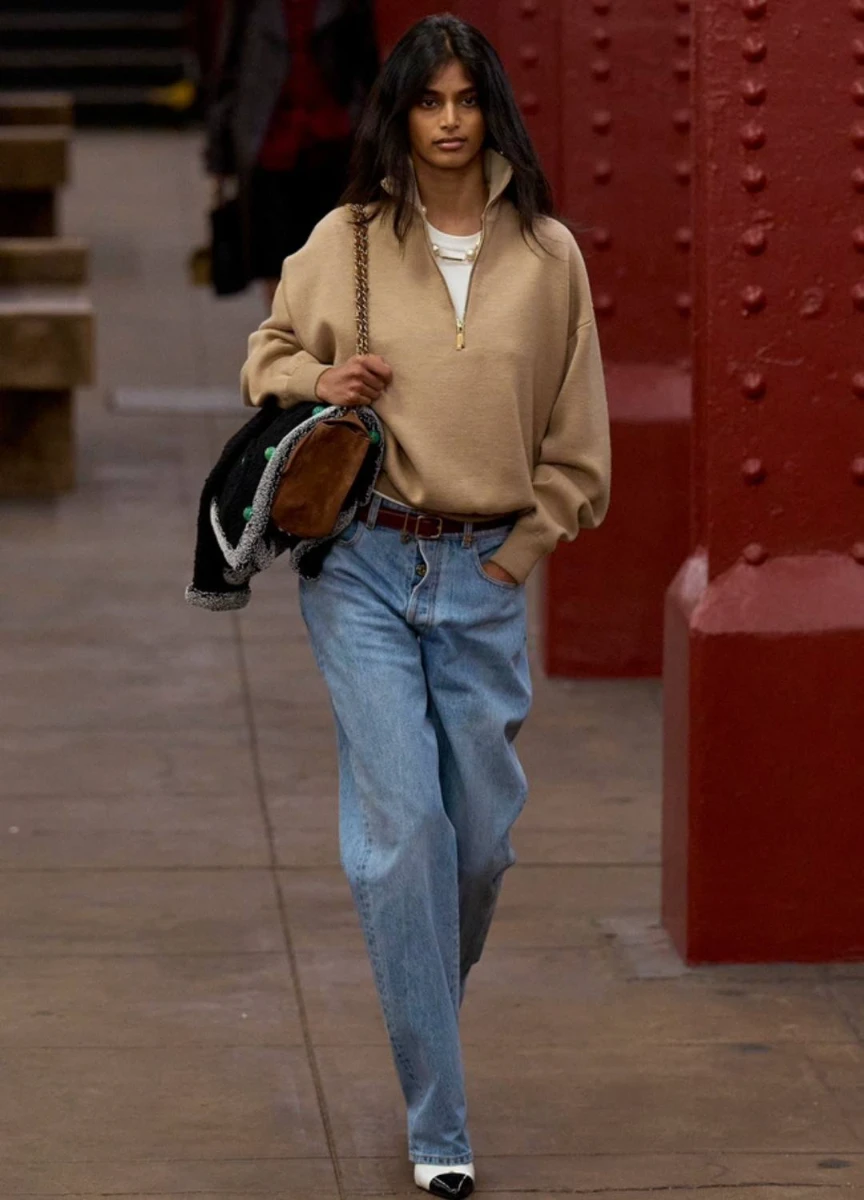
On December 2, 2025, Matthieu Blazy presented his first Métiers d’Art for Chanel inside the disused 168 Bowery station on Manhattan’s Lower East Side — his second outing for the house, following the SS26 debut in Paris.
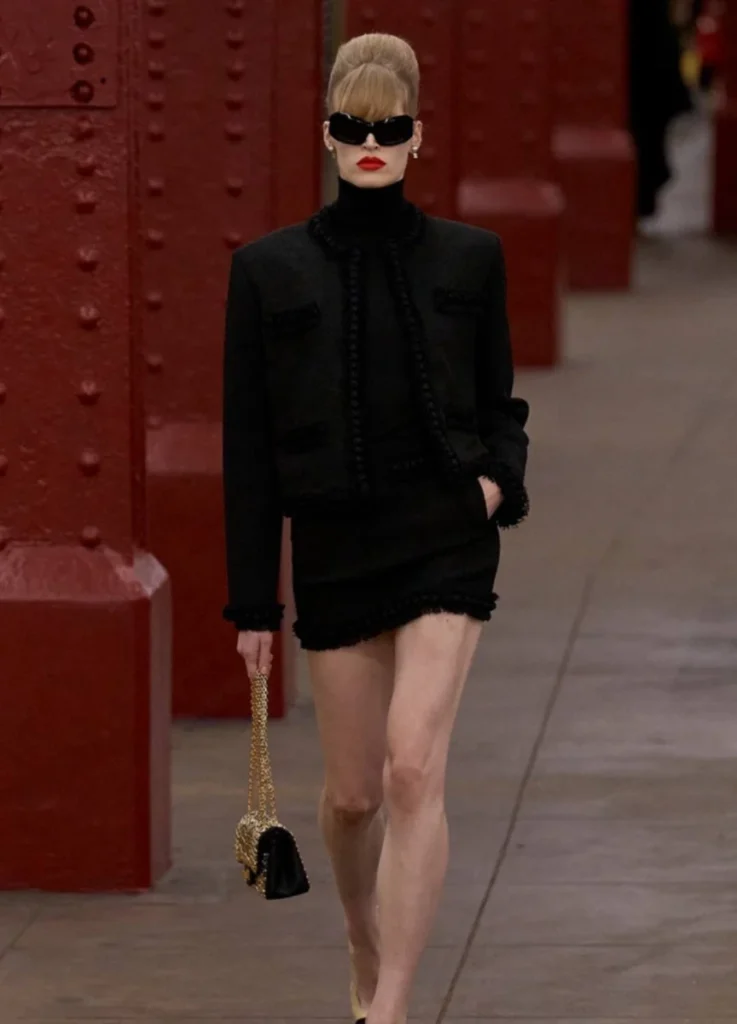
Nostalgia wasn’t the point. The Bowery sat between the J train still rumbling overhead and the New York that lives mostly in memory: graffiti scrapbooks, payphones nobody answers, MTA brake-screech piped through the speakers. Blazy laid three benches across the disused tracks and seated guests there. The obvious reference was Karl Lagerfeld’s 2006 Grand Central show. Where Lagerfeld used the city as scenography, though, Blazy used it as argument.
He named the theme Happy Chaos. Speaking with reporters before the show, he described New York as a city where every class moves through the same space, and said he wanted to capture the democratic shape of that crowd rather than its disorder.
The Show │ Place as Argument
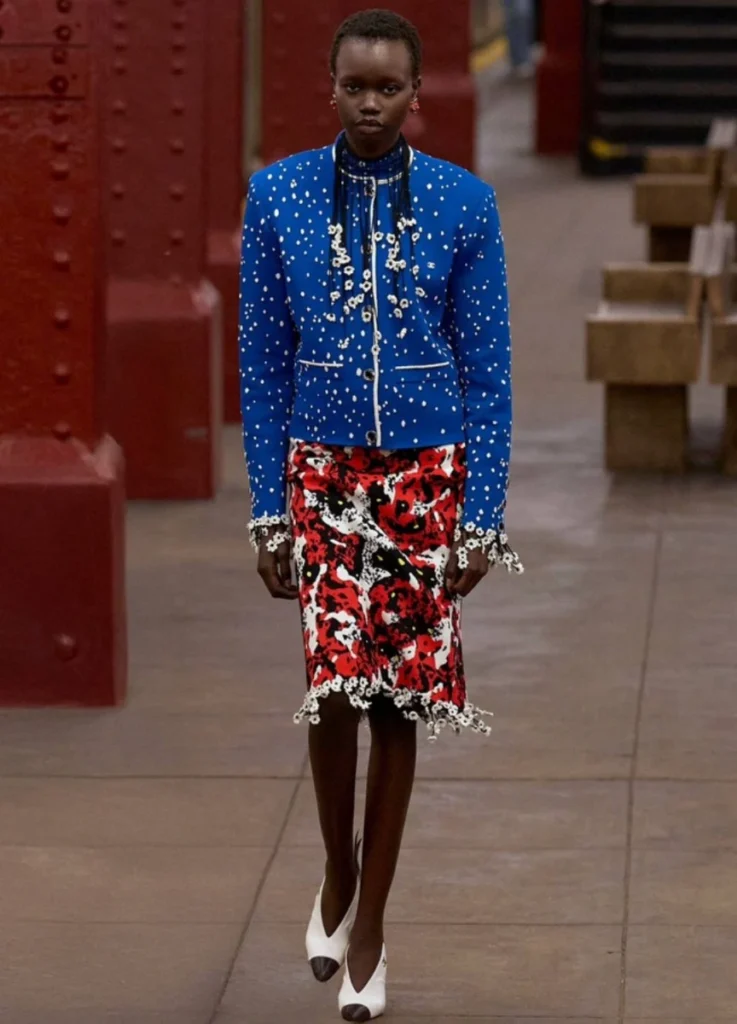
Métiers d’Art exists to honour Chanel’s ateliers — Lesage, Lemarié, Maison Michel, Massaro, Goossens — and the established convention is to elevate craft through theatre. Blazy inverted the logic. He brought the artisans down into the train tracks. Lesage embroidery surfaced on what looked like denim work pants. Lemarié featherwork drifted across satin as if the dress had walked through pigeons on the way to the platform. Maison Michel hats caught light filtered through a drop ceiling rather than a chandelier.
Couture-grade savoir-faire, the Bowery argued, doesn’t require couture-grade staging. It can carry its own weight inside ordinary clothes worn in ordinary places. Blazy is making that proposition the central thesis of his Chanel.
26SS Compared │ From Auteur to Anthology
Blazy’s Paris debut in October had been a different exercise. SS26 leaned into experimental minimalism: lesser-known faces, tweed pulled apart and rebuilt, structural austerity, and a deliberate flatness in styling that read more architectural than seductive. It impressed without fully charming. Some of the audience left wondering whether Blazy understood Chanel’s pleasure principle at all.
The Bowery answered differently. Where Paris was authorial, New York was populated. The casting moved through legible archetypes — the eighties career woman, the archive-minded journalist, the art-school student in scuffed loafers, the off-duty model in the back of a yellow cab. The collection felt less like a manifesto and more like a city walking past.
There’s something of Phoebe Philo’s early Céline in the approach — a slow accumulation of types, each season adding another silhouette to a vocabulary the customer can eventually speak fluently.
Silhouette and Material │ Couture Logic, Daily Cadence
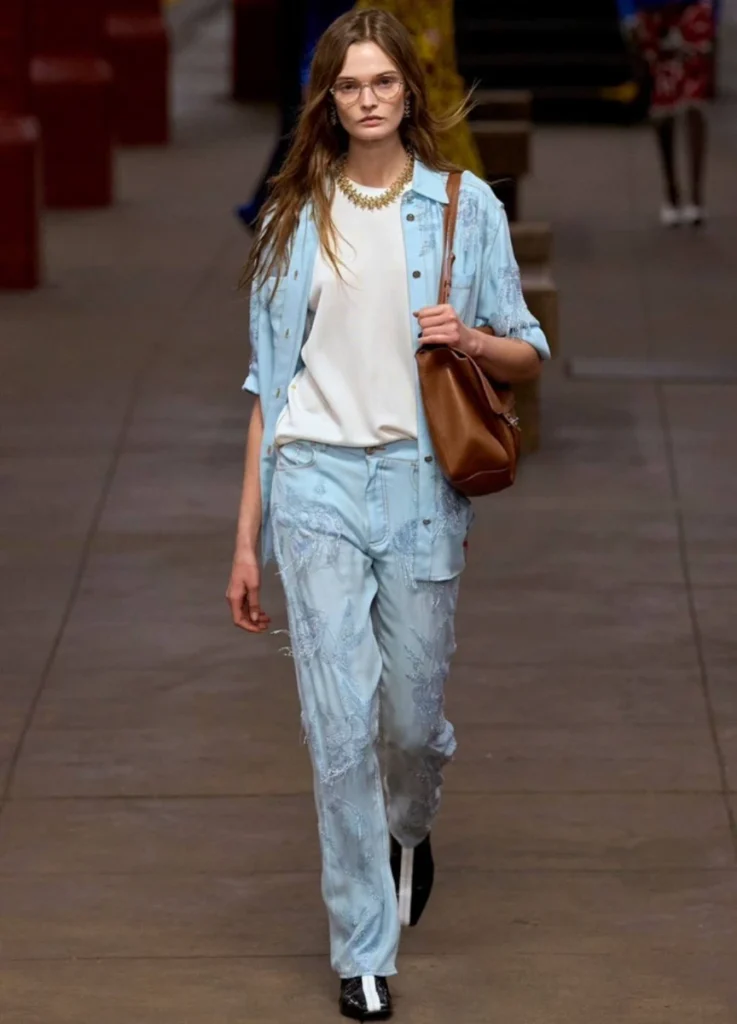
Lesage’s silk denim emerged as the show’s tour de force. From across the room, the trousers read as faded indigo workwear; up close, the surface dissolves into woven silk with the faintest denim grain. The hand is fluid where denim is rigid, and the drape settles down the leg in a way no five-pocket could manage. Cameras flatten it into ordinary jeans. In motion, it does something else entirely.
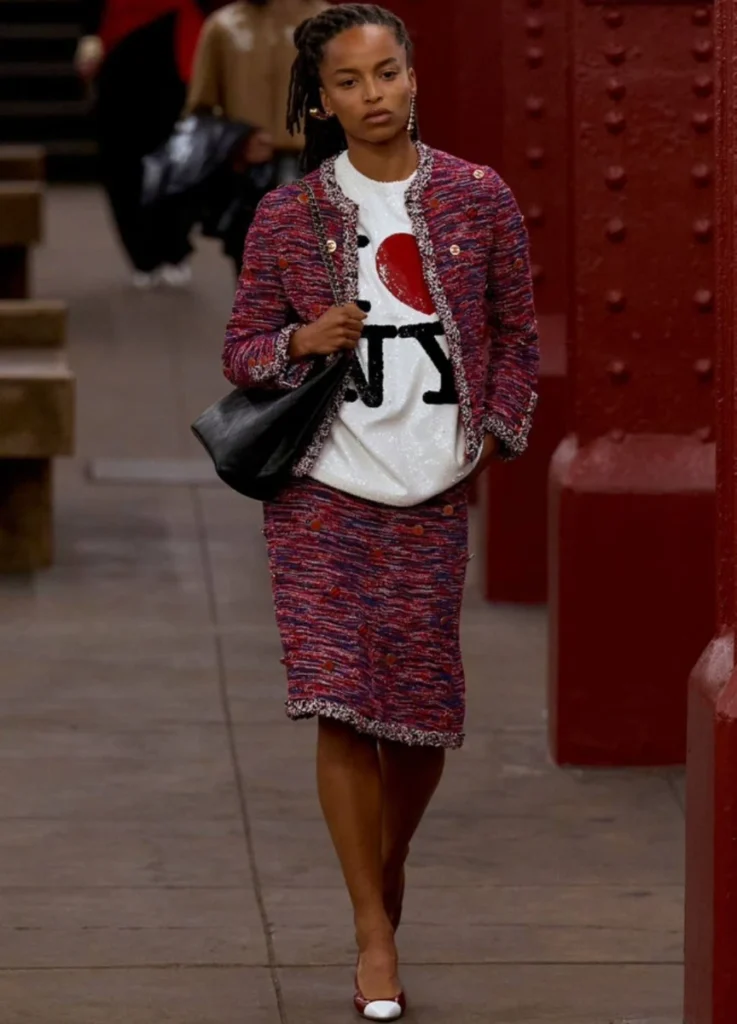
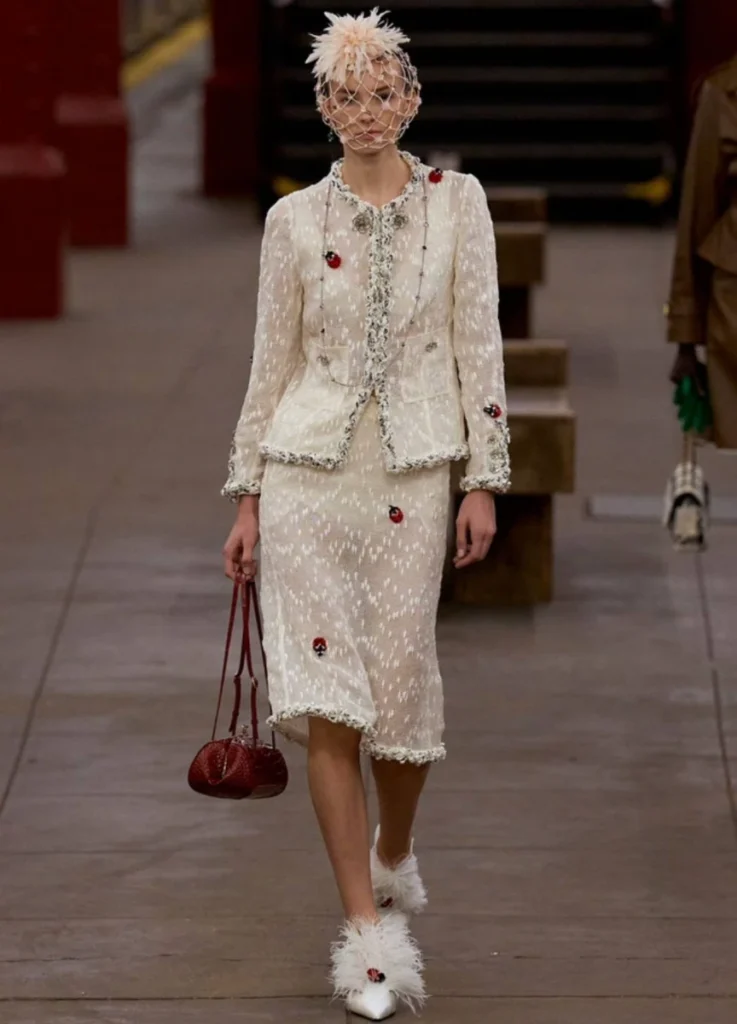
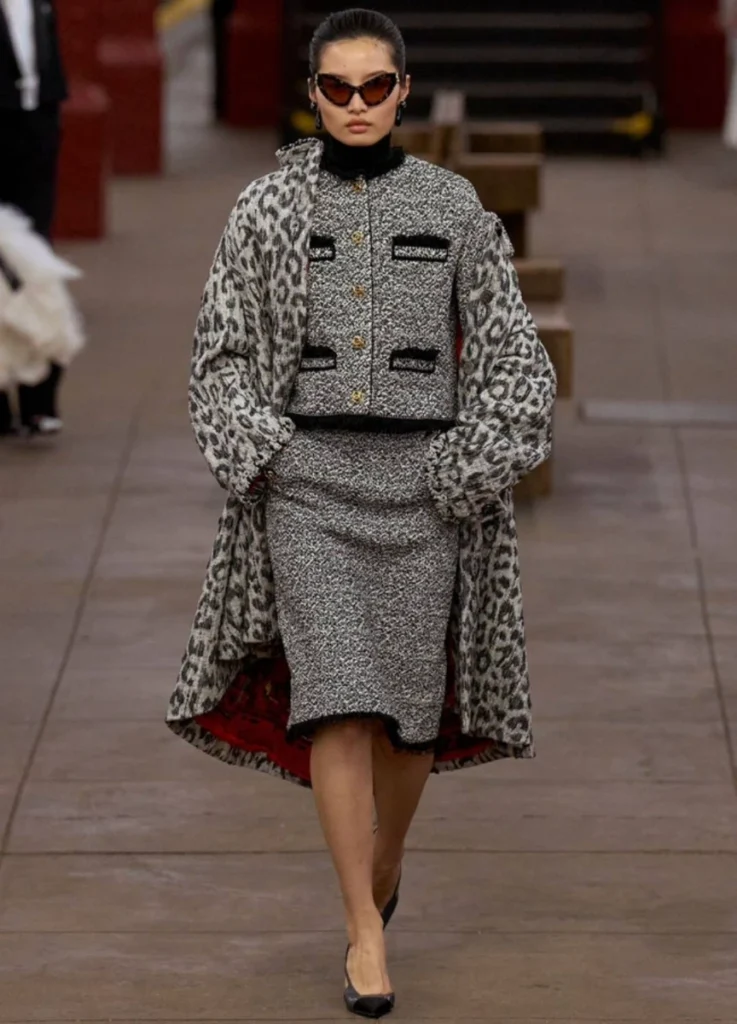
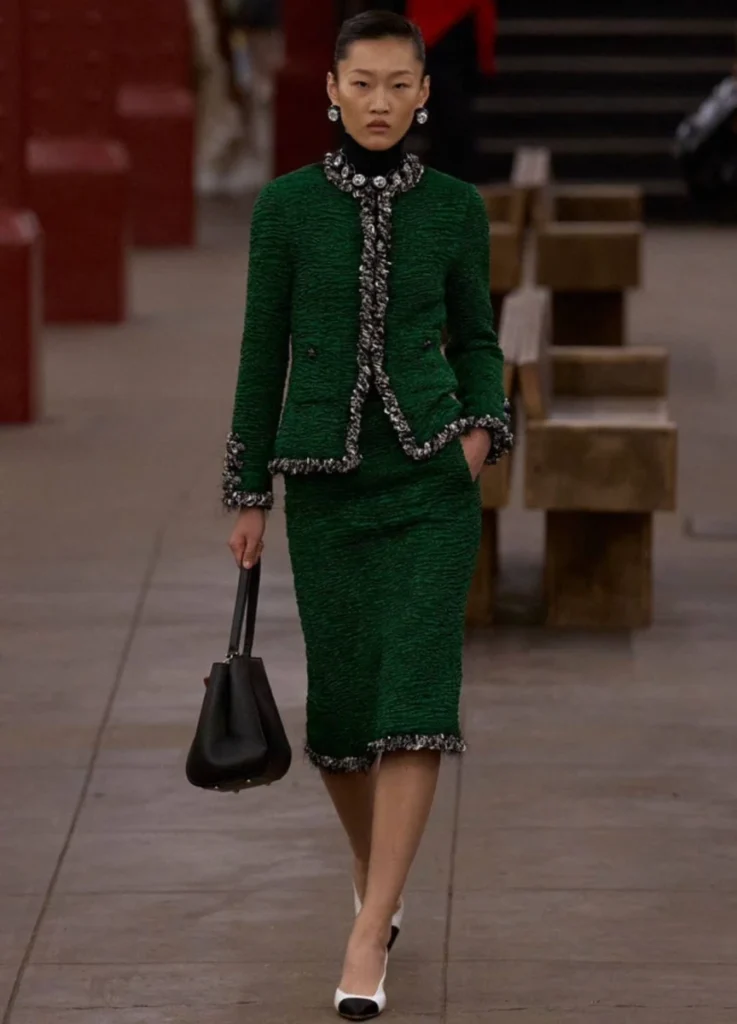
The other major textile move was a flannel cut to suggest bouclé. From a distance it reads as the familiar Chanel jacket; up close, the cloth is looser, lighter, and more forgiving. The volume collectors expect is preserved; the heft is gone. It hints at an eighties revival without leaning on it.
Lemarié featherwork ran throughout, applied with restraint. Feathers tend to dominate whatever they sit on; Blazy let them disappear into the body of the dress, more atmosphere than ornament. The clothing did the talking. The artisans did the underwriting.
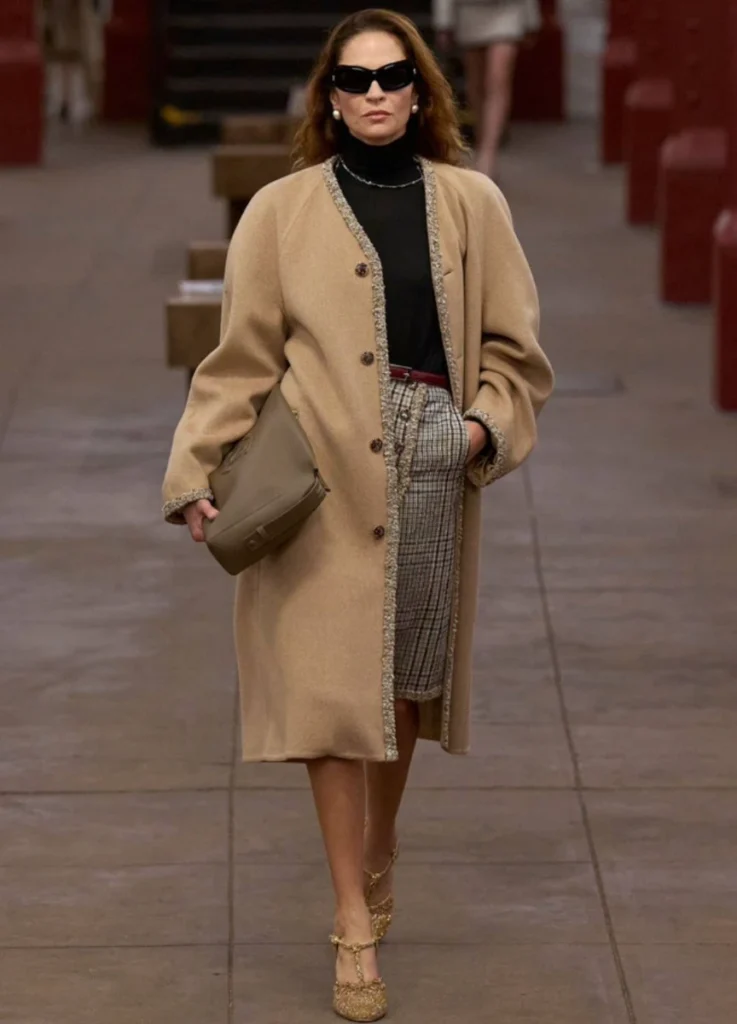
Tailored coats elongate without rigidity. Trousers fall straight rather than tapering. Skirts hold a midi length that feels metropolitan rather than romantic. The silhouettes are calibrated for walking, not posing.
Color │ The City as Palette
The palette was a direct quotation from the streets above the station. Subway navy, taxi yellow, sidewalk grey, the particular black of a wet curb at night. Brightness was used sparingly and always as punctuation — a yellow lapel against muted ground, a metallic thread caught by the platform lighting. Color here functions as wayfinding, not embellishment.
Six Looks That Carry the Collection
Look 53 │ Silk Denim and Tweed Jacket
The hybrid that defines the show. Silk denim flows where ordinary denim resists, and the close-cut tweed jacket anchors the fluidity at the shoulder. The trouser carries the leg line cleanly, which makes it surprisingly forgiving on hourglass and pear silhouettes. The jacket asks more of the wearer; shorter necks may want to consider the next variation.
Look 4 │ Taxi-Yellow Leopard Tweed Skirt Suit
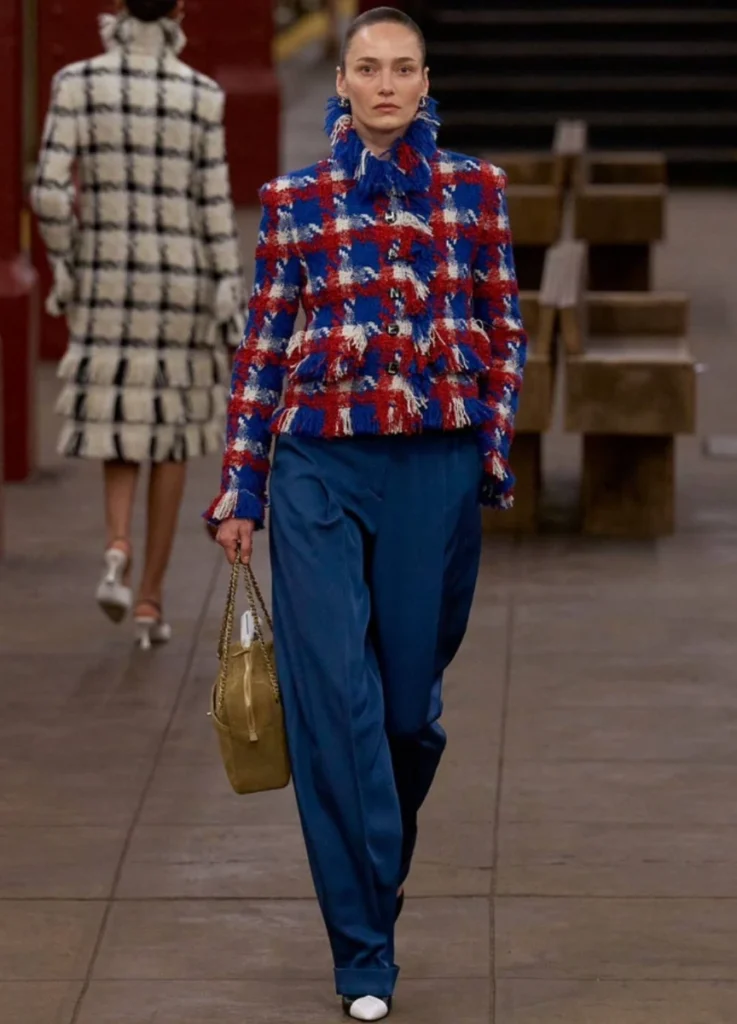
A seventies-eighties hybrid worn confidently. Animal-spot tweed in taxi yellow, classic Chanel jacket cut, midi pencil with a front slit, mint high-neck underneath for tonal interruption. The strong colour contrast lengthens the vertical line, which makes it more wearable on shorter frames than the loudness suggests. Likely to read as the runway break-out moment of the show.
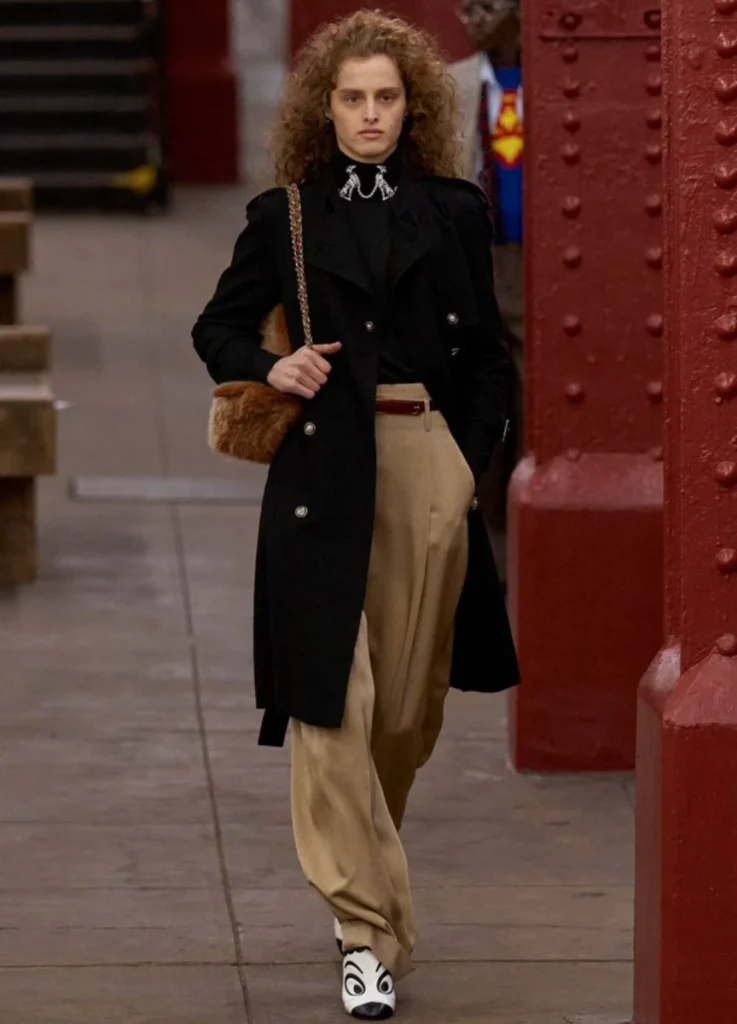
Look 47 │ Long Coat over Trousers
The New York archetype, distilled. Elongated coatfront, fluid trouser, no fuss. The coat does the proportional work for narrower shoulders, and the silhouette settles into walking rather than posing. A look that doesn’t announce itself.
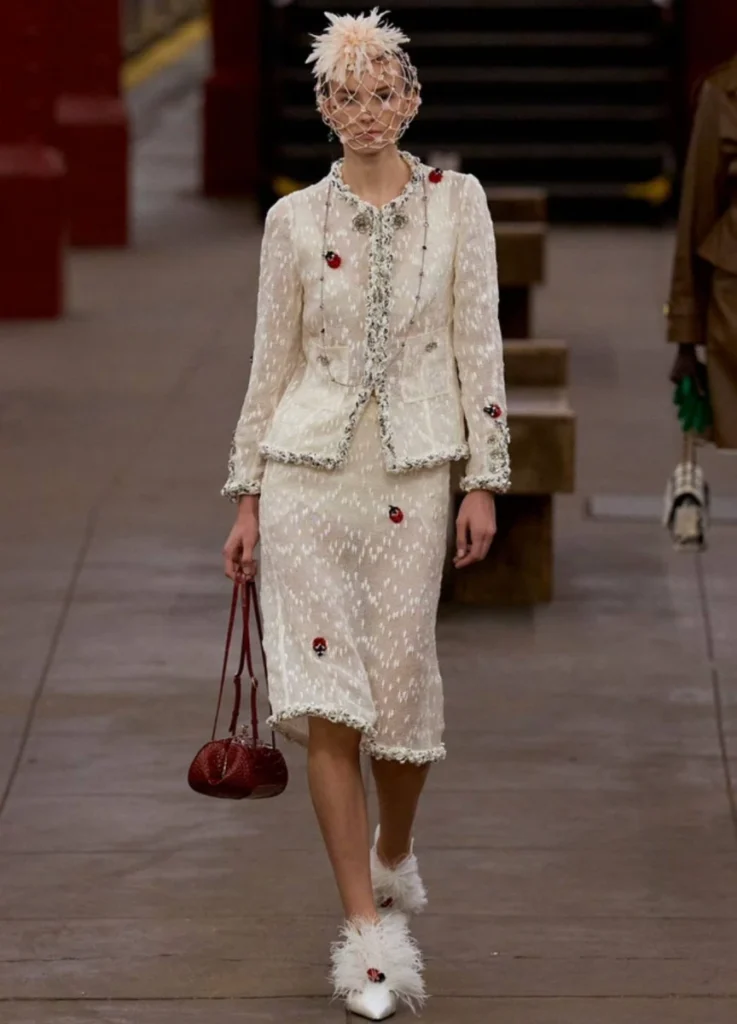
Look 26 │ Flannel Tweed Set with Ladybird Detail
The most technically interesting piece in the collection. The flannel reads as bouclé from a distance and reveals itself as something looser and softer up close. A square silhouette without aggressive waist definition, a knee-grazing skirt, a Lemarié-leaning ladybird embellishment at the lapel. The textile carries volume as surface rather than mass, which keeps it kind to broader upper bodies.
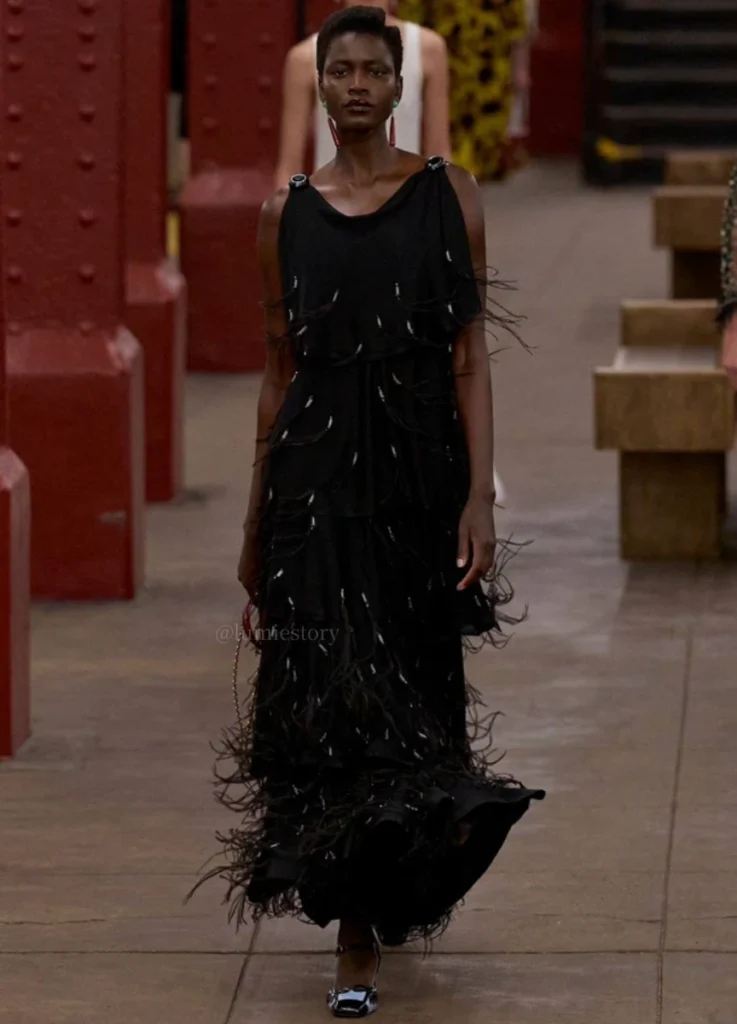
Look 79 │ Black Satin with Feather Detail
The couture moment, restrained. Featherwork sits along the body rather than around it, and the satin holds a clean column line. Best worn with high jewellery — a Coromandel cuff, or a piece from the Diamants Célestes line. This is where the Métiers d’Art ateliers earn the title of the show.
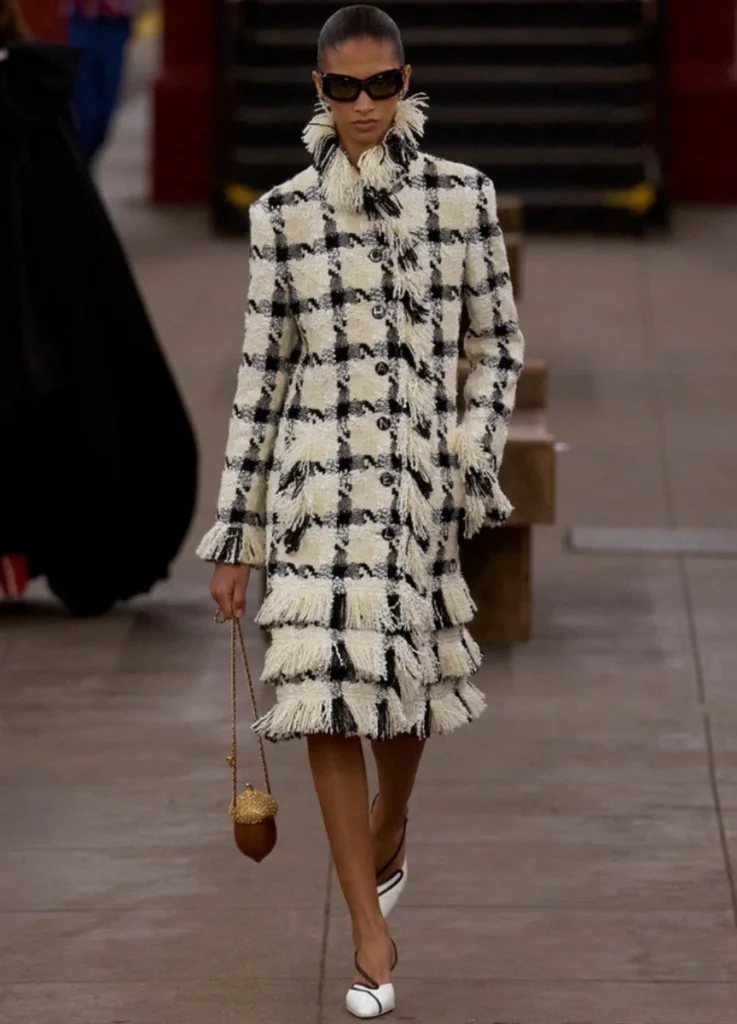
Look 54 │ Fringed Flapper Dress
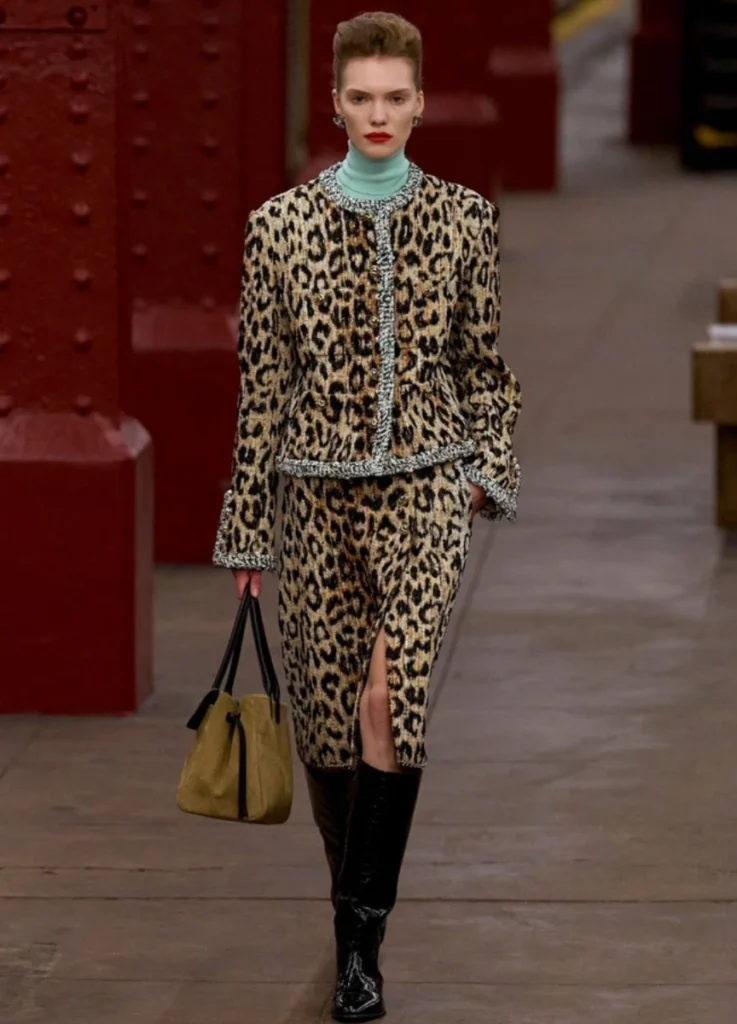
A 1920s reading filtered through Blazy’s structural eye. Vertical fringe layered over checked tweed; movement supplied by the fringe rather than the body. It runs straighter than its flapper reference — closer to a column than an hourglass — which makes it forgiving where most fringed dresses are not. The narrative piece of the show.
Look 54 │ Fringed Flapper Dress
A 1920s reading filtered through Blazy’s structural eye. Vertical fringe layered over checked tweed; movement supplied by the fringe rather than the body. It runs straighter than its flapper reference — closer to a column than an hourglass — which makes it forgiving where most fringed dresses are not. The narrative piece of the show.
Industry Reception
Where the SS26 debut had divided trade press, the Bowery brought coverage closer to a shared reading. Vogue and WWD both framed the collection as a pivot from logo-driven Chanel toward silhouette-driven Chanel, and described the artisan techniques as structural rather than ornamental. Cathy Horyn’s coverage placed it as the moment Blazy moved past audition mode.
Online discourse, including The Fashion Spot and the Reddit runway forums — where concept-over-wear collections are usually flagged early — leaned positive. The conversation centred on tweed and bouclé feeling current without commercial softening, and on the casting: more women, more ages, more bodies than a Chanel runway has carried for several seasons.
The collection began arriving in boutiques in April 2026. Métiers d’Art sell-through typically takes a season to settle; whether the silk denim and the flannel set move past first-season novelty will be the more telling read.
The Three Chanels │ Lagerfeld, Viard, Blazy
Karl Lagerfeld built Chanel into a global silhouette. He used logo, scale, and spectacle to keep the house at the centre of fashion’s gravity for three decades. The Chanels of the late nineties and the 2000s — riding boots in supermarket aisles, the Boy bag, the airport runways — were his work. Femininity, in his hands, ran through charisma and authority.
Virginie Viard inherited the house and softened it. She translated Chanel into something quieter and more daily: the tweed jacket worn over jeans on a school run, the unobtrusive silk blouse, the romantic but restrained gown. The clothes were wearable, but the narrative thinned. Some collectors found her Chanel tender. Others found it underwritten.
Blazy is doing neither. His Chanel reads structural before it reads feminine, urban before romantic. The femininity has not arrived yet, and watching SS26 and the Bowery back to back, the absence appears deliberate rather than accidental. He is building the new architecture first. If softer femininity returns to his Chanel, couture is the likeliest place for it to articulate first — that is where the house has historically done its most curved thinking.
It is a long bet. Lagerfeld needed several seasons before Chanel felt unmistakably his. Blazy is two collections in.
Final Assessment
The Bowery worked because the staging and the argument were the same argument. A house associated with Place Vendôme luxury walked its ateliers down into a subway station, and the savoir-faire still held. The clothes did not need a chandelier. The silk denim did not need to look like denim to a trained eye — it needed only to make the case for Lesage’s craft inside a real, walkable wardrobe.
Whether Blazy’s Chanel will move past structural elegance into something that quickens the pulse remains the open question. The first two collections have been intelligent. The next two will tell us if they can also be loved.
For now, the Bowery has settled into the show that anchored Blazy’s first year. Less spectacle than the Lagerfeld eras. More architecture than the Viard ones. And a Chanel beginning to look settled in its new direction.
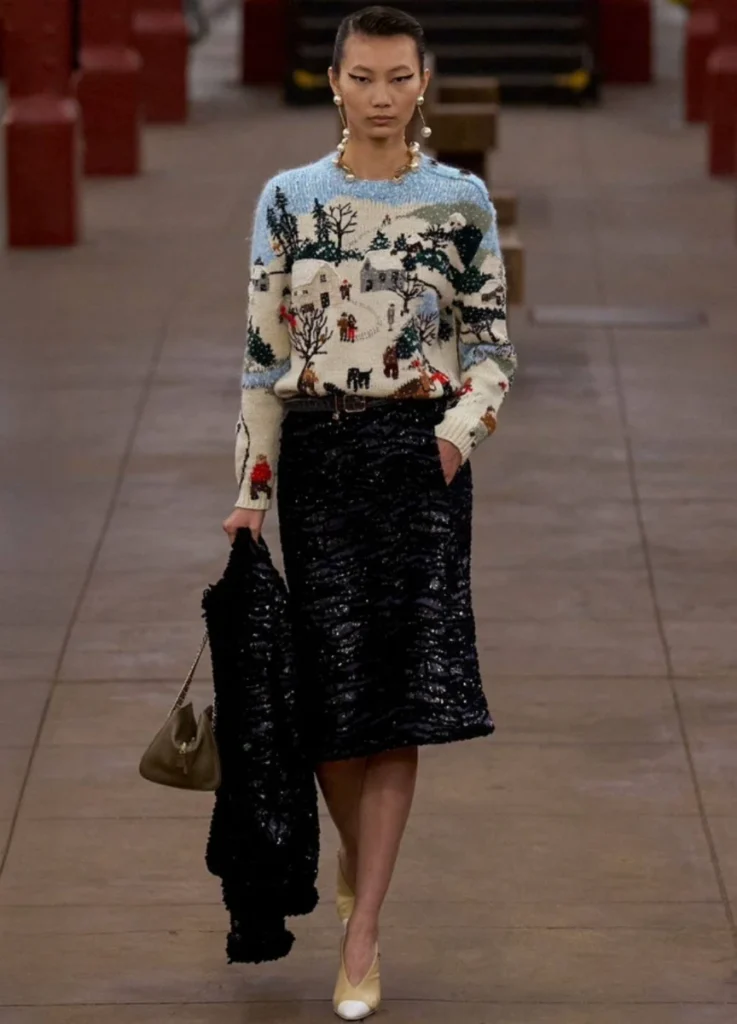
All images referenced in this post are drawn from Vogue Runway.
[ Related Editorials ]