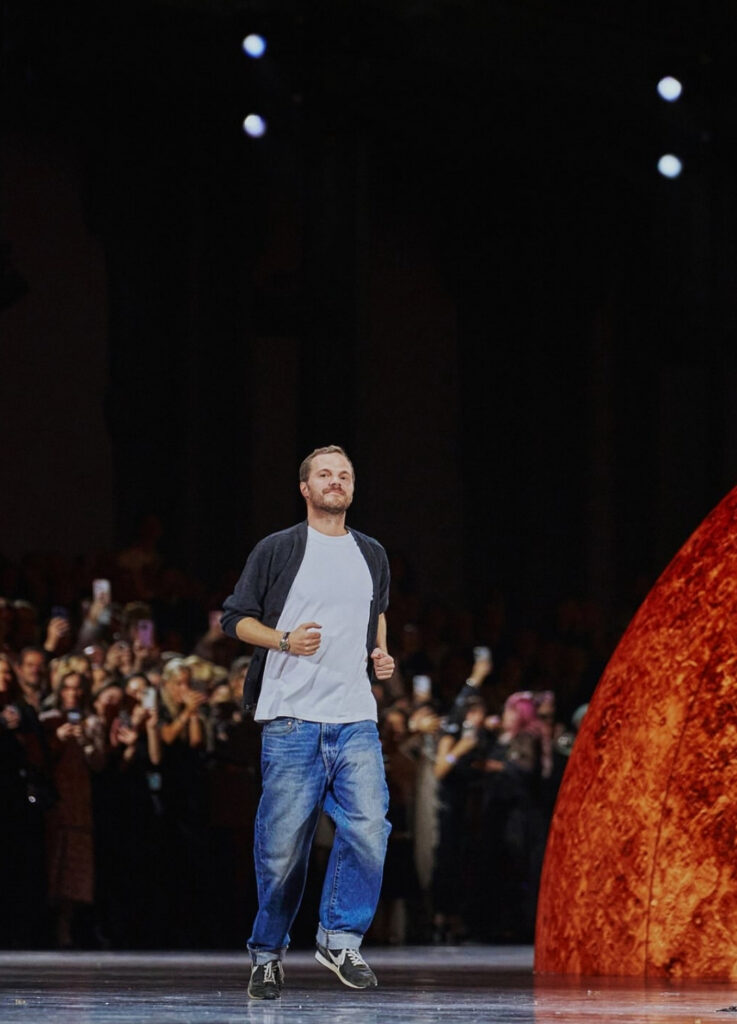
Chanel’s Spring/Summer 2026 collection marked more than a creative transition.
It was a recalibration.
For his debut, Matthieu Blazy approached the house not as a disruptor, but as an editor—someone fluent in Chanel’s grammar, yet unafraid to adjust its rhythm. The result was not spectacle-driven reinvention, but a collection built on restraint, proportion, and movement.
A Language of Quiet Authority
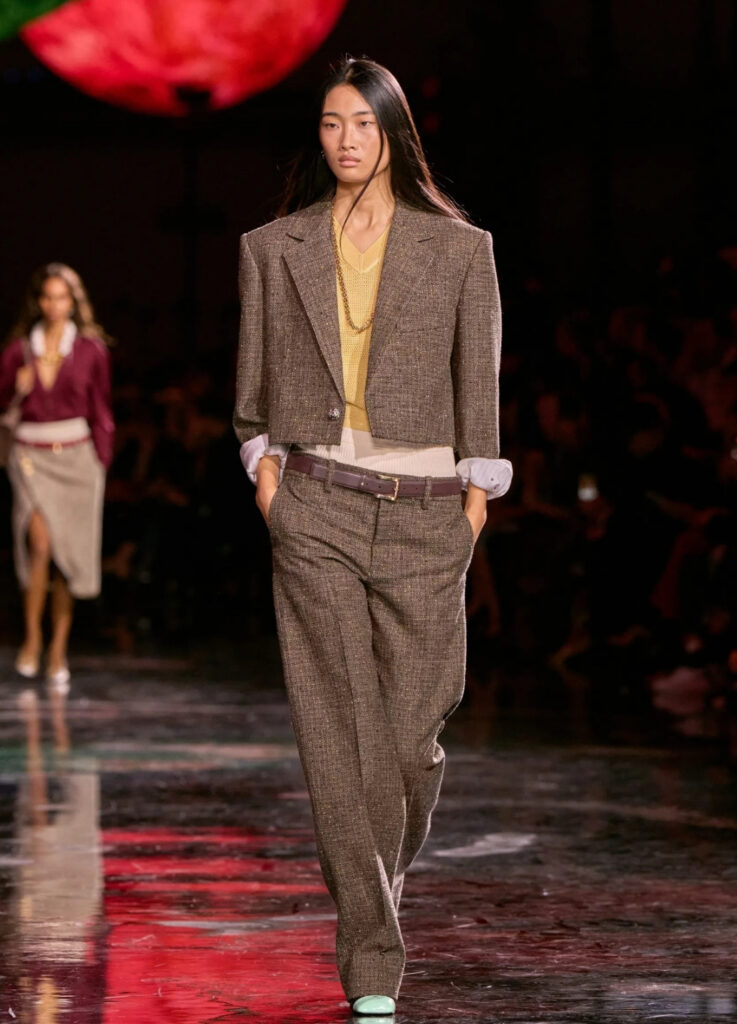
Rather than leaning into overt femininity or archival nostalgia, Blazy began with tailoring. Cropped tweed jackets, relaxed trousers, and softly structured skirts set the tone. The silhouettes were disciplined, but never rigid.
This was Chanel stripped of decoration-first thinking.
Structure led. Emotion followed.
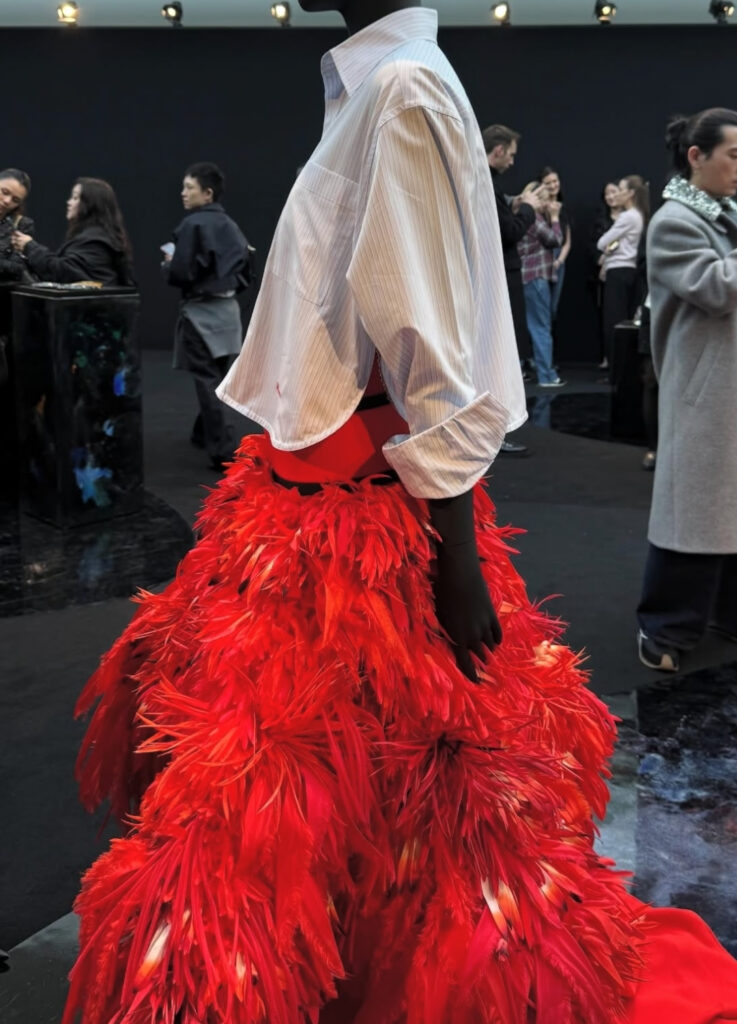
Many looks relied on controlled looseness—jackets that hover away from the body, skirts that move independently of the torso, shirts that refuse to cling. It was a study in how garments behave in motion, not in stillness.
Fashion editors noted this immediately. Several reviews described the collection as “designed to be worn, not displayed,” a subtle but important shift for a house long associated with iconic polish.
Tweed, Rewritten
Tweed remained central, but its role had changed.
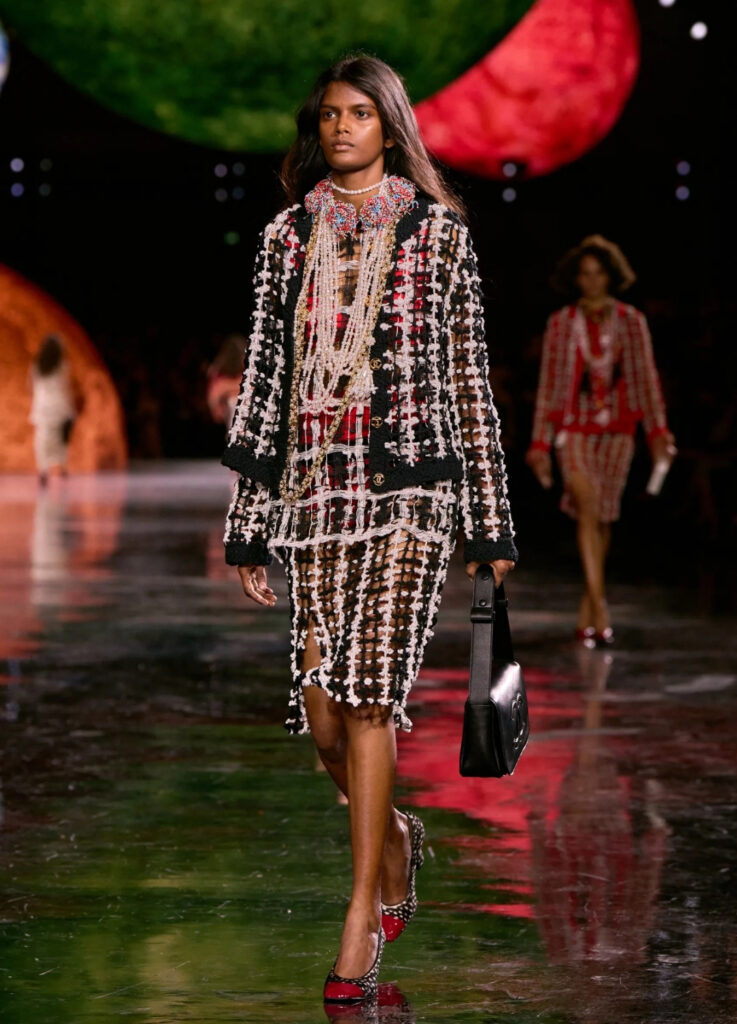
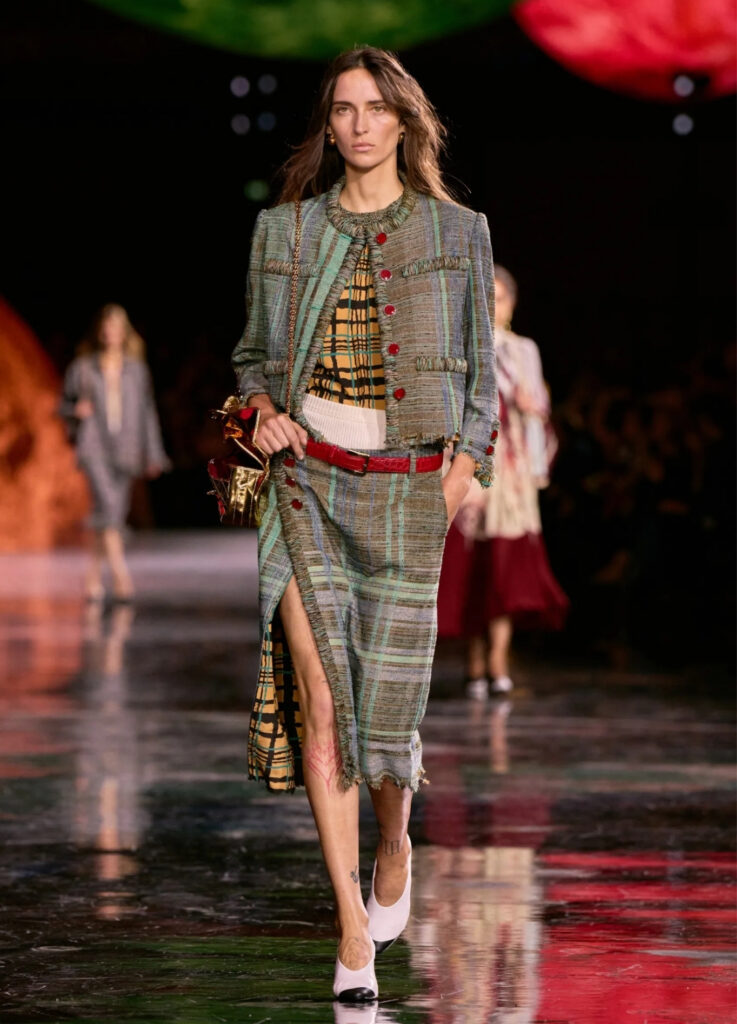
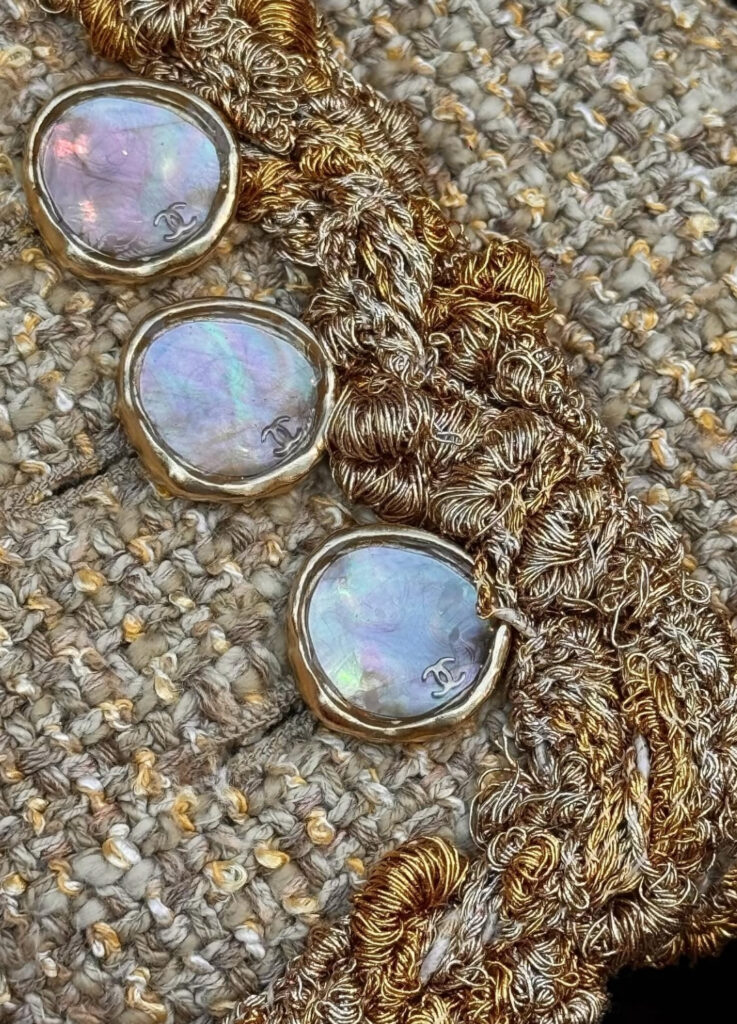
Instead of acting as a symbol of status or tradition, tweed here became a structural fabric—lighter in visual weight, softened in construction, sometimes deliberately imperfect. Frayed hems, uneven textures, and relaxed finishes appeared throughout the show.
This approach aligned with broader industry commentary. Critics highlighted how Blazy reframed tweed as material language, not heritage shorthand. Chanel’s codes were present, but no longer announced.
Fluidity Over Ornament
Silk dresses and layered separates introduced a second narrative: softness without fragility. Bias-cut silhouettes, subtle transparency, and long vertical lines created garments that responded to the body rather than reshaping it.
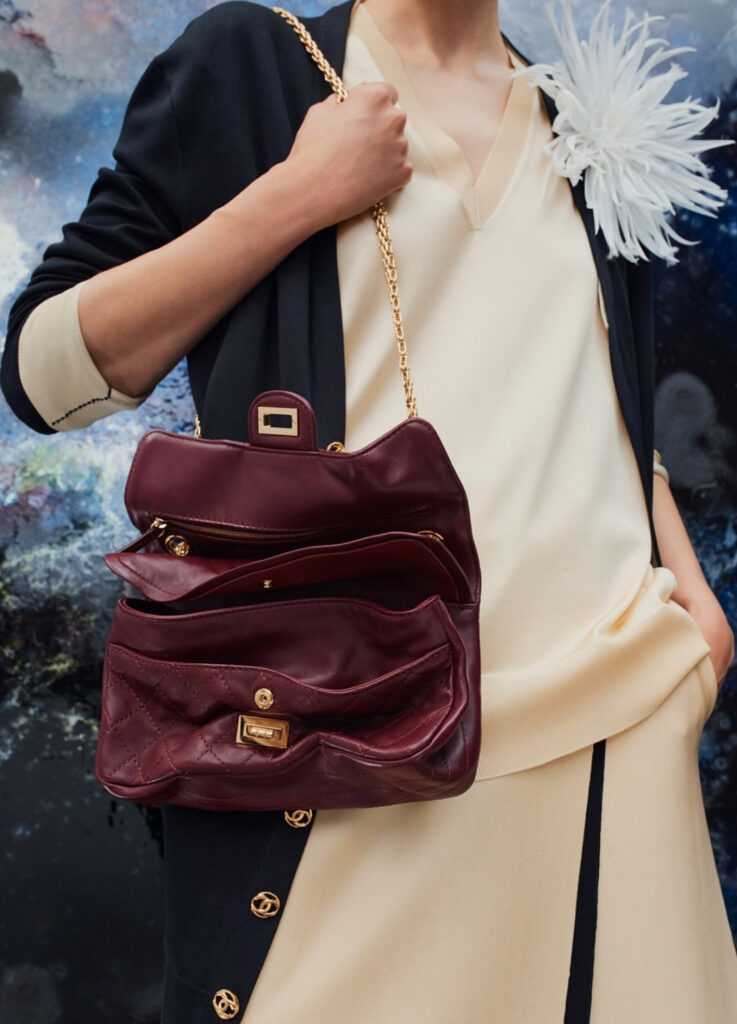
Black and white acted as architectural anchors, while muted reds and warm neutrals punctuated the collection without overwhelming it. Accessories—chains, bags, shoes—were intentionally understated, reinforcing the idea that this was a wardrobe designed for continuity, not seasonal drama.
Key Looks Breakdown
1. Cropped Tailoring: Control Without Compression
The opening looks established the core thesis of the collection. Cropped tweed jackets paired with relaxed trousers and skirts introduced a new proportion language—shortened at the top, elongated below.
What mattered here was not the cut itself, but the space between garment and body. Jackets hovered rather than hugged. Sleeves were often rolled or softened, deliberately disrupting the idea of Chanel tailoring as rigid or ceremonial.
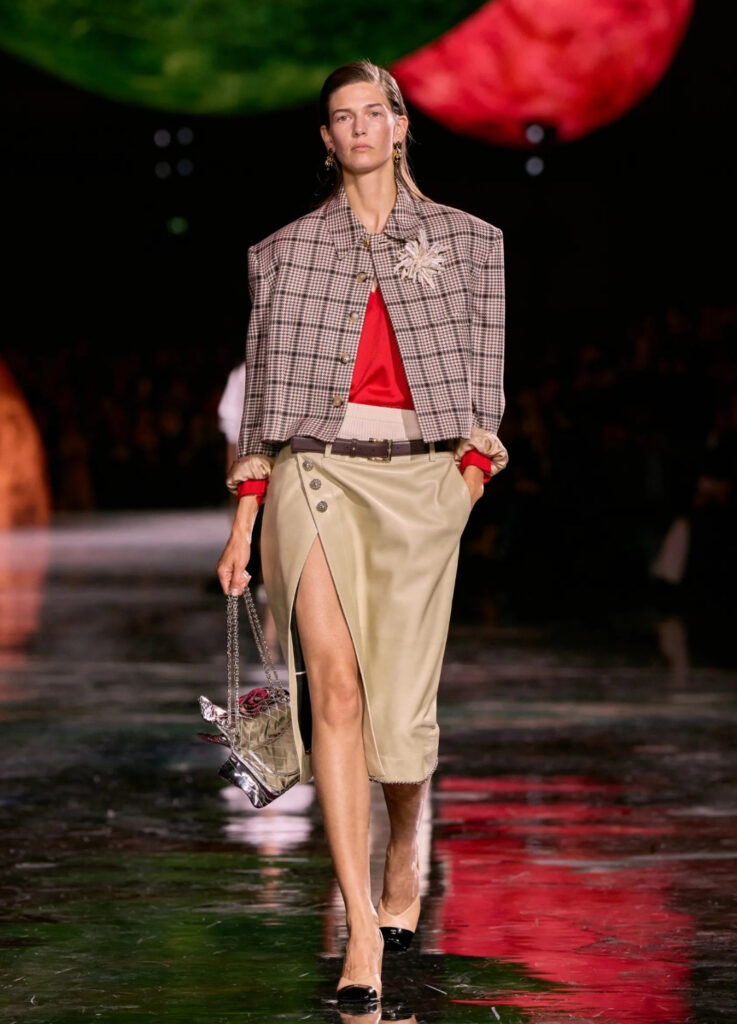
From a styling perspective, these looks work best on bodies with natural verticality. On petite or wave-dominant frames, however, the cropped length combined with volume below can visually lower the waistline and compress height.
This is tailoring that assumes confidence and physical presence. It does not attempt to correct proportions—it exposes them.
2. The New Tweed: From Symbol to Structure
Blazy’s most consequential decision was his treatment of tweed.
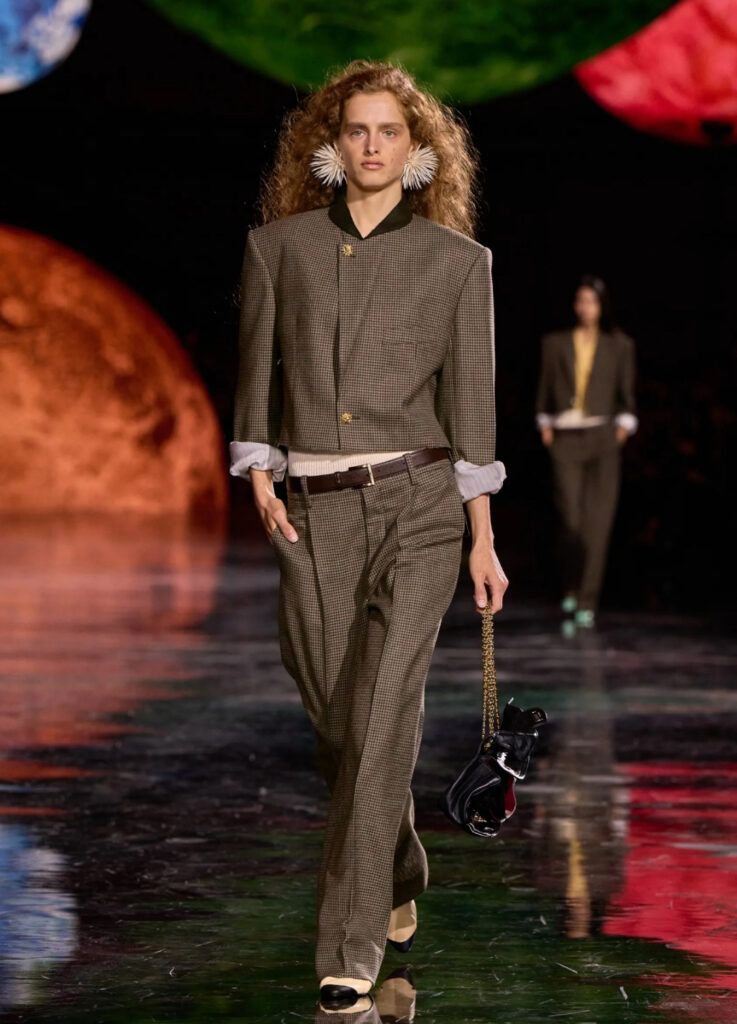
Rather than presenting tweed as an emblem of heritage, he treated it as architectural fabric. The weave was often loose, the finish intentionally raw. Frayed hems and softened edges appeared repeatedly, suggesting that completion itself was no longer the goal.
Fashion editors noted this shift immediately. Tweed was no longer “precious.” It was functional, wearable, and in some cases, almost vulnerable.
For wearers, this redefinition matters. These pieces demand styling discipline. Without contrast—clean shirts, sharp belts, controlled footwear—the looseness can quickly tip into visual heaviness, especially on shorter or softly contoured bodies.
3. White as Construction, Not Innocence
White appeared frequently, but never as purity.
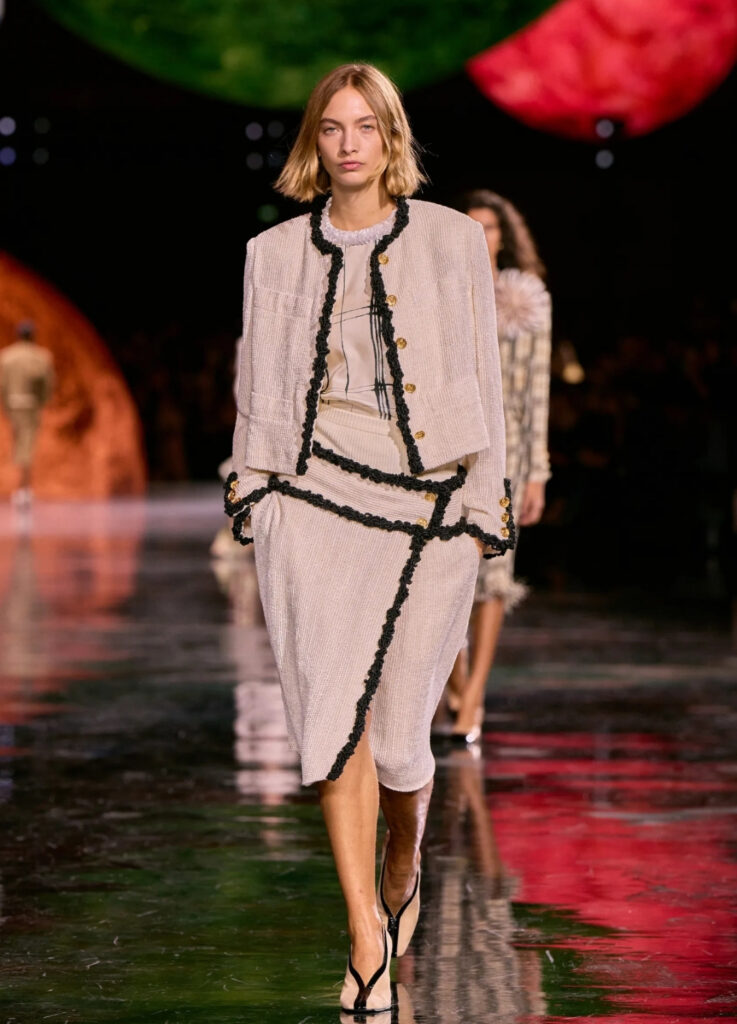
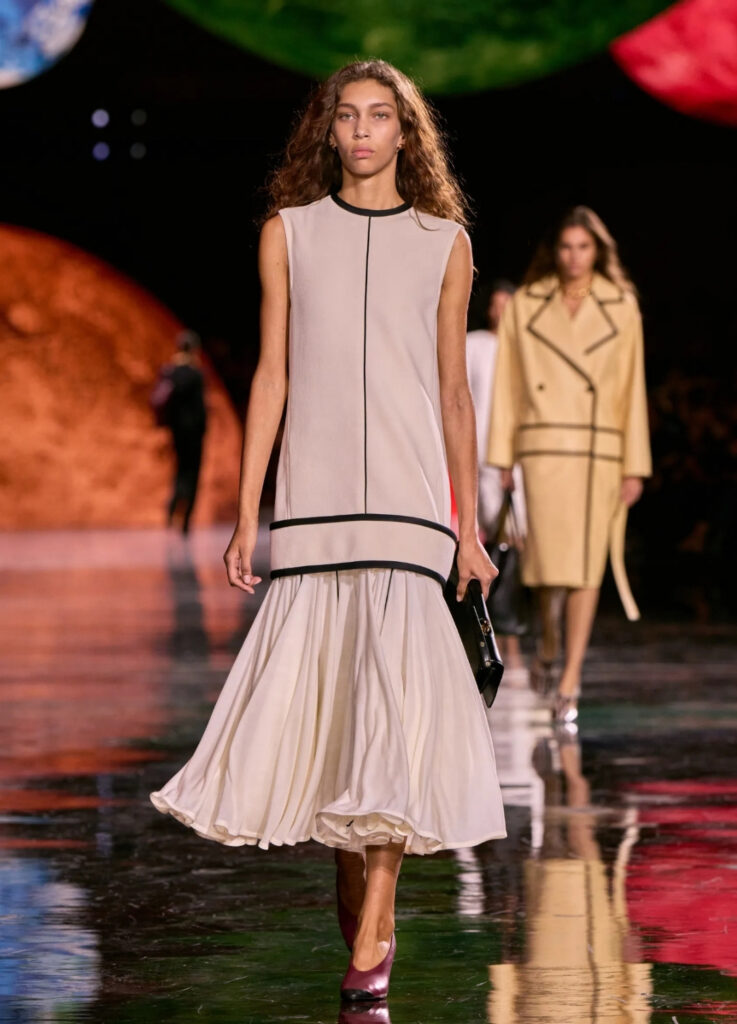
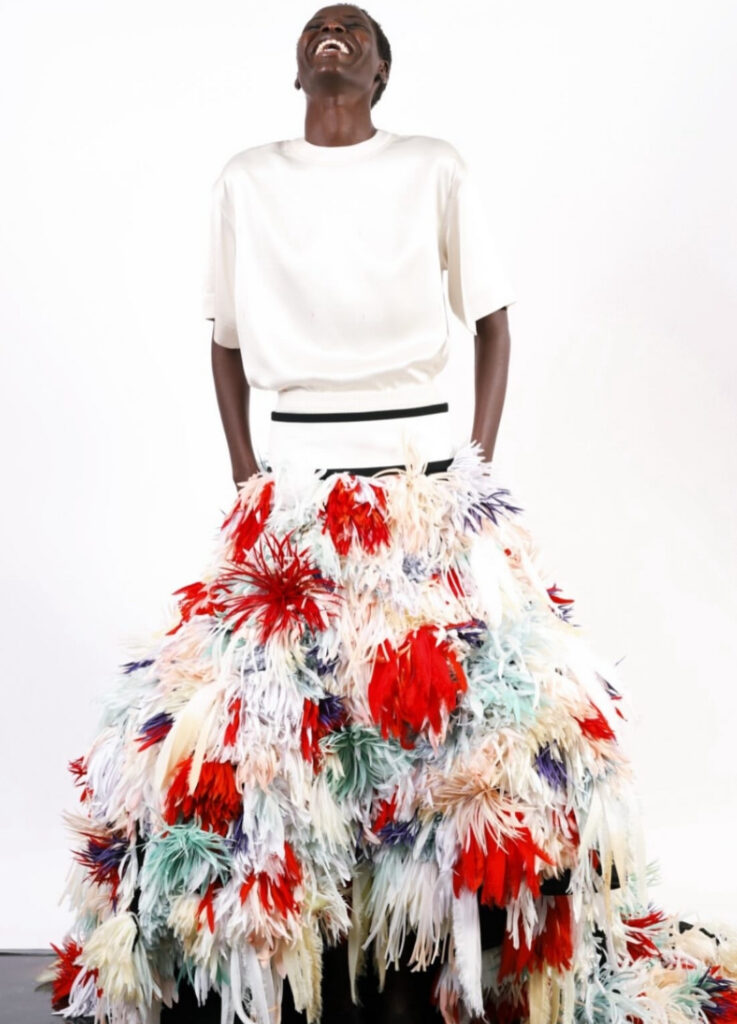
Dresses and sets in ivory and chalk were sharply outlined with black piping or structural seams. This created garments that felt almost diagrammatic—white used to expose construction rather than soften it.
The effect was striking on the runway, particularly in motion. Yet it is also one of the most body-sensitive categories in the collection.
White amplifies volume. Combined with straight silhouettes and minimal shaping, these looks favor lean frames with clear bone structure. On fuller or wave-dominant bodies, they require careful tailoring or strategic layering to avoid a flattened silhouette.
4. Shirts as Independent Objects
One of the quieter but more intellectually interesting threads was the shirt.
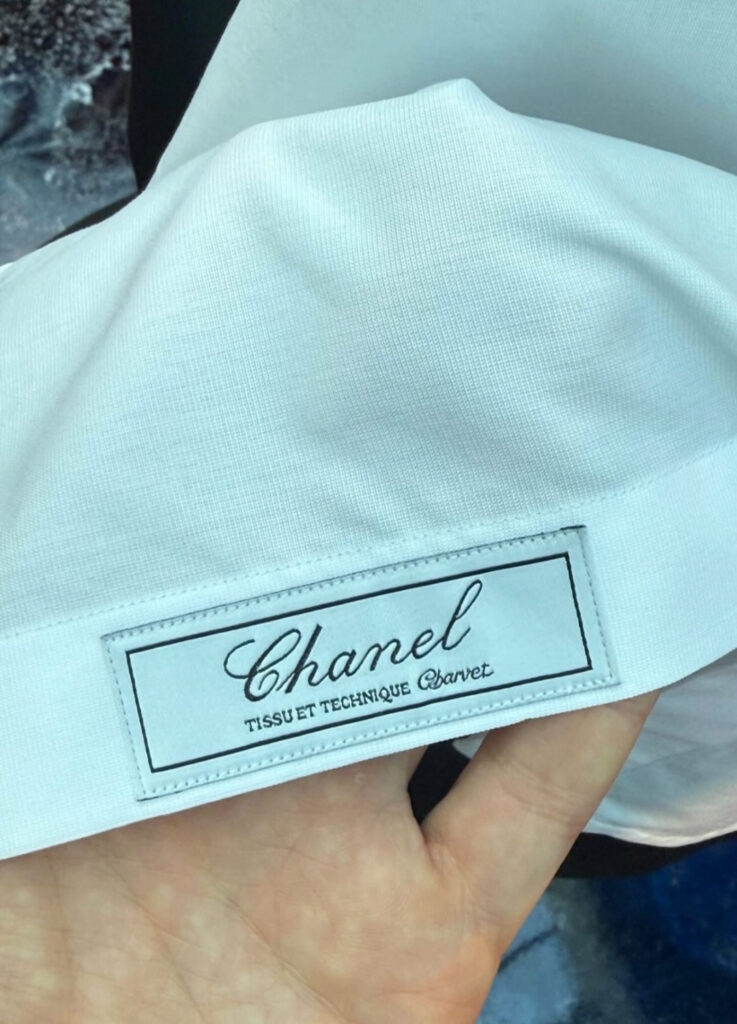
Oversized button-downs appeared styled over skirts, under jackets, or as standalone statements. They were not transitional items, but primary garments—treated with the same seriousness as outerwear.
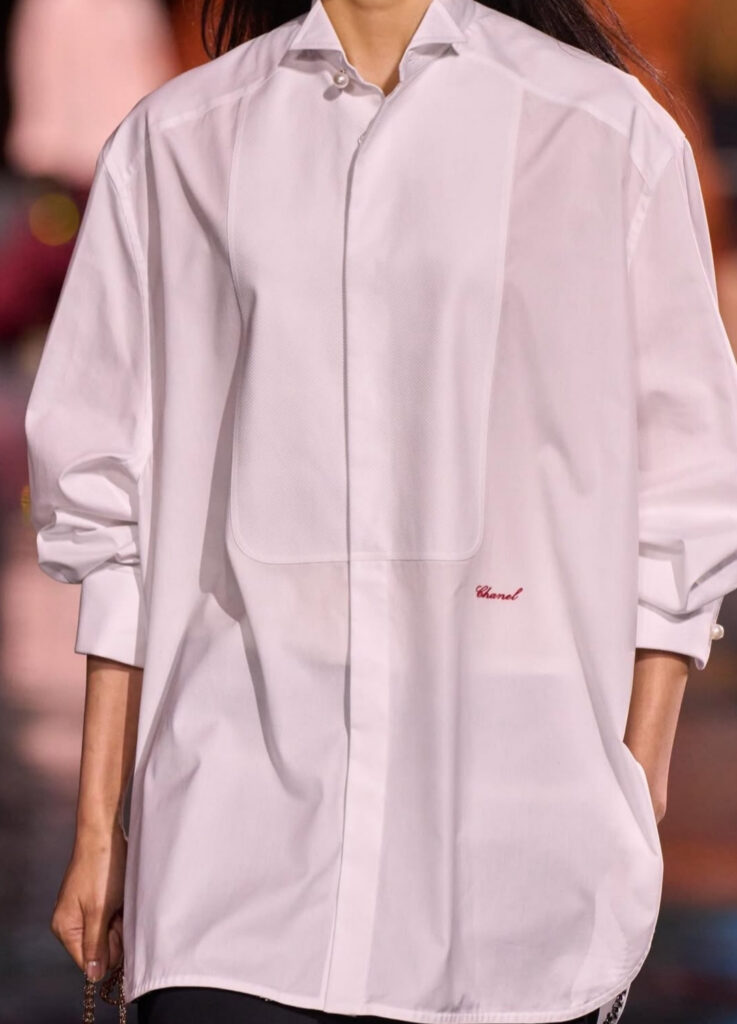
This echoed Blazy’s broader design philosophy: hierarchy dissolved. Everything mattered.
From a wardrobe perspective, this is one of the most transferable ideas in the collection. Shirts are forgiving, adaptable, and scalable across body types—provided length and volume are adjusted.
5. Evening Looks: Memory Over Spectacle
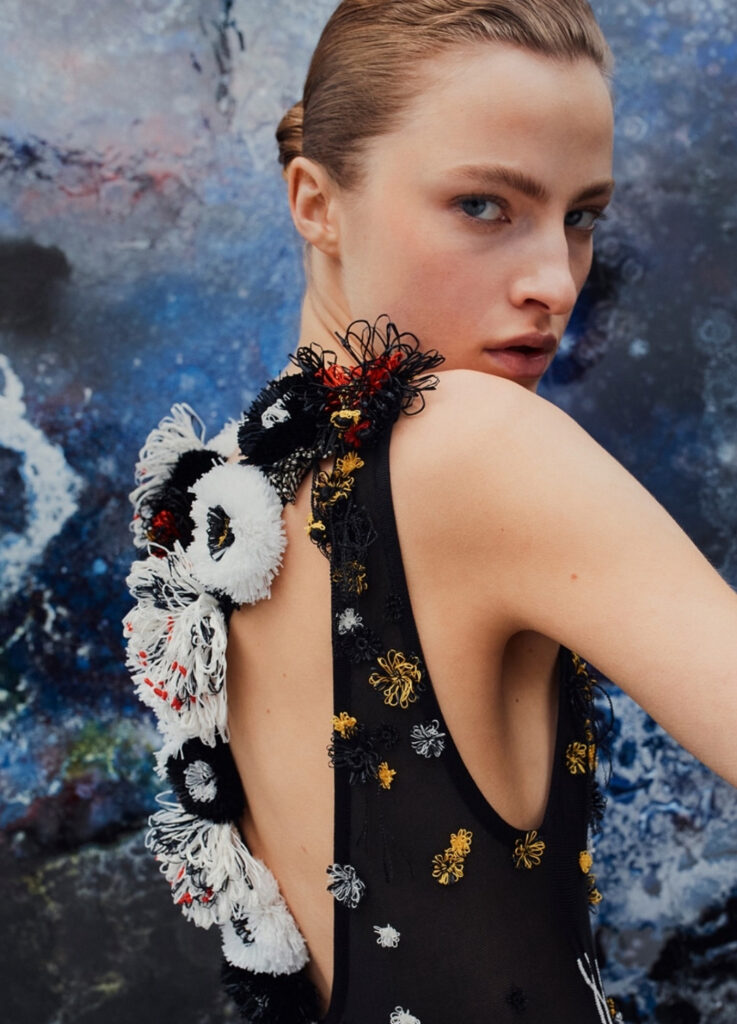
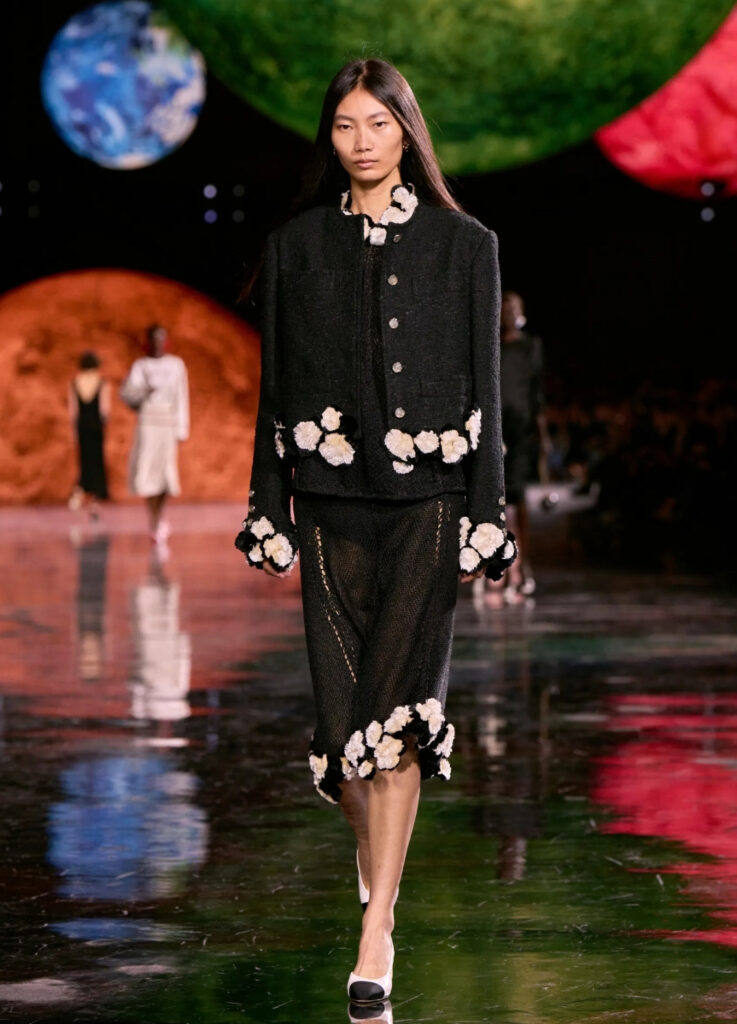
The evening dresses avoided obvious glamour. Instead of sparkle-first drama, Blazy leaned into surface memory—embroidered florals, textured knits, muted metallics that caught light subtly rather than aggressively.
These pieces referenced Chanel’s couture heritage without replicating it. Critics described them as “emotionally archival,” not historically literal.
Importantly, these looks carried more body awareness. Vertical lines, exposed collarbones, and controlled drape allowed for greater adaptability across different frames, making them some of the most universally flattering pieces in the show.
Revisiting the Fit Conversation
It is worth repeating: this collection is not inclusive by default.
Blazy designs from a place of aesthetic clarity, not corrective styling. The clothes do not attempt to disguise proportion challenges. They reveal them.
For women with:
- shorter height
- pronounced curves
- softer skeletal structure
selective engagement is essential. Tailoring adjustments, altered lengths, and simplified layering will be key to translating these looks off-runway.
This mirrors ongoing discussions in Western fashion media, where petite-curvy and soft-neutral body types are frequently cited as underserved by relaxed, deconstructed luxury tailoring.
Why This Collection Will Age Well
Despite the debate, Chanel SS26 is likely to age gracefully.
It avoids trend dependency. There is no single silhouette that defines the season. Instead, the collection offers a system of thinking—about proportion, restraint, and movement.
For Chanel, this marks a shift from icon production to wardrobe architecture.
Industry Response: Measured, Thoughtful, Divided
The fashion press largely received the collection positively, though not unanimously.
- Vogue and Vogue Business emphasized the maturity of Blazy’s approach, noting how confidently he avoided “debut theatrics.”
- ELLE highlighted the showroom strength of the collection, suggesting it was designed with real clients—and real wardrobes—in mind.
- Another Magazine described the show as “Chanel speaking in a lower register.”
At the same time, some critics questioned whether restraint alone could sustain long-term excitement. The absence of overtly iconic “instant Chanel” moments sparked debate—particularly among those accustomed to bolder seasonal statements.
Final Reflection
Matthieu Blazy did not arrive to redefine Chanel overnight.
He arrived to slow it down.
In a season saturated with noise, his debut spoke quietly—and with intent.
For those willing to listen, it offered something rarer than novelty:
clarity.
[ Related Editorials ]