Reading Van Cleef & Arpels’ new Perlée three-row rings
The Perlée collection occupies a distinct place within Van Cleef & Arpels.
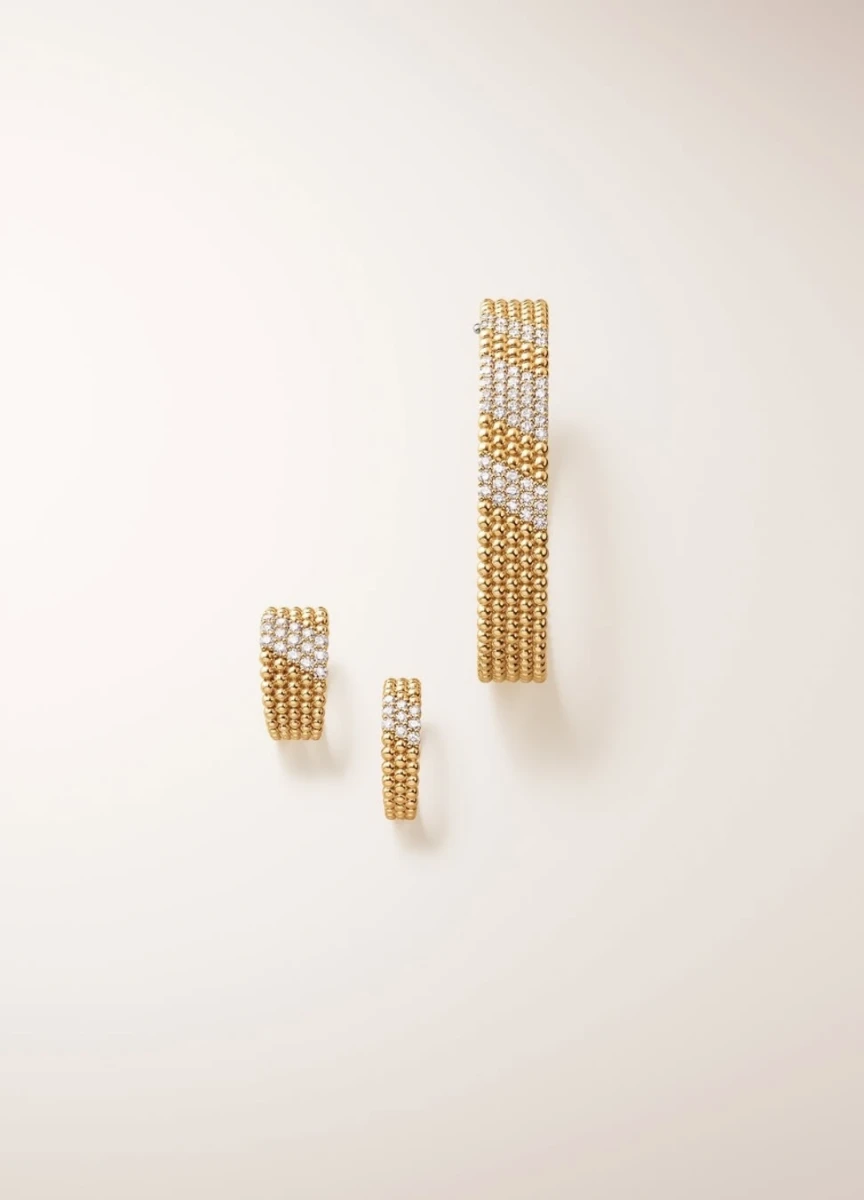
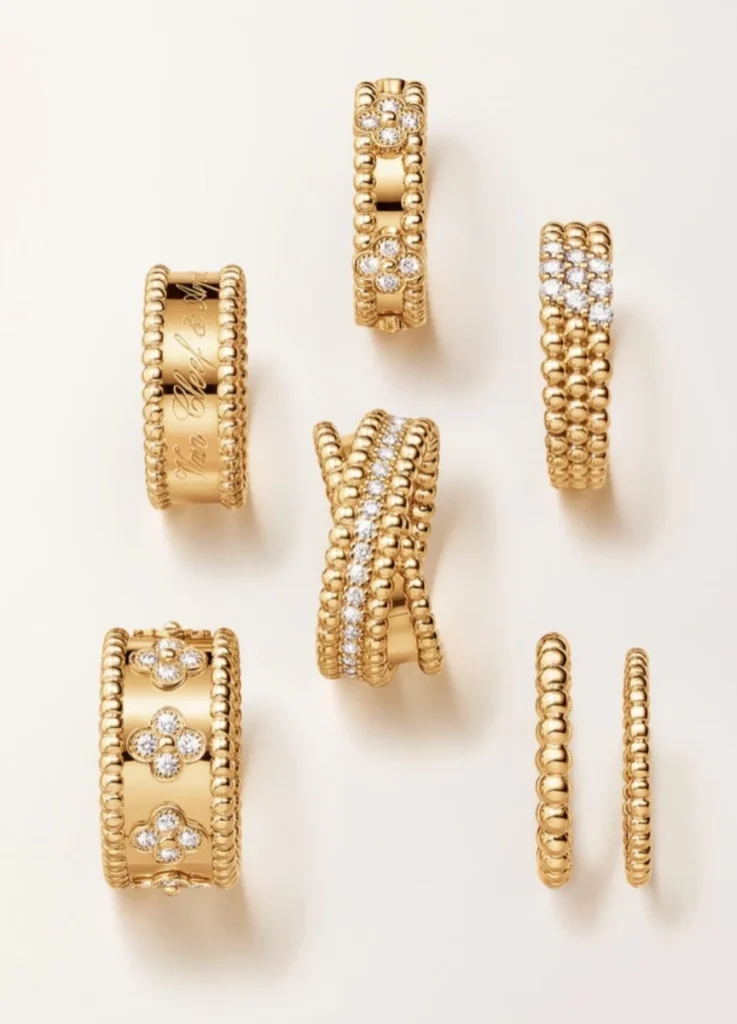
Where Alhambra is remembered for symbolism and Frivole for floral ornament, Perlée is remembered for the repetition of form. There’s no immediately legible motif like the four-leaf clover. There’s no decorative narrative like the flowers of Flowerlace. At the center of Perlée sits only the golden bead — small spheres of gold polished to a high sheen, arranged at precise intervals, where the repetition becomes a line, and the line becomes a surface.
The collection, born in 2008, draws on a longer history. Golden beads appeared prominently in the maison’s Couscous designs of the late 1940s, where polished spheres were arranged along flexible chains. Perlée concentrates that vocabulary into a focused expression — a clear, repeatable motif adjustable through various proportions and combinations.
Within that framework, the new three-row rings are the most expansive Perlée ring development in some time.
What’s New — The 3-Row Ring Family
The Perlée three-row launch arrives in three distinct versions, each rendered in multiple metal options.
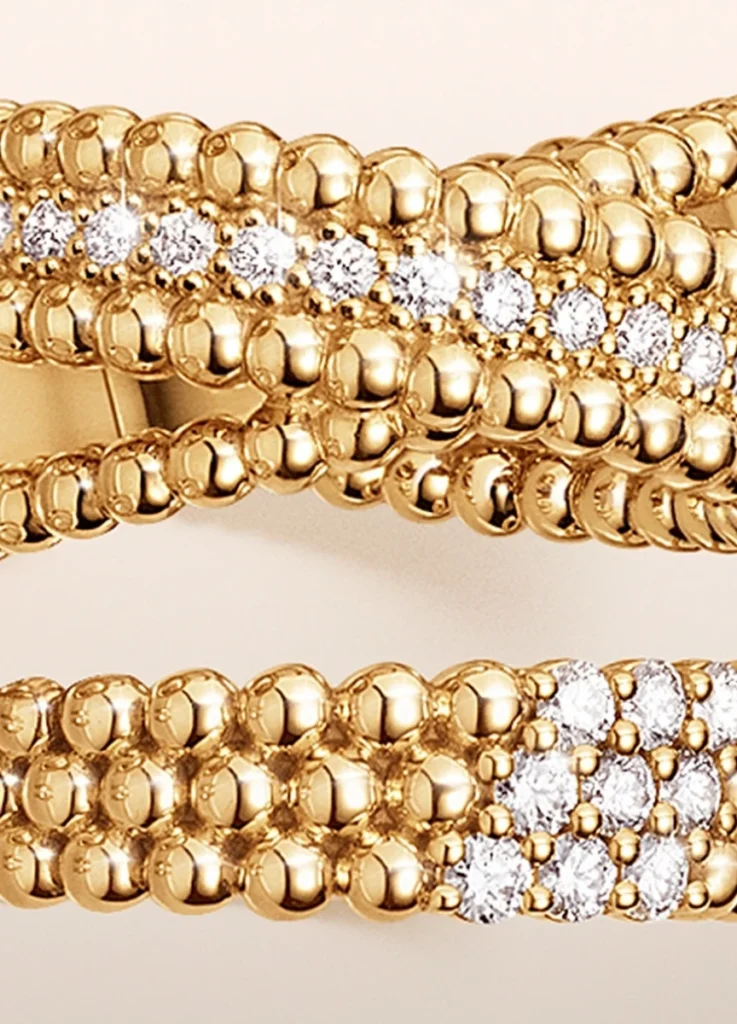
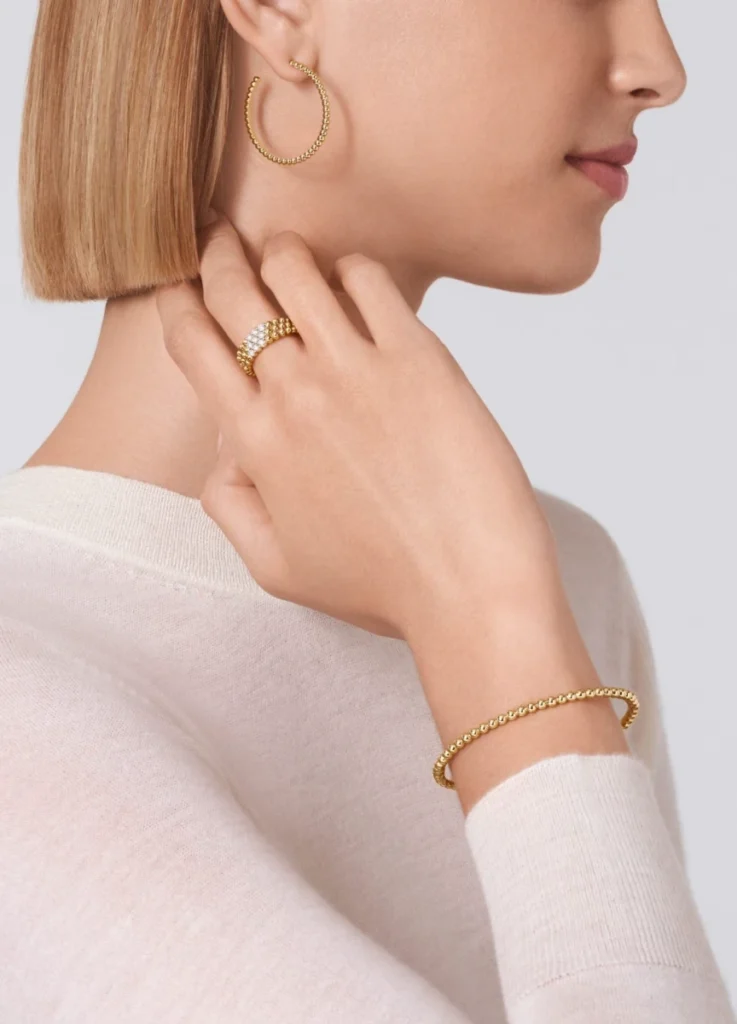
The Perlée pearls of gold ring, 3 rows is the foundational expression — three parallel rows of polished golden beads, available in 18K yellow gold, rhodium-plated 18K white gold, and 18K rose gold. The beads vary subtly in scale across the rows, with the central row anchoring two flanking lines.
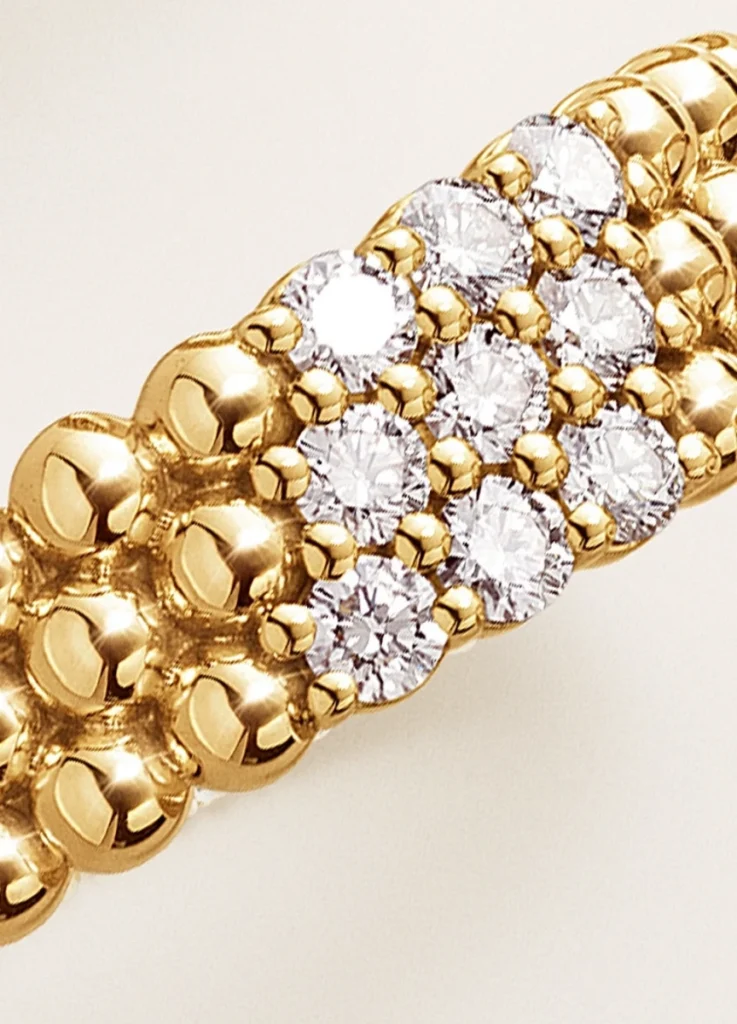
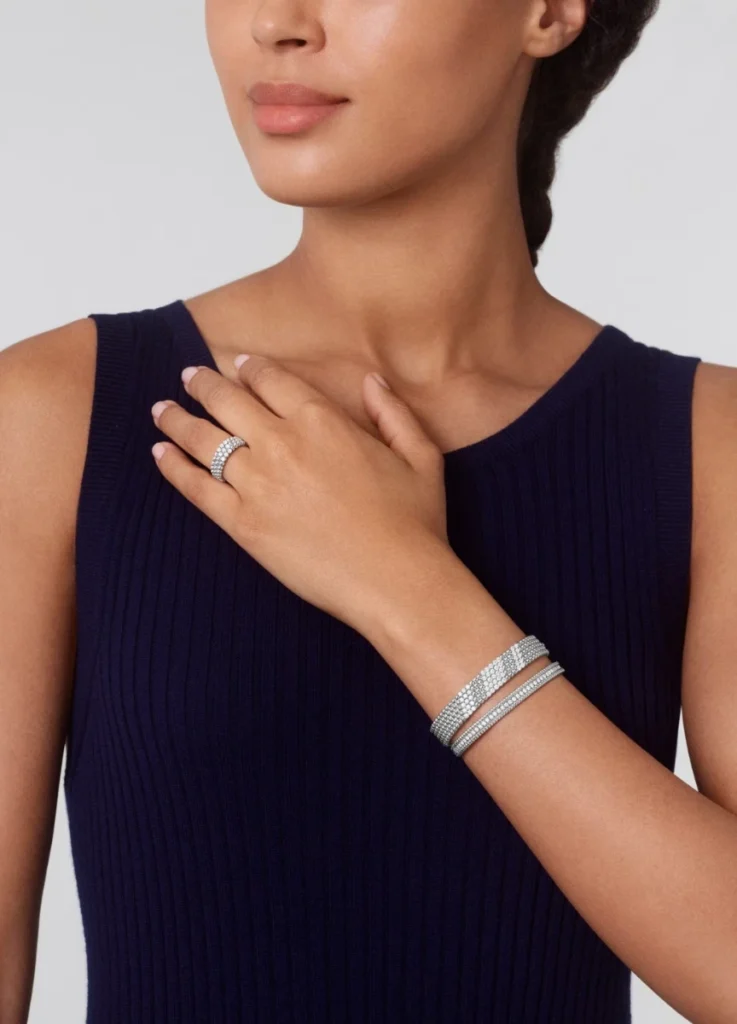
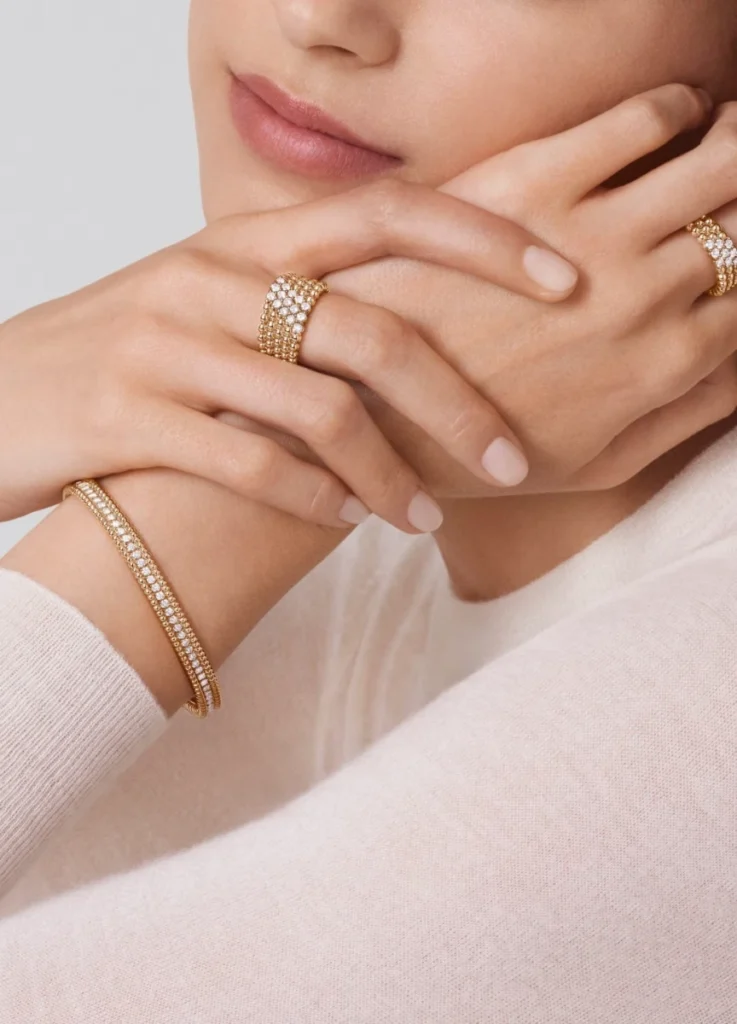
The Perlée diamonds ring, 3 rows introduces brilliant-cut diamonds along the central golden ribbon, framed by polished beads on either side. Available in yellow, rose, and white gold across Van Cleef’s standard high-jewelry diamond grading.
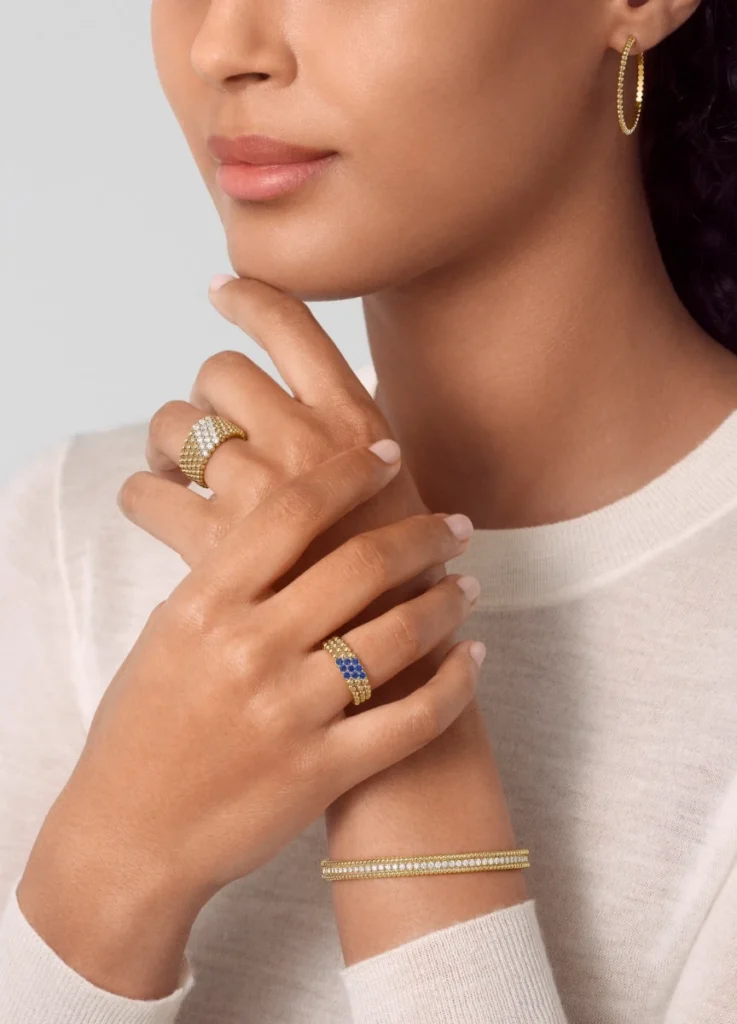
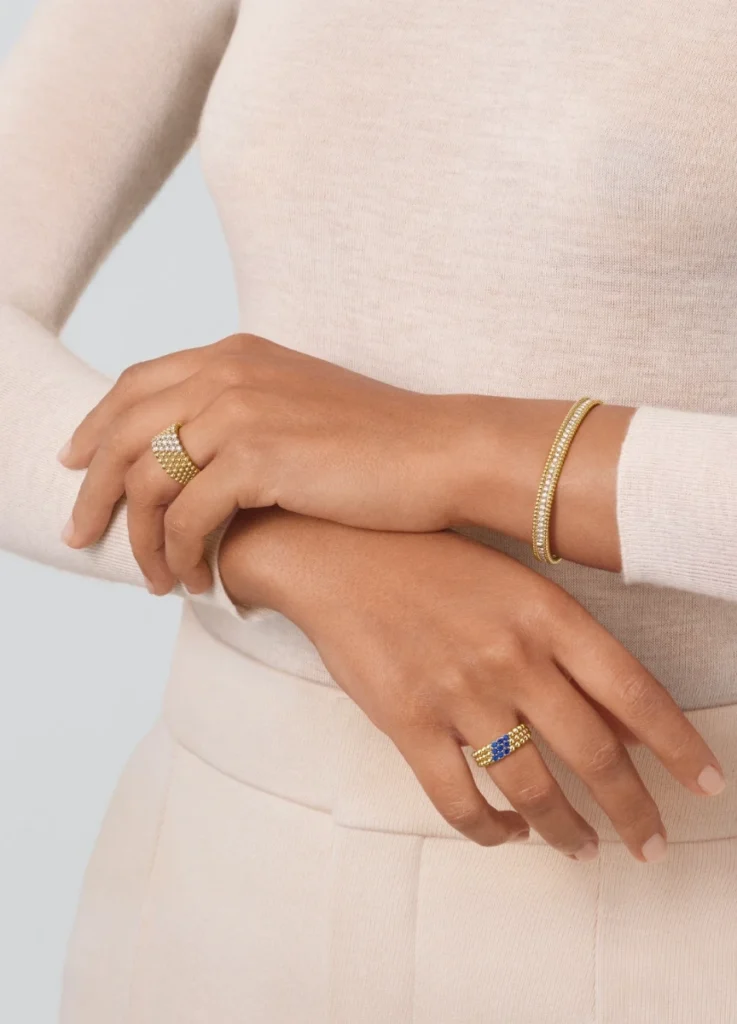
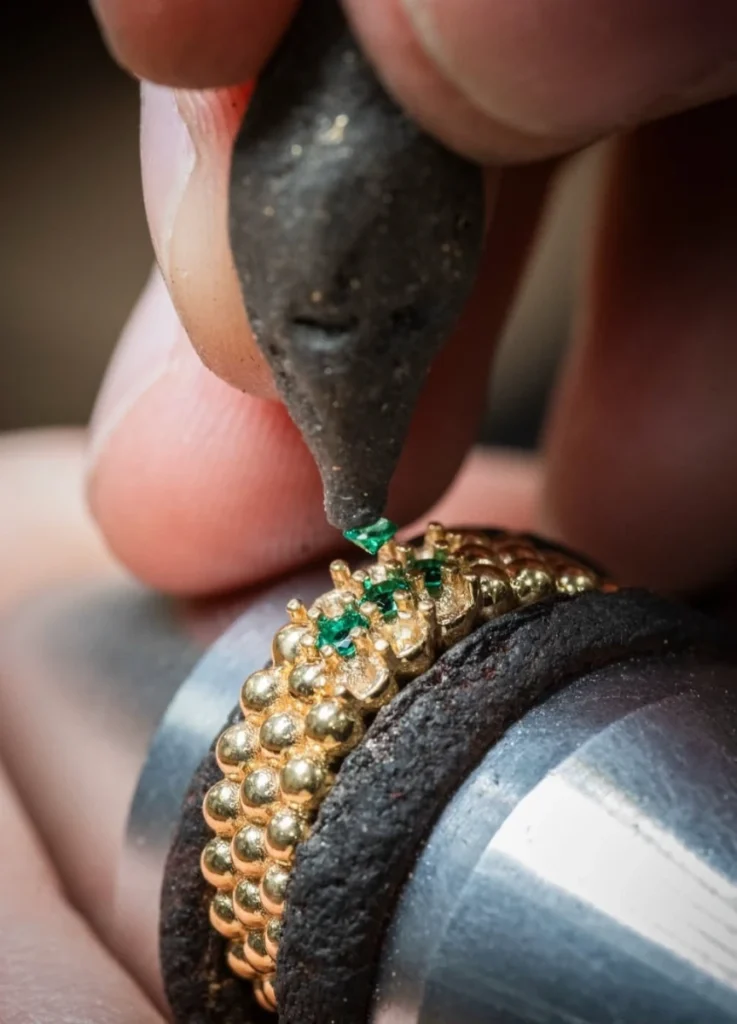
The Perlée couleurs ring, 3 rows introduces colored gemstones in three deliberate pairings. Sapphires and emeralds set on yellow gold. Rubies set on rose gold. Each pairing was chosen for tonal compatibility — the sapphires presenting a dense, velvety blue, the emeralds a vivid green, the rubies a deep red. The stones work within the design rather than dominating it; their hues amplified by the polished gold surfaces of the beads around them.
Tatler Asia’s coverage of the launch noted the technical execution involved in each piece — bead finishing through casting and hand-polishing, openwork details on the reverse to allow light through the stones, and the kind of precision in stone setting that Perlée’s tight bead spacing requires. The result, across all three versions, is the kind of finish Van Cleef has built the collection’s reputation around.
Why Three Rows?
A single row of Perlée beads functions as a line. The ring sits lightly on the finger, contributing rhythm without claiming center stage. Single-row Perlée pieces work best as accents within a stack, where they organize the spacing between other rings. Two rows would shift the proportion slightly without producing a meaningfully different result — the maison has already explored two-row variation through its Duo ring, which means a new two-row ring would lack distinctive ground.
Four rows or more changes the character of Perlée entirely. The bead repetition stops reading as cadence and starts reading as surface area. The ring begins to operate like a wide gold band rather than like a Perlée piece. The collection’s appeal lies precisely in the rhythmic surface produced by small spherical elements; expanding too widely flattens that rhythm into solid metal.
Three rows sits at the strategic center.
The number is light enough to preserve the rhythmic surface that defines Perlée, structured enough to function as an independent piece rather than as an accent within a stack, and balanced architecturally — the central row acts as a structural axis, with the two flanking rows wrapping that axis on either side. The result reads as a complete piece on the finger rather than as a wider variation of an existing single-row design.
The launch suggests Van Cleef may be positioning the three-row ring as a primary piece — something a wearer can build a hand composition around, rather than a supplementary element in a layered stack. That positioning shift is what makes the expansion meaningful beyond its visual presentation.
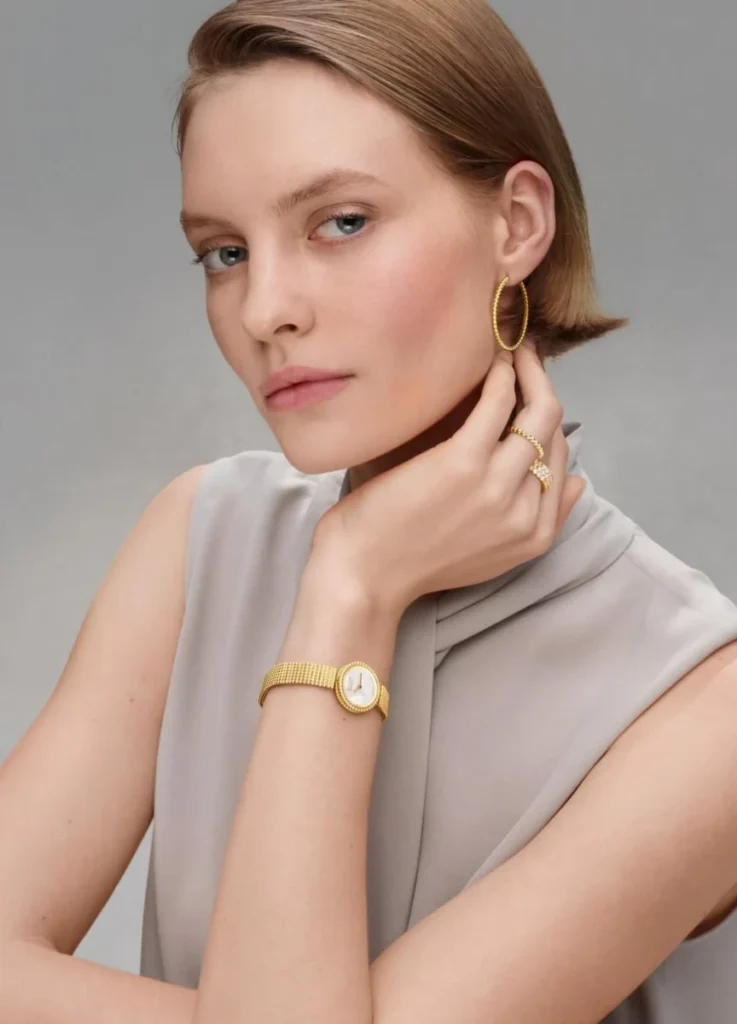
How It Reads on the Hand
The hand-feel of the three-row ring works through a specific tension between width and visual density.
Wide gold bands typically present a closed, flat surface across the finger. The width can shorten the visual line of the hand, particularly on shorter fingers, by interrupting the vertical proportion that defines longer-looking hands. The Perlée three-row sidesteps this trap. The bead structure doesn’t seal the surface; the rounded spheres create light dispersion across what would otherwise be a flat plane. The ring registers width without registering compression.
That said, the three-row remains a more demanding ring than the single-row or duo versions.
Compatibility depends mostly on three things: finger length, finger structure, and the back of the hand. Fingers in the medium to longer range carry the three-row’s volume more cleanly than shorter fingers, where the ring can feel proportionally heavy. Fingers that are too thin and uniform may need the bead volume to find a center; fingers with visible joints find the rounded bead rhythm softens the angular geometry. Flatter hands carry the three-row elegantly, while rounder hands may find the bead volume amplifies existing visual roundness.
Speaking from direct experience: my own hand, with shorter fingers and more pronounced knuckle structure, found the three-row register heavier than I expected. The width was distinctly more present than my regular Perlée pieces, and the ring read as adding density rather than completing the hand’s existing geometry. The piece is beautiful on the right hand. Mine wasn’t it.
For wearers considering the ring, the practical recommendation is straightforward: try it on both ring finger and middle finger before deciding. The middle finger often carries the three-row’s width more comfortably than the ring finger, particularly for hands where the ring finger is naturally shorter. If the middle finger feels too central, the ring finger may resolve more elegantly.

The Diamond Version — Light as a Point Within Rhythm
Where the standard gold three-row produces pure rhythmic repetition, the diamond version introduces a defined center of light.
The diamonds occupy a specific area along the central golden ribbon rather than paving the entire ring surface. The bead texture remains visible across the flanking rows; the diamonds add focus rather than uniformity. The piece reads less as a diamond ring and more as a Perlée gold ring with a light point embedded into its rhythm.
The approach is recognizably Van Cleef. Where some maisons would saturate the entire ring with pavé to maximize visual brightness, Van Cleef positions diamonds within an existing structural language. The bead rhythm and the diamond sparkle move together rather than competing — the sparkle anchored by the golden cadence around it.
In wear, the diamond area registers more clearly than the photograph suggests. On yellow gold, the contrast between the warm metal and the brilliant white of the diamonds creates a focal point that catches the eye as the hand moves. The ring functions as a quiet center of brightness rather than as an overall paved surface — closer in spirit to a solitaire’s logic than to a tennis-band’s logic, despite the multi-stone setting.
For collectors weighing the three-row diamond against the simpler gold three-row, the diamond version reads more declarative without crossing into showy. The gold version sits quieter and may suit collectors seeking pure structural expression. The diamond version adds a controlled brightness that makes the piece feel slightly more dressed — appropriate for day or evening wear without becoming occasion-only.

The Colored Stone Versions — Sapphire, Emerald, Ruby
The Perlée couleurs three-row introduces a different conversation between metal and stone.
Sapphire on yellow gold produces the sharpest contrast among the three pairings. The deep blue of the sapphires reads cool against the warm gold cadence; the combination creates a graphic clarity that’s visually striking. The pairing works particularly well for hands with cooler skin tones or for wearers who want the warmth of yellow gold balanced by a tempering color. On hands with warmer or yellow-toned skin, the contrast can feel slightly detached rather than fully integrated.
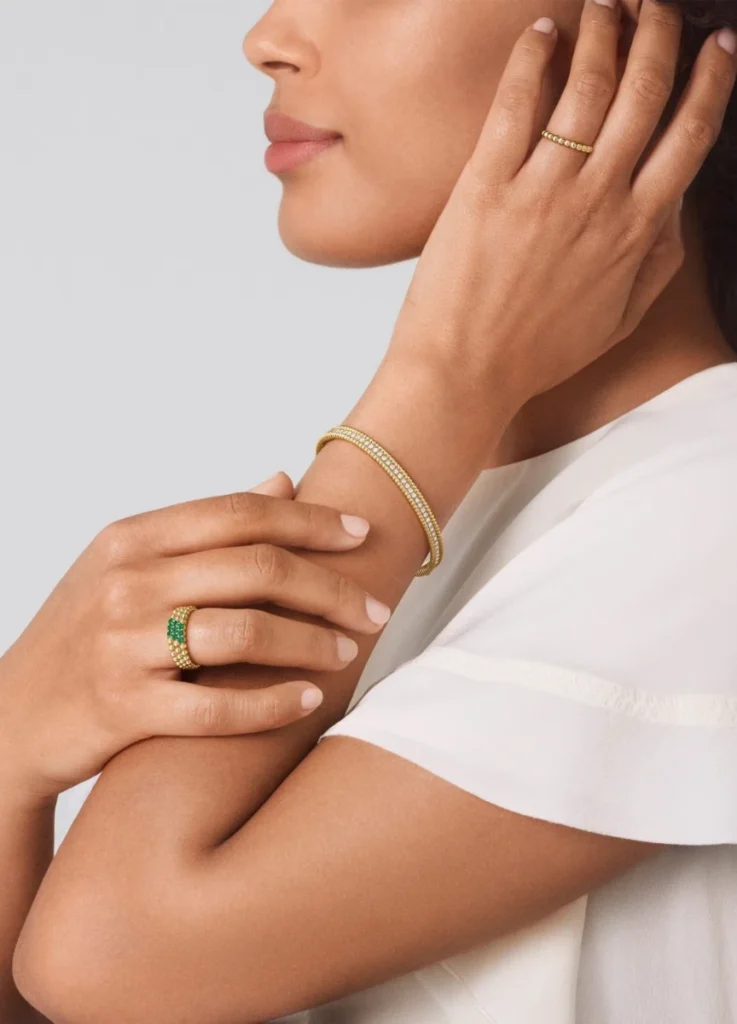
Emerald on yellow gold is the most classically Van Cleef of the three pairings. The vivid green of the emeralds settles into yellow gold with the kind of heritage familiarity high jewelry has built up across decades. The combination requires careful skin-tone matching, though. Some warmer or red-toned complexions can dim the emerald’s vibrancy slightly, while clear, lighter complexions allow the green-and-gold contrast to register at full intensity.
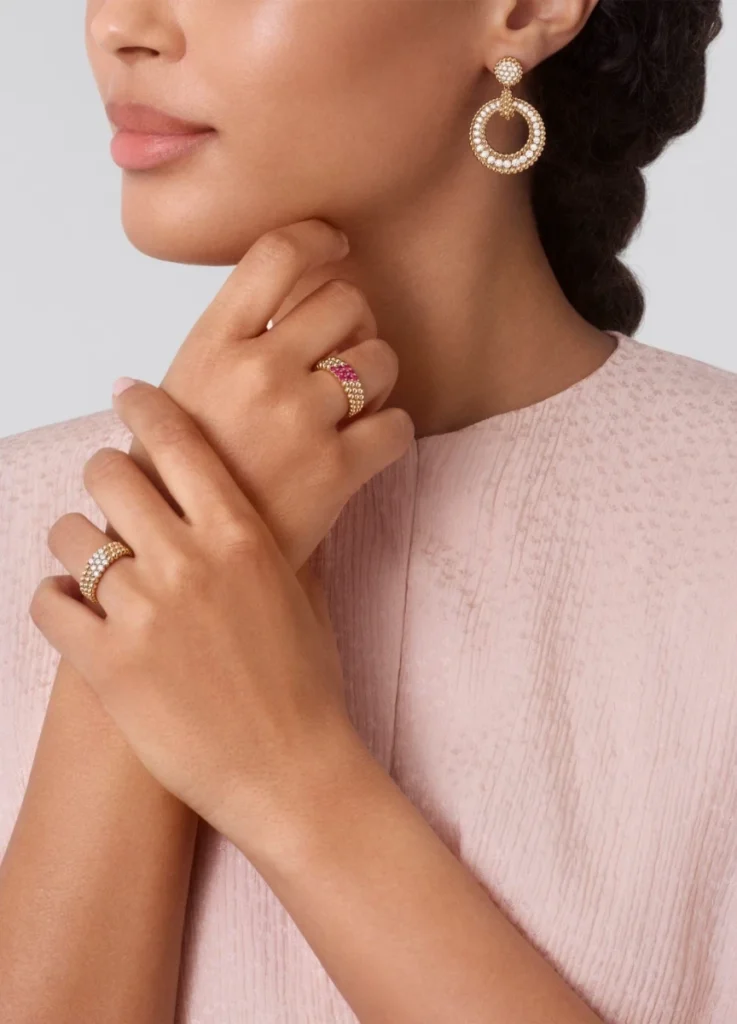
Ruby on rose gold is the warmest, most romantic of the three. The deep red of the rubies amplifies the pinkish warmth of rose gold, producing a piece that reads decorative rather than structural. This is the version that works best for wearers whose styling already leans feminine or color-forward, and the version that requires the most careful integration into a daily wardrobe. On hands where rose gold itself sits naturally, the ruby version completes the warmth into something celebratory. On hands where rose gold can feel slightly disconnected from the skin, the ruby pairing may amplify rather than soften that effect.
Across all three colored versions, the Perlée bead structure absorbs more of the visual attention than the colored stones in isolation might suggest. The colored stone is integrated into the Perlée logic rather than operating as an independent statement piece. For collectors who want a colored stone ring that reads primarily as a colored stone ring, other Van Cleef pieces may serve better. For collectors who want the Perlée vocabulary expanded with color rather than brightened with diamonds, this is the most coherent expression yet.
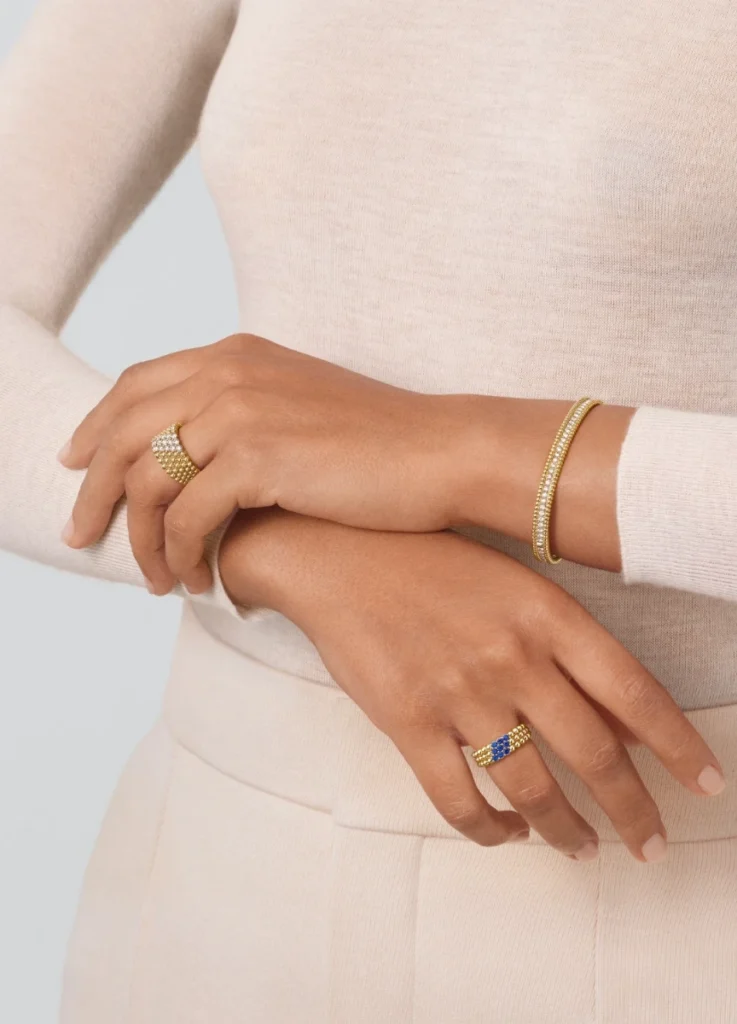
Yellow Gold vs. White Gold
The metal choice changes the ring’s character significantly.
Yellow gold preserves the historical Perlée register most completely. The warmth of yellow against the polished bead structure produces the rhythmic, decorative quality that defines the collection. The yellow gold three-row reads as classically Van Cleef — descended directly from the Couscous-era heritage that informs the Perlée vocabulary.
White gold (rhodium-plated, in Van Cleef’s standard finish) shifts the ring toward a cooler, more contemporary register. The polished beads still create rhythm, but the rhythm registers more jewel-like and urban than the warmer yellow gold version. White gold particularly suits the diamond version, where the metal-to-stone color unity produces a quieter overall sparkle that integrates seamlessly into mixed-stone stacks.
Rose gold sits between the two. Warmer than white, less structured than yellow, the rose gold version emphasizes the bead surface’s softness over its rhythmic precision. This is the version most likely to read as romantic rather than as architectural — appropriate for collectors whose existing rose gold pieces include the Love bracelet, the Trinity, or other gentle gold-tone references.
Choosing between metals comes down to which of the three registers — historical, contemporary, or romantic — aligns best with the rest of the wearer’s jewelry box. The three-row ring is substantial enough that it will anchor whichever metal register it carries.
Layering and Styling
The three-row’s primary positioning is as a center ring rather than as a stacking element.
Worn alone on the ring or middle finger, the piece organizes the entire hand around its bead rhythm. Layered with very thin pieces — a plain gold band, a simple diamond row — the three-row maintains its centrality while allowing supporting elements to add texture. Beyond two pieces total on a single hand, the Perlée rhythm starts to compete with itself; multiple Perlée elements stacked together can produce a visual density that overwhelms the collection’s defining rhythmic clarity.
Cross-brand layering requires more attention than within-collection stacking.
Van Cleef’s bead vocabulary doesn’t sit cleanly alongside Cartier’s screw-and-nail hardware language. The three-row Perlée and the Cartier Love bracelet operate on different design vocabularies — beaded ornamental cadence versus industrial structural language. Both maisons can be worn together, but typically on different hands rather than stacked on the same finger or wrist. The same applies to Chanel’s Coco Crush, whose quilted gold geometry pulls in a different direction than Perlée’s rhythmic surface.
For collectors building a Perlée hand composition, the cleanest approach is staying within Van Cleef’s vocabulary. The three-row ring paired with a Perlée bracelet or a Vintage Alhambra pendant creates a coherent maison conversation. Adding cross-brand pieces tends to dilute that coherence rather than enrich it.
Price and Practical Considerations
The three-row ring is a meaningful price step from the entry Perlée pieces.
The standard yellow gold pearls-of-gold three-row sits in mid-tier Perlée pricing. The diamond three-row moves into upper-tier territory, with the white gold diamond three-row referenced in the high-teens-thousands USD range based on earlier published pricing. The colored stone versions price comparably to or above the diamond version depending on stone quality and gold metal. Current pricing should be confirmed at boutique level given how high-jewelry retail has shifted across recent seasons.
At these price points, the relevant question shifts from whether the ring is beautiful to whether it will function as a center piece in actual rotation. Van Cleef’s rings are reliable in brand value and execution, but the three-row’s distinctive width and presence mean it suits certain wearing patterns more than others. Wearers who already wear multiple stacked rings may find the three-row competes with their existing rotation rather than completing it. Wearers who prefer a single statement ring per hand will find the three-row serves that purpose with unusual coherence.
The piece also requires honest assessment of finger compatibility before purchase. The three-row’s width is committed; sizing alone won’t resolve proportional mismatch. Trying the ring on both the ring finger and middle finger, in both yellow and white gold, before committing is the recommendation that pays off across years of ownership.
Comparison Within the Perlée Line
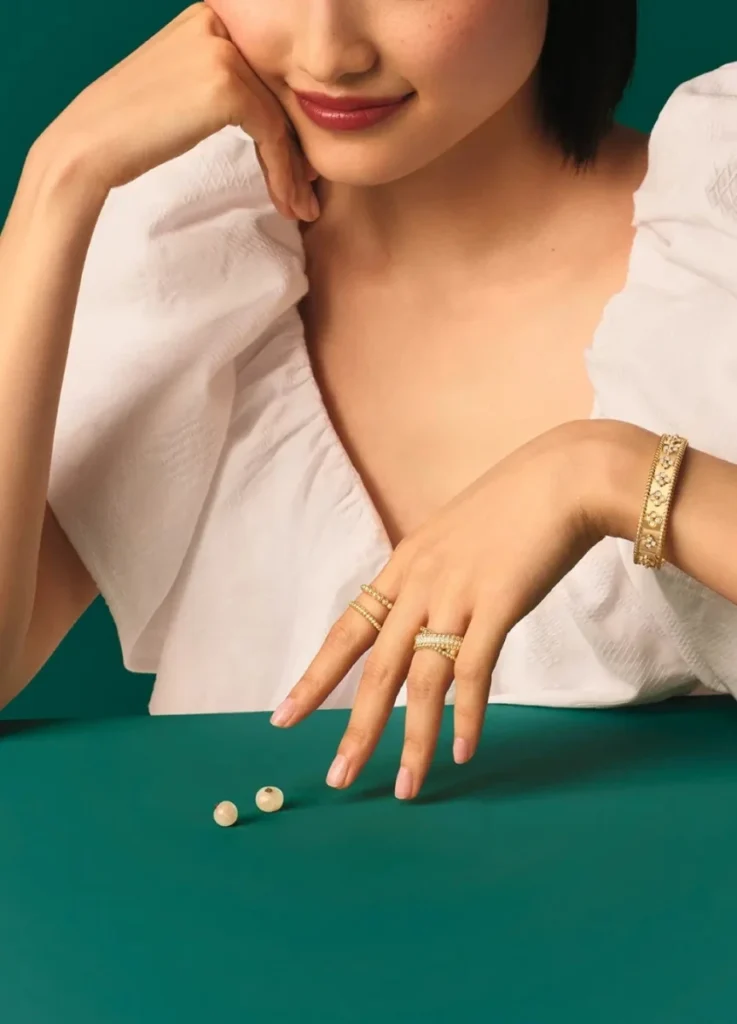
The three-row fits within a broader Perlée ring family that has developed across nearly two decades. The table below summarizes the key distinctions across the major models for collectors deciding which Perlée ring suits their hand and styling pattern.
| Model | Width / Presence | Best Worn As | Hand Compatibility | Character |
|---|---|---|---|---|
| Pearls of Gold, Small | Very thin line | Stacking accent | Universal — all finger types | Pure rhythm, supporting element |
| Pearls of Gold, Medium | Thin to medium line | Solo or stacking | Most fingers; safe for shorter fingers | Rhythmic, balanced |
| Pearls of Gold, 3 Rows | Substantial width | Center piece (solo) | Medium-to-long fingers; flatter hands | Structural, rhythmic surface |
| Diamonds, 1 Row | Thin line with light | Solo or stacking | Lengthens shorter fingers visually | Light as line |
| Diamonds Duo | Two intertwined rows | Solo (decorative) | Most fingers; rewards visible joint structure | Dynamic, layered rhythm |
| Diamonds, 3 Rows | Substantial width with light center | Center piece (solo) | Medium-to-long fingers; balances strong knuckles | Light as plane, anchored brightness |
| Sweet Clovers | Medium with motif | Solo (symbolic) | Most fingers | Decorative, motif-forward |
| Diamonds, 5 Rows | Wide, fully diamond | Statement (occasion) | Longer fingers, high-jewelry styling | Maximum density, formal |
A first Perlée ring works most safely with the Small or Medium pearls-of-gold. Beyond that entry level, the three-row offers a meaningful step up in presence without crossing into the formality of the five-row or the explicit symbolism of the Sweet Clovers. Collectors who already own multiple Perlée pieces and want to add a center ring with structural clarity may find the three-row diamond version the most coherent expression in the line.
Final Reading
The Perlée three-row ring isn’t a small ring that sparkles on the finger. It’s a ring that wraps the finger in a quiet surface of golden cadence.
What Van Cleef does best is sometimes the accumulation of small details rather than the deployment of single large stones. When repetition accumulates with sufficient precision, ornament becomes structure, and structure becomes register. The three-row stands at exactly that point — a piece extending the Perlée vocabulary into a more mature, more independent expression of what the bead motif can accomplish on the hand.
The piece won’t be for everyone. The width demands compatible finger structure; the rhythm rewards specific styling registers; the price commitment means it should function as a primary piece rather than as an experimental addition. For collectors whose hands and wardrobes align with what the ring asks for, the three-row offers something rare in contemporary luxury — a piece that grows quieter and more meaningful across years of wear rather than fading into the rotation.
The bead doesn’t shout. It accumulates. Three rows of accumulated rhythm, rendered in Van Cleef’s particular precision, produce a ring that reads more closely to its maison than to its trend moment.
All images referenced in this post are drawn from vancleefarpels.com
[ Related Editorials ]
- [Van Cleef & Arpels] Lucky Spring | The Blue Butterfly Variation
- [Van Cleef & Arpels] Alhambra Bracelet Guide | 4 Motif vs 5 Motif vs 6 Motif
- [Van Cleef & Arpels] Lady Arpels Brise d’Été Review: Why This 38mm Watch Doesn’t Suit Everyone
- [Van Cleef & Arpels] Zodiac Collection | When Astrology Becomes a Structural Language of Identity