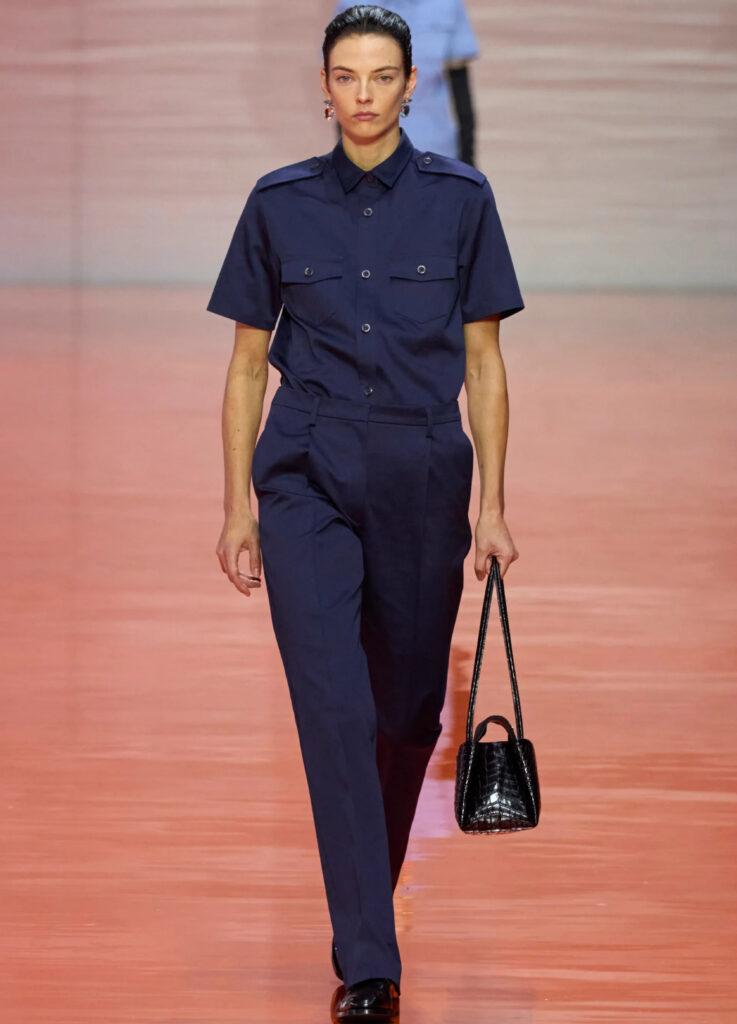
In September 2025, Prada returned with a Spring/Summer 2026 collection that felt less like a seasonal proposal and more like a quiet assertion of intent.
Set against a vivid orange runway, the show unfolded as a dialogue between restraint and release—between the discipline of uniform dressing and the emotional charge of color. Under Miuccia Prada and Raf Simons, Prada once again positioned itself not as a trend generator, but as a house that interrogates how clothes function in real psychological space.
This was not a collection about optimism.
It was about balance.
A Stage That Clarifies, Not Distracts
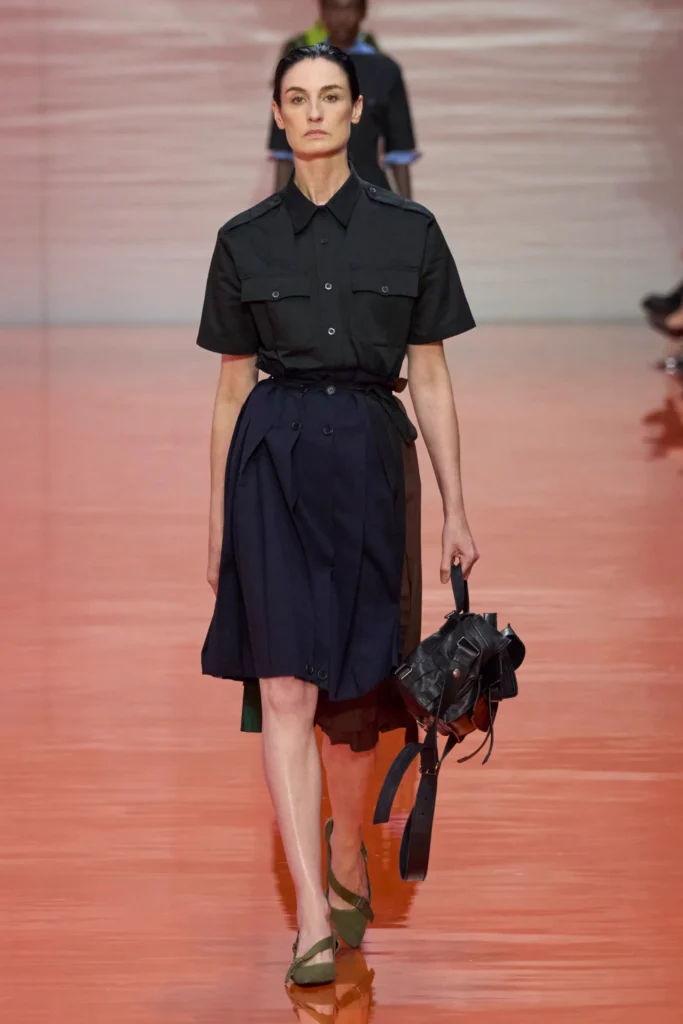
The orange-toned runway immediately shaped perception. Rather than overwhelming the clothes, the saturated backdrop sharpened them. Each silhouette, each color decision, appeared more deliberate—almost diagrammatic.
Prada’s world here extended beyond garments. It became an environment in which structure and sensation could be read simultaneously. Fashion, once again, was treated as a system.
Key Looks Breakdown
1. The Uniform as a Starting Point
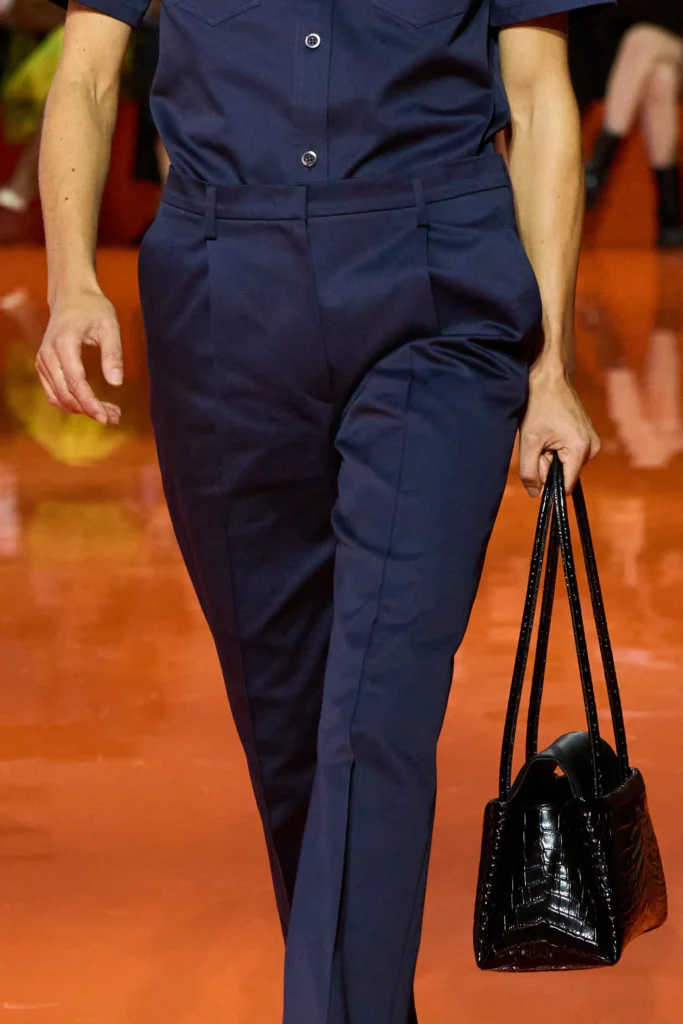
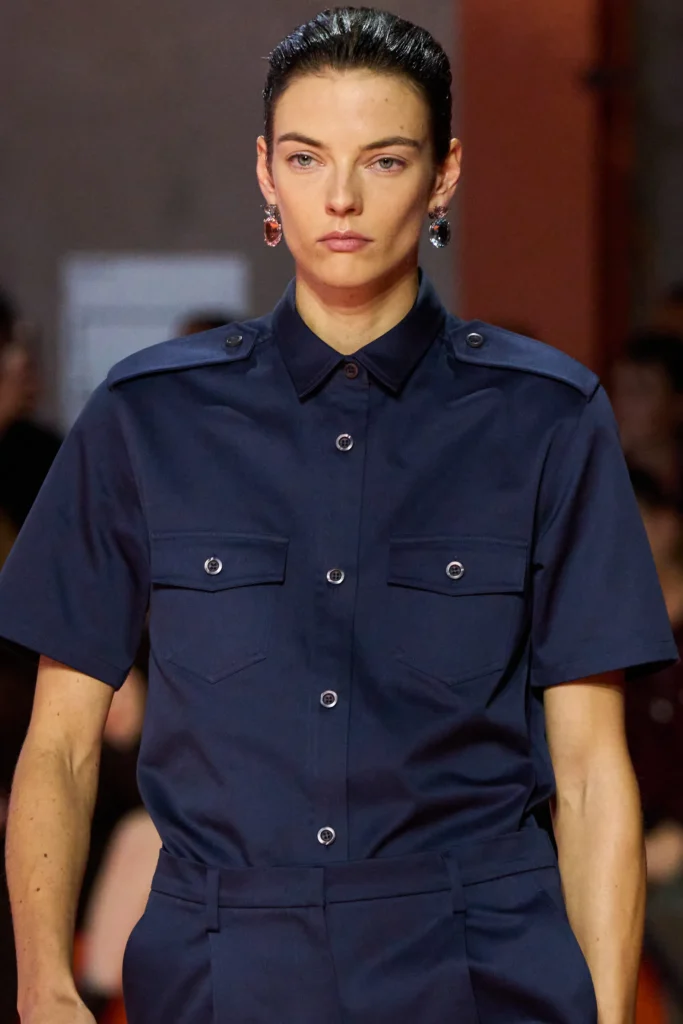
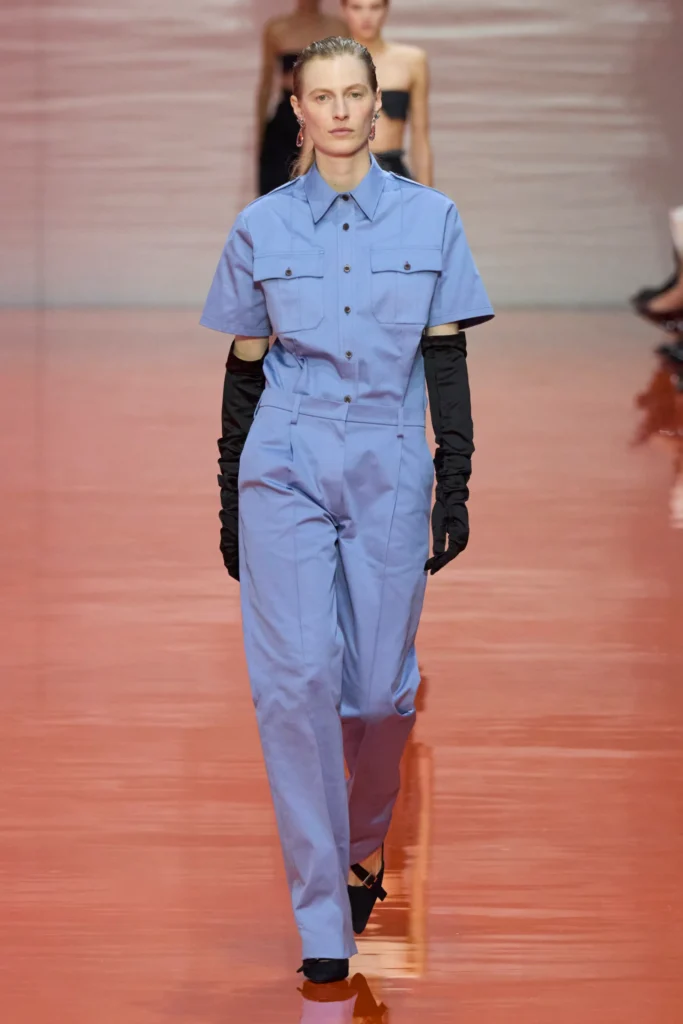
The collection opened with deep navy and light blue—jump suits, shirt-and-trouser sets, and pared-back tailoring that recalled workwear and institutional dress.
These were not nostalgic uniforms. They were contemporary tools.
Waistlines were subtly adjusted, shoulders controlled rather than exaggerated. The result was clothing that acknowledged labor and endurance while maintaining a precise, almost fragile femininity.
The question embedded in these looks felt unmistakably Prada:
What does a modern woman wear to withstand the day?
2. Bralettes and Skirts: Exposure as Tension
Repeated appearances of bralettes paired with high-waisted skirts introduced one of the collection’s most charged ideas.
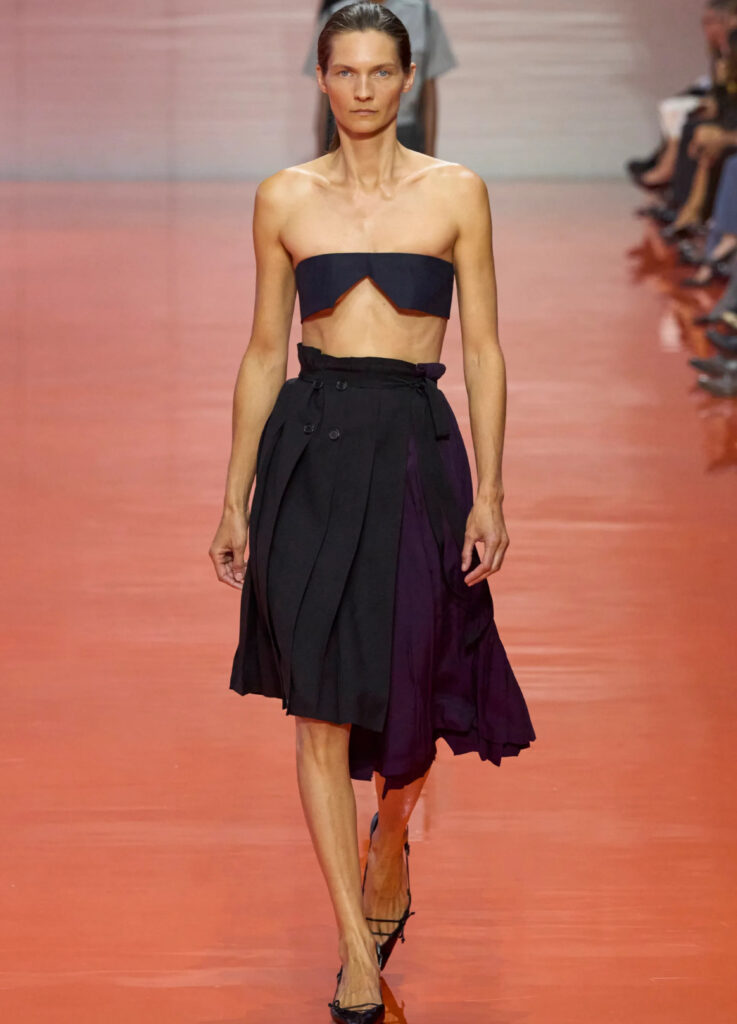
What stood out was not the exposure itself, but what surrounded it. Covered skin carried more weight than bare skin. Sharp pleats, clean cuts, and rigid proportions transformed potential sensuality into something intellectual—cool, guarded, and intentional.
This was not seduction.
It was control through restraint.
3. Military Codes, Recalibrated
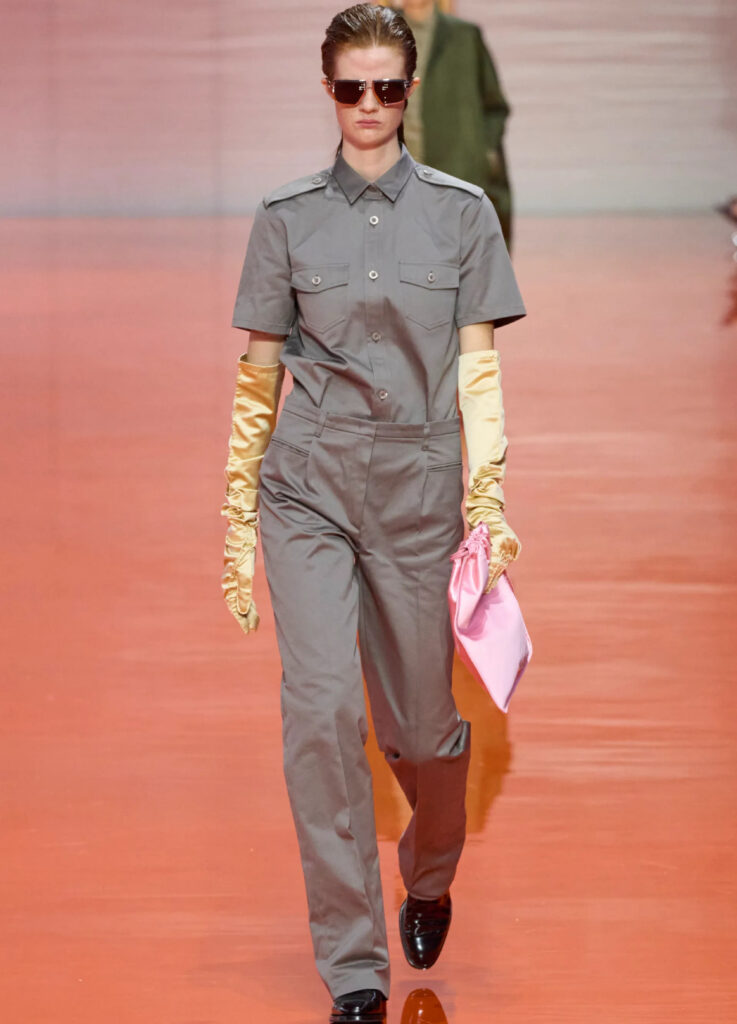
Jumpsuits and oversized coats reintroduced Prada’s long-standing dialogue with military dress.
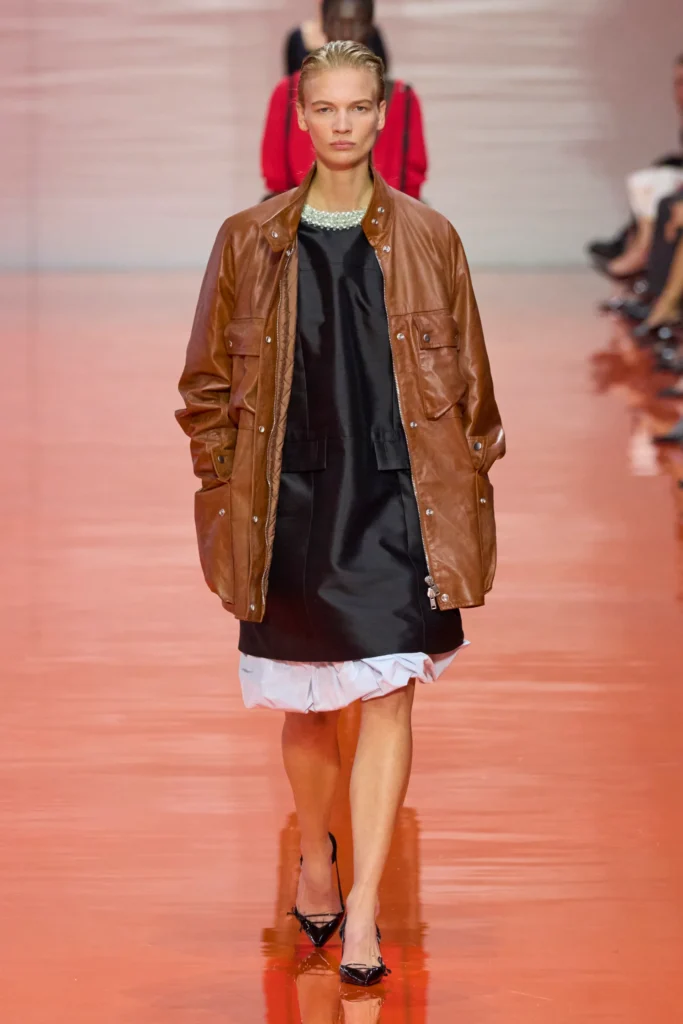
Heavy shoulders and elongated trousers echoed recent seasons’ explorations of excess volume, but here the proportions were refined. The silhouettes functioned less as statements and more as protective shells—urban armor for contemporary life.
The symbolism of defense was unmistakable, yet rendered wearable rather than theatrical.
4. Primary Colors as Rhythm
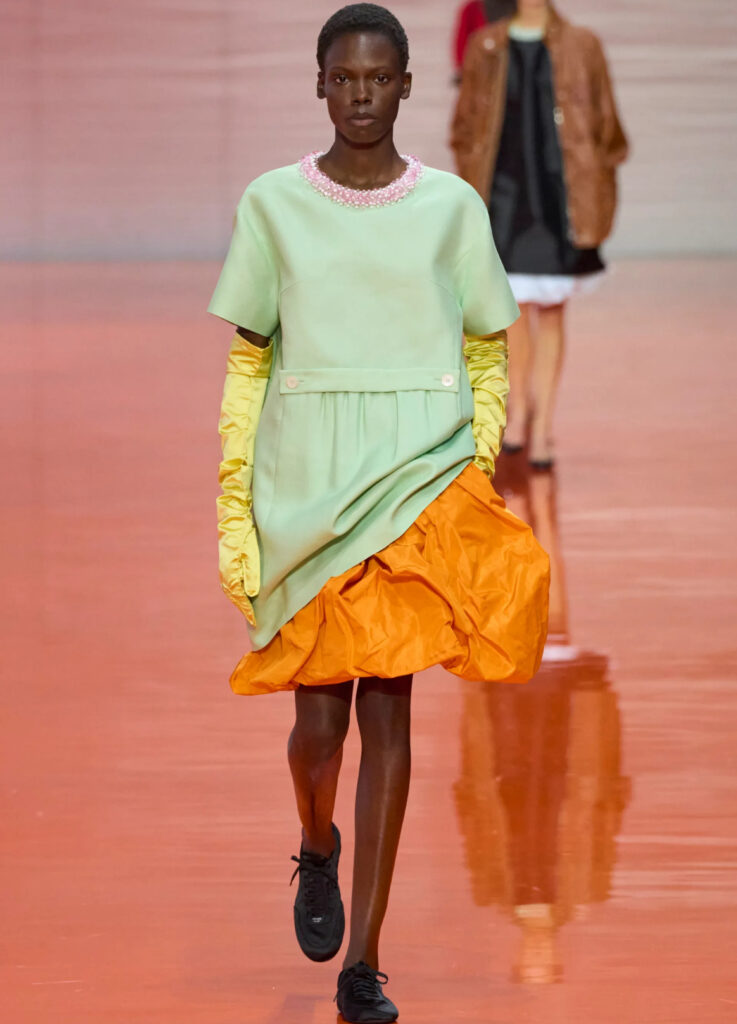
Color became the emotional counterpoint.
Yellow, green, and red appeared in deliberate sequence, culminating in yellow dresses and orange skirts that visually resonated with the runway itself. Clothing and environment fused into a single visual field, recalling painting more than styling.
Rather than softening the collection, these colors sharpened it. They injected urgency without sacrificing composure.
5. Transparency and Layered Exposure
Sheer skirts and layered constructions played a key role.
Black translucent fabrics, fine cut-outs, and visible underlayers questioned the traditional function of clothing as concealment. Transparency here was not erotic—it was analytical, exposing how garments are built and how bodies are framed.
Layering became a way to deconstruct modesty without abandoning it.
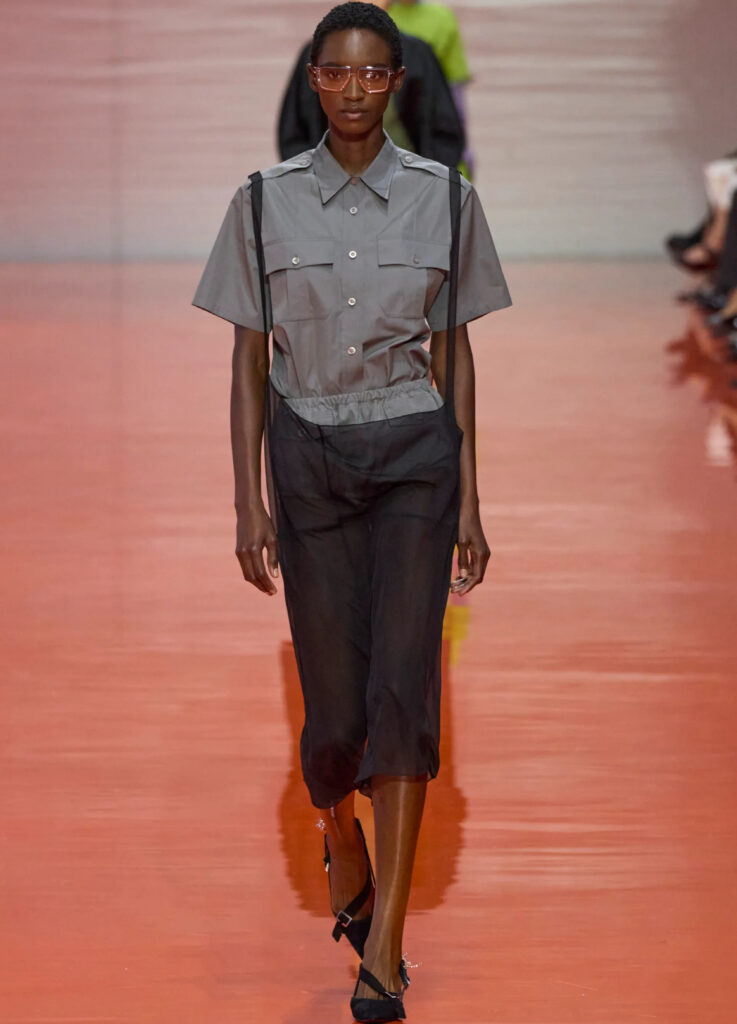
6. Pink Against Leather: Prada’s Core Tension
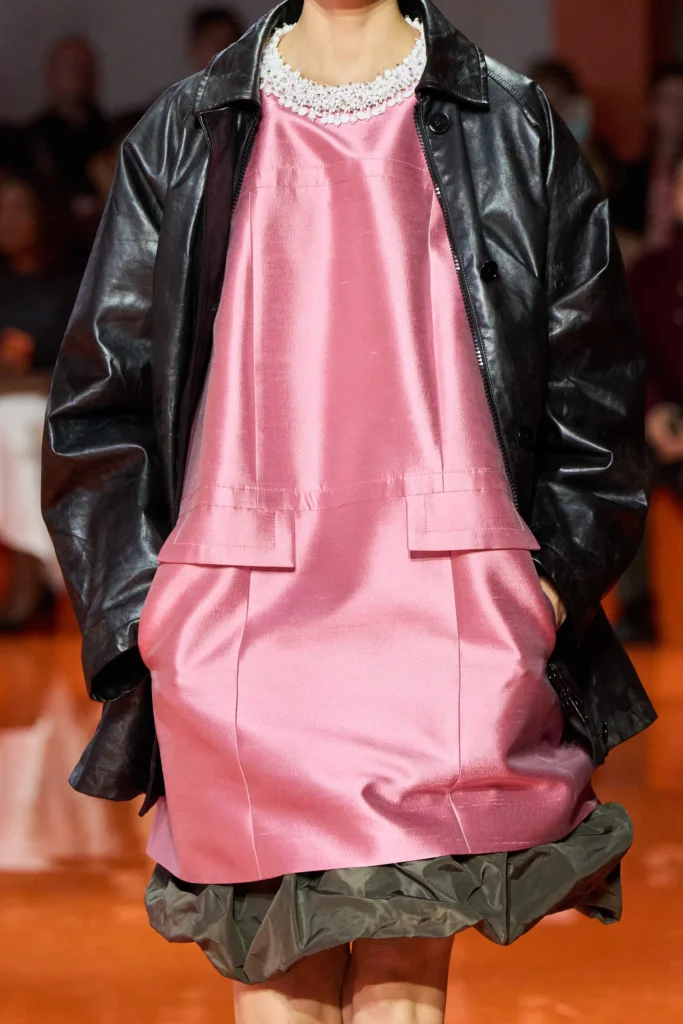
One of the collection’s most telling moments came with soft pink dresses layered under black leather outerwear.
Sweetness met severity. Romance collided with resistance.
This juxtaposition captured Prada’s enduring refusal of one-dimensional femininity. Gentleness and toughness were not opposites—they were coexisting states.
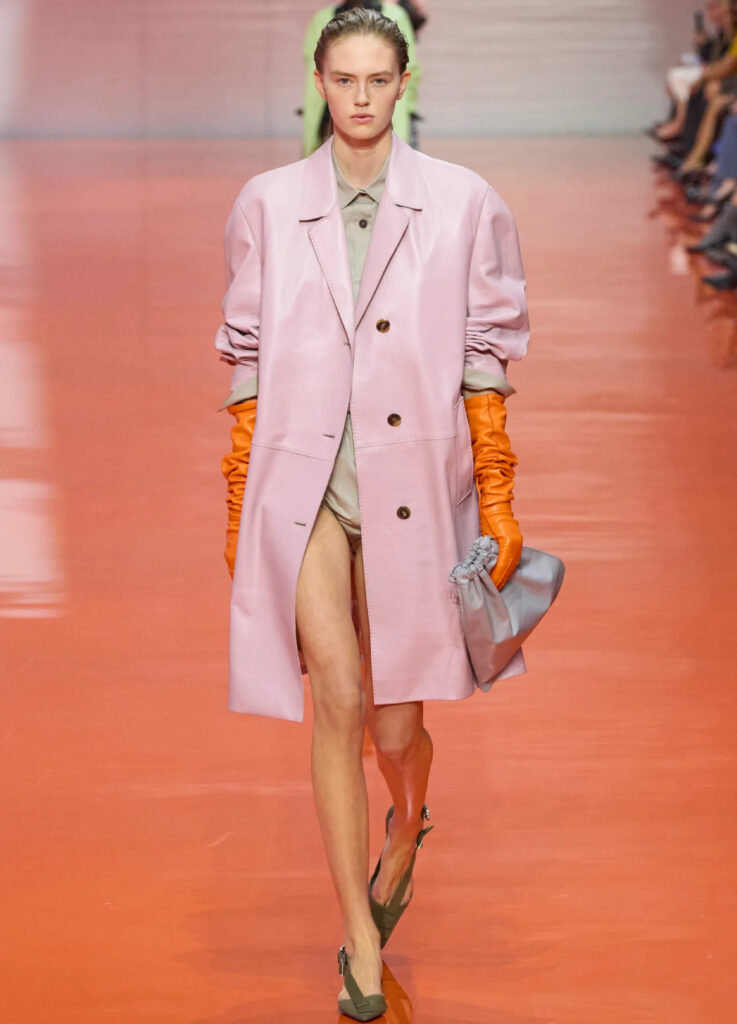
7. The Return of the Flared Dress
In the latter half of the show, black and purple flared dresses shifted the emotional register.
Defined waists and circular hems openly referenced classical femininity. Yet gloves, masculine footwear, and stark styling prevented any sense of nostalgia. These were not retro gestures, but recontextualized forms.
Prada allowed femininity to surface—only to complicate it again.
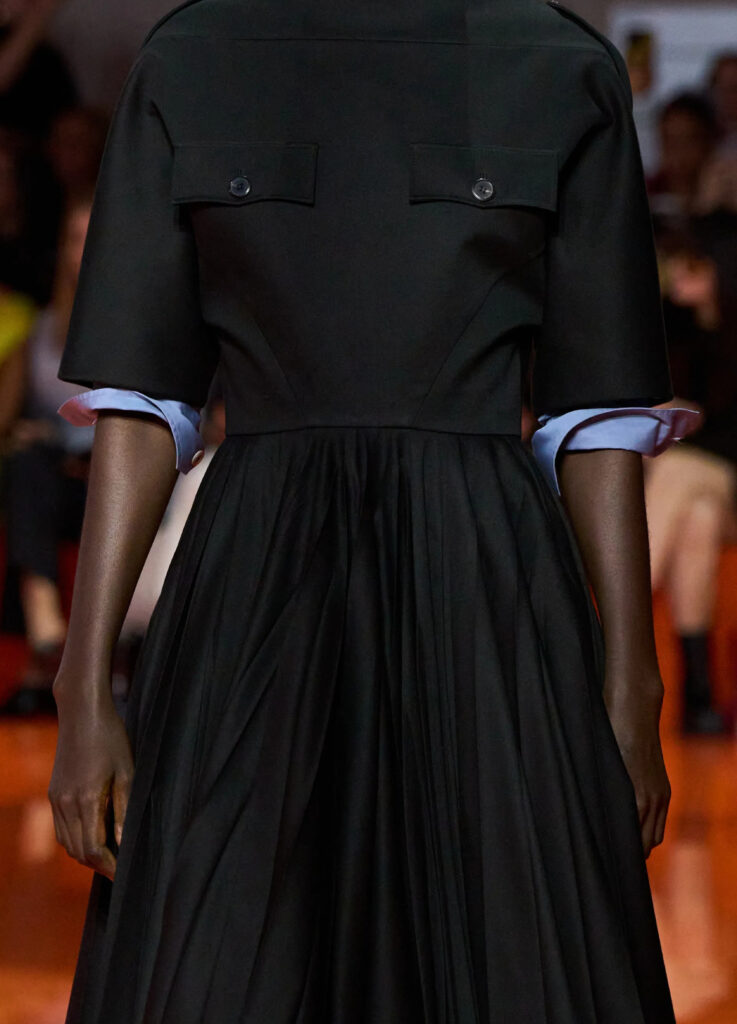
8. Pastels Versus Black: The Closing Statement
The contrast of the final look felt conclusive. Softness and severity were no longer alternating; they were inseparable. This pairing summarized the collection’s core message: reality and vulnerability coexist.
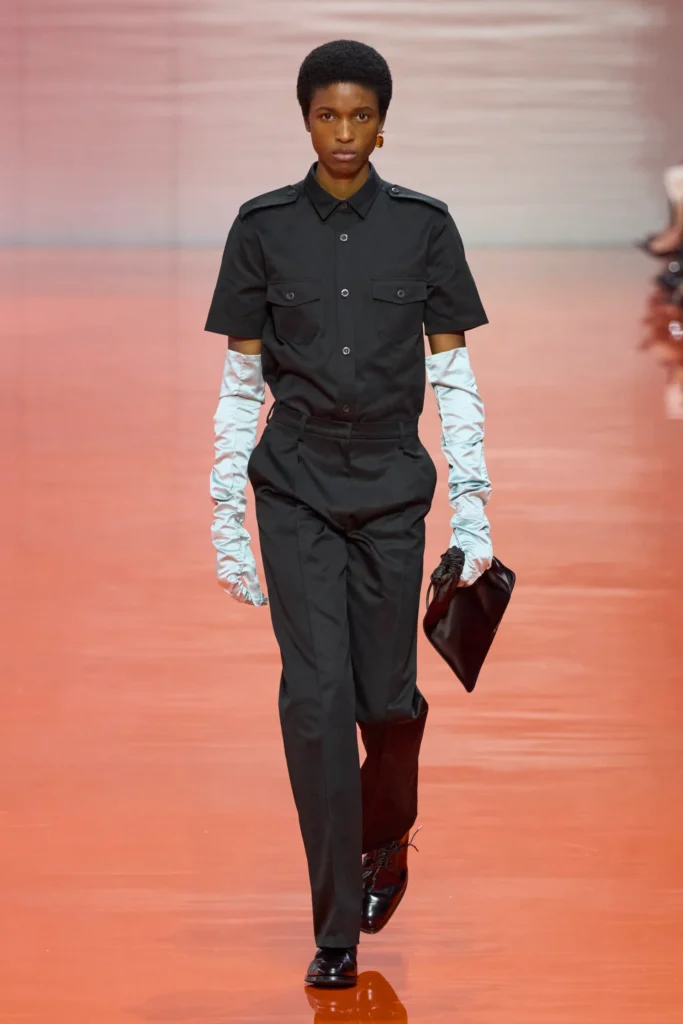
Wearability and Age Perspective
Prada SS26 will resonate most immediately with women in their late 20s to early 30s, particularly in its bralette styling and sheer layering.
That said, many elements—minimal jumpsuits, military coats, flared dresses, oversized shirts—translate effortlessly to women in their 40s and beyond. The determining factor is not age, but one’s relationship to exposure and proportion.
This is a collection that asks the wearer to locate her own equilibrium.
What This Collection Signals
Prada Spring/Summer 2026 does not romanticize the season. Instead, it compresses the experience of contemporary urban life—its tensions, defenses, and brief moments of release—into fabric and color.
Military, romantic, sheer, and flared elements form a framework that will likely echo across upcoming women’s collections. More importantly, the show reaffirmed Prada’s role as a house that treats fashion as thought in motion.
Final Reflection
As the show closed, what lingered was not individual garments, but the trace of movement.
Black fabric against yellow light. Leather against transparency. Color passing through structure.
What remained on that orange runway was not an image, but a rhythm—one that mirrored the overlapping lights and shadows of the city itself.
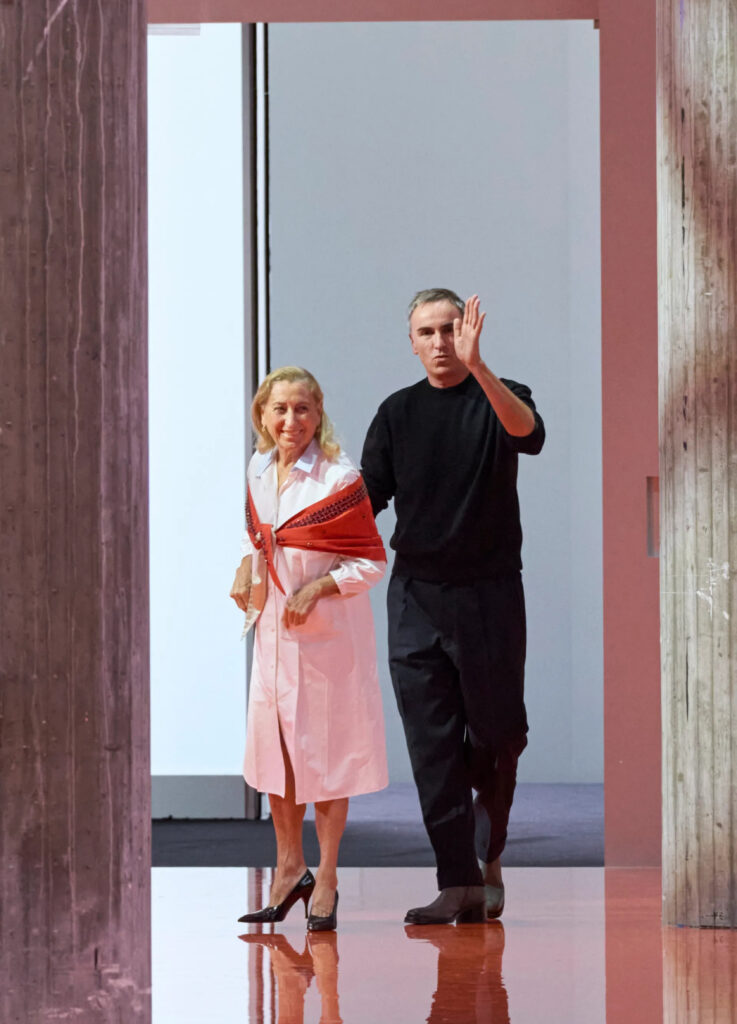
All images referenced in this post are drawn from Vogue Runway.
[ Related Editorials ]
[Miu Miu 26SS] Runway Review | The Apron as Origin
[Miu Miu 2026] After Decoration: Crochet, Vests, and Aprons as a Language of Everyday Structure