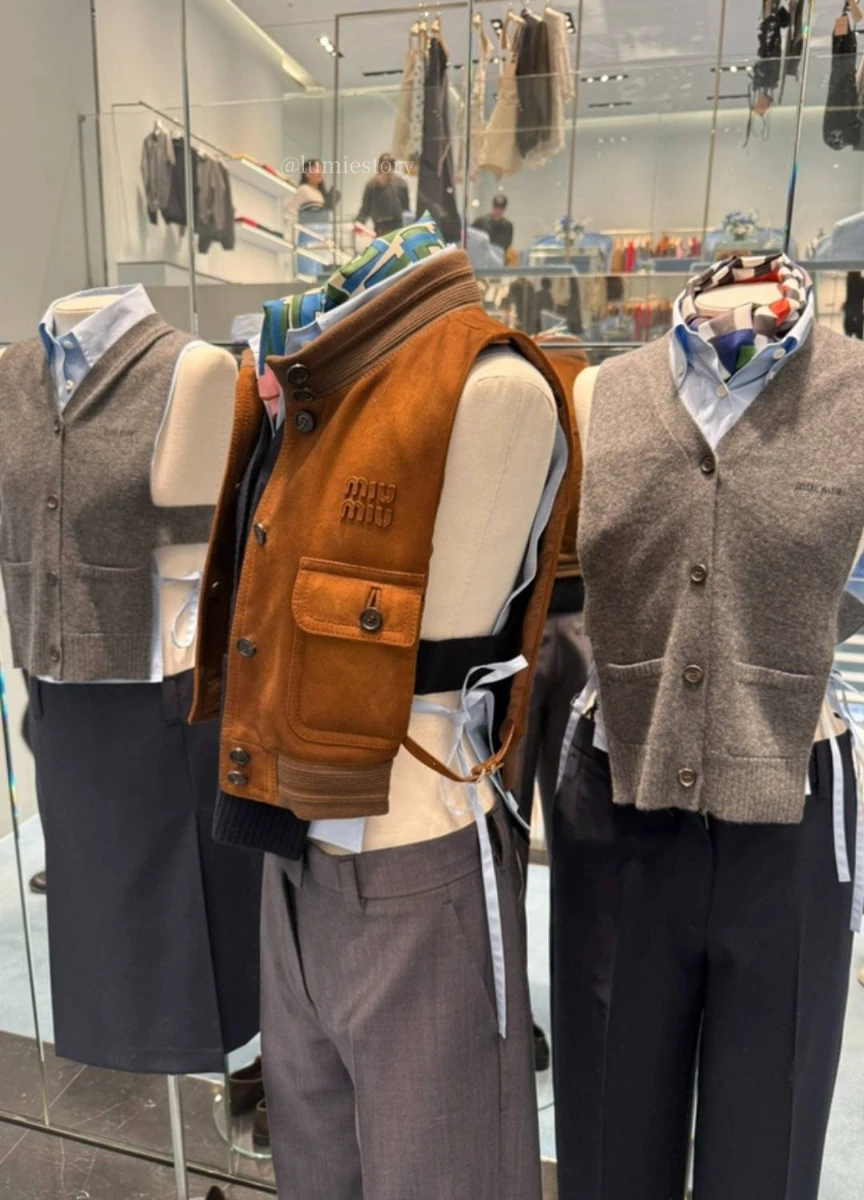
On the apron as conceptual device, fantasy translated into daily wear, and the season Miu Miu chose to be quieter
Miu Miu SS26 marks a subtle but decisive shift. This season is not driven by spectacle, provocation, or overt symbolism. The collection asks a quieter, structural question: how can fantasy continue to exist once it has been translated into daily life?
The familiar emotional triggers — cuteness, irony, excess — step back. In their place comes a vocabulary of wearability: repetition, layering, and garments designed to survive beyond first impression. Miu Miu is no longer amplifying image. It’s recalibrating use.
The collection reveals itself more fully beyond the runway imagery. Construction, material behavior, and the logic of actual wear carry the meaning here.
From Decoration to Structure
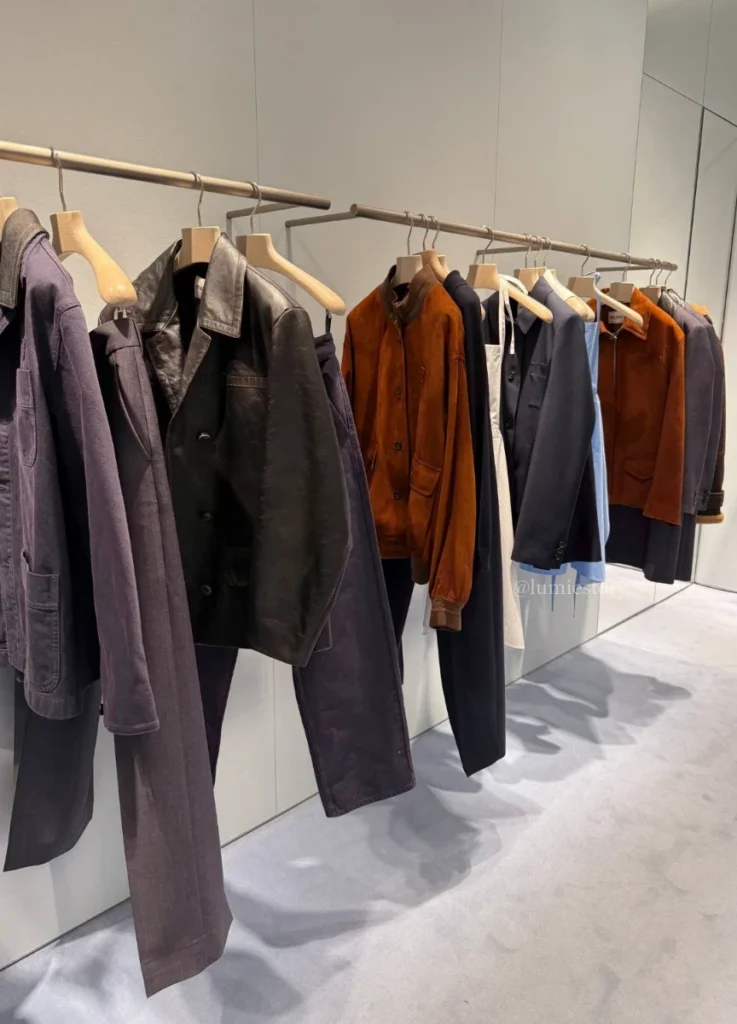
The clearest shift in SS26 is Miu Miu’s retreat from decorative shorthand. Previous seasons relied on immediate visual codes — bows, logos, abbreviated lengths, sharp contrasts. This collection builds meaning through structure instead.
Impression here is shaped by textile organization, layering logic, and the relationship between garment and body. Ruffles no longer function as ornament.
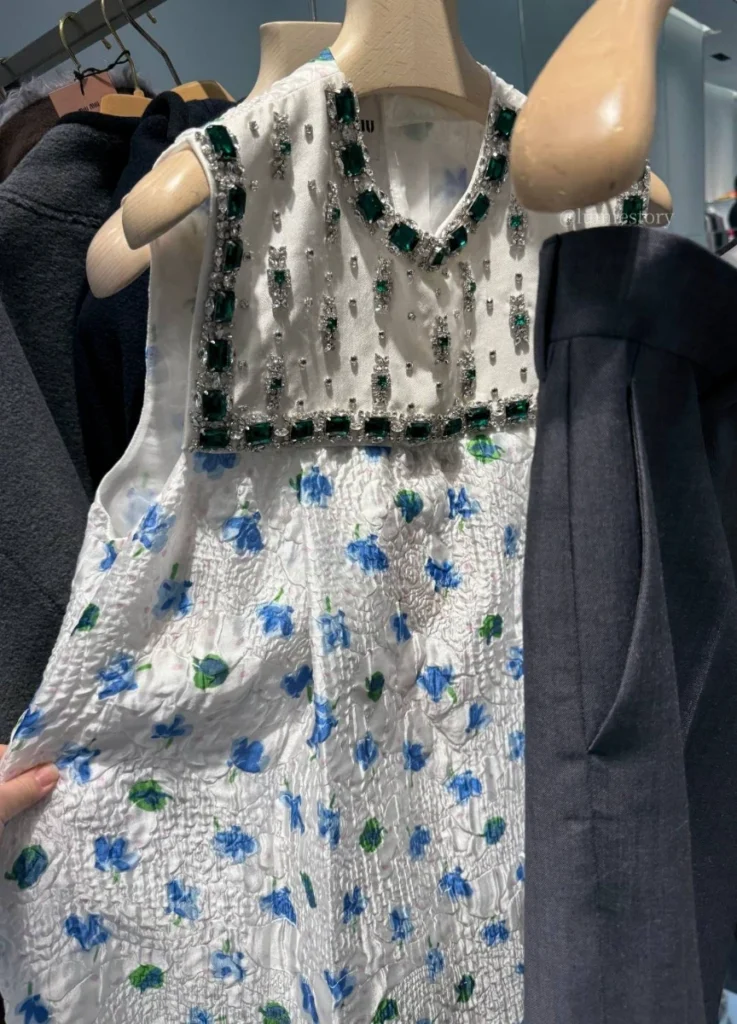
They become part of the surface itself. Crochet is no longer a nostalgic gesture, but a visible accumulation of time. Vests and knitwear don’t declare mood. They are engineered to remain viable inside a real wardrobe.
This is not a season about beauty. It’s a season about being designed to be worn.
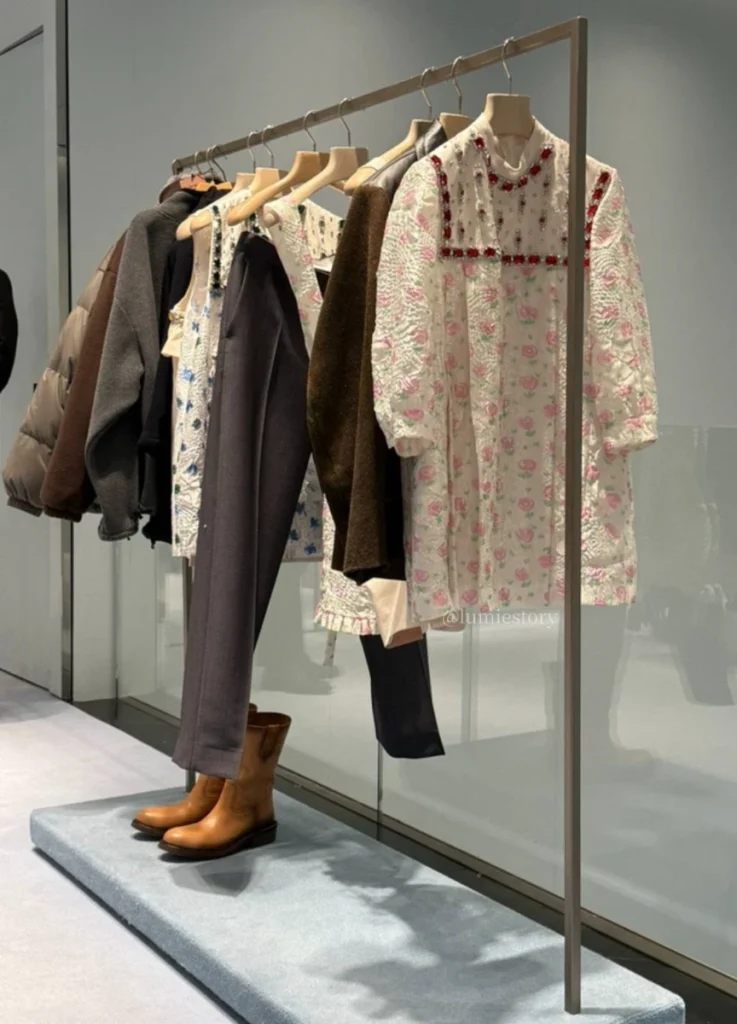
The Apron — Reframing Labor, Care, and the Private Uniform
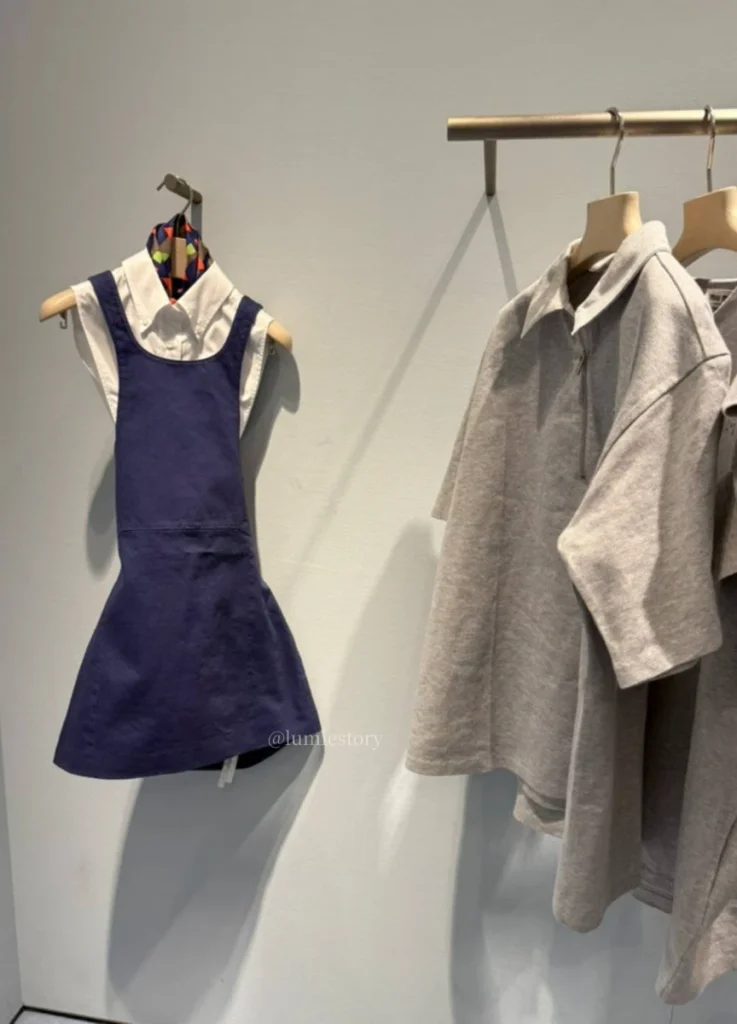
The apron is one of the season’s most telling gestures.
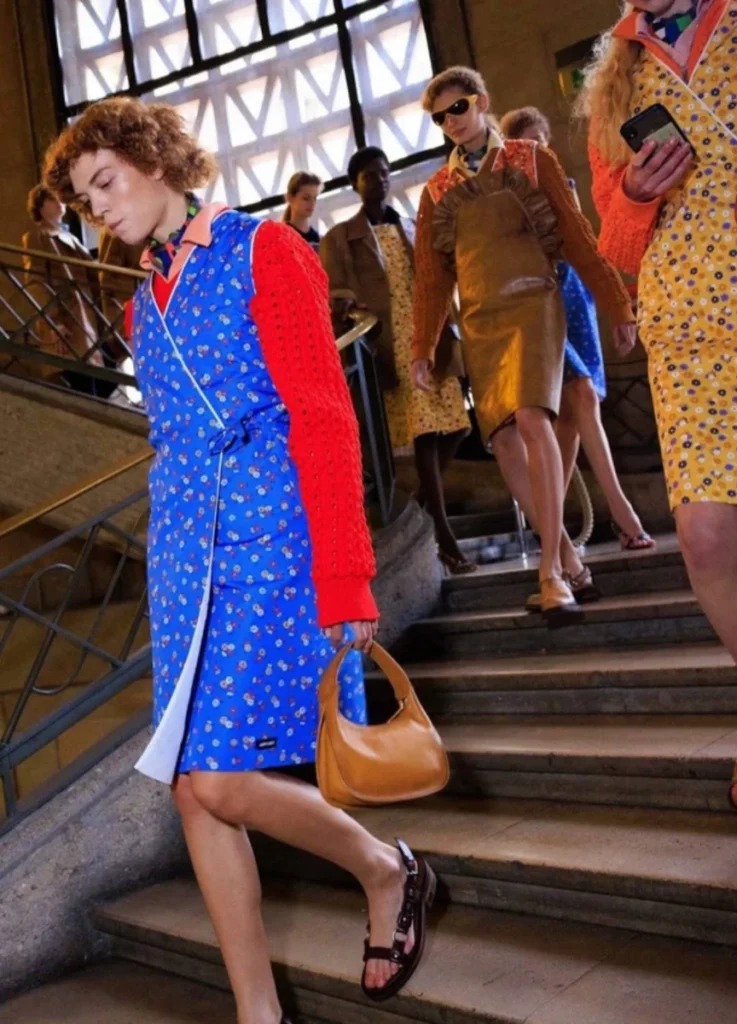
In SS26, the apron isn’t decorative or ironic. It functions as a conceptual device — bringing labor, care, and private time back onto the fashion surface. Historically, the apron belonged to domestic interiors: a garment of protection, invisibility, and function. The collection strips that function away and reinterprets it. The apron no longer protects the body. It frames it. The question shifts: what does it mean to layer life itself onto clothing?
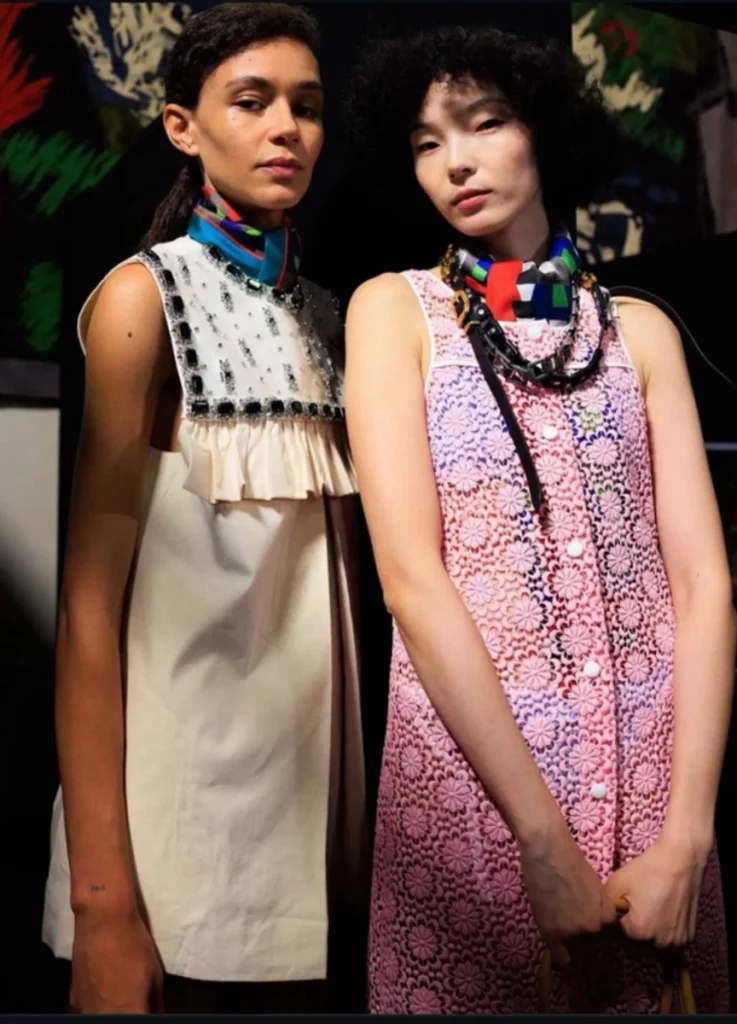
source: Vogue Runway
Across the collection, the apron appears in several forms:
- As a standalone piece — preserving the original logic of overlay in its most direct form
- As apron-like dresses — where workwear collapses into daywear, the boundary between protective garment and outerwear dissolved
- As apron tops — pulled upward to structure the torso, the apron becoming the central axis of the layering
- As garments where the apron is structurally fused — no longer removable, attached to the body as part of life itself
Miu Miu dissolves the boundary between private uniform and public dress in the process. The apron stops being cute or nostalgic. It becomes a trace — the imprint of time spent caring, working, living.
Crochet as Surface — Time Made Visible
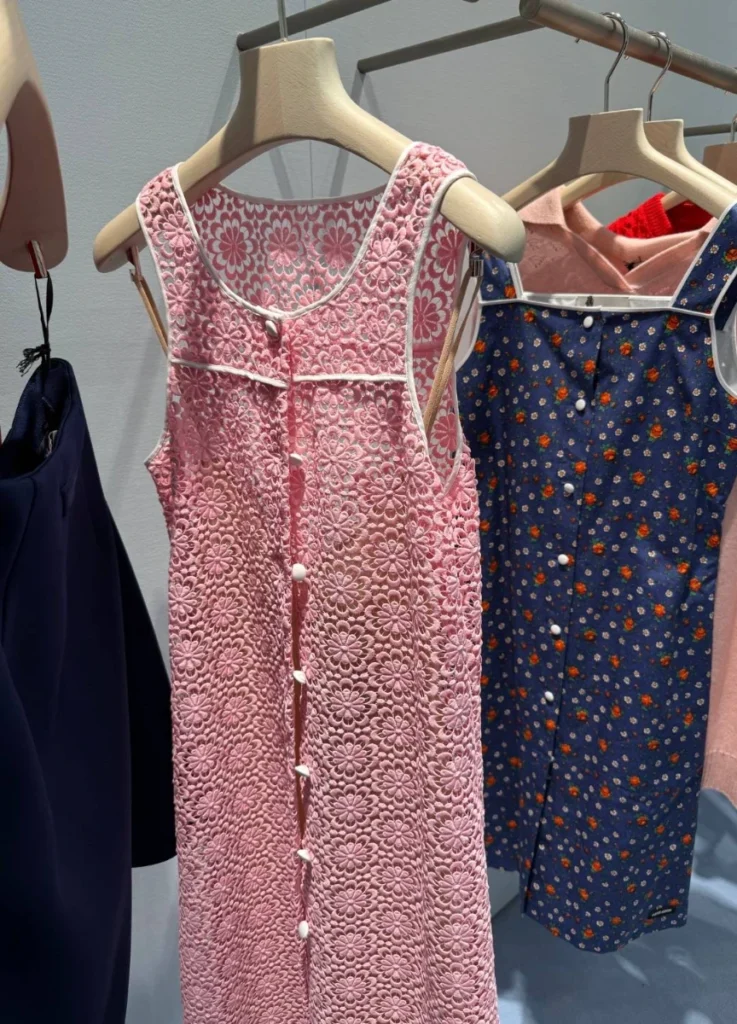
Crochet recurs throughout the season, and it carefully avoids retro sentimentality.
The SS26 crochet prioritizes structure over pattern, duration over decoration. Up close, the pieces reveal density rather than ornament, construction time rather than visual excess. The closer the eye gets, the more information appears.
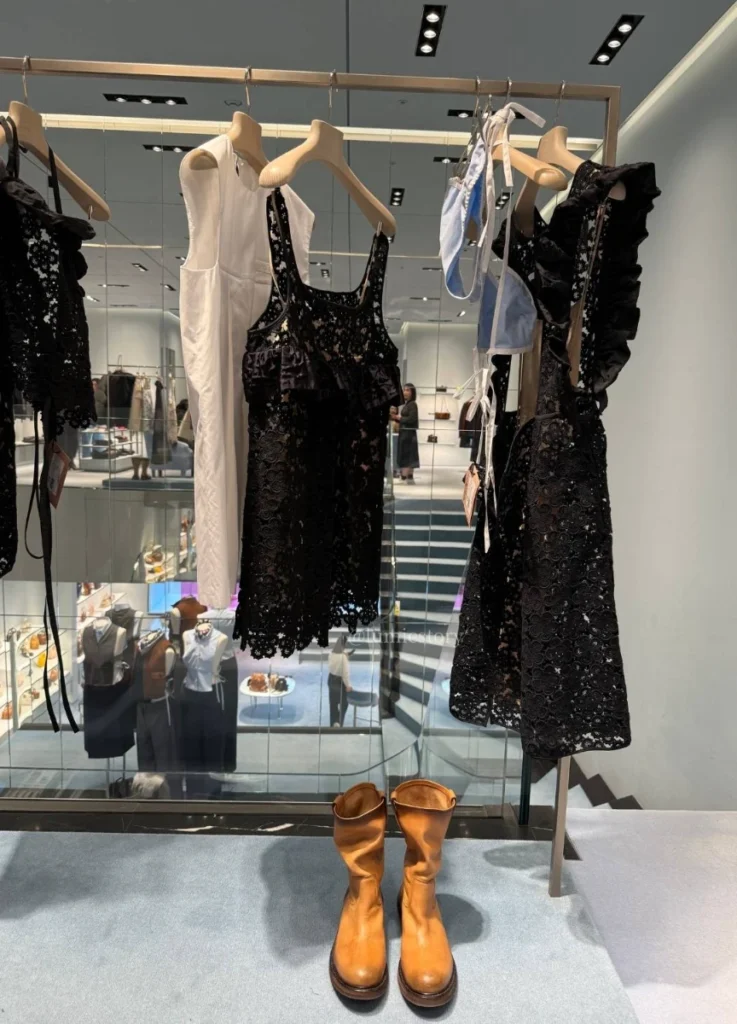
The separation of crochet tops and skirts matters here. These garments aren’t designed to complete a single look. They’re designed to be combined, reused, absorbed into daily rotation. Crochet here functions as evidence — not fantasy itself, but the residue of fantasy after it has been grounded.
Vests and Knitwear — Choosing the Middle Temperature
The prominence of the vest is not incidental.
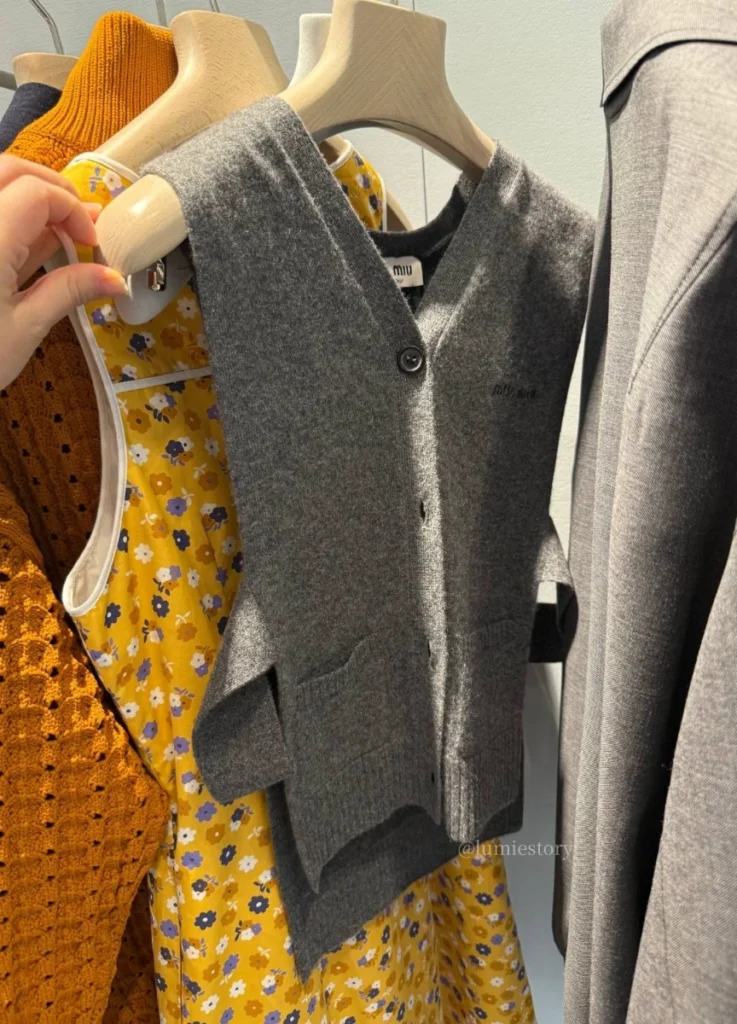
The vest is a garment that resists exaggeration. It doesn’t dramatize the body. It ignores seasonal urgency. It reaches completion only through layering. The choice signals Miu Miu’s preference for restraint over declaration this season — strong messages set aside in favor of garments at middle temperature.
Knitwear follows the same logic. Necklines stay controlled. Shoulders are neither exposed nor emphasized. Lengths and proportions assume repetition rather than occasion. These garments aren’t designed to impress in isolation. They’re designed to accumulate relevance through use.
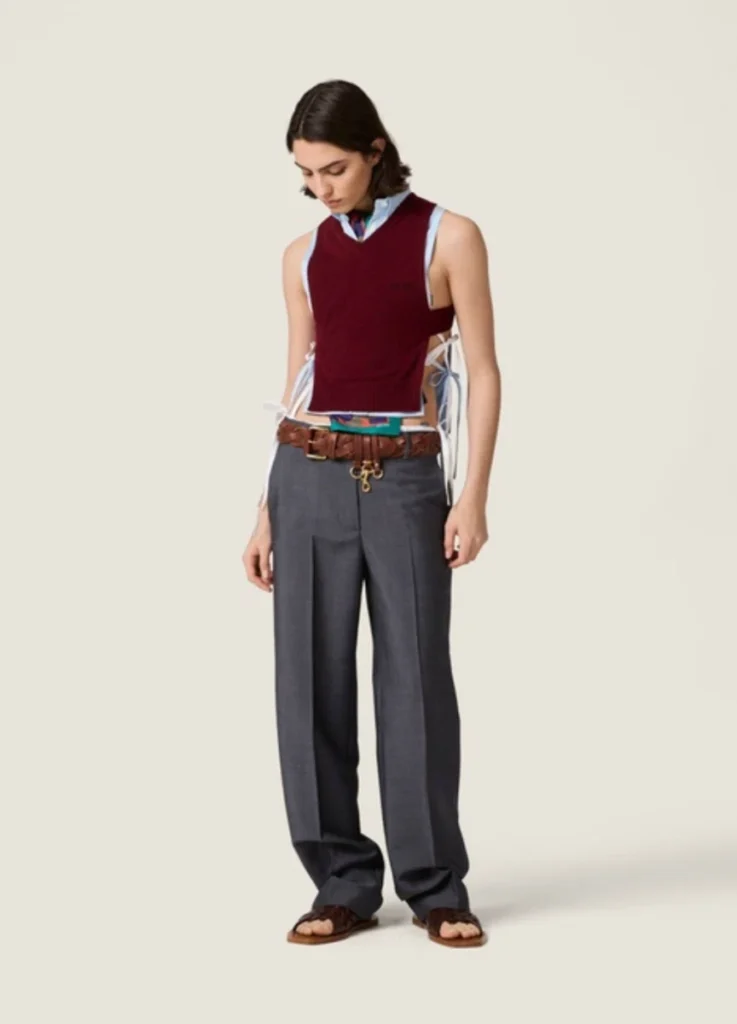
source: miumiu official
Skirts and Silhouette — Letting Material Speak
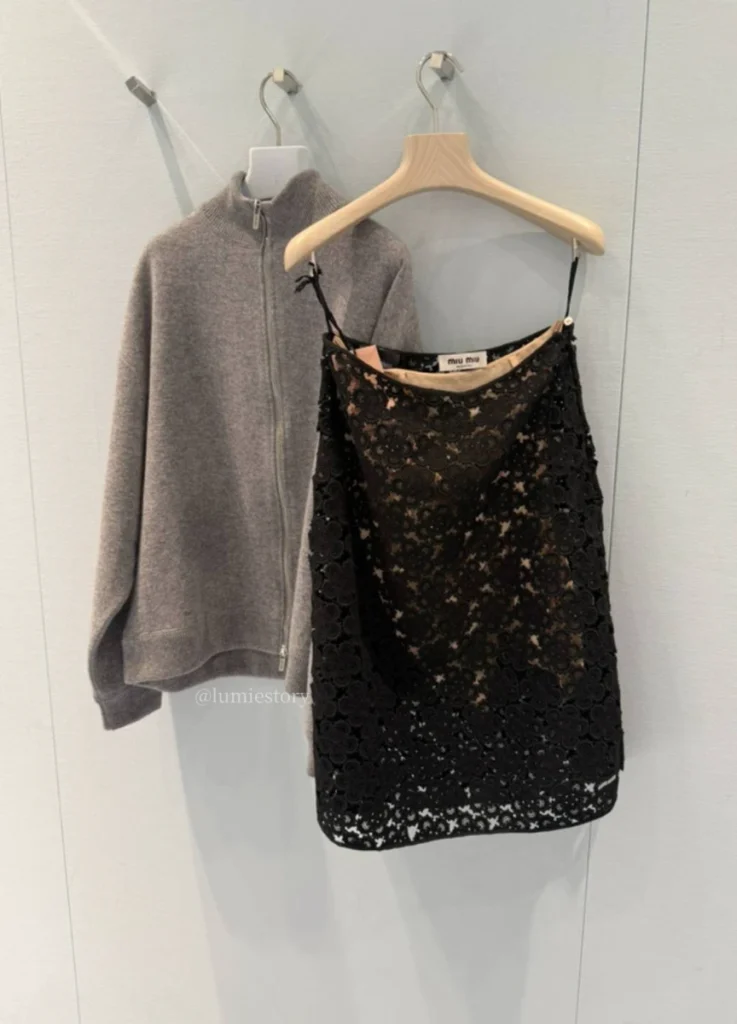
The skirts in SS26 aren’t formally radical. They’re familiar, almost deliberately so. The refusal is conscious — silhouette is not the carrier of meaning this season.
Emotion emerges instead through texture against the skin, movement during wear, and the measured distance between fabric and body. The skirt becomes a tool rather than a statement. Built for motion, not display.
Bags — The Most Literal Expression of the Season
The collection’s clearest articulation may come through its bags rather than its clothing.
Rendered in neutral tones, these bags embody the season’s core principles: absence of age prescription, rejection of excess polish, seamless integration into daily life. They insist on neither youth nor nostalgia. They simply exist — functional, quiet, and quietly convincing.
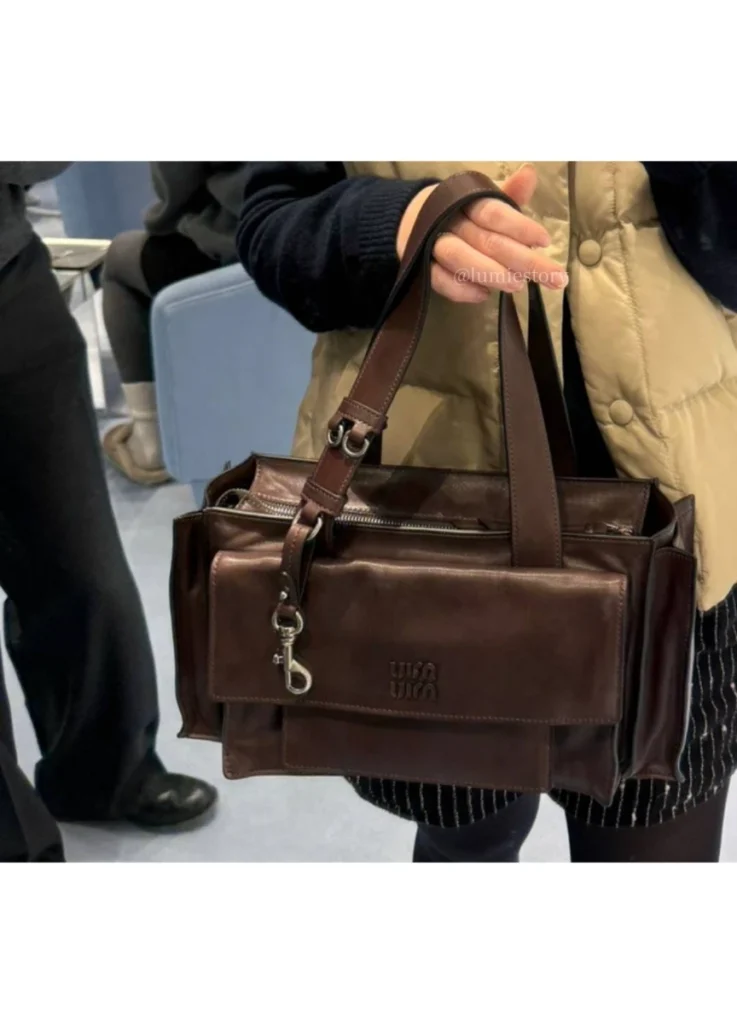
Utilitaire shopping bag
The Return of the Small Ribbon Bag
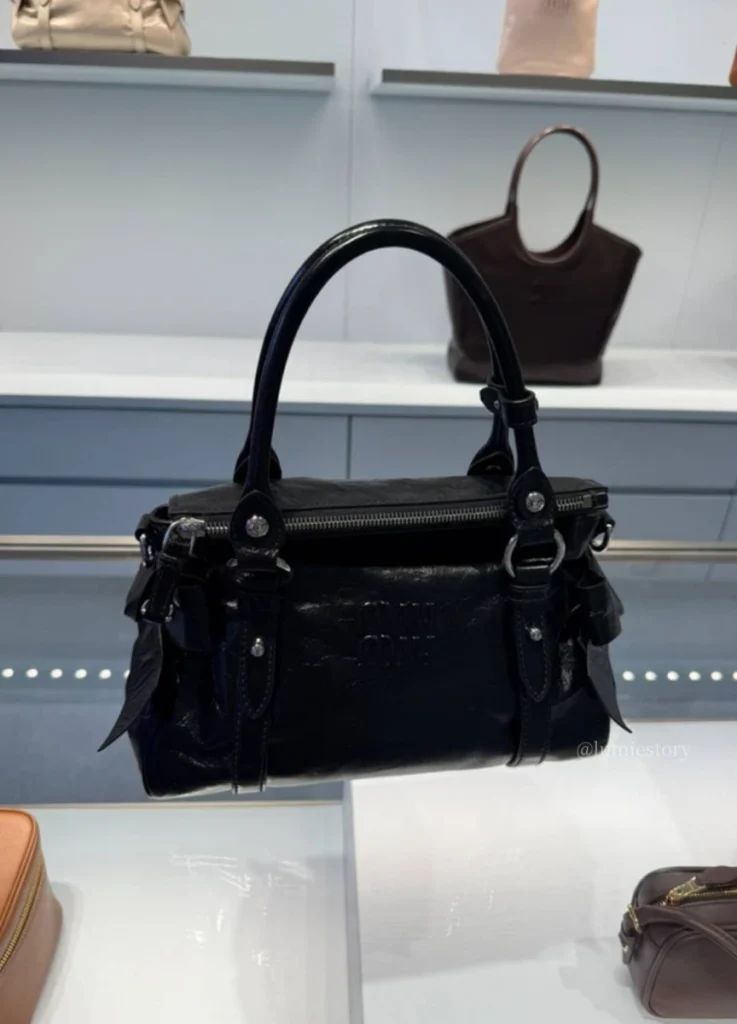
The ribbon bag returns in a reduced form.
The bag was once an emblem of Miu Miu’s overt femininity, but the silhouette had gradually grown heavier in scale and presence over the past several seasons. SS26 recalibrates it. The size is reduced to fit daily essentials. The leather is finished without aggressive shine, designed to age naturally over time. The decoration functions as structure rather than accent.
The signal is clear. Miu Miu wants to reposition the ribbon bag as a usable object rather than a trend item.
How to Wear Miu Miu SS26 — Body-Aware Recommendations
This isn’t a universally flattering collection. Because the emphasis rests on structure and layering rather than silhouette, the success of each piece depends heavily on body proportion.
source: miumiu official
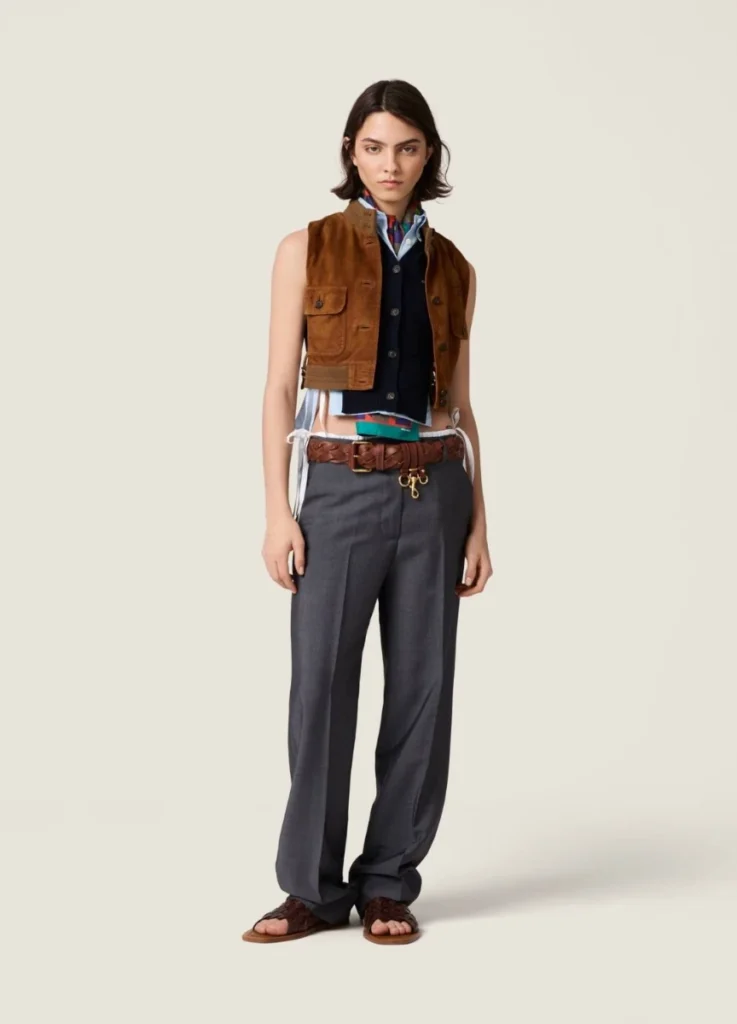
Shorter upper body or shorter neckline
The vests are structurally interesting, but the closed configuration tends to compress upper-body proportion. A fully buttoned vest worn alone, or layered over a high round-neck inner, will read shorter than intended.
The better approach: use the vest as an open layer over a shirt, or pair it with a deep V-neck inner. Treating the vest as a middle layer rather than the focal point gives the proportion room to breathe.
Fuller upper body with a stable lower half
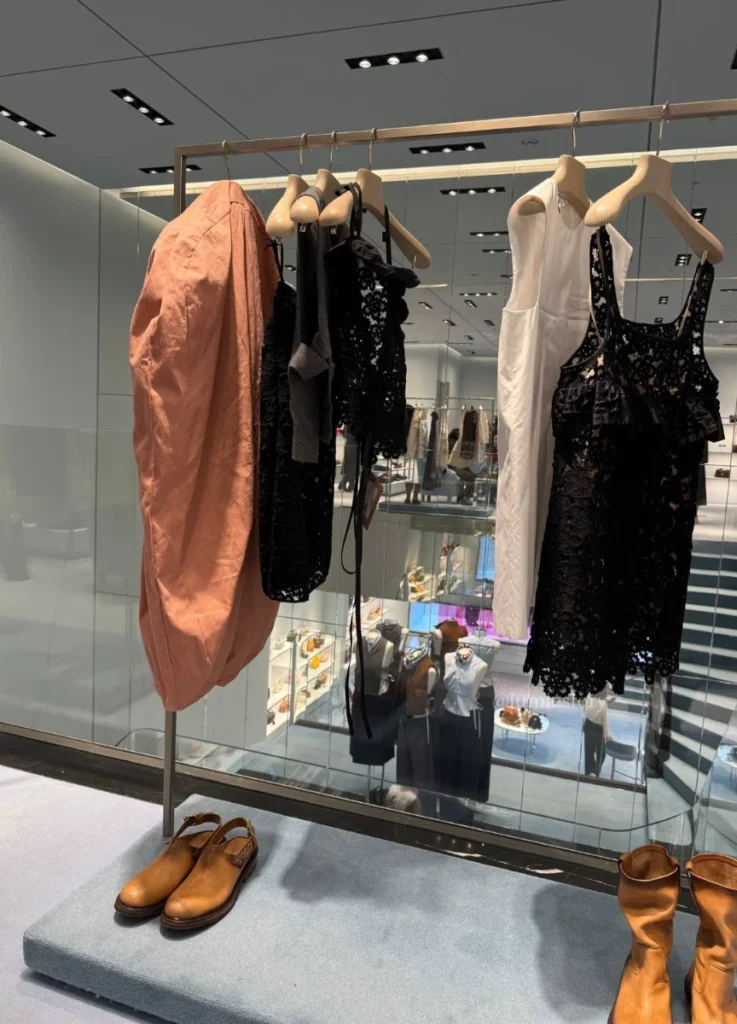
The crochet top with a simple skirt is the most natural reading of the collection here.
The crochet doesn’t cling. The texture disperses volume softly while preserving the femininity Miu Miu builds the line around. The combination keeps the maison’s character without exaggerating it. Crochet organization breaks up the visual weight of the upper body, while the skirt — built around wear comfort rather than dramatic shape — maintains practicality.
Slim or smaller frame
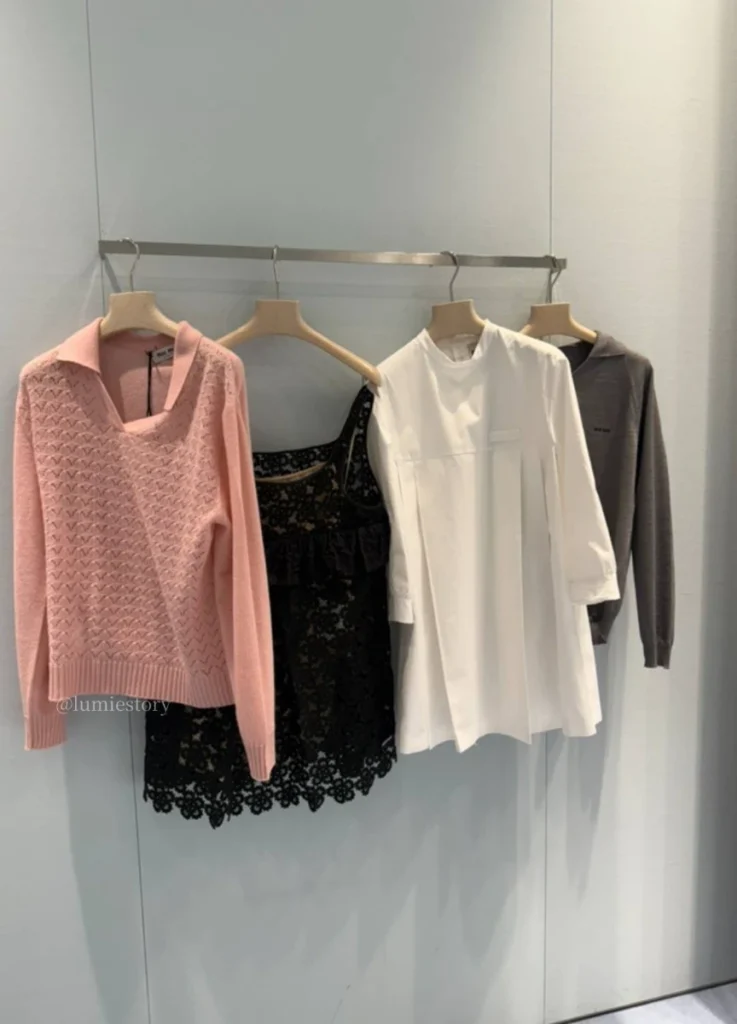
The knitwear in this collection isn’t designed to slim the body. For smaller frames, that becomes an advantage rather than a constraint.
Zip knits and buttoned cardigans add dimension without bulk. Layered use rather than solo wear is the better path here — the knit wraps the body and produces presence even in restrained form. Necklines that close off completely are best avoided. The structure works most clearly when there’s still vertical movement at the collar.
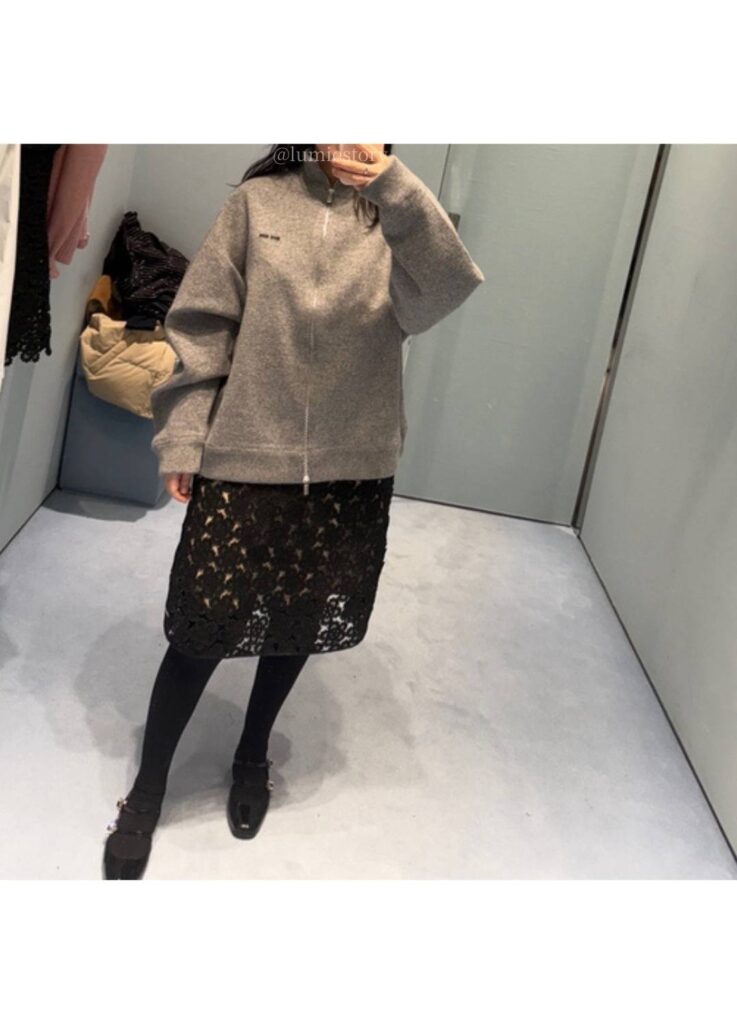
Cashmere and jersey zipper sweater
Macramé skirt
How to Read Miu Miu SS26
Miu Miu Spring/Summer 2026 reduces emotional intensity and leaves structure behind.
This isn’t a collection designed to excite at first glance. It reveals itself through wear — through repetition, combination, and daily use. Fantasy hasn’t disappeared. It has been absorbed into the architecture of ordinary life.
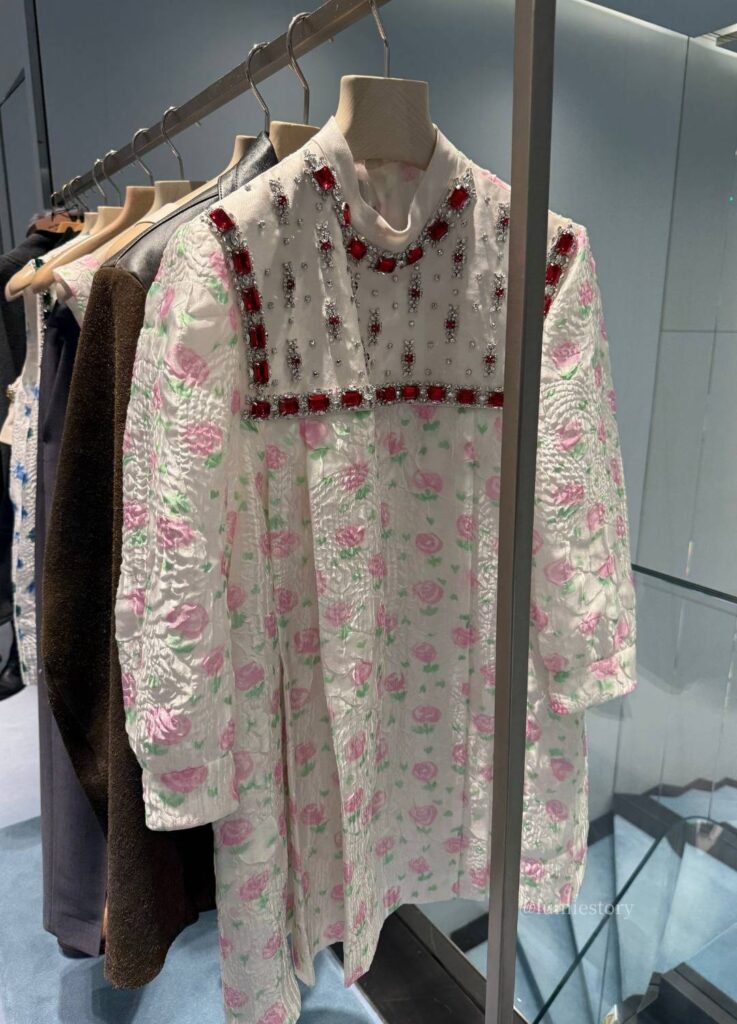
Some readers will find the season underwhelming. Others will find it precise. What’s certain is that Miu Miu is quietly reorganizing its own language. The reorganization is happening through clothes designed to stay, not through spectacle. The reading takes time. The clothes themselves seem to be asking for that time.
source: Vogue Runway
[ Related Editorials ]