Jonathan Anderson’s Dior Fall 2026 collection is one of those seasons where the clothes get more convincing once they’re on the body. Photographed flat, the collection doesn’t read as a strong runway statement. Going piece by piece, though, this is a season where Dior’s historical idea of femininity — the bar jacket, the waistline, the skirt volume, the bow, the lace, the cannage — gets translated more skillfully than the imagery suggests.
The strength becomes clearer in wear, not in the decoration. The clothes don’t push the body around. They keep Dior’s structure but lift the weight off it. The gray micro cannage cardigan and the gray flannel setup show this most clearly. Both carry house codes, but they sit closer to “Dior in daily wear” than to formal Dior in the traditional sense. Light, comfortable, and easy to pair with what’s already in the closet — that’s what a Fall season is supposed to do.
In my fitting sessions, three pieces emerged as the wearable core of this collection: the Pink Bow Jacket, the White Bow Knit, and the Gray Lace Flannel Setup. These aren’t just attractive pieces — they’re Anderson’s clearest statements about how he’s re-reading Dior’s historical aesthetic.
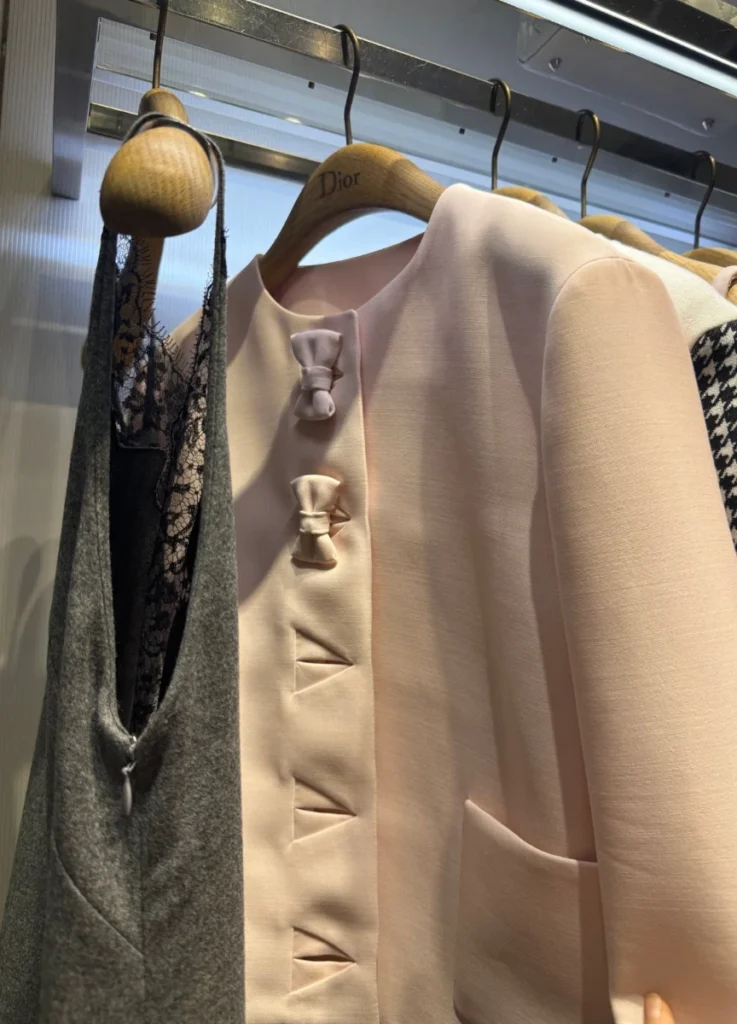
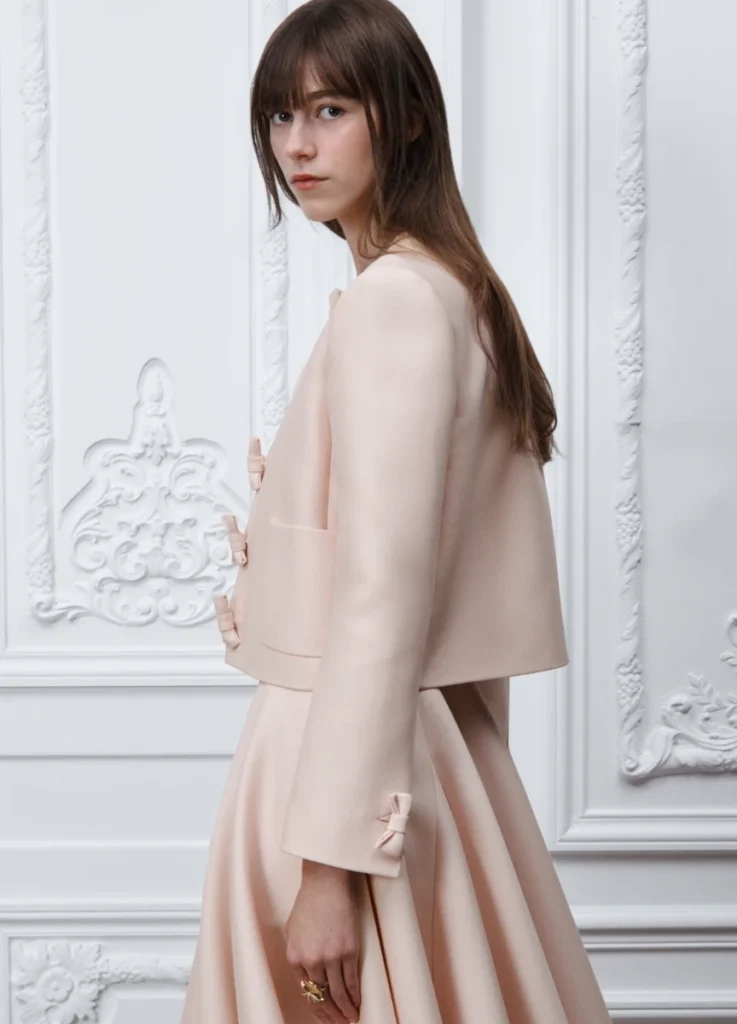
Pink Bow Jacket │ The Bar Jacket Softened Into a Lighter Voice
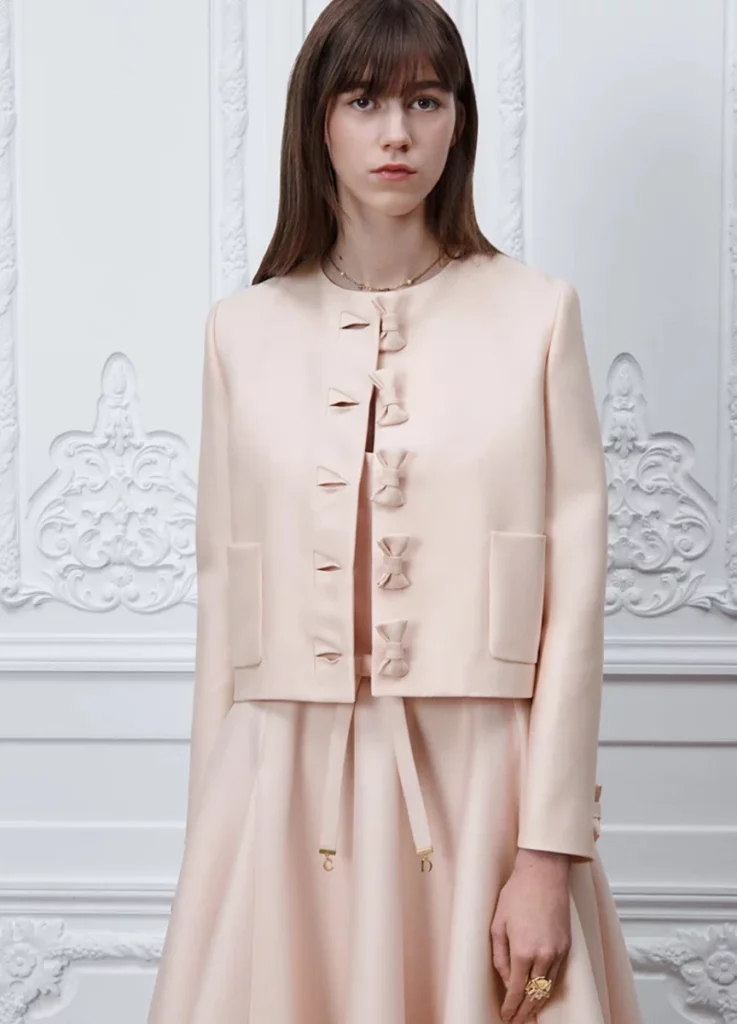
The Pink Bow Jacket is the clearest symbolic gesture of the season. The color is soft, the cut is short, and a row of bows runs down the front. The first reading is romantic. Structurally, the piece is still very much a Dior jacket.
A short note on Dior history: when Christian Dior built the New Look in 1947, the most important rule he established was “hold the waist, organize the upper body, and let skirt volume open below.” The Bar Jacket sat at the center of that structure. It wasn’t a jacket that decorated the body — it was a jacket that redesigned the body’s proportions.
source: dior.com
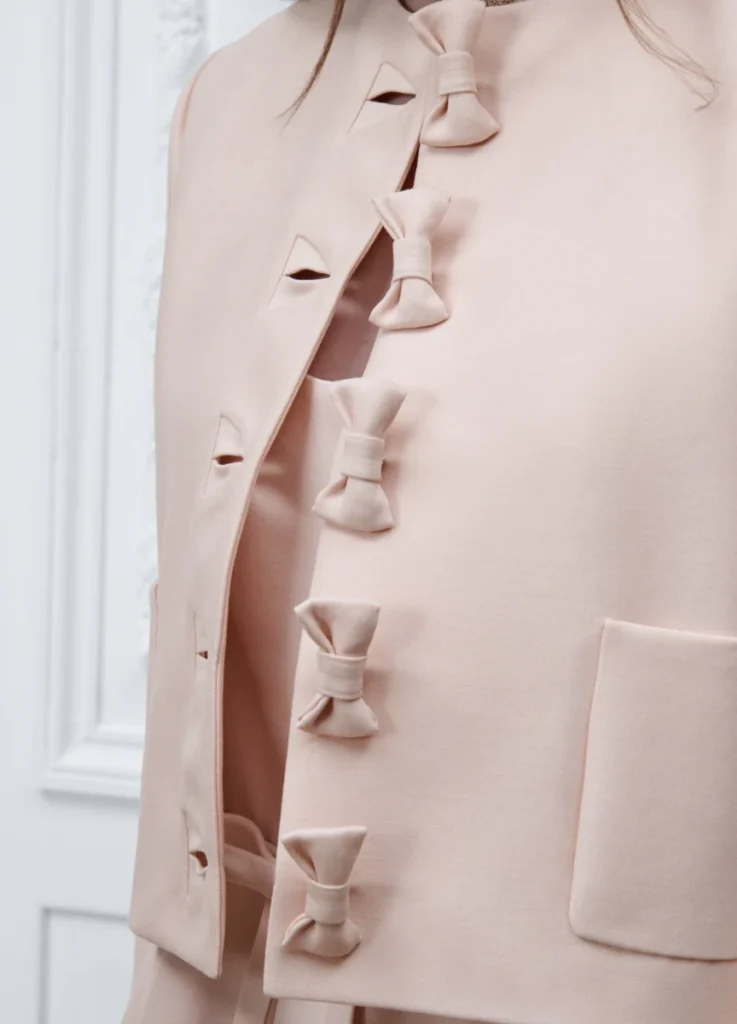
The Pink Bow Jacket doesn’t repeat that historical structure literally. The waist isn’t strongly cinched. The shoulder-to-hip contrast isn’t pushed to the extreme. Instead, the short length, the soft pink, and the row of bows down the front render Dior’s feminine character in a lighter, more contemporary register.
The bow is the key here. On this jacket, the bow functions as both a closure and a center line. Where buttons would normally make the rhythm of the front, the bow takes over — and the rhythm is softer than buttons would create. The bow signals femininity while easing the jacket’s tension.
source: dior.com
The collection suggests a shift away from Dior’s more body-sculpted idea of femininity. What Anderson is reaching for instead is something looser, more wearable, more emotionally relaxed. The Pink Bow Jacket is the symbol of that turn. The historical Dior elegance is still there, but the weight has been lifted off it.
source: dior.com
In wear, the piece has body-type sensitivity. The short length can make a short torso look more cropped. The repeated bow detail at the front can come across as too much decoration on a fuller bust. With cleaner shoulder lines and more defined facial structure, and a flare or H-line skirt below to support the proportions, the jacket works beautifully.
This is the piece that translates the Bar Jacket’s New Look structure into a softer, lighter version of present-day femininity.
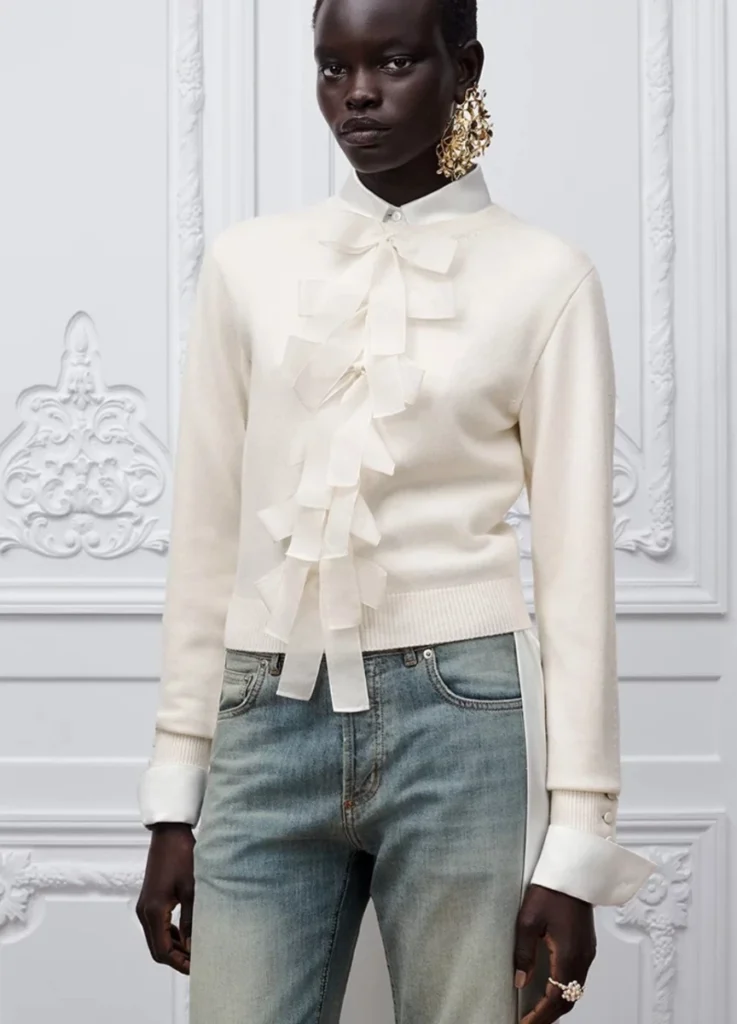
White Bow Knit │ Dior’s Blouse Codes Translated Into Knitwear
The White Bow Knit might be the most interesting piece this season. On the surface it’s a knit. Structurally, it functions like a blouse. Shirt collar, front bow, sleeve cuffs that read like blouse cuffs — Anderson is moving Dior’s blouse codes into a more casual fabric.
For decades, Dior’s feminine character has lived in blouse-shirt-jacket-skirt combinations. Most contemporary buyers don’t iron a blouse every morning or put together full head-to-toe formal silhouettes the way Dior was originally designed for. So if the historical vocabulary is going to stay alive, it has to come down into knitwear and cardigans — into the fabrics people actually wear daily.
The White Bow Knit sits at exactly that point. The collar and bow keep the Dior character intact. The knit fabric lowers the difficulty of wearing it. With denim, it doesn’t look forced. With a skirt, the Dior-ness of the piece comes back. The duality is its strength — it sits between formal and daily, between blouse and knit, between romantic and practical.
source: dior.com
In the lookbook, the White Bow Knit is styled with denim. That choice is deliberate. Where the Dior aesthetic was once completed by skirt-suits, Anderson is now letting it come down with denim. This isn’t simple casualization — it’s a way of putting Dior’s visual logic back into the closet people actually live in.
In wear, the piece holds up. The white knit lifts the face. The bow creates visual weight at the center of the upper body. One thing to check: the bow detail extends down the front, so on shorter necks or fuller upper bodies, the volume and length of the bow need to be considered before purchase. With more defined facial structure and a less heavy upper body, the piece comes across quite refined.
This piece doesn’t push Dior’s romantic side too hard. It looks like a blouse but is actually knit. Feminine, but daily-wearable. It’s a key example of how Anderson is moving Dior into real life this season.
source: dior.com
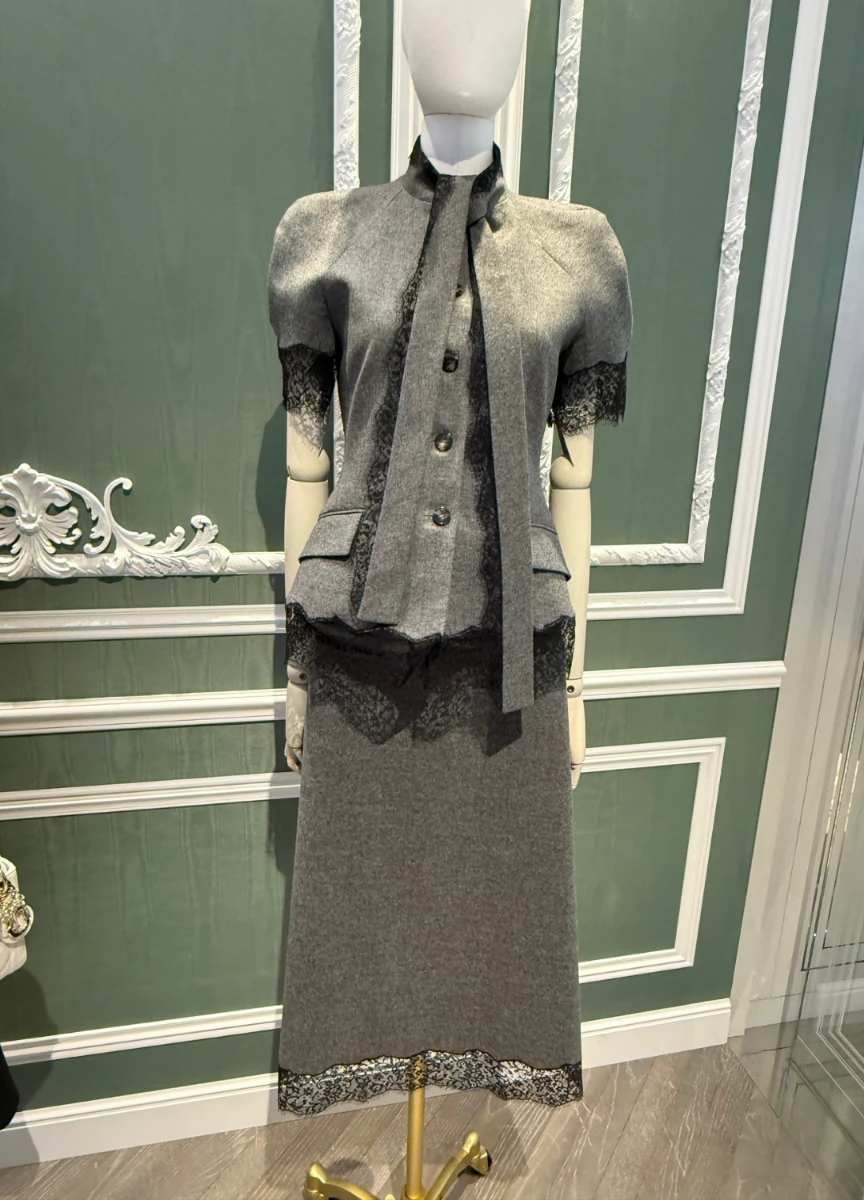
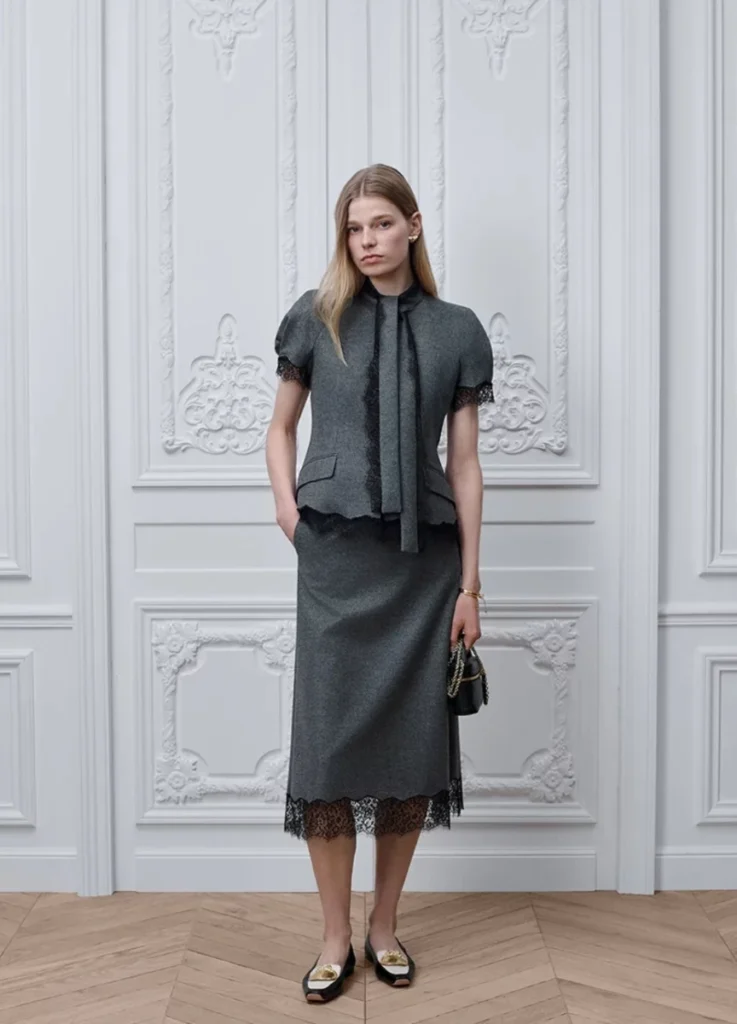
Gray Lace Flannel Setup │ The Quietest, but Maybe the Most Dior
If the Pink Bow Jacket is the face of this season, the Gray Lace Flannel Setup is the structure. And in terms of which piece will stay longest in actual rotation, the flannel setup wins.
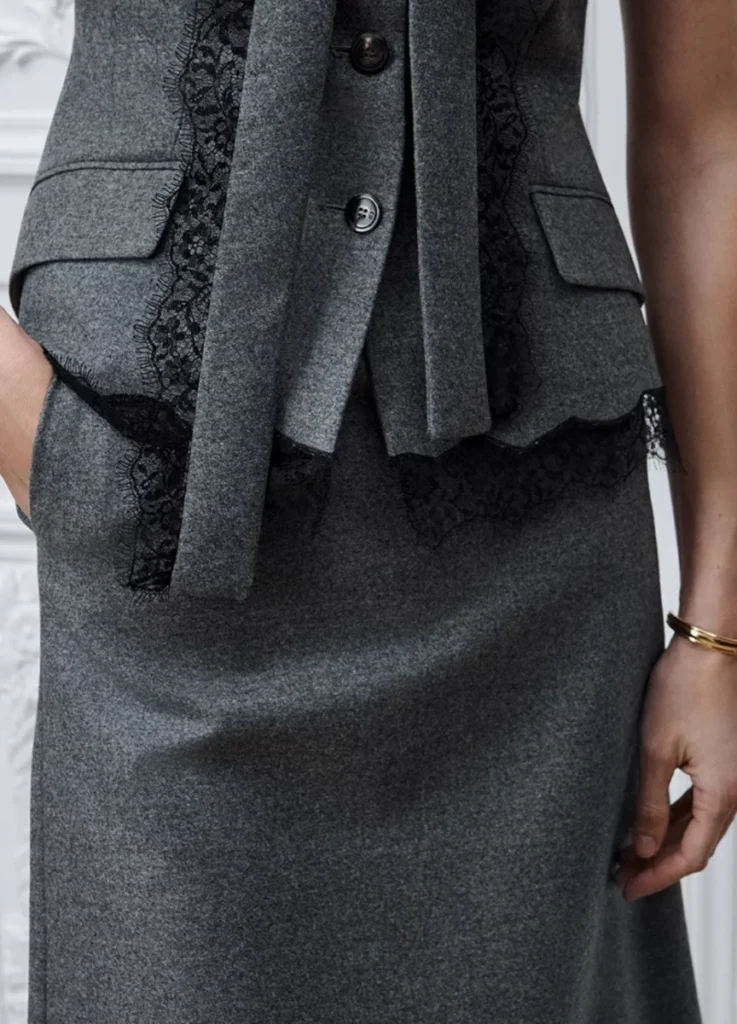
The gray short-sleeve jacket and the flannel skirt show Dior’s feminine character at its most restrained. Gray as a color lowers the emotional pitch. Flannel as a fabric brings warmth and weight. Black lace runs along the hems and edges, letting Dior’s signature lingerie-inspired delicacy surface — but only at the boundaries.
This combination works. It’s not over-decorated. Dior lace can sometimes tip into excessive romance, but on this gray flannel it doesn’t. The lace doesn’t dominate the piece — it works only at the hems and edges. The lace becomes a way to soften the boundary, not a decoration overlaid onto the surface.
source: dior.com
Dior’s house aesthetic has always lived between structure and softness. The Bar Jacket’s waistline is sharp, but the skirt’s curve is gentle. The tailoring is strict, but the materials and decoration are feminine. The Gray Flannel Setup carries that historical duality but in a lower-key way. The jacket is short. The skirt flows long. The lace sits only at the edges. The look stays Dior without the heaviness of full-decoration Dior.
The flannel skirt was the piece I genuinely liked wearing. The fabric is light. It doesn’t grip the body. The lace at the hem only shows in motion. This is the kind of piece that’s genuinely better in person than in photographs. The fabric moves when you walk, the lace flickers at the bottom edge, and the gray opens up the styling options at the top.
Worn as a full setup, the season’s character comes through clearly. The skirt as a standalone piece will stay in rotation much longer. It pairs with knits, shirts, jackets, cardigans, even a black sleeveless. Gray works especially well in this register. Quietly, the skirt is turning into one of the season’s stronger pieces.
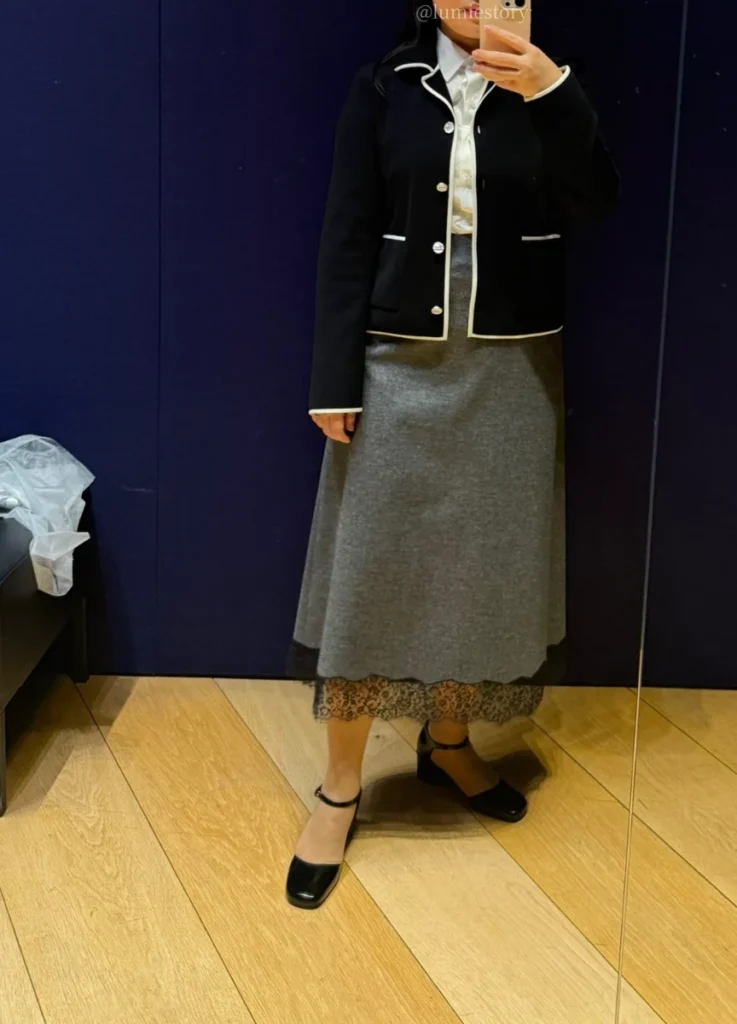
Flannel Skirt │ How to Wear Dior’s Skirt Codes Realistically
The Dior skirt has always been a house core. After the New Look, Dior built the body’s proportion through the skirt — the volume opening below the waist, the circular movement when walking, the elegant length below the knee. All of that is part of Dior’s silhouette logic.
This flannel skirt brings that historical vocabulary into present-day wear in a very practical way. The fabric is soft, the color is gray, and black lace runs at the hem. The structure is feminine, with the surface kept restrained. You can get the Dior character without committing to full dress-up.
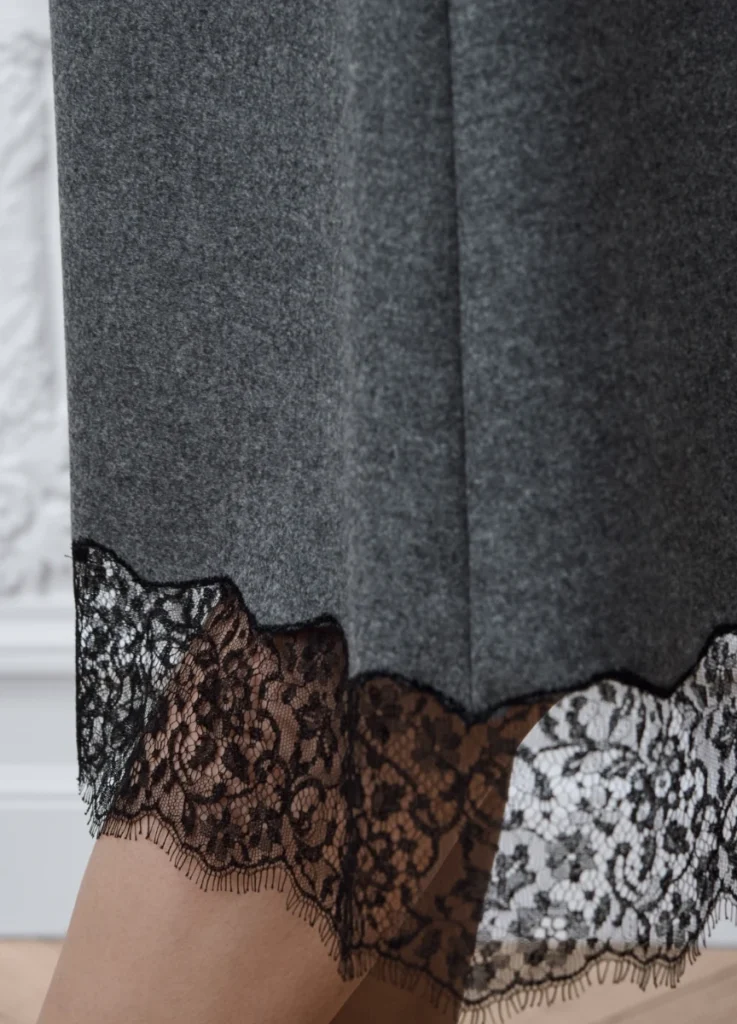
source: dior.com
What this skirt does well is settle the lower body. It doesn’t grip too tightly. It doesn’t flare out too much. The lace at the hem softens and disperses the line of sight downward. For those with softer waist-to-hip lines, or anyone self-conscious about their lower body, this kind of skirt works to your advantage. The fabric drape and hem motion organize the line, with weight pulled away from the hip-and-waist focus.
The gray version works across a wide range of daily styling options. With a white shirt it reads classic; with a black knit, urban; with a matching gray cardigan, the season pulls together. It works with jewelry too — yellow gold reads warm against it, white gold reads cool. Both work.
This isn’t a special-occasion-only skirt. With multiple tops to rotate through, it keeps changing shape in the closet. It speaks Dior, but it operates inside actual life — and this season, it might be the closest thing to “Dior you can keep wearing.”
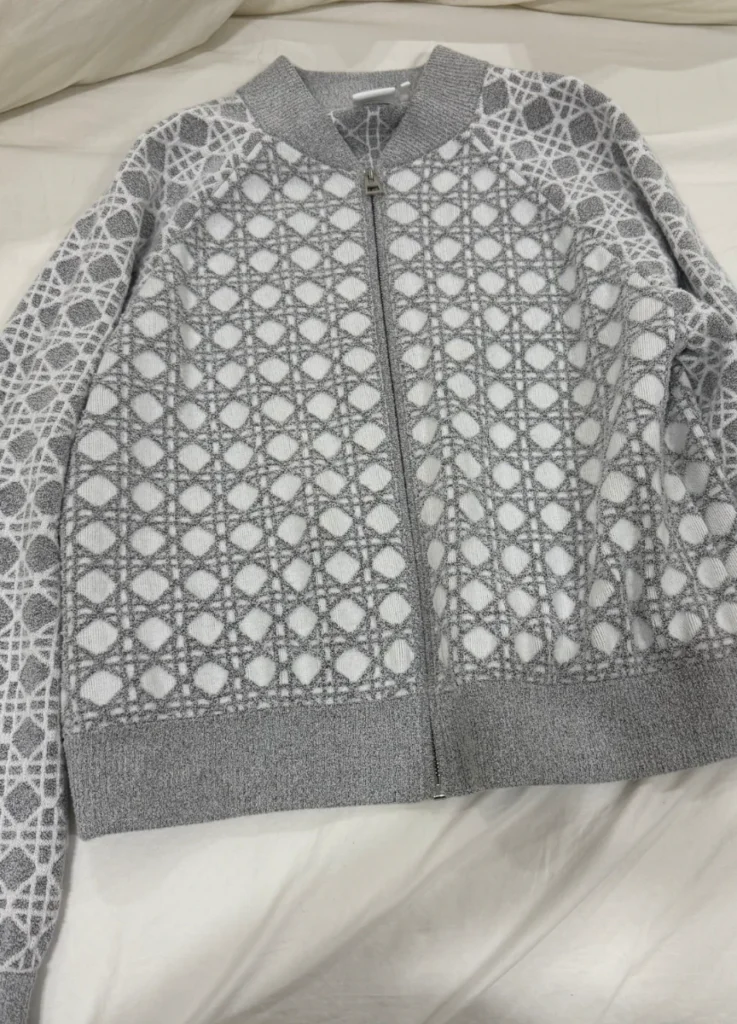
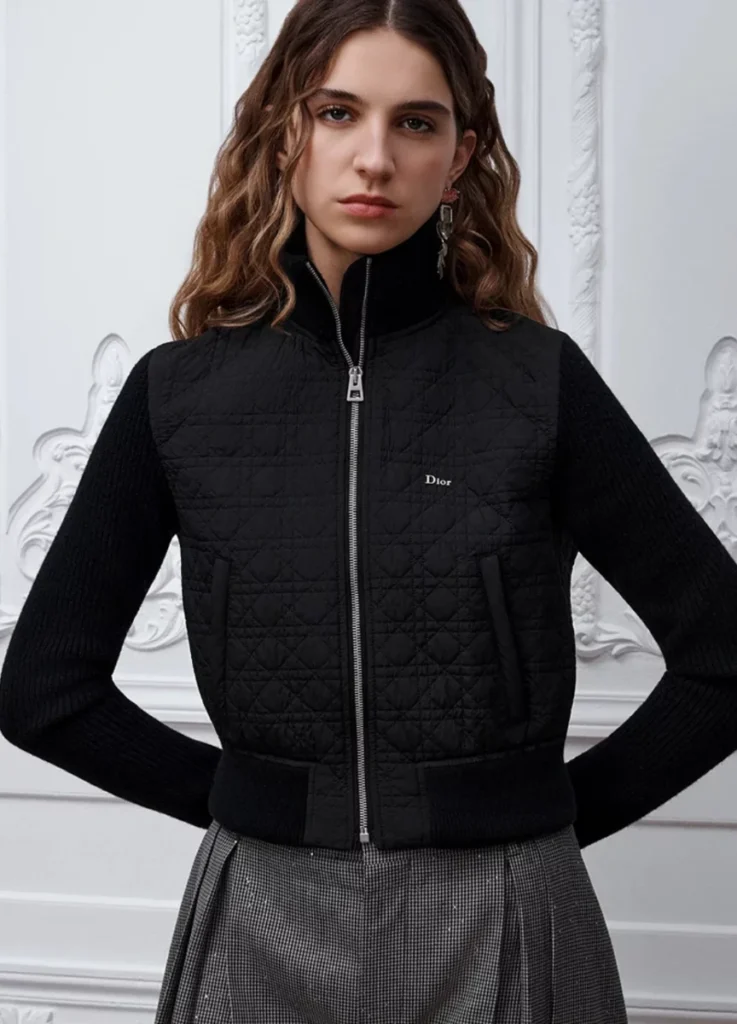
Gray Micro Cannage Cardigan │ Cannage as Surface, Not Decoration
The piece I added to my own closet was the Gray Micro Cannage Cardigan. This one shows Anderson’s translation of Cannage into something more usable.
Cannage is one of Dior’s strongest codes. Originally inspired by the cane back of Napoleon III chairs, this Dior signature motif gained wide recognition through the Lady Dior bag. But Cannage on clothing requires care. When the pattern scales up, the decoration becomes pronounced, and the volume or repetition can read amplified on the body.
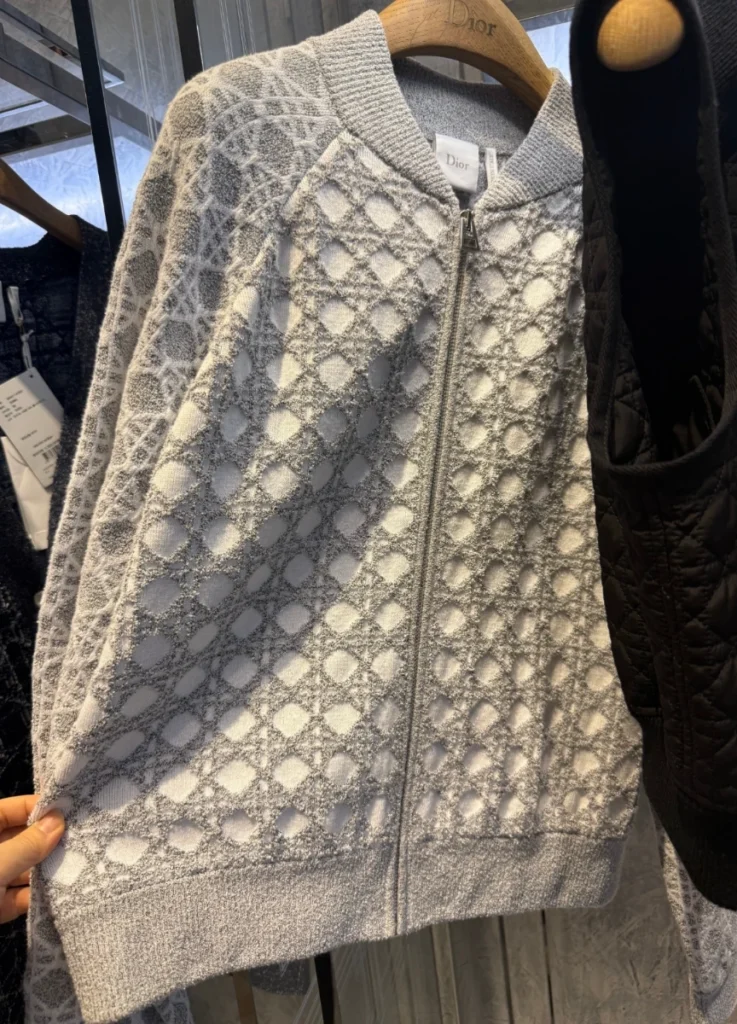
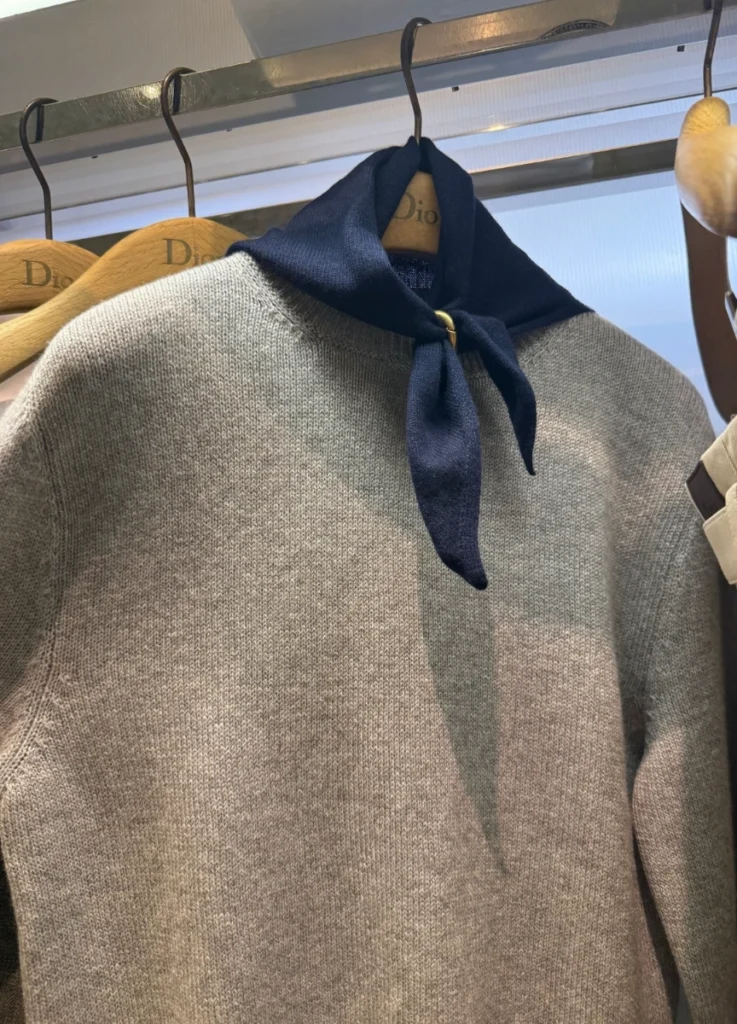
The Gray Micro Cannage Cardigan keeps the pattern small and lays it across the surface as repetition. From a distance, it looks like a gray knit cardigan. Up close, the Dior code shows.
A good logo or house code reveals itself when viewed up close, not from across the room. Codes that work this way tend to age well.
The gray color does a lot of work here. White or beige would have read more romantic. Black would have read stronger. Gray lowers the decorative quality of the cannage and raises the daily-wear potential. When matched with the gray flannel skirt, the look comes across almost as a setup, but without feeling forced together.
The piece is also easy to wear in practice. Dior’s RTW often runs structured and dense, which can feel heavy in real wear. This cardigan is light. It doesn’t grip the body. It layers easily under a coat or over a top. Pieces like this tend to get worn often.
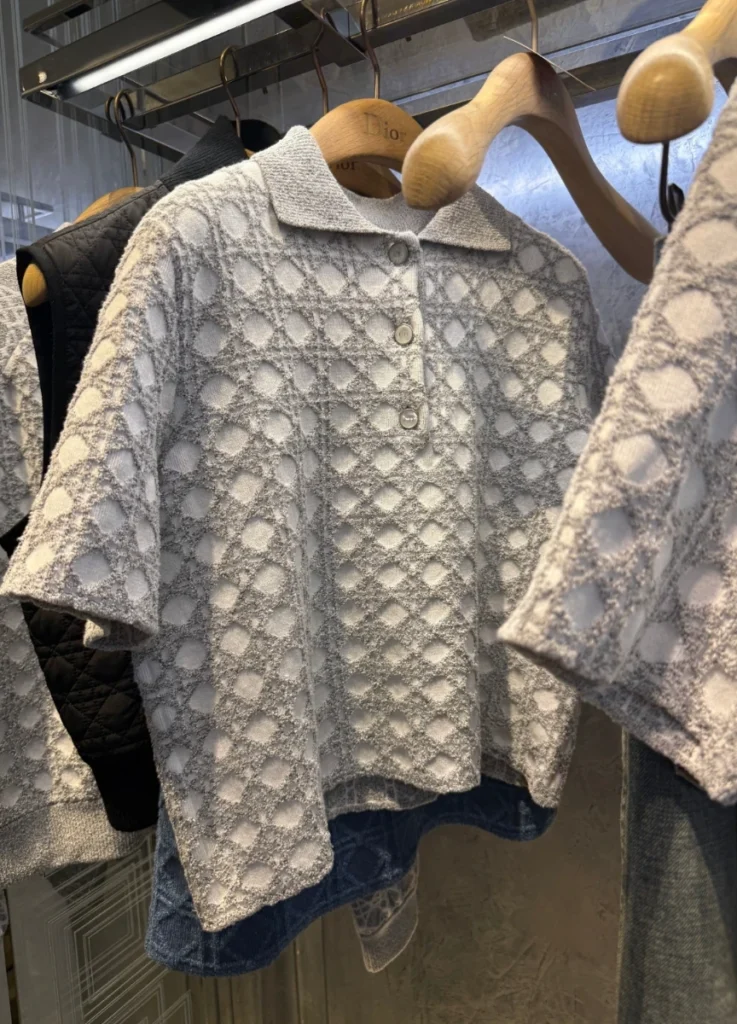
It also has a body-type advantage. Micro pattern doesn’t expand the body the way macro pattern can. With a larger Cannage, the eye breaks the silhouette into pattern units, which can come across wider on the upper body. With a smaller Micro Cannage, the pattern works more like surface texture — much softer on the body.
This cardigan is more of a long-term staple than a season piece. The Dior code is there but kept quiet. The fabric is light. It pairs widely with what’s already in the closet. It’s a clean example of the season’s wearable instinct.
Two-Tone Trimmed Jacket │ Dior Tailoring Moves to a Thinner Line
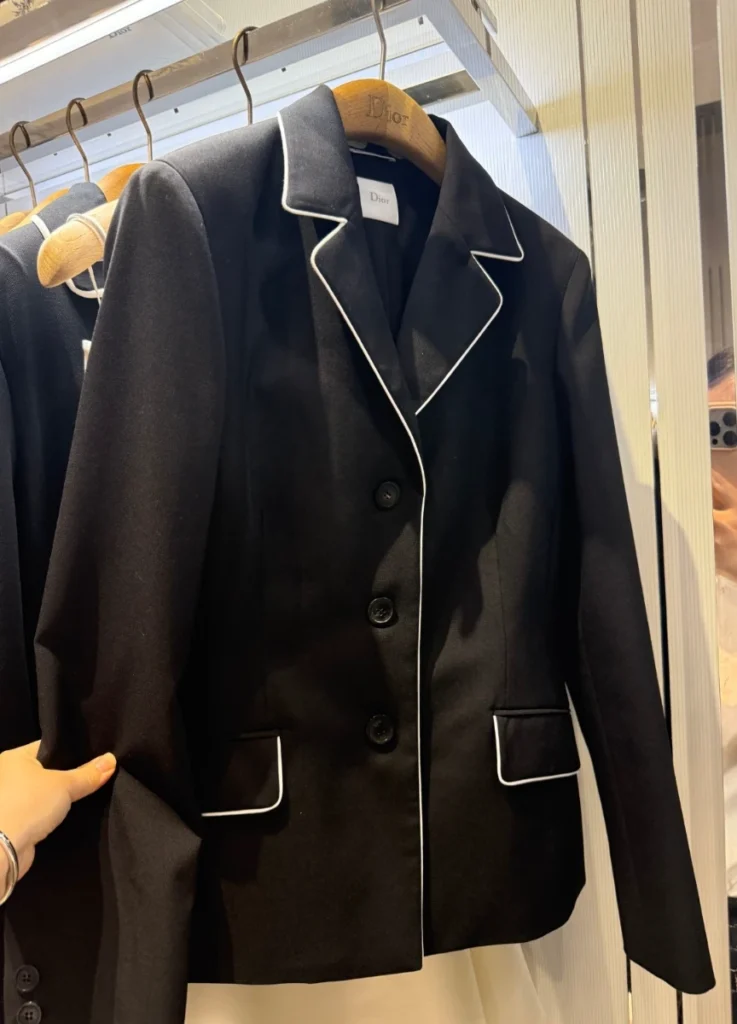
Another notable piece this Fall 2026 was the black-and-white two-tone trimmed jacket. Photographed, it appears as a classic piped jacket. In person, the trim runs thinner and more refined; previous seasons typically used heavier piping.
This change is more than a finish difference; it shifts the jacket’s overall character.
Where earlier two-tone trim built a more decorative, more classic frame, this season’s trim runs as thin lines drawing the jacket’s outline. White lines on the lapel, front placket, pockets, and hem explain the structure but don’t push outward. The result is more contemporary, lighter, and less decorative.
A similar direction has been visible at Chanel’s recent RTW shows. Classical contrast lines stay, but the trim runs thin — keeping the piping visible while reducing the weight of the jacket. Where past luxury jackets built authority through decoration density, recent luxury tailoring achieves refinement through thinner lines and cleaner surfaces.
Anderson’s Dior follows the same shift. He doesn’t dismantle Dior’s tailoring entirely. The lapels, pockets, waistline, and button placement stay clean. The tailoring no longer carries the strict authority of a past suit — the two-tone trim is thin, and the surface is left relatively clean.
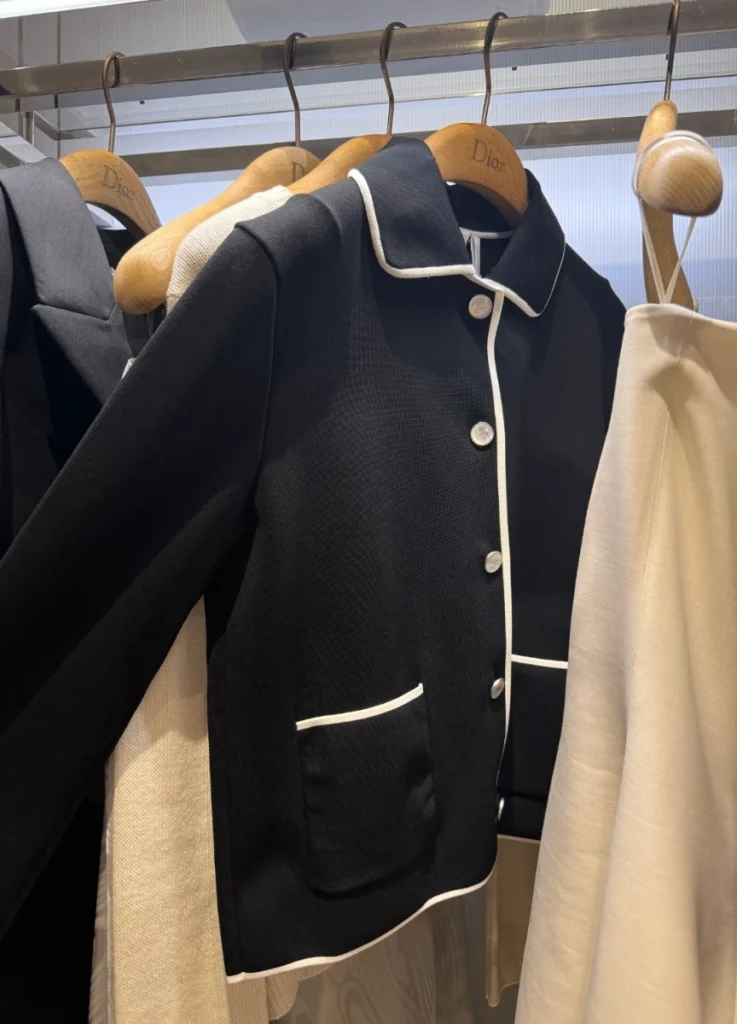
In wear, this difference is significant. Thick trim makes the jacket sit on the body like a frame, which can come across broader and stronger across the upper body. Thin trim, like this season’s, organizes the body’s outline without breaking the line of sight too sharply. The same black jacket comes off lighter, cleaner, but not stiff.
That said, this isn’t a cardigan-style relaxed jacket. It works to make a put-together look. With a white shirt underneath it reads classic; with a sleeveless or thin knit, more contemporary; with denim it’s possible, but the jacket’s line wants a skirt or a slim trouser to support it.
Micro Cannage Padded Jacket │ From “Easy Padding” to “Tailored Padding”
Another notable shift this season is the positioning of the padded jacket. Previous Macro Cannage padded jackets ran more toward casual outerwear. The larger Cannage pattern, lighter padding, casual fit — they centered on easy wear, and the price point sat around $3,000, making the piece relatively accessible within the luxury outerwear category.
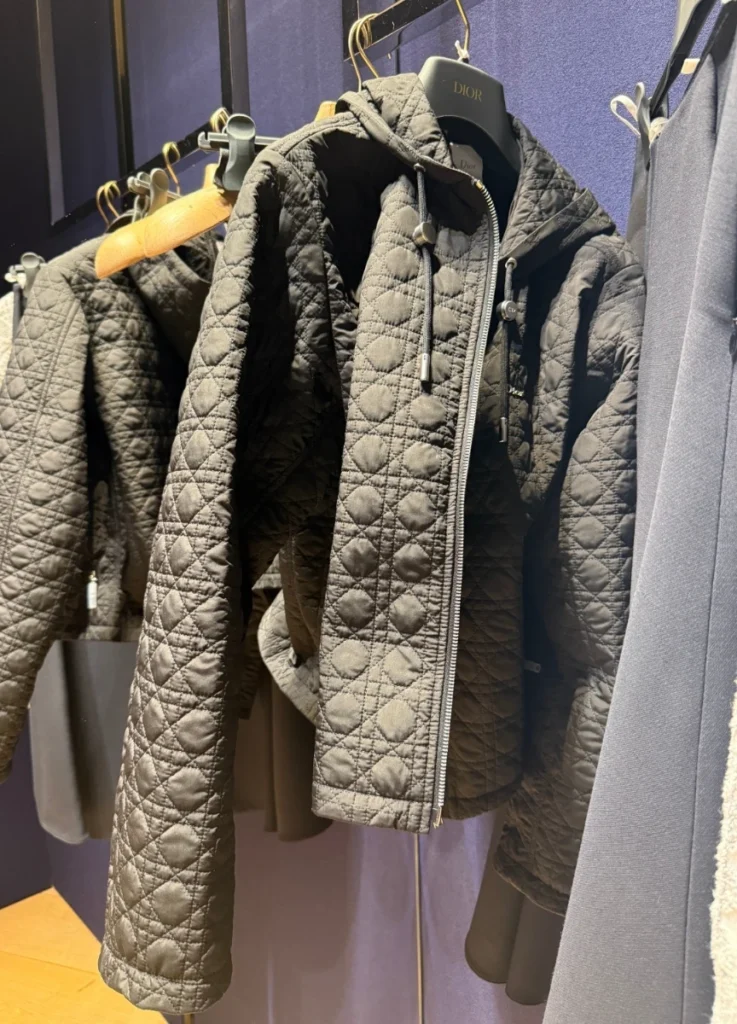
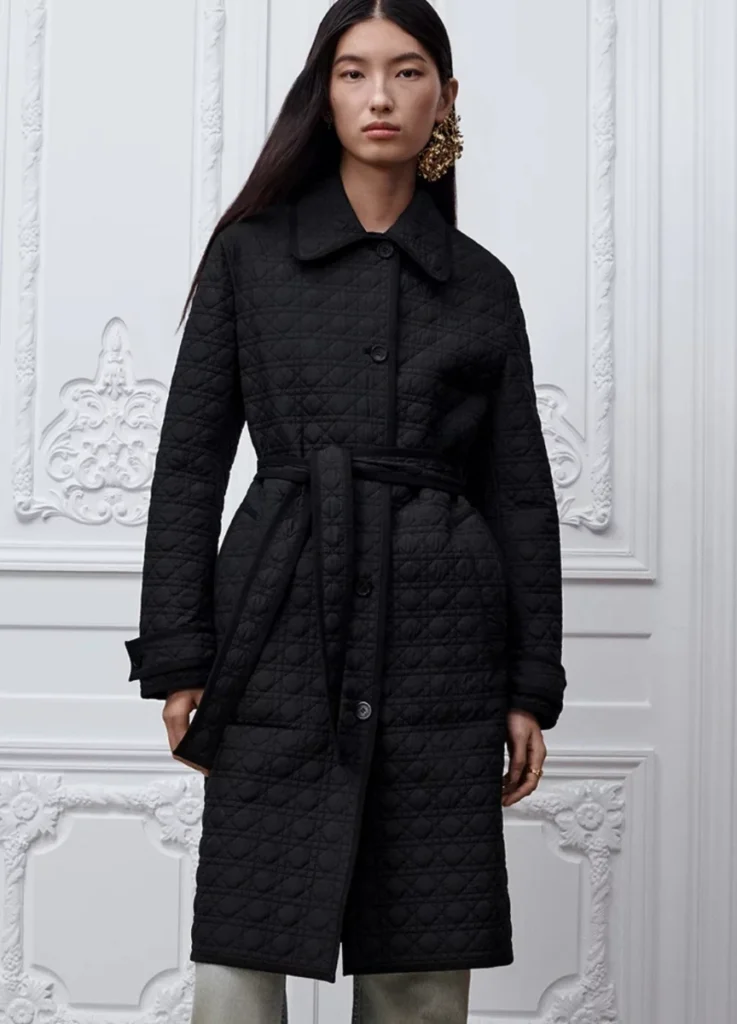
This Fall 2026 Micro Cannage padded jacket has a different character. With pricing rising past approximately $5,200, the piece no longer reads just as a padded outer — it now reads as a structured outer carrying Dior’s tailoring code.
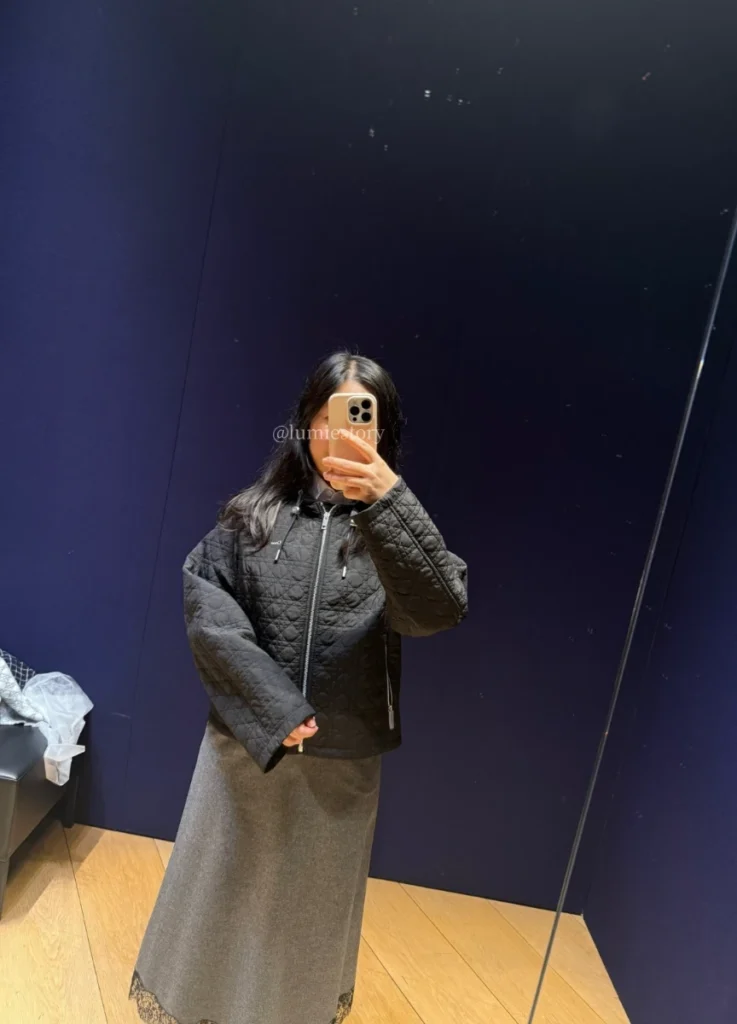
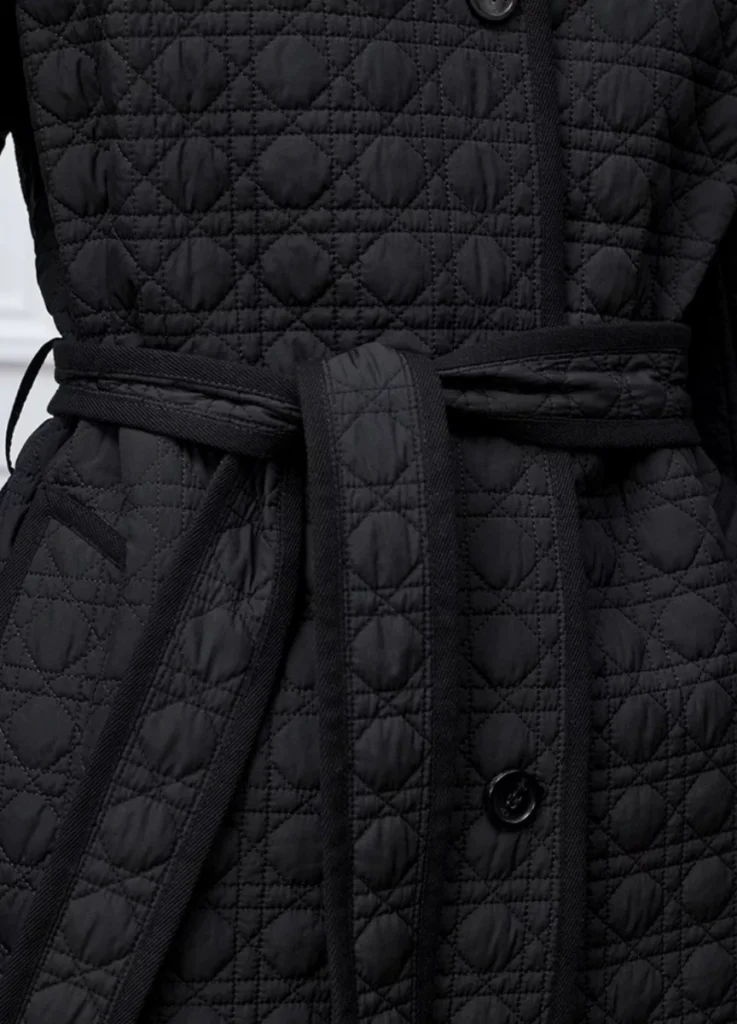
The biggest difference is the pattern scale. Macro Cannage feels more casual visually, closer to sportswear in feel. The bigger grid and volume open easily across the body. Micro Cannage, with smaller pattern, looks denser and more refined. The smaller the surface repetition, the less casual and more tailored the piece.
This padded jacket sits at exactly that point. The quilting still carries Dior’s Cannage code, but the overall impression is much more urban. Hood, zipper, drawstring details exist for functional reading, but the micro pattern keeps the surface from scattering loosely. It pulls the body’s center together and creates a more organized outline; standard padding can scatter loosely across the body.
source: dior.com
Worn with the gray flannel skirt, the black micro cannage padded jacket has the volume of padding but doesn’t read as overly heavy. The reasons: the pattern is small, the color is black, and the zipper line creates a vertical center axis. The lace hem of the skirt softens at the bottom, so the upper body’s functional outerwear and the lower body’s Dior-feminine touch don’t fight each other — they connect.
That said, for body silhouette refinement, the coat-style version works more effectively.
This jacket needs to be approached differently from the Macro Cannage padding. The earlier Macro version was a “casually thrown-on Dior padding.” This Micro Cannage padding is more refined and structured — but the price has climbed, and the position has shifted with it. It reads closer to luxury quilted jacket territory; casual padded outerwear is no longer the right frame.
source: dior.com
So the buying frame has to shift too. Looking for a daily-wear practical outer, the price will feel heavy. Wanting the Dior Cannage code in outerwear form without the casual padding feel, this Micro Cannage padding makes sense.
For body types where Macro Cannage made the body appear wider, Micro Cannage can be more flattering. With smaller pattern, the eye disperses across the surface, and the surface appears more organized. Even with padding’s volume, the overall impression is less heavy. This is a meaningful sign that Dior is moving Cannage in a more mature direction this season.
In short, Dior’s Cannage padding has moved from “casual logo padding” to “tailored house-code outerwear.” The shift came with price increases, which feels like a loss from the consumer side. Aesthetically, it shows Dior pulling Cannage upward as a higher-tier RTW surface language.
source: dior.com
Shoes │ Anderson’s Dior Reading Between Refined Femininity and Resort Looseness
In Fall 2026, the shoes are an important clue to how Anderson is recalibrating Dior’s lady-like character. The clothes show the historical codes — the Bar Jacket, bows, lace, Cannage — fairly clearly. The shoes bring those codes into a more practical wear language.
What’s interesting is the shoe lineup splits in two directions. One side is the pointed-toe slingback, representing Dior’s refined feminine line. The other side is the logo strap mule sandal, carrying a looser resort sensibility. The first holds Dior’s old discipline. The second loosens that discipline into the rhythm of daily life and the resort.
The two directions look like they’re in conflict, but in fact they explain this season’s core together. Anderson keeps the oldest Dior codes — the disciplined pointed toe, the upright posture, the silhouette organized around the waist — intact. But this season, that lady-like character isn’t limited to formal social dressing only. The surface stays light, and it becomes easier to wear.
The J’Adior slingbacks sit closest to traditional Dior. Pointed toe, low and slim heel, slingback structure that opens at the back — this matches Dior’s long-held lady-like vocabulary. The shoe lengthens the leg, creating tension between the skirt’s hem and the ankle. With a midi-length skirt with lace at the hem, like this season’s gray flannel, the slingback finishes the silhouette most stably.
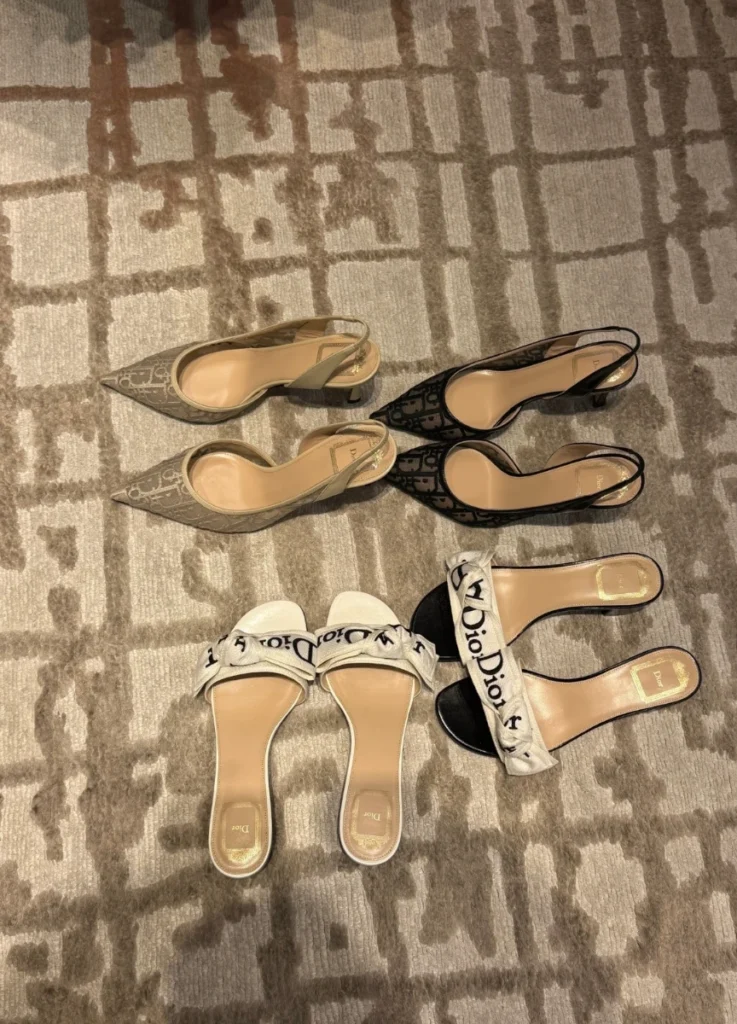
What makes this season’s slingback interesting is the surface — mesh oblique, jacquard oblique, the black-and-beige contrast — running noticeably lighter compared with previous seasons. Where traditional pumps shut the foot in firmly to project authority, mesh and slingback structure let that authority loosen slightly. The toe stays sharp, but the surface breathes. This connects to the trend in the clothes too: keep the tailoring, lighten the fabric, keep Dior’s structure but stop confining the wearer’s body inside it.
The black mesh oblique slingback shows this balance well. Black is still polished. The mesh surface doesn’t fully cover the foot. The shoe is less strict than a classic pump, more put-together than a sandal. This is where Anderson moves Dior into today’s closet. It’s not fully casual, not too formal — it lands in the middle.
The logo mule, on the other hand, tells a different story. A wide strap holds the upper foot, with the heel completely open. This structure runs more resort. Where the slingback’s pointed toe creates tension, the mule lets the foot slide in and out with looseness. With Dior logos repeating along the strap, the shoe operates in resortwear vocabulary; the refined-pump reading steps back.
This mule matters because it moves the Dior aesthetic from “fully styled look” to “daily-wear piece.” Where the past Dior woman was completed by jacket, skirt, and pumps, this season’s Dior woman can wear the same skirt with mules. She doesn’t have to be fully styled. She can drop a bit of the formal energy and still hold Dior balance.
In wear, the difference is clear. The slingback elongates the toe and exposes the ankle, working well for someone shorter or wanting to elongate the leg. With a midi skirt, the flannel skirt, or the lace-hem version, the pointed toe organizes the proportion. The logo mule cuts the foot horizontally, which can shorten the leg’s perceived length. For proportion correction, the slingback is the more reliable choice.
But aesthetically, the mule has its own meaning. It doesn’t aim for perfect proportion. It lets Dior be worn in a less tense way. In summer, in resort looks, with denim, sleeveless tops, or light knits, this looseness comes across more contemporary. The slingback keeps Dior’s discipline. The logo mule lowers it into daily life.
What’s interesting in this shoe lineup is that Anderson doesn’t dramatize the toe. The center of the clothes already carries bow, lace, Cannage, flannel, tailoring. Pushing the shoes too sculptural would make the whole silhouette heavy. Instead, he lets air in at the foot. The slingback opens lightly. The mule lets more of the foot show. This lightness is what makes this season’s clothes actually wearable.
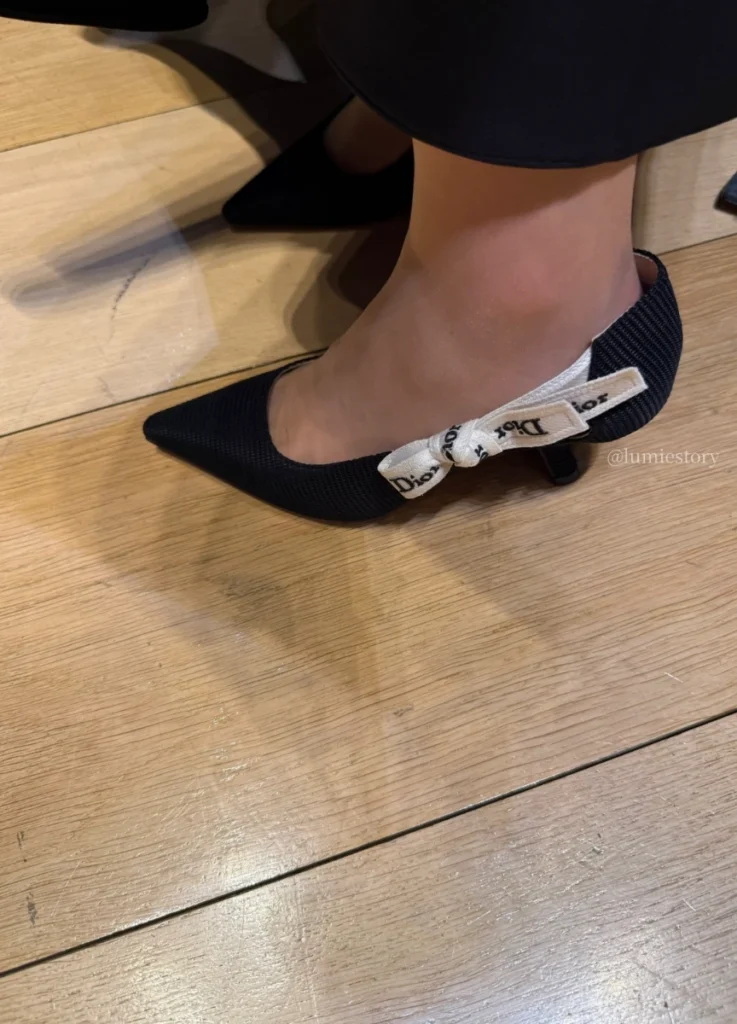
In short, this season’s shoes show that the Dior aesthetic doesn’t get completed in only one way anymore. The same gray skirt becomes refined Dior with slingbacks and relaxed resort Dior with mules. The black mesh slingback reads urban. The beige oblique slingback carries the house code more strongly. The logo mule reads resort and daily — three different positions, all under the same season.
This is the core point of Fall 2026. Anderson doesn’t erase Dior’s historical character. He just doesn’t lock it into one posture anymore. He moves it toward something you can walk in, slip on more easily, mix more flexibly.
So this season’s shoes make a small but important conclusion. Dior is still elegant, but the elegance has loosened slightly. The toe still has tension, but the foot is more visible. The structure is intact, but the wearer’s movement is more allowed. At that point, Anderson’s Dior stops repeating the past and starts retuning for today’s body.
Closing │ Anderson’s Dior Is Moving Toward “Wearable History”
Dior Fall 2026 isn’t a season of grand declaration. By the actual clothes, though, it’s a season with real persuasive power.
Anderson doesn’t repeat Dior’s historical character literally. He translates the Bar Jacket’s structure, the bow’s romance, the lace’s delicacy, the Cannage’s symbolism, the flare skirt’s movement — into lighter, more wearable clothes.
His Dior hasn’t reached a complete conclusion yet. But Fall 2026 makes one thing clear.
History doesn’t have to be repeated heavily. Sometimes the better version is just the lighter, more wearable one.
All images unless otherwise credited: © Lumie Story
[ Related Editorials ]
- Dior Pre-Fall 2026 Review | Jonathan Anderson and the Quiet Rewriting of Paris
- Dior 2026SS Bags | Jonathan Anderson’s First Bag Line-Up — Structure as Strategy
- Dior 2026 Fur Collection | From Micro Cannage to Structured Fur Jackets
- Dior Fall/Winter 2026 RTW Review – Light Over Water and the Return of Structure