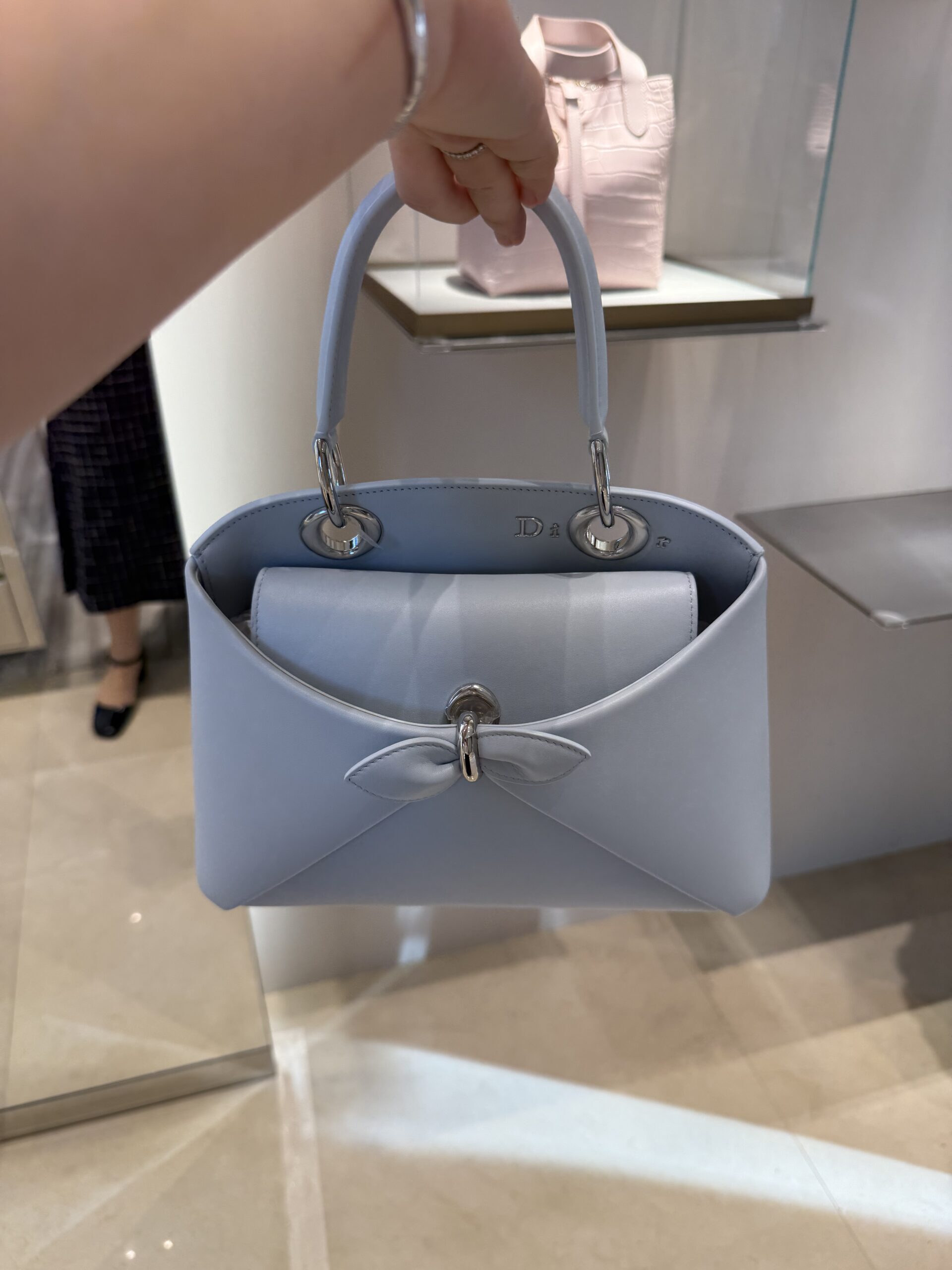
Inside Dior 2026SS Bags
When Jonathan Anderson presented his first womenswear collection for Dior on October 1, 2025, garments weren’t the only focus. The bags carried equal narrative weight.
Under Anderson, accessories no longer appeared as supporting elements to ready-to-wear. They functioned as structural counterpoints — adjusting proportion, tension, and silhouette across the runway.
What emerged wasn’t a single it-bag. It was a layered system of form, material, and hierarchy.
Anderson’s reimagined Lady Dior didn’t appear in the runway show itself — only in the prologue film projected over the upside-down pyramid that opened the collection. The bag arrived first through a January 2026 standalone campaign, signaling that Anderson is treating Lady Dior as a separate strategic conversation rather than a runway prop.
Below is a breakdown of the key silhouettes and what they suggest about Dior’s strategic direction.
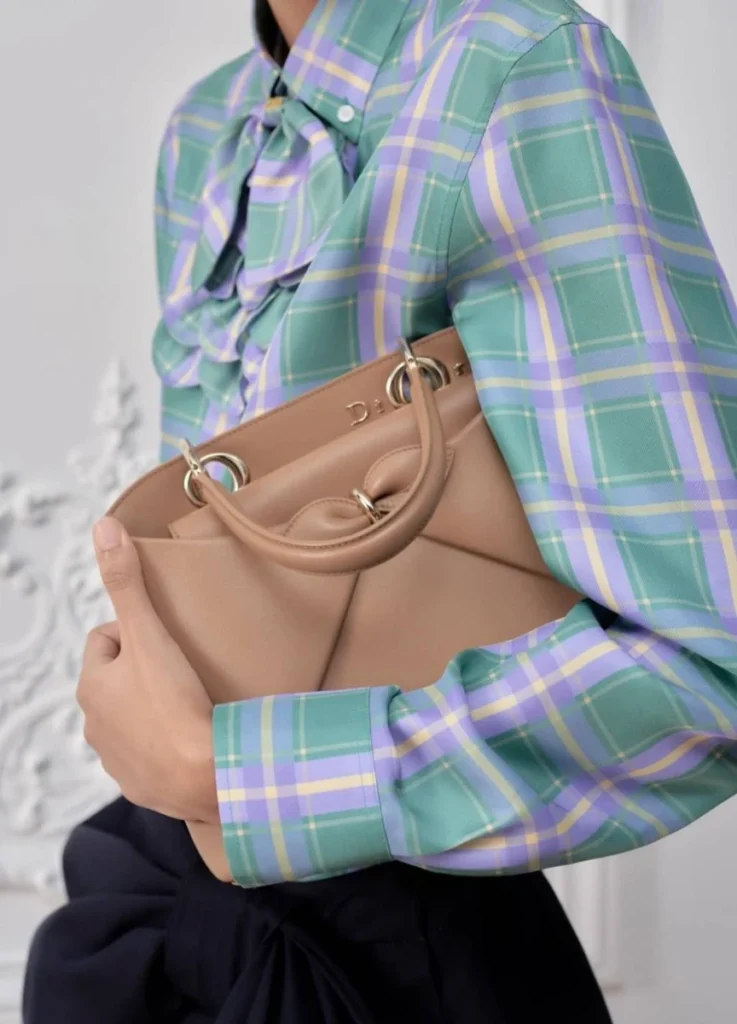
source: dior.com
The Cigale Bag | Structure as Recognition
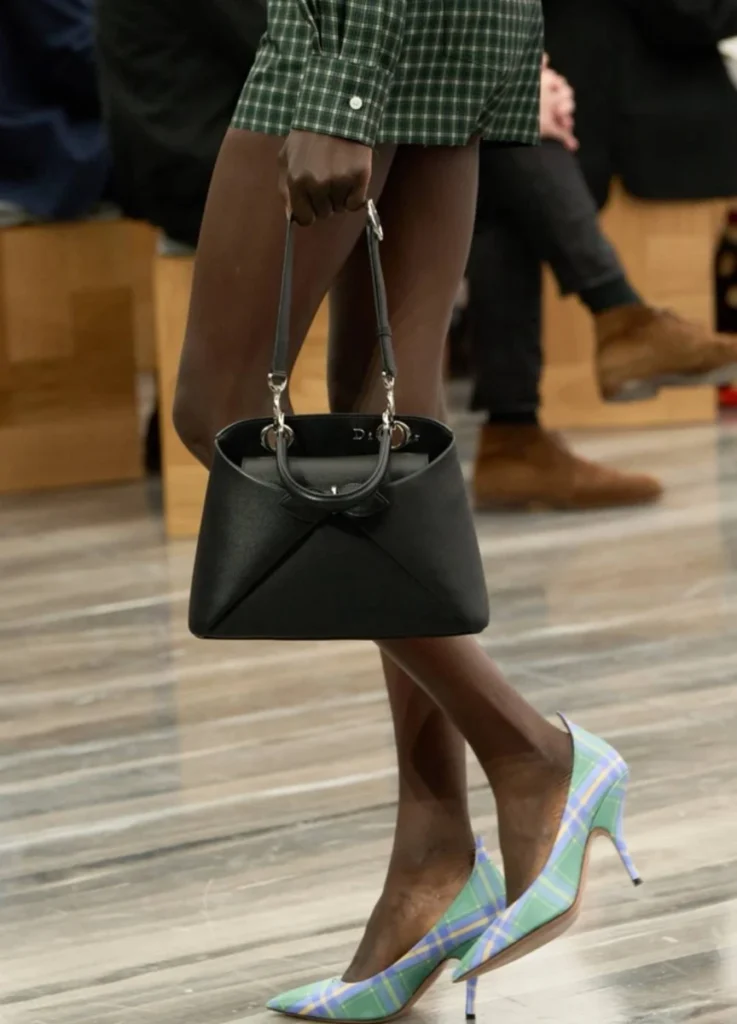
The most discussed silhouette of the season was the new Cigale.
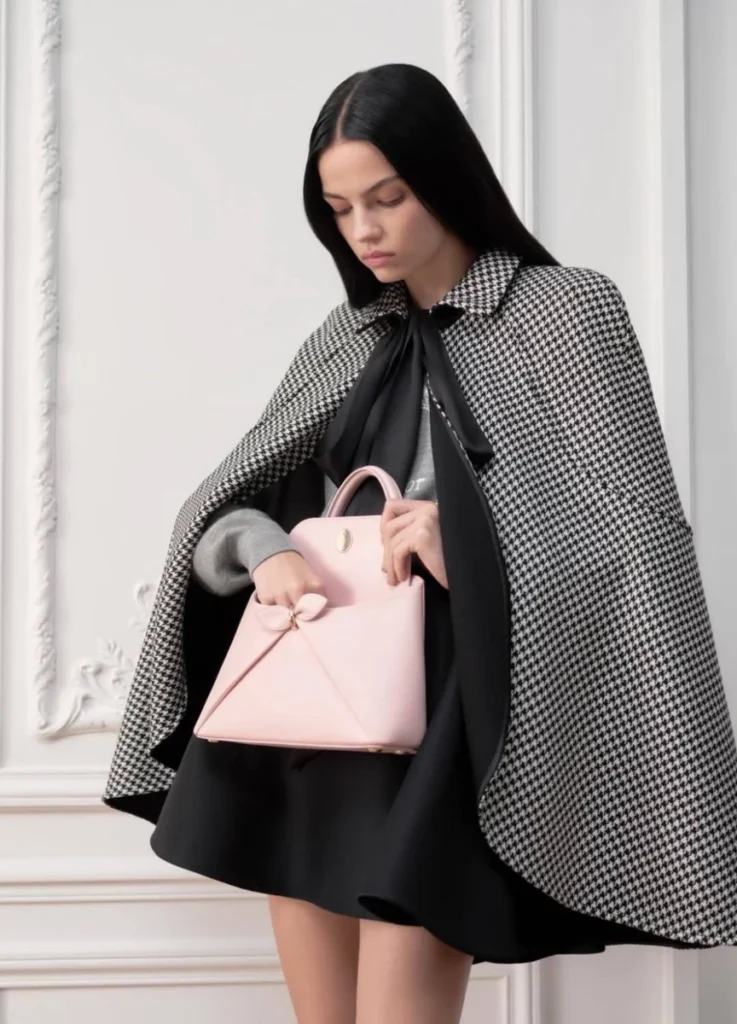
Anderson has called La Cigale — the 1952 hourglass dress designed by Monsieur Dior himself — his favorite dress in the history of fashion. The bag translates that architectural logic into leather form.
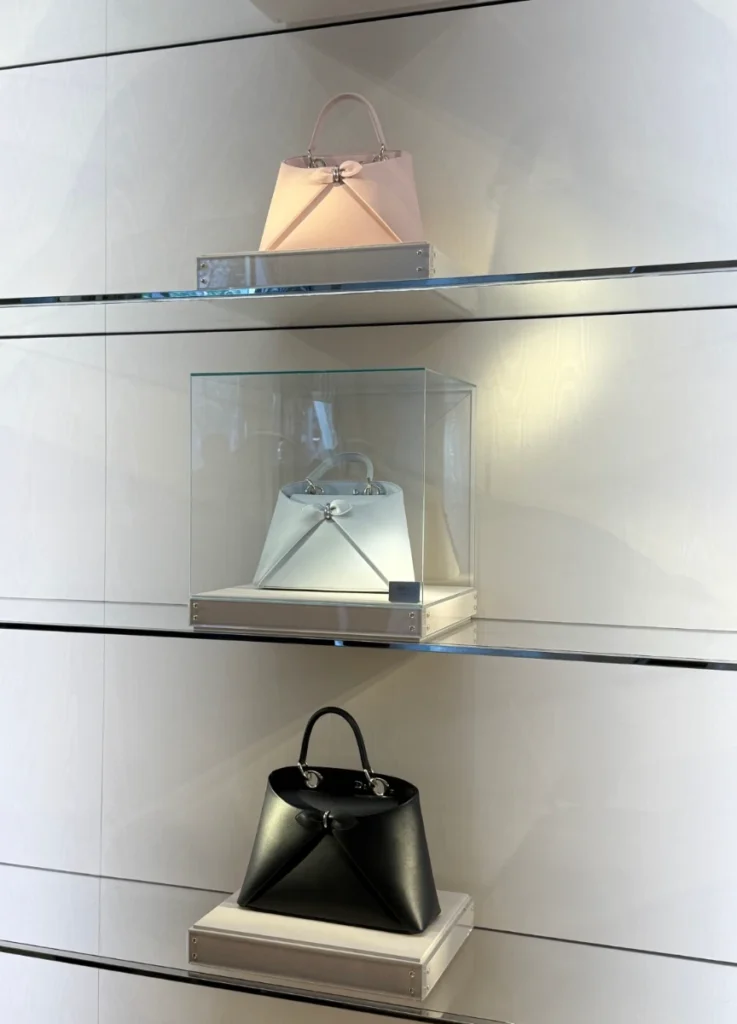
- crafted in calfskin
- envelope-inspired silhouette with folded front panel
- single curved top handle attached through gold-tone O-rings (subtly referencing Lady Dior’s architecture)
- delicate bow at the front, fastened with a touch of hardware at center
- minimal frontal branding
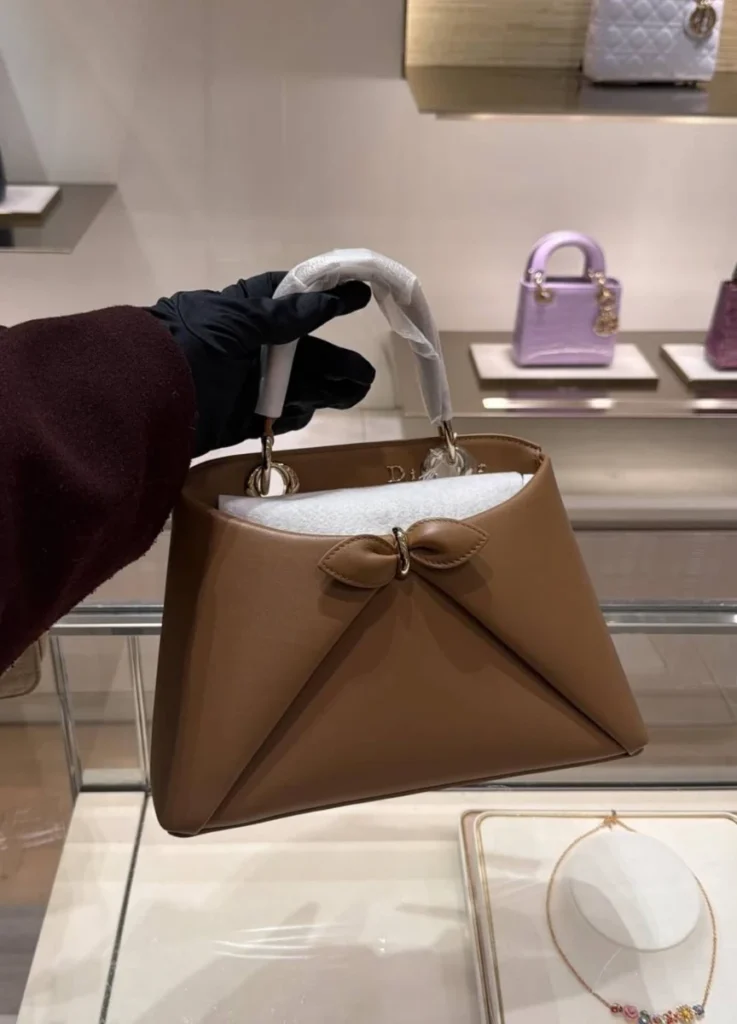
@nins_gallery / Instagram
WWD and several European retail buyers highlighted Cigale as a potential commercial anchor — it reads immediately through silhouette rather than logo.
Where previous Dior bestsellers leaned heavily on cannage quilting and recognizable hardware, Cigale reduces overt brand signaling. Its identity rests in proportion and cut.
In a logo-fatigued market, this is not incidental.
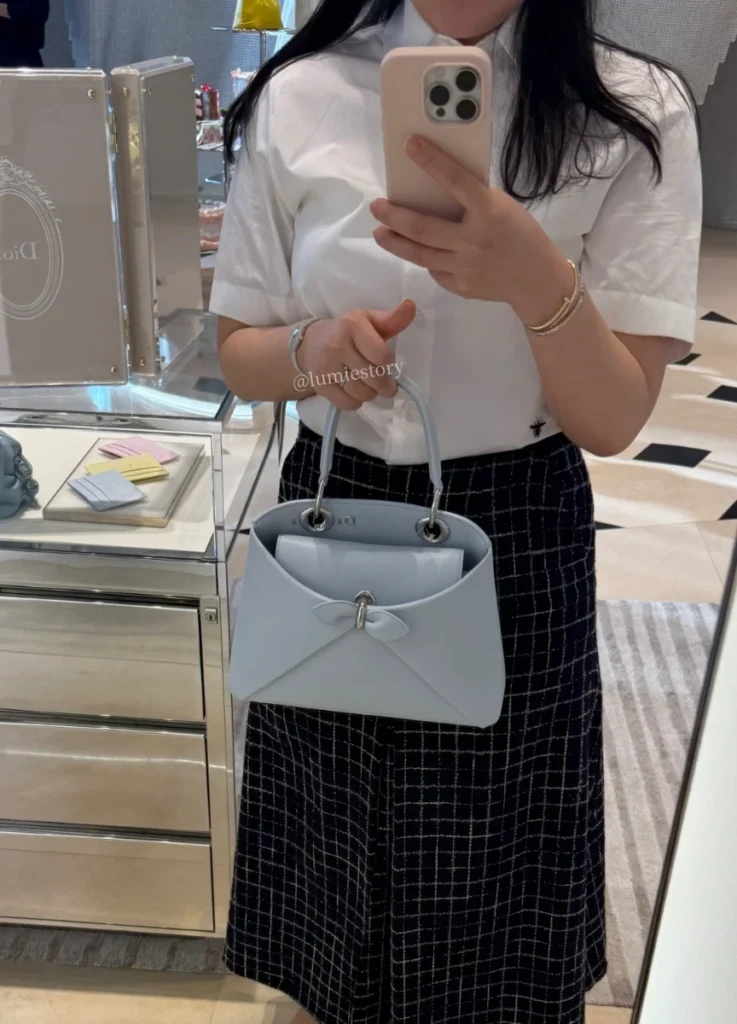
A Note from In-Person Handling
The leather is firm. The bag carries real weight in the hand.
Anderson arrived at Dior from Loewe — a house defined by softness, suppleness, and tactile yielding leather. Cigale doesn’t follow that grammar. The bag’s structure holds. The volume resists collapse. The hand registers density before it registers shape.
This is Dior’s craft language, not Anderson’s previous one. The leather house DNA is intact under his direction. For collectors who feared a Loewe-ification of Dior leather goods, Cigale is the reassurance — Anderson is working within Dior’s atelier traditions, not against them.
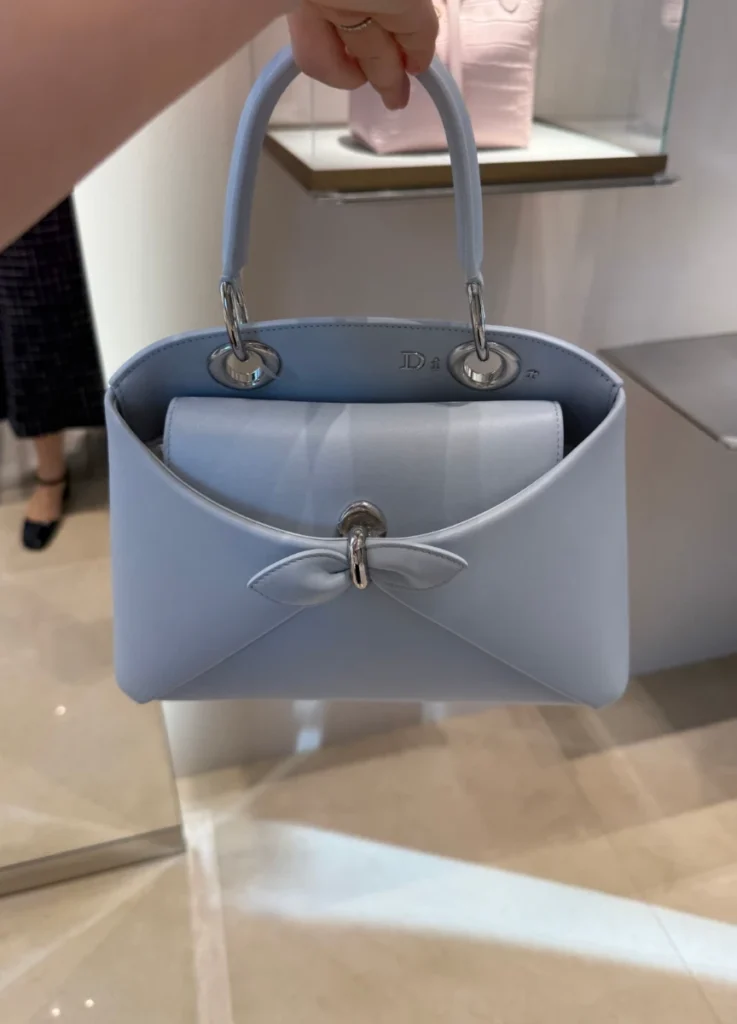
The current size also runs slightly large for petite frames. Proportions sit closer to medium-frame styling. For wearers who size into Lady Dior Mini, Cigale tends to read more balanced when carried as a top-handle than worn cross-body. A smaller iteration in future drops would address this gap.
Structurally, the sharp top opening and defined corner geometry create real-world considerations. Edge friction and corner abrasion are likely concerns over extended wear. The origami-style interior also lacks built-in compartmentalization — internal pouches will be needed for organization.
The Cigale also returned for Fall 2026 — confirming Anderson’s intention to build it as a recurring signature rather than a one-season debut.
source: dior.com
The Diorly Bag | The Bridge to Everyday
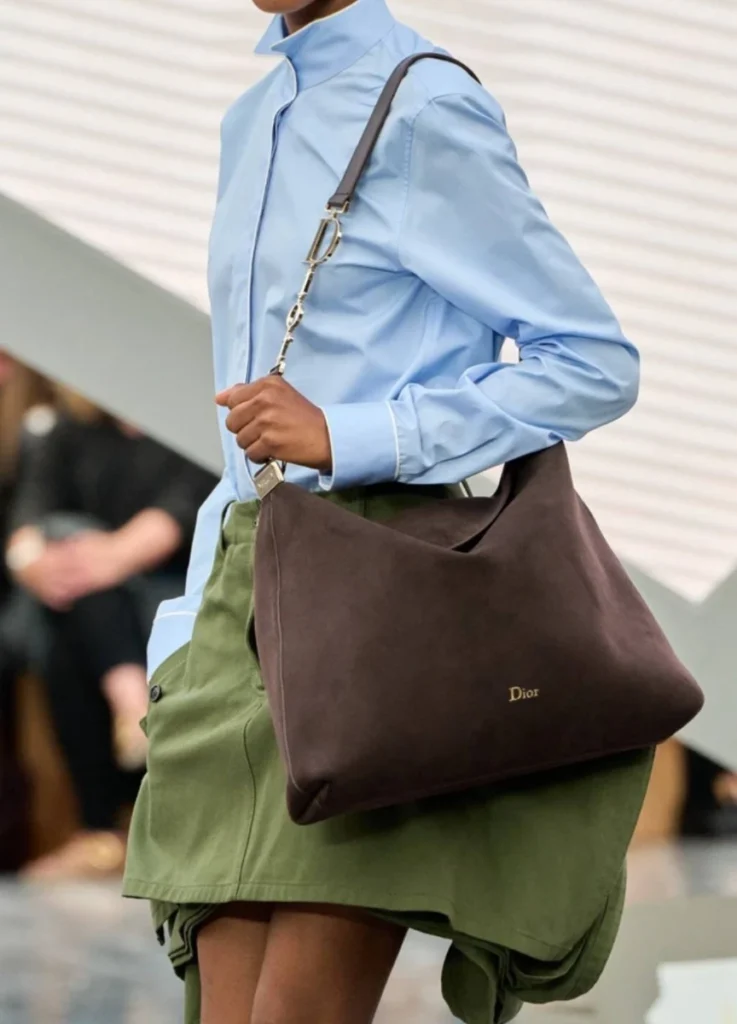
The Diorly translates runway conceptuality into daily usability.
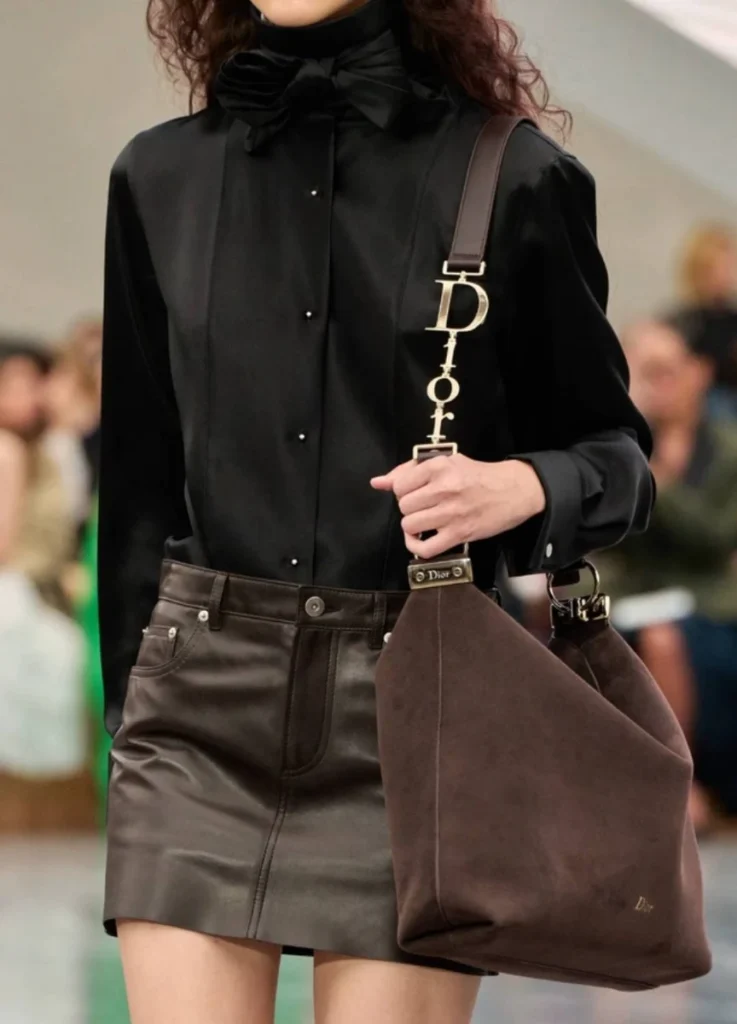
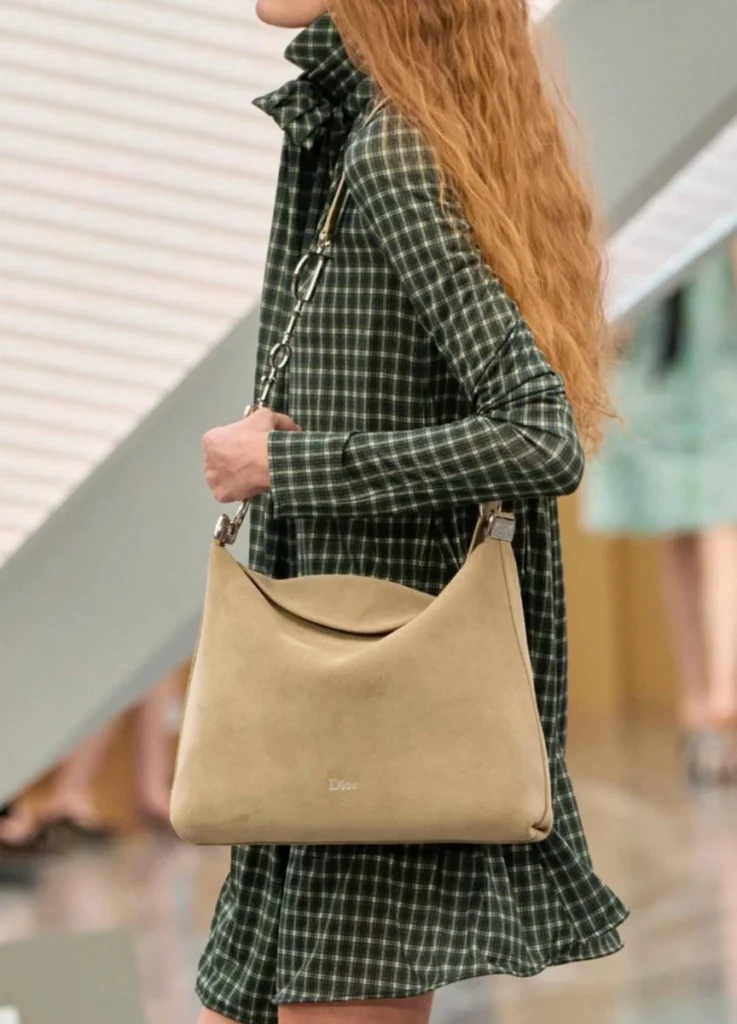
- supple suede calfskin (currently exclusive material for the launch)
- adjustable strap with bold D.I.O.R. metal lettering (a deliberate echo of the John Galliano era)
- concealed magnetic closure
- discrete heat-stamped logo on the front
- Medium (12.5 × 10 × 3 inches): $4,500
- Large (15.5 × 12 × 4 inches): $4,900
- launch colors: Chocolate, Golden Saddle, Sabbia, paired with silver-tone hardware
source: Vogue Runway
Industry observers note Anderson builds the bag into the outfit rather than layering it as an afterthought. The bag sits almost like an extension of the garment.
The hobo silhouette in suede positions itself as the most realistic entry point for consumers seeking everyday luxury rather than statement pieces. The D.I.O.R. strap, in particular, will be polarizing. For collectors who lived through the Galliano logo era, it reads as deliberate archival recall. For others, it may feel louder than the rest of Anderson’s largely restrained vocabulary.
source: Vogue Runway
The Dior Bow Bag | Ornament Reframed as Silhouette
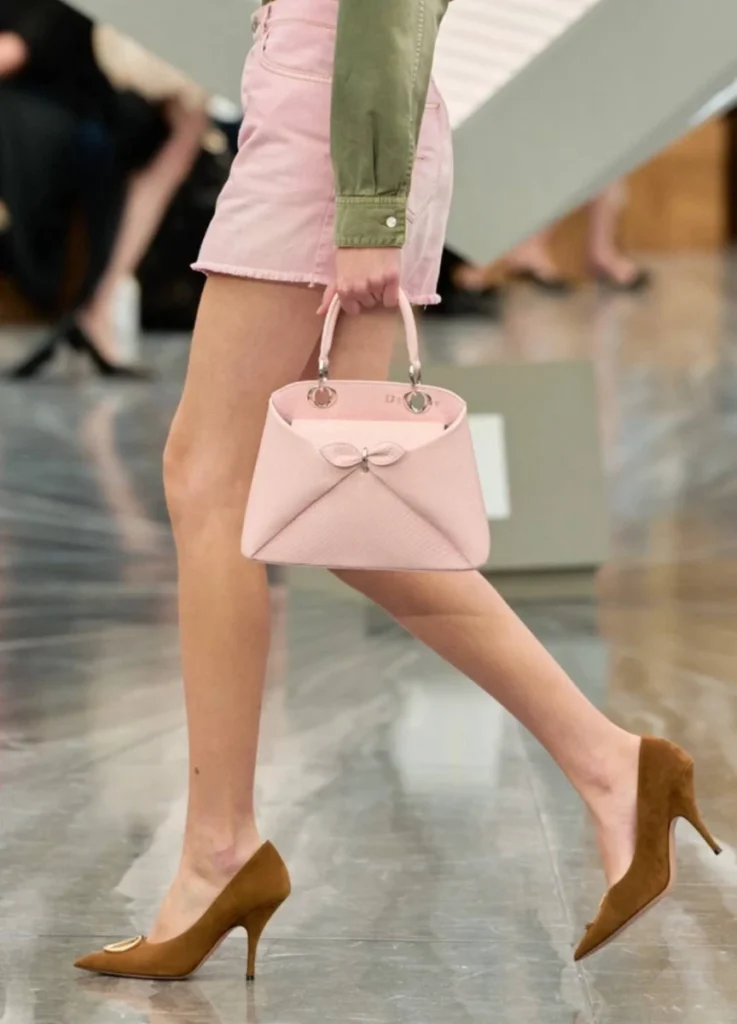
The bow, historically embedded in Dior’s feminine vocabulary, doesn’t appear here as decoration. It is the silhouette.
- envelope-inspired construction with folded front
- flap tucks into the open top
- curved single handle attached via gold-tone metal loops (Lady Dior reference)
- delicate bow at front center, fastened with hardware
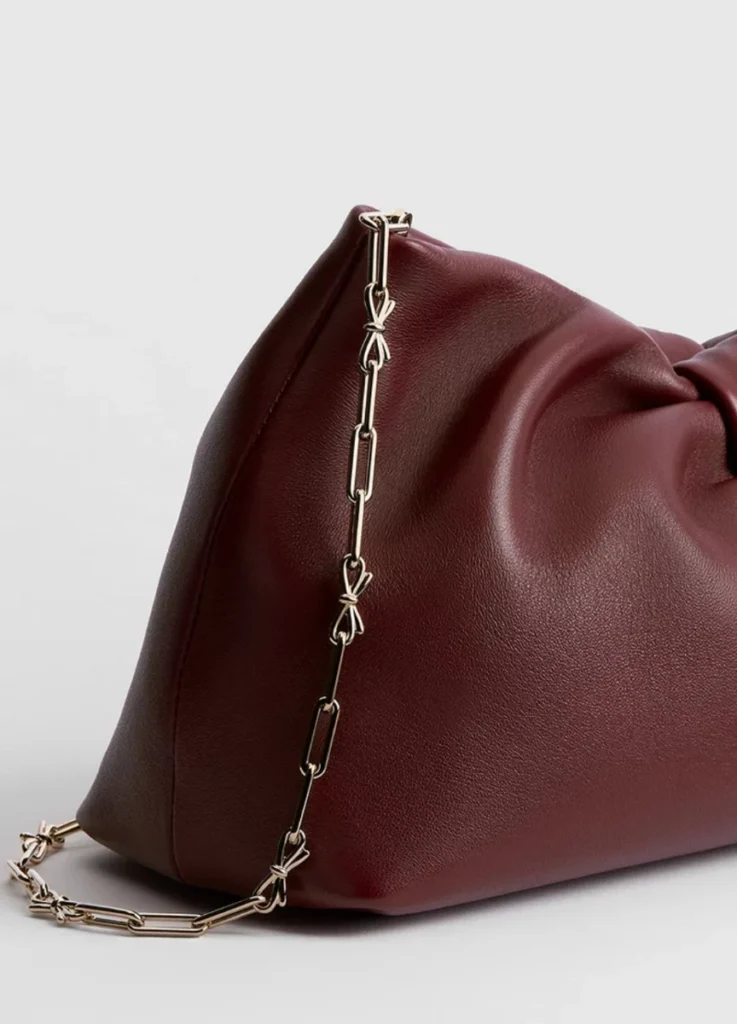
- chain strap features metal links interwoven with mini bows
- offered in Small and Medium sizes
- launch colors: pale pink (Dreamy Pink), blue (Tourmaline), burgundy (Hermitage), tan (Buttercup Yellow), black, latte white
- pricing starts at $4,300
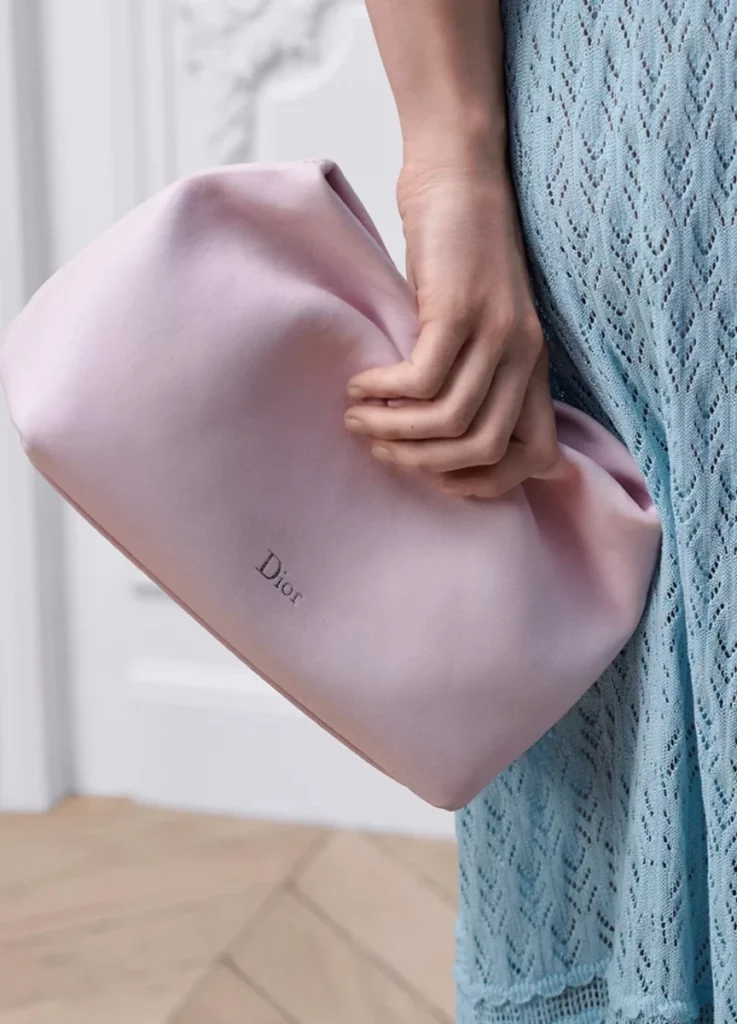
Anderson described the design intent as engineered — leather forming sculpted volume without losing tactility.
A separate Bow Clutch — not on the runway, but carried by Jennifer Lawrence and other show attendees — features no hardware or logos. The bow appears almost integrated into the leather itself, pinching the center with a knot-like detail. Available in burgundy, pink, black, and off-white.
Industry reception splits into two readings.
Some celebrate the bow as Dior’s most enduring code, restored to centrality. Others read it as too literal — too retro in a collection otherwise reaching for architectural reinvention. The Bow Bag is Anderson’s most overtly heritage-coded gesture in the collection. Whether it operates as a signature or as a temporary mood depends on how it carries through future seasons.
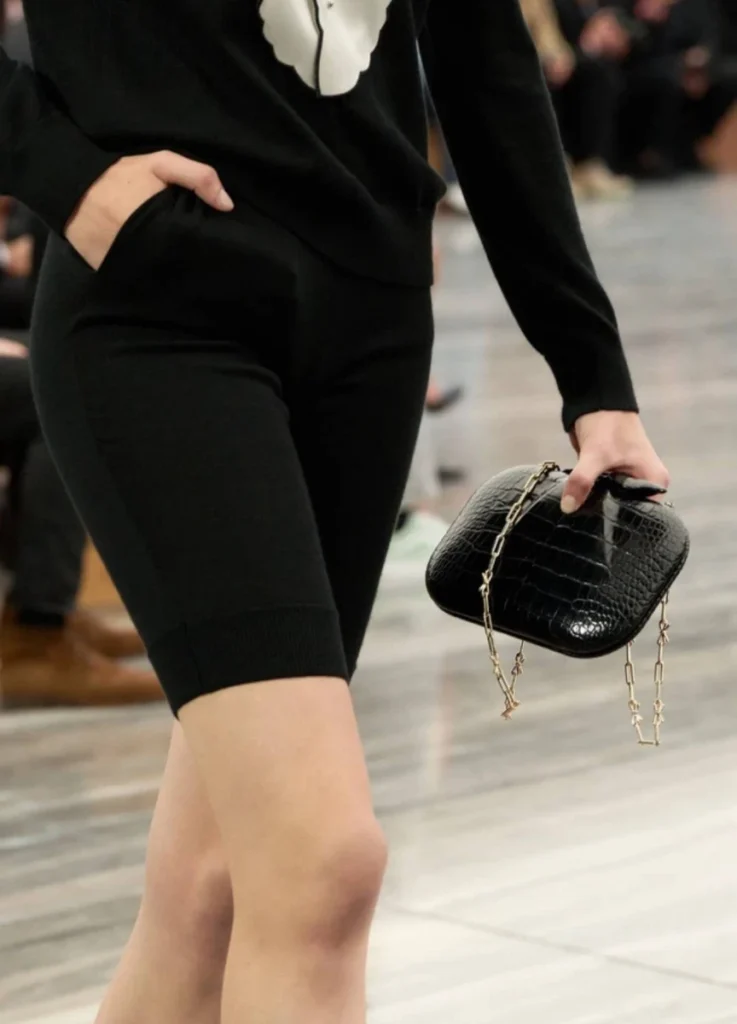
In smaller formats, the bow detail feels controlled rather than sentimental — placed within sharply tailored runway looks to create momentary pause.
source: Vogue Runway
Granville Bag | Heritage Cannage in Soft Form
The Granville bag revisits Dior’s hallmark cannage quilting in calfskin form.
- adjustable and removable leather shoulder strap
- foldable leather handles
- main zip compartment with two interior slip pockets and one zip pocket
- detachable D.I.O.R. charms
- five metal feet with Dior signature
- Made in Italy
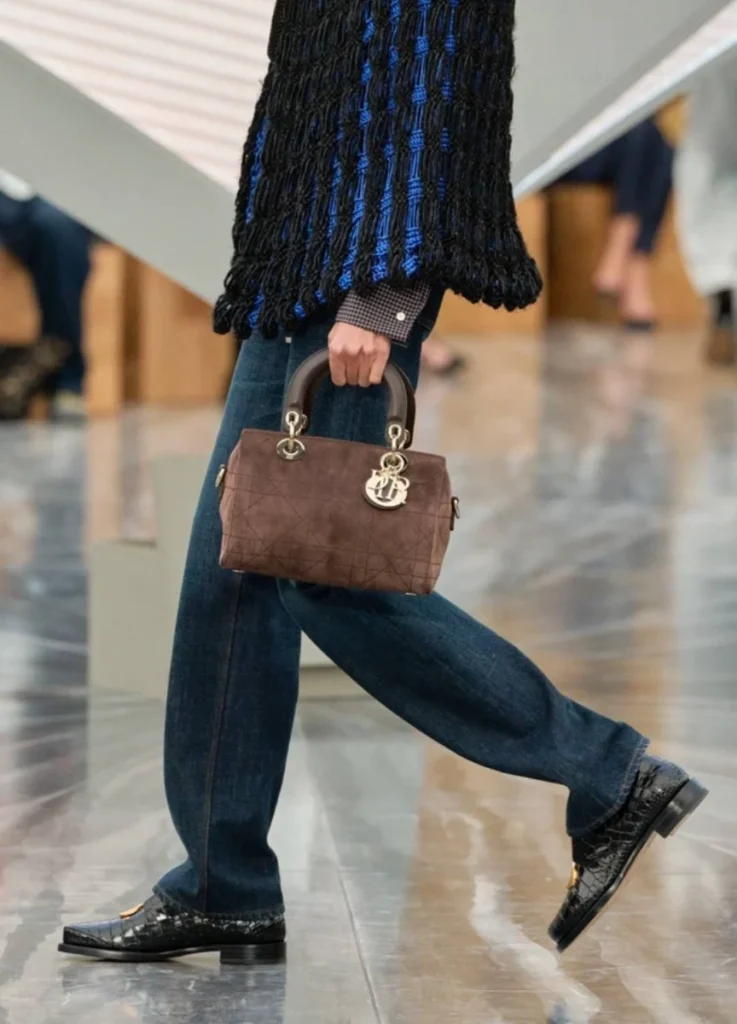
source: Vogue Runway
Several international reviews drew parallels to Anderson’s menswear experimentation with texture layering. Volume here comes through material, not embellishment.
Commercially, Granville occupies the daily luxury tier — less archival, more functional, but strategically necessary. In the broader collection logic, it’s the bag that absorbs the volume Cigale won’t carry.
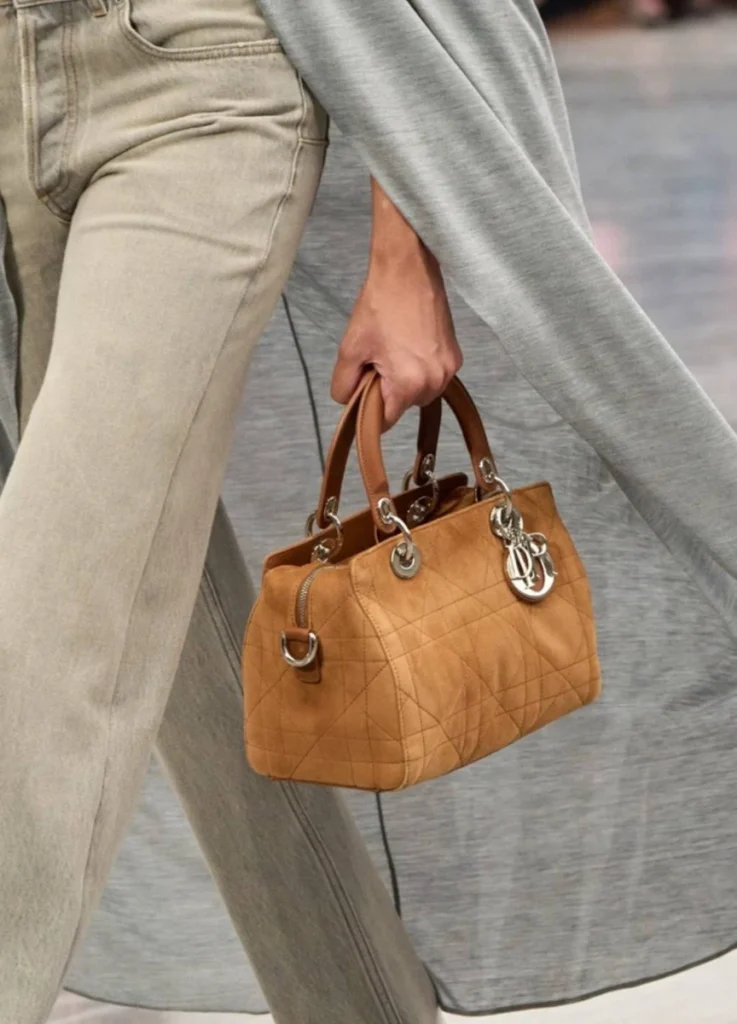
source: Vogue Runway
The Crunchy Bag | Macrocannage Reinvented
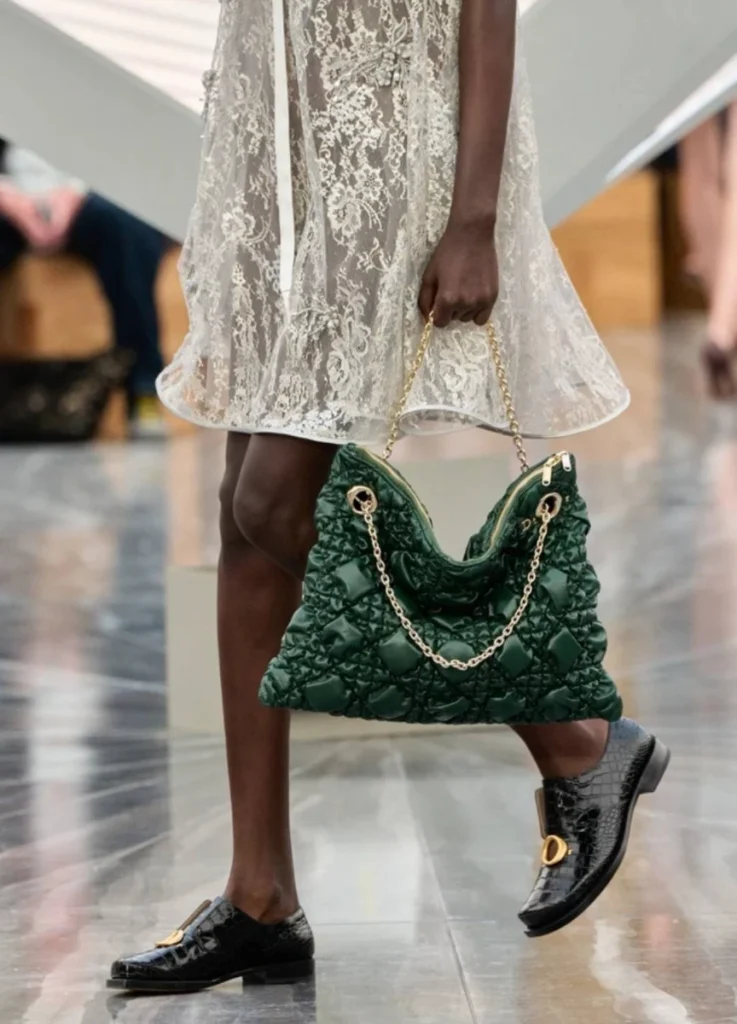
The Crunchy introduces an entirely new house fabrication: Puffy Macrocannage. Calfskin treated to create three-dimensional, tactile cannage rather than flat quilting.
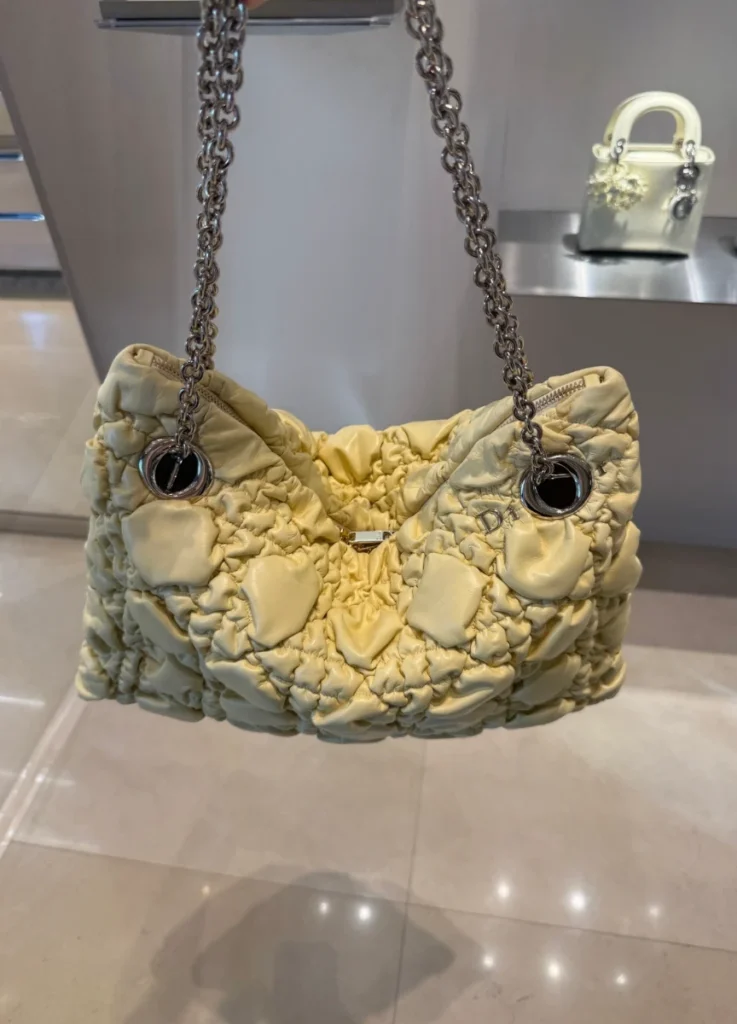
- pared-back silhouette with secure zip-top closure
- double chain shoulder straps with signature eyelets
- dual carrying — shoulder or handheld
- Small (13 × 9.5 × 2 inches): $4,200
- Medium (15.5 × 12 × 2 inches): $4,600
- launch colors: Maroon, Sand, Forest, Light Yellow, Black
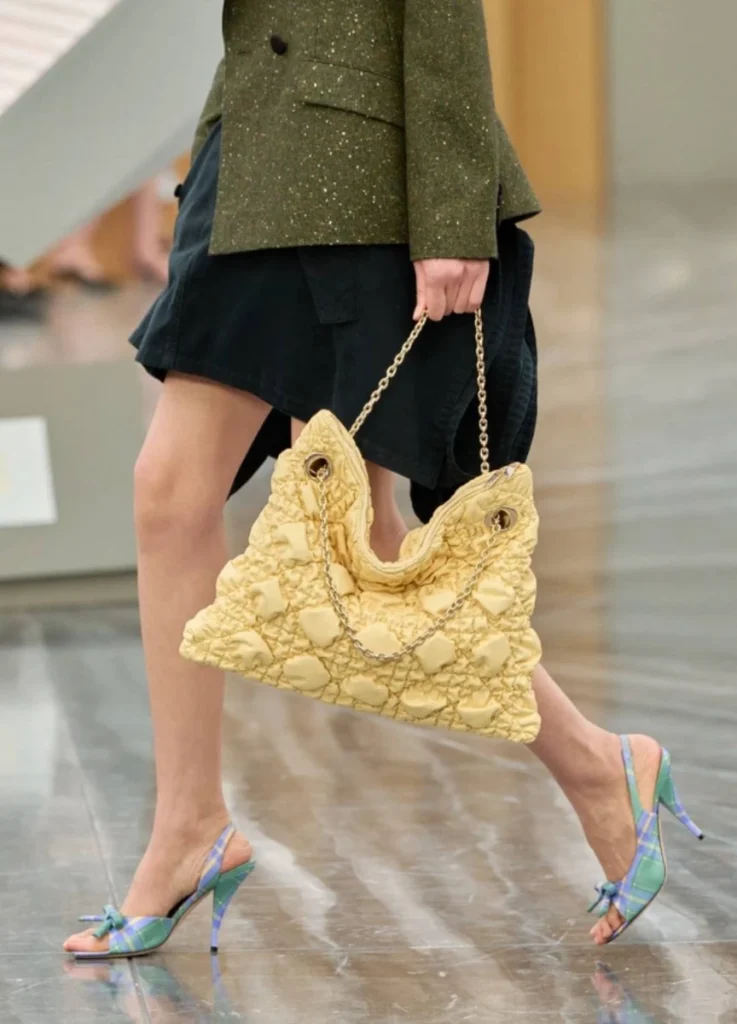
source: Vogue Runway
The yellow Crunchy in particular generated heavy social circulation within hours of the show.
A practical note for prospective buyers. The chain shoulder straps carry real weight in extended wear. By direct comparison, the Crunchy reads heavier on the shoulder than the Chanel 22 — a reasonable comparison point, since both occupy the new architectural shopper category at similar price tiers. The cushioned Macrocannage compensates with a softer hand against the body, but the chain weight is the friction point.
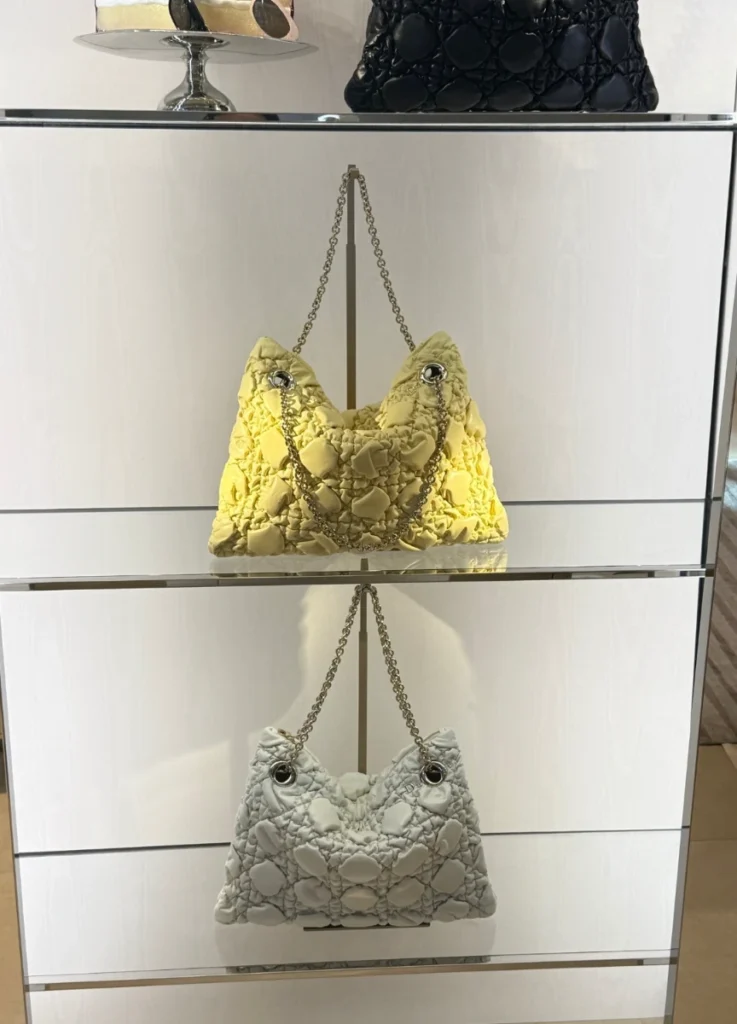
European retail commentary suggests the Crunchy may drive strong short-term seasonal traction, particularly through SS lookbook cycles and social media exposure. Longevity will likely depend on neutral reinterpretations in future drops.
source: Vogue Runway
Petit Trèfle Mini Bucket Bag | The Lucky Charm
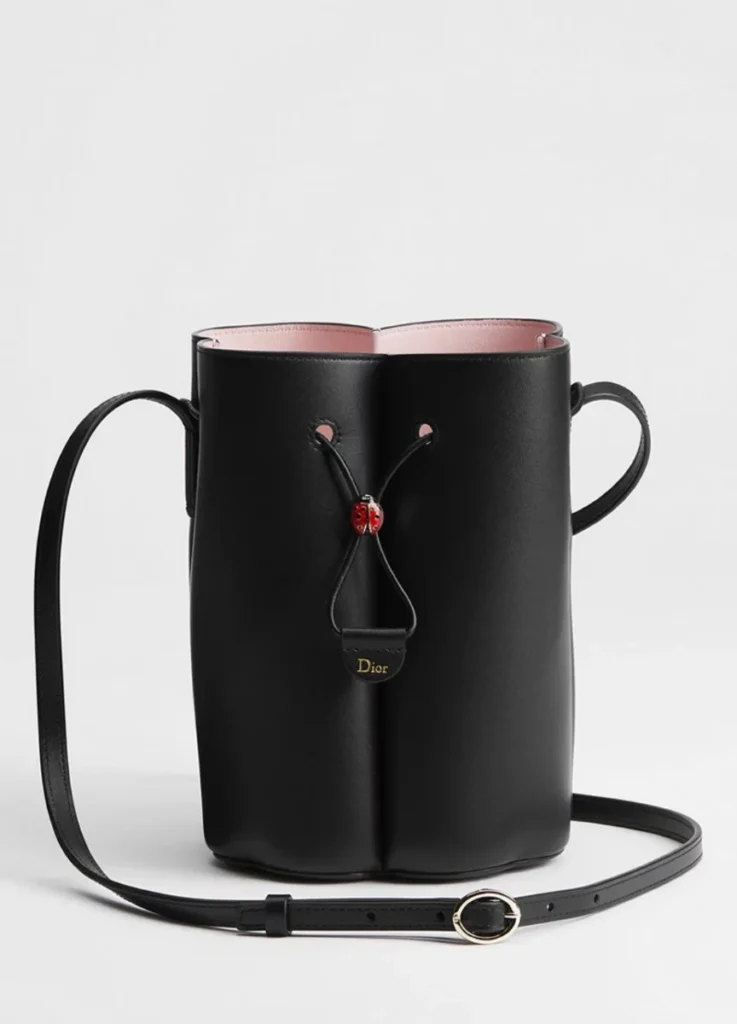
The Petit Trèfle reads literally — little clover in French.
- smooth lambskin (lining and exterior)
- drawstring closure with Dior-signed leather tab
- enameled metal ladybug slider — both functional and symbolic
- adjustable leather strap (shoulder or crossbody)
- 13 × 19 × 13 cm
- $2,300
- colors: Pink Fairytale, Black, Clover Lucky Green, Sky Blue
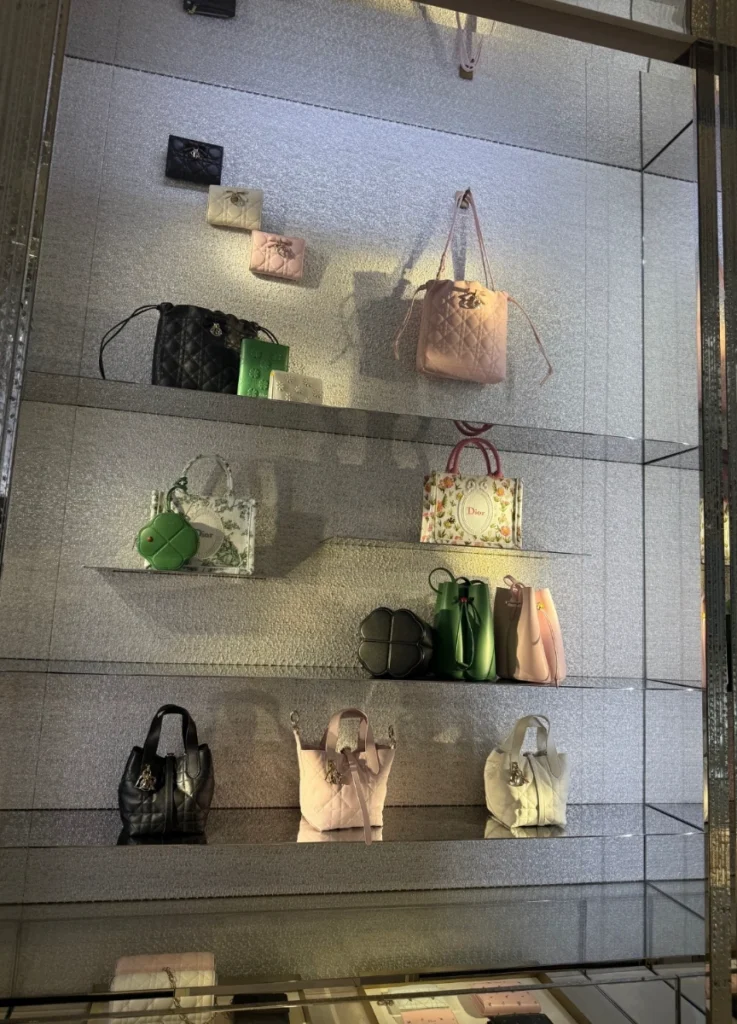
The clover is one of Christian Dior’s most personal codes. He kept a clover in his suit pocket as a lucky charm. Anderson reactivates that superstition across the SS26 universe — appearing in Petit Trèfle, Lady Dior Clover, and embroidery details throughout the collection.
The motif also nods to Anderson’s Irish heritage. House symbolism and personal biography overlapping into a single design vocabulary.
Lady Dior Reimagined | Mini Clover and Mini Buttercup
Anderson’s Lady Dior didn’t appear on the runway. It arrived through the January 2026 campaign and standalone product launches.
Two iterations:
Mini Lady Dior Clover — embroidered with hundreds of green leather four-leaf clovers. A single red ladybug nestled among the leaves, visible only on close inspection. Available in green, black, and rose soupir.
Mini Lady Dior Buttercup — three-dimensional buttercups in bright yellow scattered across the surface. A small bee — another longstanding Dior emblem — sits among the flowers.
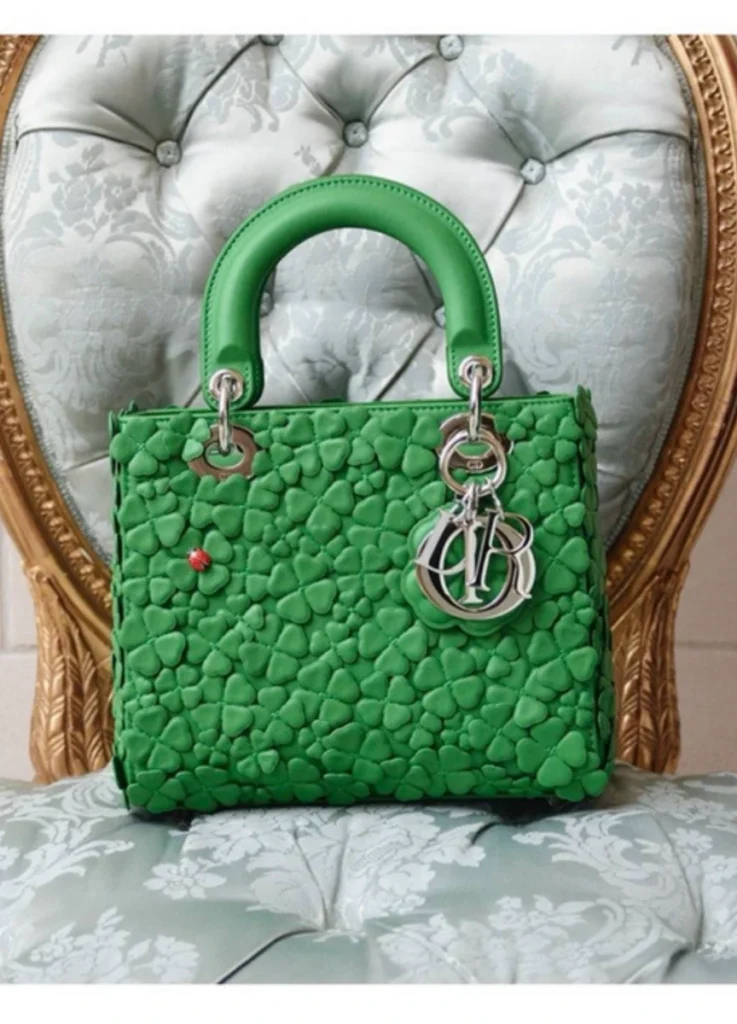
Both designs draw from the Trèfle à Quatre Feuilles dress in Dior Heritage. Anderson softens the broader Lady Dior body across the line — lambskin and suede versions ease into a more pliant, lived-in carriage. The bag is no longer the boxy formal symbol it was. It’s been allowed to relax.
Python and Crocodile | The Top of the Pyramid
The finale introduced python and crocodile-textured iterations — white python paired with minimal knit looks; deep brown crocodile in tote form.
These pieces function less as volume drivers and more as brand-positioning anchors.
The sequencing is deliberate. Highly sellable mid-tier leather bags placed earlier. Exotic textures reserved for symbolic elevation.
In that sense, the exotics operate similarly to high jewelry within a maison’s ecosystem — reinforcing craft authority. Not commercial volume, but legitimacy.
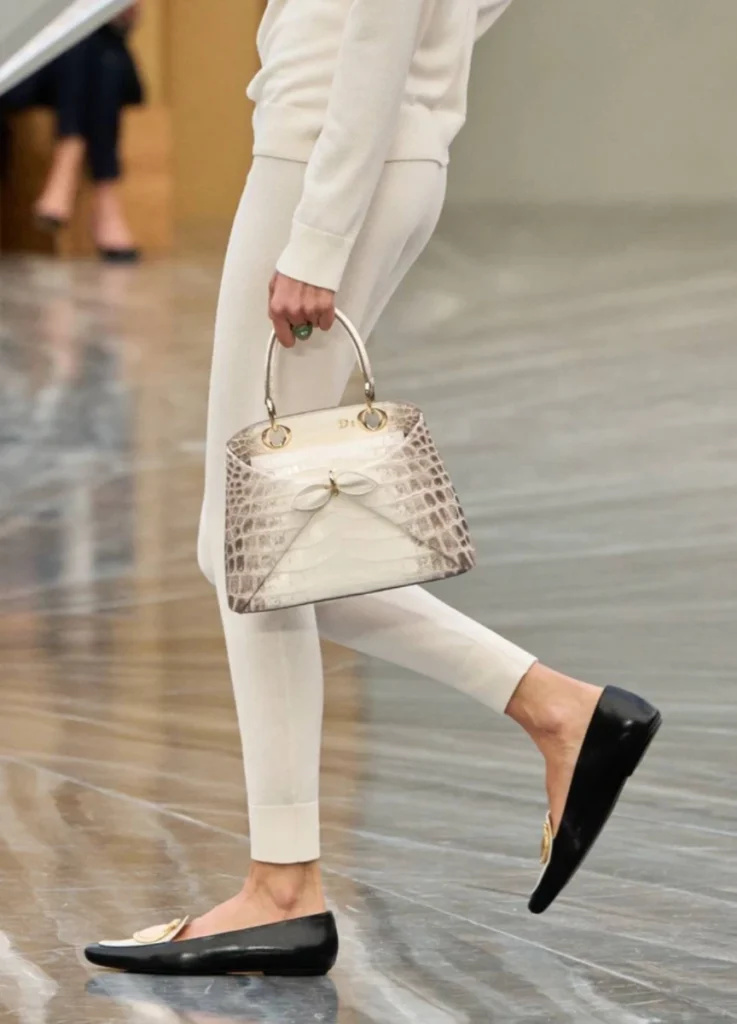
source: Vogue Runway
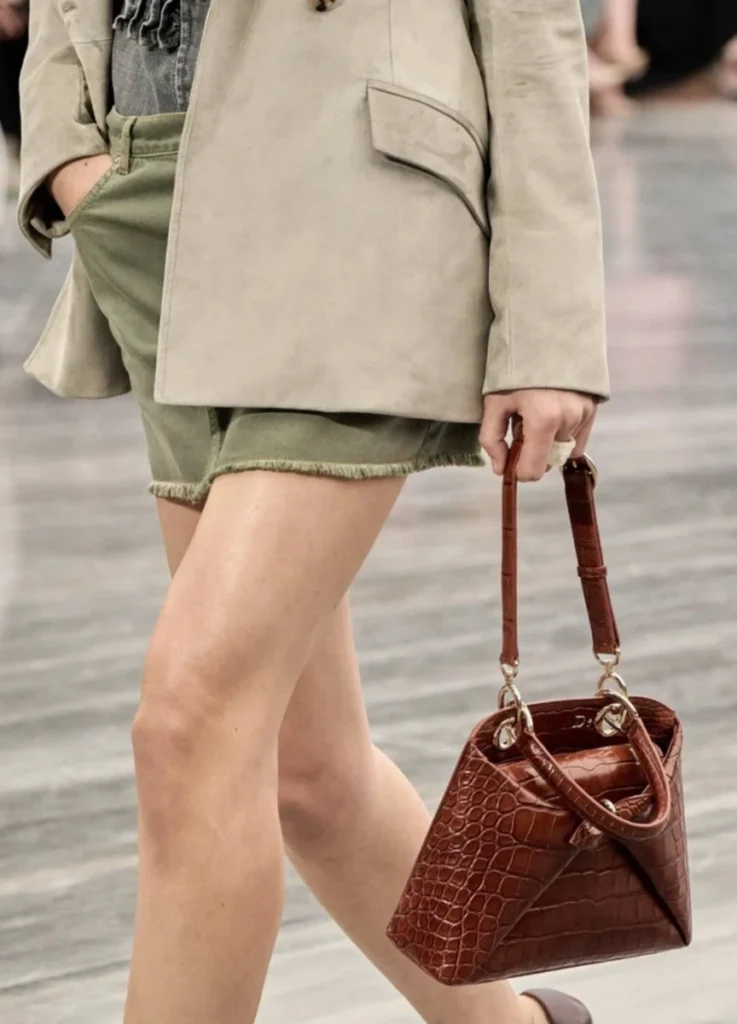
source: Vogue Runway
Strategic Strengths
Silhouette-Led Identity. The architectural logic in Cigale and Bow signals a move toward recognition through form rather than branding. This reduces logo dependency and supports longer-term desirability — particularly in a luxury cycle drifting away from overt house signatures.
Wardrobe Compatibility. From denim and shirting to structured dresses, the range allows cross-category styling. The suede Diorly in particular aligns with contemporary quiet luxury dressing codes without disappearing into them.
Material Tiering Strategy. Smooth leather → suede → Puffy Macrocannage → exotic establishes a clear price ladder, with Petit Trèfle entering at $2,300 and Diorly Large reaching $4,900 in the launched range. This supports upselling within boutiques and stabilizes collection-wide revenue mix.
Logo Refresh. The square logo with Cochin typeface — replacing Chiuri’s all-caps mark — is itself a coded statement. Anderson is reaching past the recent decade and back toward Christian Dior’s 1946 graphic identity. Heritage as both source and modernization tool.
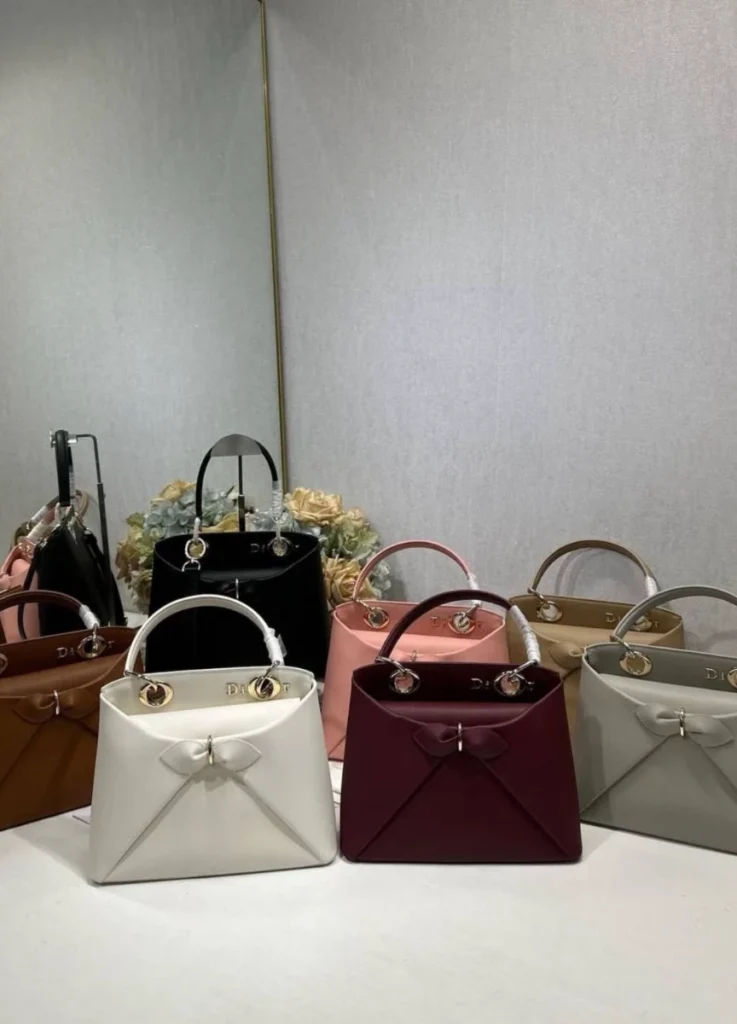
@titaniatales / Instagram
Potential Risks
Wear & Edge Friction. Panel-heavy structures (especially Cigale) may experience corner abrasion over time, particularly in smaller sizes.
Suede Maintenance. The Diorly is currently exclusive to suede. Susceptible to staining, moisture, and color transfer. Not universally climate-friendly.
Reduced Immediate Brand Recognition. For clients accustomed to overt cannage or visible logo hardware, the silhouette-driven strategy may initially read as unfamiliar — “is that Dior?” The shift from declarative to architectural language requires consumer learning time.
Seasonal Half-Life of Color. High-impact pastels and bright Crunchy variants may generate strong initial visibility but shorter ownership cycles compared to darker neutrals.
Bow Bag Polarization. Whether the bow reads as iconic or precious depends entirely on multi-season repetition. One season alone won’t settle the question.

@sooyaaa__ / Instagram
User Experience Considerations
For wearers and prospective buyers:
- strap weight and metal hardware fatigue over extended wear (especially Crunchy)
- Cigale’s firm leather and structured volume mean the bag carries real weight even in smaller sizes — worth handling in person before committing
- internal compartmentalization — origami-style totes will need pouches for organization
- closure security in larger quilted shoppers
- neutral tones (chocolate brown, navy, olive, sand) will likely age more gracefully than seasonal brights
- exotic versions in light tones (white python) require committed maintenance
source: Vogue Runway
Within Dior’s Broader Evolution
Anderson is repositioning Dior’s feminine codes.
Rather than amplifying lace, bow, and decoration in literal form, he translates them into panel geometry and structural tension.
This isn’t a rejection of house history. It’s a recalibration of how that history is made legible.
The leather grammar is a separate but parallel point. Anderson hasn’t imported Loewe’s softness into Dior. He’s working within Dior’s existing leather logic — firm, weighted, architecturally sustained. Continuity at the atelier level, even when the design language shifts above it.
Whether Cigale, Bow, or Diorly becomes a lasting icon will depend on repetition across seasons. Cigale’s return at Fall 2026 already signals Anderson’s intention to build through consistency rather than spectacle. Structure only becomes signature through repetition.
source: Vogue Runway
Closing Reflection
In Dior SS26, bags weren’t subordinate to clothing. They regulated proportion and extended narrative.
If one silhouette emerges remembered not for its logo, but for its outline, that may define the early Anderson era at Dior.
Not louder. Sharper.
source: Vogue Runway
All images unless otherwise credited: © Lumie Story
[ Related Editorials ]