Inside Cartier Tank Louis

source: Carter.com
There are watches that adapt to trends. There are watches that quietly ask you to adapt to them.
The Cartier Tank Louis belongs to the second category.
It doesn’t soften itself to the wearer. It reveals the wearer’s proportions.
As of late 2025, the Tank Louis collection is now complete in structure, offering four distinct sizes:
- Mini
- Small
- Medium
- Large (introduced in the second half of 2025)
This update corrects a long-standing misconception. Tank Louis isn’t a small watch with variations. It’s a proportion system.
What follows isn’t a style ranking. It’s a structural guide to how each size behaves on the body.
Heritage Context
The Tank was conceived by Louis Cartier in 1917, drawing its silhouette from the Renault FT light tank used in the First World War. The case translated military engineering into wrist geometry — parallel vertical lines (the brancards) flanking a clean rectangular dial.
The Tank Louis Cartier line, the most refined evolution within the family, was formalized in 1922 and remains the maison’s most architectural reference. Subsequent decades produced multiple variations — Tank Américaine, Tank Française, Tank Must, Tank Cintrée — but the Tank Louis has stayed central to Cartier’s design identity.
The collectors associated with the watch have shaped its cultural weight as much as its geometry. Princess Diana, Andy Warhol, Jacqueline Kennedy, Sophia Coppola, Ralph Lauren — each chose Tank Louis for the same reason. Restraint without softness.
Recently, Cartier Baignoire has gained traction in the broader luxury conversation, but the Tank Louis remains the structural reference point — the watch most often selected by collectors who prioritize architecture over ornament.

What Tank Louis Really Measures
Tank Louis is often discussed as a design icon. In practice, it behaves more like an architectural element.
Its rectangular case does three things at once:
- extends the vertical line of the wrist
- exposes imbalance more quickly than round watches
- reacts strongly to strap length, wrist width, and arm length
This is why Tank Louis feels perfect on some wrists and unresolved on others.
The watch doesn’t adjust. The body must already be in proportion.
The Four Sizes, Structurally Explained
Tank Louis Mini | The Most Precise Proportion
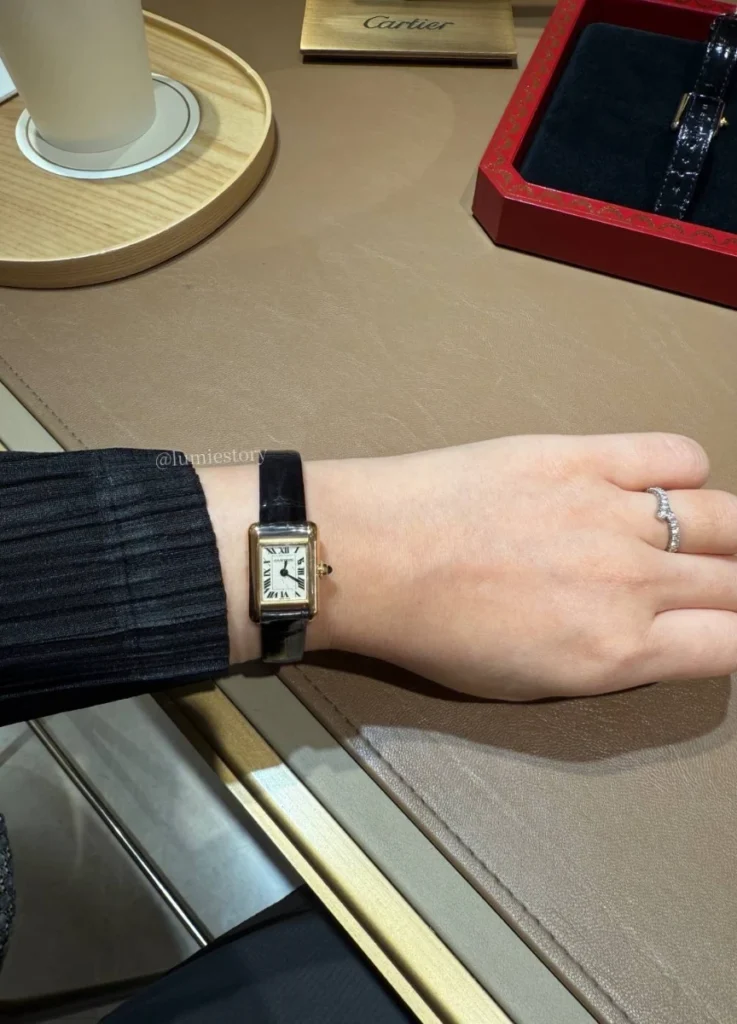
The Mini isn’t a cute watch. It’s the most mathematically resolved version of the Tank Louis design.
- the case length stays centered even on very slim wrists
- the strap-to-dial ratio feels deliberate, almost jewel-like
- the watch reads as an object placed on the wrist, not worn around it
Who It Suits
- slim wrists (approximately 13–14 cm circumference)
- shorter forearms or compact hand proportions
- collectors who prefer watches to function as visual punctuation rather than tools
How It Wears
- calm, exact, composed
- never dominates an outfit
- often mistaken for jewelry, but structurally a watch first
If the Small asks for presence, the Mini asks for stillness.
The Mini doesn’t request attention. It rewards accuracy.

source: Getty Images
Tank Louis Small | The Historic Reputation
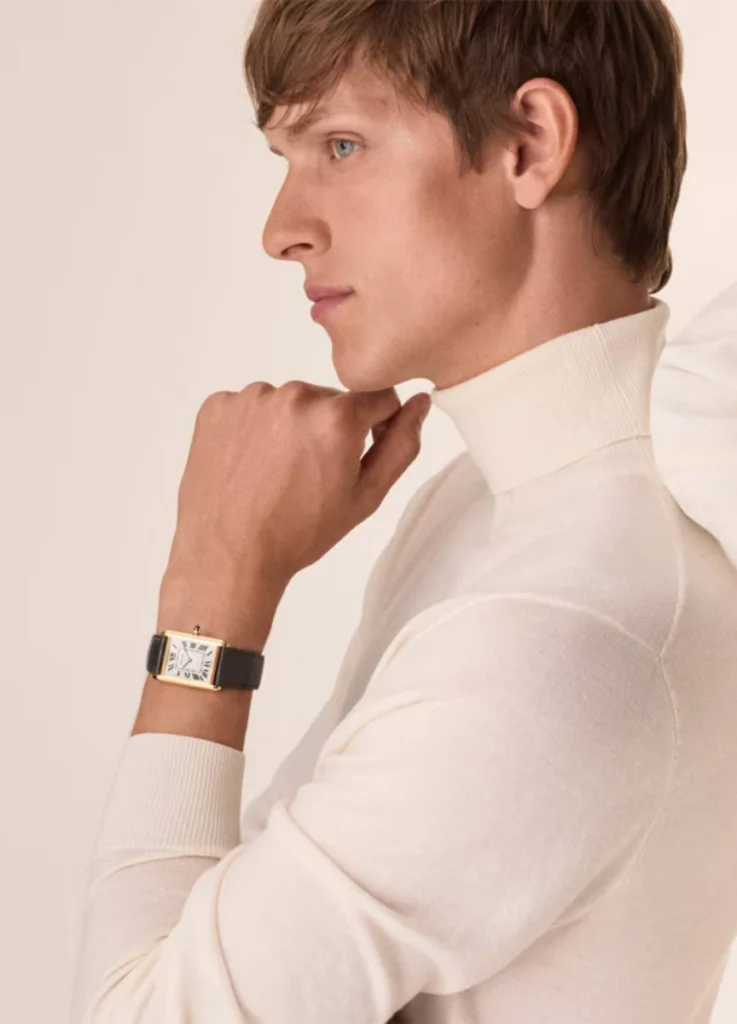
The Small is where Tank Louis built its reputation. The size most associated with the watch in editorial photography and celebrity wear since the mid-twentieth century.
- slightly longer case elongates the wrist visually
- requires negative space to breathe
- best appreciated when styling is already restrained
This isn’t a size that disappears. It asks something from the wearer — confidence in restraint.
Who It Suits
- medium wrists (approximately 14–15.5 cm)
- longer arm lines
- collectors who value classical proportions and visual pause
How It Wears
- elegant, but not passive
- noticeably a watch, not an accessory
- requires clean styling around it

source: Getty Images
On very slim wrists, the Small can feel slightly assertive. On the right arm, it becomes timeless.
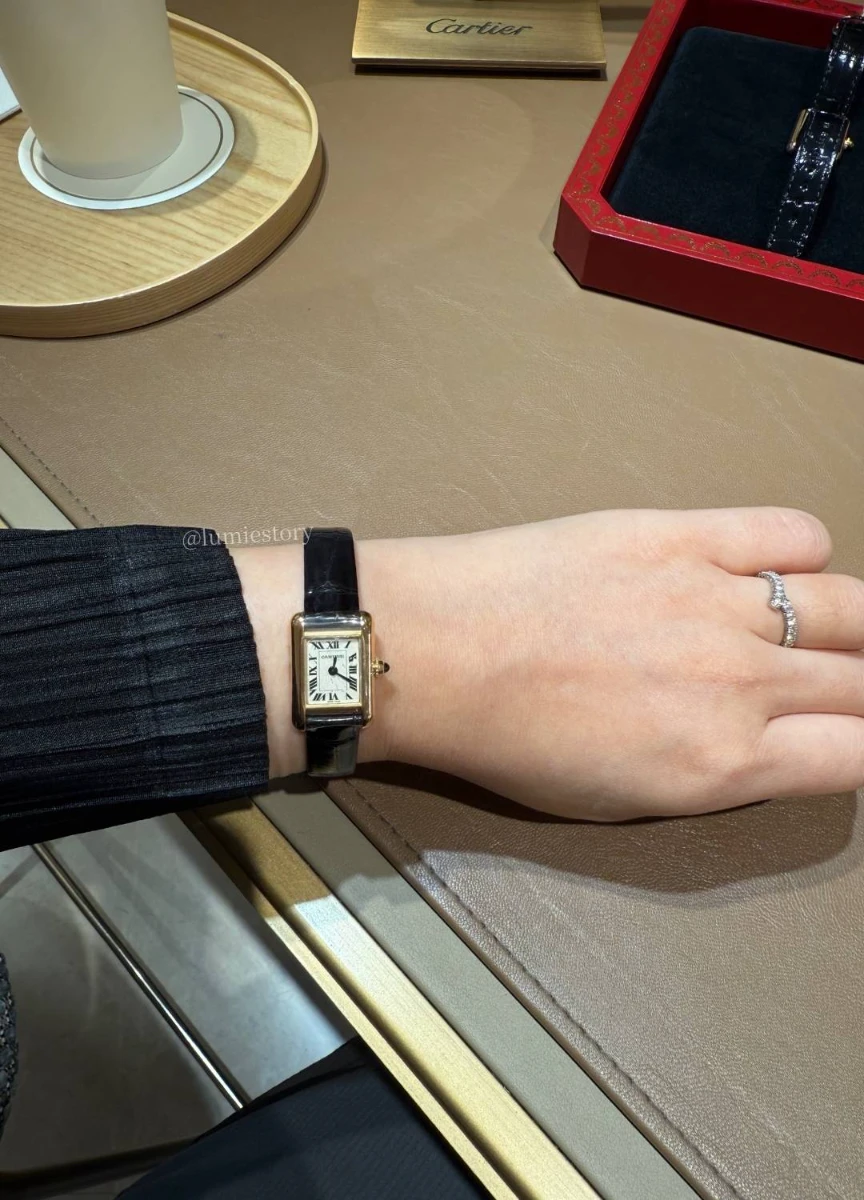
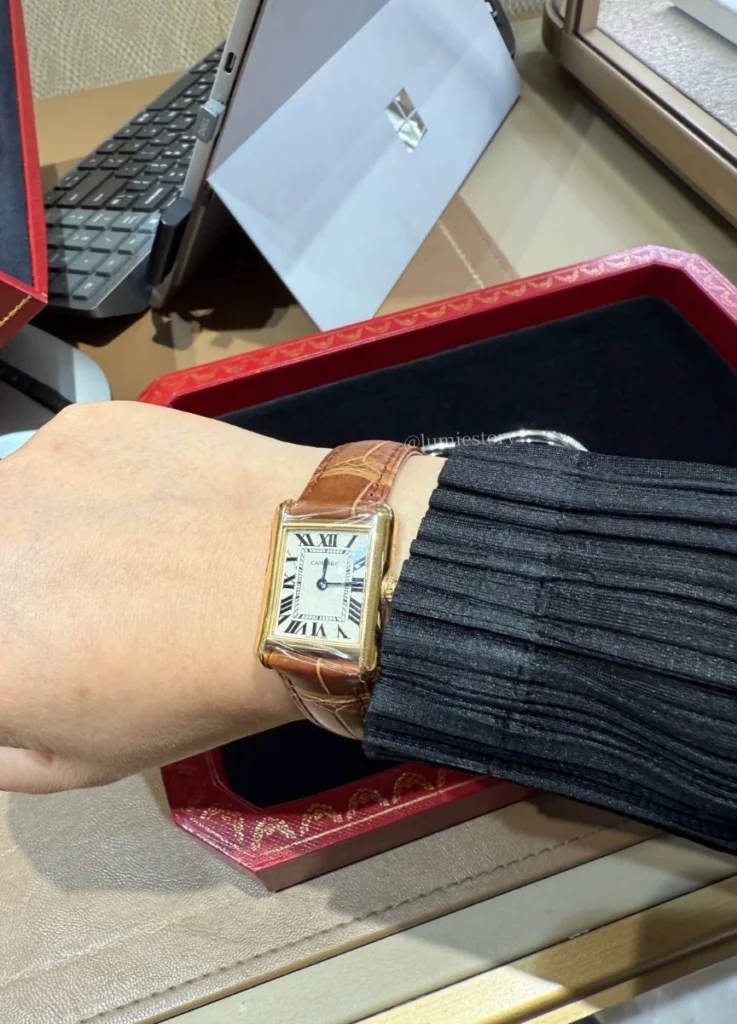
A note from direct comparison wear at a 14 cm wrist reference. Despite the Small’s iconic status — and the natural impulse to choose it for that reason alone — the proportions on a 14 cm wrist tend toward the upper boundary of harmony rather than its center. The case length tilts the dial slightly toward the back of the hand. The result reads as almost right rather than resolved.
This is the question every Tank Louis buyer eventually faces. The Small carries cultural authority. But cultural authority shouldn’t override structural fit.
source: Carter.com
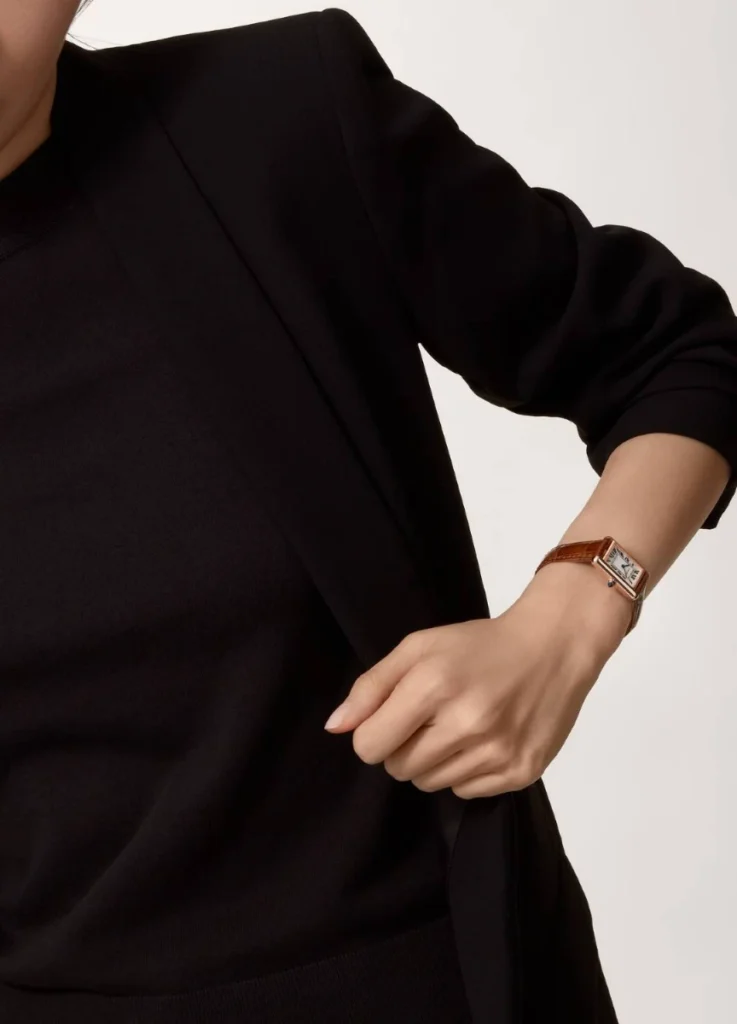
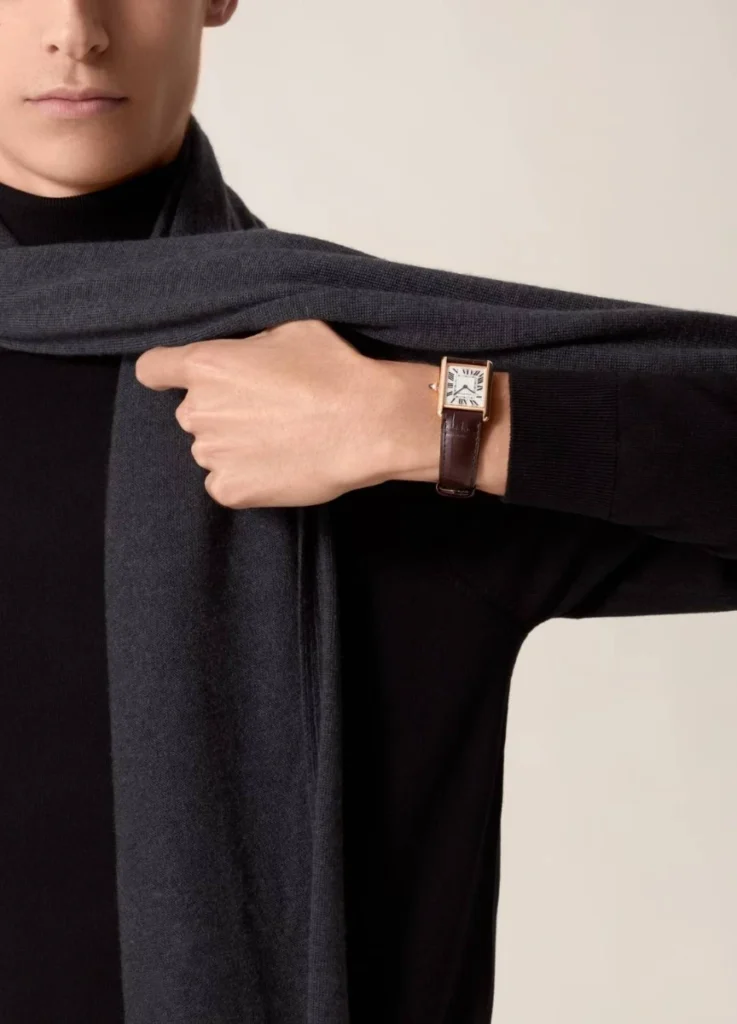
Tank Louis Medium | The Overlooked Stabilizer
The Medium is often misunderstood because it lacks drama. Structurally, it’s the most versatile size.
- case length balances presence without elongating excessively
- weight distribution feels even across the wrist
- dial presence increases without becoming dominant
Who It Suits
- medium wrists (approximately 15.5–16.5 cm)
- collectors who want a watch-first impression
- those who found Small too delicate and Large too architectural
How It Reads
- calm, neutral, confident
- less jewelry-adjacent, more horological
- adapts well to both casual and tailored clothing
The Medium doesn’t perform. It settles.
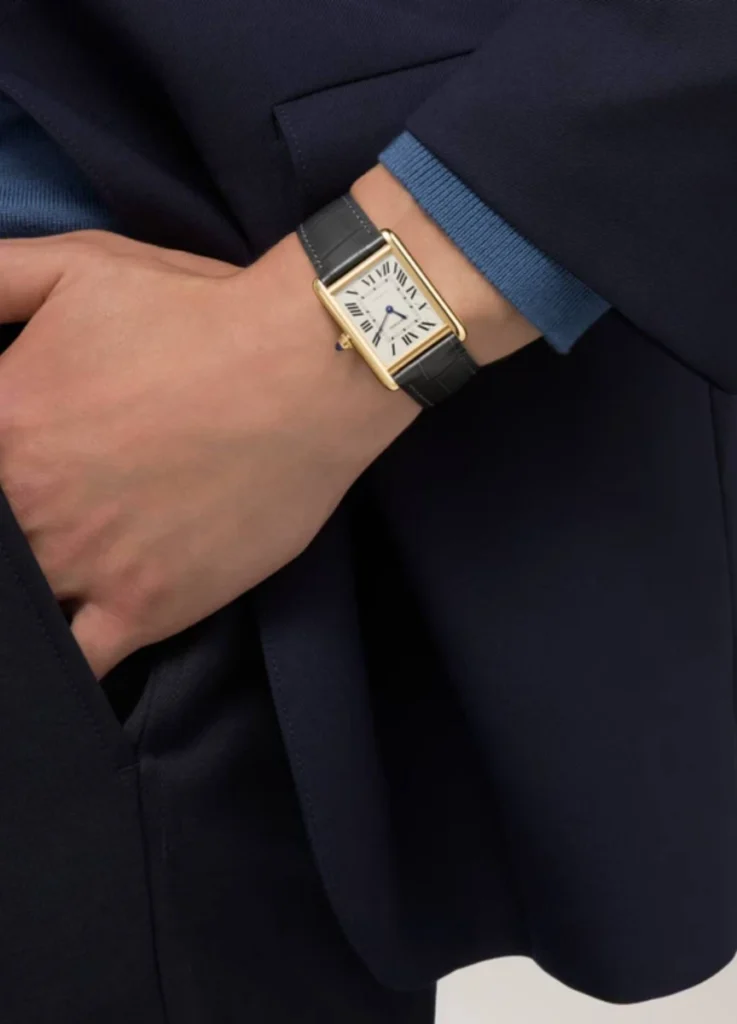
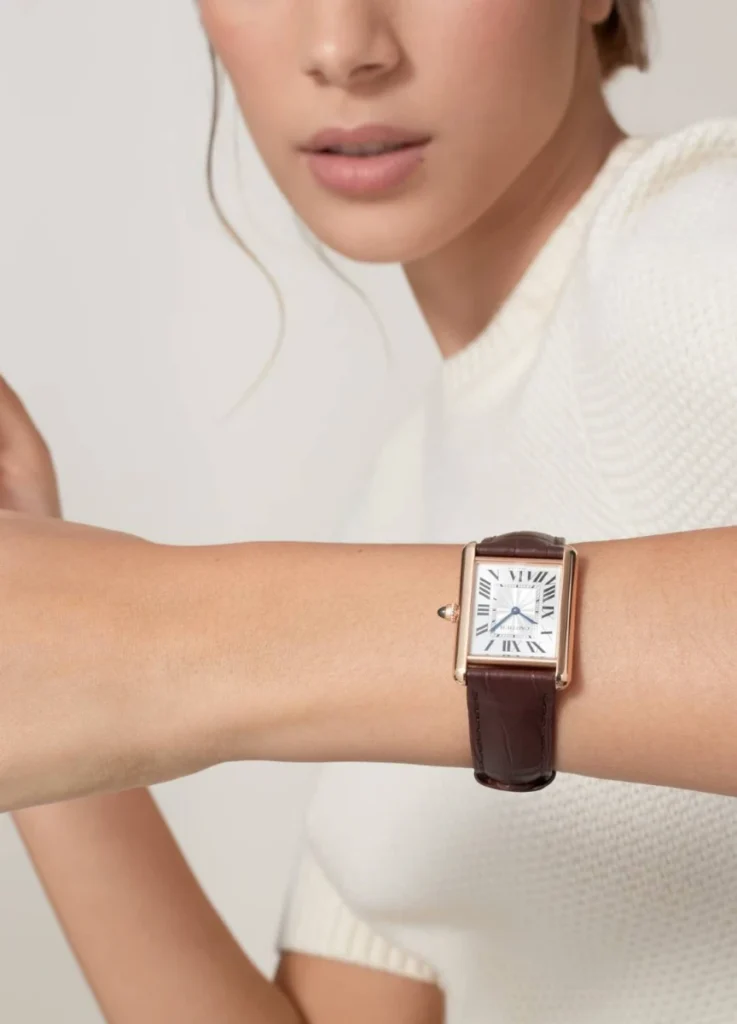
Tank Louis Large | A Structural Expansion (Late 2025)
The Large corrects a long-standing gap in the Tank Louis line.
This isn’t an oversized Tank. It’s a proportionally scaled one.
- longer case without added thickness
- dial remains disciplined, not sporty
- strap integration becomes more architectural
source: Carter.com
Who It Suits
- larger wrists (16.5 cm and above)
- long forearms, broader hands
- collectors who want presence without ornament
How It Reads
- quiet authority
- clearly a watch, no longer jewelry-adjacent
- particularly strong with tailoring and structured outerwear
The Large allows Tank Louis to speak in a lower, steadier register.
source: Carter.com
The Missing Mid-Size | Vintage Reference and Living Demand
Vintage Tank Louis collectors often reference a size that sits between the current Small and Mini — a mid-size case length that disappeared from the contemporary lineup decades ago.
This is the size collectors with 13.5–14 cm wrists most often describe as the ideal Tank Louis proportion. The case extends enough to register as a watch rather than a jewel, while staying centered without tilting toward the hand.
The current Mini is the most accurate substitute, and for many wrists, it’s structurally correct. But the vintage mid-size remains the gold standard for collectors who can locate one. Auction houses occasionally surface examples, particularly from the 1980s and 1990s production.
The demand isn’t only historical. For collectors at the boundary between Mini and Small — where the Mini reads slightly understated and the Small reads slightly tilted — the absence of a current mid-size is a daily friction. Mini delivers structural precision but sometimes underdelivers visual presence on a 14 cm wrist. Small delivers presence but tilts toward the hand. The mid-size case length would resolve both at once.
If Cartier ever reintroduces this proportion, the line will arguably be complete in a way it currently isn’t.
Size Isn’t About Gender — It’s About Posture
Tank Louis doesn’t ask whether the wearer is male or female. It asks:
- how much visual weight can your wrist carry?
- where does your arm naturally rest?
- do you move sharply, or slowly?
Many women find the Medium or Large unexpectedly harmonious. Many men discover that Small or even Mini feels intellectually correct.
The watch reveals posture more than identity.

source: Getty Images
When Design Overrides Size | Special Editions Change the Equation
One important exception. Special editions don’t follow the standard size logic.
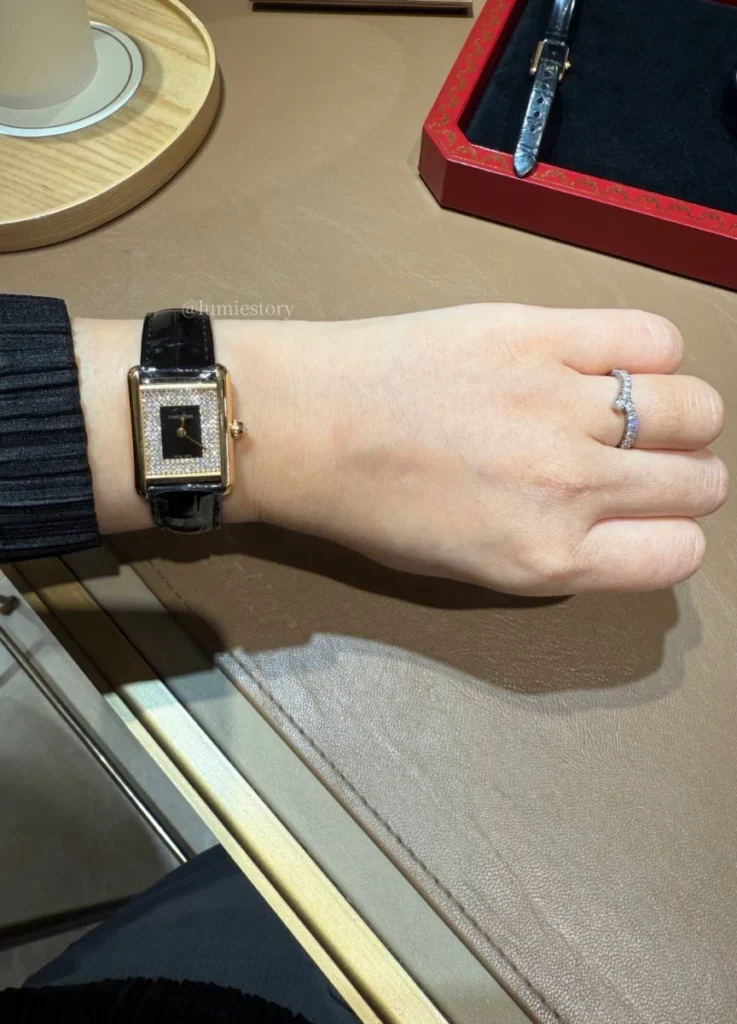
In standard Tank Louis, size is determined by wrist structure. When the dial treatment and surface density change, proportion behaves differently.
Pavé settings, black lacquered dials, or high-contrast combinations increase visual weight at the center of the watch. The eye reads these elements before it reads case length.
A wrist that would typically suit a Mini can suddenly carry a Small more convincingly — sometimes more correctly.
In the example shown here, the wrist itself reads Mini-proportioned. Slim circumference, short hand length, naturally centered resting position. Yet the pavé bezel combined with a black dial compresses the perceived negative space, anchoring the watch visually. The Small doesn’t appear oversized. It appears resolved.
Special editions should never be evaluated by size alone.
Design density can compensate for physical scale. In certain configurations, it can even require a larger case to maintain balance.
Reading Special Editions Correctly
When considering a Tank Louis special edition, adjust the criteria:
- high-contrast dials (black, deep blue, lacquered) → support a larger size
- pavé or heavy bezel treatments → visually shorten the case
- minimal, light dials → expose length and exaggerate size differences
The more visually concentrated the design, the more size tolerance you gain.
This is why some of the most successful Tank Louis special editions are intentionally released only in Small or Medium — not because Mini wouldn’t fit, but because it would underperform visually.

source: Carter.com
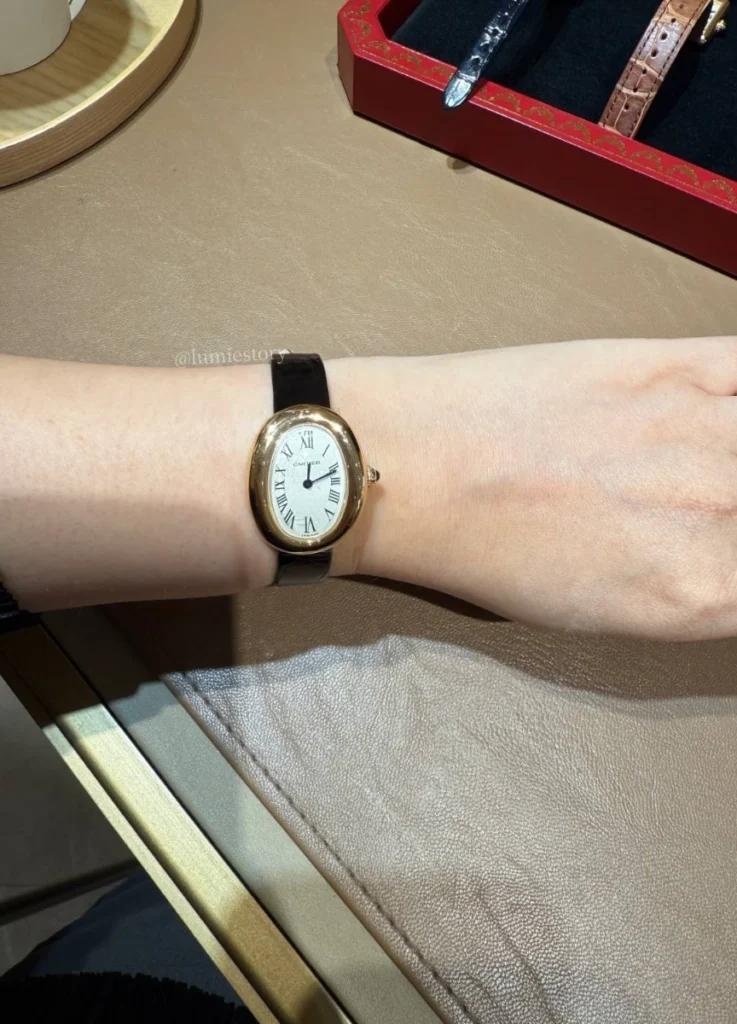
Tank Louis vs Baignoire | Choosing the Right Geometry
A Tank Louis discussion is incomplete without addressing Cartier Baignoire.
The two watches are often compared. They solve different problems.
Tank Louis
- linear, architectural
- emphasizes alignment and restraint
- works best when the wrist has some structure
Baignoire
- curved, organic
- wraps around the wrist like a contour
- forgiving on very slim or rounded wrists
Choose Tank Louis if:
- you prefer straight lines and visual order
- your style leans tailored, minimal, or editorial
- you want a watch that stabilizes an outfit
Choose Baignoire if:
- your wrist is very slim or softly rounded
- you prefer fluid silhouettes
- you want a watch that behaves like a bracelet
Tank Louis disciplines. Baignoire accommodates.
Neither is better. Each is more honest for different bodies.
A Final Note on Choosing Correctly
Tank Louis isn’t forgiving. That’s precisely why it lasts.
Choose the size that:
- keeps the dial centered during movement
- doesn’t pull visually toward the hand or elbow
- allows the strap to disappear into the case
When it fits, it feels inevitable. When it doesn’t, it feels almost right — and that’s never enough.
Tank Louis doesn’t reward compromise. It rewards accuracy.

source: Getty Images
[ Related Editorials ]