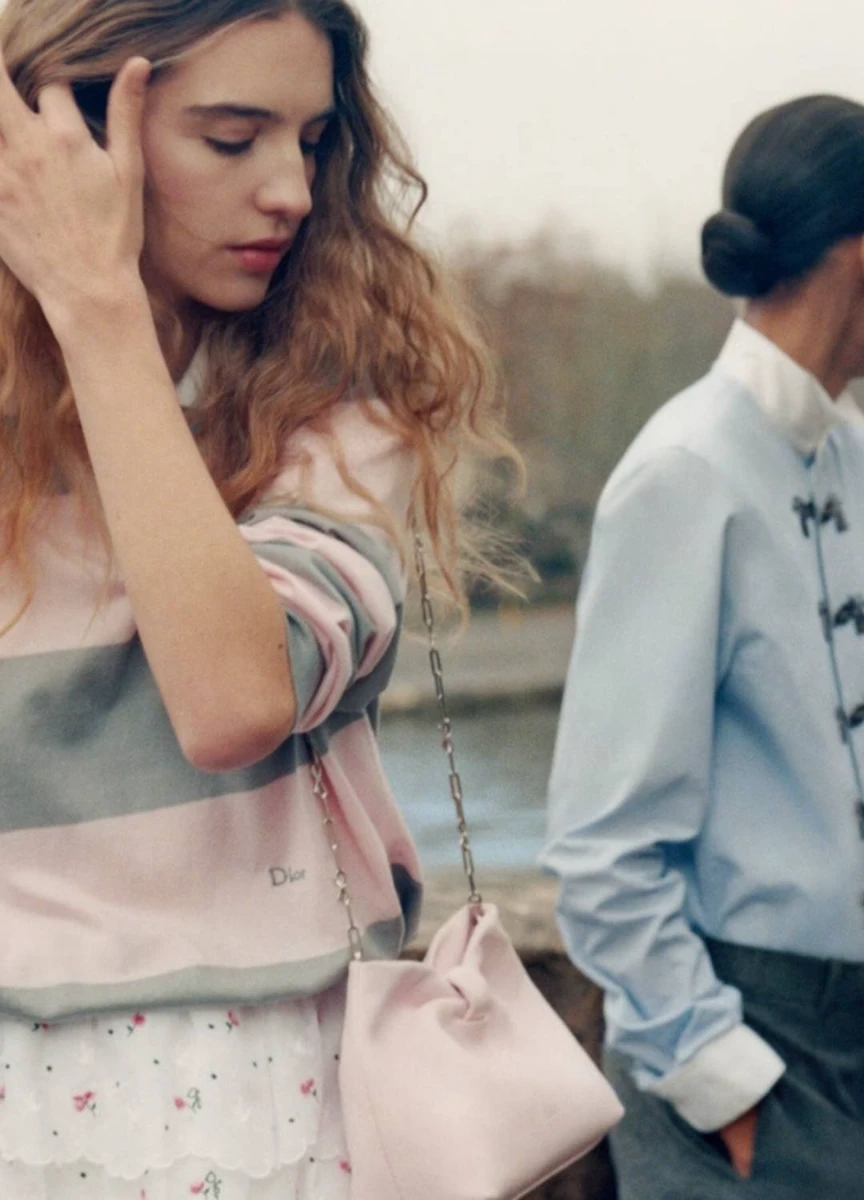
Reading Jonathan Anderson’s first ready-to-wear collection for Dior through two specific objects
In Jonathan Anderson’s Spring/Summer 2026 collection for Dior, two quietly charged objects pulled my attention away from the larger statement pieces.
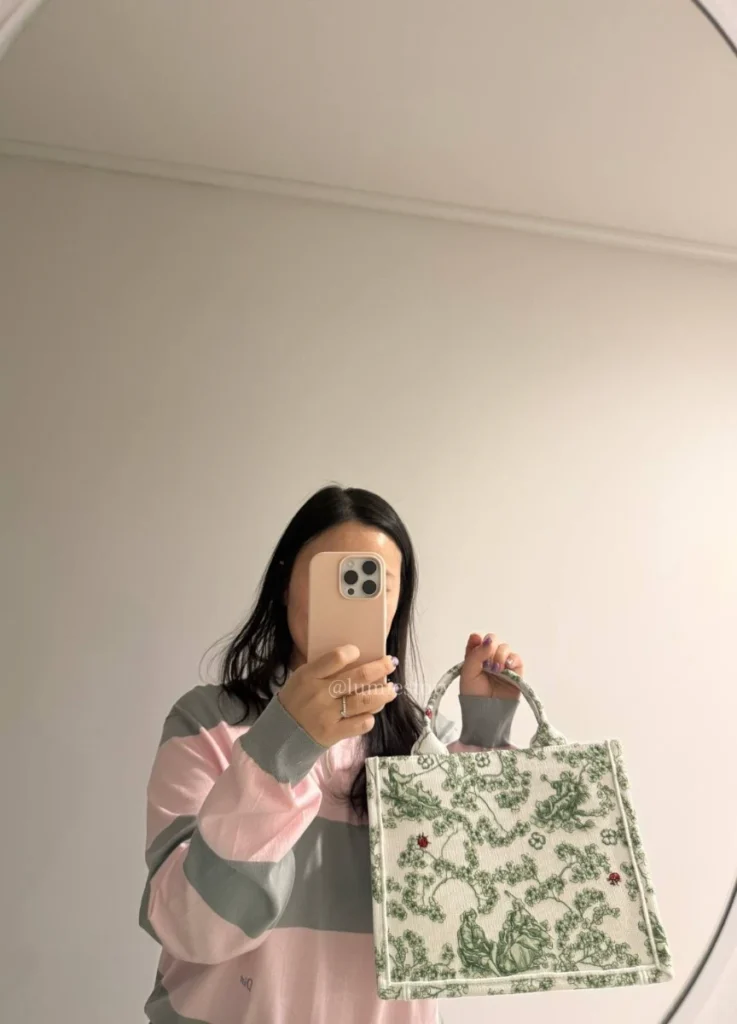
A pink and white cotton-knit polo from the Dioriviera line. And the Mini Lady Dior Clover — Anderson’s first reinterpretation of one of the maison’s most recognizable bags, embroidered with four-leaf clovers and finished with a small red ladybug detail.
Neither tries to explain itself. That restraint, perhaps more than anything else this season, is Anderson’s most deliberate gesture in his Dior debut for women’s ready-to-wear.
Anderson’s First Women’s RTW Statement at Dior
Anderson’s Spring/Summer 2026 women’s ready-to-wear collection arrived in boutiques on January 2, 2026.
The runway-to-retail timing matters here. Anderson presented his first Dior collection — Spring/Summer 2026 Men’s — in June 2025, followed by his couture debut in September. The Spring/Summer 2026 women’s RTW show during Paris Fashion Week in October 2025 marked his first runway statement for women under his triple appointment as creative director of Couture, Women’s RTW, and Men’s.
The pieces translate runway concepts into wearable register, and the most interesting items aren’t the obvious headliners. They’re the everyday objects — the polo, the Clover bag — where Anderson’s design philosophy reveals itself without runway theater.
Why This “Knit-Looking” Polo Reads Differently
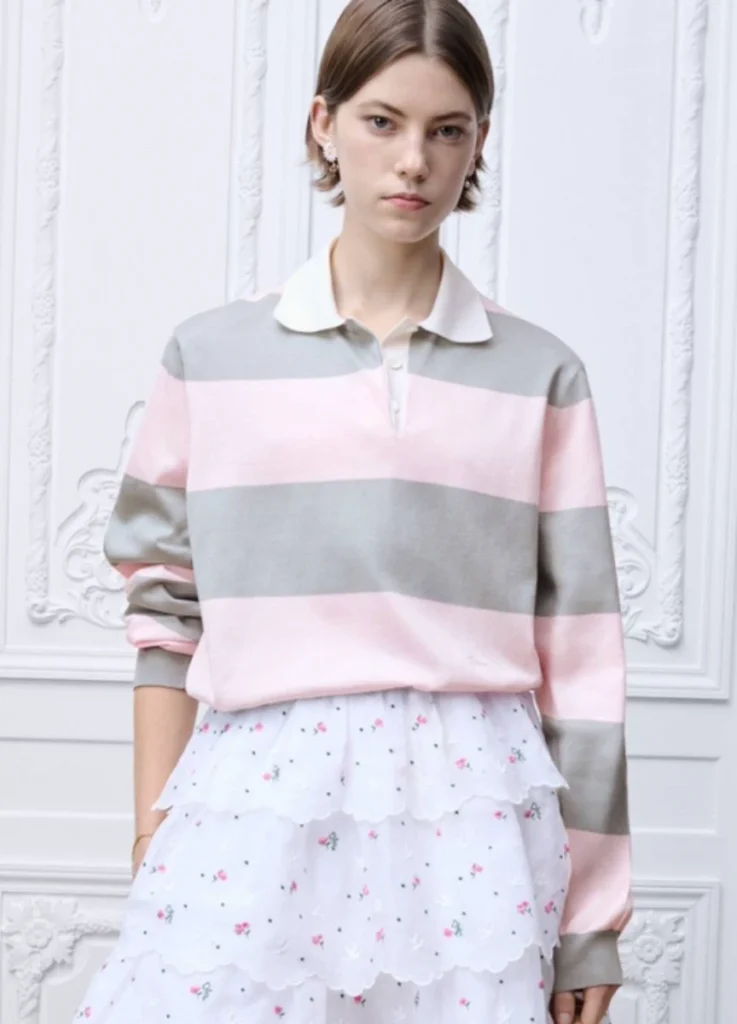
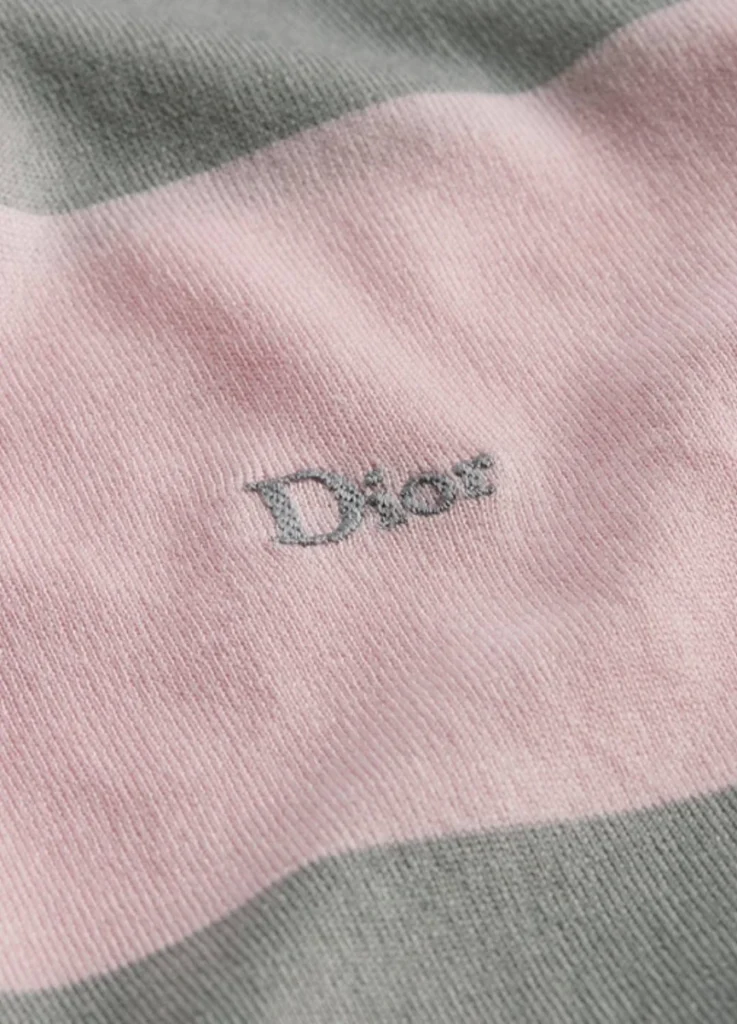
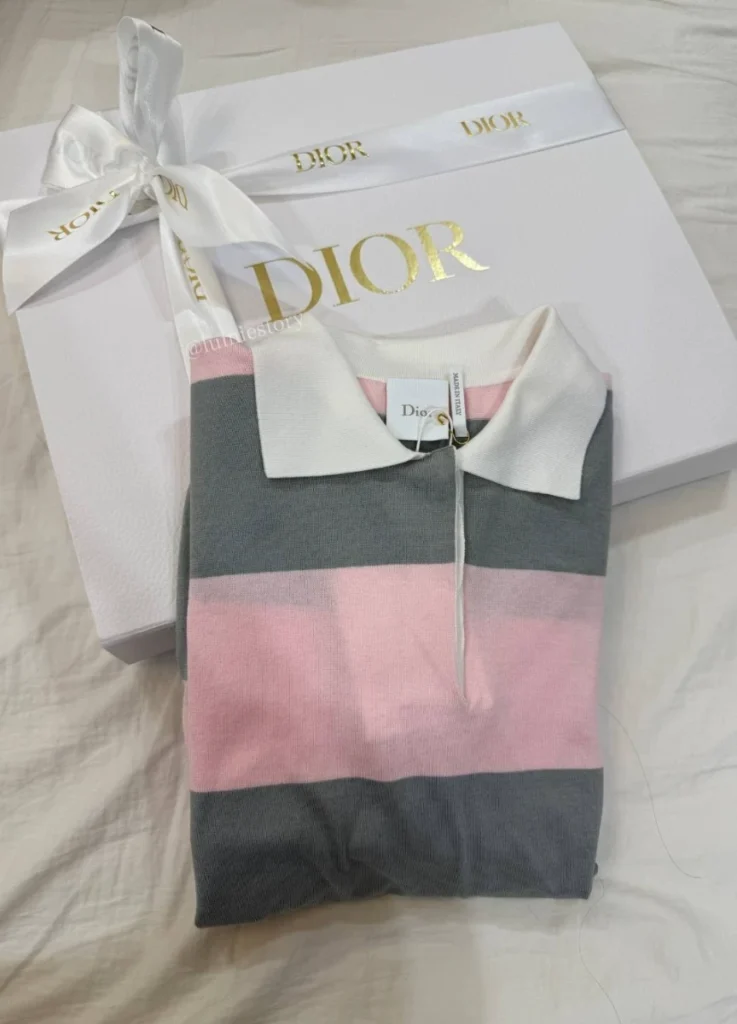
The Dior Marinière Long-Sleeved Polo Shirt — Dior’s official designation — looks like fine-gauge knitwear at first glance. The texture, the drape, the way the stripes settle into the fabric. The visual register reads as carefully constructed knit.
The actual material is cotton. Dior’s official description specifies Cotton Knit — pure cotton yarn knitted into a fine-gauge structure with the kind of precision usually associated with much finer technical textiles. The shirt is priced at $2,300 USD ($1,900 in EUR), positioning it firmly within Dior’s premium ready-to-wear register rather than as a basic.
The construction is what makes the polo work.
Cotton holds memory. It creases. It keeps shape. It resists collapse. Most knit construction relies on synthetic blends to produce the visual elegance of fine-gauge knitwear, because pure cotton tends to lose dimensional integrity when knitted into delicate structures. The Marinière polo achieves the visual sophistication of fine knit using cotton alone — a craft accomplishment rather than a material innovation. Anderson’s atelier hasn’t invented a new fabric. They’ve engineered cotton to behave with the visual sophistication of a fine knit while keeping cotton’s defining structural characteristics intact.
The result, in wear, is that the shirt moves with the body without disappearing into it. The piece stays itself while being worn — soft in feeling, structured in presence.
For collectors who value craftsmanship at the construction level rather than at the material-novelty level, this is where the polo earns its price point. The tension between fluidity and form is the most precise summary of the design language Anderson is building at Dior — pieces that integrate into daily wear without losing their structural integrity.
Pink and Sage Green — Color With Emotional Distance
The polo arrives in two main colorways: blue and white (the traditional marinière palette) and pink and white (the Dioriviera variant). The pink and white configuration is what pulled my attention.
Pink and white in fashion often slips toward sentimentality. Romantic pink. Bridal white. Saccharine, performed femininity. The Anderson Dioriviera version sits somewhere else entirely.
The pink isn’t romantic. It’s thermal — the temperature of skin rather than the language of affection. It doesn’t brighten the face when worn; it quiets it. The pink reads as registered warmth rather than projected emotion, which produces an effect closer to composed presence than to declarative femininity.
The white anchors the pink without competing with it. The stripes create rhythm rather than playfulness. Together, the two colors hold emotional distance rather than performing emotional intensity. The wearer reads as composed rather than as styled.
This through-line connects Anderson’s Dior to his earlier work at Loewe. The colors don’t ask the viewer to feel something specific. They register the wearer’s presence without making demands about how to interpret it. That restraint is what allows Anderson’s pieces to hold up across years of wear rather than reading as season-specific statements.
The Fit — Where Air Becomes Part of the Design
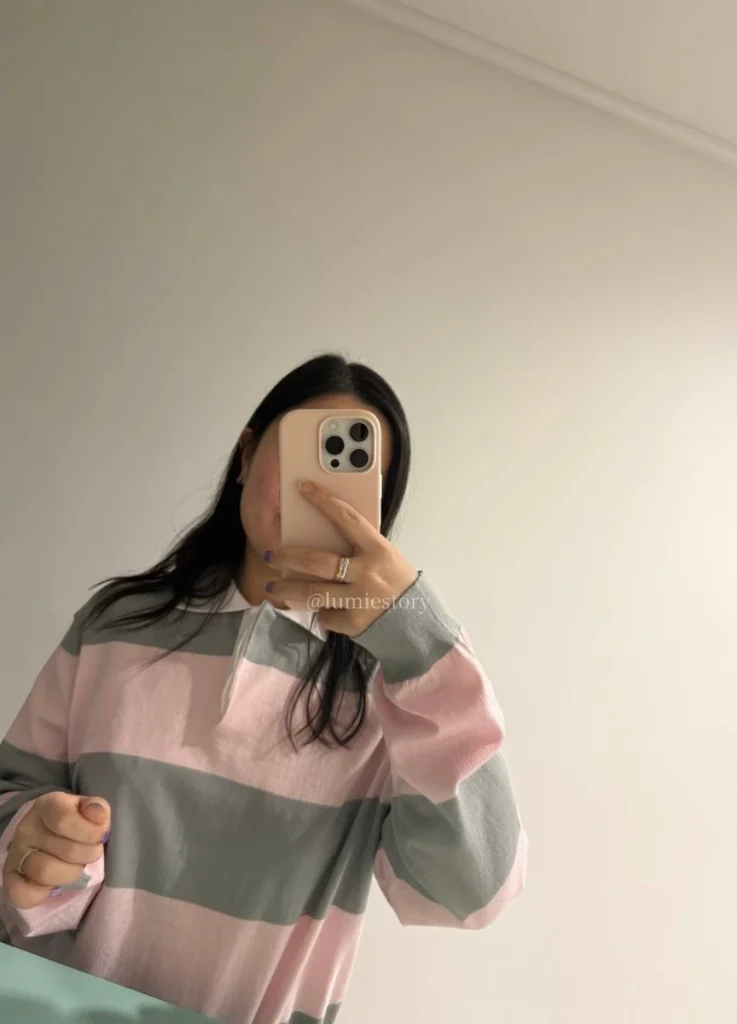
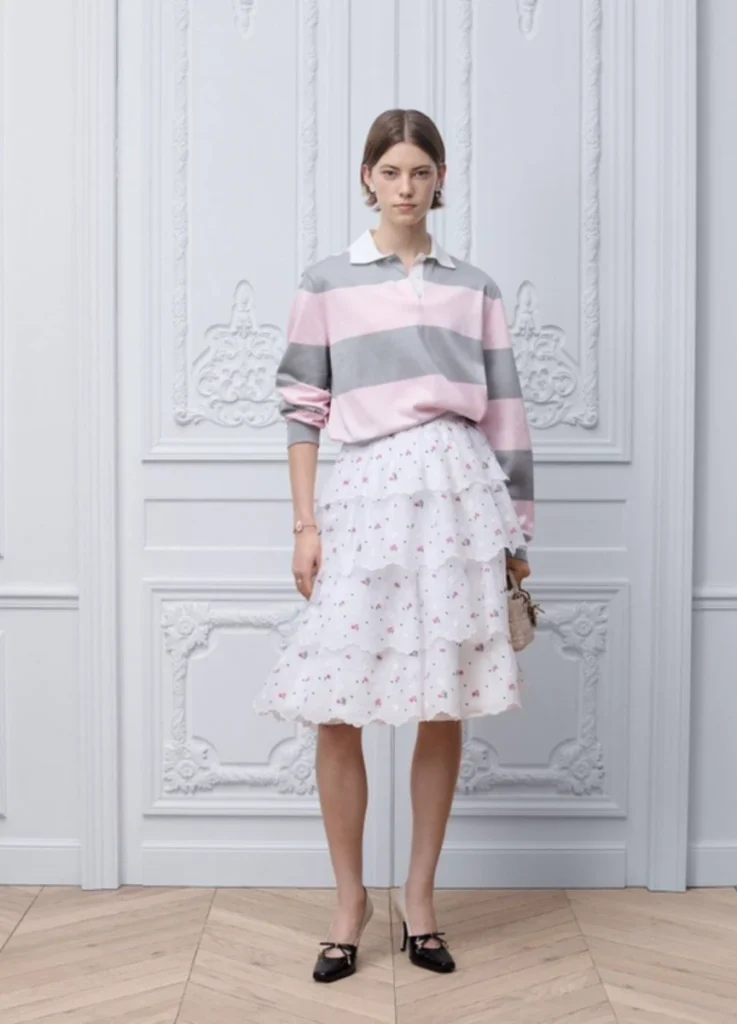
The polo’s fit skips both registers most contemporary marinière polos use. The shirt isn’t fitted, and it isn’t oversized. It floats in between.
The shoulders drop naturally rather than being engineered to sit at any specific anatomical point. The body and sleeves refuse clean definition — neither aggressive nor relaxed enough to clearly belong to one fit category. That ambiguity isn’t accidental, and it isn’t compromise. It’s intentional design.
The looseness leaves space between fabric and skin. When that air moves with the body’s motion, the clothing gains expression that fitted construction can’t produce. The polo can read more strongly in actual wear than in campaign imagery — designed for time and movement rather than for the still image.
This approach distinguishes Anderson’s Dior from the Maria Grazia Chiuri era that preceded it. Chiuri’s design language often centered refined silhouette work that photographed cleanly in editorial contexts. Anderson’s pieces tend to release their character through wear rather than through styling. The polo on a model in a campaign image registers as somewhat ambiguous. The same polo on a wearer who’s spent the day in it registers as quietly expressive.
For collectors who buy clothing to live with rather than to photograph, this fit philosophy is the more valuable proposition. The pieces grow into the wearer over time rather than presenting themselves immediately and then losing register.
Why Anderson Doesn’t Let These Symbols Behave Like Lucky Charms
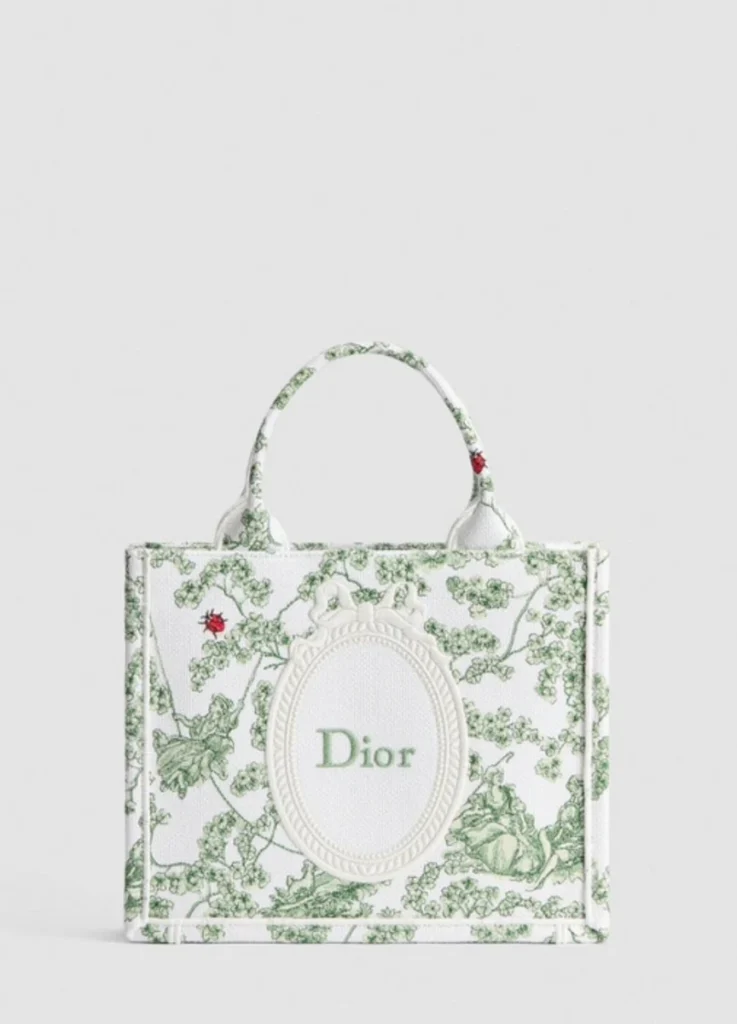
The Mini Lady Dior Clover sits adjacent to the polo within the Spring/Summer 2026 launch — Anderson’s first reinterpretation of one of the maison’s most recognizable bags.
Four-leaf clovers and ladybugs are conventionally read as luck symbols. The bag uses both — embroidered four-leaf clovers across the surface, finished with a single small red ladybug detail. The familiar D, I, O, R charms remain, grounding the design within the Lady Dior’s established identity. The bag is available in three colorways — green, black, and rose soupir — at price points ranging from $4,200 to $11,000 depending on size and finish.
Dior’s official explanation cites two sources. Christian Dior’s belief in lucky talismans and magical thinking — well-documented in the maison’s archives. And Anderson’s own Irish heritage, where four-leaf clovers carry cultural weight beyond decorative function.
What’s distinctive in Anderson’s approach isn’t the use of these symbols. It’s how they sit on the bag — present without performing.
The clovers and ladybugs don’t promise fortune. They suggest attentiveness. Anderson positions symbols beneath their conventional meaning rather than above it — letting them live inside everyday wear instead of pointing at significance. They aren’t declarations. They’re discoveries.
Anderson worked similarly with symbols at Loewe — turning recognizable cultural references into wearable objects that resist the pressure to perform their meaning. The piece works because it stops asking the viewer to interpret it, which paradoxically allows the symbolism to deepen rather than dissolve.
The Four-Leaf Clover — Luck as Repetition, Not Exception
A four-leaf clover conventionally signals rarity. One special leaf among many ordinary ones. The visual code reads: this is the lucky one, the rare exception, the discovery that confirms the searcher’s good fortune.
In the Lady Dior Clover’s embroidery, the clovers don’t appear as exceptions. They repeat. They intertwine. They form continuous vines across the bag’s surface.
The repetition shifts the symbolic register entirely.
Luck is no longer the singular miracle that breaks through ordinary experience. Luck becomes something that emerges through continuity — a condition rather than a moment. The repetition does the philosophical work the singular instance couldn’t manage.
This reading aligns with how Anderson positions Dior more broadly under his direction. Where the Chiuri era often centered the special, the rare, the elevated moment, Anderson’s Dior centers continuity — the everyday relationship between wearer and object that accumulates meaning rather than asserting it. The repeated clovers translate that philosophy into specific embroidery.
For wearers, this matters in practice. The bag doesn’t ask to be brought out for occasions. It works as daily carrying, where the repeated clovers integrate into the wearer’s routine without performing special significance. That’s where Anderson’s symbols deepen — not in display, but in habituation.
The Ladybug — A Reward for Noticing
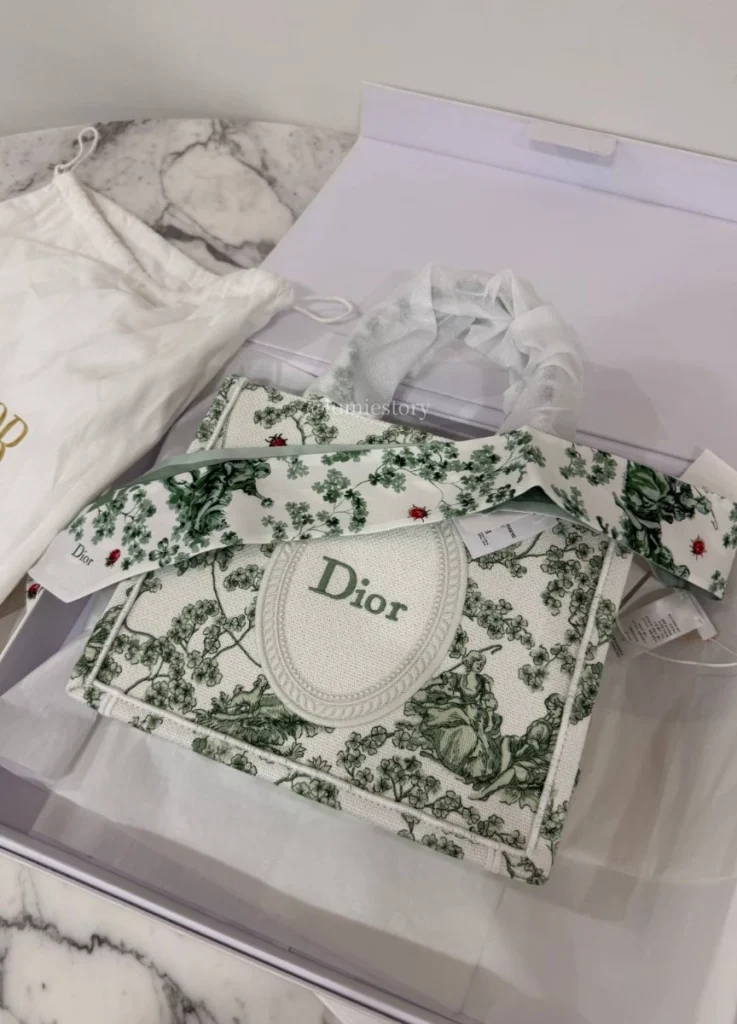
The single red ladybug embroidered onto the Lady Dior Clover sits peripherally on the bag. Easy to miss at a distance. Visible only on closer inspection.
The placement is the design.
The ladybug isn’t a message. It’s a reward for observation. Anderson doesn’t want the viewer to read symbols. He wants the viewer to notice them. The bag operates on two registers simultaneously: the immediate visual register, where the clover repetition reads as ornamental pattern; and the closer register, where the ladybug rewards the wearer who pays attention to her own object over time.
The dual-register approach has a specific effect. The bag never fully reveals itself in a single viewing. Each engagement with the piece surfaces something previously unnoticed — the orientation of a particular clover, the placement of the ladybug relative to the handle, the way light catches different embroidery densities. The object stays interesting across years of ownership rather than exhausting itself in the first month.
For collectors who already own multiple Lady Dior pieces, this is what justifies adding the Clover version to the collection. The bag isn’t a different aesthetic statement from the classic Lady Dior. It’s the same silhouette with embedded depth — rewarding the kind of long-term observation that defines serious bag collecting.
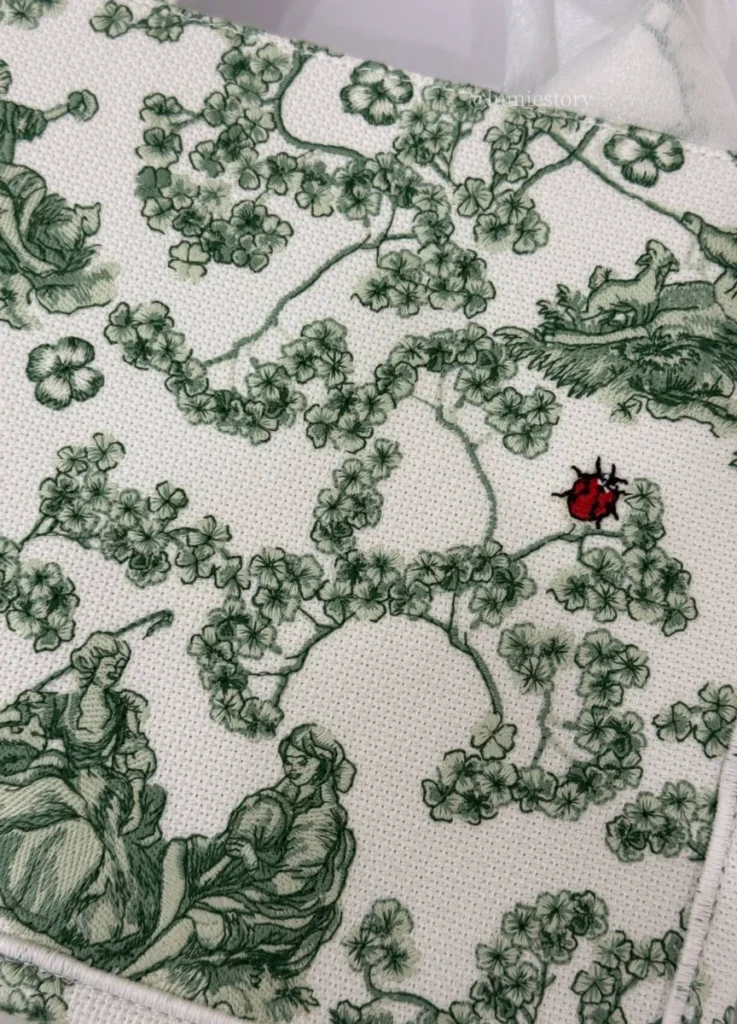
Why embroidery matters
The clovers and the ladybug aren’t printed onto the bag’s surface. They’re embroidered into it.
The technique implies time. Irregularity. Human presence in the object’s making. Embroidery tends to vary subtly across a surface; thread tension shifts, stitch density changes, hand-rendered elements register differently than machine-perfect alternatives.
Some clovers on the Lady Dior Clover read crisply. Others fade slightly. The ladybug occasionally feels like it might disappear into the surrounding embroidery before re-emerging on a closer look.
The variation isn’t inconsistency. It’s a philosophy about how objects should age.
Anderson’s choice of embroidery over print signals that the bag is meant to be lived with rather than displayed. Print produces uniformity that doesn’t change with use. Embroidery carries the marks of its own making and develops subtle patina across years of wear.
The reading connects to a broader Anderson philosophy that ran through his Loewe work and continues at Dior. Objects should accumulate rather than perform. They should reward time spent with them rather than presenting themselves fully on first encounter. The embroidery on the Lady Dior Clover is the technical expression of that philosophy at piece level.
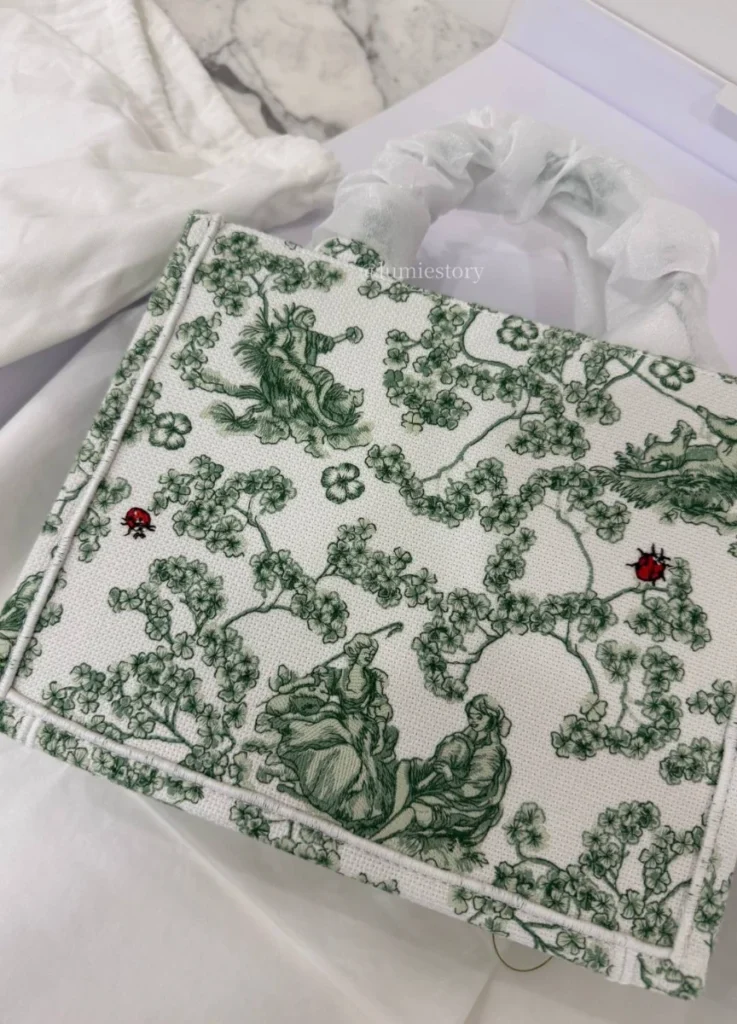
The women in the pattern
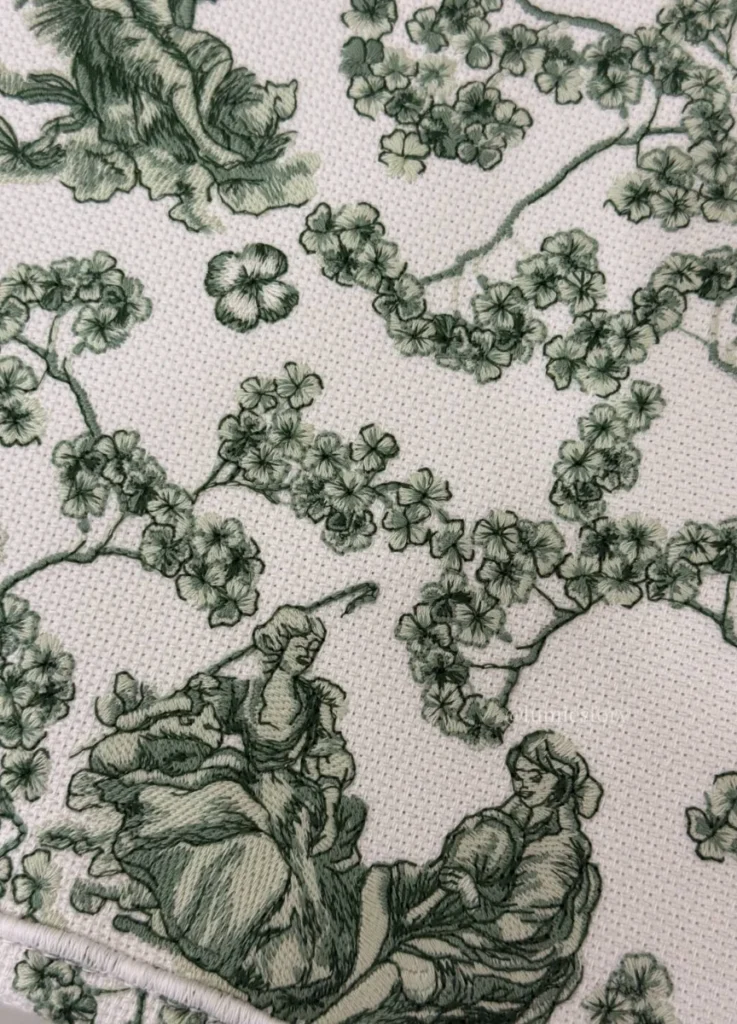
Embedded within the broader Spring/Summer 2026 print and embroidery vocabulary — across scarves, T-shirts, and seasonal accessories — small female figures appear in some of the surface designs. They’re scattered rather than arranged, peripheral rather than centered.
The women aren’t heroines. They aren’t achieving anything visible within the print. They aren’t receiving fortune or recognition. They simply exist within the landscape of the design.
Not symbols. Not stories. Lives in progress.
This treatment connects to how the Dior maison under Anderson positions modern femininity differently from earlier eras. Anderson’s Dior steps back from declarative messaging. The women in the print aren’t tools for any particular argument. They inhabit the landscape, which is itself the argument: contemporary femininity reads most clearly when it doesn’t require explanation.
Luck, in this framing, isn’t bestowed on the women in the pattern from outside. It’s part of the landscape they already occupy.
Polo and Bag Together — A Single Attitude
When the cotton-knit polo and the Lady Dior Clover sit alongside each other within a wardrobe, they share a single attitude across surface differences. The two pieces don’t perform emotion or explain their symbolism. Both accumulate meaning through use rather than asserting it through visual presence. The polo’s color register and the bag’s embedded embroidery operate on the same logic — pieces designed to deepen with time rather than to declare significance immediately.
This is the through-line of Anderson’s Dior at the wardrobe level. The maison under his direction isn’t producing pieces that require explanation. It’s producing pieces that integrate into the wearer’s life and grow within that integration. For collectors building serious wardrobes around Dior’s contemporary expression, the polo and the Clover together represent the philosophy more clearly than the headline runway pieces.
The Bow Bag — Anderson’s other major Spring/Summer 2026 introduction — operates through more obvious novelty, with its bow-shaped silhouette and chain-strap interpretation. The Bow Bag is positioned to attract editorial attention. The Lady Dior Clover and the Marinière polo, by contrast, are the pieces that may define how Anderson’s Dior actually feels when lived with — quieter, less photogenic, more rewarding through use.
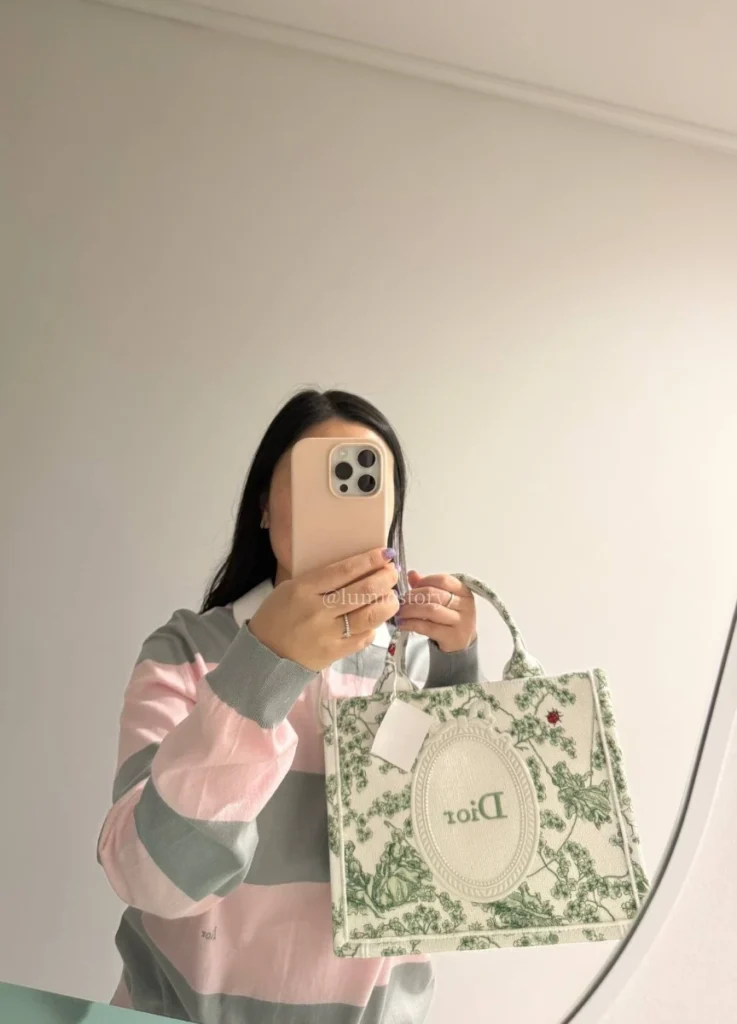
Final Reading — What This Season Asks
Dior’s Spring/Summer 2026 collection doesn’t ask to be admired. It asks to be lived with.
Worn. Carried. Let into time.
In that quiet repetition, meaning slowly appears — not because Dior told the wearer what its objects meant, but because the wearer noticed.
The cotton-knit polo and the Lady Dior Clover are the two pieces from this collection that reward this kind of noticing most consistently. The polo’s color register becomes more legible after weeks of wear, when the relationship between fabric, body, and motion has settled into a pattern. The bag’s embroidery rewards repeated handling, where each engagement surfaces previously unobserved detail. Both pieces ask the wearer to give them time, and both pieces return that time as something meaningful.
This is, in retrospect, the most precise summary of where Anderson is taking Dior. The maison’s strongest pieces under his direction grow into the wearer’s life across months and years rather than announcing themselves at first glance.
That kind of quiet patience may be the rarest quality in contemporary luxury. Anderson’s Dior is built around it.
Featured Image via Dior official website
All images unless otherwise credited: © Lumie Story
[ Related Editorials ]