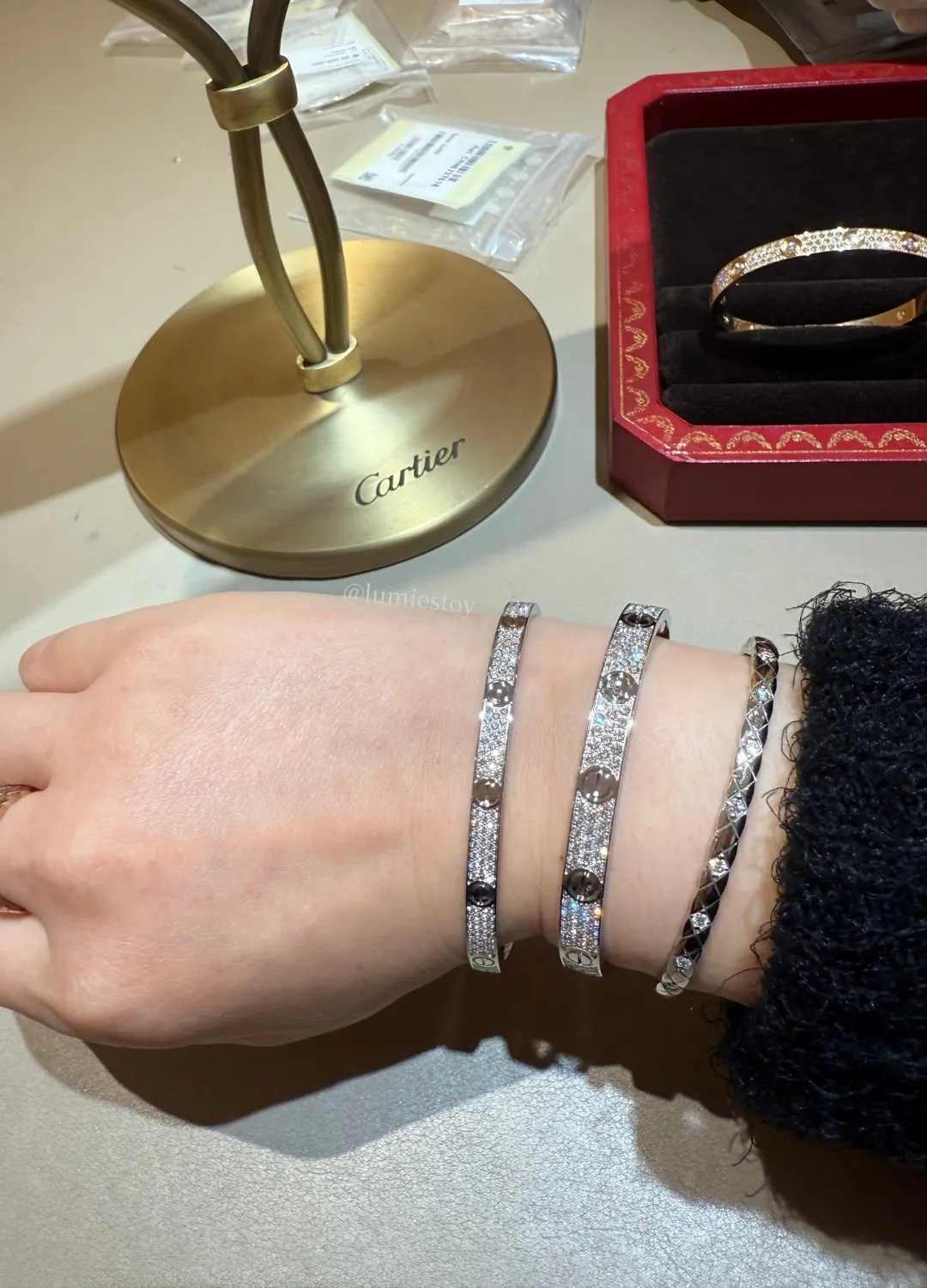
$32,000
Cartier Love Bracelet: A Study in Controlled Permanence
The Cartier Love bracelet has maintained an almost unchanged form since its creation in 1969. Its oval structure, screw motif, and fixed closure system have stayed constant across decades — a rare consistency in modern jewelry.
Yet the moment full pavé enters the equation, this familiar structure shifts to a different register entirely. The change goes beyond adding diamonds to a surface. It reorganizes the relationship between structure and surface itself.
In its standard form, the Love bracelet is a gold object. The metal defines the presence, the screws punctuate the rhythm, and the overall impression belongs to hardware. Full pavé reverses that hierarchy. Gold recedes into an internal role, still structurally essential but no longer visually dominant. What the eye follows instead is light.
The bracelet shifts from gold to reflection.
Today’s discussion is grounded in that shift. Less about spec-by-spec comparison, and more about how each size behaves differently on the body.
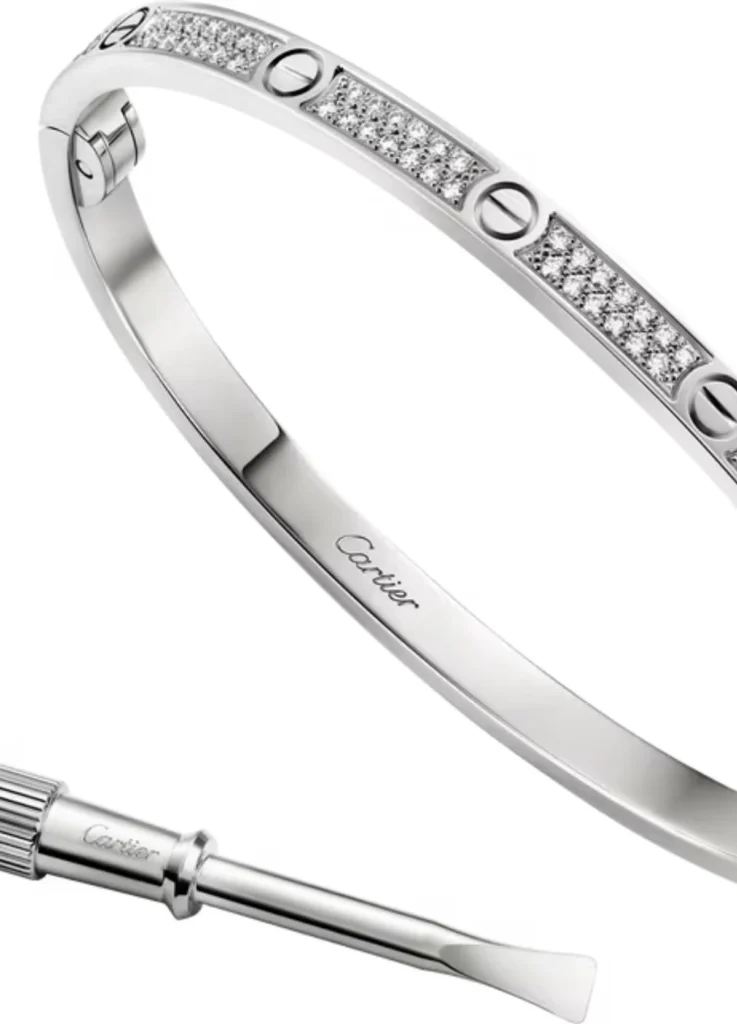
$32,000
source: Cartier.com
Full Pavé as a Structural Transformation
The standard Love bracelet communicates through metal. A consistent width, the repeated screw motif, and a rigid oval form that wraps the wrist with deliberate resistance.
Full pavé overrides that communication. As diamonds cover the surface, gold disappears from the foreground and retreats into scaffolding.
The visual center moves from metal to light. The bracelet is perceived through its reflective behavior, not its edges or hardware.
And the effect intensifies with size.
Small, medium, and classic are best understood as three distinct objects with different material personalities, rather than three points on a size scale.
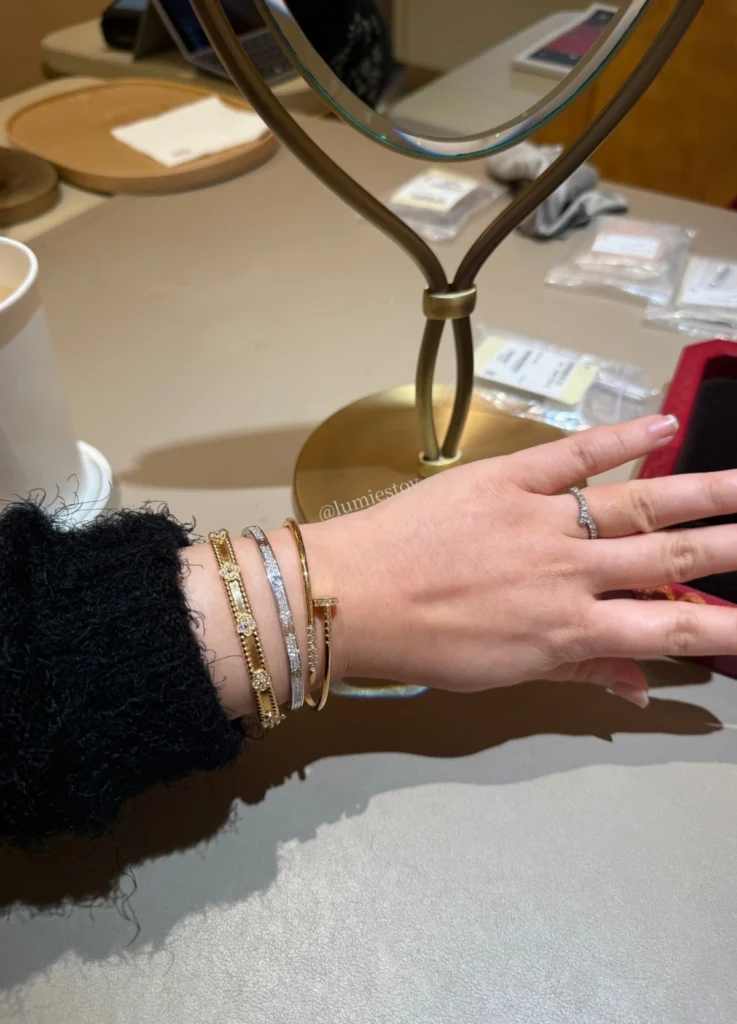
$32,000
Small Full Pavé — Precision Without Expansion
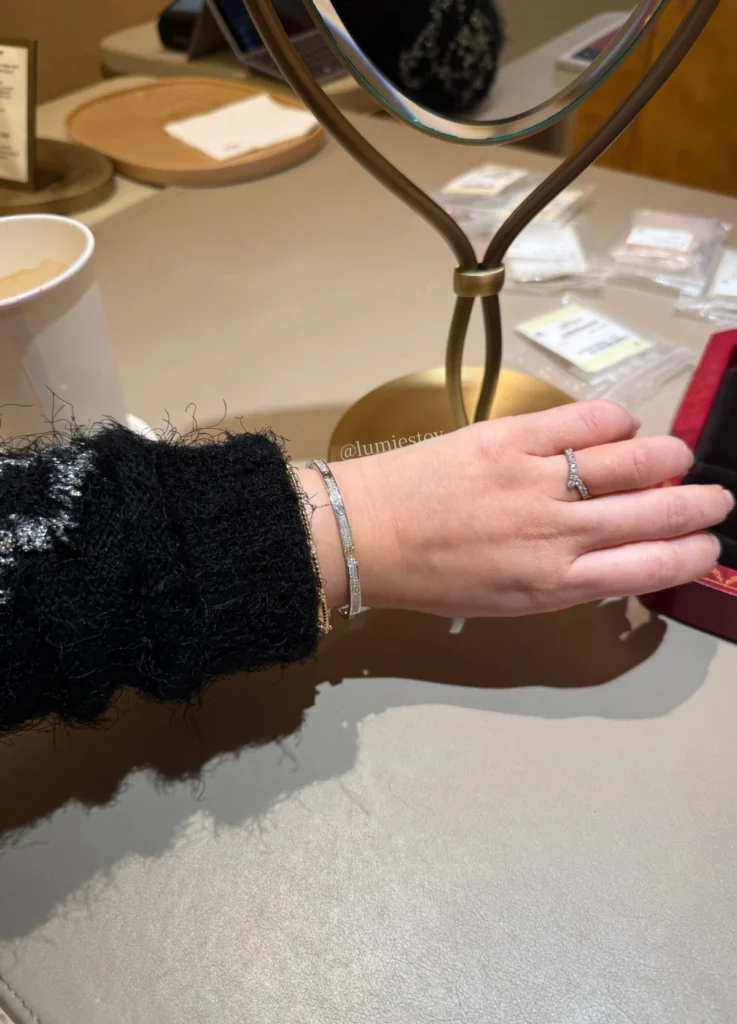
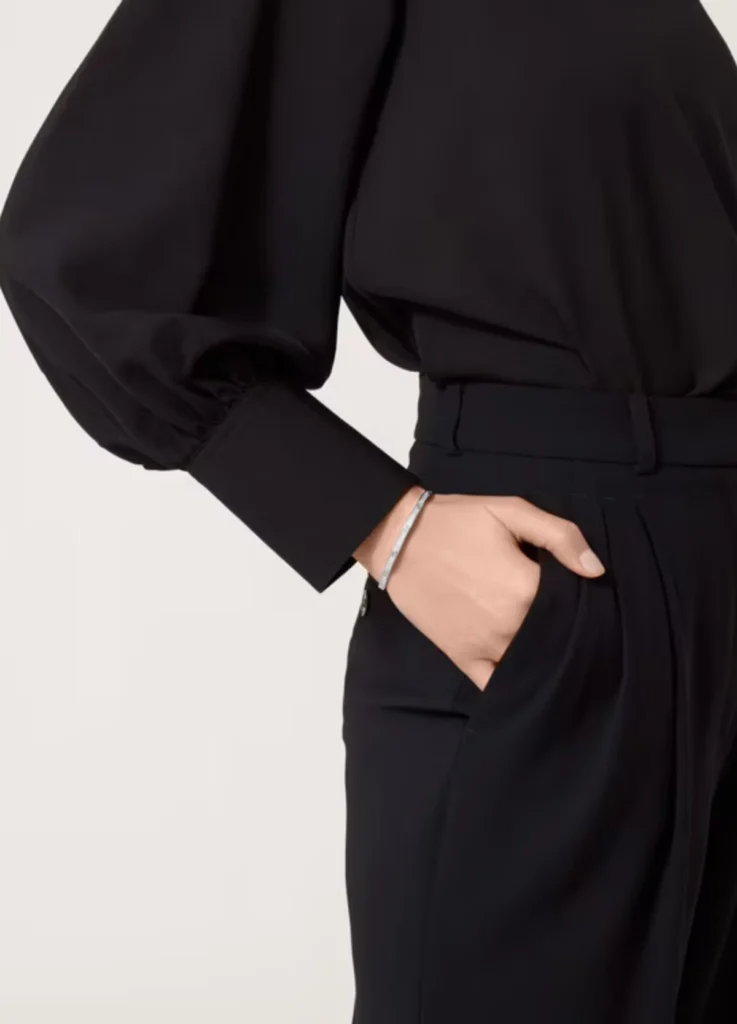
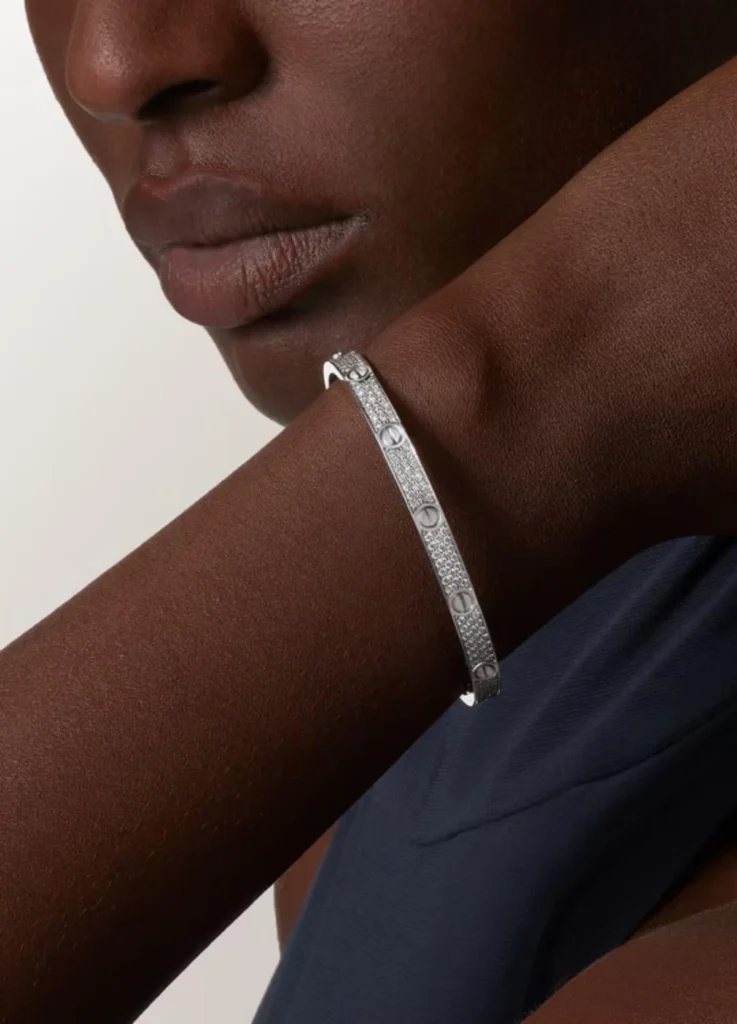
The small full pavé carries the narrowest width, and on the wrist, it works as a single line.
Despite full diamond coverage, the limited surface area keeps light contained. Reflections stay localized, pulsing in small, rapid points rather than spreading across a plane.
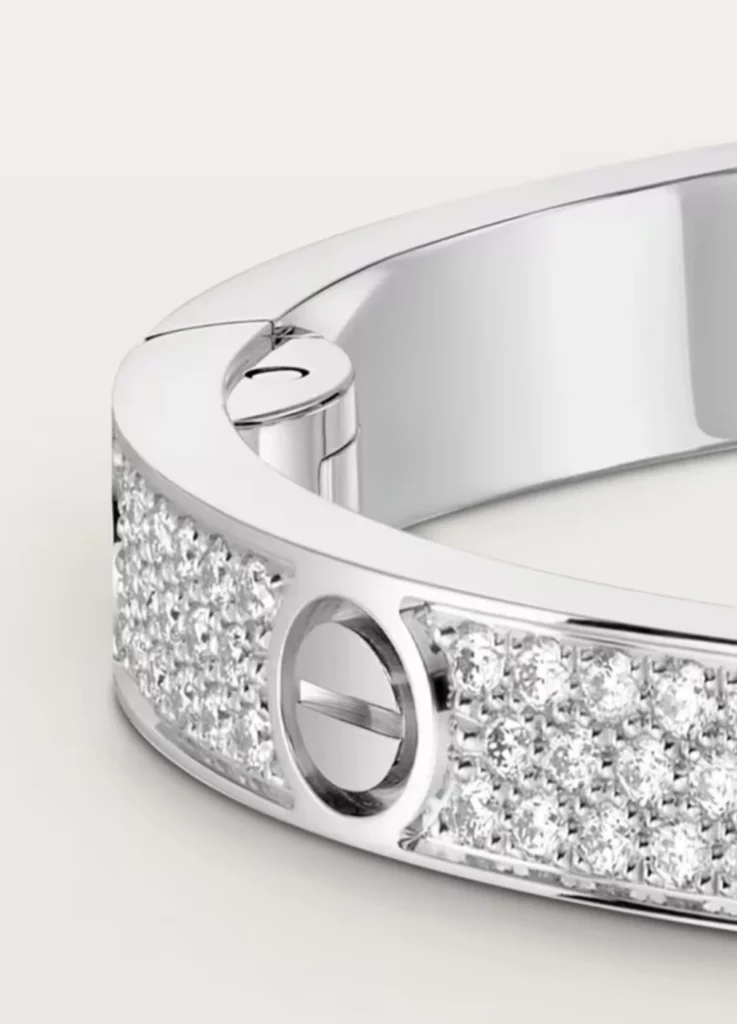
The setting work is dense and tightly controlled. Stone-to-stone spacing is minimal, setting depth shallow and uniform, the outer surface smooth. Each diamond contributes a distinct flash, but they accumulate into a fast, sequential rhythm rather than a broad glow.
$32,000
source: Cartier.com
Up close, craftsmanship dominates. Every stone is individually legible. At a distance, the bracelet softens into a quiet, restrained shimmer.
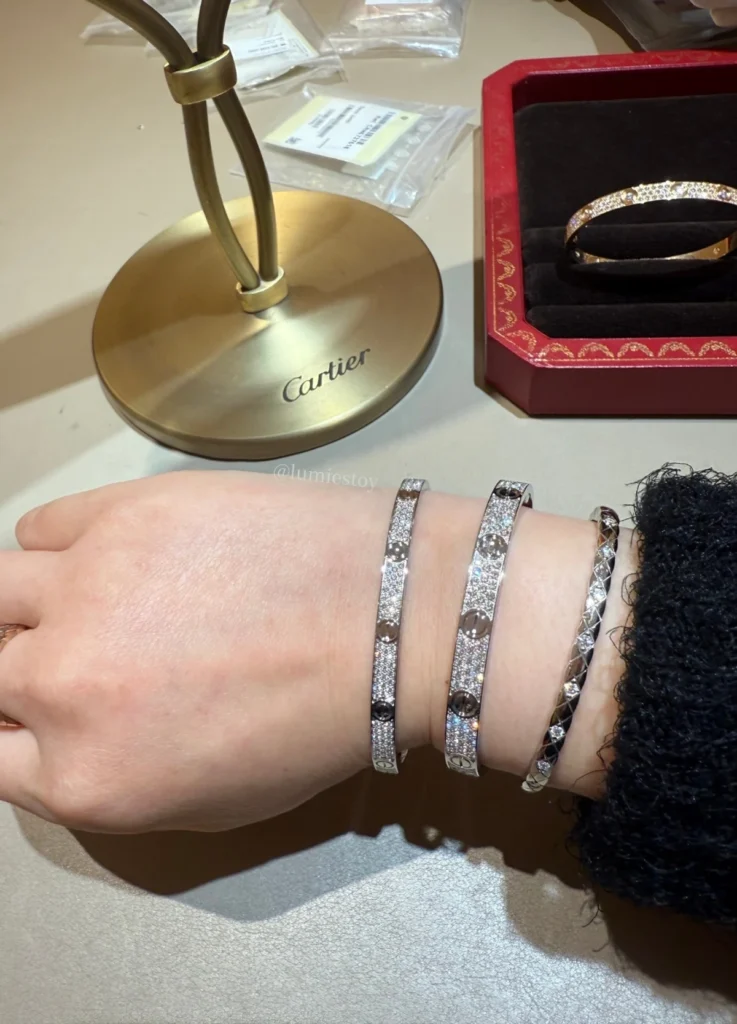
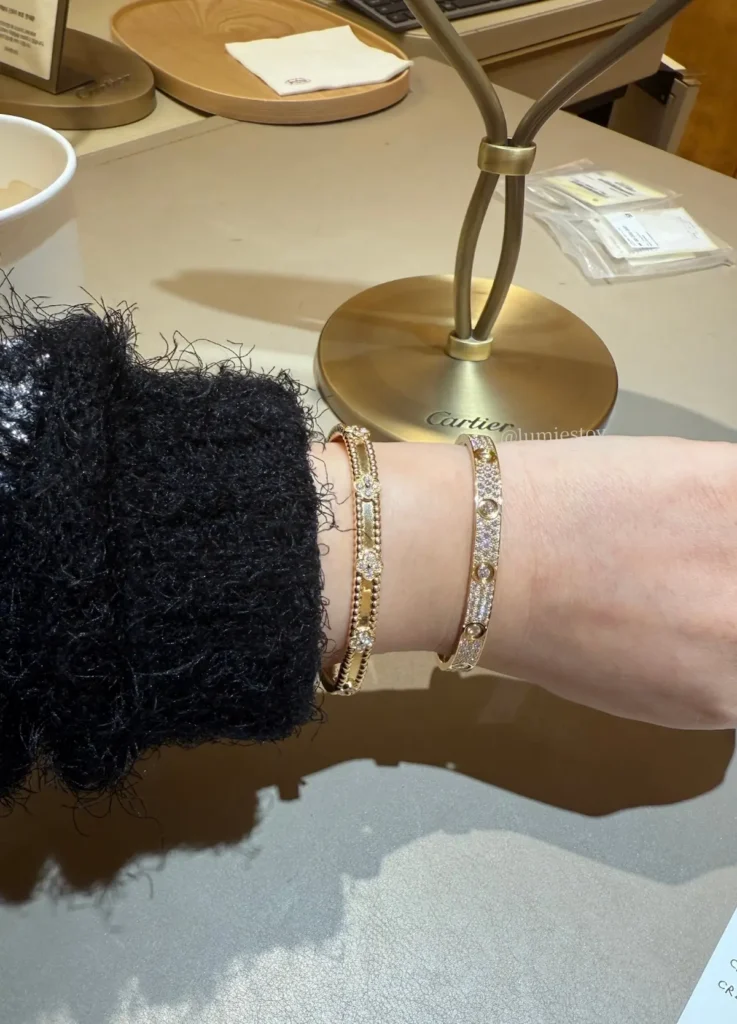
On the wrist, the small follows rather than leads. It traces the arm’s natural line without claiming visual priority, which makes it the strongest candidate for layering. It integrates with other bracelets without competing for dominance.
Worn alone, its presence stays measured. A size built for composition—one element within a larger arrangement.
Among the three, the small produces the most harmonious result when stacked.
$32,000
source: Cartier.com
Medium Full Pavé — Where Surface Begins to Form
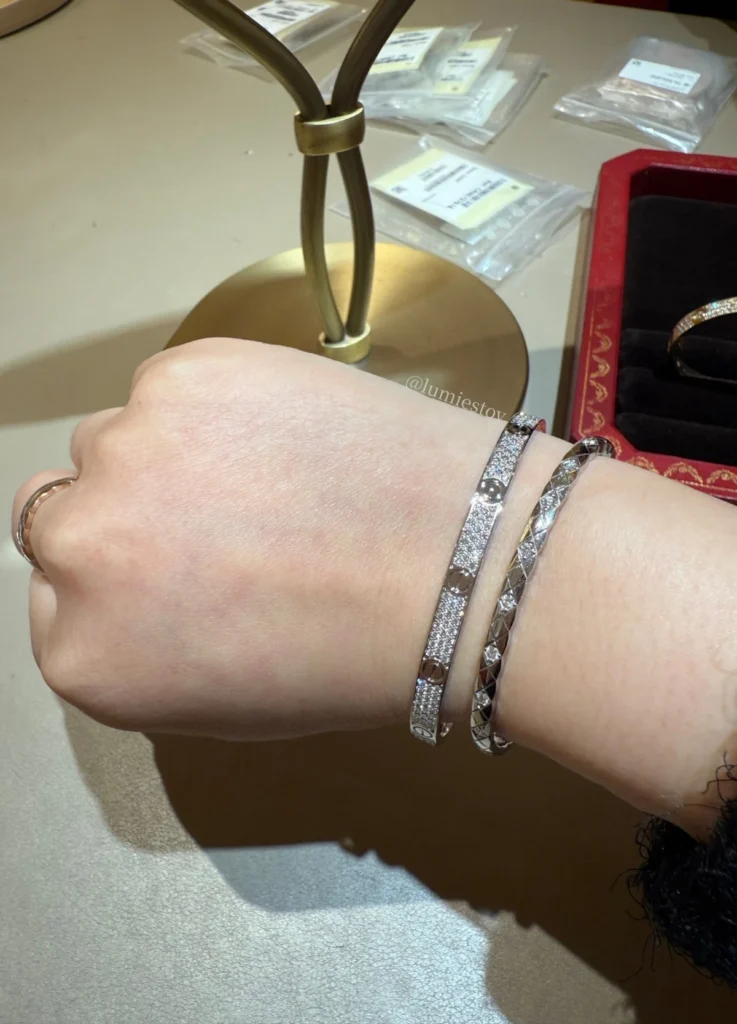
The medium marks the most important structural shift in the full pavé range.
Light changes behavior at this width. Individual reflections begin to connect, merging into a coherent plane. A surface starts to emerge.
The last point where structure and surface still hold equal weight. The screw motifs remain visible, anchoring the design and preventing the surface from becoming purely abstract. At the same time, the diamonds assert enough presence to elevate the bracelet beyond a structural object.
$38,520
Setting work reaches its most balanced state here. Stone size, spacing, and depth align to produce density without excess. The surface appears continuous, but up close, individual craftsmanship stays legible.
On the wrist, that balance translates directly. The medium carries enough presence to stand alone, yet remains adaptable enough to layer without losing identity.
Both bracelet and jewel, visible simultaneously. Neither dimension overwhelms the other.
Across most wrist sizes, the medium feels the most resolved.
$38,520
Classic Full Pavé — Light as Continuity
The classic occupies a fundamentally different position.
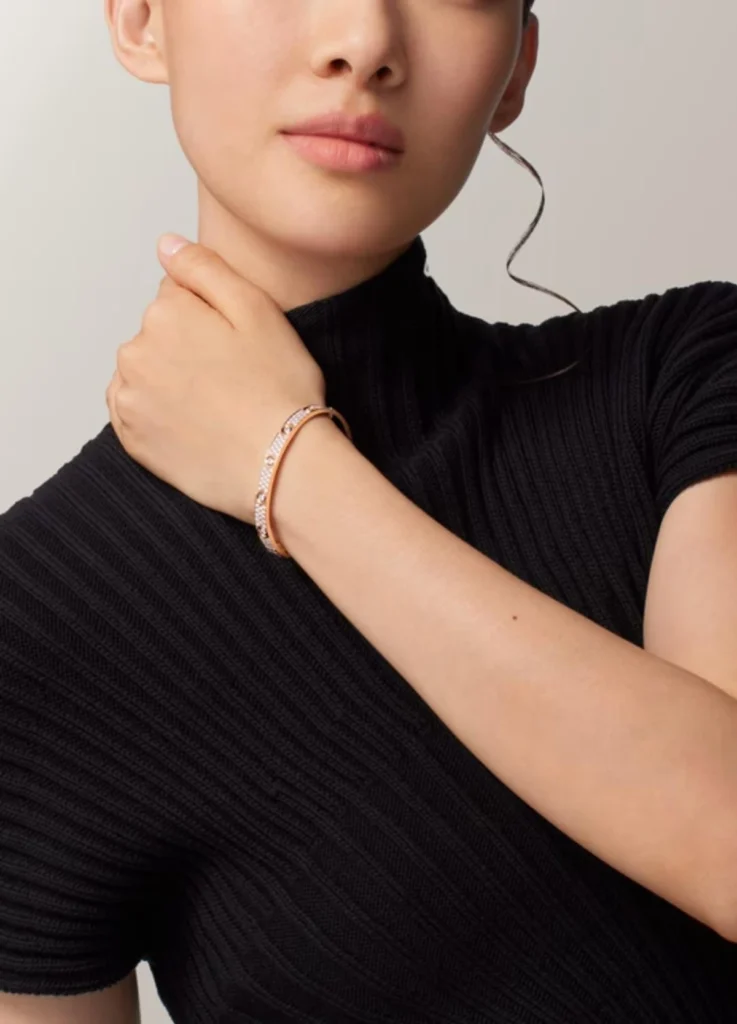
At this width, individual stones stop registering as separate elements. They merge into a continuous reflective surface. A single field of sustained light.
Gold is virtually invisible. Even the screw motifs, once structural markers, dissolve into pattern. They register as texture rather than architecture.
$36,000
source: Cartier.com
The setting goes deeper and more dimensional. Larger stones, stronger fixing, and a broader surface produce an unbroken luminous plane. Light at this scale does not move in points or lines. It holds.
On the wrist, the classic sits as a placed object. The eye goes to it, stays on it, and does not easily move elsewhere. Coexistence with other jewelry becomes difficult. It defines attention. Entirely.
Proportion becomes critical. The bracelet requires sufficient wrist structure to carry its density. Without that physical counterweight, the balance tips and the jewelry overtakes the wearer.
When the proportion aligns, however, the classic becomes a single luminous object. The wrist disappears into its presence.
The Craft of Pavé — Three Modes of Light
Pavé is a single word, but across these three sizes, it describes three different optical systems.
In the small, light is fragmented. Discrete, rapid points. A texture of fine flashes that rewards close inspection.
In the medium, light connects. Individual reflections link into a stable, coherent surface while maintaining enough internal variation to stay alive.
In the classic, light sustains. The surface works as a single luminous plane, and individual elements dissolve into the whole.
The small reveals its craftsmanship. The medium balances structure and setting. The classic exists as pure luminous density.
source: Cartier.com
Metal as the Background of Light
In full pavé, gold functions as the background against which light is understood. The same diamond coverage reads differently depending on the metal beneath it.
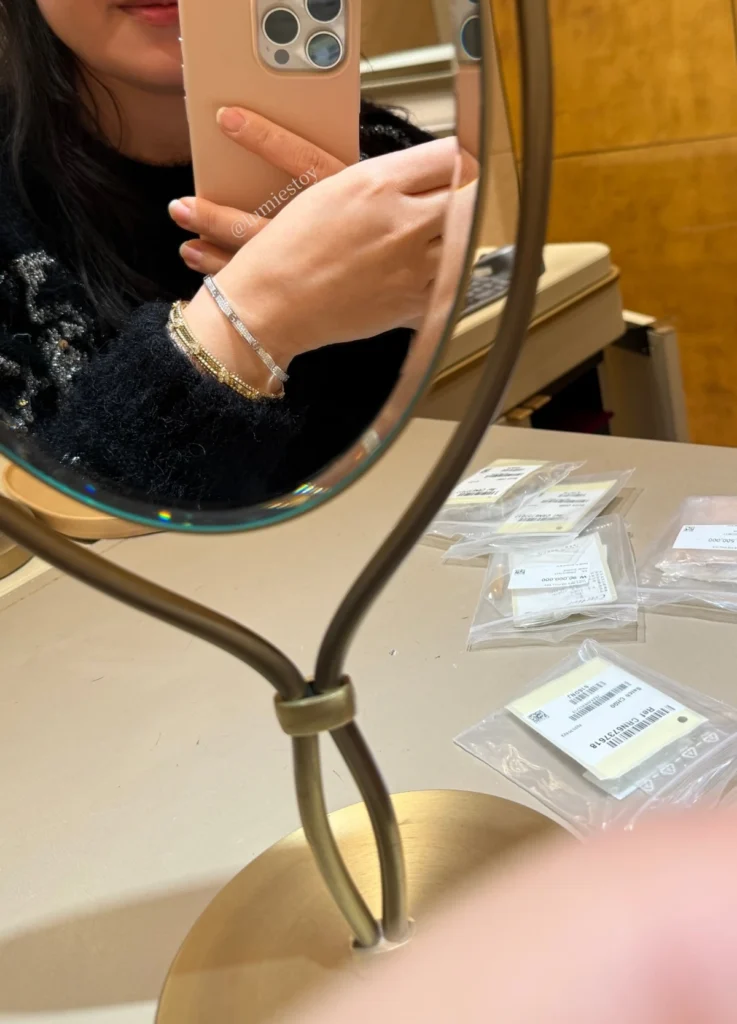
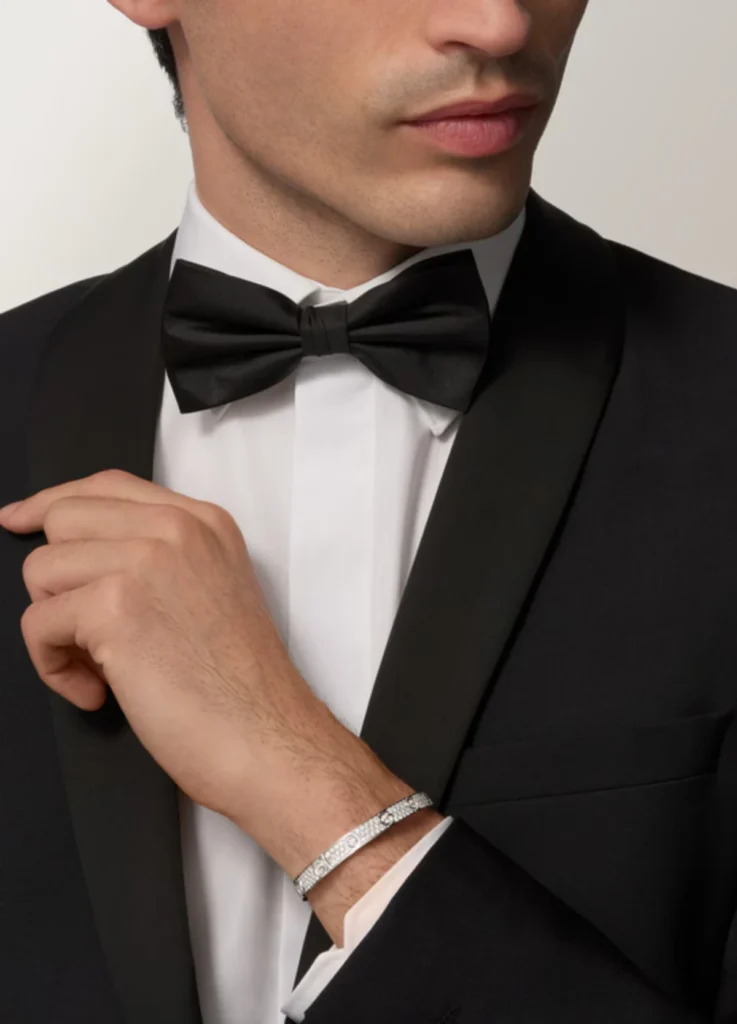
White gold dissolves the boundary. Its tone nearly matches the diamonds, reducing contrast to a minimum. The entire surface merges into a unified field of reflection. Pavé presence reaches its maximum. The bracelet approaches a state where material distinctions nearly disappear.
source: Cartier.com
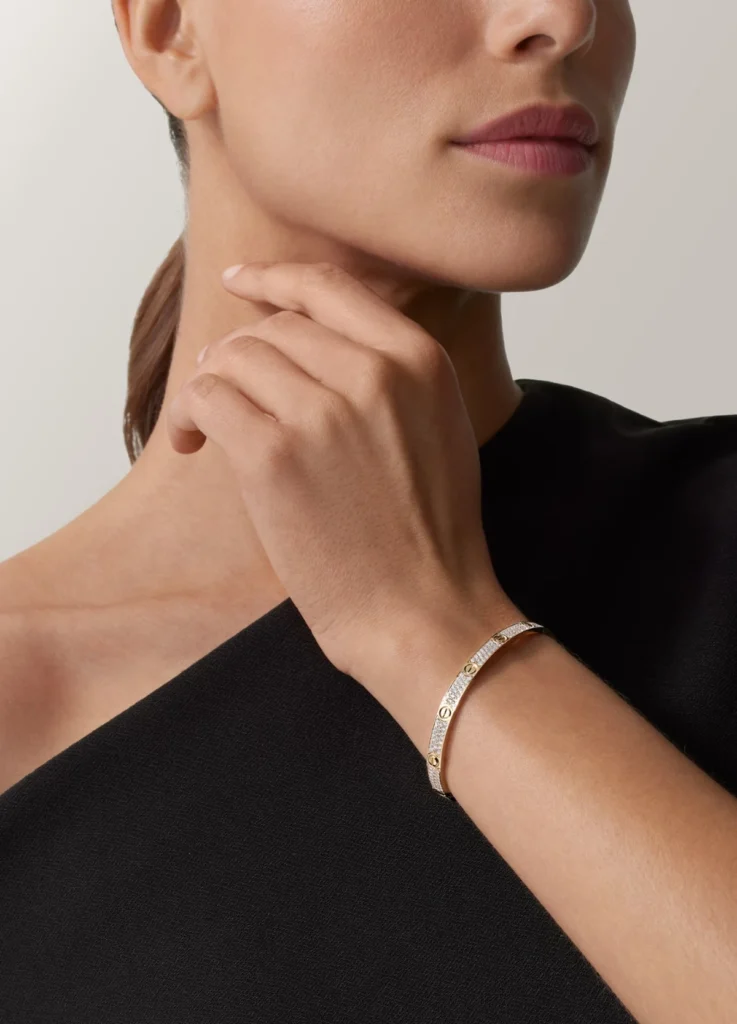
Yellow gold separates light from structure. The warm metal stands distinct against the cool brilliance of the stones. Both elements remain visible simultaneously. The impression shifts from pure sparkle toward density and tonal richness.
source: Cartier.com
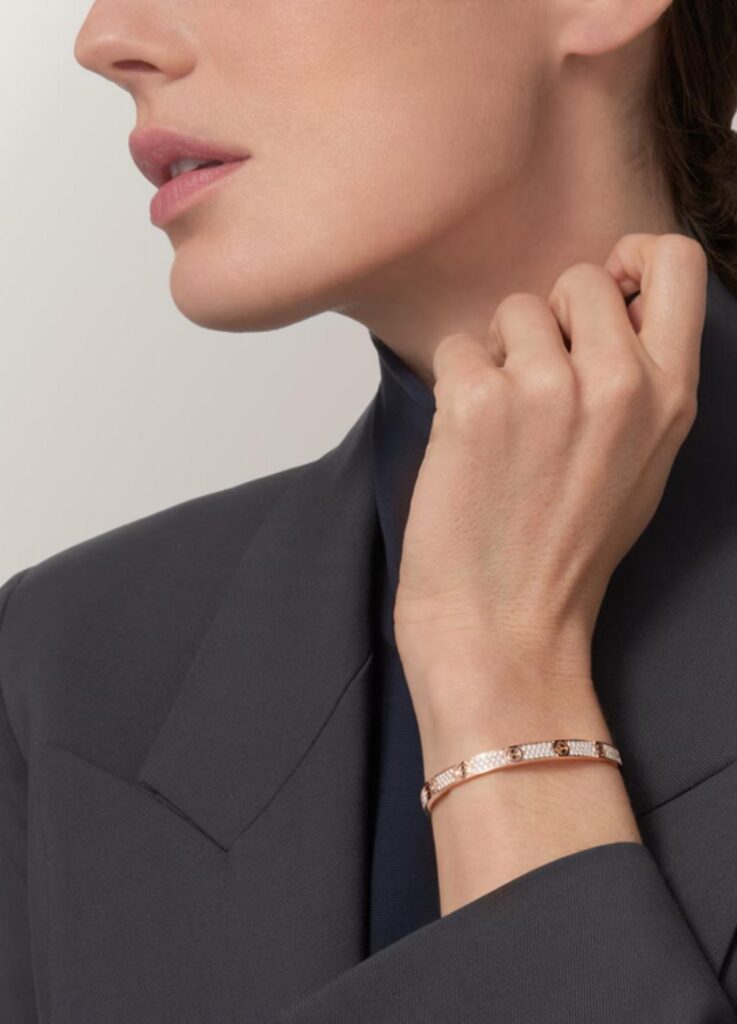
Rose gold absorbs part of the reflection. The reddish undertone softens the diamond’s output, diffusing brightness into warmth. The bracelet settles into the skin rather than projecting away from it. Calmer. More integrated. Wearable without visual excess.
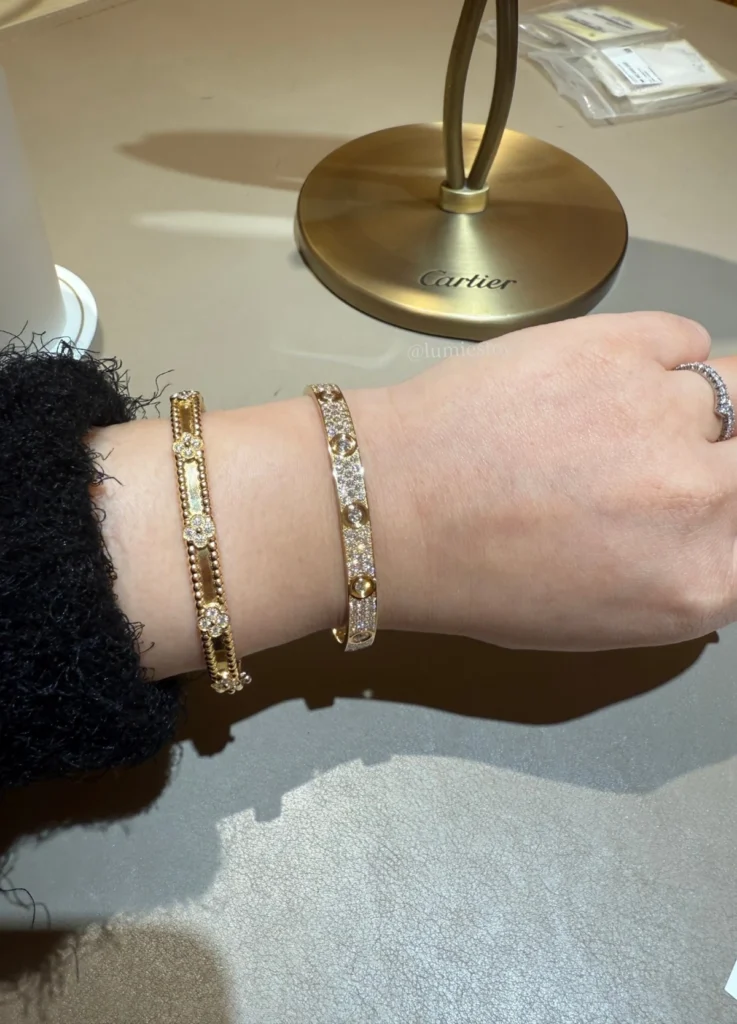
(wrist – 14cm)
Body Type and Size Selection — Where Proportion Decides
For a piece worn permanently, the relationship between the bracelet and the body matters more than personal taste.
Slim wrist, shorter forearm
- Small → The most natural fit, but presence can feel insufficient on its own. Best when layering is the intention, particularly for shorter arms.
- Medium → Stable and well-proportioned. The strongest recommendation for this frame, especially for wearers in their 40s and above.
- Classic → Tends to overpower the wrist.
The bracelet visually dominates the arm. A structure where the jewelry overtakes the person.
Average or slightly fuller wrist
- Small → Somewhat thin relative to the frame.
- Medium → The most balanced option. Consistently the strongest performer here.
- Classic → A viable choice. The wrist provides enough counterweight to carry the density.
source: Cartier.com
Larger frame, longer forearm
- Small → Lacks sufficient presence against the body’s scale.
- Medium → Stable and reliable, though may feel conservative.
- Classic → The only size where full density finds its natural home.
Enough space for the bracelet to work.
Comparative Overview
| Category | Small | Medium | Classic |
|---|---|---|---|
| Structural Reading | Line | Line + Surface | Surface |
| Light Behavior | Fragmented | Connected | Continuous |
| Craft Expression | Precision | Balance | Density |
| Visual Presence | Subtle | Complete | Dominant |
| Ideal Wrist Size | 13–14.5 cm | 14–16 cm | 15.5 cm+ |
| Layering | Excellent | Flexible | Limited |
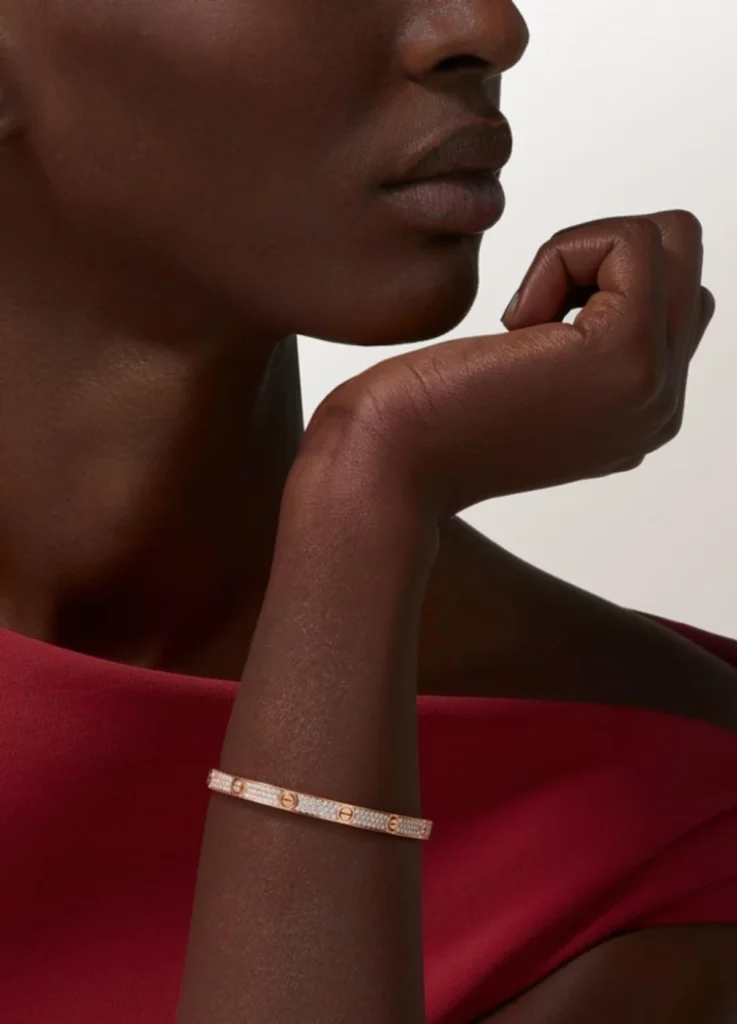
source: Cartier.com
Final Consideration
The full pavé Love bracelet is often approached as a size decision. In practice, each size carries a different material logic.
The small traces the wrist as a line. Light stays close, craftsmanship stays visible, and the bracelet integrates rather than commands.
The medium builds a surface. Light connects, structure and setting reach equilibrium, and the piece stands complete on its own.
The classic absorbs structure into density. Light holds continuously, and the bracelet becomes the single focal point of the wrist.
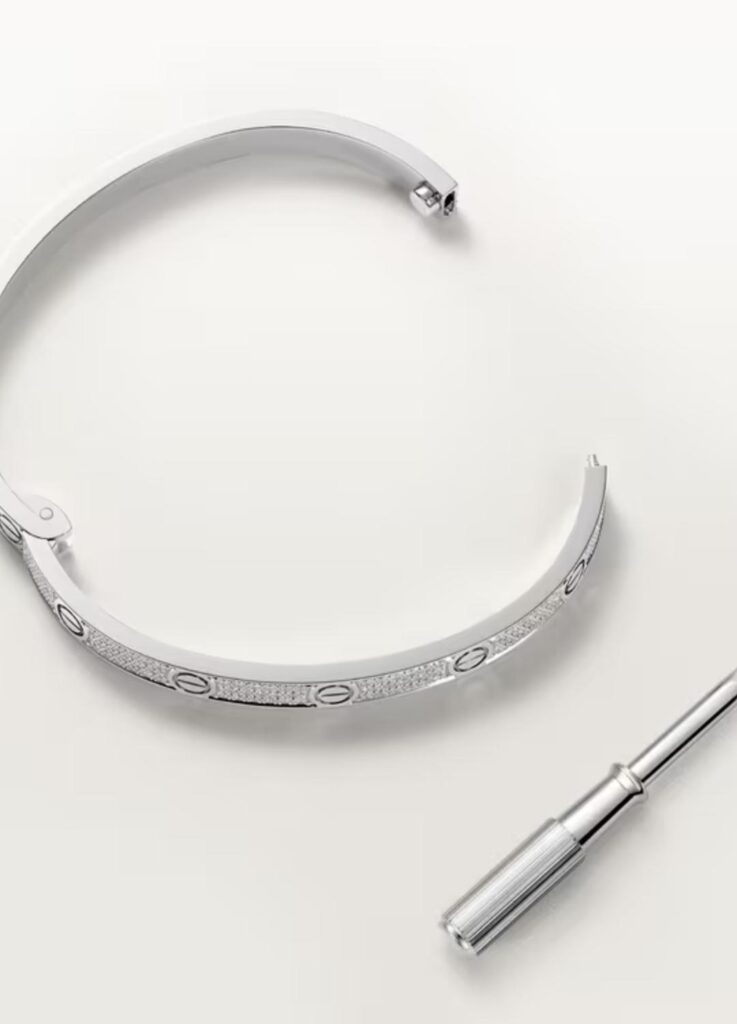
The choice is how much presence to carry, and how much to let the wrist remain visible beneath it.
What stays on the wrist is neither gold nor diamond. It is the density at which the piece chooses to exist. That sensation, ultimately, determines the size.
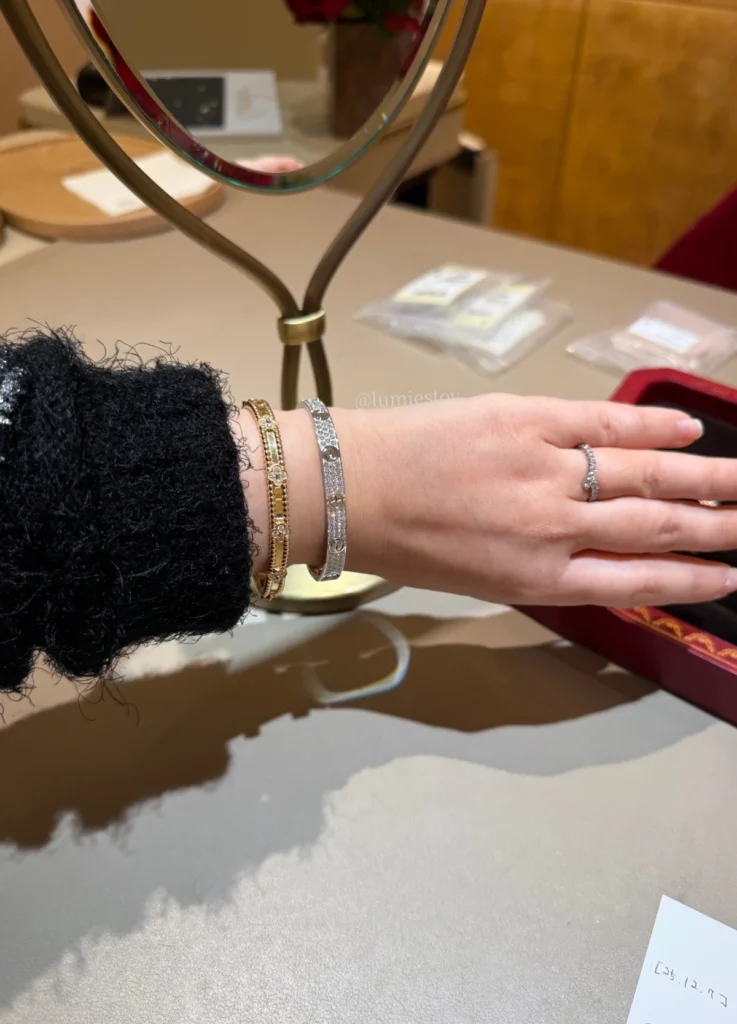
All images unless otherwise credited: © Lumie Story
[ Related Editorials ]
For the Love Unlimited bracelet analysis, see here.