Context: A Wardrobe Question, Not a Manifesto
Prada Fall/Winter 2026 did not arrive with a slogan, nor with a theatrical theme.
Instead, it began with two deceptively simple questions voiced backstage by Raf Simons:
“What do I wear with what?”
“What is possible?”
In a fashion cycle once governed by seasonal rules—mini skirts for spring, power shoulders for autumn—Prada proposes that such formulas no longer hold authority. The Fall 2026 collection is not an instruction manual for trends. It is an investigation into how real wardrobes function.
Rather than presenting 60 isolated looks, Prada structured the runway around 15 models who appeared four times each, progressively removing or altering layers. What emerged was not a fixed silhouette, but a visible process. The show unfolded less as a declaration and more as a negotiation—between garment and wearer, between structure and possibility.
This review examines the silhouette logic, material strategy, color direction, key looks, and the significance of Bella Hadid’s return within the collection’s structural framework.
Collection Overview
- Brand: Prada
- Season: Fall/Winter 2026 Ready-to-Wear
- Creative Directors: Miuccia Prada & Raf Simons
- Location: Milan
- Format: 15 models × 4 sequential appearances (60 looks total)
- Core Themes: Wardrobe Logic, Layered Identity, Pre-Worn Texture, Archive Recontextualization
Silhouette: Ambiguity as Design Strategy
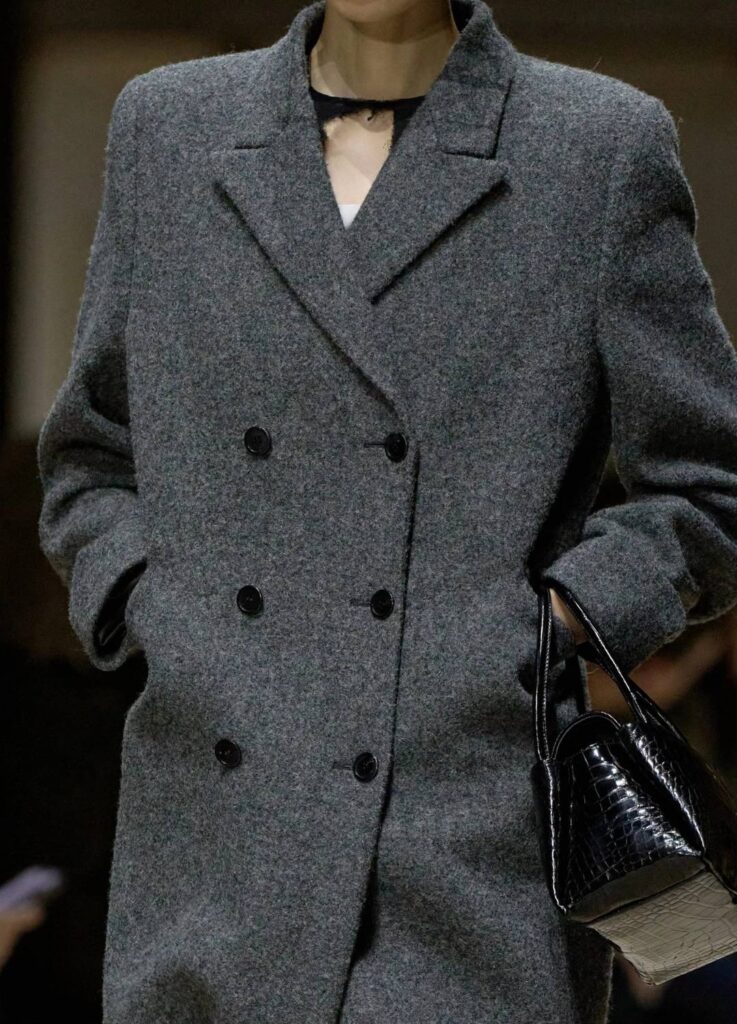
The silhouettes this season resist extremity. They are neither sharply tailored nor dramatically sculpted. Instead, they occupy a deliberate in-between.
Vertical Coats
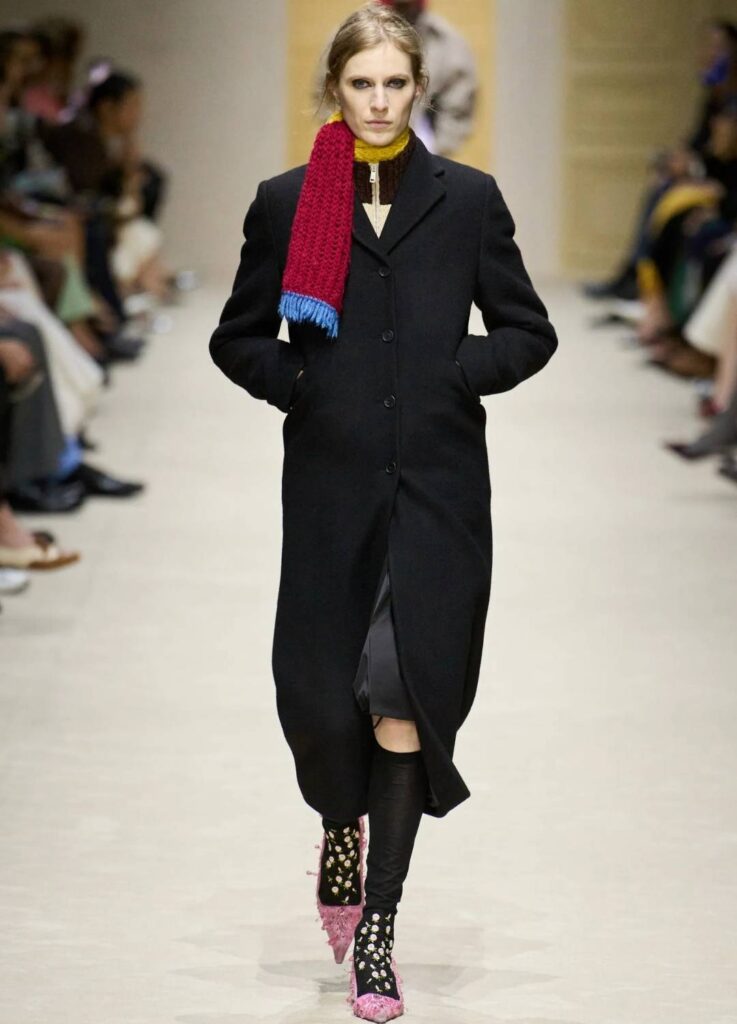
Long black wool coats, relaxed trench variations, and military-inspired outerwear form the foundation. Shoulders are controlled, waistlines largely undefined. The lines fall straight, almost unresolved—suggesting continuity rather than completion.
Knit Over Sheer Layers
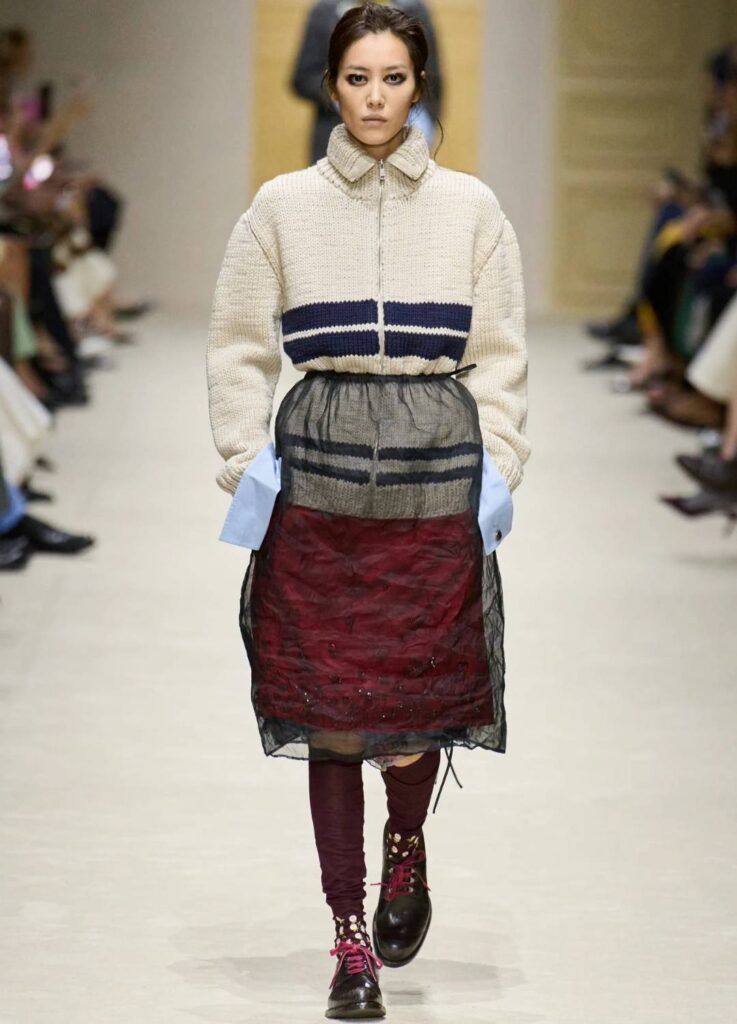
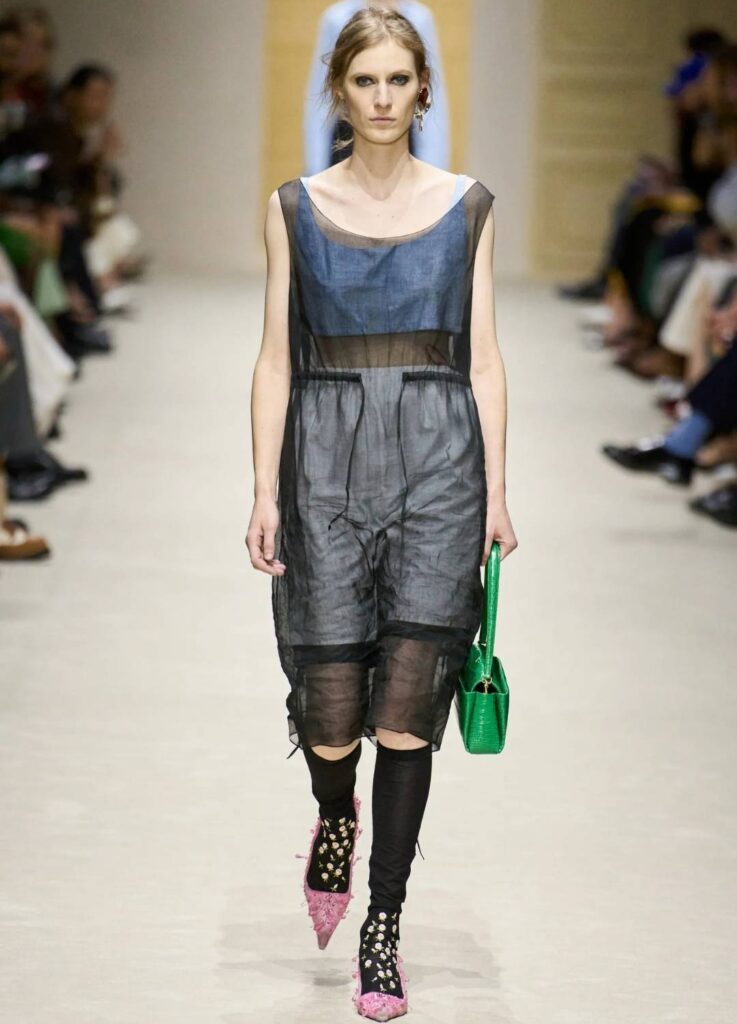
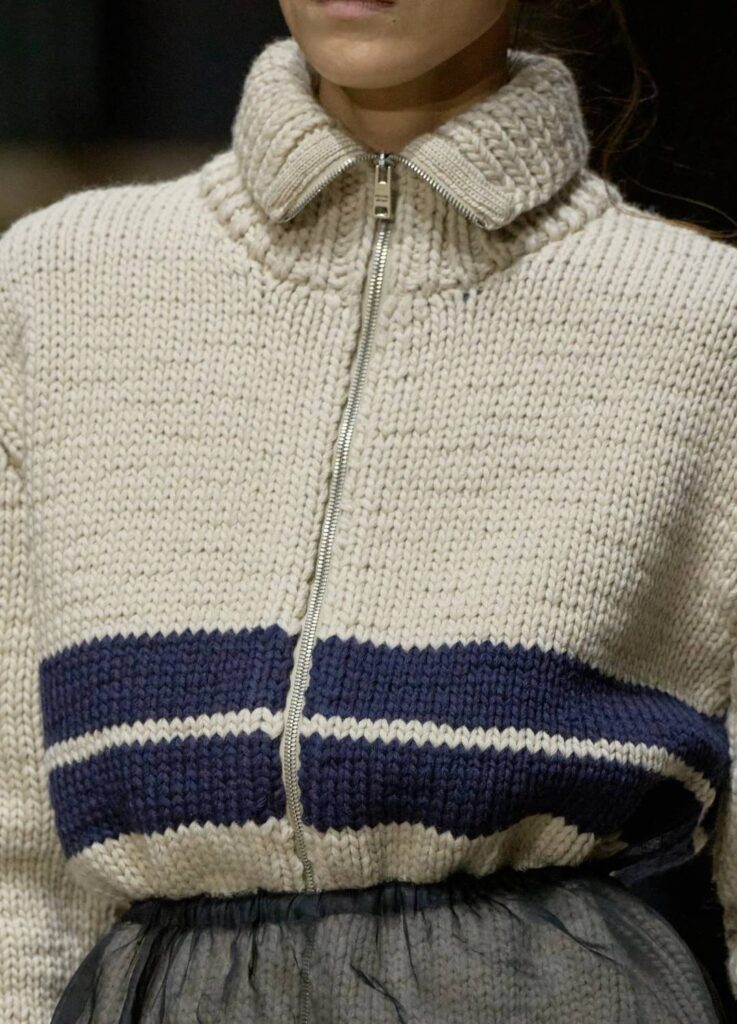
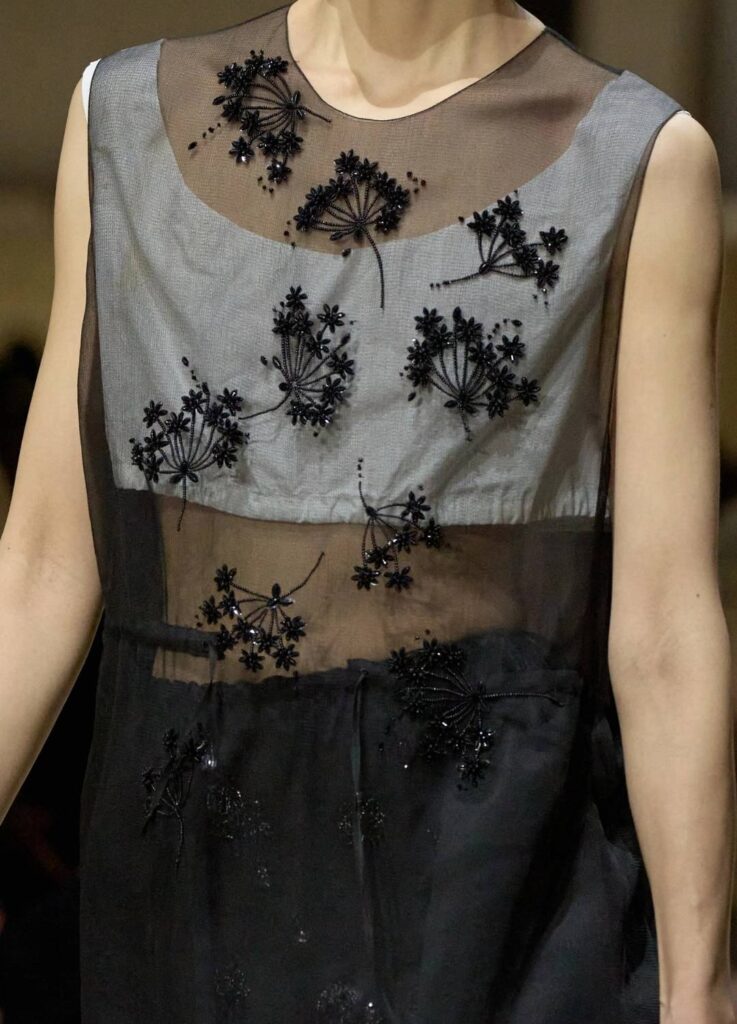
Chunky zip-up knits are layered over sheer shift dresses, which in turn reveal slip understructures. As garments are removed during repeated appearances, the internal architecture becomes visible. The silhouette is not fixed; it evolves.
Skirt-Dominant Proportions
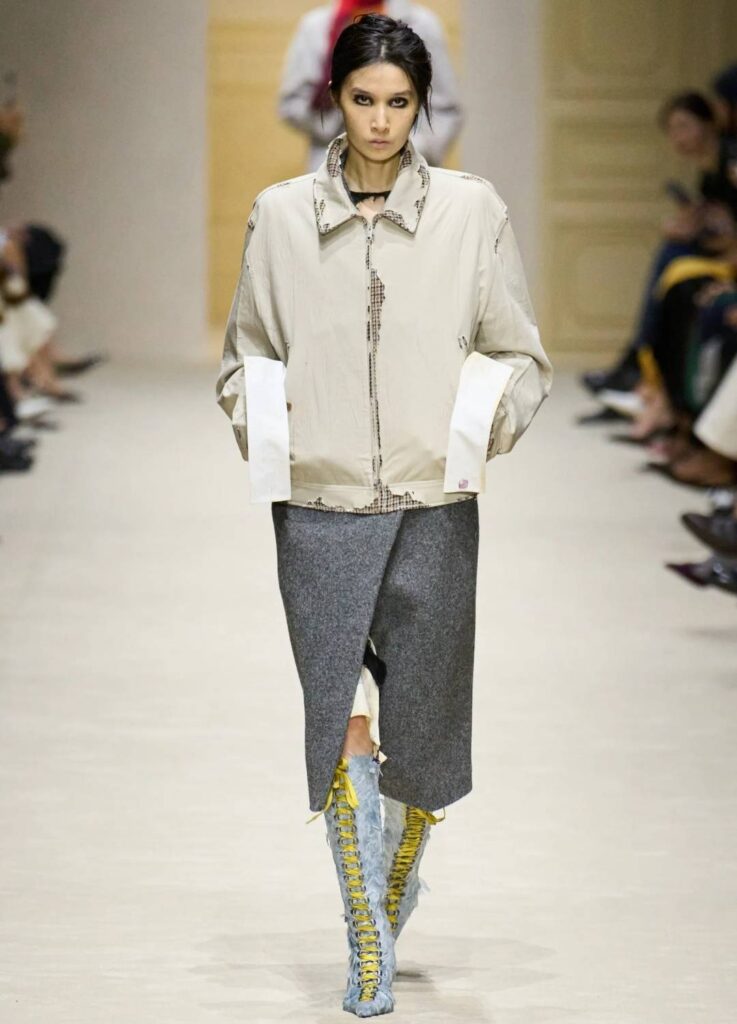
Knee-to-mid-calf length skirts appear more frequently than trousers. Rather than dramatic A-lines or classic X-shapes, Prada presents a restrained vertical fall. The result is balance without emphasis.
Compared to Spring/Summer 2026—which leaned more sharply into structural experimentation—Fall 2026 feels softened. The focus shifts from form innovation to the act of dressing itself.
Materials: The Aesthetic of the Already Worn
One of the collection’s most notable features is surface treatment.
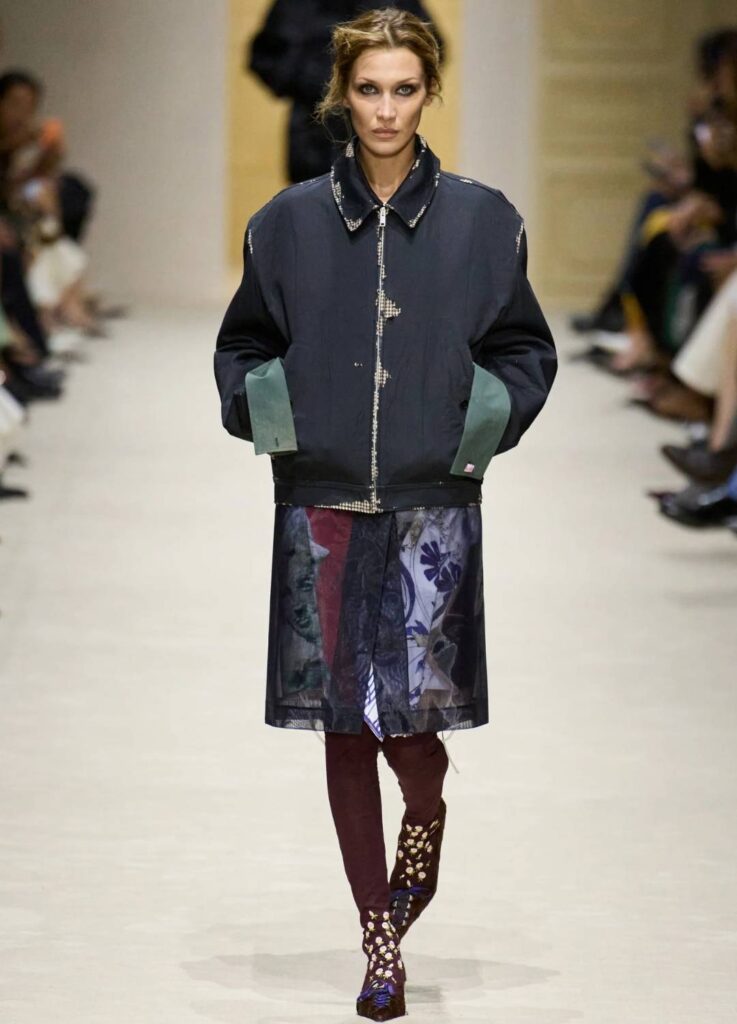
- Frayed hems
- Slightly stained cuffs
- Waxed jackets with subtle abrasion
- Gently scuffed Oxford shoes
These are not nostalgic vintage gestures. They suggest garments that have lived before arriving on the runway.
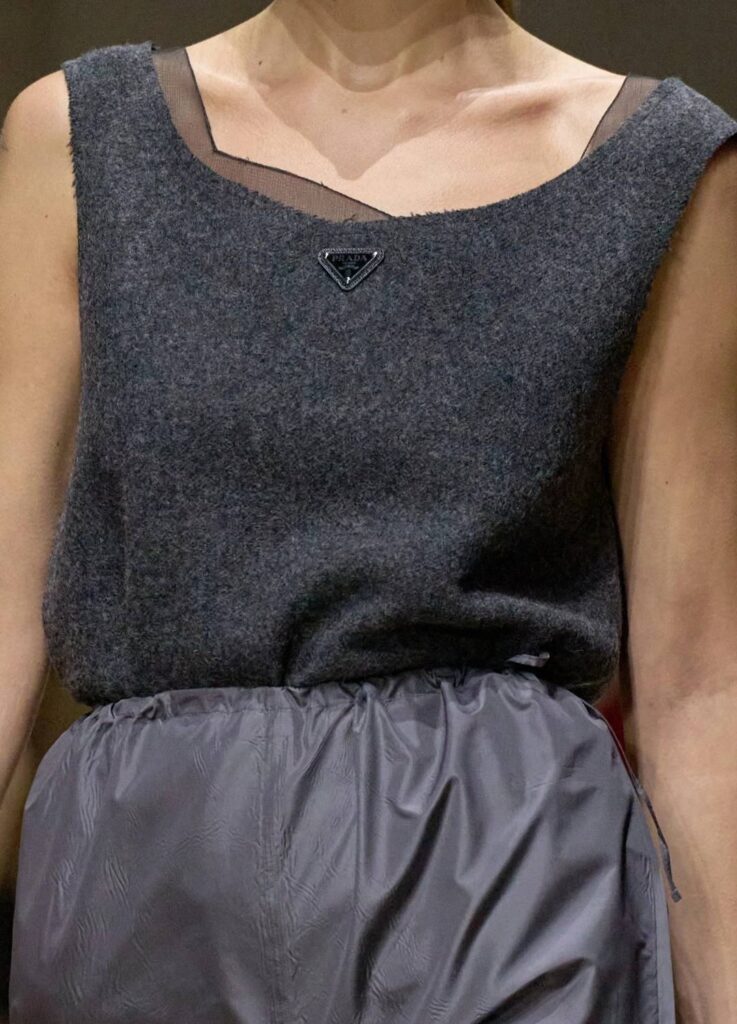
In a luxury market increasingly shaped by resale platforms and archival collecting, perfection is no longer the sole indicator of value. Prada responds by incorporating visible time into its textiles.
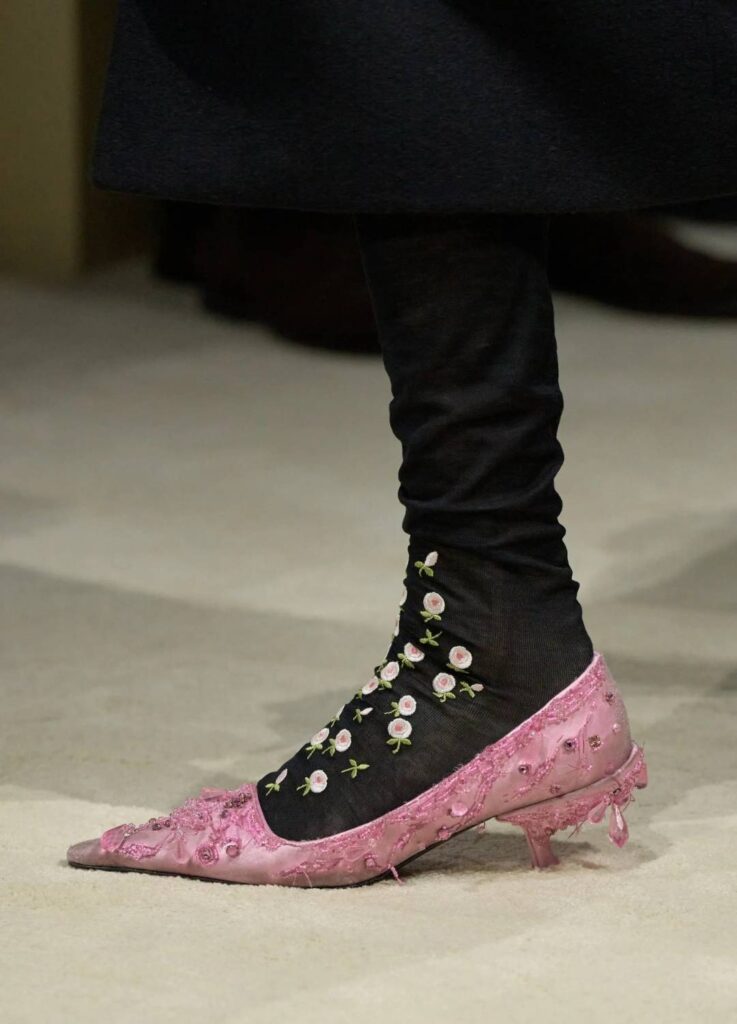
Archive references are present—floral motifs, pink satin, embroidered hosiery—but they are not reproduced intact. They are repositioned within new contexts. This is not replication. It is reinterpretation.
Color Direction: Neutrals with Controlled Disruption
The dominant palette remains grounded in black, brown, navy, and charcoal grey. Yet throughout the show, moments of interruption appear:
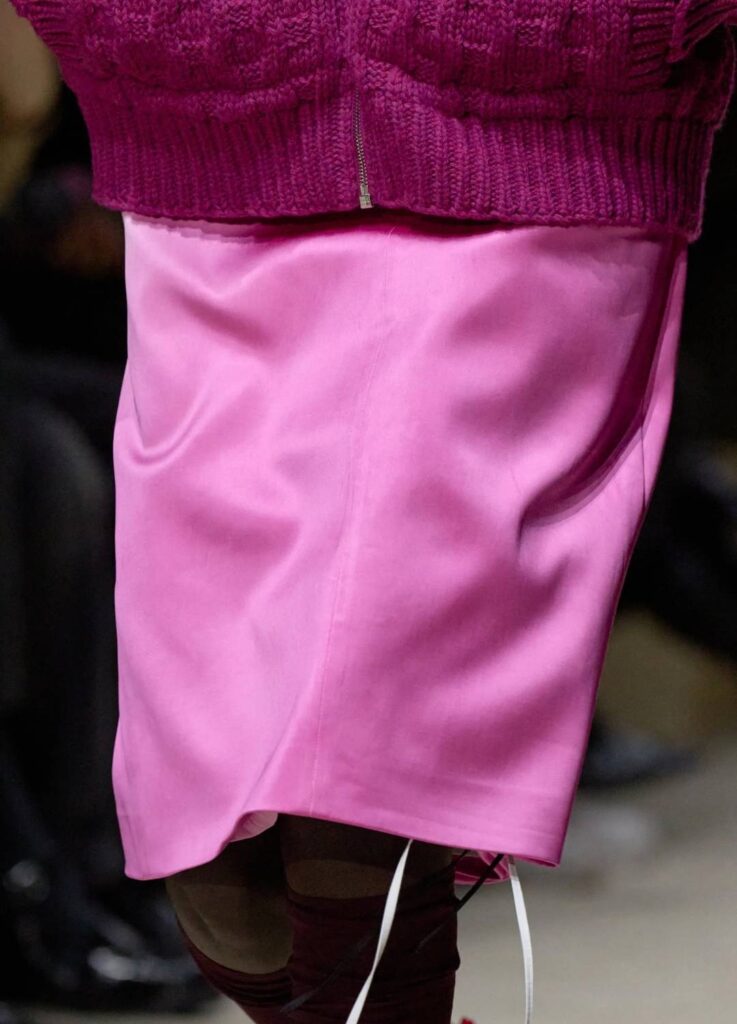
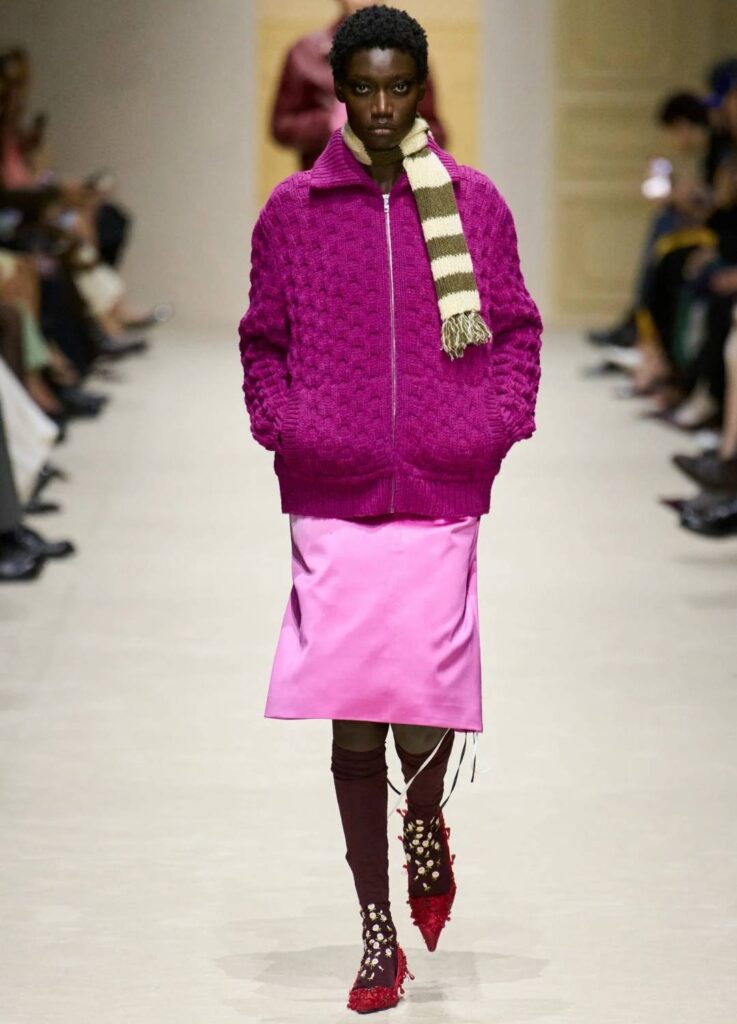
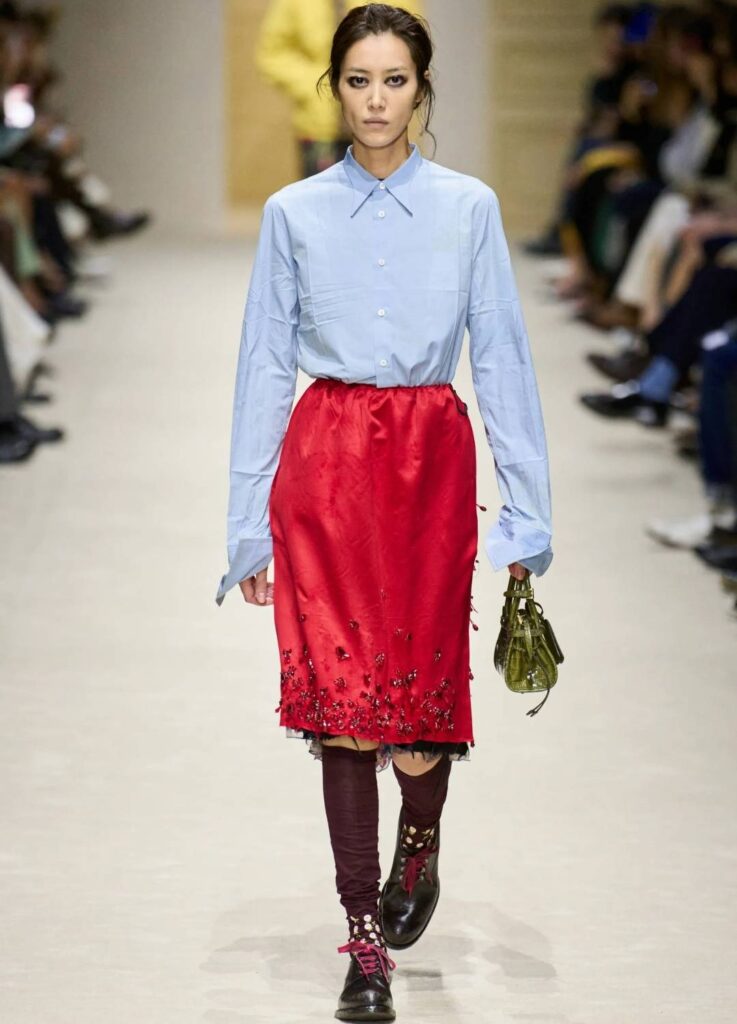
- A pink satin skirt
- Fluorescent yellow boots
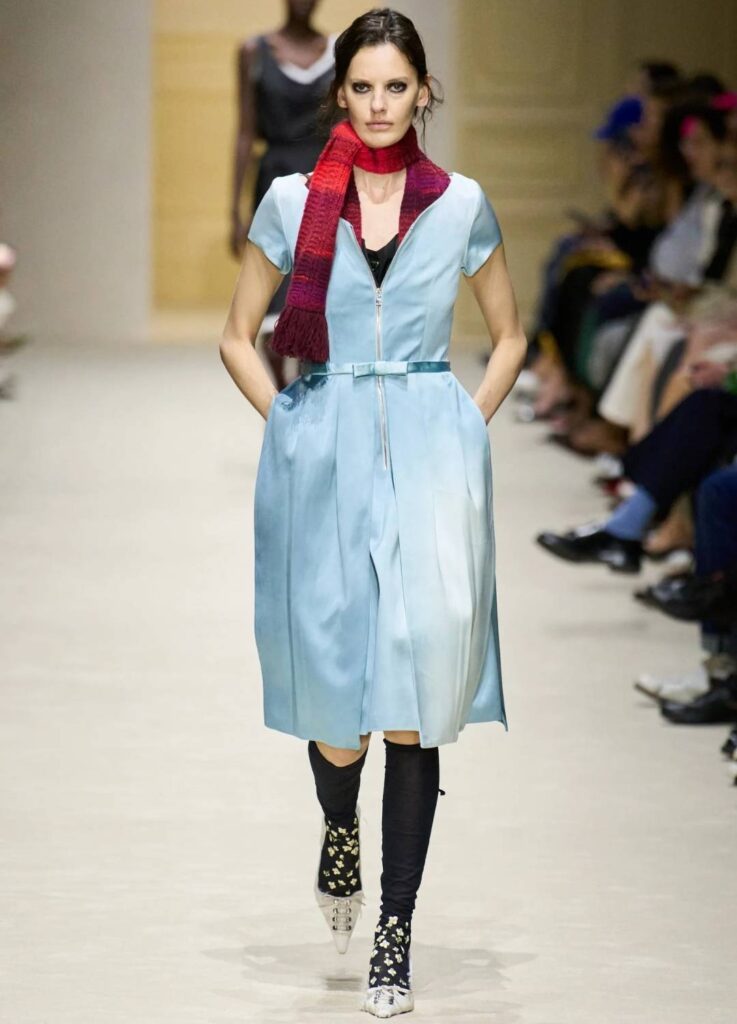
- A red scarf accent
- Floral print dresses
These colors do not dominate the collection. They function as variables within a larger system. Color here is not symbolic. It is strategic.
Season Theme: Wardrobe Possibility
Rather than constructing a narrative, Prada proposes a mindset.
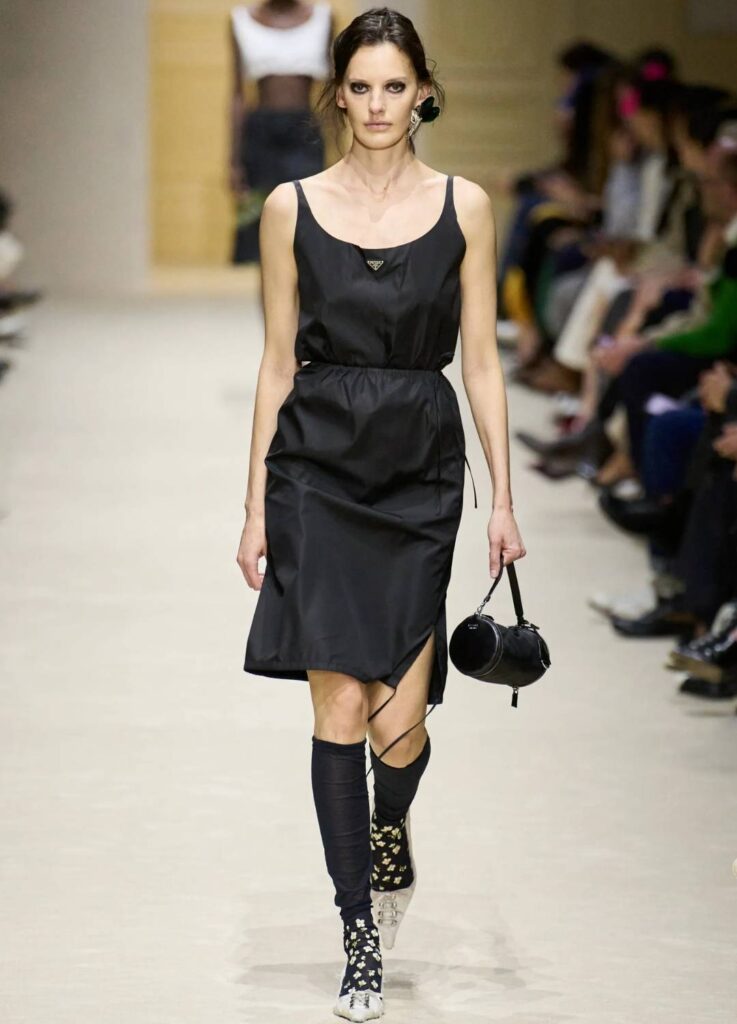
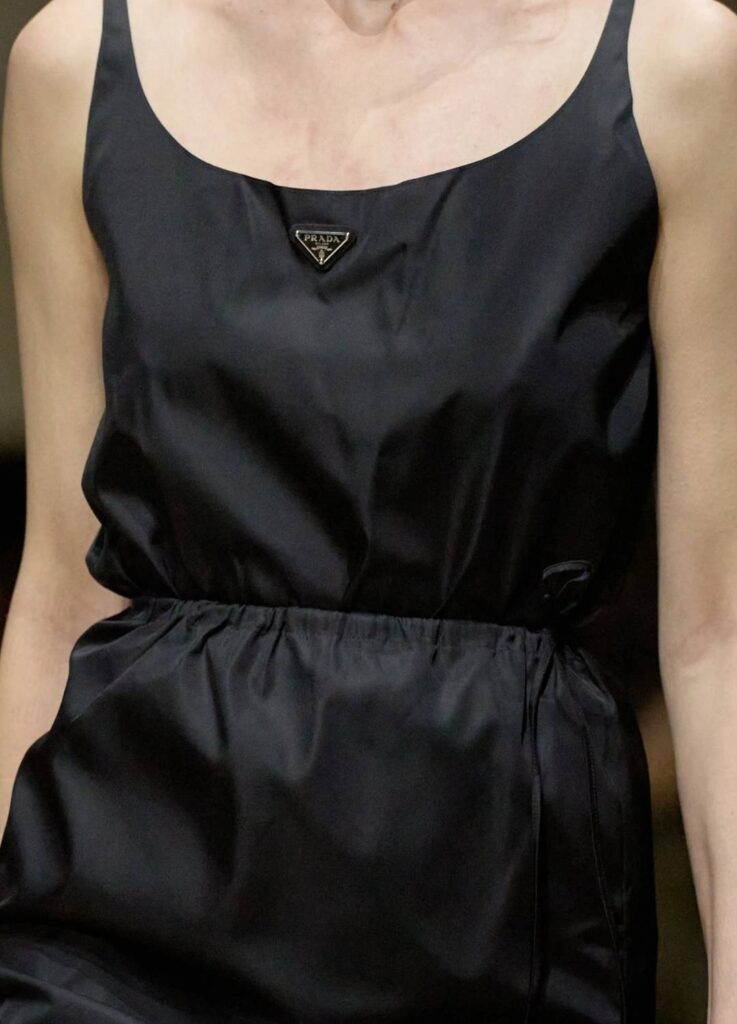
A shirt tucked beneath a slip dress.
Embroidery concealed inside a conventional jacket.
These gestures are not styling tricks; they are provocations. The question “Why not?” replaces seasonal instruction.
Prada does not offer answers. It leaves space.
Bella Hadid’s Return: A Structural Role, Not a Headline Moment
Bella Hadid’s reappearance on the Prada runway drew immediate attention. Having stepped back from regular runway work in recent seasons, her return was widely discussed within the industry.
Yet within the architecture of the show, her role was not symbolic glamour. She was integrated into the repetition structure—appearing multiple times as layers were removed and recomposed.
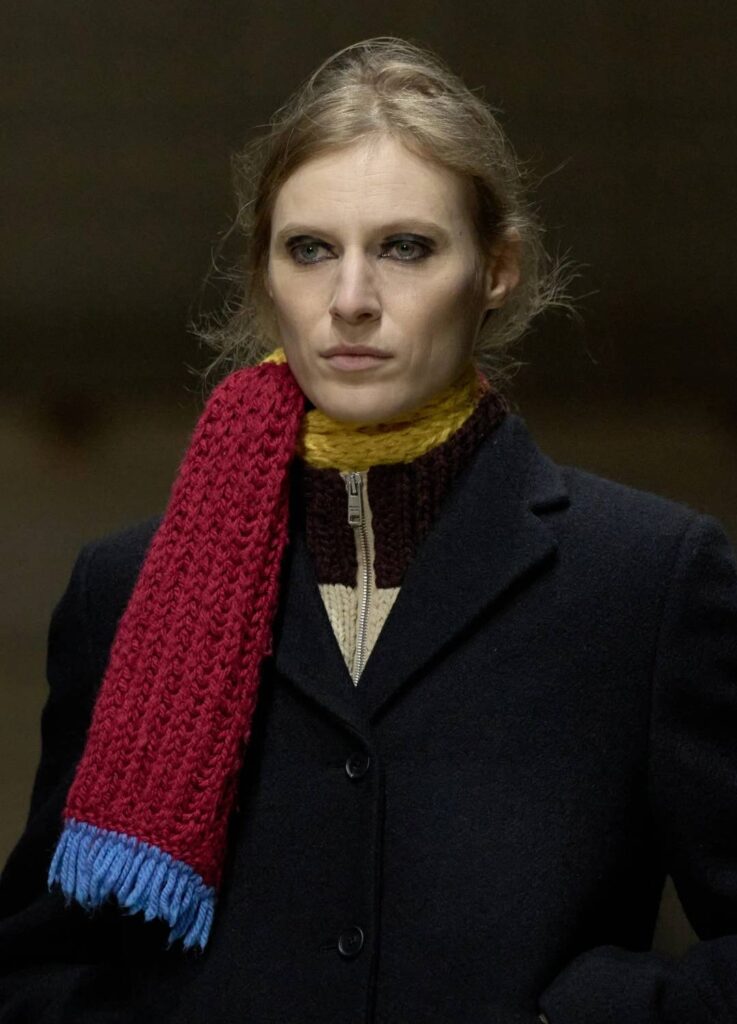
Initially entering in a long coat and knit scarf, she later revealed internal dress constructions in subsequent turns. The repetition reinforced two ideas central to the collection:
- A look is never final.
- Identity is not static—even for a supermodel.
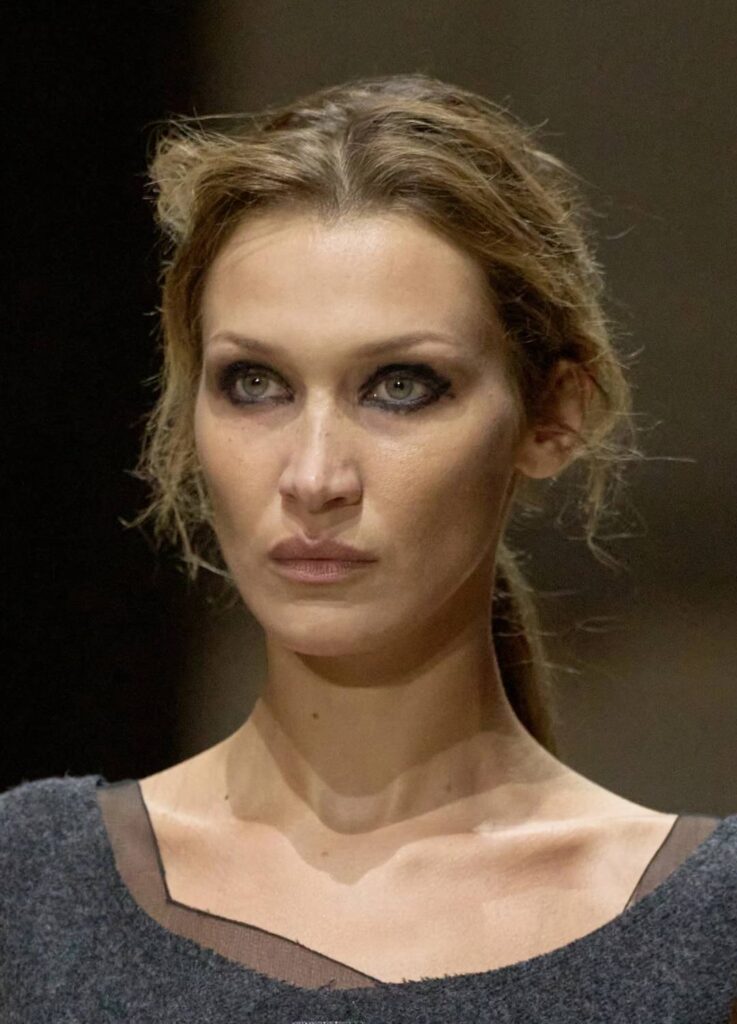
Hadid has historically embodied a certain Prada femininity: controlled, intellectual, structurally composed. Her return aligns with the collection’s broader interest in fluid identity.
Strategically, her casting also holds media significance. Bella Hadid remains a globally recognized figure with measurable digital impact. Prada’s decision was both aesthetic and calculated—a convergence of narrative structure and contemporary visibility.
Five Key Looks
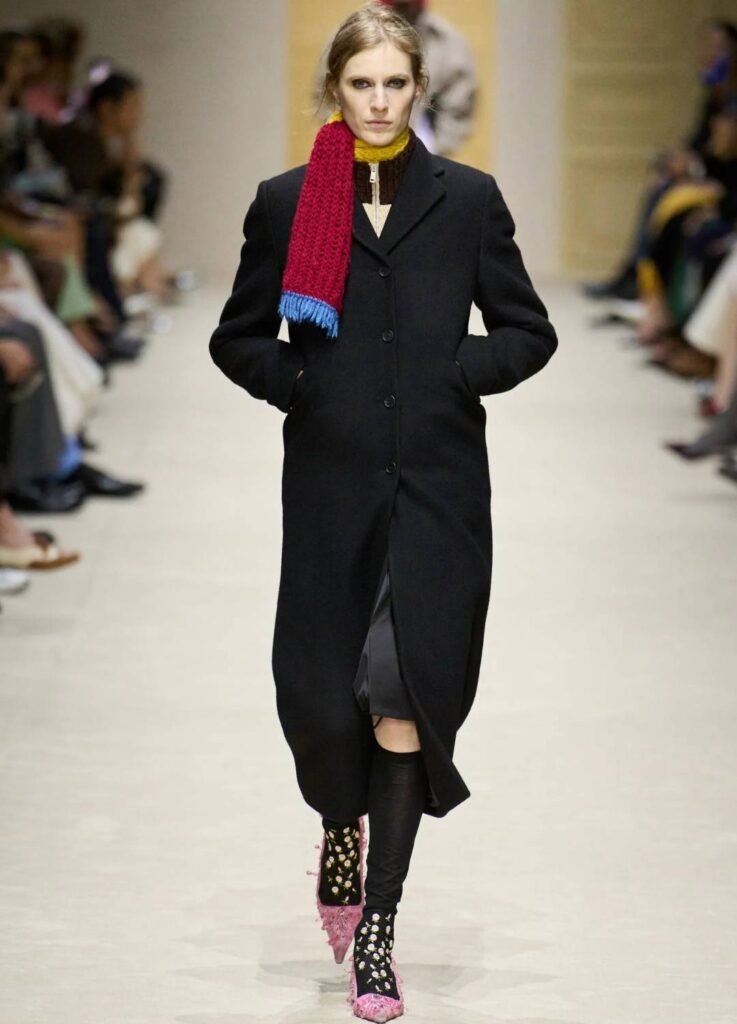
Look 1: Black Wool Coat with Hand-Knit Scarf
A floor-length black coat with minimal shoulder emphasis and no waist definition opens the show. The addition of a thick knit scarf introduces texture contrast. The look establishes the theme: precision layered with lived softness.
Look 2: Zip Knit Over Sheer Dress
The knit initially obscures a transparent shift dress beneath. As the outer layer disappears in subsequent appearances, the structural underpinnings become visible. This progression embodies layering as process.
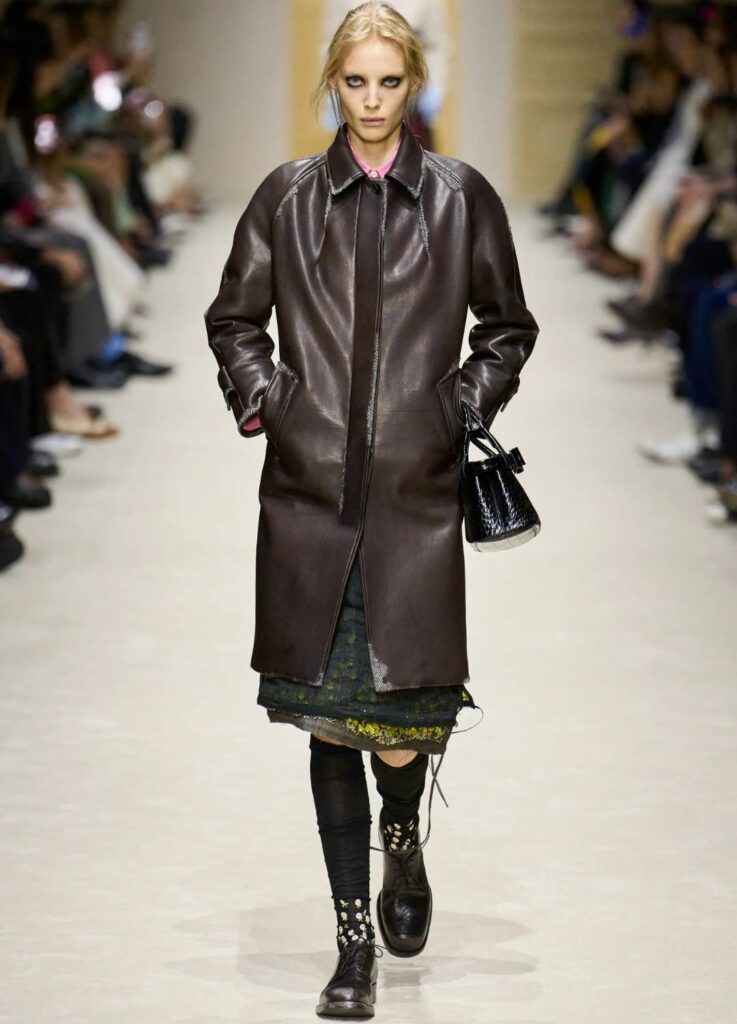
Look 3: Brown Leather Coat
A matte-finish leather coat falling below the knee. Minimal hardware, straight silhouette. Compared to the sharper tailoring of the previous season, this piece reads as grounded and wearable.
Look 4: Pink Satin Skirt with Top
A luminous pink satin skirt paired with a subdued knit. The tension between bold color and restrained shape exemplifies Prada’s controlled disruption.
Look 5: Floral Archive Dress with Hosiery
A knee-length floral dress referencing archival motifs, styled with embroidered socks and loafers. The silhouette is simplified, preventing nostalgia from overwhelming structure.
Who It Works For
The absence of strong waist definition favors:
- Straight or lightly defined torso shapes
- Narrow or balanced shoulders
- Structured bone lines rather than pronounced curves
Mid-calf skirt lengths require careful proportion management. They flatter individuals with elongated lower legs or defined ankles. Petite frames may benefit from adjusting hem length for balance.
Industry Reception
Critical response to Prada Fall/Winter 2026 has been measured rather than ecstatic. Reviewers described the show as restrained, disciplined, and realistic. Some noted its relative safety; others praised its refusal of spectacle.
If Spring/Summer 2026 emphasized intellectual form, Fall/Winter 2026 centers lived experience. It is less about innovation and more about recalibration.
Conclusion: A Quiet Reordering
Prada Fall/Winter 2026 does not attempt revolution. It performs reordering.
By foregrounding the act of dressing rather than the final image, Miuccia Prada and Raf Simons propose a quieter form of luxury—one grounded in thought rather than proclamation.
In an era that rewards instant visibility, Prada asks a slower question:
What becomes possible when we reconsider what is already in our wardrobe?
The answer remains open. And that openness is precisely the point.
All images referenced in this post are drawn from Vogue Runway.
[ Related Editorials ]