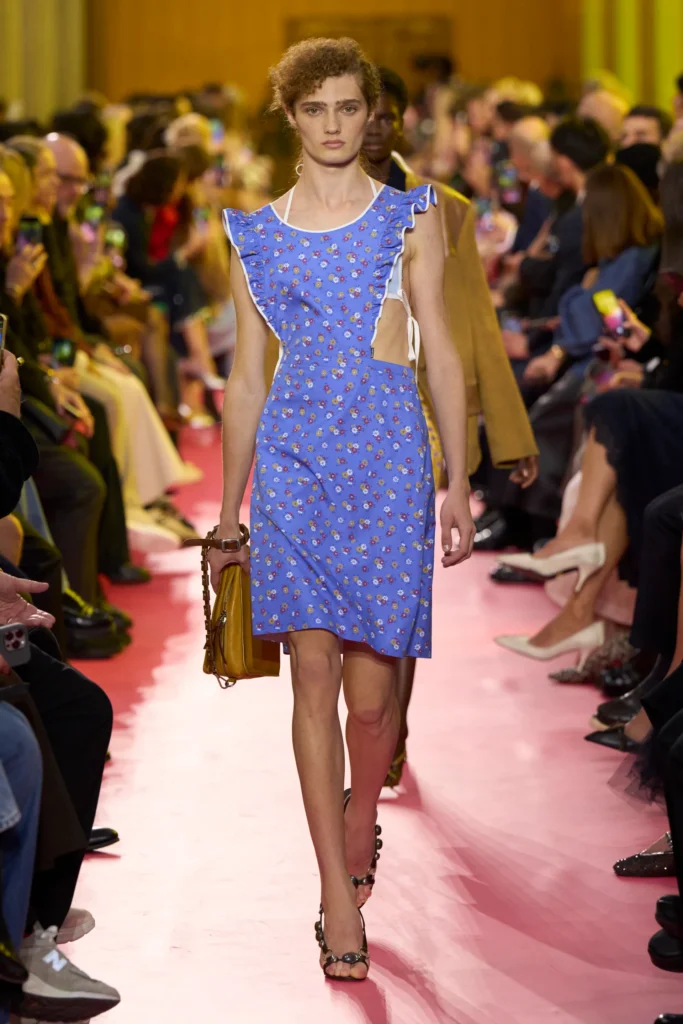
At Paris Fashion Week, Miu Miu staged a quiet return—to reality.
Spring/Summer 2026 did not seek spectacle. Instead, it turned deliberately toward the forms we encounter every day: aprons, cotton dresses, shirts, canvas, leather worn close to the body. What once signified labor and care was reframed as protection; what was practical became emotional language.
This collection asked a restrained but pointed question:
What if fashion no longer escaped reality, but chose to stay with it?
A Shift in Focus: From Fantasy to Function
Under Miuccia Prada, Miu Miu has long explored girlhood, nostalgia, and intellectual play. This season, those references receded. In their place emerged time, work, and touch.
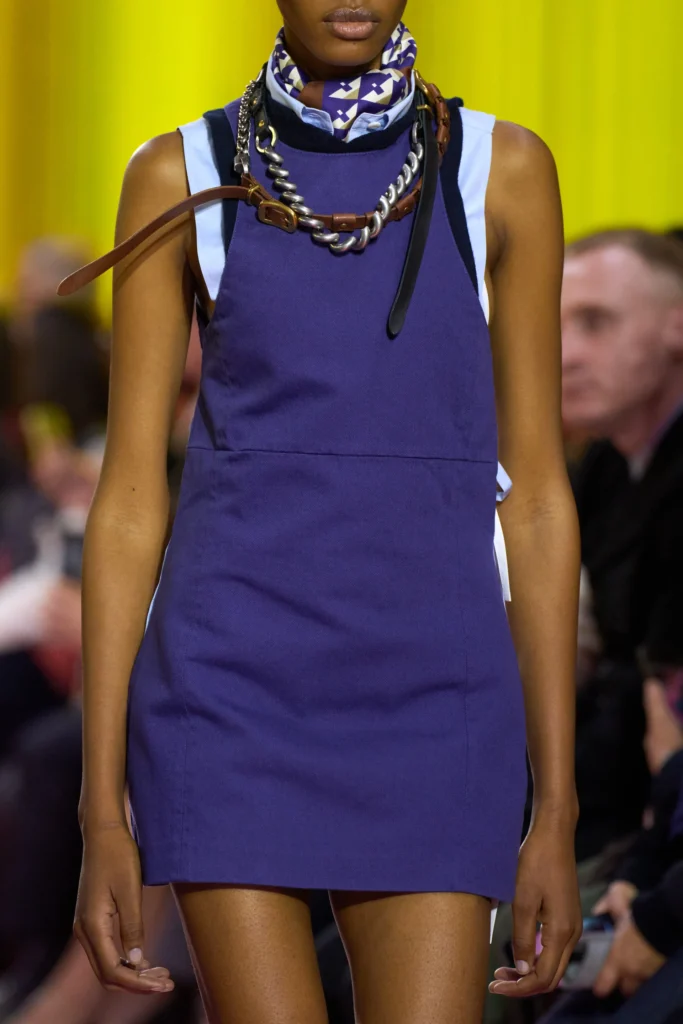
The opening look—a navy apron-style dress layered over a silk shirt and scarf—set the tone immediately. The schoolgirl codes of previous seasons were almost entirely absent. What remained was weight: the weight of routine, of repetition, of lived-in structure.
Yet this weight never turned heavy-handed.
The designs retained humor, softness, and quiet wit.
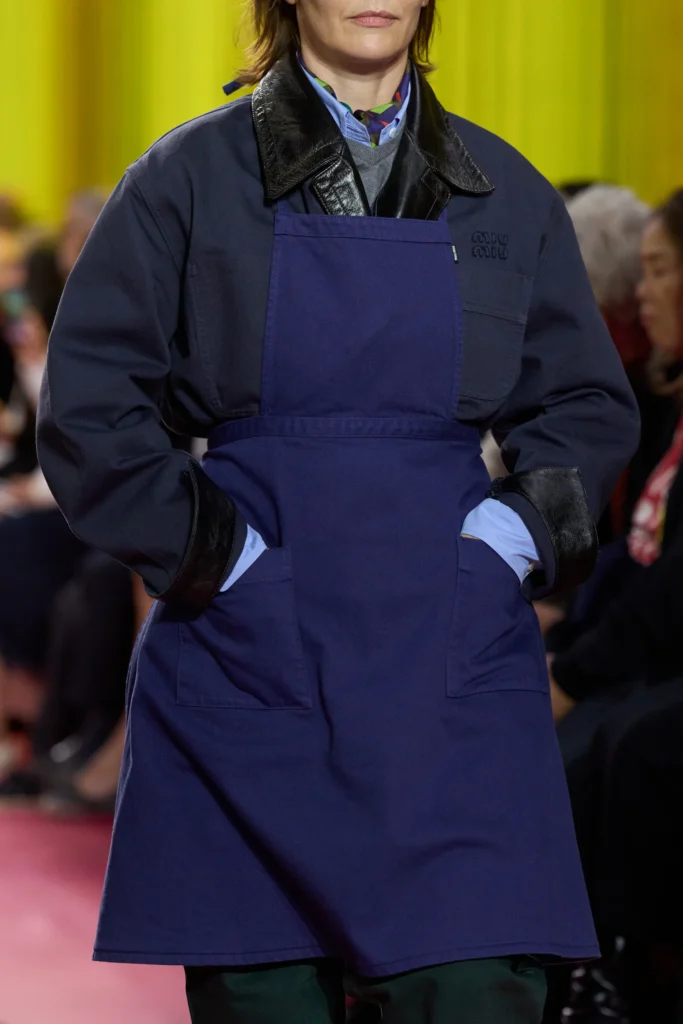
Apron dresses featured functional pockets precisely angled and proportioned, while canvas surfaces were interrupted by jewelry-like embellishments. Reality and ornament coexisted within the same sentence.
Material and Structure: Protection Without Armor
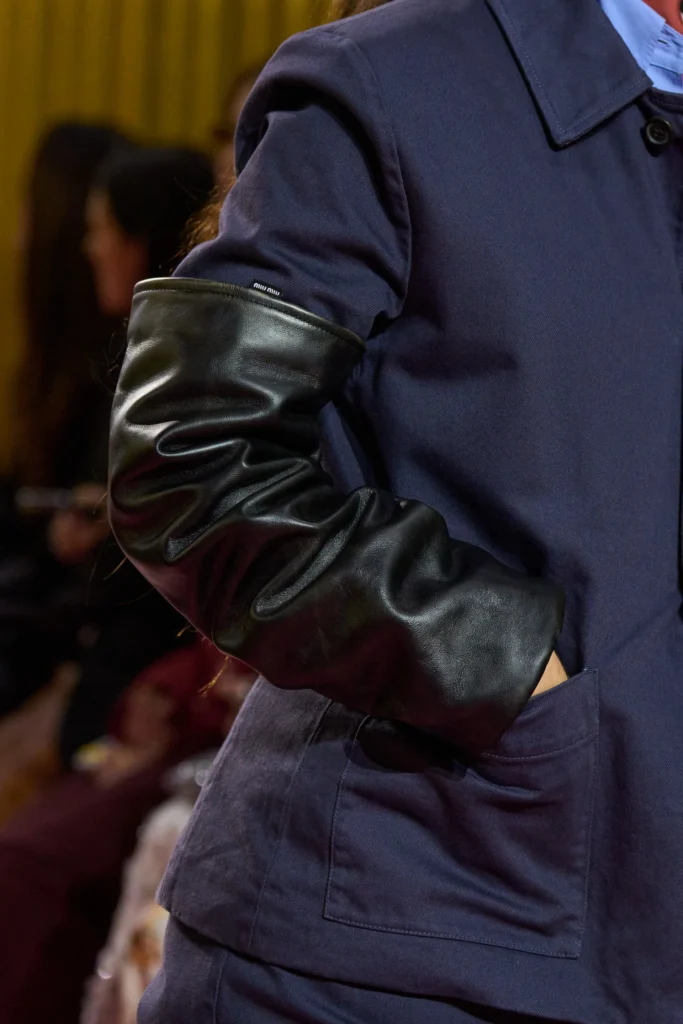
The collection’s material vocabulary was intentionally limited: cotton, canvas, polished leather.
Surfaces appeared industrial, even utilitarian, but construction remained precise.
Lowered shoulder lines created a sense of shelter rather than display. Straight cuts avoided emphasizing the waist, presenting garments less as decoration for the body and more as tools that accompany it.
As several editors noted, including commentators at Vogue, this was Miu Miu at its most tactile—clothes that ask to be touched rather than admired from a distance.
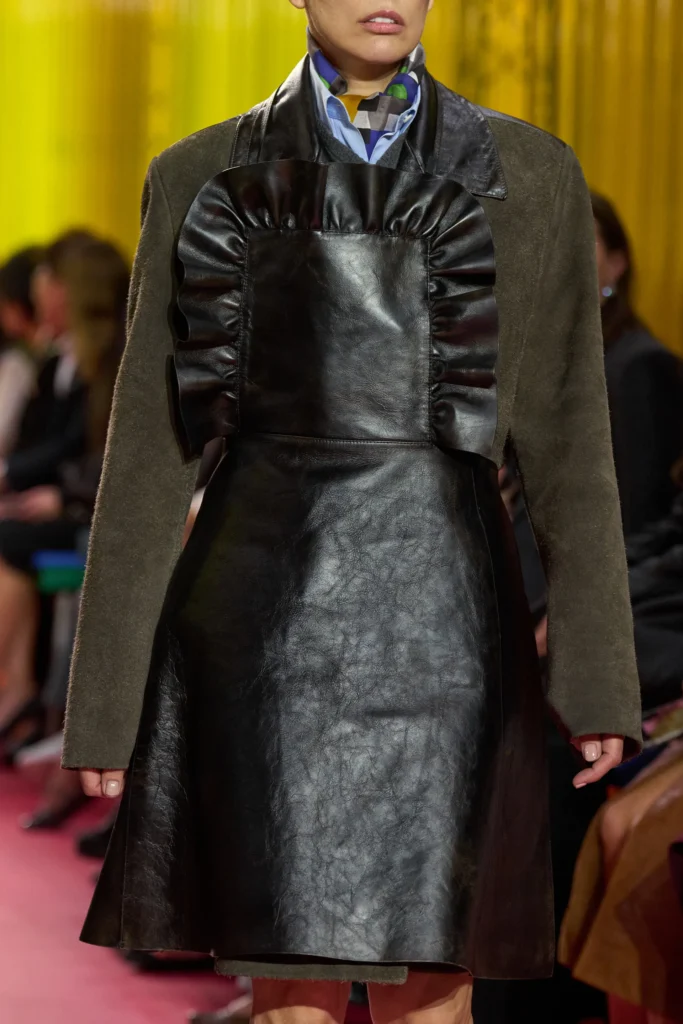
True to form, contradiction followed.
Beneath rigid canvas, silhouettes softened. Lace trims appeared unexpectedly atop leather. The coexistence of hardness and tenderness defined the season’s emotional register.
Fashion, here, functioned as a dual language.
Color and Rhythm: Order Within Noise
The palette was unmistakable: brown, navy, mustard, orange, blue.
Urban dust, kitchen light, and spring air seemed to coexist within the same chromatic system.
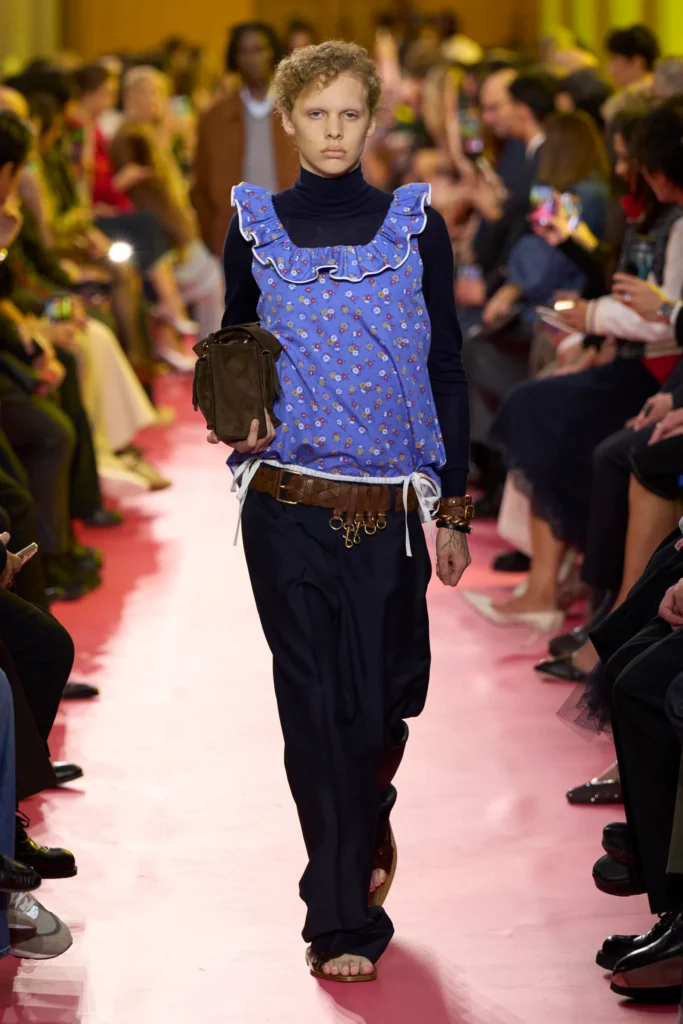
Despite strong contrasts, the collection remained composed. The reason lay in Miu Miu’s rhythmic sequencing.
Blue-and-brown apron looks anchored the opening. Floral mini dresses and knits entered mid-show, altering tempo. Toward the finale, black and white returned, completing the emotional arc—where reality and fantasy quietly converged.
As WWD observed, the show’s pacing was as carefully considered as its silhouettes.
Eight Looks That Defined the Season
Look 1 — Dark Navy Canvas Apron Dress
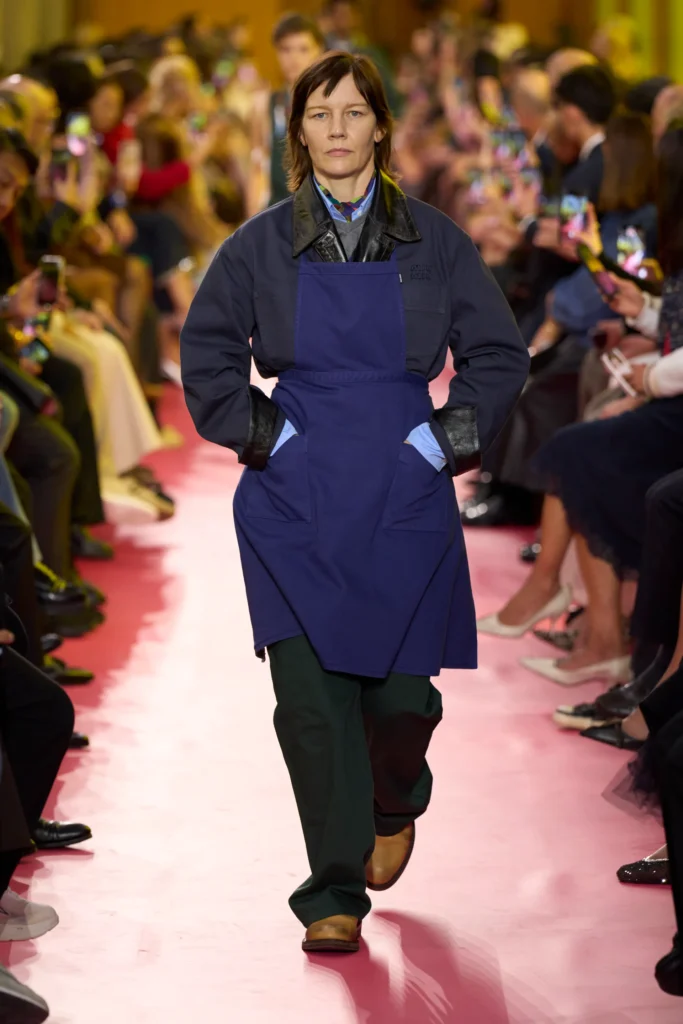
The opening look distilled the collection’s ethos.
An apron-shaped bodice draped the shoulders like armor, yet its texture remained supple. Pocket placement and length were meticulously calculated.
It symbolized working reality without sacrificing refinement.
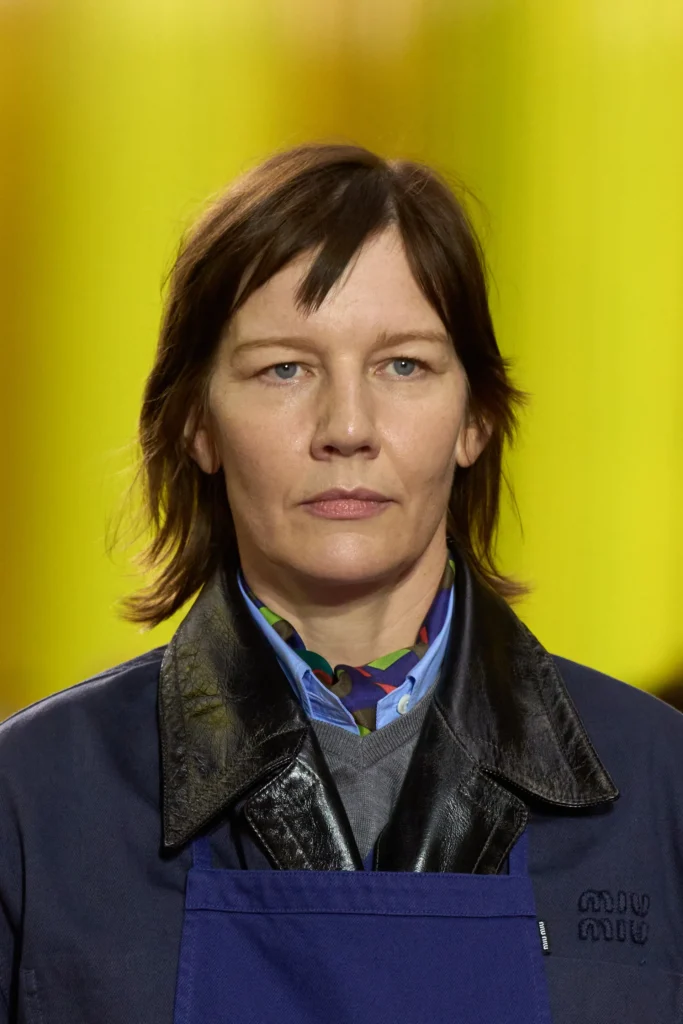
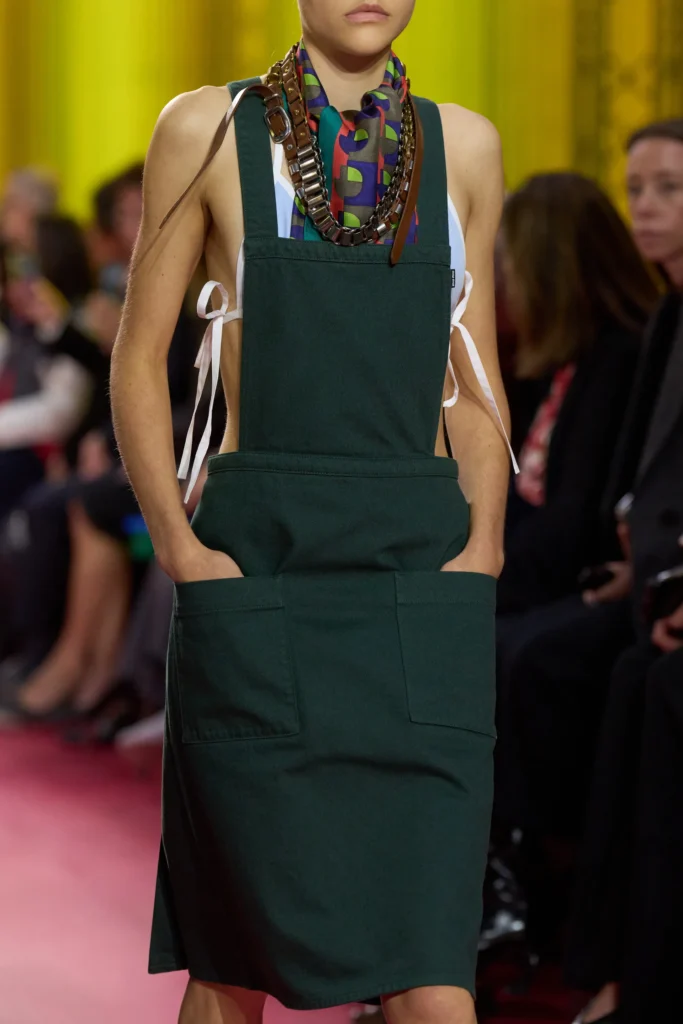
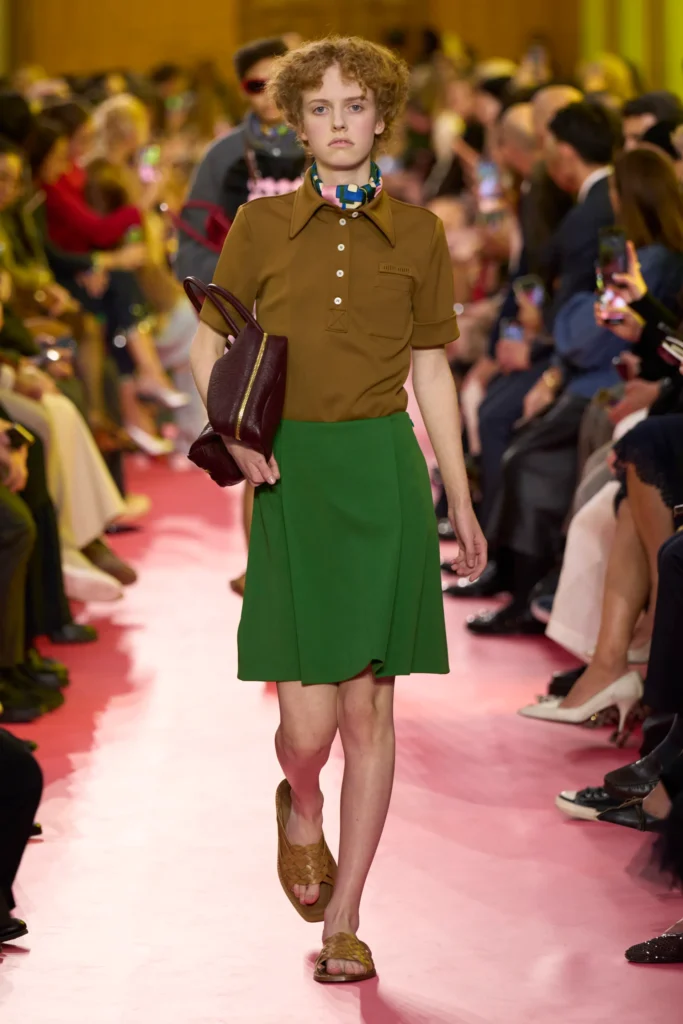
Look 2 — Dark Green Apron Dress with Brown Sandals
This look embodied functional beauty.
The skirt fell straight, the waist unrestrained. Lines flowed rather than controlled, suggesting autonomy within one’s own space. Brown leather sandals grounded the look in daily life.
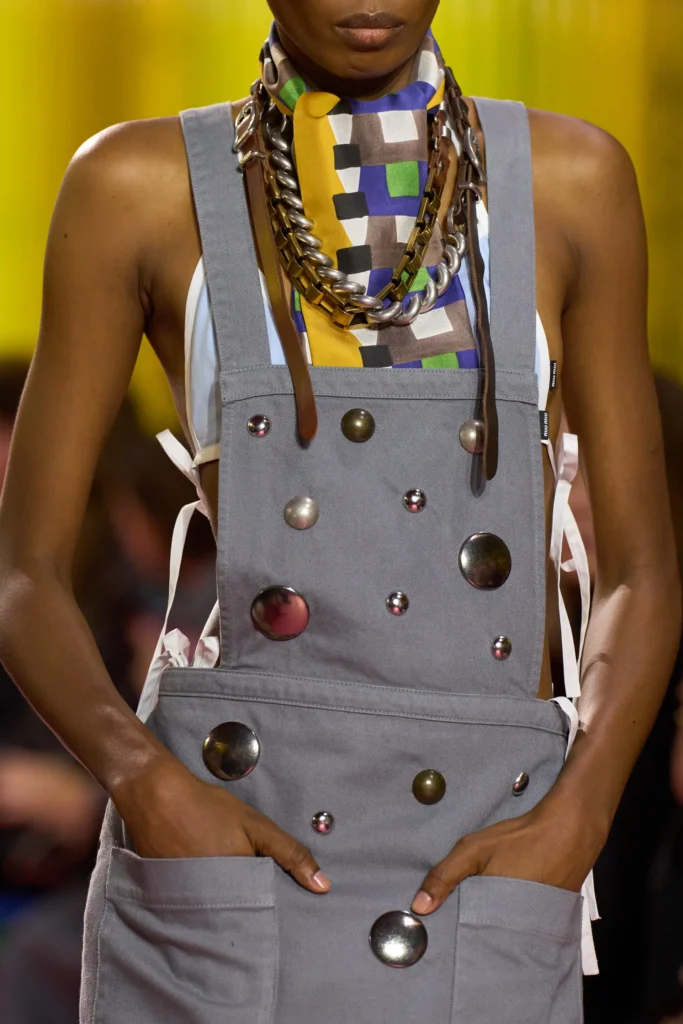
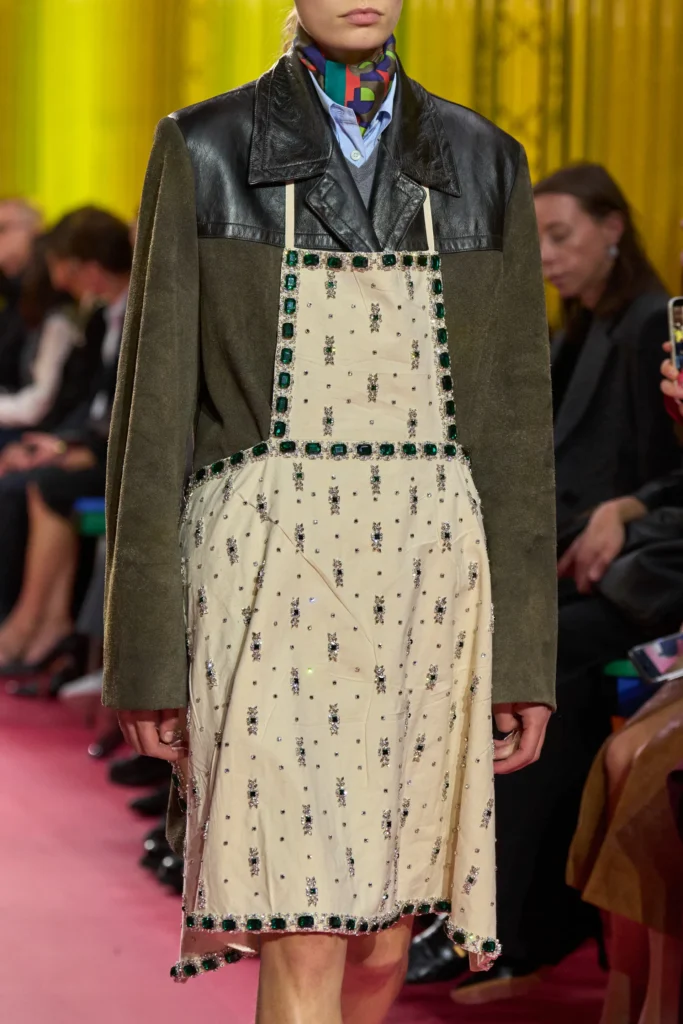
Look 5 — Grey Denim Apron with Jewel Details
Industrial denim adorned with colorful embellishment marked the conceptual high point.
Decoration did not deny function; it elevated it. The apron remained intact, but the meaning of adornment shifted entirely.
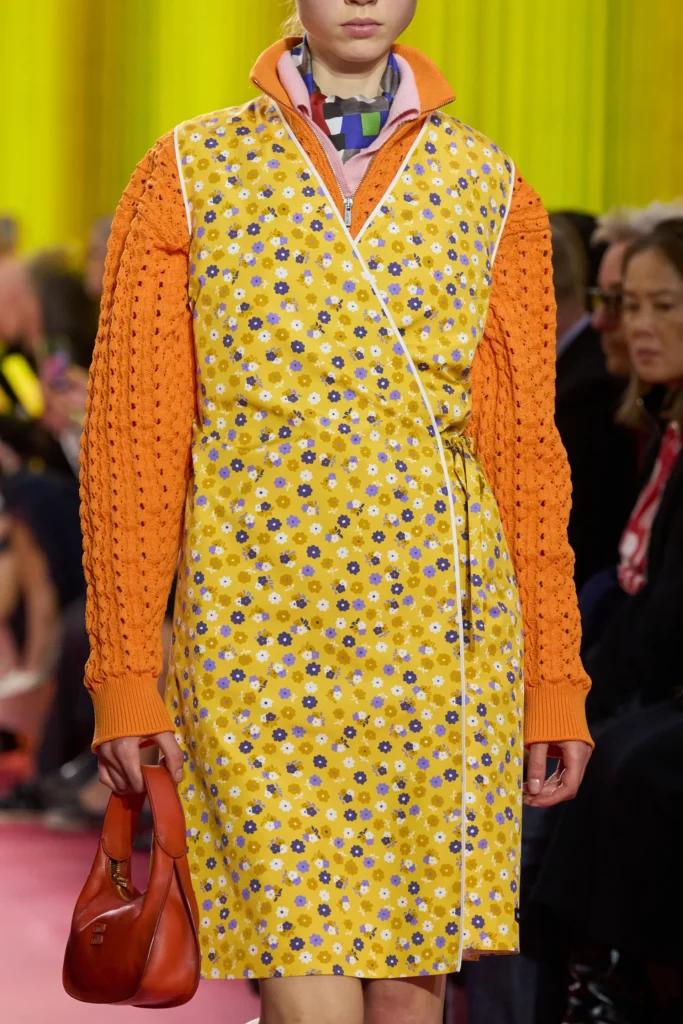
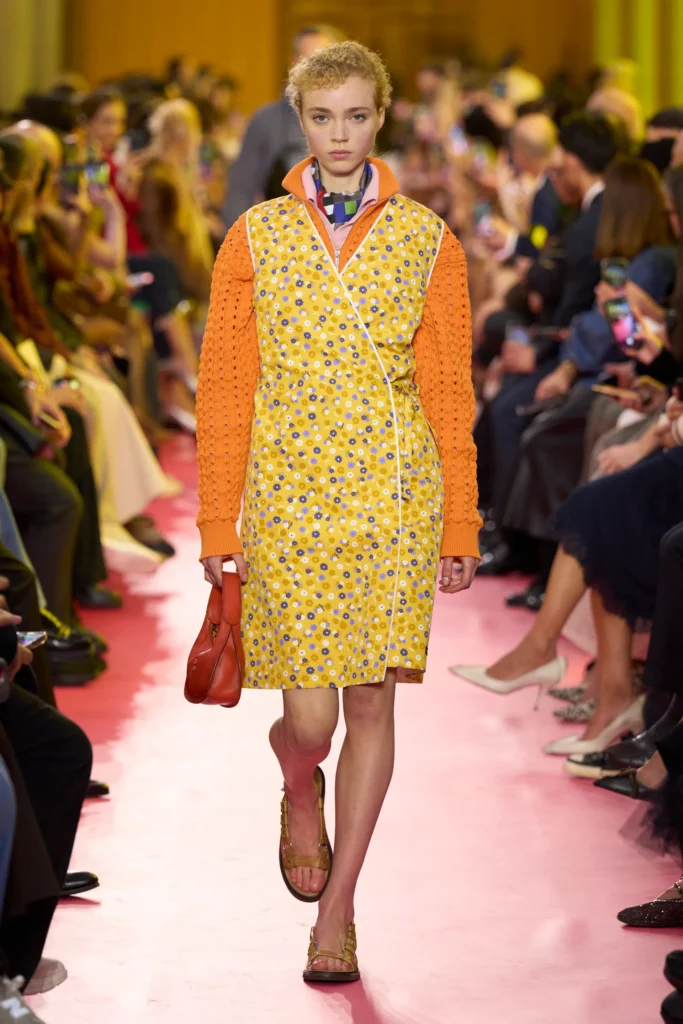
Look 10 — Yellow Dress with Orange Knit Sleeves
Here, the apron structure softened.
Warm yellow leather and knit textures introduced emotional comfort. Labor, reinterpreted, became gentle rather than burdensome.
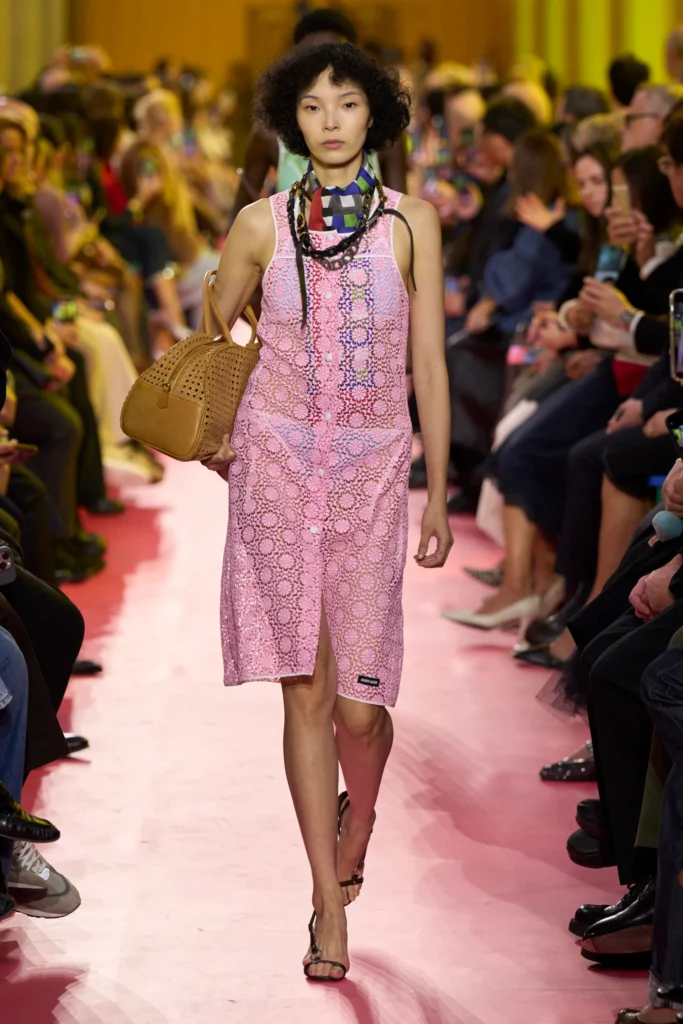
Look 20 — Pink Crochet Dress
Appearing delicate but constructed from firm cotton crochet, this dress avoided overt sensuality.
Its presence lay in restraint, redefining femininity through care rather than display.
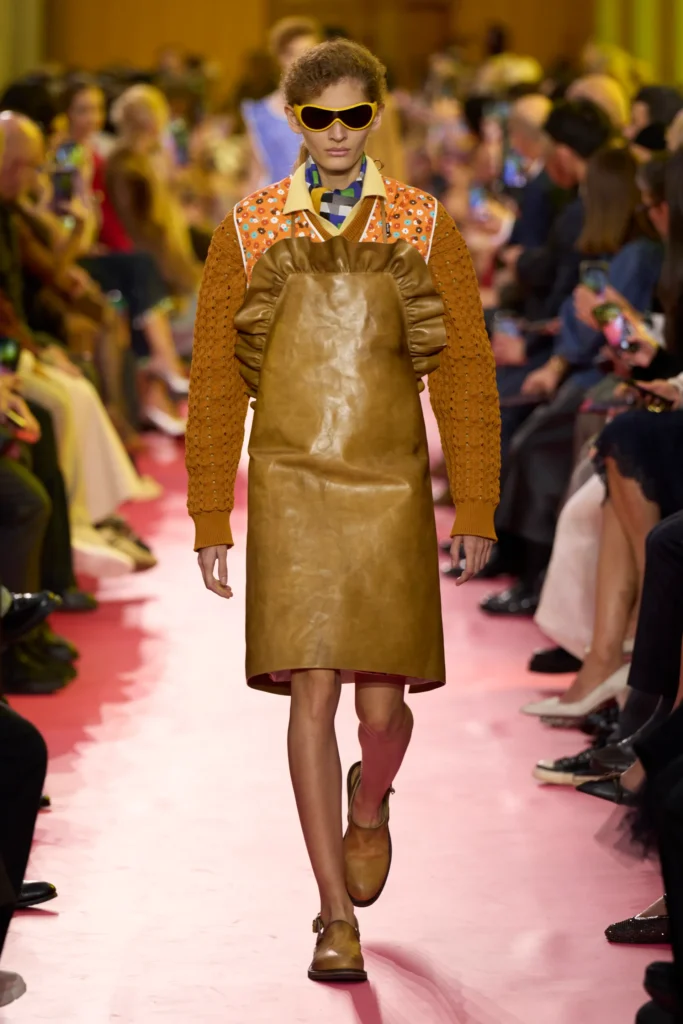
Look 14 — Brown Leather Apron with Orange Knit
One of the season’s signatures.
Evoking an artisan at work, the fit subtly transitioned into dress territory. Leather weight, orange vitality, and generous proportions expressed Miu Miu’s vision of everyday luxury.
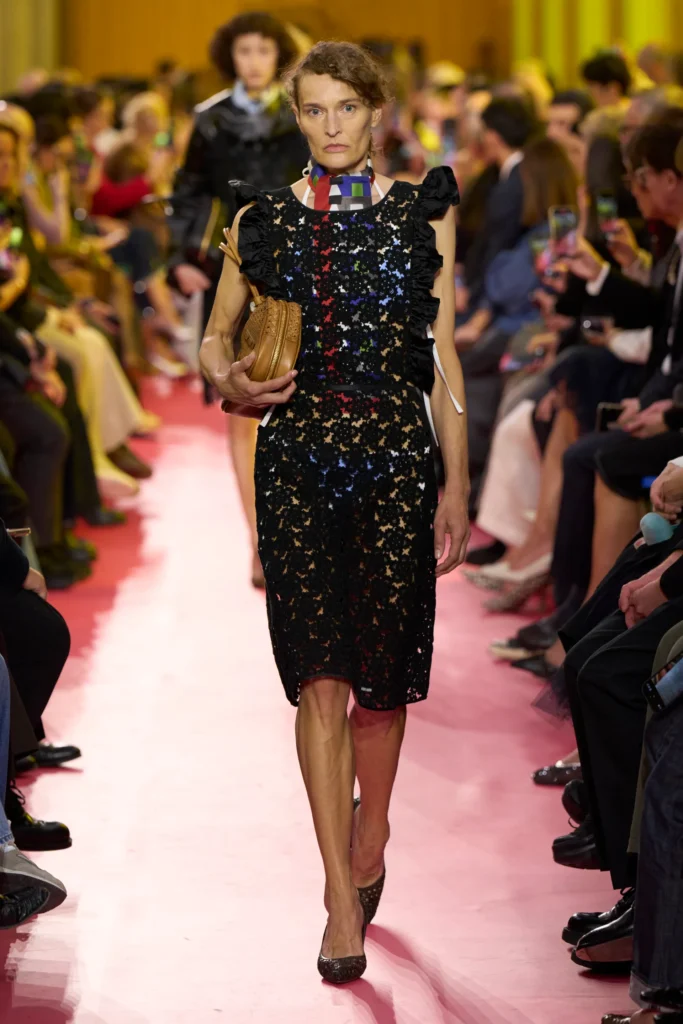
Look 48 — Black Lace Midi with Satin Cap Sleeves
Perhaps the collection’s most emotionally layered look.
Crochet nostalgia met technical satin, blurring the line between girlhood and womanhood. Structure and nonchalance coexisted with rare balance.
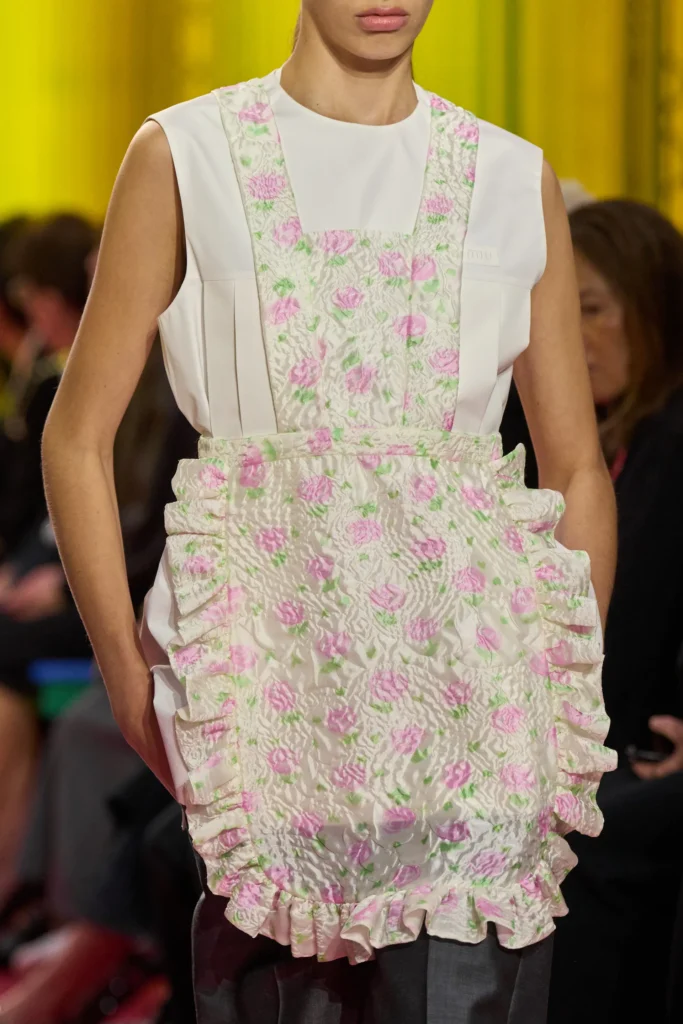
Look 53 — White Apron Top with Grey Trousers
The conclusion.
An apron simplified into a top, paired with relaxed, menswear-inspired trousers. Gender dissolved into practicality. The message arrived quietly, but firmly.
Emotional Reading: Between Protection and Exposure
This season, Miu Miu treated clothing as a protective layer—not armor, but a daily shield.
The apron ceased to signify kitchens or workshops alone. It became a symbol of care: for others, for oneself, for time spent in repetition.
Where fashion often offers escape, Spring/Summer 2026 proposed return.
To fabrics that carry memory. To structures marked by use. To small embellishments that soften routine.
This tension—between reality and refinement—defined the collection’s quiet luxury.
Closing Reflection
Miu Miu Spring/Summer 2026 was, ultimately, a revolution of perspective.
It chose neither seduction nor fantasy, but elegance that breathes alongside real life.
The apron was no longer merely functional. It became a vessel for memory, care, and lived aesthetics.
In this collection, Miu Miu seemed to suggest:
What we wear is inseparable from how we live.
And perhaps that is the most radical proposition fashion can make today.
All images referenced in this post are drawn from Vogue Runway.
[ Related Editorials ]