Inside Dolce & Gabbana Fall/Winter 2026
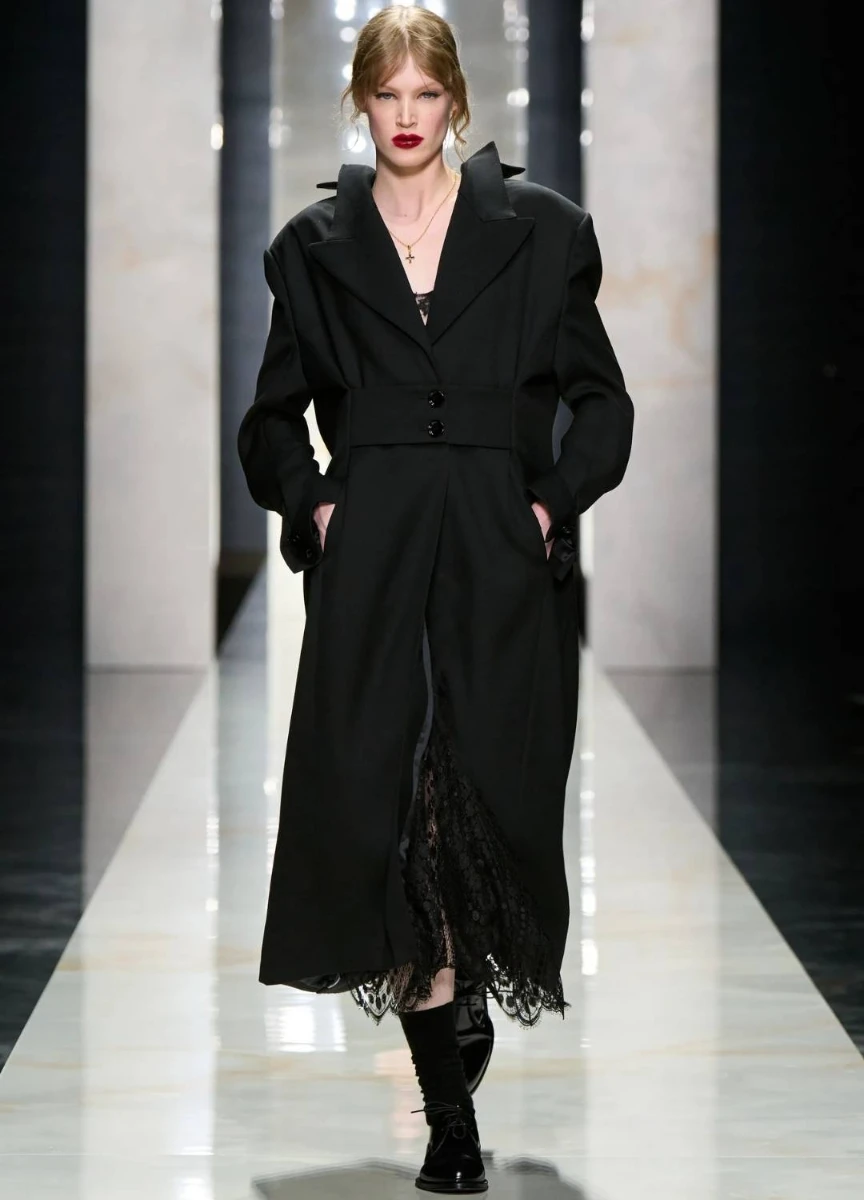
Dolce & Gabbana Fall/Winter 2026 wasn’t framed as a reinvention. It read as consolidation.
Many luxury houses are navigating creative transitions and aesthetic resets this season. Domenico Dolce and Stefano Gabbana presented a collection that reaffirmed long-standing brand codes rather than introducing a radical shift.
source: Vogue Runway
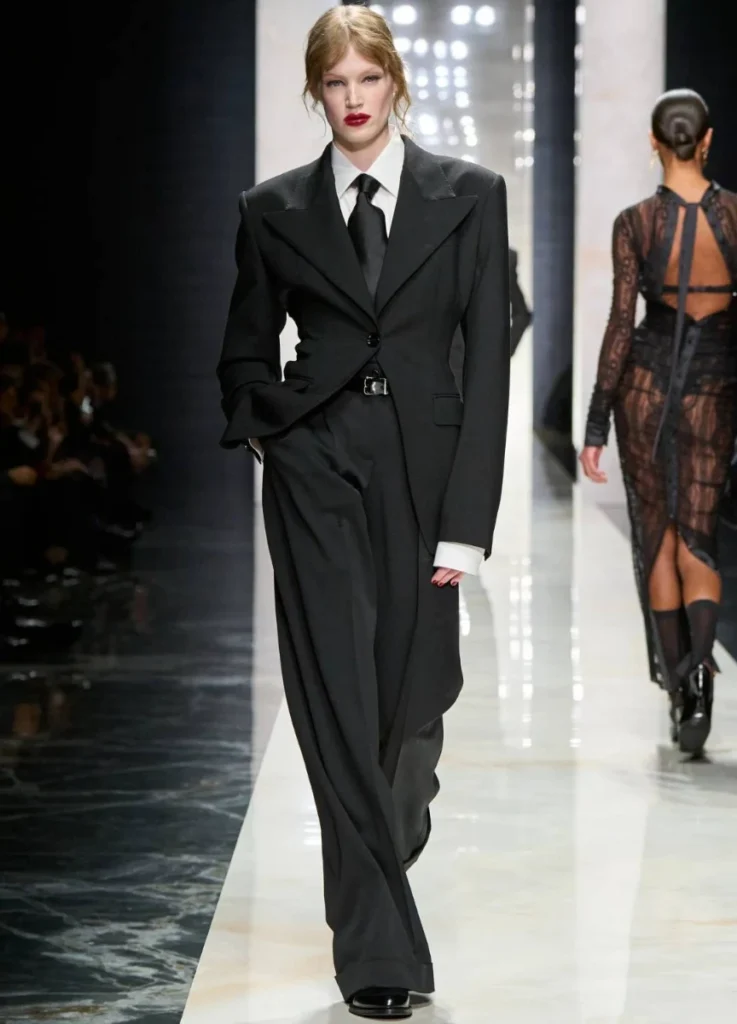
The emphasis fell on black tailoring, structured femininity, and the tension between masculine suiting and sensual layering — elements historically associated with the house.
Instead of positioning itself within contemporary minimalism or overt spectacle, the collection reinforced an existing vocabulary.
This wasn’t a season meant to surprise. It was a season meant to remind.
source: Vogue Runway
Historical Framework | Early Brand Codes
Since its late-1980s rise, Dolce & Gabbana has been associated with:
- Sicilian-inflected femininity
- black-dominant palettes
- lace and corsetry
- masculine tailoring adapted to the female form
source: Vogue Runway
The house has moved through ornamentation and baroque embellishment in other periods. The early 1990s collections frequently emphasized structured jackets, defined waists, and the contrast between tailored exteriors and intimate underlayers.
Fall/Winter 2026 revisits those structural ideas — not as historical reproduction, but as continuity.
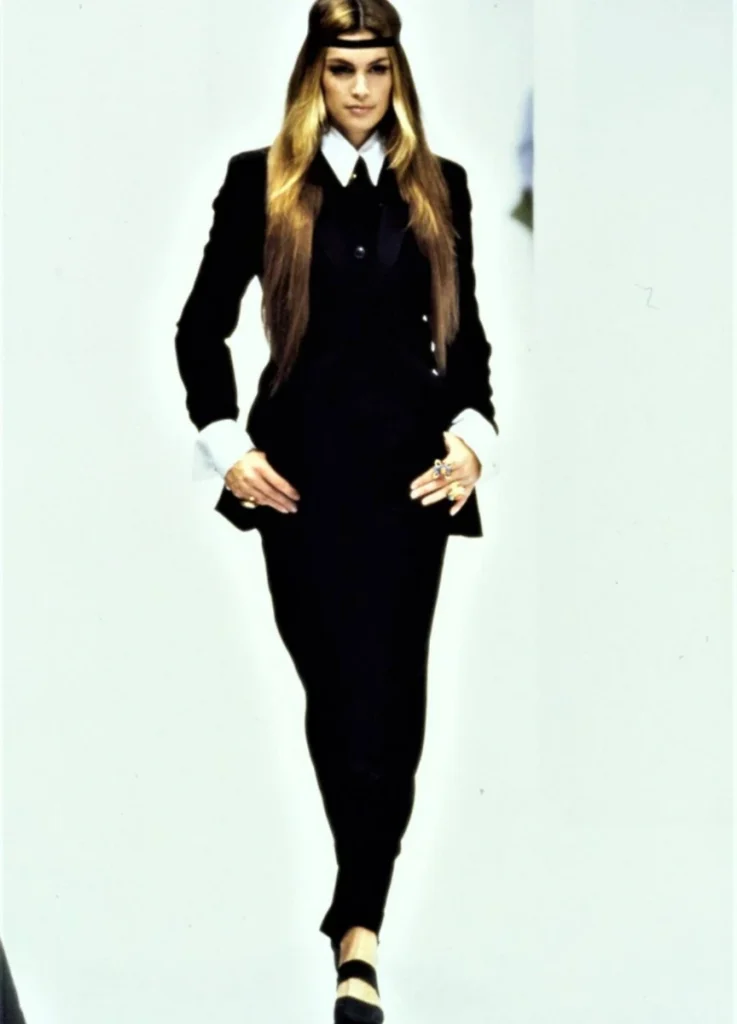
Spring 1993 Collection
source: Vogue Runway
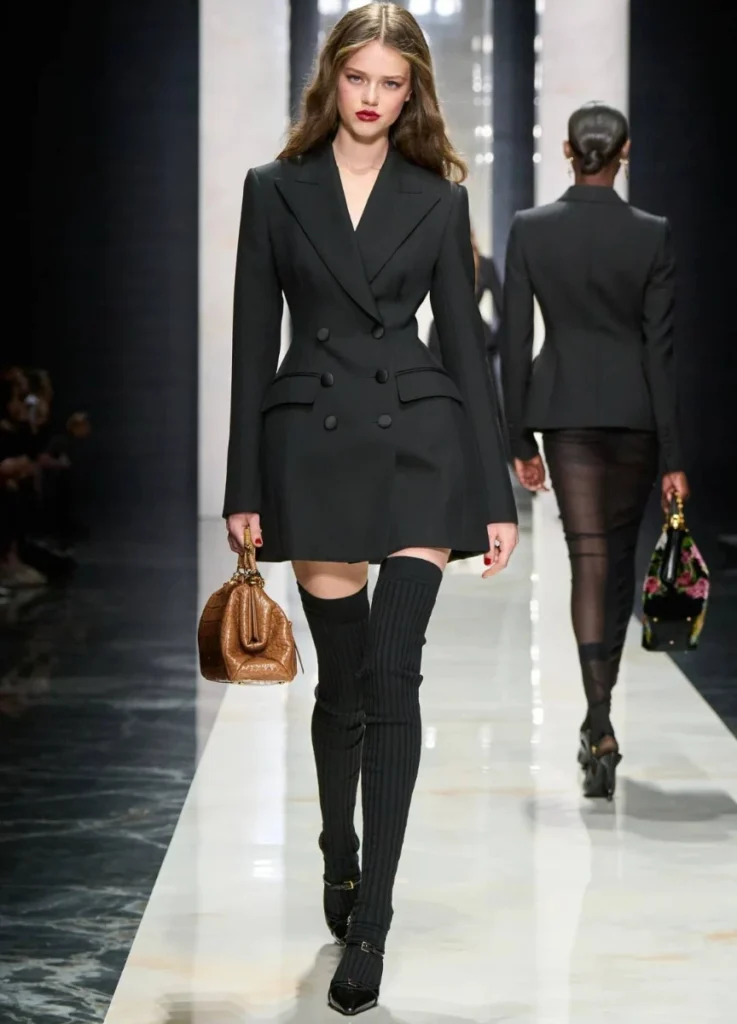
The tailoring this season emphasized:
- defined waist shaping
- structured coats
- symmetry in construction
- clear lapel articulation
This is not archival nostalgia. It reiterates established design language.
source: Vogue Runway
The Jacket That Reads From Both Sides
One detail sits at the center of the collection — the jackets.
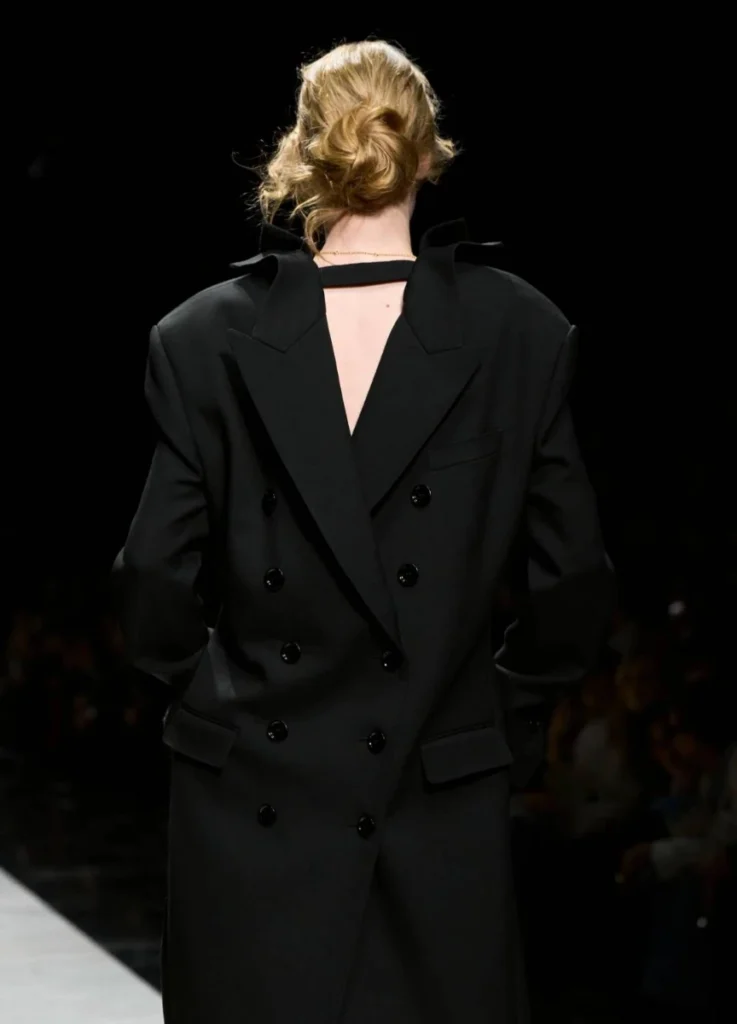
Several of the tailored pieces this season were constructed with the rear panel mirroring the front. Lapel architecture echoed across the back. Buttons aligned along the spine. The jacket reads as a complete object from any angle.
This was clear in the staging. Models paused mid-runway and rotated, revealing the back construction deliberately. The choreography wasn’t theatrical. It was instructional.
The detail is not a flourish. It asserts craft. A jacket built to read identically from the front and the back requires a level of pattern construction most contemporary tailoring quietly skips. The brand is showing what its tailoring still knows how to do.
This isn’t nostalgia. It’s a reassertion of technical capacity.
In a season where many houses are using runway theatrics to disguise softer construction, Dolce & Gabbana stages the opposite gesture — slow the model down, show the back, let the cut speak for itself.
source: Vogue Runway
The Role of Black
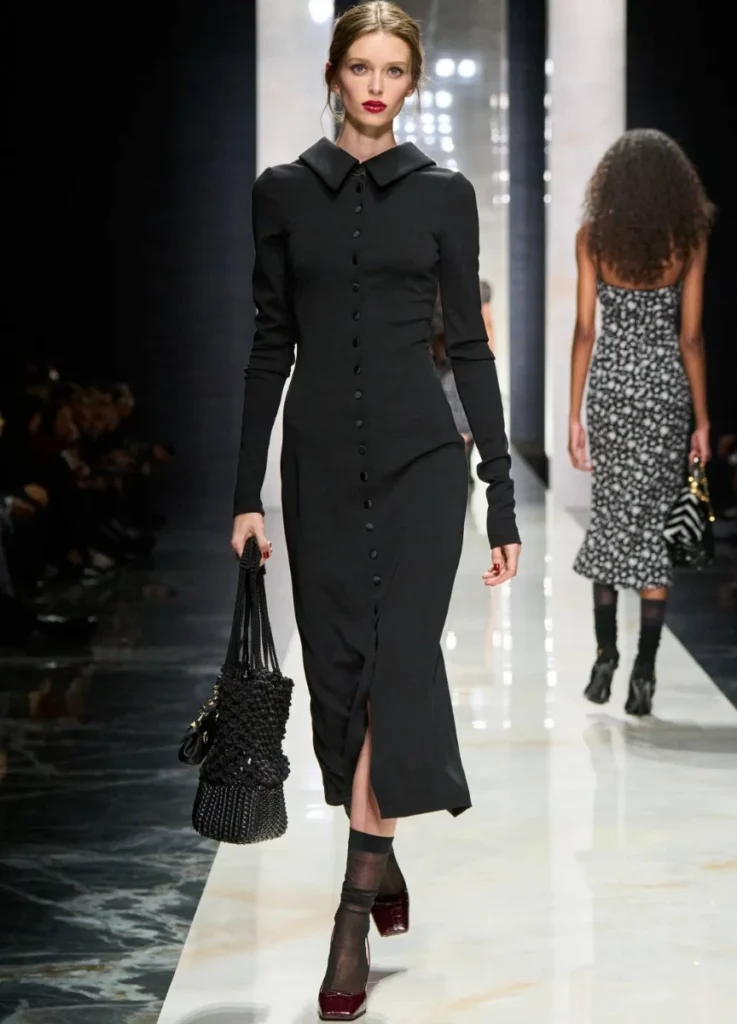
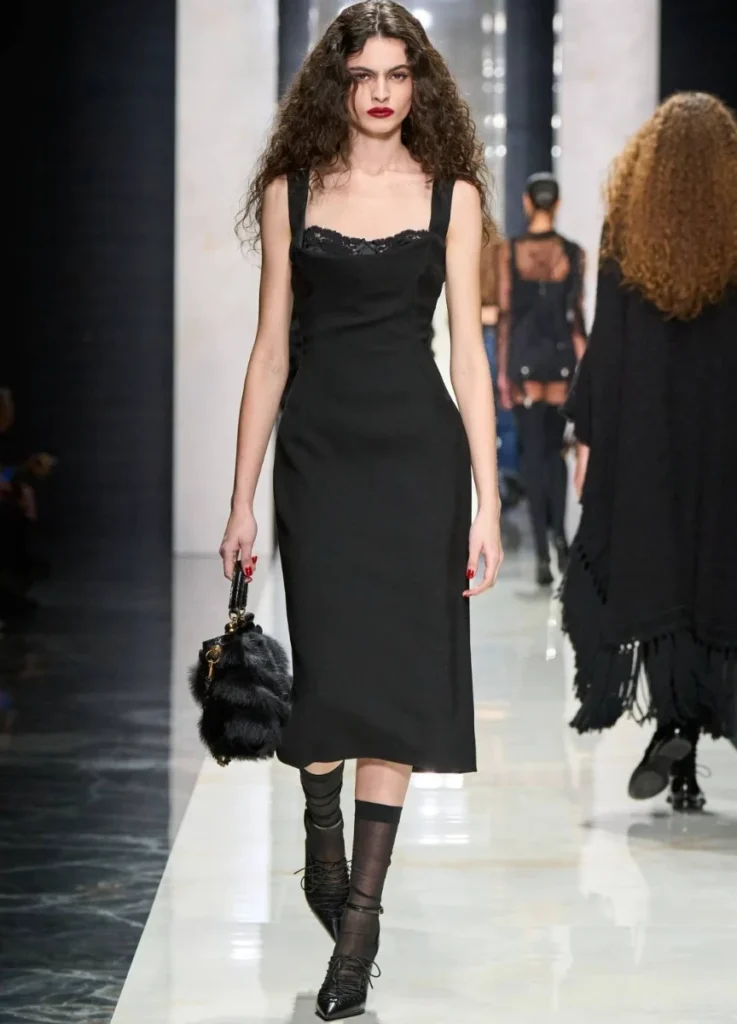
Black dominated the runway.
Within Milan’s Fall landscape, where dark palettes are common, this near-monochromatic focus felt deliberate rather than seasonal.
Black functioned structurally:
- it clarified silhouette
- it emphasized cut
- it reduced distraction from construction
Rather than relying on excessive embellishment, the impact came from proportion and tailoring discipline.
For Dolce & Gabbana, black isn’t a trend choice. It’s the brand’s default register — the color that lets the cut do its work without competing for attention. Italian sensuality, in this house, has always carried itself in black.
source: Vogue Runway
Silhouette Analysis | Structured Hourglass
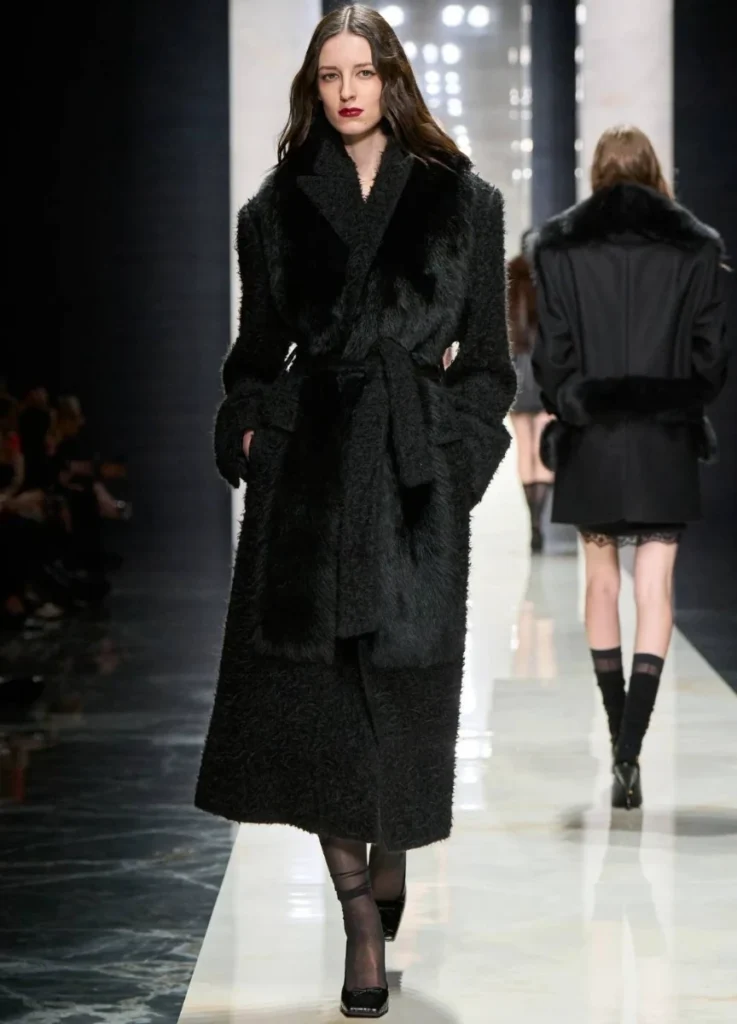
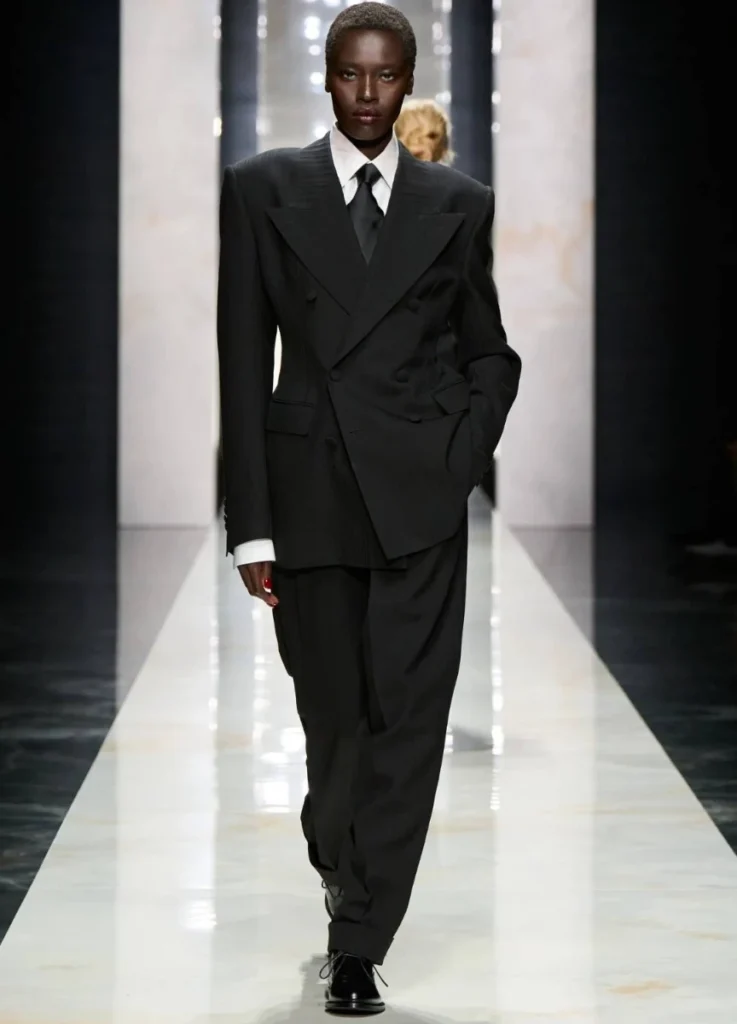
The defining silhouette of the season can be described as a structured hourglass.
Tailored Jackets and Coats
- Narrowed waist shaping
- Strong vertical emphasis
- Double-breasted constructions
- Controlled shoulder structure
The cut frames the body without exaggeration. It engineers curvature rather than exposing it.
source: Vogue Runway
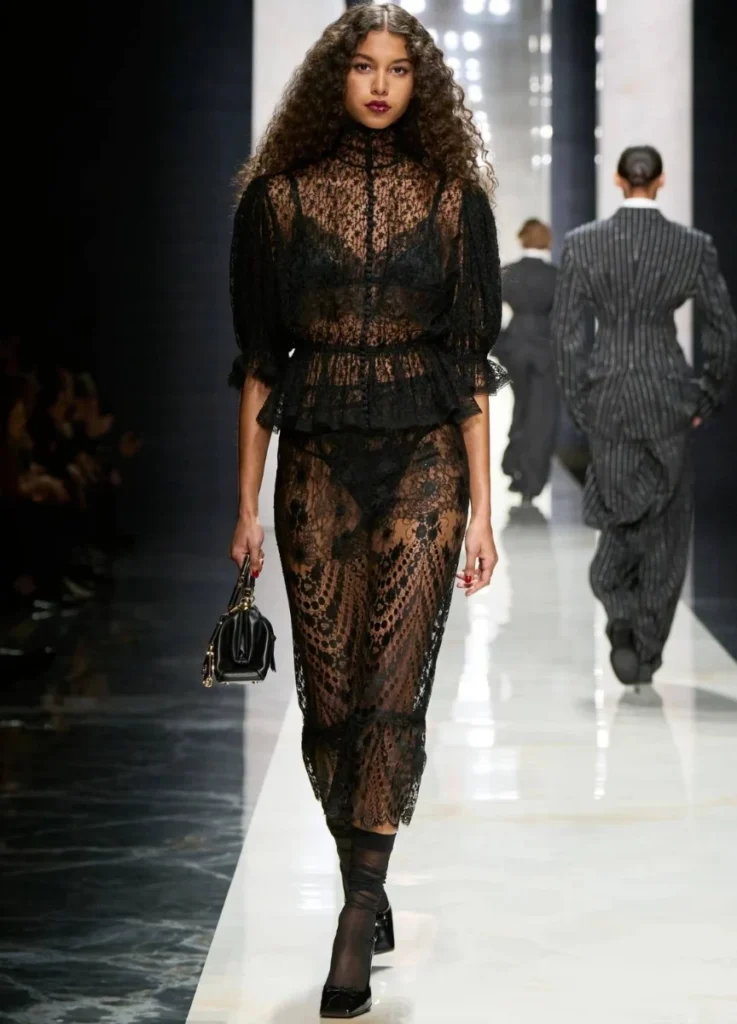
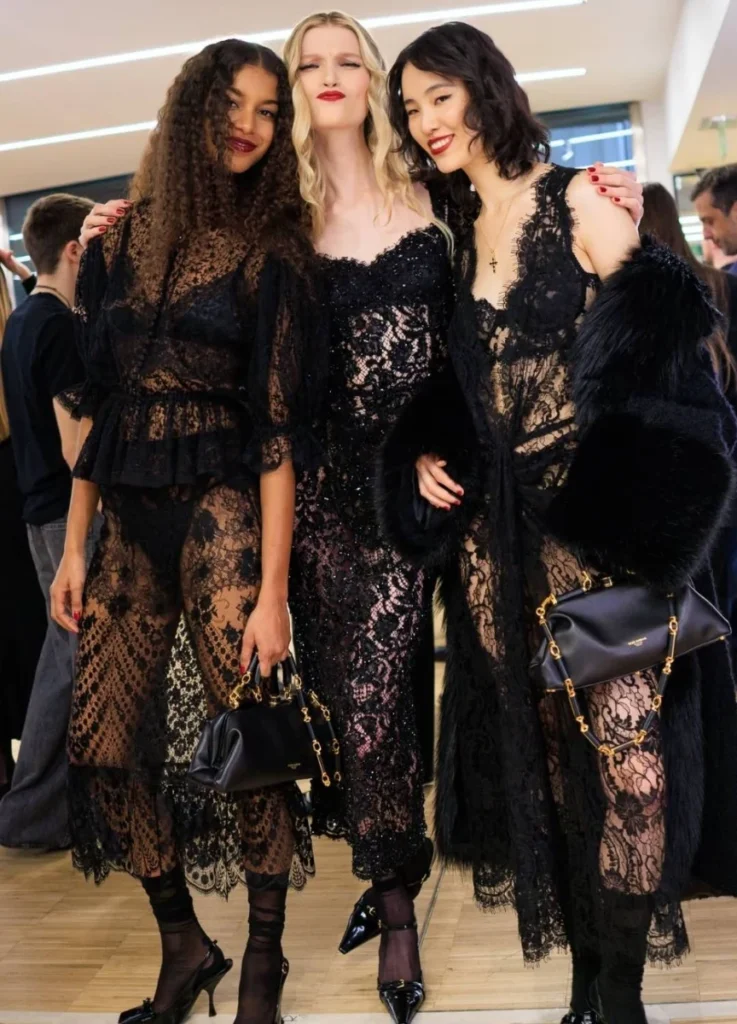
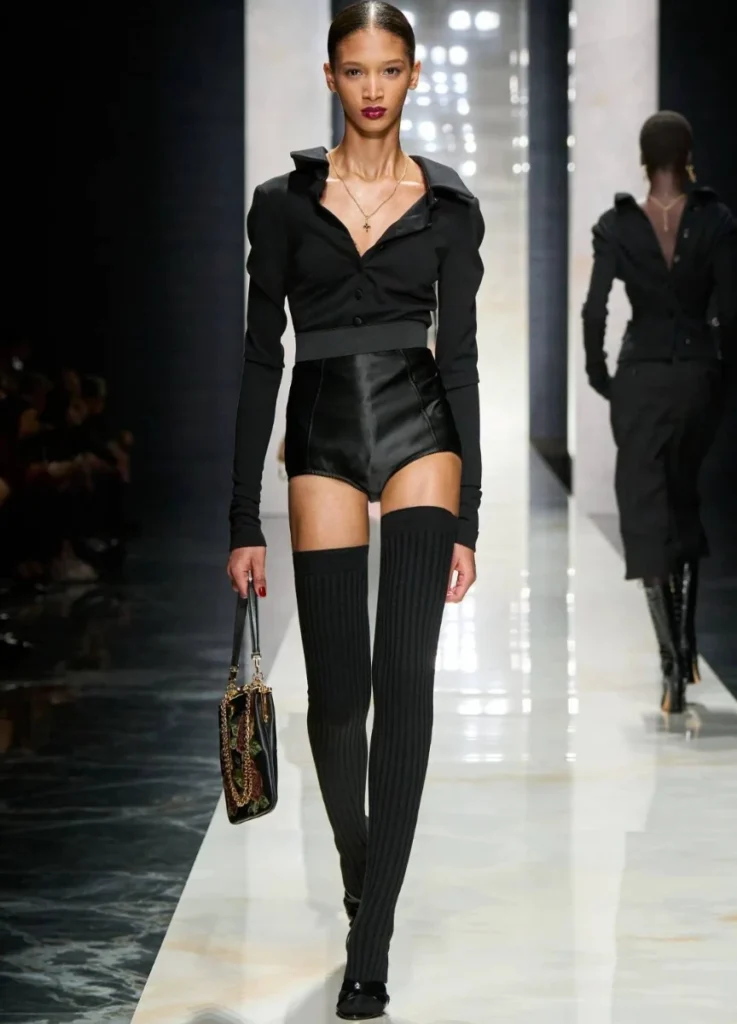
Lace and Camisole Layering
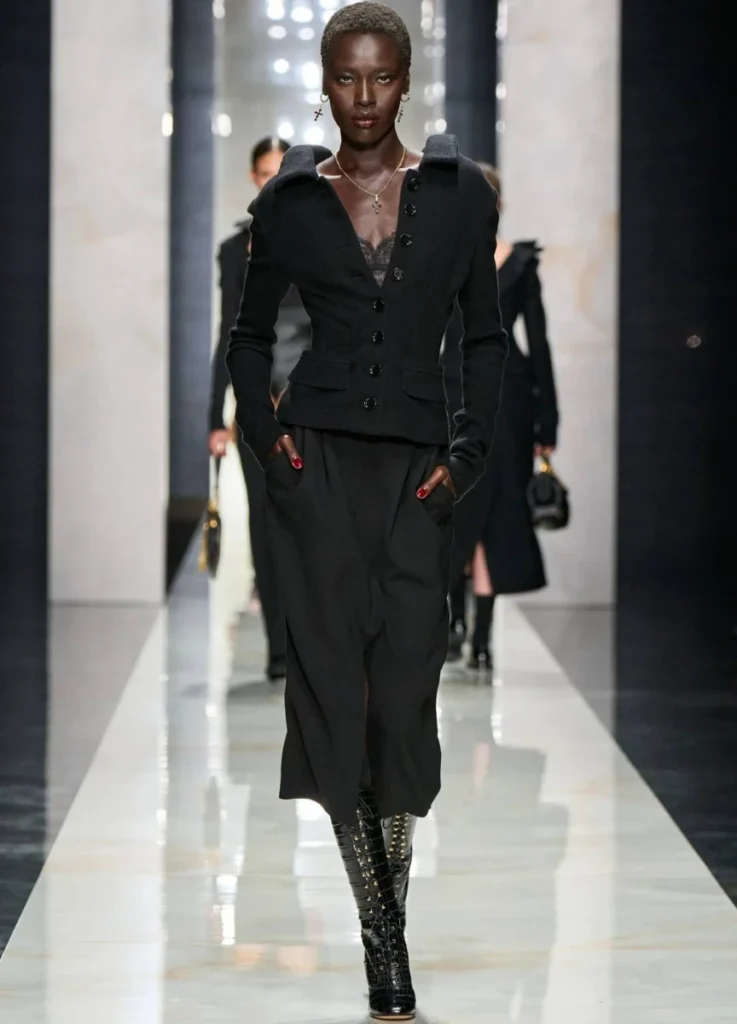
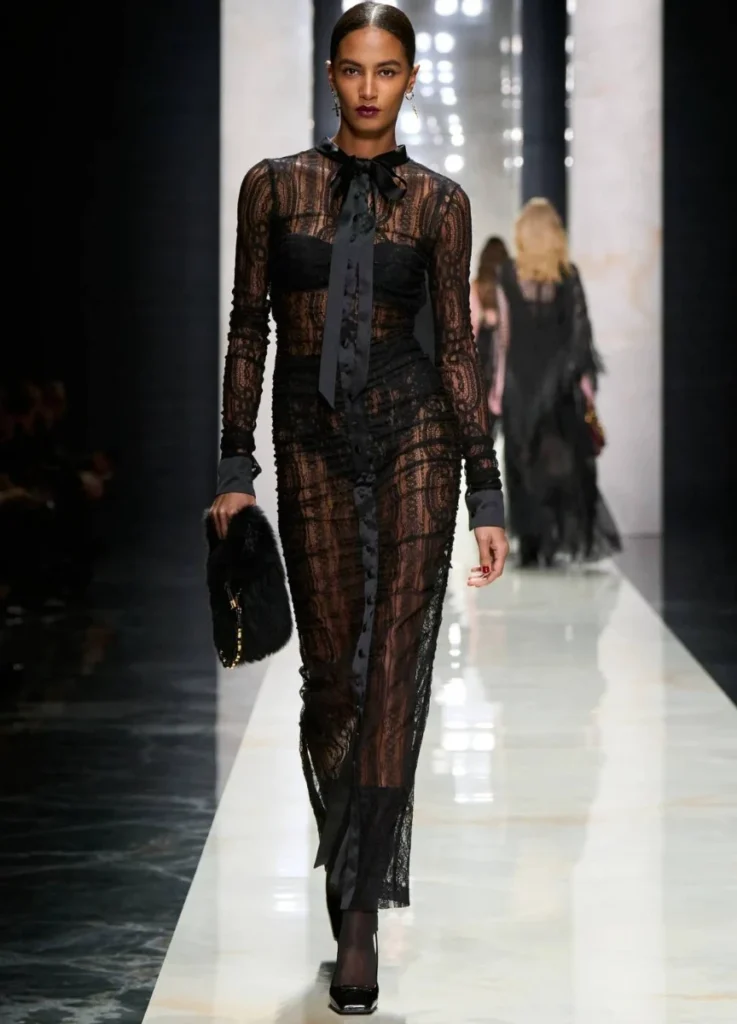
Under structured blazers, lace camisoles appeared as controlled contrast.
The interplay between masculine tailoring and intimate textile layering has appeared repeatedly throughout the brand’s history. Here, it reads less as provocation and more as calibrated tension.
The exterior holds. The interior softens. The two registers exist in the same garment without competing.
source: Vogue Runway
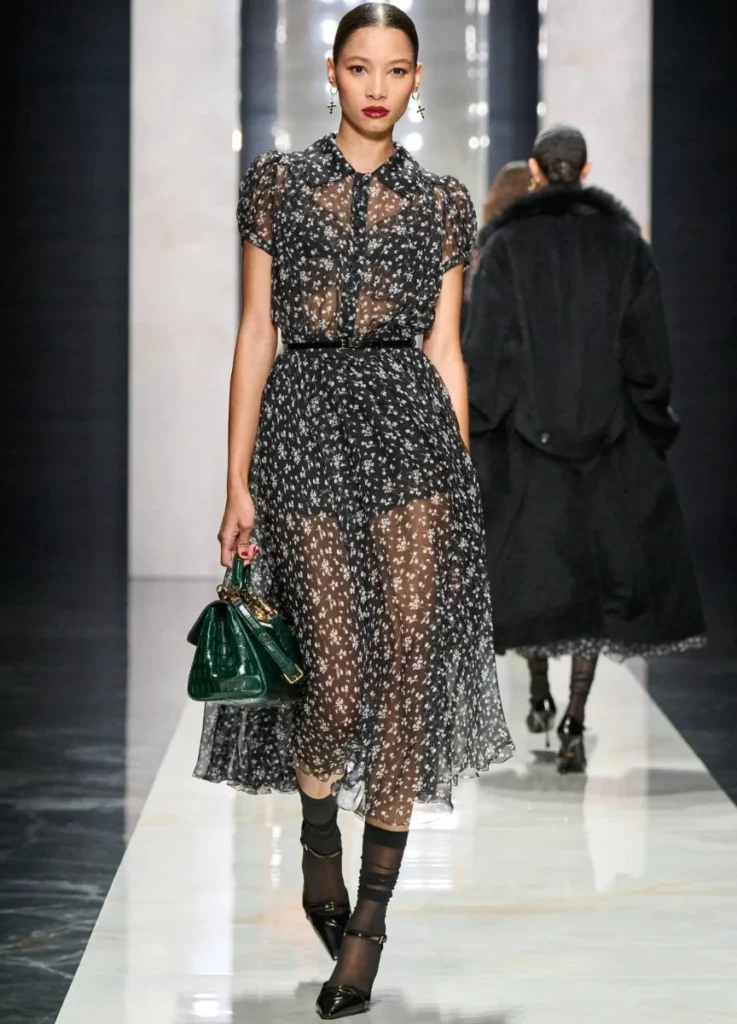
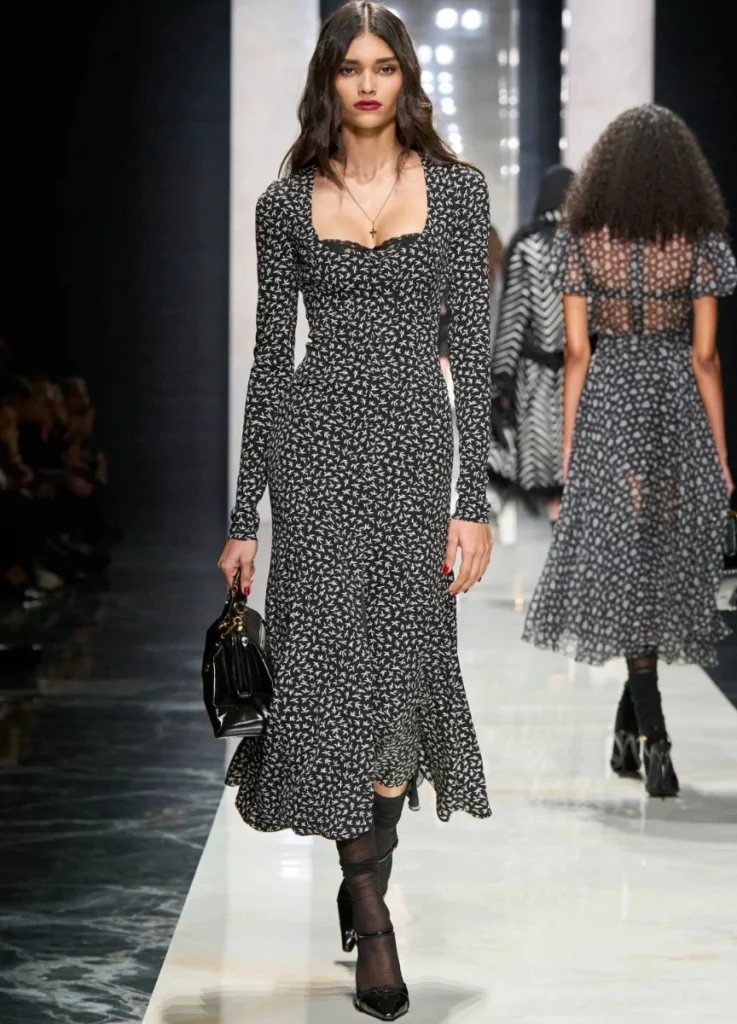
Micro-Print Dresses
Toward the conclusion of the show, micro-print dresses appeared, softening the architectural severity of the earlier looks.
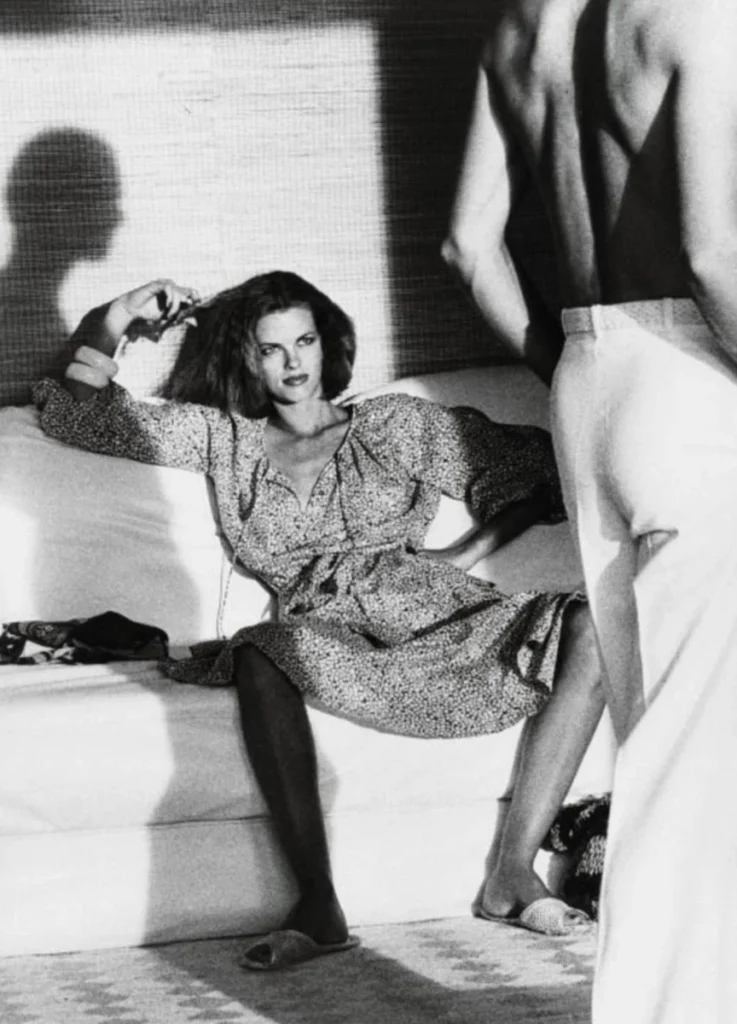
While no official reference to specific photographers was stated in show materials, the visual language — controlled gaze, seated or poised posture in styling, restrained sensuality — recalls the broader aesthetic of 1970s fashion photography.
source: mutualart.com
This remains interpretive rather than documentary.
source: Vogue Runway
Cultural Context: Madonna’s Presence
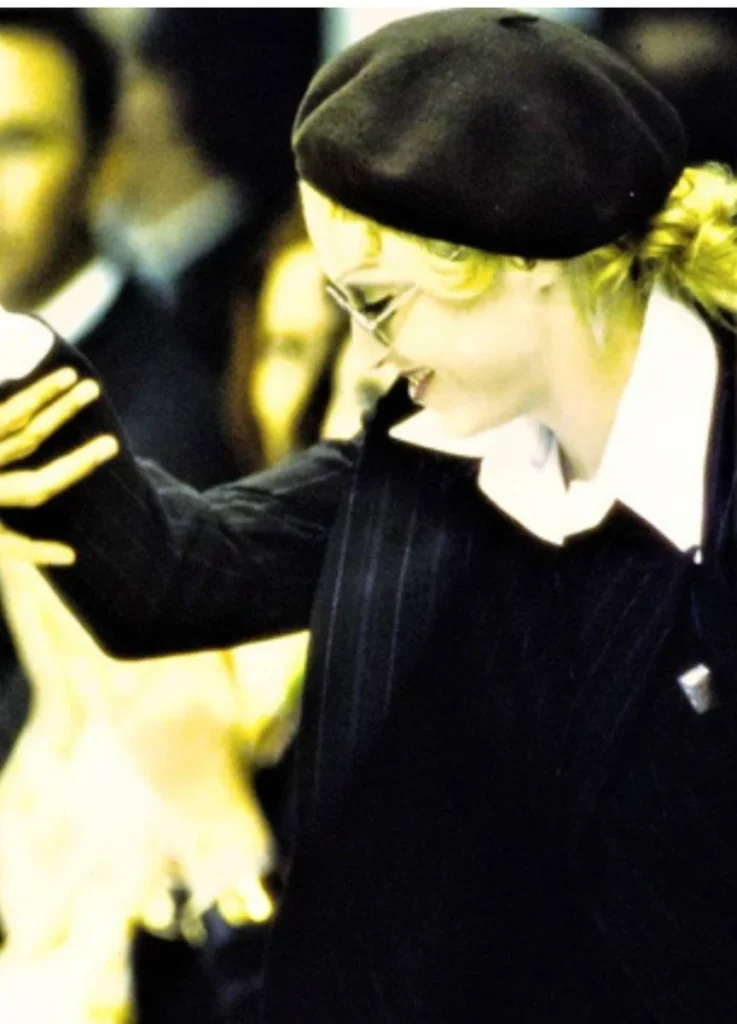
Madonna attended the show as a guest.
The appearance carried historical resonance.
Dolce & Gabbana designed costumes for Madonna’s 1993 The Girlie Show tour — a collaboration widely documented in fashion and music archives. Her presence at Fall/Winter 2026 functioned as a visible bridge between past and present.
source: Vogue Runway
This wasn’t celebrity casting. It was historical reactivation. The brand showing its own archive standing in the front row, more than three decades after the original collaboration.
The message was clear. We are still here, and the people who shaped what we are remain in the room with us.
source: British Vogue
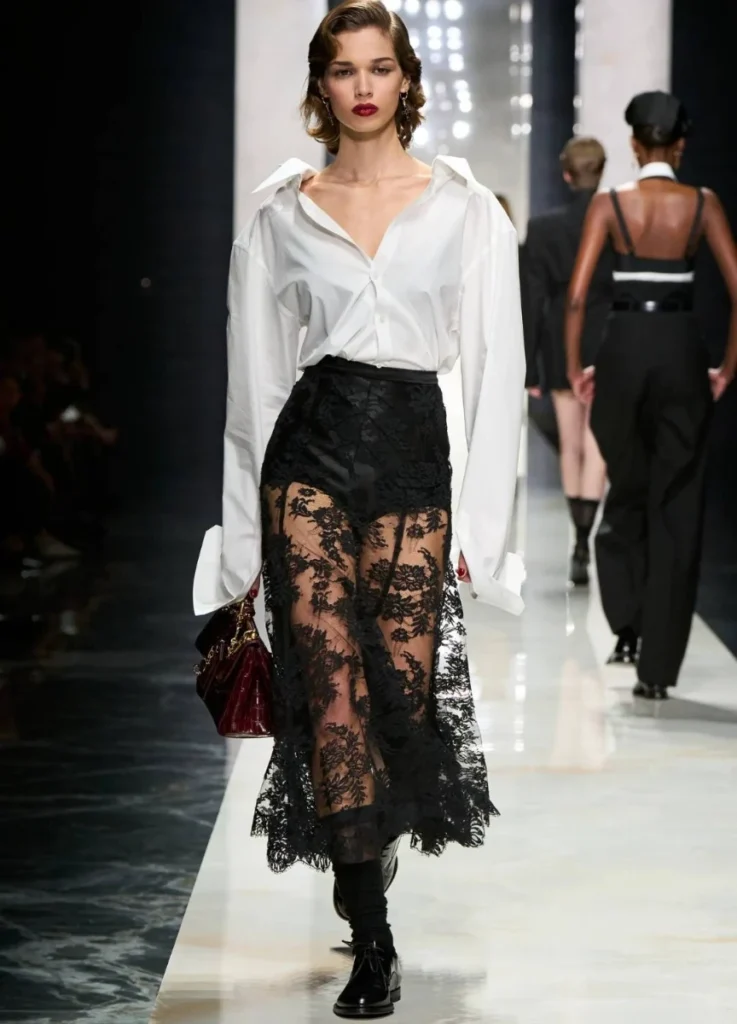
Material Strategy
The collection relied on traditional luxury materials:
- wool suiting
- silk lace
- structured cotton
- classical tailoring interlinings
There was no overt emphasis on technical textile innovation. The focus stayed on cut precision rather than fabric experimentation.
In the current market — where innovation often centers on material technology — this restraint reads as brand consistency. Dolce & Gabbana isn’t competing on textile R&D. It’s competing on construction, and choosing to make that visible.
source: Vogue Runway
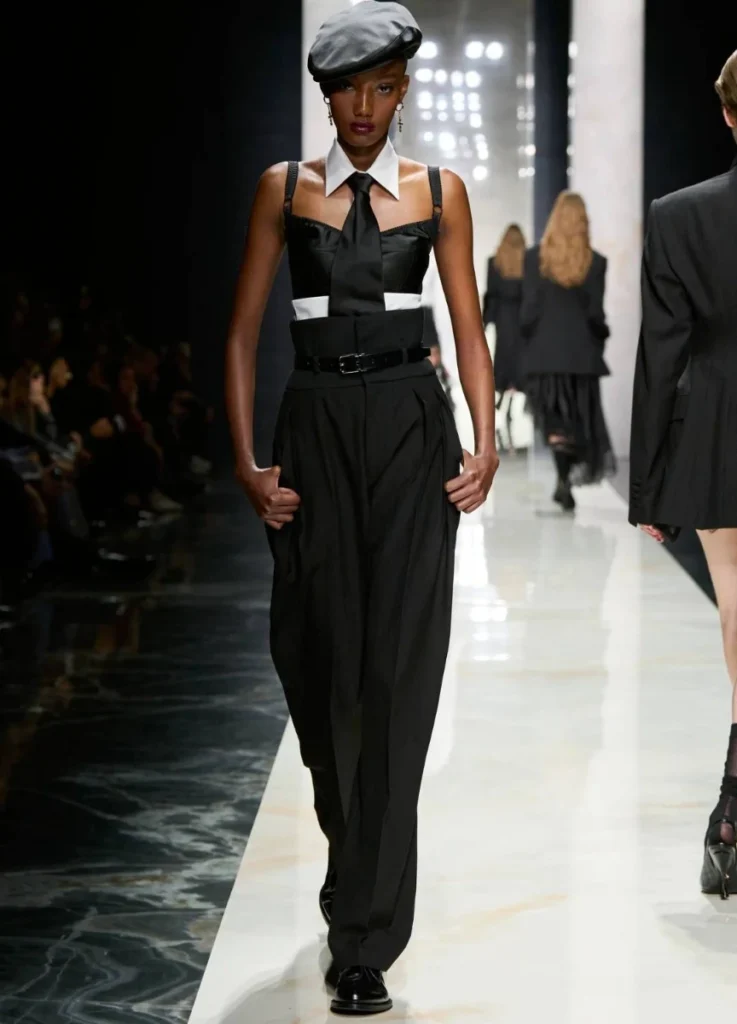
Market Positioning
The broader luxury landscape continues to experience:
- creative director transitions
- brand repositioning cycles
- revenue recalibration in key markets
Dolce & Gabbana’s Fall/Winter 2026 didn’t signal adaptation to emerging trends. The collection reinforced identifiable house codes instead.
Strategically, this approach prioritizes recognizability over disruption.
source: Vogue Runway
Comparison Within Milan
Compared to houses pursuing conceptual experimentation or silhouette volatility, Dolce & Gabbana’s presentation felt anchored in continuity.
Where some Milan brands explore intellectual abstraction, Dolce & Gabbana reiterates structured sensual tailoring.
This limits shock value. It strengthens brand clarity.
source: Vogue Runway
Wearability and Body Considerations
The structured hourglass tailoring favors:
- defined waistlines
- balanced shoulder proportions
- clear torso structure
Consumers preferring oversized or volume-forward silhouettes may find the shaping directive. Those seeking polished evening authority may find immediate utility in the jackets and coats.
Tailored black blazers remain commercially stable luxury categories. The black double-breasted jacket from this collection translates easily into daily wear — paired with denim or tailored trousers, it functions as semi-formal anchor rather than runway showpiece.
This doubles the collection’s commercial reach. Show piece on the runway. Wardrobe staple in the closet.
Critical Reception
Early industry responses describe the collection as:
- faithful to house DNA
- confident in craftsmanship
- less experimental than some Milan peers
Critics remain divided between viewing the approach as predictable versus strategically consistent.
The split is real.
The collection won’t generate viral moments. It won’t drive Lyst Index spikes. It won’t anchor magazine covers the way a more experimental show might. The brand is choosing not to compete in those metrics this season.
The question is whether consistency in a market obsessed with change reads as confidence or as caution. Dolce & Gabbana’s answer this season is to bet on the former — and to make that bet visible through technical detail rather than through aesthetic provocation.
source: Vogue Runway
Final Assessment
Dolce & Gabbana Fall/Winter 2026 reinforces rather than reinvents.
Black tailoring, lace layering, structured femininity — all reappear, not as archival citation, but as reaffirmed vocabulary.
In a market preoccupied with change, this collection demonstrates commitment to continuity.
What the runway leaves behind isn’t a single image. It’s a posture. The button line running down a model’s spine. The lapel echoed across the back. The black silk camisole holding its place beneath structured wool. The Madonna in the front row, three decades after the first collaboration.
These aren’t surprises. They’re confirmations.
Whether the approach reads as conservatism or as clarity depends on the viewer. Internally, the collection is coherent — and coherence, in luxury branding, is a form of capital.
Trends move quickly. Precise lines stay.
That’s the wager Dolce & Gabbana made this season.
source: Vogue Runway
[ Related Editorials ]