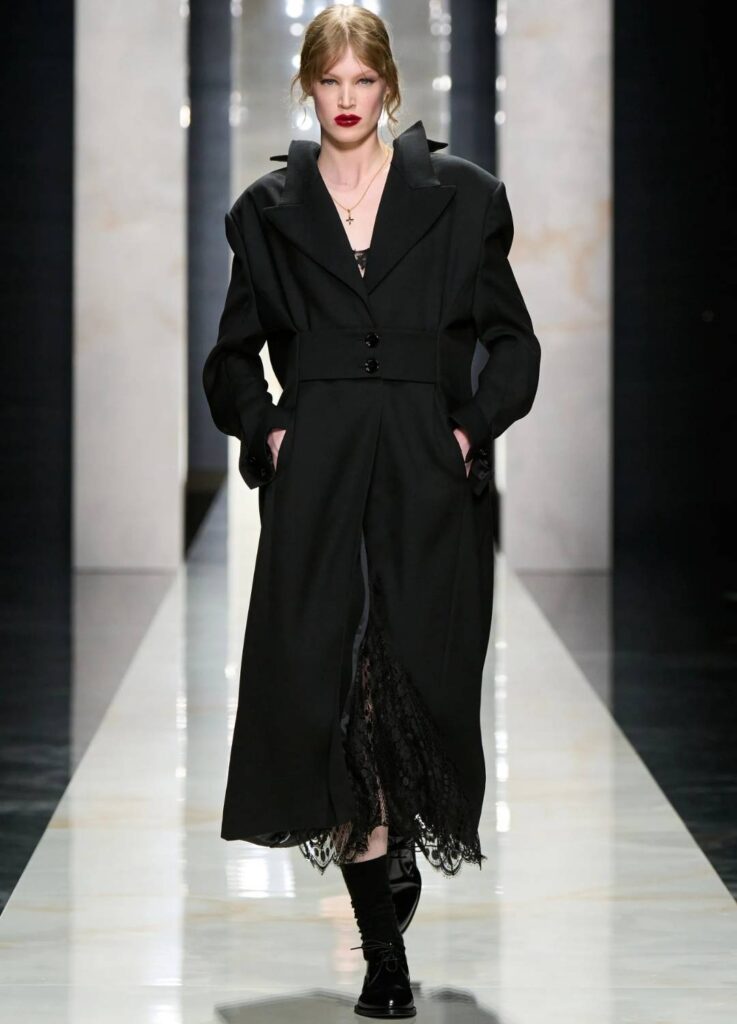
Dolce & Gabbana Fall/Winter 2026 was not framed as a reinvention. It read as consolidation.
In a season where many luxury houses are navigating creative transitions and aesthetic resets, Domenico Dolce and Stefano Gabbana presented a collection that reaffirmed long-standing brand codes rather than introducing a radical shift.
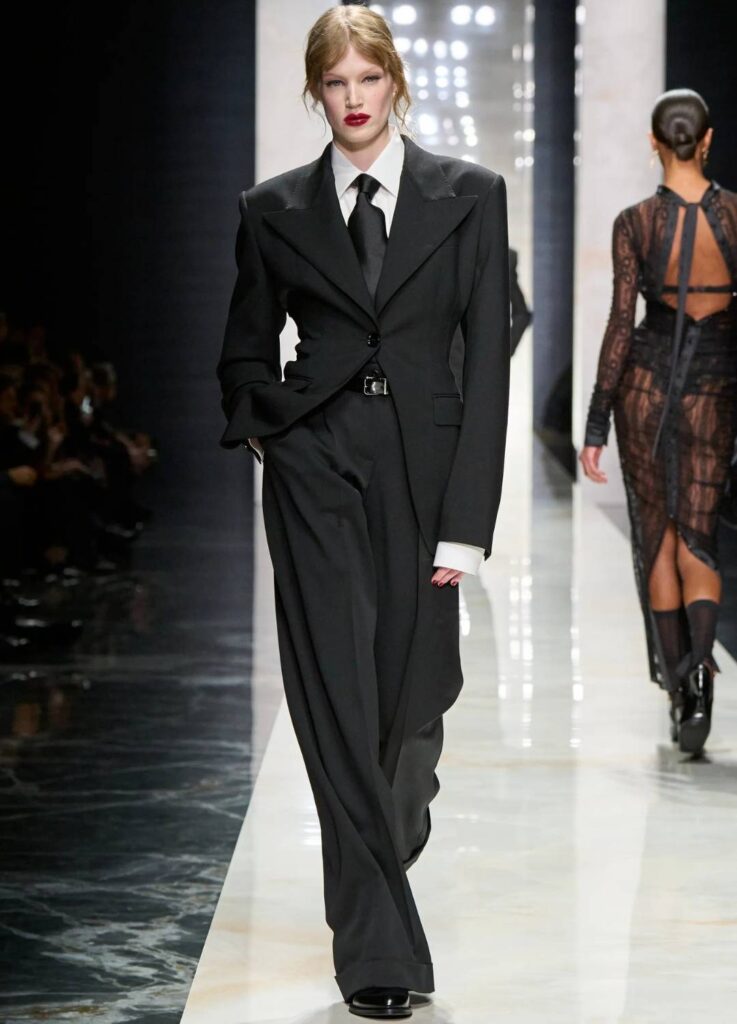
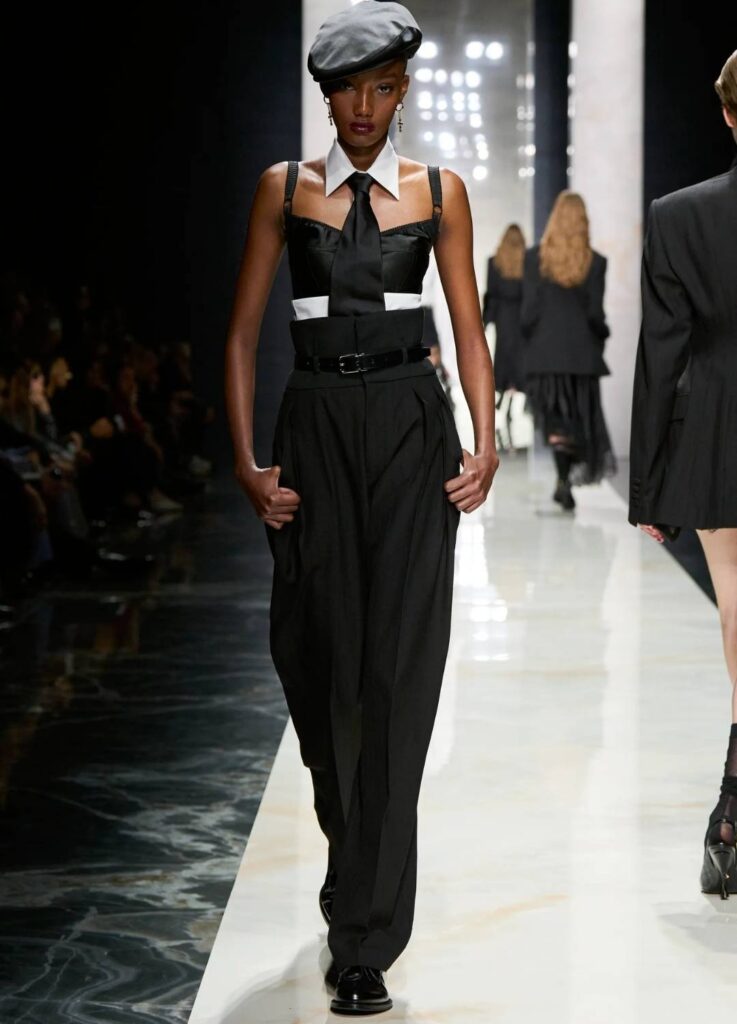
The emphasis was placed on black tailoring, structured femininity, and the tension between masculine suiting and sensual layering—elements historically associated with the house.
Rather than positioning itself within contemporary minimalism or overt spectacle, the collection reinforced an existing vocabulary.
Historical Framework: Early Brand Codes
Since its late-1980s rise,
Dolce & Gabbana has been associated with:
- Sicilian-inflected femininity
- Black-dominant palettes
- Lace and corsetry
- Masculine tailoring adapted to the female form
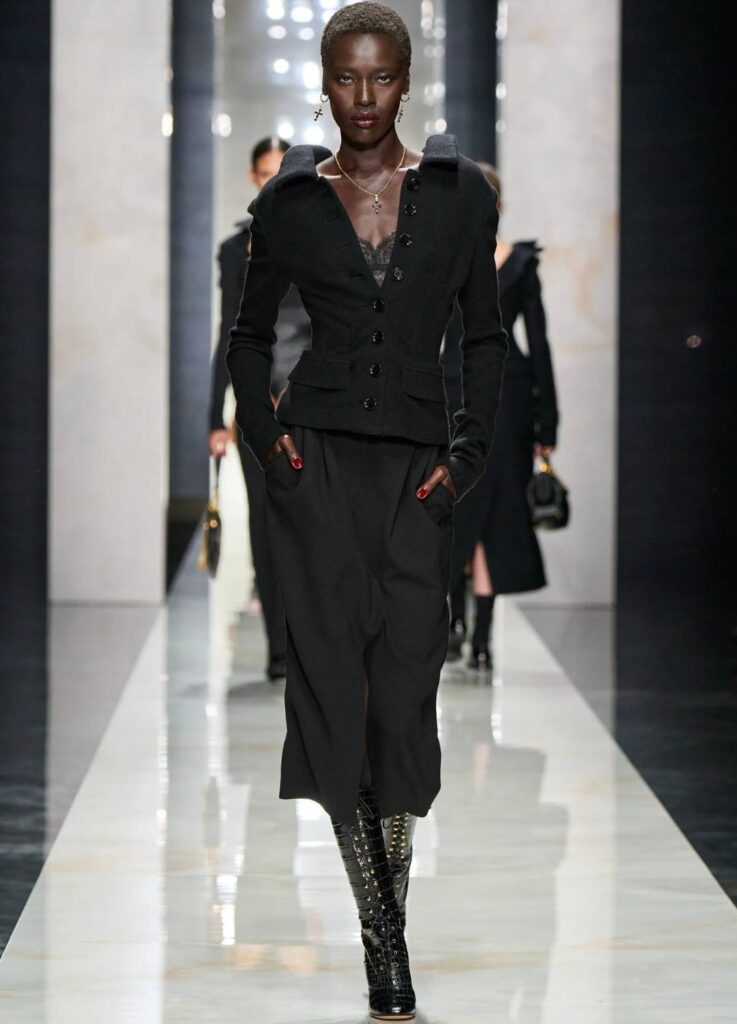
While the house has explored ornamentation and baroque embellishment in other periods, the early 1990s collections frequently emphasized structured jackets, defined waists, and contrast between tailored exteriors and intimate underlayers.
Fall/Winter 2026 revisits those structural ideas—not as historical reproduction, but as continuity.
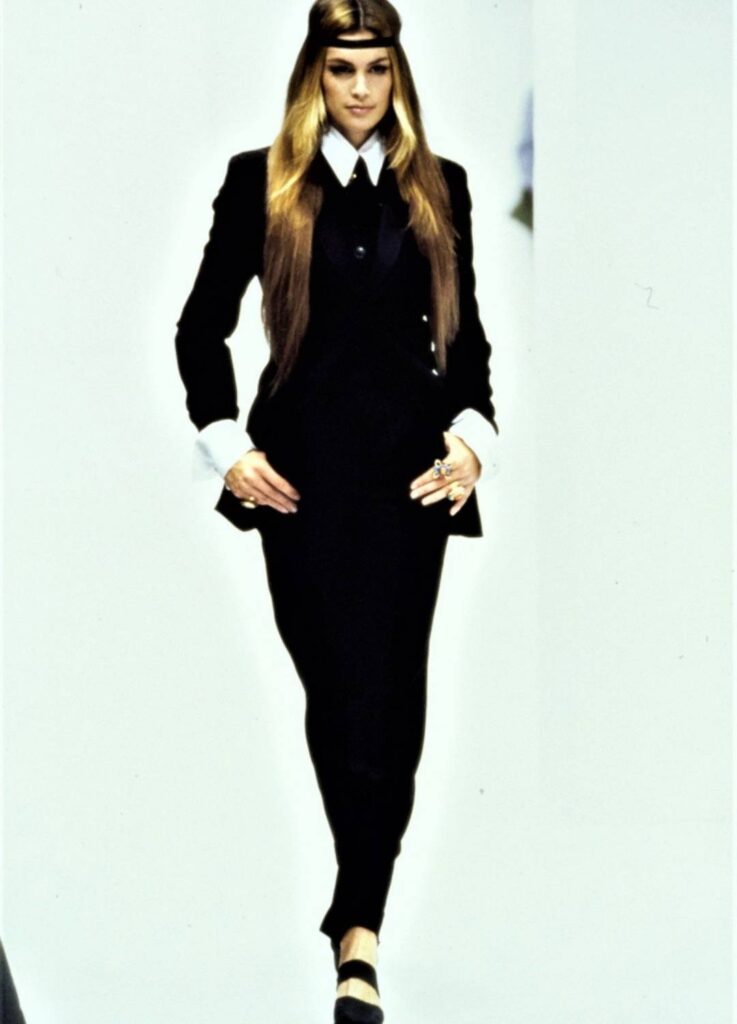
Spring 1993 Collection
source: Vogue Runway
The tailoring this season emphasized:
- Defined waist shaping
- Structured coats
- Symmetry in construction
- Clear lapel articulation
This was not archival nostalgia. It was reiteration of established design language.
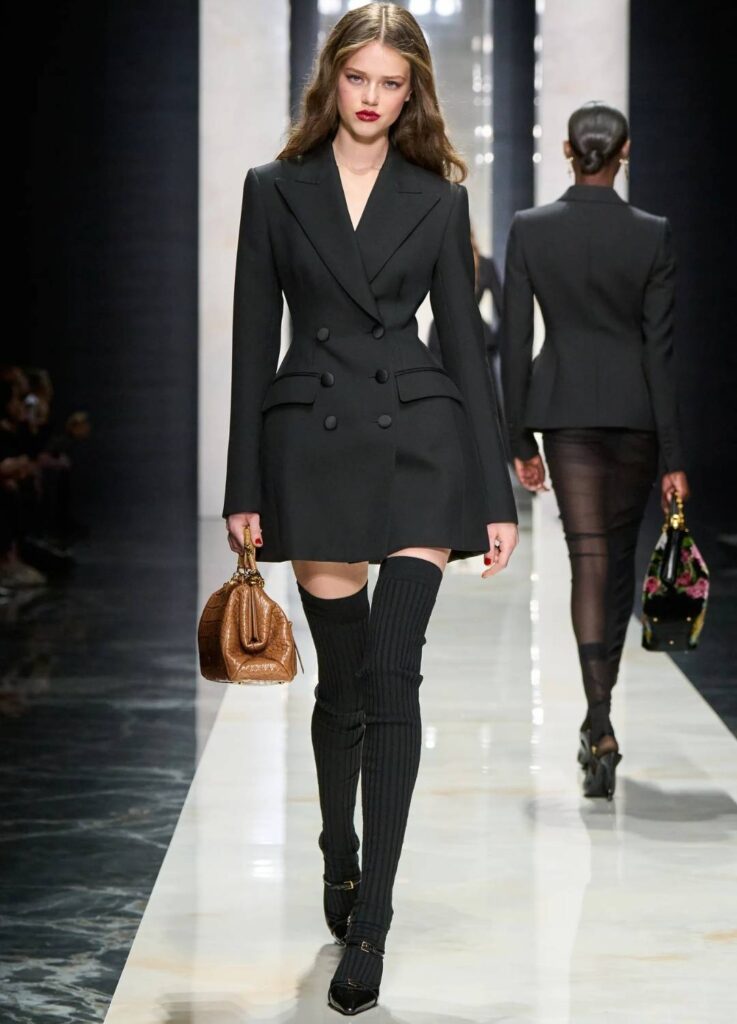
Collection Overview
Brand: Dolce & Gabbana
Season: Fall/Winter 2026 Ready-to-Wear
Location: Milan
Core Visual Themes:
- Black dominance
- Structured hourglass tailoring
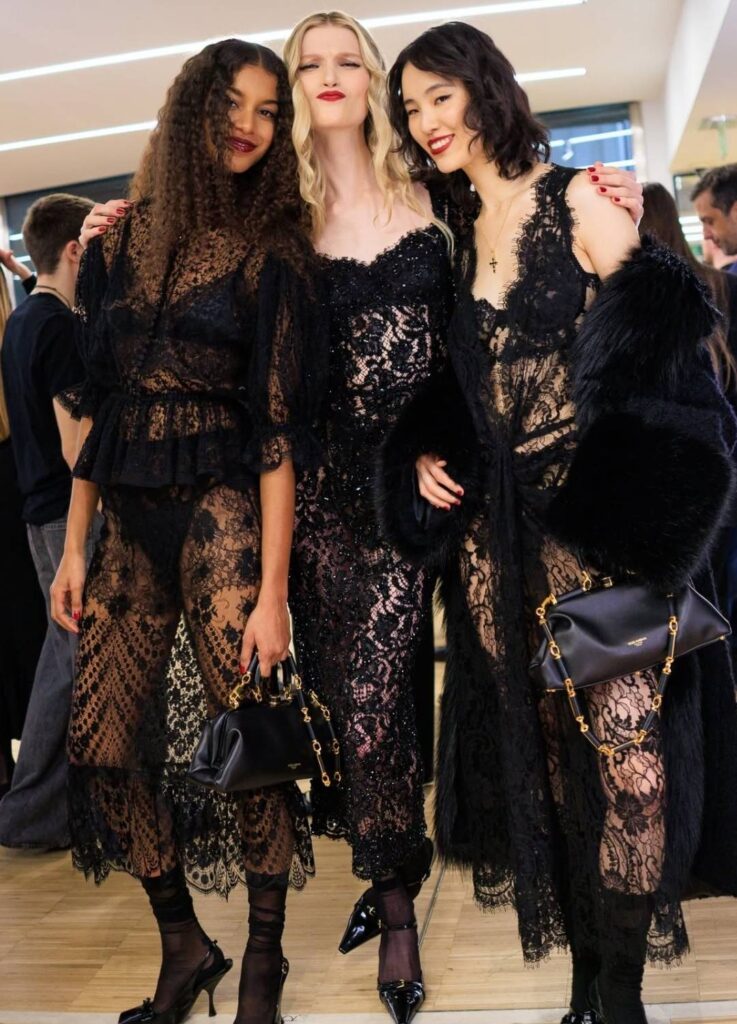
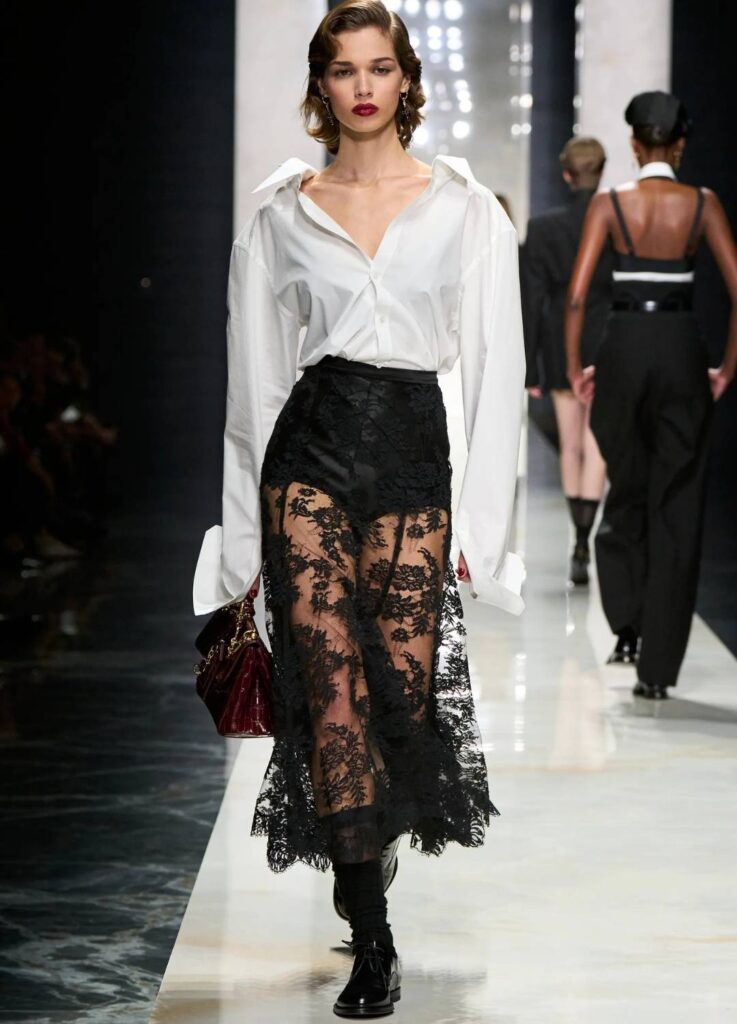
- Lace layering
- Controlled sensuality
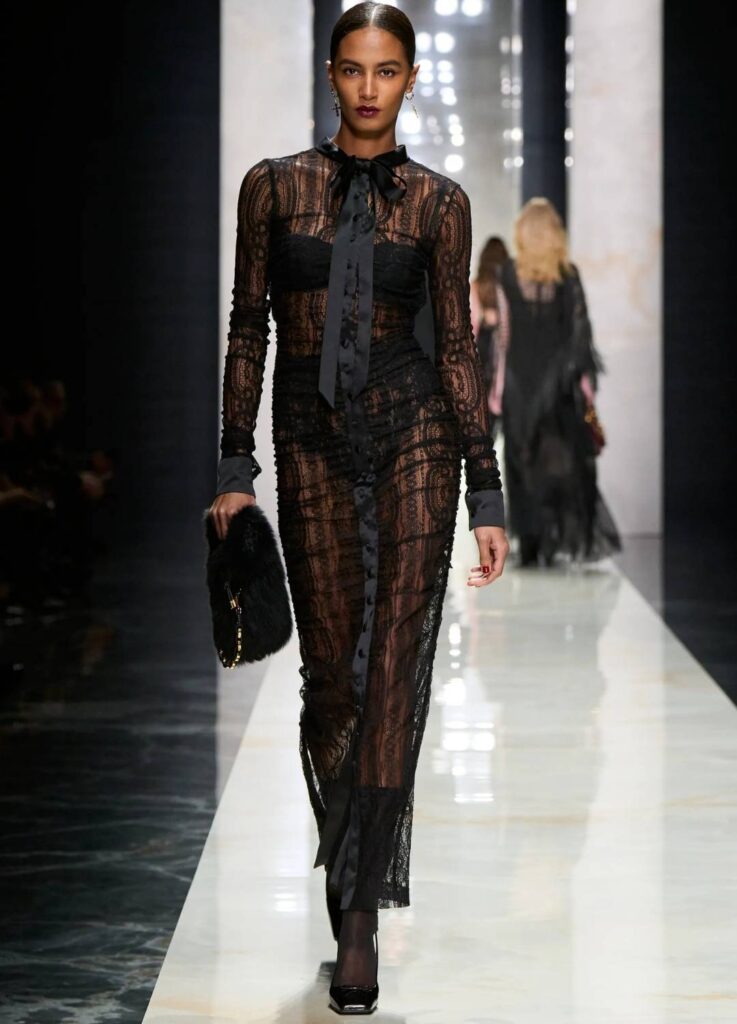
The Role of Black
Black dominated the runway.
Within Milan’s Fall landscape, where dark palettes are common, this near-monochromatic focus felt deliberate rather than seasonal.
Black functioned structurally:
- It clarified silhouette.
- It emphasized cut.
- It reduced distraction from construction.
Rather than relying on excessive embellishment, the impact derived from proportion and tailoring discipline.
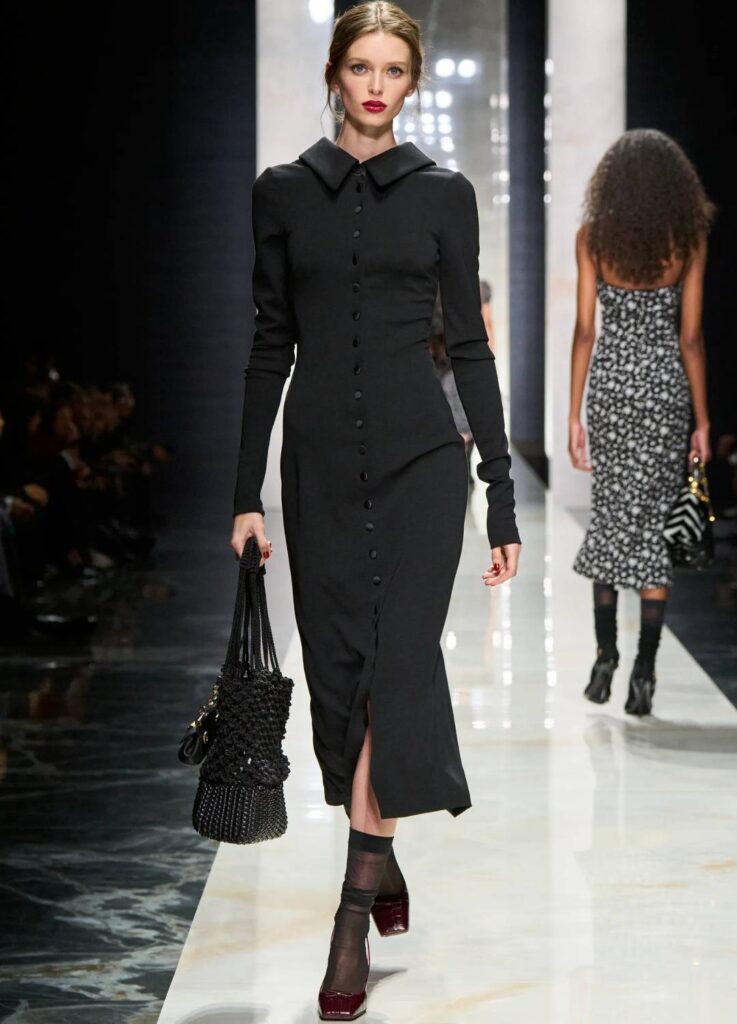
Silhouette Analysis: Structured Hourglass
The defining silhouette of the season can be described as a structured hourglass.
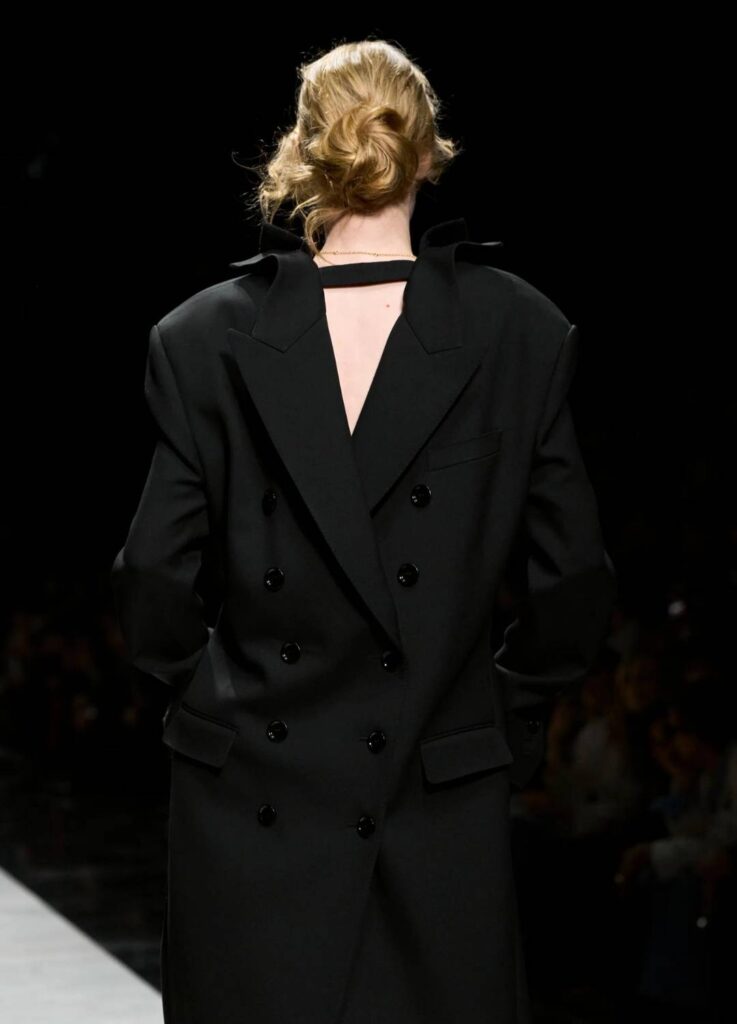
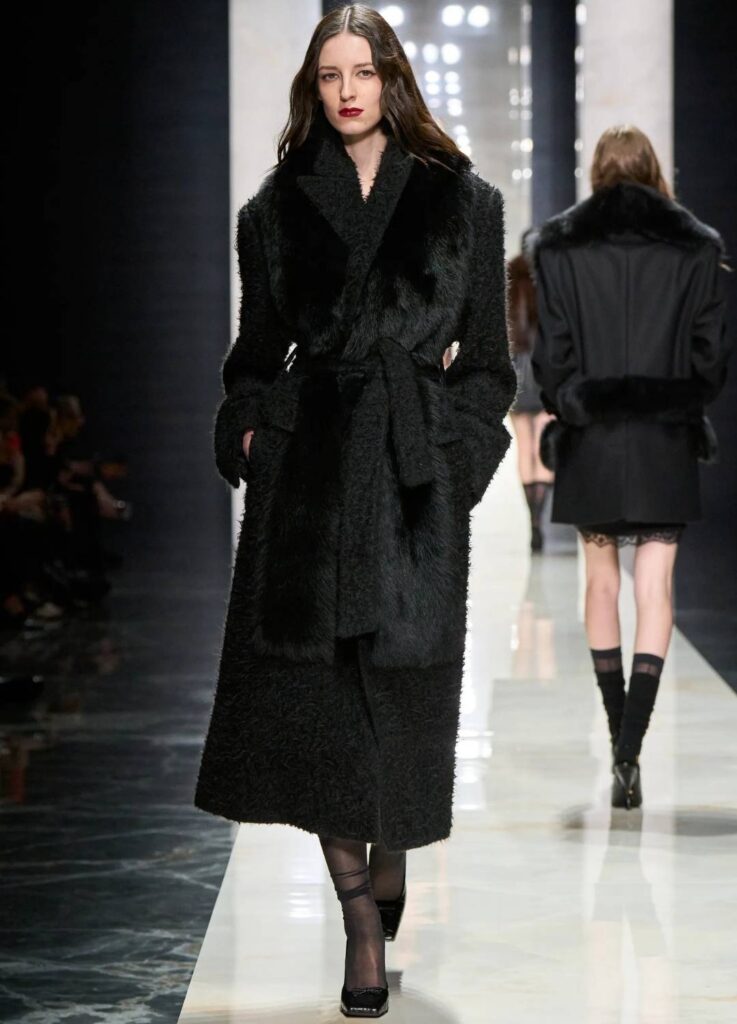
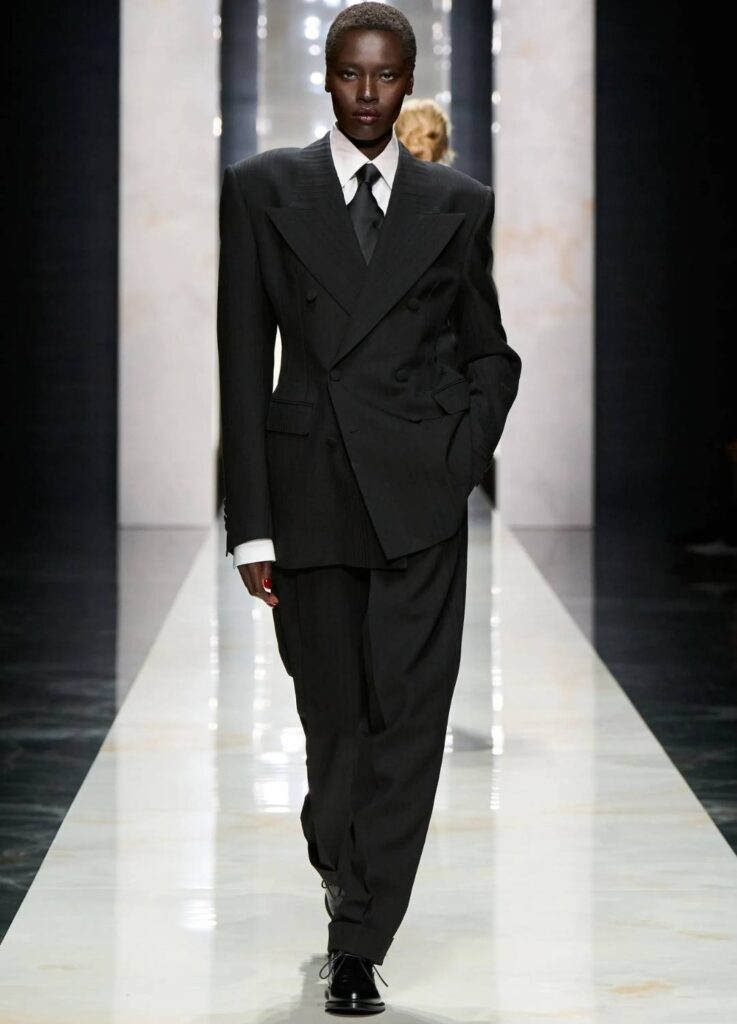
Tailored Jackets and Coats
- Narrowed waist shaping
- Strong vertical emphasis
- Double-breasted constructions
- Controlled shoulder structure
The result framed the body without exaggeration. It engineered curvature rather than exposing it.
Lace and Camisole Layering
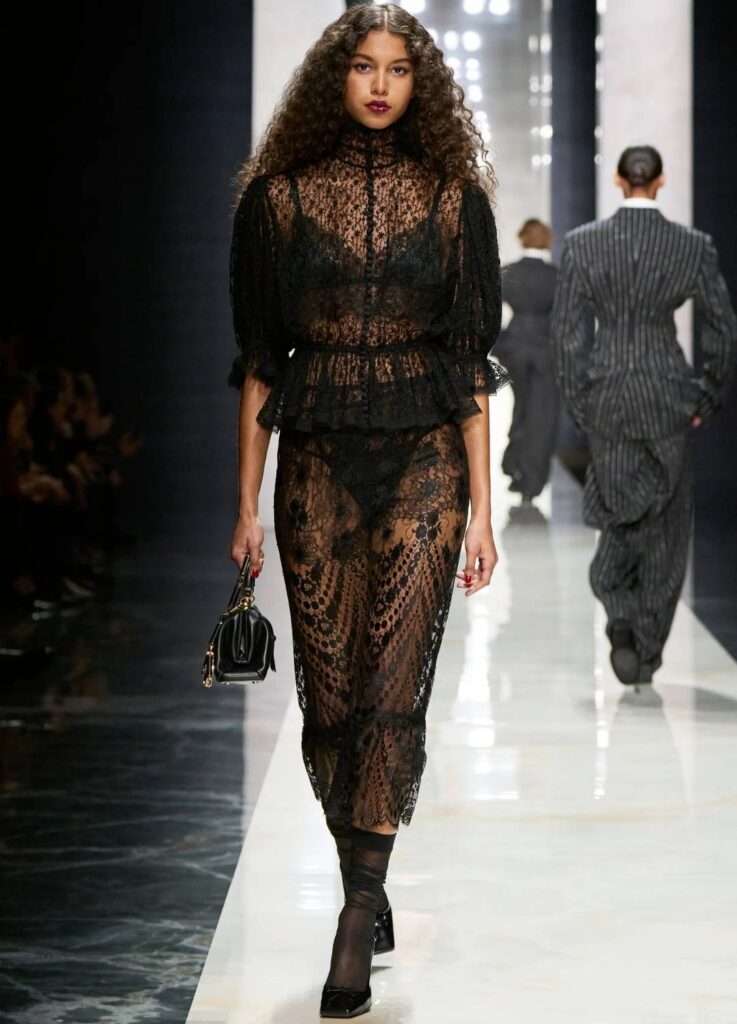
Under structured blazers, lace camisoles appeared as controlled contrast.
This interplay between masculine tailoring and intimate textile layering has appeared repeatedly throughout the brand’s history. Here, it reads less as provocation and more as calibrated tension.
Micro-Print Dresses
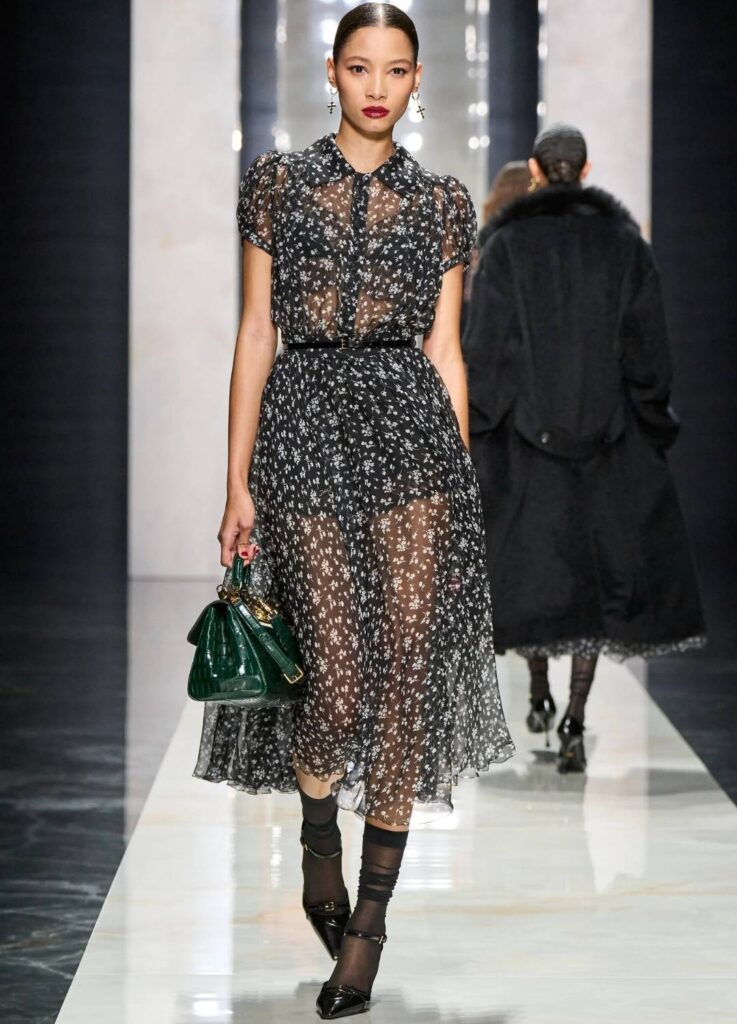
Toward the conclusion of the show, micro-print dresses appeared, softening the architectural severity of the earlier looks.
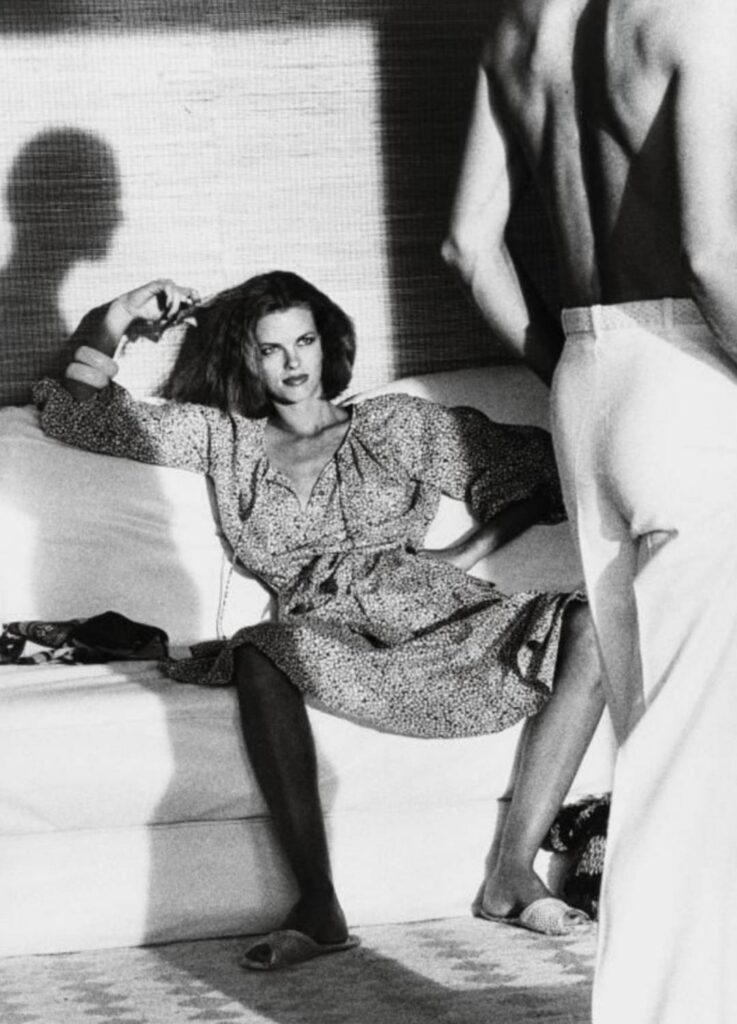
While no official reference to specific photographers was stated in show materials, the visual language—controlled gaze, seated or poised posture styling, restrained sensuality—recalls the broader aesthetic associated with 1970s fashion photography.
source: mutualart.com
This reading remains interpretive rather than documentary.
Cultural Context: Madonna’s Presence
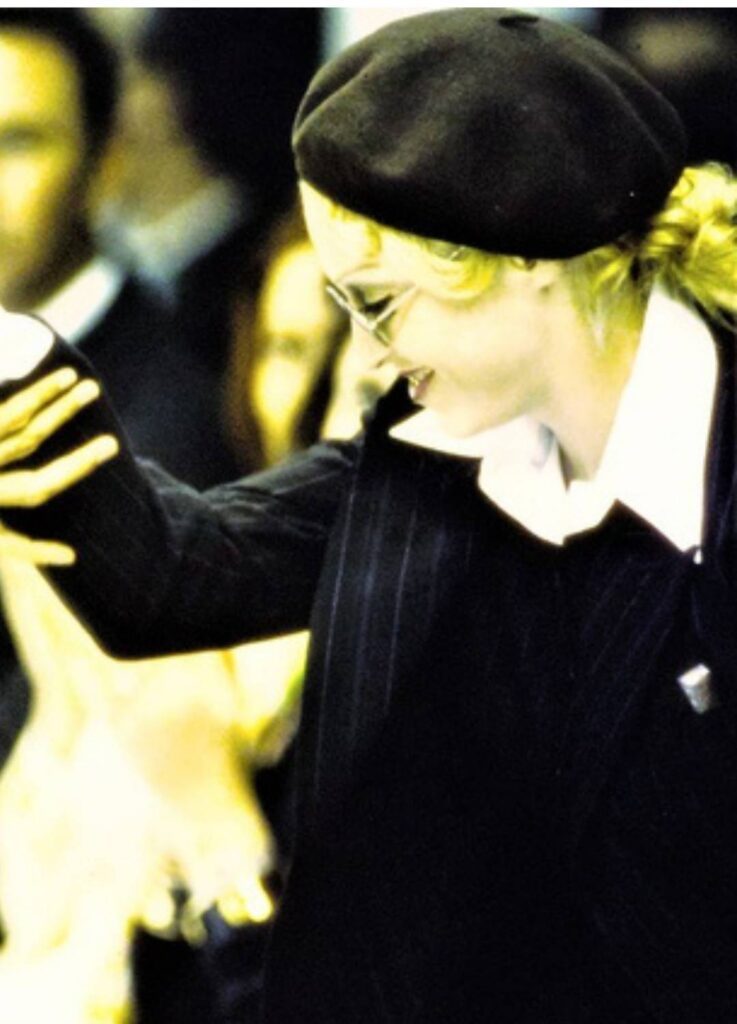
Madonna attended the show as a guest.
This appearance carries historical resonance.
Dolce & Gabbana designed costumes for Madonna’s 1993 The Girlie Show tour—a collaboration widely documented in fashion and music archives.
source: Vogue Runway
Her presence at Fall/Winter 2026 therefore functions as a visible bridge between past and present.
Material Strategy
The collection relied on traditional luxury materials:
- Wool suiting
- Silk lace
- Structured cotton
- Classical tailoring interlinings
There was no overt emphasis on technical textile innovation. The focus remained on cut precision rather than fabric experimentation.
In the current market—where innovation often centers on material technology—this restraint reads as brand consistency.
Market Positioning
The broader luxury landscape continues to experience:
- Creative director transitions
- Brand repositioning cycles
- Revenue recalibration in key markets
Dolce & Gabbana’s Fall/Winter 2026 collection did not signal adaptation to emerging trends. Instead, it reinforced identifiable house codes.
Strategically, this approach prioritizes recognizability over disruption.
Comparison Within Milan
Compared to houses pursuing conceptual experimentation or silhouette volatility, Dolce & Gabbana’s presentation felt anchored in continuity.
Where some brands explore intellectual abstraction, Dolce & Gabbana reiterates structured sensual tailoring.
This may limit shock value, but it strengthens brand clarity.
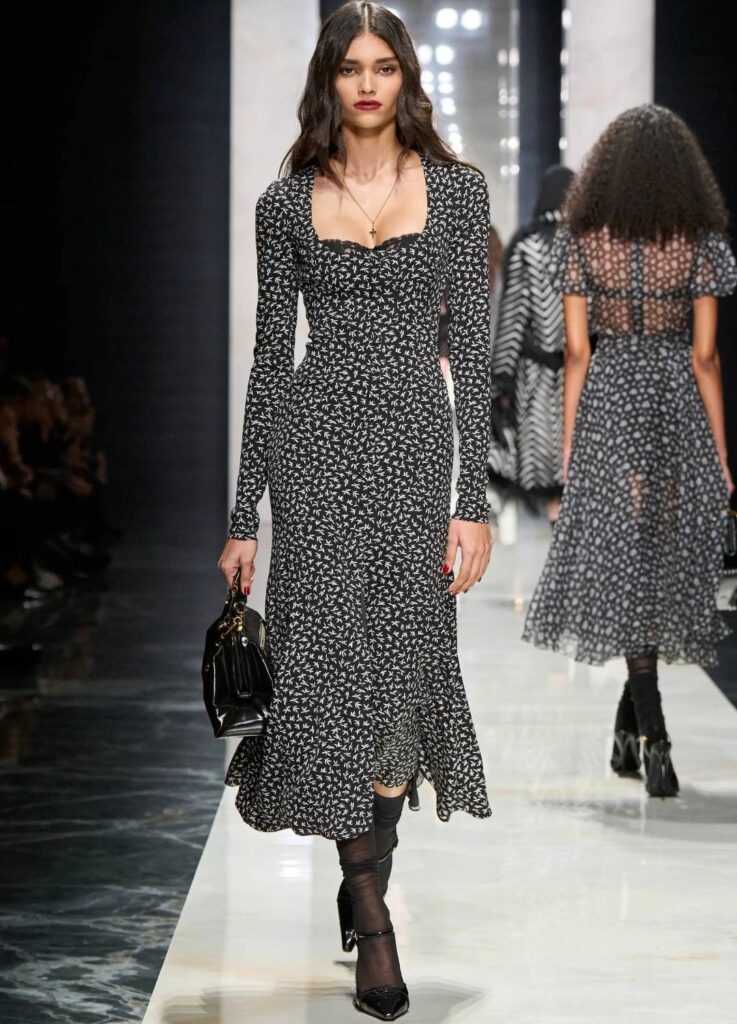
Wearability and Body Considerations
The structured hourglass tailoring favors:
- Defined waistlines
- Balanced shoulder proportions
- Clear torso structure
Consumers preferring oversized or volume-forward silhouettes may find the shaping directive. Those seeking polished evening authority may find immediate utility in the jackets and coats.
Tailored black blazers remain commercially stable luxury categories.
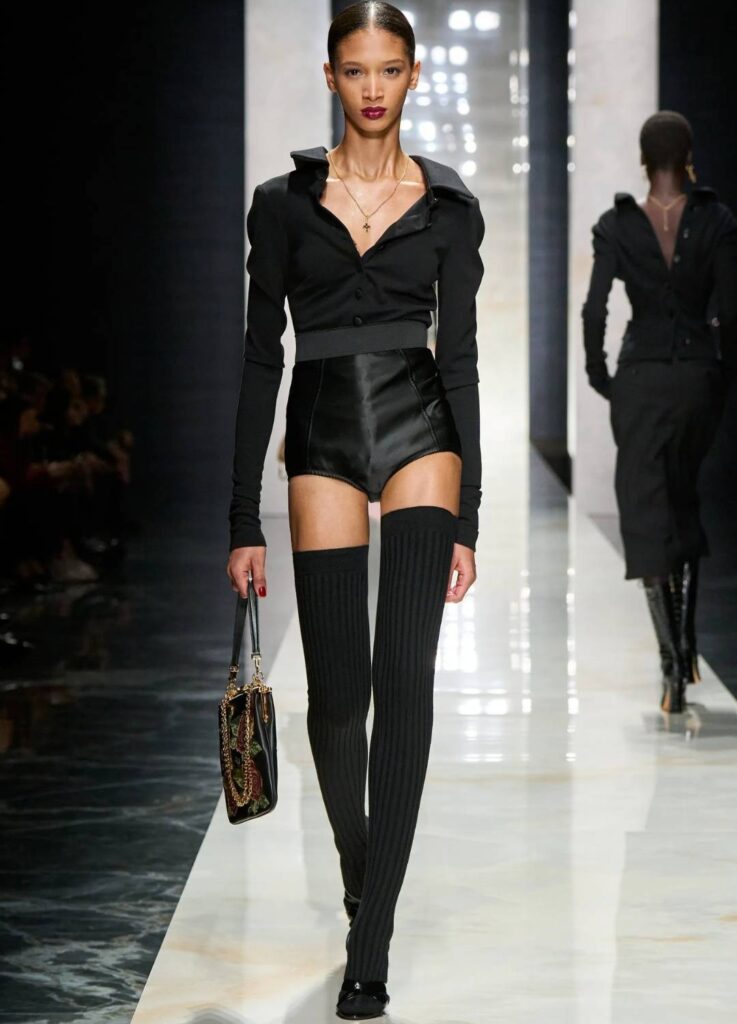
Critical Reception
Early industry responses describe the collection as:
- Faithful to house DNA
- Confident in craftsmanship
- Less experimental than some Milan peers
Critics remain divided between viewing the approach as predictable versus strategically consistent.
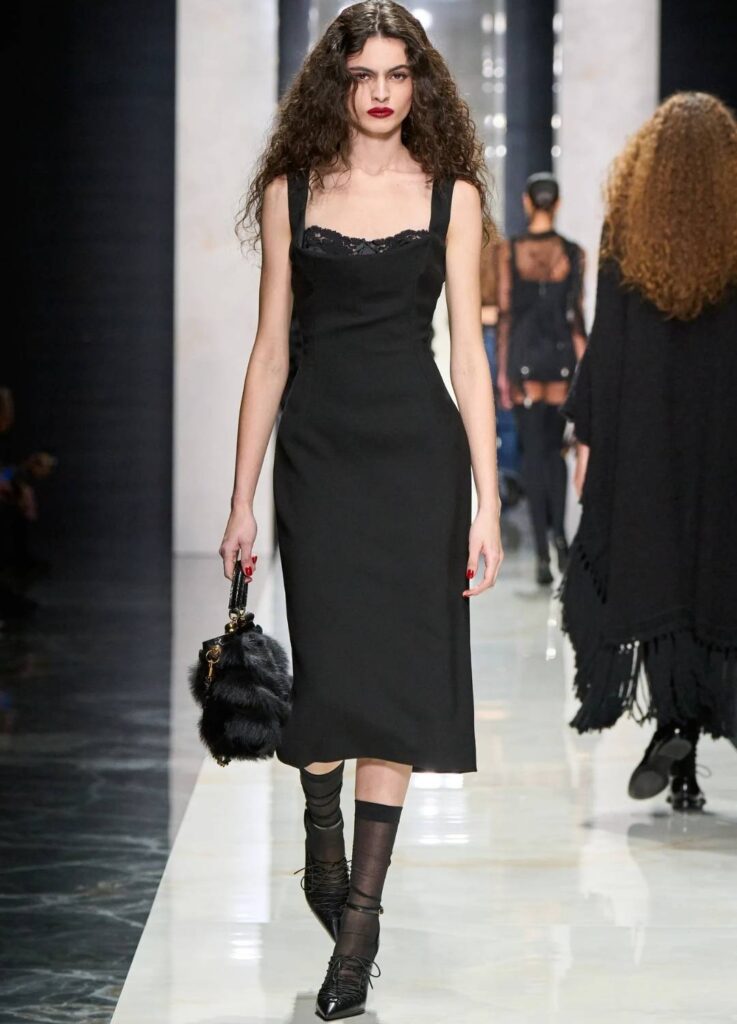
Final Assessment
Dolce & Gabbana Fall/Winter 2026 reinforces rather than reinvents.
Black tailoring, lace layering, and structured femininity reappear not as archival citation, but as reaffirmed vocabulary.
In a market preoccupied with change, this collection demonstrates commitment to continuity.
Whether interpreted as conservatism or clarity, it is internally coherent.
And coherence, in luxury branding, is a form of capital.
[ Related Editorials ]