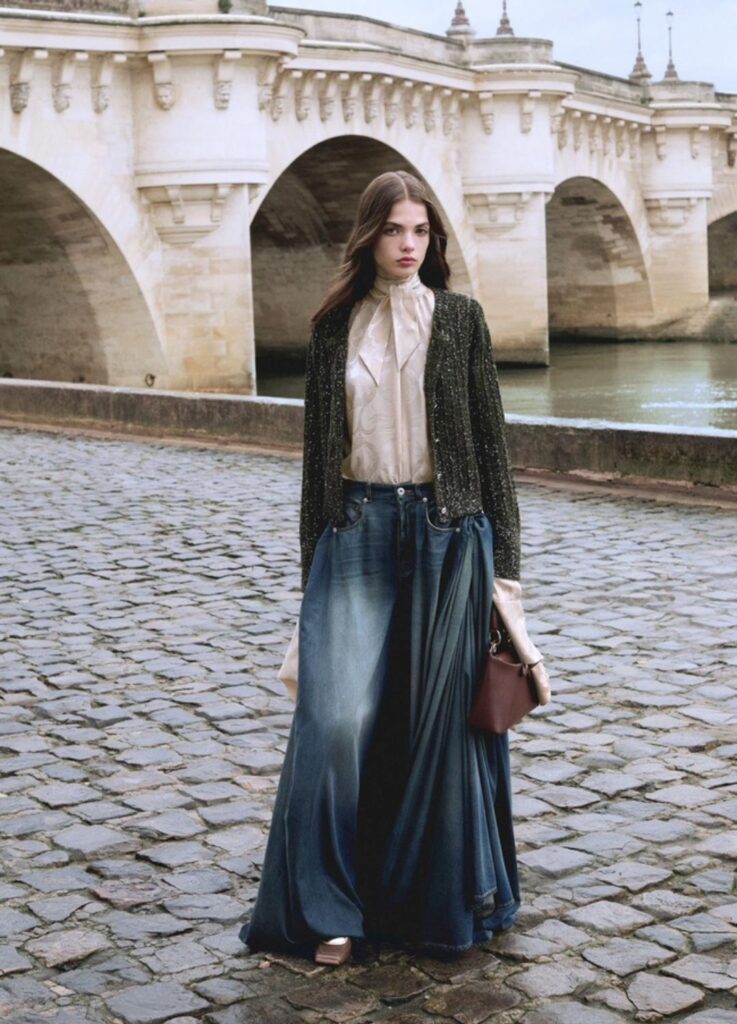
Dior Pre-Fall 2026 does not arrive as a finished statement.
It feels closer to a process—Jonathan Anderson carefully re-selecting the words of Dior, rather than rewriting them outright.
Denim, the Bar jacket, and the idea of plural Dior women.
Not one archetype, not one silhouette, but a wardrobe that moves with the city rather than standing above it.
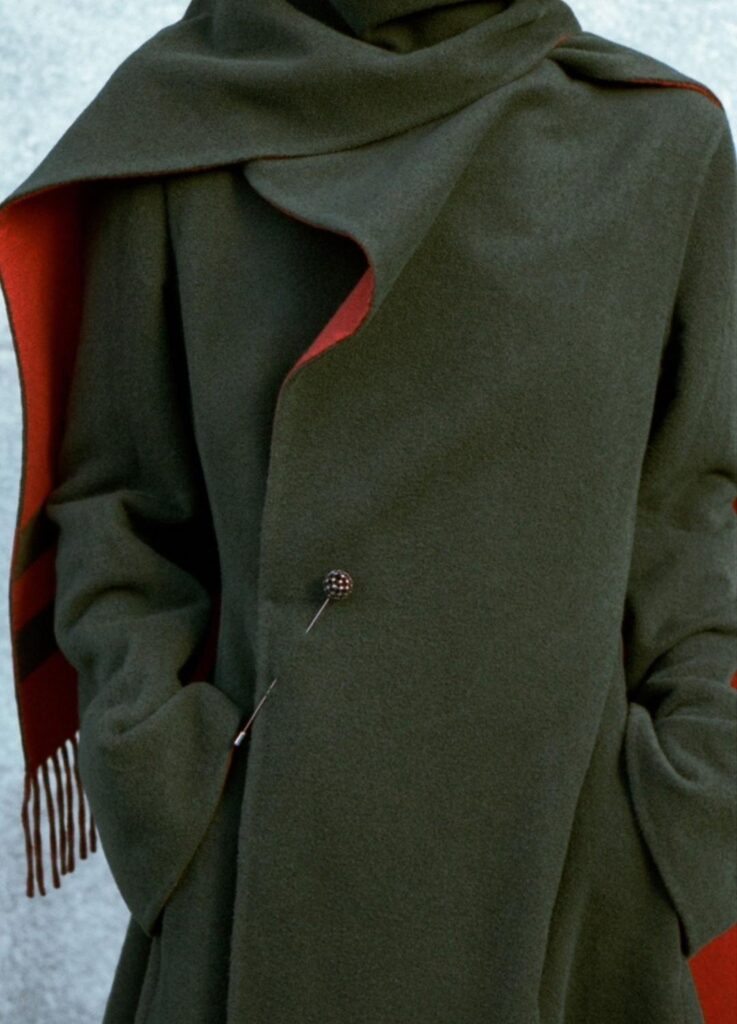
Set against the everyday scenery of Paris—the stone embankments along the Seine, the unembellished rhythm of walking and pausing—the presentation deliberately avoided spectacle. It unfolded less like a show, more like a sequence of lived moments. That choice alone signaled a shift.
This was not about announcing a “new Dior.”
It was about returning Dior to clothes.
Back to Garments, Not Declarations
In recent seasons, Dior has often leaned on symbolism—narratives of womanhood, historical gestures, or conceptual framing that sometimes overshadowed the act of dressing itself. Pre-Fall 2026 moves differently.
Here, the emphasis returns to balance: how a jacket sits when worn open, how a skirt moves below the calf, how weight is distributed across the body rather than imposed upon it.
The clothes do not explain themselves. They function.
That restraint feels intentional. Anderson appears less interested in grand pronouncements than in restoring ease to a house long associated with perfection so refined it risked becoming immobile.
A Foundational Question
Anderson framed the season around a simple but telling question:
“How do we remove the stifling-ness of Dior?”
The “stifling” he refers to is not heritage itself, but the condition of heritage when it becomes too complete—too polished to evolve. Pre-Fall 2026 answers this not with disruption, but with recalibration.
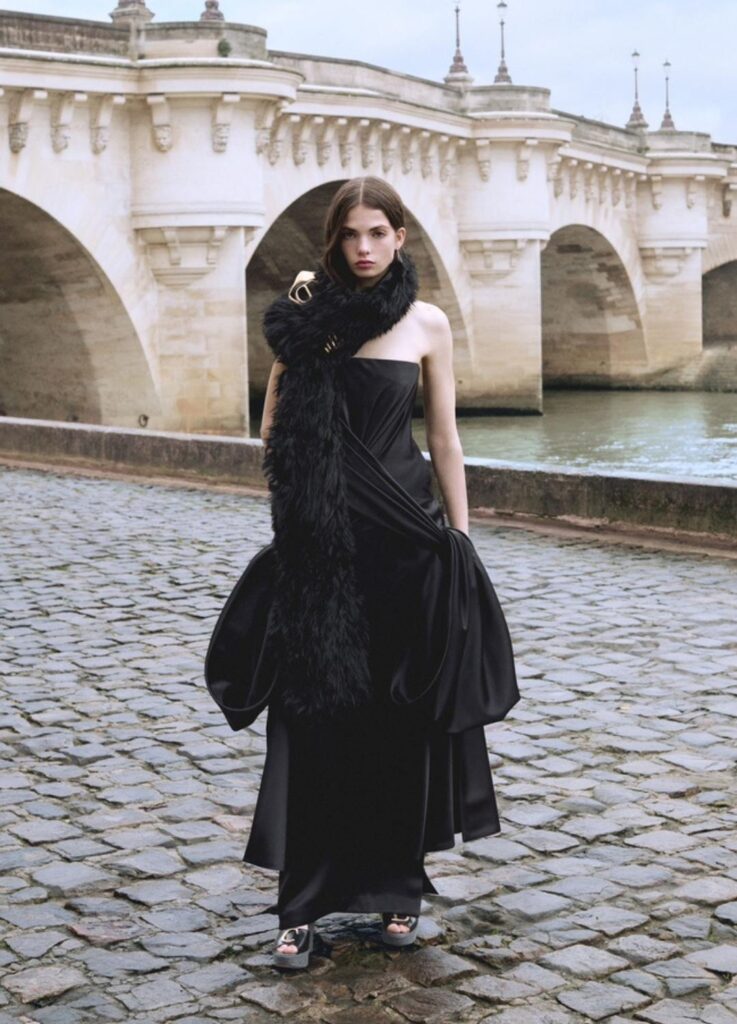
Instead of a single Dior woman, the collection proposes Dior women, plural.
Different lives, different rhythms, coexisting within one structural language.
Plurality and the Shared Wardrobe
This plurality defines the collection’s breadth. Tailored coats, cocktail dresses, tulle pieces, denim, trenches, and evening silhouettes appear side by side without hierarchy.
What prevents this range from feeling unfocused is structure.
Across categories, Dior’s grammar—proportion, line, and restraint—remains consistent. The clothes speak different dialects, but they belong to the same language.
This is not eclecticism for its own sake. It’s an argument against stylistic absolutism.
Silhouette: Line First, Ornament Later
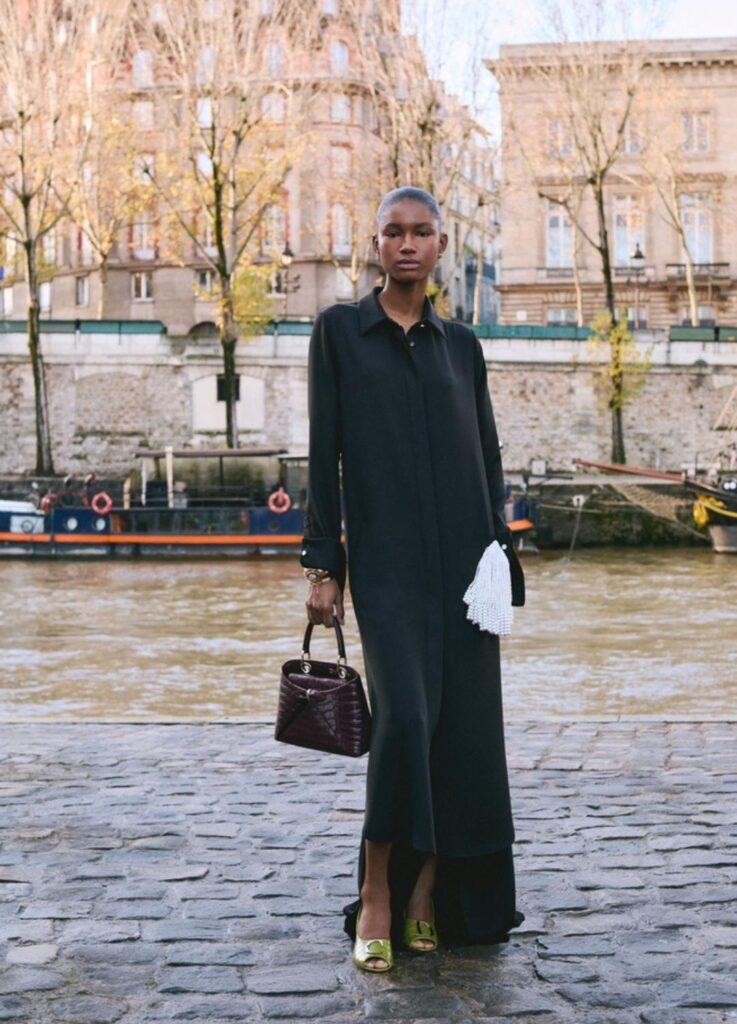
Silhouette is where the collection is most persuasive.
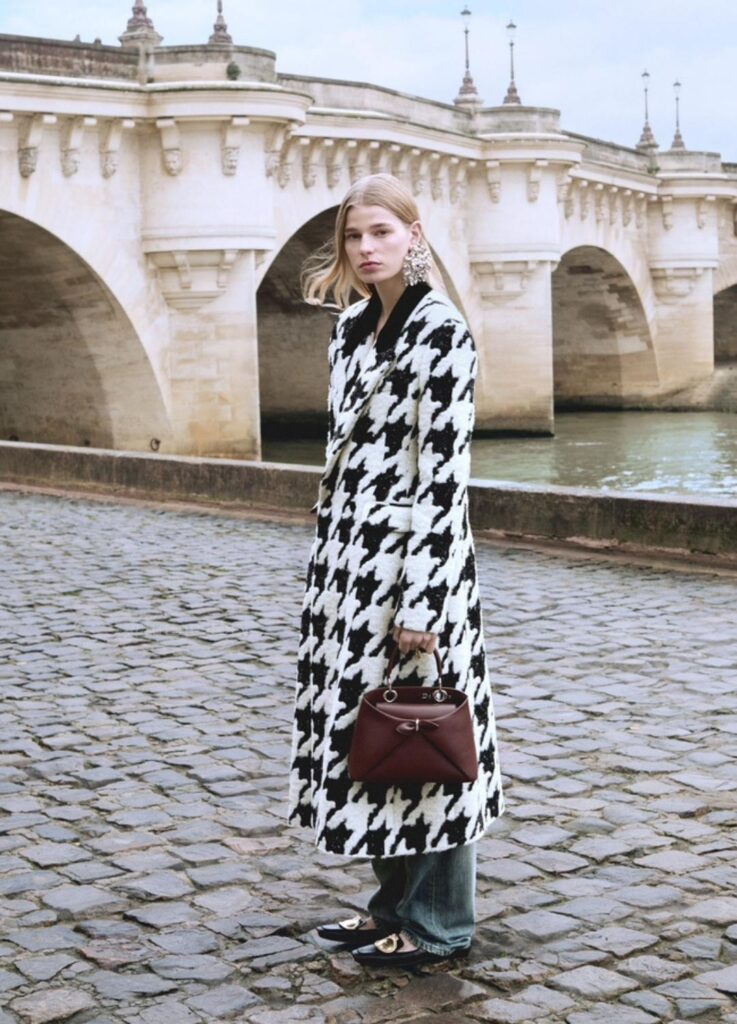
Waists are suggested rather than cinched. Shoulders carry shape without exaggeration. Trousers fall long and fluid; skirts pause deliberately below the calf. Jackets are compact; bottoms extend, creating a visual dialogue between upper and lower body.
Notably, the relationship between jackets and skirts feels recalibrated—shorter, controlled tops paired with elongated, flexible bottoms. It’s a quiet step away from the romantic excess Dior has recently explored.
The body is neither constrained nor idealized. It is followed.
Materials: Between Seasons, Without Drama
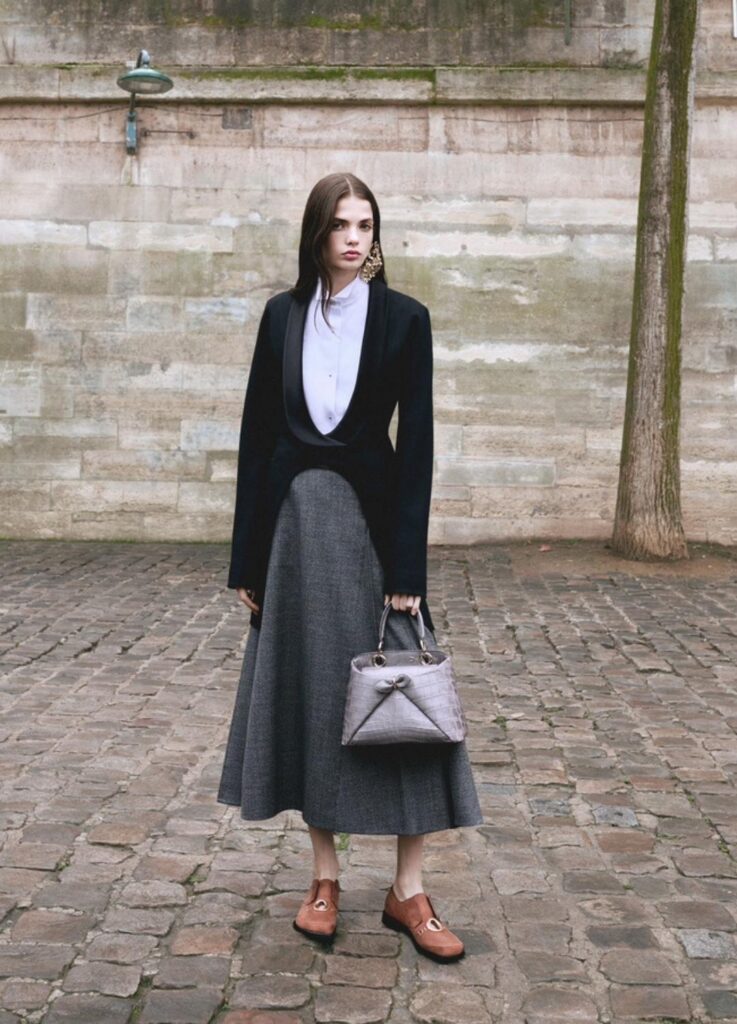
Pre-Fall lives between climates, and the fabric choices respect that ambiguity.
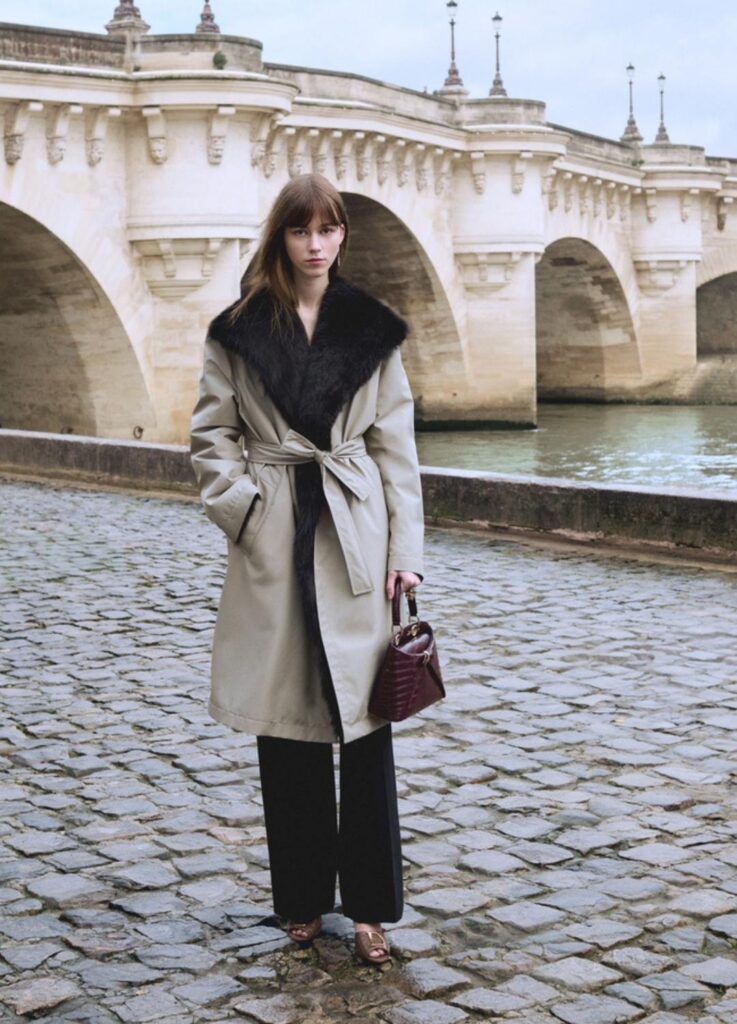
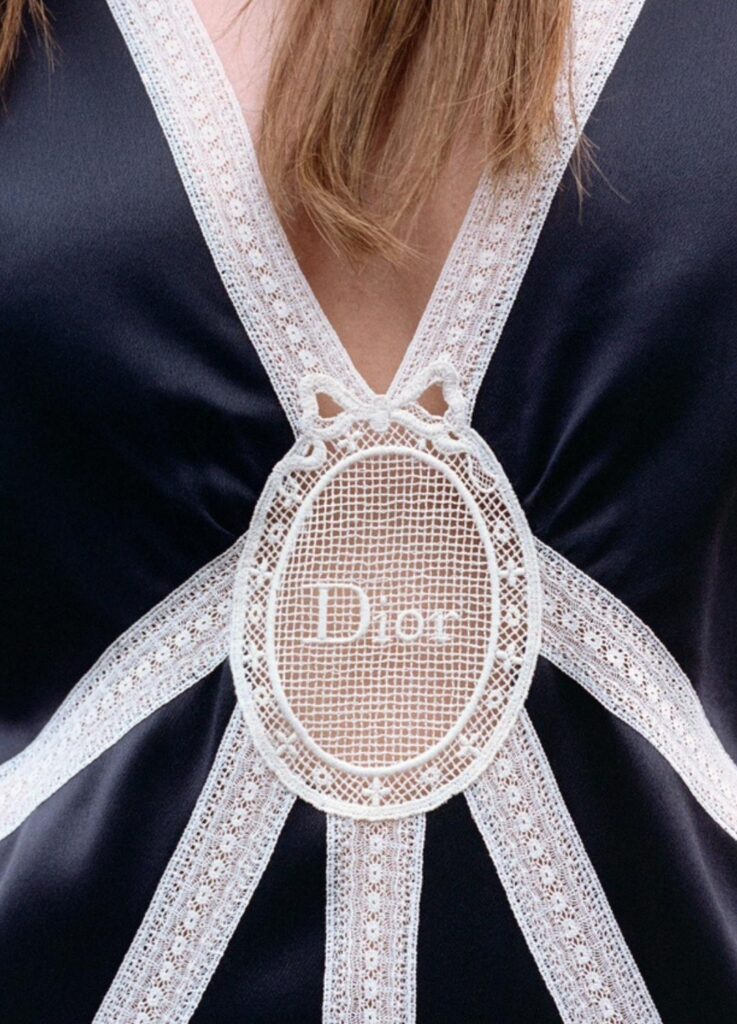
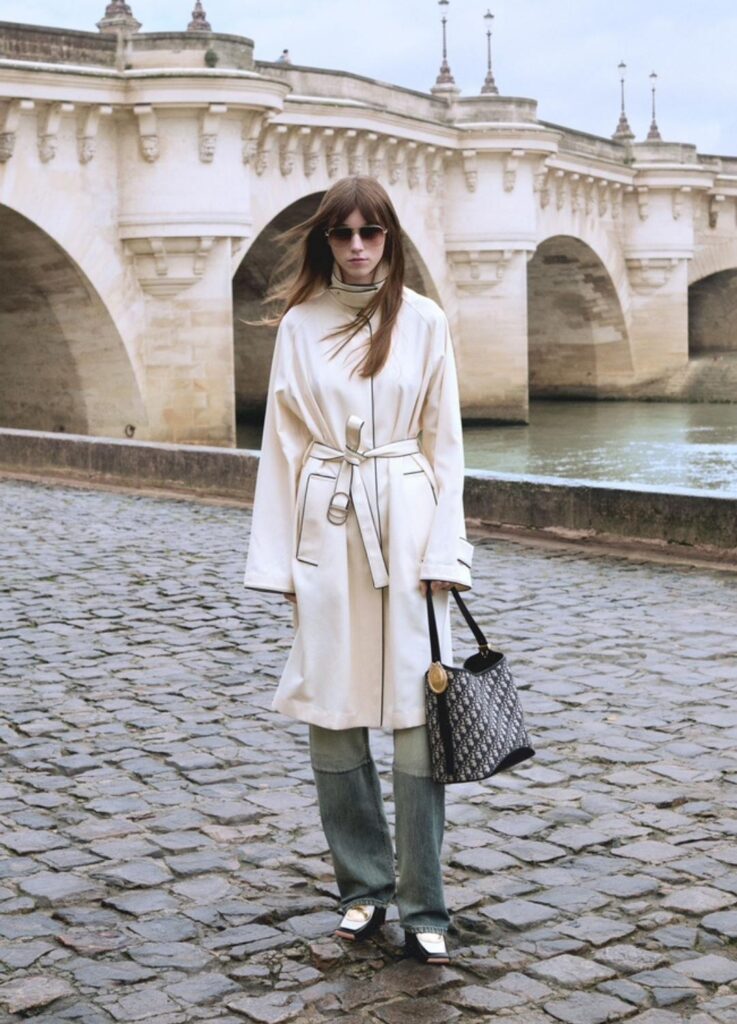
Tweed, wool, fur, lace, silk satin, and denim appear throughout, but none are treated as ornament. Fur becomes structural rather than decorative. Lace operates as texture, not romance. Even white looks avoid brilliance, leaning instead toward winter-muted, Parisian greys.
The materials serve movement more than image.
Color: Dior Neutrals Reconsidered
The palette centers on black, ivory, grey, khaki, and brown. Yellow, blue, and green appear sparingly, always subdued.
The yellow dress—one of the collection’s most discussed moments—is memorable not for brightness, but for density. It holds space rather than demanding attention.
Color here supports silhouette. It does not compete with it.
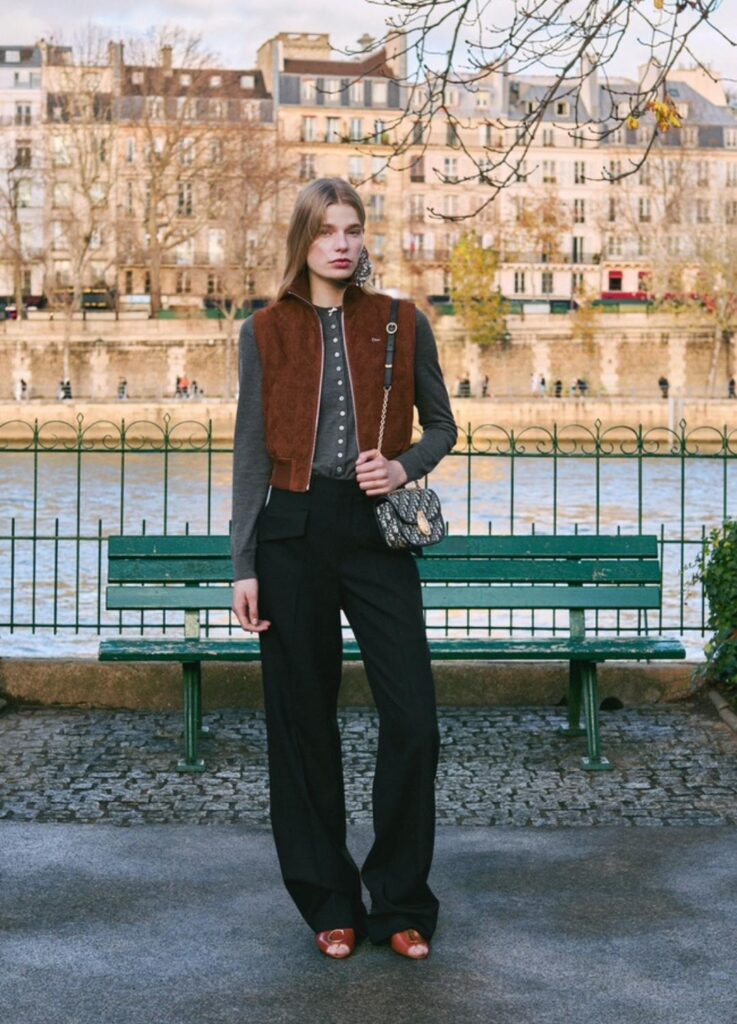
The Bar Jacket, Released
The Bar jacket appears repeatedly, but without rigidity.
No tightly cinched waists. No forced hourglass.
Instead: looser stitching, ambiguous tailoring, jackets worn open or casually layered.
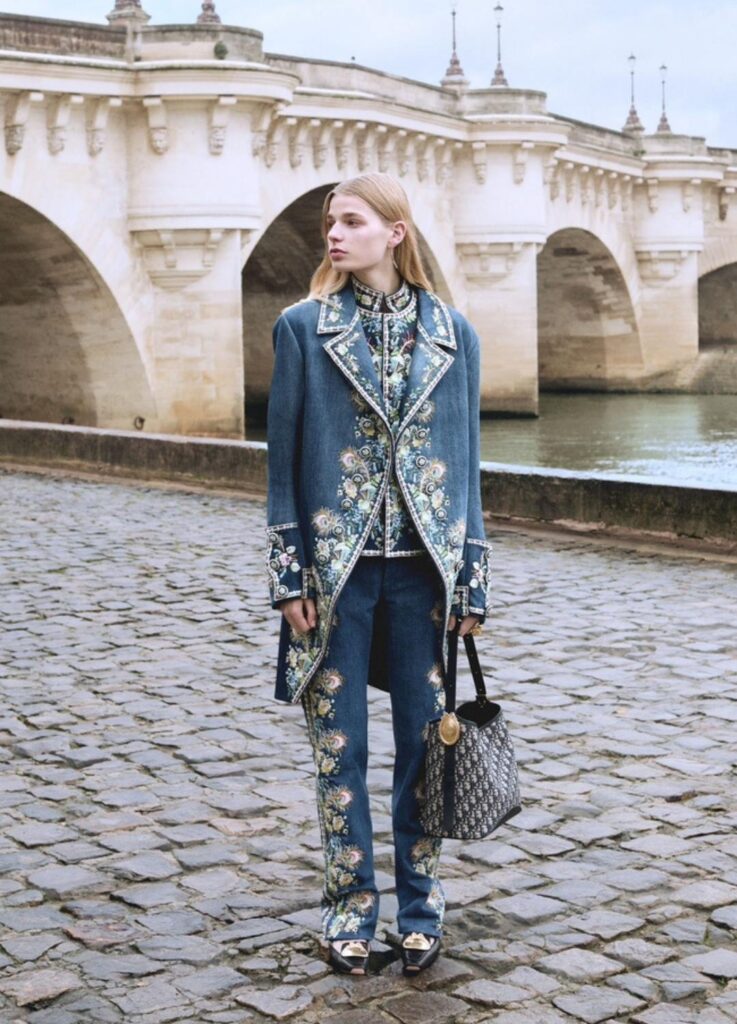
The Bar jacket shifts from icon to uniform—less emblematic, more usable. Fashion editors have described it as a “cool French-girl uniform,” and the phrasing fits. The symbol moves from archive to wardrobe.
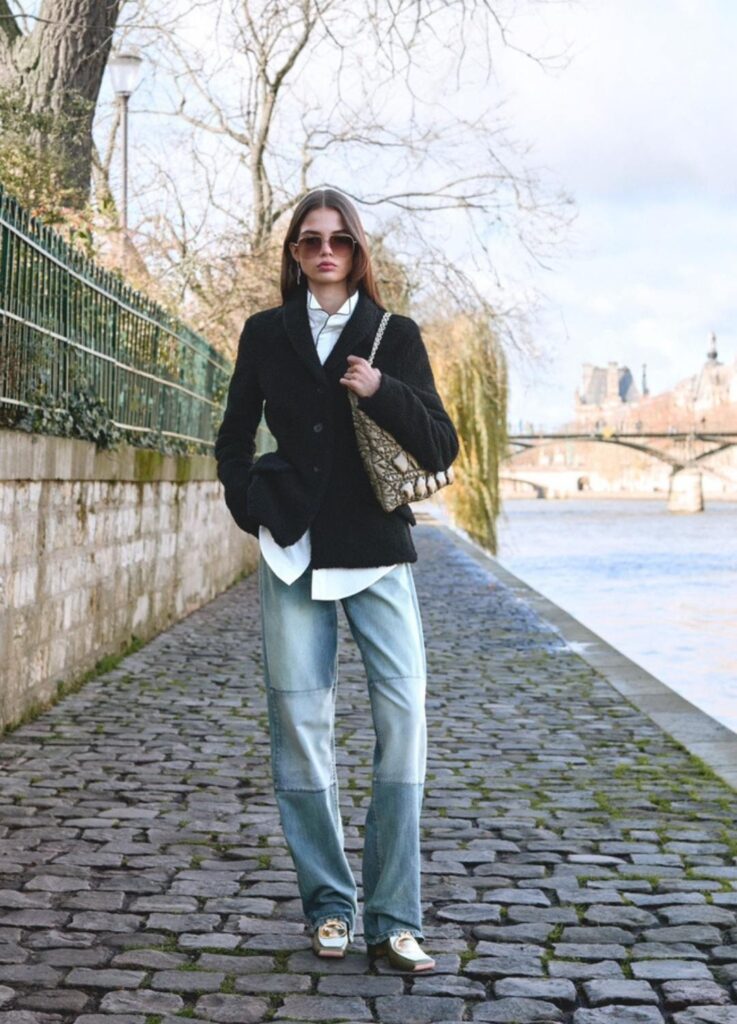
Denim: The Most Contemporary Gesture
Denim emerges as the season’s most modern note.
Wide, sculptural denim trousers—almost skirt-like in volume—stand by the Seine with quiet confidence. Anderson describes them as starting from a familiar jeans outline, then expanding sideways with couture volume.
This gesture subtly references Dior’s own archive, particularly the winged side cuts of the 1949 Delft dress—translated here into streetwear.
Street, yet haute.
Ordinary, made extraordinary.
It’s also a clear directional signal: Dior’s future may unfold less on the runway, more in motion.
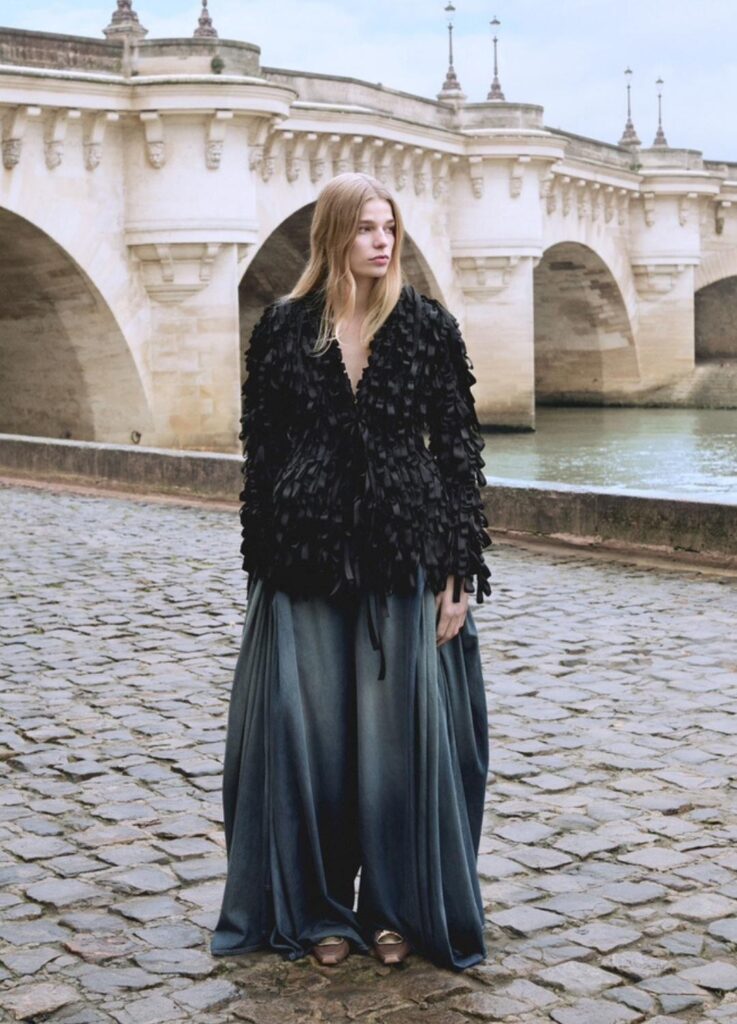
Bias Cut and the Post-Galliano Lineage
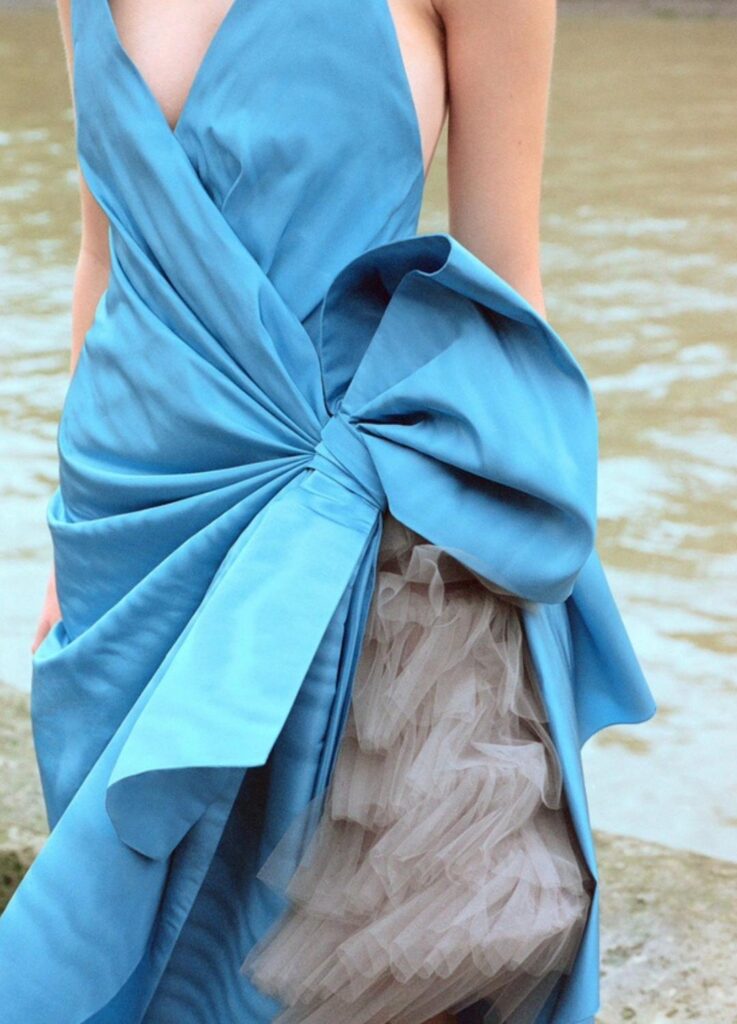
Anderson positions himself within Dior’s continuum, not against it. His reintroduction of the bias cut—most visible in silk and sequin dresses—marks a quiet but significant return.
Since Galliano, Dior has rarely allowed bias to speak so clearly. Here, dresses skim the body without announcing construction. Technique remains present, but discreet.
The result is sensual without display.
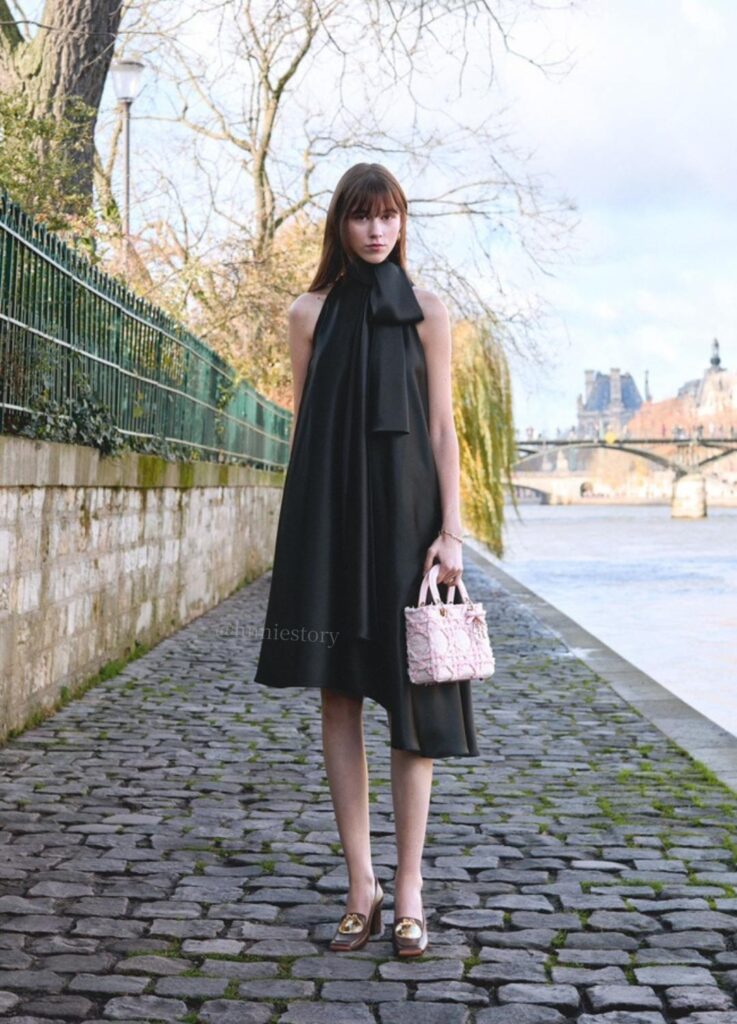
Jewelry and Objects: Anderson After Loewe
Accessories deserve attention.
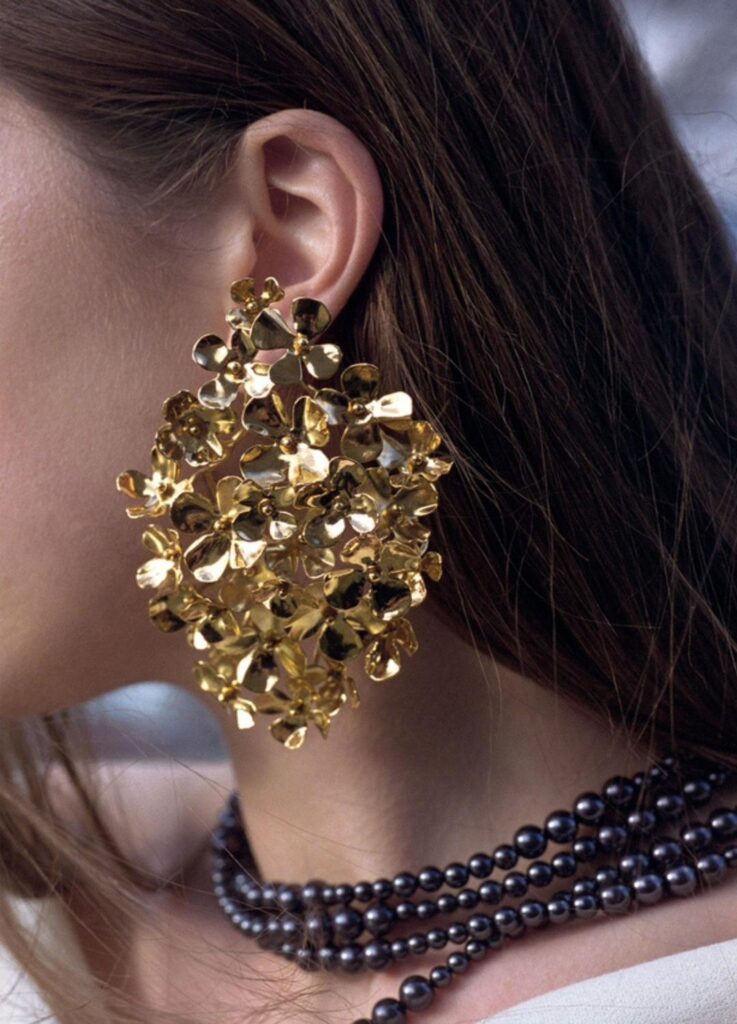
Large metal floral earrings, mixed-media constructions combining crystal, cabochon pearls, and bows, and rings with mechanical interiors all point toward Anderson’s interest in tactility.
These are not embellishments. They are attempts to make Dior a brand you touch, not just observe.
His Loewe-era instincts—objecthood, curiosity, material intelligence—are fully present here.
Critical Reception: Order Over Shock
International responses have been largely measured and favorable.
- Vogue noted Dior’s return to wearable intelligence and balance.
- WWD described the collection as one of the house’s most stable intersections of commerce and couture.
- BoF framed it as a season of clarification rather than innovation.
The recurring terms are refinement, structure, and everyday relevance.
Why This Collection Lingers
Dior Pre-Fall 2026 is not designed for instant impact. It doesn’t chase virality or theatrical climax.
Yet it holds attention.
Because the clothes never overpower the wearer.
Because they move at human speed.
Because they leave room for life.
This is a collection that may grow stronger with time—when revisited, when worn, when remembered not as spectacle but as rhythm.
And perhaps that is the quiet confidence of Anderson’s Dior:
when fashion steps back just enough for the person to remain at the center.
All images referenced in this post are drawn from Vogue Runway.
[ Related Editorials ]