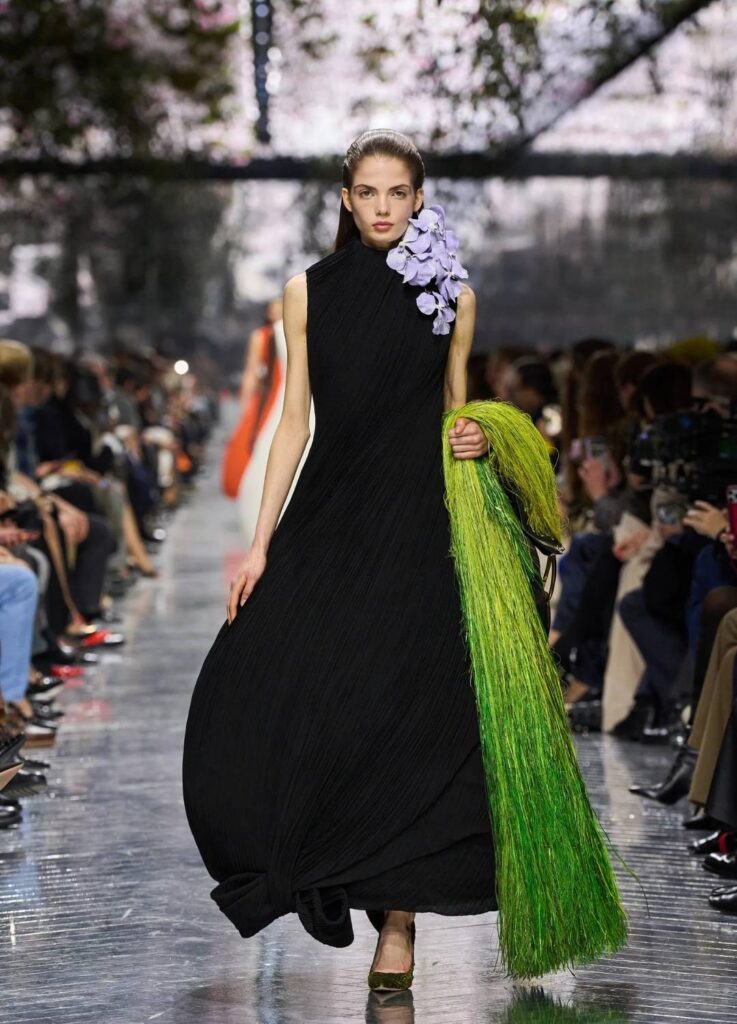
The Christian Dior Spring 2026 Haute Couture collection does not present a finished idea of beauty.
Instead, it unfolds like nature itself—adaptive, unstable, and constantly in motion.
There are no fixed conclusions in nature. Haute couture, Jonathan Anderson suggests this season, should follow the same logic. It is not a museum artifact to be preserved through repetition, but a form of knowledge that survives only through practice, experimentation, and the continued movement of the hand.
This philosophy is encapsulated in Dior’s own statement for the collection:
“La créer, c’est la protéger”—to create is to protect.
Tradition, here, is not safeguarded by being repeated, but by being enacted.
Haute Couture as a Living Practice
Anderson’s first couture collection for Dior positions the discipline not as an inherited aesthetic language, but as a working system. What exists only in the moment of making, and comes fully alive only when it encounters the body, is what deserves protection.
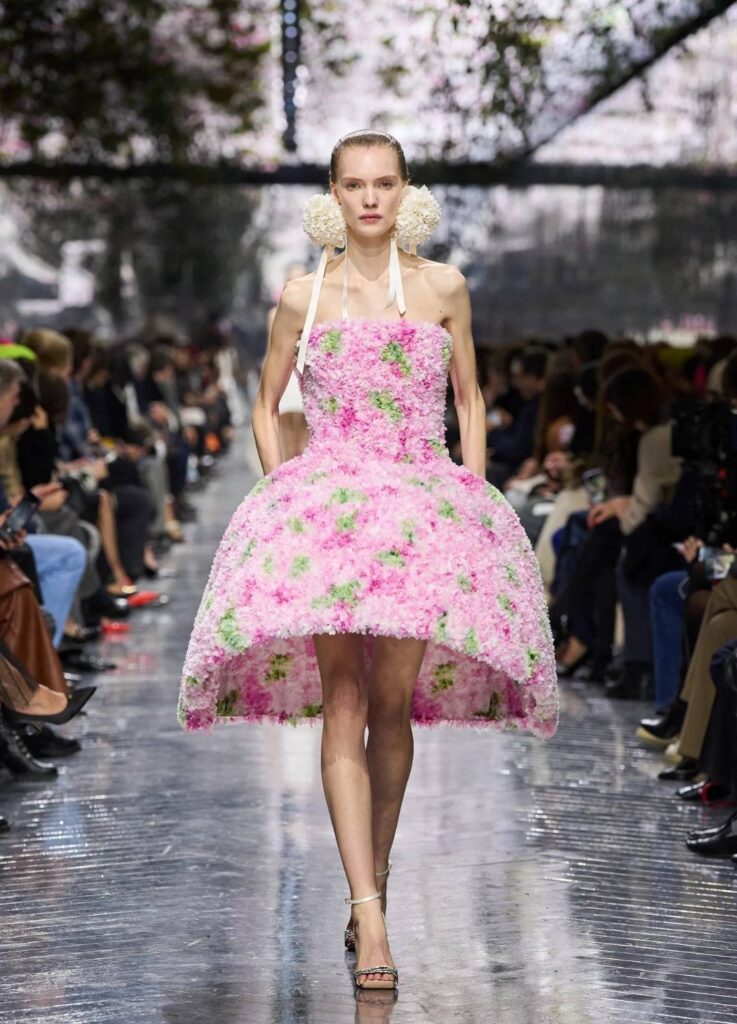
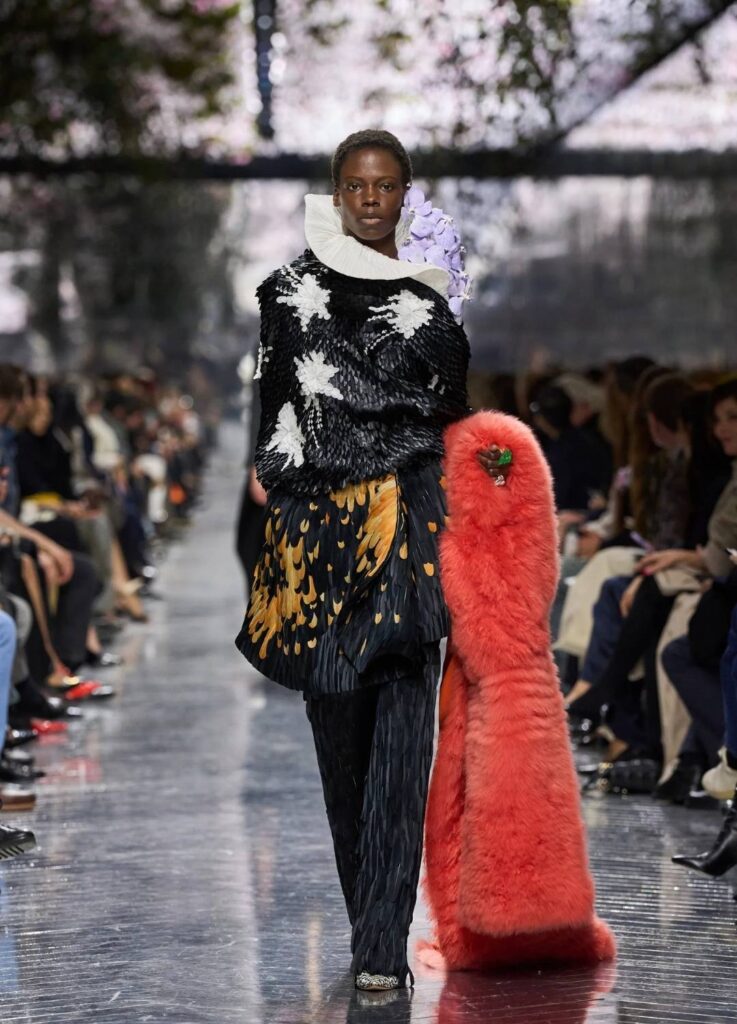
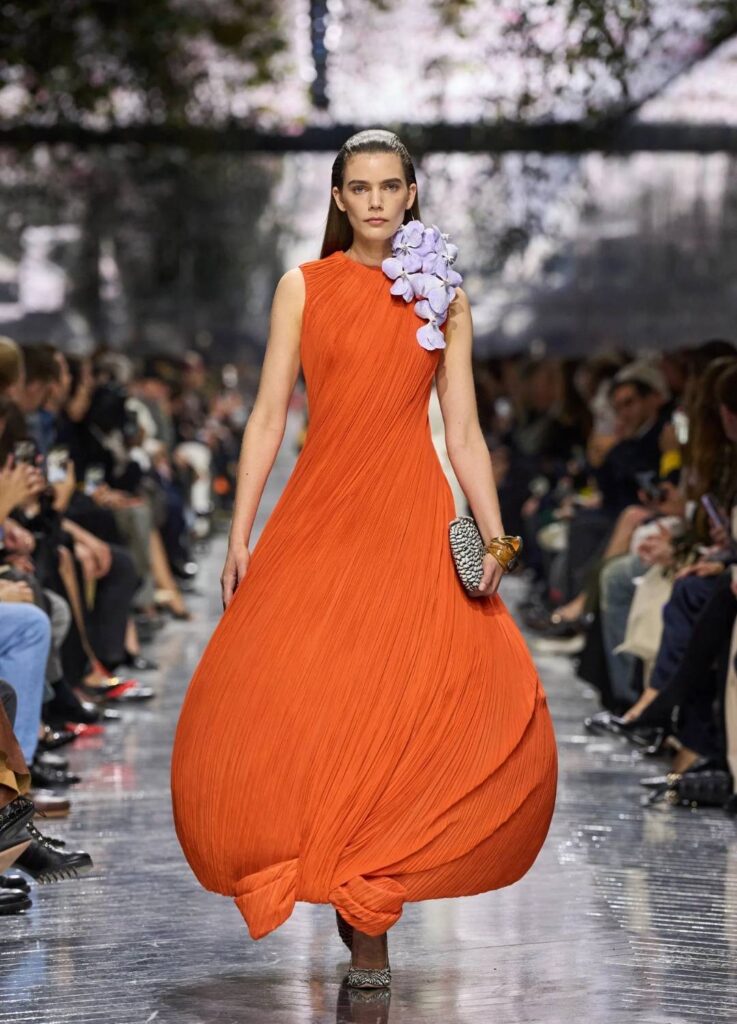
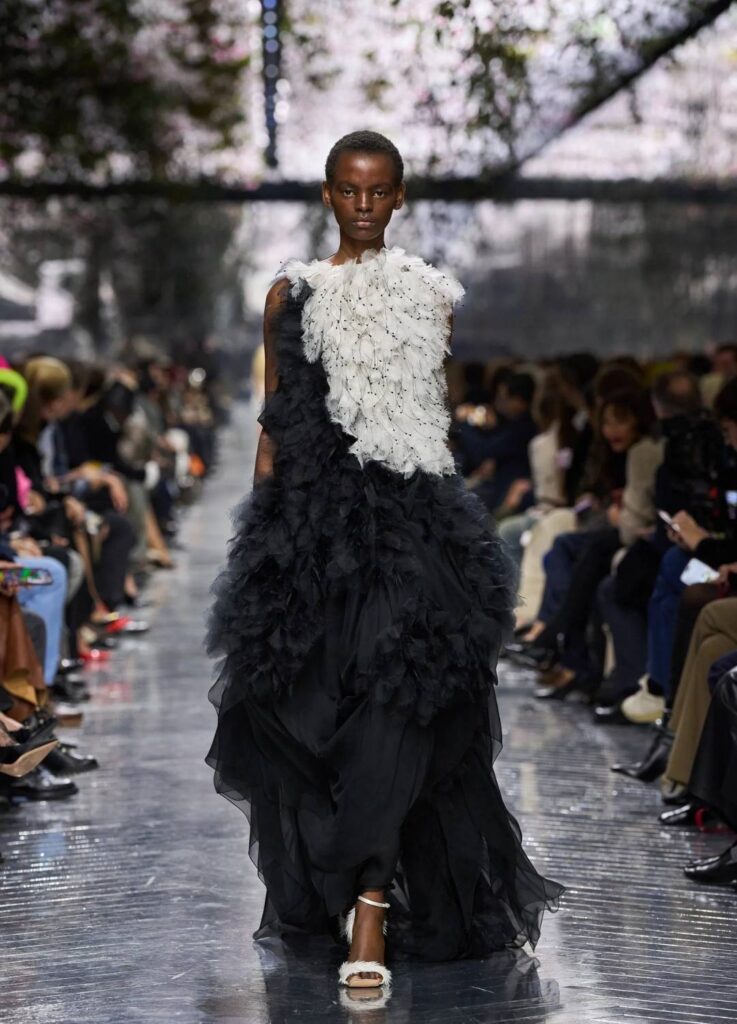
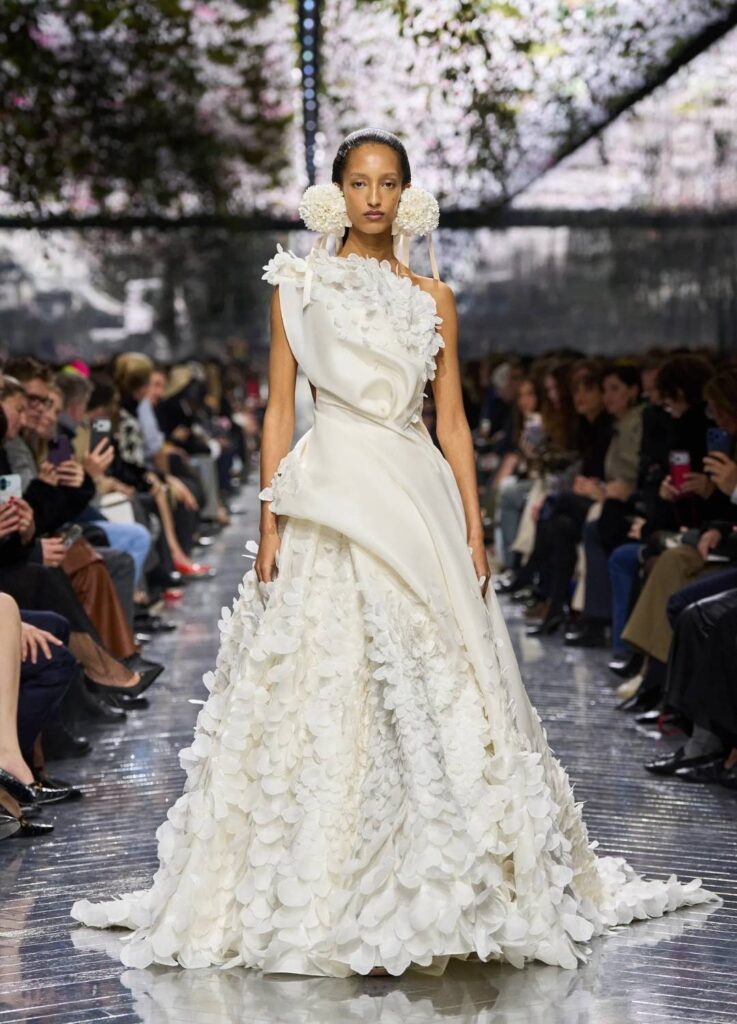
This approach explains the collection’s persistent refusal of equilibrium. Silhouettes drift, swell, tilt, and recalibrate themselves with movement. Dresses do not cling to the body; they orbit it. Volumes appear asymmetrical, hems subtly distort as they brush the floor, and proportions resist static resolution.
Rather than idealizing form, Anderson allows it to behave.
Couture, in this vision, is not about perfection—it is about responsiveness.
The Hydrangea Motif: Density, Time, and Emotional Weight
The symbolic anchor of the collection is the hydrangea.
Unlike flowers traditionally associated with fixed symbolism, the hydrangea resists singular meaning. Its color shifts with soil acidity; its appearance changes with time and climate. It is not perceived as an individual bloom, but as a clustered mass—density over definition.
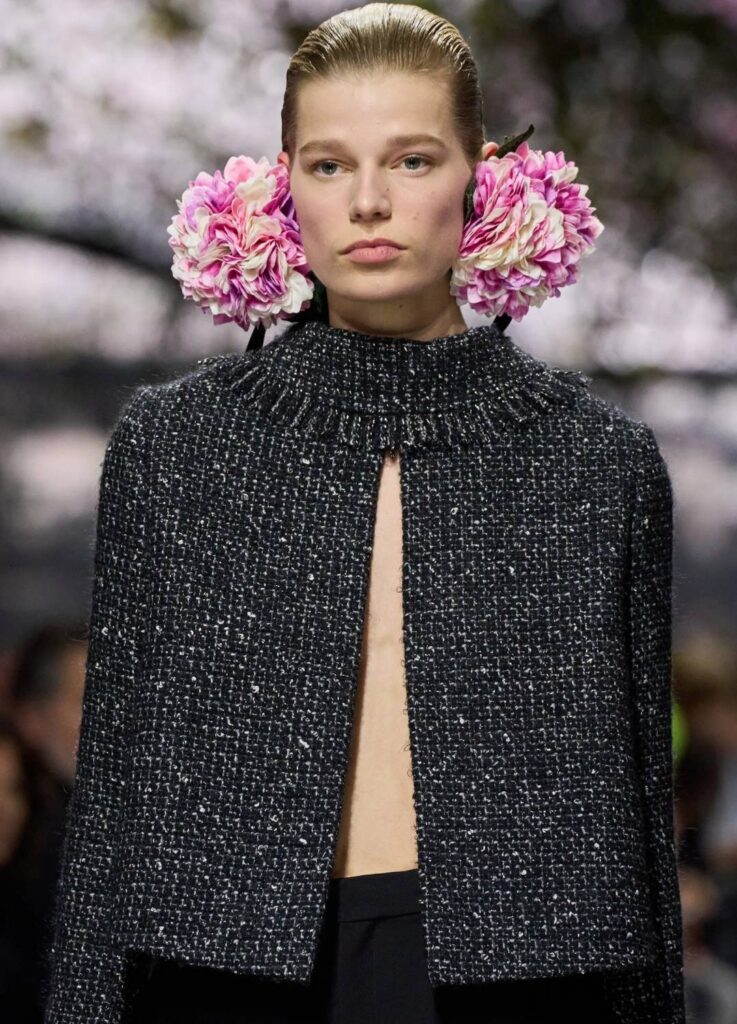
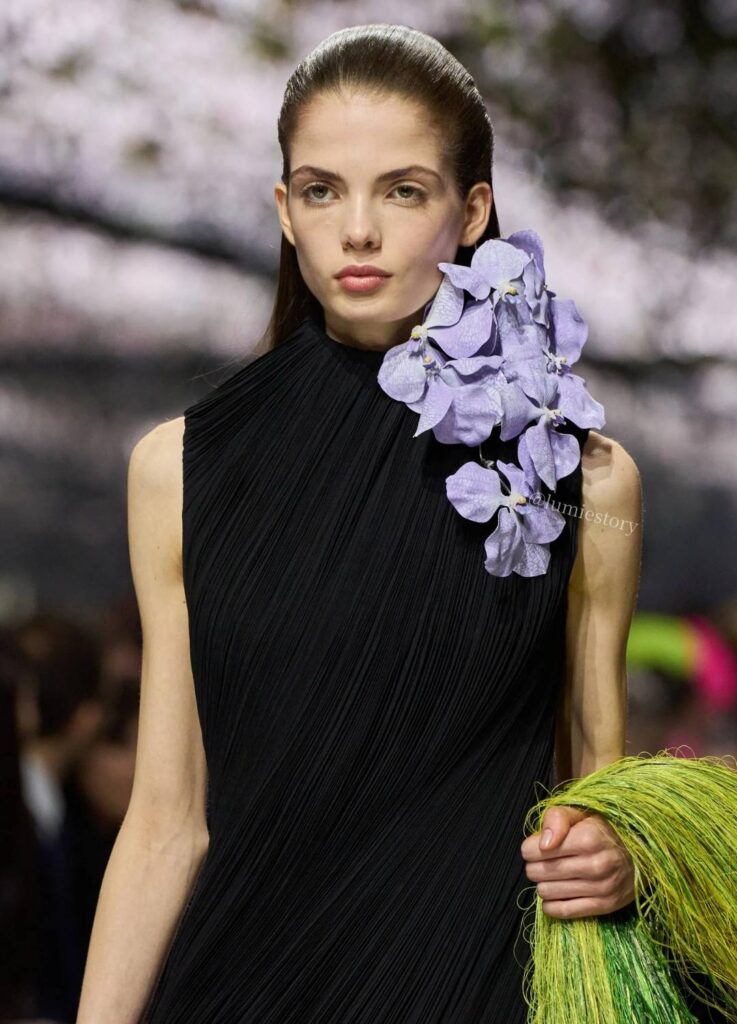
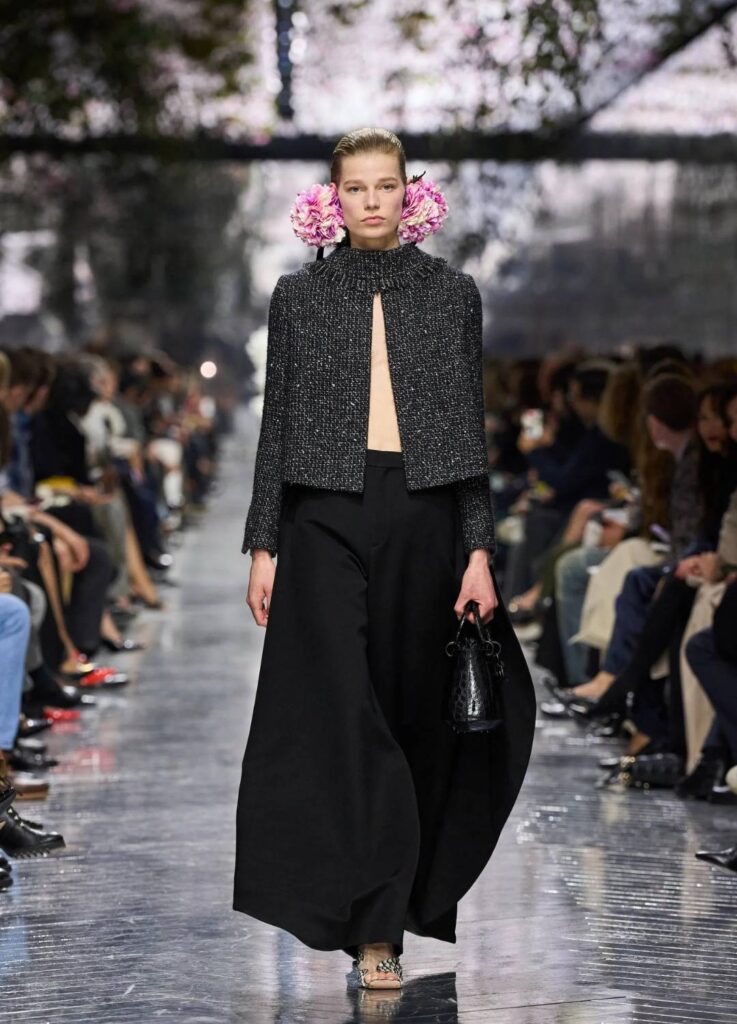
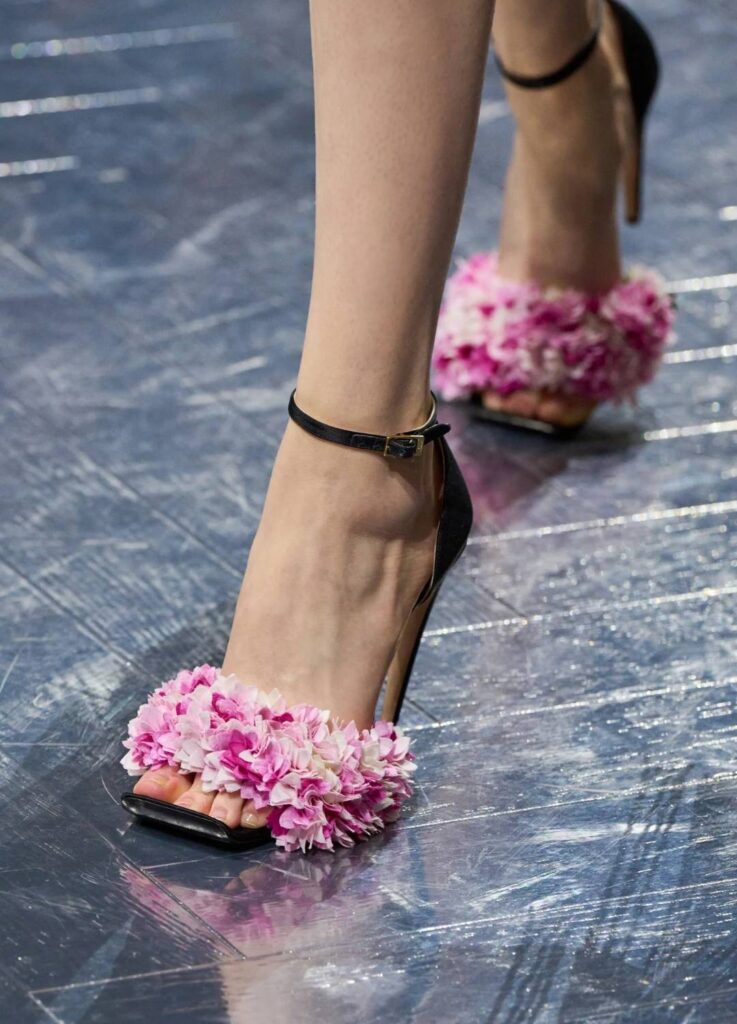
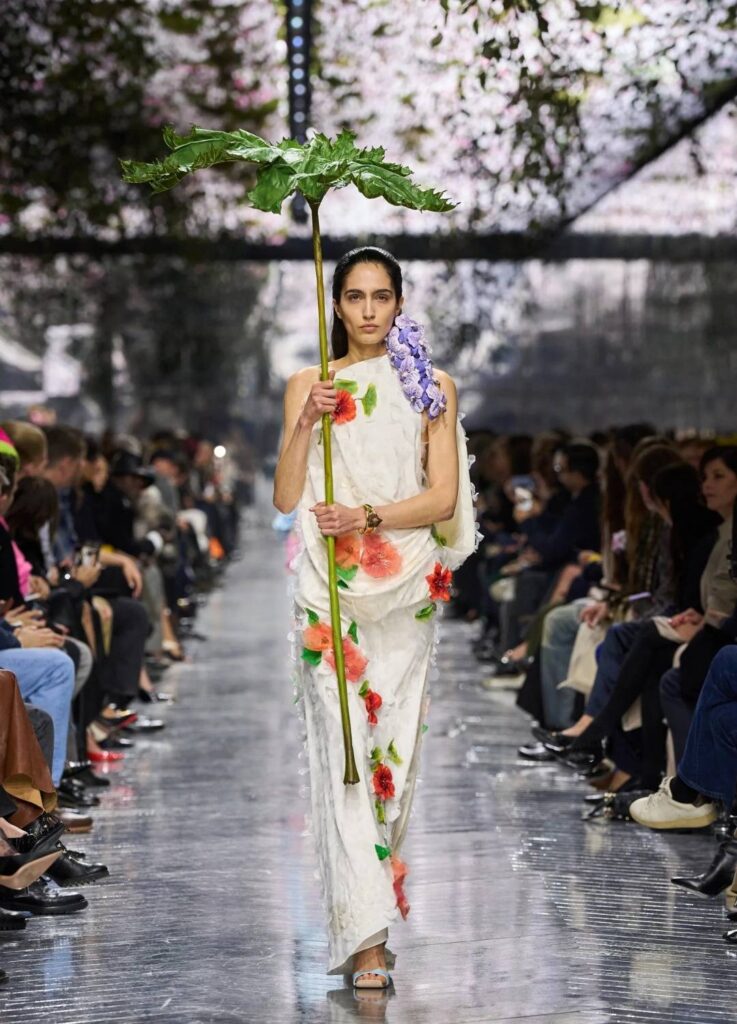
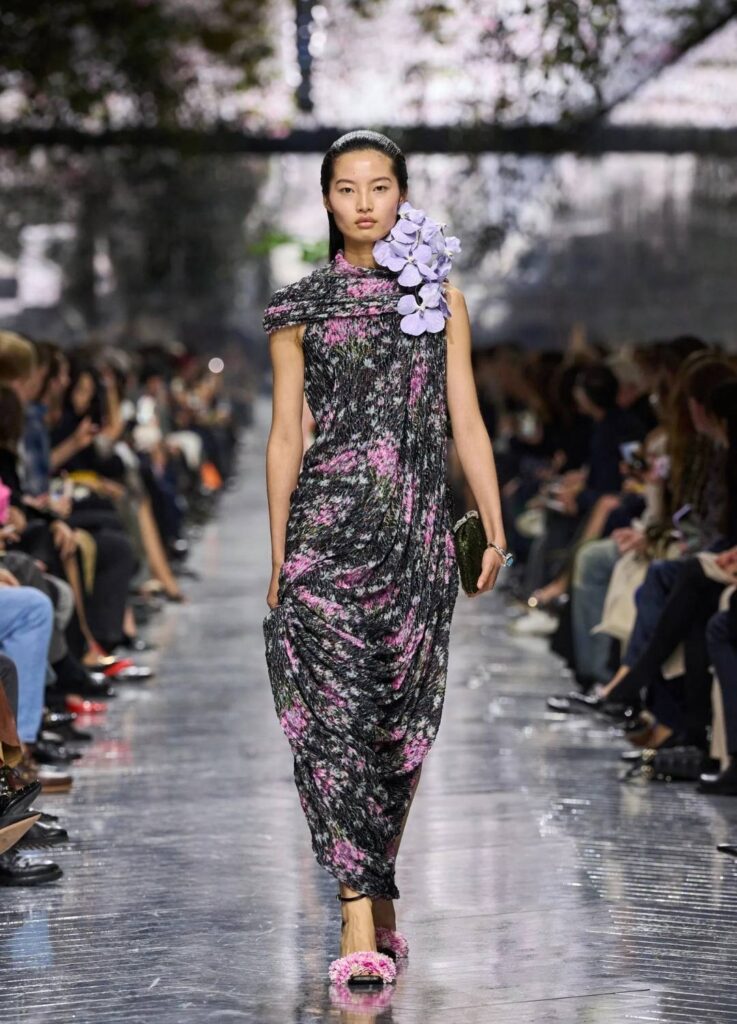
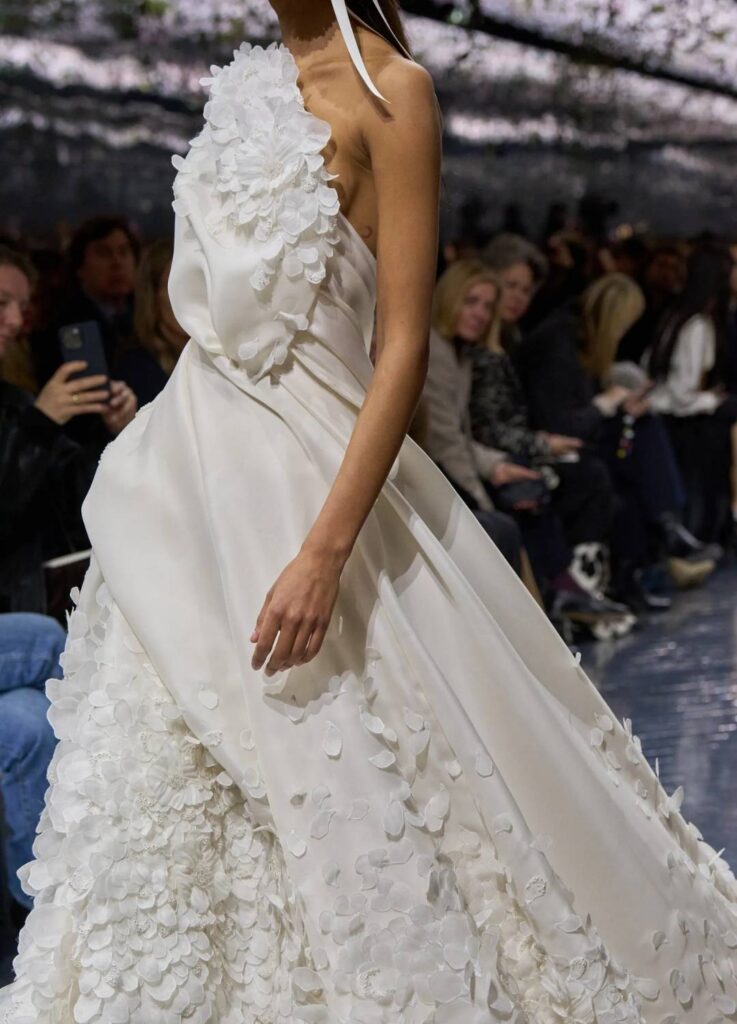
Anderson translates these qualities directly into couture logic. Flowers are not applied as decorative accents but integrated as structural elements within the silhouette. Hydrangea forms appear at the shoulder, encircle the ears, or hover at the edge of the body, carefully placed so they appear to have grown rather than been attached.
The result is not embellishment, but emotional weight.
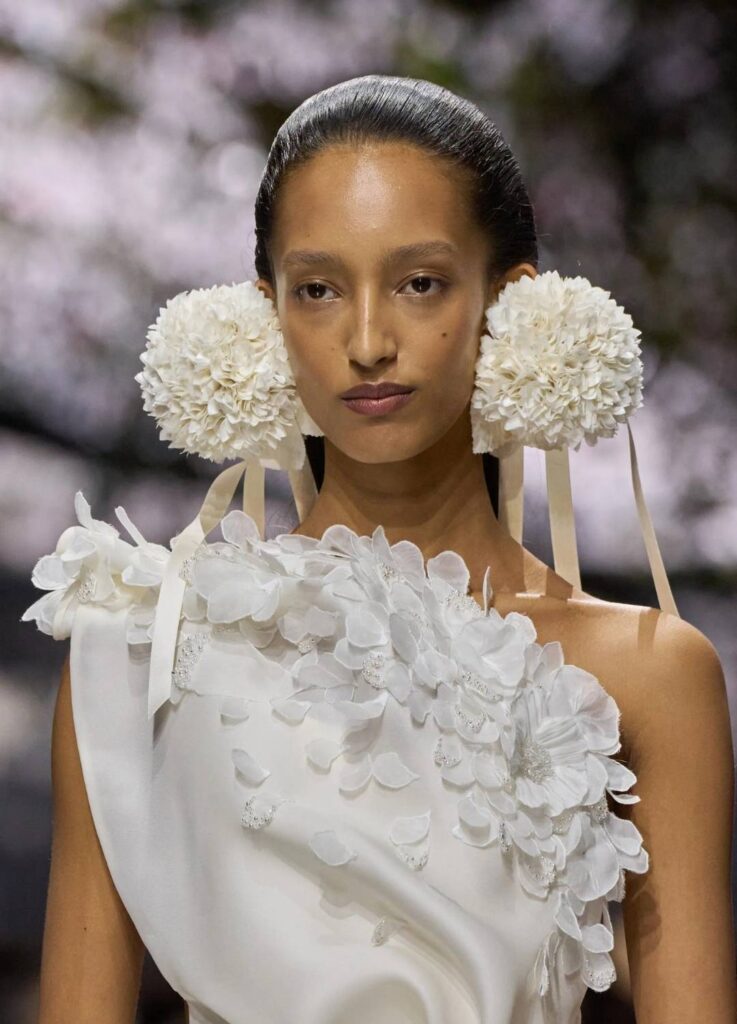
These floral volumes are calculated precisely, yet designed to feel organic—positioned as if they emerged naturally from the garment rather than interrupting it. In doing so, Dior’s couture moves away from idealized femininity and toward something more internal: presence, accumulation, and lived emotion.
Silhouette: Between Sculpture and Drape
Throughout the collection, silhouettes repeatedly expand, flow, and gather. Dresses rotate around the body instead of defining it. Ballooned skirts, offset volumes, and softly distorted hems create forms that complete themselves only through motion.
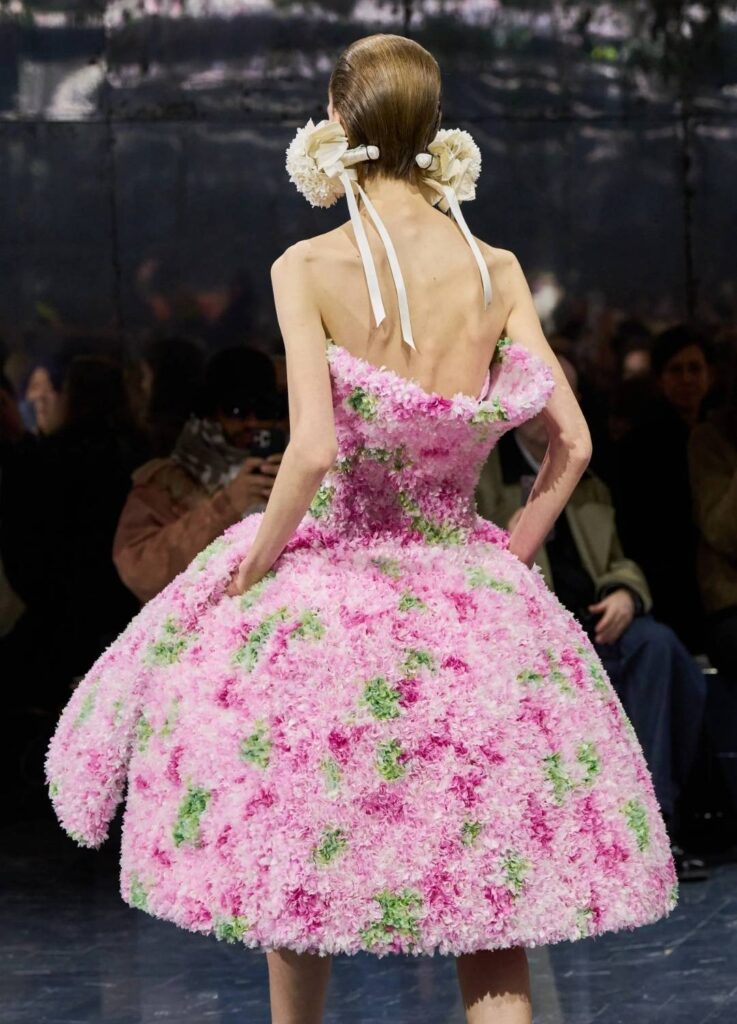
This approach aligns with Dior’s own references to the work of ceramic artist Magdalene Odundo, whose vessels balance symmetry and imbalance, control and spontaneity. Odundo’s influence is not quoted literally, but conceptually—through the prioritization of curvature, tactile tension, and the visibility of the maker’s hand.
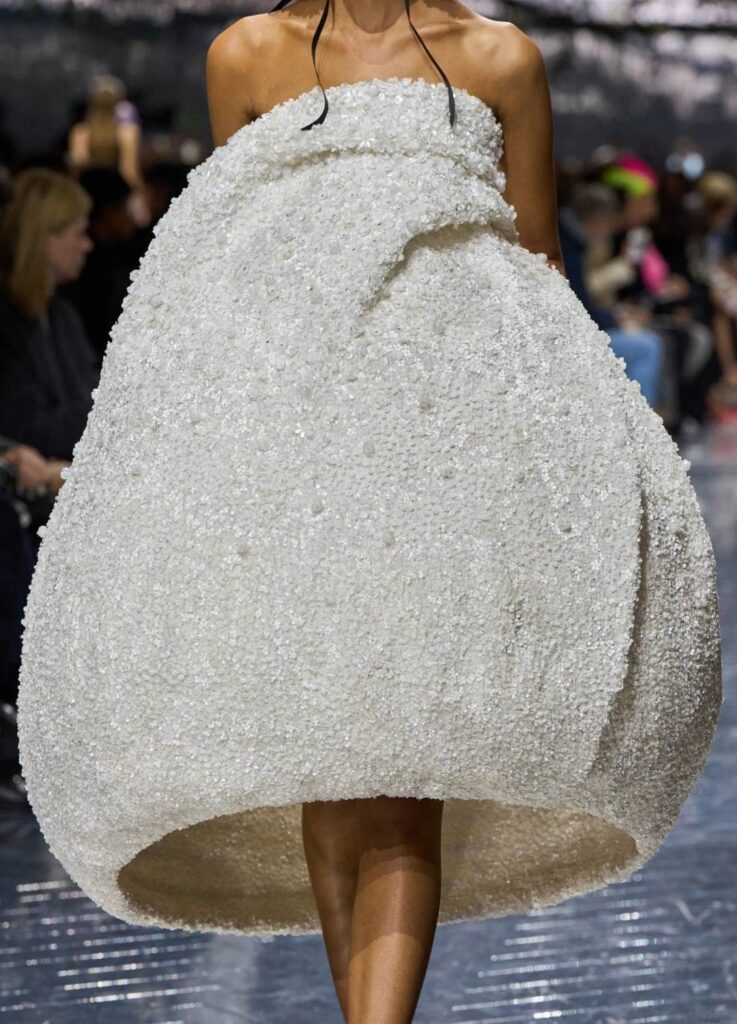
Like Odundo’s ceramics, these dresses favor presence over precision. They are structured without rigidity, organic without collapse. The beauty lies in that sustained tension.
This is couture understood as form in dialogue with gravity, time, and the body.
Exotic Bags: Craft at the Edge of Nature
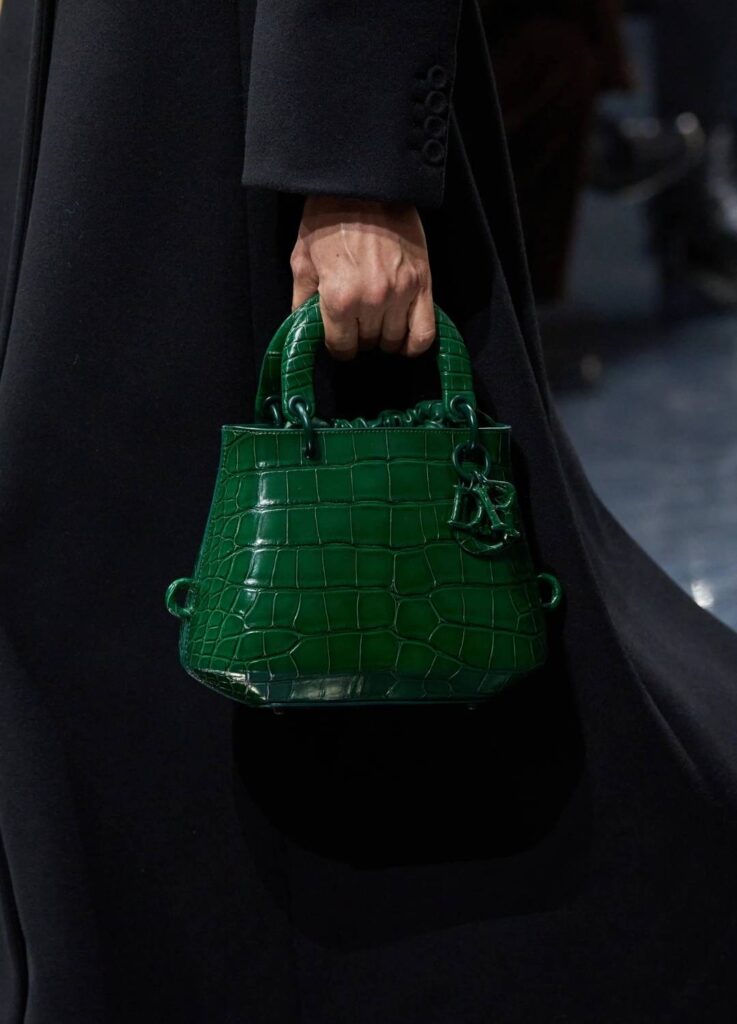
Scattered throughout the runway, the exotic bags function less as accessories and more as artifacts. Their textures evoke reptilian surfaces and plant fibers; their green tones suggest organic matter rather than polished luxury.
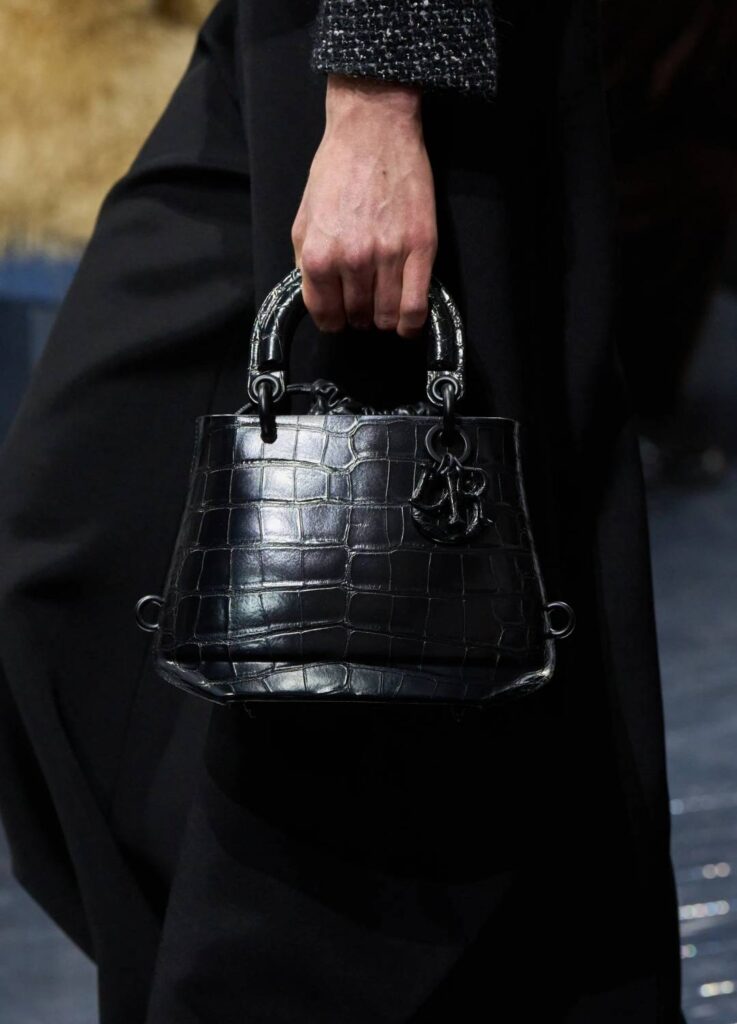
Intentionally imperfect in appearance, these bags resist the idea of luxury as flawless finish. In the hand, they resemble specimens rather than products—objects that question where nature ends and craft begins.
Here again, Anderson reinforces couture as living knowledge. Craft gains vitality not through preservation behind glass, but through use. These bags do not perform luxury; they examine it.
Jonathan Anderson vs. Maria Grazia Chiuri: A Shift in Language
Under Maria Grazia Chiuri, Dior’s couture was built around explicit narratives—feminist discourse, historical reinterpretation, and symbolic messaging articulated clearly through form and reference.
Anderson’s couture, by contrast, is largely non-verbal.
Where Chiuri layered meaning onto garments, Anderson exposes process. There are no slogans here, no overt declarations. Instead, meaning emerges through imbalance, material layering, and the quiet irregularities left by the artisan’s hand.
Couture shifts from ideological stage to experimental laboratory.
It is less about what is said, and more about what is shown through making.
Industry Response: Quiet Consensus
International fashion media described the collection as a restrained yet decisive shift.
Vogue noted that Anderson “returned couture to the act of making,” emphasizing the vitality of silhouette and craft.
The Business of Fashion observed that Dior’s couture under Anderson prioritizes the sustainability of knowledge over the repetition of commercial icons.
Within industry circles, the hydrangea motif and fluid volumes have already been discussed as potential signatures of this new Dior chapter.
Conclusion: What Is Being Protected
Christian Dior Spring 2026 Haute Couture does not seek admiration alone. What it ultimately protects is not form, but attitude.
The memory of the hand.
The silhouette that completes itself only in motion.
The acceptance that couture, like nature, must remain adaptive to survive.
Haute couture is no longer a reenactment of the past. It is a discipline that must continue learning, failing, and recalibrating in real time.
Jonathan Anderson’s Dior offers a quiet reminder:
Without creation, there is nothing left to protect.
All images referenced in this post are drawn from Vogue Runway.
[ Related Editorials ]