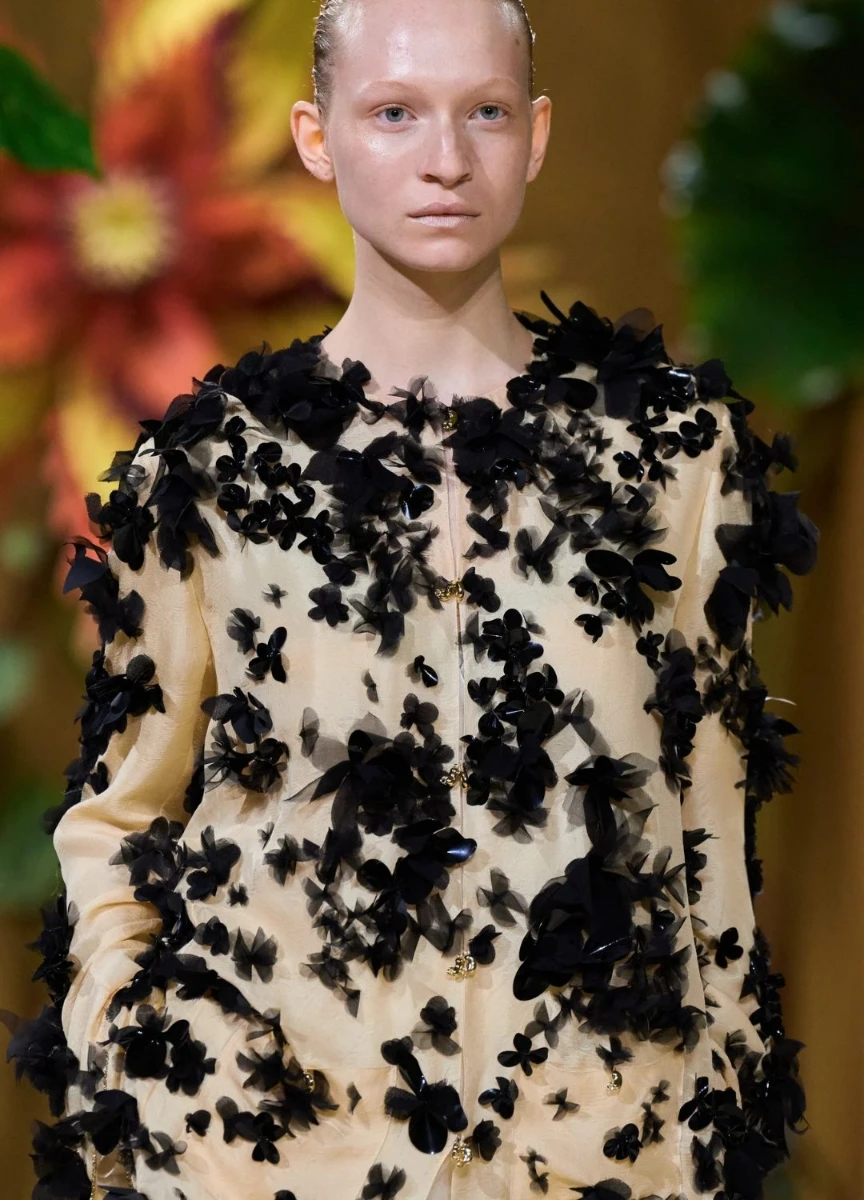
A Question, Not a Dream
Haute couture usually talks about dreams. The question Matthieu Blazy asked this season is a different one: how does a dream get made?
His second haute couture for Chanel begins with a storybook — Les Fées, Contes des Contes, found in Gabrielle Chanel’s own library. Blazy has treated his tenure as an ongoing conversation with Gabrielle from the start; this season, that conversation happens in front of her bookshelf.
The opening look makes the intention plain. The model walks out with the book in her hand. From the moment it opens, reality and imagination begin to cross, and the sixty-odd looks that follow turn like its pages. Can a garment tell a story the way a book does? That is the question holding the whole collection up.
A garden grown from a bookshelf
Before the show, Chanel released a teaser that worked as a prologue. A little girl holds a seed in her hand. Plants and branches sprout from it, climb the walls of her room, push past the window and reach for the sky. One thought giving birth to a universe.
On the runway, that seed opens into a garden. The Grand Palais became a landscape of giant flowers and winding vines — and it reads differently from the pink mushroom forest of Blazy’s couture debut. This is not a garden reproducing nature but a garden grown out of a book, a garden where a story lives. The debut proposed a fairytale world through mushrooms, birds, and a haiku; this season, that world gains the clearer structure of a single book. Blazy is still talking about imagination, but now he has mapped where it starts and how it unfolds.
Tailoring learns the fairytale
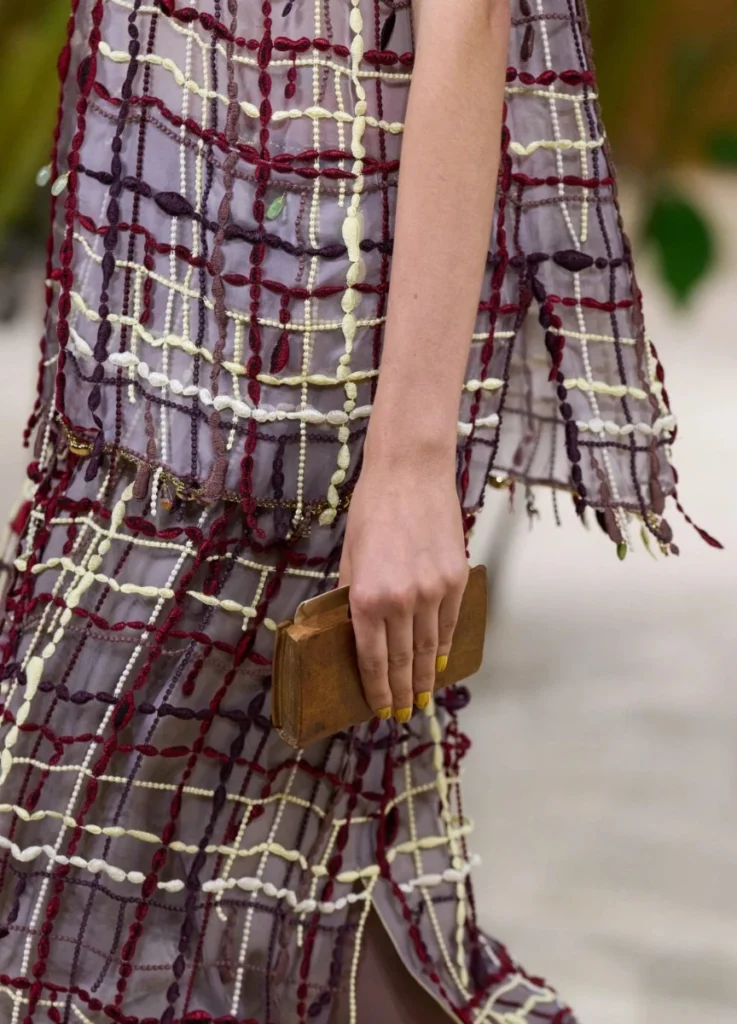
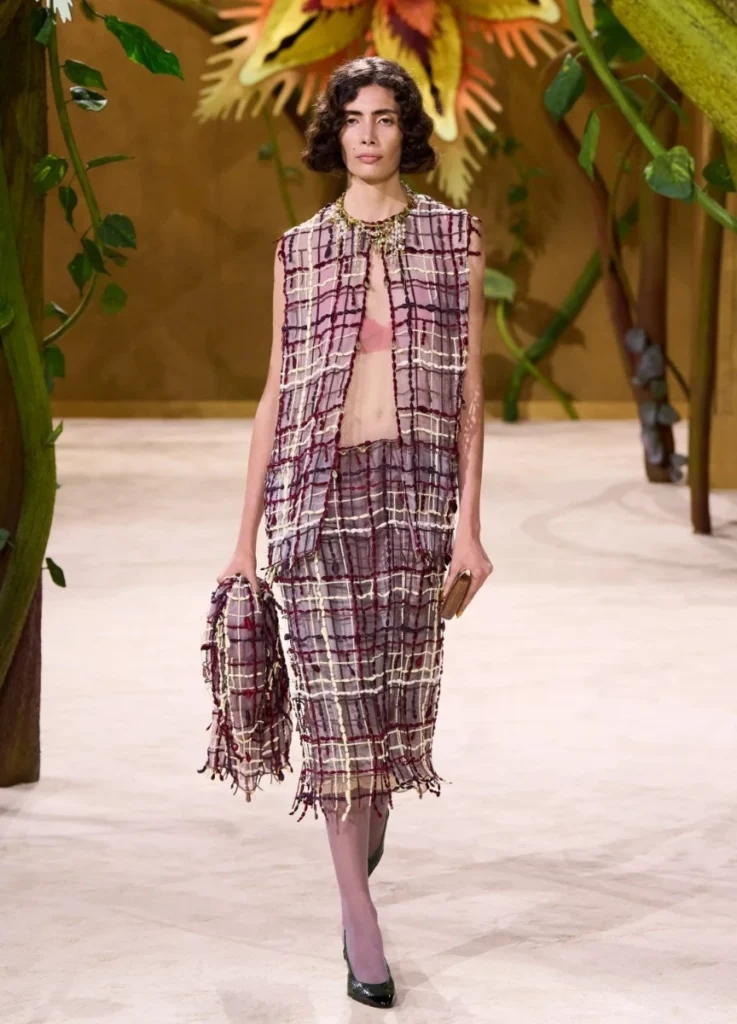
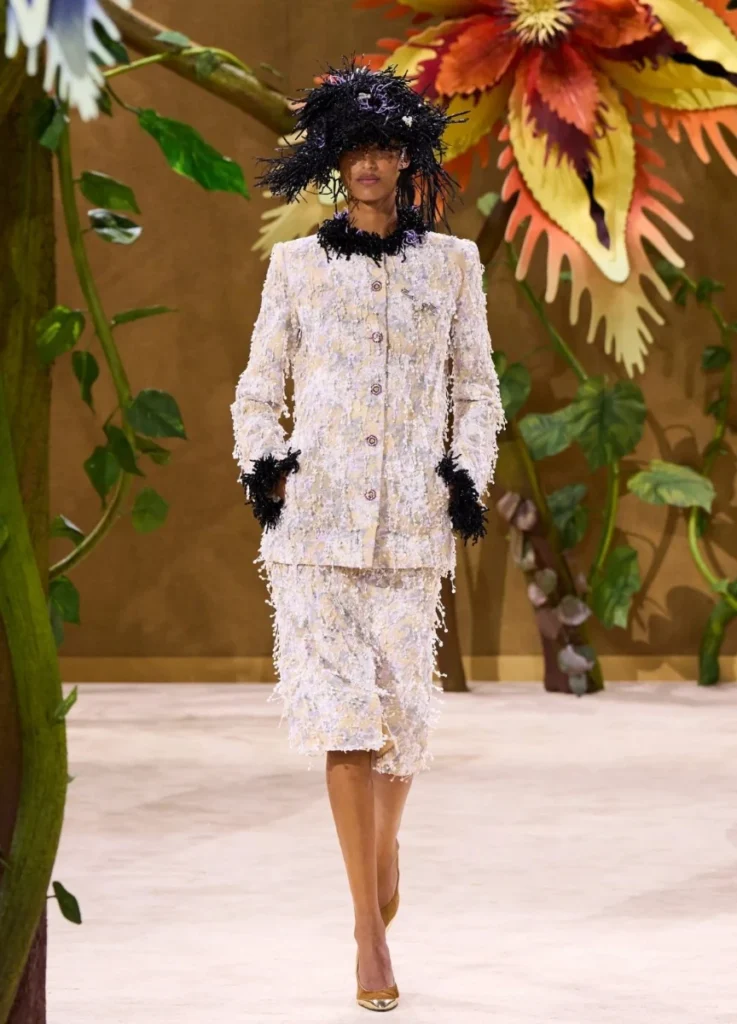
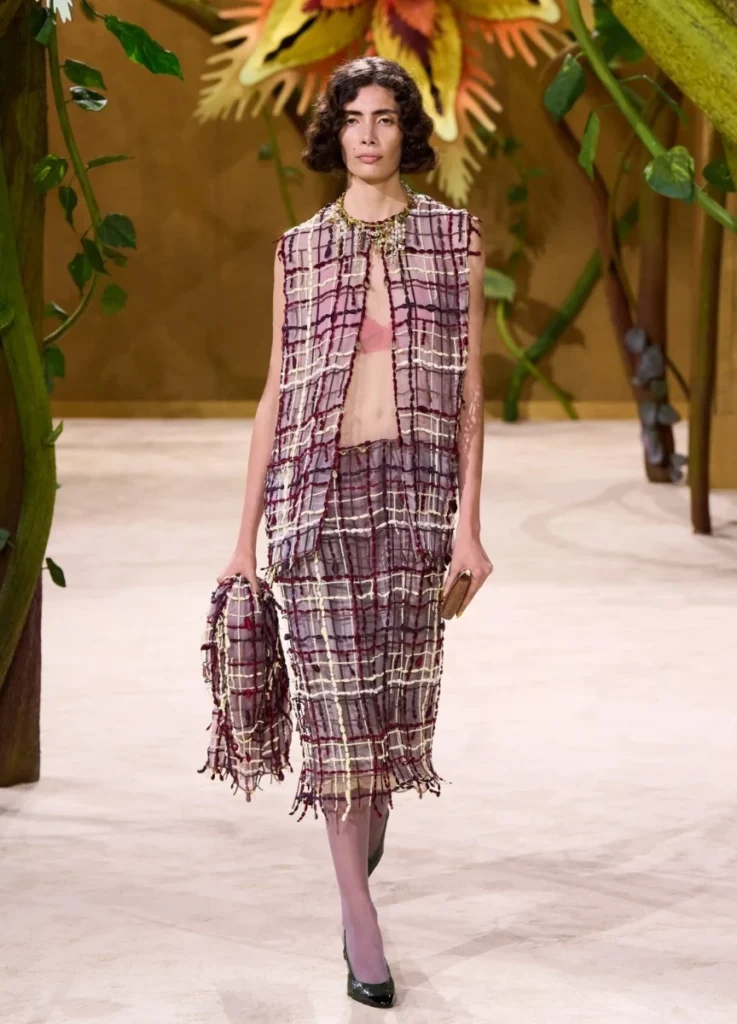
The suit sits at the centre of the silhouette. Blazy doesn’t discard Chanel’s icon; he takes it out again. Guipure lace and silk mousseline settle over precise tailoring, keeping the structure while making it lighter and more supple — the skeleton of shoulder and waist stays, and the surface loosens into air. Tailoring, you could say, has learned to speak the language of the fairytale.
The proportions sit softly throughout. Echoes of the dropped waist, shifts and columns falling below the knee. Among lines that flow without exaggeration, the tweed suit holds the centre like the story’s narrator. Rather than dismantling the silhouette, Blazy moves the familiar Chanel suit inch by inch toward the border between reality and fable — structure kept, weight removed.
Metamorphosis, performed by the ateliers
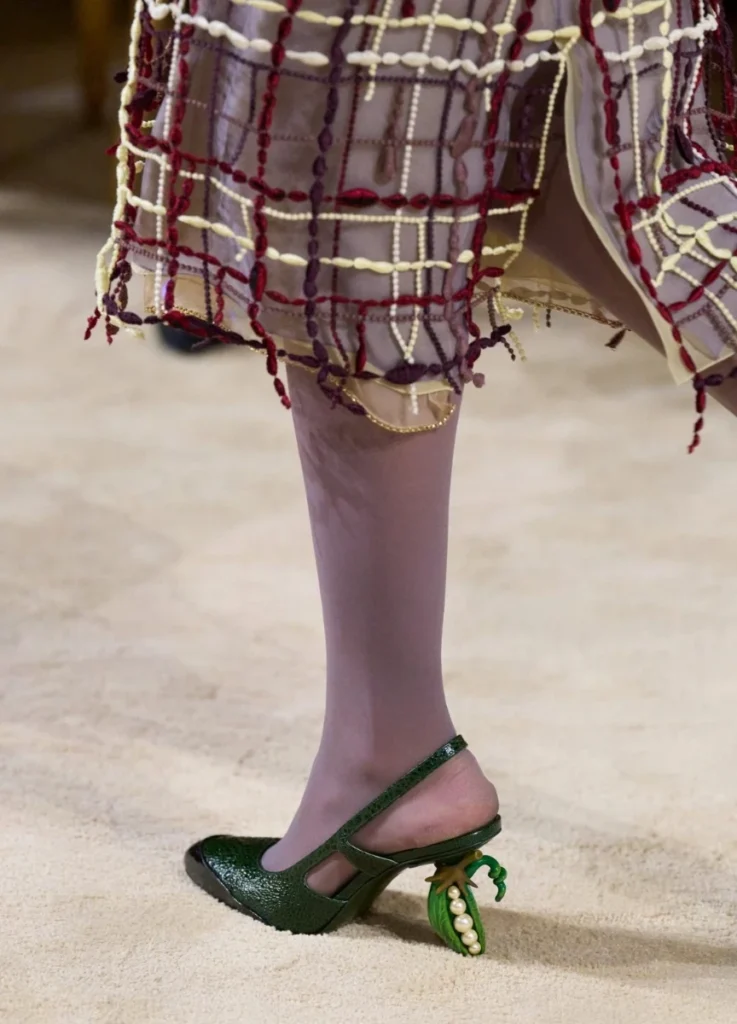
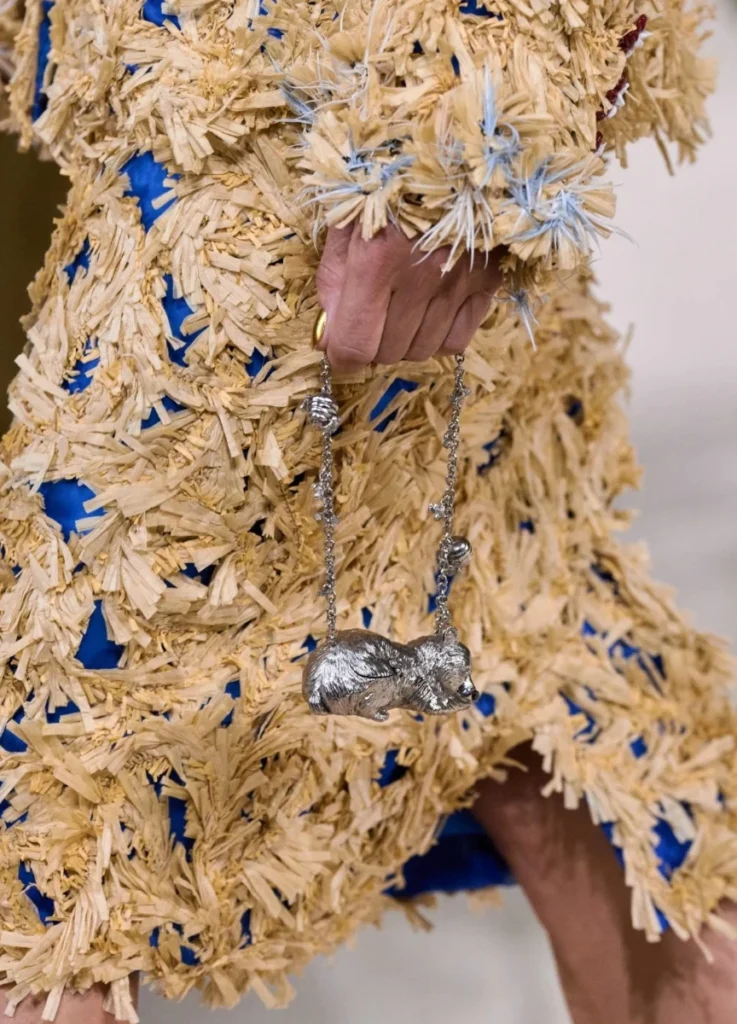
The season’s keyword is transformation. Vines grow up the heel of a shoe, a sleeping bear becomes a minaudière, a duckling turns into a swan on a button. What magic does in fairytales, the ateliers do on the runway.
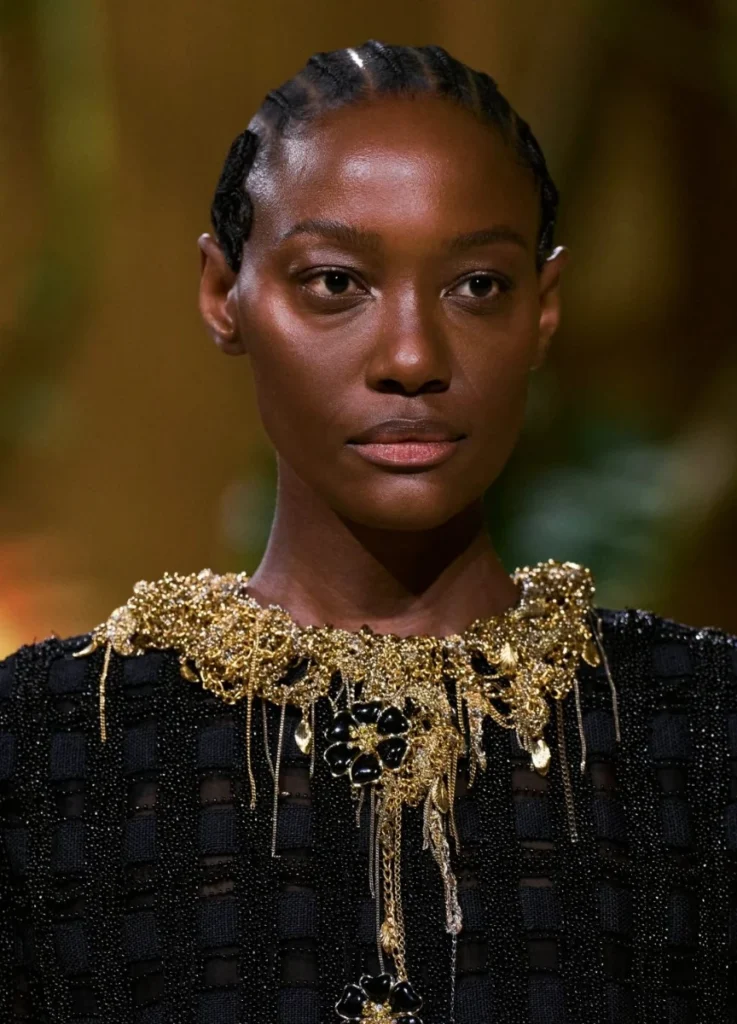
The tailleur and flou workrooms, the galon ateliers, and the artisans of le19M — embroidery, weaving, pleating, millinery, goldwork, shoemaking. Tweed is reinvented with petal-like flecks and jewelled encrustation; on organza, raised embroidery spreads like vines actually growing. Flowers arrive in raffia and feather, glass and resin. The camellia is reborn in glossy black petals, scattered across ivory silk like fallen blooms.
Up close, the line between what was grown and what was made begins to blur. But the heart of the season isn’t the trick of real versus fake. It is metamorphosis itself — one form becoming another, and the craft that carries that passage out by hand. If Blazy’s question was how a dream gets made, the collection’s answer is that imagination is finished by hand.
Colour, at the speed of turning pages
The palette starts from the earth. Ivory and raffia, straw and beige, brown tweed. Over that ground, the garden’s accents rise — green and red, coral and lilac in soft pastels — and black arrives to settle the sentence.
Read in sequence, the saturation climbs as the pages turn: a low-toned opening, a blooming middle, then a night of black and gold. The colour here moves less like a garden’s seasons than like the pacing of a story.
Two registers, one story
Watch the collection through to the end and something interesting surfaces: not every look is made at the same temperature. Blazy deliberately separates reality and imagination within a single story — not mixing wearable couture with showpiece couture, but letting the two registers cross inside one narrative.
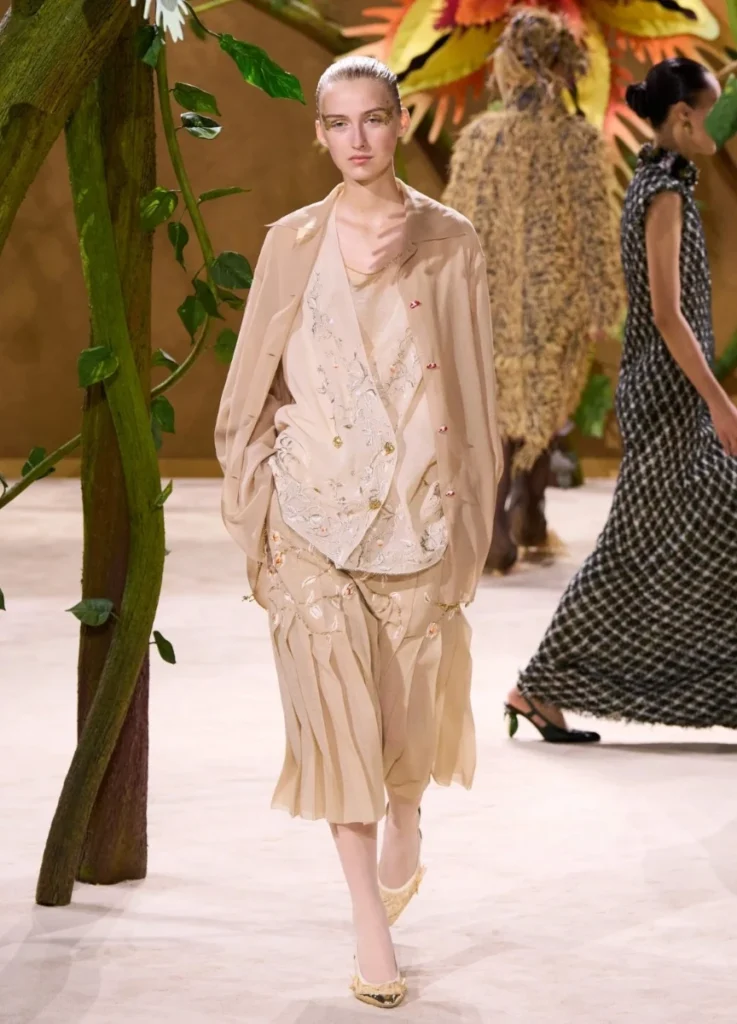
At the centre, again, is the suit. The tweed jackets, long coats, and restrained column dresses form the collection’s most grounded axis. The silhouettes stay unexaggerated, the tailoring firm; guipure and mousseline lighten the structure, but the grammar still points toward Chanel daywear.
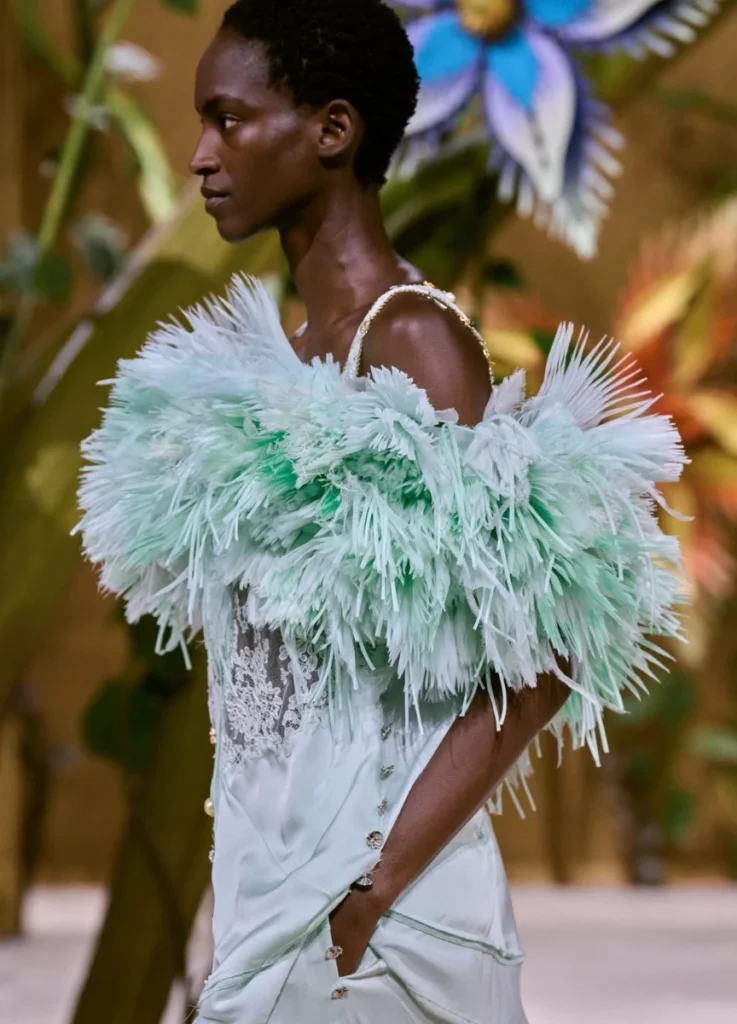
Against them, the raffia coats, the raised floral embroidery, the enormous feather collars, the goldwork growing like vines, the bear minaudière and the swan buttons live closer to the story than to the street. These clothes exist for the image more than the function — put one on and you become a character.
What’s striking is that Blazy never lets the two collide. The grounded suits and the fantastical atelier work don’t compete; reality holds imagination steady, and imagination stretches reality. However lavish the embroidery gets, the collection never scatters.
That, for me, is the biggest change from the first couture. In the debut, each feat of craft stood on its own and asserted its presence. This time, the same overwhelming technique takes a role inside one story: embroidery becomes flowers, goldwork becomes vines, lace becomes fog. The craft exists to complete the story, not to display itself.
Not that the ateliers have gone quiet — if anything, the technique this season is more demonstrative. Raffia handled like a woven textile, hundreds of hours of raised embroidery, goldwork and resin, lace stacked into layers of depth. The artisans of le19M lay out nearly everything they can do. The difference is that where each skill once said look at me, now they all tell the same story. That is why this collection feels so much steadier than the last: the splendour has started to form a single sentence inside Chanel’s grammar. The technique feels larger in scale, and the collection reads far more cohesively — more as one thing.
Five scenes
1. The first look — a book opens the collection. The opening reads less like the start of a couture spectacle than like a book being opened. The cream long jacket rests on Chanel’s tailoring: shoulders unexaggerated, waist barely drawn, a long line that follows the body’s movement, and a tweed of mixed yarns and fine flecks that rewards a closer look — the weave registers before any ornament does. For a first scene, Blazy leads with structure over flourish. But what makes this look the collection’s true starting point is the book in the model’s hand: Les Fées, from Gabrielle’s library.
Most collections explain their references after the fact; this one has the audience read the source from the first frame. The debut had its fairytale world too — mushrooms, birds, a haiku — but that world ran as a sequence of images. This season has a spine that ties beginning to end. The book isn’t a prop; it’s the narrative structure. Everything that follows — the flowers and vines, the bear and the swan, the bride at the close — turns like chapters of the tale opened here. The least spectacular look in the show, and the most important: before the clothes, Blazy tells you how to read them.
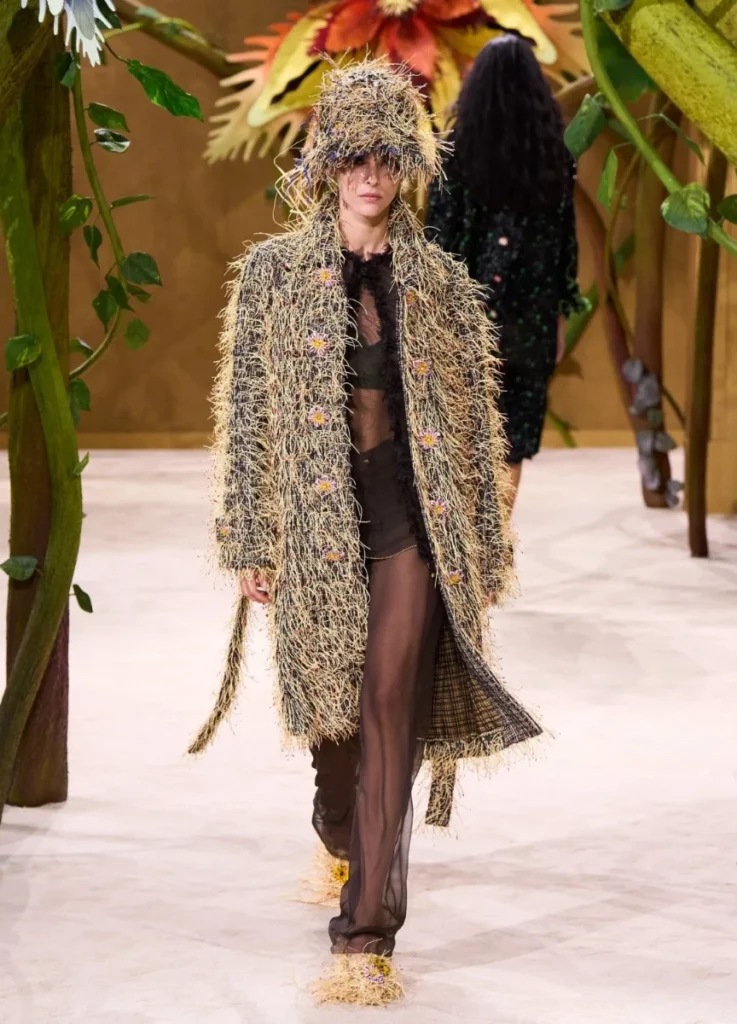
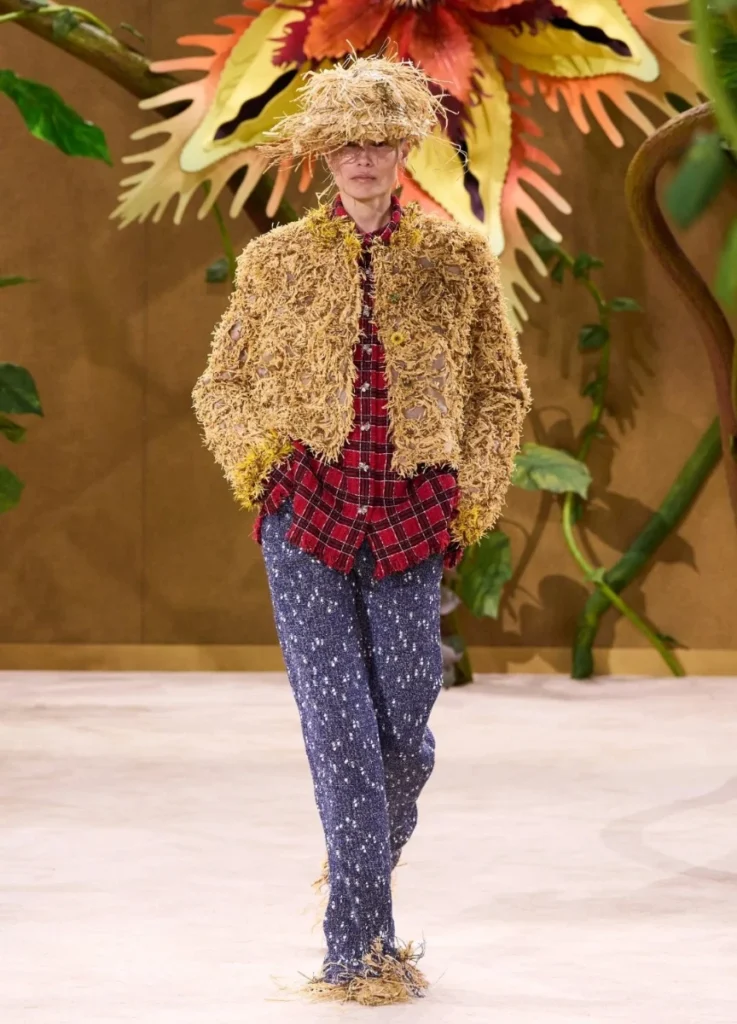
2. The raffia look — the texture of earth, translated.
From a distance, the long fringed raffia coat looks coarse, like dried straw or leaf litter on a forest floor. Up close, the picture changes entirely: raffia fibres split fine, fixed at an even density, cut to slightly different lengths and layered into a single woven surface. With each step the fibres swing at different tempos and catch the light at shifting angles — not fringe so much as a textile engineered for movement.
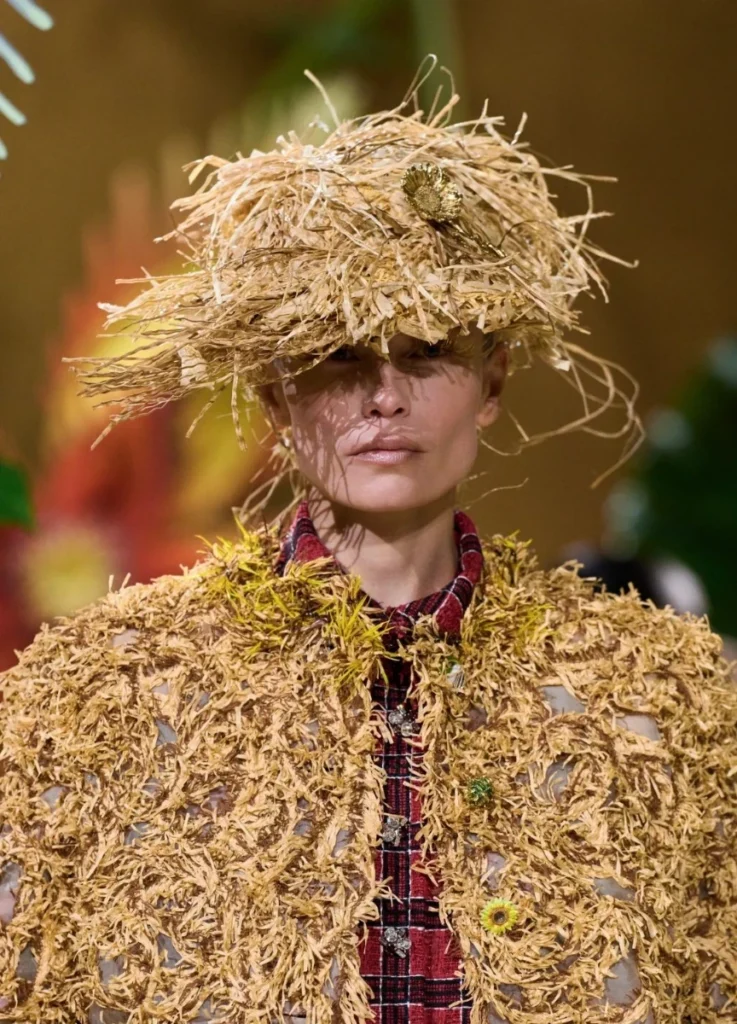
The red-and-navy tartan layered beneath matters too: the raffia’s rough vegetal grain against the check’s regular order, nature and tailoring sharing one garment. Blazy doesn’t leave nature outside the house; even the coarsest plant fibre is drawn into Chanel’s tailoring and reorganised. The wide straw hat completes the character — a proportion that might feel theatrical on the street but sits naturally inside Les Fées, where the story comes first and the clothes reveal the character wearing them. Notice, too, that Blazy doesn’t open his fairytale with flowers in bloom. He starts from earth, straw, the roughest fibres — and lets the ateliers turn that roughness into couture’s most refined surface. The look isn’t nature reproduced; it’s raw nature passing through the artisan’s hands into couture, the moment the story takes on physical matter. Blazy’s fairytale doesn’t run on magic. It becomes real one fibre at a time.
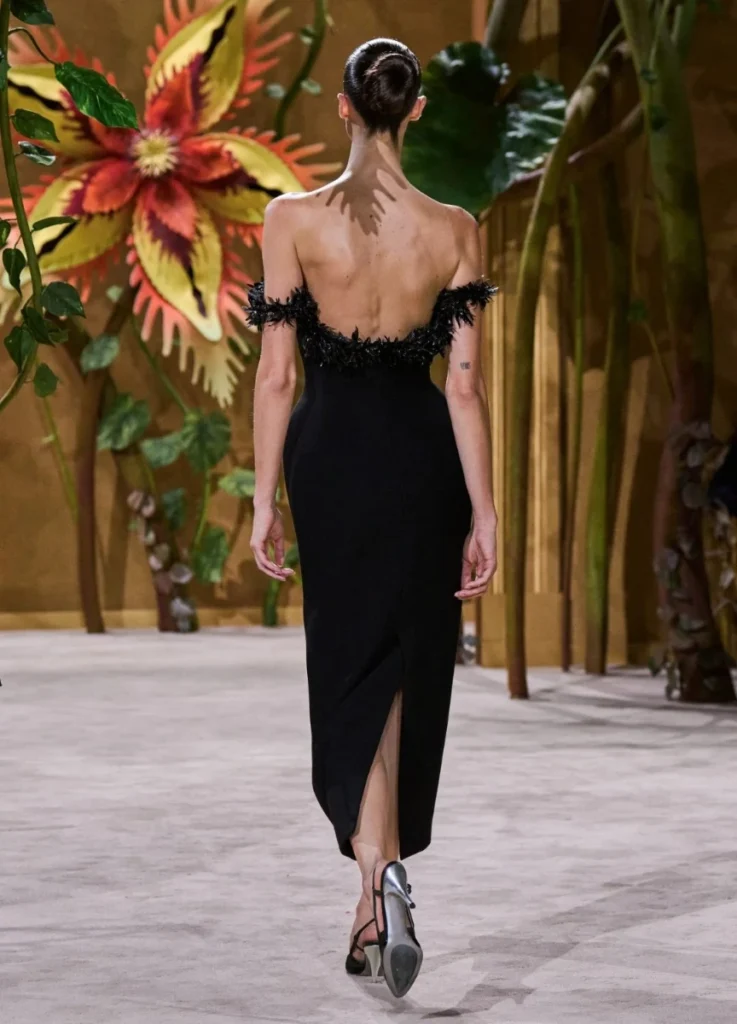
3. Flower and the little black dress — the fairytale learns Chanel. As the collection moves into its later chapters, the flowers thin out, and the house’s oldest codes return one by one: black tweed, the little black dress, pearls. The garden disappears from view, but its trace is absorbed into the language of the house. The black dress shows the shift most clearly. The silhouette is startlingly restrained for couture — no exaggerated waist, a long fall along the body — while Lemarié’s black feathers gather richly at the shoulders and neckline.
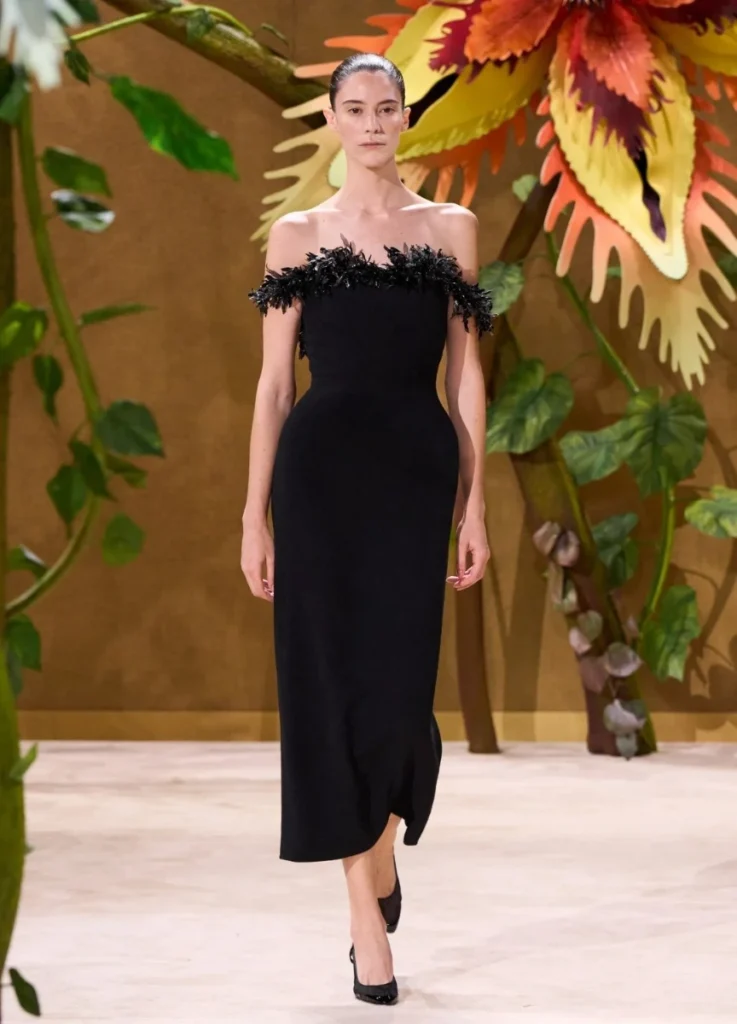
From afar they read as a single flower; up close, each feather runs its own grain, moving like living petals. Against black, the most restrained of colours, the atelier’s hand only grows sharper. The Flower buttons down the centre do the same work.
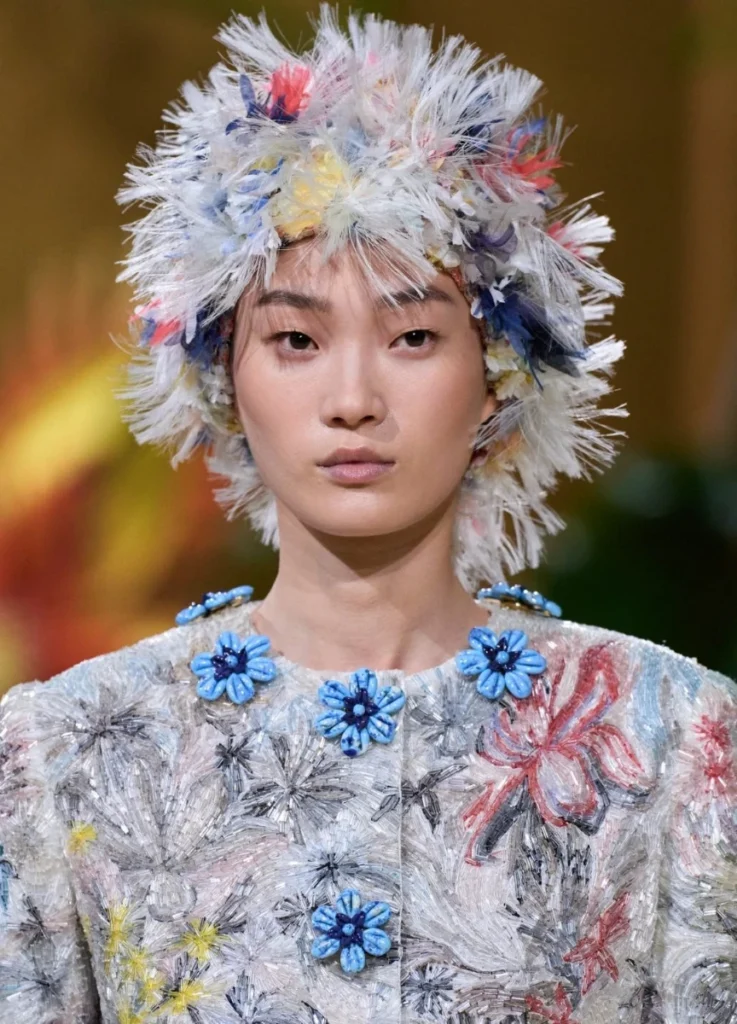
What bloomed in the garden at the start is, by the end, translated into the house’s own language. If the raffia look translated nature into couture, this dress translates the fairytale into Chanel — and that is why the late black looks persuade more than the showiest embroidery. The fantasy is no longer a foreign country; it has started to speak Chanel fluently.
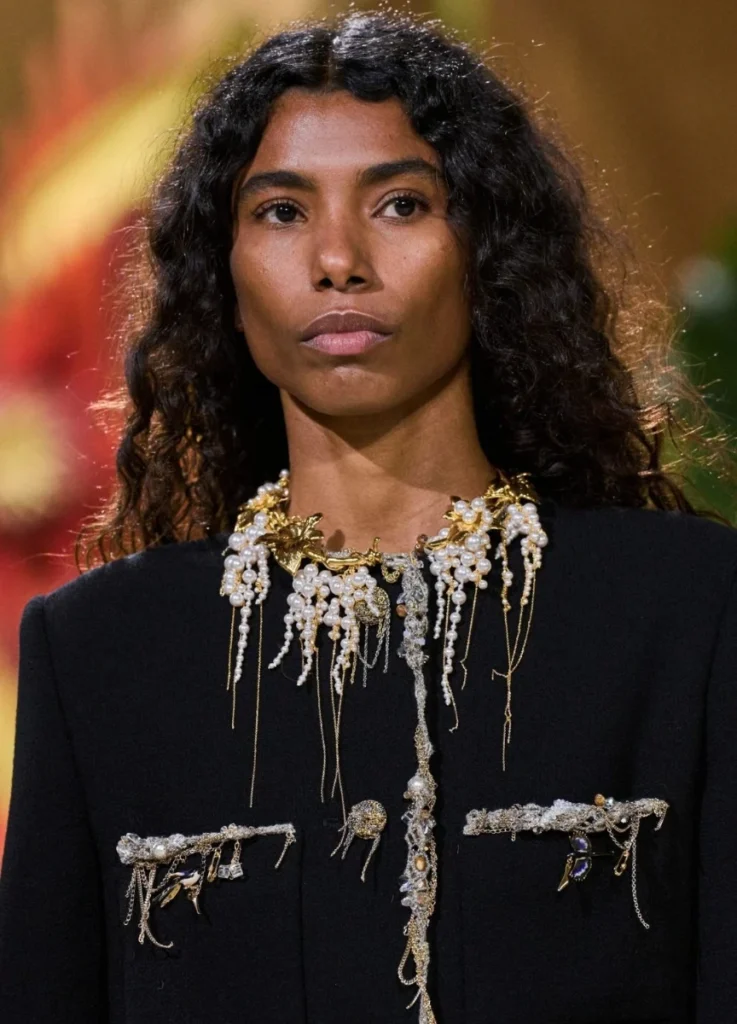
4. Goossens’s goldwork — not ornament but transformation.
The most arresting accessory of the season is Goossens’s goldwork: several strands of gold chain flowing down over black tweed, each ending in leaves and pearls. It reads as a belt at first, but the structure never grips the body — the metal grows downward like a plant’s stem instead of encircling a waist. With movement, each chain swings at its own speed, and the pearls catch the light like small fruit.
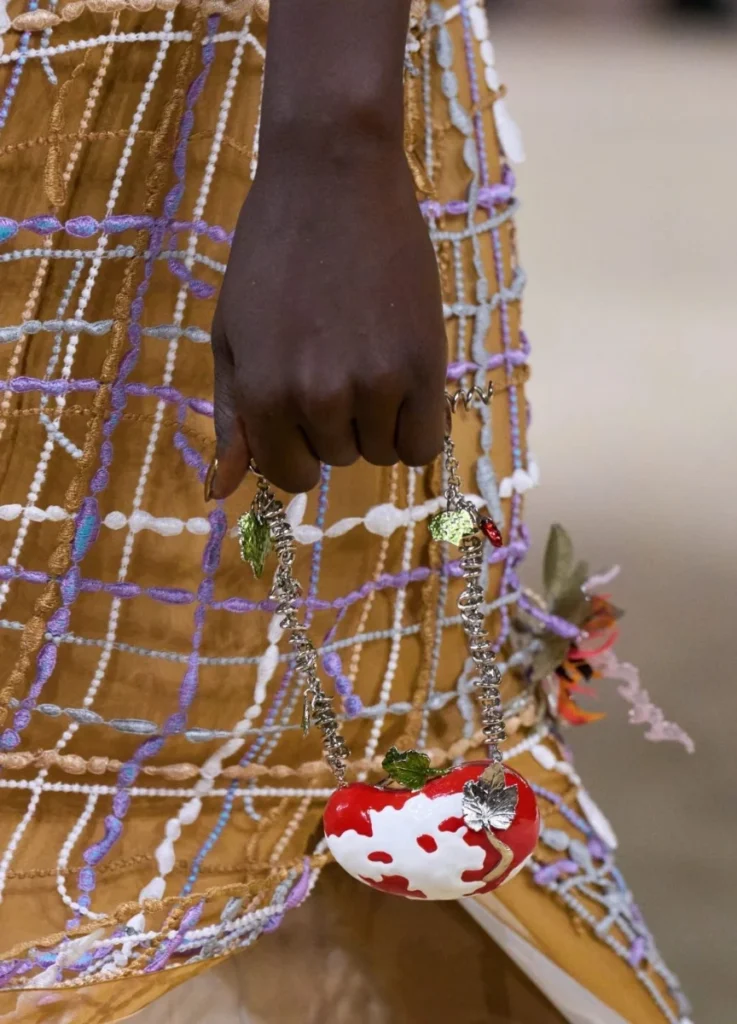
In Les Fées, what matters isn’t nature but transformation — the vine up the heel, the bear into the minaudière, the duckling into the swan — and Goossens translates that into jewellery. Cold, hard metal becomes a vine; pearls become buds and berries. The material is unchanged; the role is entirely new. Here Blazy reaches again for the house’s oldest codes — chain and pearl, Chanel emblems since Coco’s day — and refuses to repeat them, recasting chain as vine and pearl as seed within the fairytale’s language. The symbol stays familiar; the reading changes completely. The magic he’s describing isn’t fantasy. It’s the moment metal becomes plant in an artisan’s hands.
5. The bride — the page where imagination becomes real.
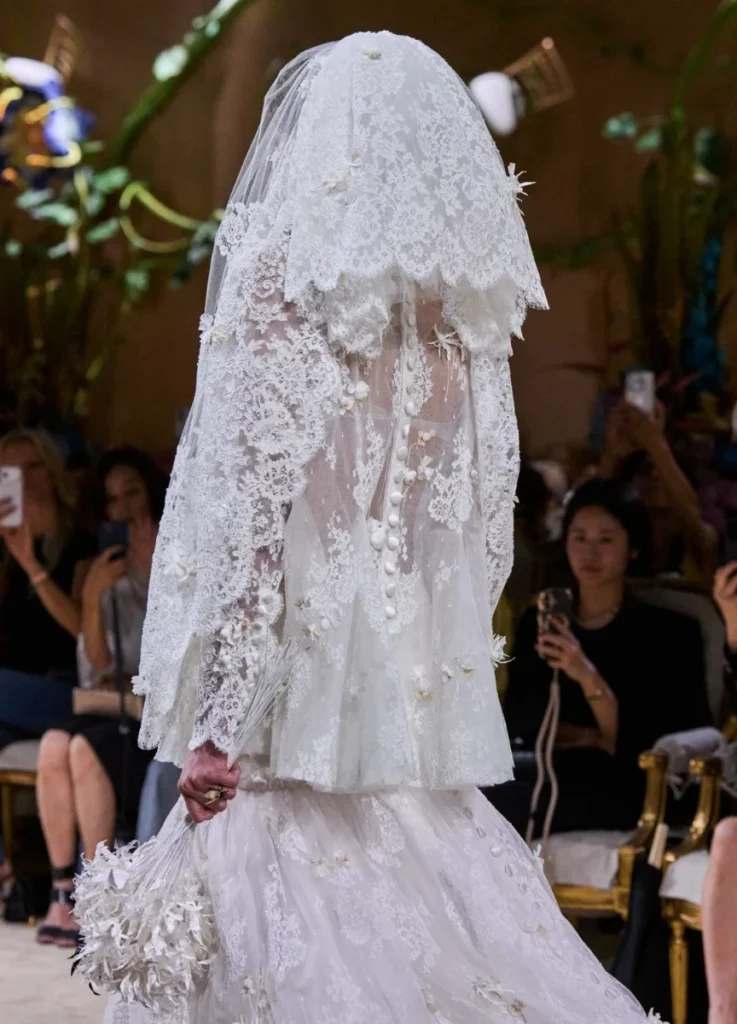
The bride is not the most lavish dress in the collection; it completes the story in the most restrained way possible. The silhouette is close to a column, falling the length of the body — no inflated skirt, no dramatic crinoline. Instead, layers of Chantilly lace veil the face and shoulders in soft depth. The laces carry different floral patterns and never read as one flat cloth; light passes between the layers, and as the model walks the sheets shift slightly against each other, moving like fog.
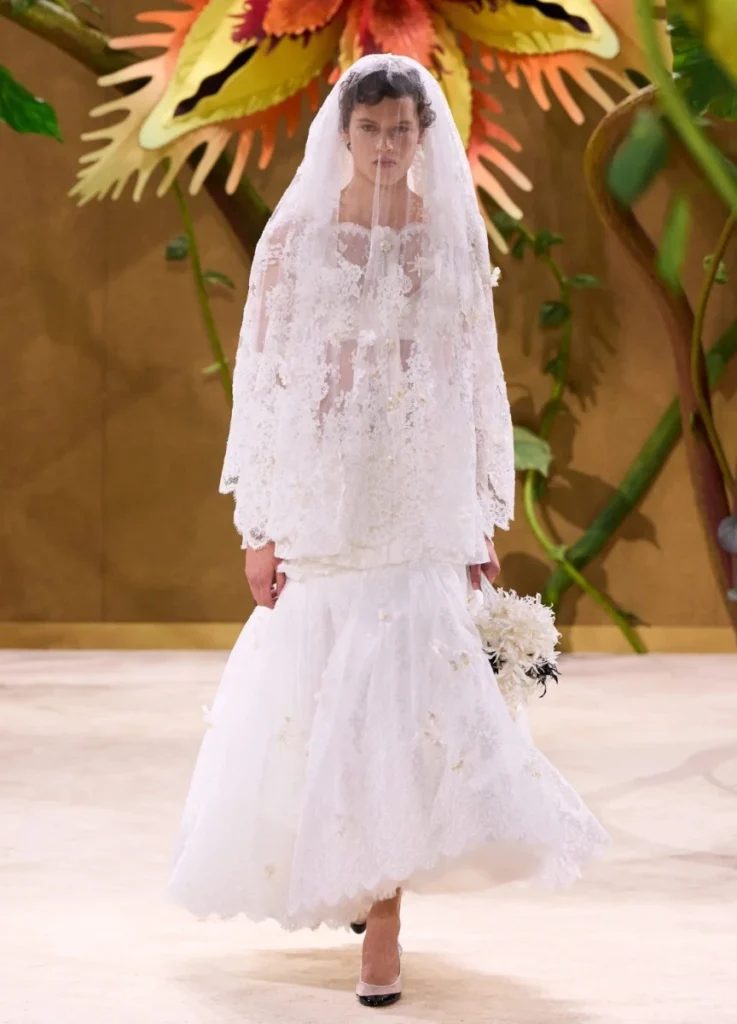
The closer you look, the more the centre of the look turns out to be the hand: the lace edges, the petal-like embroidery, the finished grain of the veil — couture’s density condensed not into added ornament but into how finely one material can be handled. And what holds the eye longest is the bouquet. From a distance it looks like ordinary white flowers. It isn’t.
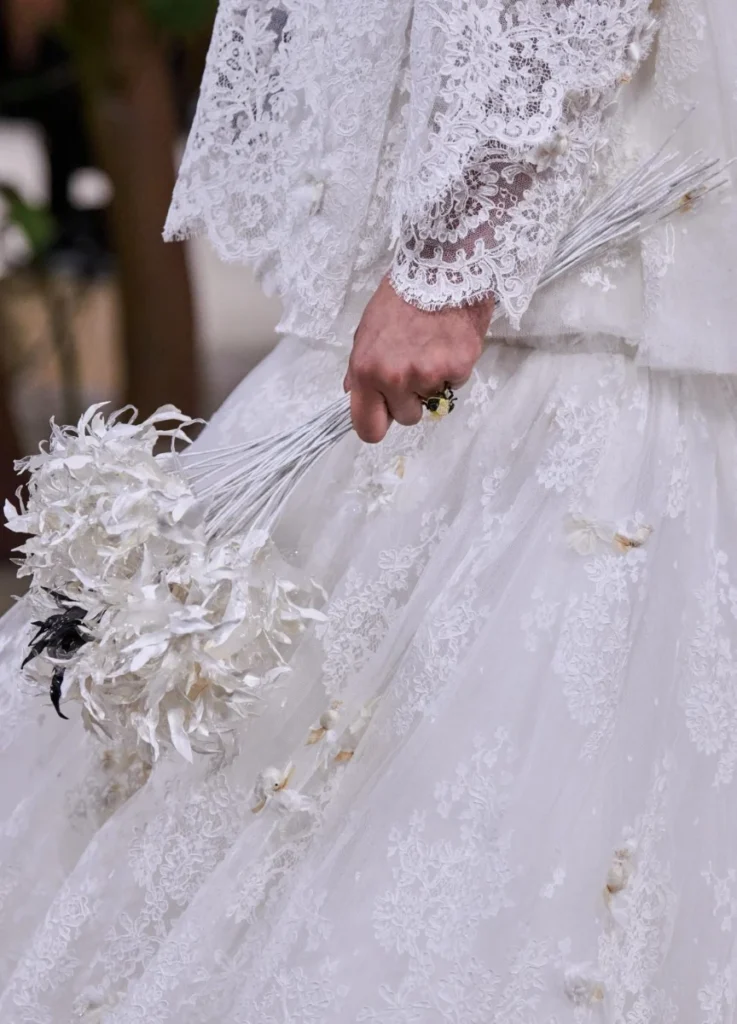
The flowers are cast in resin, each petal modelled on a real bloom — and they will never wilt. That one detail sends you back through the whole collection. The first model carried Les Fées in her hand; the story turned page by page; vines grew, the bear became a minaudière, the duckling became a swan. In a fairytale, the last page is where the magic ends and reality returns. Blazy’s ending is different. Even at the close, he refuses to separate reality from imagination — he binds them into one material fact. A living flower wilts; a flower made by the ateliers holds its shape. Nature passes, but nature that has passed through an artisan’s hands endures. The bride reads less like a woman at her wedding than like someone closing the last page of a book she has read to the end. The collection kept asking how a dream gets made, and the final look answers in the most Chanel way possible: a dream isn’t completed by imagining. It takes the hands that weave the tweed, join the lace, work the metal, and shape the flowers before it gains a real form.
Two gardens: Dior and Chanel read the same nature differently
The strongest shared image of this couture week was the garden. Jonathan Anderson’s Dior and Matthieu Blazy’s Chanel both began from nature — but the two were never looking at the same place.
Anderson’s garden is a primeval forest. Ferns and moss grow there, plants older than flowers; the leaf matters more than the bloom, and the interest lies in how a plant grows rather than how it flowers. The motion of a frond curling and uncurling is translated into plissé and pleats, and that single principle runs through sixty-five looks until nature becomes a structure. Dior doesn’t so much look at nature as extract from it — reduction and distillation.
Blazy’s garden is the garden inside a fairytale. A story that begins with one seed keeps growing and transforming — into flowers and vines, birds and bears and swans. His nature isn’t one structure; it’s a story full of characters and events. So he refuses to compress it into a single technique. Raffia and tweed, lace and feather, raised embroidery and goldwork, resin and pearl — he mobilises nearly every language the ateliers have, and moves the garden into reality one page at a time.
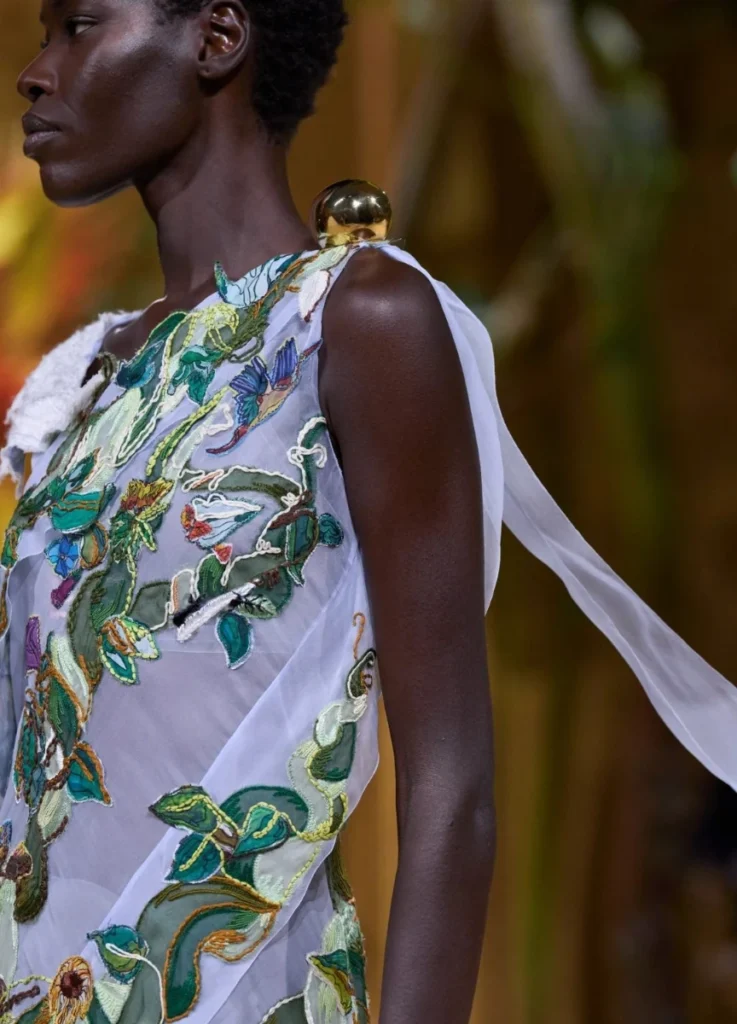
One writes nature as a single sentence; the other writes it as a whole book.
They pull nature toward the house from opposite directions, too. Anderson used the garden as a passage out of Dior — follow the ferns and your eye travels to Madame Grès and Mariano Fortuny, to couture’s wider history, an attempt to locate himself in the genealogy of the craft beyond one house. Blazy goes the other way. He never looks for his fairytale outside Chanel; the starting point is Gabrielle’s own library, and the story is translated back into tweed and camellia, chain and pearl, the little black dress. Where Anderson widened the house’s borders through nature, Blazy pulls nature deep inside them.
So the two collections end at different temperatures. Dior stays cool to the last — pleats set like metal, a restrained palette, nature regarded as a structure. Chanel runs warmer and more alive: flowers bloom, animals transform, vines climb, and the story keeps turning to the next page. One translated the structure of nature into clothes; the other turned nature into a fairytale, then translated it back into reality through the ateliers. That difference drew the sharpest line between the week’s two big collections.
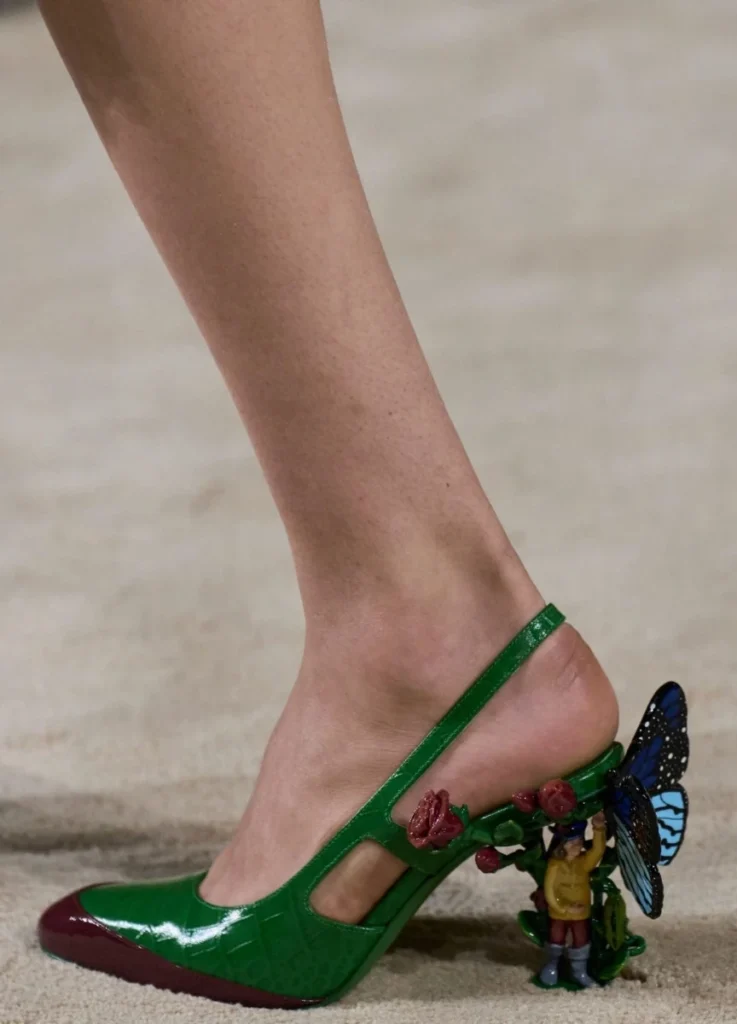
How imagination becomes real
If the debut couture built Blazy’s world, the second gives that world a spine: one book from Gabrielle’s library — and the hands of the ateliers to carry the story out.
The achievement this season is fluency. The fantasy has learned Chanel’s language — tweed, camellia, the suit, pearls — and the ateliers’ virtuosity has begun to read as the house’s grammar rather than as spectacle. How does imagination become real? Blazy’s answer is plain. The magic isn’t imagined. It’s sewn.
What stays after the show isn’t the vast garden set but the book in the first model’s hand and the unwilting bouquet in the last. The story opened; the dream closed, preserved. The sixty looks in between were the dream being made.
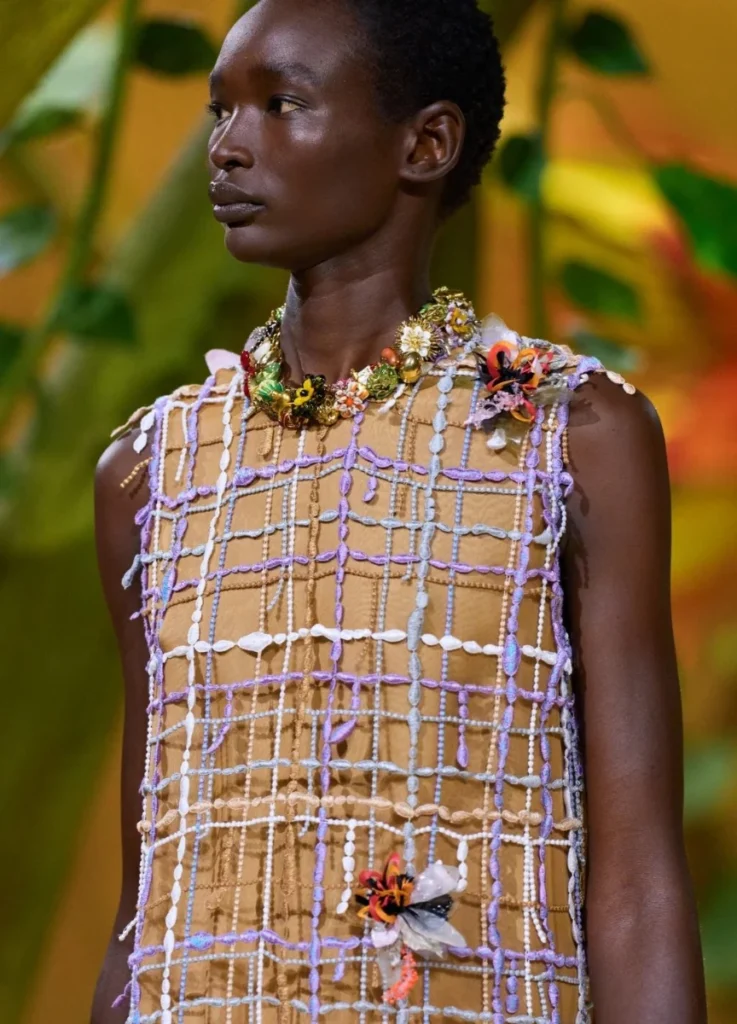
Closing — imagination passes through the ateliers
Watching this second couture, the first thing I felt was how much more fluently Blazy now explains his world. The debut showed what kind of imagination he has — mushrooms, birds, a haiku. This season asks a different question: how does that world become real? And his answer is remarkably Chanel. Not inspiration, not imagination — the ateliers.
The collection hides none of le19M’s technique. Raffia woven like cloth, vines grown from hundreds of hours of embroidery, metal turned to plant and resin to everlasting flower — nearly the full spectrum of the house’s craft, laid out in a single season. And yet the collection reads strangely steady. Work that once would have asserted itself piece by piece now moves for one story. The ateliers grew more lavish without growing more scattered; the ornament multiplied and somehow became more Chanel. That balance is the season’s real achievement.
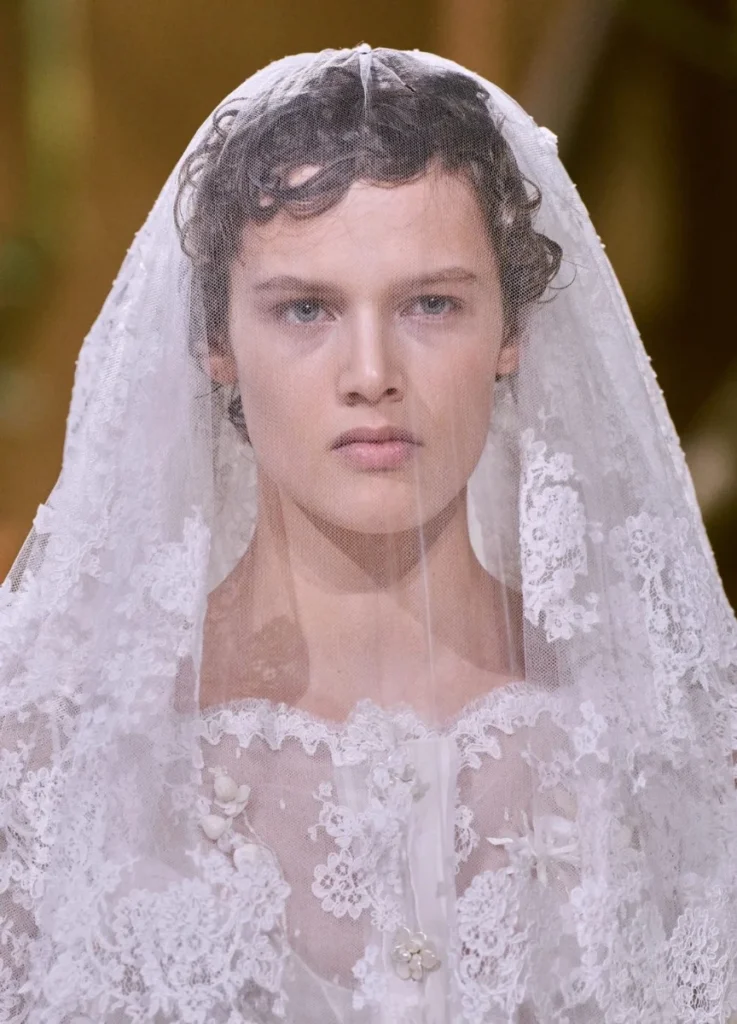
In the end, this couture shows how a fairytale becomes real. The magic Blazy performed this season doesn’t happen in the imagination — it begins at the artisan’s fingertips. What lingers after the runway is neither the tale nor the garden, but the fact that even a fairytale is finished by needle and thread, by weaving and embroidery, by hands that outlast time. This season, Chanel proved that old truth in the way only it can.
All images referenced in this post are drawn from Vogue Runway.
[ Related Editorials ]