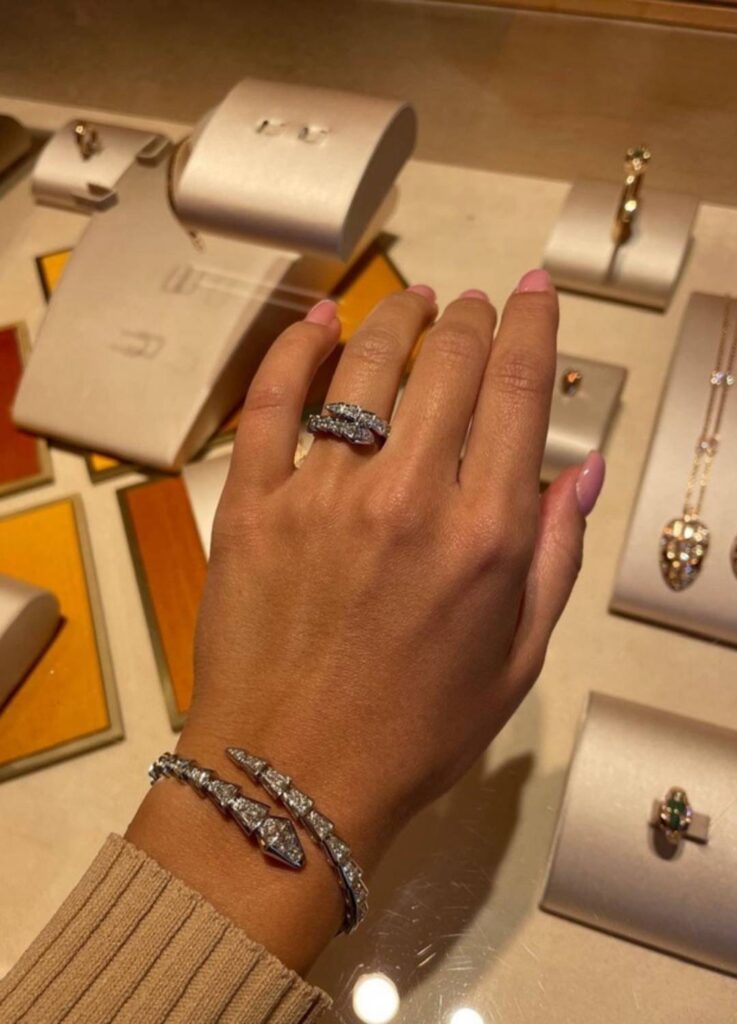
The Serpenti line is often described as bold, sensual, or symbolic.
Yet to understand its enduring relevance, one has to look past the snake motif and focus instead on what Bulgari has consistently done best: engineering jewelry as structure, not ornament.
The Serpenti bracelet is not simply worn.
It coils, anchors, and defines space on the wrist.
Origins of Serpenti: From Symbol to Structure
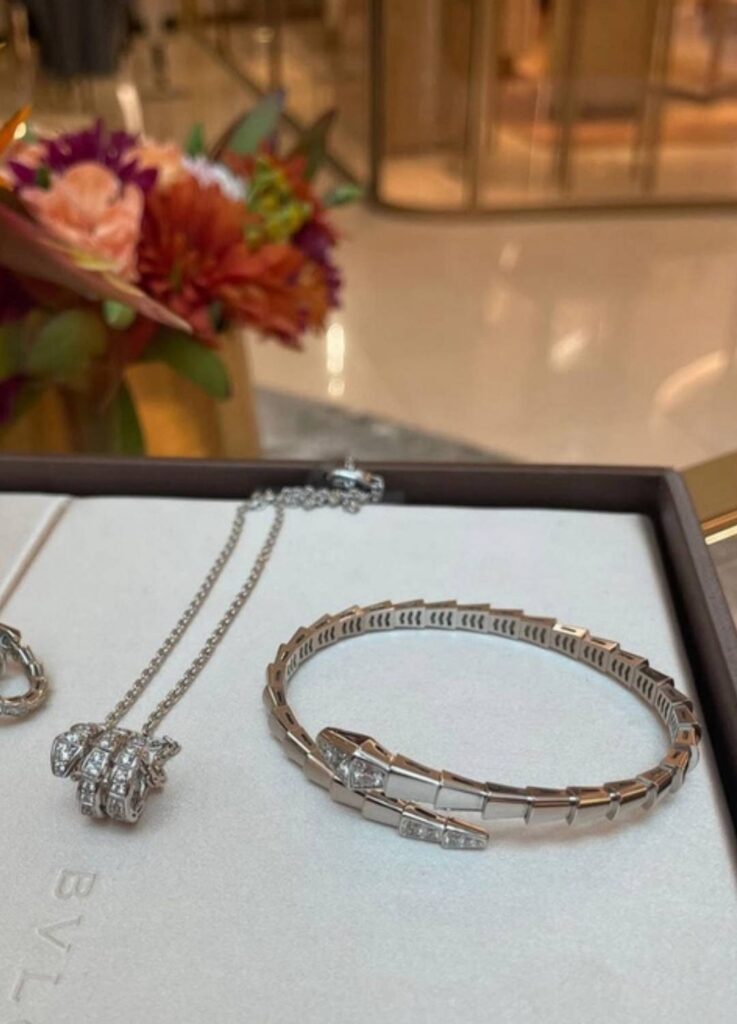
Serpenti first appeared in Bulgari’s design language in the late 1940s, initially through watches that wrapped around the wrist multiple times. At a time when Swiss watchmaking emphasized precision and restraint, Bulgari introduced something distinctly Roman: volume, curvature, and bodily presence.
The snake was never treated as literal imagery.
Instead, it became a functional metaphor—a form capable of movement, tension, and continuous flow.
By the 1960s and 70s, Serpenti evolved into a recognizable house code, expanding beyond watches into bracelets, rings, and necklaces. What remained consistent was not the motif, but the mechanical logic: jewelry that adapts to the body rather than imposing a fixed geometry upon it.

Why Serpenti Feels Different on the Wrist
What distinguishes the Serpenti bracelet from conventional bangles or chains is its kinetic relationship with the wrist.
Rather than hanging or rotating freely, Serpenti is designed to follow the anatomical curve of the arm, distributing weight evenly and maintaining visual stability during movement.
This is not accidental. Bulgari’s design prioritizes:
- A low center of gravity
- Continuous curvature rather than segmented articulation
- A balance between tension and flexibility
As a result, the bracelet rarely shifts, slides, or collapses into negative space. It behaves closer to a wearable object than an accessory.
Two Core Structures: Flexible Coil vs. Rigid Form
Flexible Coil Construction
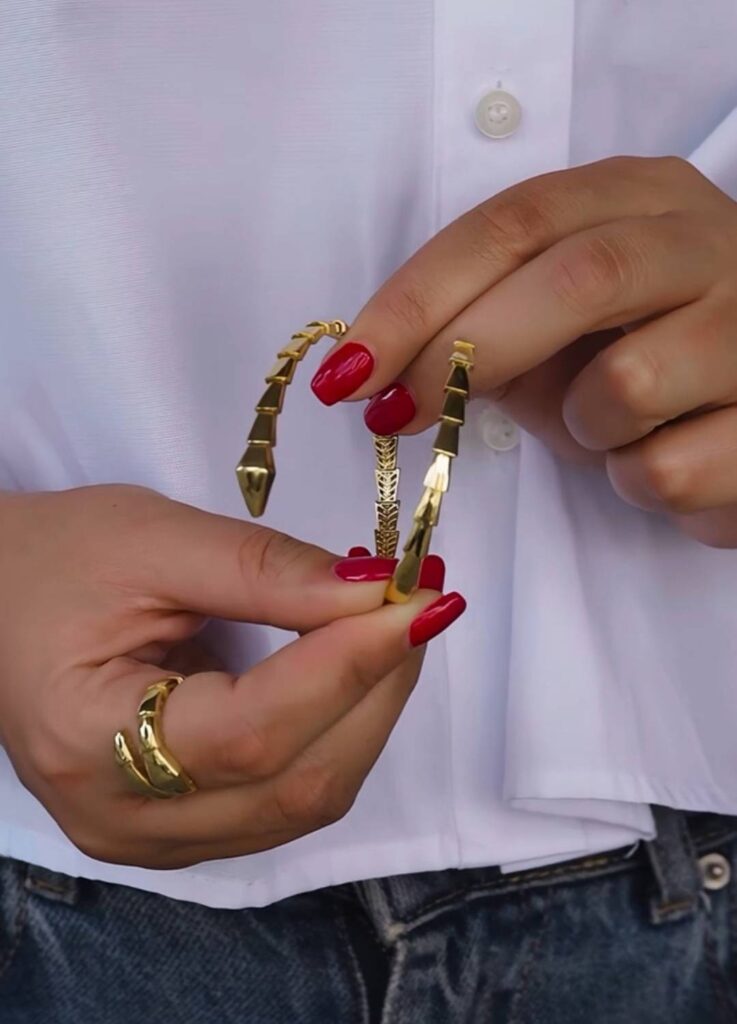
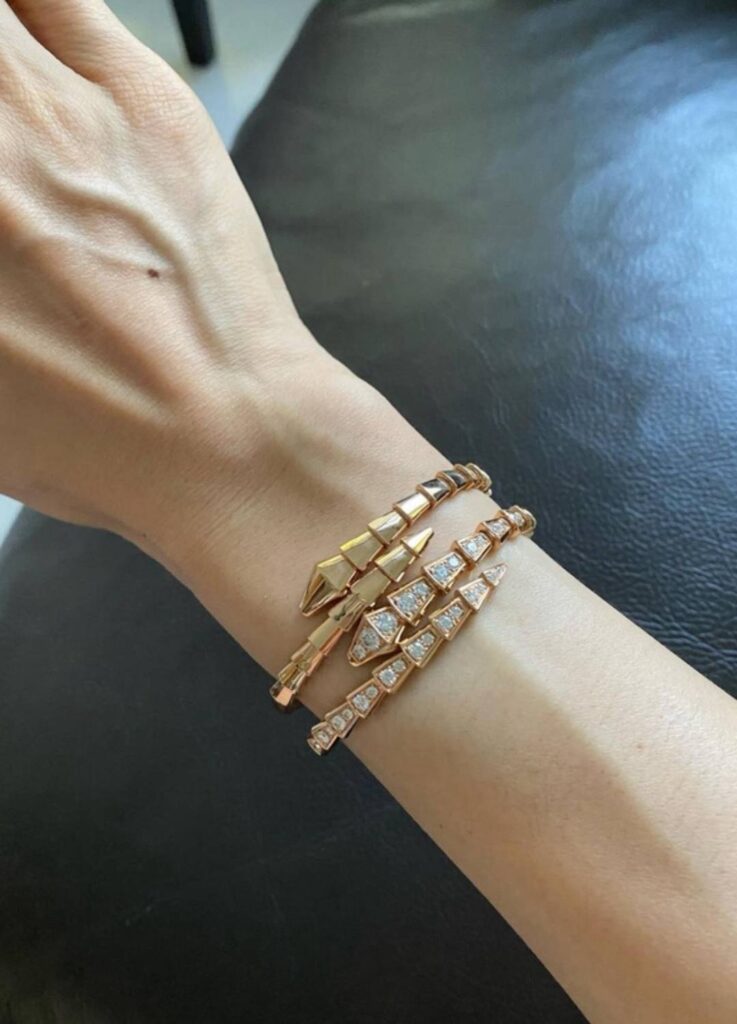
Often associated with classic Serpenti and some Viper interpretations, this structure relies on an internal spring-like mechanism that allows the bracelet to wrap naturally around the wrist.
- No clasp required
- High adaptability across wrist sizes
- Visually dynamic, echoing the motion of the serpent
This construction excels at organic movement. It reads as fluid rather than decorative.
Rigid or Semi-Rigid Bangle Construction
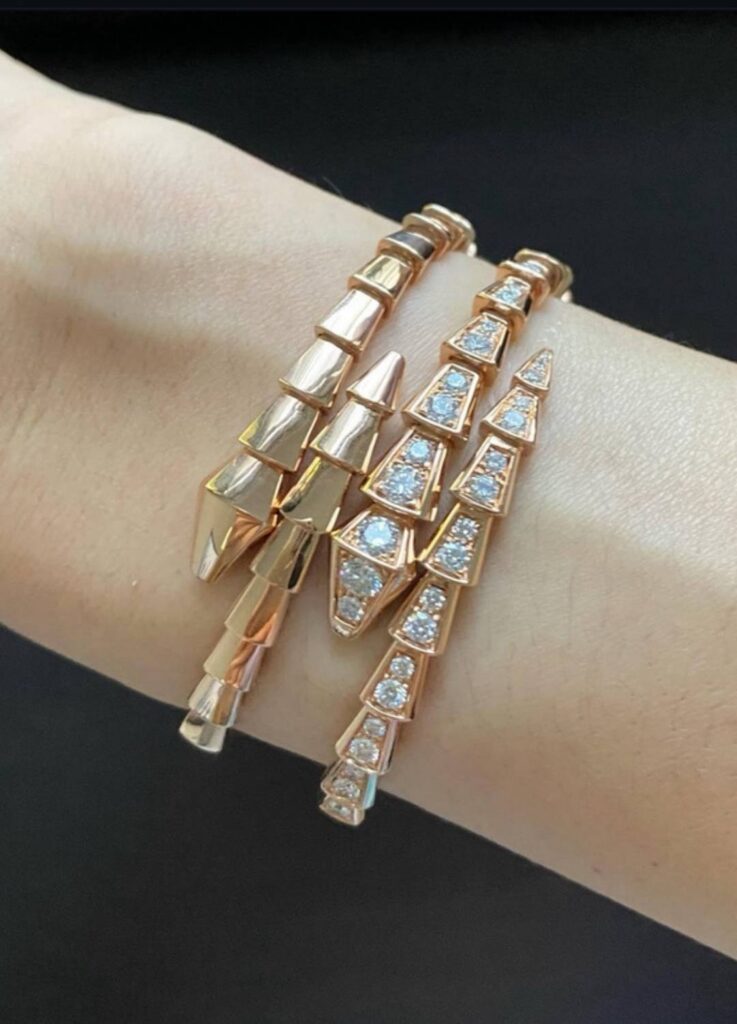
Most clearly expressed in the Serpenti Viper line, this structure uses a controlled open bangle or cuff form.
- Defined entry point
- Fixed curvature with engineered flexibility
- Stronger architectural presence
Despite its rigidity, pressure is evenly distributed, minimizing discomfort even during extended wear.
Both structures share one quality: they remain visually anchored. The bracelet does not drift; it asserts position.

Material Strategy: Metal as Surface, Not Shine
Serpenti’s impact is heightened by Bulgari’s treatment of metal as mass and contour, rather than reflective spectacle.
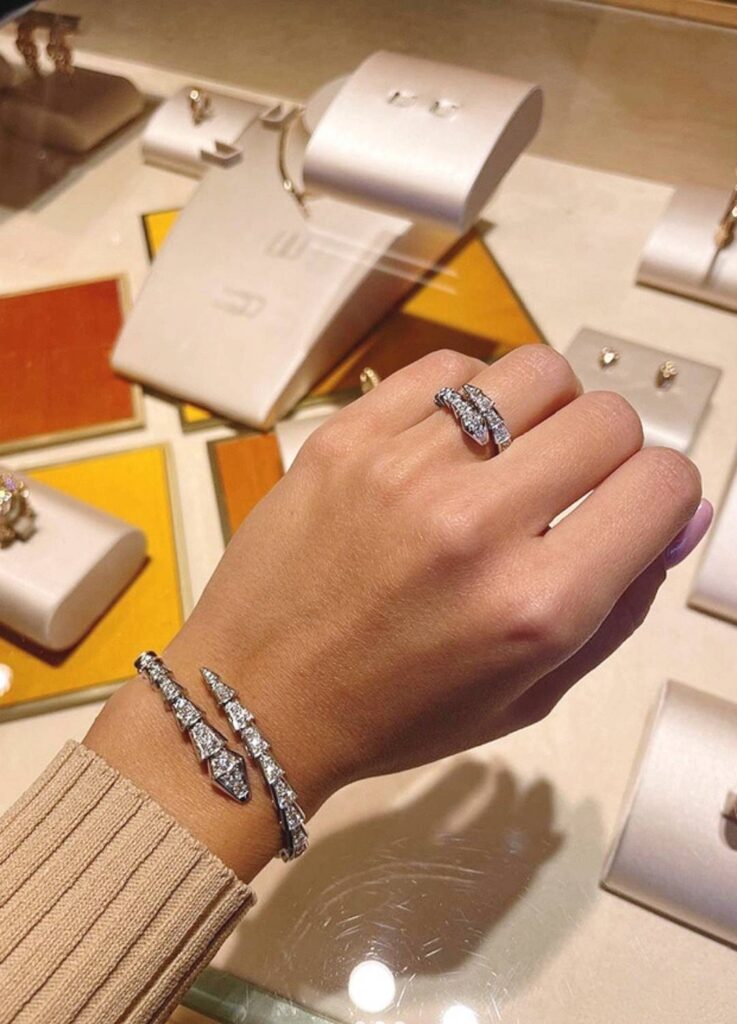
Whether executed in yellow gold, rose gold, or white gold, the emphasis lies on:
- Continuous surface flow
- Controlled reflection
- Sculptural weight rather than sparkle
Diamond pavé and enamel, when present, are integrated to reinforce form—not distract from it. Unlike jewelry that relies on brilliance, Serpenti relies on line and volume.
This is why even non-pavé versions feel complete.
The design does not depend on embellishment to assert presence.

Who Serpenti Works For—and Why
From a structural standpoint, Serpenti suits wrists that can visually support a dominant form.
- On slender wrists, the bracelet reads as a strong focal point, shaping the entire silhouette.
- On fuller wrists, the curvature compresses visually, creating a streamlined contour rather than excess volume.
What matters is not wrist size, but visual hierarchy.
Serpenti leads. It does not accompany.
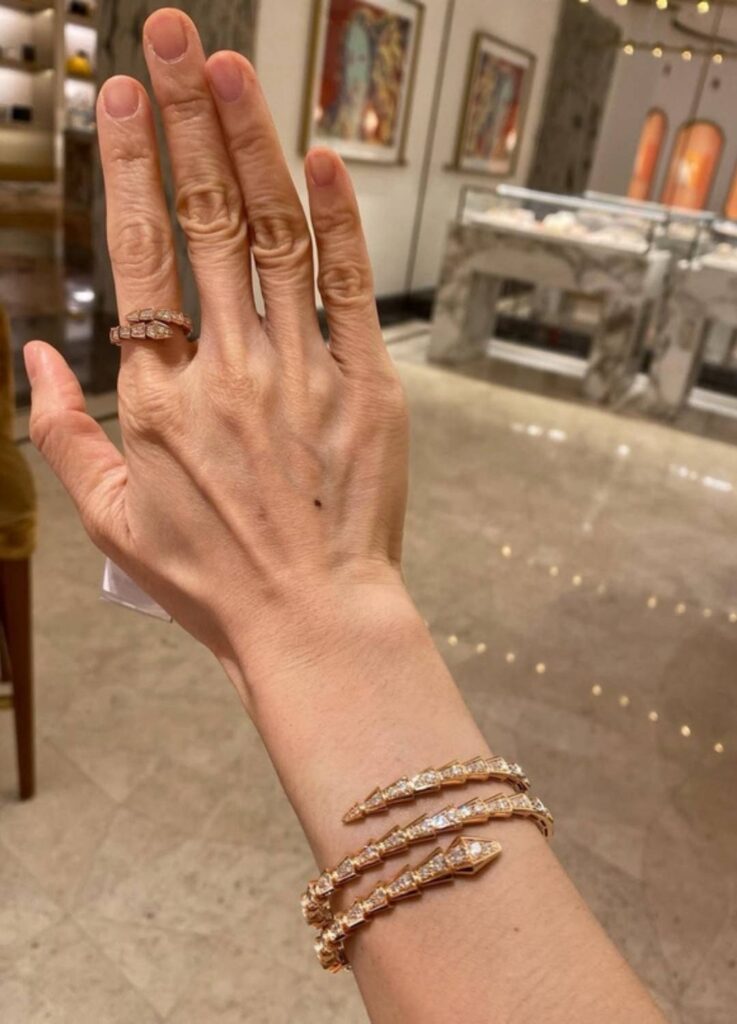
This is why it pairs best with minimal styling—bare wrists, clean sleeves, uninterrupted lines. Layering dilutes its architectural clarity.
Styling Logic: One Structure Is Enough
Serpenti does not require reinforcement.
- Worn alone, it defines the wrist completely.
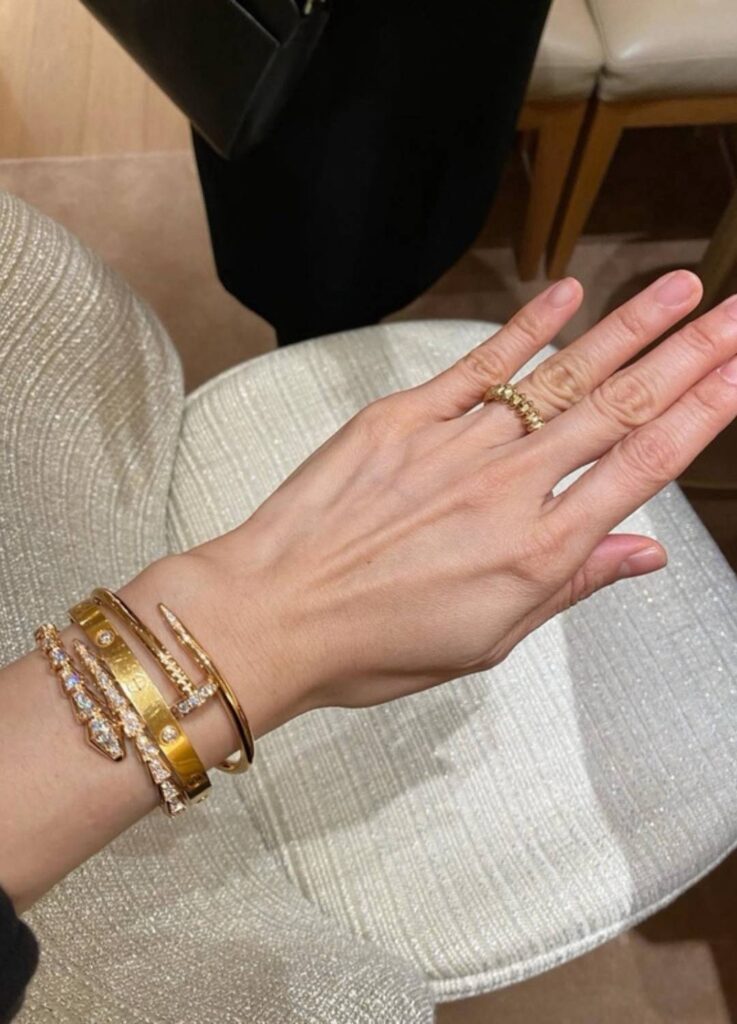
- Paired with a watch, the watch must yield—thin profile, restrained bezel.
- Heavy layering competes rather than complements.
In formal settings, Serpenti operates as a structural anchor.
In evening wear, it often replaces the need for additional jewelry altogether.
Serpenti as a Design Statement
Serpenti is not immediately emotional.
Its effect is cumulative.
At first, it may feel confrontational—too defined, too assertive. But over time, its appeal reveals itself not through sentiment, but through design logic.
This is jewelry that creates emotion by imposing structure, not by inviting softness.
Final Note
The Bulgari Serpenti bracelet is not about symbolism, seduction, or trend.
It is about how an object occupies space on the body.
It coils without slipping.
It asserts without ornament.
It moves, yet remains fixed.
In that sense, Serpenti is less a serpent than a gaze—
one that wraps, holds, and quietly refuses to be ignored.
[ Related Editorials ]