On silence as position, the time axis as structure, and the difference between asserting and accumulating
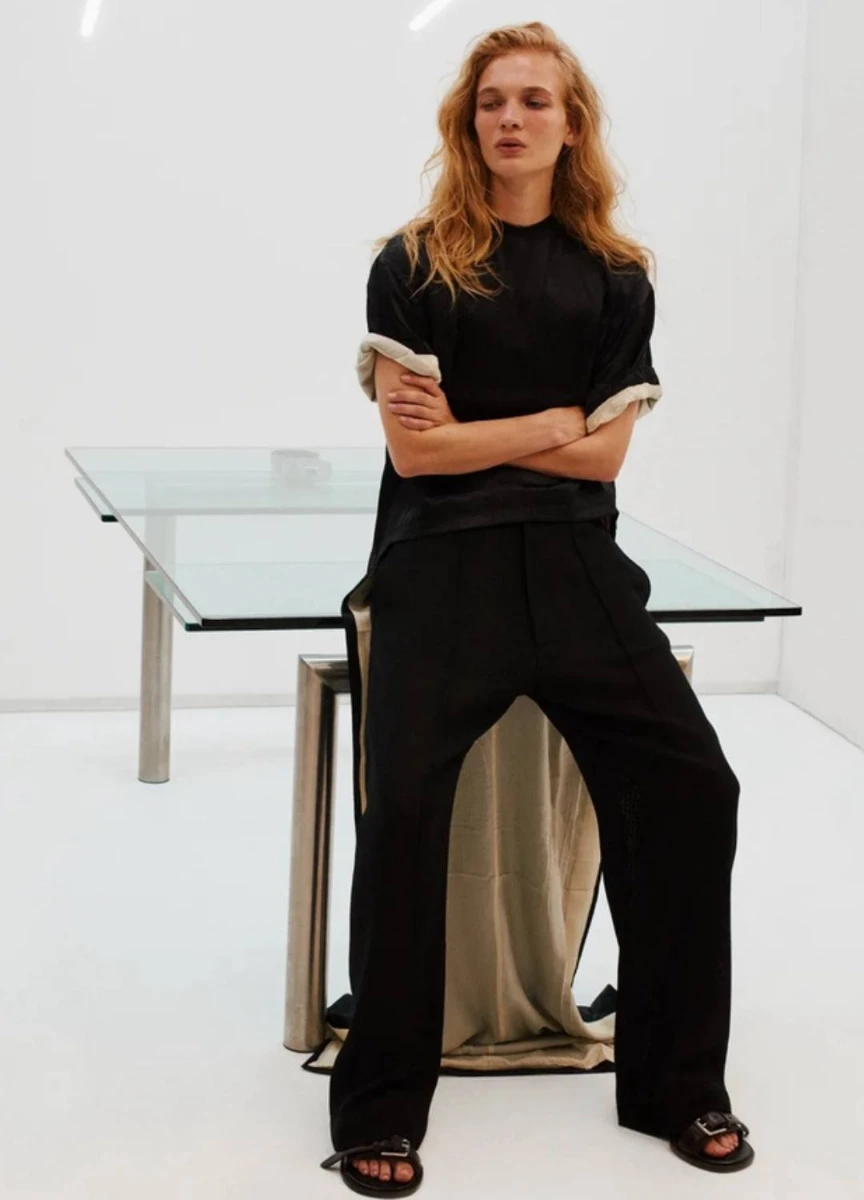
In July 2025, Phoebe Philo released her fourth body of work since returning under her own name. Once again, there was no runway — no audience, no applause, no spectacle.
Collection D arrived through a sequence of images — controlled, deliberate, removed from the fashion calendar’s usual rhythm. It spoke clearly. This wasn’t absence as mystery. It was absence as position.
Through Collection D, Philo restates the stance she has held throughout her career: fashion doesn’t need performance to hold meaning. Structure, rhythm, and emotional intelligence are sufficient. The collection is expected to arrive in stores in February 2026, but its relevance is already fully formed.
The Refusal of the Runway as Editorial Strategy
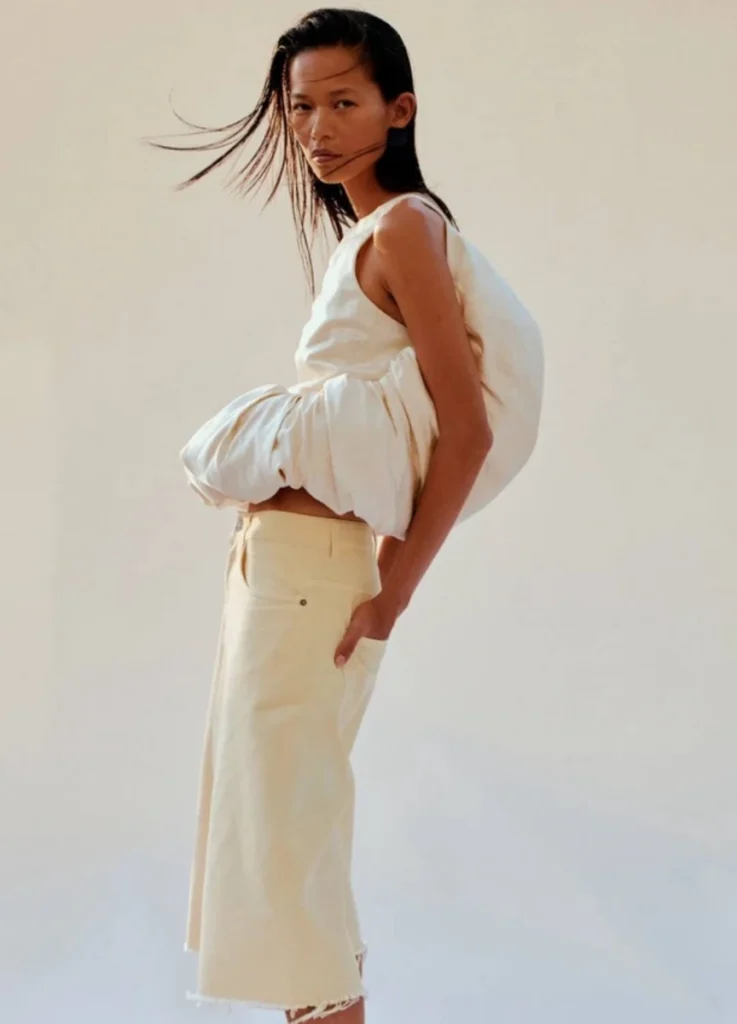
Philo’s decision to bypass the runway is not nostalgic or evasive. It’s structural.
By operating outside the official fashion week system, she sustains a direct-to-consumer, image-led model — one that prioritizes time, focus, and controlled reception over immediacy. Her collections don’t compete for attention. They wait for it.
The runway, by nature, compresses narrative into spectacle. Philo has never been interested in compression. She lets garments unfold slowly — through silhouette, proportion, and photographic framing. Each image becomes editorial in its own right rather than documentation of a show.
The approach responds to industry fatigue: accelerated cycles, overproduction, the erosion of emotional longevity. After her departure from Céline and a long period of personal recalibration, Philo returned with a system designed for sustainability — creative and psychological. Her audience reads it that way too. The philophiles aren’t a fanbase exactly. They’re closer to a shared visual memory: women who recognize themselves in clothing that respects time, movement, and restraint.
Writing the Female Form Without Emphasis
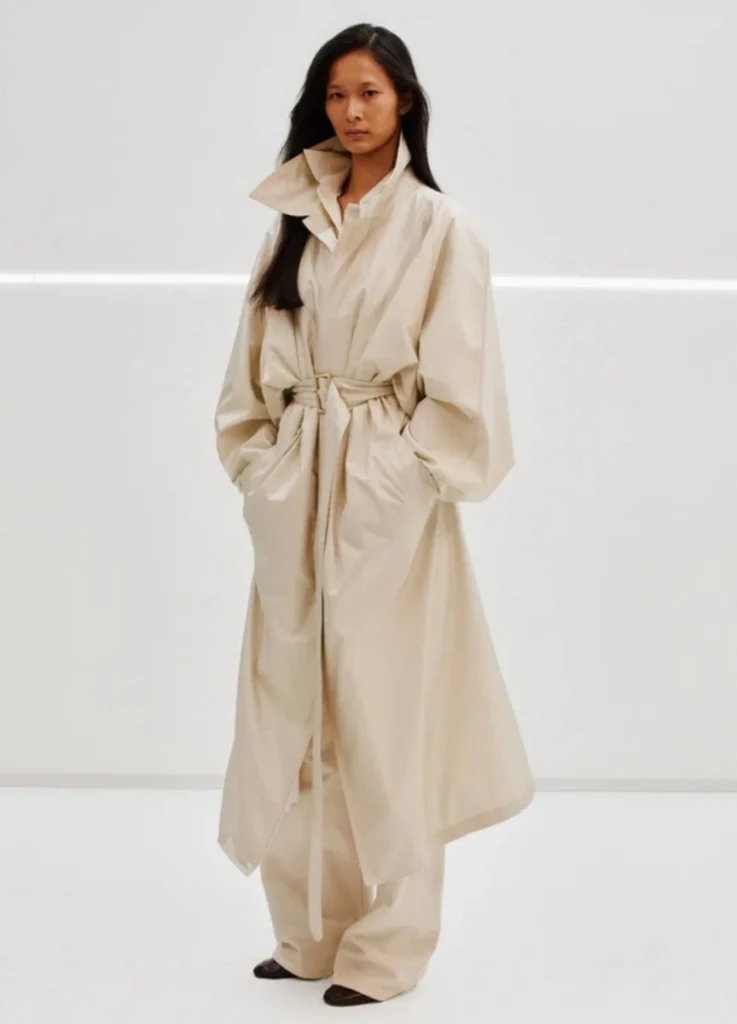
Philo has always worked between classicism and minimalism, but never as a stylistic exercise. Her concern is with how women inhabit clothes across a full day, a full season, a full life. From her redefinition of femininity at Chloé to the intellectual restraint of her Céline years, she has consistently reshaped the female silhouette without insisting on novelty.
Collection D continues that trajectory. Rather than functioning as a seasonal statement, it operates as part of an accumulating wardrobe system — what Philo has described since her brand’s launch as a continuously edited body of work.
Collection D isn’t a season. It’s a chapter.
A Quiet Dialogue with Matthieu Blazy
The timing of Collection D invites comparison with Matthieu Blazy, whose tenure at Bottega Veneta emphasized architectural precision and visual discipline, and who now steps into his role at Chanel. Traces of Blazy’s influence occasionally surface in Philo’s recent work, but the distinction is fundamental.
Blazy constructs order. Philo embeds emotion.
Where Blazy’s garments articulate clarity through form, Philo’s designs hold something back — leaving room for ambiguity, softness, and lived experience. The difference isn’t aesthetic. It’s emotional. Presence versus resonance.
The contrast will be worth watching once Blazy’s first Chanel collection arrives. The two designers seem to be working from opposite ends of the same impulse — to take femininity seriously, with entirely different vocabularies.
Key Looks — Emotion as Structure
The Sugar Top
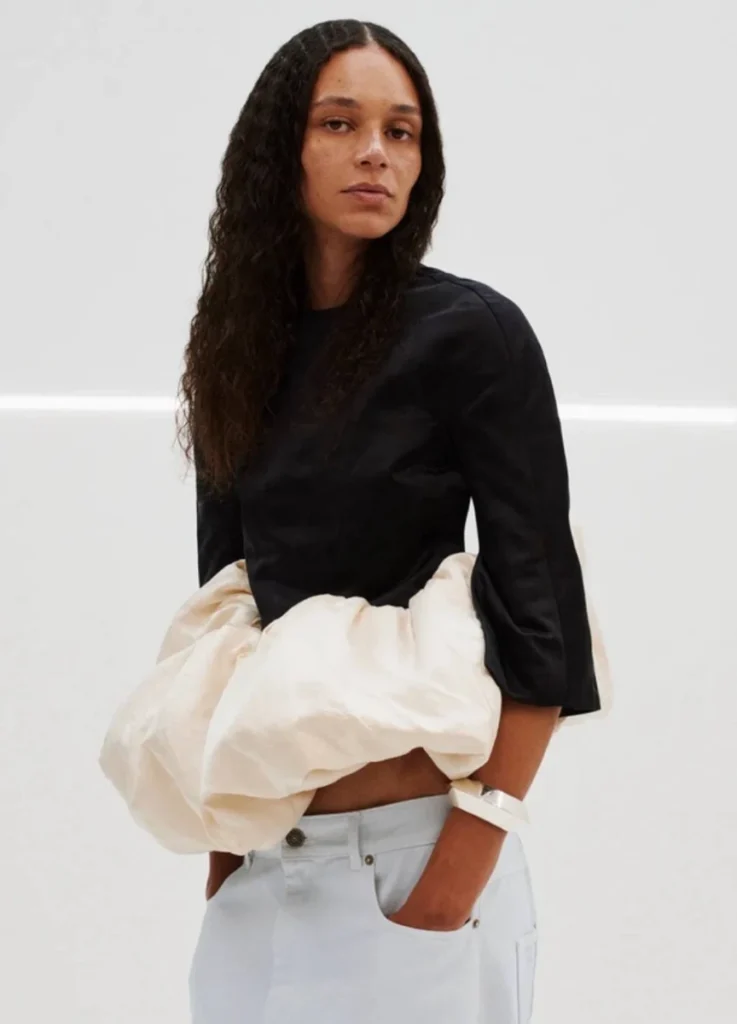
The first piece to hold the eye was the Sugar Top.
The construction is deliberate. Double-layered sleeves with rolled volume. A muted beige interior lining that tempers the surface drama. A chromatic contrast between body and sleeve that continues the wrapped motif introduced in Philo’s earlier collections — the sugar-paper architecture that ran through Collection A.
Built in silk satin, its exaggerated ruffles read as volume rather than decoration. The silhouette expands boldly, but the emotional line stays controlled — like a brushstroke on damp paper.
This isn’t ornament. It’s emotional architecture.
The Sugar Burst Top intensifies the idea: a restrained matte black upper dissolving into an exaggerated ballooned silk structure below the waist, suggesting tension, containment, and release. Philo’s signature balance — control and rupture — finds its clearest expression here.
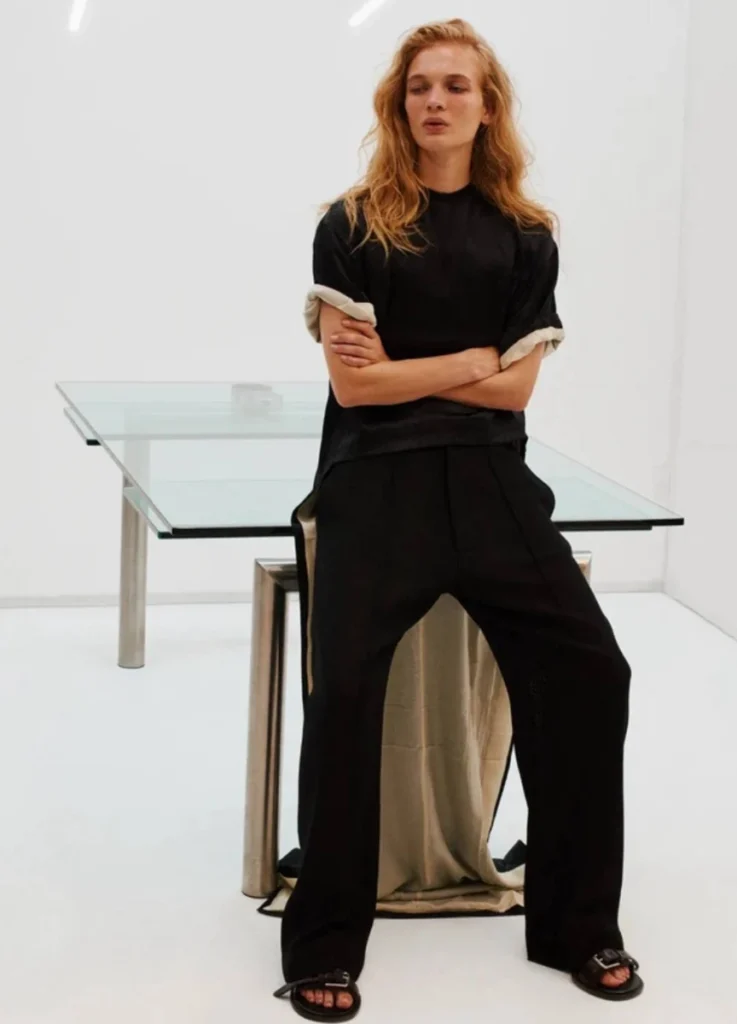
The Train Top
Look 7, the Train Top, marks the collection’s emotional apex.
From the front, it reads calm. Almost neutral. From the back, it extends — trailing, lingering, refusing closure.
Garments that hold attention are common. Garments that leave a residue are rare. This one does. It can be draped, reversed, or allowed to follow the body. Each choice alters the emotional register, and the wearer ends up performing memory through it rather than simply wearing the piece.
Few garments sustain that kind of afterimage. This one does.
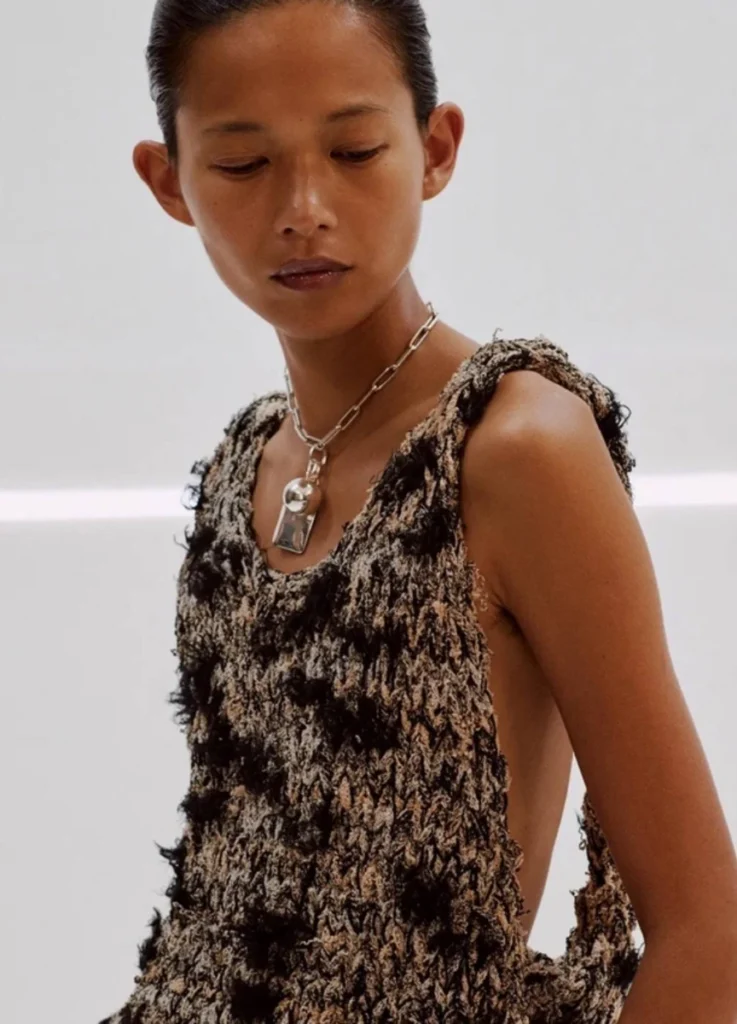
The Moon Bomber
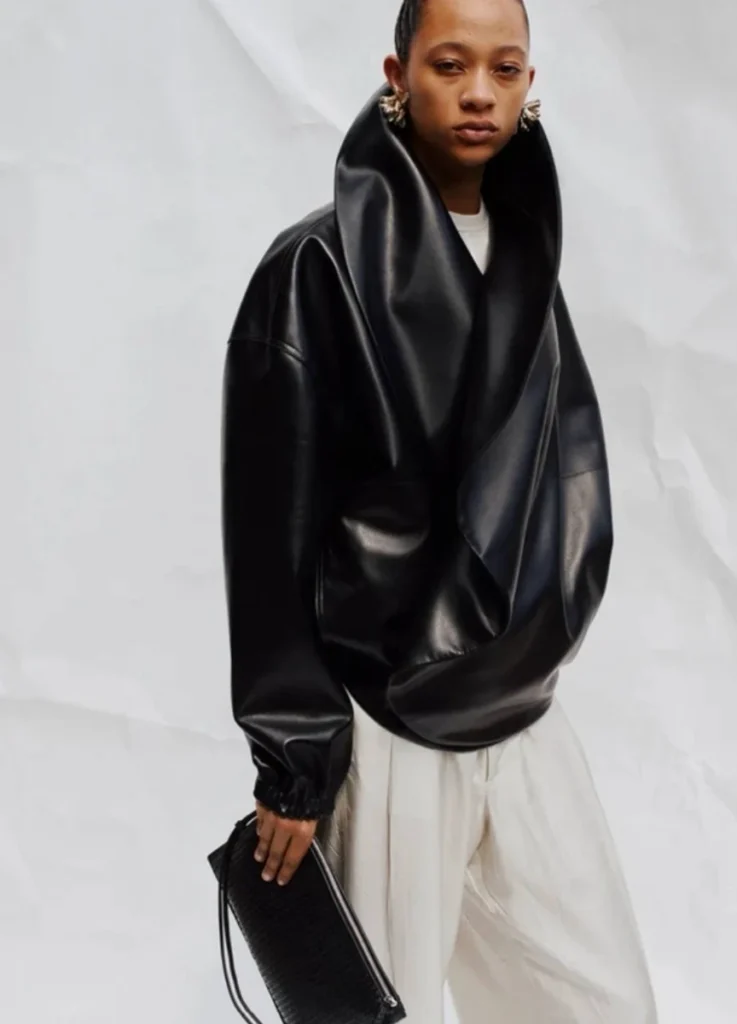
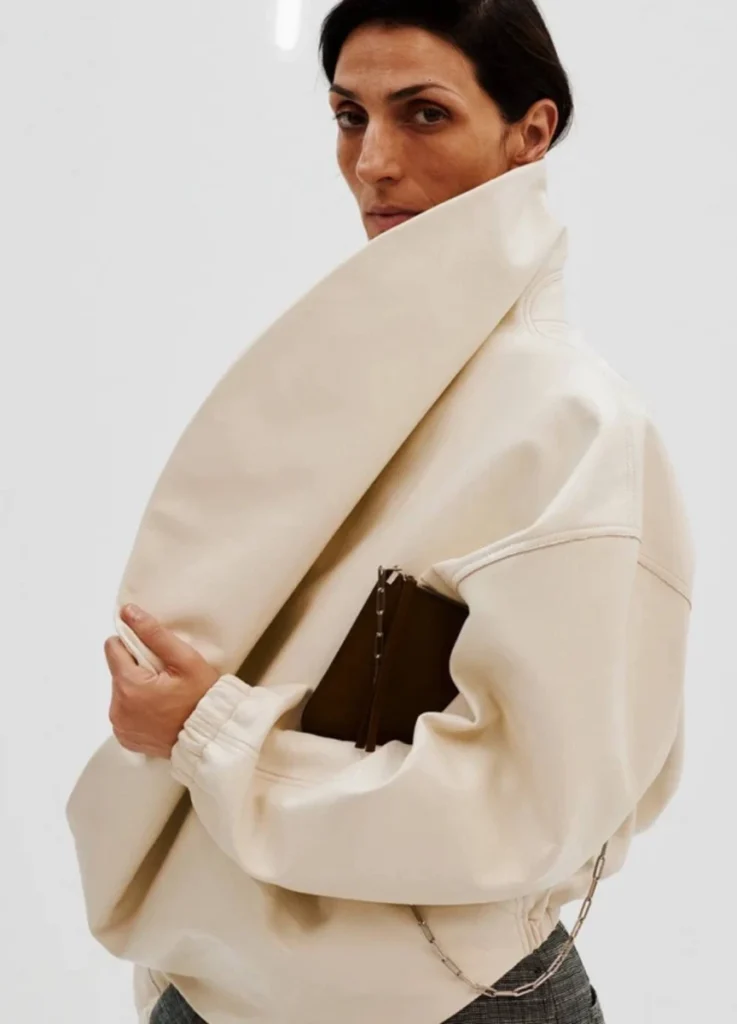
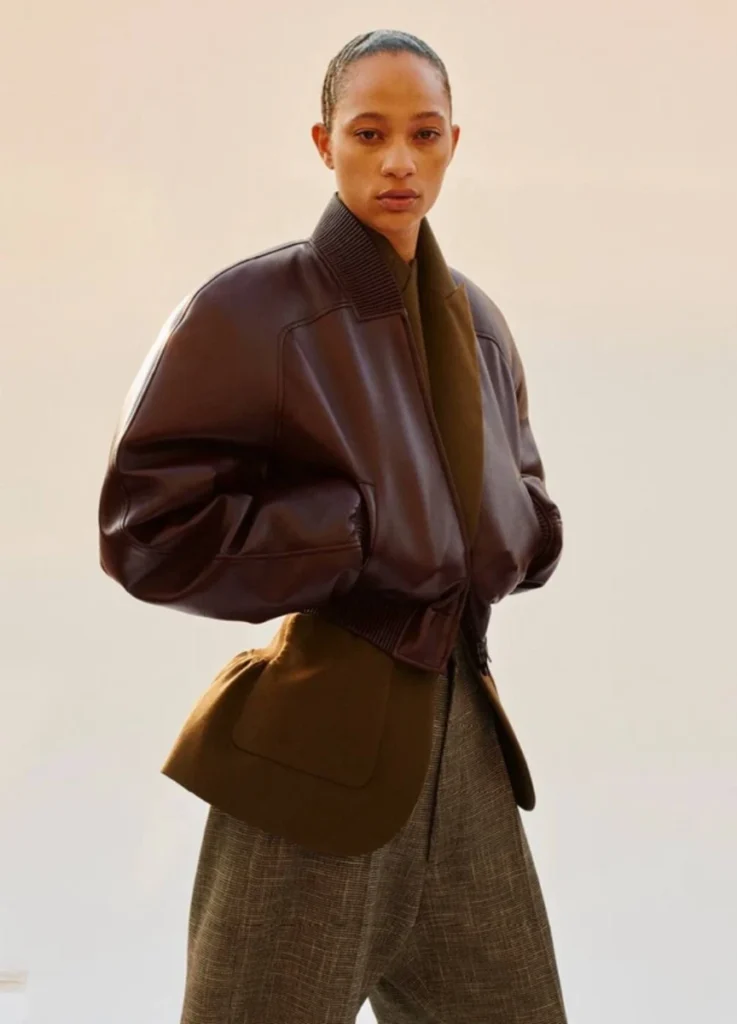
In Look 12, the Moon Bomber softens the vocabulary of leather.
Rounded rather than sharp, it reframes authority as quiet assurance. The jacket curves gently around the neck and arms, avoiding aggression while maintaining weight. Leather, by its nature, tends to read sharp, heavy, and direct. Philo embeds narrative even in that material. The curve sitting quietly on the body brings strong negative space back to mind — leather that listens rather than dominates.
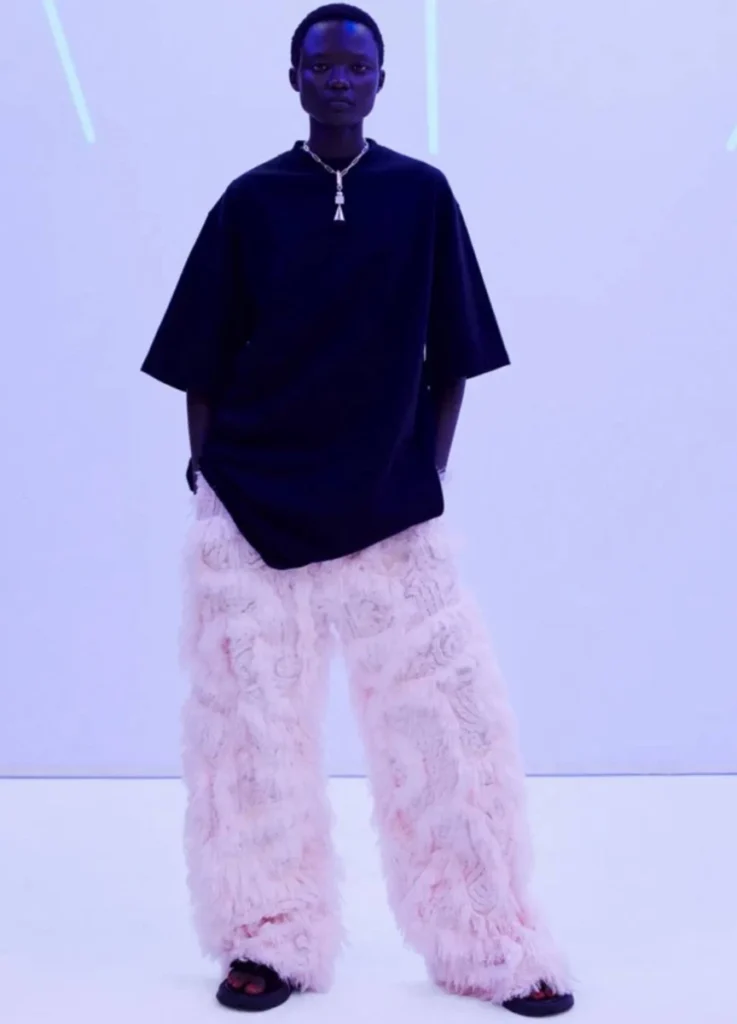
Pink Feather Trousers
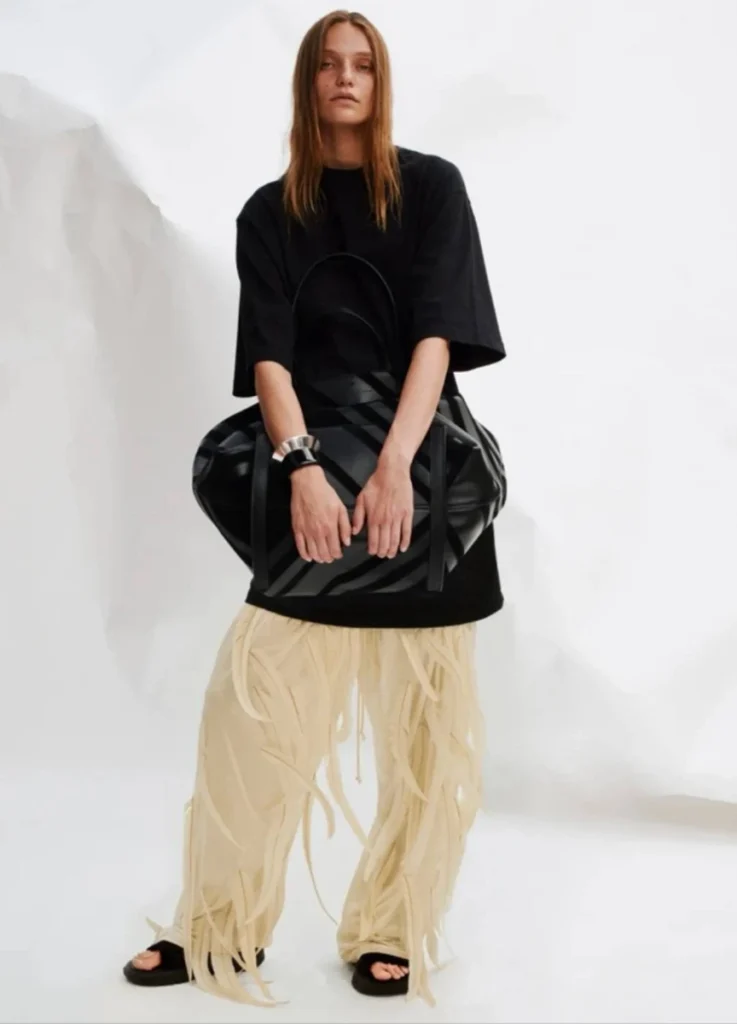
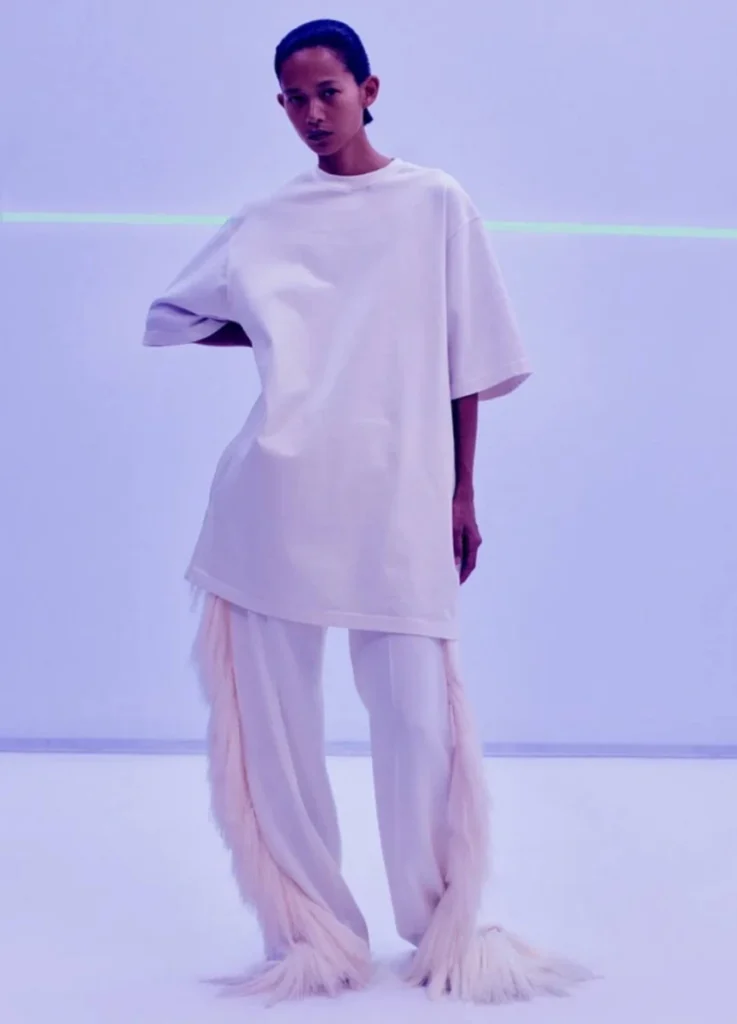
Look 15 carries the collection’s most subtle humor.
Pink feathered trousers could collapse easily into irony. They don’t. The pieces hold composure. The effect is sculptural, restrained, and unexpectedly confident.
Philo’s reversals work this way consistently — not through shock, but through tonal adjustment. Subversion happens in the negative space, not at the surface.
Utility Shirt and Sandals
The utility shirt in Look 18 reads unremarkable on first pass. Adjustable cuffs and collars let the wearer — not the designer — complete the silhouette. The garment responds rather than instructs. Real utility tends to look like this when it’s done well: present without disturbing the emotional register.
The strap sandals in the final looks complete the system. Low heels, precise straps, structural restraint. Someone might call them simple. They’re closer to the most carefully calibrated piece in the collection — neither standing out nor receding, the kind of edge piece that often defines a designer’s identity more clearly than any centerpiece.

Critical Reception
Vogue described Collection D as playful without sacrificing function, identifying the Sugar Tops and Train Top as examples of a controlled sensuality.
The Washington Post noted the collection’s resonance with mature consumers — particularly women over 50 — recognizing it as clothing that carries memory, history, and emotional discretion.
This isn’t fashion designed to persuade. It’s fashion designed to recognize.
Closing Notes
Collection D isn’t about reinvention. It’s about continuity — emotional, structural, temporal.
In the Sugar Top, ruffles become narrative. In the Train Top, extension becomes memory. Compared to Blazy’s disciplined order, Philo offers something quieter — garments that allow emotion to settle rather than assert itself. What she presents isn’t a moment. It’s an accumulation.
The Train Top and Sugar Top were where my own attention stopped. Not because the garments are conventionally beautiful. Because they make wearing structured emotion an actual experience — clothes that perform memory rather than display it.
This isn’t a season. It’s the structure of accumulating time.
And perhaps that’s Philo’s most radical gesture. To insist that clothing, like women’s lives, unfolds slowly — and that what’s worth saying often doesn’t need to be said out loud at all.
All images referenced in this post are drawn from Vogue Runway.
[ Related Editorials ]