On structure as the original language, the white gold’s quieter register, and how the collection now wears
On structure as the original language, the white gold’s quieter register, and how the collection now wears
The 2026 expansion of Clash de Cartier — marked by the introduction of multi-wear drop earrings, an expanded colored stone palette, and broader use of white gold — is more than an aesthetic refresh. It’s a strategic recalibration of one of Cartier’s most structurally distinctive jewelry lines.
What looks at first like an aesthetic expansion is closer to a deeper recalibration of proportion, movement, and wearability. The line has always operated by an unusual order — structure first, then ornament. The expansion confirms that order rather than abandoning it.
Rose Gold
@pastila.club / Instagram
Clash Was Never Only About Decoration — It Began With Structure
Clash de Cartier wasn’t conceived as a purely ornamental line in the traditional sense. Color and decorative variations were introduced relatively early in the collection’s life. What distinguishes Clash isn’t the absence of ornament. It’s the order in which ornament was allowed to appear.
From its inception, the collection was built on structural tension. Studs versus beads. Rigidity versus articulation. Visual assertiveness versus physical adaptability. Only once the mechanical foundation was fully resolved did Cartier begin to introduce color and material contrast.
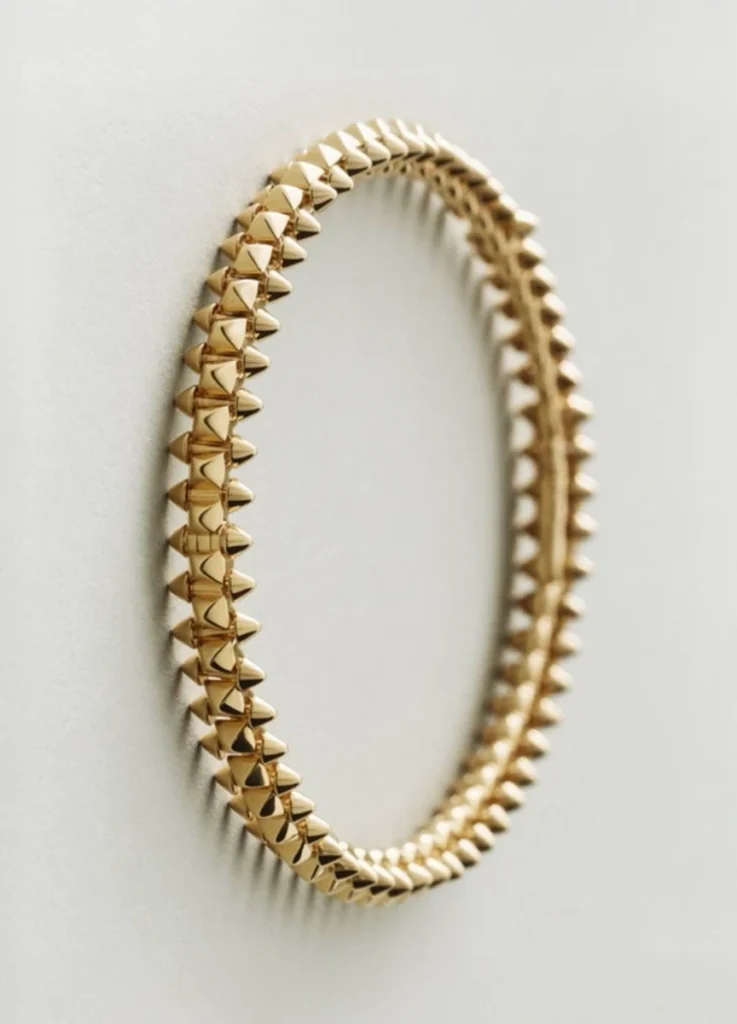
In Clash, decoration doesn’t lead design. It follows structure.
What ultimately defines the collection therefore isn’t sharpness or boldness, but controlled movement. When worn, the first sensation isn’t severity. It’s unexpected fluidity. This isn’t a stylistic illusion. It’s the outcome of precise mechanical engineering — each stud and bead designed to articulate independently, allowing the jewelry to wrap, shift, and respond to the body rather than resist it.
Color, when present, operates within this system. Never against it.

@cartier / Instagram
Moving Jewelry, Not Static Objects
Clash relies on advanced mechanical precision, but it’s ultimately finished by hand.
Polishing, assembly, and final calibration introduce subtle variations — the sharpness of a stud’s edge, the roundness of a bead, the way light breaks across metal surfaces. These micro-differences become most apparent in rings and bracelets. Pieces that sit directly on the skin and respond to movement throughout the day reveal the difference most clearly. Each piece feels closer to a variation within a shared structural language than to identical reproductions.
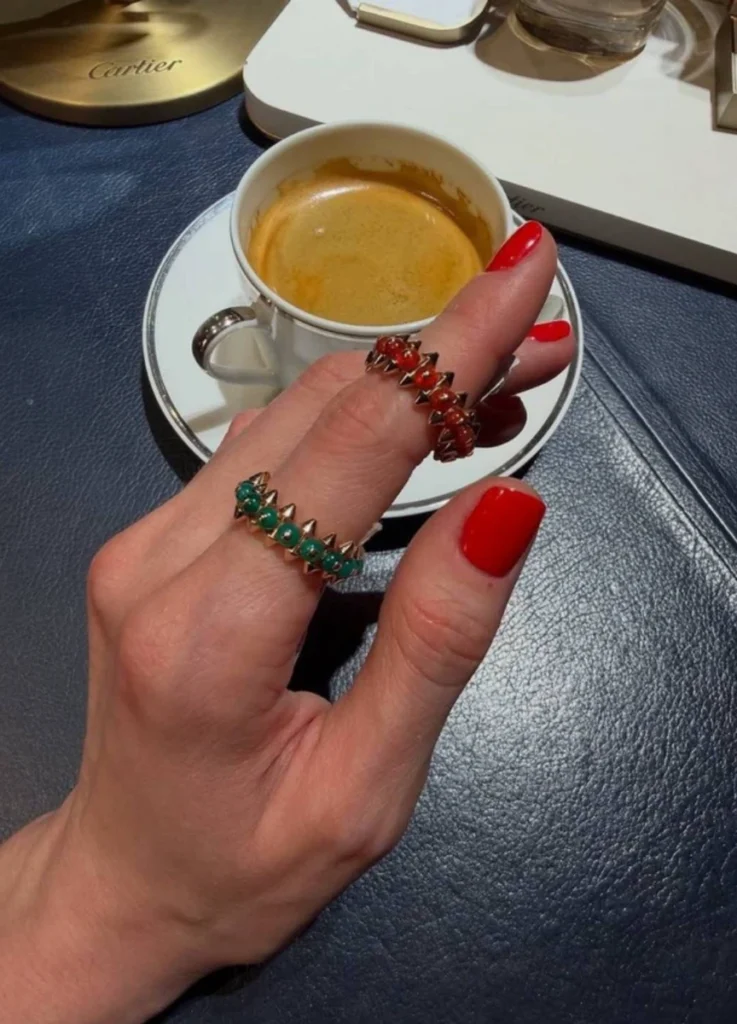
The 2026 colored stone versions amplify this character. Each piece contains nearly twice as many components as the all-gold counterpart, with hard stone beads pierced and pinned with a clou de Paris nail — alternating mechanical precision with human craftsmanship.
Rose gold , Agate
$6,400
@pastila.club / Instagram
The 2026 Expansion — Three Clear Directions
From early 2026 onward, the collection has expanded in three notable directions.
Category expansion. The introduction of new multi-wear drop earrings, broader use of white gold across thicker rings and bracelets, and significantly expanded colored stone variations.
Reinforcement of existing icons. Rings, hoop earrings, and necklaces incorporating stones such as pink chalcedony, onyx, and dyed agate.
Material rebalancing. White gold introduced more prominently across the line, particularly in thicker rings and bracelets where the cooler metal exposes structure more directly.
This isn’t simply about offering more options. It’s about absorbing different body types, proportions, and lifestyles into the Clash system.
Width: 6.4 mm
Maximum length: 37.1 mm
$7,200
@__fashion_couture__ / Instagram
The Drop Earring — A Structural Turning Point
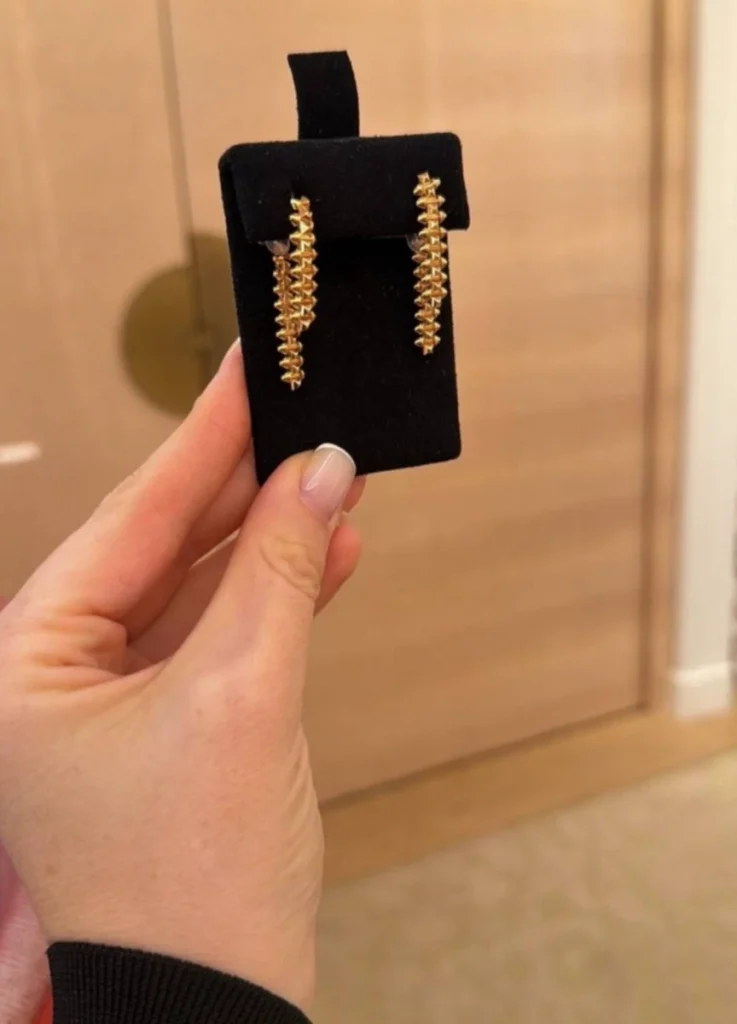
Of all the changes, the introduction of the multi-wear drop earring is the most significant.
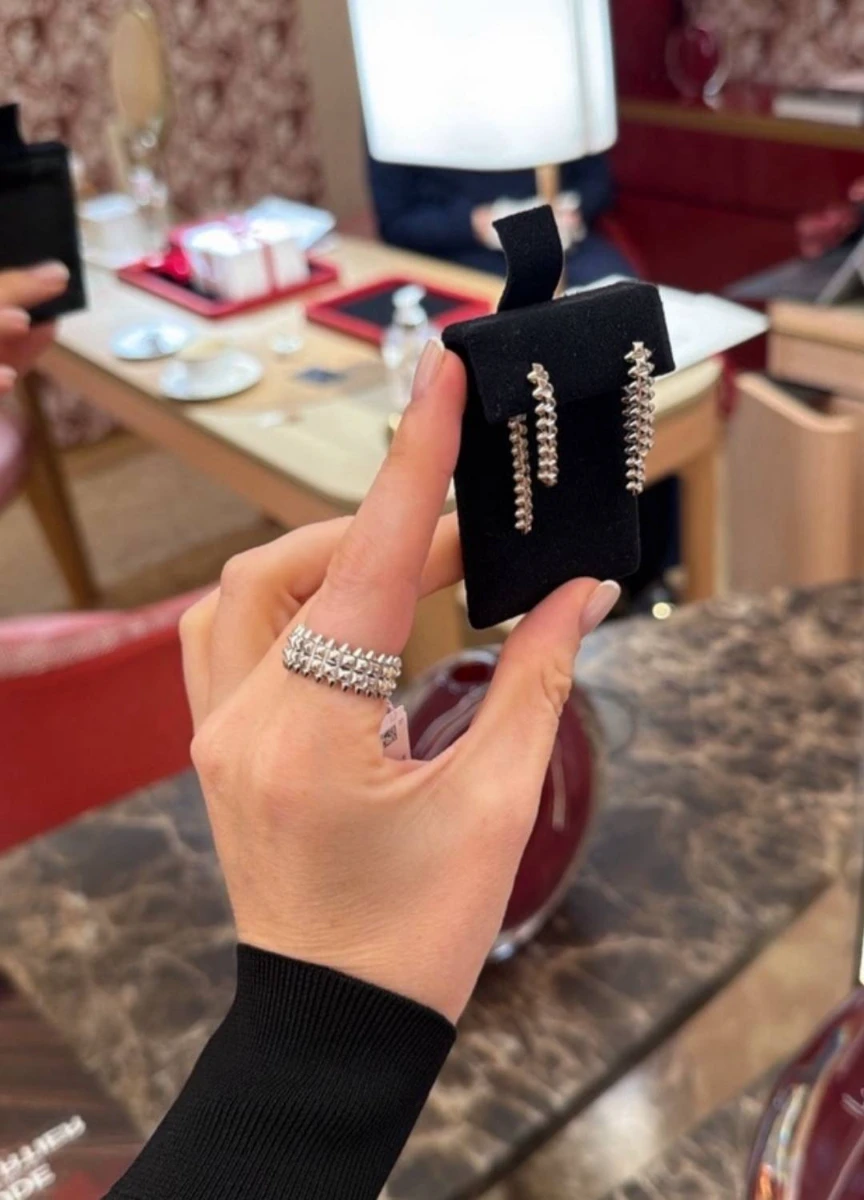
Previous Clash earrings emphasized proximity to the face — either hugging the ear or framing it through hoops. The new drop shifts the focus vertically. Two flexible lines run downward beside the ear, each line articulating subtly as the wearer moves. The structure is modular: both lines worn together for a fuller presence, front and back, or a single line worn alone for something more restrained.
This signals a transition from volume to line. The earring no longer decorates the face — it establishes a vertical axis beside it.
In white gold, the effect is cooler, more architectural, and distinctly urban in tone. Yellow gold isn’t offered in the drop format; the choice between rose and white gold is itself a register decision.
Width: 6.4 mm
Maximum length: 37.1 mm
$7,200
Wearing the Multi-Wear Drop — A Note From Direct Wear
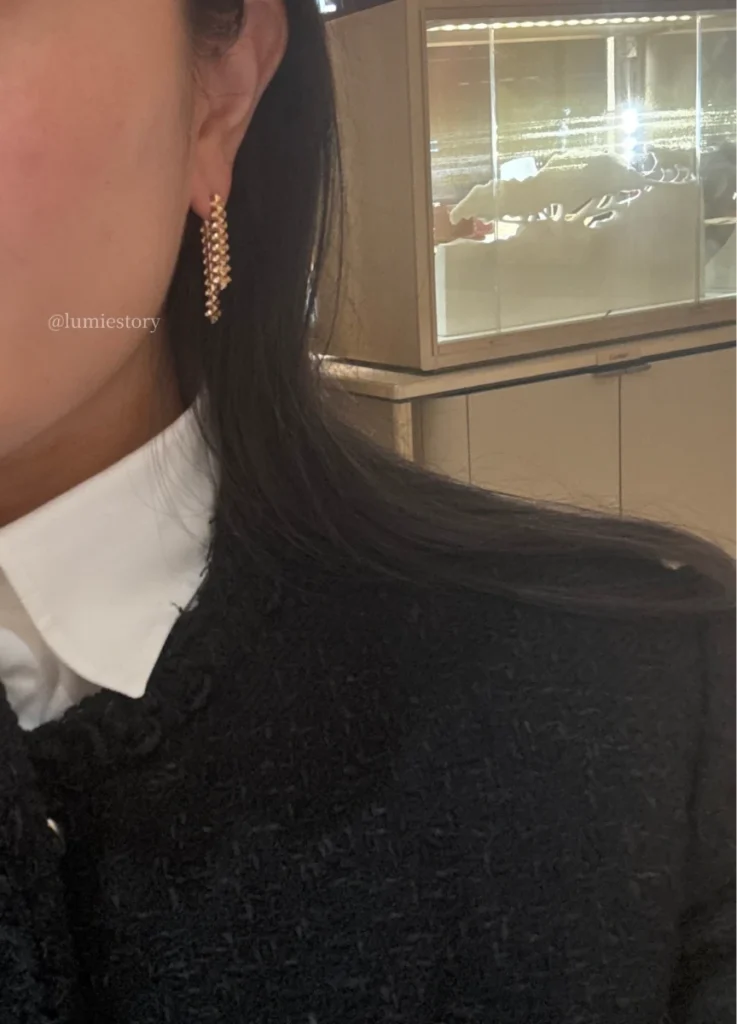
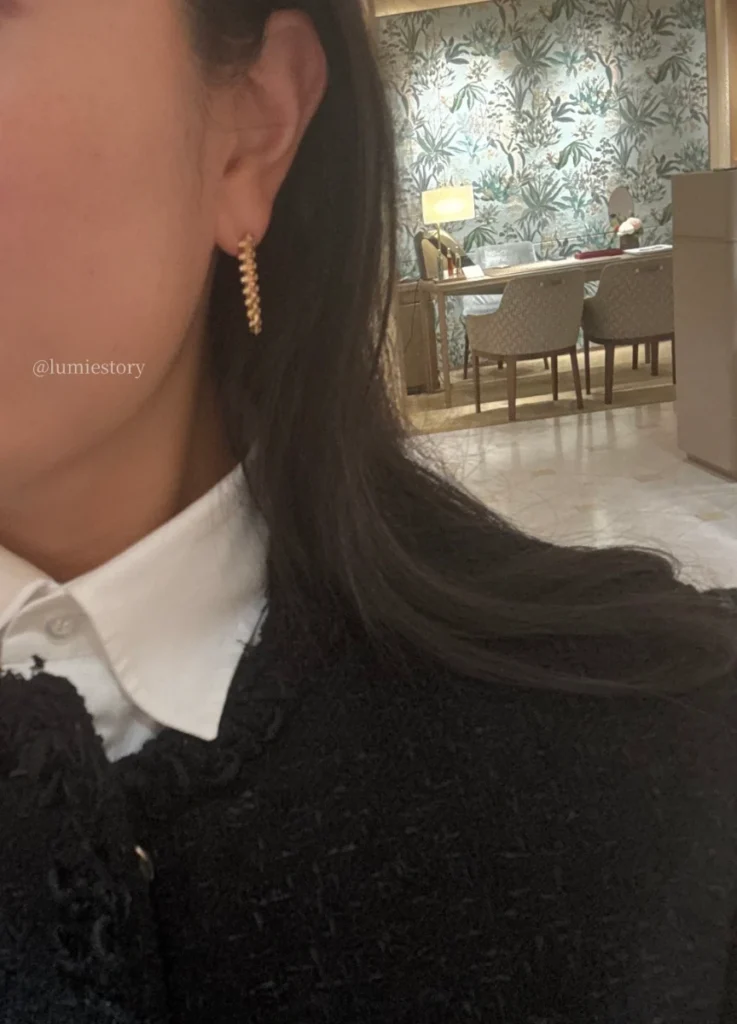
Having worn the white gold drop in person, a few things became clearer than the photographs suggest.
The two-line modular construction creates a meaningful difference between the one-line and two-line registers. With both lines worn, the earring carries weight and movement — a fuller, more pronounced vertical line beside the face.
With a single line, the piece reads almost as a refined hoop variant. Importantly, the single-line configuration secures comfortably on the ear; it doesn’t depend on the second line for stability. That makes the one-line wear genuinely workable for business contexts where the two-line presence might read too strong.
A point worth flagging on facial fit: the new multi-wear drop in white gold tends to suit rounder face shapes particularly well. The vertical drop introduces line where roundness needs it most, and the modular nature lets the wearer calibrate the strength of that line. The original round-shape Clash earrings, by contrast, tend to flatter narrower or more elongated face shapes — circular form complementing already-defined vertical proportion.
These aren’t universal rules. They’re patterns that emerge in actual wear, against a real face.
Width: 6.4 mm
Maximum length: 37.1 mm
$7,200
Colored Stones — Calibrated Softening, Not Embellishment
The second major axis of expansion is the broader use of colored stones.
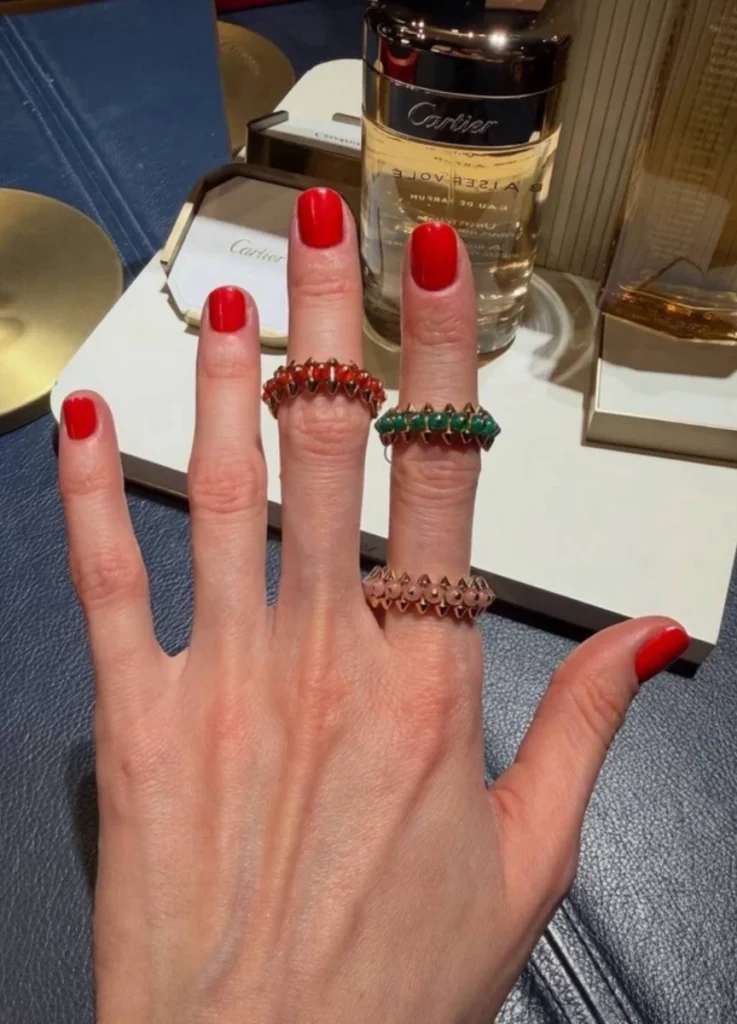
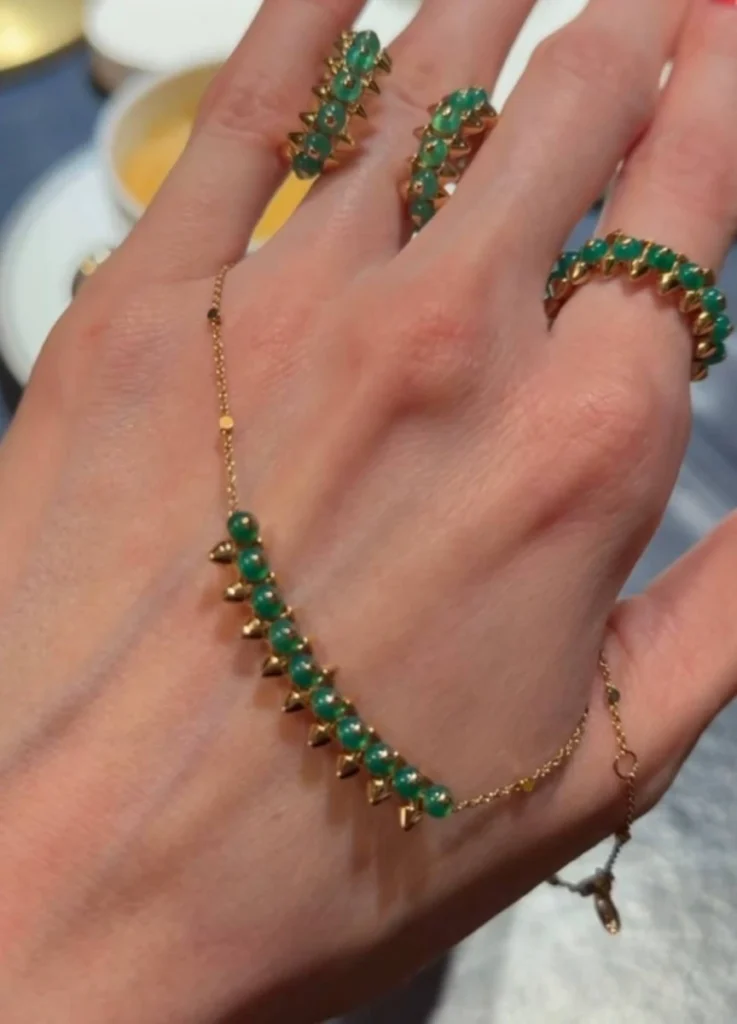
The current 2026 palette across the colored variations centers on red-dyed agate, green-dyed agate, pink chalcedony, and onyx, set into rose gold and yellow gold frameworks. The colored stone versions don’t appear in white gold — the cooler metal is reserved for the all-gold variations and the new drop earrings, where structural clarity is the priority.
Color here doesn’t function as ornamentation. The stones are small, repeated, and rhythmically inserted into the metal framework. They act less as gemstones and more as structural punctuation — closer to compositional rhythm than to emotional expression.
The effect isn’t sentimental. It’s compositional.
Rose Gold
@pastila.club / Instagram
The four stones each play a distinct role within the architecture.
Green-dyed agate softens the stud structure with a vegetal green that recalls the chromatic sensibility of Van Cleef & Arpels — but translated here into Clash’s mechanical language rather than naturalistic motif.
Rose Gold
$5,550
@tuffstuffru / Instagram
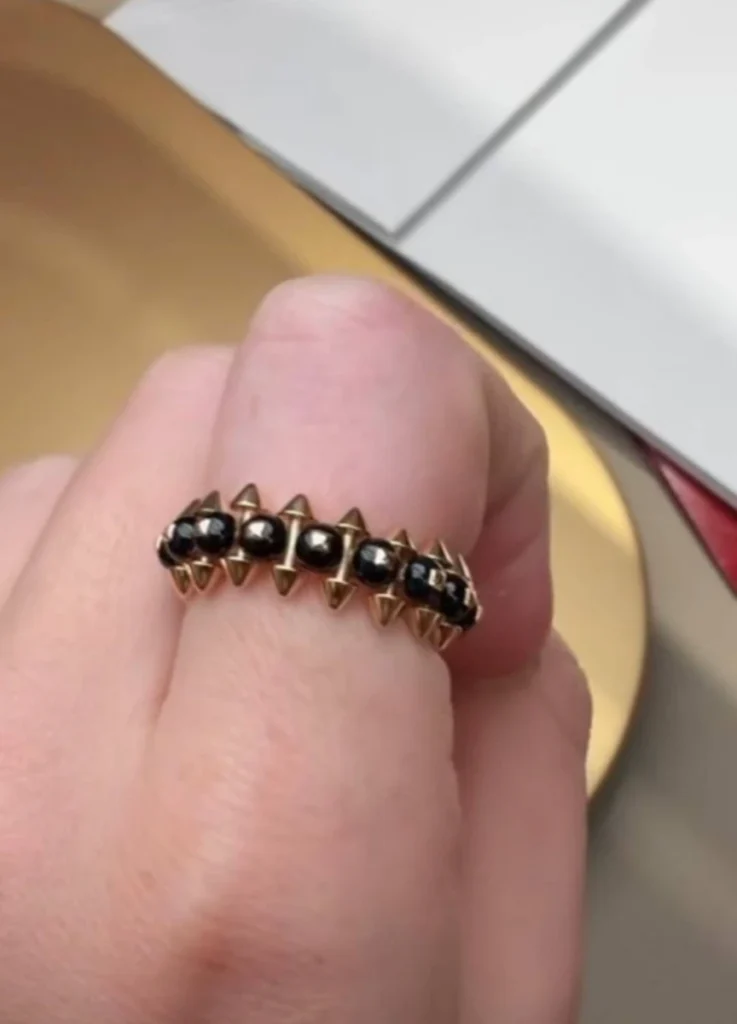
Onyx reinforces metallic contrast, sharpening structure rather than competing with it. The black against rose or yellow gold heightens the collection’s architectural geometry.
Rose Gold
@tuffstuffru / Instagram
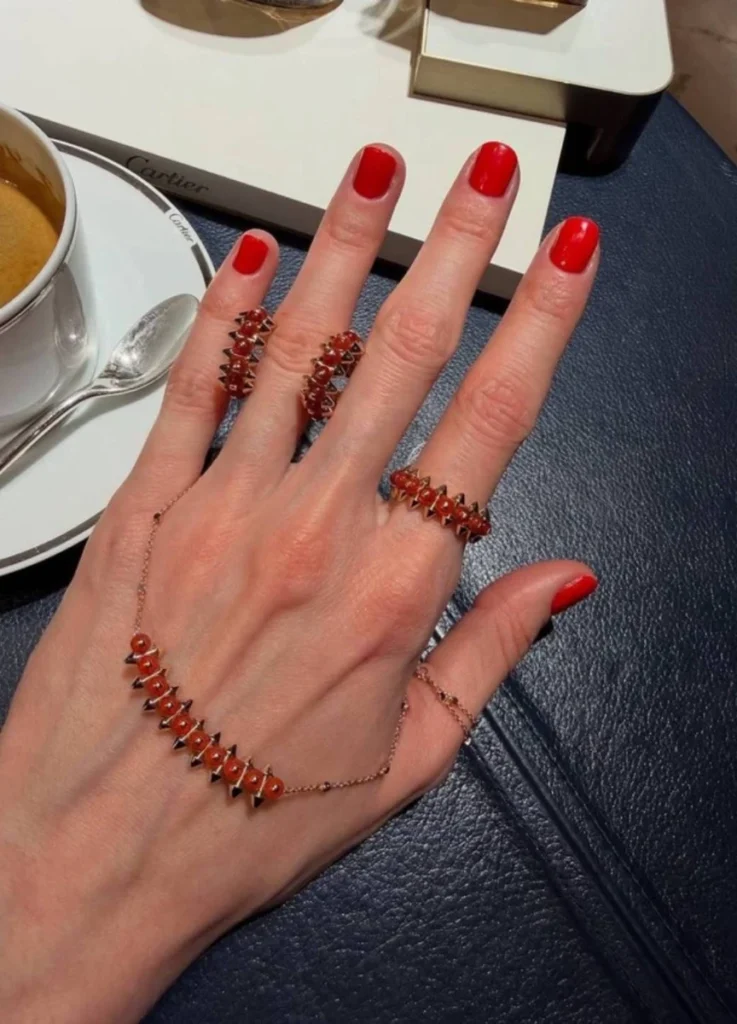
Red-dyed agate introduces warmth without overt display. The color reads sculptural rather than ornamental, keeping the stud framework sharp while preventing it from reading too sharp.
Rose Gold
@tuffstuffru / Instagram
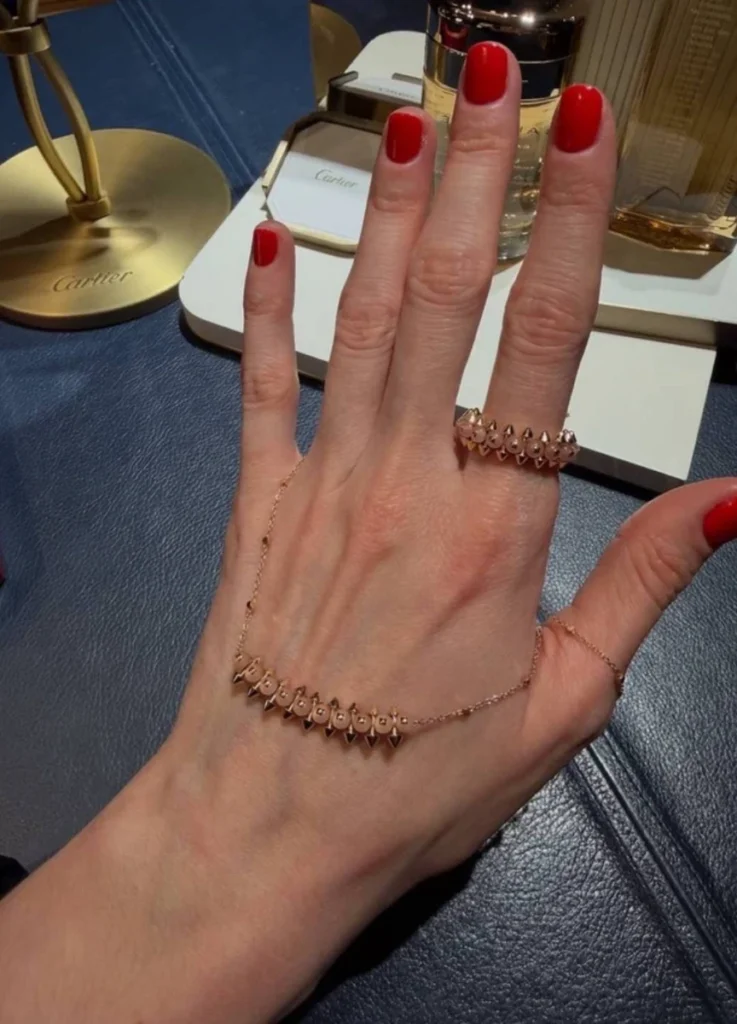
Pink chalcedony nearly dissolves into skin tone, leaving structure as the dominant impression. It produces the softest read in the colored stone family — close to a tonal whisper, where the architecture itself becomes the wearer’s statement.
White Gold
$5,550
White Gold — Purifying the Form
White gold presents a particular challenge for Clash.
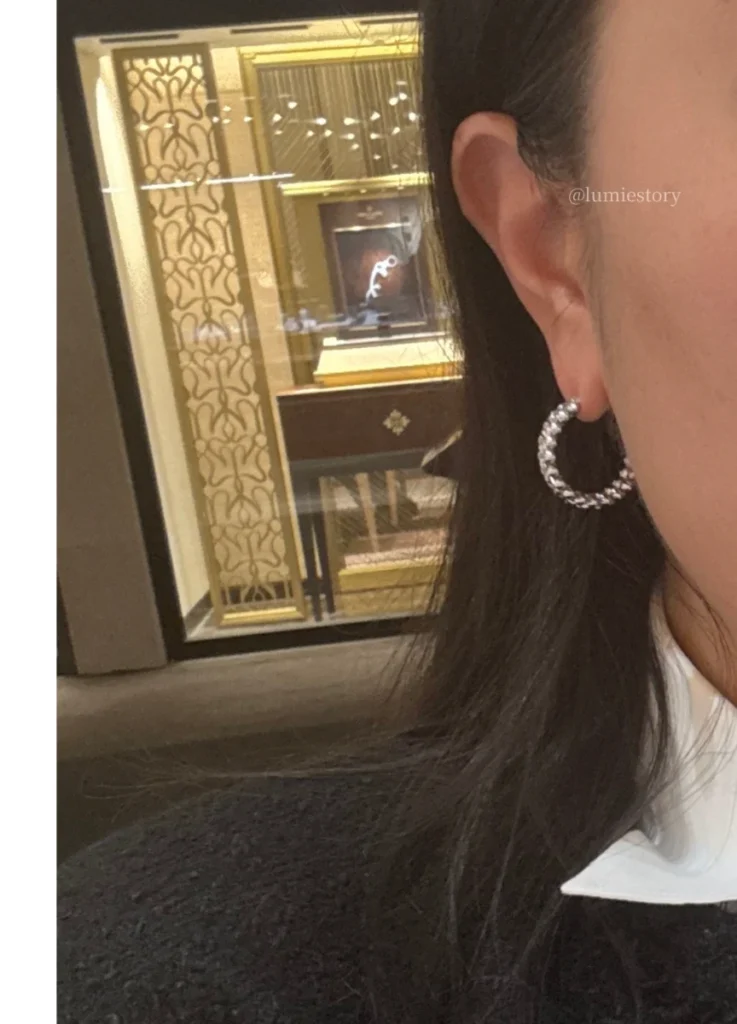
Without the warmth of yellow gold, the studs appear sharper, the structure more exposed. Introducing white gold more broadly — particularly in thicker rings and bracelets — signals a clear intent. Cartier appears to be positioning Clash as a more gender-neutral, object-oriented line. These pieces pair naturally with watches and metal accessories, reinforcing the idea of jewelry as hardware rather than adornment.
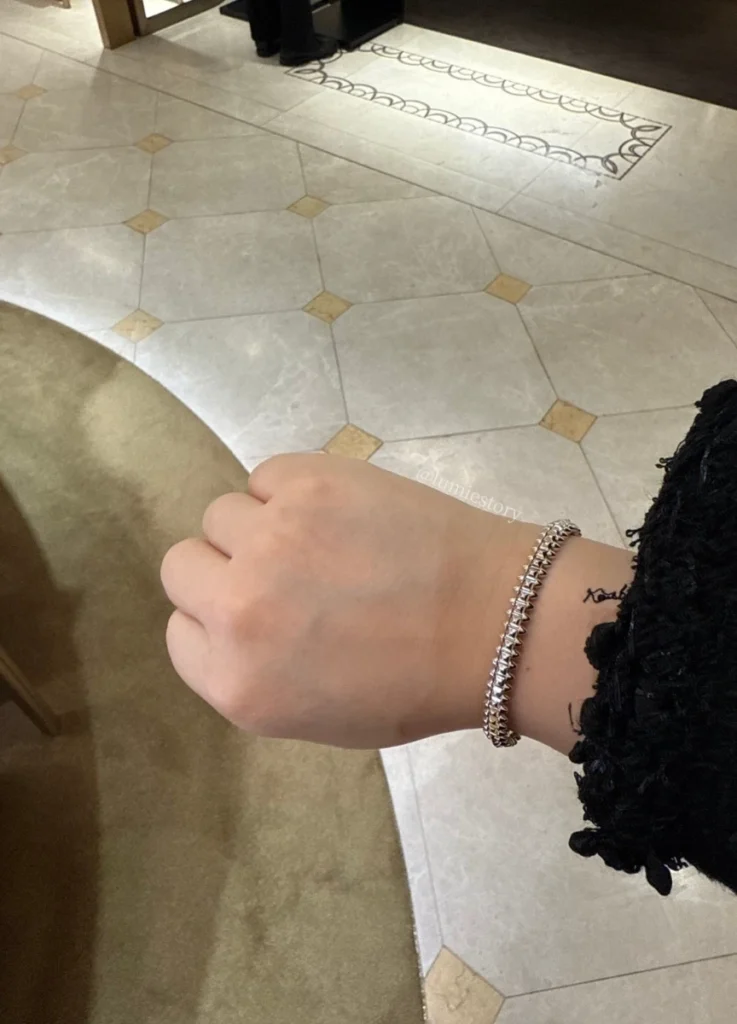
18K white gold
Width: 6.4 mm
$12,300
The White Gold Read — From Direct Wear
There’s a quieter discovery in the white gold variants that the photographs don’t fully transmit.
Where the yellow gold Clash projects a more assertive, almost armored register, the white gold version softens into the wearer rather than asserting against her. The studs and beads remain present, but the cool metal absorbs into the skin’s neutral register rather than projecting warmth outward. The collection reads less strong and more quietly defined.
This becomes particularly relevant for wearers who typically gravitate toward pavé-set pieces. Cartier bracelets often need pavé to register at their full presence — the diamonds carrying the visual weight that pure gold sometimes can’t sustain alone. The white gold Clash is one of the rare exceptions. The structure itself carries enough density that the absence of pavé doesn’t read as absence at all. The piece holds its own.
That makes the white gold Clash unusually well suited to minimalist styling — wearable in restrained outfits where a pavé-set Cartier piece might tip the balance. The presence is structural rather than chromatic. Less ornament, more sculpture.
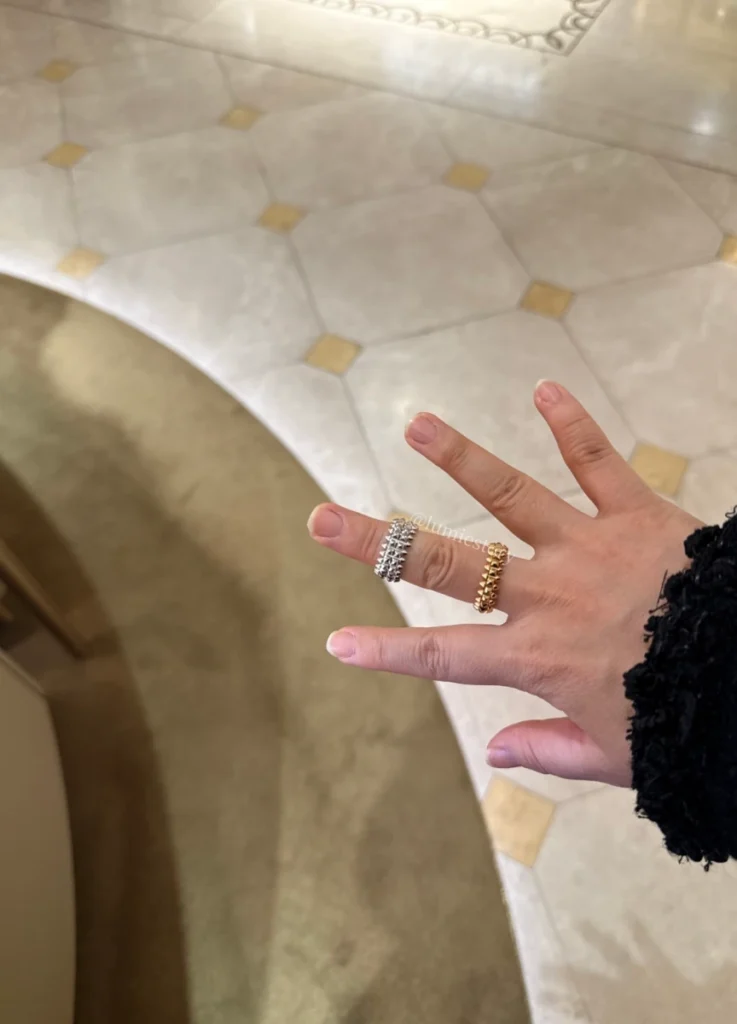
White Gold
$5,150
What the Expansion Signals
Pulled together, the direction is unmistakable.
The drop earrings introduce vertical structure. The colored stones add rhythm rather than sentiment. The white gold hardware strips the form down to its essentials.
Clash is moving away from being jewelry for strong personalities and toward jewelry for people with structural clarity. This isn’t a reaction to trends. If anything, it resists them. While much of the market continues to lean on emotion and image, Clash returns to proportion, movement, and physical logic.
That return is what’s worth paying attention to.
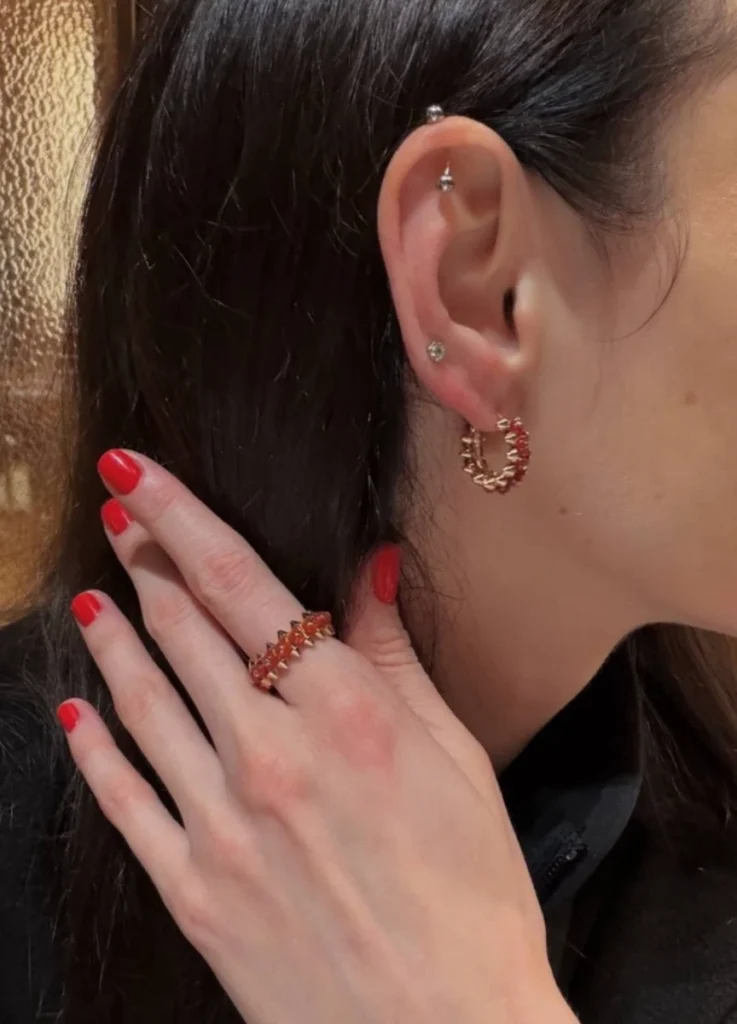
@pastila.club / Instagram
Closing Thought — Not Jewelry for the Loud
Clash de Cartier isn’t jewelry for the aggressive or the theatrical.
It suits those who are firm yet flexible — wearers whose presence is defined less by force than by balance. Despite its visual language of collision, Clash ultimately settles quietly on the body. It doesn’t dominate. It adjusts.
And in that restraint lies its enduring strength — the kind that doesn’t announce itself in photographs, but accumulates with wear.
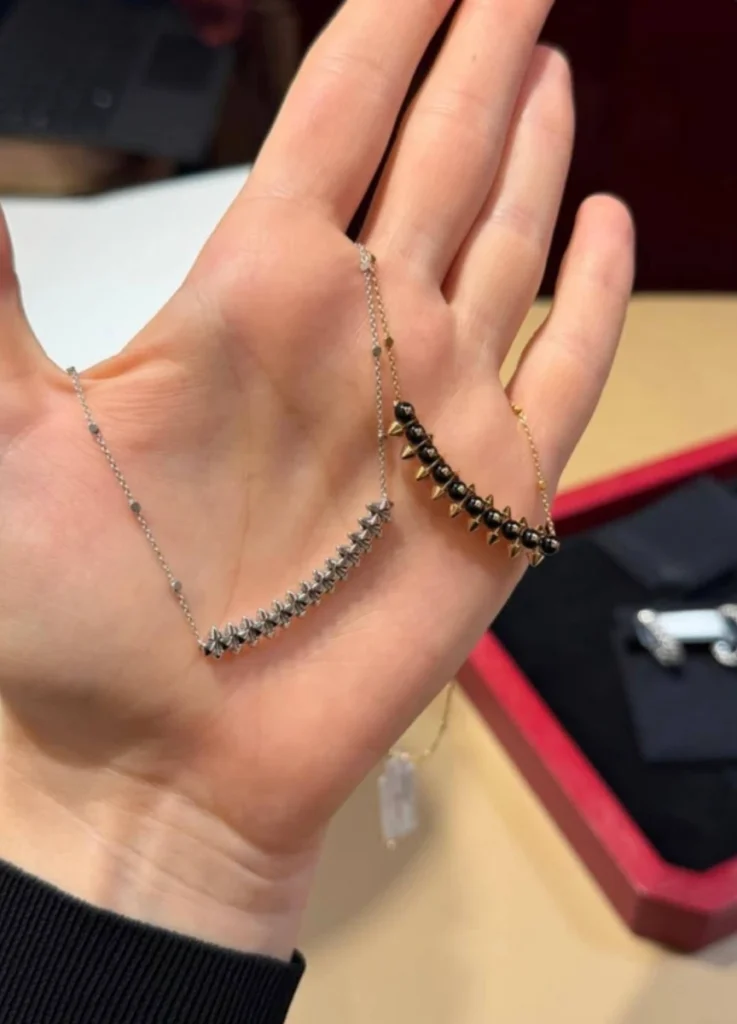
White Gold & Onyx
@pastila.club / Instagram
Featured Image via @__fashion_couture__ / Instagram
All images unless otherwise credited: © Lumie Story
[ Related Editorials ]