Reading Anderson’s first Dior couture through cyclamen, Magdalene Odundo’s ceramics, and what it means to protect a craft by making it
The Christian Dior Spring 2026 Haute Couture collection doesn’t present a finished idea of beauty. It unfolds like nature itself — adaptive, unstable, constantly in motion.
This was Jonathan Anderson’s haute couture debut at Dior, and his first time working in the genre at all — a milestone for a designer whose work at Loewe and JW Anderson redefined ready-to-wear conceptualism but never crossed into couture territory until now. The expectation carried the same weight that surrounded his Spring 2026 ready-to-wear debut last September.
Anderson’s thesis was direct. Nature offers no fixed conclusions, only systems in motion — evolving, adapting, enduring, he wrote in show notes. Haute couture belongs to this same logic. It is a laboratory of ideas. The collection is positioned not as a museum artifact preserved through repetition, but as a form of knowledge that survives only through practice, experimentation, and the continued movement of the hand.
Dior’s official statement is clear: La créer, c’est la protéger — to create is to protect. Tradition isn’t safeguarded by being repeated. It’s safeguarded by being enacted.
The Setting — A Cabinet of Curiosities at the Musée Rodin
The show at the Musée Rodin unfolded as an immersive meditation on time, transformation, and craft. The ceiling of the show tent was carpeted in moss and cyclamens — petals beginning to dry and fall onto the audience as the show progressed. Sixty-three looks moved through a Louis XIV hall of artificially aged mirrors, with sculptures, gardens, and light framing the silhouettes.
The conceptual frame came from the 16th-century Wunderkammer — the cabinet of curiosities where natural specimens, artistic objects, and antiquities sat together without hierarchy. The procession of references read directly: Rococo painter Rosalba Carriera, 18th-century portrait miniaturist John Smart, archival Roger Vivier footwear, and the work of Magdalene Odundo, all united under the Wunderkammer logic.
Anderson is on a mission to rehabilitate Galliano. The starting point, by Anderson’s account, was a posy of wild cyclamen John Galliano gifted him — fresh from Galliano’s garden, offered as a ceremonial gesture of creative transmission. That cyclamen became the recurring motif. Galliano himself attended the show, marking his first appearance at a Dior event in 15 years since his 2011 departure.
Haute Couture as a Living Practice
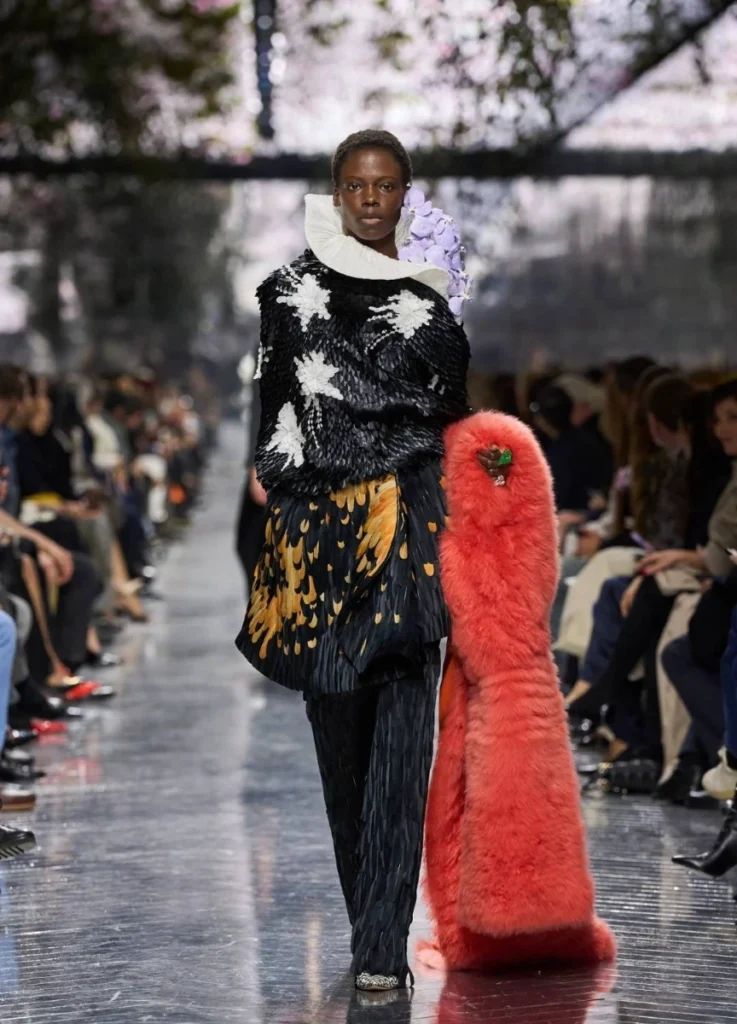
Anderson’s first couture collection positions couture not as inherited aesthetic language, but as a working system. By Dior doing couture, it’s like protecting an endangered craft, Anderson said in preview interviews. It’s this idea of, why are we doing couture today, and why couture exists, ultimately. It should be about buying something for an emotional purpose.
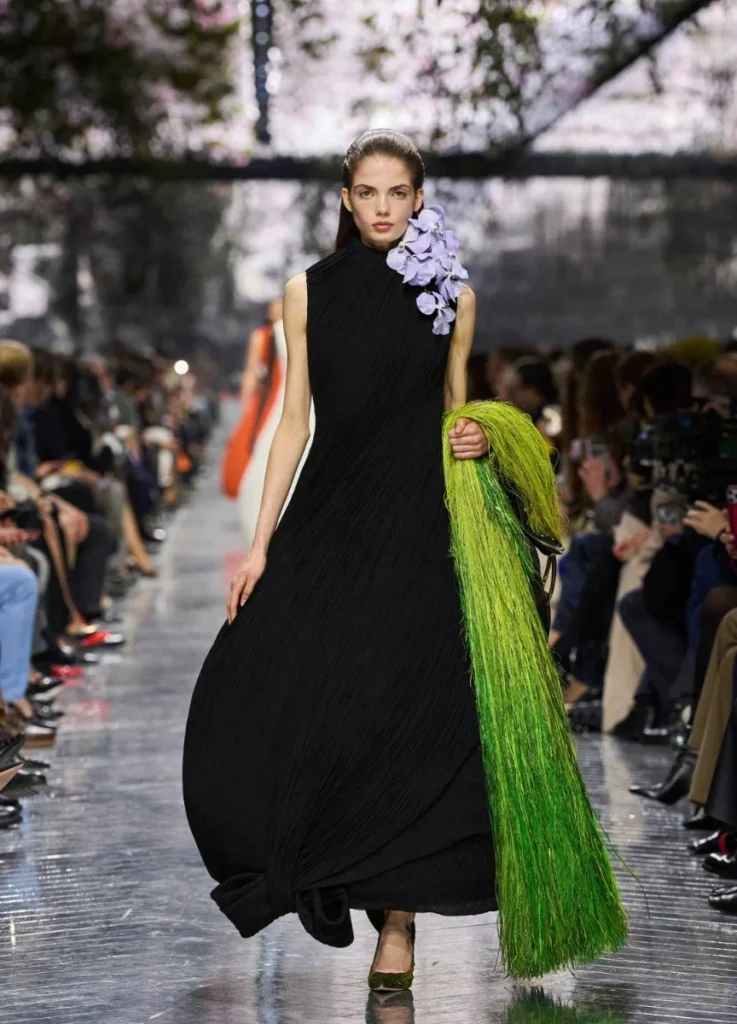
The collection’s persistent refusal of equilibrium follows from this thesis. Silhouettes drift, swell, tilt, and recalibrate themselves with movement. Dresses don’t cling to the body — they orbit it. Volumes appear asymmetrical. Hems subtly distort as they brush the floor. Proportions resist static resolution.
Anderson allows form to behave rather than idealizing it.
Couture, in this vision, isn’t about perfection. It’s about responsiveness.
The Cyclamen Motif — Density, Time, and Emotional Weight
The symbolic anchor of the collection is the cyclamen.
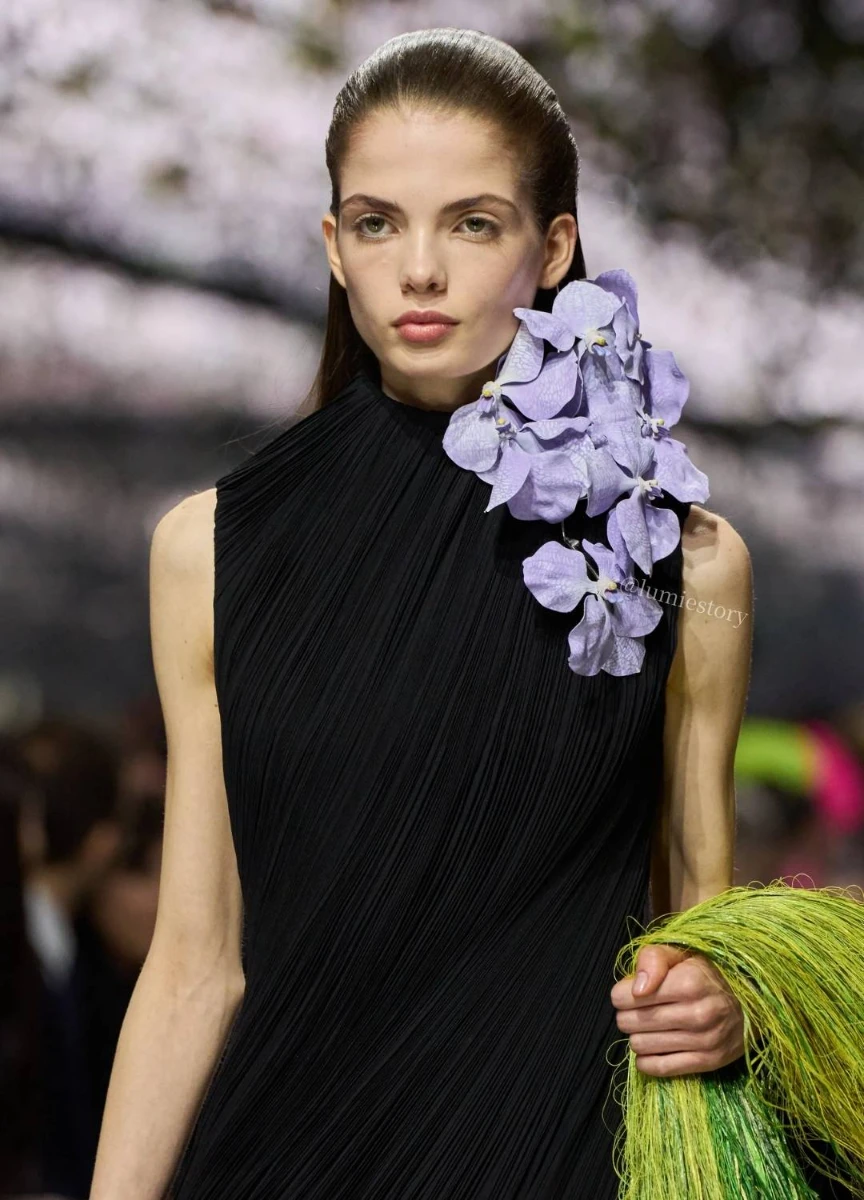
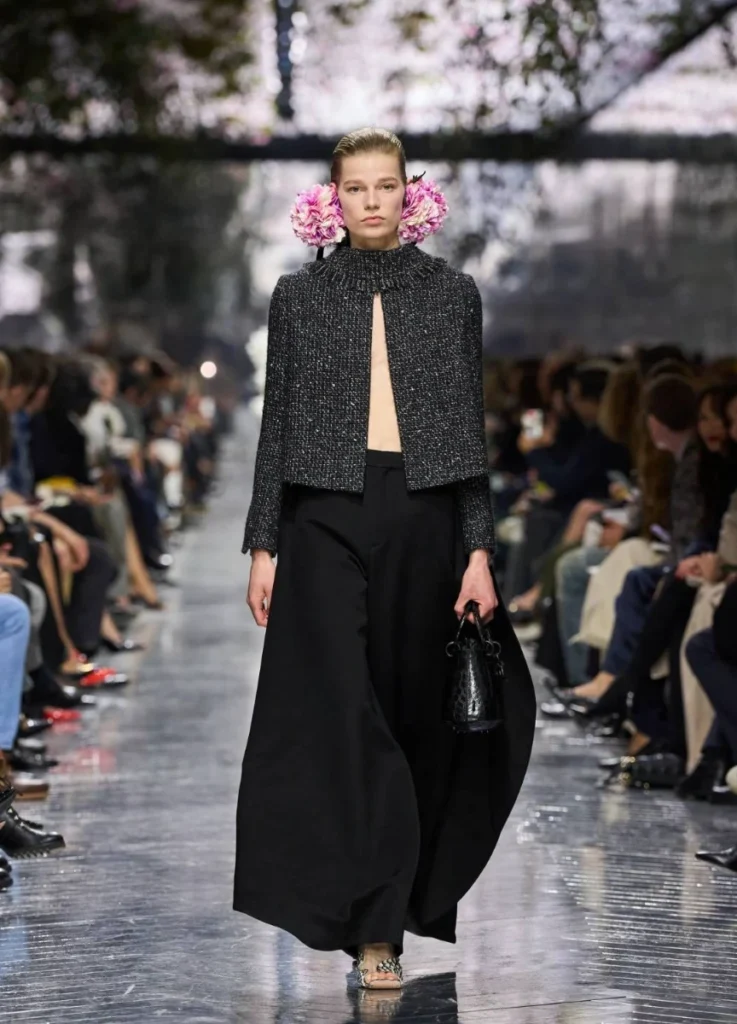
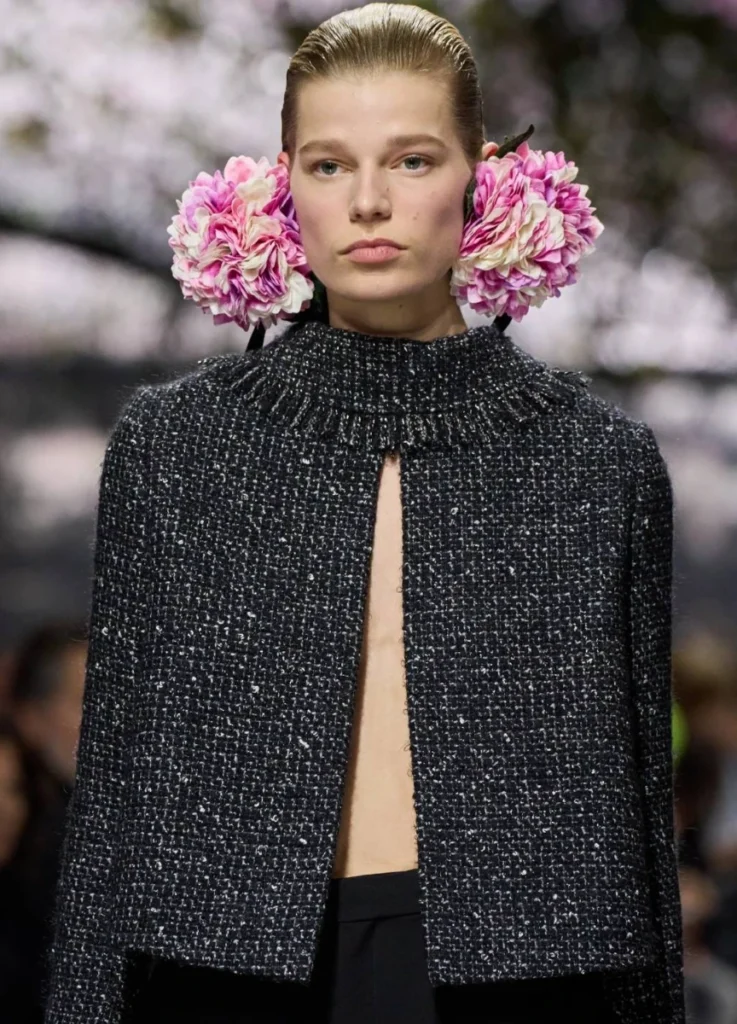
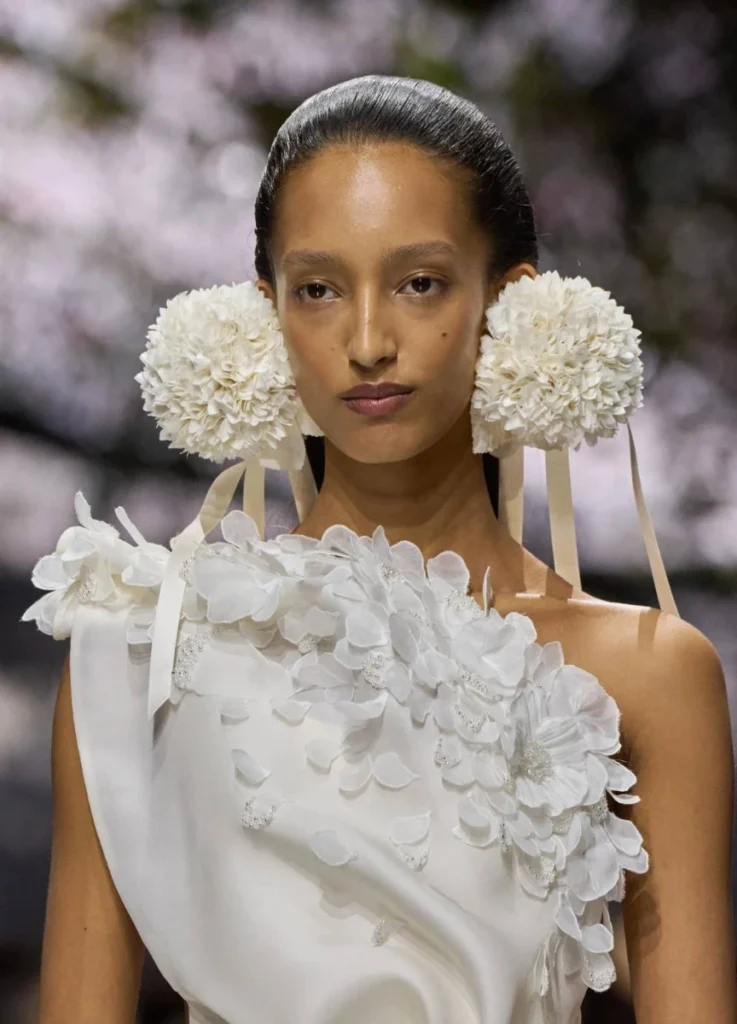
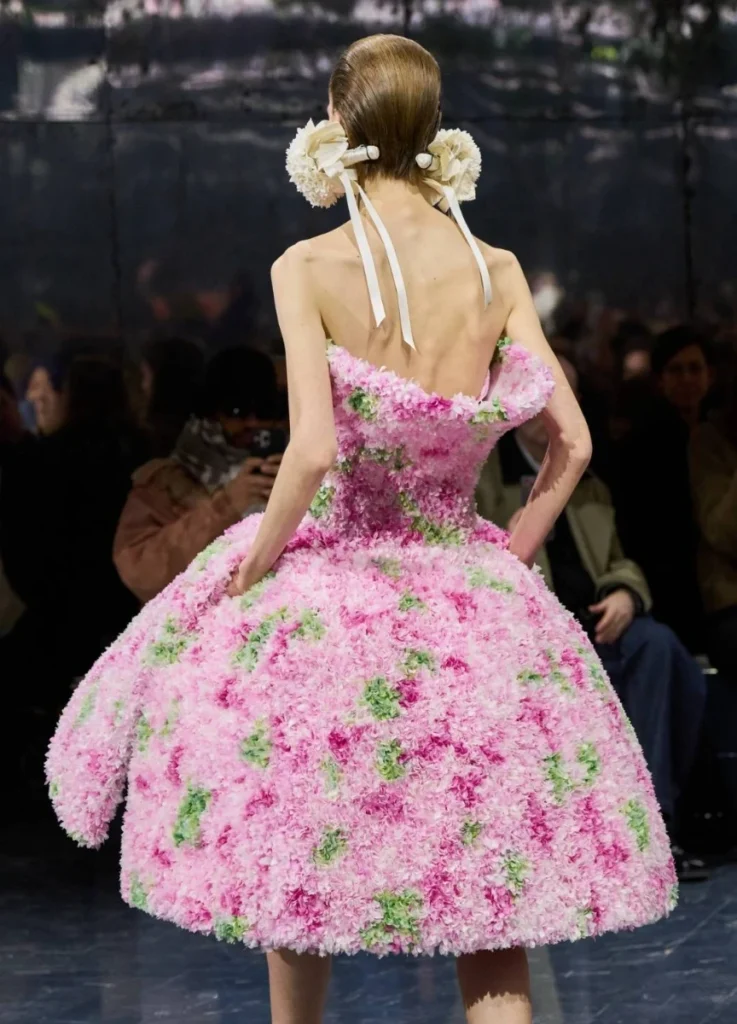
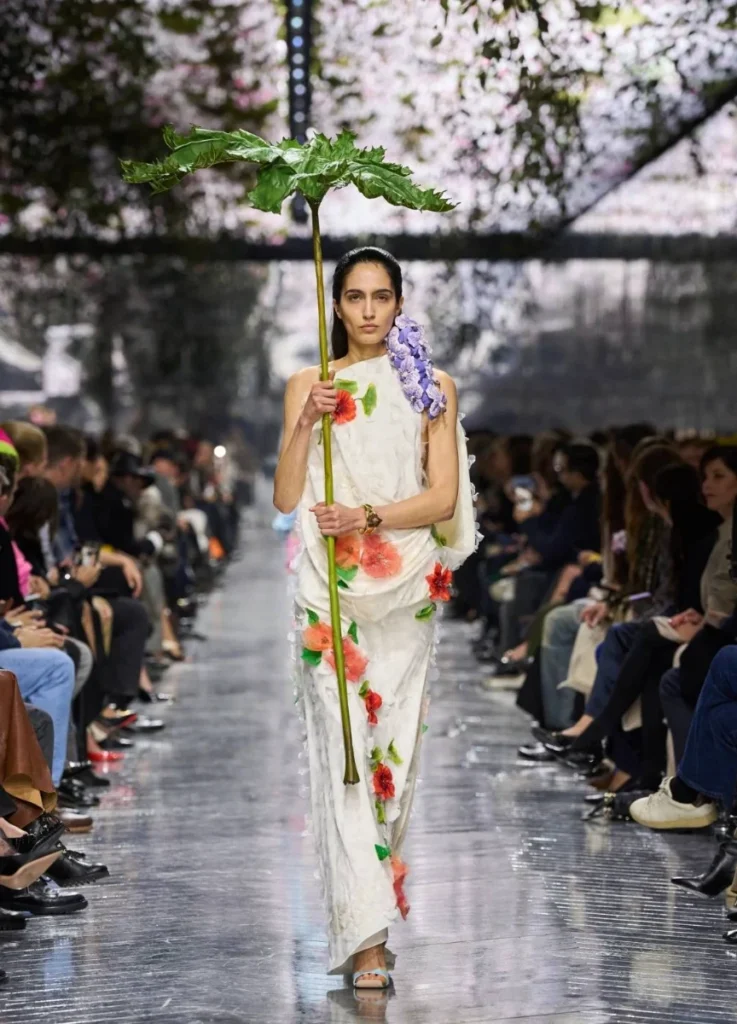
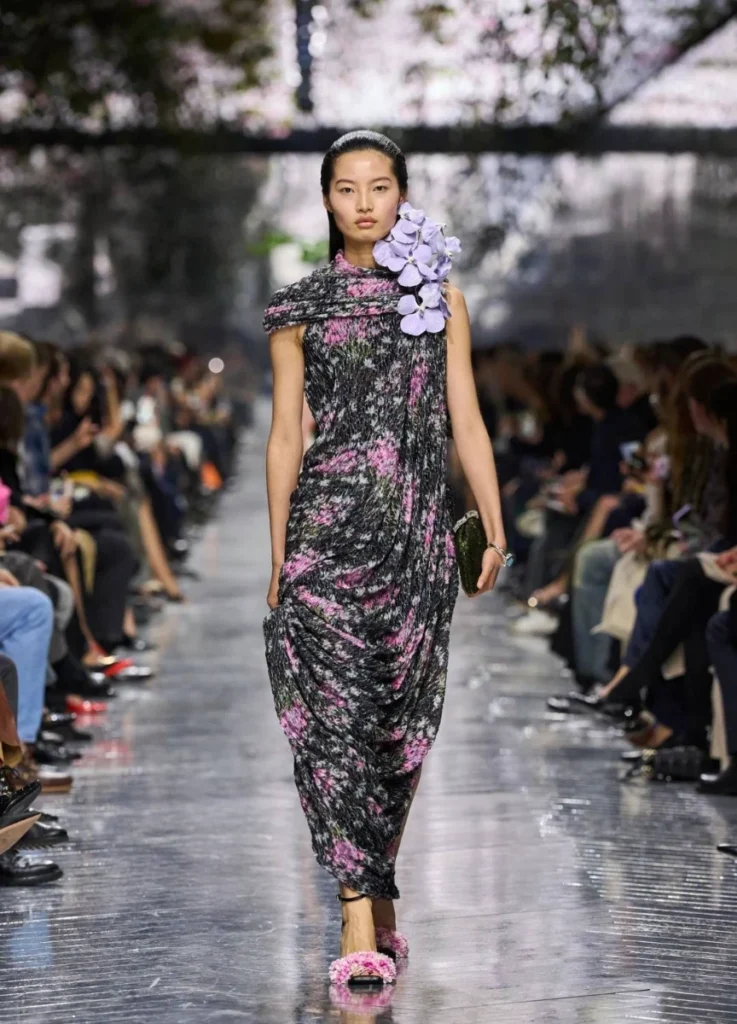
Unlike flowers traditionally associated with fixed symbolism, cyclamen carries a softer, more transient register — a wildflower more often gathered than cultivated, with petals that dry and fall rather than performing peak bloom. The flower was rendered across the collection in multiple registers. Micro-embroideries that read as scattered petals on close inspection. Sculptural bouquets that emerged like architectural extensions of the silhouette. Cyclamen forms appearing at the shoulder, encircling the ears, hovering at the edges of the body — placed so they appeared to have grown rather than been attached.
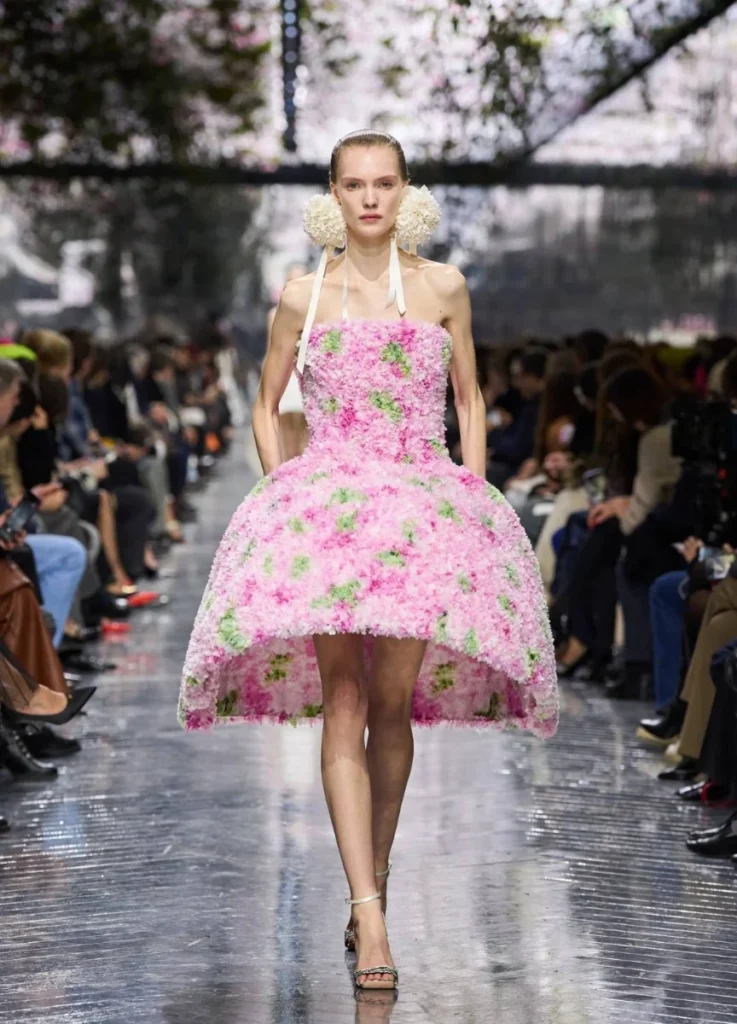
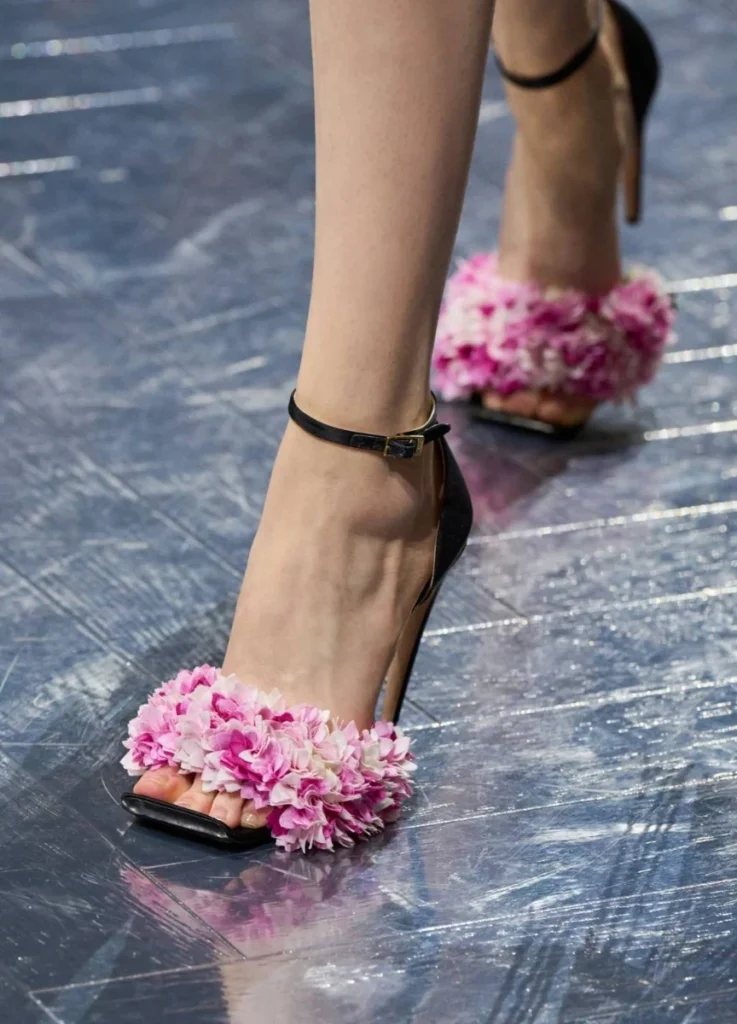
Hydrangea-like clustered floral volumes also surfaced through the collection, reading as density rather than as singular blooms. The translation across both flowers was consistent: flowers as structural element rather than decorative accent. Plant logic carried into garment logic.
The result isn’t embellishment. It’s emotional weight.
Floral volumes were calculated precisely yet designed to feel organic — positioned as if they emerged naturally from the garment rather than interrupting it. Couture moves away from idealized femininity here, toward something more internal — presence, accumulation, lived emotion.
Silhouette — Between Sculpture and Drape
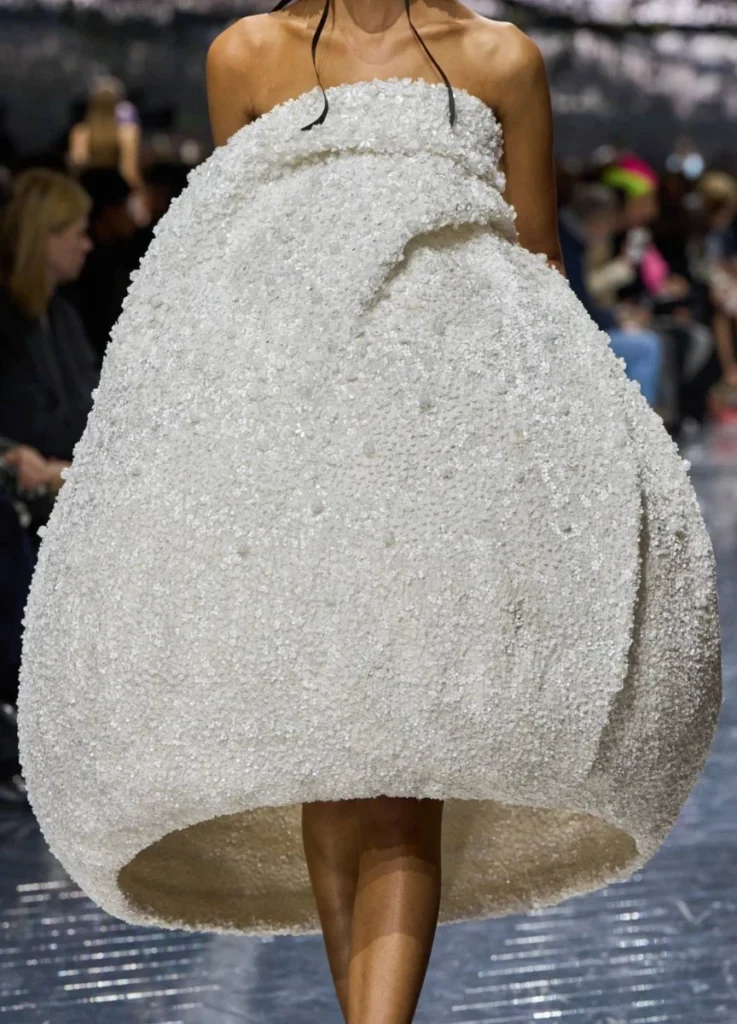
Throughout the collection, silhouettes repeatedly expand, flow, and gather. Dresses rotate around the body instead of defining it. Ballooned skirts, offset volumes, and softly distorted hems create forms that complete themselves only through motion.
The formal reference came from the work of Kenyan-British ceramic artist Magdalene Odundo. Odundo, born in 1950 and trained at the Royal College of Art, has built a five-decade practice in ceramics drawing on traditional African pottery techniques. Her vessels are distinguished by their anthropomorphic curves, their precise asymmetries, and the visible hand of the maker. Spiralling around the body like clay thrown on a pottery wheel — that’s how Grazia described Anderson’s silhouettes.
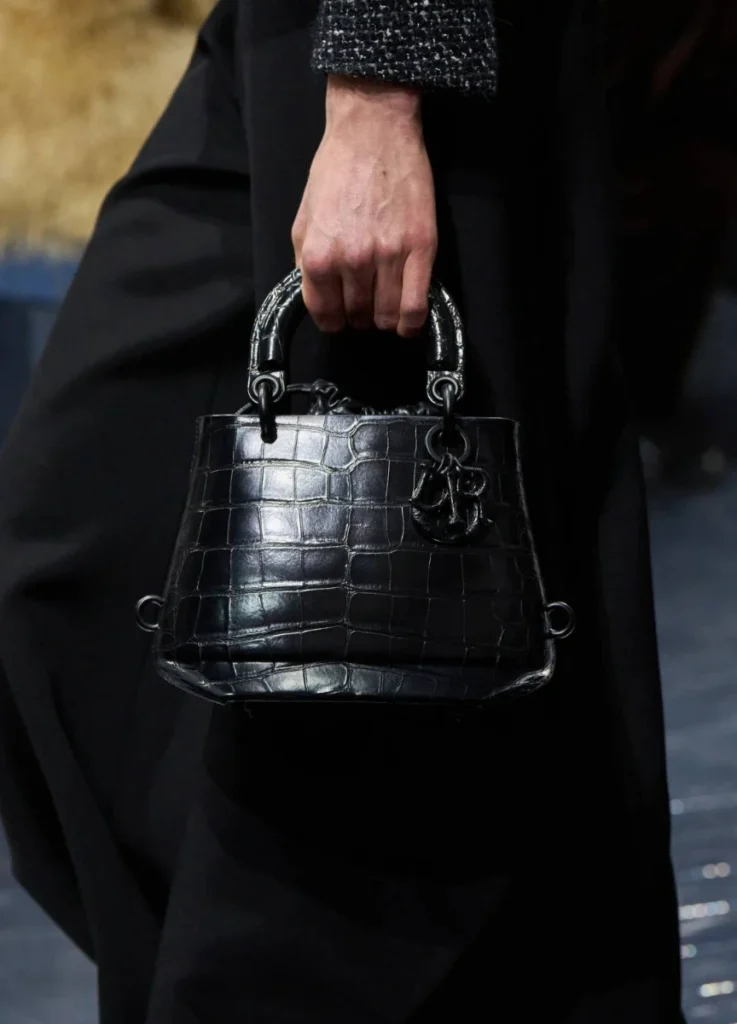
The reference isn’t quoted literally. It enters the collection conceptually — through curvature, tactile tension, and the priority placed on the maker’s hand. Odundo herself attended the show as Anderson’s guest. The two have a longstanding friendship — Anderson is a longtime collector of her work, and Odundo collaborated on several Lady Dior handbags featured in the show.
Like Odundo’s ceramics, these dresses favor presence over precision. Structured without rigidity. Organic without collapse. The beauty sits in that sustained tension.
This is couture understood as form in dialogue with gravity, time, and the body.
Material Inversions — Feathers That Aren’t Feathers
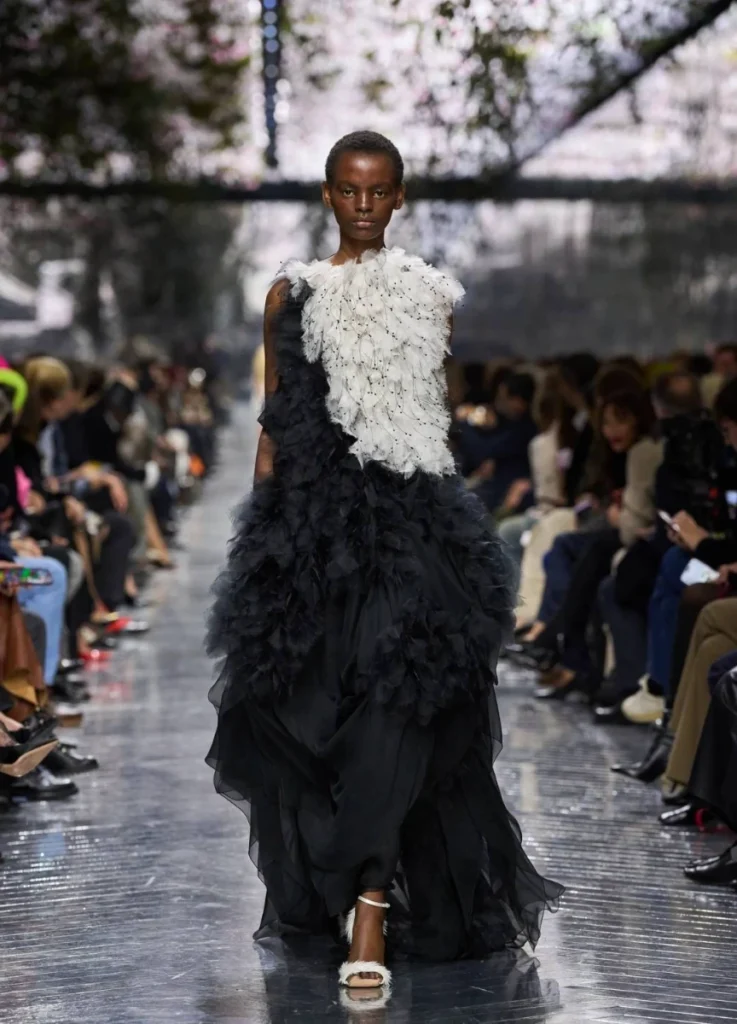
A central technical idea of the collection emerged through trompe l’œil. As AnOther’s Alexander Fury observed, feathers in this collection were rendered as everything except feathers — cloisonné enamelwork, reptilian scales, mother-of-pearl, perfectly-frayed edges of massaged silk flounces. The only things that actually looked like feathers were shards of organza.
The inversion echoes Anderson’s signature language at Bottega Veneta and Loewe — material that isn’t what it appears to be. Hard reading as soft. Polished reading as raw. The technique requires the full coordination of Dior’s ateliers and the multiple specialized workshops across Paris.
Exotic Bags and Antique Accessories — Craft at the Edge of Nature
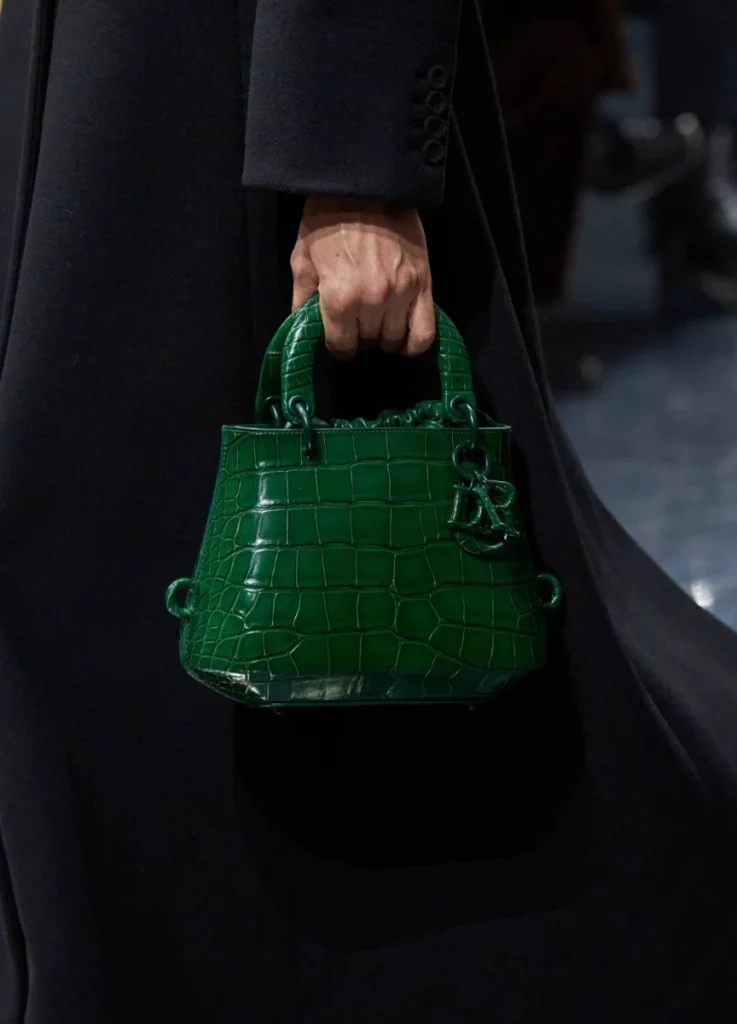
Scattered through the runway, the exotic bags functioned less as accessories and more as artifacts. Their textures evoked reptilian surfaces and plant fibers. Their green tones suggested organic matter rather than polished luxury. Intentionally imperfect in the hand, they resembled specimens rather than products — objects that question where nature ends and craft begins.
A separate accessories range went further still. Trailing stoles pinned with 18th-century oval miniatures by Rosalba Carriera. Evening clutches covered in French fabrics from the Marie Antoinette period. Chunky cuffs and rings set with fossils and meteorites. Anderson stated in interviews that these antique elements weren’t treated as relics, but as catalysts — material with embedded time being reactivated through wear.
Anderson reinforces couture as living knowledge here. Craft gains vitality not through preservation behind glass, but through use. The bags don’t perform luxury. They examine it.
Jonathan Anderson vs. Maria Grazia Chiuri — A Shift in Language
Under Maria Grazia Chiuri, Dior’s couture was built around explicit narratives — feminist discourse, historical reinterpretation, symbolic messaging articulated clearly through form and reference. Slogans. Statements. Couture as ideological stage.
Anderson’s couture is largely non-verbal.
Where Chiuri layered meaning onto garments, Anderson exposes process. There are no slogans. No overt declarations. Meaning emerges through imbalance, material layering, and the quiet irregularities left by the artisan’s hand.
Couture shifts from ideological stage to experimental laboratory. Less about what is said, more about what is shown through making.
The shift in critical language reflects this. Chiuri’s couture was discussed in terms of message and reference. Anderson’s is being discussed in terms of practice and material — Vogue Runway, Business of Fashion, AnOther, WWD all converged on couture as the act of making rather than as the carrier of statements.
Notable Looks
Off-white pleated dress with cyclamen embellishment. Volume that breathes through movement. The collection’s clearest expression of Anderson’s central thesis.
Black balloon silhouette dress. Dramatic but not weighted. The clearest demonstration of Anderson’s sculptural sensibility translated into couture register.
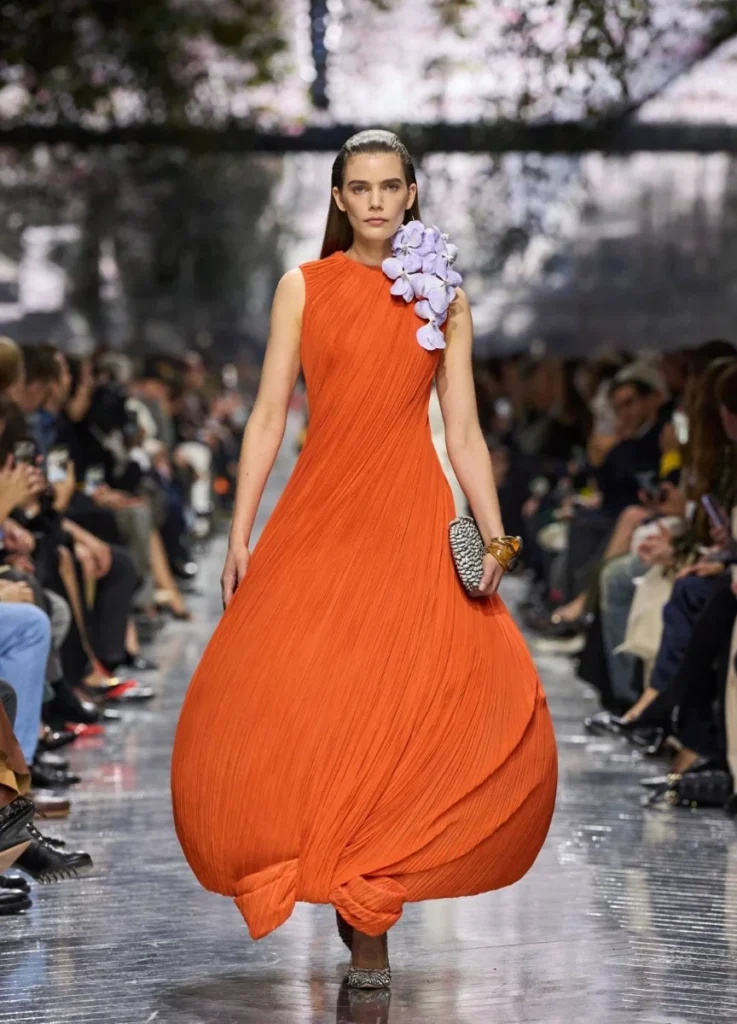
Orange dress with clutch. Color and material contrast at its most decisive — cyclamen’s chromatic vocabulary applied across two scales.
Embroidered cyclamen dress. Floral motif treated as surface continuity rather than ornament — possibly the most refined translation of plant logic into garment logic.
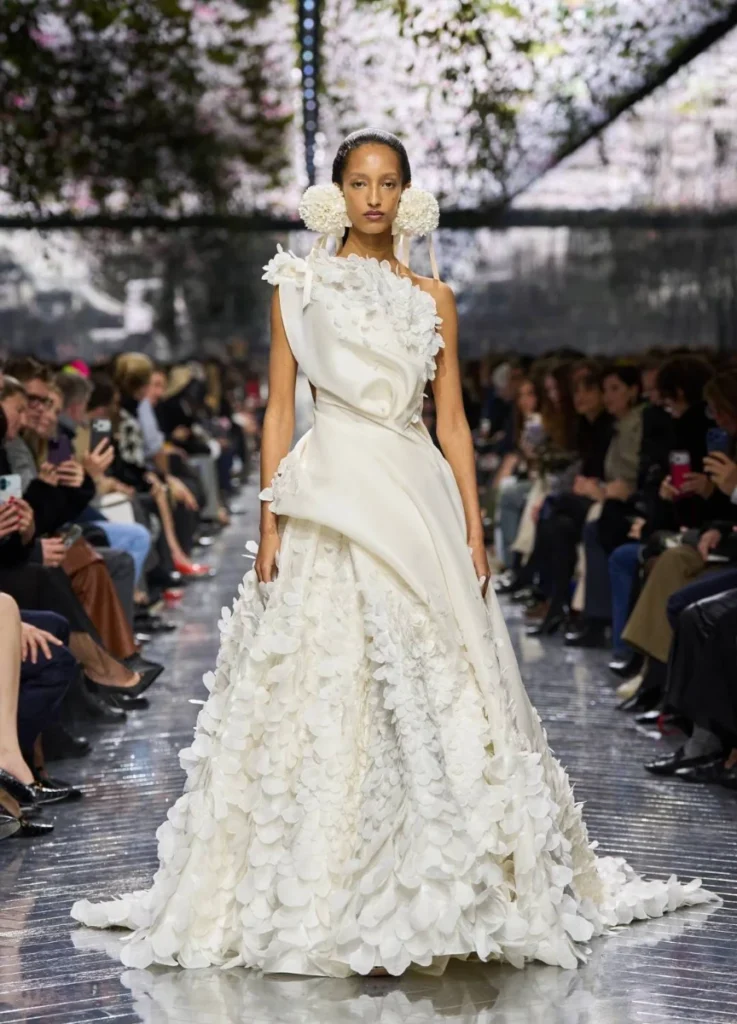
Off-white couture finale dress. Acknowledging Chiuri-era romanticism while paring it down to a quieter register. The transitional gesture, made explicit.
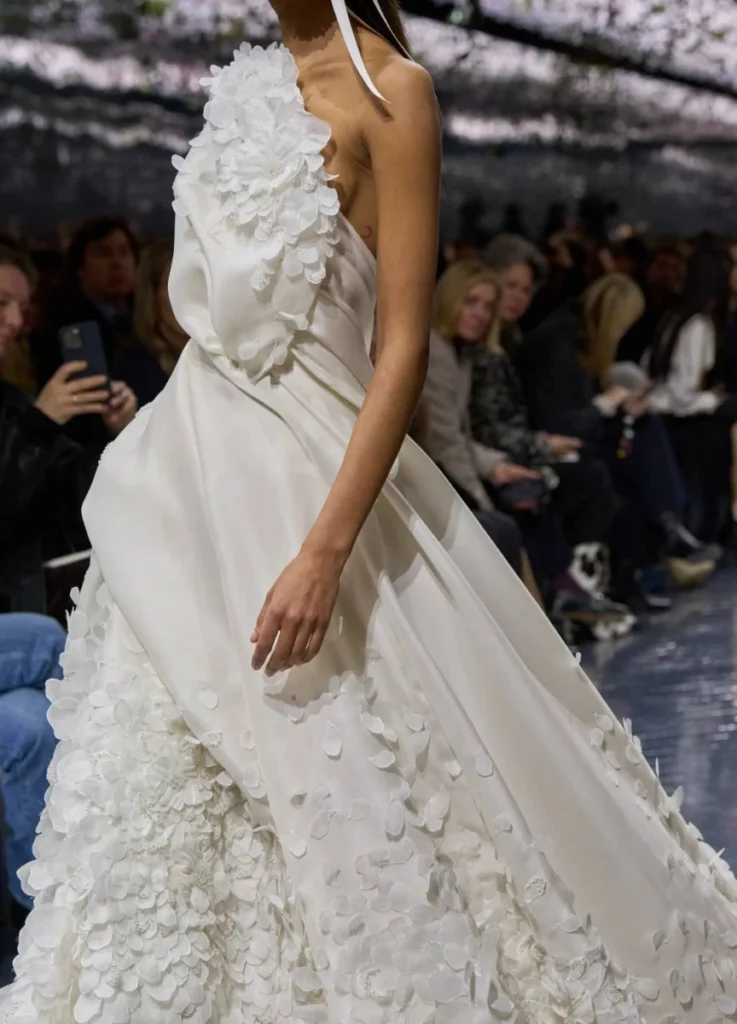
The bride that closed the show was a white gown with an asymmetric neckline and a zigzag cut skirt — a technique dating back to Christian Dior himself in 1948. White cyclamens were tied with white ribbons. The petals echoed the delicate clusters around the pointed neckline and full hem.
Industry Response — Quiet Consensus
The international response converged in a way that’s rare for a debut collection.
A re-energisation of the house, as well as a shift of couture from a made-to-measure side piece for a hyper-wealthy niche to an engine of inspiration and experimentation — that was AnOther’s Alexander Fury. Coveteur called it a triumph. WWD’s Joelle Diderich noted a new lightness compared to Anderson’s earlier red carpet work for Dior. Vogue observed that Anderson returned couture to the act of making. Galerie Magazine read it as Anderson’s once-in-a-century couture debut. Business of Fashion framed it as Dior couture under Anderson prioritizing the sustainability of knowledge over the repetition of commercial icons.
Within industry circles, the cyclamen motif and fluid volumes are already being discussed as potential signatures of this new Dior chapter.
The polarized reception that defined Anderson’s Spring 2026 ready-to-wear debut — celebrated by critics but dividing public opinion online — didn’t repeat itself with this couture show. The couture work met far closer consensus. Anderson appeared to land more comfortably in the genre that allows for both precision and experimentation than in the commercial RTW format.
Grammar of Forms — Couture as Education
Anderson extended the show beyond its runway moment. From January 27 through February 1, the Musée Rodin hosted Grammar of Forms — an exhibition placing 15 looks from the couture debut alongside seven works by Magdalene Odundo and nine archival Christian Dior designs.
Couture can be more than a show, Anderson said. It can be an education.
The exhibition reframes couture as a public-facing discipline rather than an exclusive one. The first couture look from the collection has already been earmarked for donation to the Victoria & Albert Museum in London — part of a series of planned initiatives to engage broader audiences with the craft.
This positioning is itself substantive. Couture has spent the past several decades drifting toward the spectacle of made-to-measure for a vanishing client base. Anderson is positioning Dior’s couture as something different — a laboratory whose results are studied, exhibited, and protected through visibility rather than scarcity.
What Is Being Protected
Christian Dior Spring 2026 Haute Couture doesn’t seek admiration alone. What it ultimately protects isn’t form. It’s attitude.
The memory of the hand. The silhouette that completes itself only in motion. The acceptance that couture, like nature, must remain adaptive to survive.
Haute couture is no longer a reenactment of the past. It’s a discipline that must continue learning, failing, and recalibrating in real time. The cyclamen carries meaning here that the New Look’s hourglass once did — not as fixed signature, but as living tissue between past and present, between Galliano and Anderson, between Christian Dior himself and the question of what the house means now.
Jonathan Anderson’s Dior offers a quiet reminder.
Without creation, there is nothing left to protect.
All images referenced in this post are drawn from Vogue Runway.
[ Related Editorials ]