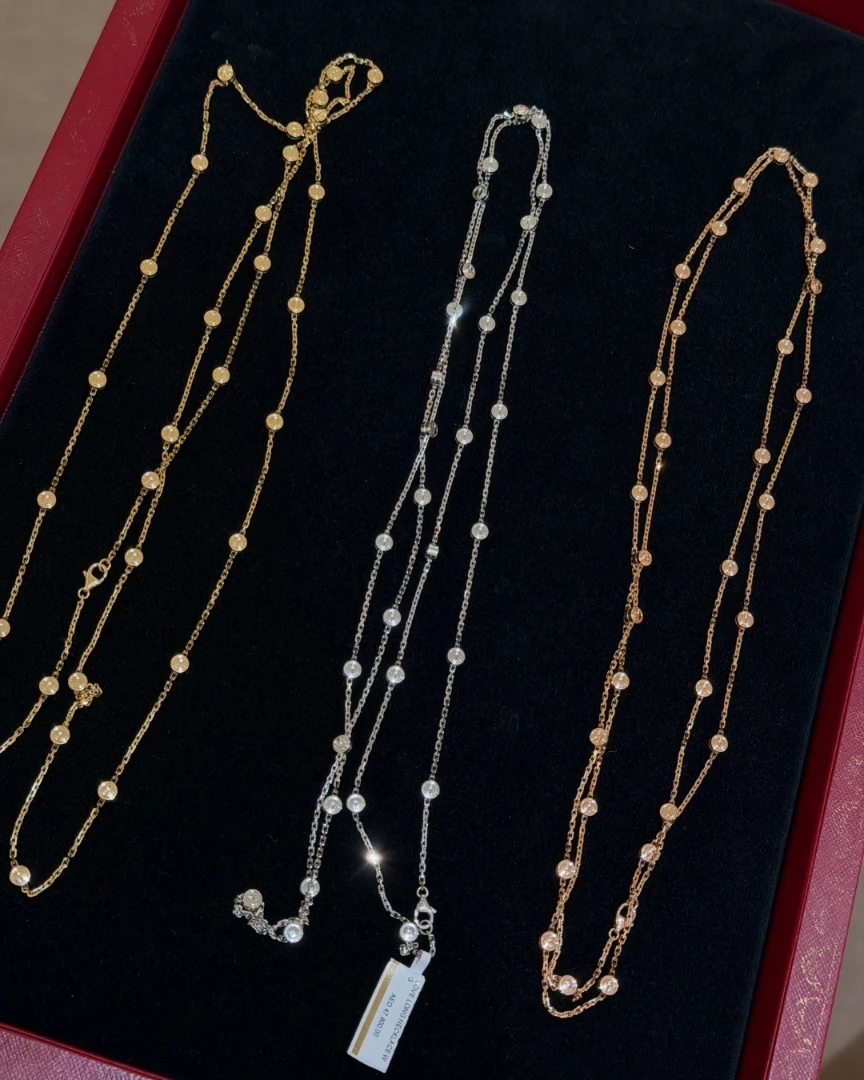
Cartier LOVE Multi-Wear Necklace – Length as Structure, Not Ornament
Cartier LOVE collection has always been remembered as something solid. The oval bracelet that clasps around the wrist, the ring built on repeating screws, the plain volume of gold that never hides its own weight. For most of its life, LOVE has read closer to hardware pressed against the body than to a chain left to fall.
That history is what makes the new LOVE Multi-Wear Necklace worth looking at closely.
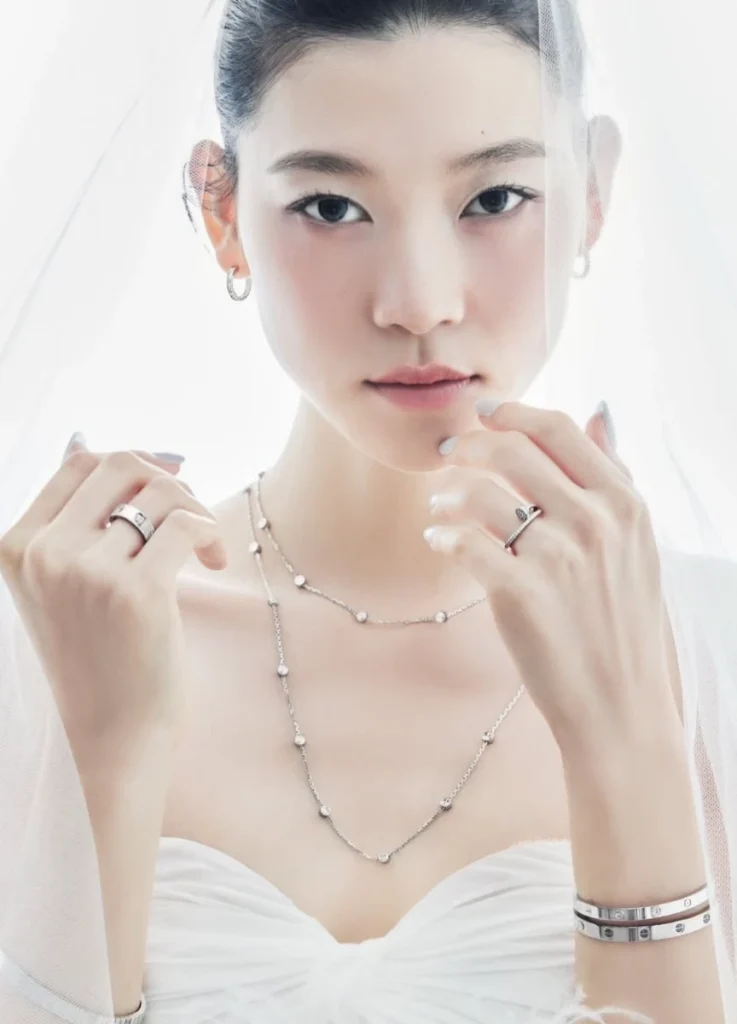
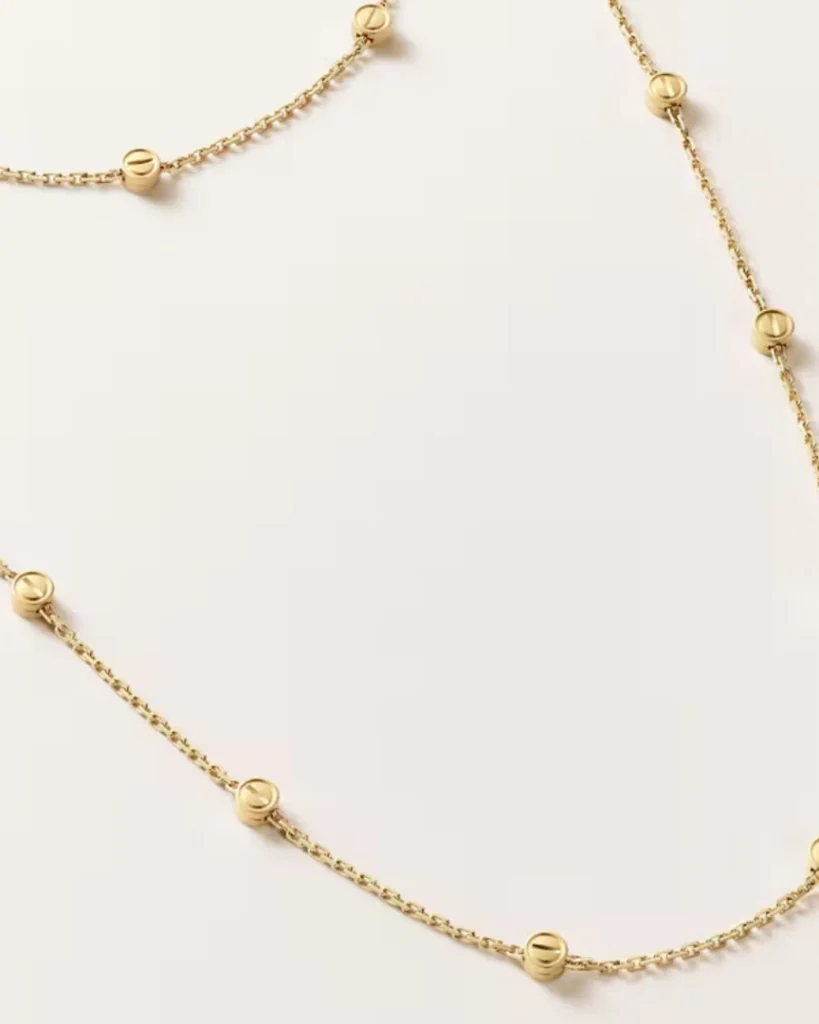
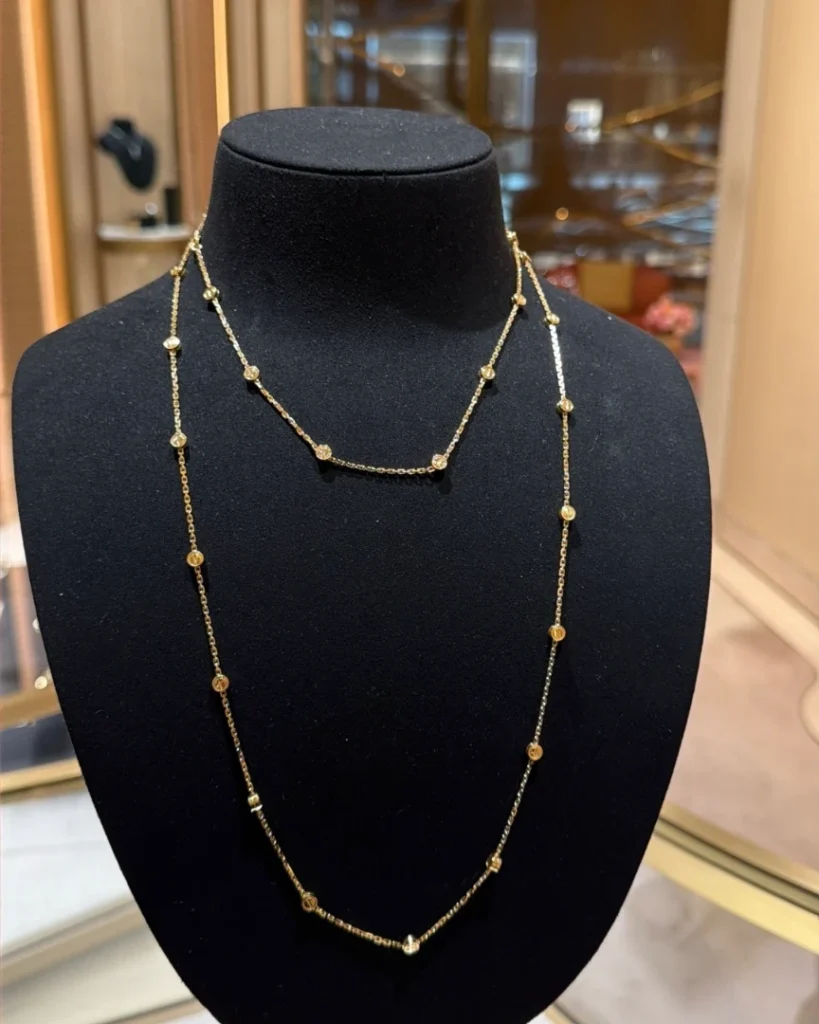
A slim chain, 112.5 cm long, carries small LOVE screw motifs set at even intervals. It comes in yellow, pink, and white gold, and the wearer decides the shape — a single long strand, doubled, tripled, or wound several times around the wrist as a bracelet. Cartier puts the method of wearing forward rather than one settled silhouette.
At launch, yellow and pink gold sit at $12,300, white gold at $13,100. There are no diamonds anywhere on the piece. Building that price out of metalwork and reflected light alone tells you what you’re actually paying for — the length of the chain, the spacing of the motifs, the finish of the gold, rather than the size of a stone.
Worn, the small circles catch light the way pavé does. Each motif takes the light like a tiny mirror and throws it back at a different angle as the body moves, so the piece is quiet at rest and grows more present the more you move.
Why the LOVE Screw Got Smaller
On the original LOVE bracelet, the screw motif was structure you could see. It wasn’t decoration added to the surface. It carried the whole premise of the collection — two people fastening it on, wearing it locked — in a physical form.
In this necklace the same symbol repeats, shrunk down. No single large LOVE motif claims the center. Very small circles scatter along the long chain at regular intervals. Instead of stating love as one monumental event, the piece turns it into a series of small contact points repeated over time.
That arrangement also separates it from the classic long necklace. Where a traditional sautoir hung a focal ornament — pearls, a stone, a tassel — at the bottom, the LOVE Multi-Wear has no clear pendant. The eye doesn’t land in one place; it travels along the chain. You read the single long line from neck to chest to waist first, and the small motifs sit on it as rhythm.
source: Cartier.com
So even at a substantial 112.5 cm, it never looks matronly or old-fashioned.
A long necklace tends to age the wearer when the weight of the ornament pools downward — a big pendant, dense beading, a heavy chain pulling the center of the upper body down, so the jewelry sits on top of the clothes like a separate object.
This one works the other way. The chain is fine, the motifs are small, and the gaps between them are wide. You see more empty space than metal. The length is there, but the visual weight is light. Rather than covering the upper body, the necklace draws a very thin line down the clothes.
That’s also why it works with the dry, structural direction that labels like The Row and Phoebe Philo have made current — no feminine ornament added to the clothes, just a vertical line and a few small points of light laid over a wide plane of single color.
source: Cartier.com
How the Gold Color Changes the Line
It’s one design, but the choice between yellow, pink, and white gold changes the character of the line completely.
1. Yellow Gold │ The Clearest Line
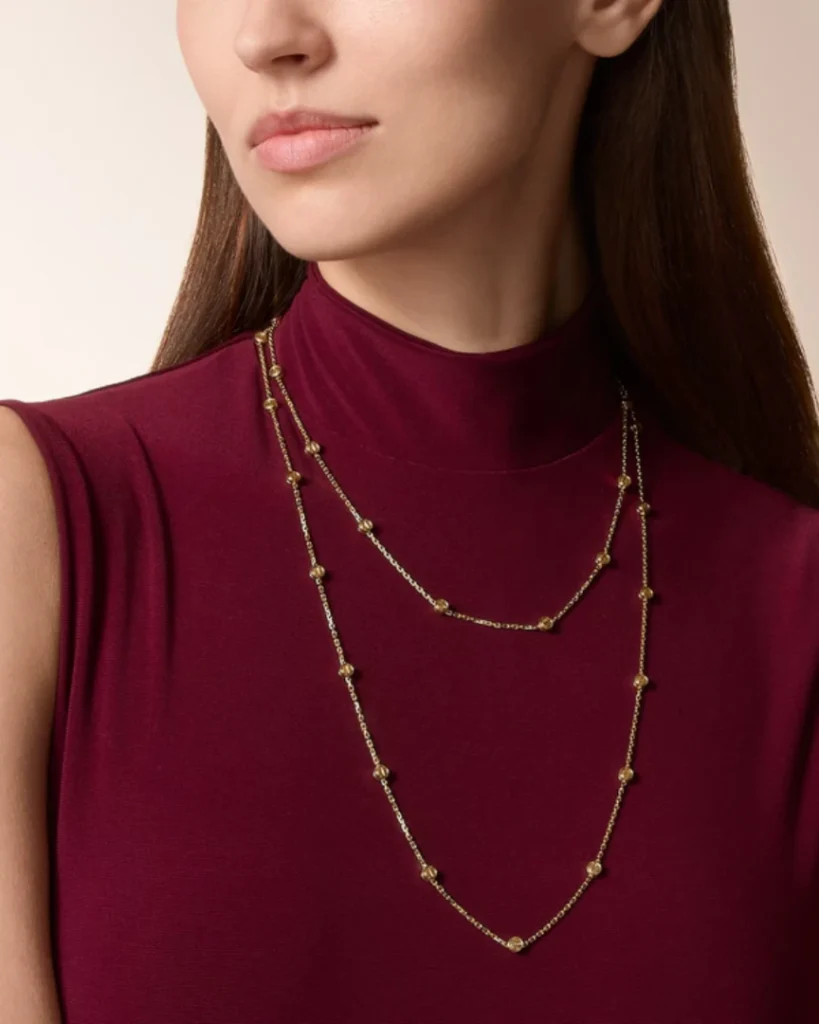
Yellow gold shows the outline of the chain most sharply of the three. Against deep colors — black, burgundy, navy, chocolate brown — the gold line lifts clearly off the fabric.
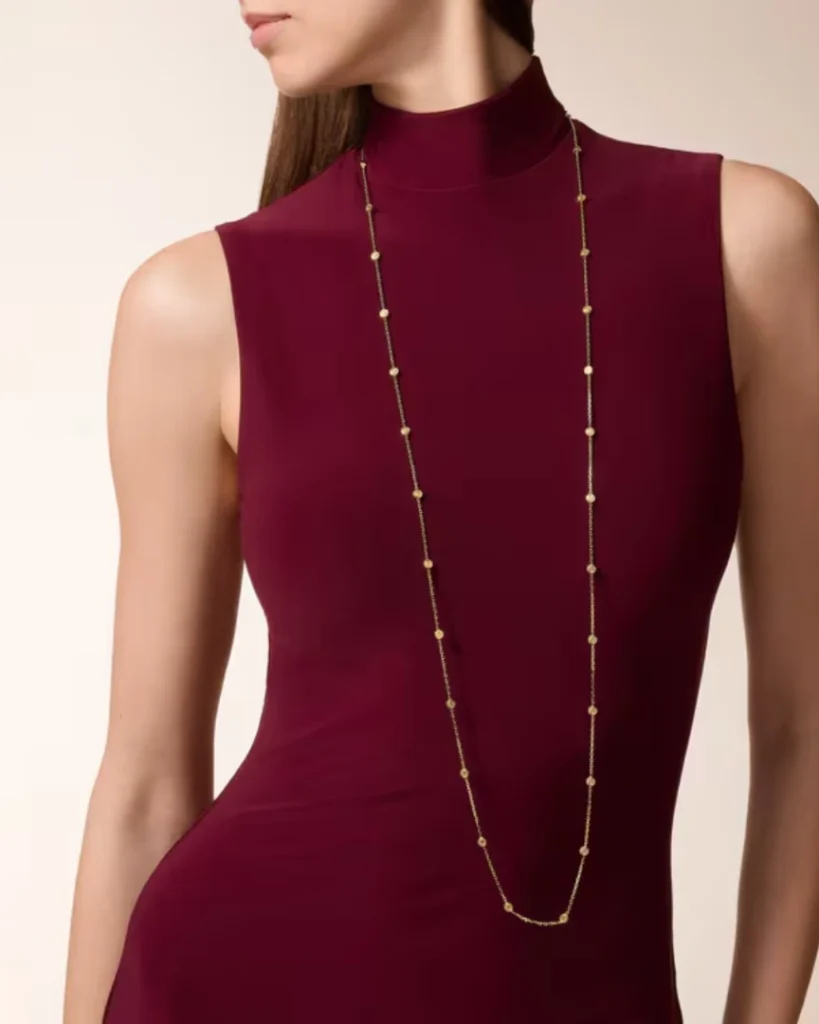
Dropped in a single strand over something with a simple body line, like a burgundy sleeveless top, the necklace functions almost like a seam in the garment. The long chain runs down the center of the body, splitting the upper half vertically, and the small screw motifs set the rhythm.
Yellow gold also suits a white shirt or a cream knit, but when skin and clothing are both warm-toned, the whole thing can turn too soft. It helps to bring in something firm alongside it — black trousers, a dark leather bag, a structured jacket.
@good_happens / Instagram
It shows best as a single strand or a widely spaced double. The gold already has enough visual presence on its own that tripling it up raises the decorative level fast. One combination worth trying is a black sleeveless top with one strand, a brown shirt with two, a cream cashmere knit with the wrist wrap. If you already wear a yellow gold watch or bracelet, it tends to look more considered to split the metal across the neck and the opposite wrist rather than loading it all onto one side.
@diamonds__dealer / Instagram
2. Pink Gold │ Softening the Line
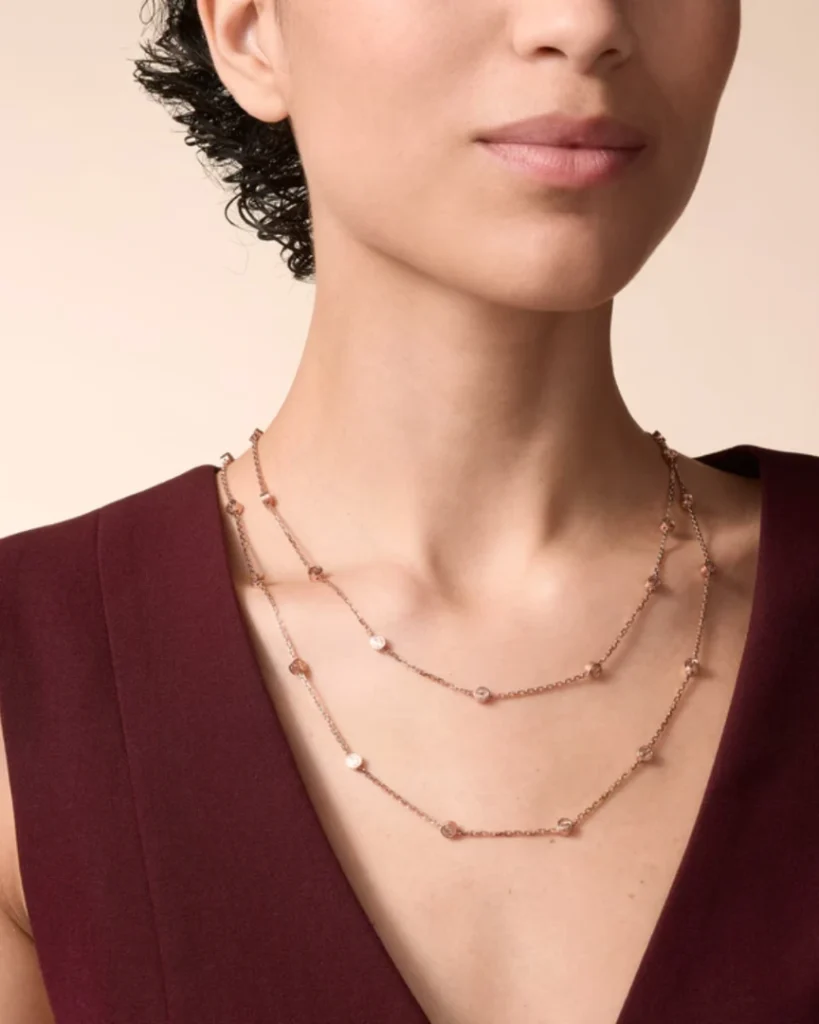
Pink gold carries less contrast than yellow and stays softer than white. Its edge dissolves a little against the skin, so the length of the necklace comes across less as a long line and more as light scattered over the chest.
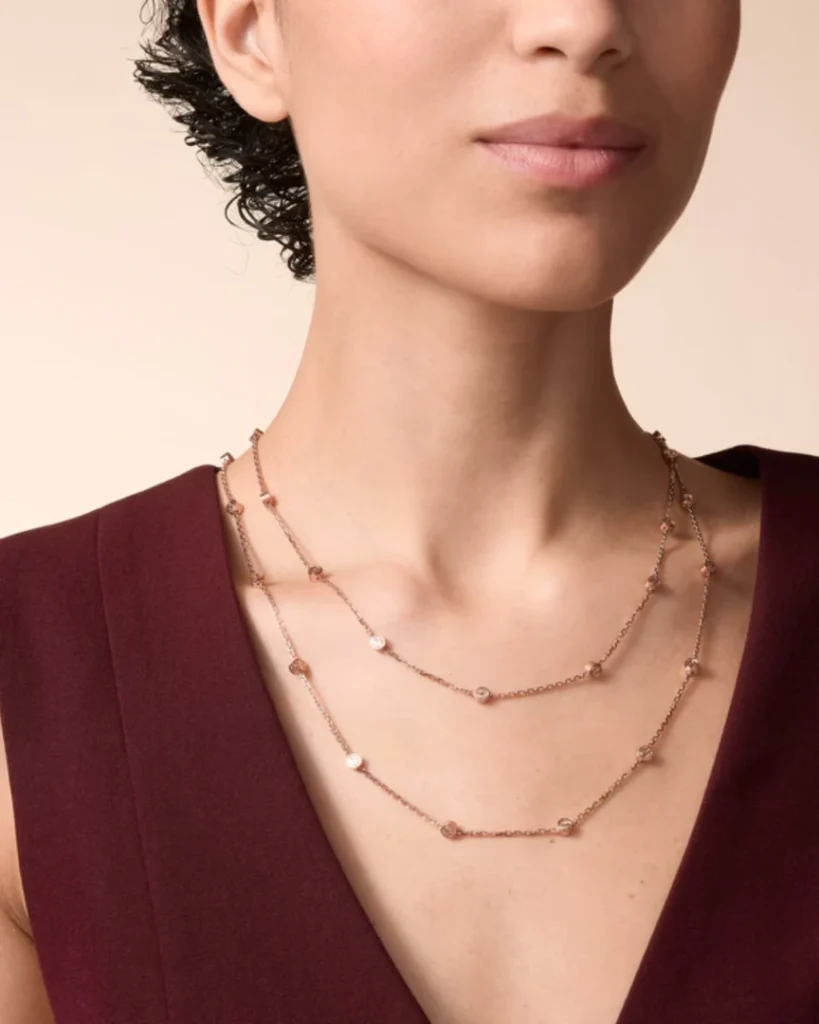
Doubled over a deep V-neckline, it can be genuinely beautiful. The pink gold melts into the skin tone and lays a thin layer across the collarbone and décolleté. It emphasizes the curve of the neck and chest before it shows you the shape of the jewelry.
source: Cartier.com
Pink gold works with burgundy, rose brown, taupe, greige, soft navy. On a strong charcoal or a stark white shirt, the reddish cast of the metal can stand out more than you want.
Of the three, it allows the most feminine handling, but it doesn’t have to go romantic. There’s more tension when you put its fine chain against a masculine shirt or a boxy jacket.
Pink gold shows best as a double. A single long strand can blend into the skin and lose a little of its shine; three rows can concentrate the reddish light around the neck. Making one short strand and one medium and letting them sit loosely around the collarbone brings out its particular softness best.
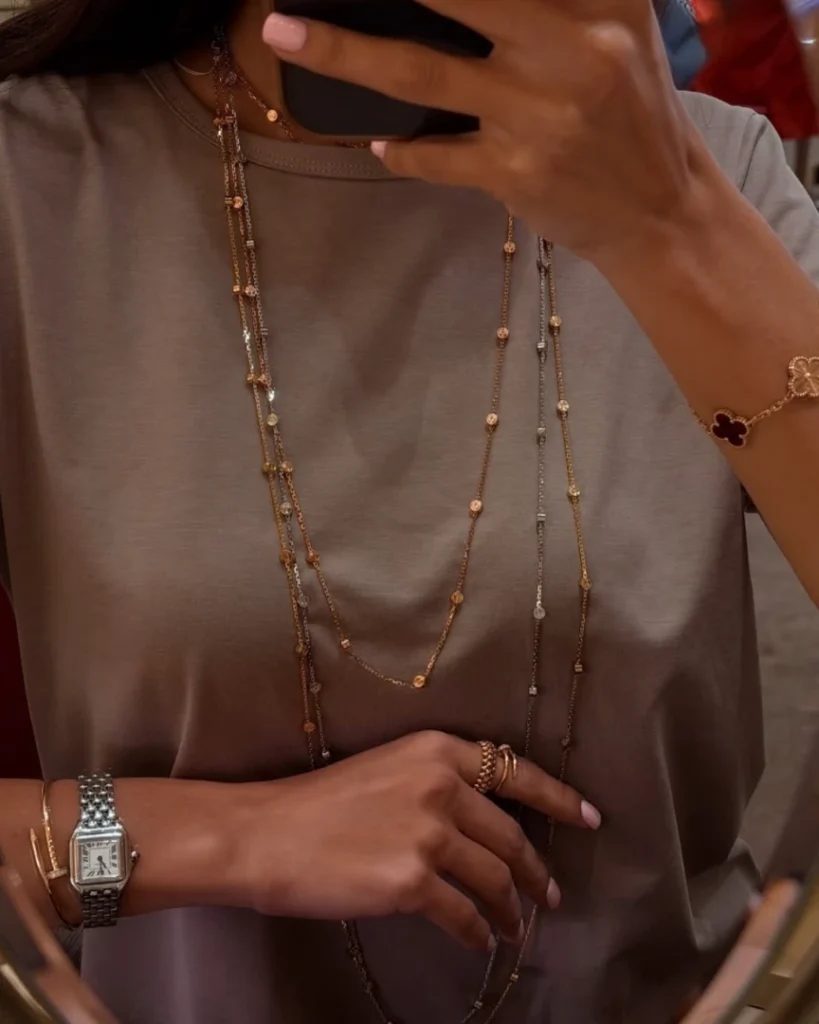
@ideale.buyer / Instagram
3. White Gold │ The Most Modern, The Most Graphic
White gold launches higher, at $13,100, and it’s the color that connects most easily to minimal clothing.
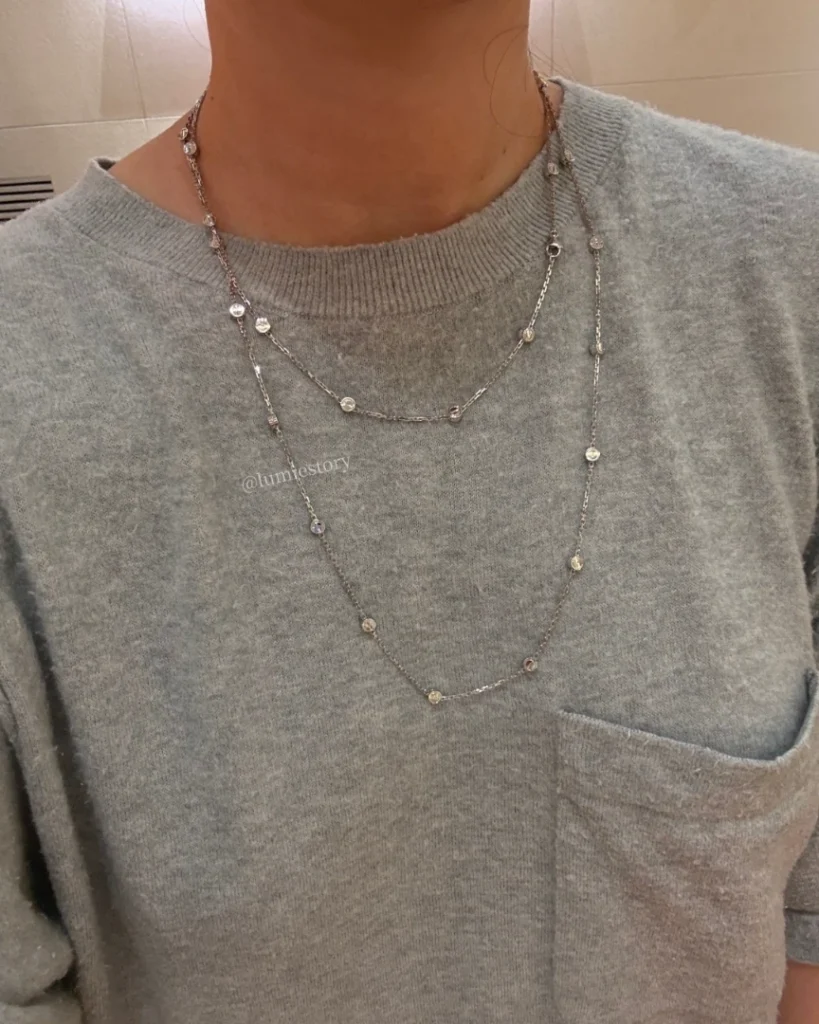
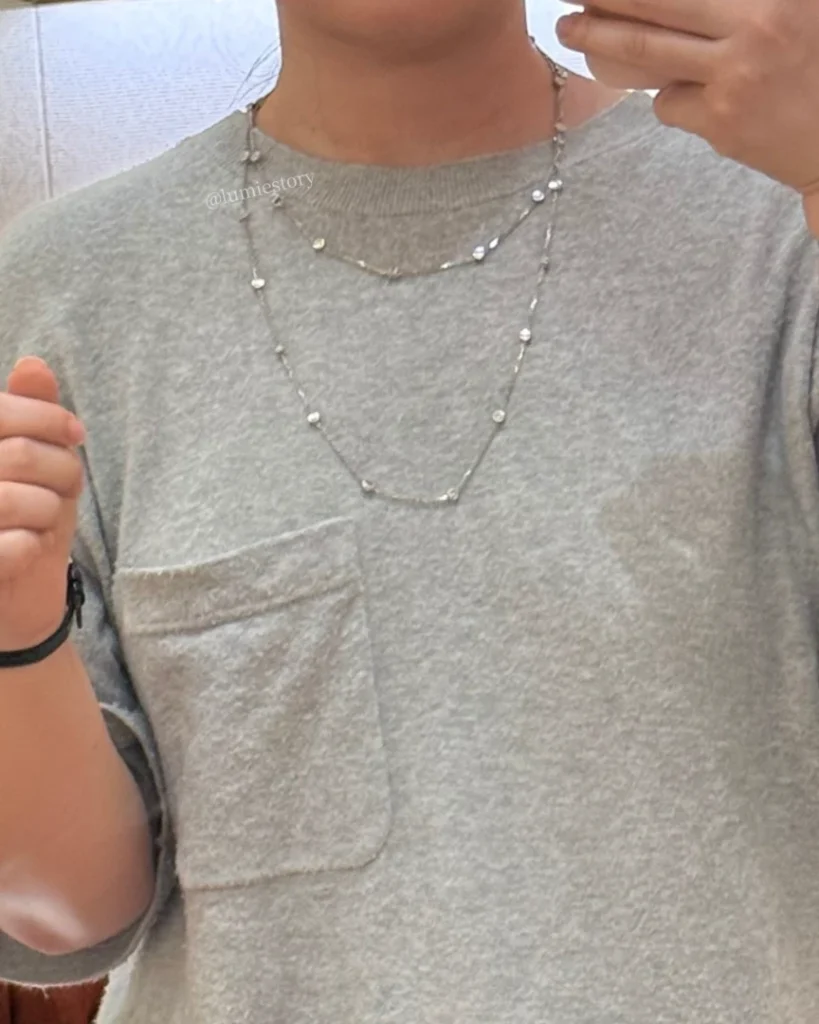
Over a grey cashmere knit, white gold settles into a value close to the fabric. The full outline of the chain doesn’t announce itself; only when the small motifs catch light do they rise as silver points. That’s how a necklace with no diamonds can, for a moment, look like a diamond station necklace.
What struck me most in wear was that even bare-faced, the jewelry didn’t float on its own. In an ordinary everyday outfit the necklace didn’t overpower the face. It added a vertical line between face and clothes and shifted the whole impression slightly cooler, slightly more composed.
White gold is most useful for someone who often wears low-saturation clothing — black, grey, navy, white, taupe. It’s easy to wear with a white gold watch, diamond studs, a pavé ring.
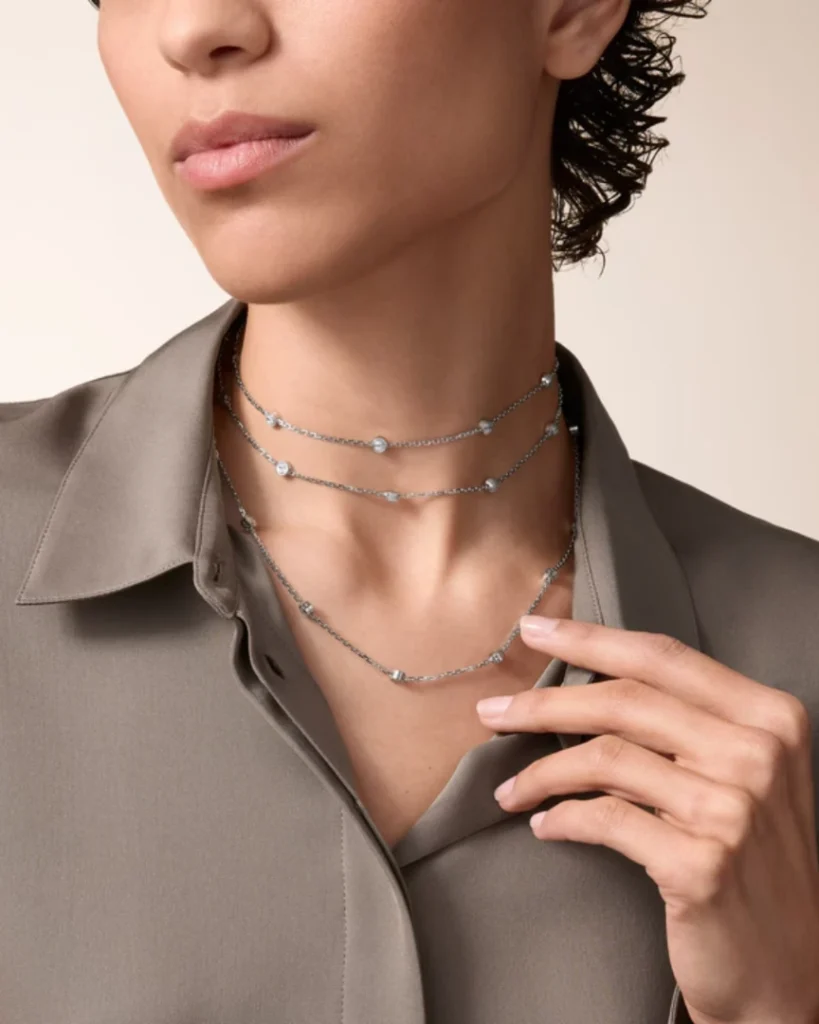
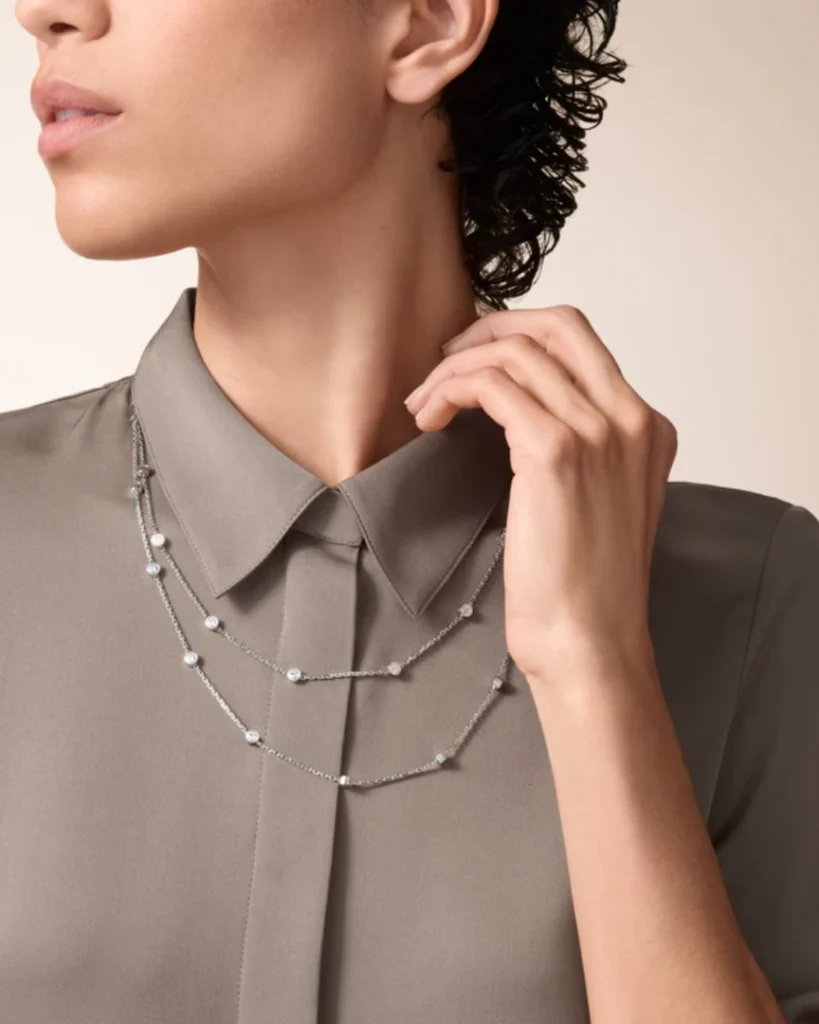
It’s also the color that carries the three-row version most naturally. The metal is neutral and the motifs are small, so gathering several rows close to the neck doesn’t tip into decoration. Open two or three buttons of a shirt and set three rows at different heights, and the result is far more architectural than a traditional layered necklace.
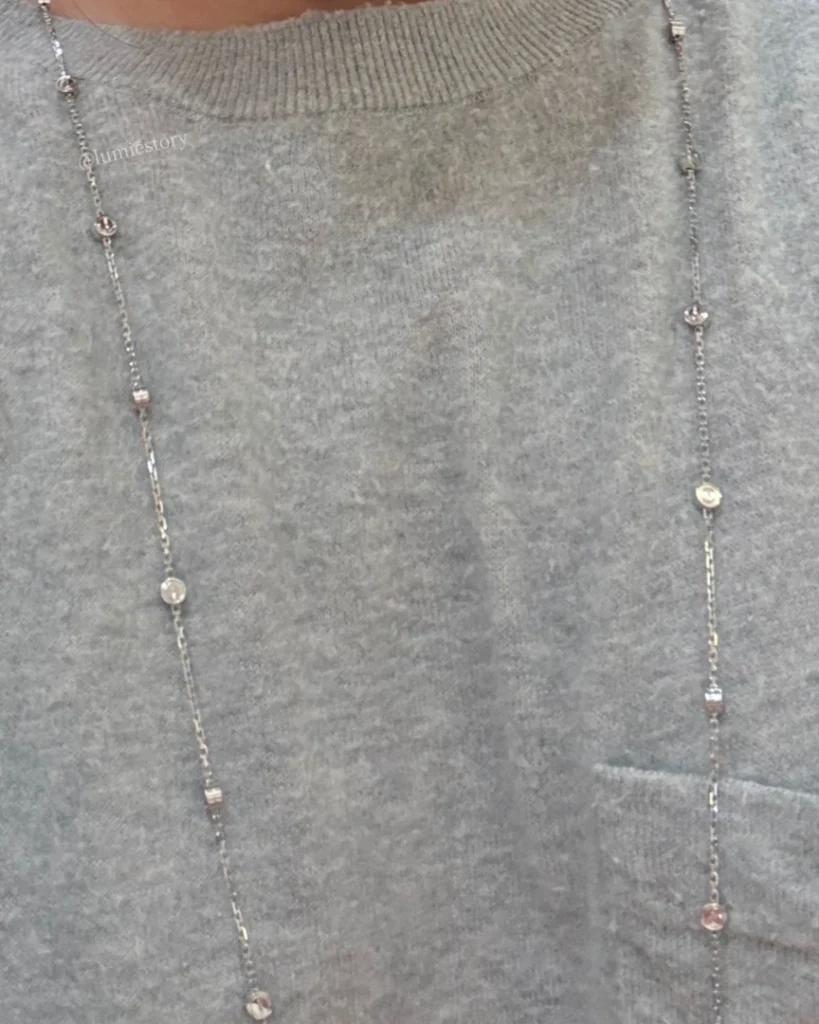
One Necklace, Four Structures
1. Single Strand │ The Full Length, As Is
Dropped as one strand, 112.5 cm shows the necklace’s core quality — its verticality — most clearly. This helps most when the upper body is wide or the top is boxy. The long line divides the broad plane of the clothing in two and pulls the gaze downward. Clothes without ornament suit it — an oversized knit, a long shirt, a sleeveless dress.
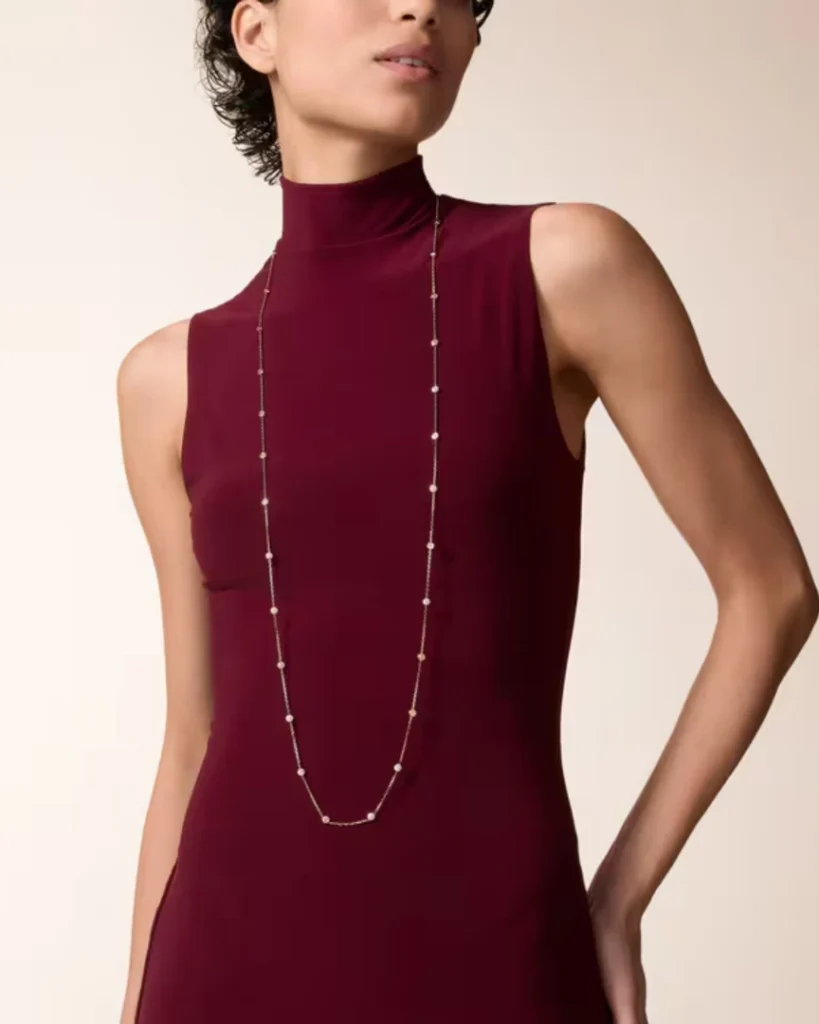
source: Cartier.com
Neckline matters most here. On a closed neckline like a crew neck, the whole necklace sits over the garment, so the line stays clean. On a deep V, part of it falls against skin and turns more sensual.
There’s a common belief that long necklaces don’t suit shorter people, but here the absence of a pendant and the fineness of the chain make the visual weight much lighter than the actual length. What to watch is less the height and more the break at the waist: a look where top and bottom don’t contrast sharply in color works better than one that cuts the torso hard at a short hem, so the vertical line isn’t severed halfway down.
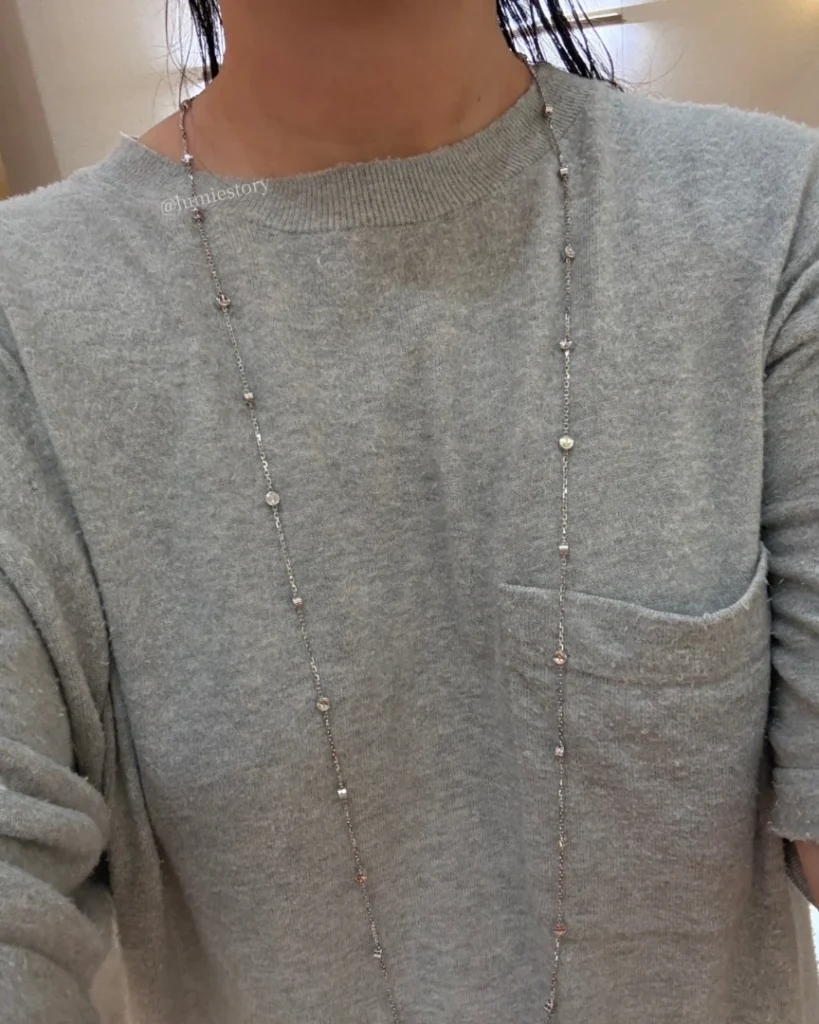
source: Cartier.com
2. Two Rows │ The Balance of Use and Finish
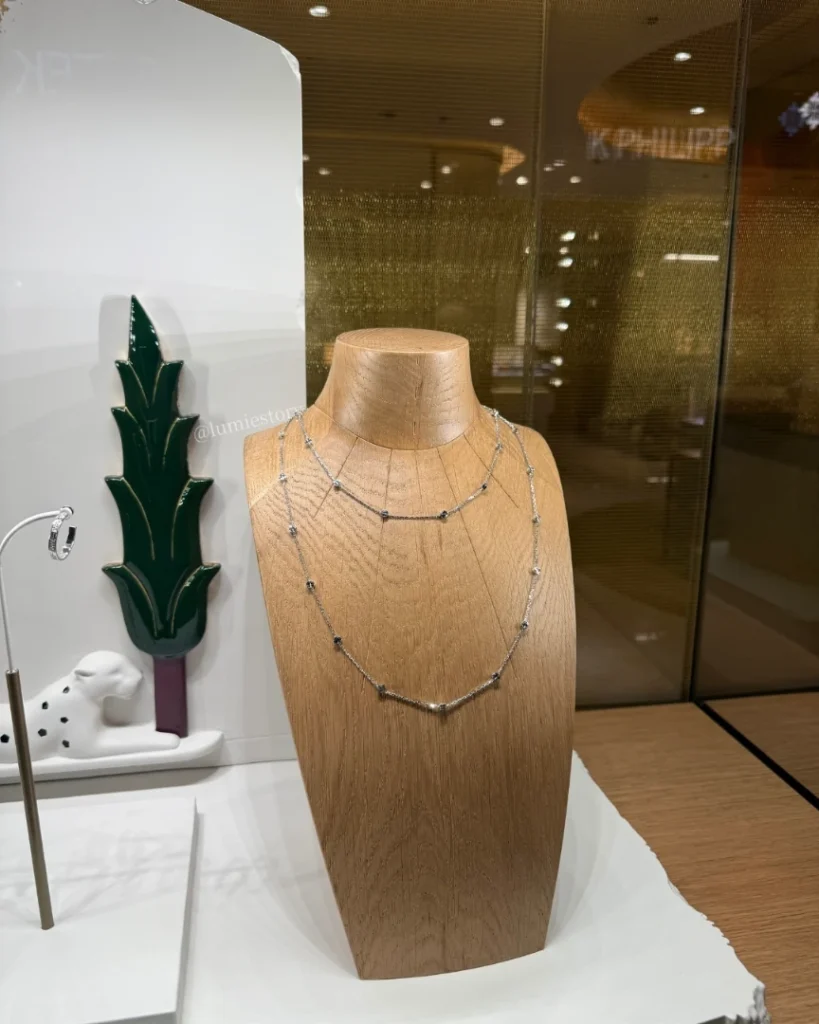
The structure you’ll reach for most in practice is the double. One strand near the collarbone, another over the chest, drawing two curves of different radius. The classic long-necklace mood recedes and it starts to look like a modern layered necklace.
source: Cartier.com
Over a crew-neck knit, the short strand tidies the neckline while the long one lengthens the torso. Over a shirt, you can split the lines inside and outside the collar. On a deep V, both strands can sit on skin and fill the décolleté. In wear, the double held the best balance — small light near the face but never too much, the lower chain dividing the wide plane of a grey knit. It’s the steadiest point between the openness of one strand and the richness of three.
Two rows are especially useful in a work setting. A single long chain is more likely to catch on a desk or an object during the day, and the doubled version carries more character than an ordinary short necklace. It matches a shirt, a knit, a jacket equally.
3. Three Rows │ Architecture at the Neck, Not Ornament
Three rows show the design’s ambition most clearly. A typical three-row necklace drifts classical or dressy as the volume of pearls or chain increases. The LOVE Multi-Wear has small motifs and a lot of empty space between the chain, so gathering three rows near the neck doesn’t run the density too high.
Spacing is the key. Set the rows parallel at equal intervals and the effect is tidy but a little formal. Bring the first close to a choker line, the second above the collarbone, the third dropped wide inside the neckline, and it looks far more natural.
source: Cartier.com
White gold makes three rows most urban; pink gold adds a fine shine over the skin; yellow gold gains a lot of presence the moment it triples, so the clothing detail has to come right down.
Three rows suit someone with enough space between face and shoulders, and a jawline that can carry the repetition of the motifs — a smaller face or defined features, a horizontally steady shoulder line, help especially. Even with a shorter neck or fullness below the jaw, there’s no need to give them up. Don’t tighten the first strand like a choker; drop it below the collarbone instead. Leave the space just under the neck open and lower the center of the three rows a little, and the closed-in feeling eases considerably.
4. Wrist Wrap │ The Most Cartier Way to Use It
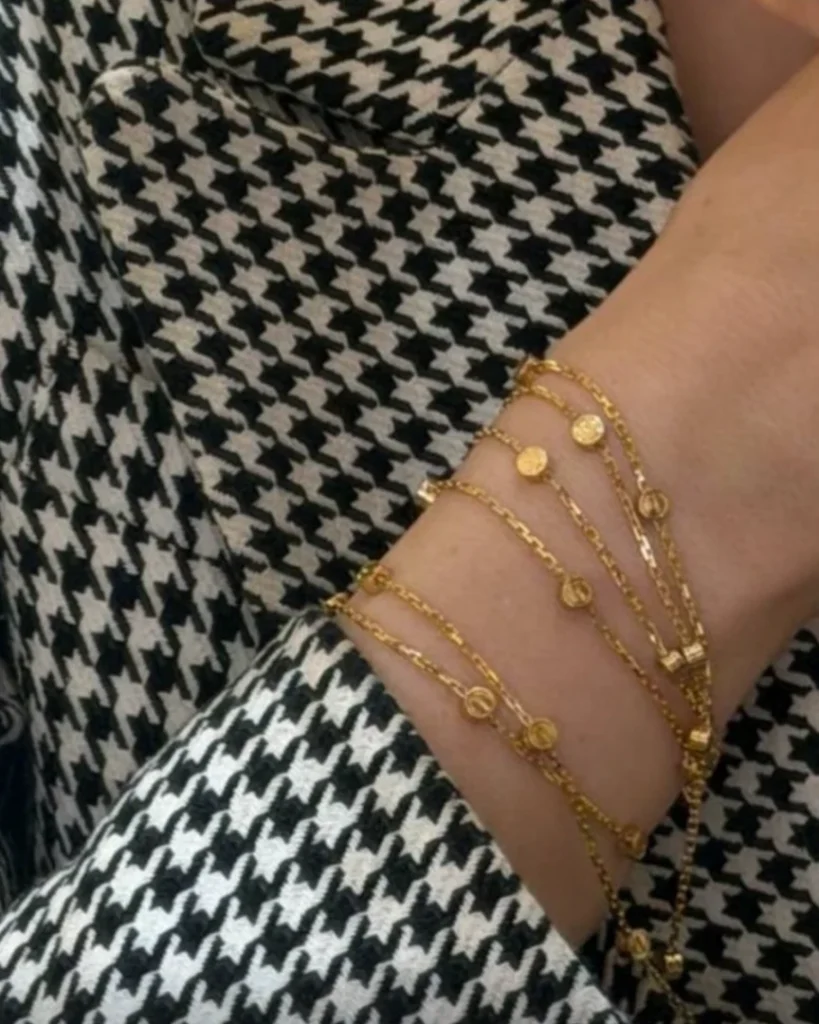
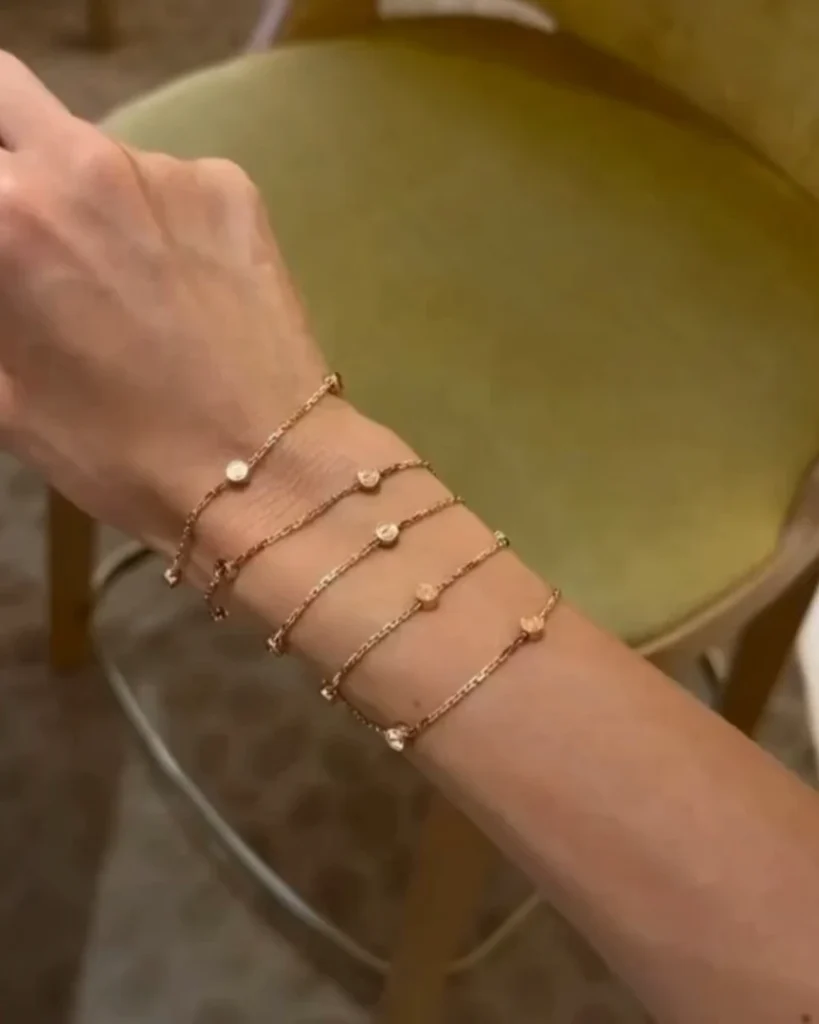
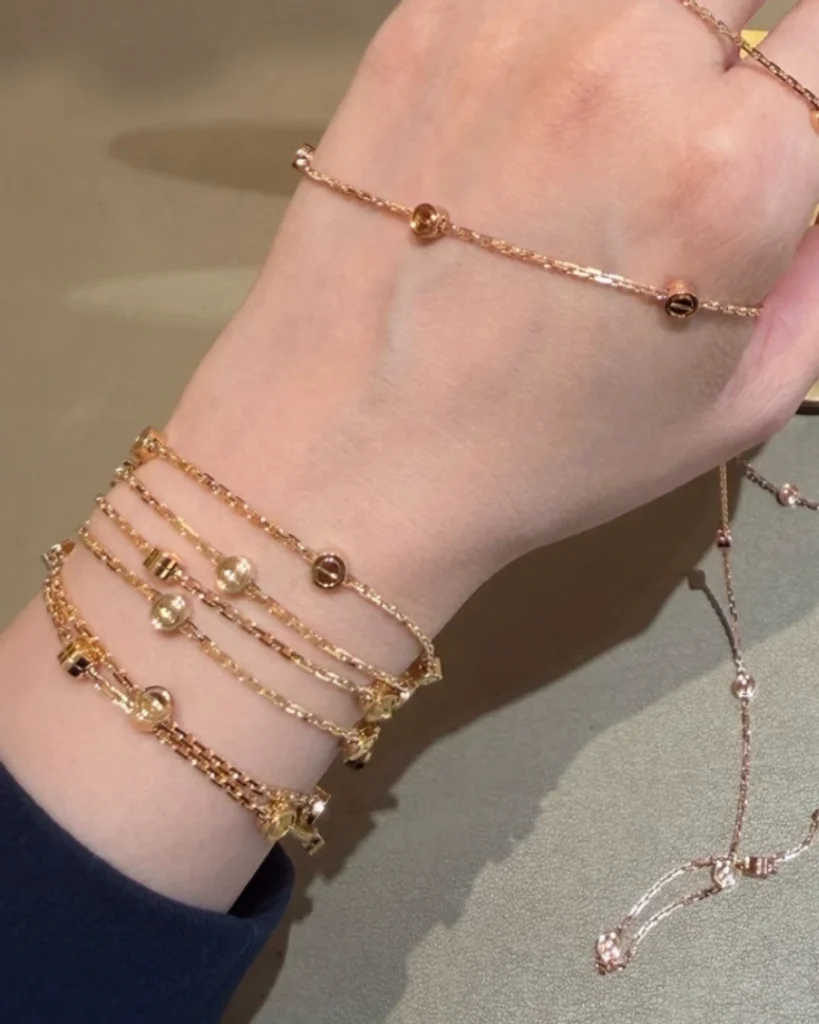
Wound several times around the wrist as a bracelet, the piece returns to Cartier’s original territory. LOVE has always been tied to the wrist. When the screw motifs circle it repeatedly, the result is far lighter and more supple than the original LOVE bracelet — a new structure between the rigid bangle and the chain bracelet.
@kingofparis/deluxe / Instagram
The wrap works alone and layers well. The white gold version pairs easily with a steel or white gold watch; wound loosely several times beside a watch with a defined case outline — Tank, Baignoire, Panthère — the static watch and the moving chain play against each other. Yellow gold looks more elegant on the opposite wrist on its own than stacked with a gold watch on one side. Pink gold, layered with a diamond tennis bracelet or a thin chain, softens the border between skin and gold.
One caution with the wrap: the chain shouldn’t cinch too tight. The motifs need to shift a little on the wrist for the surface light to stay alive. Fix them completely and the rhythm of the design drops away.
What It Suits
This necklace can be worn in ways quite different from the usual conditions for who long necklaces suit. You don’t have to be tall or thin. With no pendant and little chain volume, a smaller frame carries it easily. What matters more is the structure of the space made by face, neck, and upper body.
Long neck, small face — the freest to style. One strand lengthens the torso; two and three fill the empty space below the face. Even three rows brought up close to the neck don’t overpower.
Round face, soft features — white gold in one or two rows. The fine vertical line and the repetition of small circles add structure to the soft curves of the face. Because it doesn’t fix the gaze at a center point the way a big pendant does, the face doesn’t read rounder. In wear, the long necklace didn’t widen the face or age it; it split the wide plane of a grey crew neck vertically and made length below the face.
Strong features, defined bone structure — yellow and pink gold can be used freely. The warm color of the metal softens the strong lines of the face while the long chain holds a sculptural impression.
Short neck, fuller upper body — dropping one strand long is safest. Rather than making a short layer near the neck, take the necklace low enough to form a long oval down the center of the chest. If the value of the clothing and the necklace isn’t too far apart, the upper body settles more softly.
Narrow shoulders — two rows work. The short strand makes a horizontal line toward the collarbone, the long one a vertical; the two together steady the balance of the upper body.
Broad or linear shoulders — one strand is the most refined match. The long chain sets a strong vertical axis down the broad shoulders and the center of the body, and it sits well under a boxy shirt or an oversized knit.
source: Cartier.com
Nothing Like a Van Cleef Long Necklace
The biggest difference I noticed while wearing it was the way the motif behaves.
Van Cleef & Arpels’ long necklaces make the motif a scene. Each Alhambra has a clear shape and color, so the jewelry itself becomes the lead of the look. Stone and gold and the repeating clover build a classic, decorative mood.
The Cartier LOVE Multi-Wear nearly erases the motif. The LOVE screw only reveals itself up close. From across a room, only a small metal point and a fine line remain. The proportion of the clothes and the mood of the person come through before the impression of wearing jewelry at all.
That’s worth thinking about before buying. If the visible presence of a recognizable brand from a distance matters to you, this necklace leans toward studied nonchalance, and it may not give you what you want. But that’s also why it fits The Row–style minimalism so well. It adds just enough shine not to look indifferent, without spoiling the dryness the clothes already have.
One builds its identity through a visible motif. The other through structure.
source: Cartier.com
Not the Return of the Long Necklace, but New Hardware
The LOVE Multi-Wear isn’t a retro sautoir reworked for now. It strips the tassel, the stone, the pendant from the traditional long necklace and leaves only chain and small hardware in their place. It doesn’t use length as the scale of ornament; it turns length into a structure the wearer adjusts. In one strand it’s a vertical line over the clothes; in two, a modern layered necklace; in three, architecture around the neck; wound on the wrist, a supple LOVE bracelet.
The absence of diamonds makes the direction clear. The shine comes from the surface and movement of the metal, not stones. Up close it’s Cartier hardware; from a distance, a long line with small light scattered along it.
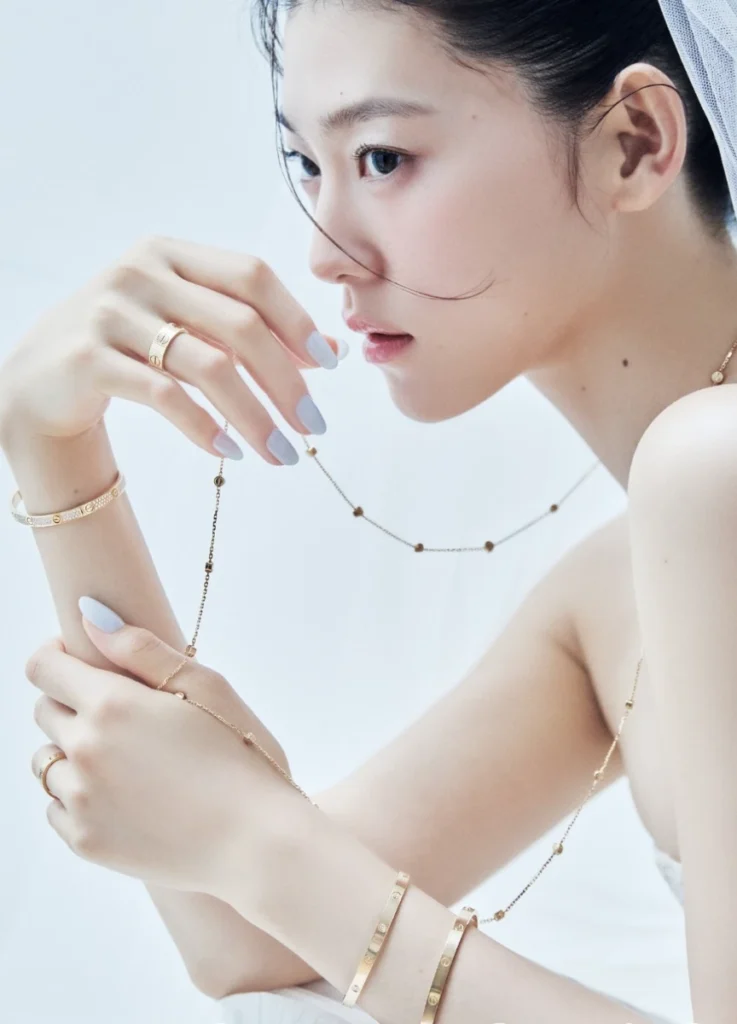
The shape language Cartier has pushed lately — letting the LOVE icon flow rather than lock — comes through convincingly in a necklace too. The white gold version, especially, nearly erases the classic impression a long necklace carries so easily. It’s natural over a bare face and a grey knit, and sharper over a black sleeveless or a structured shirt. One thoughtless loop changes the proportion of an outfit; when you want more, two or three rows adjust the density.
Good multi-wear jewelry isn’t proven by how many shapes it takes. Each one has to avoid looking like a stopgap. The LOVE Multi-Wear makes one, two, three rows, and the wrist wrap all look like independent designs. That’s where this release feels more meaningful than a simple extension of the existing LOVE line. With it, Cartier has arguably built a new way to arrange the LOVE hardware across the body.
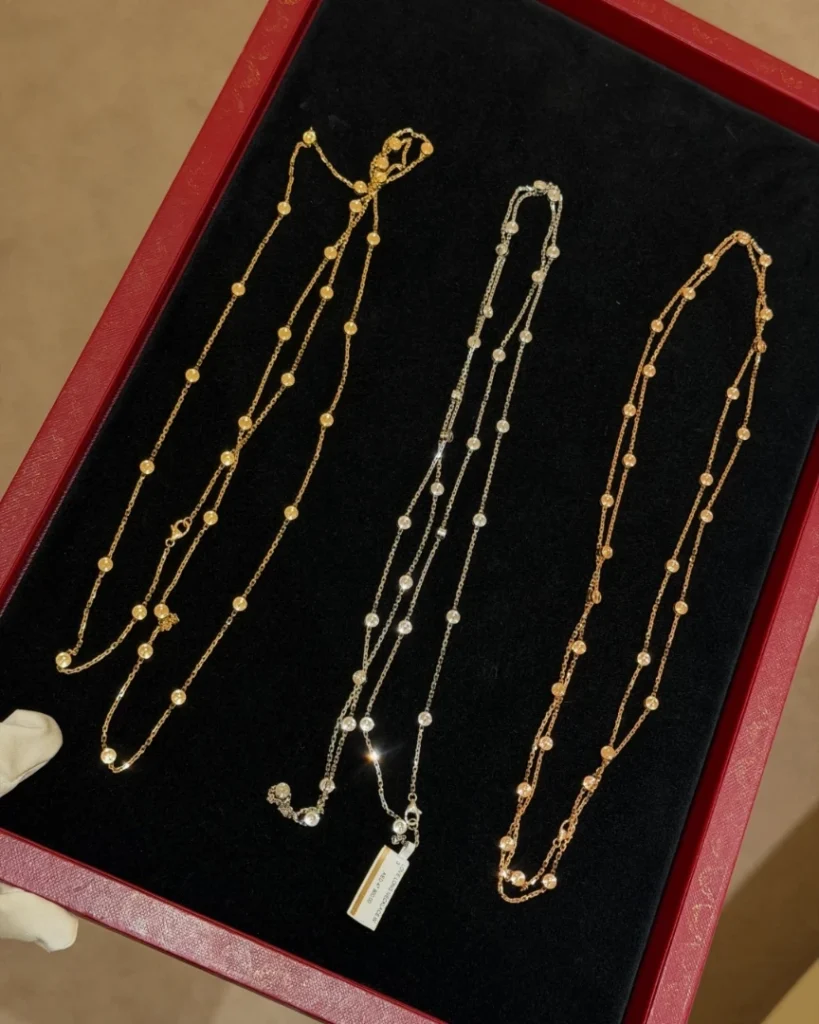
@diamonds__dealer / Instagram
Featured Image via @diamonds__dealer / Instagram
All images unless otherwise credited: © Lumie Story
[ Related Editorials ]
- [Cartier] Love Unlimited Collection
- Cartier at Watches & Wonders 2026 | The Restoration of Form, the Weight of Material, and the Quiet Shift Toward Jewelry
- Cartier Love Bracelet Full Pavé 2026 | Small vs Medium vs Classic — Size Guide and How Each Wears
- Cartier Panthère de Cartier Bracelet: Who It Truly Suits