Inside Watches & Wonders 2026
What Cartier presented at Watches & Wonders 2026 goes well beyond a product launch. This year, the maison made its intentions unmistakably clear.
While most watchmakers compete on movement complexity, Cartier once again led with the persuasion of shape — except this time, form arrived fully integrated with material weight, proportion, and the sensation of wearing.
The result is not a collection of watches. It is a system of objects, each designed to sit on the wrist as something closer to sculpture than instrument.
Three ideas run through the entire 2026 lineup: the restoration of form, the intensification of material presence, and the deliberate migration of the watch toward jewelry.
@posh.a.bee / Instagram
The collection unfolds across seven distinct axes. The Baignoire Clou de Paris anchors the jewelry-watch conversation. The Santos-Dumont gains density through a stone dial and metal bracelet.
The Crash Squelette forces its movement to follow its distorted case. Cartier Privé celebrates a decade of archival curation. The Roadster returns after fourteen years away. The Tortue re-enters the main collection as a full category.
And the Myst de Cartier pushes the jewelry-watch concept to its most extreme conclusion.
Taken individually, these feel like separate stories. Read together, they converge on a single proposition: in 2026, Cartier is redefining the watch as a wearable object — not a tool.
source: Cartier.com
Baignoire Clou de Paris — The Most Strategic Model of the Year
If one model had to represent the entire direction of Cartier in 2026, it would be the new Baignoire. This piece functions less as a product and more as a thesis statement — a benchmark for how far Cartier is willing to push the jewelry watch.
The Baignoire has always been defined by its oval case, one of Cartier’s most refined expressions of pure curve. The case itself is the design. It does not frame the dial so much as it flows around it, settling on the wrist with a softness that few watches achieve.
What the 2026 edition introduces is a surface language aggressive enough to alter the character of that curve entirely.
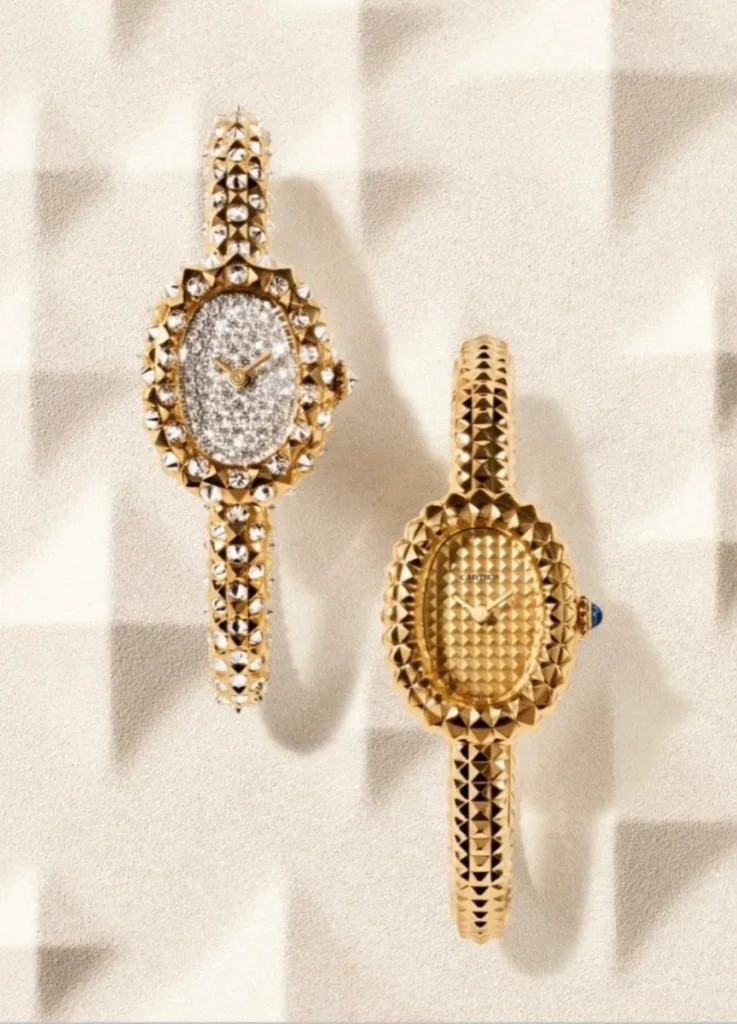
The Clou de Paris motif — a grid of tiny hand-polished pyramids — has appeared in Cartier’s vocabulary since the early 1920s. Its function is optical.
A flat polished surface produces a single plane of reflection. Clou de Paris fractures that plane into hundreds of micro-facets, scattering light in a way that feels denser, more controlled, and more alive than any mirror finish.
source: Cartier.com
What Cartier has done with this Baignoire is extend that pattern beyond the dial, across the entire case and bangle structure. The visual center of the watch shifts outward. You read the surface before you read the time.
The new case measures 24.6 × 19.3 mm at 7.5 mm thick, with proportions recalibrated to accommodate the motif. Everything is finished by hand.
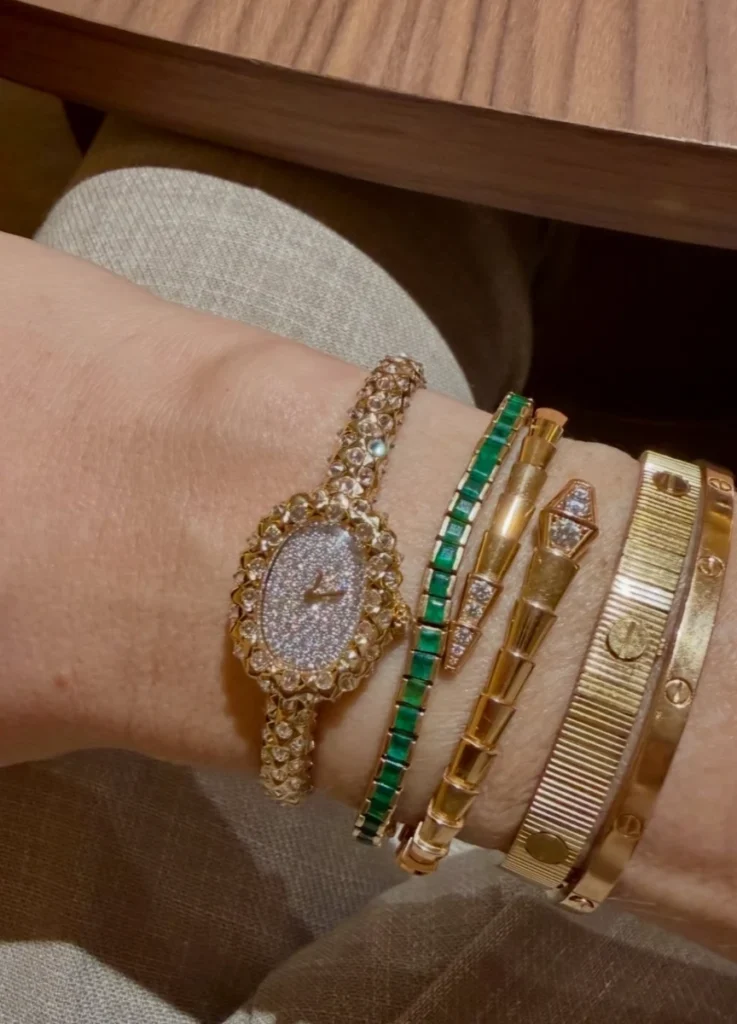
@sophiesinclairstyling /Instagram
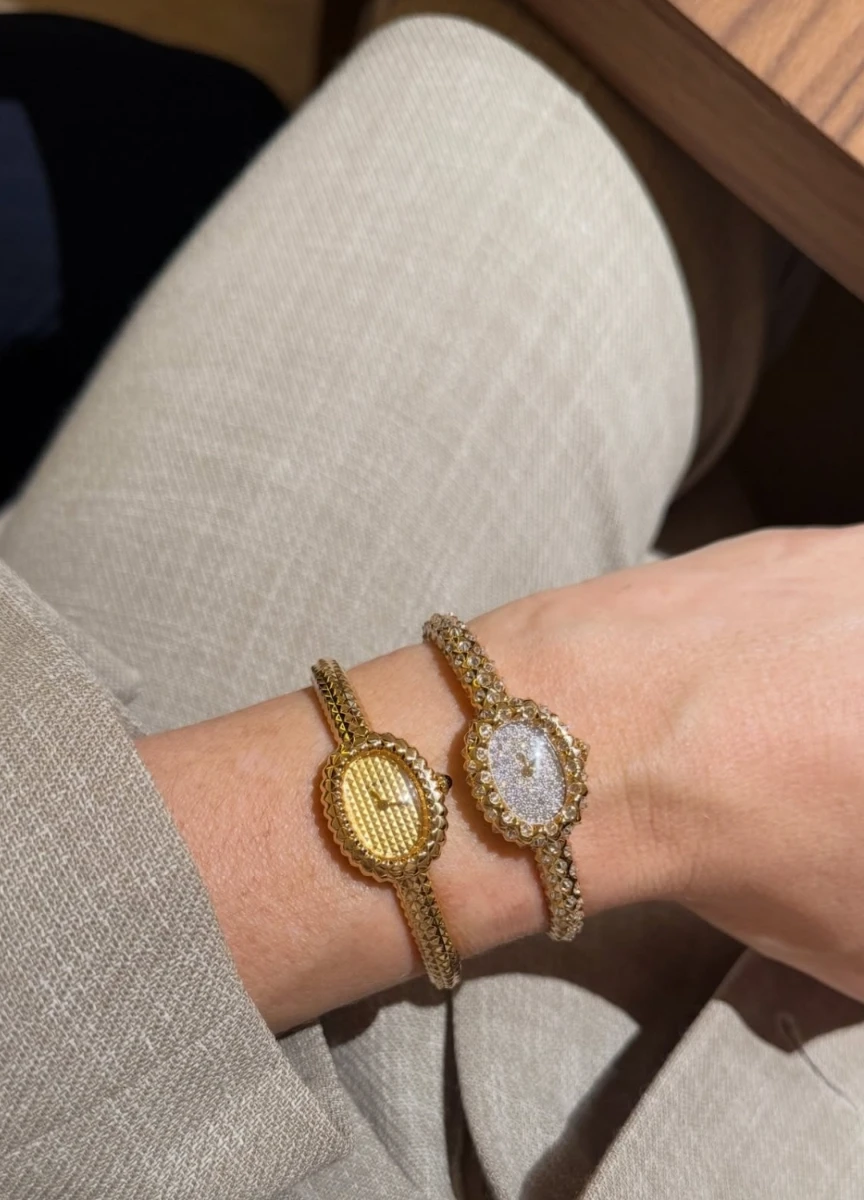
Two versions make the architecture legible in completely different ways.
The plain gold model lets the Clou de Paris speak alone. Each facet catches and releases light with every movement of the wrist. From a distance, the watch reads as restrained — almost quiet. Up close, the tension in the surface reveals itself. This is a piece that rewards proximity.
The closer you look, the more the gold seems to breathe.
The pavé model reverses the emphasis. 171 brilliant-cut diamonds are set across the case and bracelet using an inverted-pavilion technique, while 100 additional diamonds sit snow-set on the dial.
Where the plain gold version fragments light through geometry, the pavé version amplifies that fragmented light through stone. The result is not louder — it is more resolved. If the gold reads as “precise,” the pavé reads as “complete.”
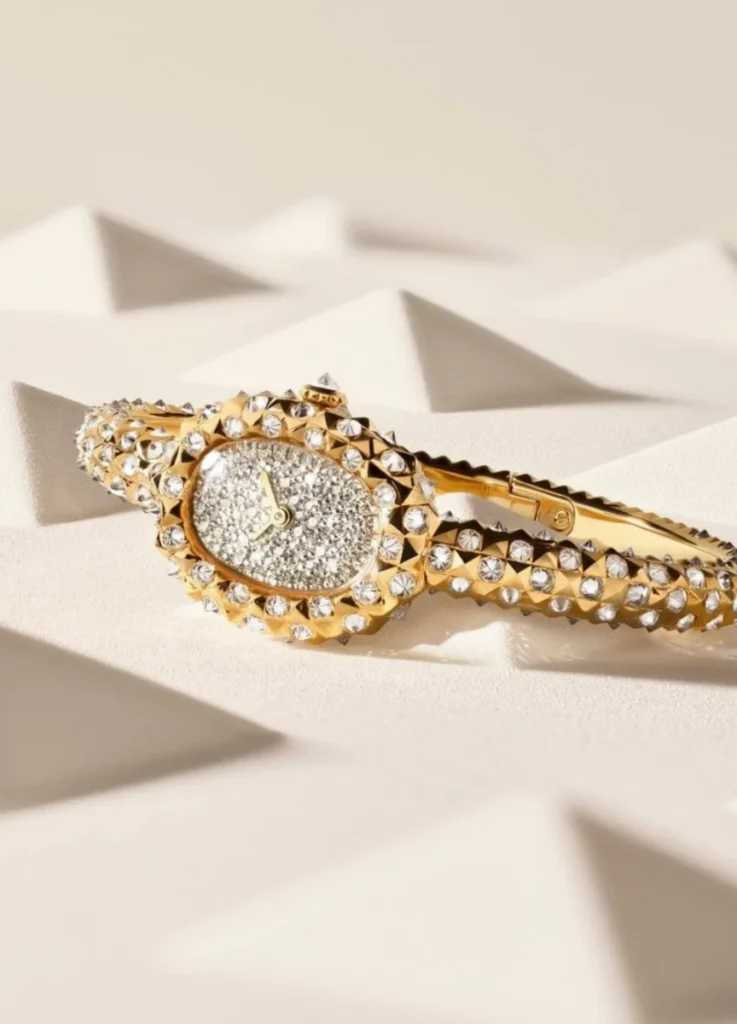
source: Cartier.com
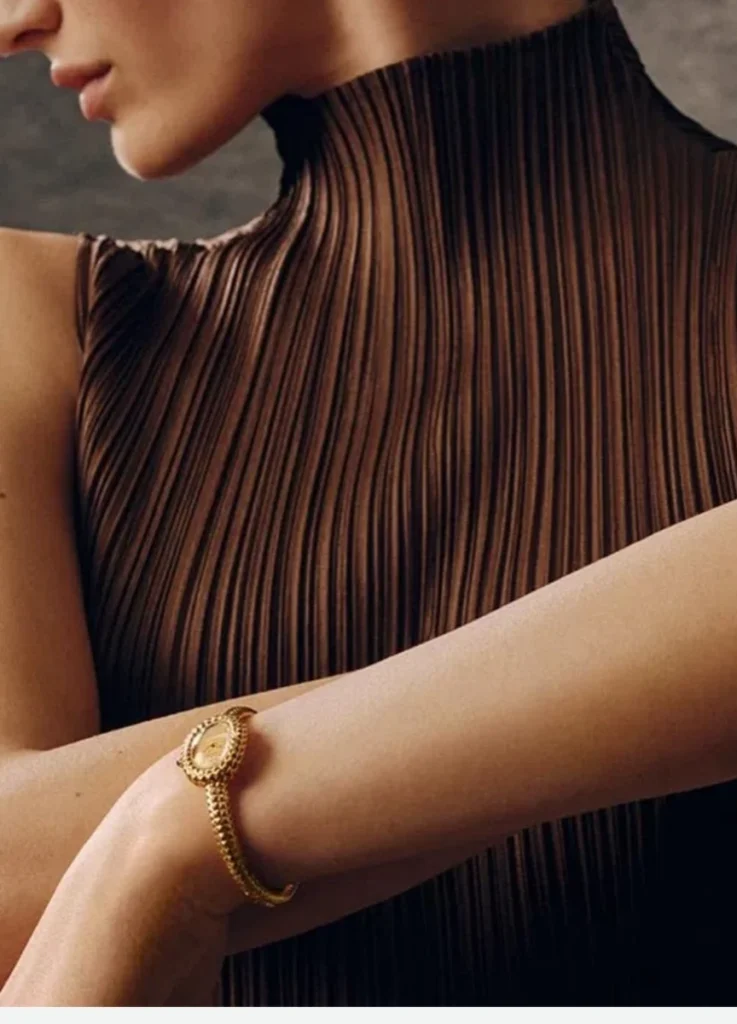
The distinction matters on the wrist. On a narrow wrist with visible bone structure, the plain gold model is likely to perform with particular elegance — the watch traces the contour rather than sitting on top of it.
On a softer wrist, or when the piece needs to serve as a single point of gravity, the pavé version is stronger. It does not sharpen the wrist line. It creates a center.
This is a watch where the question is not “which is more beautiful” but “whose wrist does each one serve.”
Within the broader 2026 collection, the Baignoire occupies the center. Privé restores the archive. Crash subordinates structure to form. Santos-Dumont elevates material weight. But the Baignoire is the model that most directly moves the watch into the territory of jewelry.
The purchase logic here has little to do with movement or function. It belongs to image, density, and the physical sensation of gold on skin.
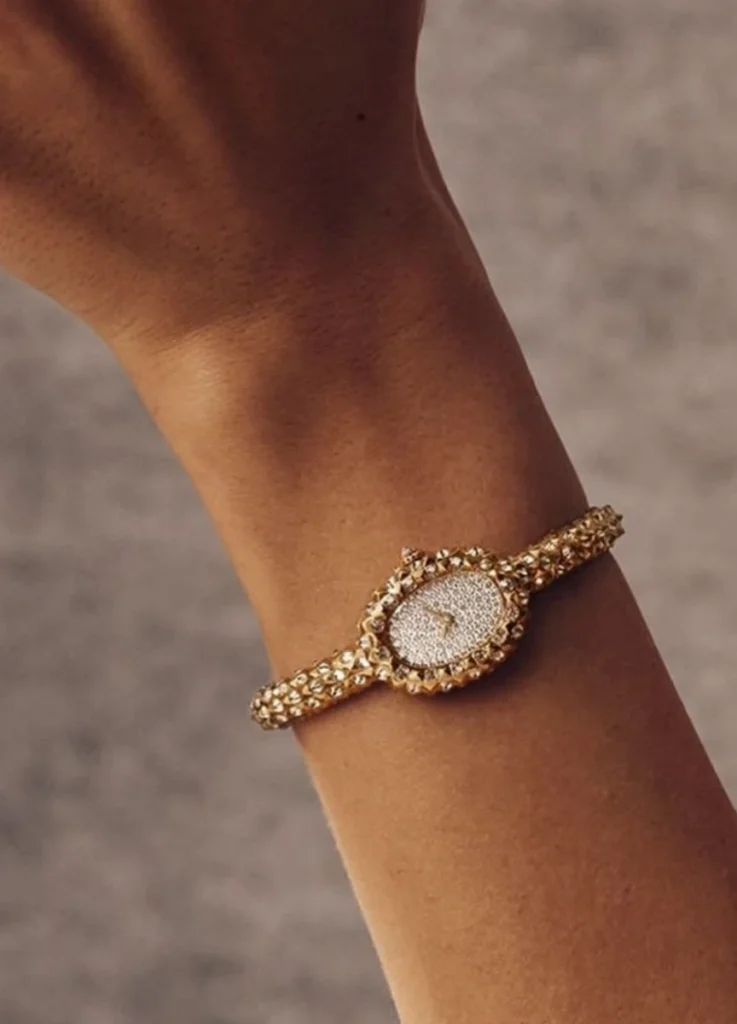
source: Cartier.com
Santos-Dumont — A Dress Watch That Gained Weight Without Losing Grace
On paper, the changes to the Santos-Dumont look straightforward: a metal bracelet, a stone dial, and higher-tier materials in yellow gold and platinum. In practice, these three shifts converge to reposition the model entirely.
The Santos-Dumont was always defined by what it lacked — weight, bulk, visual noise. On a leather strap, the watch barely announced itself. That lightness was the point. The 2026 edition preserves that restraint while introducing a material density the model has never carried before.
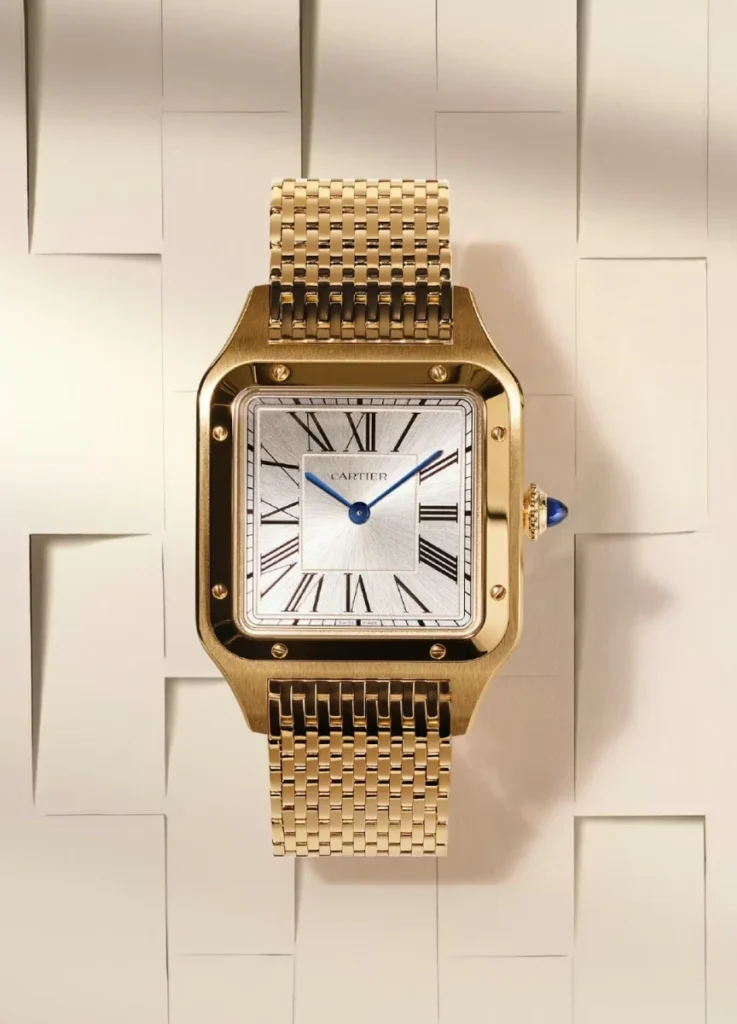
source: hodikee.com
Three LM (Large Model) versions have been released, all measuring 43.5 × 31.4 mm at 7.3 mm thick, powered by the in-house hand-wound calibre 430 MC: yellow gold with a gilded obsidian dial, yellow gold with a silvered dial, and platinum with a silvered dial.

@yesandrightwatchhk / Instagram
The obsidian dial is the decisive element. Sourced from Mexican volcanic stone, each dial is cut to just 0.3 mm — thin enough to fracture if handled carelessly.
Tiny air bubbles trapped inside the stone produce an iridescent quality unique to each piece. Where a conventional silver dial reflects light outward, the obsidian pulls it inward. The dial does not announce itself. It deepens.
That depth makes the entire watch feel quieter and more expensive without adding a single visible complication.
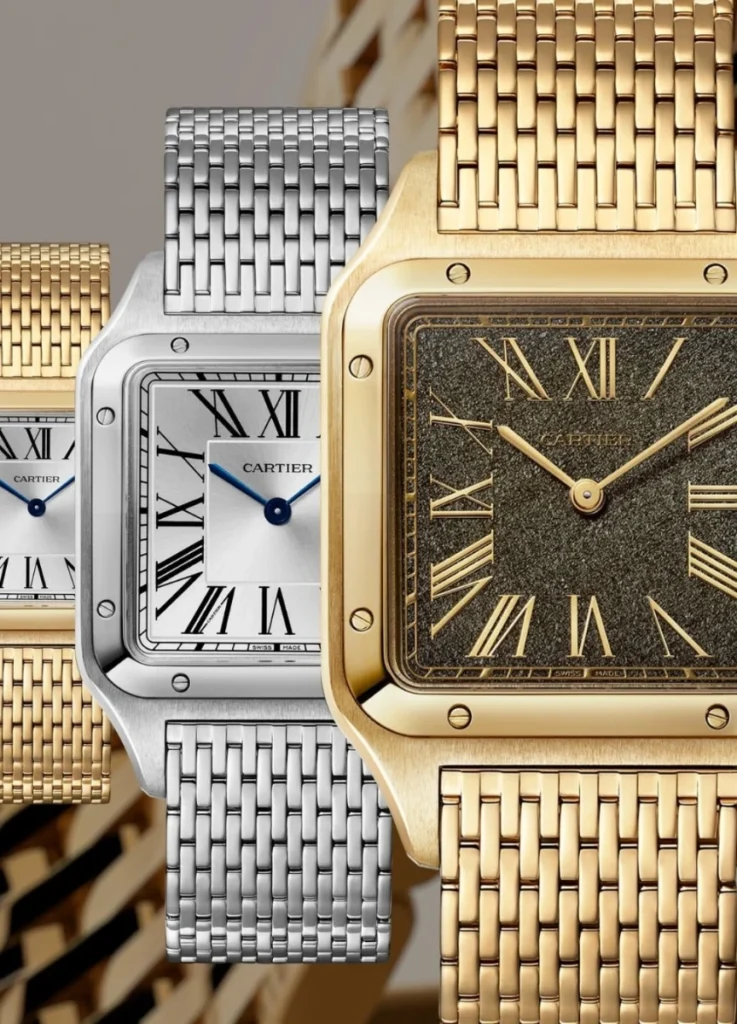
The 15-row metal bracelet completes the transformation. Inspired by Cartier’s own made-to-measure metal bracelets from the 1920s, each link measures just 1.15 mm thick. A total of 394 individual components are machined, finished, and assembled to produce a bracelet that drapes against the wrist more like fabric than metal.
On a leather strap, the Santos-Dumont rests on the wrist. On this bracelet, it wraps. The case line holds — Cartier was careful not to let the bracelet overwhelm the silhouette — but the presence is fundamentally different. The watch becomes a single, continuous object.
On the wrist, this model favors a medium or smaller circumference. The case flows vertically, creating a sense of length and tension that works best when the wrist provides contrast rather than competition. The yellow gold version delivers warmth and quiet density. The platinum delivers cold precision. This is not a color preference — it is a directional choice.

source: hodikee.com
Crash Squelette — When Design Dictates the Engineering
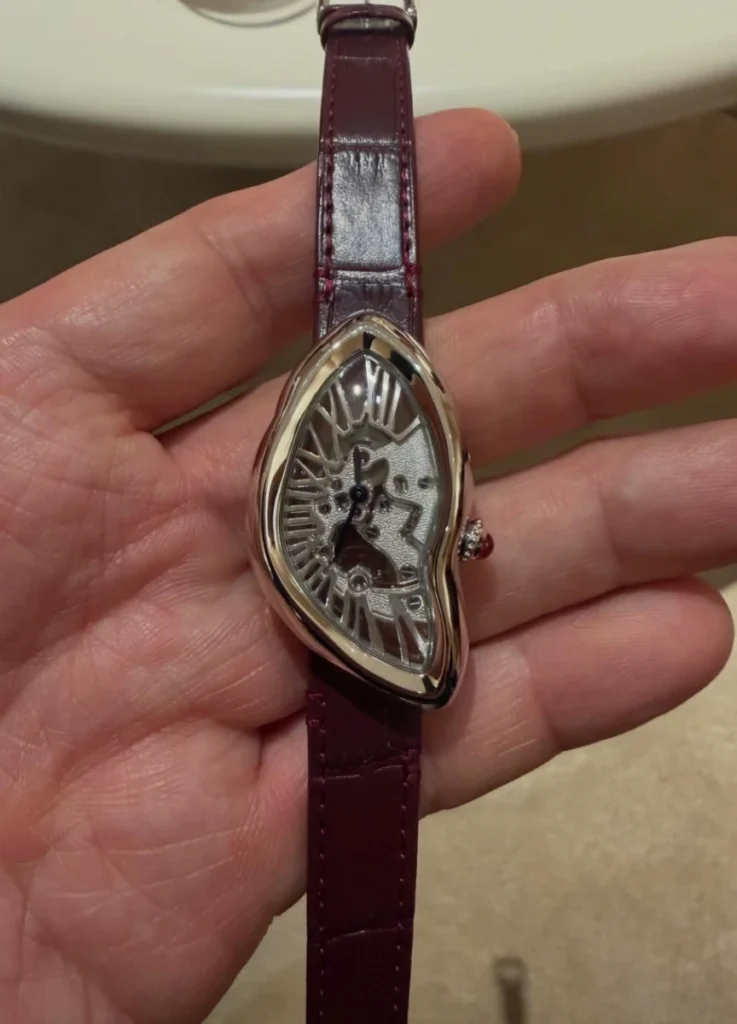
The Crash has always been Cartier’s mythology piece. But mythology, repeated without evolution, risks becoming decoration. What makes the 2026 Crash Squelette significant is that it moves the conversation from symbol to structure.
@yesandrightwatchhk / Instagram
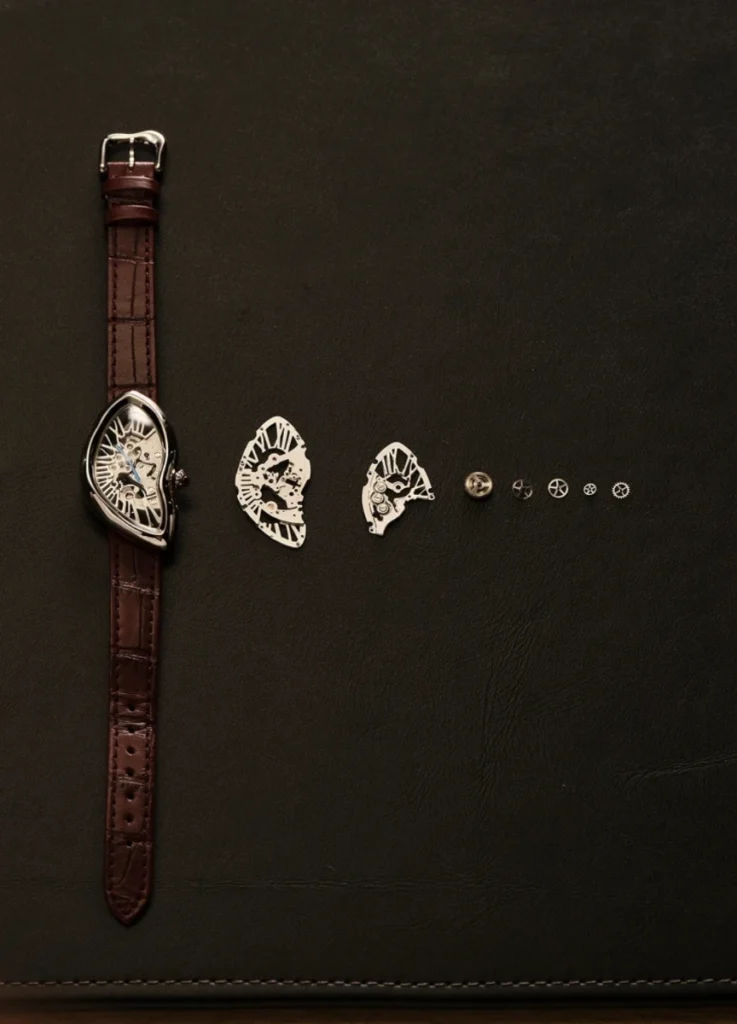
The new Manufacture 1967 MC movement — 142 components, manual winding — was not designed and then fitted into the case. It was engineered to follow the case. In conventional watchmaking, the movement exists first and the case wraps around it.
The Crash inverts that hierarchy. The distorted, asymmetric form came first, in 1967, and every mechanical decision since has been forced to obey it.
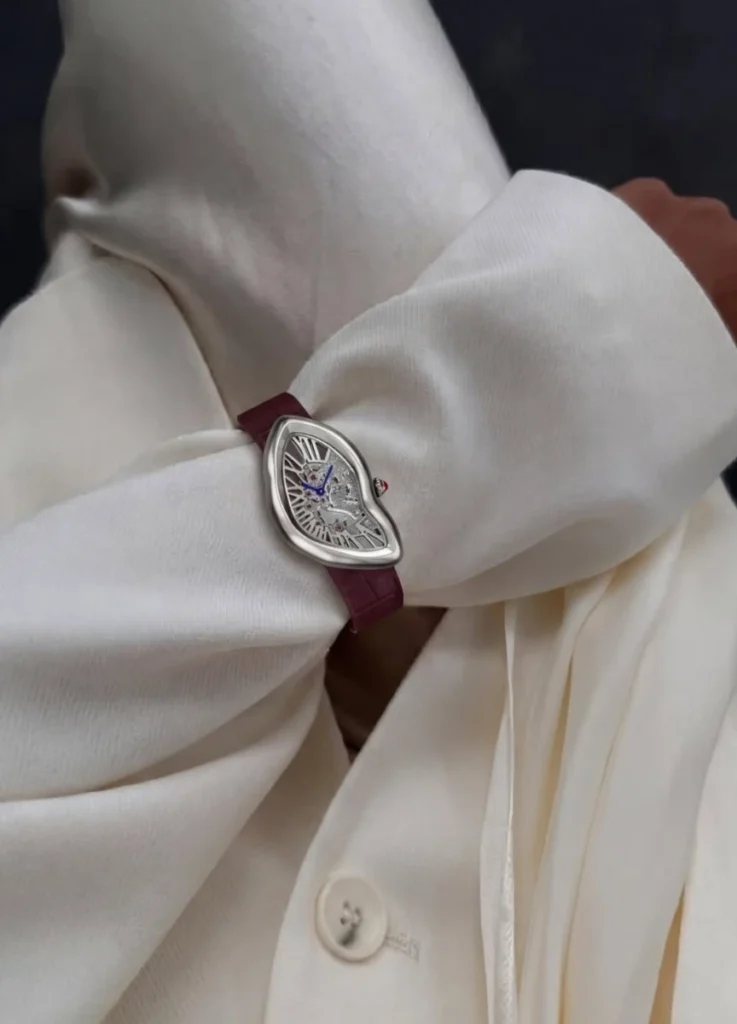
The skeleton treatment deepens that logic. Earlier open-worked Crash models revealed their interiors while preserving a dial-like reading experience. This version removes that safety net. The bridges are shaped into Roman numerals — a patented Cartier construction — each one hand-hammered over nearly two hours of work.
@preloved_and_awesome / Instagram
The apertures, the spacing, the weight of metal left and removed — all of it reinforces the distortion of the case rather than working against it. The watch reads less like a mechanism with a window and more like a kinetic sculpture that happens to mark time.
The platinum case measures 45.34 × 25.18 mm with a ruby cabochon crown, and the edition is limited to 150 numbered pieces. Compared to the 2015 Crash Skeleton, the case is narrower — closer in proportion to the original 1967 London Crash.
What remains most Cartier about this piece is the restraint in how the technical ambition is presented. Most maisons would lead with component count, power reserve, finishing specs. Cartier does not.
The question this Crash asks is not how long it runs, but how convincingly its structure serves its silhouette. On that measure, it succeeds entirely.
source: Cartier.com
Cartier Privé at Ten — Curating the Archive, Not Reissuing It
The tenth anniversary of Cartier Privé is not a commemorative gesture. It is a statement about how the maison manages its formal inheritance.
Six new references split into two trios. Les Opus — the exceptional trio — brings together the Tank Normale, the Tortue Chronographe Monopoussoir, and the Crash Squelette, all in platinum with burgundy accents running through the straps and dial details, unified by ruby cabochon crowns and blued-steel hands.

La Collection presents the Tank Normale, Tank Cintrée, and Cloche de Cartier in yellow gold cases with dark grey alligator straps, golden-toned dials, and blued-steel hands.
What makes this structure interesting is the editorial logic. Cartier did not choose to push a single shape. It chose to group six different silhouettes under two coherent material and chromatic codes — platinum-and-burgundy for the exceptional, yellow-gold-and-grey for the permanent. The effect is curatorial. These are not products placed side by side. They are forms placed inside a shared visual language and re-read through it.

The details within Les Opus reward attention. The Tank Normale arrives on a seven-link platinum bracelet that recalls 1930s Cartier. The Tortue Monopoussoir houses the calibre 1928 MC — Cartier’s thinnest chronograph movement at 4.3 mm — achieving a total case thickness of just 10.2 mm. Its ivory-and-red bi-compax display adds a layer of period-correct drama.
The deeper message: Cartier Privé in 2026 is not about nostalgia.
It is about declaring which forms the maison still considers part of its living heritage — and presenting them with enough contemporary precision that they feel current rather than recovered.

Roadster — The Return That Matters More as Repositioning Than Revival
The Roadster’s return will generate the most public attention of any Cartier release this year. Originally launched in 2001 and discontinued in 2012, its fourteen-year absence has been long enough to build genuine collector interest on the secondary market. But the more important question is not that it came back — it is how.

source: Cartier.com
The original Roadster was always something of an outlier within Cartier. An automotive-inspired tonneau case, a bold crown structure, speedometer-style indexing, and a distinctly 2000s sense of presence made it far more kinetic than the restrained classicism of the Tank or Santos.

source: hodikee.com
The 2026 version sharpens rather than reinvents. The curves remain, but they are less exaggerated. The volume has been reduced. The surface treatment is cleaner. The overall impression is not retro — it is repositioned. Cartier has edited the Roadster into a contemporary luxury sports-dress object without stripping what made it recognizable in the first place.
The lineup spans steel, steel-and-gold, and full gold. The large model runs the in-house 1847 MC automatic; the medium runs the 1899 MC.
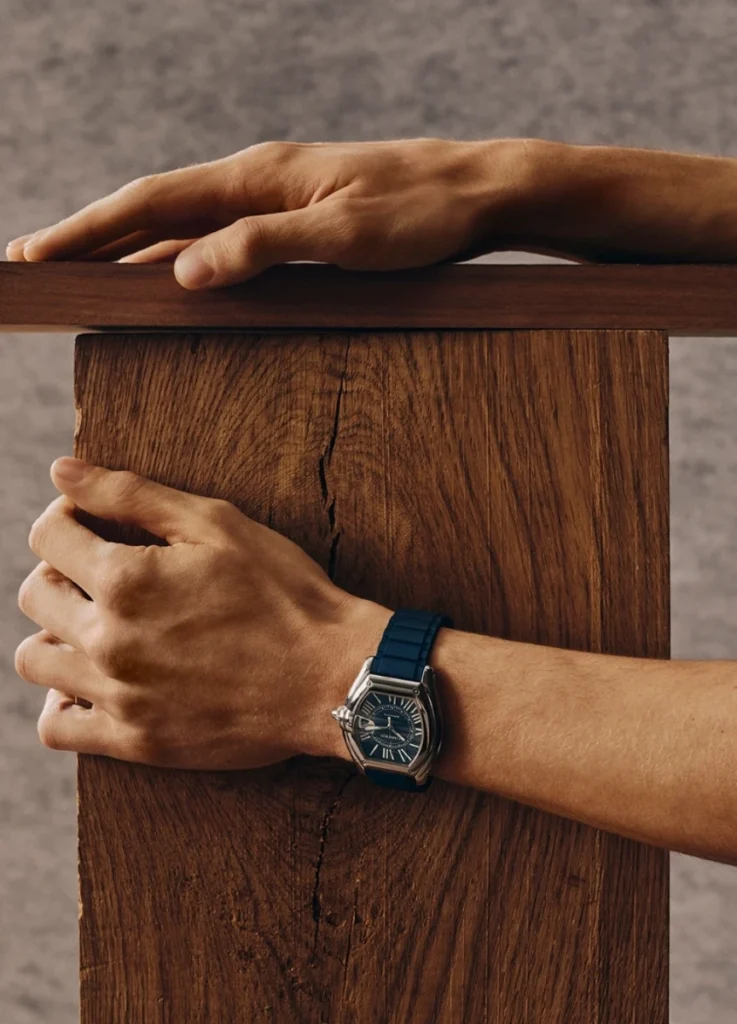
One subtle but important shift: the Roadster no longer reads exclusively as a men’s sports watch. The curved case flows against the wrist with more softness than the original, and the two-tone and gold configurations open real possibilities on a woman’s wrist.
At this point, the Roadster begins to function less as a sports instrument and more as a silhouette-driven object — which is exactly where Cartier wants it.

@totelle__ /Instagram
Tortue — Not a Formal Return, but a Mainline Redefinition
While much of the conversation around Cartier’s 2026 showing has centered on the Crash and the Roadster, the Tortue may carry greater strategic significance. This is not a limited reissue or a Privé one-off.
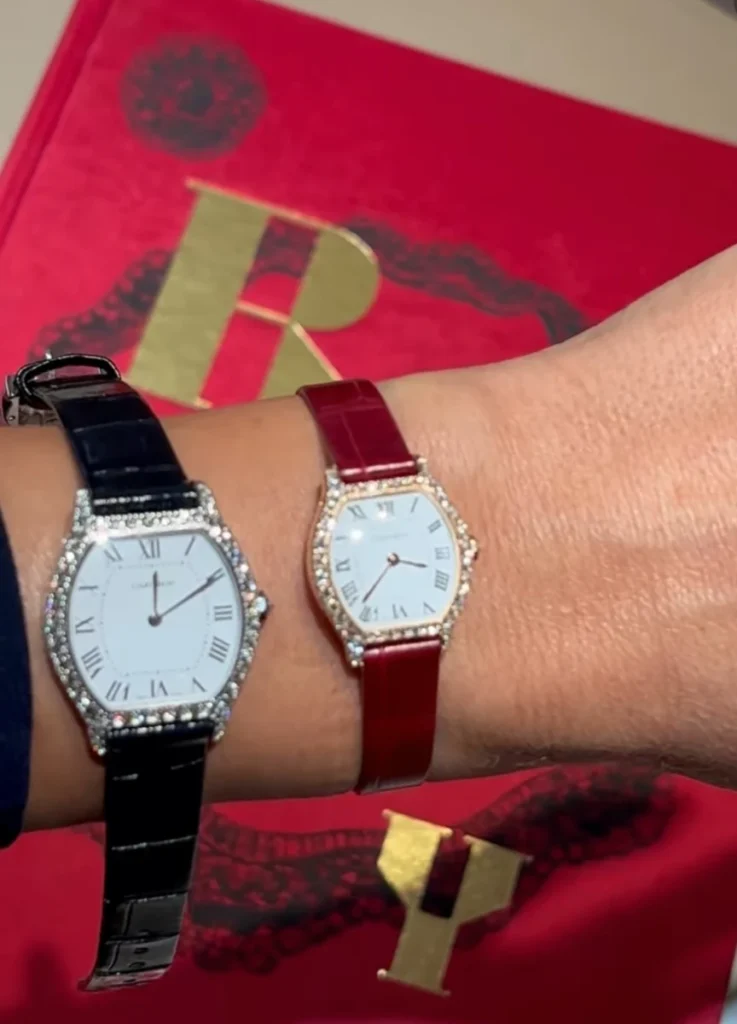
Cartier has reintroduced the Tortue as a full collection — eight references deep — signaling that this shape now operates as a permanent category, not a memory.
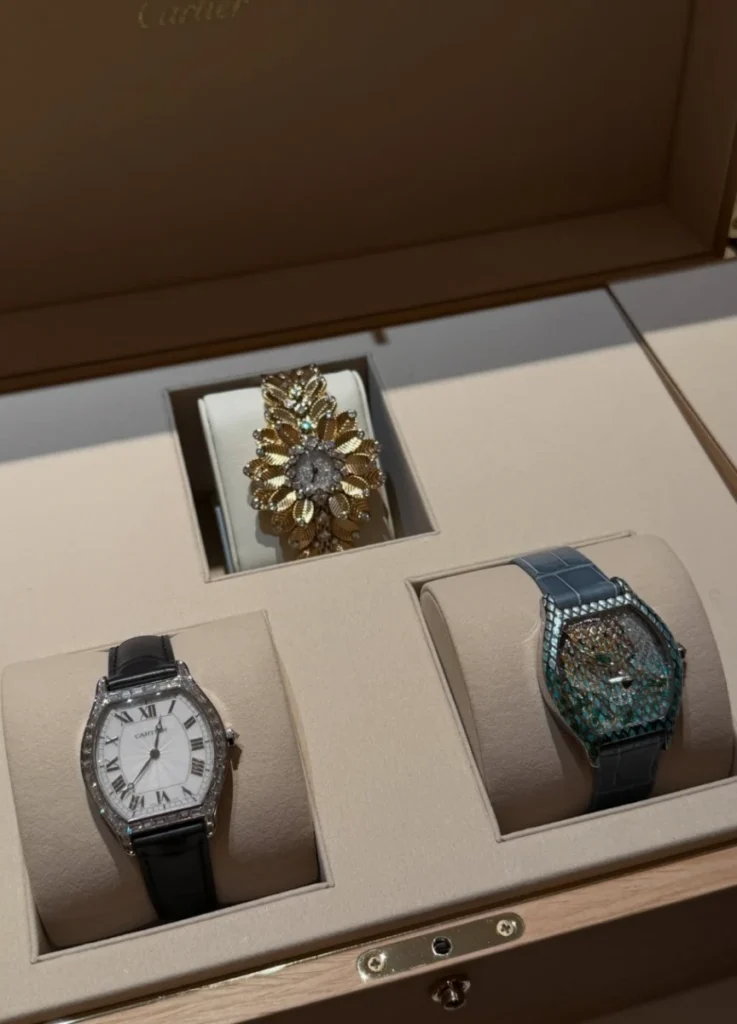
The lineup is deliberate. Five core references in yellow, white, and rose gold span Small and Mini sizes for daily wear. A platinum LM evening piece adds 46 baguette-cut diamonds on the bezel paired with a guilloché dial. And at the top, two Panthère Métiers d’Art Tortue watches — one in white gold, one in yellow gold, each limited to 100 pieces — extend the panther motif from dial to case middle using champlevé enamel.
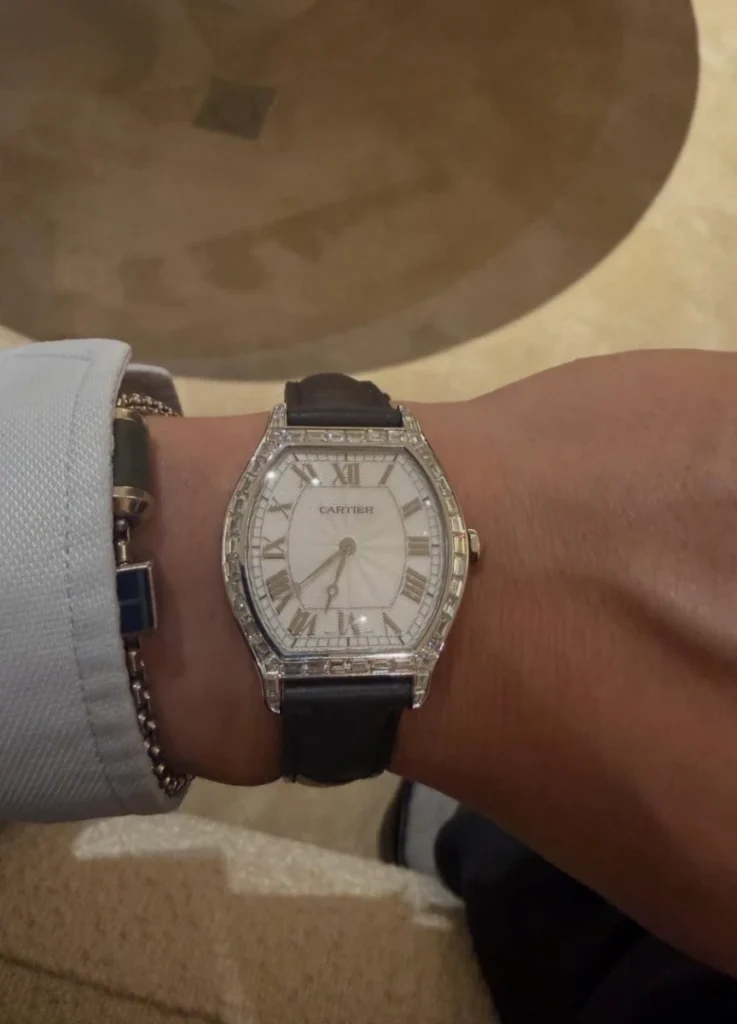
These are not variations on a theme. They represent the elevation of a single silhouette into a fully articulated product family.
The case has been meaningfully redesigned. Earlier Tortue models carried a relatively flat, almost planar impression. The 2026 version rounds the profile, softens the transitions between case and lug, and produces an organic curvature that wraps the wrist rather than sitting on top of it. This changes not just the visual character but the wearing experience itself.
@totelle__ /Instagram
The dial marks another departure. The traditional rail-track minute ring has been replaced with dot indices drawn from a 1922 archival reference, and an embossed relief motif adds tactile depth. The Tortue no longer speaks the language of the classical dress watch. It has moved toward something more decorative, more three-dimensional — closer to an object than an instrument.
All models run the in-house calibre 430 MC. The choice is deliberately understated. What matters in the Tortue is not complication or power reserve. It is shape, proportion, and the quality of the surface.
If Privé is about memory, the mainline Tortue is about the present. Privé restores forms from the archive. The Tortue collection takes one of those forms and builds it into a living product line. That distinction makes the Tortue one of the most structurally important moves in Cartier’s 2026 strategy.
[ Related Editorials ]
Myst de Cartier — The Furthest Point of the Jewelry Watch, and Its Relationship to the Baignoire
If one piece in the 2026 collection sits closest to the boundary where watchmaking ends and pure jewelry begins, it is the Myst de Cartier.
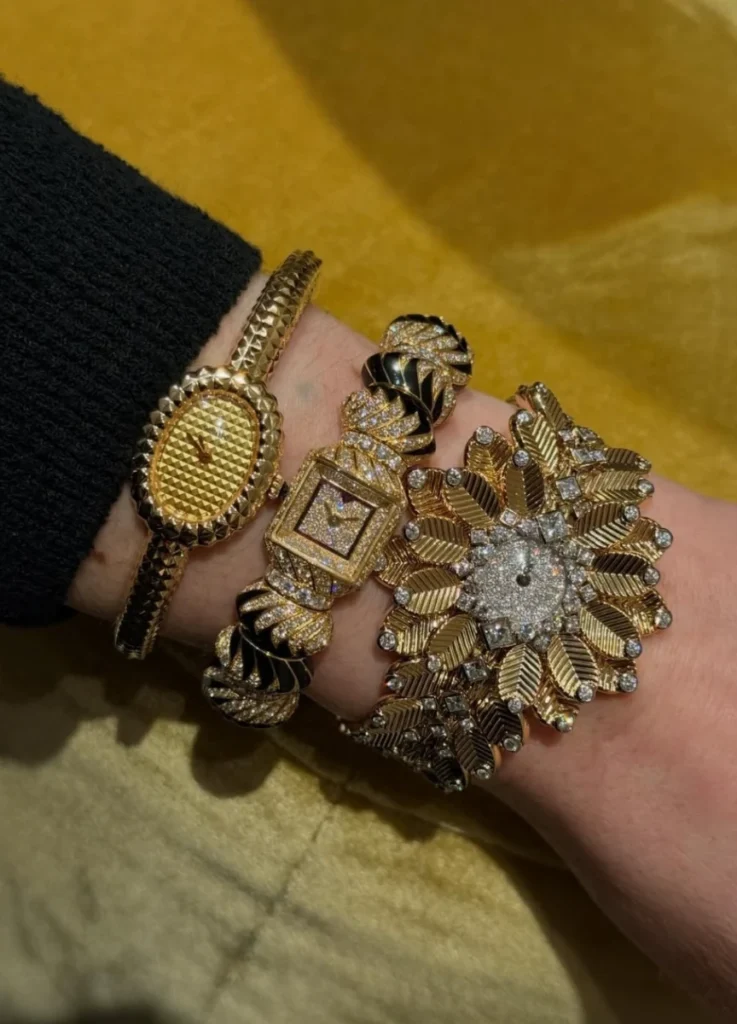
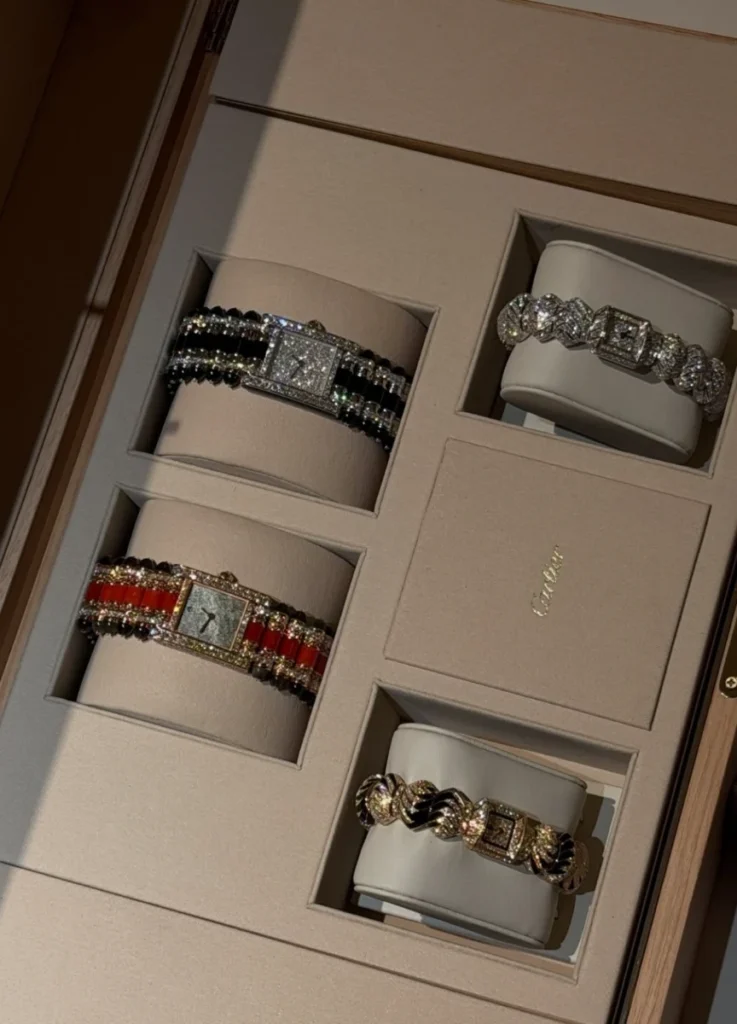
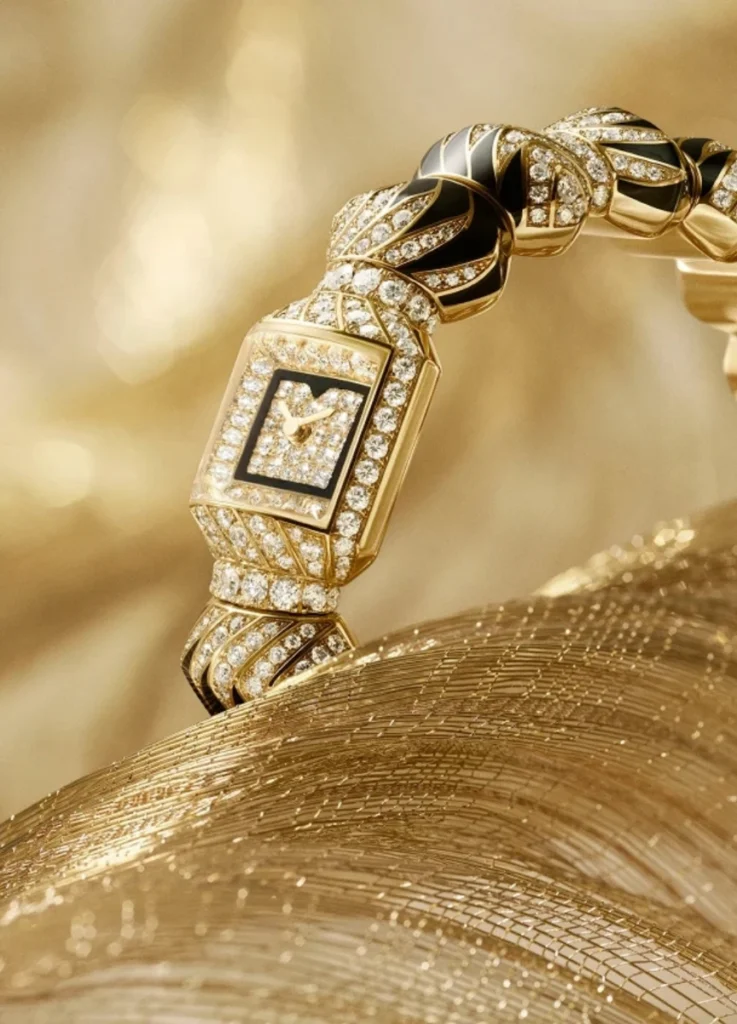
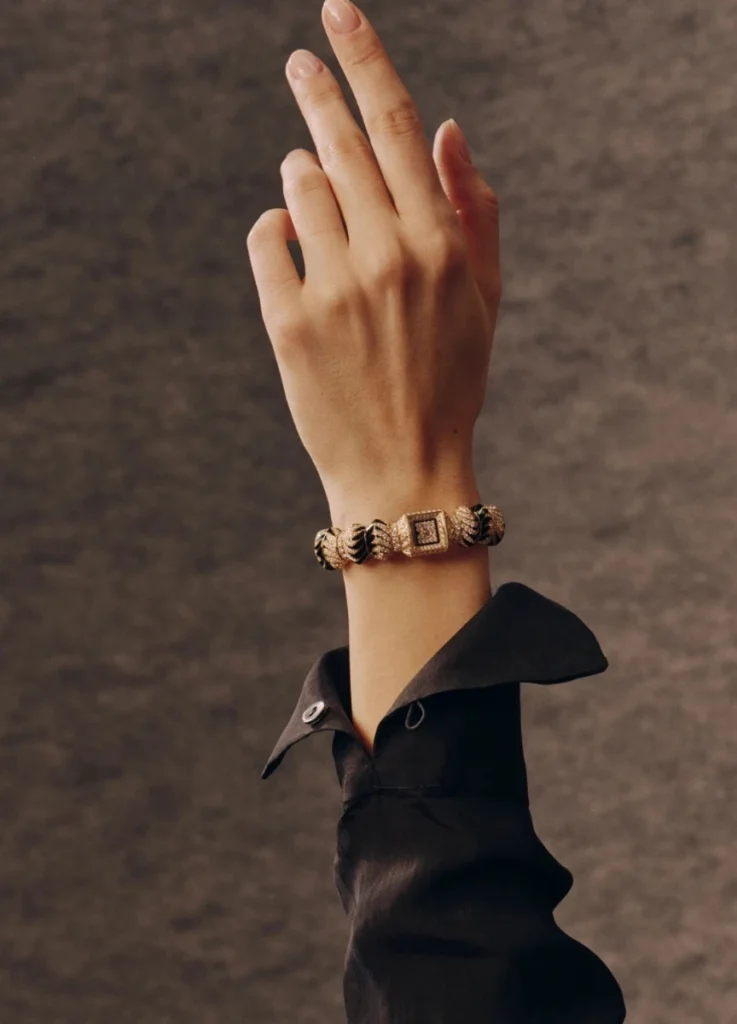
The bracelet announces the departure immediately. There is no clasp. No hinge. No conventional link structure. The Myst is strung on an elastic architecture of bead-like sections that expand and contract against the wrist. Putting it on is not fastening — it is slipping. The entire ritual of wearing a watch changes. The mechanical gesture disappears.

source: Cartier.com
The setting work is extraordinary. The white gold version carries 986 diamonds across the case and bracelet, with an additional 45 pavé-set stones on the dial. Hand-painted black lacquer spots — applied one by one at Cartier’s Maison des Métiers d’Art in Switzerland — and onyx accents produce a graphic language that operates well beyond conventional gem-setting.
The yellow gold version leans harder into the contrast between lacquer lines and the onyx dial, creating something closer to a visual composition than a jewelry surface.
The case measures 15.4 mm. The geometric pavé dial frames an onyx border and a single triangular hour marker. The bracelet alone requires 30 hours of setting; the total reaches 112 hours. These numbers clarify the territory. The Myst belongs to a world where gem-setting hours outweigh watchmaking hours by an order of magnitude.
In its visual language, the piece recalls the jewelry Cartier produced under Jeanne Toussaint in the 1930s — bold contrasts, sculptural volume, animal-inspired geometry, and an insistence that decoration and structure are the same thing. All of that is compressed inside the Myst.
source: Cartier.com
Baignoire vs. Myst — Center and Extreme
This raises the question that runs beneath the entire collection: where does the center of Cartier’s jewelry-watch axis actually sit?
The answer requires both models.
The Myst represents the limit — the furthest Cartier can travel before the watch ceases to function as a watch at all. Its construction, its setting density, its clasp-free wearing mechanism — every element breaks from conventional watchmaking.
But this is an object for the very few. Conceptual completeness takes priority over daily wearability.

The Baignoire brings that extremity back to reality. The Clou de Paris surface, the pavé option, the bangle construction, the proportions calibrated for actual wrists — all of it is rooted in the same jewelry-first philosophy, but translated into a form that can be worn every day. The Baignoire is the Myst’s language made usable.
So the hierarchy clarifies itself:
The Myst sits at the apex, declaring what is possible. The Baignoire sits at the center, delivering what is practical. They are not competitors. They are a vertical structure — one sets the direction, the other brings it to market.
In 2026, Cartier Makes Form Wearable
The seven axes of this year’s collection organize themselves with striking clarity:
- Baignoire — the center of the jewelry watch
- Santos-Dumont — the dress watch, weighted with material density
- Crash — form and structure made inseparable
- Cartier Privé — the archive, curated into the present
- Roadster — the curved sports watch, repositioned
- Tortue — a mainline return that builds a category
- Myst — the jewelry watch at its conceptual extreme
Read together, the message is consistent. Cartier did not simply release a diverse set of new products. It completed a system organized around four principles — form, structure, material, and jewelry — and delivered each one with enough conviction that the collection reads as a single argument rather than a scattered lineup.

Privé edits the heritage of form. Crash subordinates structure to shape. Santos-Dumont raises the material register of the dress watch. Roadster repositions the curved sports silhouette for the present. Tortue expands a restored form into a living category. Myst declares the outer boundary of the jewelry watch. And the Baignoire, at the center of it all, moves the watch decisively toward the territory of the wearable jewel.
What Cartier proved in 2026 is what it has always done best: designing form and translating it into the experience of wearing. This year, that translation feels more complete — and more deliberate — than it has in a long time.
Featured Image via @zoyasakr / Instagram
[ Related Editorials ]