Inside Dior Pre-Fall 2026
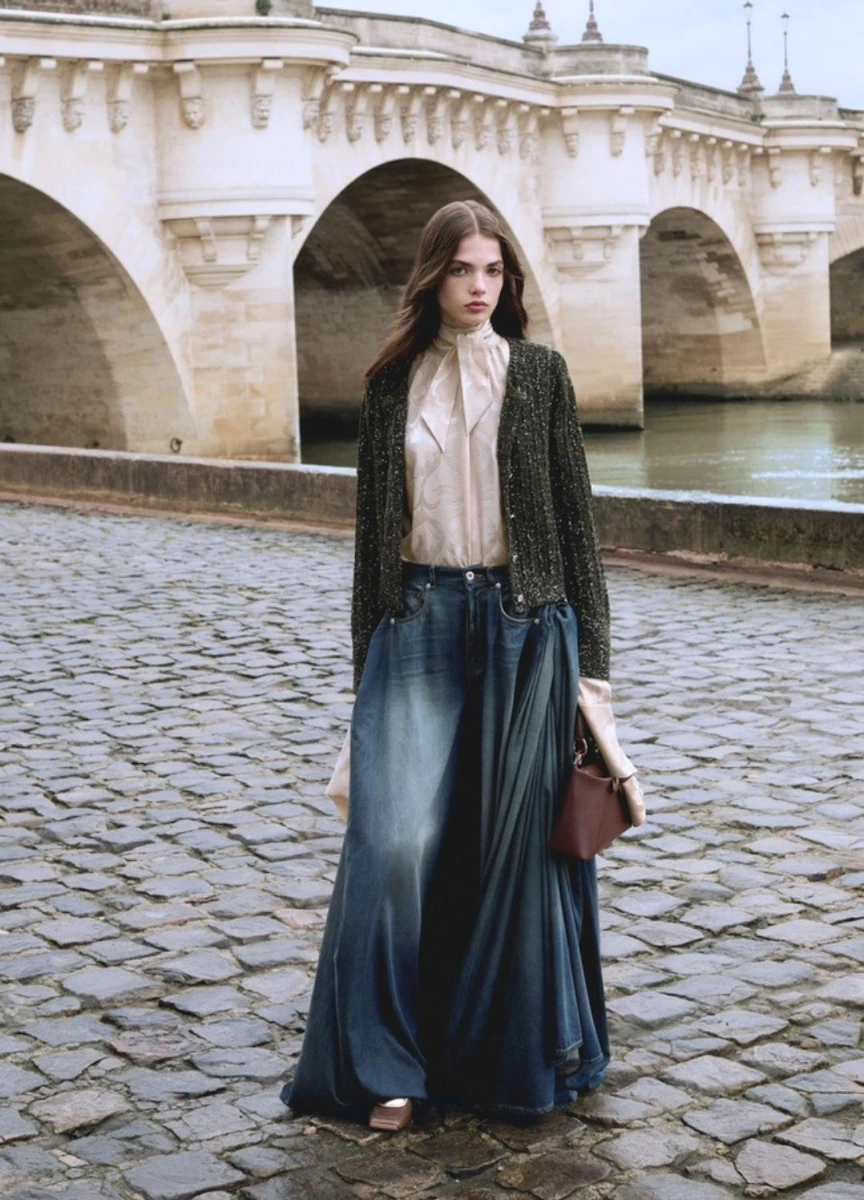
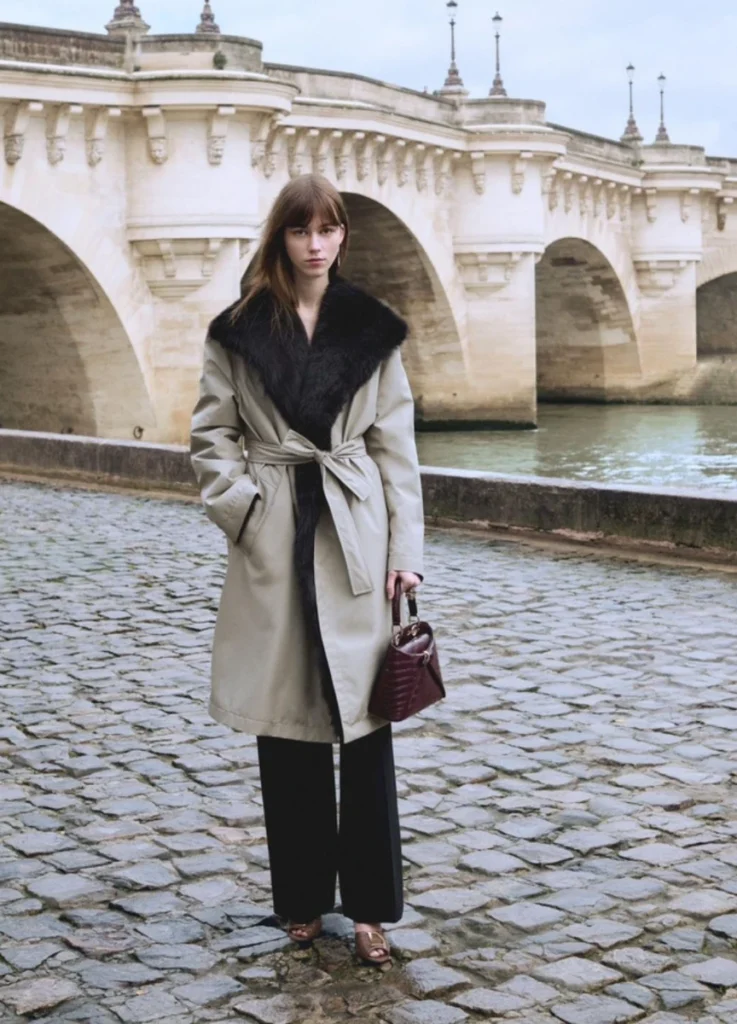
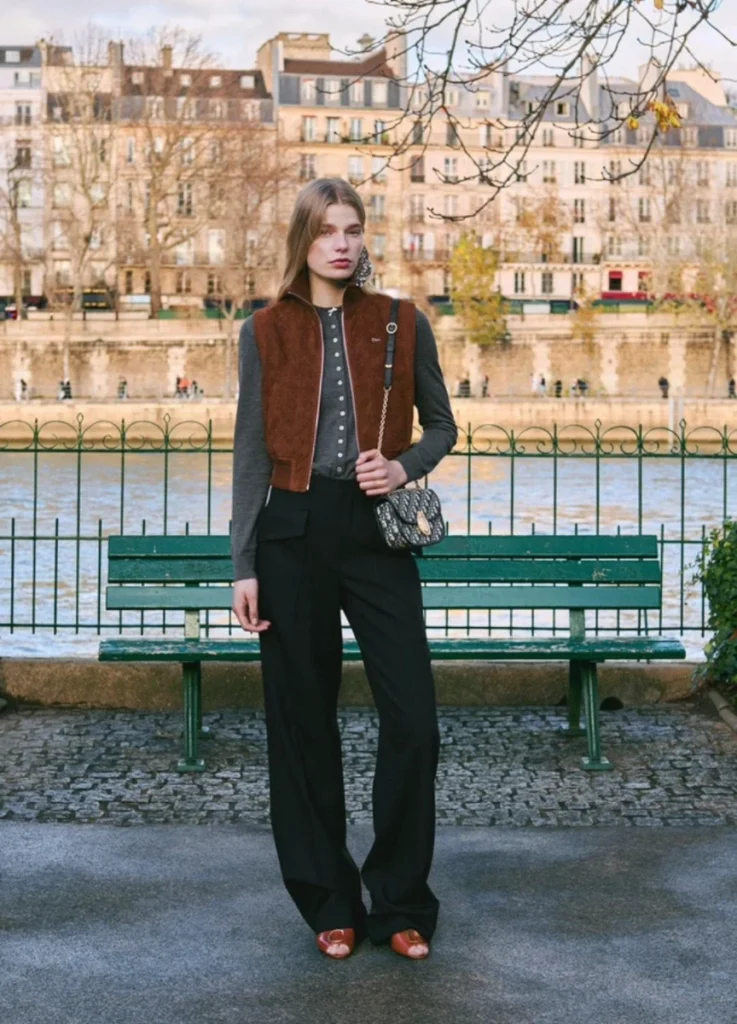
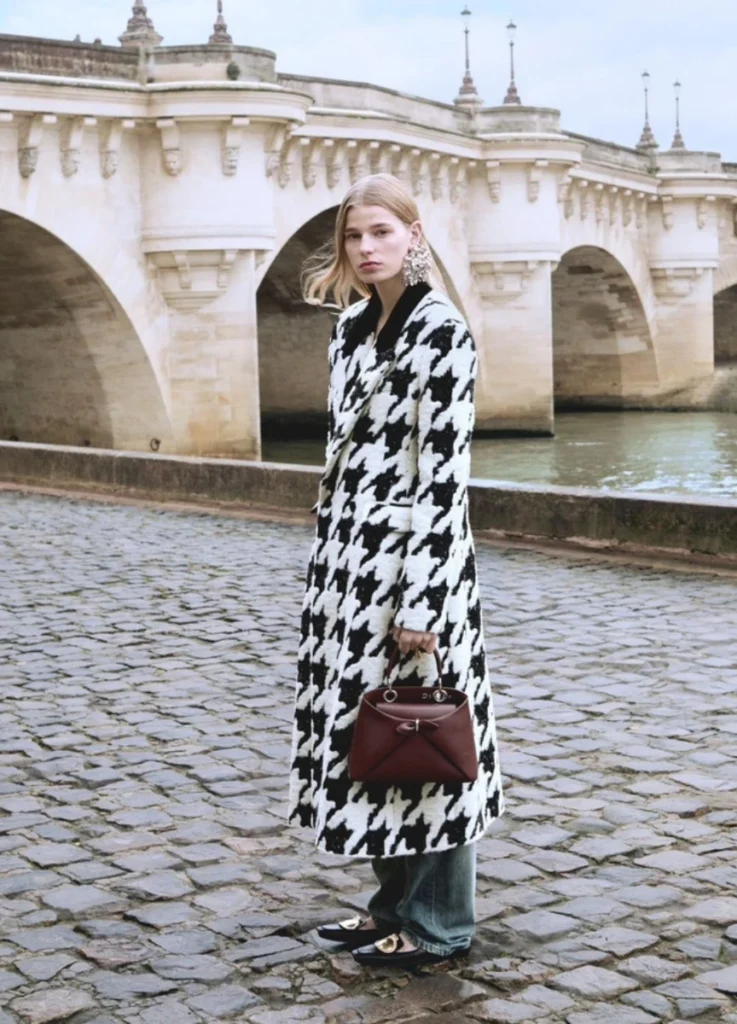
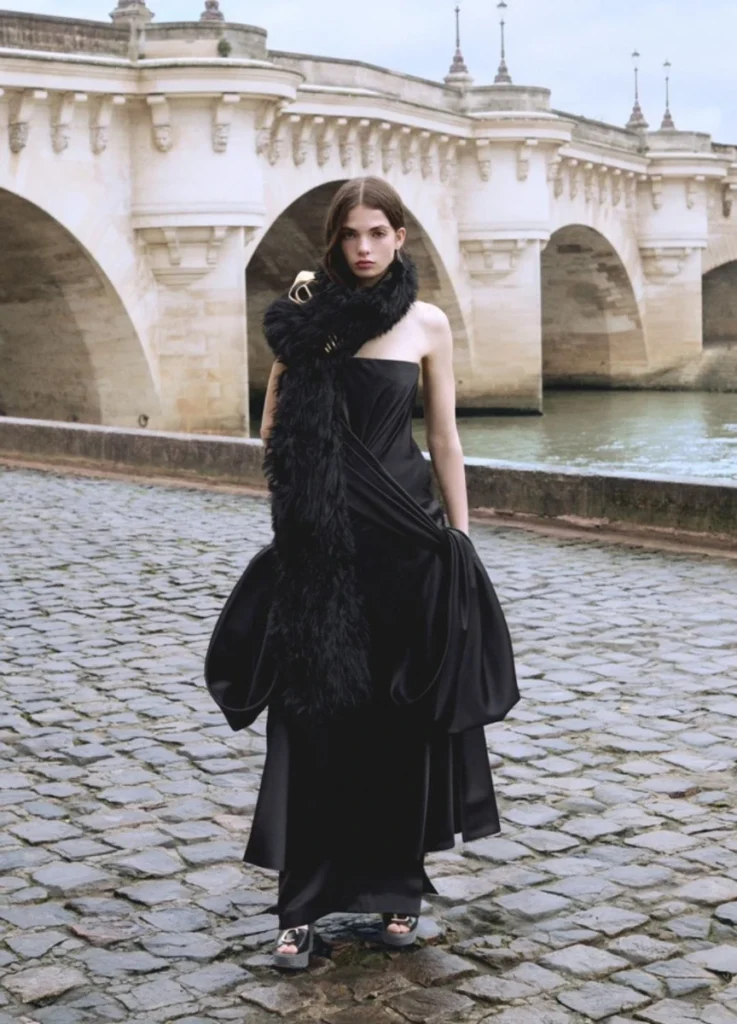
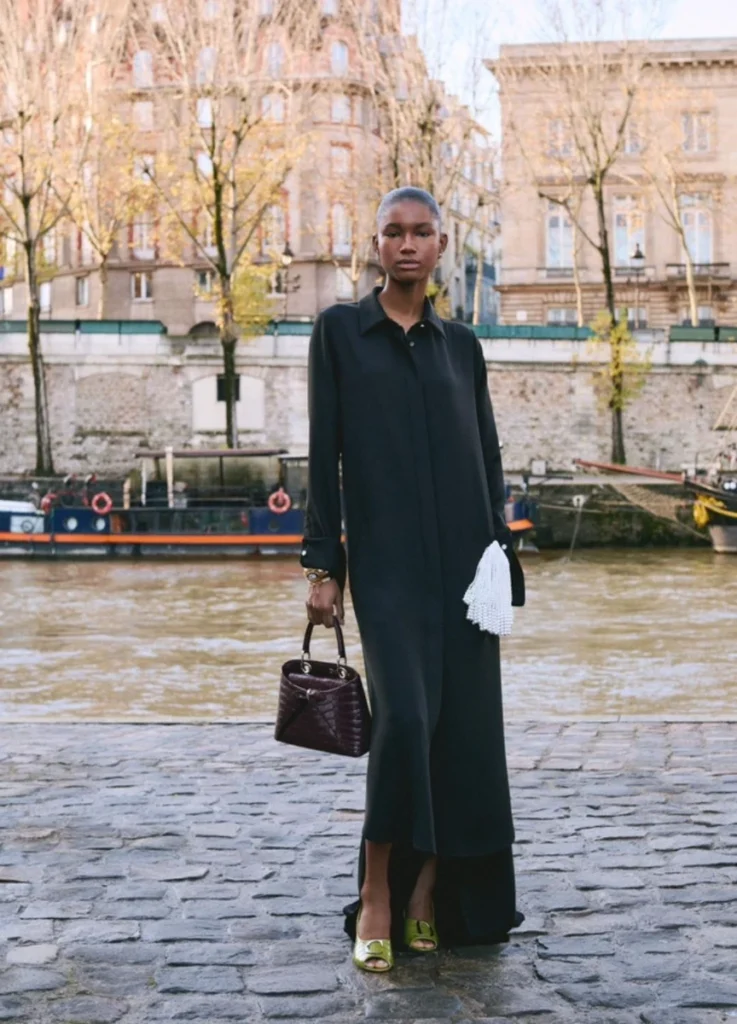
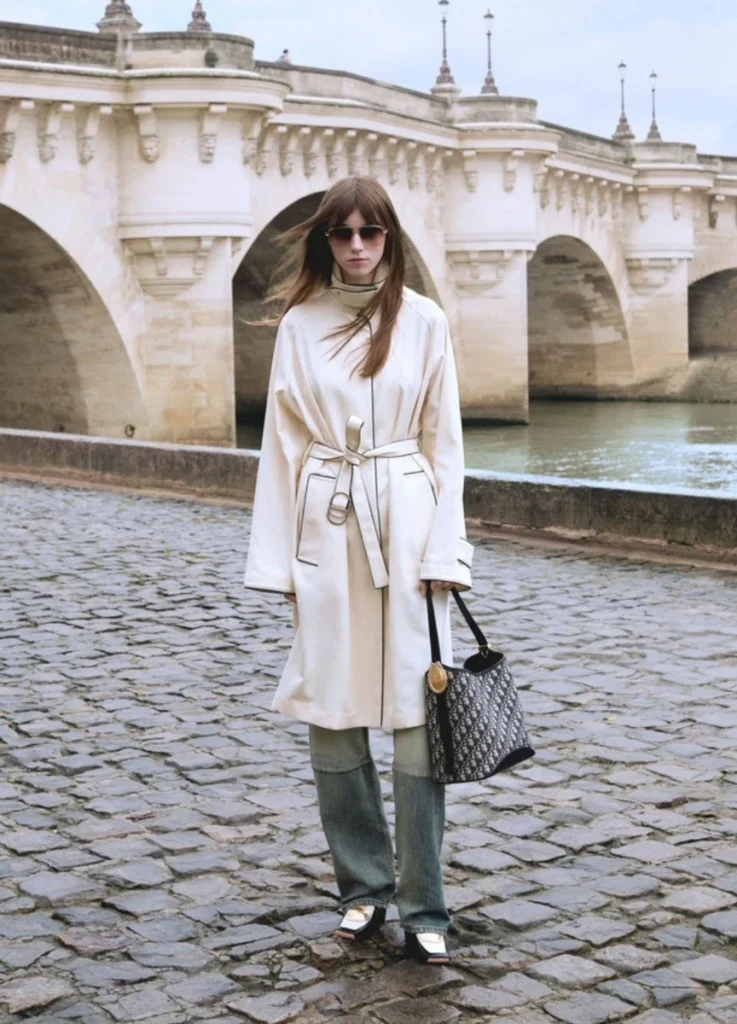
Jonathan Anderson’s second women’s collection for Dior was photographed along the Seine in early January 2026. Models walked and paused on Paris stone instead of processing down a runway, and the presentation looked less like a show and more like a sequence of lived moments. After Dior’s recent theatricality, the staging landed as a deliberate change of pace.
His SS26 women’s debut last October had already established the tone — a slow opening to the house, more vocabulary than statement. Pre-Fall 2026 continues the same exercise at greater length. The clothes return, deliberately, to clothes.
Anderson’s Frame │ Releasing Dior from Its Own Polish
Anderson’s stated framing for the season is the desire to release Dior from what he describes as its “stifling” quality — the condition of a house whose vocabulary had become too complete to move.
The stifling, as he uses the word, is not heritage itself. It is heritage when it has become too codified to evolve — too locked into a single posture of womanhood, a single grammar of femininity. Dior under Maria Grazia Chiuri, for all its commercial success, increasingly carried that weight. The clothes had begun to explain themselves.
Anderson’s reply is recalibration rather than rupture. He stays inside Dior’s continuum and edits from within. Instead of one Dior woman, the collection proposes Dior women, plural — different lives, different rhythms, the same structural language.
Plurality and the Shared Wardrobe
Pre-Fall 2026 is broader in scope than any recent Dior season. Tailored coats, tulle pieces, cocktail dresses, denim, trenches, and full evening silhouettes appear side by side without hierarchy. Each piece sits at the same level of weight; the absence of a single defining gesture is itself the point.
The breadth holds together because the underlying grammar holds together. Across categories, the proportions stay consistent: compact upper bodies, elongated lower bodies, suggested rather than cinched waists, midi lengths over full lengths, fluid fall over volume. The clothes speak different dialects, but the syntax is shared.
Anderson is using plurality as an argument against stylistic absolutism — the assumption that a house can carry only one woman, one silhouette, one decade.
Silhouette │ Line First, Ornament Later
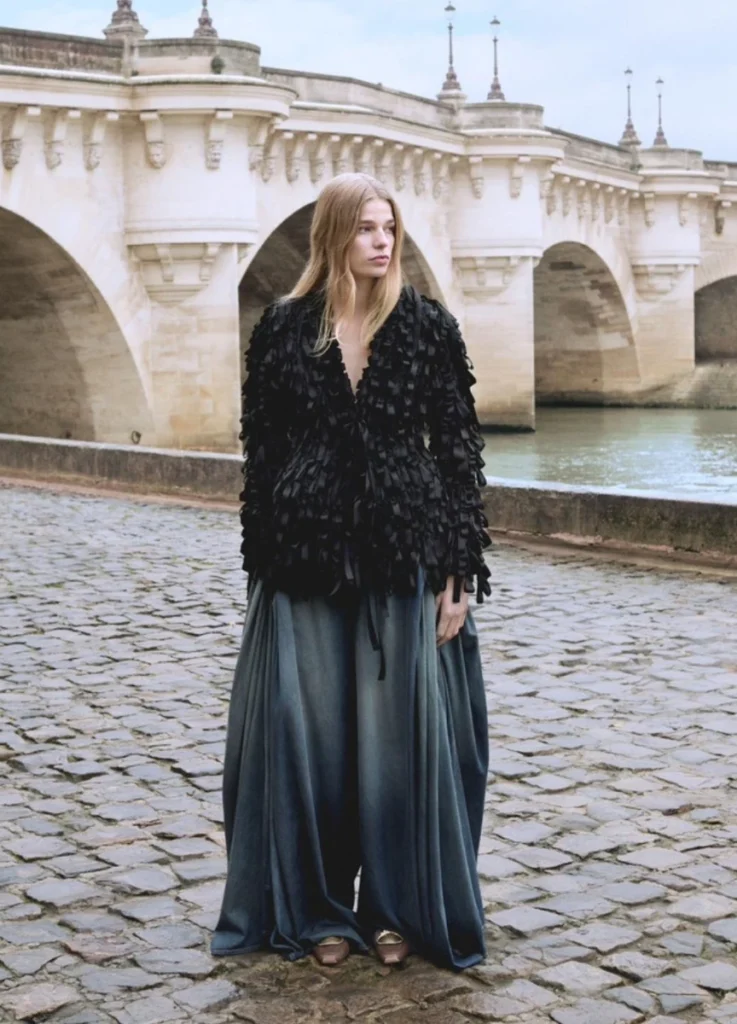
Silhouette is where the collection makes its most persuasive case. Waists are suggested rather than gripped. Shoulders carry shape without exaggeration. Trousers fall long and fluid; skirts pause deliberately below the calf. Jackets sit compact at the upper body; bottoms extend, opening a vertical conversation between the two halves.
The relationship between jacket and skirt has been quietly redrawn — shorter, controlled tops paired with elongated, flexible bottoms. It is a measured step away from the romantic excess Dior has explored in recent seasons. The body, in Anderson’s reading, is neither constrained nor idealised. It is accommodated.
Material │ Between Seasons, Without Drama
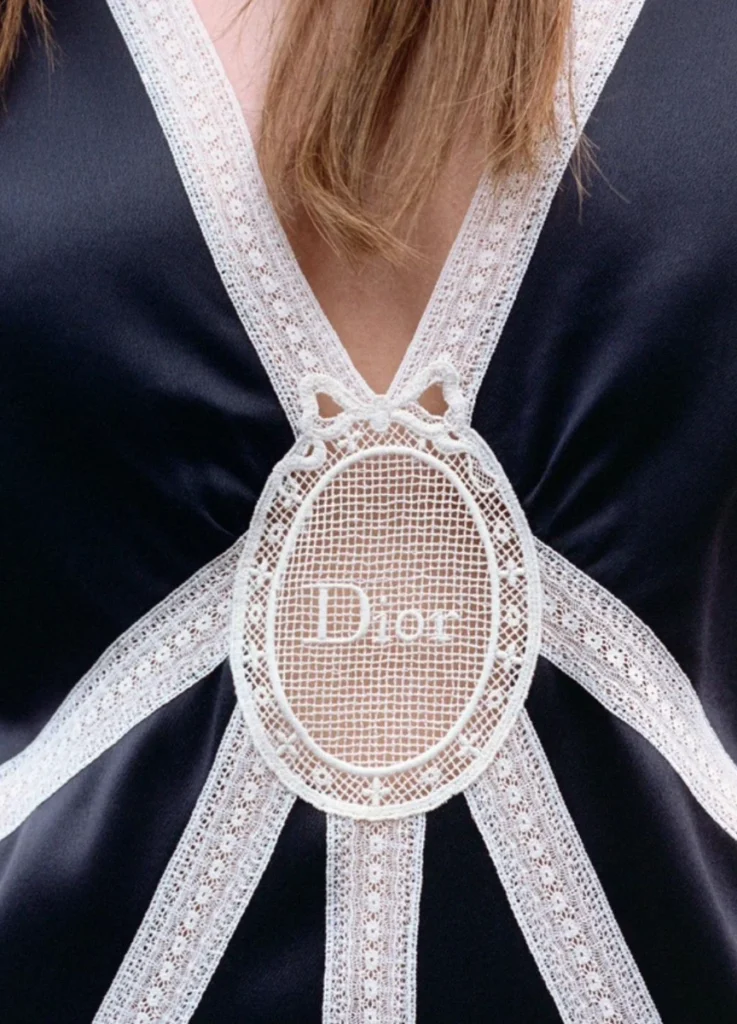
Pre-Fall lives between climates, and Anderson’s textile choices respect the ambiguity. Tweed, wool, fur, lace, silk satin, and denim all appear, and each is treated with restraint. Fur becomes a structural layer rather than a luxury cue; lace operates as texture rather than romance; even the white looks avoid brilliance, leaning toward winter-muted, Parisian greys.
The materials serve movement before they serve image.
Color │ Dior Neutrals Reconsidered
The palette runs through black, ivory, grey, khaki, and brown, with yellow, blue, and green appearing sparingly and always tonally subdued. The yellow dress works through density rather than brightness. It holds space without demanding attention. Color here supports silhouette; it does not compete with it.
The Bar Jacket, Released
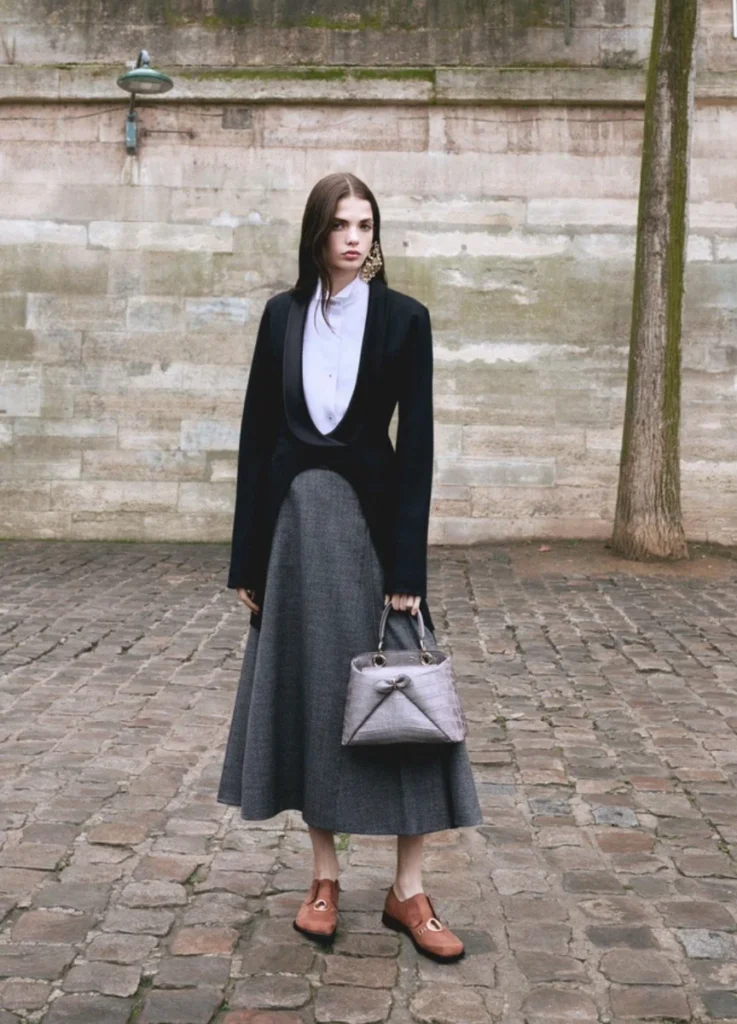
The Bar jacket is everywhere in this collection, and almost nowhere as the icon Dior collectors recognise. No tightly cinched waists. No forced hourglass. The stitching loosens. The cut hovers between jacket and blazer. Several are worn open, layered casually, occasionally without a shirt underneath.
The piece moves from emblem to wardrobe item — less ceremonial, more usable. The Bar shifts from archive to closet.
For a house whose central garment has carried so much symbolic weight, the relaxation is a meaningful gesture. Anderson is not retiring the Bar. He is letting it breathe.
Denim │ The Most Contemporary Gesture
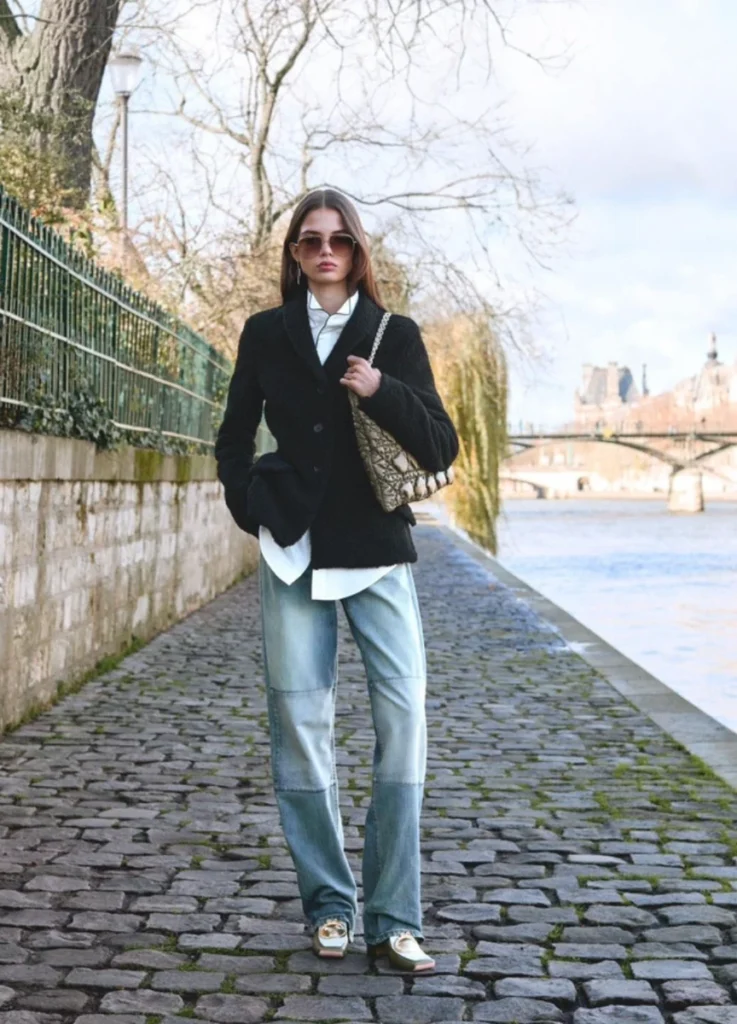
Denim is the season’s most visible departure. The approach starts from a familiar five-pocket outline and expands sideways with couture volume. Wide, sculptural denim trousers — almost skirt-like in their fullness — anchored the Seine staging. They photograph as ordinary jeans from the front; the volume reveals itself only in profile and motion.
The volumetric logic borrows from Dior’s couture vocabulary of sculptural lateral fullness and applies it to a streetwear pattern — couture mass on a casual silhouette.
Street, but haute. Ordinary, made strange.
It is the clearest directional signal in the collection. Anderson’s Dior may be designed less for the runway than for the walk afterwards.
Bias Cut │ A Quieter Technique Returns
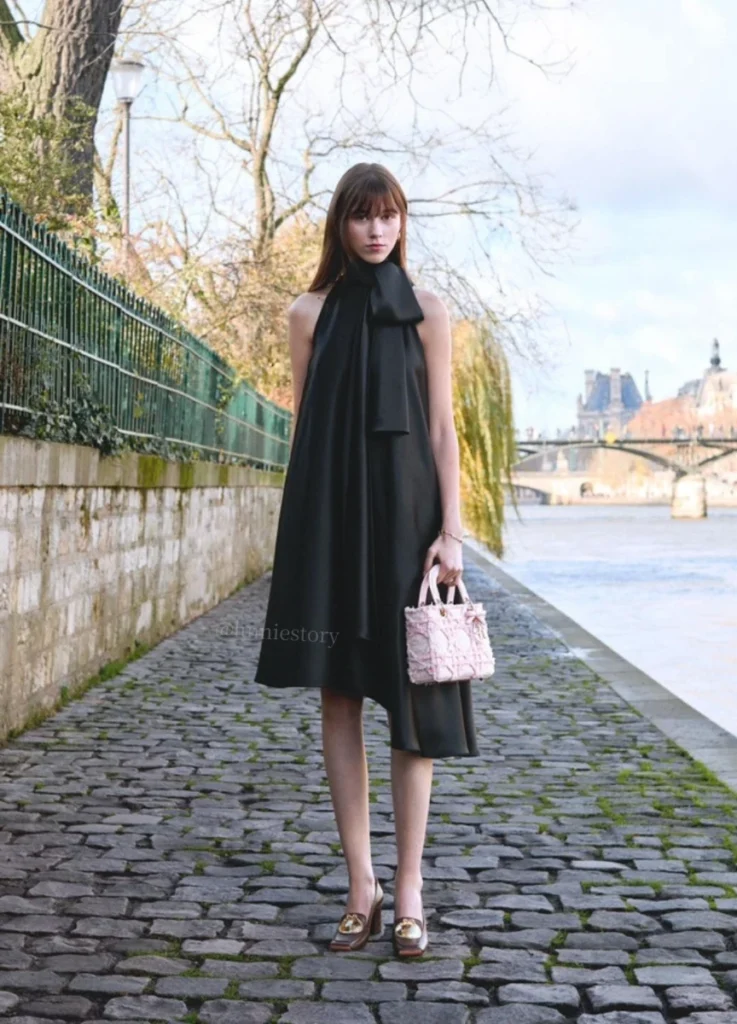
Anderson positions himself within Dior’s continuum, not against it. Bias cut returns more visibly than it has in some seasons, most clearly in the slip dresses and the sequin pieces. The technique sat at the centre of the house most theatrically under John Galliano and has surfaced more selectively since; Anderson handles it differently again. The dresses skim the body without announcing their construction. The technique is present but discreet. The result is sensual without display.
Jewellery and Objects │ Anderson After Loewe
The accessories are quieter than the runway clothes, and richer for it.
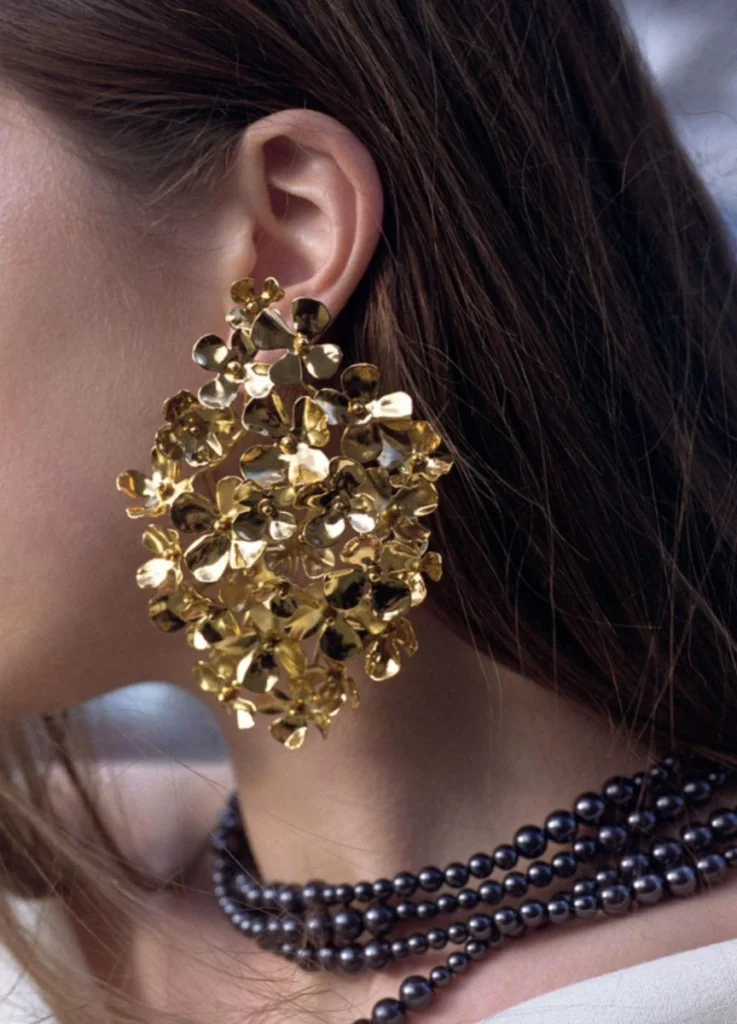
Large metal floral earrings. Mixed-media constructions combining crystal, cabochon pearl, and metal bows. Rings with mechanical interiors that open to reveal small objects. These are not embellishments — they argue for tactility, for the idea that a house should be touched as well as observed. Anderson’s Loewe instincts (object-making, material curiosity, the small surprising detail) are fully present. The Dior accessories department, long a steady commercial engine, is being asked to do something more interesting.
Six Looks That Carry the Collection
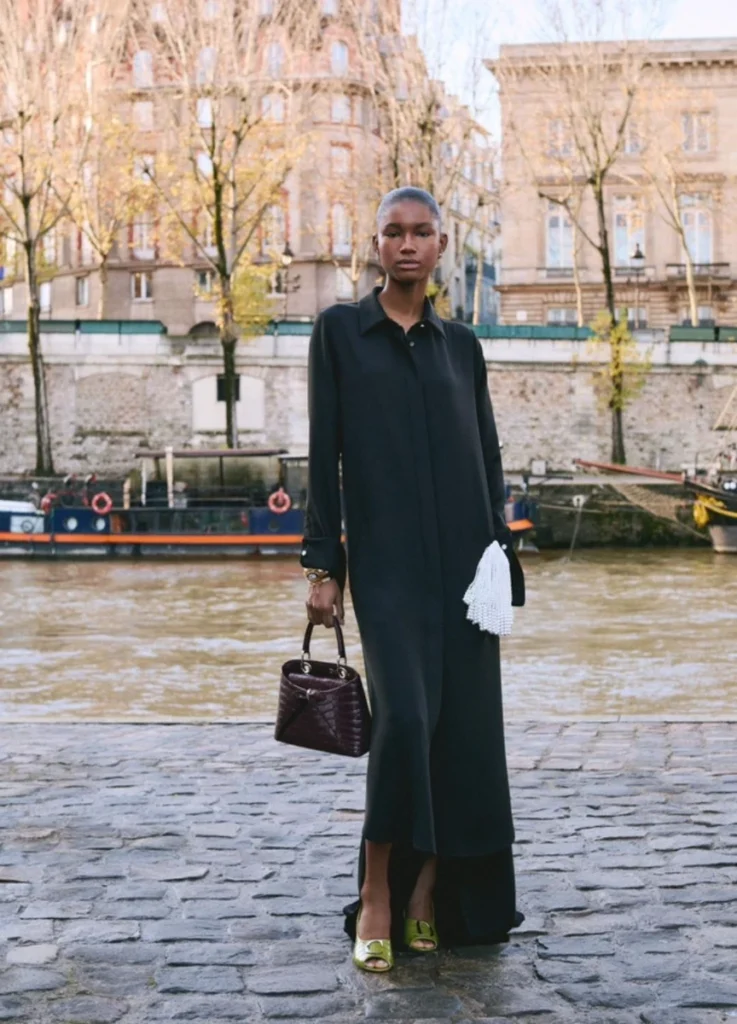
Look 82 │ Black Dress with Pearl Detail
The piece Dior still does best. Ornament reduced, drama reduced, and the tension between satin and pearl reads as instantly Dior. Wearable but not casual. A look that translates easily into editorial.
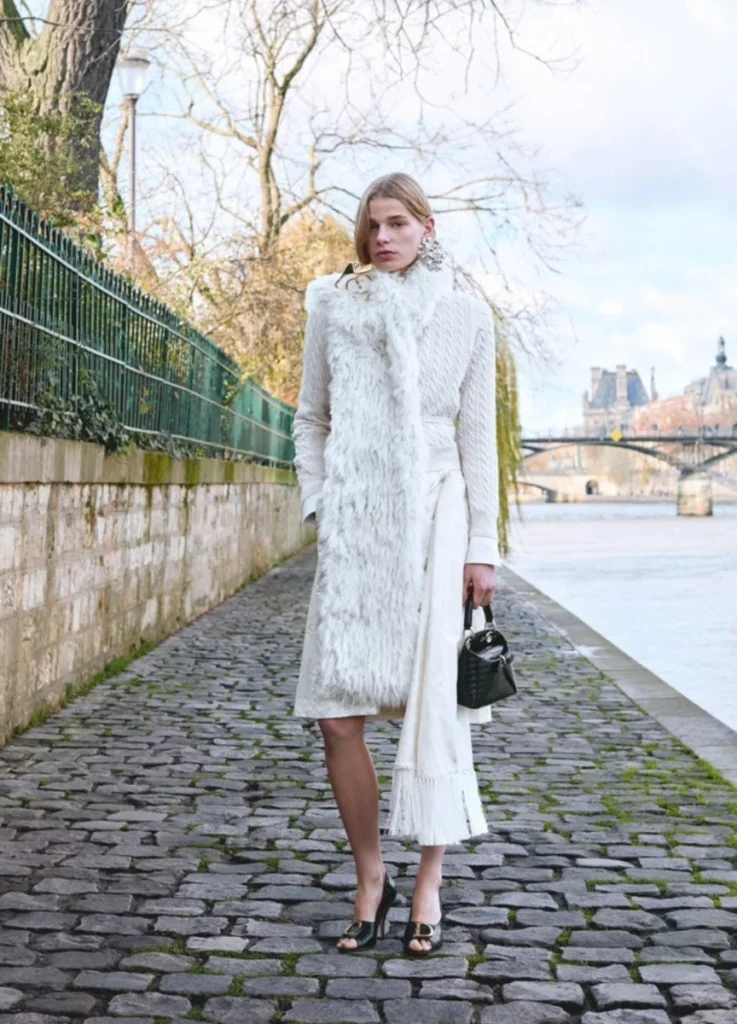
Look 15 │ Fur-Layered White Dress
Fur used as structural layer rather than warmth signal. The white dress underneath holds a clean line; the fur sits over it as protection rather than ornament. The femininity is wrapped rather than displayed.
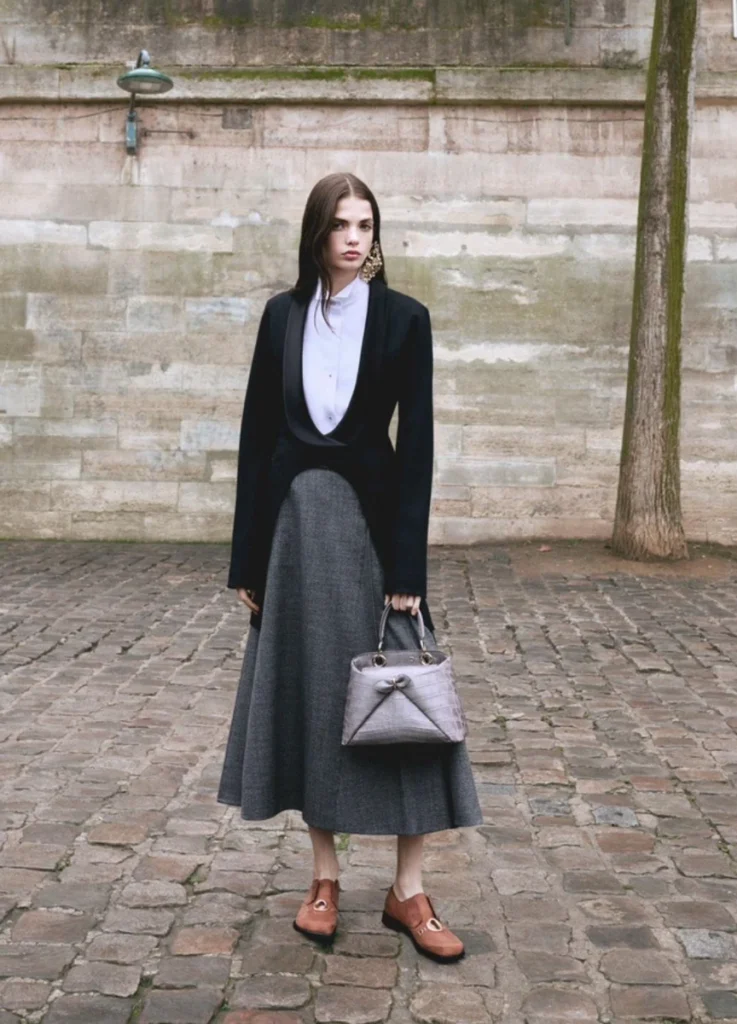
Look 9 │ Bar-Adjacent Tailored Ensemble
Not a literal Bar jacket, but the proportions read clearly: contained shoulder, suggested waist, calibrated balance with the skirt. The textbook reference for Anderson’s Dior tailoring this season — and the easiest entry point for a long-time client into the new vocabulary.
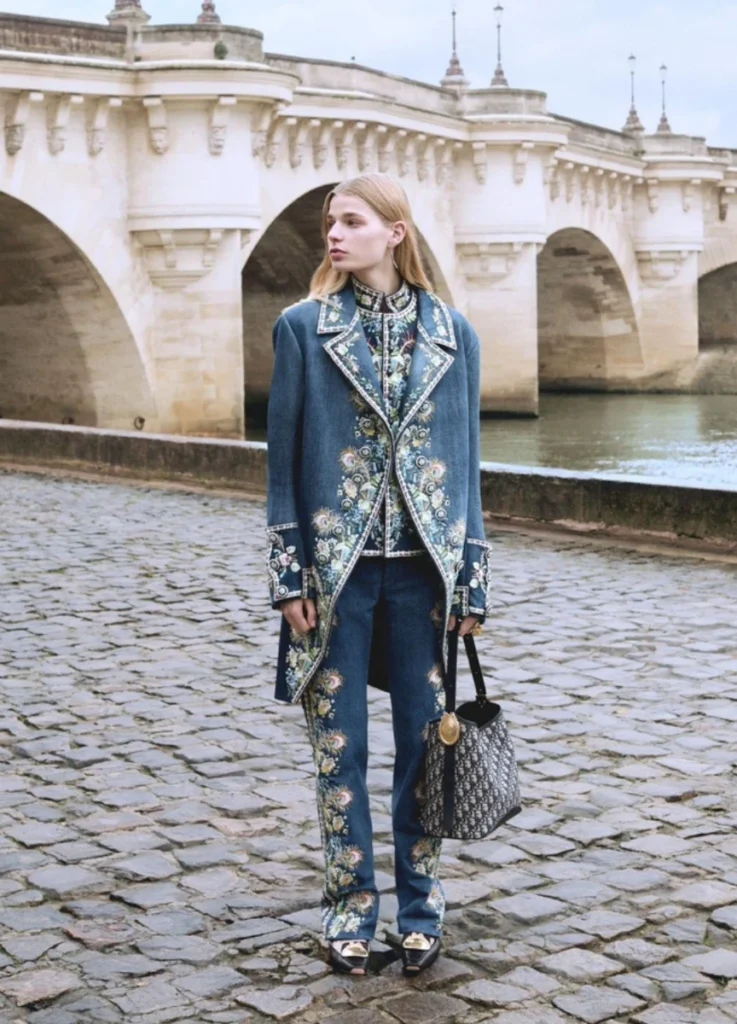
Look 13 │ Embroidered Jacket and Denim
Couture-grade embroidery on an ordinary jacket worn with denim. The gesture that articulates Anderson’s Dior more clearly than anything else on the runway — high craft brought down to a daily silhouette without losing its weight.
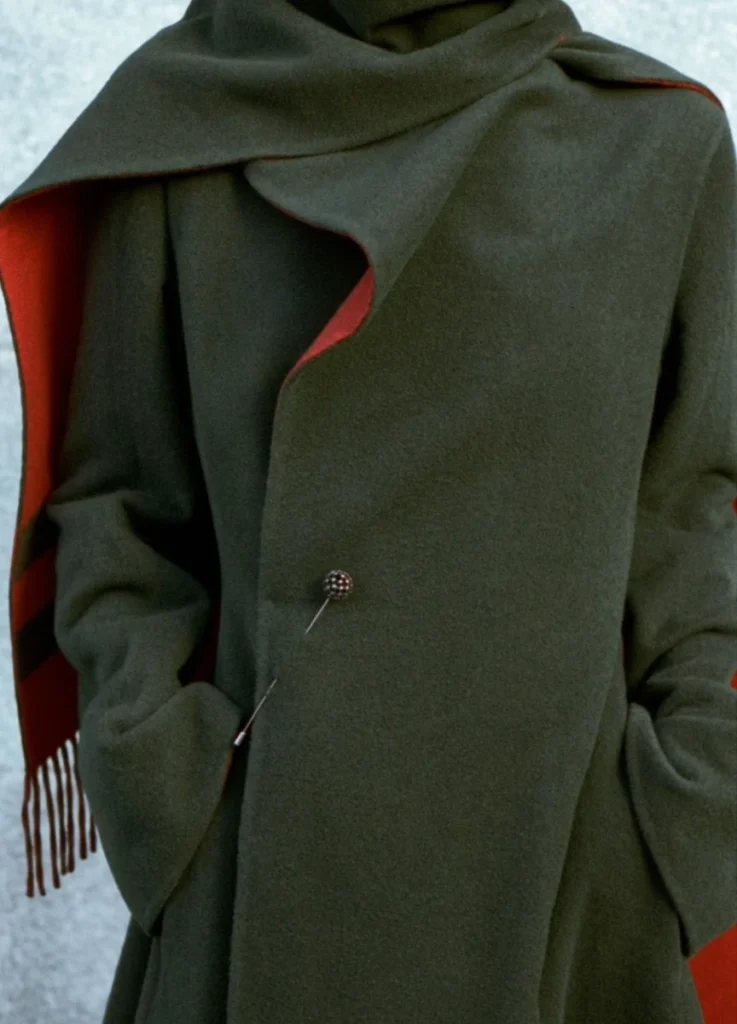
Look 32 │ Green Coat
A colour landing somewhere between khaki and forest green, the kind of muted seasonal tone that takes careful handling. Anderson uses it as ground rather than feature, which is exactly where it sits best.
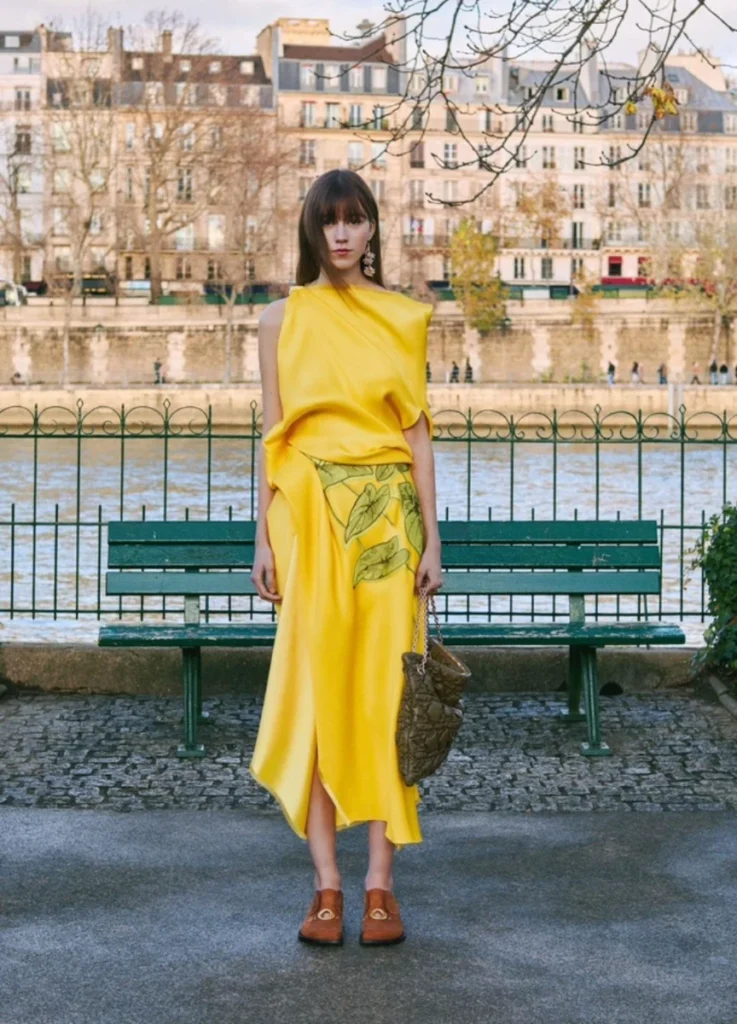
Look 86 │ Yellow Dress
The collection’s emotional climax, but quietly. Density of pigment rather than brightness. The yellow holds the room without theatricalising. Mature romance, rather than girlish brightness.
Industry Reception
Coverage of Pre-Fall 2026 ran toward measured approval rather than headline drama. Reviews in Vogue, WWD, and The Business of Fashion were broadly positive in tone, describing the collection as a return to wearable balance and structural clarity — a season of clarification rather than radical innovation. The Couture debut later in the same month was widely identified as the more significant test ahead.
The criticism, where it appeared, focused on the staging itself. Readers used to Dior’s recent theatricality found the Seine setting under-eventful.
Why the Collection Lingers
Pre-Fall 2026 is not built for instant impact. It does not chase virality, theatrical climax, or single-image dominance. It still holds attention. The clothes never overpower the wearer. They move at human speed. They leave room for the life happening inside them.
This is the collection that may grow stronger with distance — when revisited, when individual pieces start appearing in editorial, when it is remembered not as a debut spectacle but as a rhythm. Anderson’s Dior is being built slowly. The next test, his first Couture for the house, follows close behind.
For now, what the Seine showed was a house stepping back just enough to let the person inside the clothes remain at the centre.
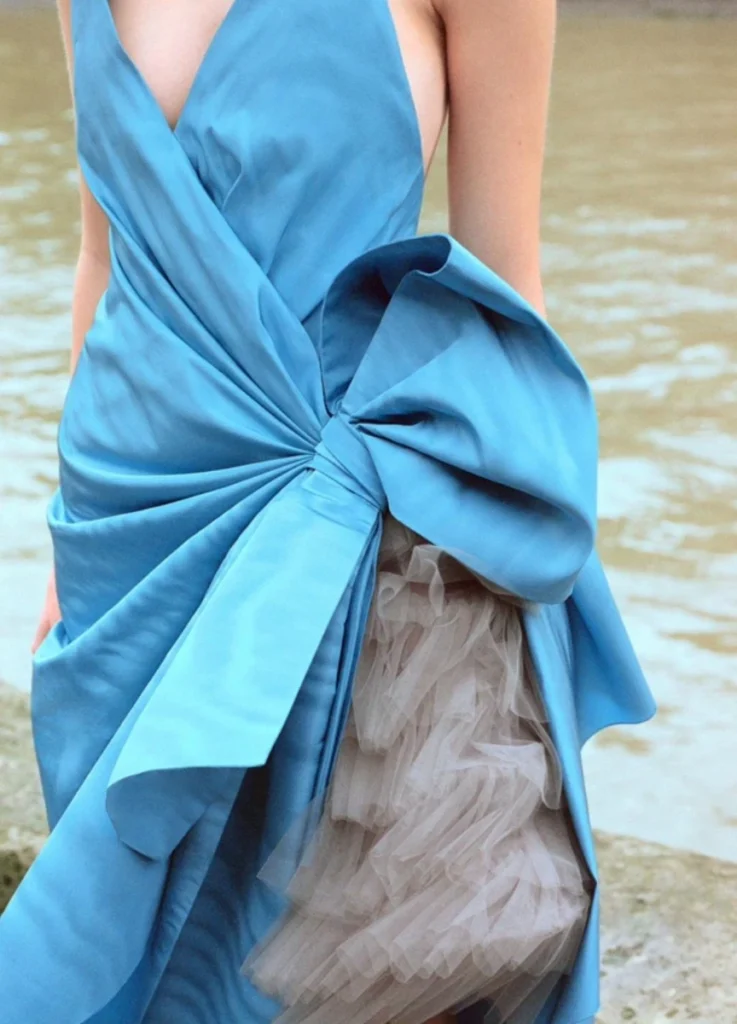
All images referenced in this post are drawn from Vogue Runway.
[ Related Editorials ]