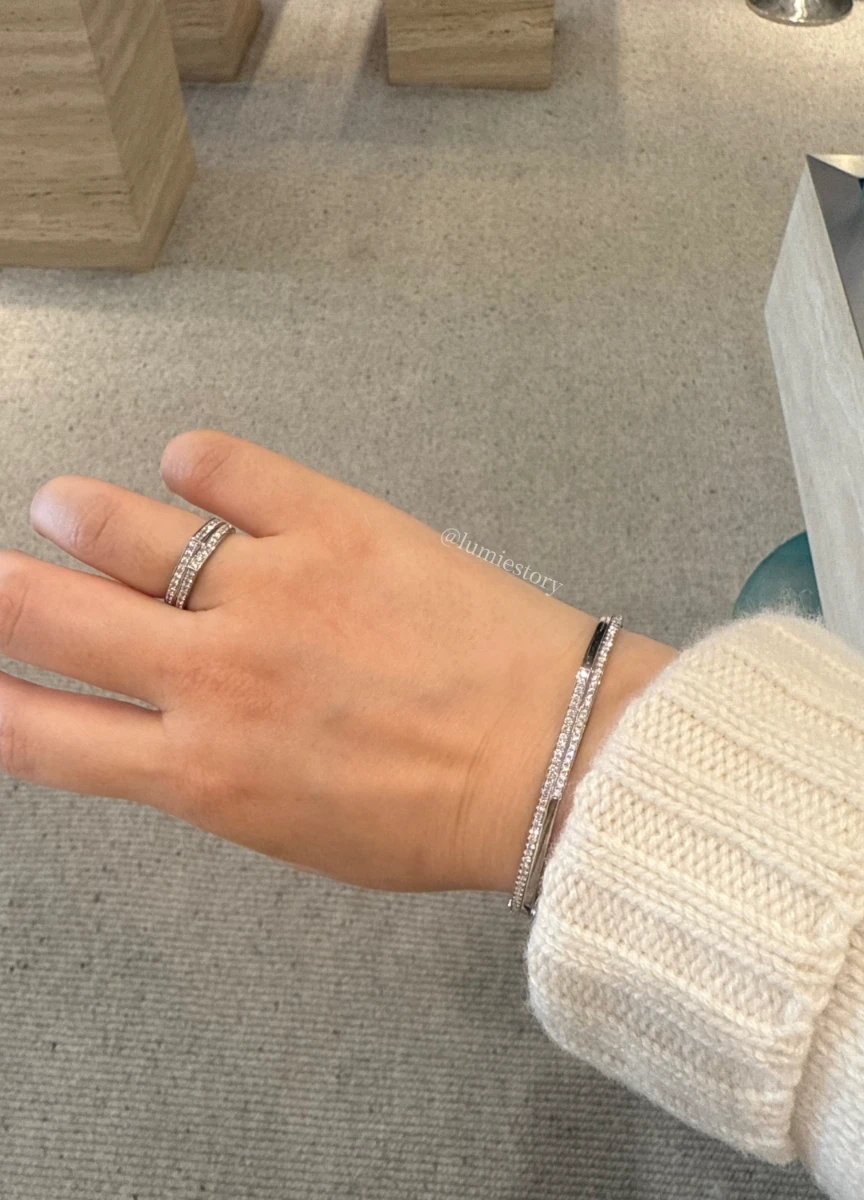
Jewelry That Reads as Structure
Most jewelry is designed to be admired. Repossi Antifer does something different — it reorganizes everything around it.
The collection is often described as “layerable.” That description is accurate but incomplete. Antifer’s real identity sits in structure, not in stacking.
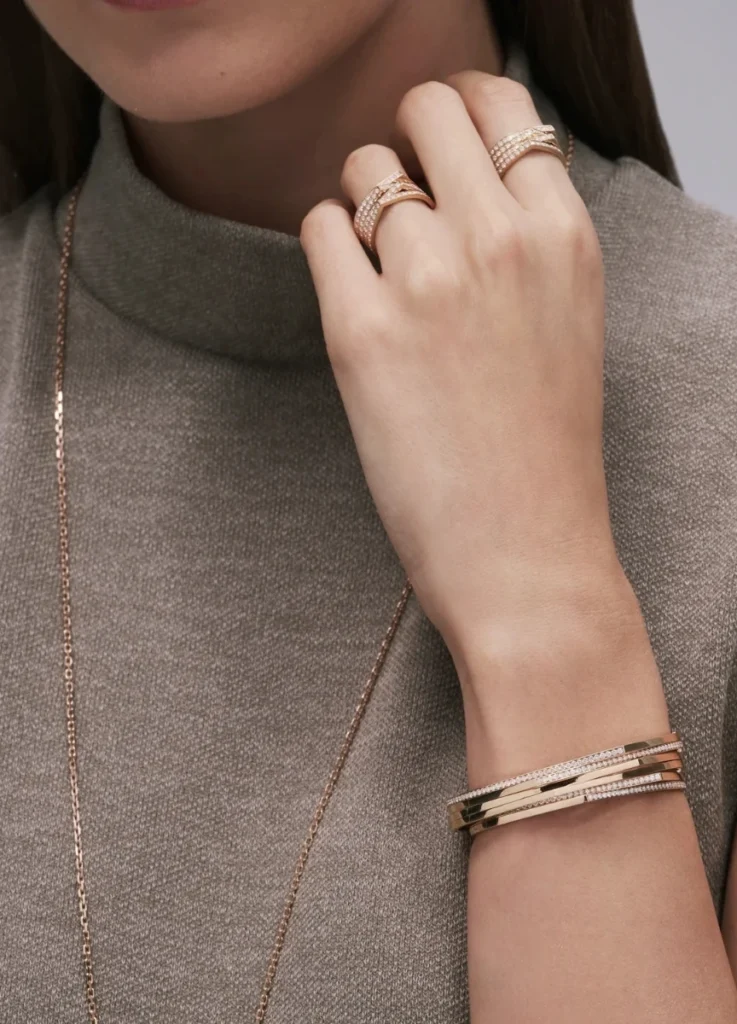
source: repossi.com
About Repossi
Repossi is a Paris-based fine jewelry house with roots in Italy, now established on Place Vendôme. Under Gaia Repossi’s direction, the brand has moved away from traditional ornamental language toward something architectural.
This is unusual for a house with Italian origins. Italian fine jewelry — Bulgari, Buccellati, Pomellato — has historically leaned toward volume, color, and decorative density. Repossi moves in the opposite direction.
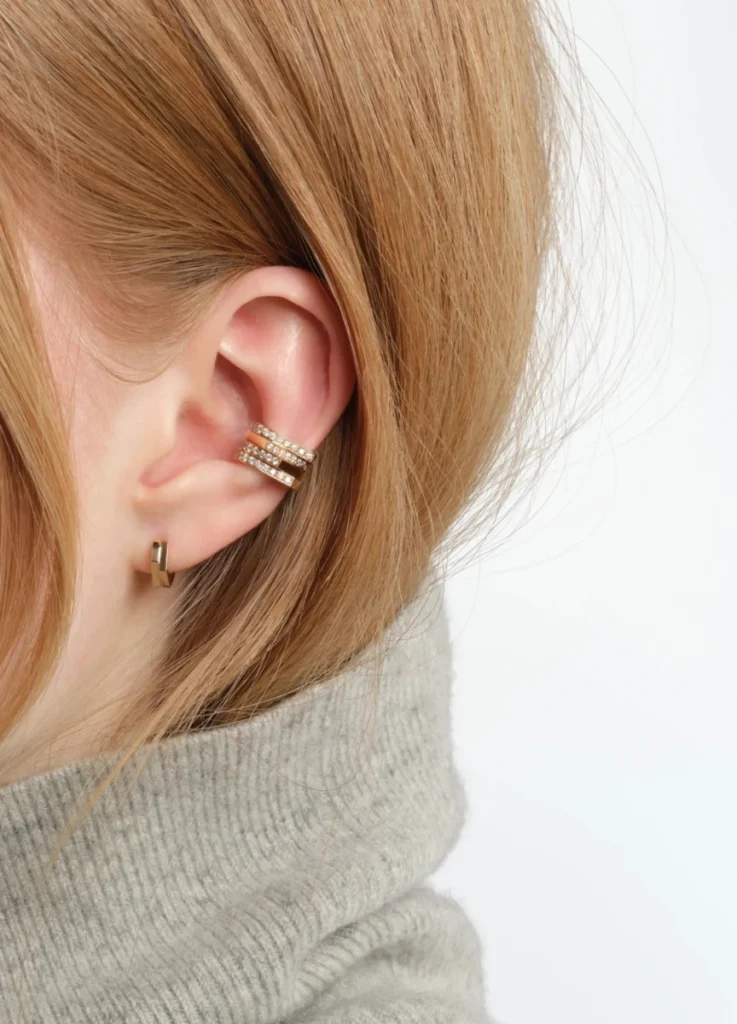
source: repossi.com
The reason sits largely in Gaia Repossi’s background. She studied painting at the Beaux-Arts de Paris and holds a master’s degree in archaeology — entering jewelry not through the gemstone trade but through contemporary art and architecture. The Italian atelier craftsmanship remains, but the design language is rooted in Bauhaus, Brutalism, and modern sculpture.
The result: Italian making, Parisian thinking.
Rather than relying on volume or surface brilliance, Repossi works with line, spacing, and tension. Diamonds are present, but rarely the main event. What defines a Repossi piece is how it occupies space — how it cuts across the body, how it creates direction, and how it holds or releases visual weight.
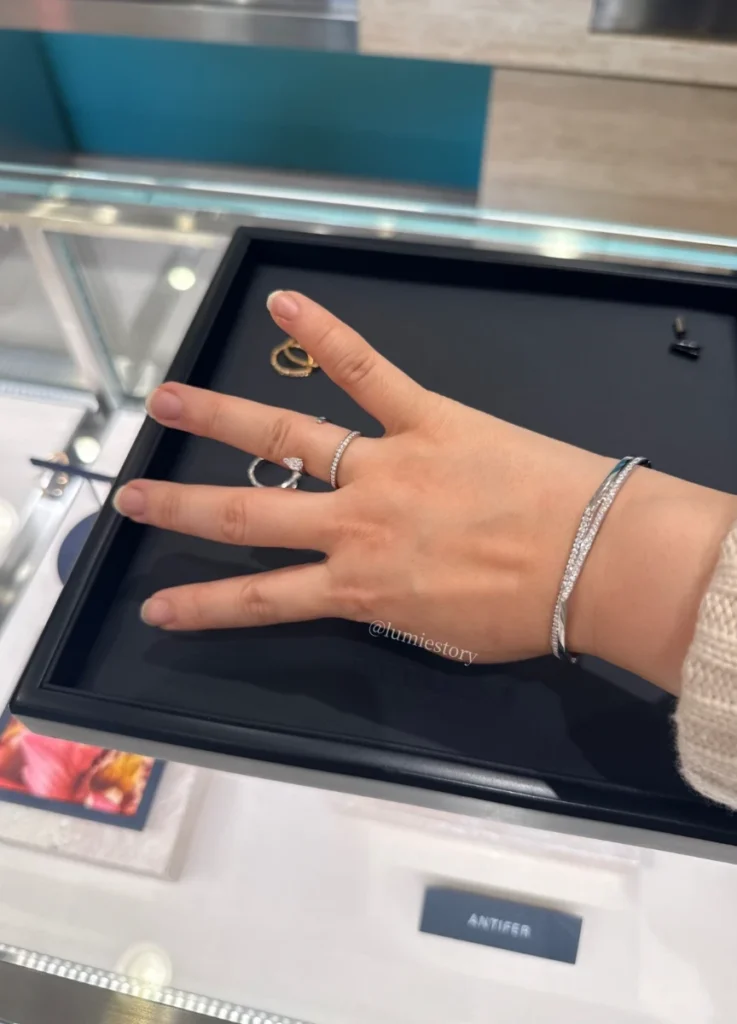
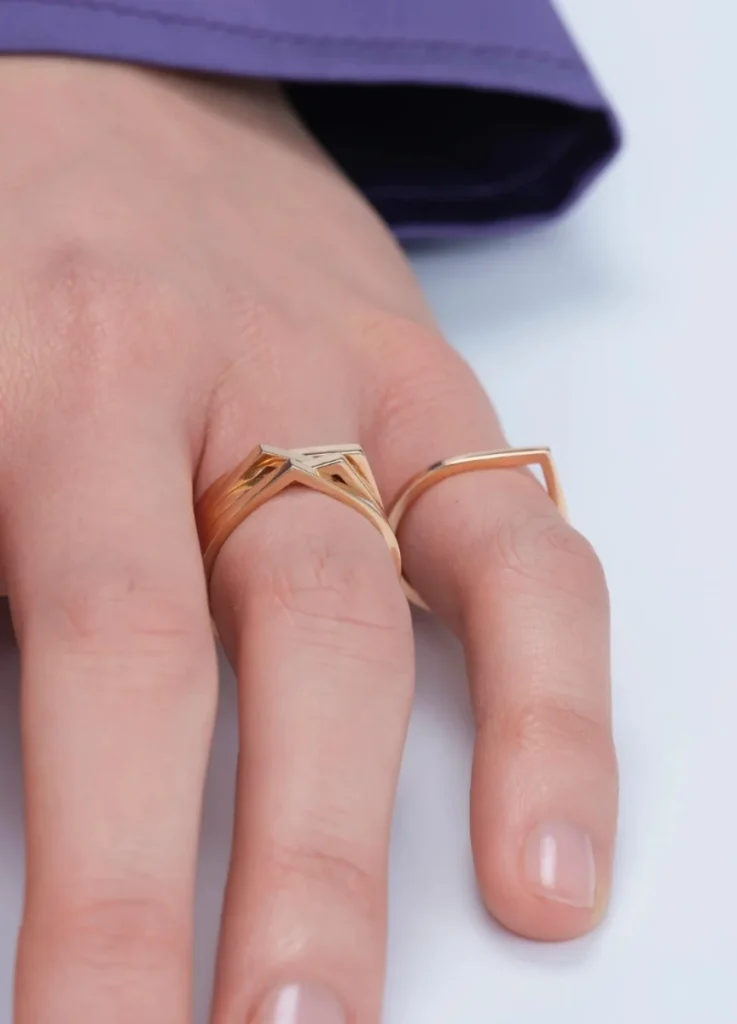
The Antifer collection is the clearest expression of that philosophy. Instead of symmetry and closure, it introduces a subtle peak that disrupts the perfect circle. That single disruption changes the structure.
source: repossi.com
The Antifer Principle: Direction Over Surface
A traditional ring wraps the finger in a continuous horizontal loop. Antifer interrupts that continuity.
By introducing a peak — an angular deviation from the circular band — it creates direction. The eye no longer moves around the finger. It moves across it.
On the hand, the effects are specific:
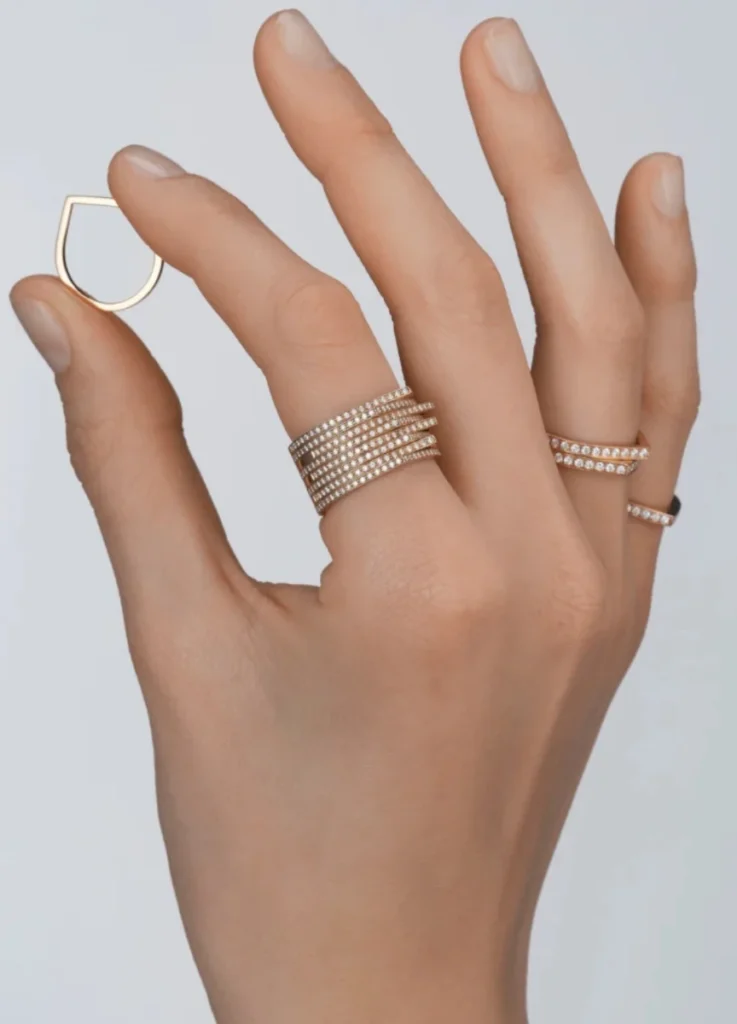
The finger appears longer and more defined. The hand gains structure. And diamonds, when present, register as a line rather than a surface.
Even in full pavé, Antifer rarely feels decorative. The brilliance follows orientation, not area.
source: repossi.com
Antifer Rings
One line, two lines, and the point where structure becomes object
1. The Single-Line Ring — The Most Essential Form
The single-line ring is where the Antifer concept is most clearly expressed. A thin band, interrupted by a peak. Nothing more.
Minimal, but directional.
Unlike a conventional thin band that tends to recede into the background, the single line holds its presence. The peak creates a tension that keeps the eye engaged.
Worn alone, the ring leaves a single line on the hand. It accompanies rather than dominates — but it never disappears.
source: repossi.com
Best suited for:
- Hands that are not overly angular or bony
- Medium-length fingers
- Minimalist styling approaches
The purest entry point into the collection.
source: repossi.com
2. Layering Two Single Rings — Where Sensitivity Matters Most
Two single-line rings together — often seen as the most “fashion-forward” option. In practice, the most technically demanding.
Two lines need to read as one movement.
The key lies in spacing and alignment. Too close, and they merge into a single thick band. Too far apart, and the structure breaks. The ideal: a slight gap, with a subtle deviation in angle. Enough difference to prevent redundancy. Enough similarity to maintain flow.
When done correctly, the result is a rhythm across the finger.
Recommended placement:
- Middle or ring finger
- Avoid perfect parallel alignment
One practical note: two single rings purchased separately often cost more than a double-line ring. Consider the composition before buying — if the goal is a paired look, the double-line may be the more rational purchase.
source: repossi.com
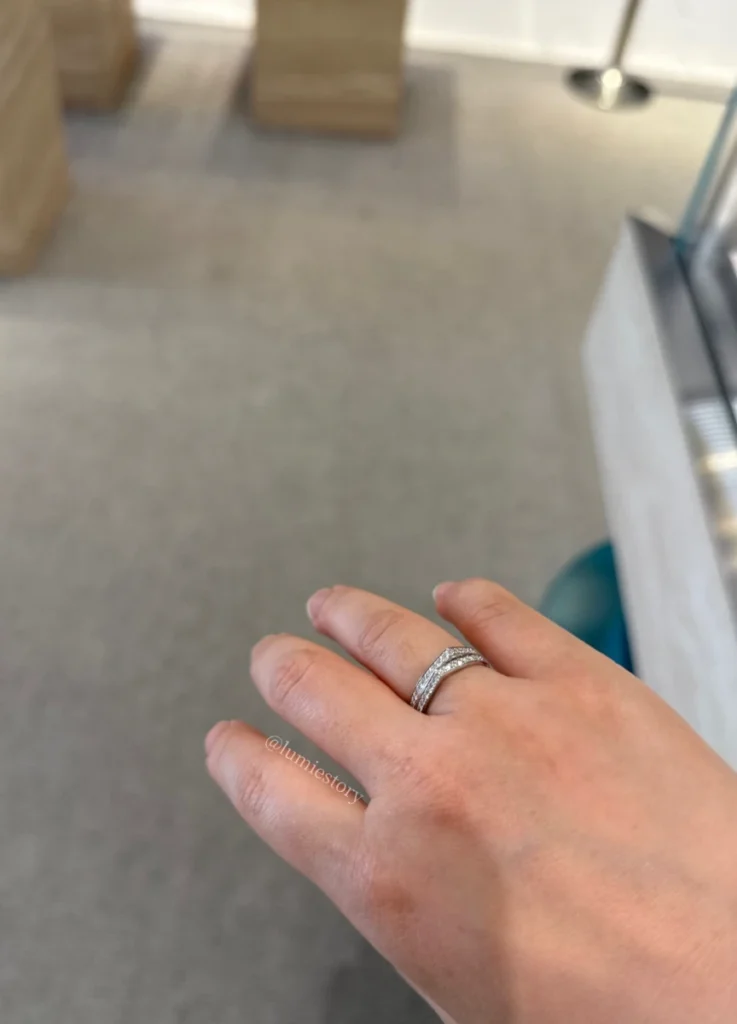
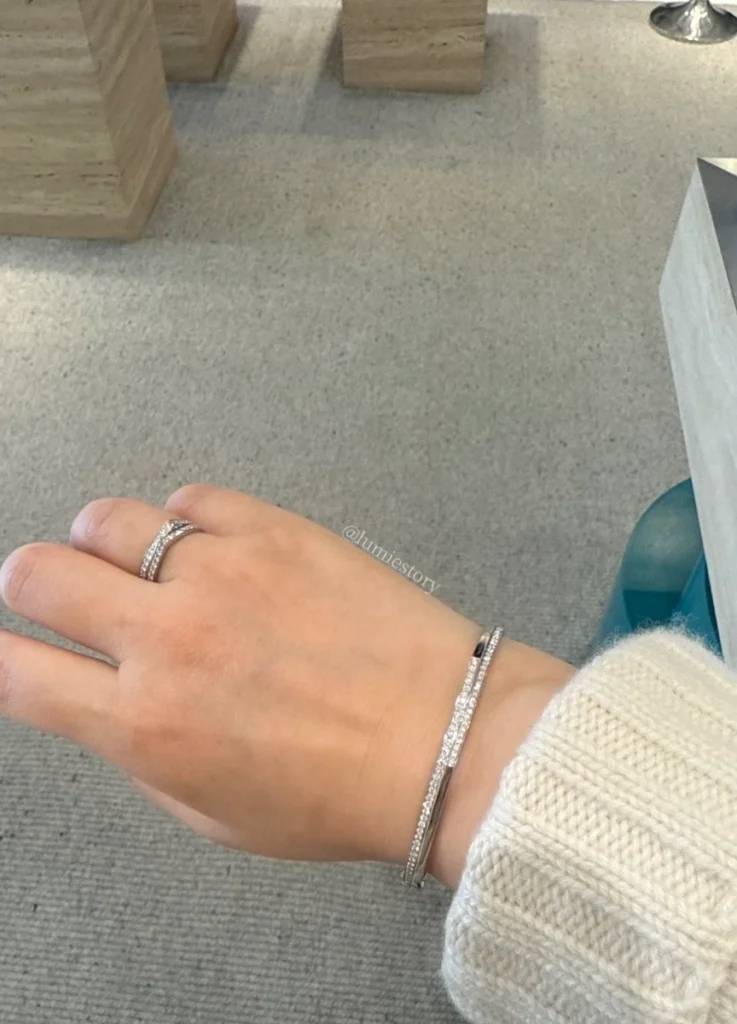
3. The Double-Line Ring — The Most Balanced Choice
The double-line ring is the easiest to recommend across the Antifer lineup.
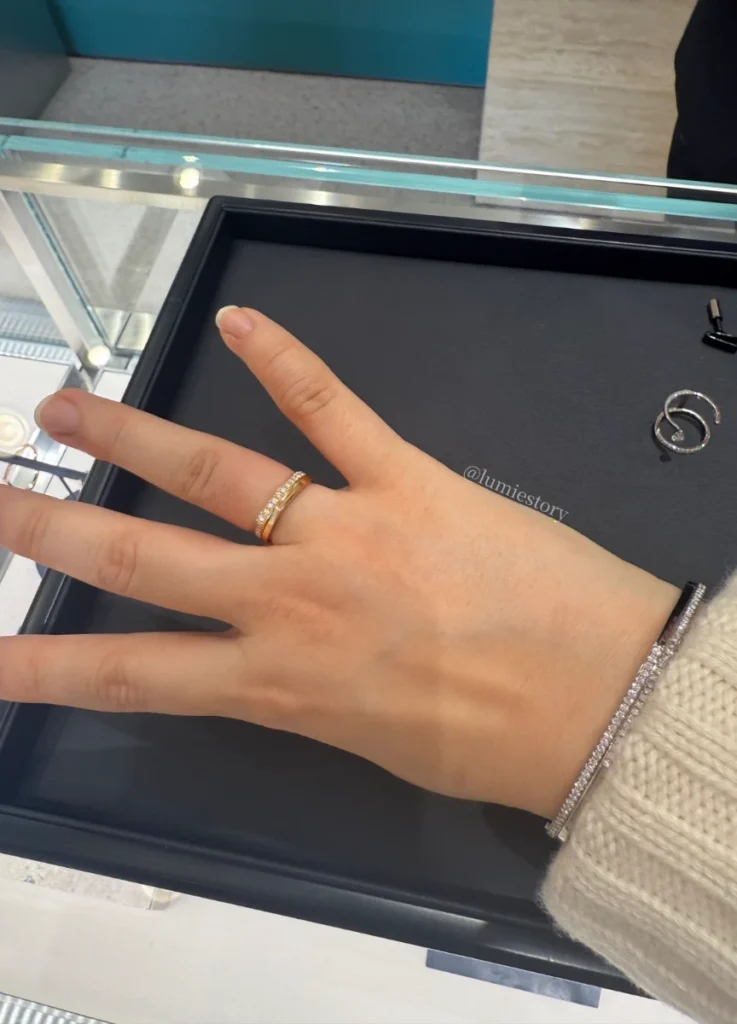
It retains the directional quality of the single line while carrying enough visual weight to stand alone. The two lines are calibrated to function as a single structure — and that distinction matters.
Where layered singles rely on the wearer’s sensitivity to spacing and angle, the double-line arrives already composed. The margin of error disappears.
Strengths:
- Complete on its own
- Balanced on the hand
- Integrates well with bracelets
For daily wear with consistent identity, the most practical and reliable choice.
The critical advantage: on the finger, the double-line reads as one structure, not two separate lines. Layered singles offer the pleasure of composition. The double-line offers built-in equilibrium.
source: repossi.com
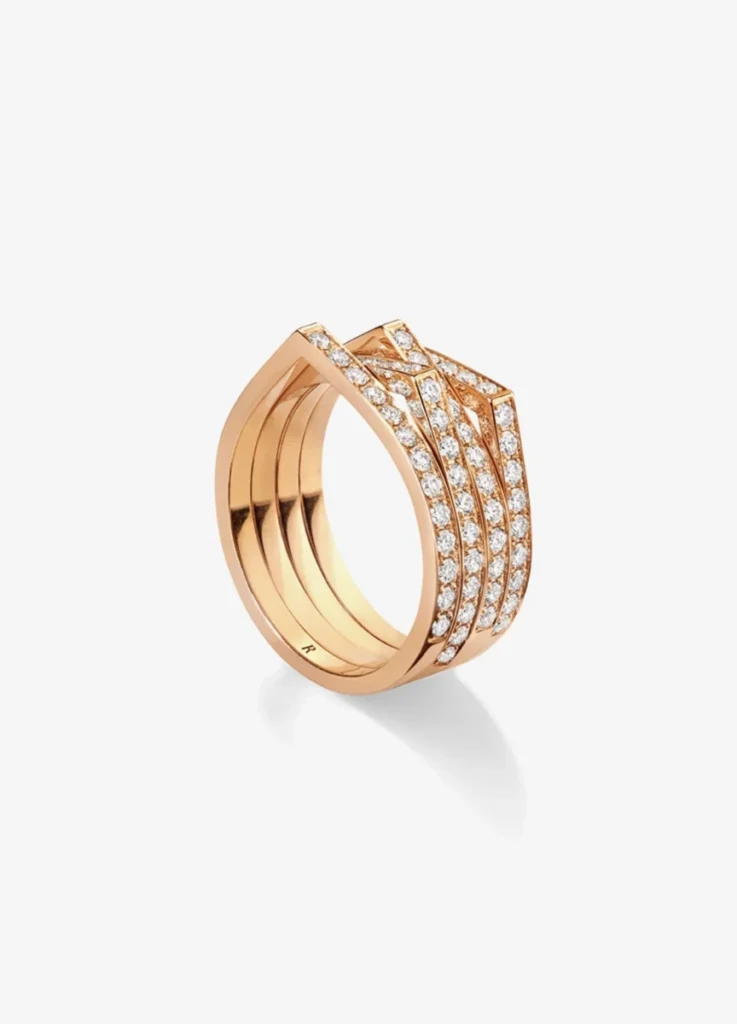
4. Multi-Line Rings (Three Rows and Beyond) — Where Jewelry Becomes Object
At three rows and above, the character shifts.
The ring is no longer a line. It becomes a surface — a structure that occupies space as an object rather than an accent.
Presence is strong. Standalone completeness is high. But the ring claims significant real estate on the hand.

source: repossi.com
On smaller or rounder hands, the structure can collapse visually, registering as mass rather than tension.
A declarative piece, and it favors proportion: longer fingers, defined hands, slender finger structure. A statement of form.
Antifer Bracelets — Non-Pavé, Pavé, and Chain
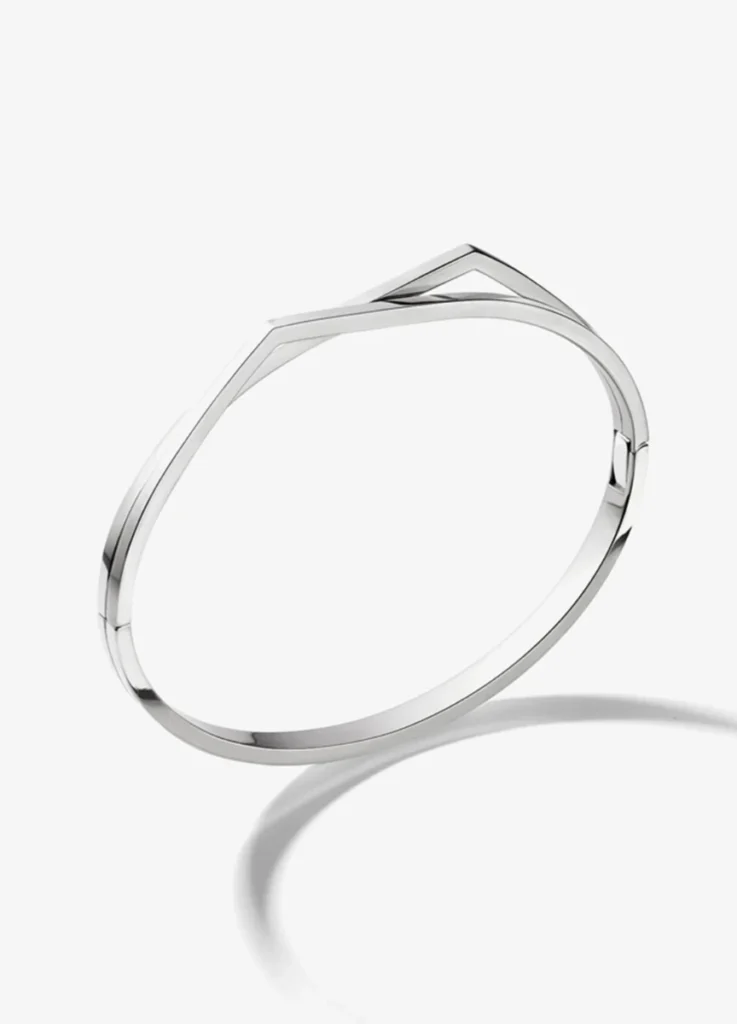
1. Non-Pavé Bracelet — Structure First
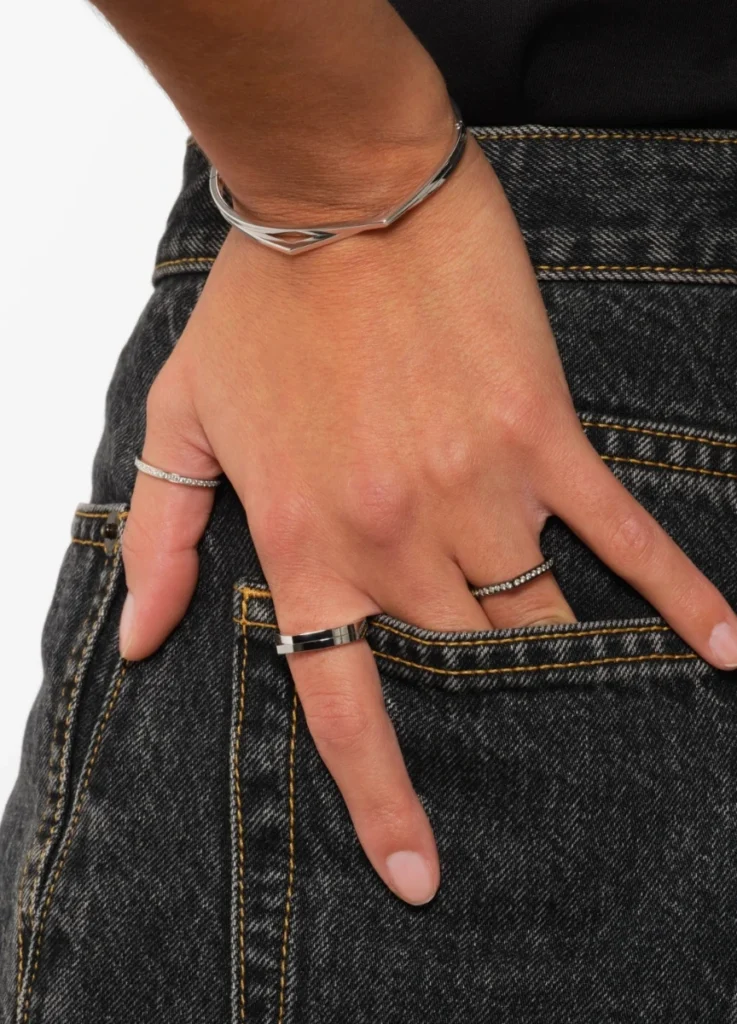
The non-pavé bracelet carries no diamonds. The gold itself — its line, its peak, its asymmetric curve — delivers the entire design.
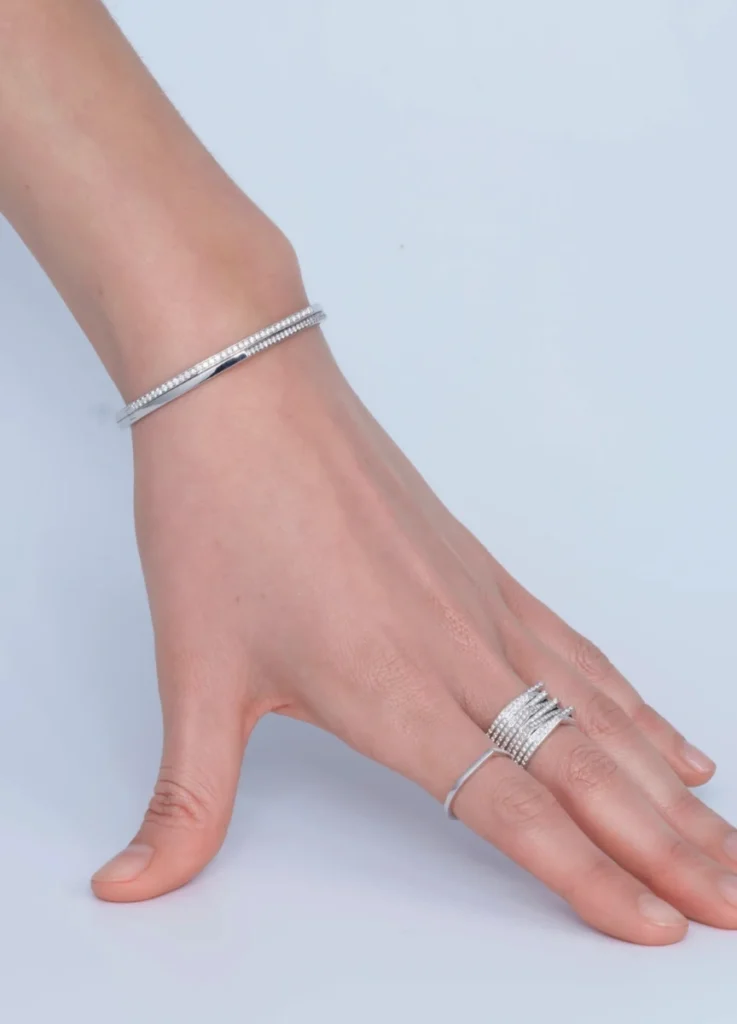
The essence here is tension in the line, not brilliance on the surface. On the wrist, this bracelet does not add sparkle. It organizes the silhouette.
Because there is no reflective interference, the eye follows only the direction of the metal. The peak structure and the asymmetric curve read with full clarity.
This also makes the non-pavé the strongest mixing piece. When worn alongside jewelry from other maisons, it creates order rather than competition.
source: repossi.com
Well suited for:
- Slim or shorter wrists
- Daily, high-frequency wear
- Layering with watches or other bracelets
- Experiencing Repossi’s architecture in its most direct form
The quietest bracelet in the lineup — but within a composition, the most architectural.
source: repossi.com
2. Pavé Bracelet — Light Along a Line
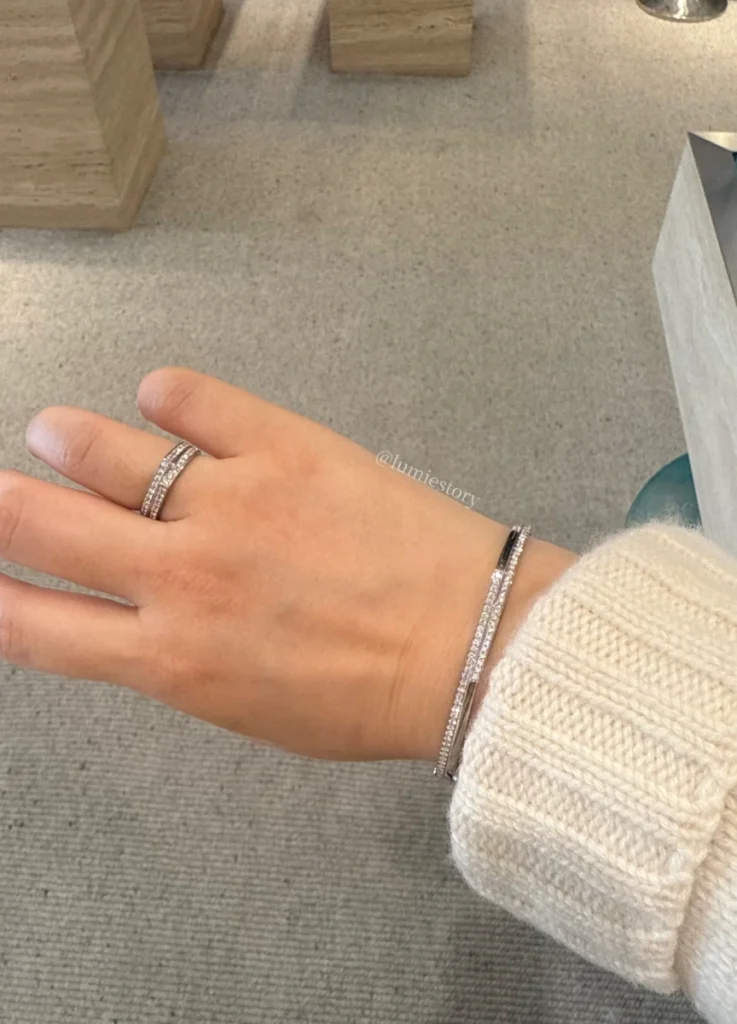
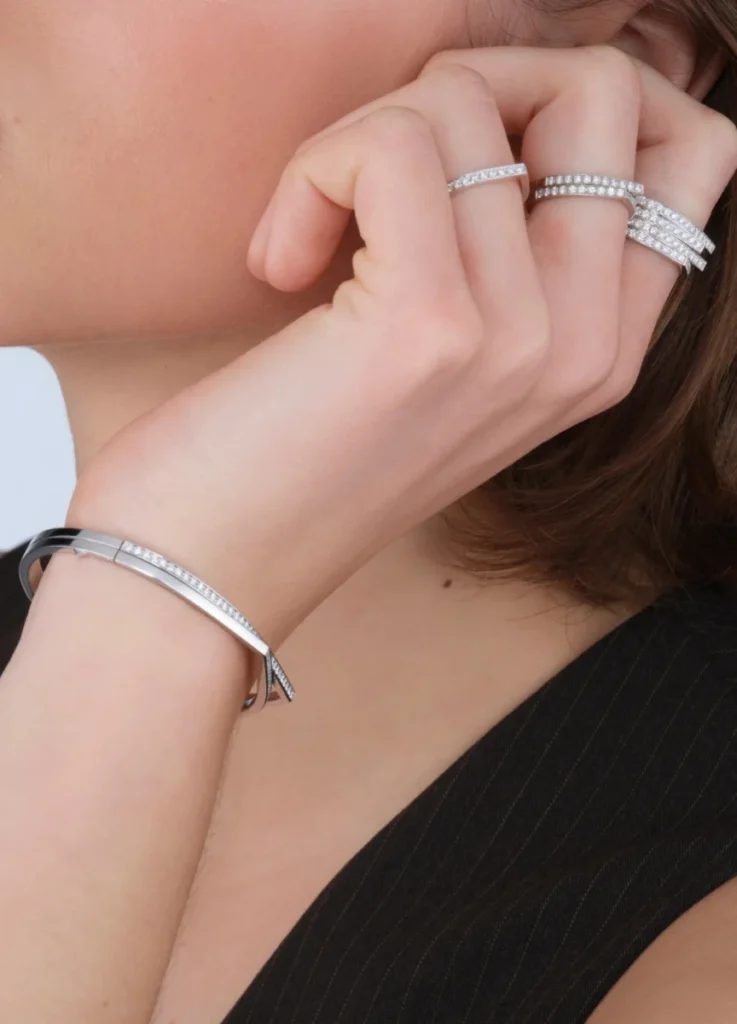
Available in pink gold and white gold, the pavé bracelet adds diamond setting to the same structural foundation.
The important distinction: this is not a “more luxurious version” of the non-pavé. The diamonds follow the peak and curve — they travel along the line rather than filling a surface.
This separates it from a conventional tennis bracelet. In a tennis bracelet, diamonds occupy area. In the Antifer pavé, diamonds occupy direction. The light moves with the structure, not independently of it.
Brightness with architecture. Density with orientation.
Well suited for:
- Stronger wrist presence without losing structural identity
- A more jewelry-forward impression than non-pavé
- Standalone wearing with sufficient density
The pavé bracelet is more visible on the wrist. But thanks to the Antifer geometry, it never collapses into a purely classical diamond bracelet. Structured light, not decorative light.
source: repossi.com
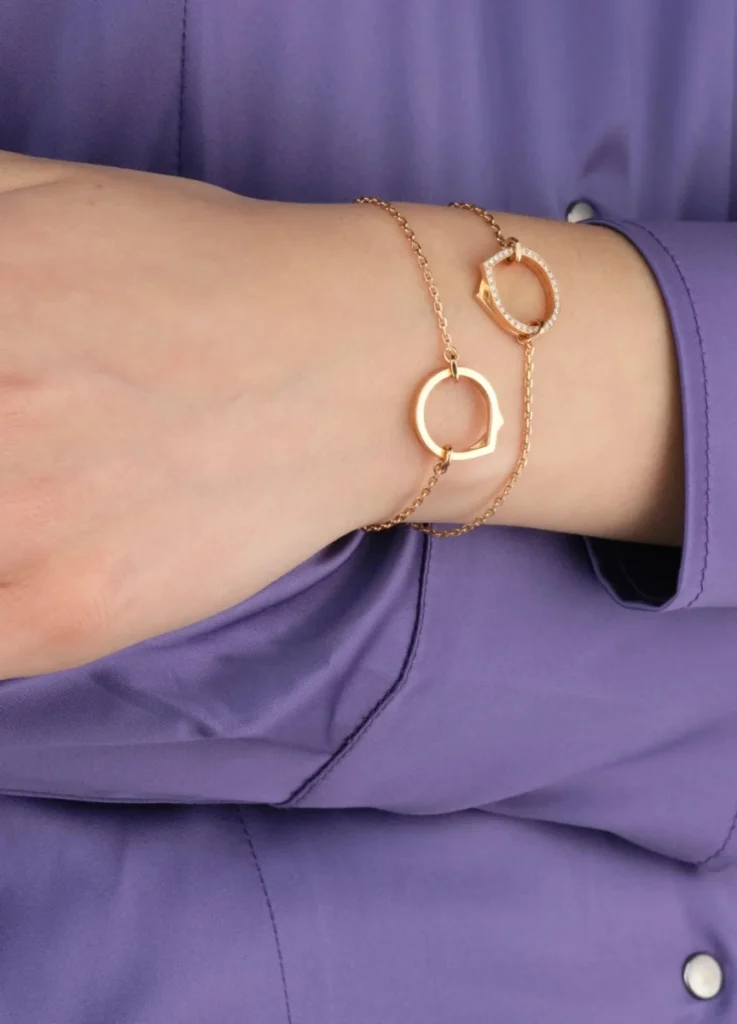
3. Chain Bracelet — Structure Released
The chain bracelet operates on a completely different principle.
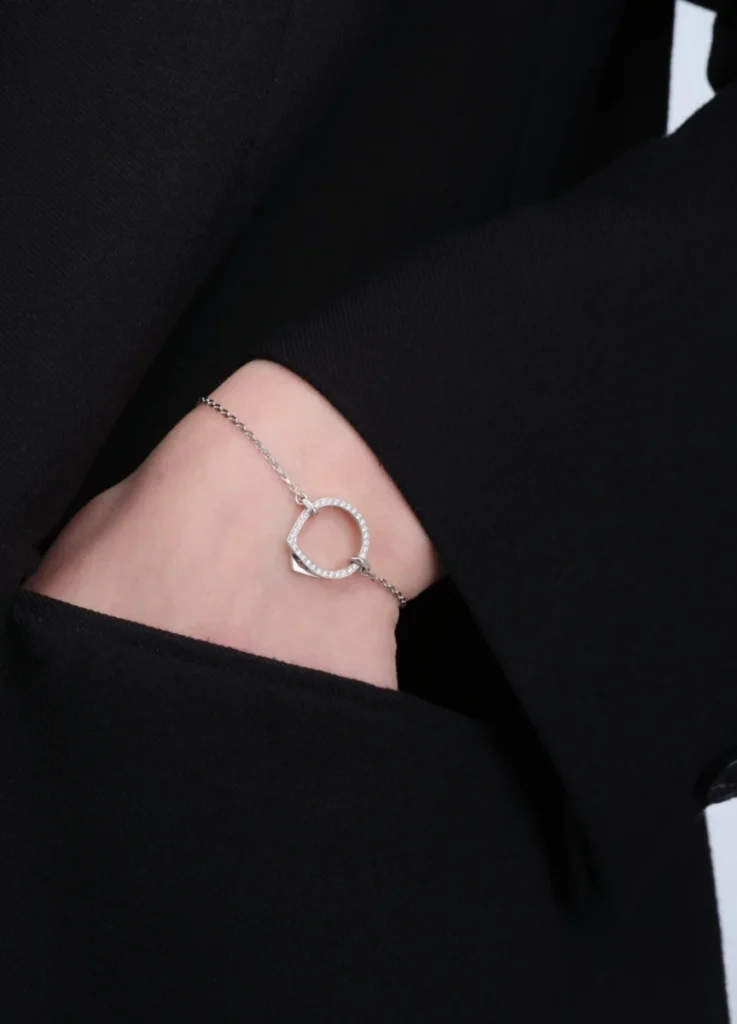
The rigid bangle body is gone. The Antifer motif floats on a chain — fixed form becomes moving point.
The difference in wear is immediate. The structured bracelet defines the wrist. The chain bracelet traces it.
source: repossi.com
The motif remains, but the weight — both visual and physical — drops. Movement enters. The bracelet shifts with the arm rather than holding its position.
Well suited for:
- Slim wrists sensitive to bracelet weight
- High daily-use frequency (keyboard work, etc.)
- Pairing with watches or other bracelets
- A lighter, more casual entry into Antifer
The structured bracelet builds the line. The chain lets it drift.
source: repossi.com
Why Antifer Mixes Well With Other Maisons
The real strength of this collection sits here.
Most fine jewelry carries strong self-completion. A Cartier Love is a full circle. A Van Cleef Sweet Alhambra repeats its motif in a closed rhythm. A Tiffany band holds a uniform width. Each is resolved within itself.
That resolution creates a problem in layering. Two self-complete pieces side by side often compete rather than converse.

Antifer operates differently. Its structure contains a gap — the open peak, the asymmetric curve, the space between lines. That gap functions as an opening for other jewelry to enter.
When placed next to a Cartier Love, a Van Cleef Alhambra, or a Tiffany band, the Antifer does not compete for the center. It provides a frame. The diagonal line introduces tension into an otherwise static composition, and the surrounding pieces begin to look more considered, more deliberately arranged.
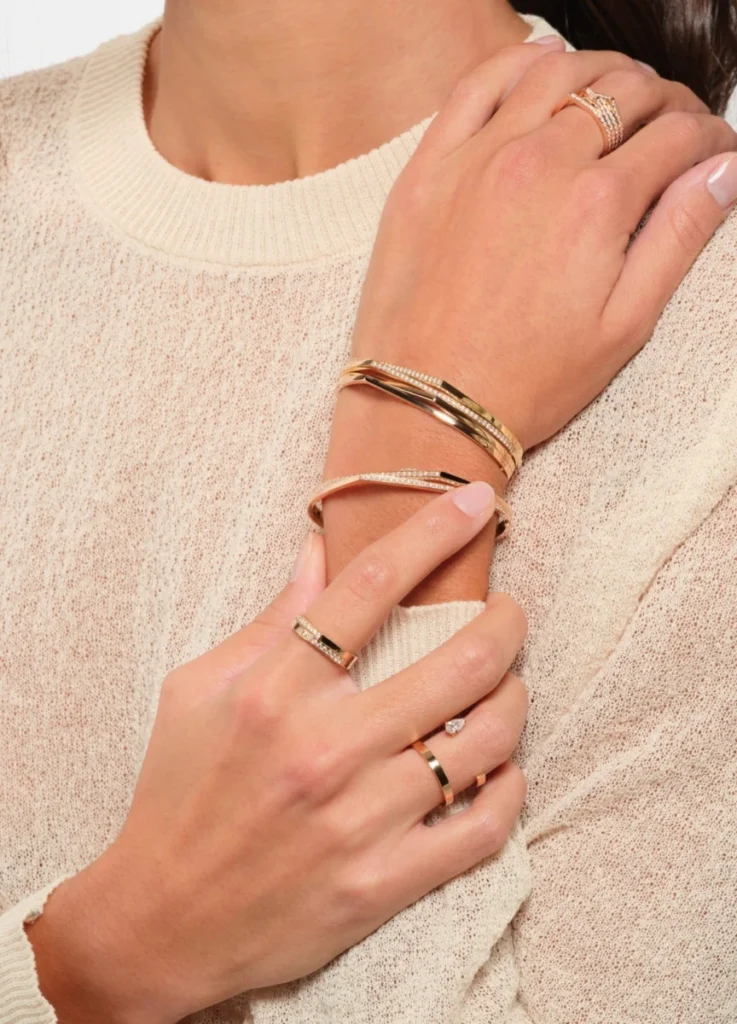
The effect is counterintuitive: Antifer itself may not be the most eye-catching piece in the stack, but it makes everything around it appear more refined.
Antifer is the structure that organizes the scene.

Choosing Between White Gold and Pink Gold
Antifer is currently offered primarily in white gold and pink gold.
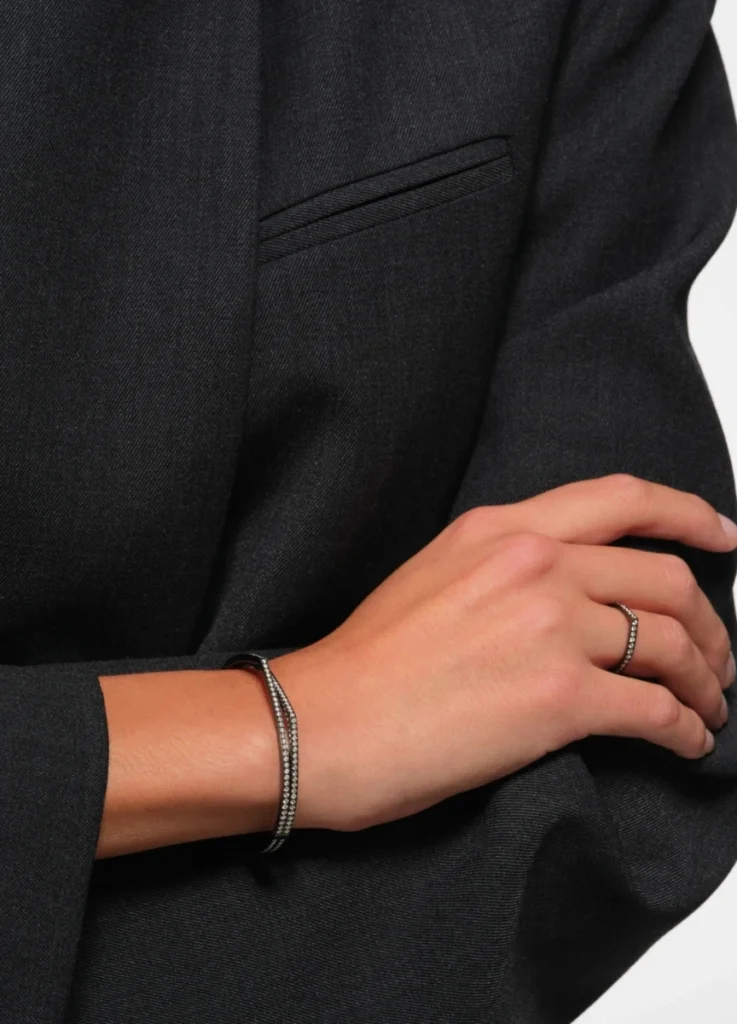
White gold sharpens the structure. The peak line becomes more defined, diamond reflections read cooler and more precise. The architectural quality of Antifer comes through most clearly. Strongest in mixed compositions and layered arrangements where structural contrast matters.
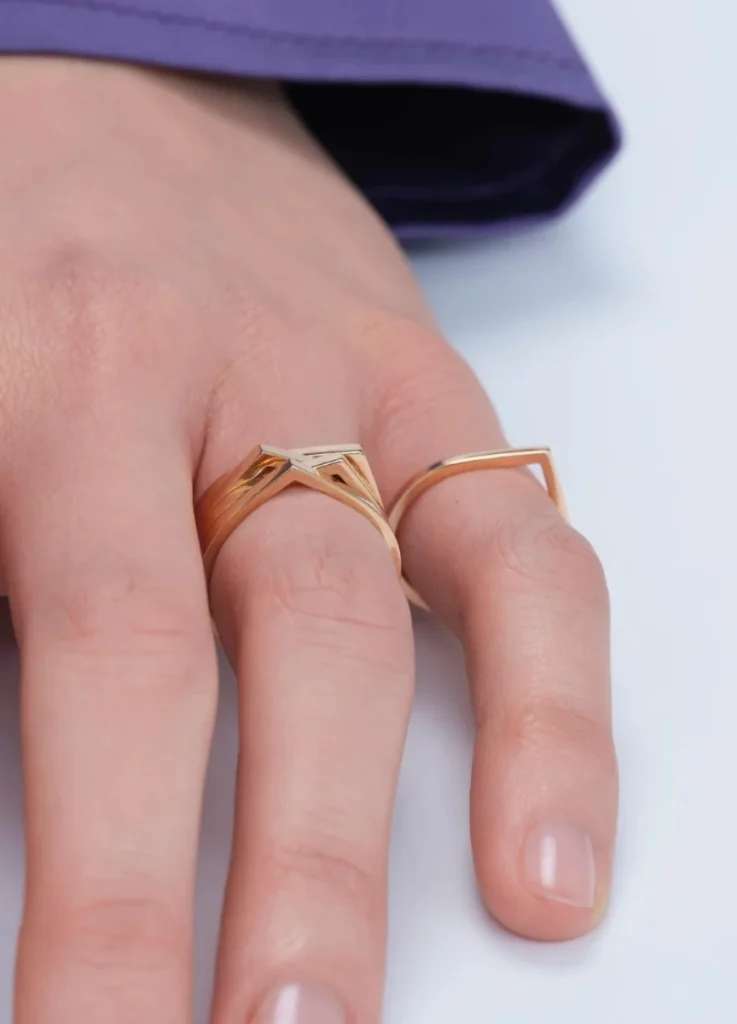
Pink gold settles into the skin. The same geometry reads softer, less angular. The peak feels less aggressive, and the overall impression carries more warmth. Strongest in tonal styling and standalone wearing where the piece integrates with skin rather than cutting against it.
source: repossi.com
| Category | White Gold | Pink Gold |
|---|---|---|
| Structure | Sharp, defined | Softer, blended |
| Diamond contrast | High (cool/clear) | Lower (warm/integrated) |
| Best context | Mixing, layering | Tonal coordination, solo wear |
| Impression | Architectural | Organic |
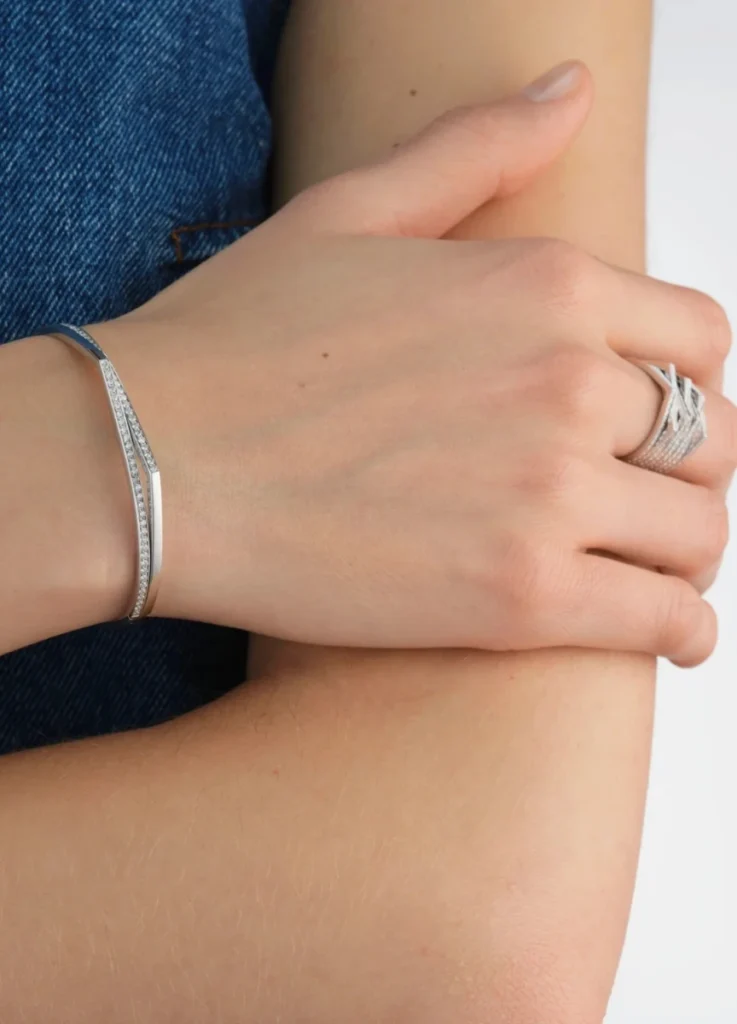
source: repossi.com
Final Consideration
Antifer is jewelry that organizes rather than adds.
One line placed on the hand, and the entire composition realigns. One bracelet on the wrist, and the surrounding pieces settle into a clearer order.
The collection stands complete on its own. But it reaches its full potential when placed among other jewelry — creating the frame that makes everything else look more intentional.

source: repossi.com
That difference grows over time. A layered style built on accumulation eventually feels heavy. A layered style built on structure continues to feel edited.
What lasts is not what was added. What lasts is what was organized.
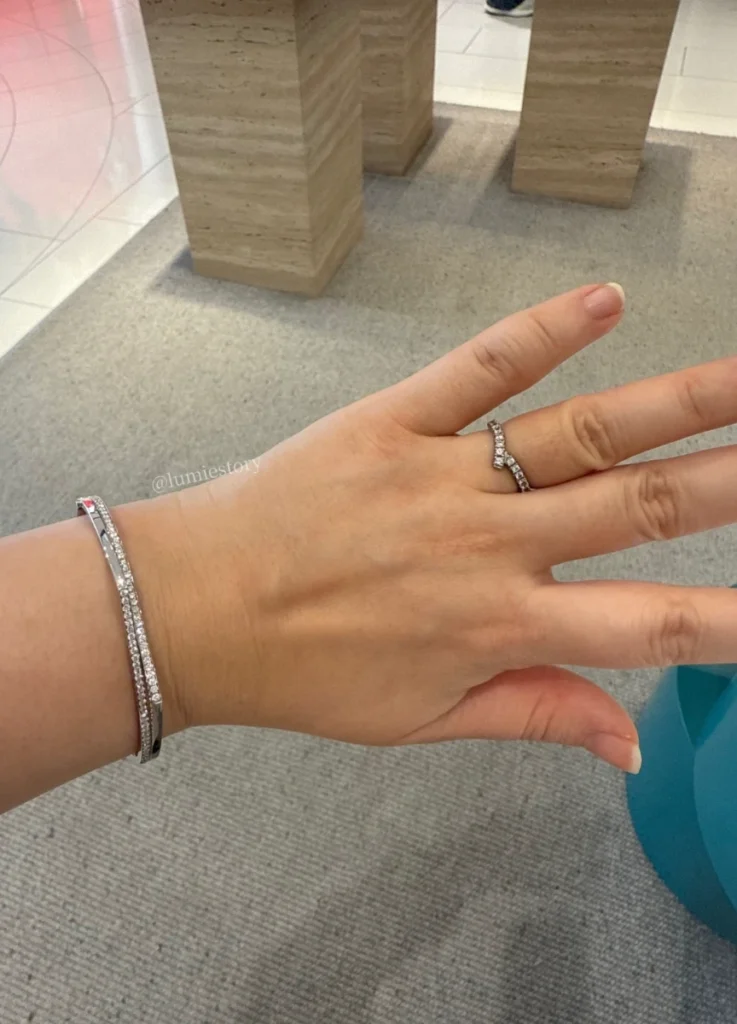
All images unless otherwise credited: © Lumie Story
[ Related Editorials ]