Inside Bottega Veneta Fall/Winter 2026
Bottega Veneta Fall/Winter 2026 is Louise Trotter’s second runway as creative director of the house, following her September 2025 debut with Spring/Summer 2026.
The collection unfolded on a monochromatic red runway — leather, Intrecciato weaving, and fur volume introduced in controlled progression.
This wasn’t a season built on rupture. It was a season built on continuity, executed through the brand’s most established codes: texture, craftsmanship, and structural volume.
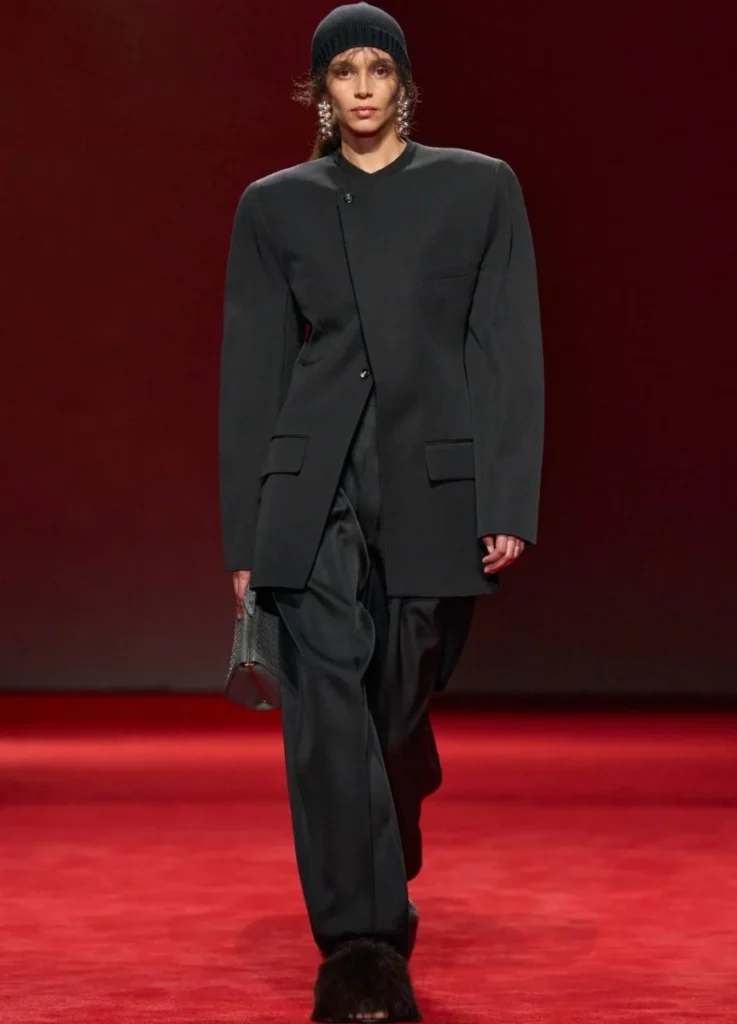
The red environment did more than stage the show. Against the saturated background, leather surfaces, woven textures, and fur volumes appeared sharper and more sculptural. The runway didn’t decorate the clothes. It clarified them.
Season Context | A Reordering of House Codes
Founded in 1966, Bottega Veneta has built its identity around artisanal leather craftsmanship — particularly the signature Intrecciato weaving technique. Centered originally on handbags and leather goods, Intrecciato became synonymous with the brand’s understated luxury positioning.
The house has moved through several creative transitions in recent years.
Daniel Lee redefined New Bottega through amplified Intrecciato and modern minimalism between 2018 and 2021. Matthieu Blazy, from 2021 to 2024, refined the house’s material authority and elevated its visual register before moving to Chanel. Louise Trotter assumed creative leadership in 2025, bringing perspectives developed across Joseph, Lacoste, and Carven.
Her debut Spring/Summer 2026 collection — staged during the 50th anniversary of Intrecciato — established her direction clearly. Tailoring foundation. Intrecciato expanded across ready-to-wear. Fringe and recycled fiberglass introduced as material experimentation. Iconic bags (Lauren, Cabat, Knot) reinterpreted in softer, more functional registers.
Fall/Winter 2026 carries that grammar forward.
Each transition shifted the brand’s emphasis without breaking it. Lee scaled Intrecciato into pop-cultural visibility. Blazy returned the house to surface intelligence. Trotter, on this evidence, deepens the material logic both predecessors built — without imitation, without reset.
The collection holds the balance between creativity and commercial viability — what industry observers describe as the tension between wearability and expression.
Trotter’s appointment also matters in a structural sense. She is the only woman currently leading a major luxury house through the recent round of creative-director transitions, and the first female designer to direct Bottega Veneta’s collections since Laura Braggion (1980–2001). The leadership shift carries weight beyond design itself.
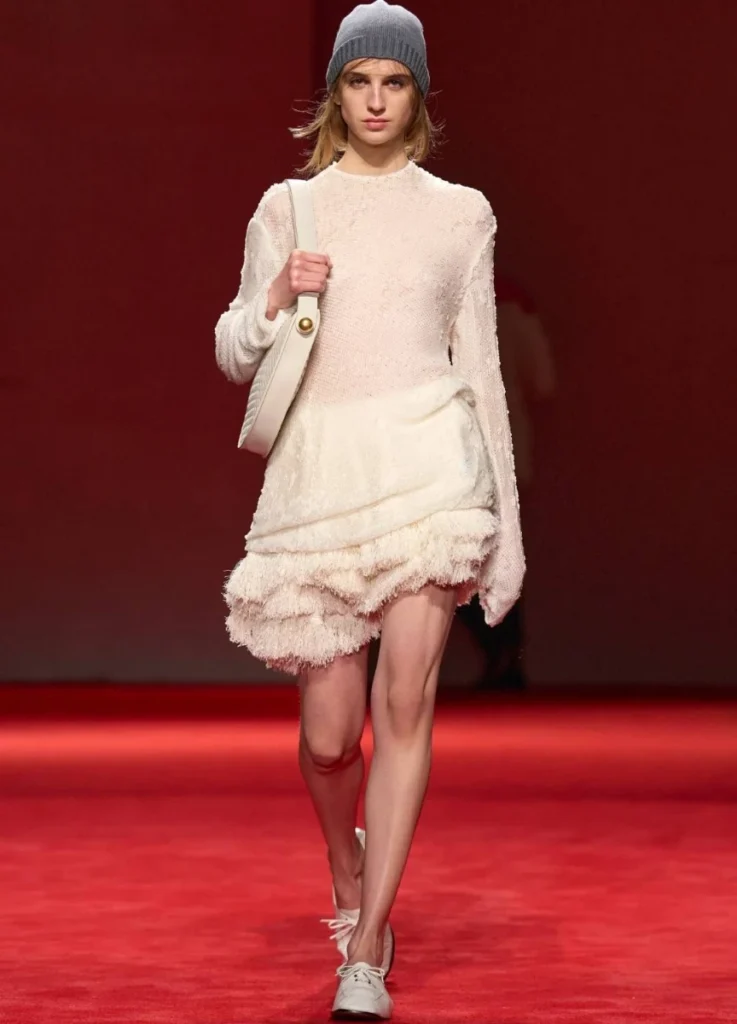
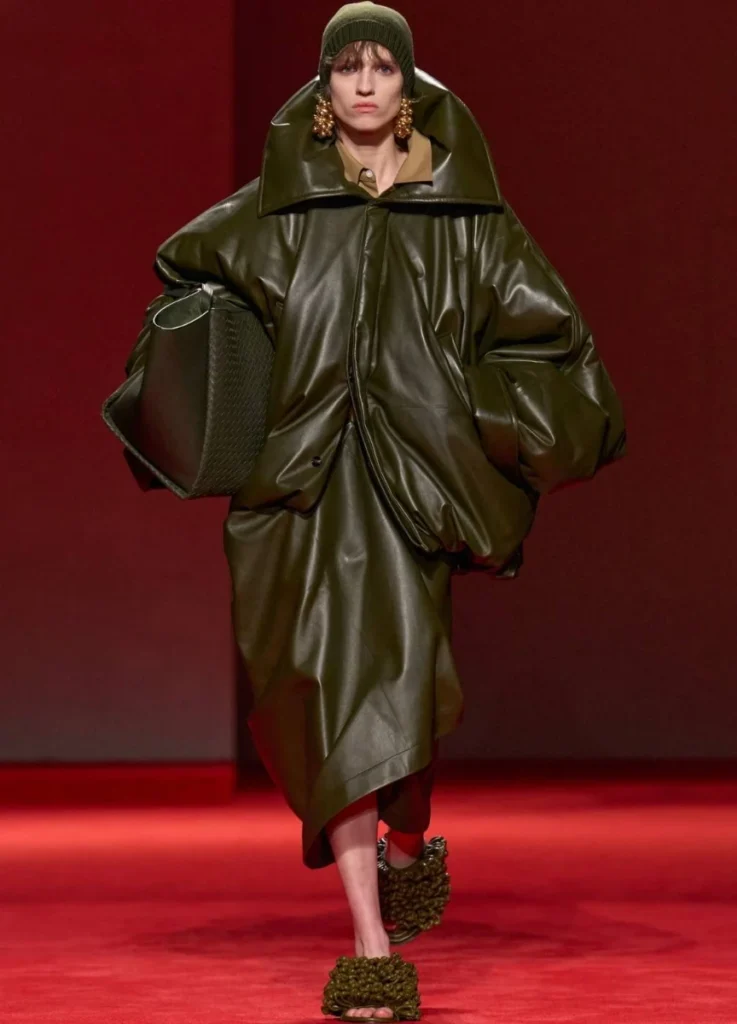
Silhouette Analysis | Three Movements in Volume
The collection unfolds in three distinct movements — control, expansion, release.
1. Opening | Controlled Verticality and Leather Authority
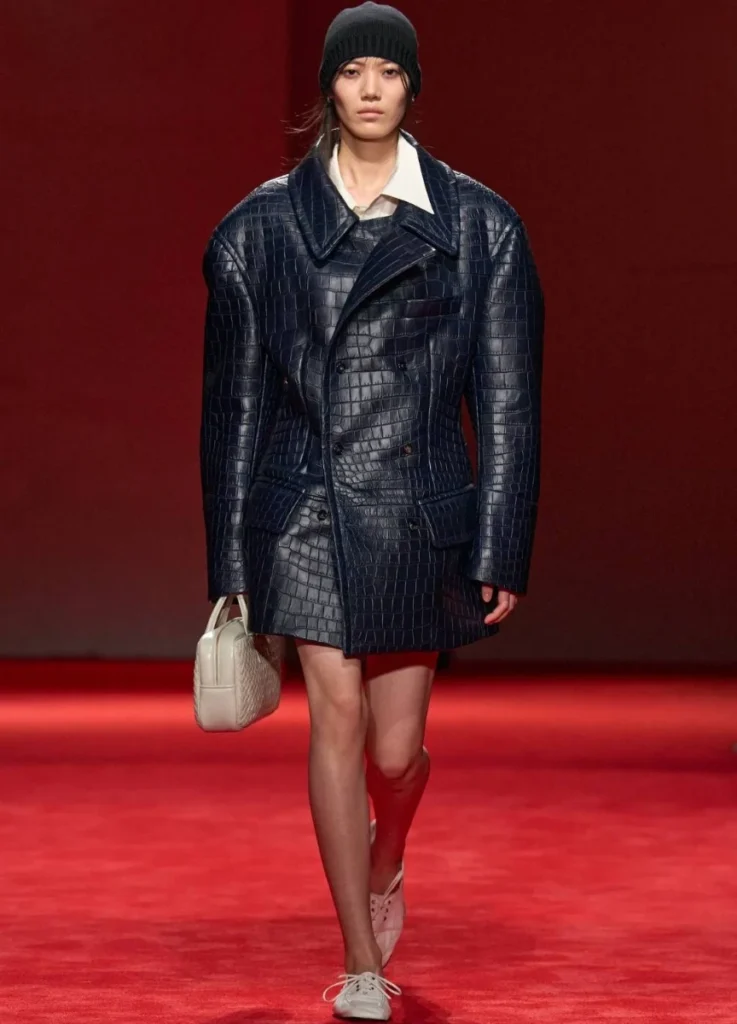
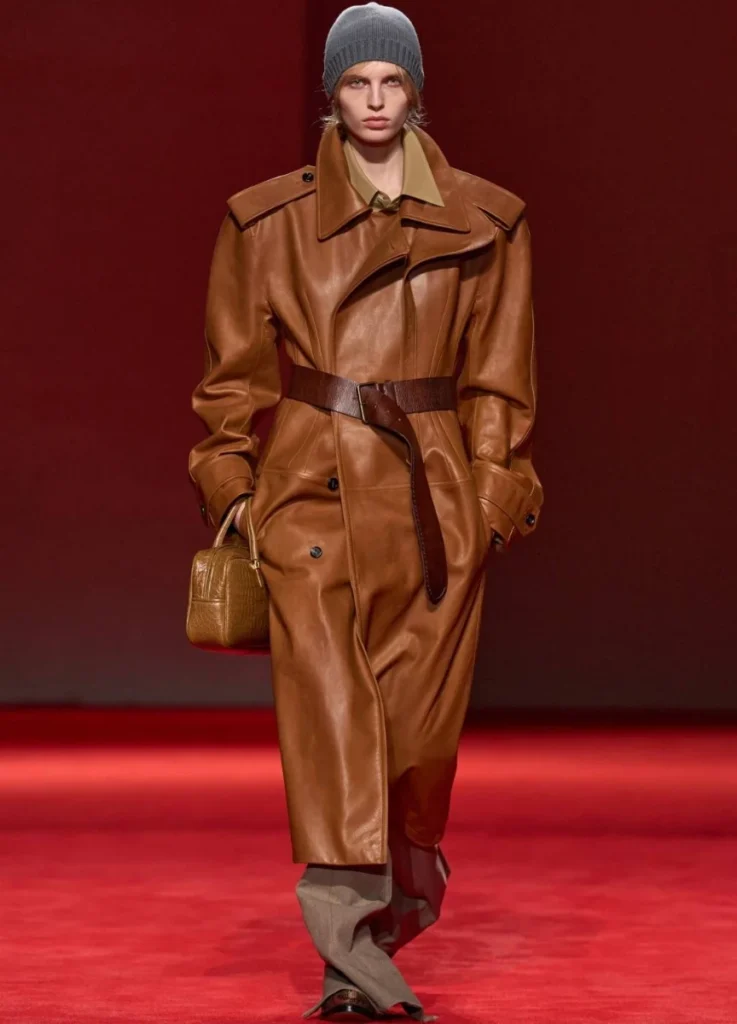
The show opened with structured leather coats and knit layering.
- shoulders remained understated
- waist definition stayed subtle rather than constrictive
- silhouettes emphasized vertical elongation
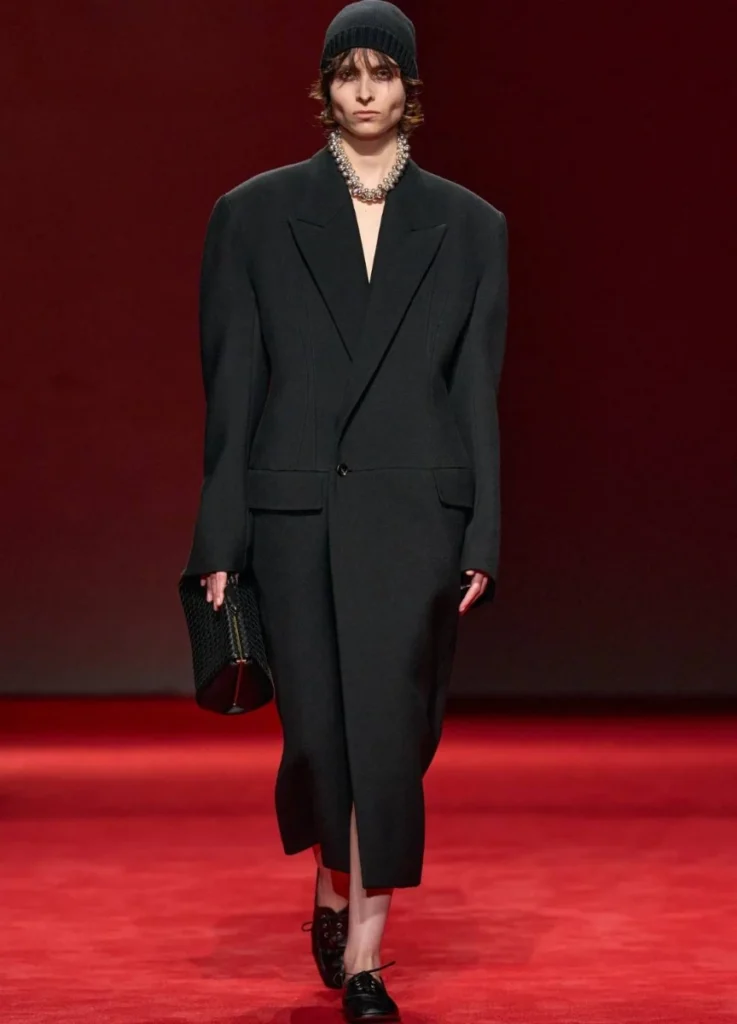
The matte black leather coat in particular demonstrated restraint. It avoided gloss and theatrical aggression. The piece projected controlled authority instead.
Volume stayed contained at this stage. Garments enveloped the body rather than expanding it.
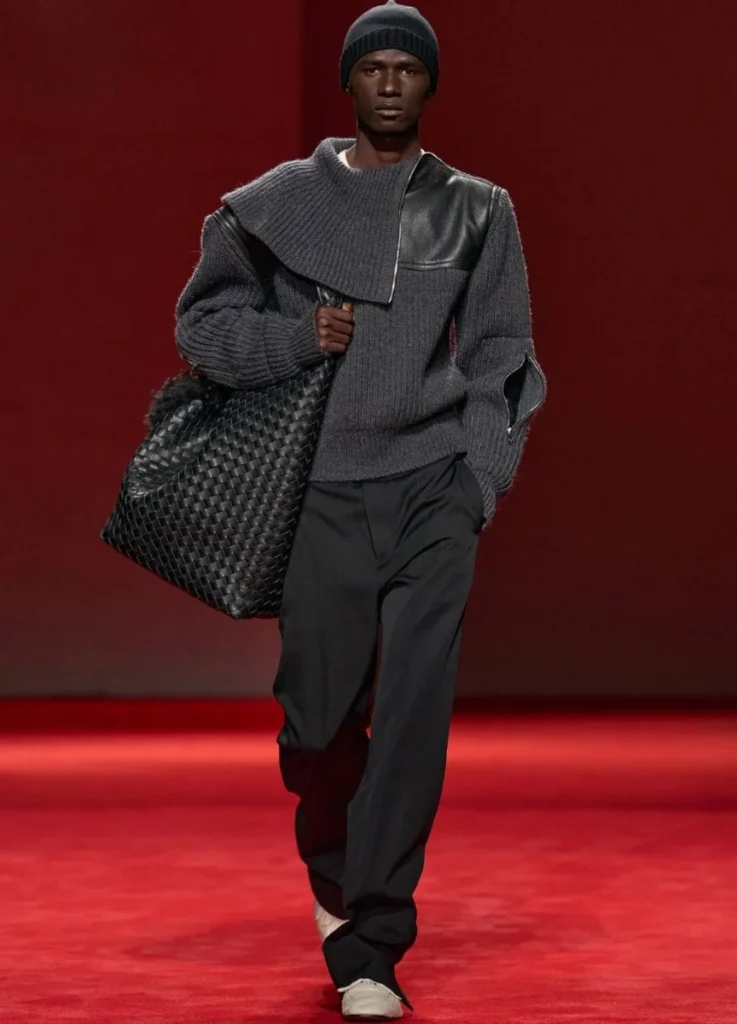
2. Mid-Show | Intrecciato at Garment Scale
Intrecciato appeared deliberately enlarged.
- full woven leather coats
- texture continuity between outerwear and handbags
- structural surfaces without overt display
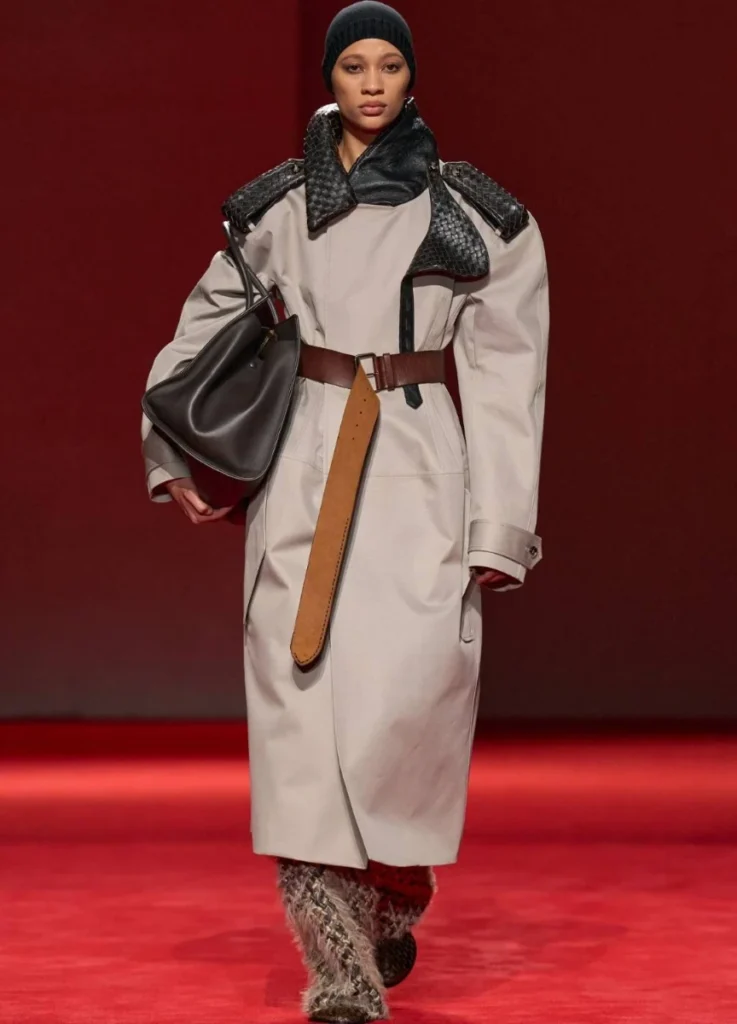
Traditionally associated with accessories, Intrecciato continues its migration from bag to garment. The direction was set in Trotter’s debut. Fall 2026 deepens it.
This wasn’t repetition. It was continuation at scale.
The choice carries strategic weight. Intrecciato has always been Bottega’s signature — but historically a bag signature. With each season, Trotter is moving that grammar more permanently into the garment surface. Brand identity now lives on the body, not just on the arm.
3.Finale | Fur Escalation and Sculptural Expansion
Volume intensified dramatically in the final section.
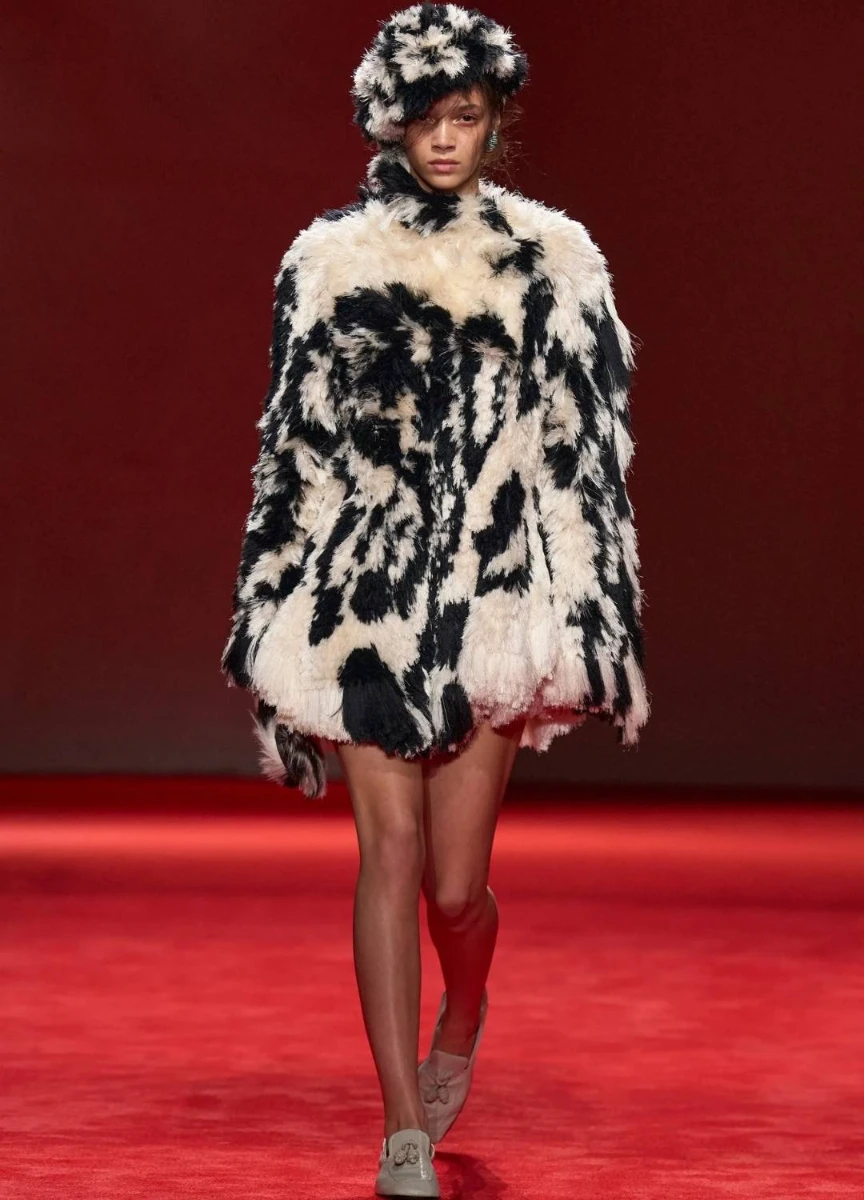
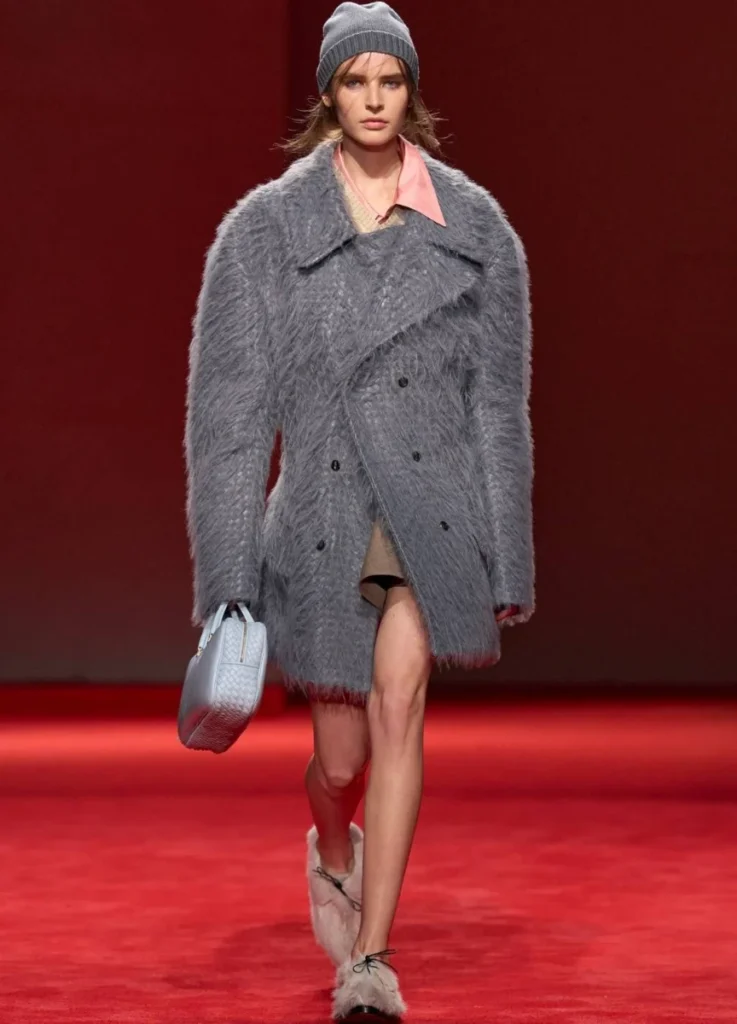
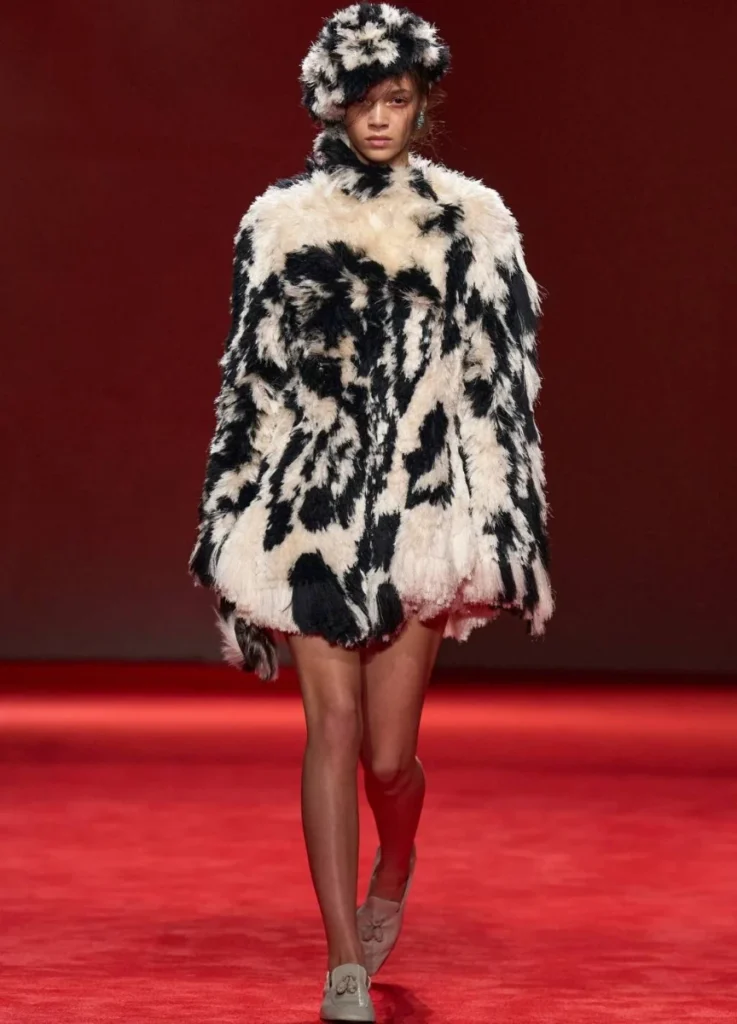
- oversized fur outerwear
- shearling textures
- sculptural fur dresses with minimal visible tailoring lines
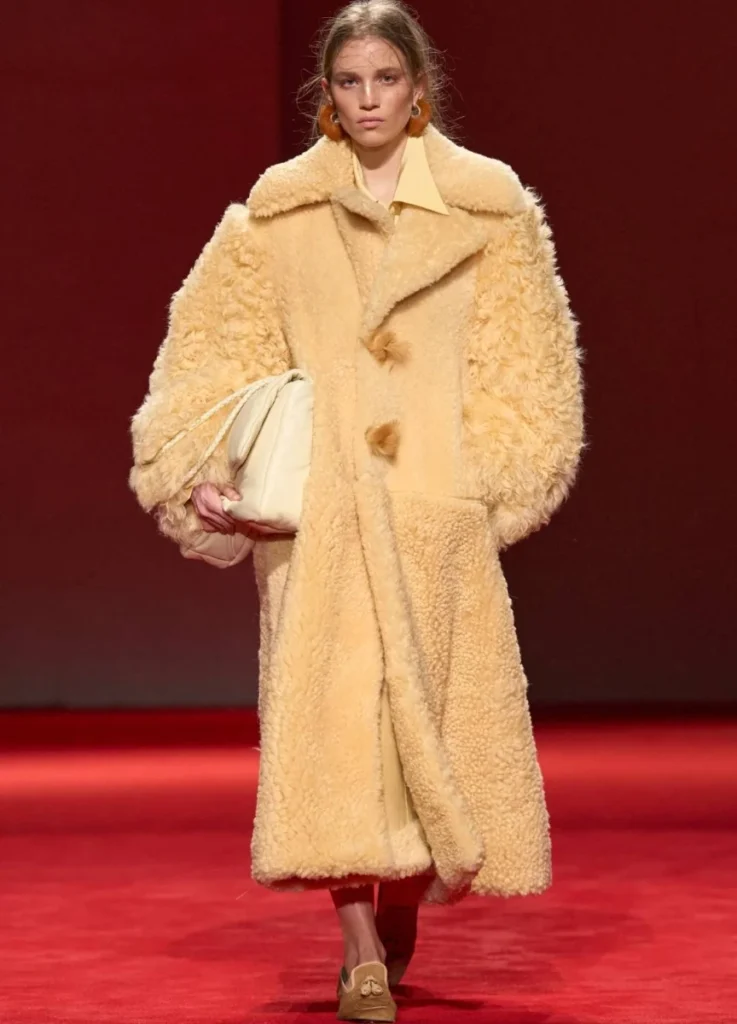
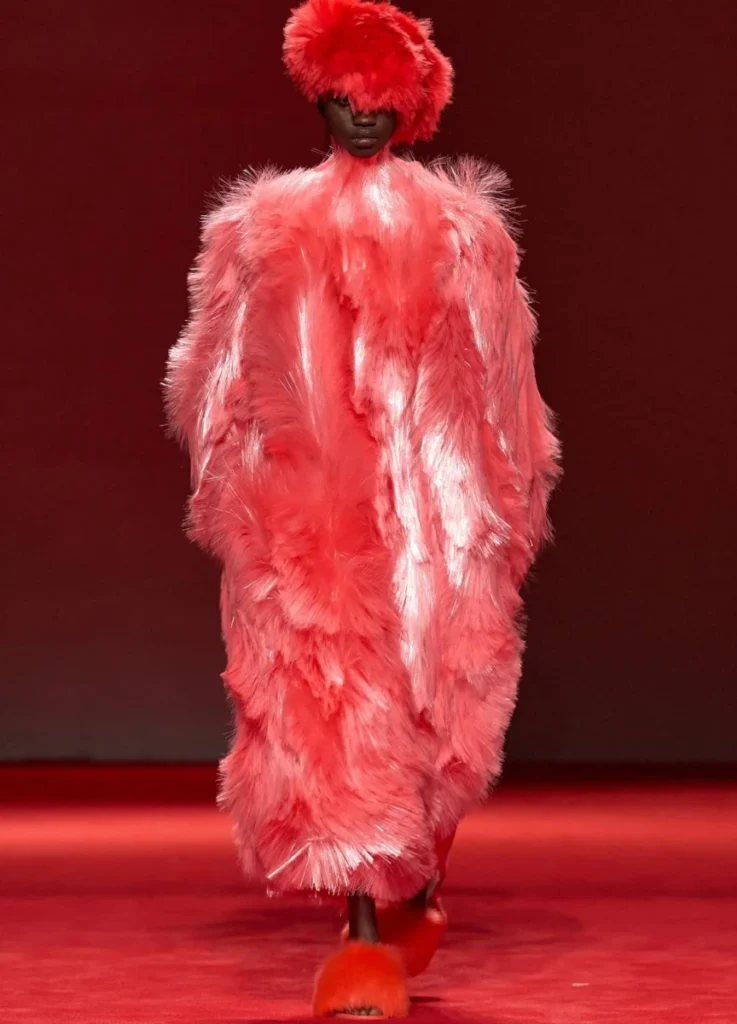
Blue, pink, and black fur looks contrasted sharply with the restrained opening. The emotional register shifted entirely.
Control gave way to expansion.
This wasn’t random styling. It was architectural sequencing — the collection structured as a deliberate emotional arc rather than a flat lineup of looks. Trotter staged the show as a progression: discipline first, then deepening, then release.
Color Direction | Black Against Red
The dominant palette consisted of black, dark brown, and grey. The red runway created constant visual tension.
Rather than adding color to garments, the show relied on chromatic contrast between background and silhouette.
When saturated blue and pink fur appeared in the finale, the red environment amplified their impact.
Color operated as an instrument of volume rather than narrative symbolism.
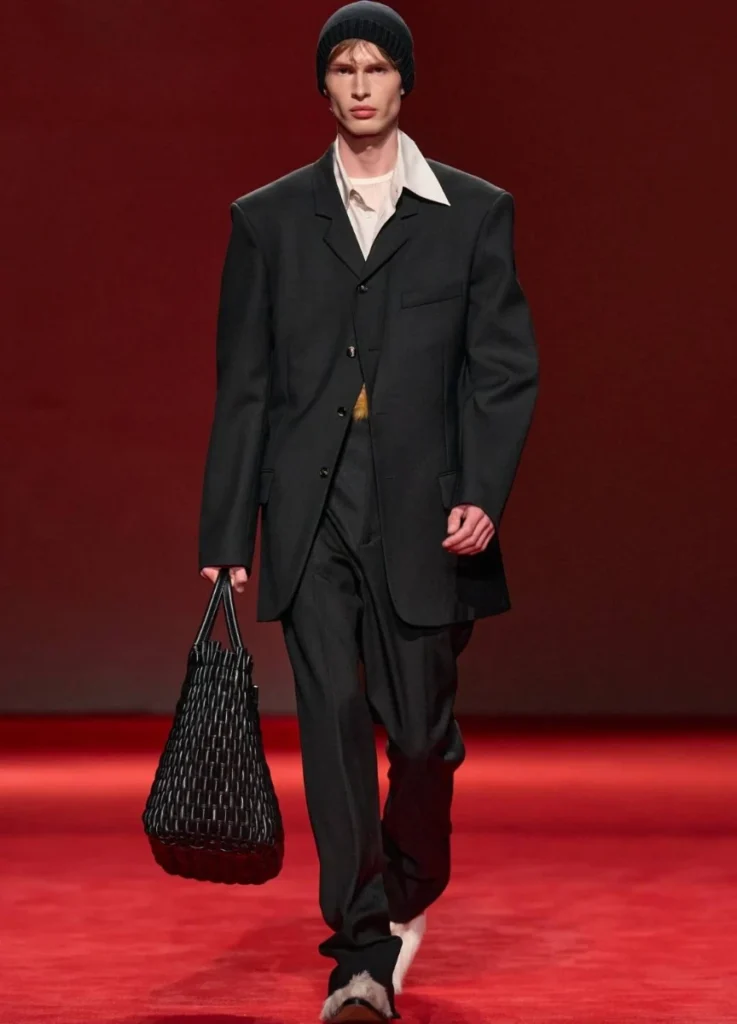
Material Strategy | Texture Before Silhouette
- leather (matte, dense)
- knitwear (soft, draped)
- Intrecciato (woven, architectural)
- fur (expansive, tactile)
Texture registered before structure. The eye reached the surface before it processed the silhouette.
It reinforces Bottega Veneta’s position as a material-driven house. The collection didn’t rely on overt logos or dramatic tailoring. It relied on surface authority.
For a house built on craftsmanship, that hierarchy matters. Trotter’s two-season trajectory has been consistent on this point — texture above tailoring, surface above silhouette. Confirming where the brand’s center of gravity sits.
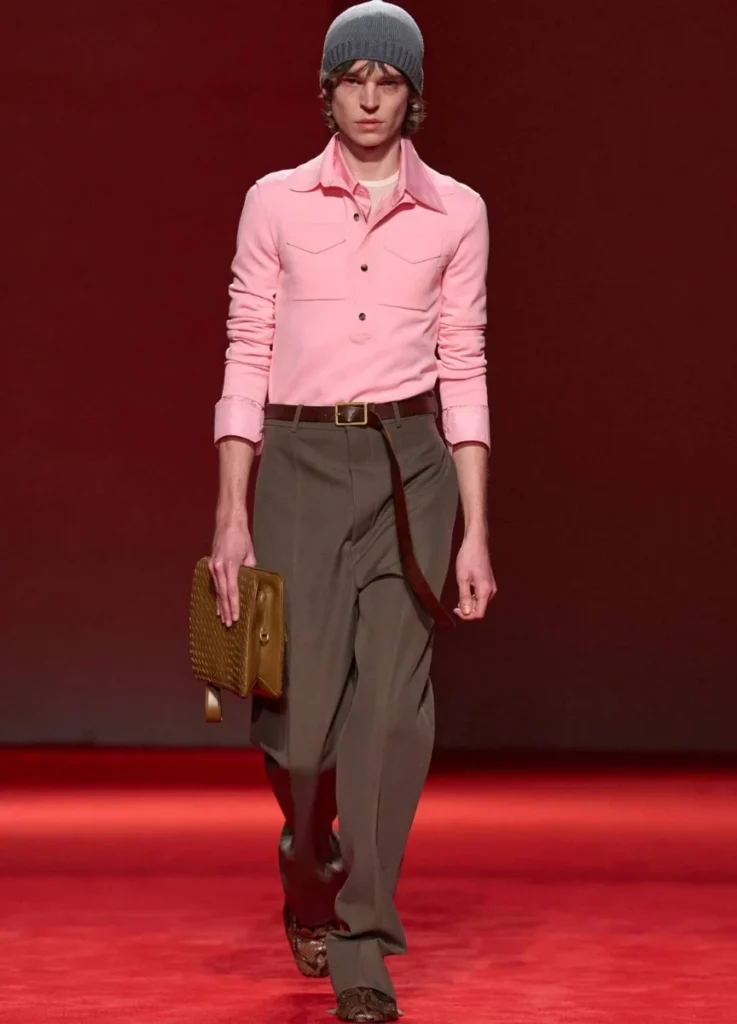
Body Type and Wearability Considerations
For consumers analyzing runway-to-wardrobe translation:
- structured leather coats suit straight body lines and moderate shoulder width
- vertical silhouettes benefit individuals seeking elongation without exaggerated waist emphasis
- full fur volumes may overwhelm petite frames unless proportion is carefully adjusted
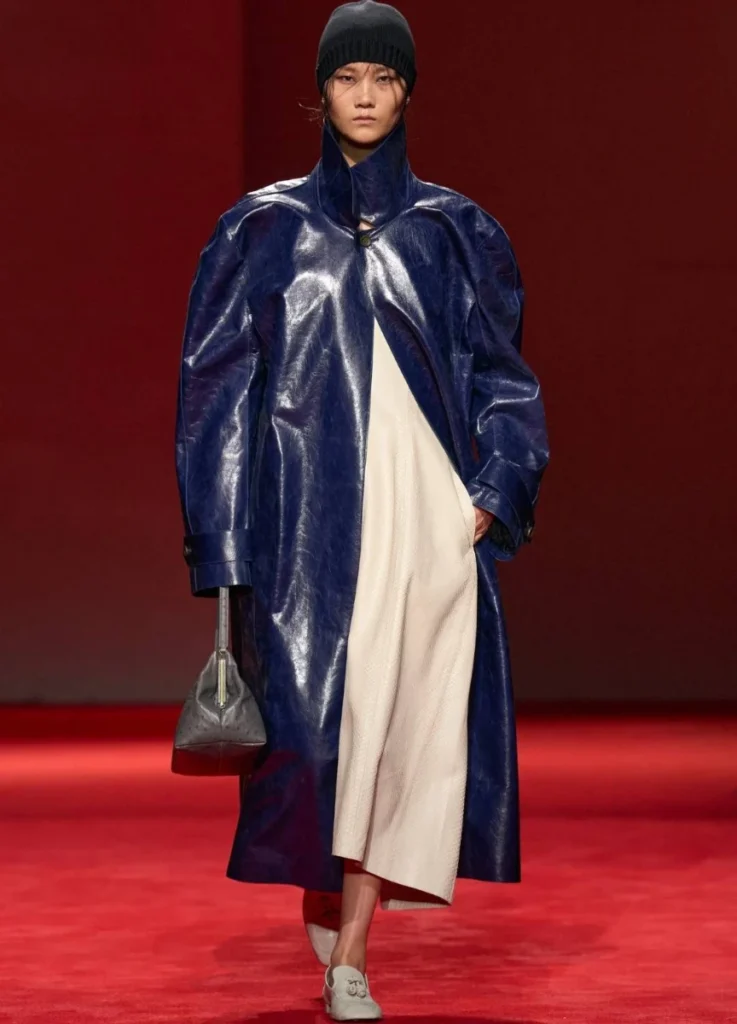
- the draped ivory dress offers a transitional option, softening architectural intensity
Commercially, leather outerwear carries the strongest retail potential.
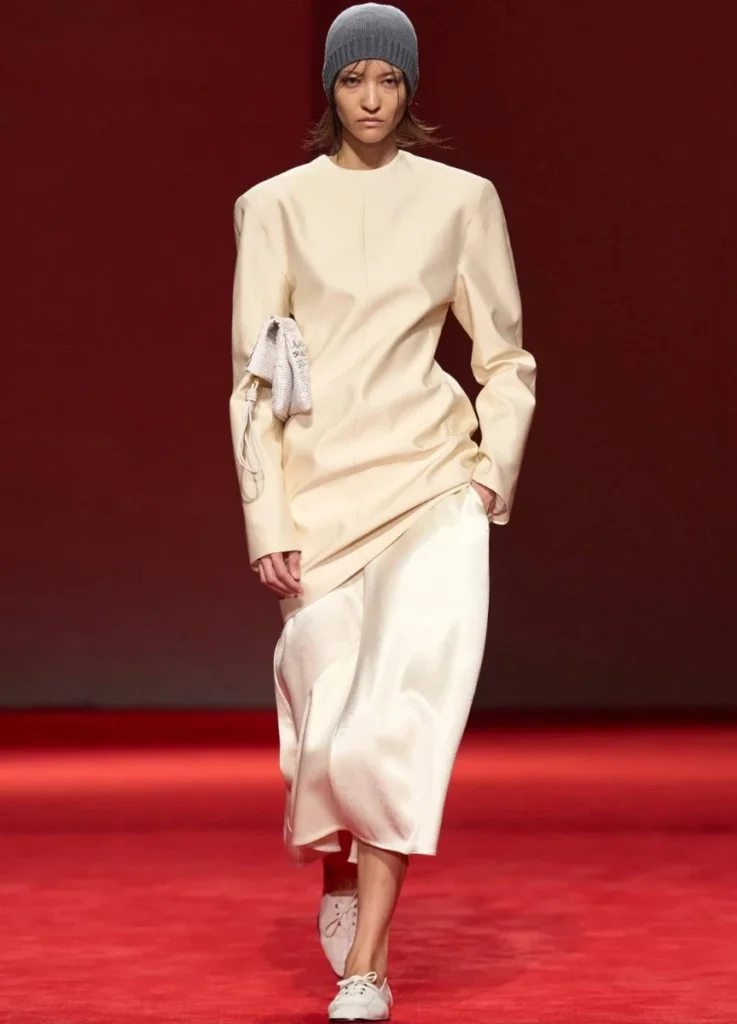
Five Key Looks
Look 1: Black Belted Leather Coat
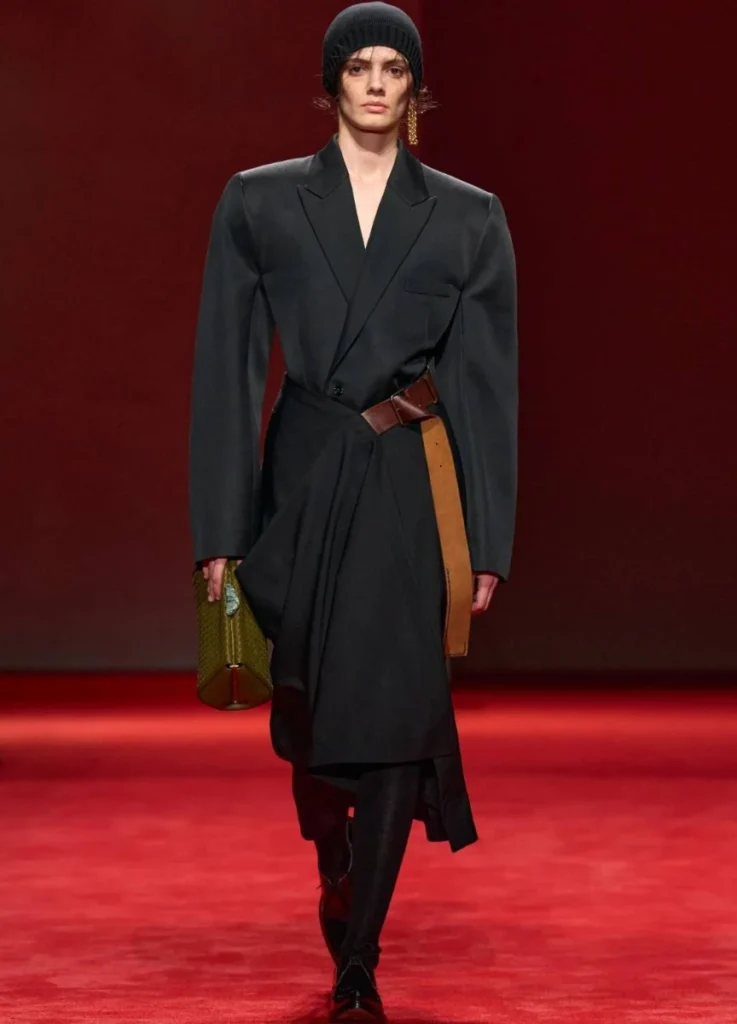
Matte leather. Subtle waist shaping. Below-knee length.
The look sets the collection’s foundation — leather authority without theatrical excess. The leather density is the most direct expression of the brand’s craft language. Trotter signals immediately that Bottega remains, above all, a leather house.
Commercially, the strongest piece of the season. Most likely to convert directly into retail.
Look 2: Full Intrecciato Leather Coat
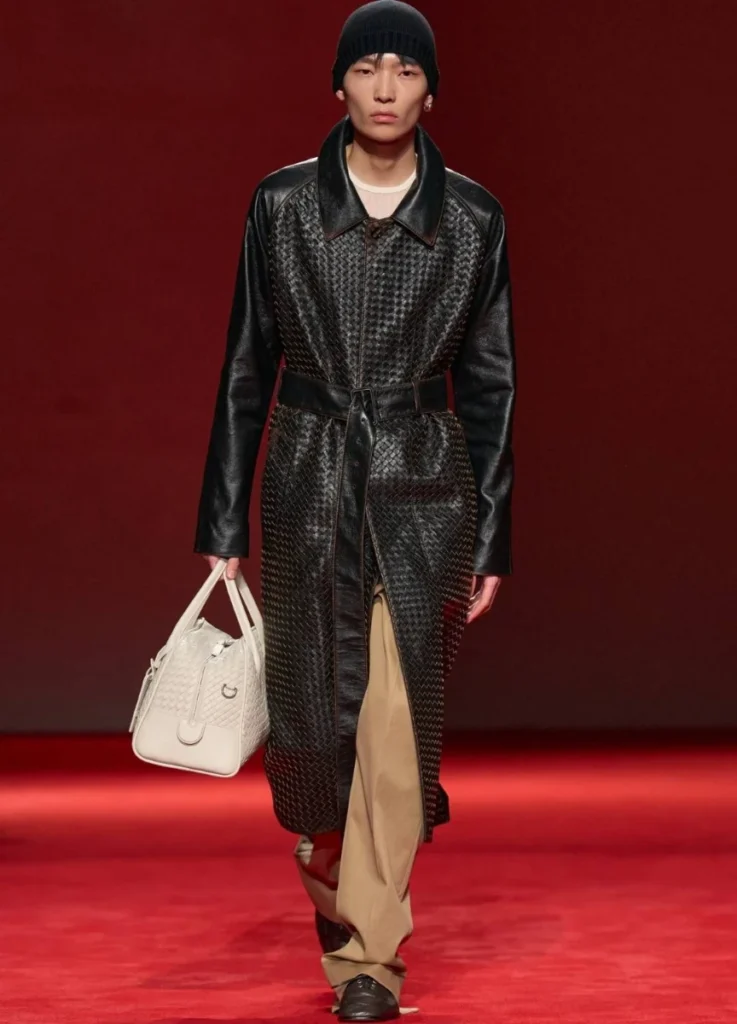
Expanded weaving across the entire surface. Structural coherence between garment and accessories.
This isn’t a beautiful leather coat. It’s a brand-code statement. Migrating Intrecciato from bag-scale to garment-scale concentrates brand identity into the silhouette itself.
Less styling. More strategy.
Look 3: Ivory Draped Dress
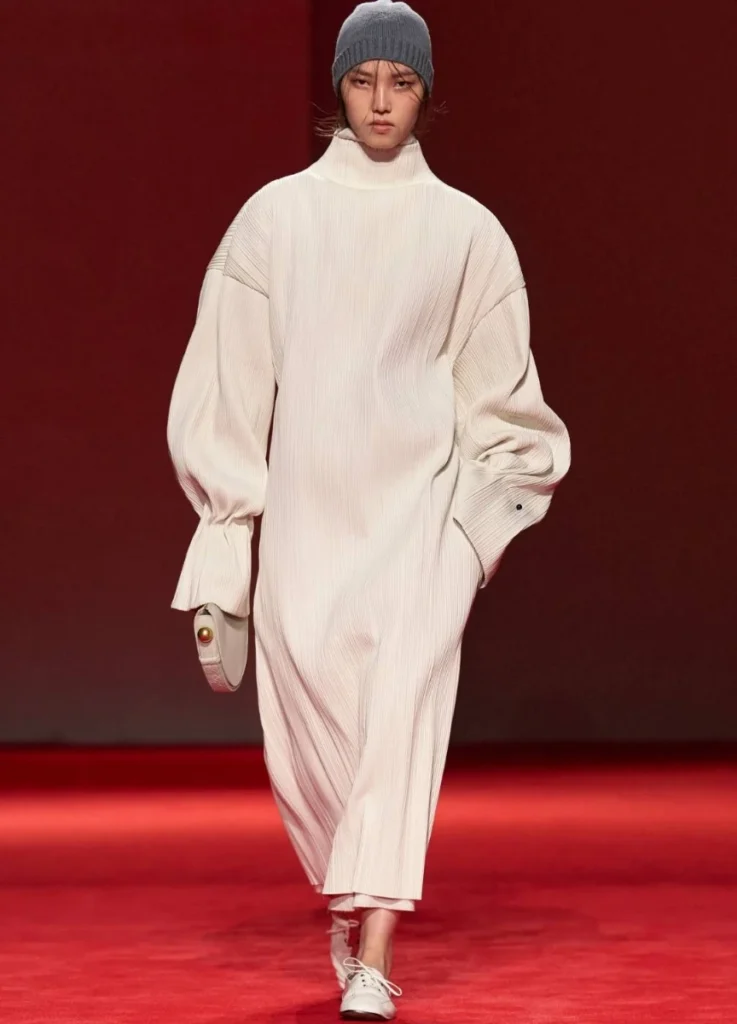
Soft texture. Fluid, body-skimming line.
The look acts as structural relief — resetting visual intensity before fur escalation begins. The contrast made possible here amplifies the impact of what follows.
A reset note. Without it, the finale wouldn’t land the same way.
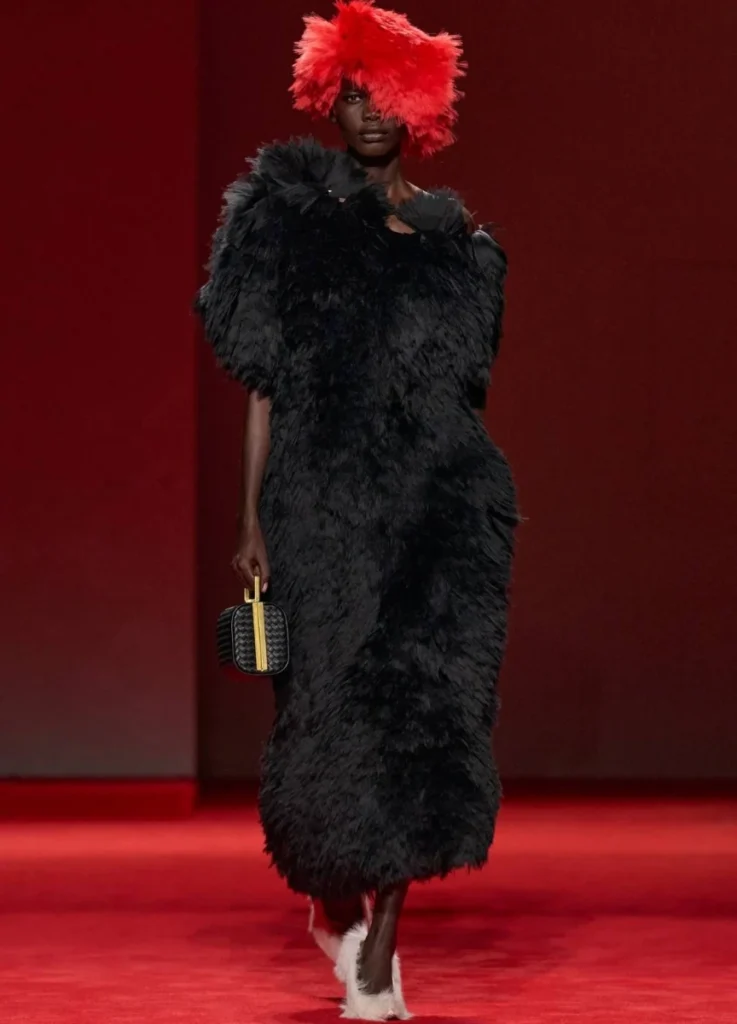
Look 4: Black Fur Sculptural Outer Layer
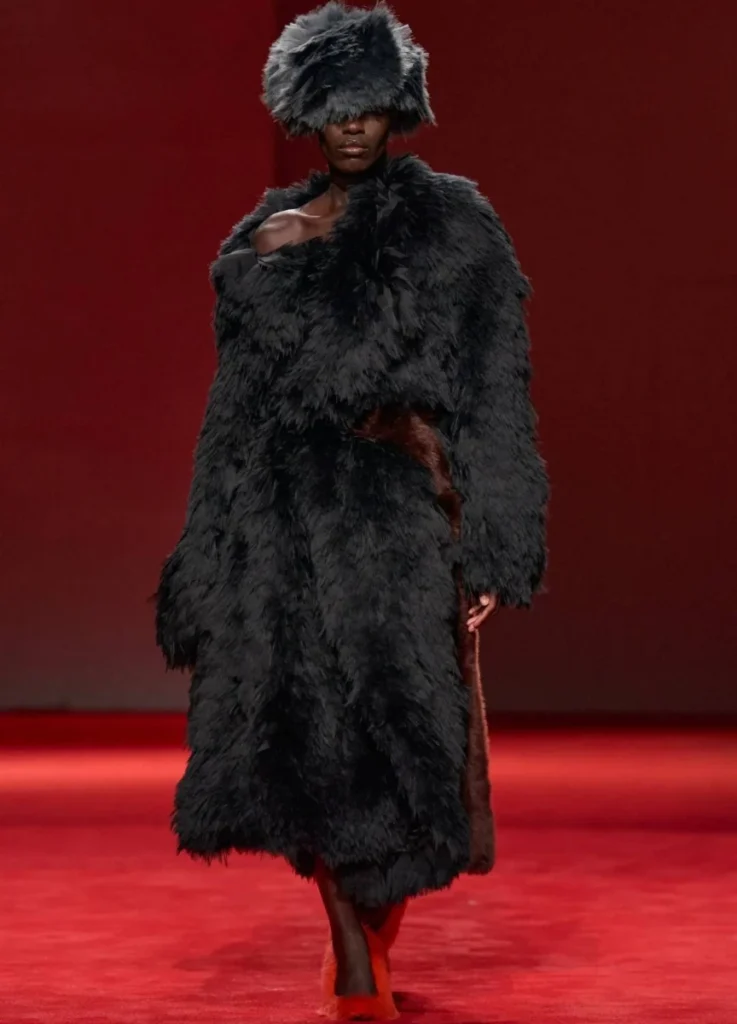
Full-body fur construction. Silhouette secondary to texture. Movement emphasizes surface over tailoring.
The garment moves from functional outerwear to sculptural object. The waist disappears. The body becomes the texture’s stage.
Bottega moves from making coats to making forms.
Look 5: Color Fur Finale (Blue / Pink)
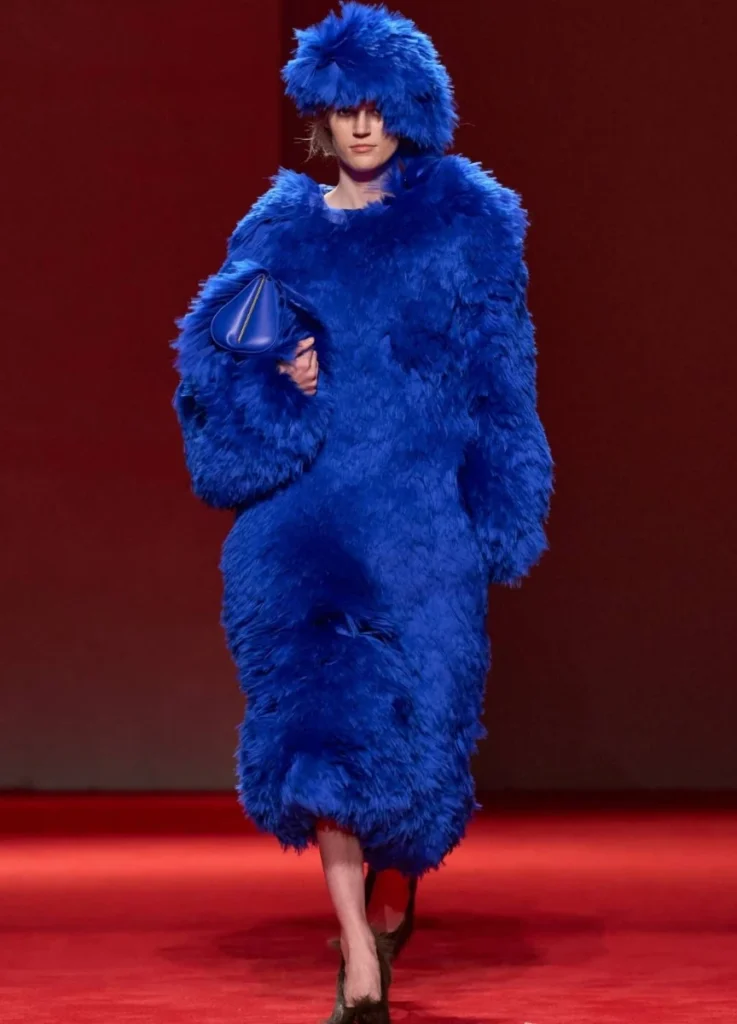
Head-to-toe fur volume. Minimal internal structure. High chromatic contrast with red runway.
The emotional peak of the season.
Starting from black leather restraint, the show ends in saturated color and overwhelming volume. The arc isn’t accidental.
Control. Expansion. Release.
The full structure of the collection, visible in a single look.
Industry Reception
Major fashion publications, including ELLE, described the collection as offering emotional support outfits — a phrase suggesting that texture and volume function as psychological reassurance amid cultural instability.
Industry commentary highlighted three threads:
- modern reinterpretation of heritage codes
- texture-centered strategy reinforcing material authority
- balance between expressive design and commercial viability
The co-ed format and material continuity suggest strategic positioning rather than spectacle.
The reception has also paid attention to Trotter’s two-season trajectory. Her debut last September received broad critical praise; this second outing builds on that momentum without overcorrecting in either direction. The work is arguing for itself, season by season.
Final Assessment
Bottega Veneta Fall/Winter 2026 doesn’t disrupt through novelty.
It deepens existing codes.
- leather becomes denser
- Intrecciato expands structurally
- fur escalates architecturally
The progression — from control to expansion — creates a rhythm that defines the show’s identity.
In an industry often driven by immediacy, this collection proposes durability of structure over speed of trend. Its impact lies less in shock value and more in accumulated material authority.
Trotter’s debut last September proposed a direction. Her second runway builds on it without reset — the same material grammar, scaled and intensified. Two seasons in, the new Bottega is not yet a complete picture. It’s a coherent one.
That may be the most Bottega decision of all.
All images referenced in this post are drawn from Vogue Runway.
[ Related Editorials ]