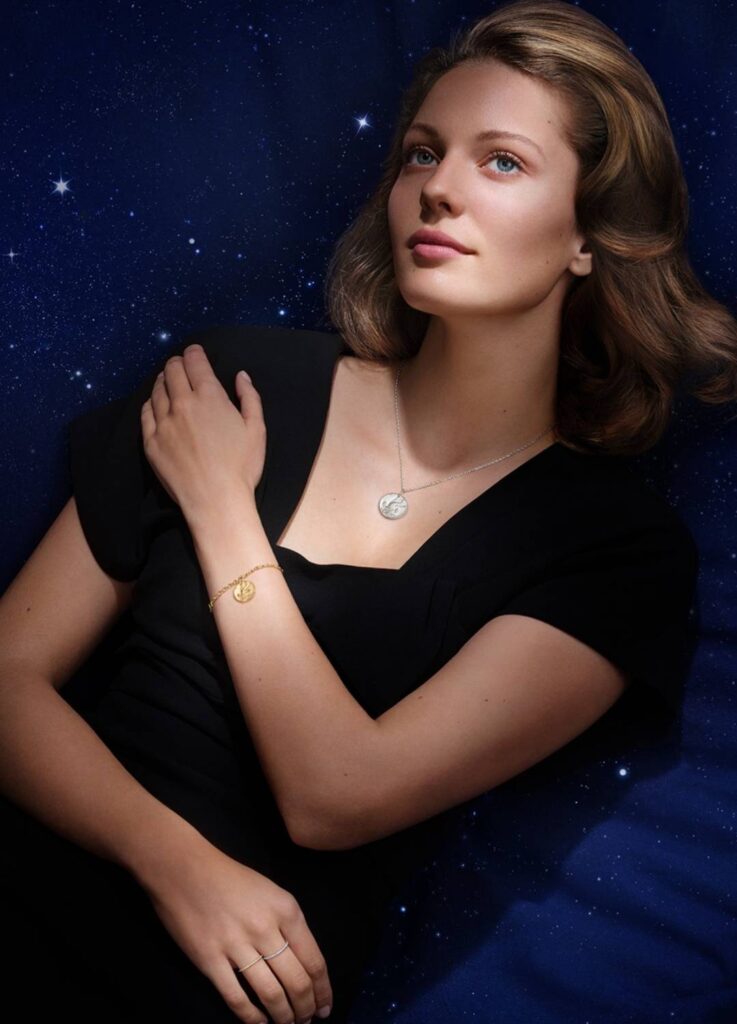
For those who assign meaning to the stars,
the Zodiac collection by Van Cleef & Arpels becomes more than jewelry.
It functions as a personal emblem—a wearable code shaped by celestial rhythm, seasonal passage, and self-definition.
The Zodiac is not about prediction.
It is about recognition.
This article examines the newly released Zodiac lineup through one central question:
Who does this collection truly belong to—and why?
What “Zodiac” Means at Van Cleef & Arpels
Astrological jewelry is hardly new.
Civilizations have looked to the Zodiac since Babylonian times as a way to read seasons, fate, and human character.
What distinguishes Van Cleef & Arpels’ approach is not the motif itself, but the translation of astrology into form.
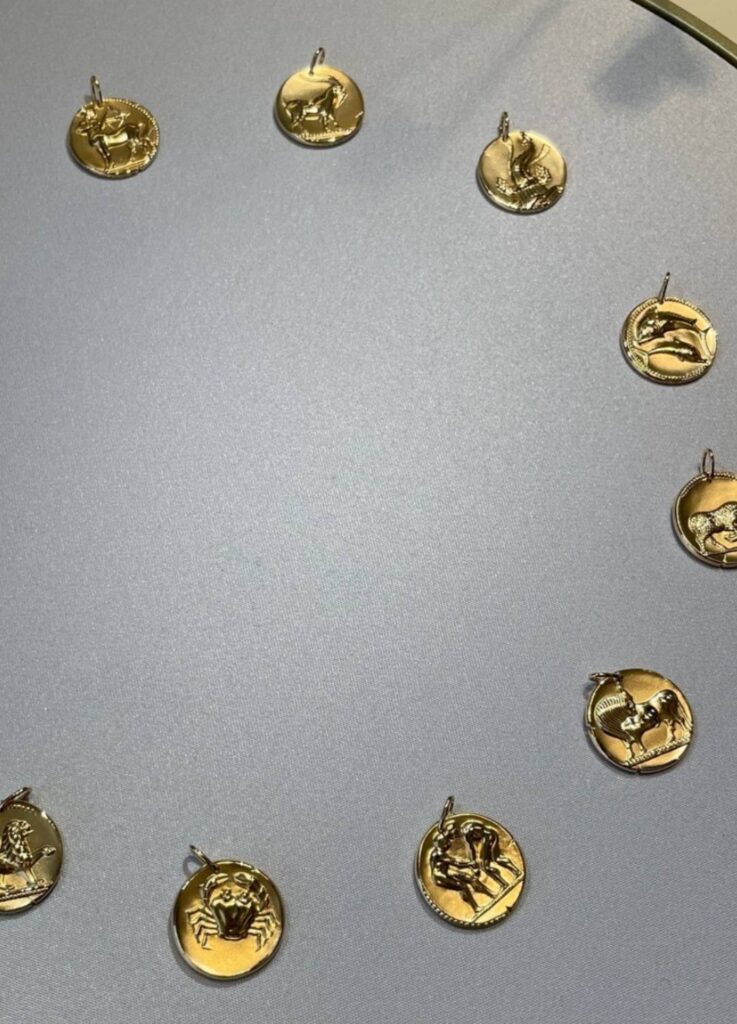
The maison’s Zodiac heritage dates back to the 1950s, when gold medallions and charms depicting constellations were first introduced.
For Van Cleef, the night sky has always belonged to two enduring sources of inspiration: nature and imagination.
Here, astrology is not decorative.
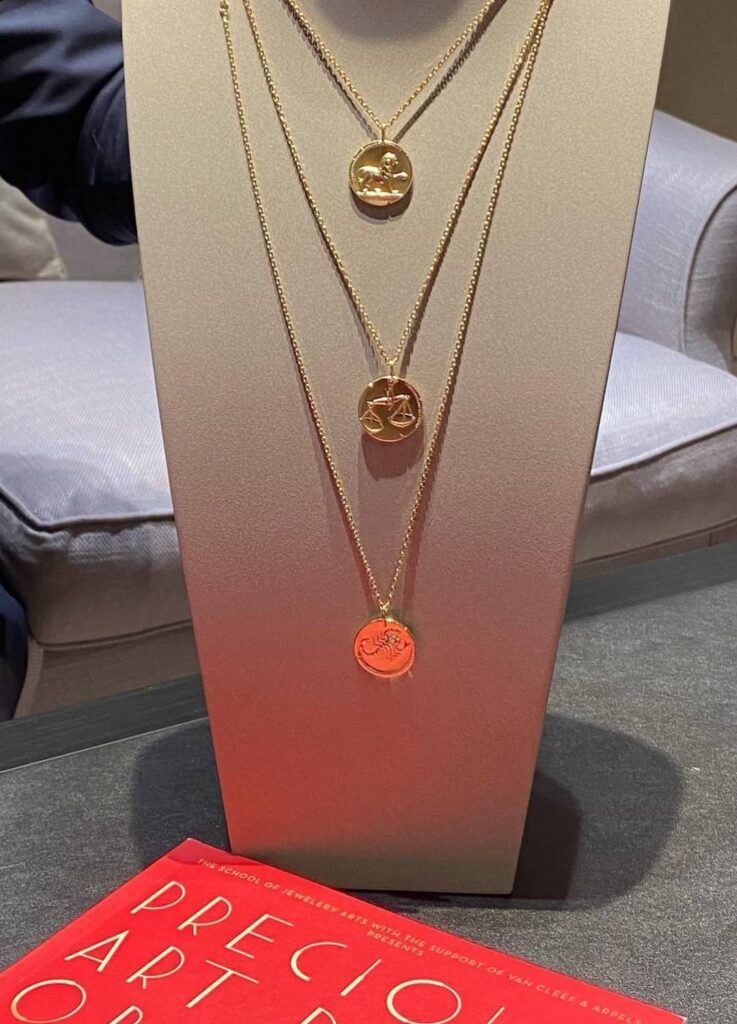
It is treated as a symbolic system—rendered into medals, bracelets, and necklaces that are meant to be worn as narrative.
To wear Zodiac, in this context, is to carry one’s sign not as destiny, but as authorship.
A Code That Transcends Time
The Zodiac collection differs from other astrological jewelry in three decisive ways:
1. Heritage Reinterpreted, Not Repeated
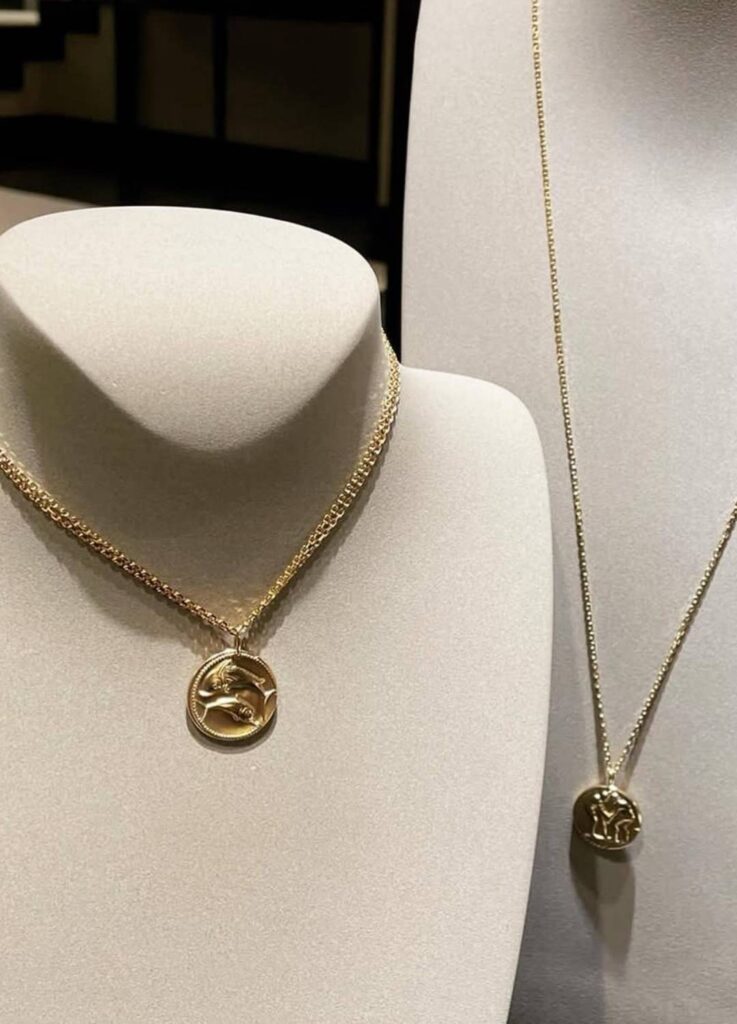
The new medallions pay direct homage to mid-century yellow gold Zodiac medals, now refined with contemporary precision.
Each piece features a double-sided design—one face bearing the zodiac figure in relief, the other engraved with Roman numerals, symbols, and dates.

2. Astrology as Personal Philosophy
Rather than simply engraving signs, the collection translates zodiac traits into a physical experience.
These pieces are not about belief systems; they are about self-awareness.
3. Expanded Ways of Wearing
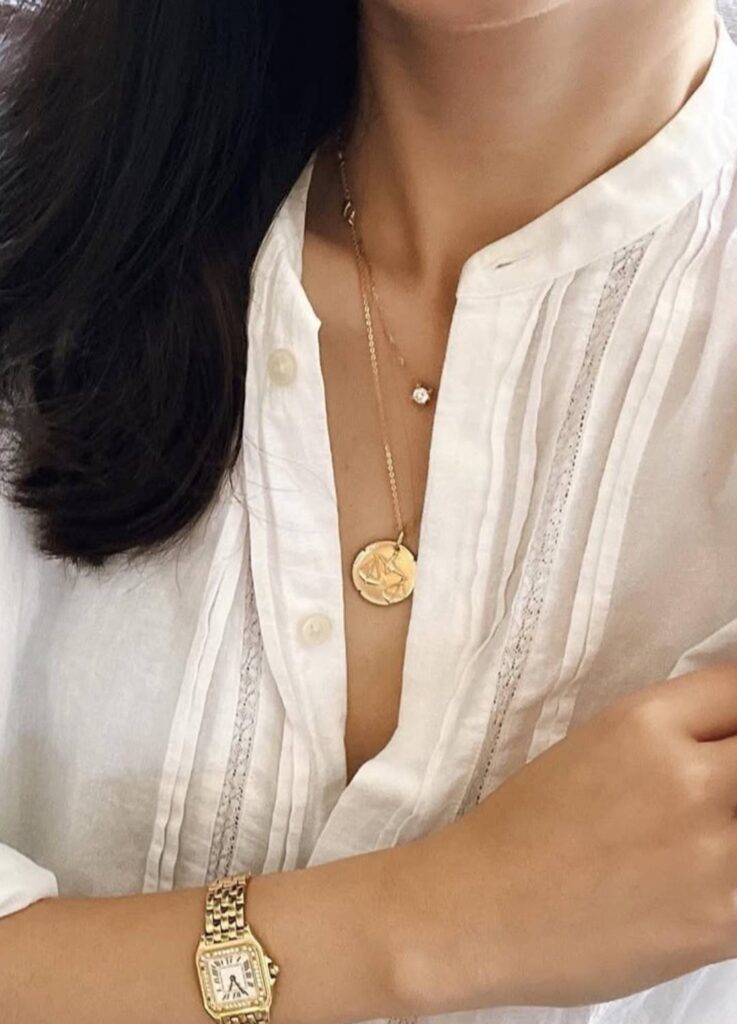
With bracelets, medallions, and long necklaces now part of the lineup, Zodiac adapts to modern life.
The collection is modular—meant to integrate seamlessly into individual routines and identities.
This is astrology reimagined as applied art.
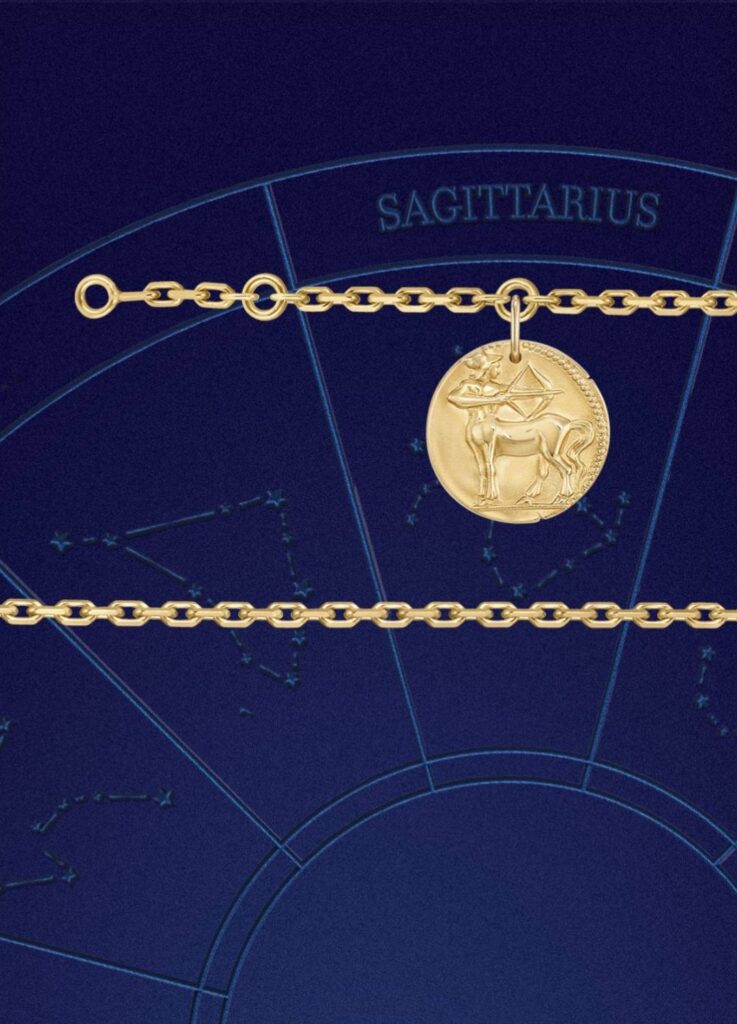
The 2026 Zodiac Lineup: What’s New
The latest release notably expands material and styling options.
- White gold medallions have been introduced alongside classic yellow gold
- Medallions can be paired with interchangeable chains in 50cm or 70cm lengths
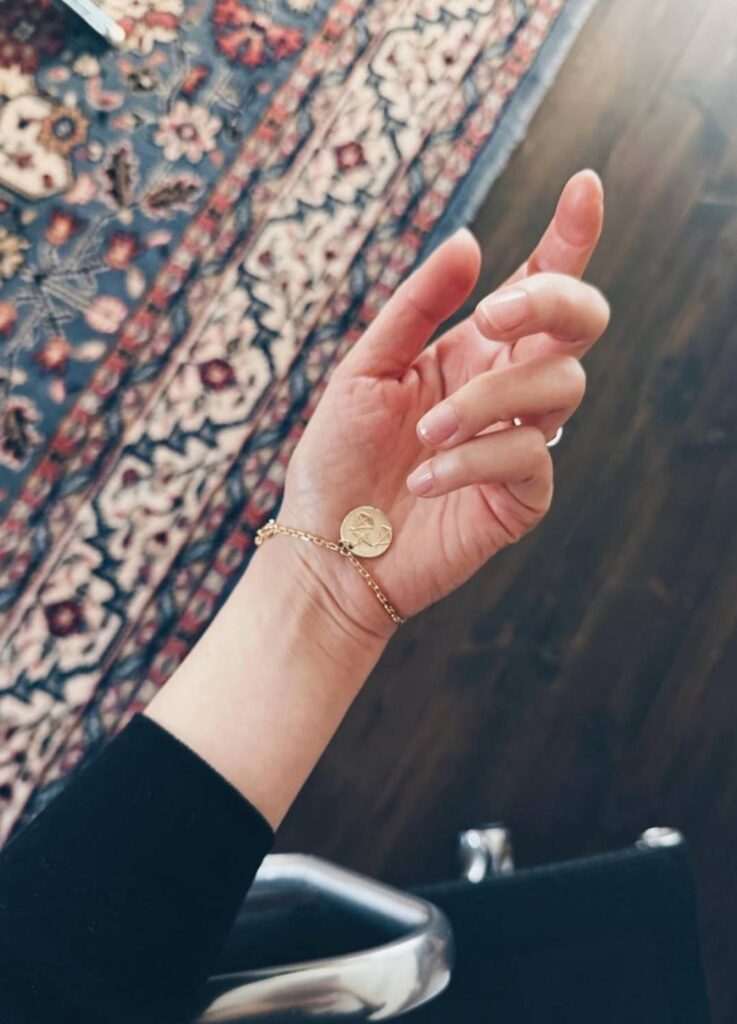
- A yellow gold bracelet version allows the Zodiac to move dynamically with the wrist
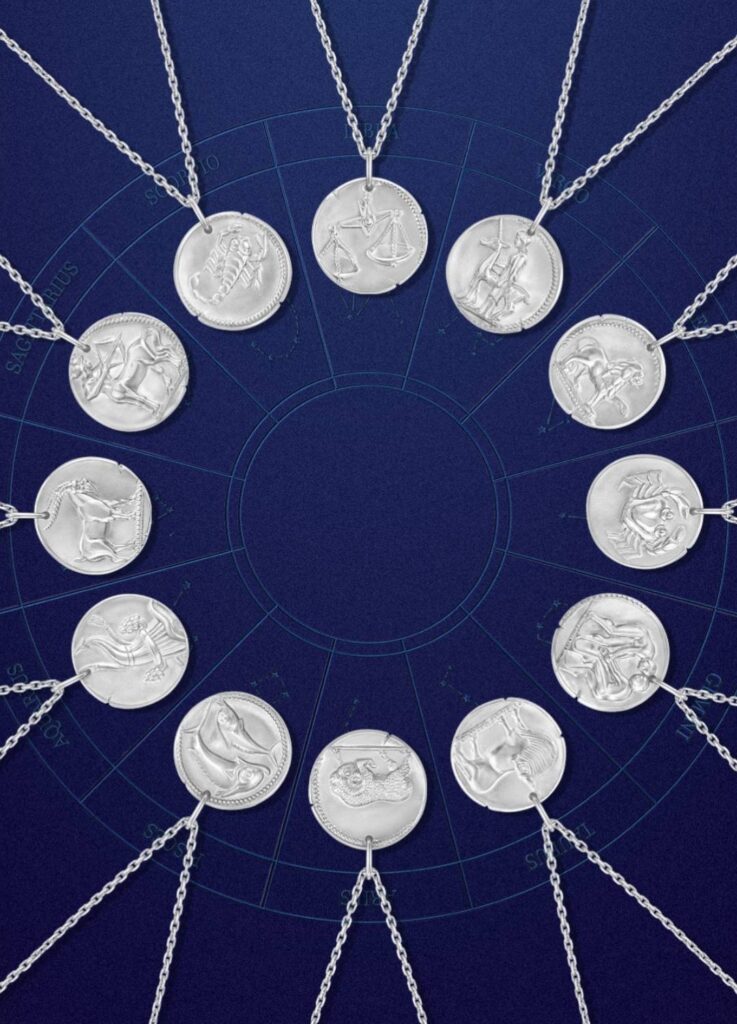
Twelve Signs, One System
The full Zodiac cycle is represented, including:
Taurus, Virgo, Cancer, Leo, Scorpio, Aquarius—alongside all twelve signs—
each rendered with its own iconography, date markings, and symbolic codes.
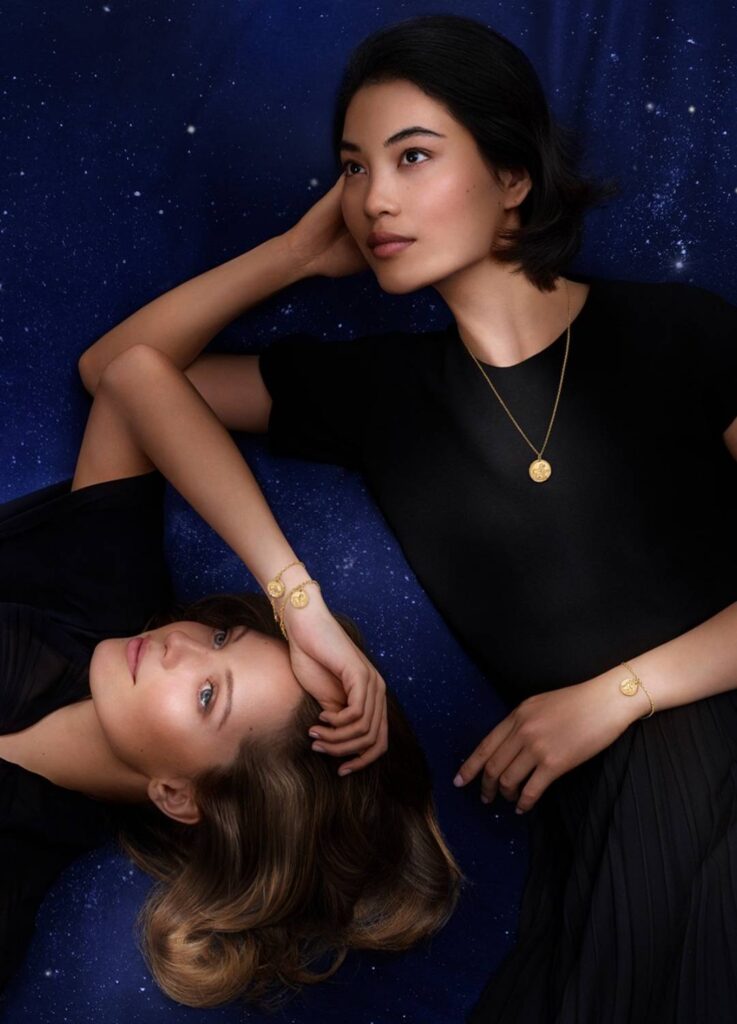
Key Design Features
- Greater wearability across gold tones and silhouettes
- Iconic double-faced construction
- Faithful heritage forms, refined for contemporary proportions
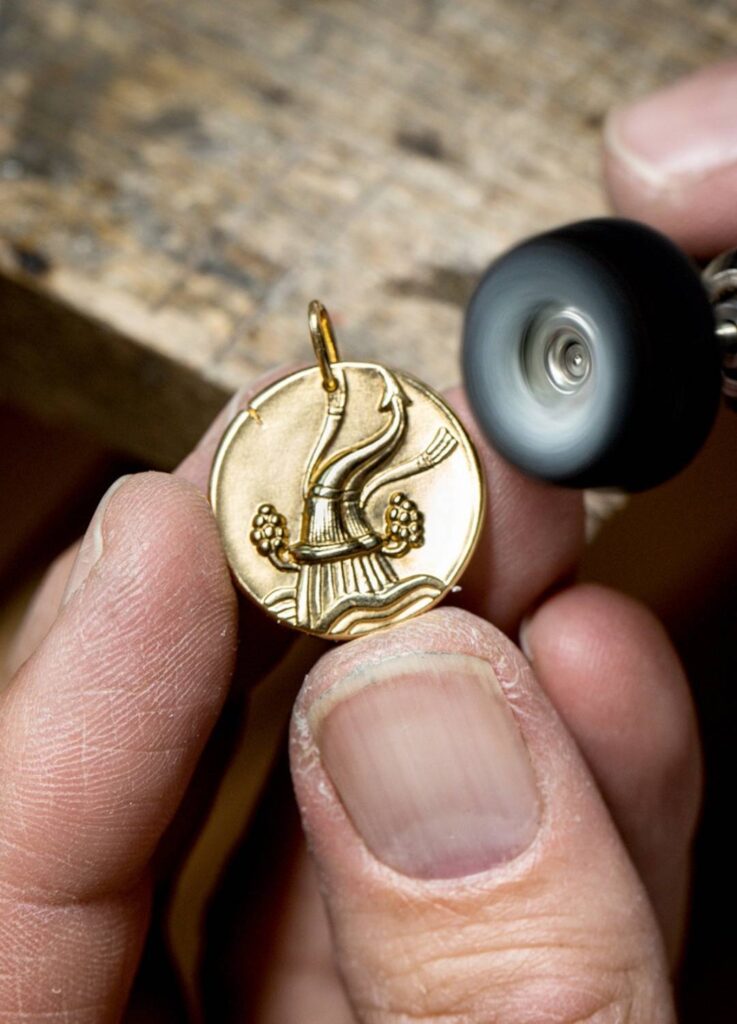
Who the Zodiac Collection Truly Suits
Astrology as Image Structure, Not Fate
Seen closely, the Zodiac is not a statement piece.
It is a quiet symbol.
A perfectly round medallion.
Low-relief sculpting.
A slender chain.
A soft, matte glow of gold.
This collection privileges symbolism over spectacle.
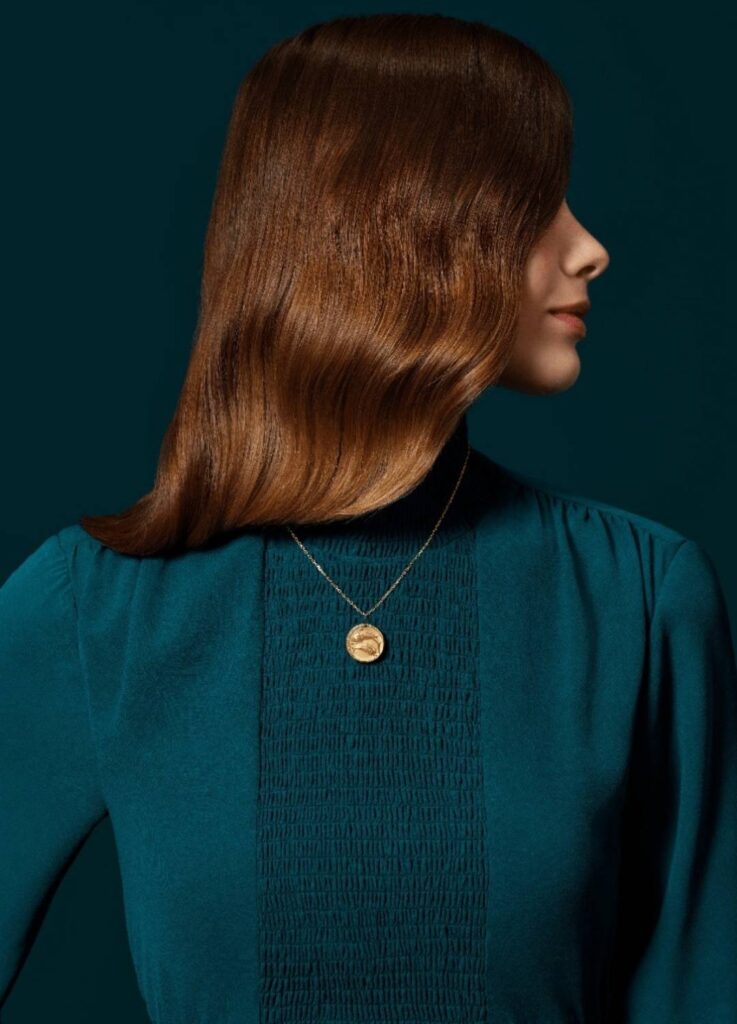
1. Facial Structure: The Round Medallion Effect
The Zodiac medallion’s geometry is unforgiving in the best way.
Most compatible facial structures:
- Oval or softly elongated faces
- Balanced features without dominant cheekbones
- Clean jawlines that allow the medallion to “float” rather than collide visually
On faces with strong angularity or pronounced cheekbones, the medallion may visually fragment the upper and lower face.

2. Skeletal Frame: Why It Favors Delicacy
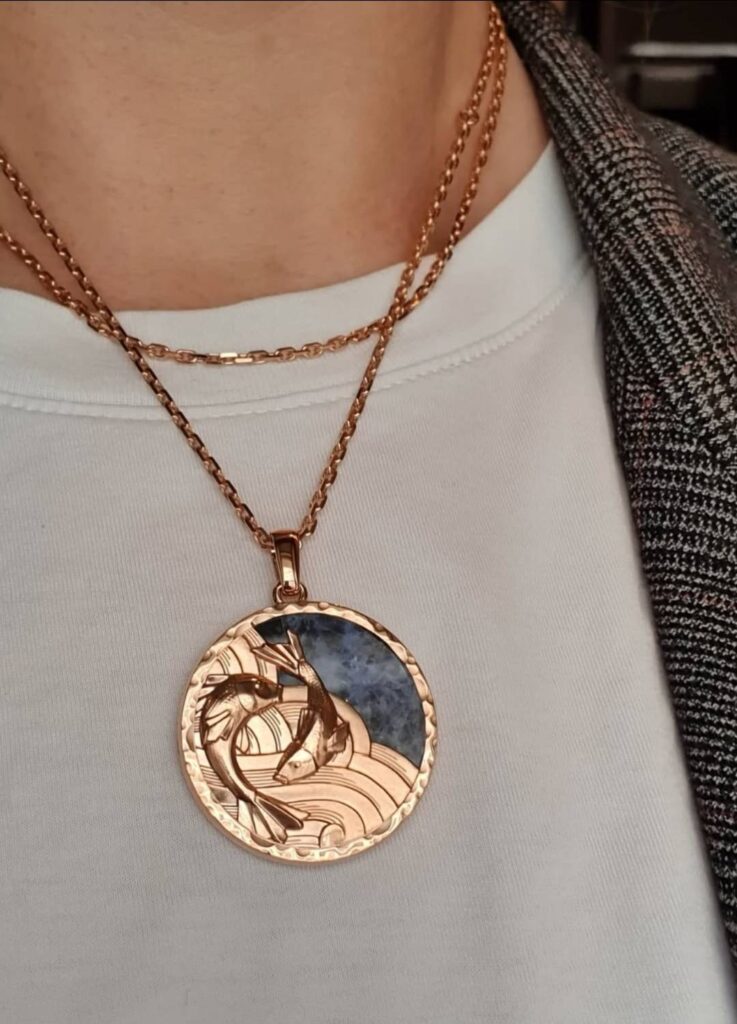
Zodiac is not volumetric jewelry.
Its presence is symbolic, not architectural.
It settles best on:
- Narrow collarbones
- Gently sloped shoulders
- Upper bodies without excessive width
On broader or more muscular frames, the medallion can appear visually diminished.
In such cases, longer necklace lengths restore proportion.
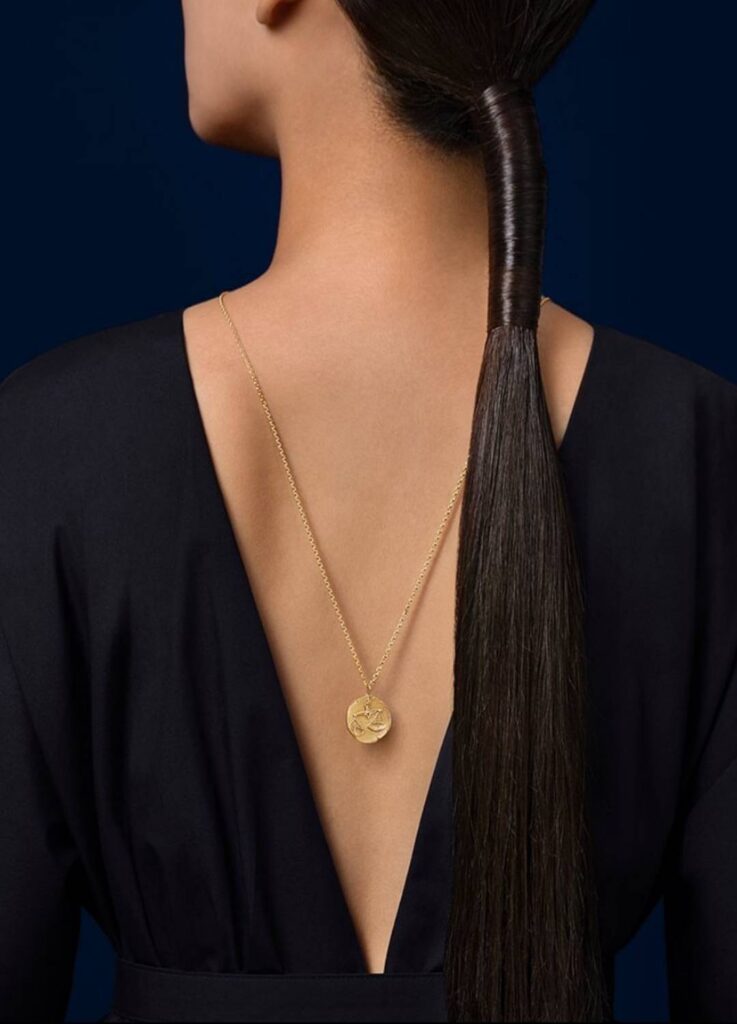
3. Image Compatibility: Who It Speaks To
Zodiac does not compete for attention.
It resonates most with individuals who project:
- Intellectual calm
- Observational presence
- Quiet authority rather than overt charisma
- A preference for classic silhouettes and restrained styling
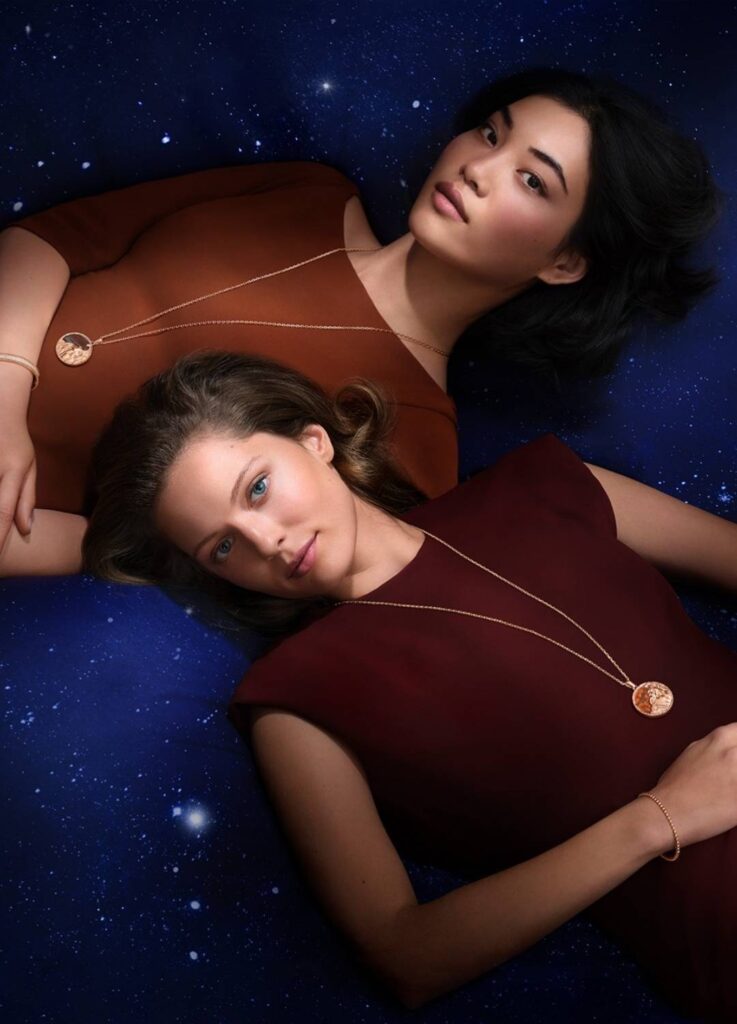
This collection does not align naturally with:
- Highly performative or overtly sensual imagery
- Streetwear-dominant aesthetics
- Heavy logo-driven styling
Zodiac does not say “look at me.”
It says “I am here.”
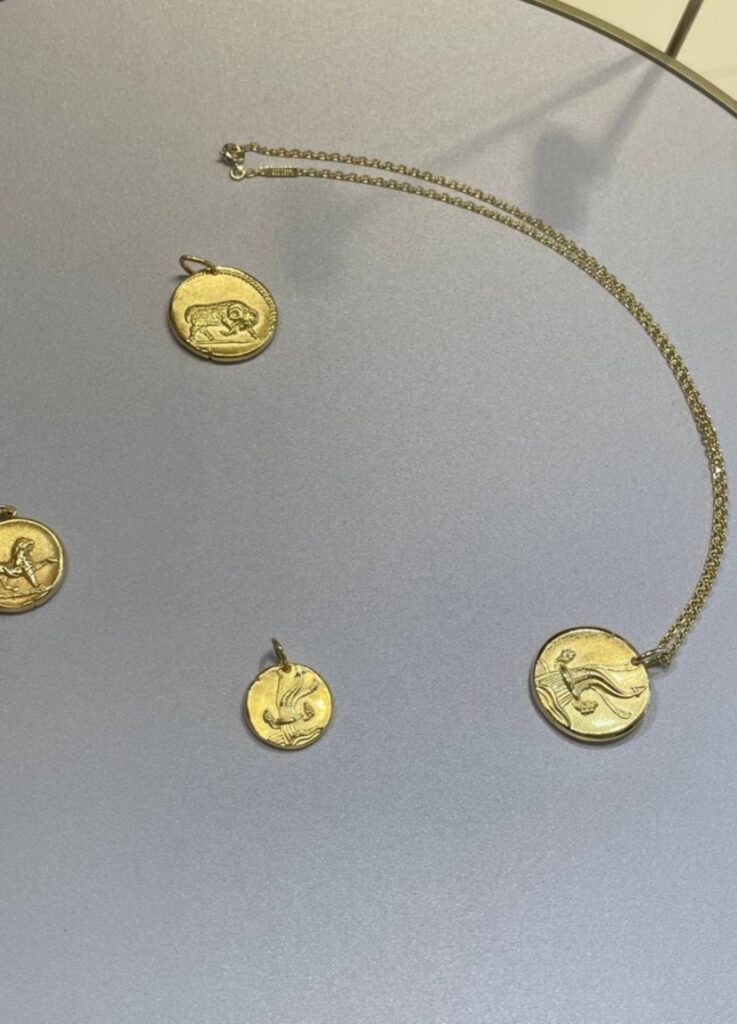
4. Chain Length and Body Proportion
- Short upper body → avoid short chains; choose longer lengths
- Long torso → standard chains work well
- Short or thick neck → long necklace versions are most flattering
The ideal effect is not “worn,” but suspended—as if the medallion hovers in space.
When Zodiac Doesn’t Work
Zodiac may feel underpowered in the following cases:
Strong, Linear Upper Bodies
Broad shoulders, thick collarbones, and angular frames overpower the medallion’s subtlety.
Already Dominant Visual Identities
When facial features, styling, or makeup are already commanding, Zodiac’s symbolism may disappear.
Very Round Facial Structures
Round face + round medallion amplifies softness.
Here, long necklaces or bracelet formats create better balance.
Final Reflection: When the Zodiac Becomes a Sentence
The Zodiac does not perform.
It reveals.
It is not for those seeking decoration,
but for those whose identity already has structure.
Astrology, here, is not destiny.
It is form.
And when placed on a person whose image is already resolved,
the Zodiac medallion becomes a quiet line of poetry—
written not in the stars,
but on the skin.
[ Related Editorials ]