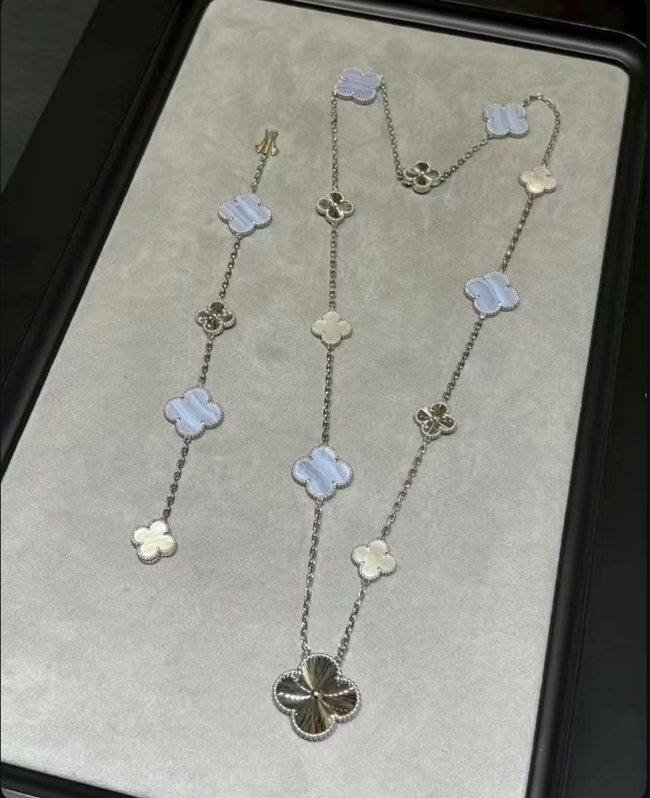
The Alhambra is not merely a motif—it is a structure of light.
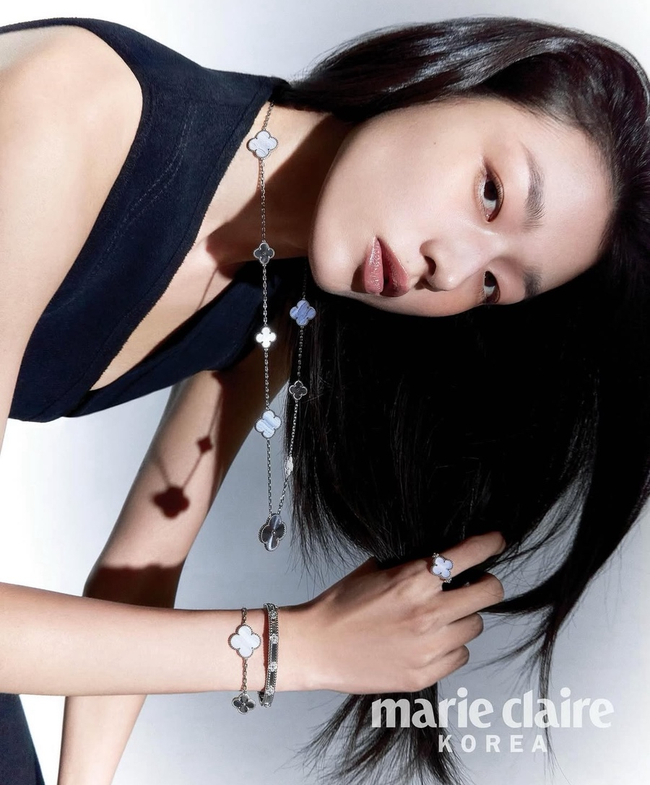
With the newly released 15-motif Alhambra necklace, Van Cleef & Arpels revisits one of its most recognizable codes and subtly changes how that light behaves on the body.
This is not a simplified version of the classic 20-motif long necklace.
It is a recalibrated one.
In this review, I focus on the 15-motif necklace as a wearable structure: how it differs from the 20-motif, how the new modular bracelet integration works, which body types benefit most, and—equally important—why it may not be the right choice for everyone.

1. A New Rhythm Within Alhambra
Recent Alhambra releases suggest that the maison is less interested in adding new colors than in reworking rhythm.
Unlike traditional single-material repetitions, the new 15-motif necklace alternates textures and stones. The result is not visual contrast for its own sake, but a controlled modulation of reflection. Light does not travel in a straight line; it circulates.
This is why the piece feels less symbolic and more kinetic.
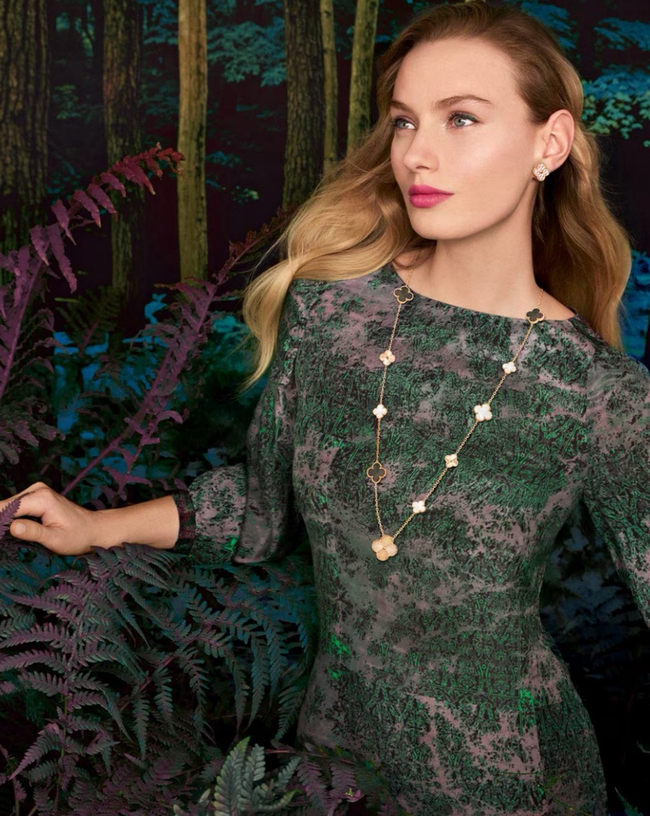
2. Rose Gold vs. White Gold
Two Temperatures, Two Behaviors
– Rose Gold Version
- Grey mother-of-pearl
- White mother-of-pearl
- Rose-gold guilloché
This composition softens rose gold’s inherent warmth. The grey MOP absorbs excess glow, leaving a calm, lingering radiance rather than immediate brilliance. On the body, it reads as quiet and emotional, especially effective on softer facial structures.

– White Gold Version
- Chalcedony (pale blue)
- White mother-of-pearl
- White-gold guilloché
Here, the light is cooler and more precise. Chalcedony acts almost like a filter, lifting the face visually while keeping the composition clean. Notably, there are no diamonds—yet the balance feels complete. Many editors have pointed out that the absence of stones allows the structure itself to remain legible.
In essence:
- Rose gold leaves a memory.
- White gold creates stillness.
3. 15 Motifs vs. 20 Motifs
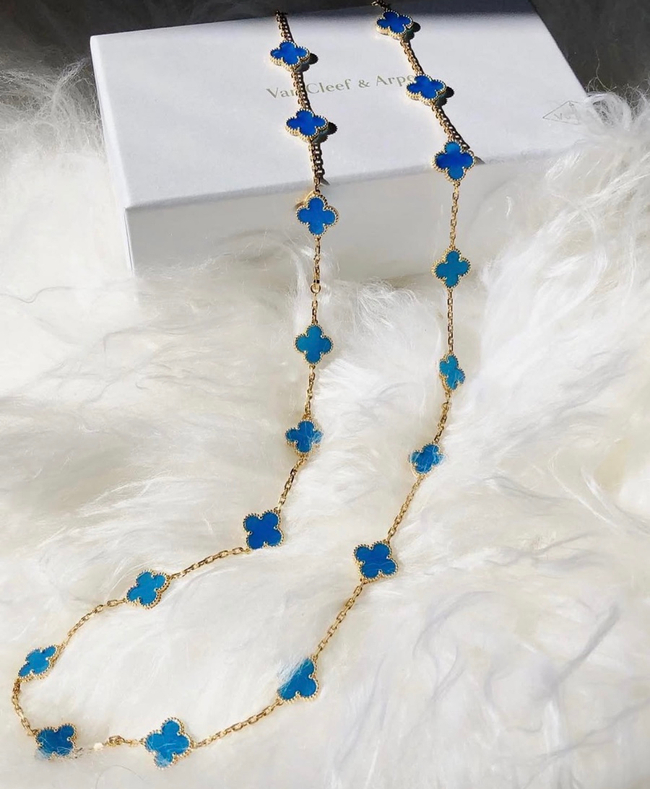
Not a Matter of Length, but of Information Density
The 20-motif Alhambra is often treated as the definitive classic: even repetition, stable rhythm, immediate brand recognition.
The 15-motif, however, interrupts that certainty.
| Aspect | 20-Motif Classic | 15-Motif New |
|---|---|---|
| Rhythm | Uniform repetition | Alternating textures |
| Visual weight | Consistent, downward | Circulating, central |
| Movement | Linear | Near-circular |
| Wearability | Fixed | Modular, transformable |
On faces with strong features or narrow shoulders, the 20-motif can pull attention downward, thinning the presence of the face itself. The 15-motif, with its tonal variation, keeps the eye moving—often resulting in a more dimensional, balanced impression.
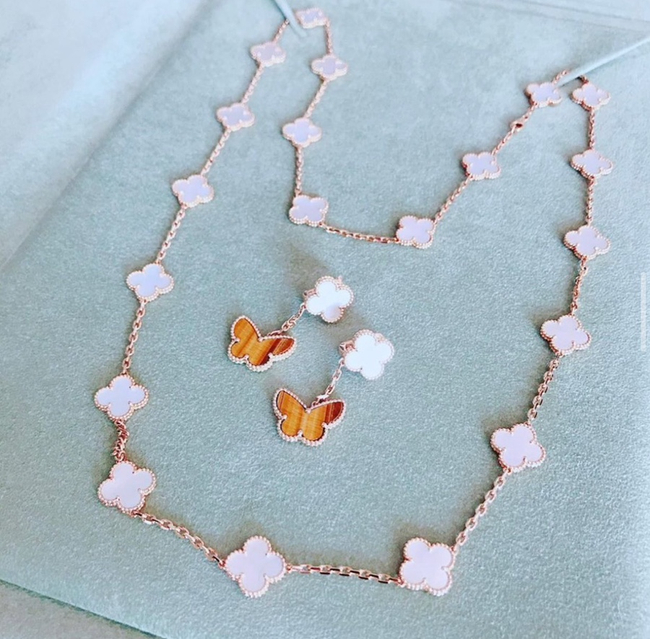
4. Modular Design: Necklace ↔ Bracelet
The defining technical feature of this release is its modularity.
The system consists of:
- A 15-motif necklace
- A dedicated 4-motif bracelet
Using a discreet clasp integrated into a motif, the bracelet can extend the necklace or be worn independently. Importantly, the motif sequence is engineered so that when connected, tonal rhythm remains intact—this is not an afterthought, but a core design decision.
Recommended configurations:
- Necklace alone (clean vertical flow)

2. Necklace + bracelet extension (longer, richer rhythm)
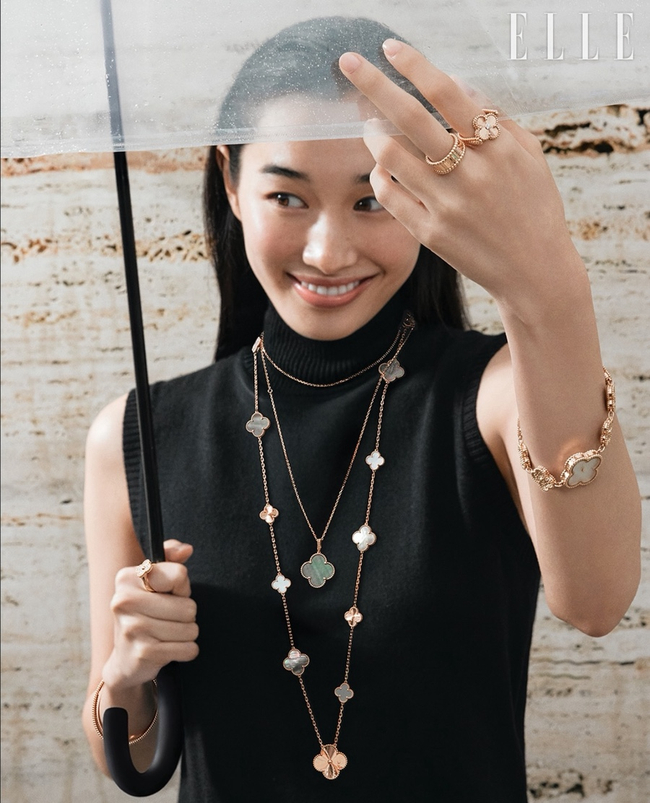
3. Double-wrap (connected, then wrapped twice)

4. Bracelet alone (ideal for slim wrists)
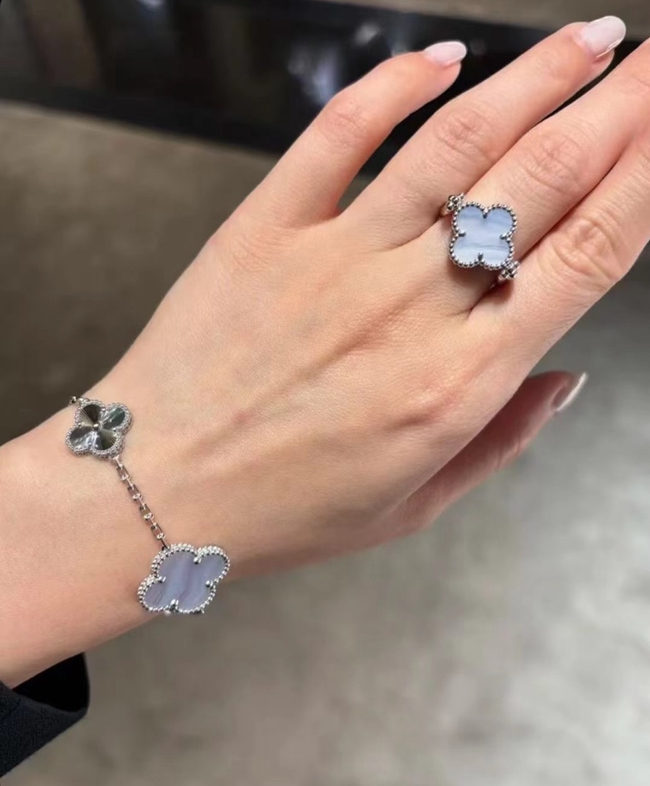
5. Split wear: necklace + bracelet on opposite wrist
Mixing with older Alhambra pieces is not advised. Differences in spacing and weight distribution can cause imbalance and twisting.
5. Body Type & Styling Guidance
Jewelry is architecture. Skin tone alone is not enough.
- Short neck or compact upper body
→ 15-motif preferred; interrupted rhythm lengthens the neckline visually. - Broad shoulders or straight frame
→ White gold version; chalcedony clarifies facial structure. - Soft shoulder line, slender neck
→ Rose gold version; grey MOP softens transitions and adds warmth.
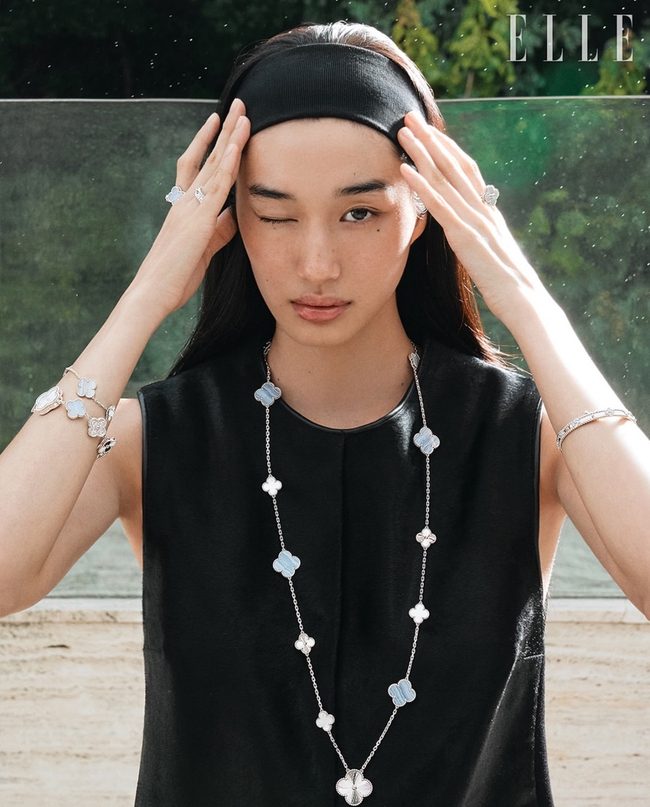
Height & Proportion
- Over 165 cm, long neck → extended or double-wrap wear
- Around 160 cm, narrow shoulders → double-wrap to anchor the face
- Slim wrists (14–15 cm) → bracelet alone is exceptionally balanced
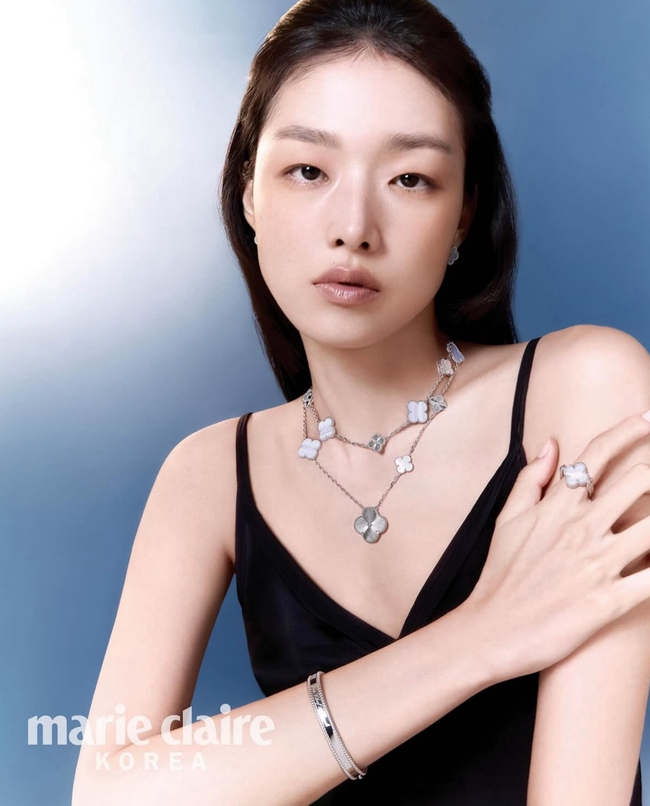
6. Skin Tone Considerations
| Skin Tone | Recommendation | Reason |
|---|---|---|
| Cool, clear | White gold + chalcedony | Enhances clarity, lifts complexion |
| Warm, deep | Rose gold + guilloché | Complements warmth, controls brightness |
7. Why I Would Not Buy a Long Alhambra Necklace
Long necklaces are beautiful.
But beauty and resonance are not the same.
On my frame, length disperses focus. The face loses its center; the structure overwhelms rather than completes. I prefer jewelry that stays close to the body’s rhythm, not one that pulls away from it.
For me, the Alhambra long necklace remains an object of admiration—one that belongs more to contemplation than to daily alignment.
Closing Thoughts
Light Is Defined by Where It Rests
This new Alhambra release translates emotion through material:
Grey MOP, chalcedony, guilloché—each carries a different temperature.
Yet the decisive factor is not how much light the jewelry emits, but where that light settles.
For some, that place will be the neckline.
For others, the wrist or the hand.
I already know where mine is.
And so this necklace remains, for me, not a purchase—but a record.
Because sometimes, subtracting light reveals the face more clearly than adding it ever could.

[ Related Editorials ]