Inside Miu Miu Fall Winter 2026
Miu Miu Fall/Winter 2026 marks a subtle but important shift in the brand’s direction.

Rather than introducing a dramatic new concept, the collection focuses on recalibrating proportion, material weight, and silhouette balance. Tailoring becomes sharper, leather gains presence, and the overall wardrobe feels more grounded and controlled than in previous seasons.This review focuses on silhouette, proportion, and how the collection translates into real wear.
The Miu Miu Fall Winter 2026 collection did not attempt a dramatic reinvention. Instead, it felt like a moment of recalibration.
For several years now, Miu Miu has occupied a unique position within the fashion industry. While it began historically as Prada’s younger, more playful counterpart, the brand has gradually evolved into one of the most influential fashion forces of the past decade. Particularly since the early 2020s, Miu Miu has repeatedly introduced silhouettes and styling ideas that later appeared across the broader fashion landscape.
The micro-miniskirt phenomenon of 2022 is perhaps the most obvious example. That collection reshaped discussions around proportion, youth culture, and nostalgia in fashion. But beyond that moment, Miu Miu has continuously explored how femininity can be expressed through clothing that sits somewhere between the polished and the imperfect.
Against this background, the Fall/Winter 2026 runway feels less like a radical statement and more like a careful rearrangement of the Miu Miu wardrobe.
Tailored suits, leather dresses, outdoor references, and casual styling elements appear side by side throughout the show. Rather than emphasizing a single visual narrative, the collection presents multiple ideas about how contemporary women might dress—and how these ideas can coexist.
The result is a runway that reads as thoughtful rather than theatrical.
Season Context
From Youth Subversion to a More Grounded Wardrobe
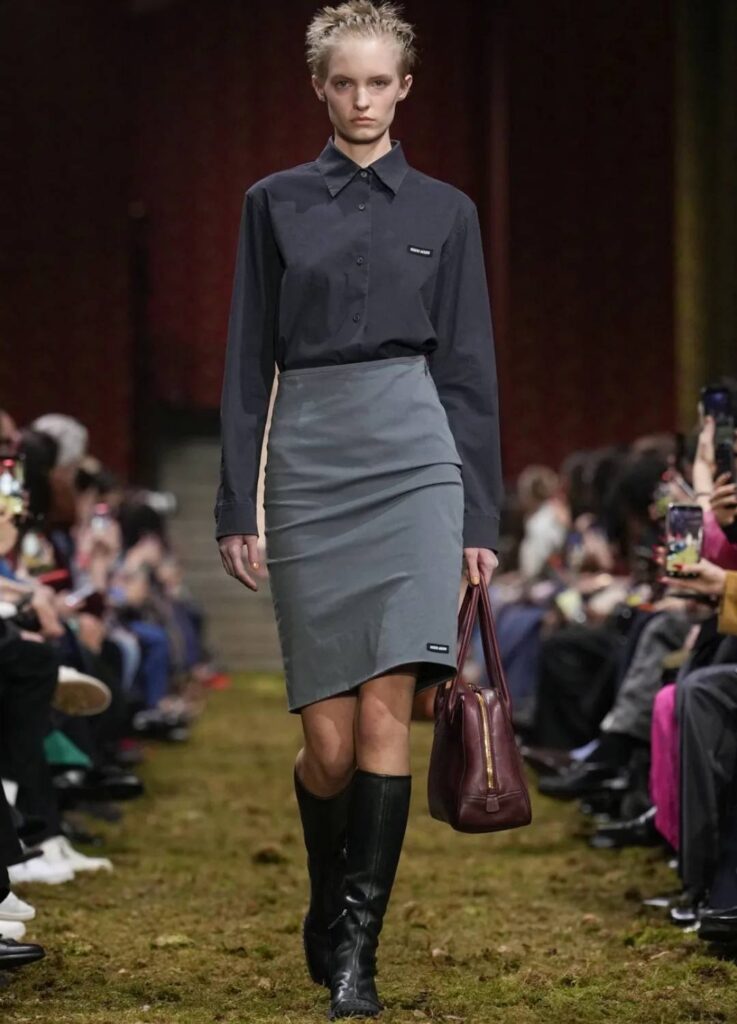
Over the past several seasons, Miu Miu has frequently explored themes associated with youth culture. Many collections emphasized extreme proportions—very short skirts, visible waistbands, or deliberately awkward styling combinations.
These elements created a recognizable aesthetic language. Yet they also carried a certain performative quality, as if the clothes were staging a conversation about adolescence and rebellion.
Fall/Winter 2026 shifts the focus slightly.
The collection still carries the playful tension typical of Miu Miu, but the garments themselves feel more grounded. Instead of emphasizing extreme silhouettes, the show introduces pieces that look closer to everyday clothing: tailored jackets, leather dresses, straight trousers, and practical outerwear.
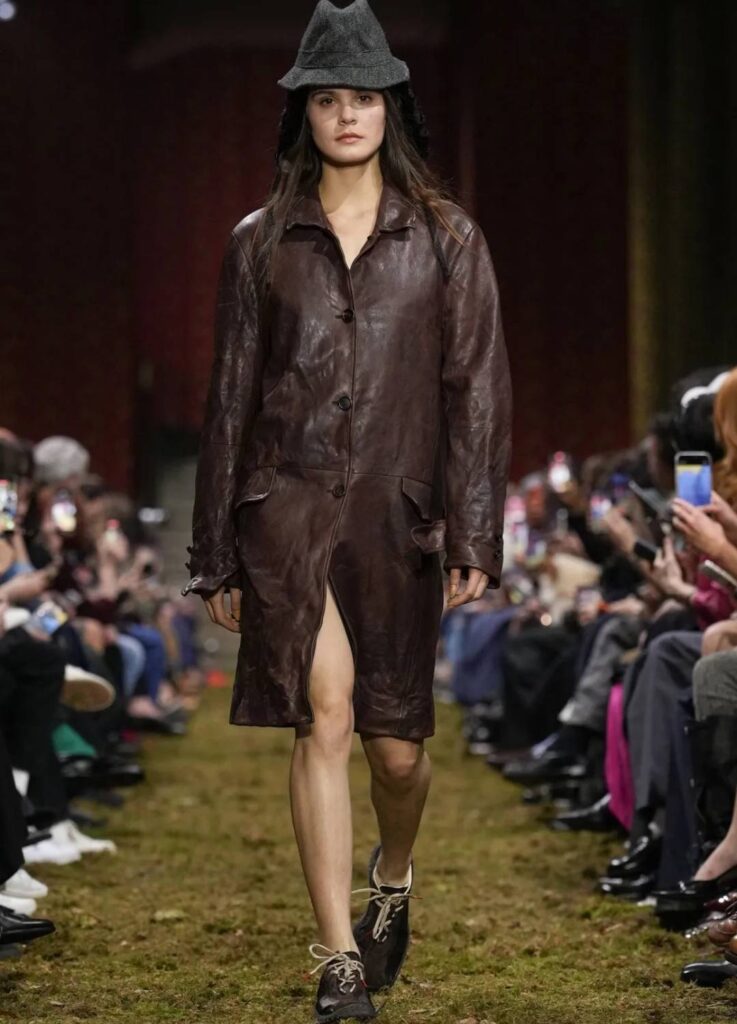
This shift does not represent a rejection of Miu Miu’s identity. Rather, it suggests a gradual expansion of it.
Where previous collections often centered on exaggerated youthfulness, this runway seems more interested in the complexity of adulthood—how clothing can move between professional, personal, and casual environments without losing its character.
Structural Center of the Collection
Tailoring and Practical Clothing in Dialogue
Looking at the collection from a structural perspective, a clear axis emerges: the dialogue between tailored clothing and more practical, everyday garments.
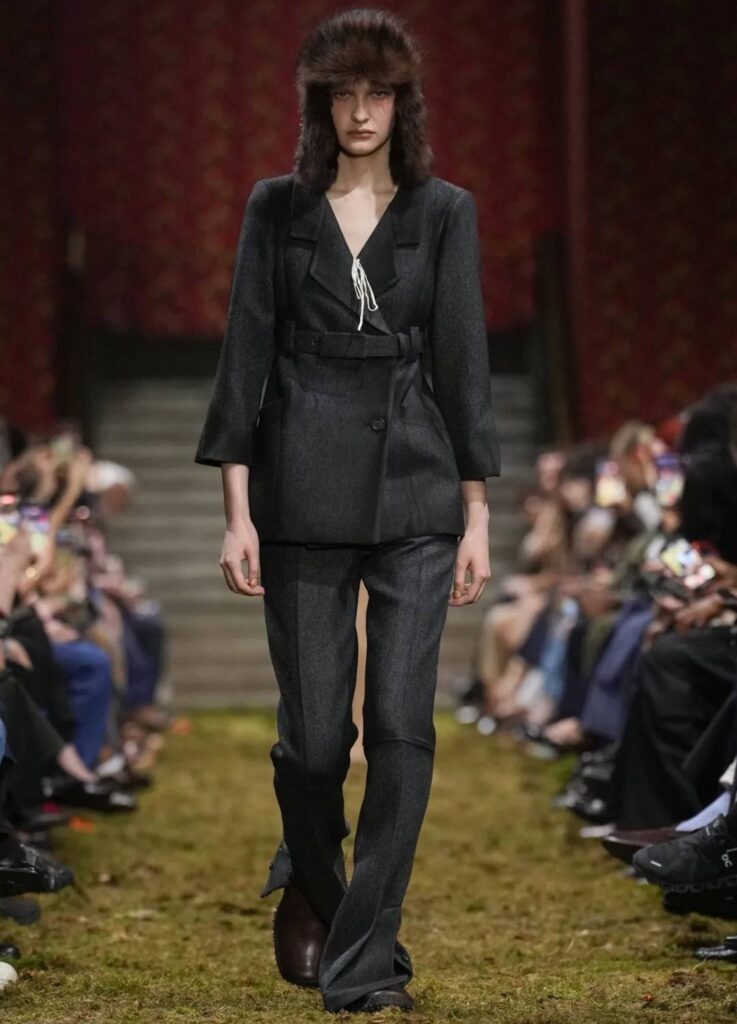
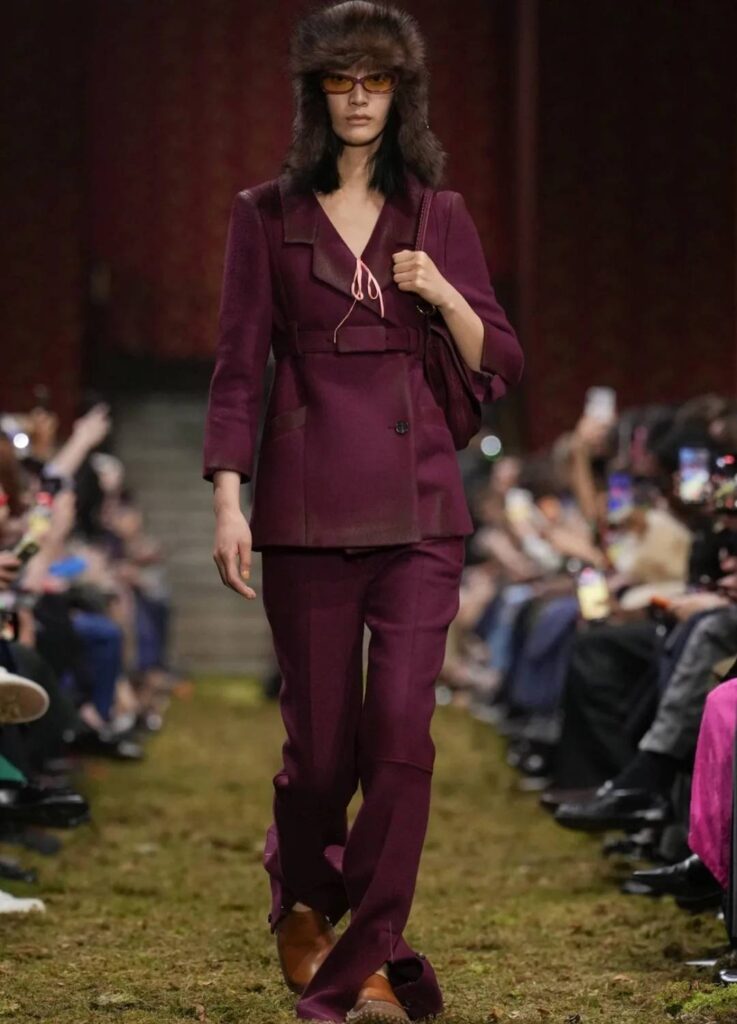
Tailoring appears early in the show through structured jackets and suits. These garments introduce a sense of order and discipline. Their silhouettes are relatively clean and composed, reflecting the conventions of traditional luxury fashion.
Yet this sense of order is rarely allowed to remain stable for long.
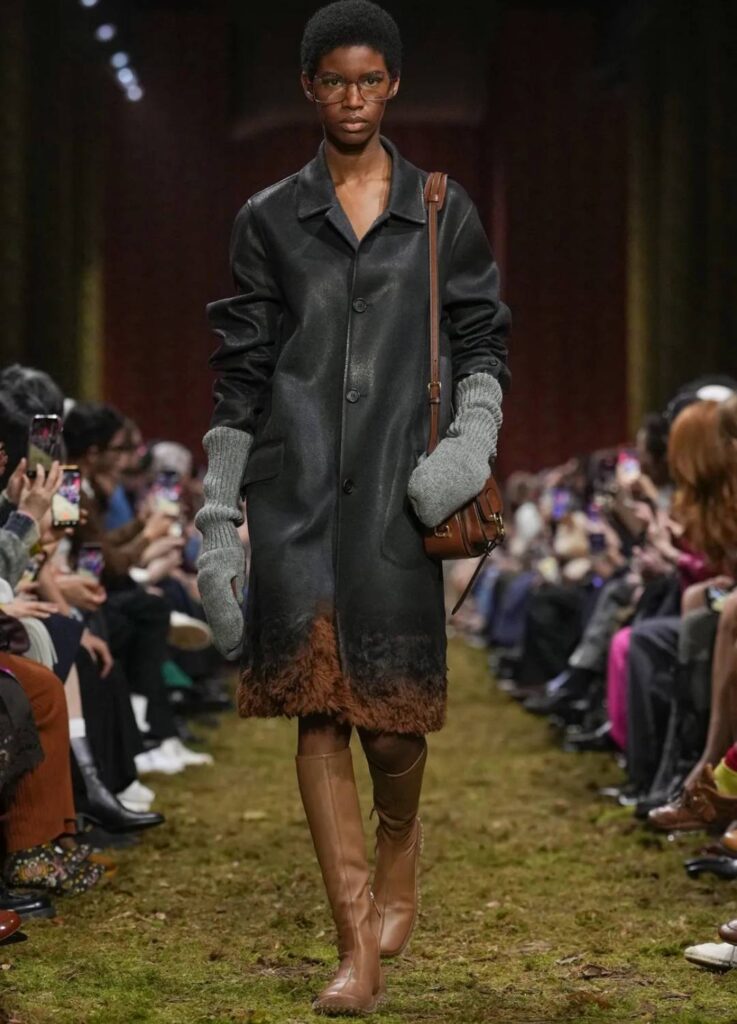
Soon after, leather dresses begin to appear, followed by shorter dresses and casual styling elements. These pieces soften the initial formality of the tailoring. The tension between these categories—formal structure and everyday ease—creates much of the visual rhythm of the runway.
Instead of separating these two modes of dress, the collection allows them to coexist within the same wardrobe.
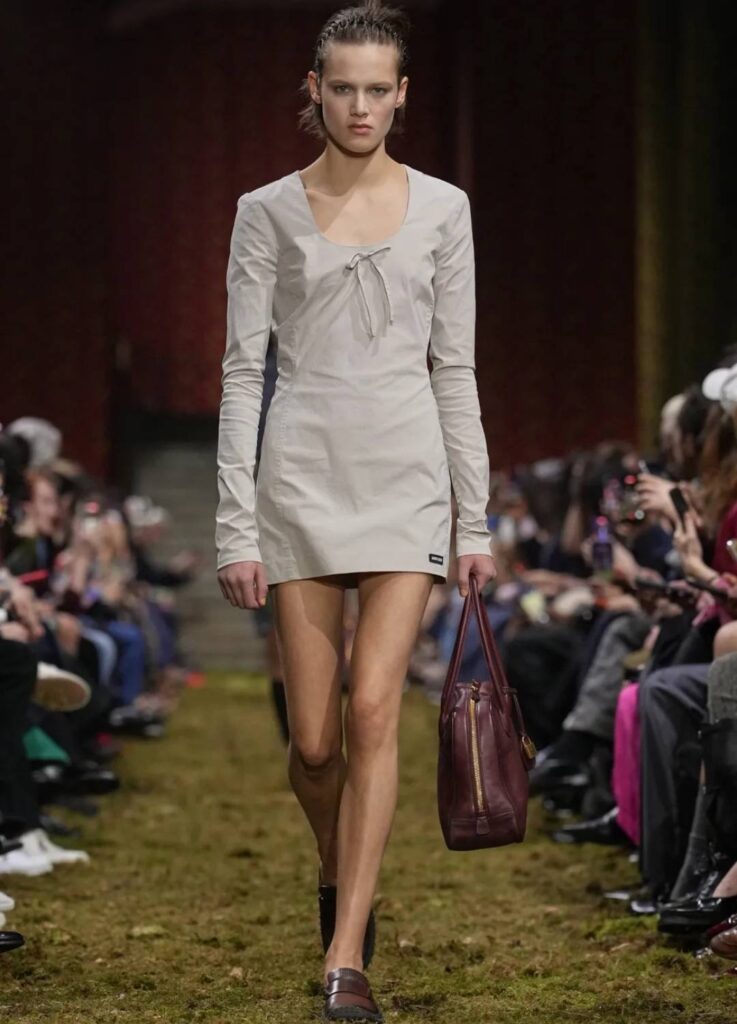
A tailored jacket might appear with a minimal dress. A leather garment may be styled in a way that feels unexpectedly relaxed. Through these combinations, Miu Miu presents clothing not as rigid categories but as adaptable tools for navigating different moments of life.
This structural dialogue is one of the defining characteristics of the collection.
Silhouette
A More Balanced Proportion
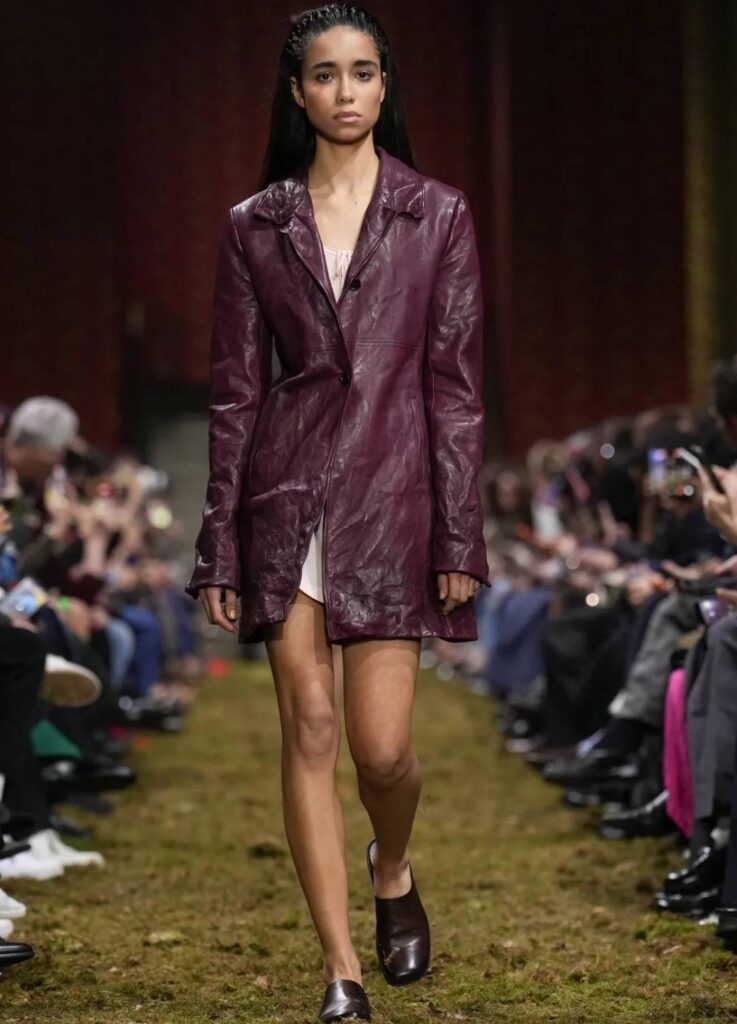
In terms of silhouette, the most noticeable change this season is a shift toward more stable proportions.
Previous Miu Miu collections often relied on extremely short skirts and exaggerated waistlines. Those proportions created an intentionally destabilized visual language.
In Fall/Winter 2026, however, the silhouettes appear slightly more measured.
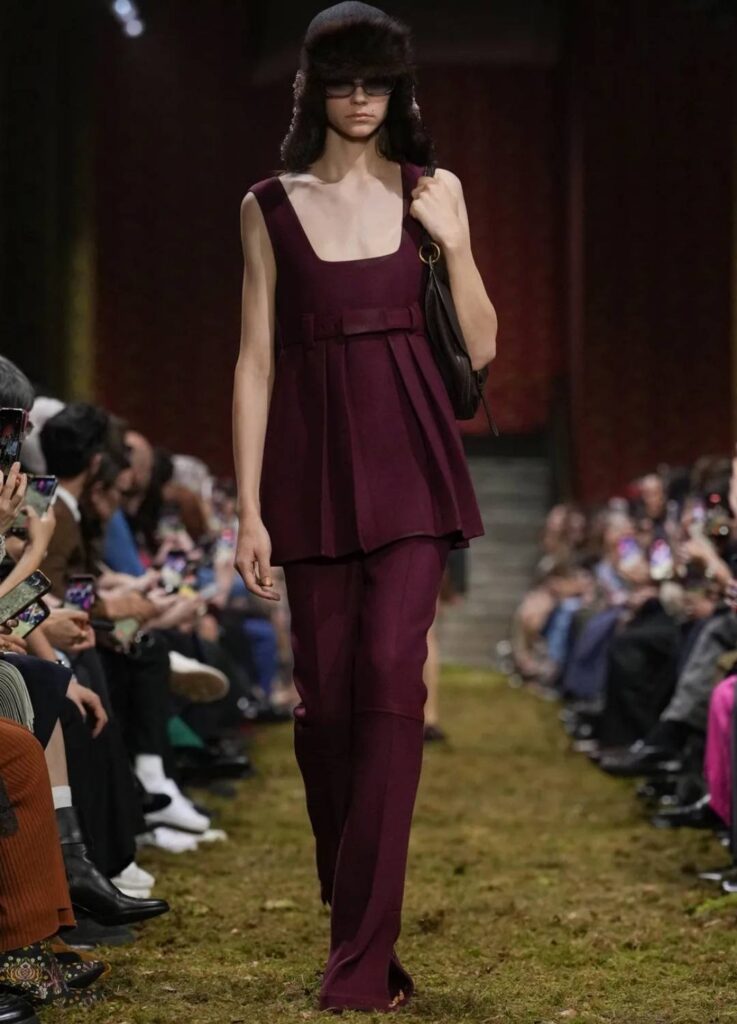
Tailored jackets play a central role in establishing this balance. They are paired with shorter skirts or dresses, but the overall effect feels less extreme than before. Straight trousers also appear in several looks, adding a vertical structure to the collection.
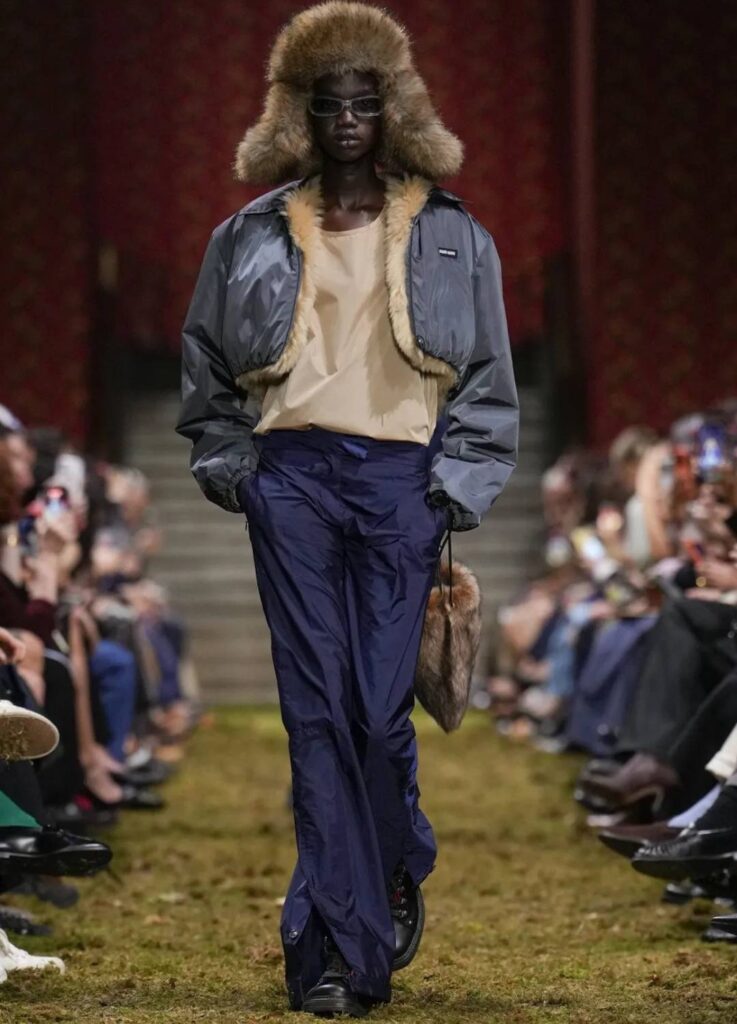
Leather dresses contribute another important shape. These garments are typically slim and direct, following the body without excessive embellishment.
Taken together, the silhouettes create a sense of composure. The collection still retains elements of youthfulness, but the proportions suggest a wardrobe that has matured slightly.
This subtle shift is significant. It indicates that Miu Miu may be moving toward a broader definition of its wearer—someone who remains playful but is no longer defined solely by youthful rebellion.
Materials
Leather as a Central Element
Material choice plays a crucial role in shaping the tone of the runway.
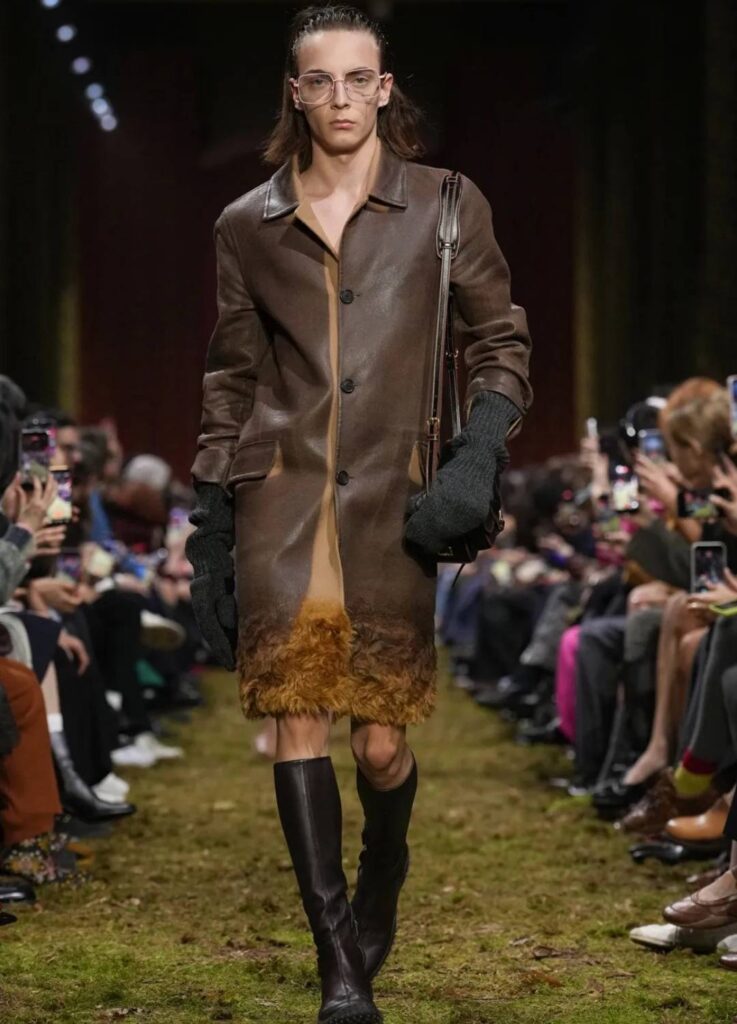
Leather emerges as one of the most prominent fabrics of the collection. Several dresses and jackets appear in rich leather finishes, often in deep brown or black tones.
These pieces introduce a strong visual contrast to the softer tailoring fabrics seen earlier in the show. Leather has a distinct presence on the body: it reflects light differently, holds structure more firmly, and carries associations with durability and strength.
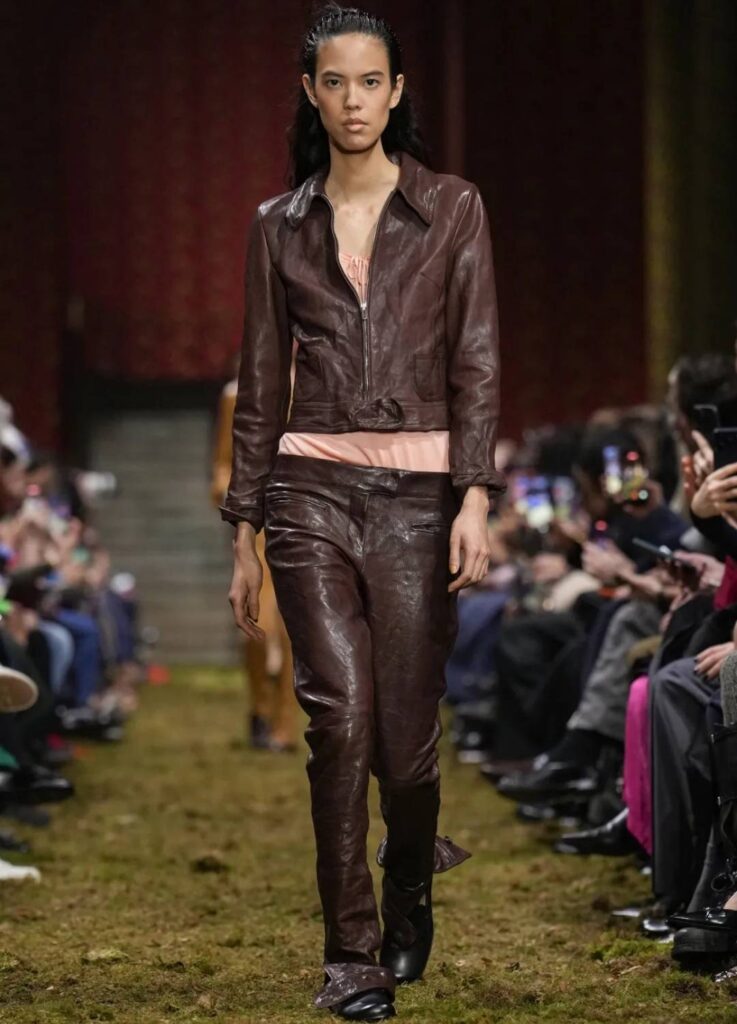
In this context, leather acts as a counterbalance to the more delicate elements of the collection.
At the same time, traditional tailoring fabrics—such as wool suiting and knitwear—remain visible throughout the runway. These materials reinforce the structured side of the collection’s central dialogue.
By alternating between these textures, the show maintains a dynamic rhythm. Each material contributes a slightly different emotional register, moving the collection between discipline and ease.
Styling Tension
The Role of the Fur Trapper Hat
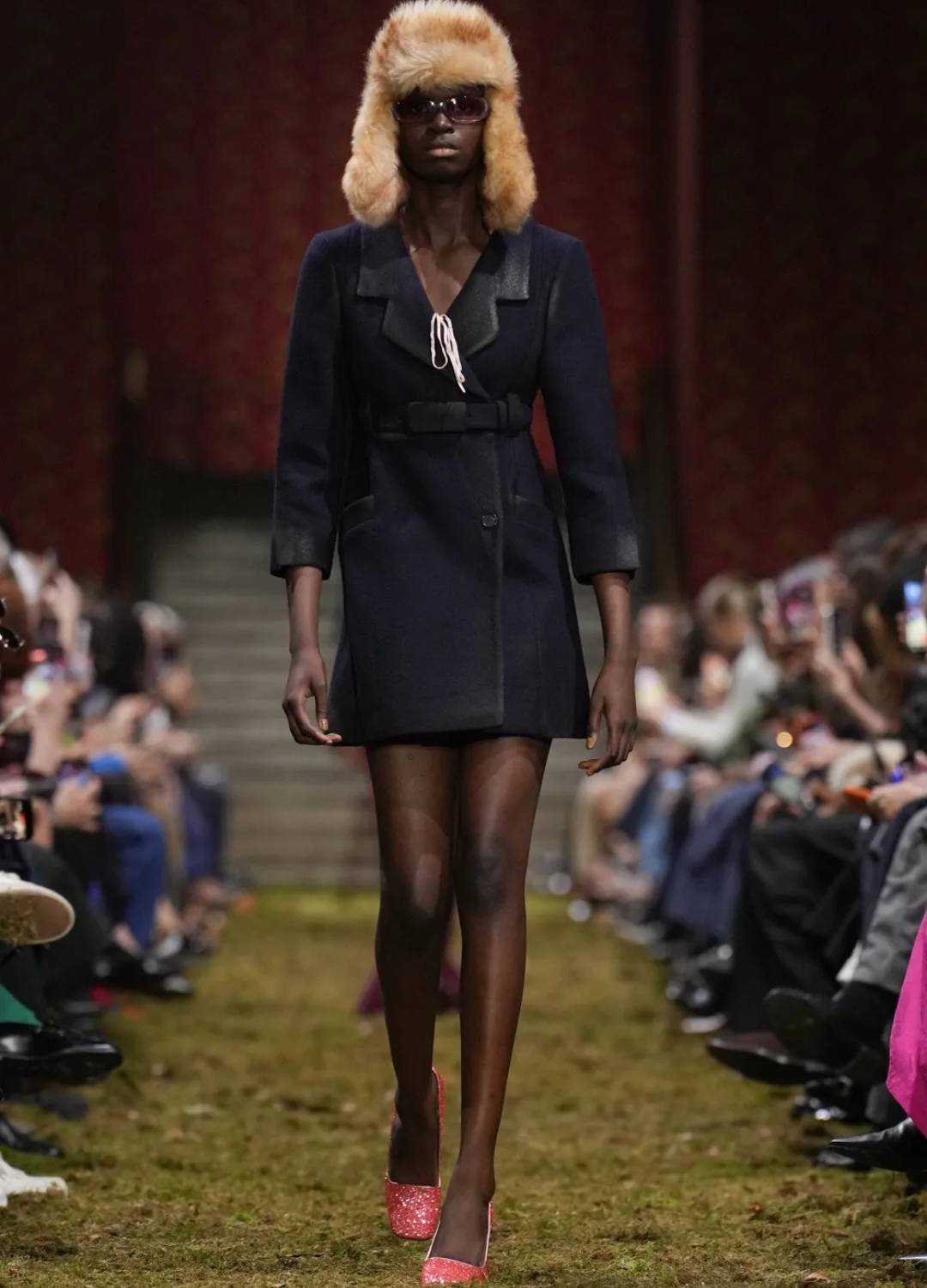
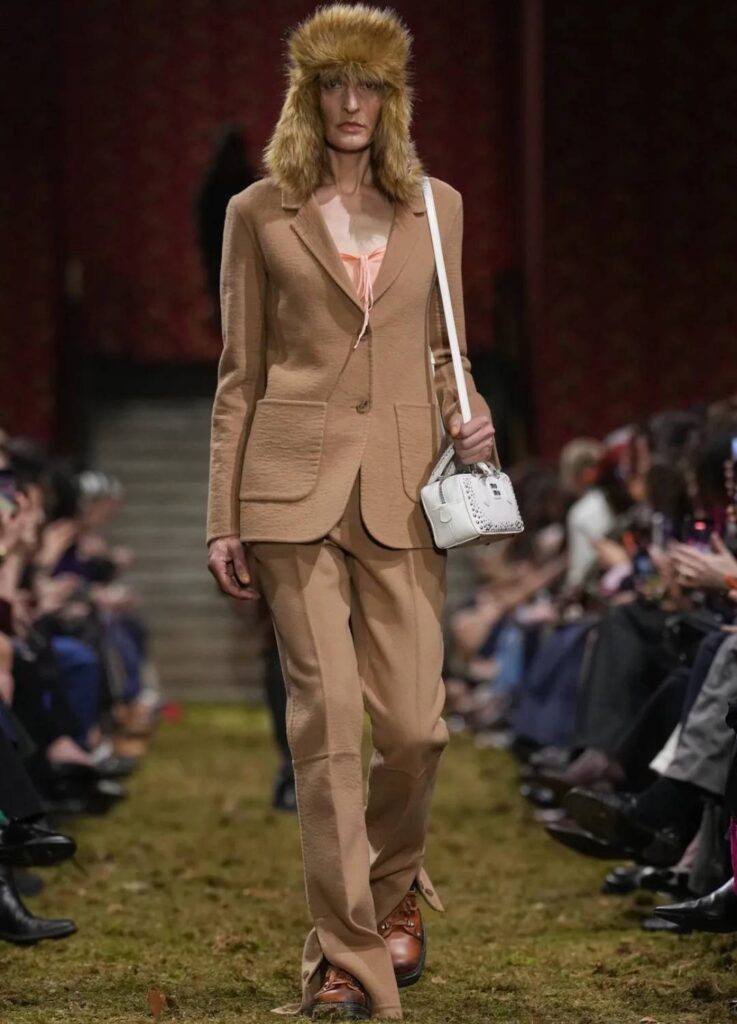
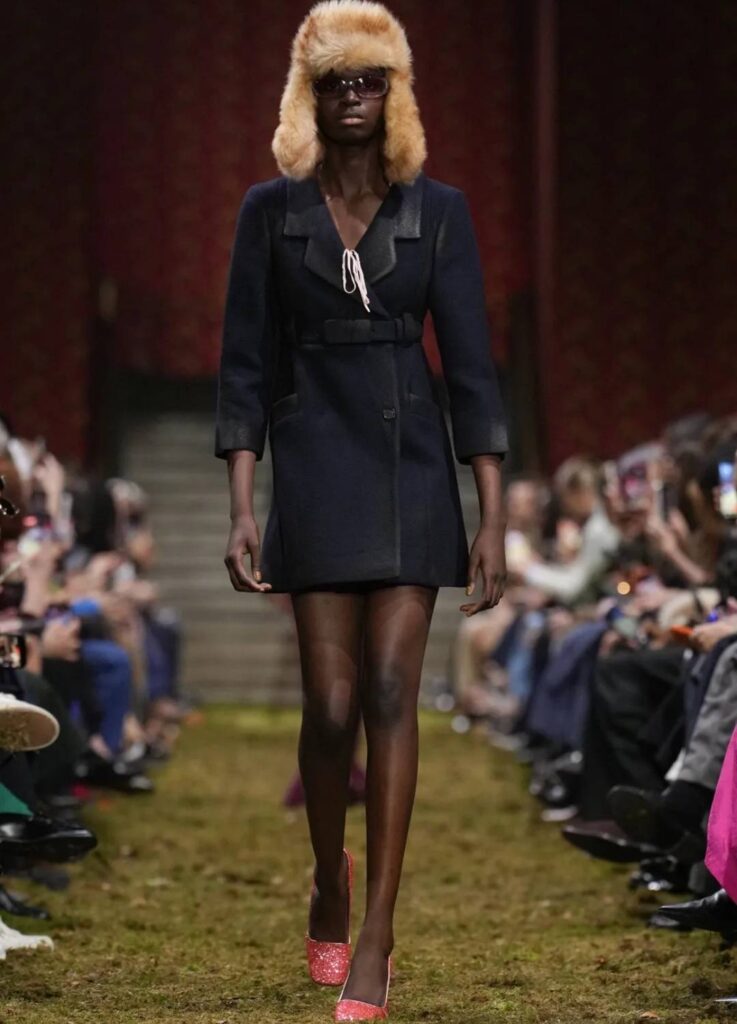
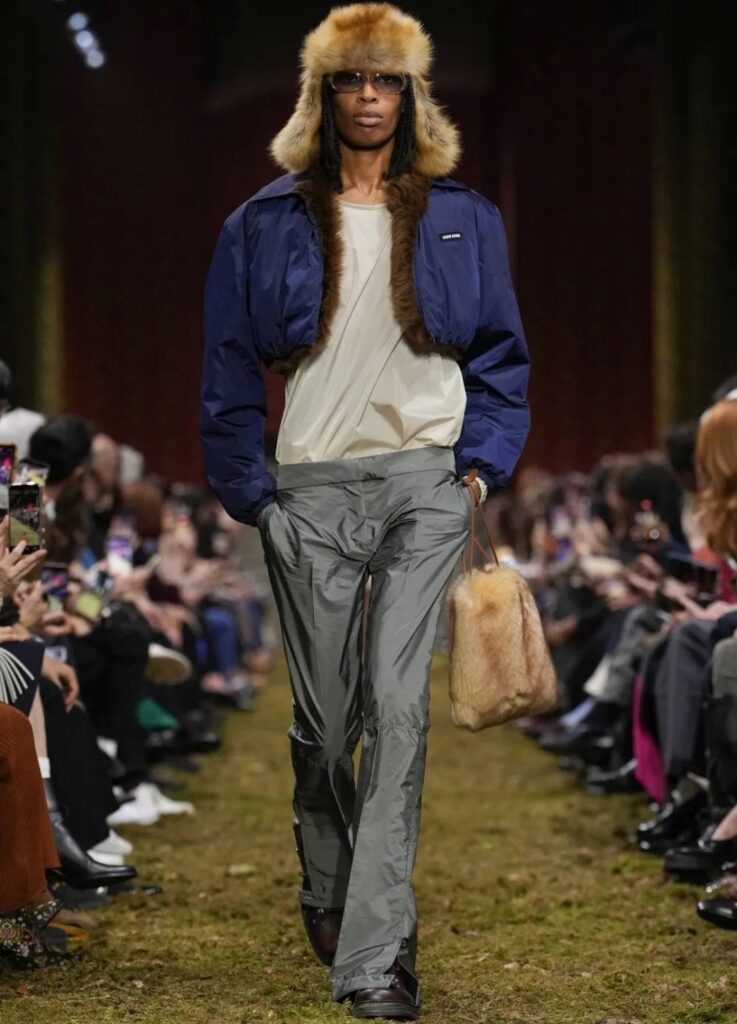
Among the most visually distinctive elements of the collection is the repeated appearance of a fur trapper hat.
This accessory, originally designed for protection in extremely cold climates, is rarely associated with traditional luxury womenswear. Its shape—covering the ears and framing the face—immediately evokes outdoor environments.
In the context of the runway, however, the trapper hat functions less as practical equipment and more as a styling device.
It appears alongside tailored suits, leather dresses, and shorter garments, producing an unexpected juxtaposition. The rugged practicality of the hat contrasts with the controlled elegance of the clothing beneath it.
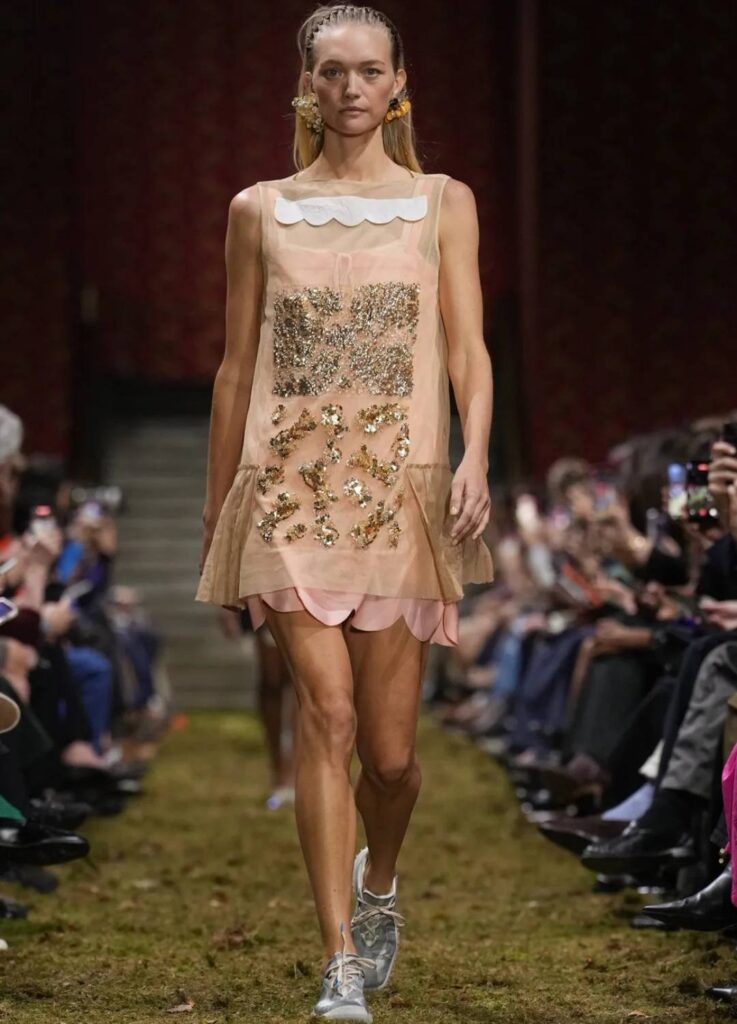
This kind of tension is characteristic of Miu Miu styling. The brand often introduces an element that feels slightly out of place—a detail that disrupts the polished surface of the outfit.
Here, the trapper hat performs exactly that role. It adds a hint of humor and unpredictability, preventing the tailoring from becoming overly formal.
More importantly, it introduces an outdoor reference that subtly expands the narrative of the collection. Instead of remaining confined to the traditional spaces of luxury fashion, the wardrobe begins to suggest movement through a wider range of environments.
Color Palette
Autumnal Restraint
The color palette of the collection remains relatively restrained.
Black, brown, burgundy, beige, and navy dominate the runway. These shades reflect the natural tones associated with autumn and winter wardrobes.
Brown, in particular, appears repeatedly across different garments, helping to unify the collection visually. The color works especially well with leather, where it emphasizes depth and texture.
This muted palette allows the silhouettes and materials to remain the primary focus. Rather than relying on bold color contrasts, the runway builds interest through proportion and surface.
Such restraint is notable for a brand that has previously embraced more playful chromatic experiments. Here, the subdued palette reinforces the sense that the collection is seeking a more grounded aesthetic.
Key Looks
Several looks stand out as particularly illustrative of the collection’s ideas.
The Tailored Suit
One of the early suits establishes the tone of the runway. Its clean tailoring anchors the collection in the tradition of structured fashion, yet the styling keeps it from feeling overly rigid.
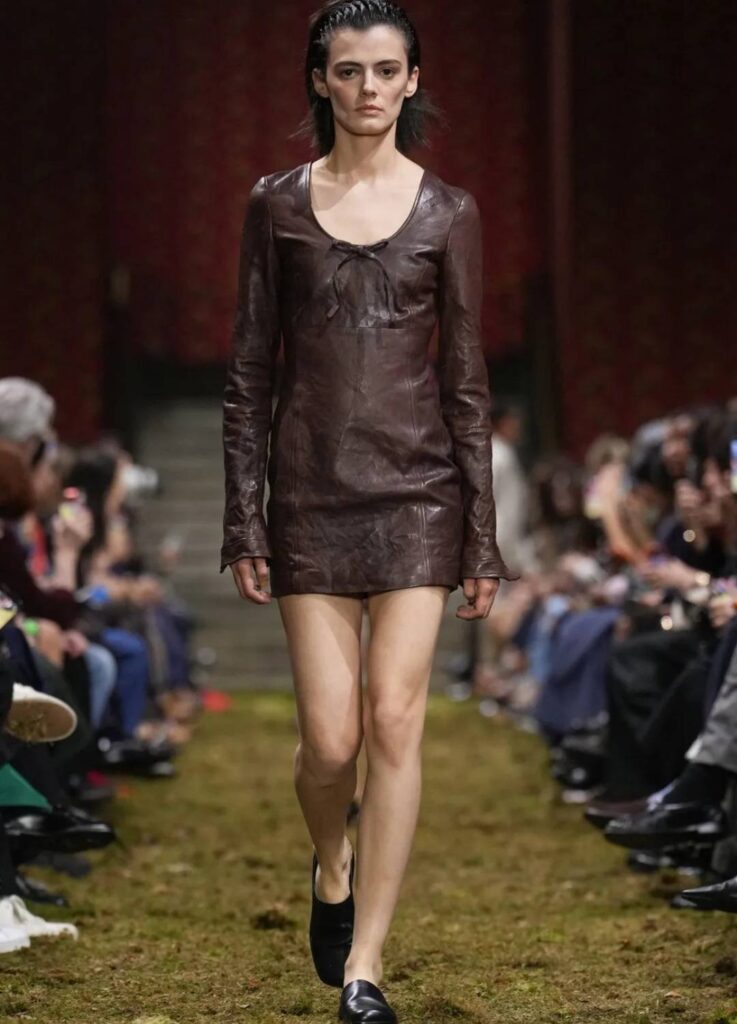
The Brown Leather Dress
A slim brown leather dress becomes one of the most memorable pieces of the show. Its surface texture and direct silhouette introduce a powerful visual contrast to the softer fabrics around it.
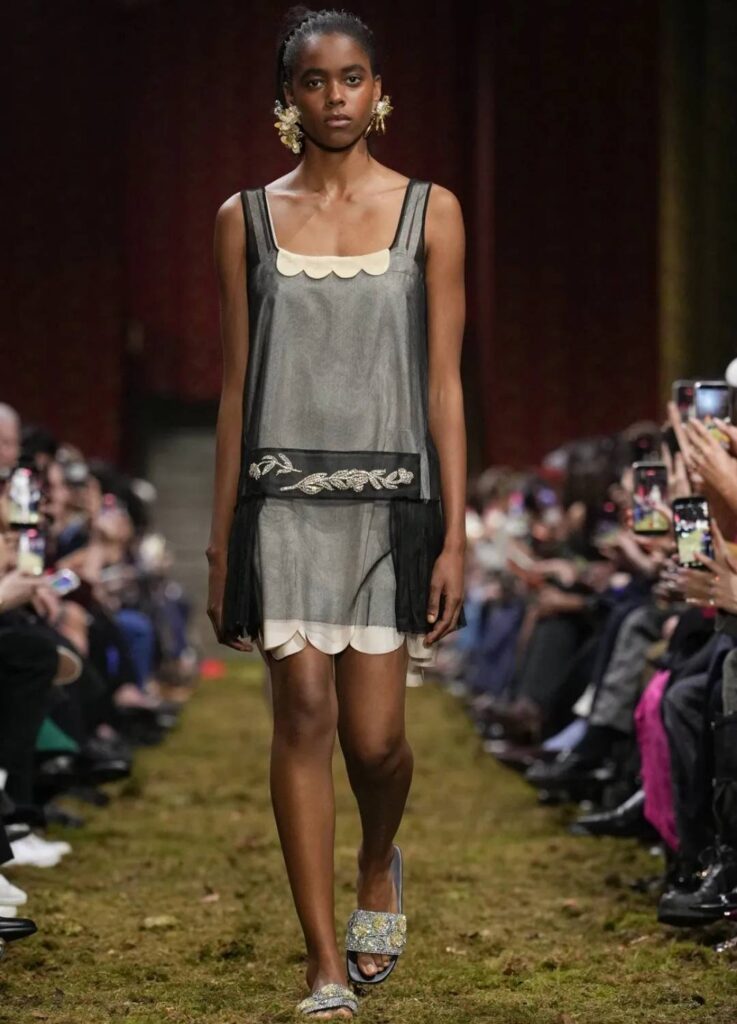
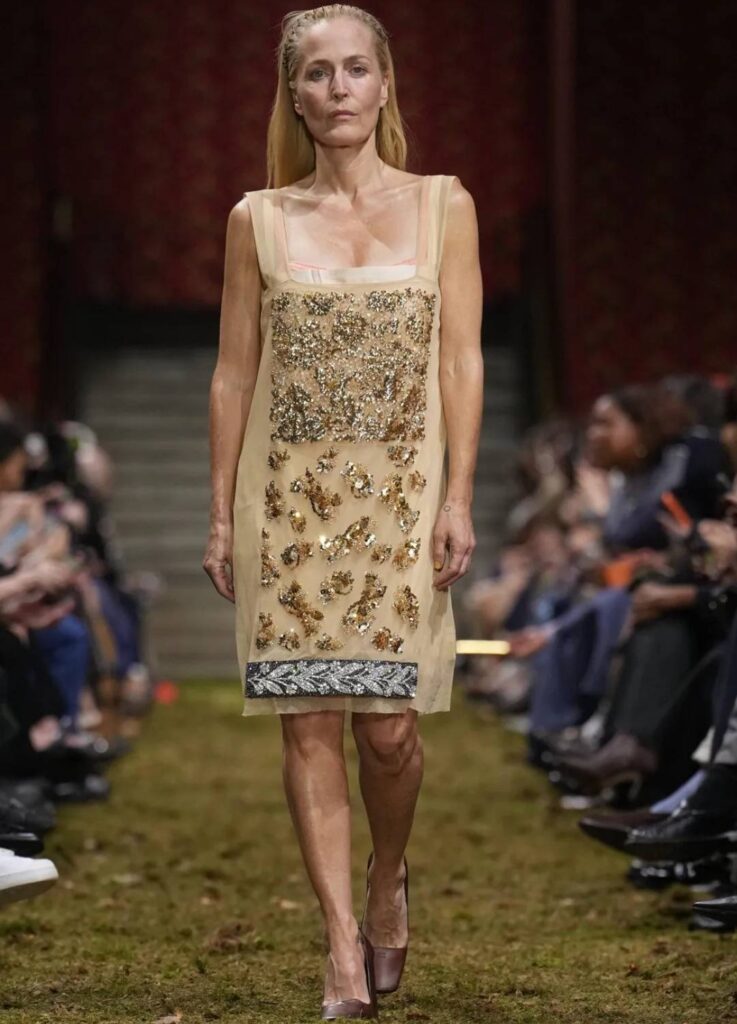
The Slip Dress
Later in the runway, slip dresses introduce a gentler energy. Their minimal construction allows movement to become part of the garment’s expression.
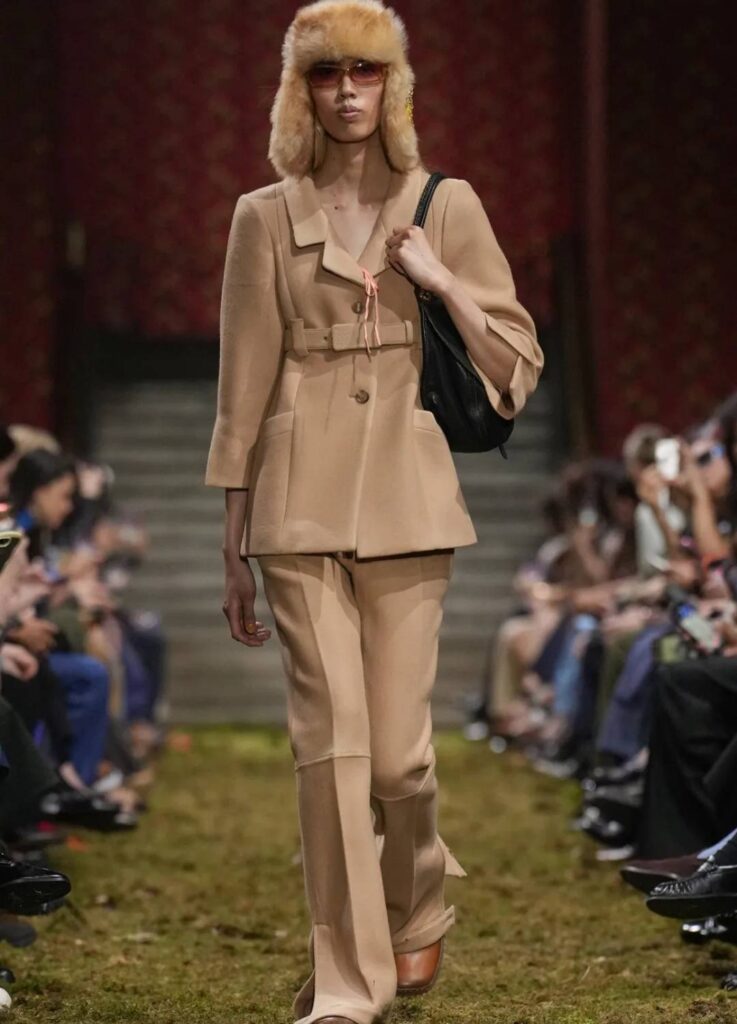
The Fur Trapper Hat Look
The trapper hat styling transforms otherwise familiar outfits into something unexpected. This accessory becomes a small but important narrative element within the show.
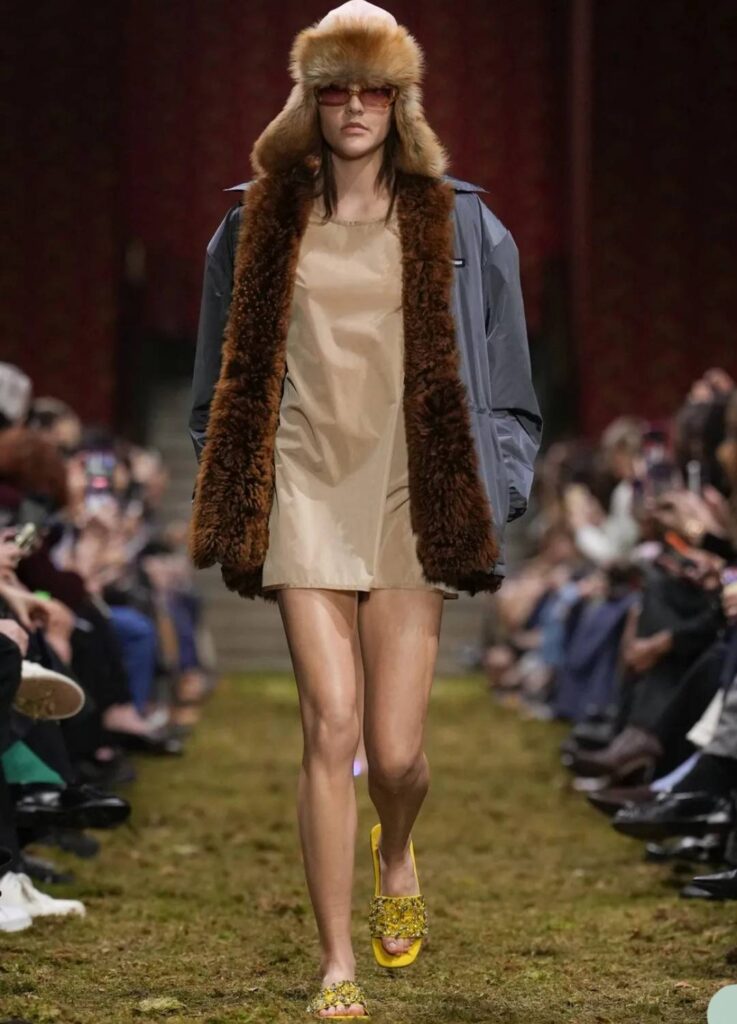
Outdoor-Inspired Outerwear
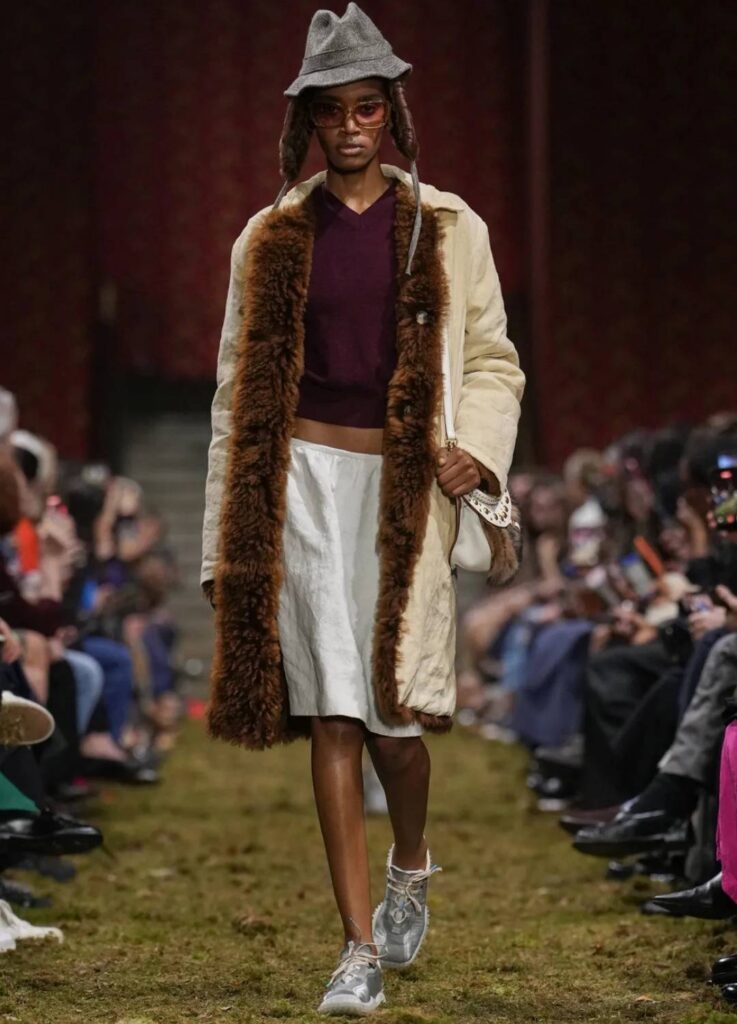
Certain outerwear pieces hint at a more practical direction for the brand, suggesting clothing that can move between urban and outdoor contexts.
Industry Context
Miu Miu’s Expanding Influence
Within the broader fashion landscape, Miu Miu remains one of the most influential luxury brands among younger audiences.
Social media platforms, particularly visual ones, have amplified the brand’s reach. Many of its styling ideas circulate widely online, often influencing trends beyond the runway itself.
In recent years, the label has become closely associated with the ability to transform seemingly ordinary garments into objects of desire.
Miu Miu Fall Winter 2026 collection continues this trajectory but with a slightly different emphasis. Instead of introducing a single viral item, the show suggests a more complete wardrobe.
This approach may reflect a strategic shift. As Miu Miu grows in cultural and commercial importance, the brand may increasingly focus on building a sustainable identity rather than relying on singular trend moments.
Final Thoughts
A Wardrobe in Quiet Transition
The Miu Miu Fall/Winter 2026 collection does not attempt to overwhelm the viewer with spectacle.
Instead, it proposes a wardrobe that exists between categories: tailored yet casual, polished yet practical.
Leather dresses sit beside structured suits. Outdoor references appear next to delicate fabrics. Through these combinations, the runway gradually constructs a portrait of contemporary dressing.
If previous Miu Miu collections captured the volatility of youth, this one suggests a more nuanced stage of life—one where experimentation remains possible, but within a slightly more stable framework.
In that sense, the collection represents not a departure but an evolution.
Miu Miu continues to explore the tension between structure and spontaneity, refining its language season by season.
And in doing so, it quietly redefines what a modern luxury wardrobe might look like.
All images referenced in this post are drawn from Vogue Runway.
[ Related Editorials ]