Inside Loewe Fall/Winter 2026
Loewe Fall Winter 2026 is the second runway presentation under the house’s new creative leadership. After Jonathan Anderson’s departure, Jack McCollough and Lazaro Hernandez — best known as the founders of Proenza Schouler — have begun reshaping the identity of the Spanish luxury house.
Their approach is neither abrupt nor theatrical. It unfolds gradually, through silhouette, color, and the careful recalibration of Loewe’s design language.
The Fall Winter 2026 runway suggests a brand entering a new phase — one that retains Loewe’s experimental spirit while grounding it more firmly in product and wearability.
Rather than staging a dramatic reinvention, McCollough and Hernandez are constructing something subtler. A Loewe that balances artistic playfulness with commercial clarity. The shift is not a break from the past, but a controlled evolution.
Season Context | Loewe After Jonathan Anderson
For over a decade, Jonathan Anderson positioned Loewe as one of fashion’s most intellectually adventurous houses. His collections frequently blurred the line between fashion and contemporary art, introducing surreal proportions, conceptual garments, and sculptural experimentation.
Anderson’s Loewe became a reference for concept-led luxury. The brand wasn’t selling clothes so much as ideas about clothes, and the strategy worked because Anderson’s signature happened to align with a moment when fashion criticism prized intellectual ambition over commercial accessibility.
Under the new creative directors, the house is shifting toward a different emphasis.
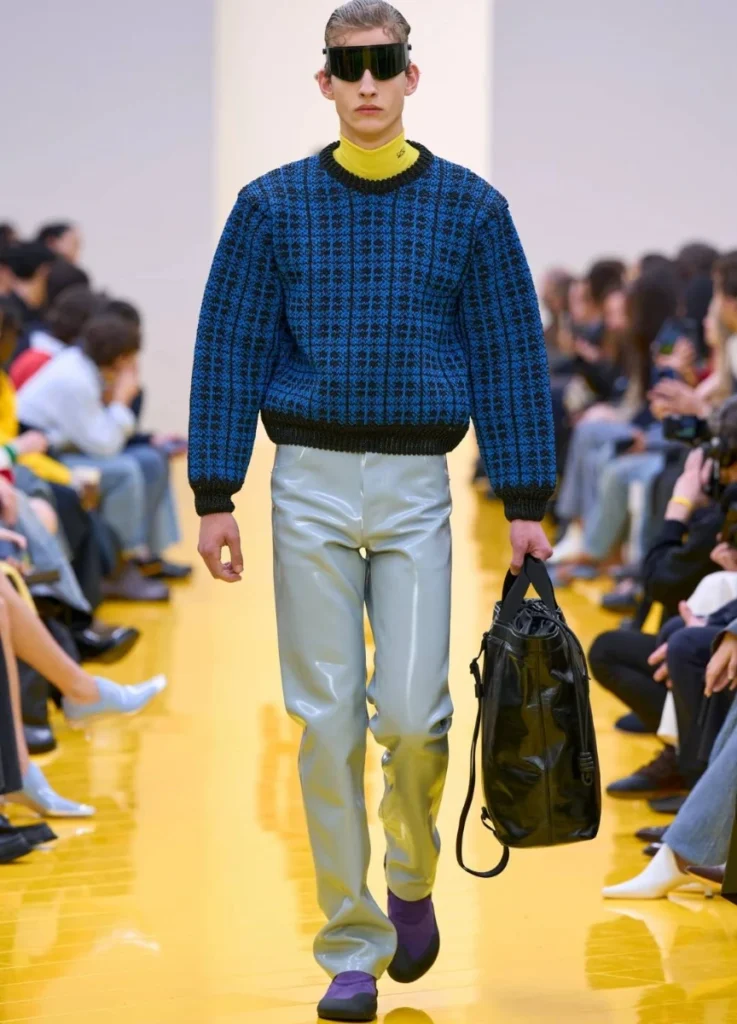
The experimentation remains, but it’s now channeled through garments that feel more immediately wearable and structurally coherent.
McCollough and Hernandez built Proenza Schouler in New York — a market that has historically demanded a tighter relationship between runway and retail. Where European houses often tolerate longer gaps between conceptual statement and commercial product, the New York system rewards designers who can translate runway energy into wearable garments quickly. Their training shows.
Fall 2026 reads less like a conceptual manifesto and more like a recalibration of the brand’s foundations. The focus moves from spectacle to structure — coats, knitwear, dresses, and tailoring that articulate a clearer product identity.
This second collection under the new leadership functions as a quiet reset. It suggests that Loewe is gradually transitioning from the conceptual energy of the previous era toward a more product-driven design language.
Proenza Schouler’s Quiet Inheritance
What’s harder to miss, once you know to look for it, is how much of McCollough and Hernandez’s Proenza Schouler vocabulary carries over.
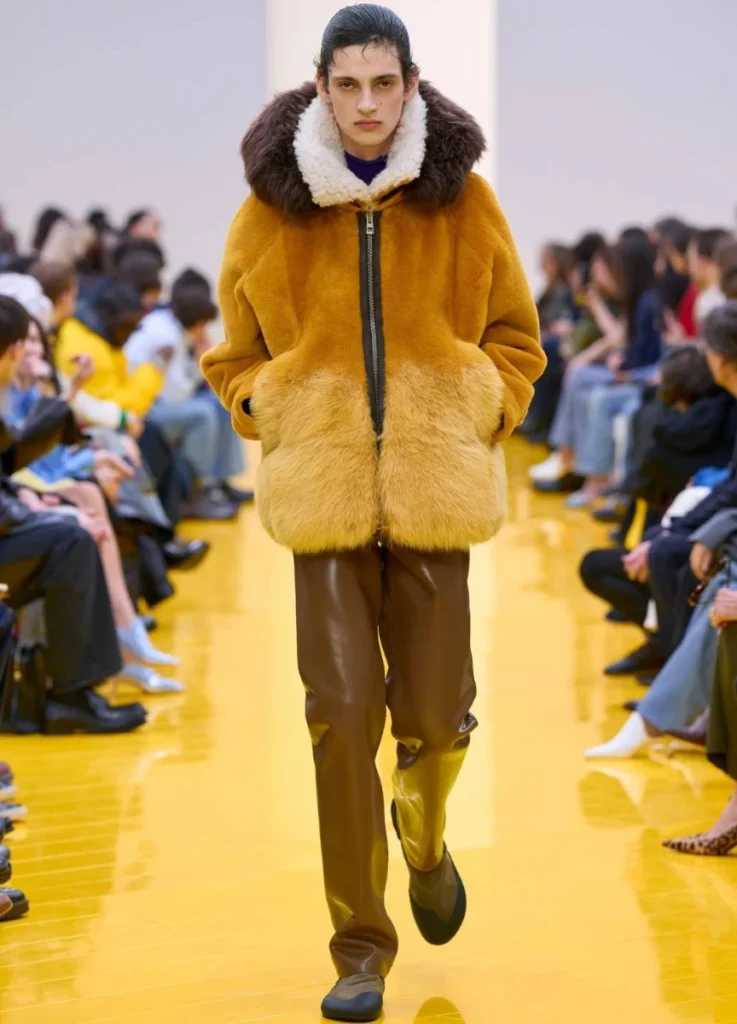
Proenza Schouler built its identity over nearly two decades around a particular kind of New York minimalism — clean leather surfaces, controlled architectural shapes, color blocking used as structural language rather than decoration, and a relationship with knitwear that treats it as ready-to-wear rather than as accessory. The PS1 bag, the PS11, the box bags, the recent Tobo — these often share a polished leather treatment that became one of the brand’s recognizable surface signatures.
That signature now appears at Loewe.
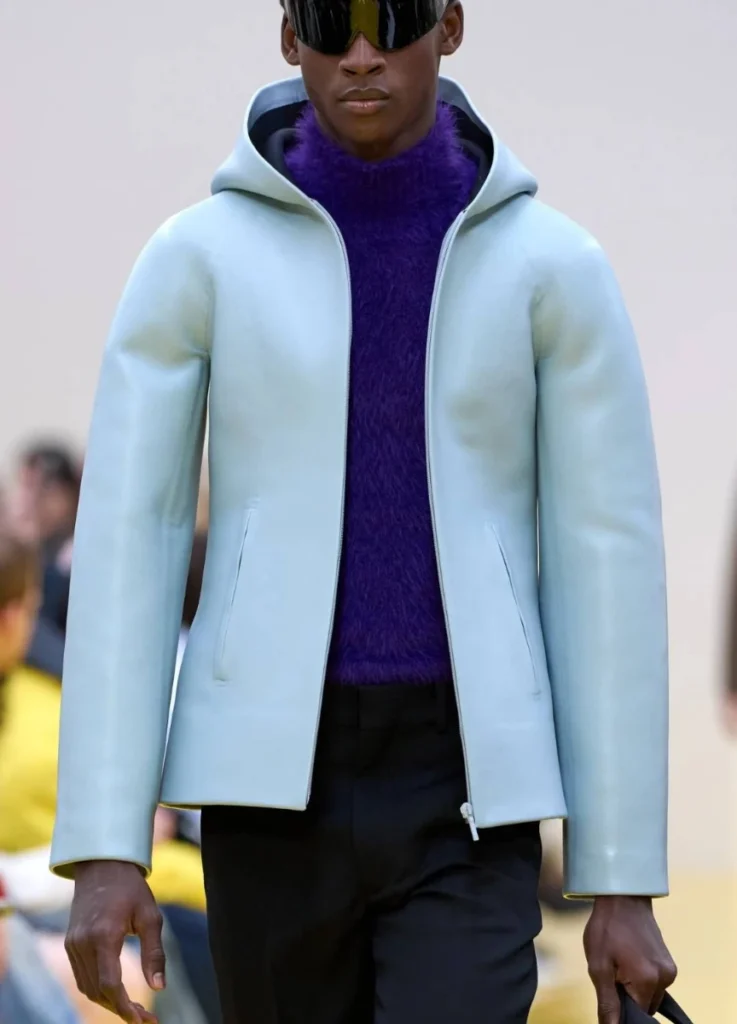
The leather in Fall Winter 2026 reads less like Loewe’s traditional artisanal craft heritage (rougher, more handworked, more visibly tactile) and more like Proenza’s polished discipline — surfaces that reflect light cleanly, edges that hold their geometry, leather treated with a strong sense of structure. The structured wool coats often hold their shape in a way associated with Proenza’s outerwear. Color blocking — emerald against cobalt, deep purple against camel — operates the way it always has at Proenza, as a structural element rather than as embellishment.
This is not imitation. It is continuity.
The question is what Loewe gains from this inheritance. Anderson’s Loewe was conceptually rich but commercially uneven. Proenza’s New York grammar — wearable, architecturally clean, color-confident — fills exactly the gap Anderson’s surrealism left. The two creative legacies aren’t in conflict; they’re complementary. McCollough and Hernandez don’t need to suppress their Proenza instincts to honor Loewe. They’re using one to strengthen the other.
That may be why Fall Winter 2026 feels coherent rather than transitional. The designers didn’t arrive empty-handed. They brought a fully developed visual language with them, and Loewe is being recalibrated through it.
Thematic Direction | Playful Luxury with Structural Discipline
One concept defines Loewe Fall Winter 2026: playful luxury.
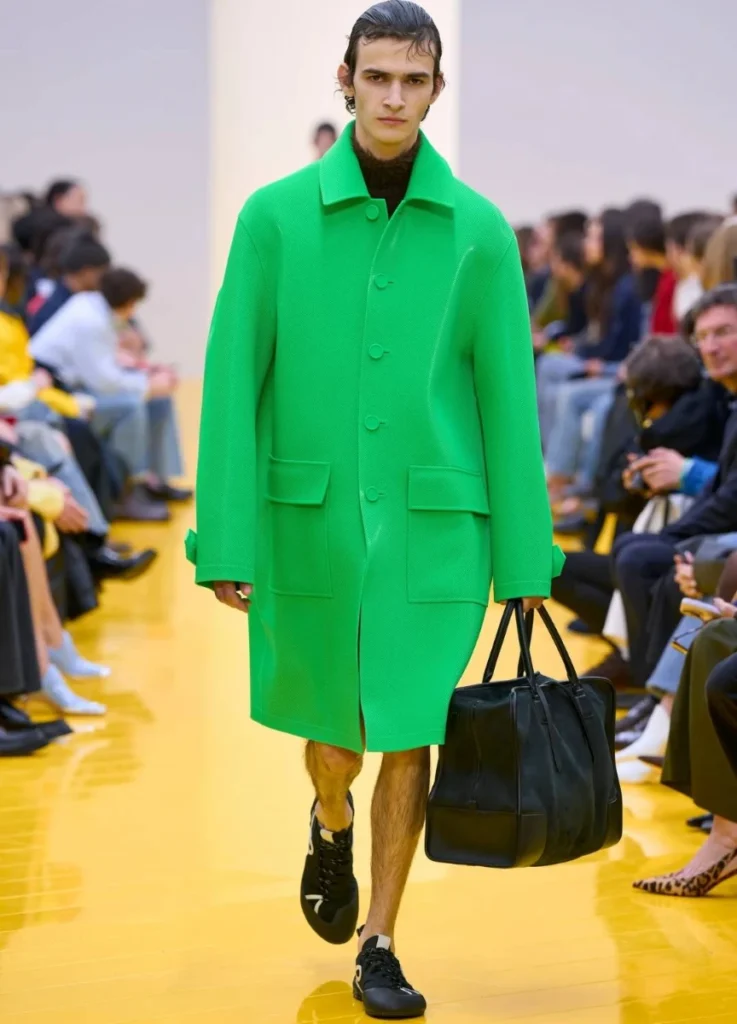
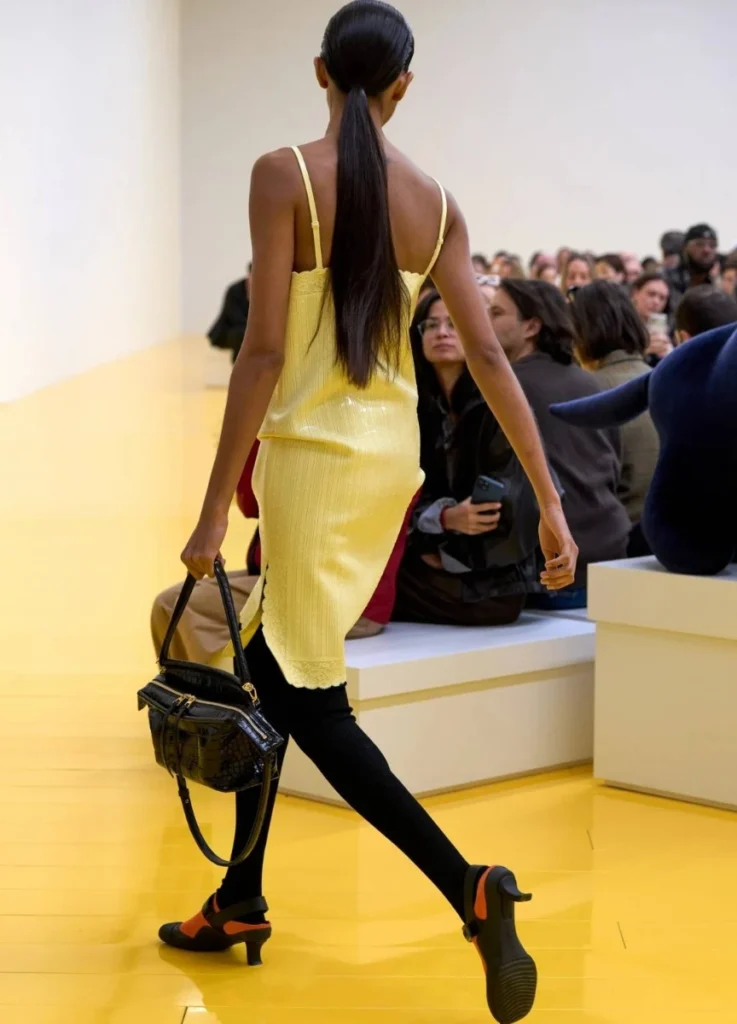
The runway itself — coated in a vivid yellow floor — set the visual tone immediately. Against this bright backdrop, garments appeared in striking hues:
- Emerald green coats
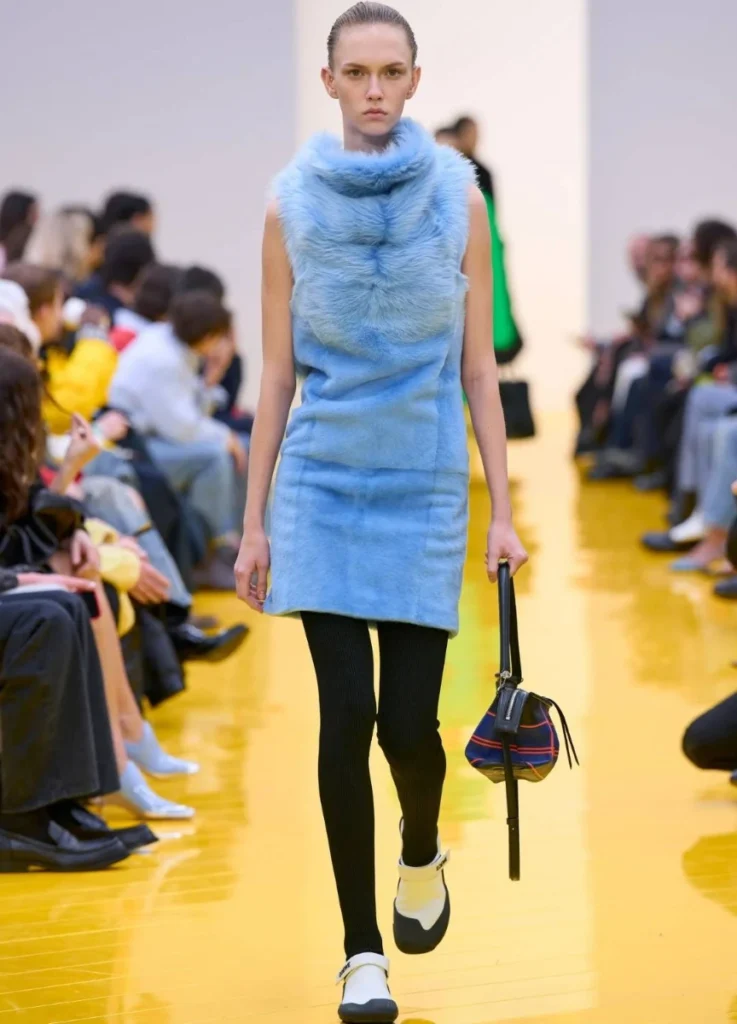
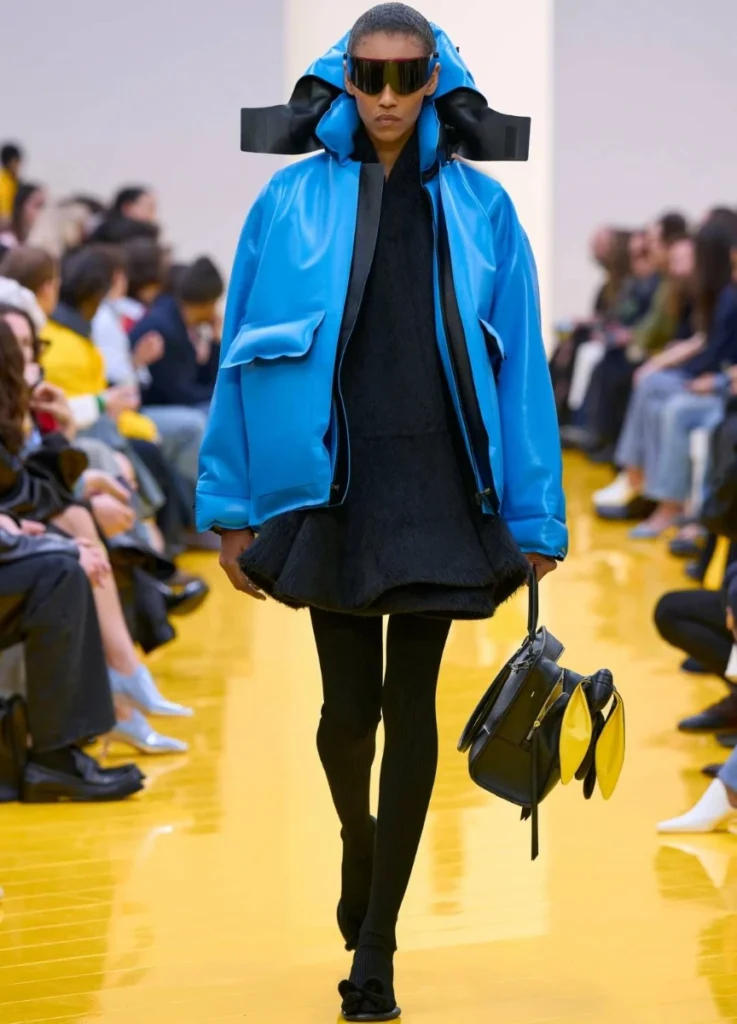
- Cobalt blue dresses
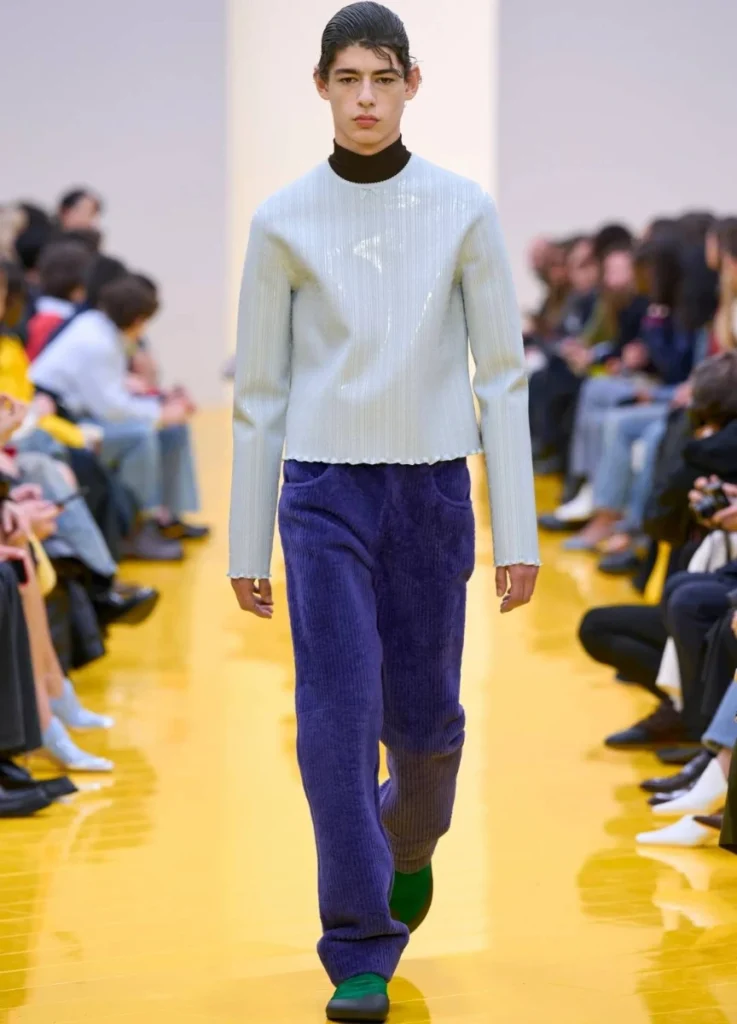
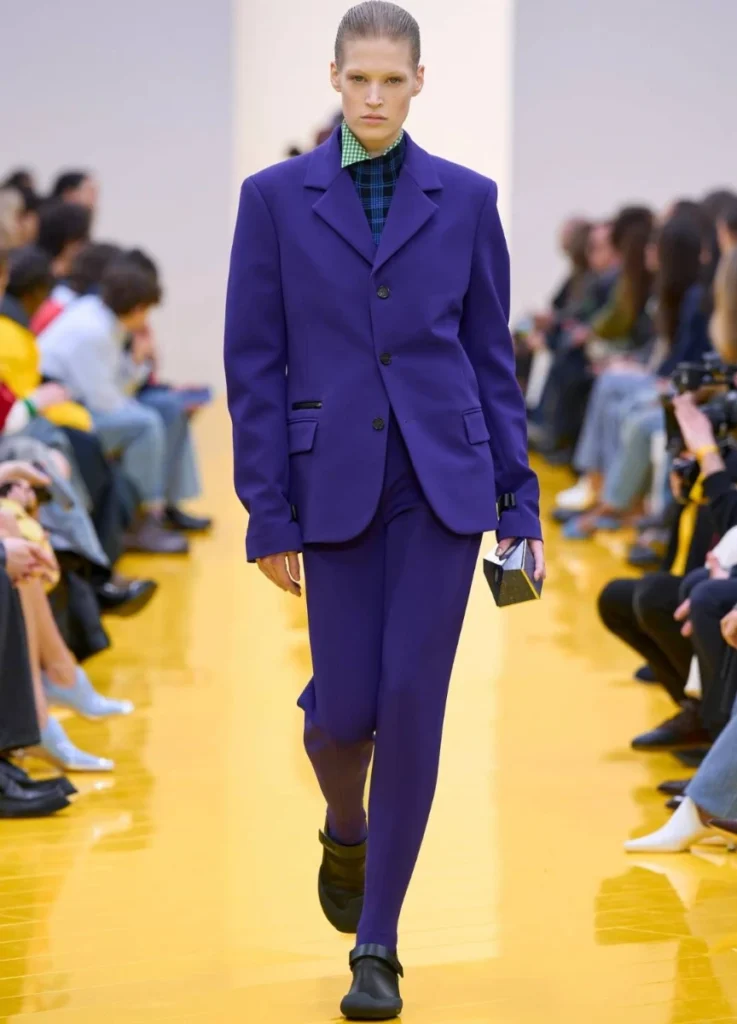
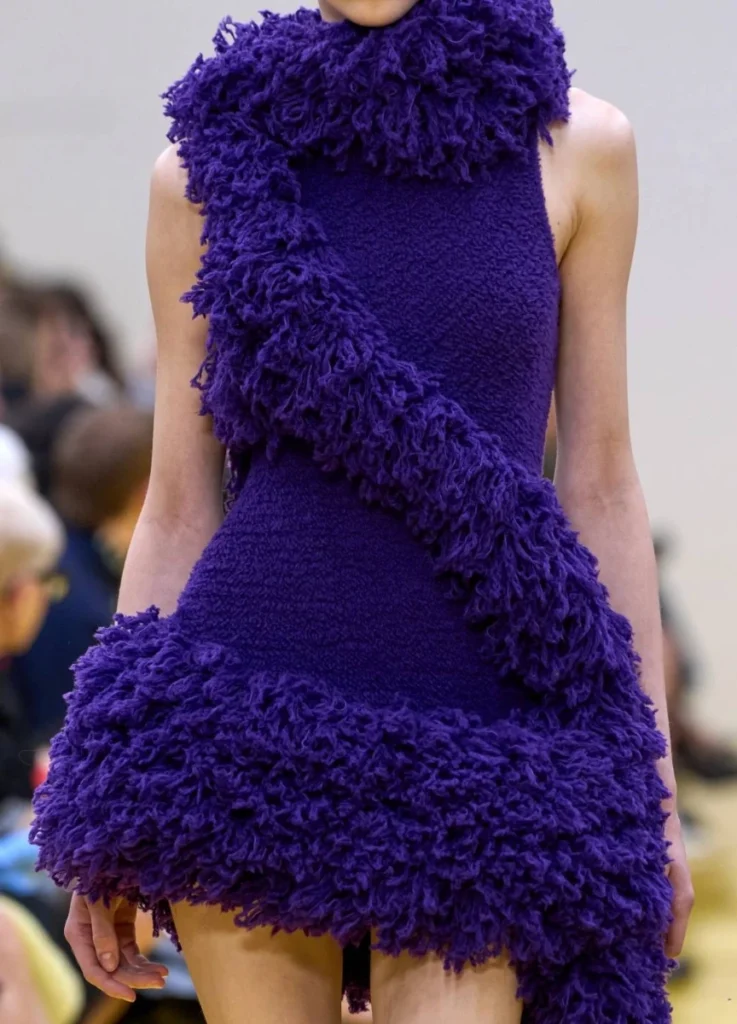
- Deep purple knitwear
- Graphic checked patterns
These colors depart from traditional fall palettes, which typically rely on darker neutrals like charcoal, brown, or black.
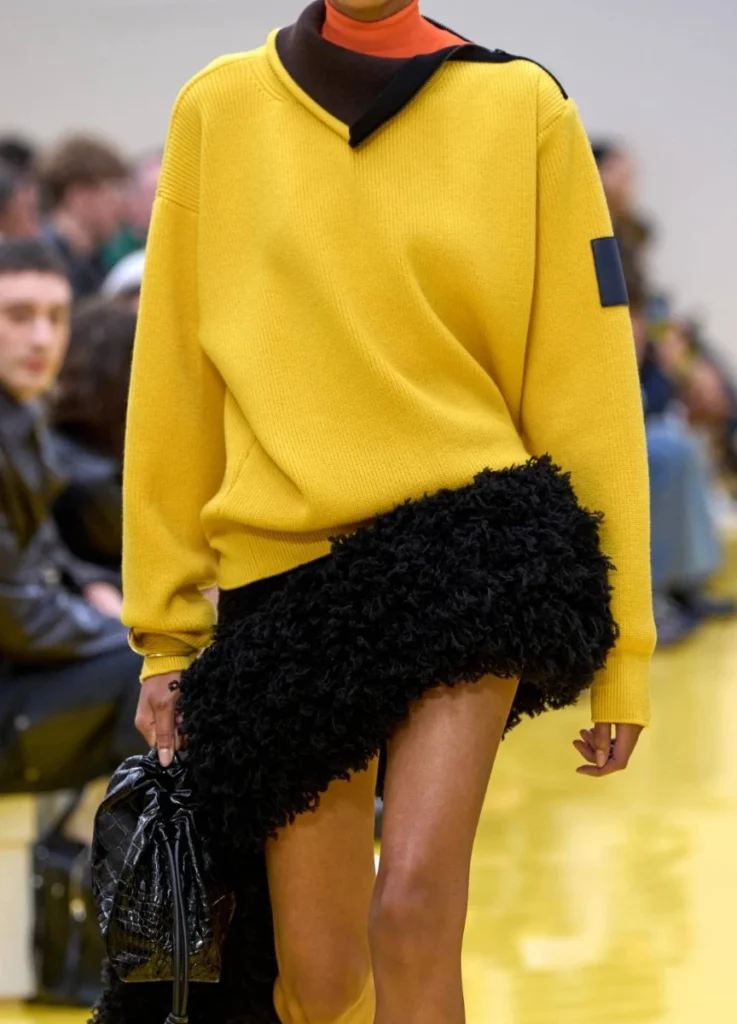
The collection avoids frivolity despite the brightness.
That restraint comes from the discipline of the silhouettes. The garments are clean, architectural, and precisely constructed. Volume is controlled, and the lines remain clear even when the color palette becomes expressive.
Color attracts the eye. Structure anchors the design.
This balance between expressive color and controlled tailoring forms the conceptual center of the collection.
Silhouette | Minimal Dresses and Sculptural Coats
The silhouettes of the season fall into two distinct categories.
The first consists of highly simplified dresses:
- Slip dresses
- Knit dresses
- Straight-cut tunics
These pieces are intentionally minimal. There are few decorative elements. The garments rely on proportion and fabric movement to shape the body.
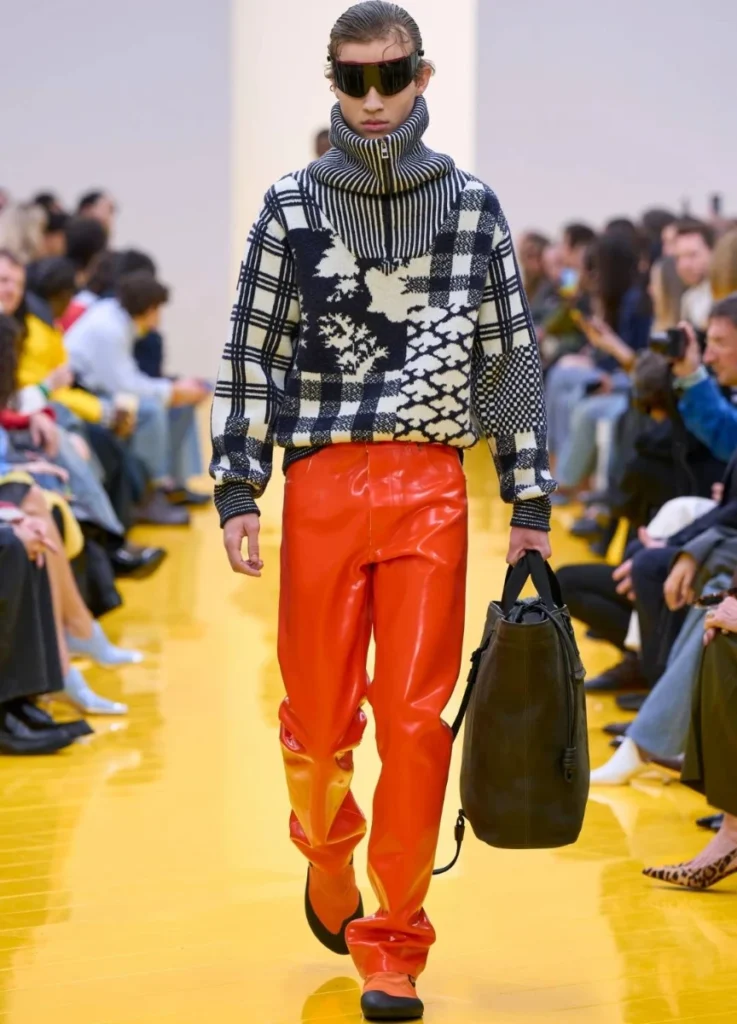
Many follow a vertical line, elongating the frame without excessive volume. The restraint of these dresses creates a visual calm that contrasts sharply with the more dramatic outerwear pieces.
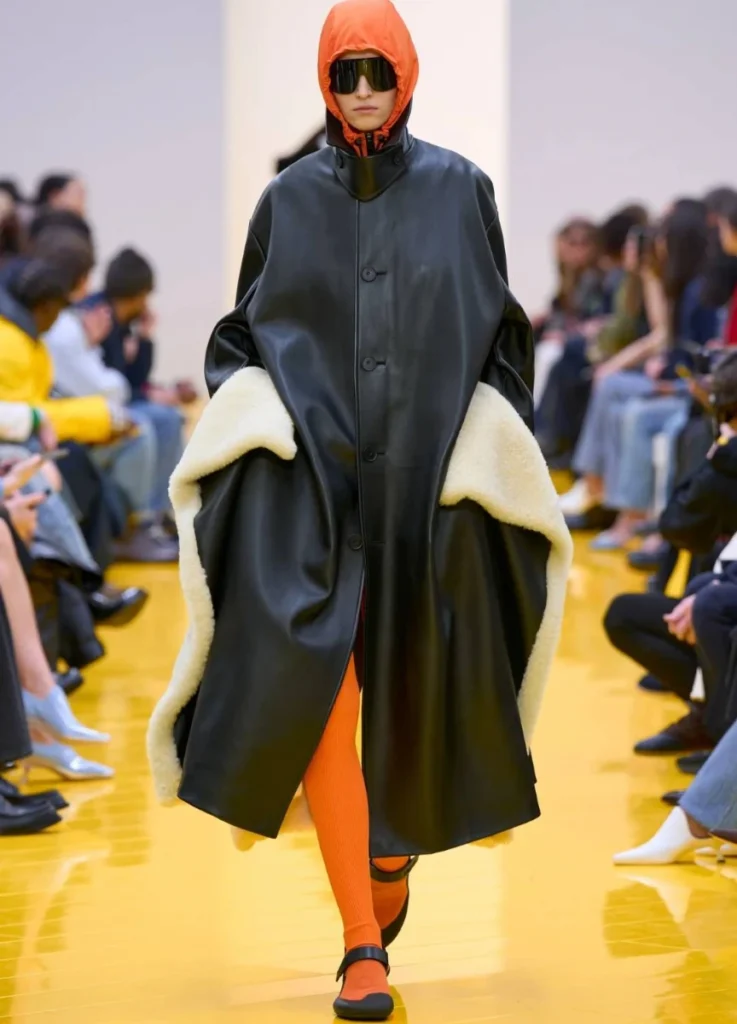
The second category introduces that contrast: sculptural outerwear.
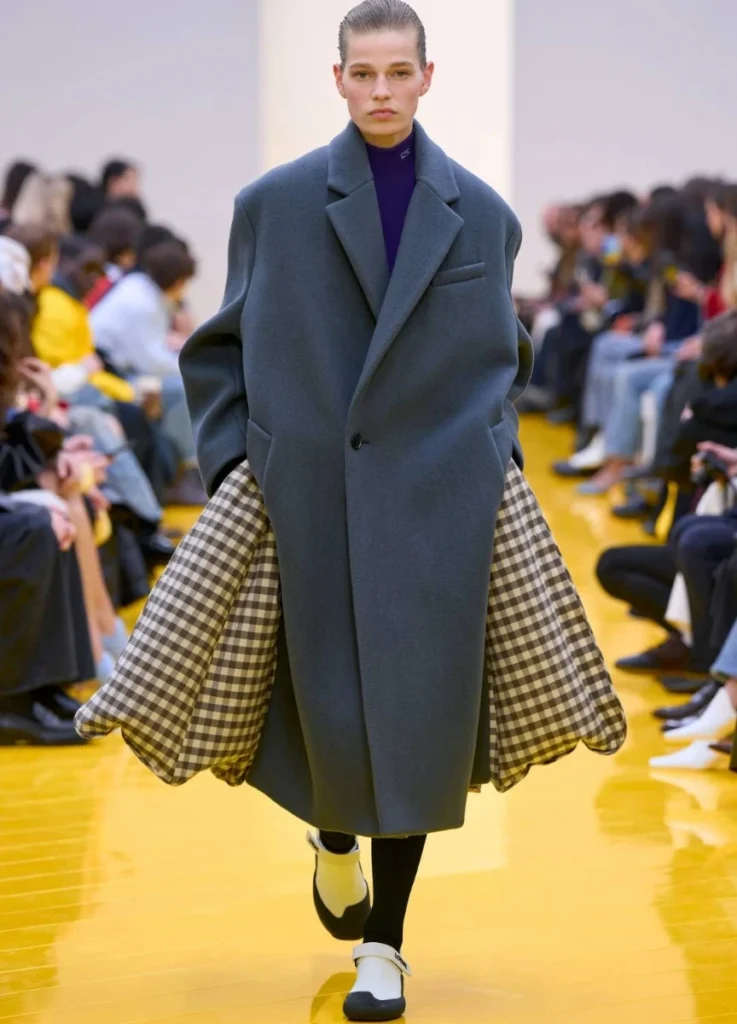
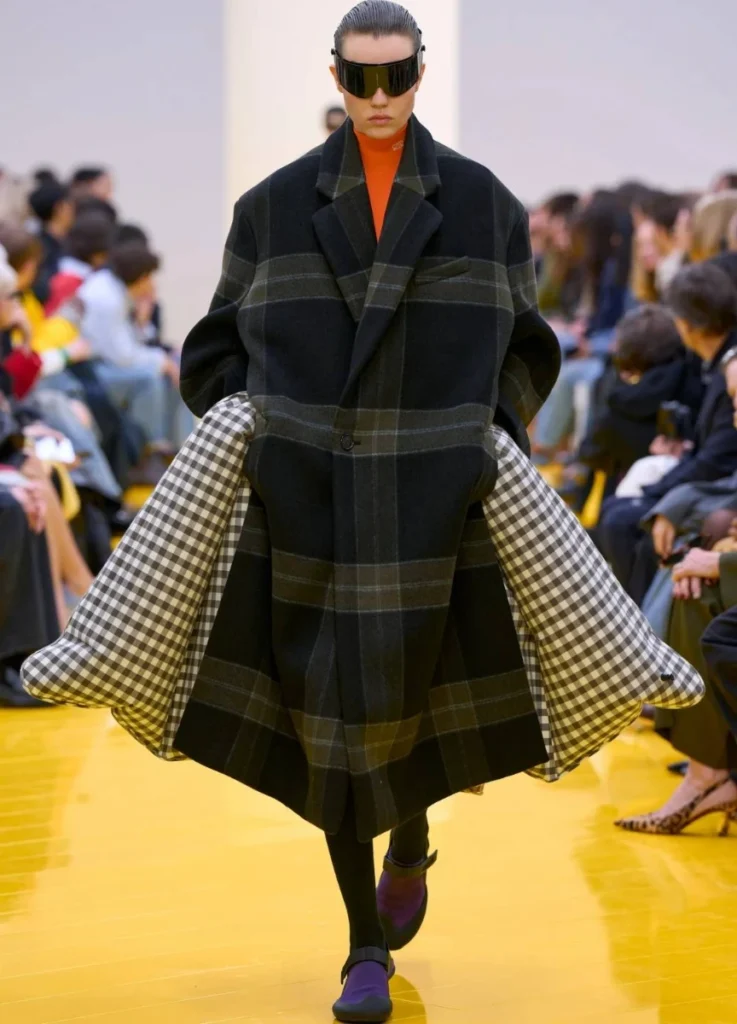
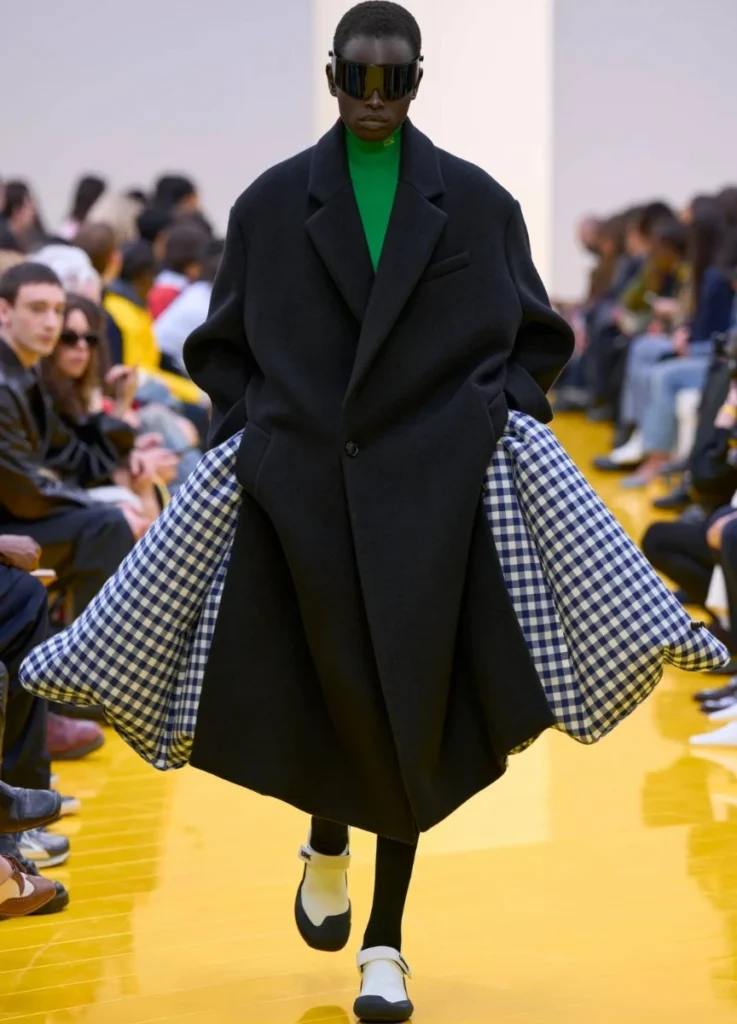
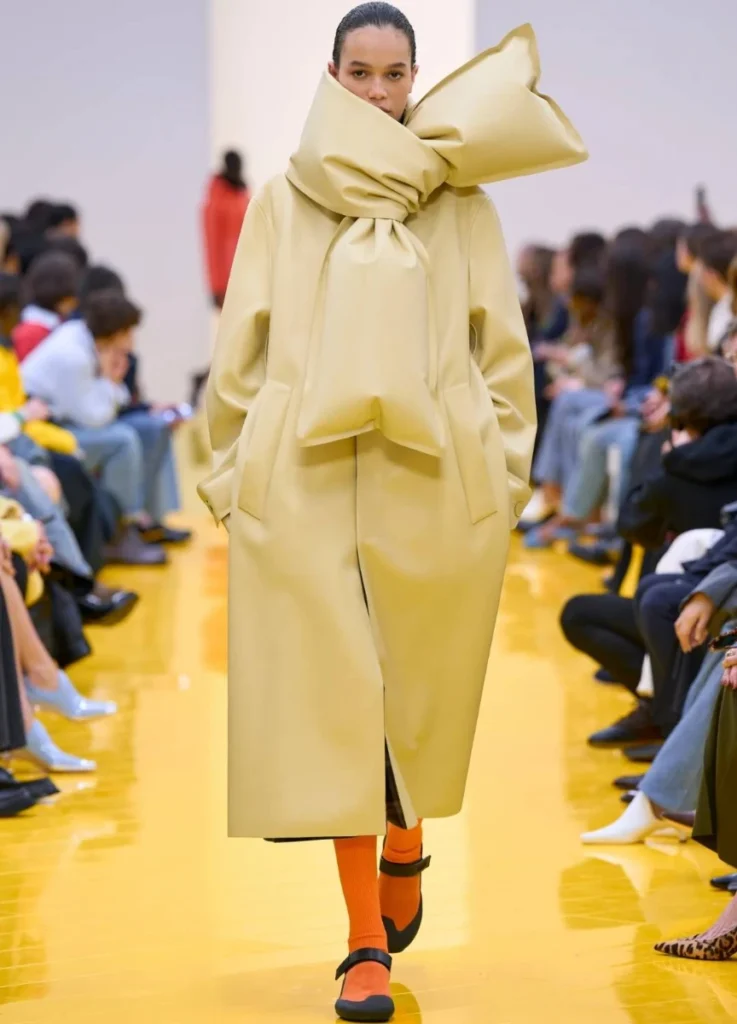
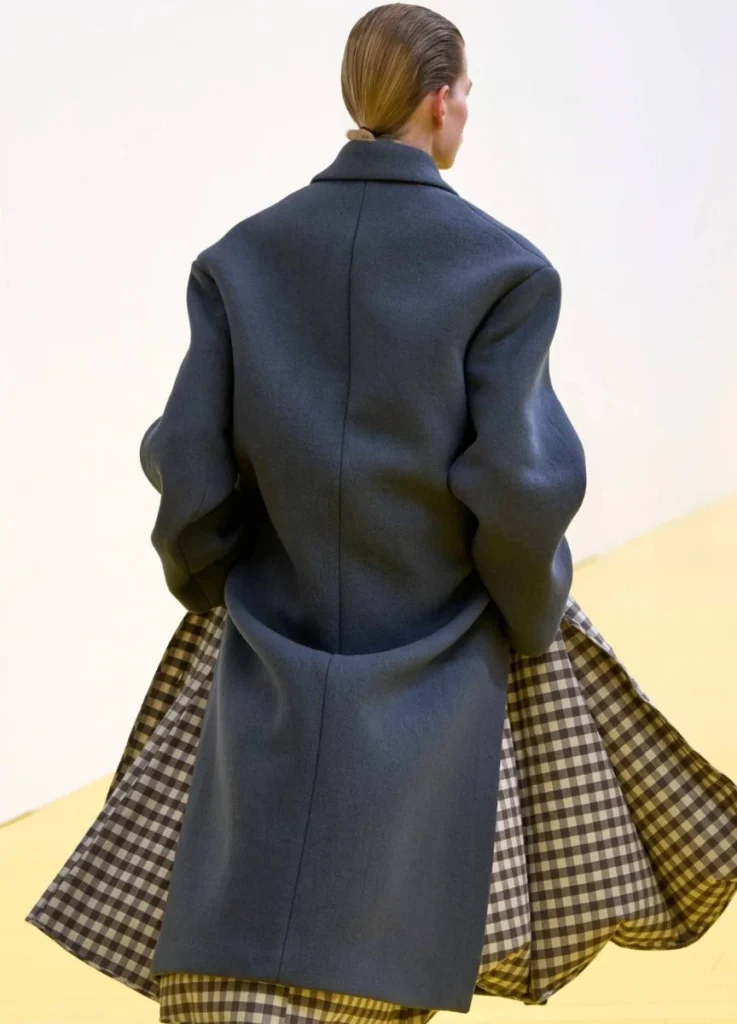
Several coats feature exaggerated proportions — expanded shoulders, dramatic length, widened lower silhouettes. These coats function almost like wearable sculptures, creating a powerful visual presence on the runway.
The interplay between simplicity and exaggeration provides rhythm throughout the collection.
Minimal garments allow the sculptural pieces to stand out, while the bold outerwear anchors the visual identity of the season.
Material Strategy | Texture as Structural Language
Material contrast plays a key role in the collection’s design logic.
Several fabrics appear repeatedly across the runway:
- Knitwear
- Structured wool coats
- Leather pieces
- Checked wool textiles
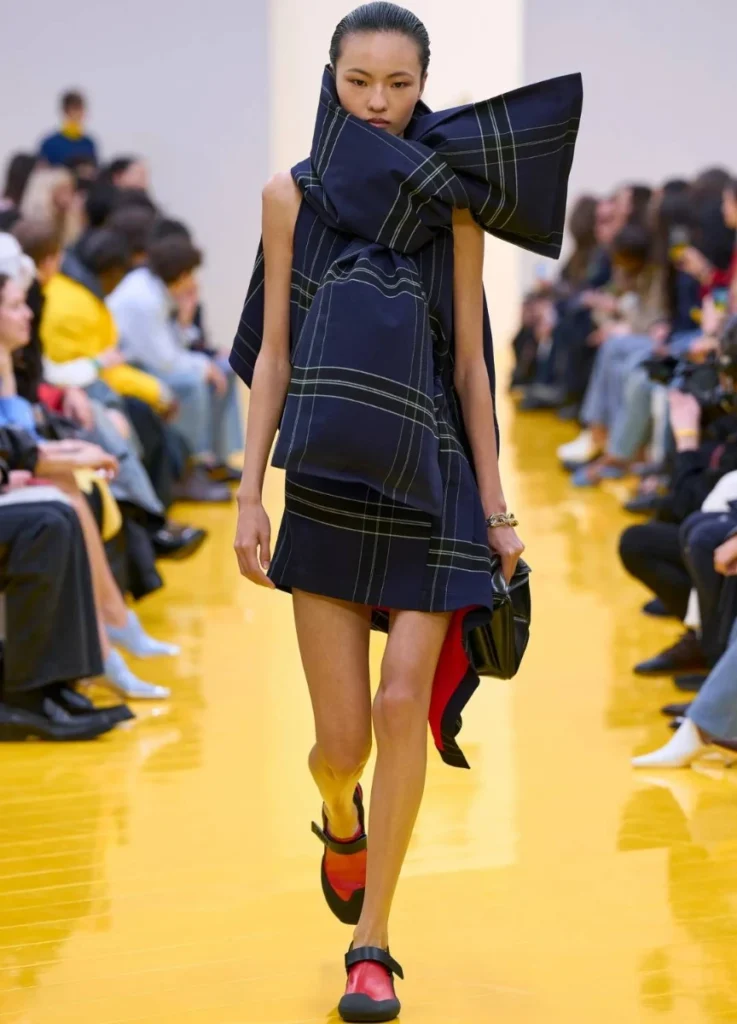
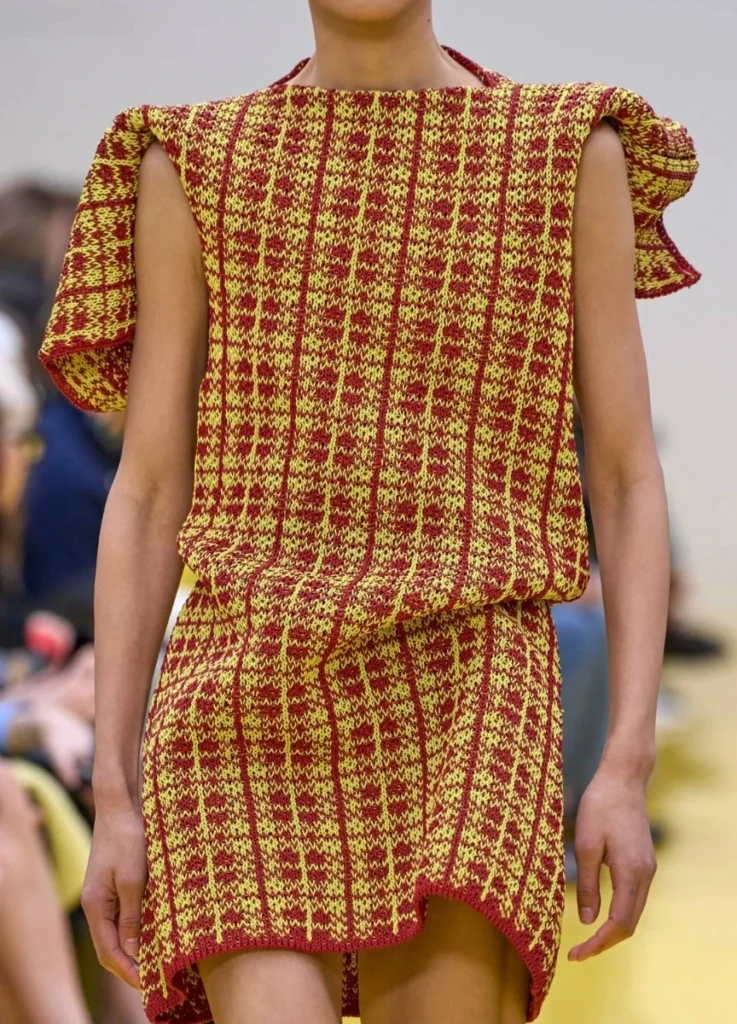
Knit dresses form the foundation of many looks. Their close fit emphasizes the natural contours of the body while maintaining flexibility and comfort.
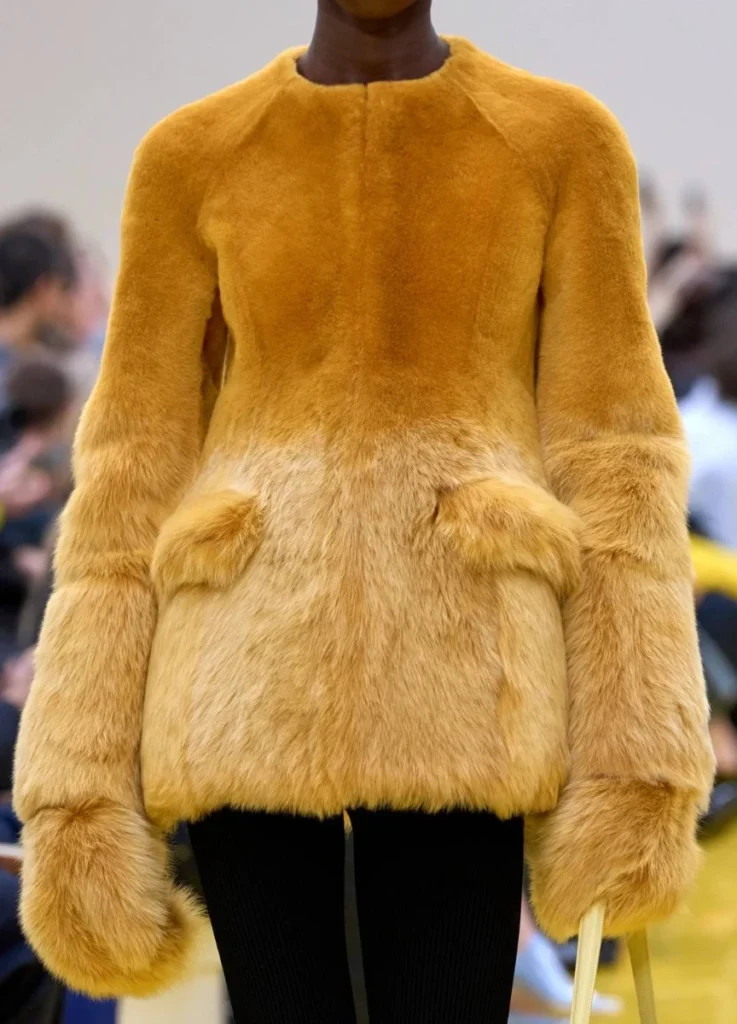
The coats introduce volume and structure. Heavy wool fabrics hold architectural shapes, allowing the garments to maintain their sculptural silhouettes.
Leather pieces add another dimension to the material mix. Their firmness reinforces the structural themes of the collection while connecting to Loewe’s longstanding heritage in leather craftsmanship.
A layered visual dynamic emerges — soft textures against rigid structure.
The juxtaposition reinforces the idea that Loewe’s experimentation now operates within a more refined framework. Craft and structure carry equal importance.
Color Strategy | Color as Identity Rather Than Decoration
Color has always been an important design element at Loewe, but Fall 2026 elevates it to a central role.
Key shades throughout the collection include:
- Emerald green
- Cobalt blue
- Deep purple
- Black
- Brown check patterns
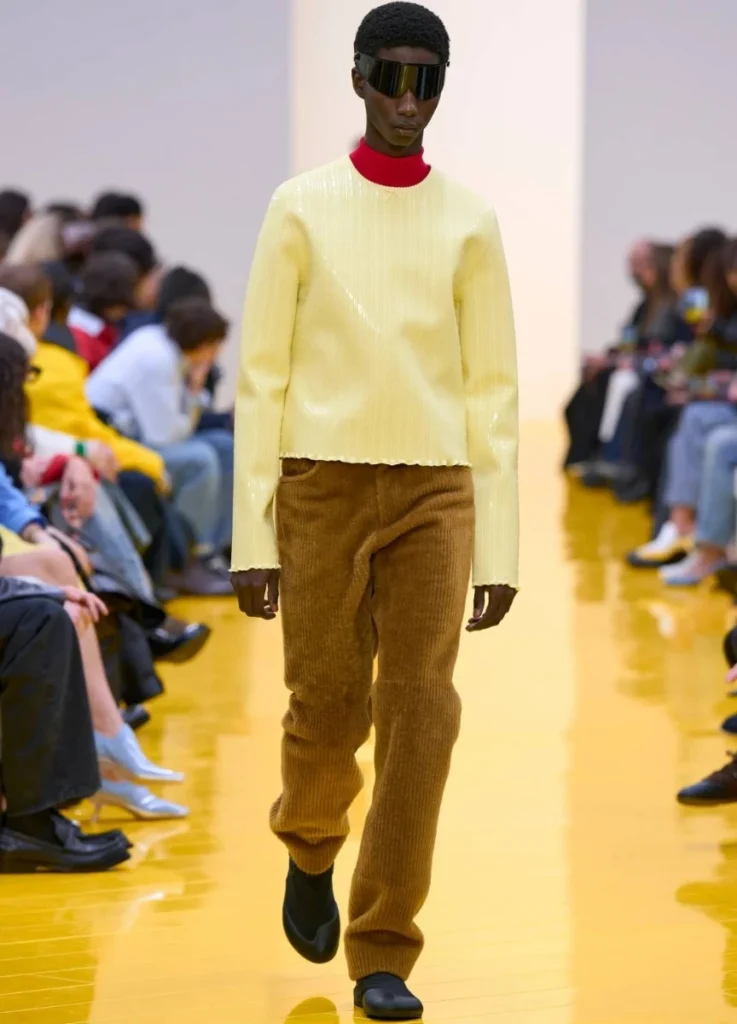
These hues don’t appear randomly. They function almost like graphic statements within the collection.
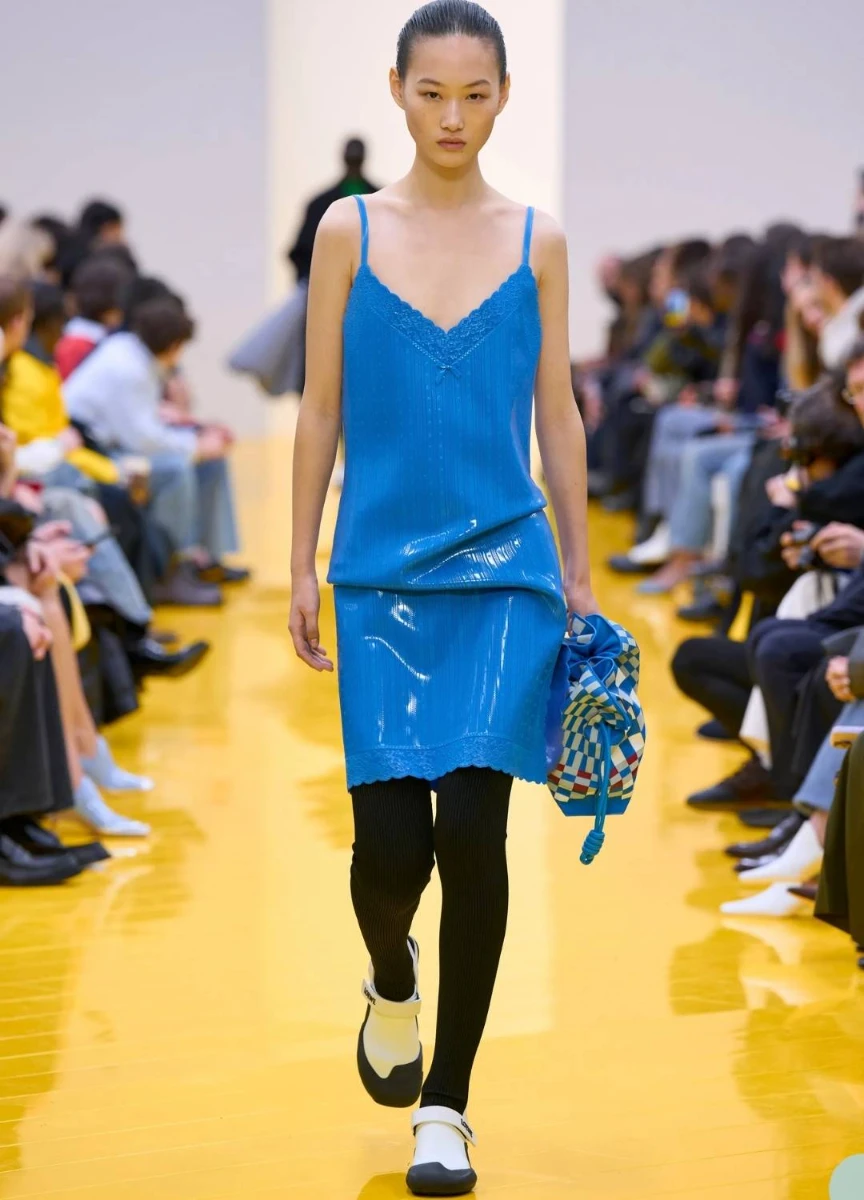
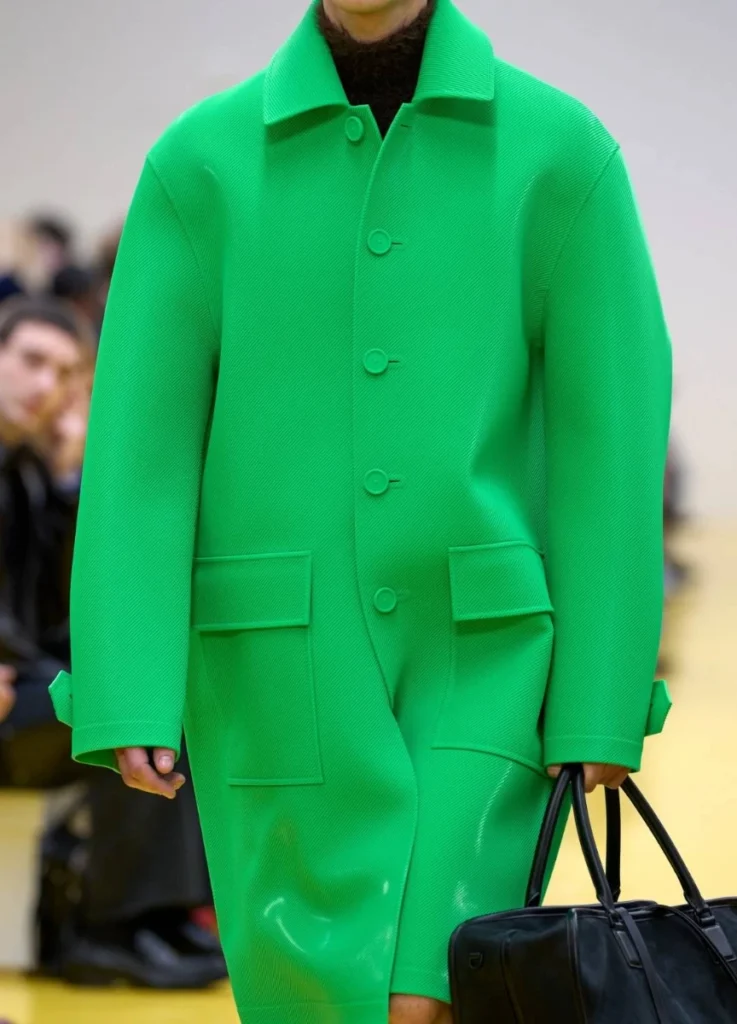
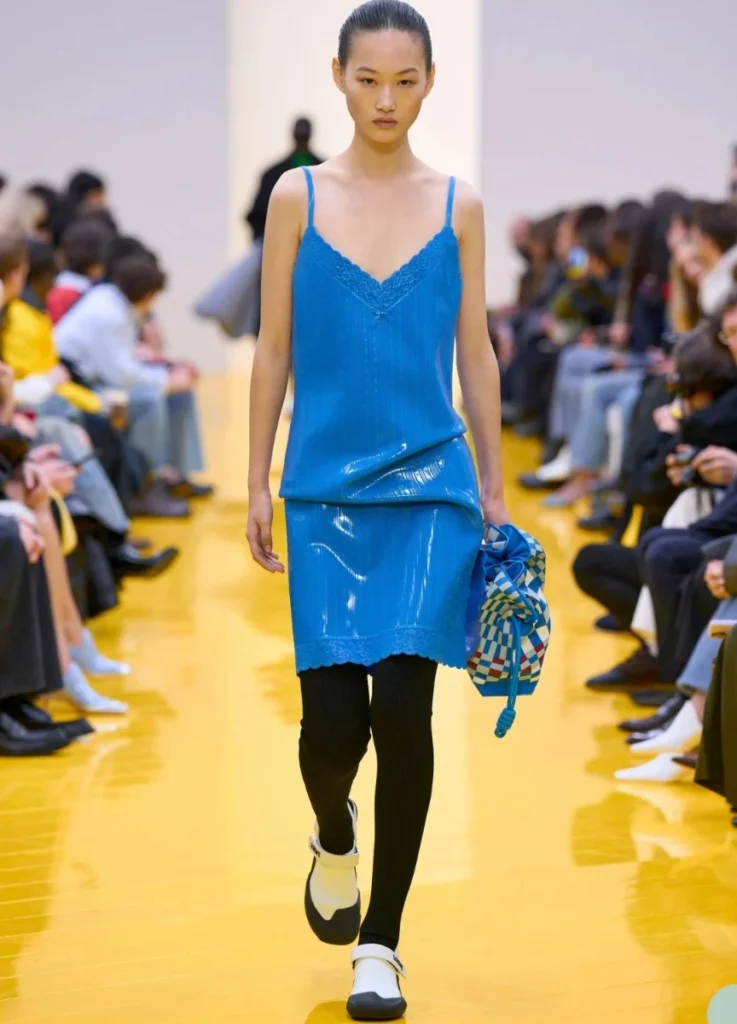
An emerald green coat becomes the defining visual element of an entire look. A cobalt blue slip dress achieves its impact not through embellishment but through the intensity of its color.
Color replaces ornamentation in this framework.
Rather than adding decorative details, the designers let color itself carry the visual weight. The palette becomes a structural element of the collection’s design language.
Five Key Looks
Several runway looks effectively summarize the design language of the season.
1. Emerald Green Coat
Perhaps the most striking piece of the collection. The bold color combined with clean structure illustrates the house’s renewed focus on clarity.
2. Cobalt Blue Slip Dress
A minimalist silhouette that relies entirely on color for its visual power.
3. Checked Lining Coat
The graphic pattern inside the coat introduces subtle complexity while maintaining a streamlined exterior.
4. Knit Dress
A versatile piece that suggests a new core wardrobe item for Loewe customers.
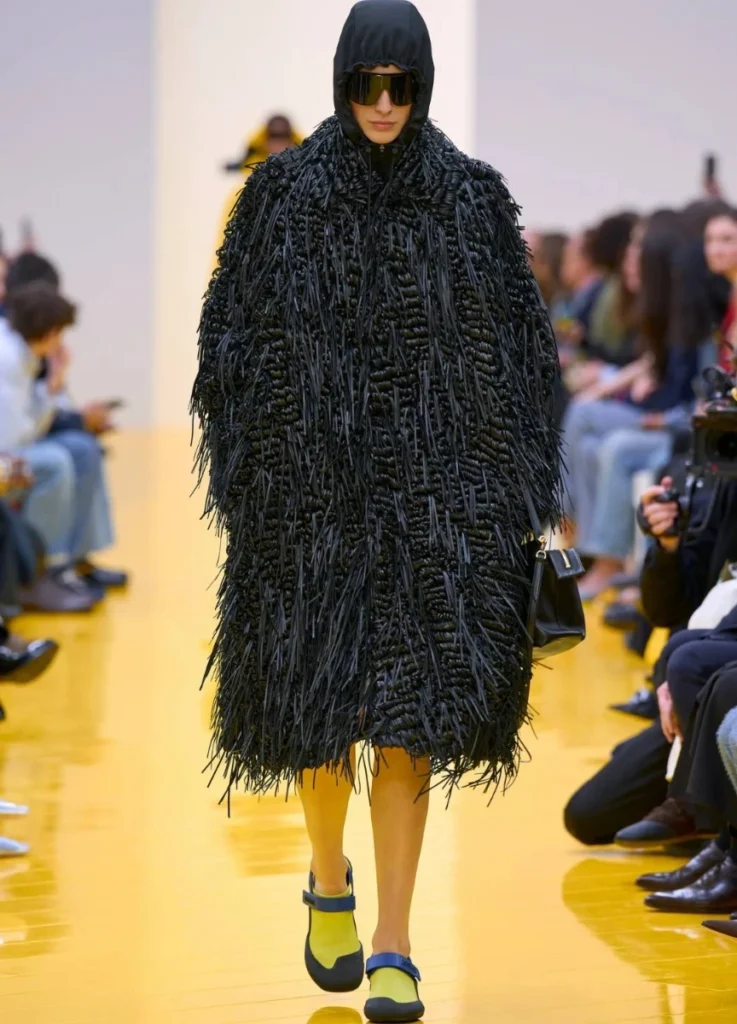
5. Black Sculptural Coat
A dramatic outerwear piece demonstrating the season’s architectural experimentation.
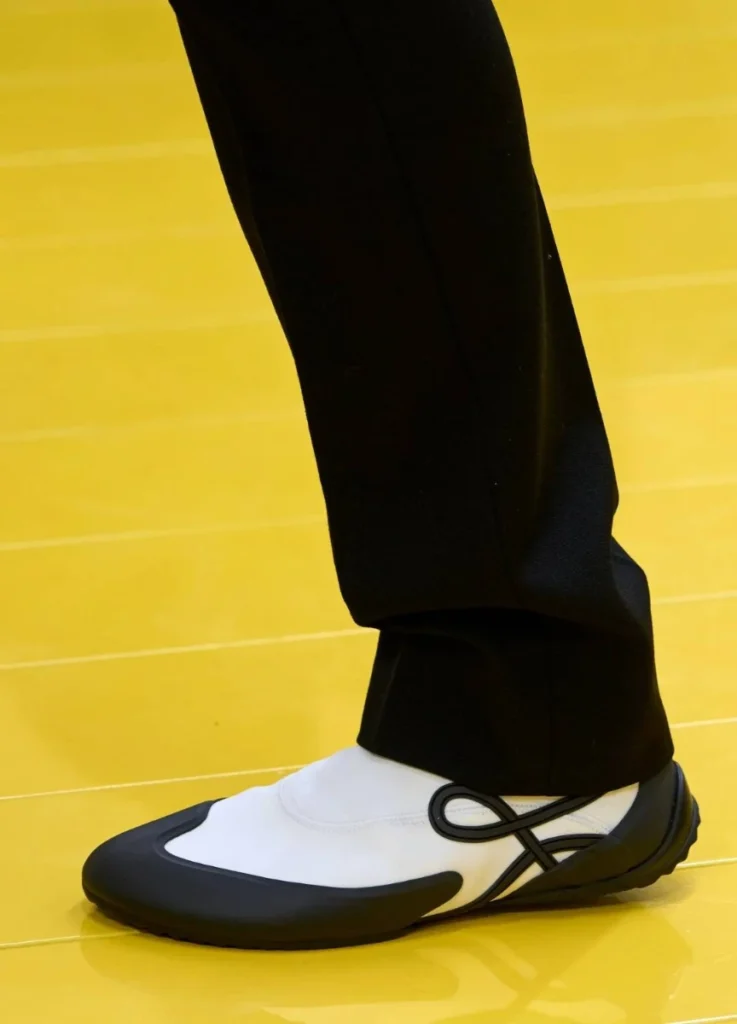
Together, these looks outline the collection’s primary pillars — color, proportion, and material contrast.
Retail Perspective | From Runway to Product
Fall 2026 stands out for its commercial clarity.
The runway includes sculptural pieces, but the majority of garments translate easily into retail products.
Items likely to perform well commercially include:
- Knit dresses
- Tailored coats
- Knit tops
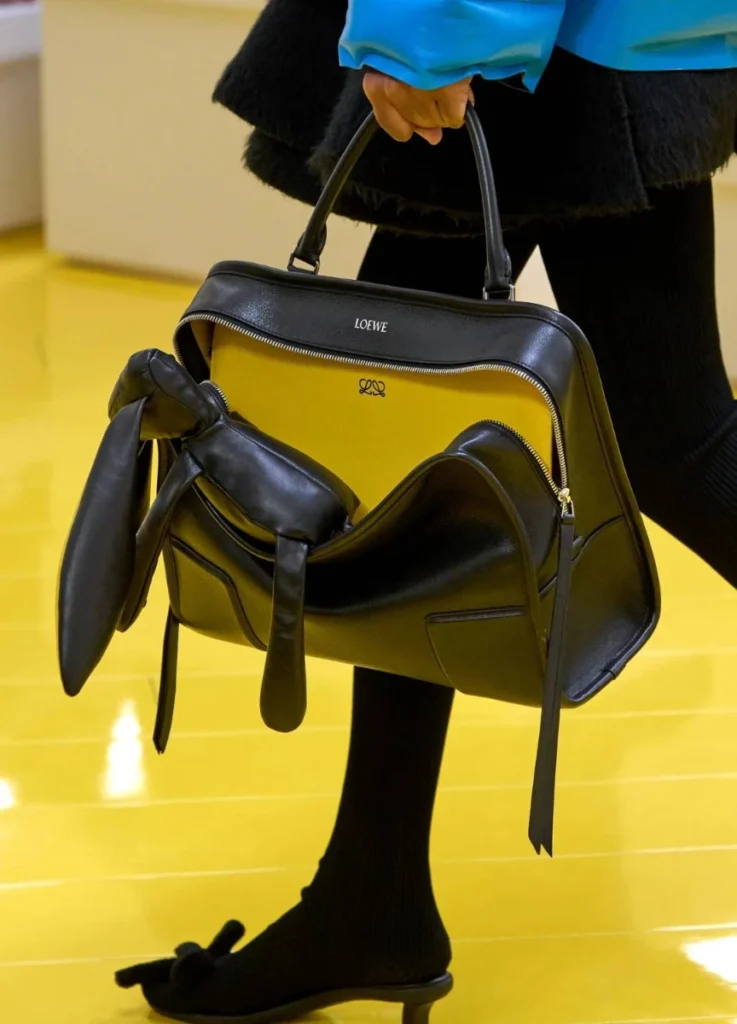
- Leather bags
Loewe remains one of the strongest luxury brands in the accessories market, particularly with its handbags and leather goods.
The ready-to-wear pieces introduced this season appear designed to complement that strength, expanding the wardrobe dimension of the brand while maintaining coherence with its accessories business.
The collection reflects a broader strategy — strengthening Loewe not only as an accessories powerhouse but also as a complete fashion wardrobe. This is the part Anderson’s Loewe arguably underdeveloped. Conceptual ambition produced cultural visibility but not always wardrobe coherence. McCollough and Hernandez seem to be addressing exactly that gap.
Body Proportion Considerations
The collection does not impose strict body requirements, but the silhouettes tend to favor certain proportions.
Garments appear particularly balanced on figures with:
- Taller frames
- Long leg proportions
The elongated coats emphasize vertical lines, reinforcing the sense of height and structure.
The simplicity of the dresses allows for relatively broad adaptability across body types. Their clean lines and minimal construction make them more versatile than many runway silhouettes.
Industry Response | A Quiet but Significant Transition
Early reactions from fashion editors and industry observers have largely focused on the subtlety of the transition.
Rather than attempting to replicate Anderson’s conceptual experimentation, McCollough and Hernandez are redefining Loewe through clarity and product strength.
Several editors have noted that the collection reflects the designers’ background at Proenza Schouler, particularly in the emphasis on color blocking, structured outerwear, and refined knitwear.
The consensus is that this second runway is less about spectacle and more about establishing long-term direction.
It signals that Loewe’s future may rely on a carefully balanced combination of creativity and commercial precision.
Strategic Implications | Two Seasons In
This is the second collection under McCollough and Hernandez, not the first. That distinction matters.
A debut collection typically functions as a statement of intent. A second collection reveals whether that statement was a one-time gesture or the beginning of a sustained direction. Fall 2026 reads as the latter. The discipline visible in the silhouettes, the color logic, the relationship between concept and product — all of it suggests that the New York-trained duo is building something with a longer arc in mind.
In the broader 2026 conversation, this places Loewe alongside Chanel under Blazy, Valentino under Michele, Chloé under Kamali, Balenciaga under Piccioli, and Celine under Rider — six major houses each working through new creative direction this season. Blazy reassembles. Michele interferes. Kamali restores. Piccioli holds the line. Rider consolidates. McCollough and Hernandez, at Loewe, recalibrate.
For several seasons, fashion has been dominated by the concept of quiet luxury — minimalism defined by understated materials and neutral palettes. Many recent collections suggest a gradual departure from that aesthetic. Color, shape, and visual experimentation are returning to prominence.
Loewe Fall 2026 reflects this shift, but in a controlled manner. Rather than embracing excessive decoration, the house introduces boldness through proportion and color.
The collection feels expressive without losing its sense of discipline.
Final Assessment
Loewe Fall 2026 doesn’t attempt to erase the past. It begins to write the next chapter.
Under McCollough and Hernandez, the house is moving toward a carefully balanced identity — one that preserves Loewe’s artistic heritage while refining its product focus.
Emerald coats. Sculptural silhouettes. Clean dresses.
Each element contributes to a quiet but meaningful transformation.
The change isn’t loud. It’s unmistakable.
The new Loewe is only beginning to reveal itself.
All images referenced in this post are drawn from Vogue Runway.
[ Related Editorials ]