Inside Loewe Fall/Winter 2026
Loewe Fall/Winter 2026 collection marks the second runway presentation under the house’s new creative leadership. Following the departure of Jonathan Anderson, creative directors Jack McCollough and Lazaro Hernandez—best known for founding Proenza Schouler—have begun reshaping the identity of the Spanish luxury house.
Their approach is neither abrupt nor theatrical. Instead, it unfolds gradually, through silhouette, color, and the careful recalibration of Loewe’s design language.
Loewe Fall/Winter 2026 runway suggested a brand entering a new phase—one that retains Loewe’s experimental spirit while grounding it more firmly in product and wearability.
Rather than staging a dramatic reinvention, McCollough and Hernandez appear to be constructing something subtler: a Loewe that balances artistic playfulness with commercial clarity. The shift is not presented as a break from the past, but as a controlled evolution.
Season Context
Loewe After Jonathan Anderson
For over a decade, Jonathan Anderson positioned Loewe as one of fashion’s most intellectually adventurous houses. His collections frequently blurred the line between fashion and contemporary art, introducing surreal proportions, conceptual garments, and sculptural experimentation.
Under the new creative directors, the house appears to be shifting toward a slightly different emphasis.
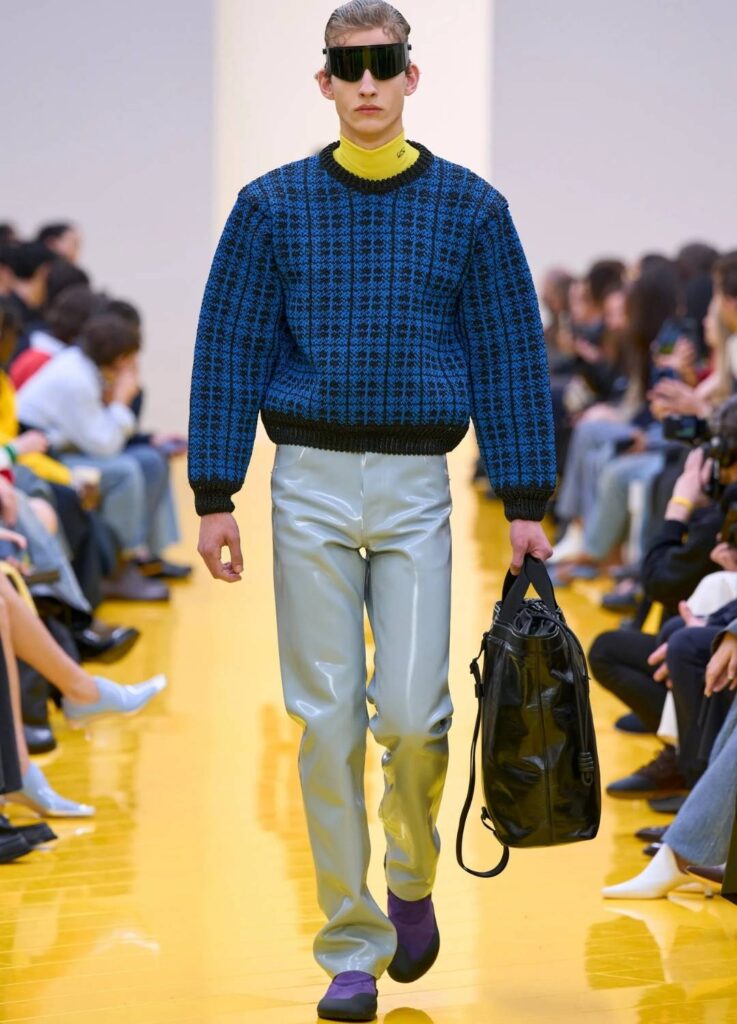
The experimentation remains—but it is now channeled through garments that feel more immediately wearable and structurally coherent.
Fall 2026 therefore reads less like a conceptual manifesto and more like a recalibration of the brand’s foundations. The focus moves from spectacle to structure: coats, knitwear, dresses, and tailoring that articulate a clearer product identity.
In many ways, this second collection under the new leadership functions as a quiet reset. It suggests that Loewe is gradually transitioning from the conceptual energy of the previous era toward a more product-driven design language.
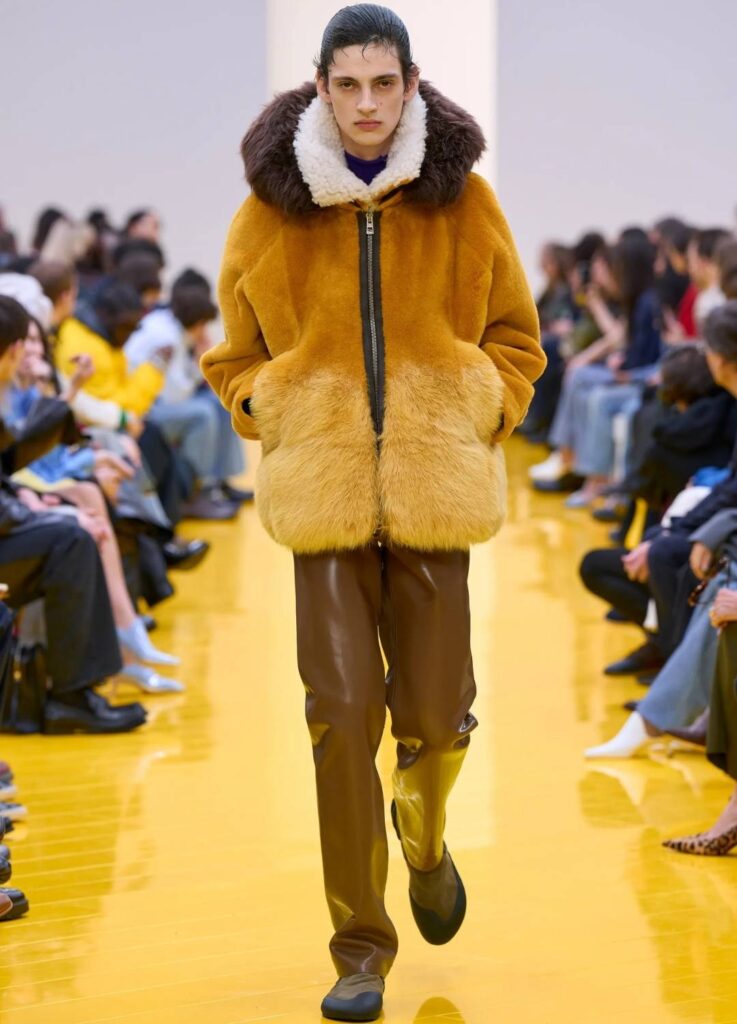
Thematic Direction
Playful Luxury with Structural Discipline
If one concept defines Loewe Fall/Winter 2026 collection, it is the idea of playful luxury.
The runway itself—coated in a vivid yellow floor—immediately set the visual tone. Against this bright backdrop, garments appeared in striking hues:
- Emerald green coats
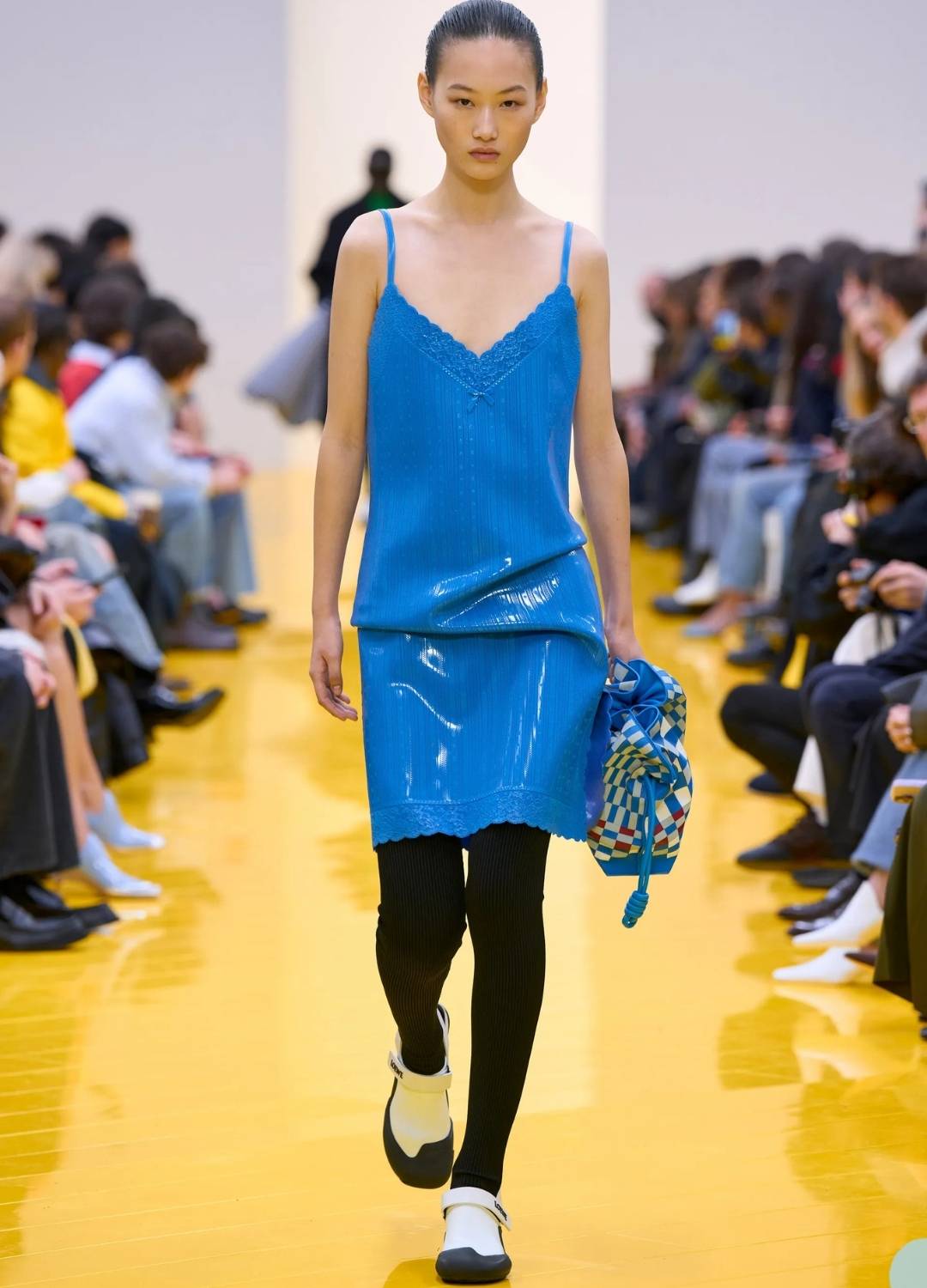
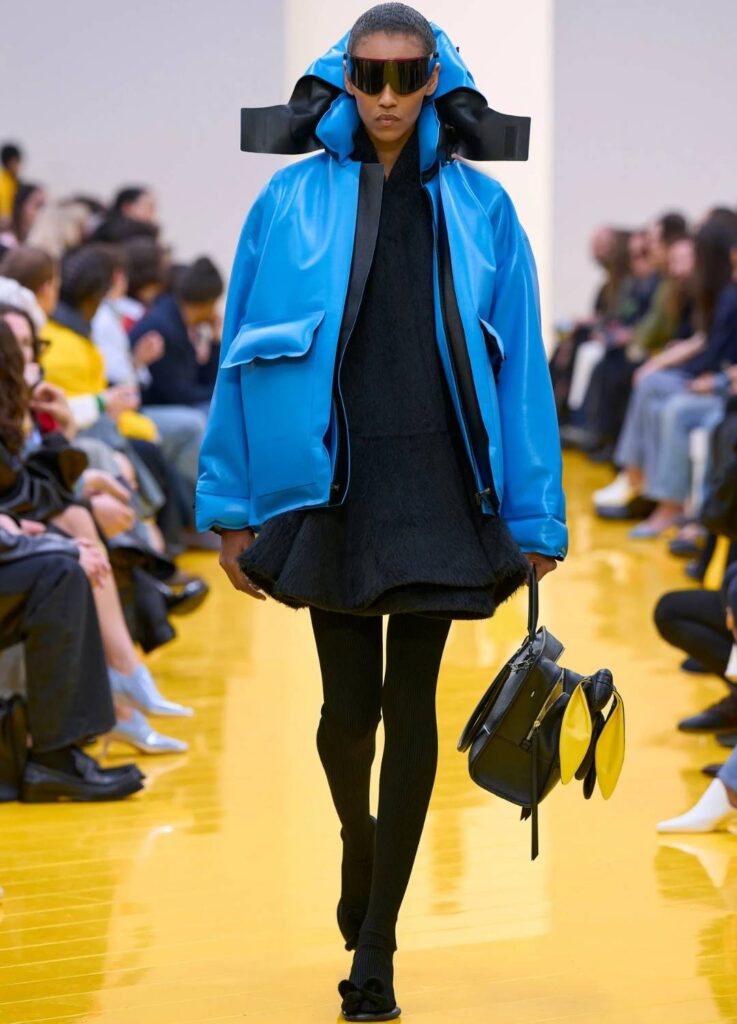
- Cobalt blue dresses
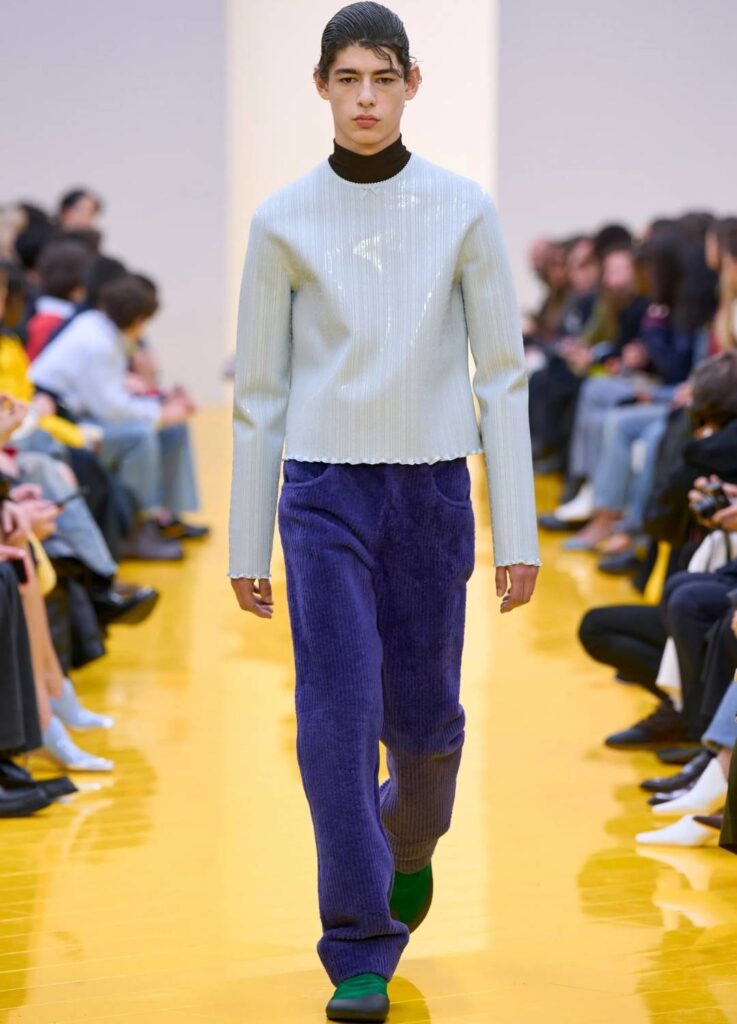
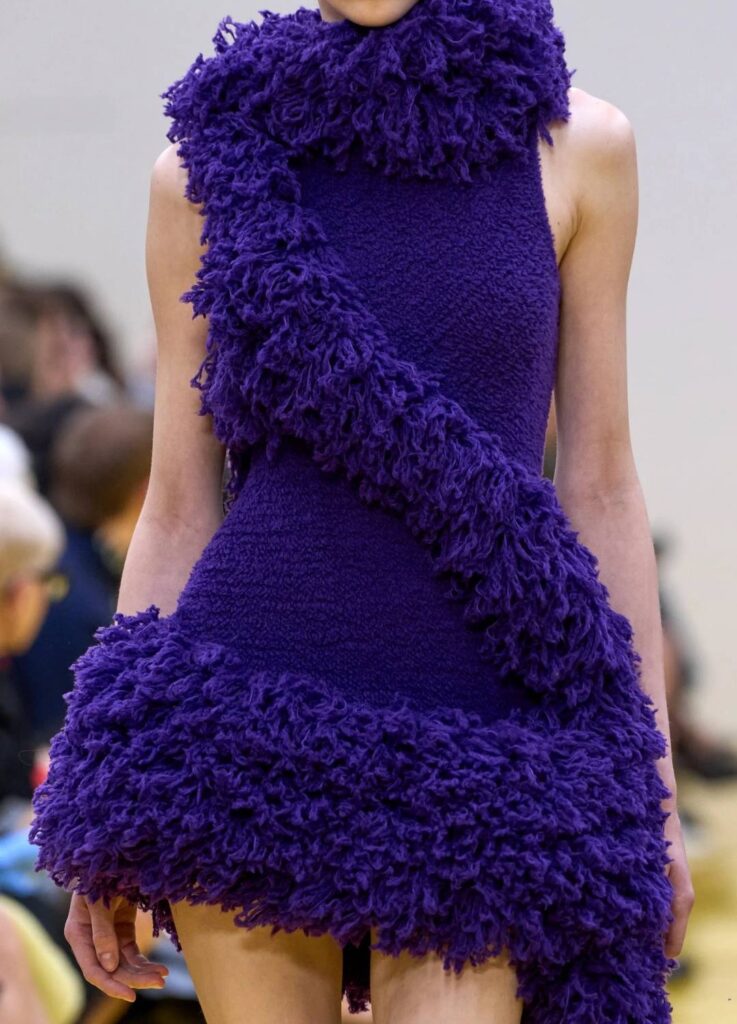
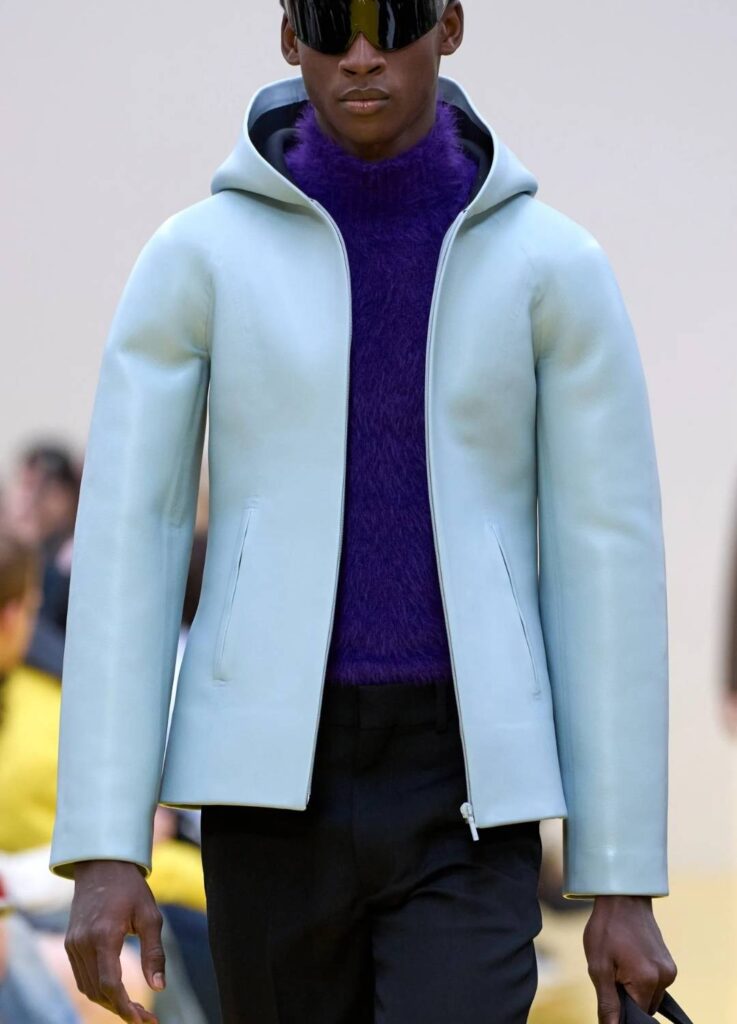
- Deep purple knitwear
- Graphic checked patterns
These colors diverge sharply from traditional fall palettes, which typically rely on darker neutrals such as charcoal, brown, or black.
Yet despite the brightness, the collection never feels frivolous.
That restraint comes from the discipline of the silhouettes. The garments are clean, architectural, and precisely constructed. Volume is controlled, and the lines remain clear even when the color palette becomes expressive.
Color may attract the eye—but structure anchors the design.
This balance between expressive color and controlled tailoring forms the conceptual center of the collection.
Silhouette
Minimal Dresses and Sculptural Coats
The silhouettes of the season fall into two distinct categories.
The first consists of highly simplified dresses:
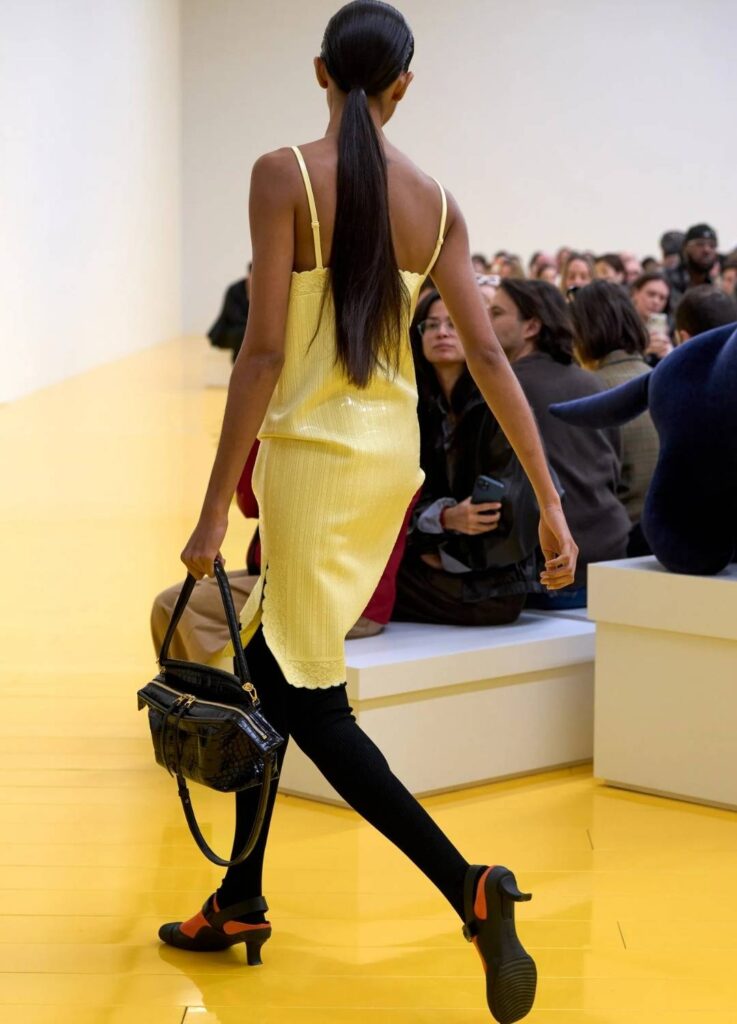
- Slip dresses
- Knit dresses
- Straight-cut tunics
These pieces are intentionally minimal. There are few decorative elements. Instead, the garments rely on proportion and fabric movement to shape the body.
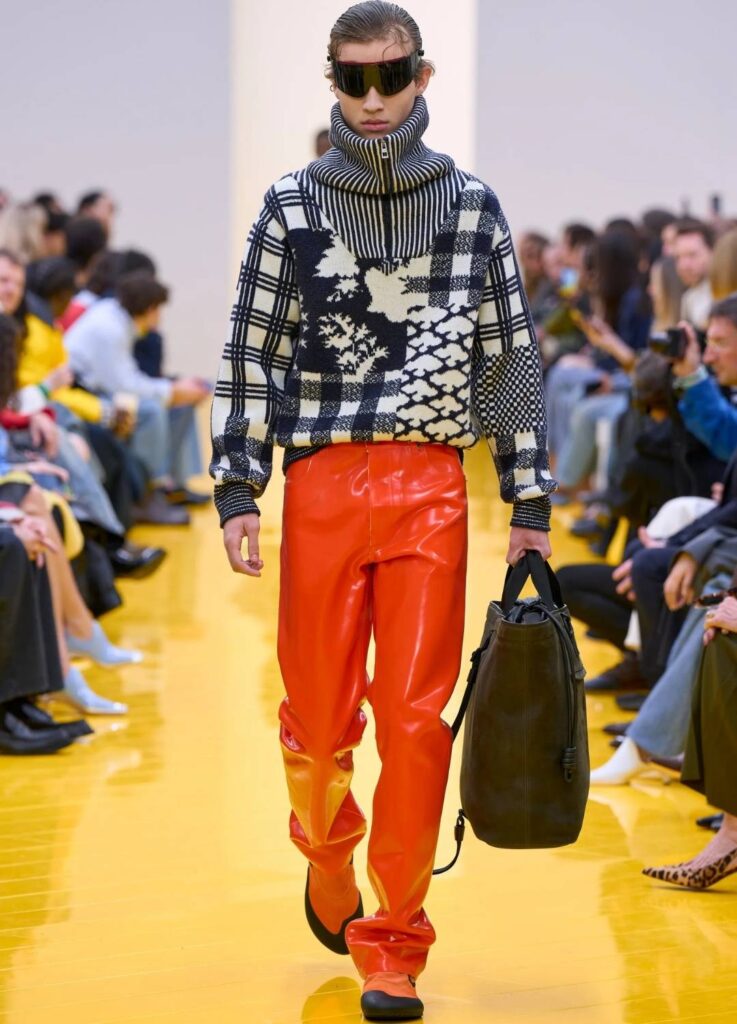
Many follow a vertical line, elongating the frame without excessive volume. The restraint of these dresses creates a visual calm that contrasts sharply with the more dramatic outerwear pieces.
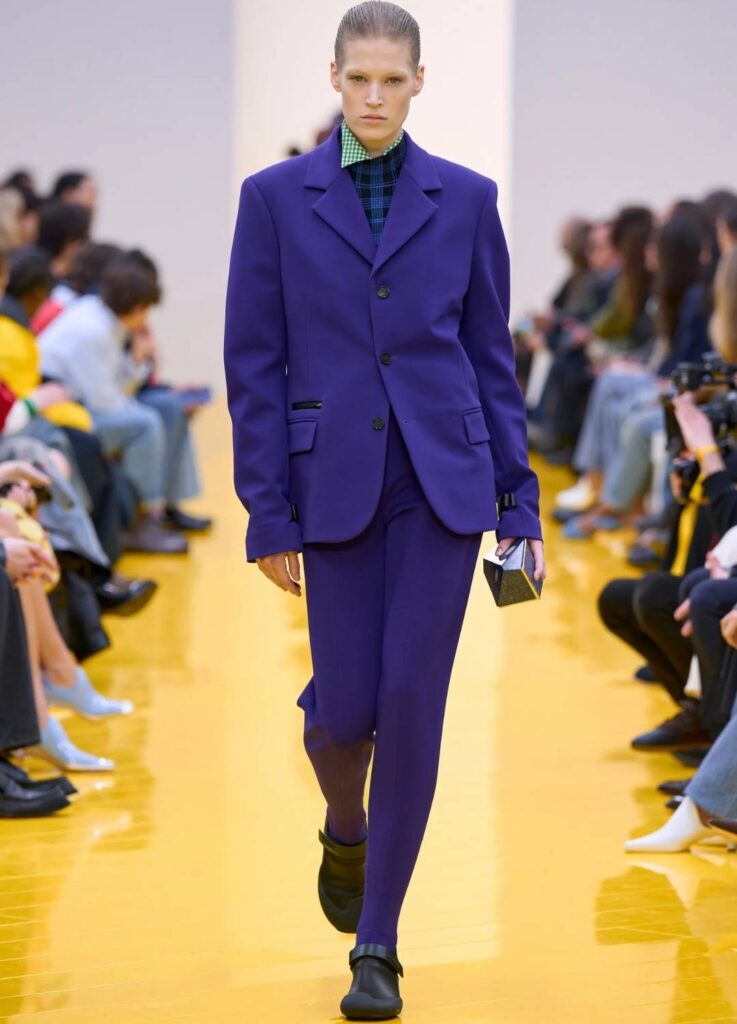
The second category introduces that contrast: sculptural outerwear.
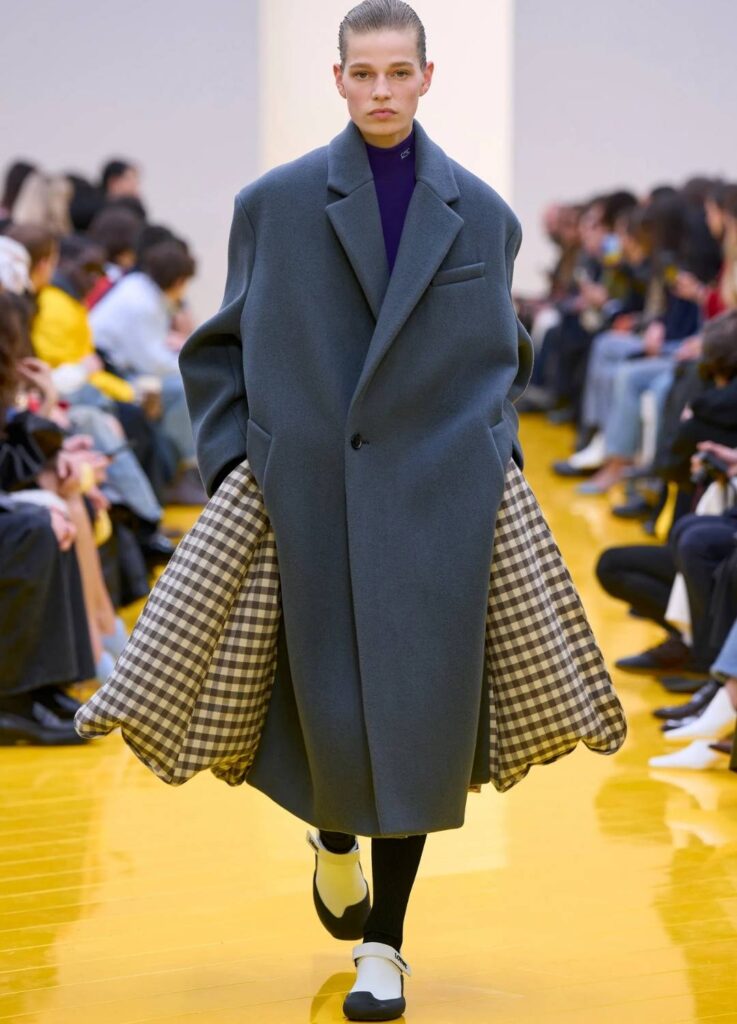
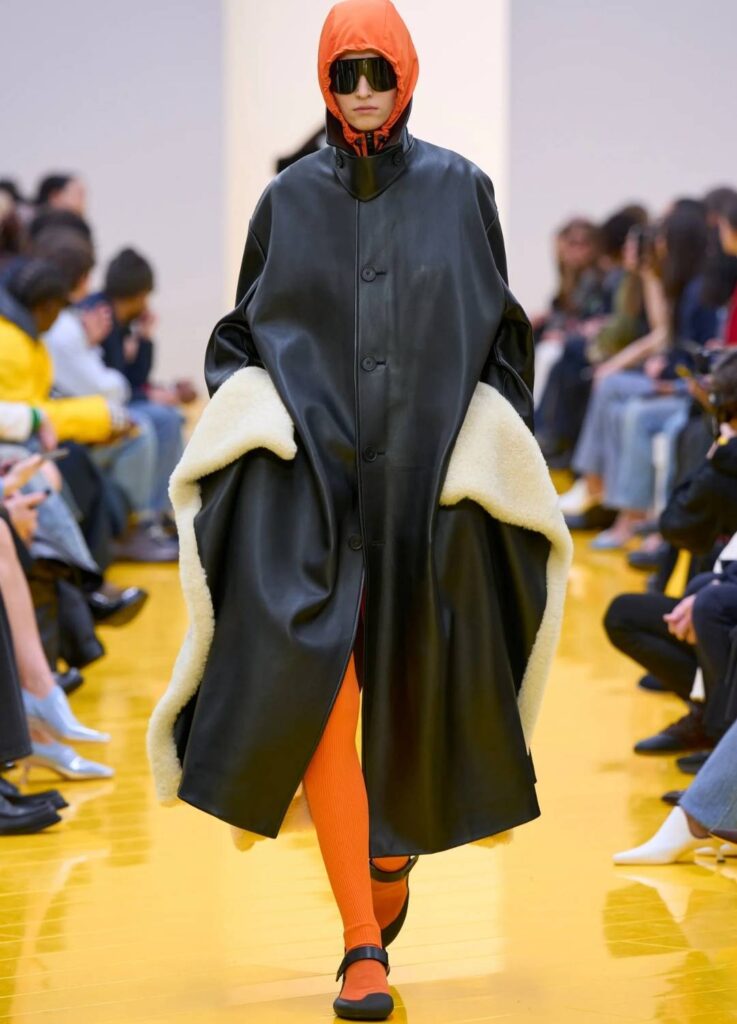
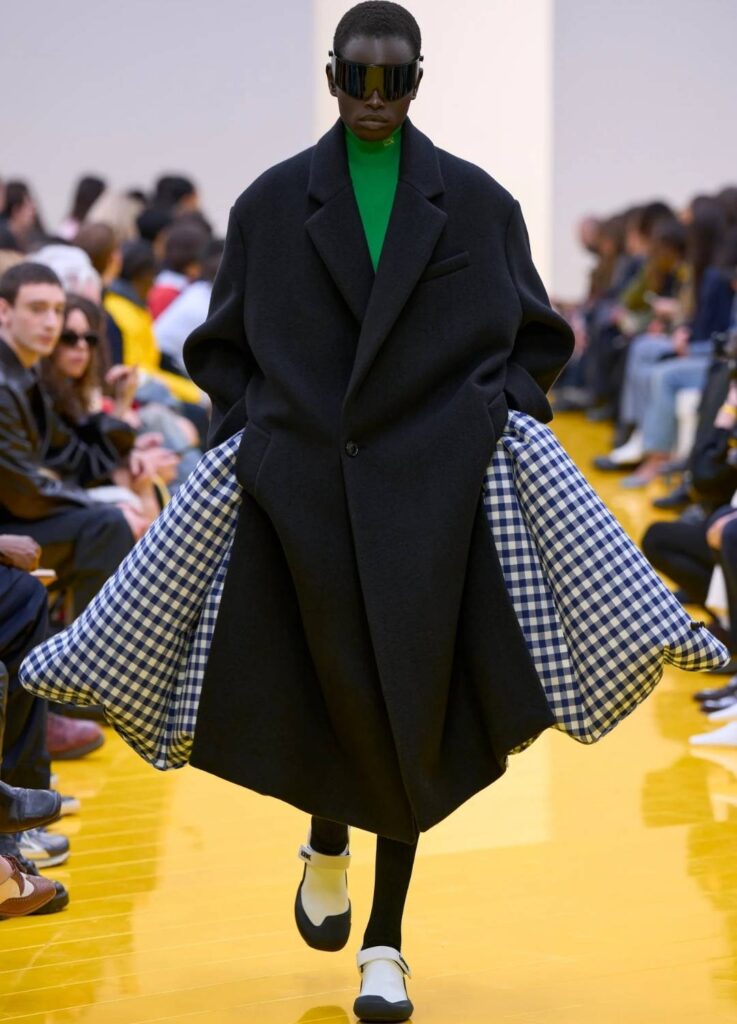
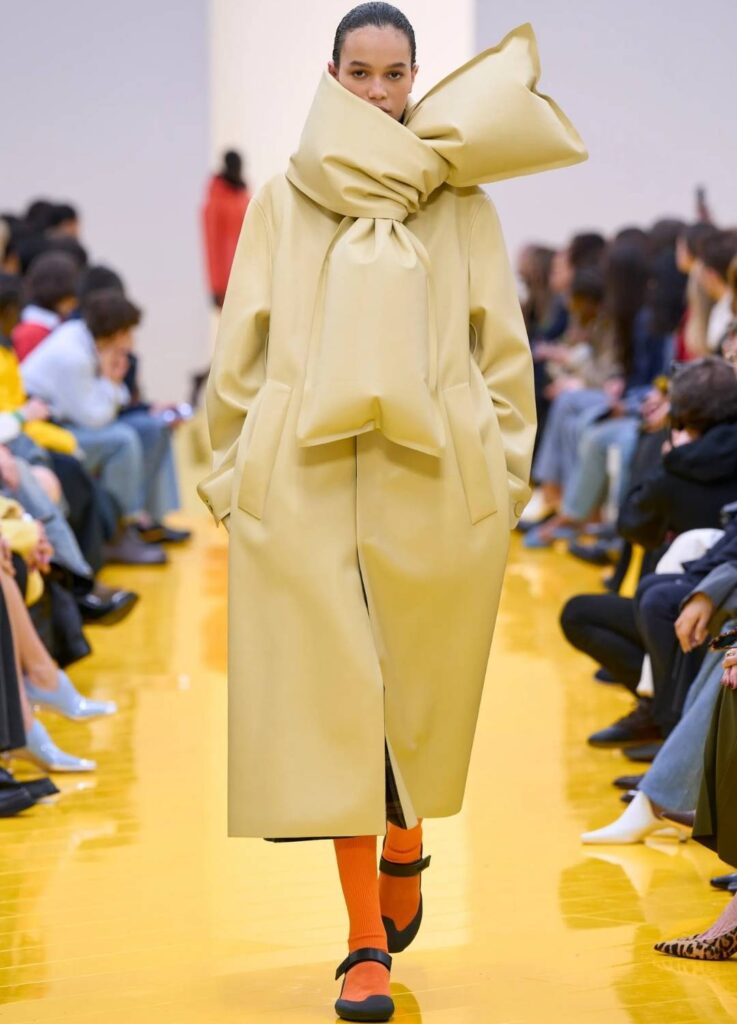
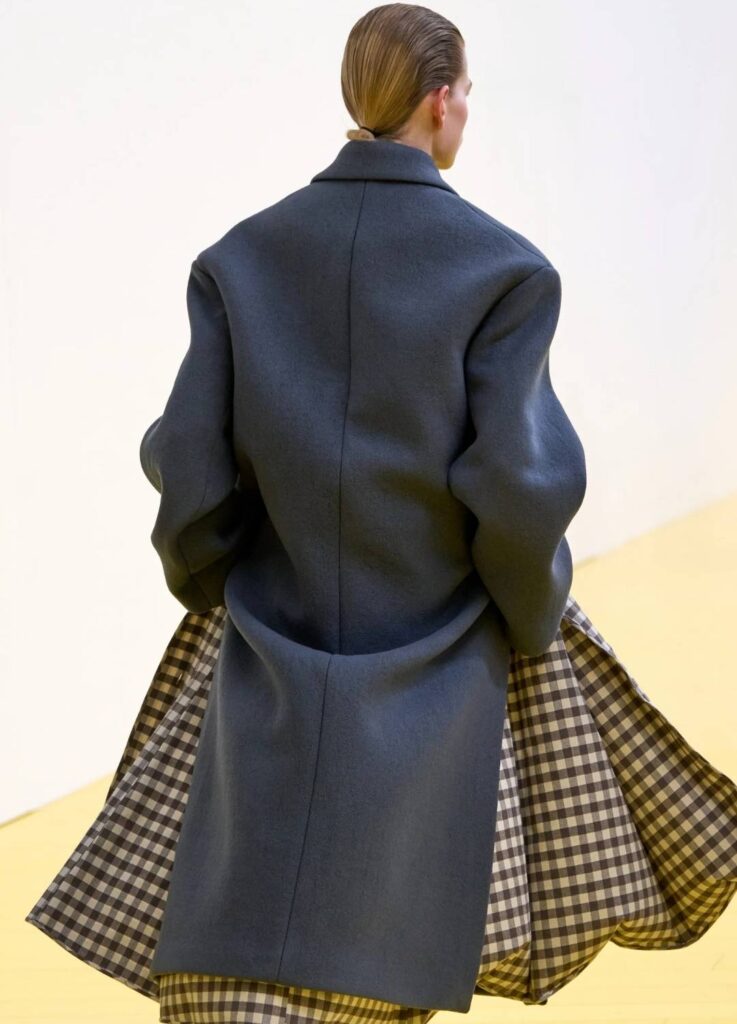
Several coats feature exaggerated proportions—expanded shoulders, dramatic length, and widened lower silhouettes. These coats function almost like wearable sculptures, creating a powerful visual presence on the runway.
This interplay between simplicity and exaggeration provides rhythm throughout the collection.
Minimal garments allow the sculptural pieces to stand out, while the bold outerwear anchors the visual identity of the season.
Material Strategy
Texture as Structural Language
Material contrast plays a key role in the collection’s design logic.
Several fabrics appear repeatedly across the runway:
- Knitwear
- Structured wool coats
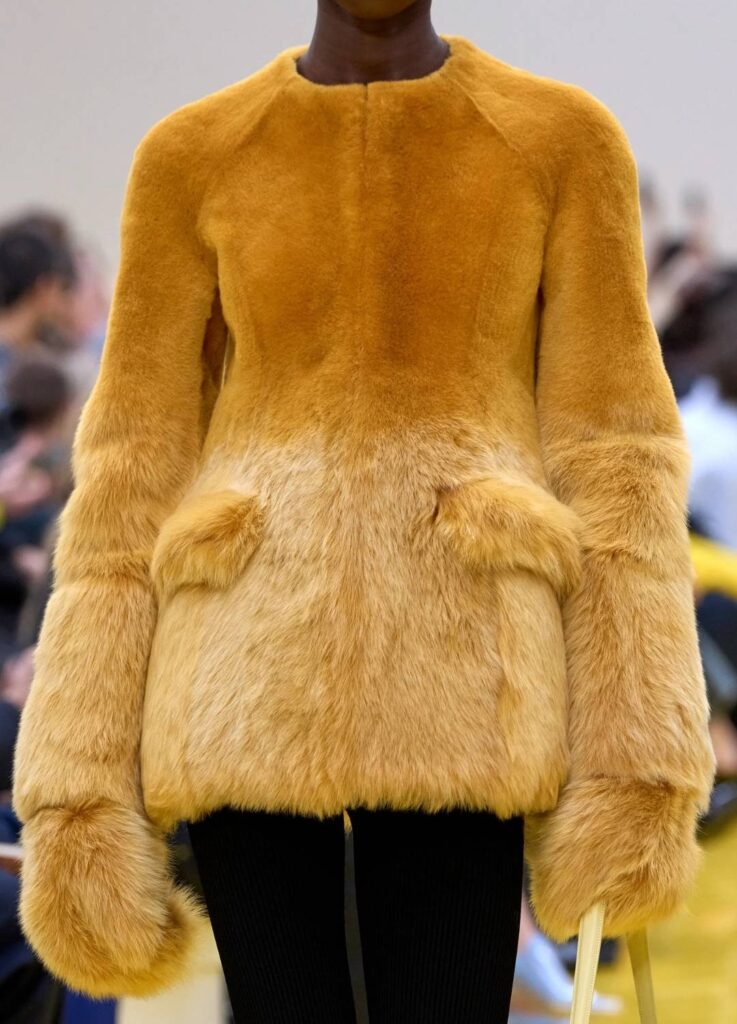
- Leather pieces
- Checked wool textiles
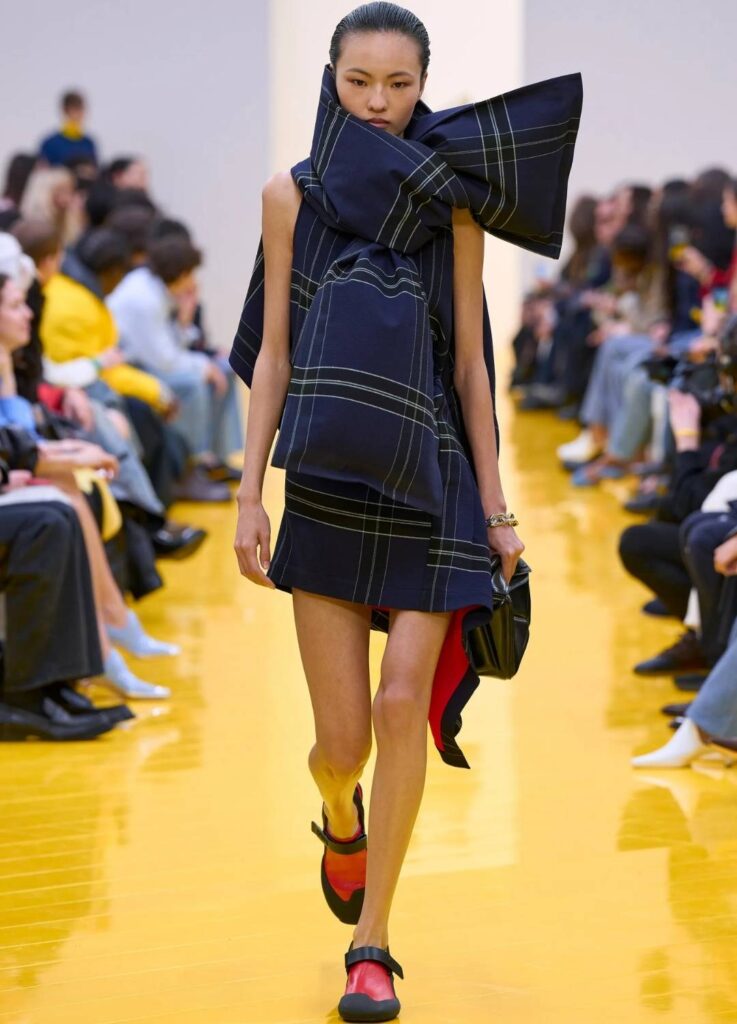
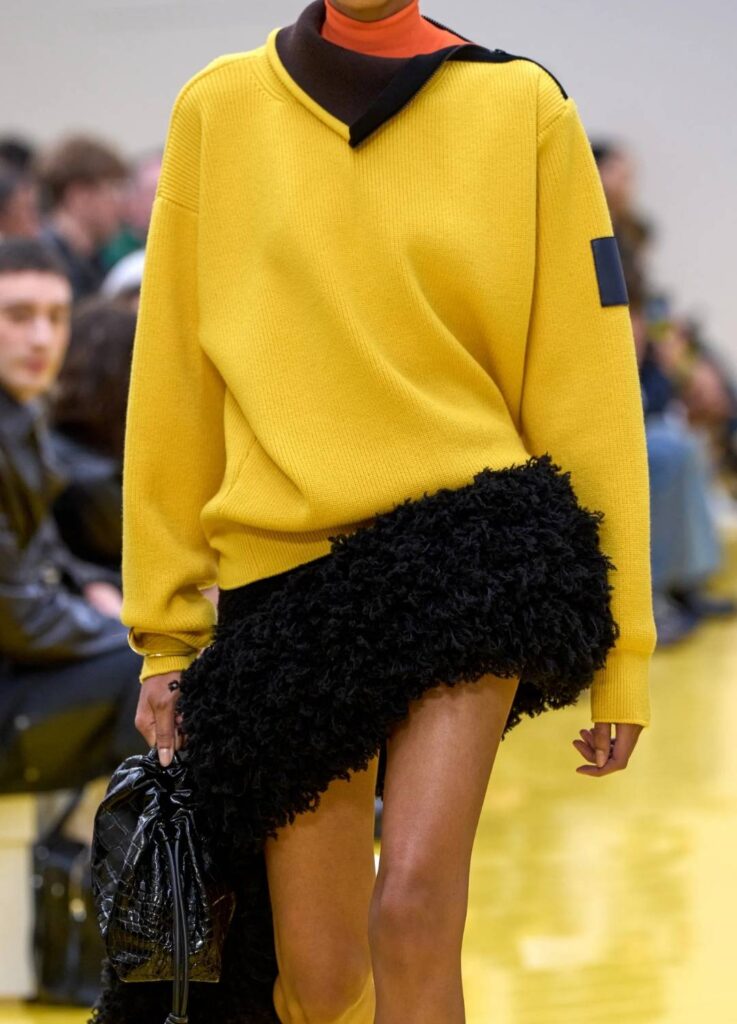
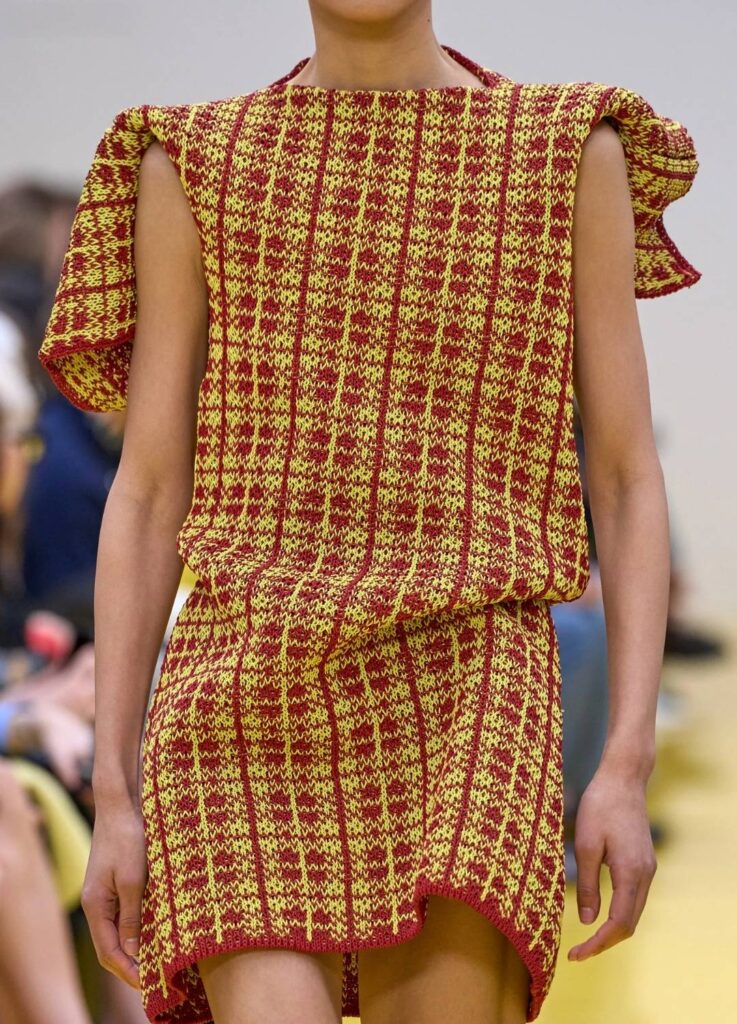
Knit dresses form the foundation of many looks. Their close fit emphasizes the natural contours of the body while maintaining flexibility and comfort.
In contrast, the coats introduce volume and structure. Heavy wool fabrics hold architectural shapes, allowing the garments to maintain their sculptural silhouettes.
Leather pieces add another dimension to the material mix. Their firmness reinforces the structural themes of the collection while also connecting to Loewe’s longstanding heritage in leather craftsmanship.
The result is a layered visual dynamic: soft textures against rigid structure.
This juxtaposition reinforces the idea that Loewe’s experimentation now operates within a more refined framework—one where craft and structure carry equal importance.
Color Strategy
Color as Identity Rather Than Decoration
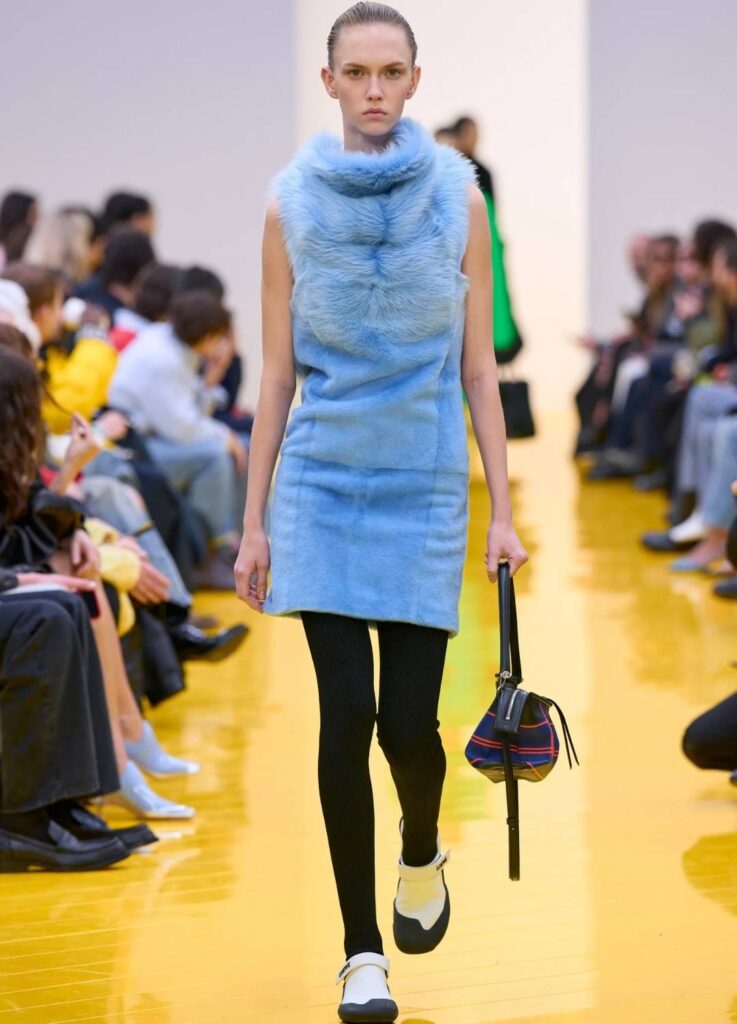
Color has always been an important design element at Loewe, but Fall 2026 elevates it to a central role.
Key shades throughout the collection include:
- Emerald green
- Cobalt blue
- Deep purple
- Black
- Brown check patterns
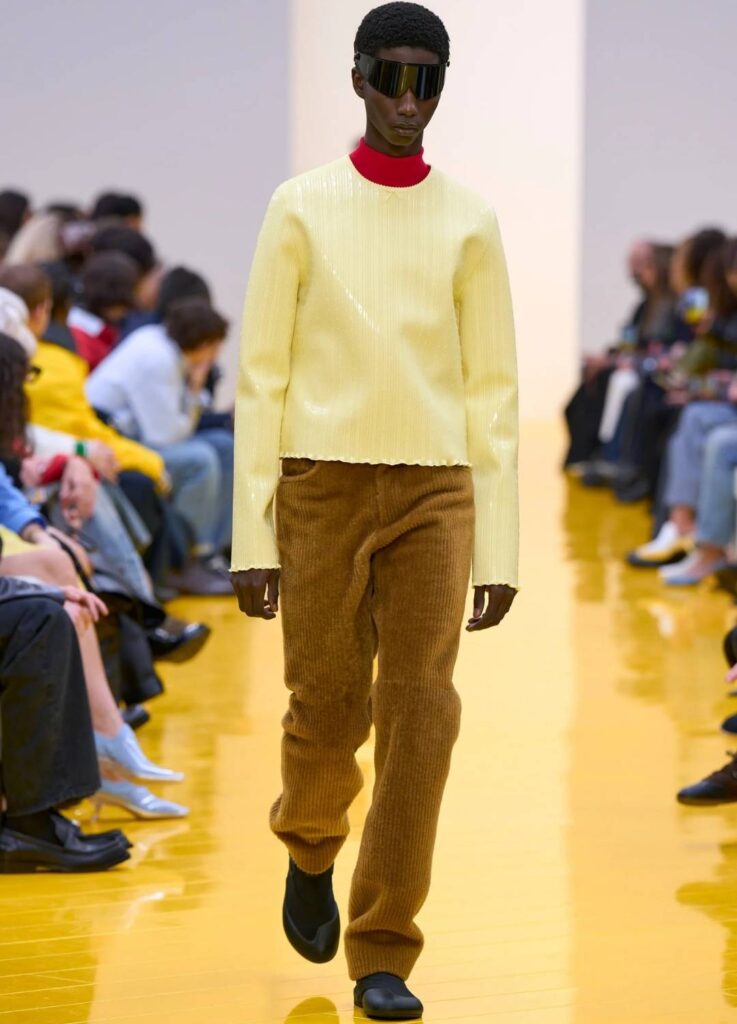
These hues do not appear randomly. Instead, they function almost like graphic statements within the collection.
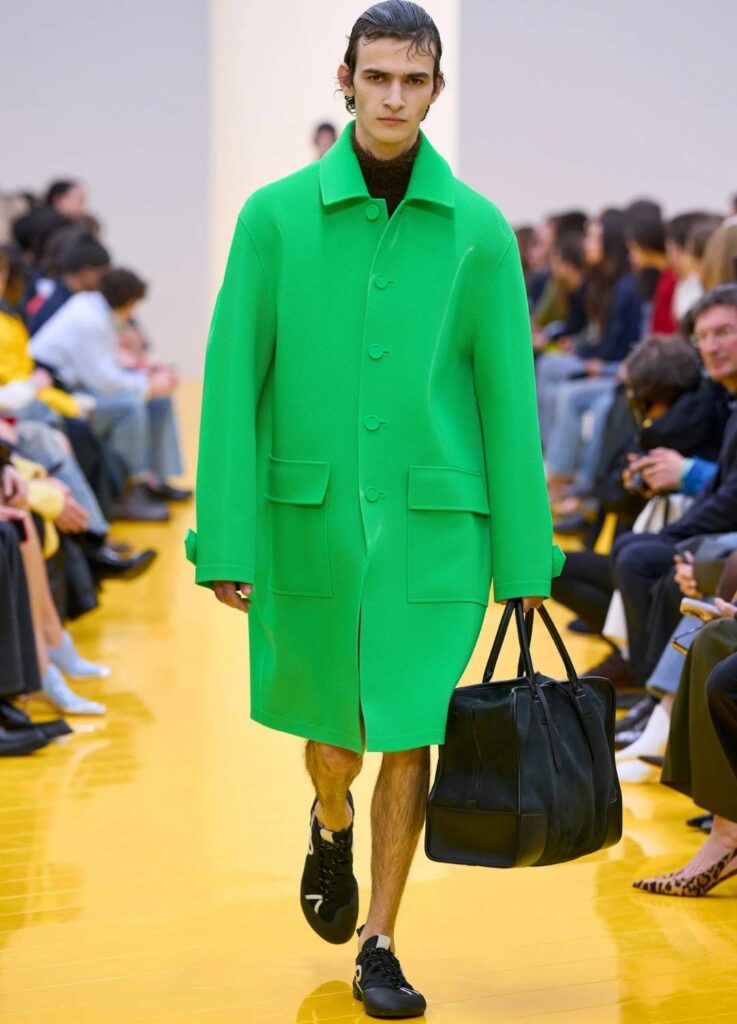
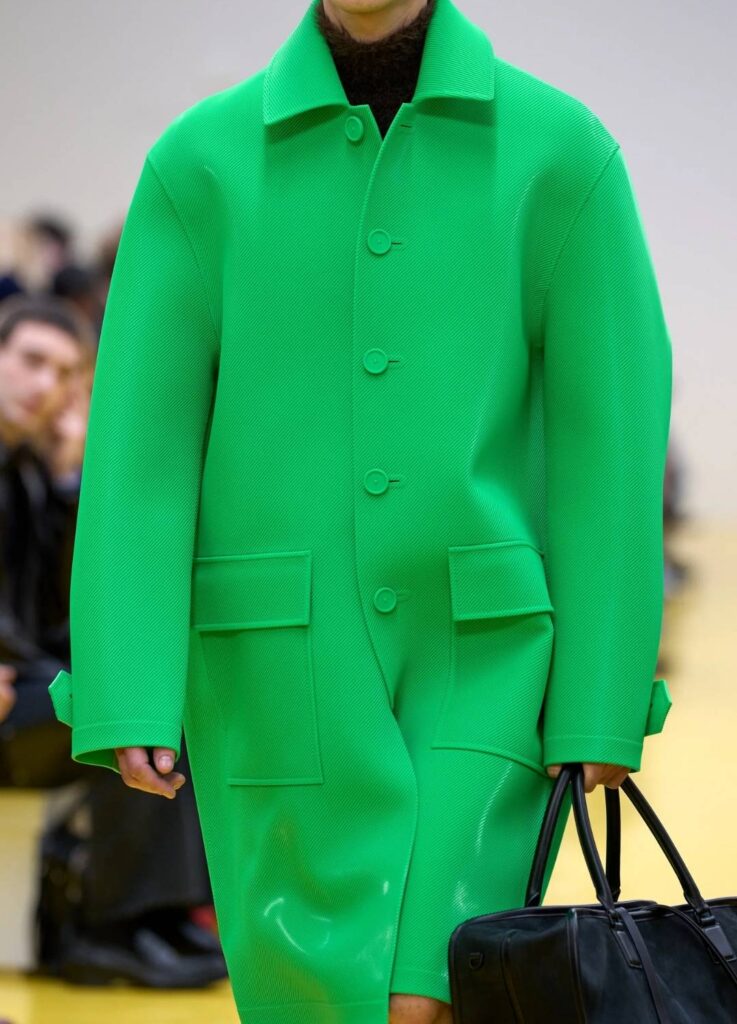
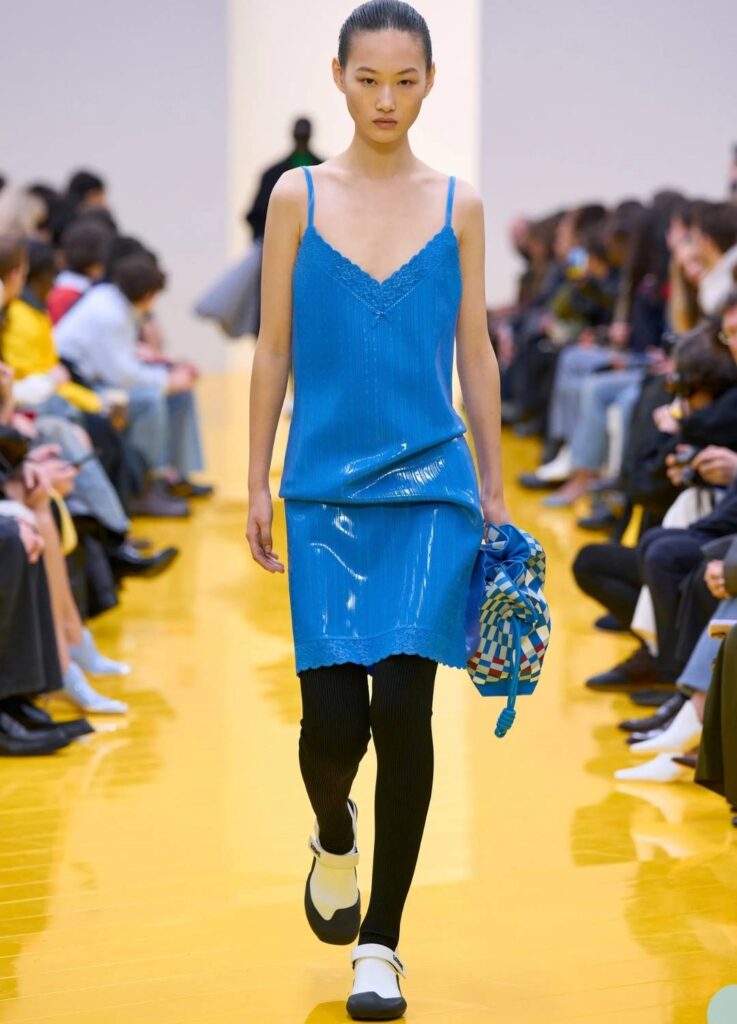
An emerald green coat, for example, becomes the defining visual element of an entire look. Similarly, a cobalt blue slip dress achieves its impact not through embellishment but through the intensity of its color.
In this sense, color replaces ornamentation.
Rather than adding decorative details, the designers allow color itself to carry the visual weight. The palette becomes a structural element of the collection’s design language.
Five Key Looks
Several runway looks effectively summarize the design language of the season.
1. Emerald Green Coat
Perhaps the most striking piece of the collection. The bold color combined with clean structure illustrates the house’s renewed focus on clarity.
2. Cobalt Blue Slip Dress
A minimalist silhouette that relies entirely on color for its visual power.
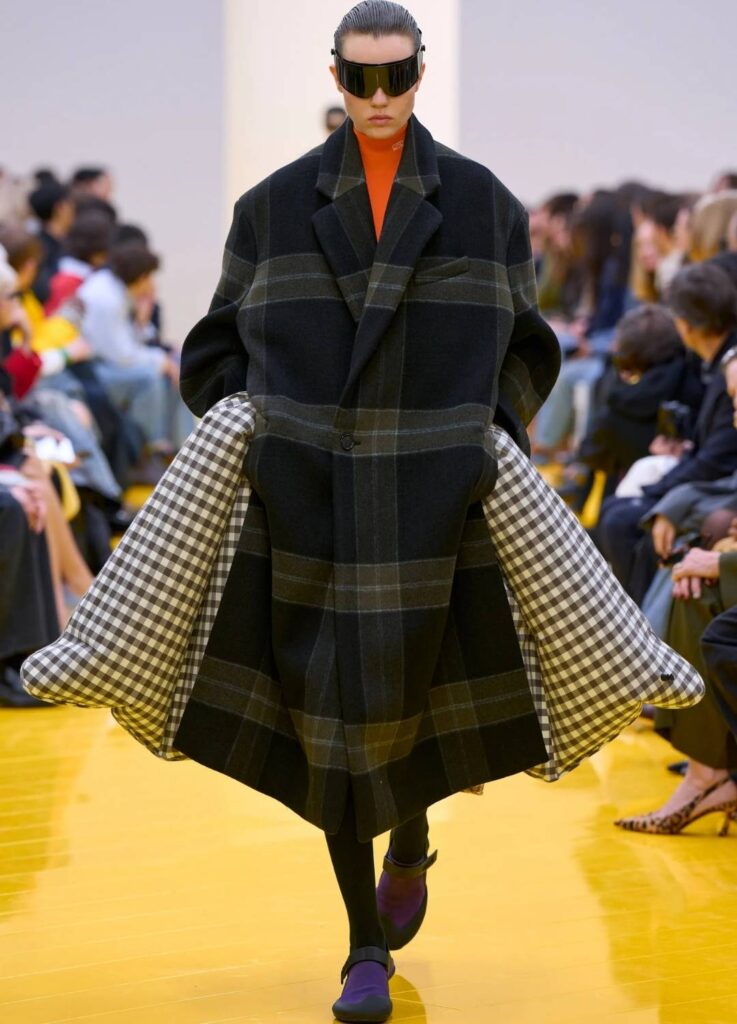
3. Checked Lining Coat
The graphic pattern inside the coat introduces subtle complexity while maintaining a streamlined exterior.
4. Knit Dress
A versatile piece that suggests a new core wardrobe item for Loewe customers.
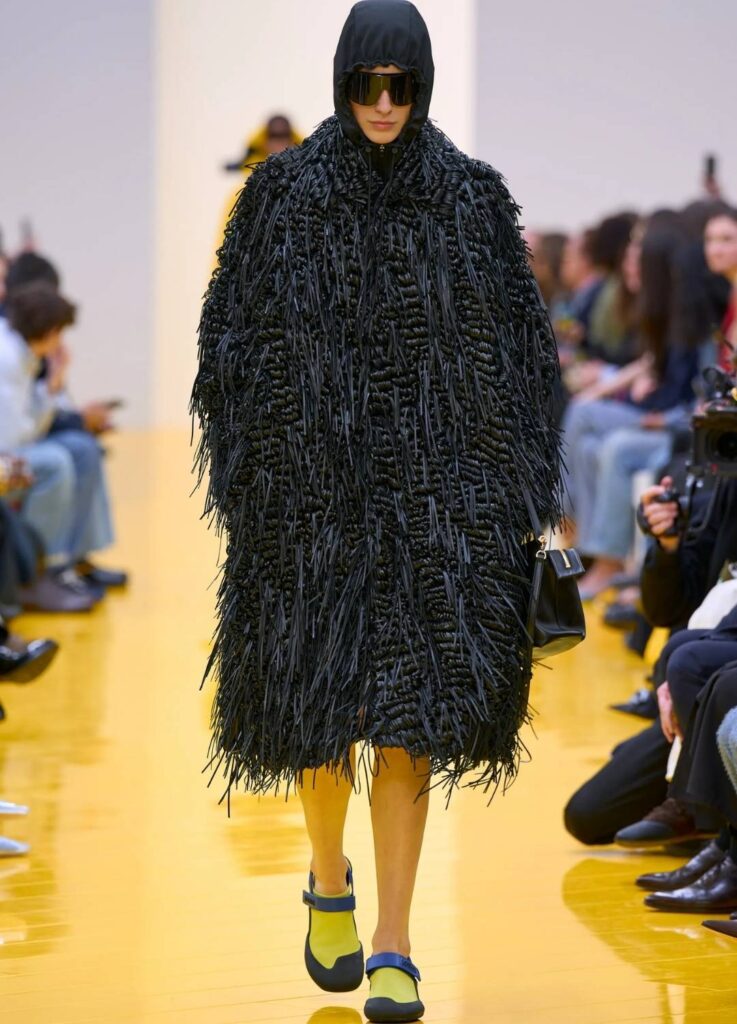
5. Black Sculptural Coat
A dramatic outerwear piece demonstrating the season’s architectural experimentation.
Together, these looks outline the collection’s primary pillars: color, proportion, and material contrast.
Retail Perspective
From Runway to Product
One of the most notable aspects of the Fall 2026 collection is its commercial clarity.
While the runway includes sculptural pieces, the majority of garments translate easily into retail products.
Items likely to perform well commercially include:
- Knit dresses
- Tailored coats
- Knit tops
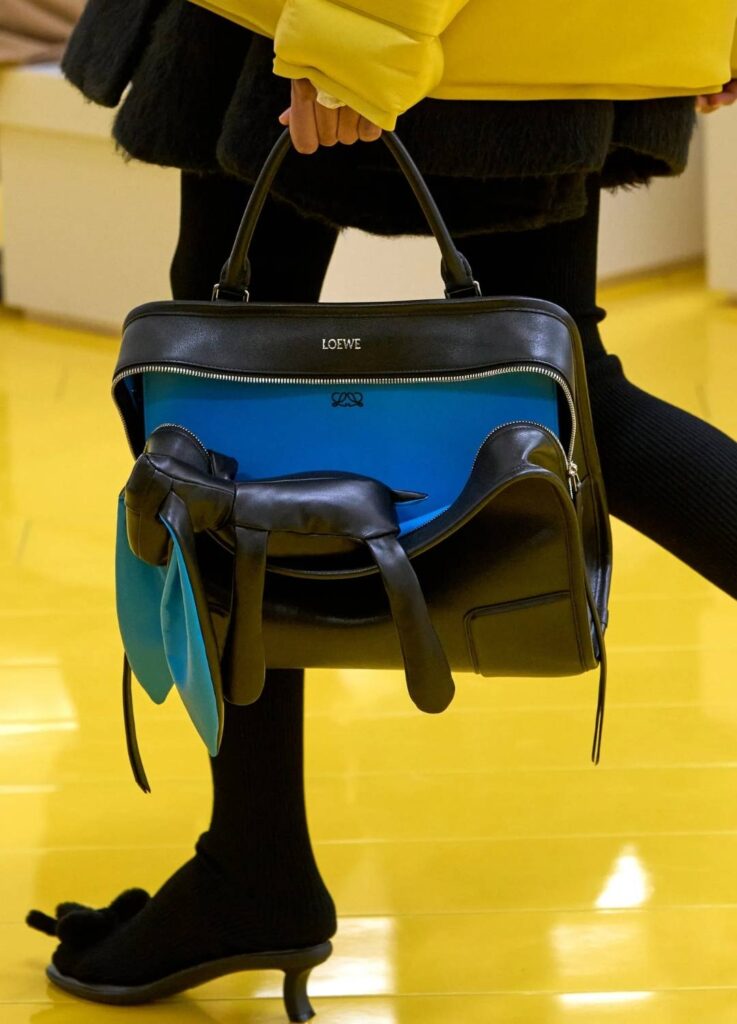
- Leather bags
Loewe remains one of the strongest luxury brands in the accessories market, particularly with its handbags and leather goods.
The ready-to-wear pieces introduced this season appear designed to complement that strength, expanding the wardrobe dimension of the brand while maintaining coherence with its accessories business.
In this sense, the collection reflects a broader strategy: strengthening Loewe not only as an accessories powerhouse but also as a complete fashion wardrobe.
Body Proportion Considerations
The collection does not impose strict body requirements, but the silhouettes tend to favor certain proportions.
Garments appear particularly balanced on figures with:
- Taller frames
- Long leg proportions
The elongated coats emphasize vertical lines, reinforcing the sense of height and structure.
However, the simplicity of the dresses allows for relatively broad adaptability across body types. Their clean lines and minimal construction make them more versatile than many runway silhouettes.
Industry Response
A Quiet but Significant Transition
Early reactions from fashion editors and industry observers have largely focused on the subtlety of the transition.
Rather than attempting to replicate Anderson’s conceptual experimentation, McCollough and Hernandez seem to be redefining Loewe through clarity and product strength.
Several editors have noted that the collection reflects the designers’ background at Proenza Schouler, particularly in the emphasis on color blocking, structured outerwear, and refined knitwear.
The consensus appears to be that this second runway is less about spectacle and more about establishing long-term direction.
It signals that Loewe’s future may rely on a carefully balanced combination of creativity and commercial precision.
Strategic Implications
In the broader luxury landscape, the timing of this shift is notable.
For several seasons, fashion has been dominated by the concept of quiet luxury—minimalism defined by understated materials and neutral palettes.
Yet many recent collections suggest a gradual departure from that aesthetic.
Color, shape, and visual experimentation are returning to prominence.
Loewe’s Fall 2026 collection reflects this shift, but in a controlled manner. Rather than embracing excessive decoration, the house introduces boldness through proportion and color.
The result is a collection that feels expressive without losing its sense of discipline.
Final Assessment
Loewe Fall 2026 does not attempt to erase the past.
Instead, it begins to write the next chapter.
Under McCollough and Hernandez, the house appears to be moving toward a carefully balanced identity—one that preserves Loewe’s artistic heritage while refining its product focus.
Emerald coats. Sculptural silhouettes. Clean dresses.
Each element contributes to a quiet but meaningful transformation.
The change is not loud.
But it is unmistakable.
And if this collection is any indication, the new Loewe is only beginning to reveal itself.
All images referenced in this post are drawn from Vogue Runway.
[ Related Editorials ]