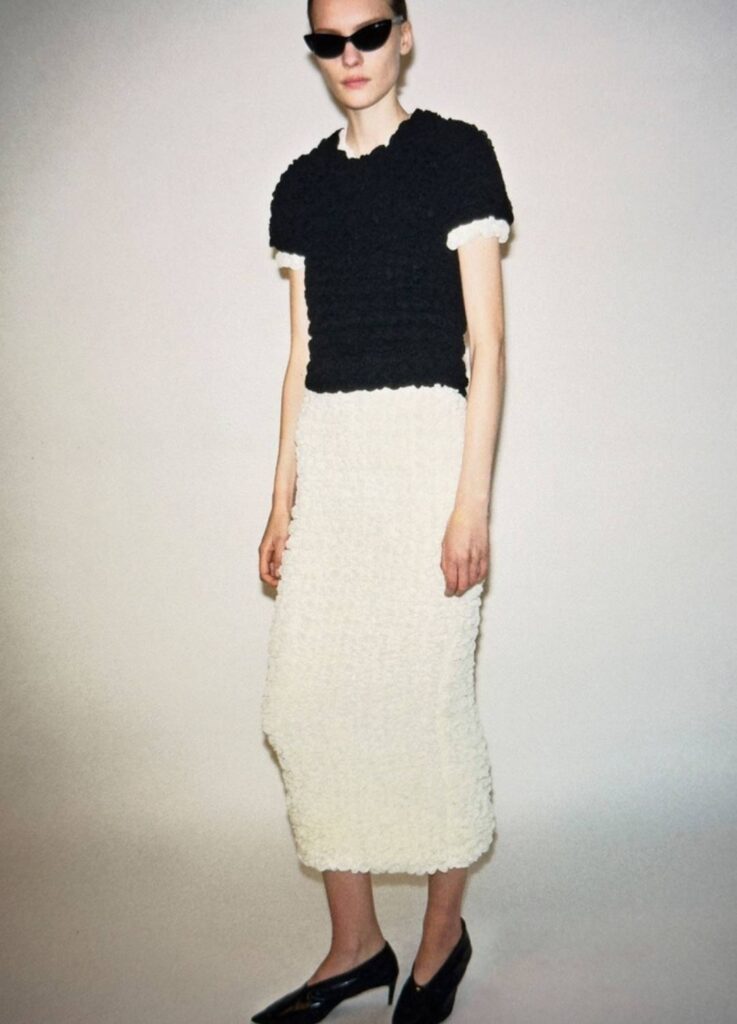
KHAITE’s Pre-Fall 2026 collection marks a quiet but decisive turn.
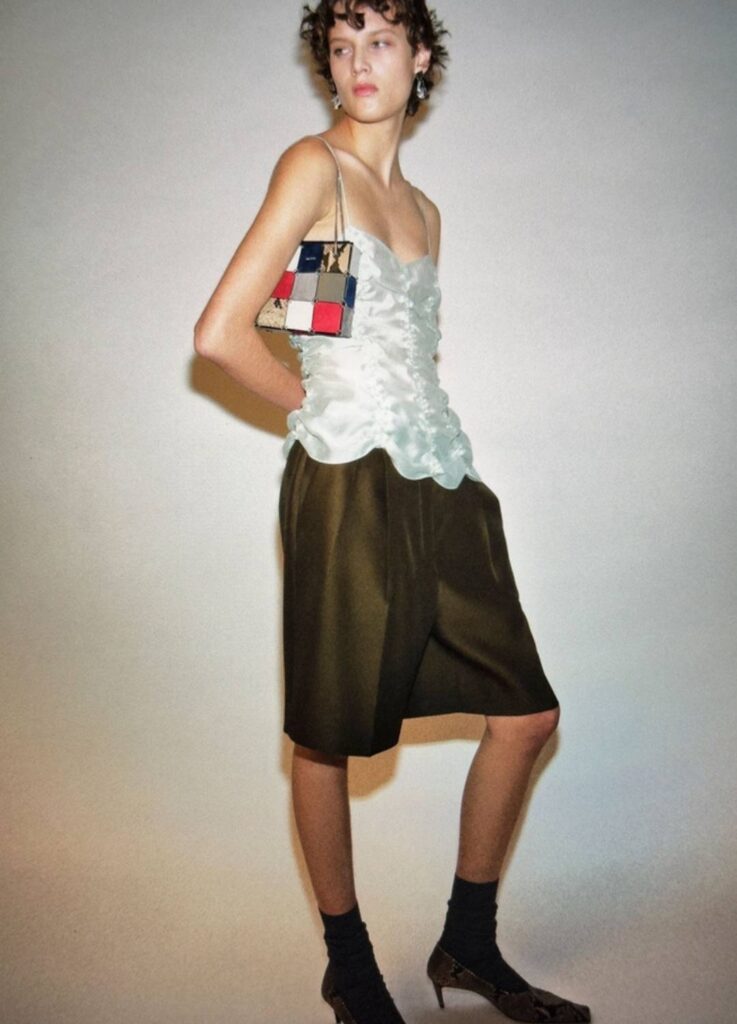
Where the brand has long been associated with sculptural minimalism and disciplined restraint, this season introduces a different governing principle: imperfection as form. Not as decoration, not as nostalgia—but as a structural response to the body itself.
Creative director Catherine Holstein has spoken openly about how physical change shaped this collection. After experiencing two pregnancies over the past three years, she found herself drawn not to garments that fit seamlessly, but to those that resisted alignment—clothes that twisted, slipped, or refused to sit perfectly on the body.
That admission becomes the collection’s central logic.
From Smoothness to Distortion
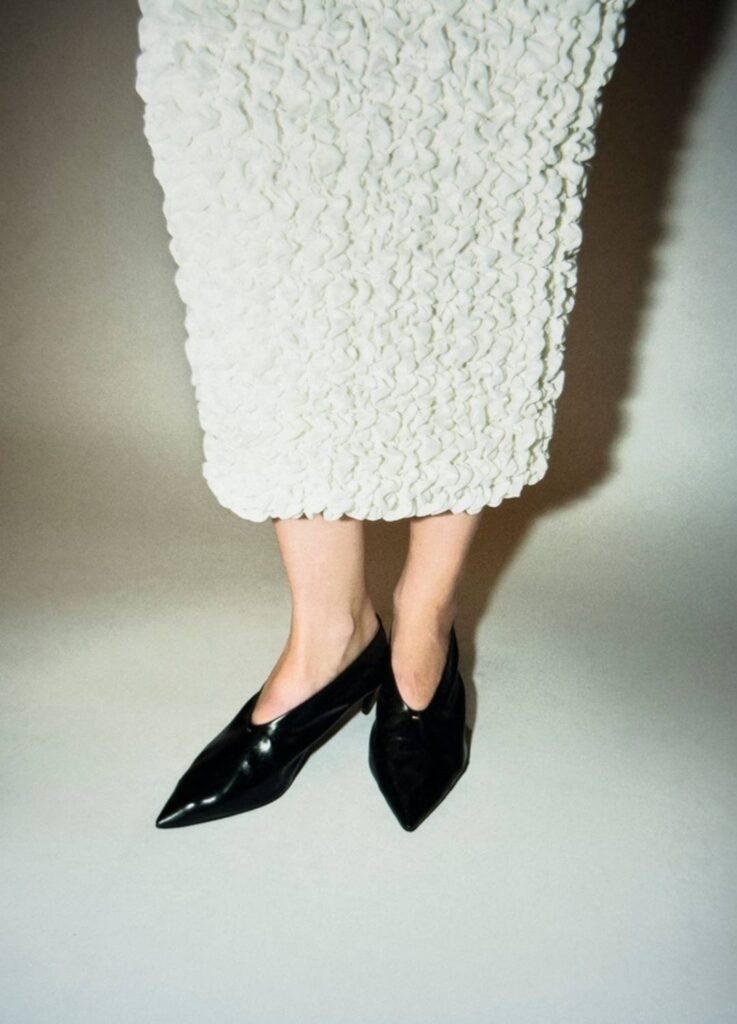
Pre-Fall 2026 departs from the aesthetic polish that has dominated recent fashion cycles. Instead of clean lines and resolved silhouettes, KHAITE proposes:
- Asymmetry where symmetry once ruled
- Shirring that disrupts rather than refines
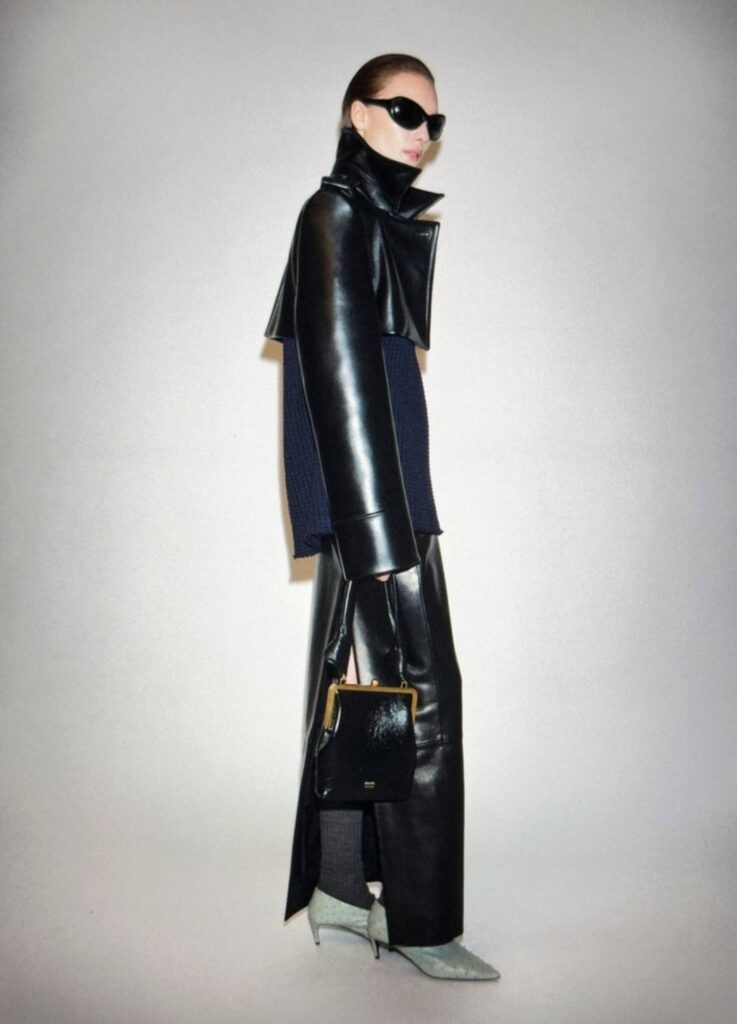
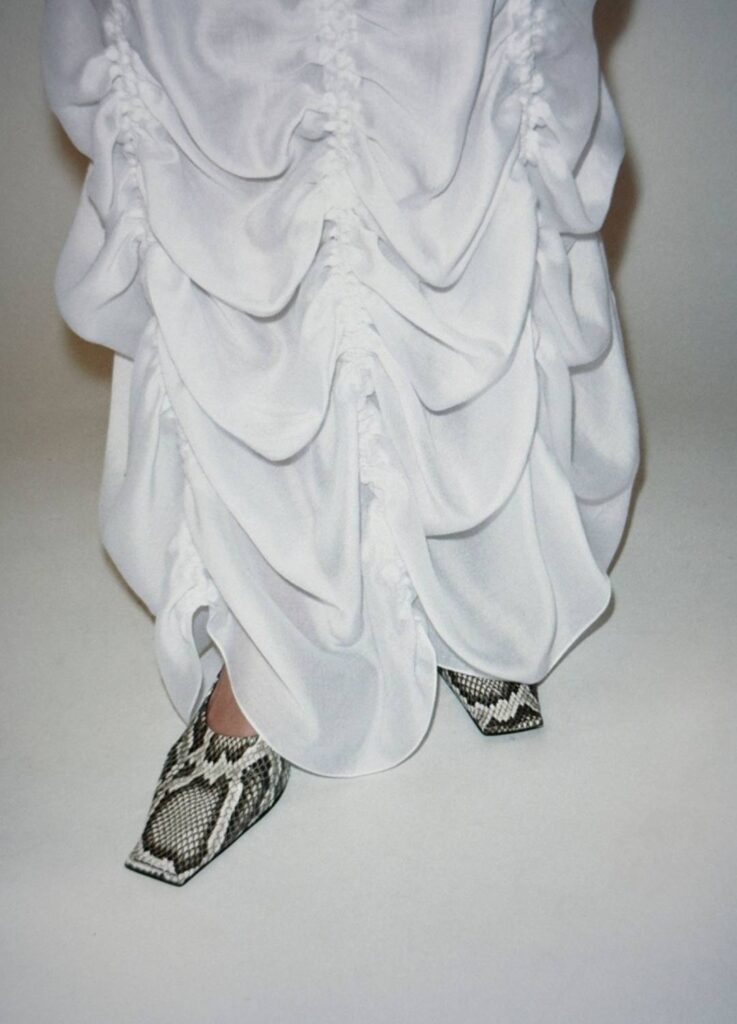
- Leather that creases, chiffon that drifts
- Buttons and closures that feel slightly misaligned
This is not disorder.
It is intentional imbalance.
In an industry saturated with precision and control, Holstein steps back and reframes irregularity as honesty.
Vogue described the collection as closer to “truthful” than “beautiful,” noting how lived experience—particularly motherhood—has been translated into silhouette rather than symbolism. WWD echoed this sentiment, emphasizing the collection’s rejection of strict minimalism in favor of freer, more intuitive construction.
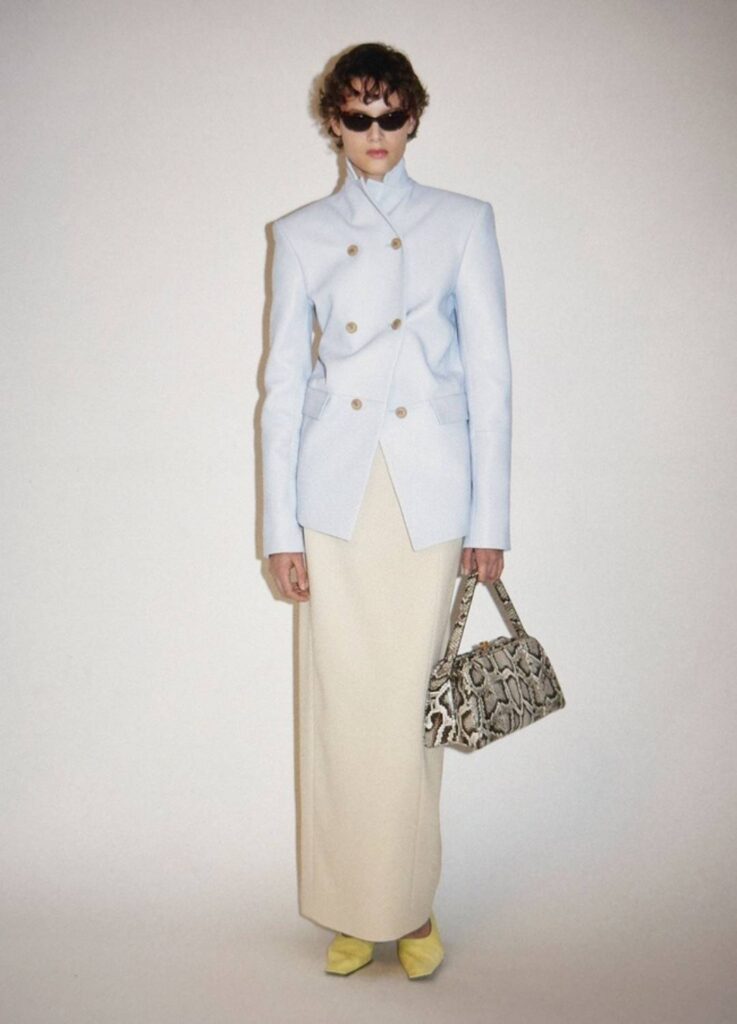
Two ideas dominate the season:
- The moment when a garment appears to fall out of order is treated as aesthetically meaningful
- Contrasting materials—leather, chiffon, organza—coexist without hierarchy
Together, they define the emotional rhythm of the collection.
Five Looks That Define the Season
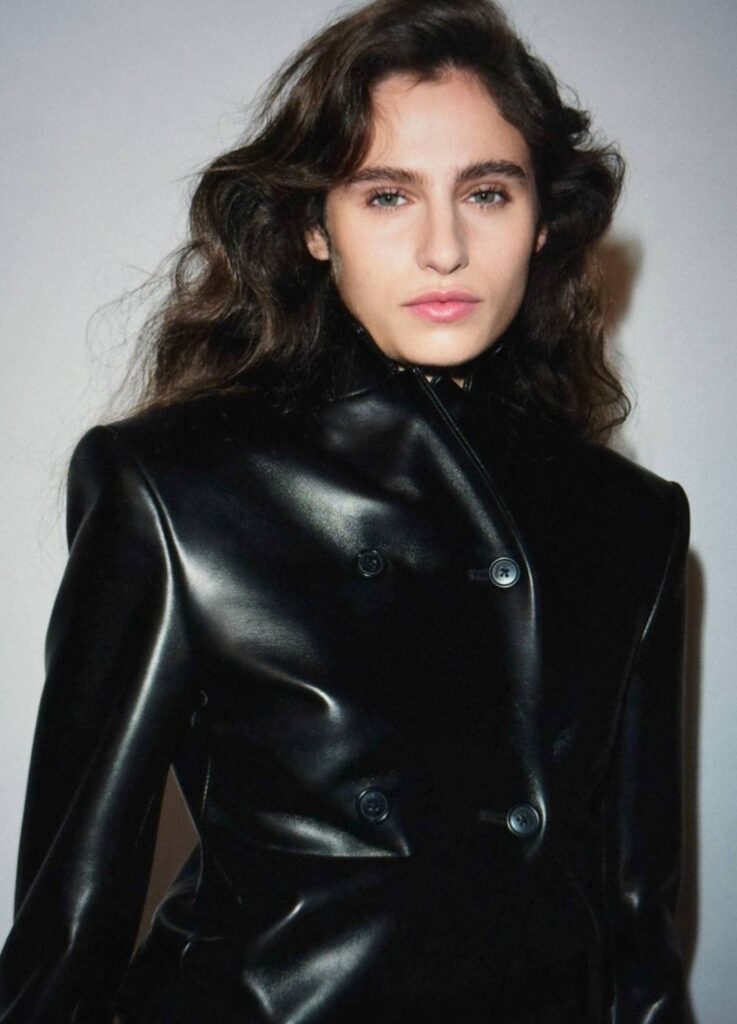
1. Sculpted Leather Jacket
The leather jacket announces the collection’s thesis immediately.
Though built on a double-breasted framework, the button placement is subtly offset. When fastened, the jacket refuses to lie flat. Instead, it twists along the torso, following the body’s movement rather than correcting it.
This is Holstein’s “bad fit” philosophy rendered in leather: authority without rigidity, structure without submission.
The tension between gloss and distortion lends the piece a sculptural gravity—one that aligns with a sensibility drawn to linear form and controlled volume.
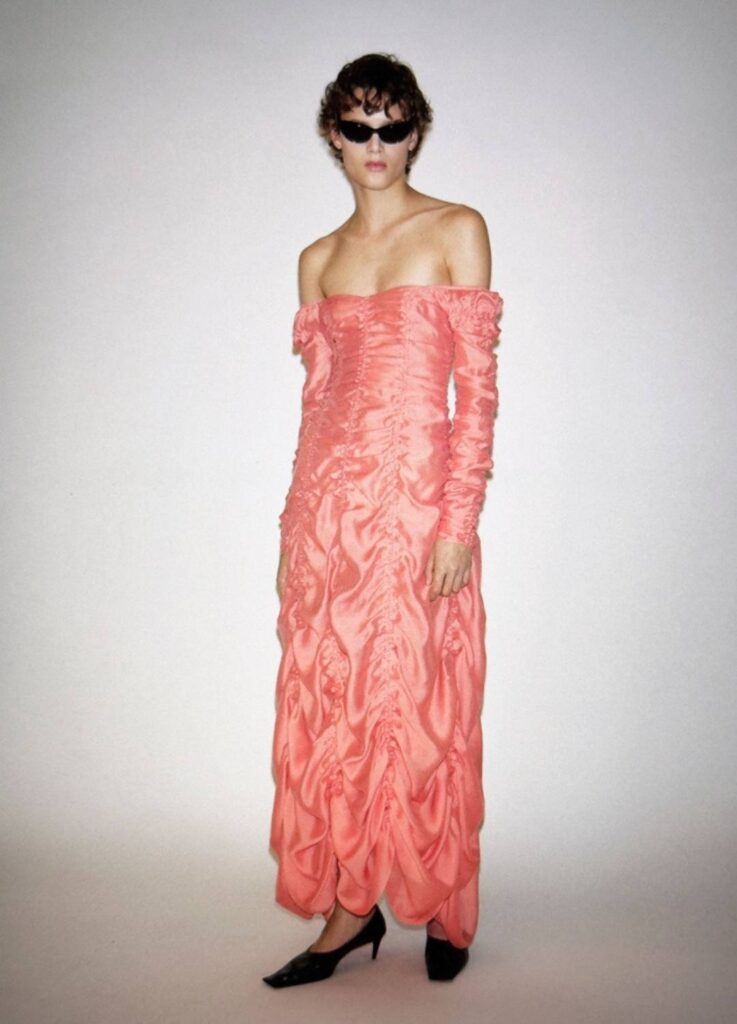
2. Ruched Pink Dress
The ruched pink dress carries an undercurrent of grunge, recalling the emotional dissonance of 1990s femininity.
Ruffles and gathering appear deliberately unresolved, producing a silhouette that oscillates between youth and defiance. The dress feels unfinished—but precisely because of that, it carries emotional weight.
As Vogue observed, this is KHAITE’s dual language at its most exposed: innocence and sensuality coexisting without apology.
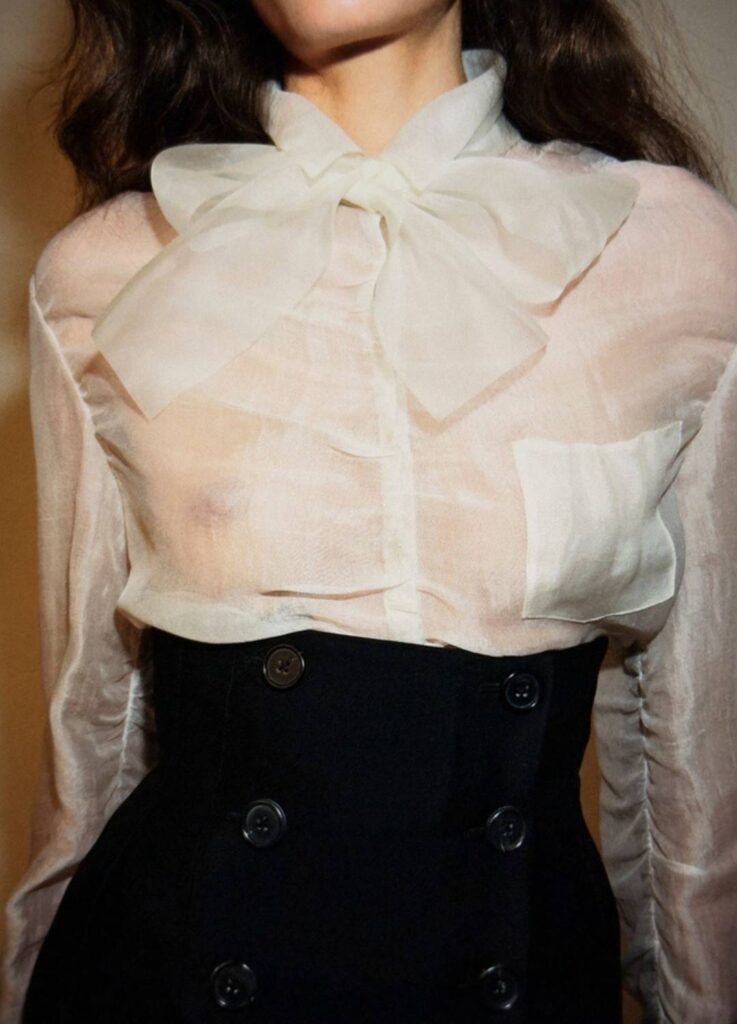
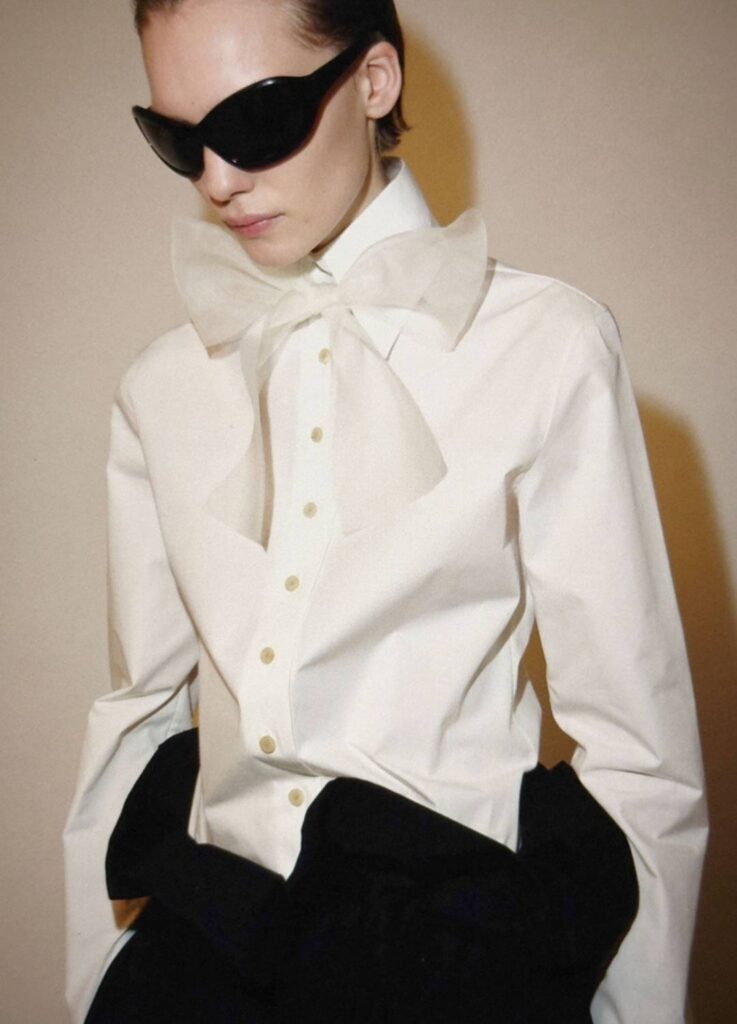
3. Sheer Organza Bow Blouse
A sheer organza blouse with an oversized bow and uneven hemline distills Holstein’s thinking into a single garment.
Rather than concealing the body, the blouse relies on movement and presence to complete its form. The imbalance becomes participatory—the wearer’s posture, motion, and proportion determine the final silhouette.
There is a quiet echo here of early Dior chiffon draping, though stripped of ceremony and reframed for contemporary intimacy.
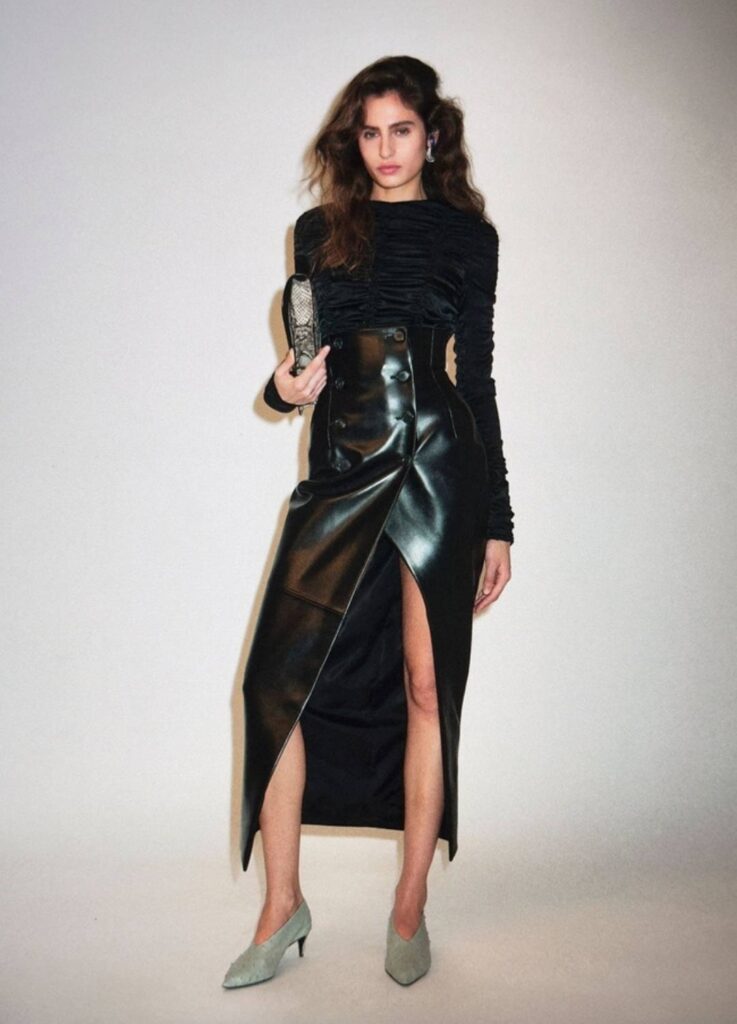
4. Structured Knit with Leather Skirt
This look stages one of KHAITE’s most familiar tensions: softness against severity.
A knit top with bead-like texture meets a sharply slit leather skirt. Comfort and constraint coexist. The materials speak in opposing registers—warmth versus coolness, elasticity versus discipline.
Holstein has said that while functionality remains central to her work, she wanted to break aesthetic rules this season. This pairing demonstrates that philosophy with clarity.
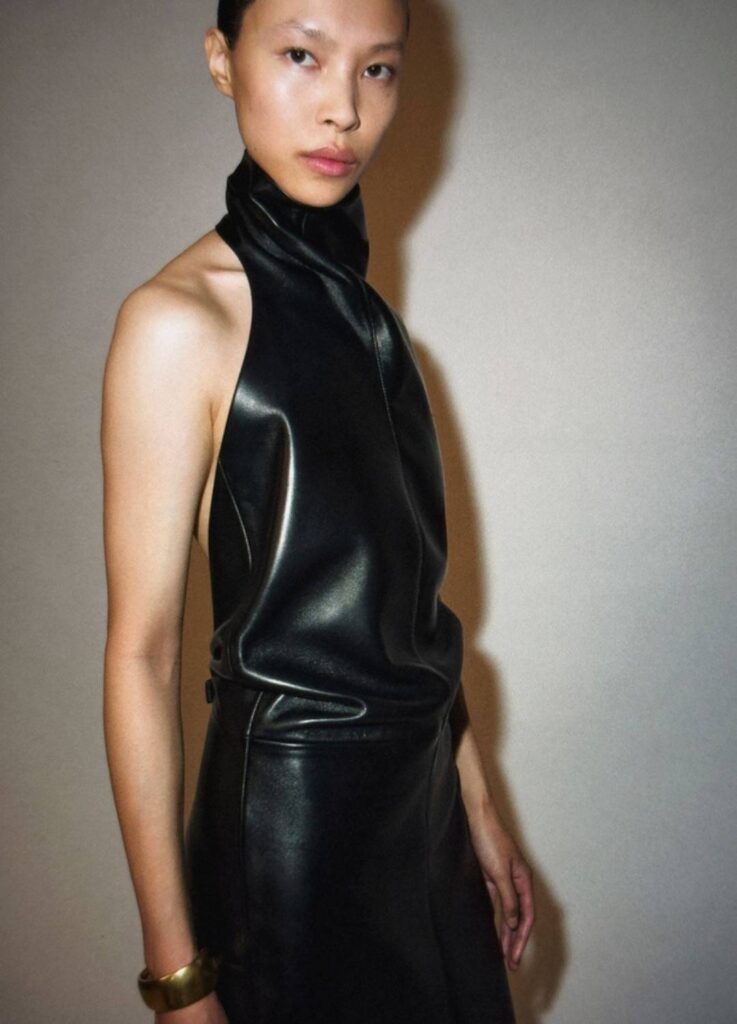
5. High-Neck Leather Column Dress
Perhaps the most restrained look of the collection, the high-neck leather column dress approaches minimalism—but stops short of perfection.
The surface retains natural creases, the silhouette breathes rather than locks into place. What emerges is a balance between refinement and release.
This garment embodies the collection’s core question: how much imperfection is required for clothing to feel human?
A Shift in the KHAITE Language
Rather than presenting a radical new silhouette, Pre-Fall 2026 feels like a recalibration.
- Twisted leather
- Exaggerated bows
- Drifting chiffon
- Misaligned closures
These are not stylistic flourishes. They are translations of experience—of dressing a body that has changed, lived, and resisted idealization.
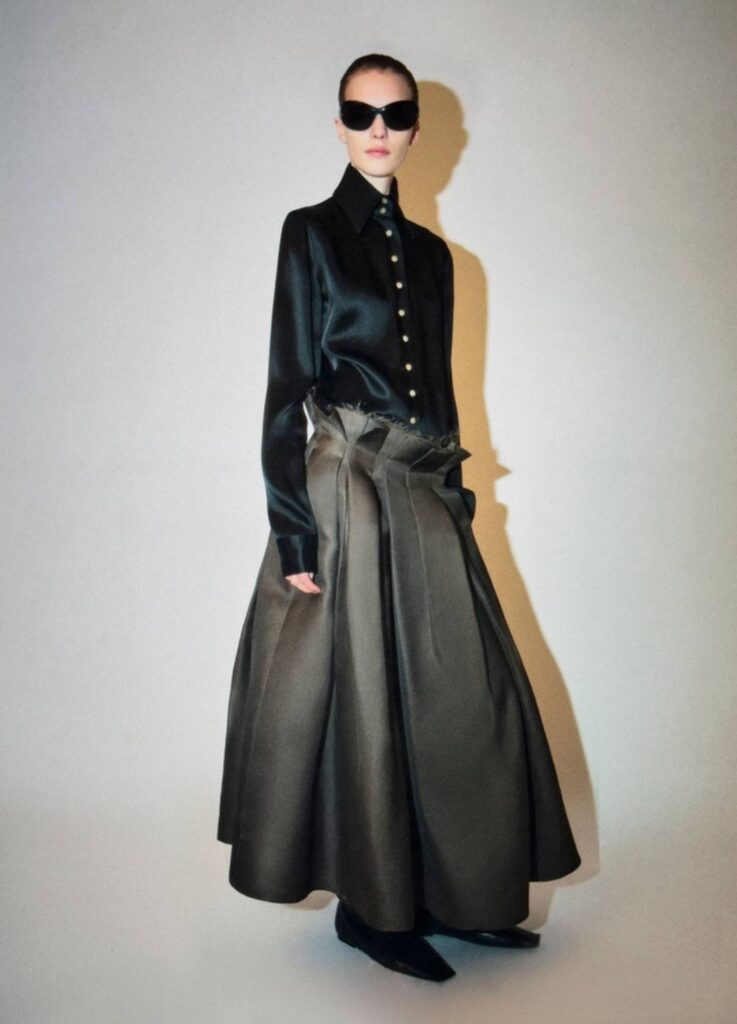
As WWD noted, KHAITE proposes “modern female imperfection” not as an exception, but as a new norm.
This is not merely a design choice.
It is a cultural position.
Closing Notes
When garments no longer align perfectly, something else becomes visible.
A slightly crooked button.
A curved leather seam.
A hem that refuses to settle.
In those moments, clothing begins to mirror life rather than correct it.
KHAITE Pre-Fall 2026 suggests that it is not our most polished days that shape us, but the uneven ones—the seasons of adjustment, tension, and quiet recalibration.
Imperfection, here, is not a flaw.
It is the structure.
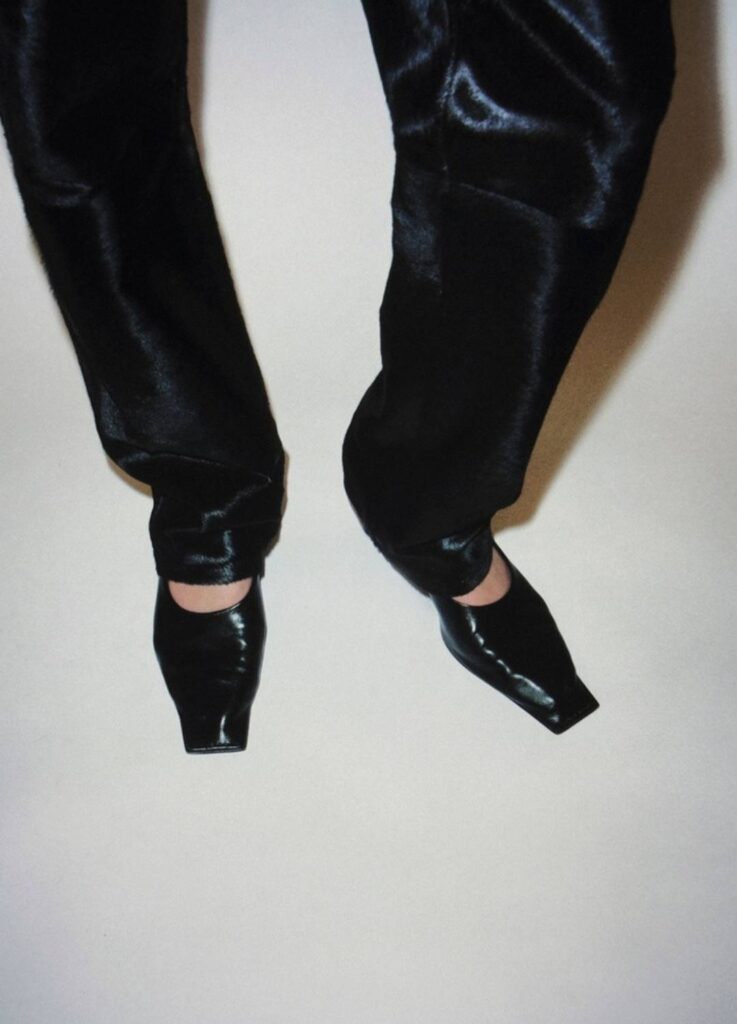
All images referenced in this post are drawn from Vogue Runway.
[ Related Editorials ]
[Khaite 26ss] Confidence, Reconstructed
[Journal] Is The Row a Trend—or a New Classic?
[The Row Pre-Fall 2026 ] Clothing That Speaks in Stillness
[Phoebe Philo | Collection D] Why She Continues to Refuse the Runway