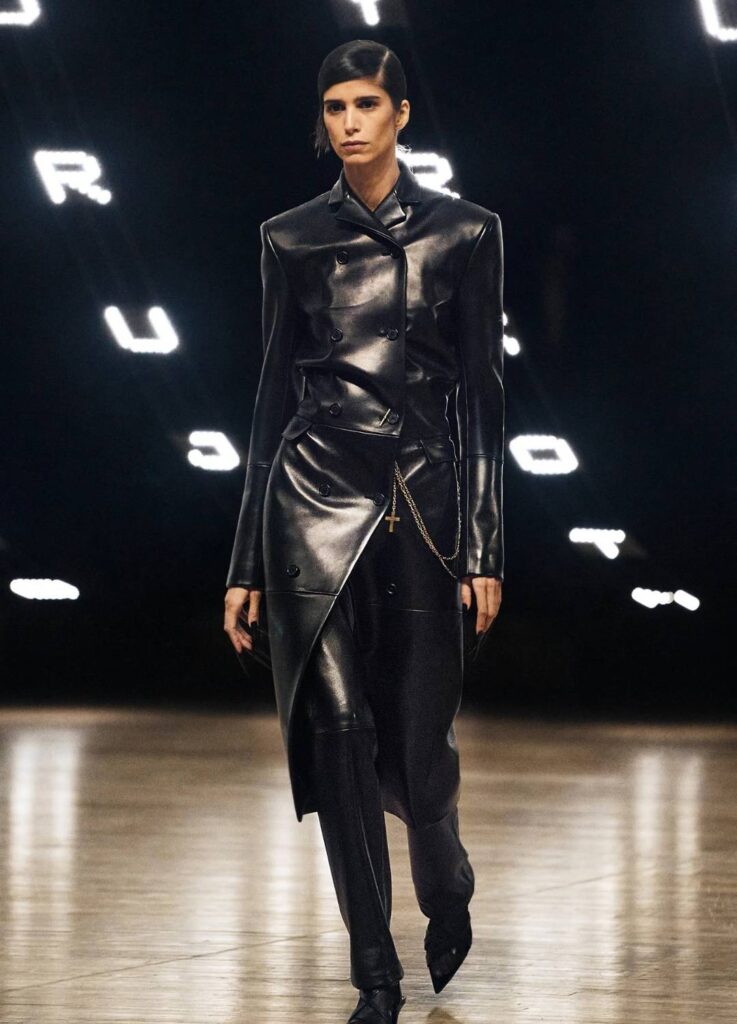
Quiet Authority: New York Minimalism Built Through Silhouette
During New York Fashion Week Fall 2026,
KHAITE delivered one of the season’s most restrained—and most articulate—collections.
There was no overt spectacle, no urgency to declare novelty.
Instead, the message unfolded quietly: decoration reduced, silhouettes sharpened, and femininity articulated not through explanation, but through structure.
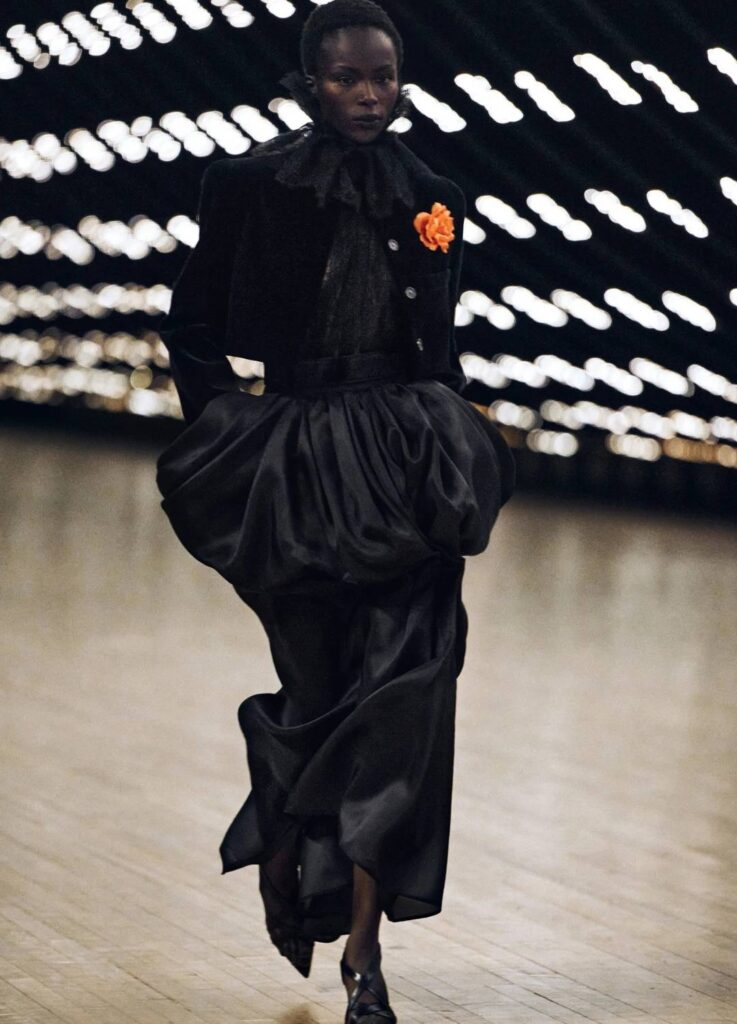
Rather than proposing trends, the collection posed a more enduring question:
How should clothing exist in this moment—socially, physically, linguistically?
This review approaches KHAITE Fall 2026 through structure, material, and silhouette, reading the collection as a system rather than a sequence of looks.
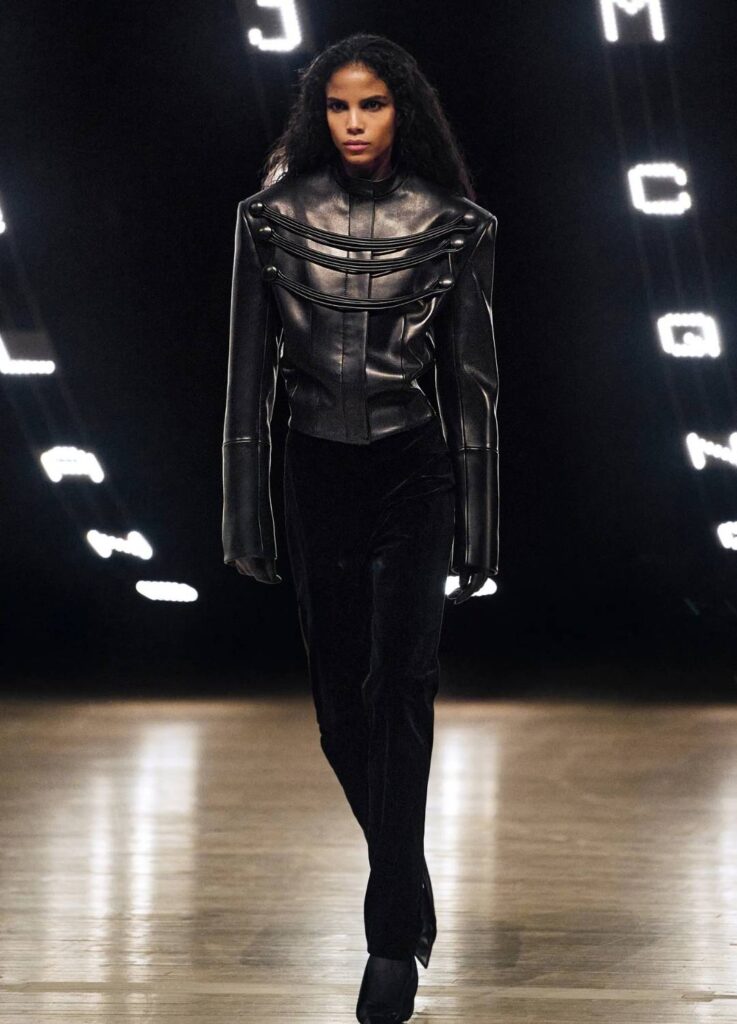
Reading the Runway: Language, Power, and New York
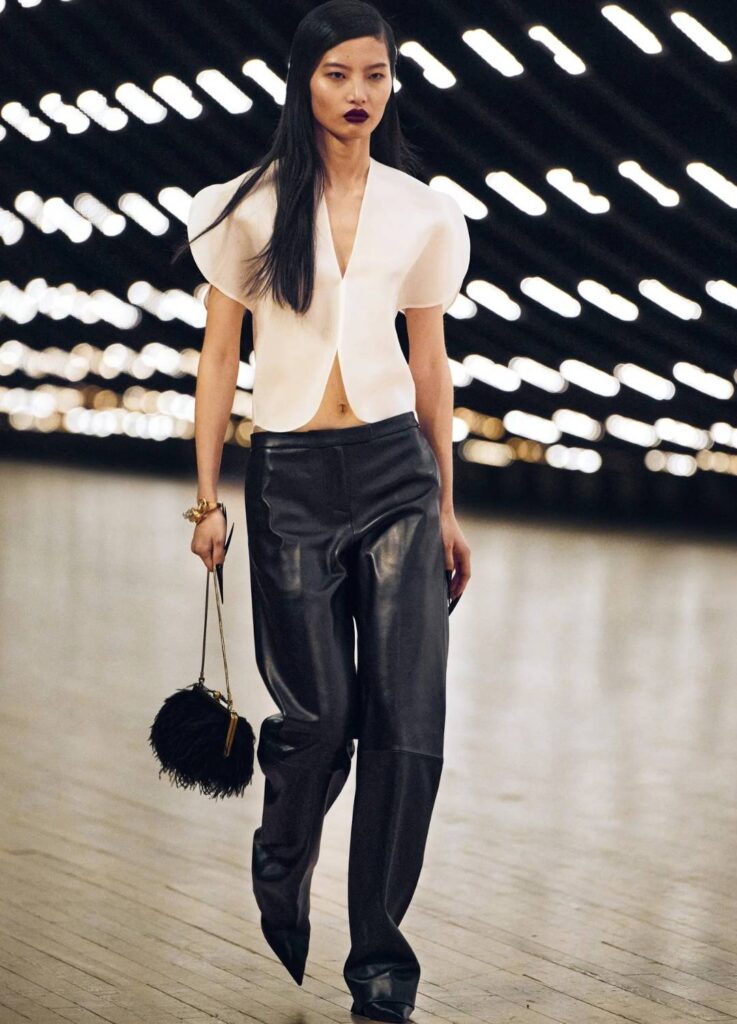
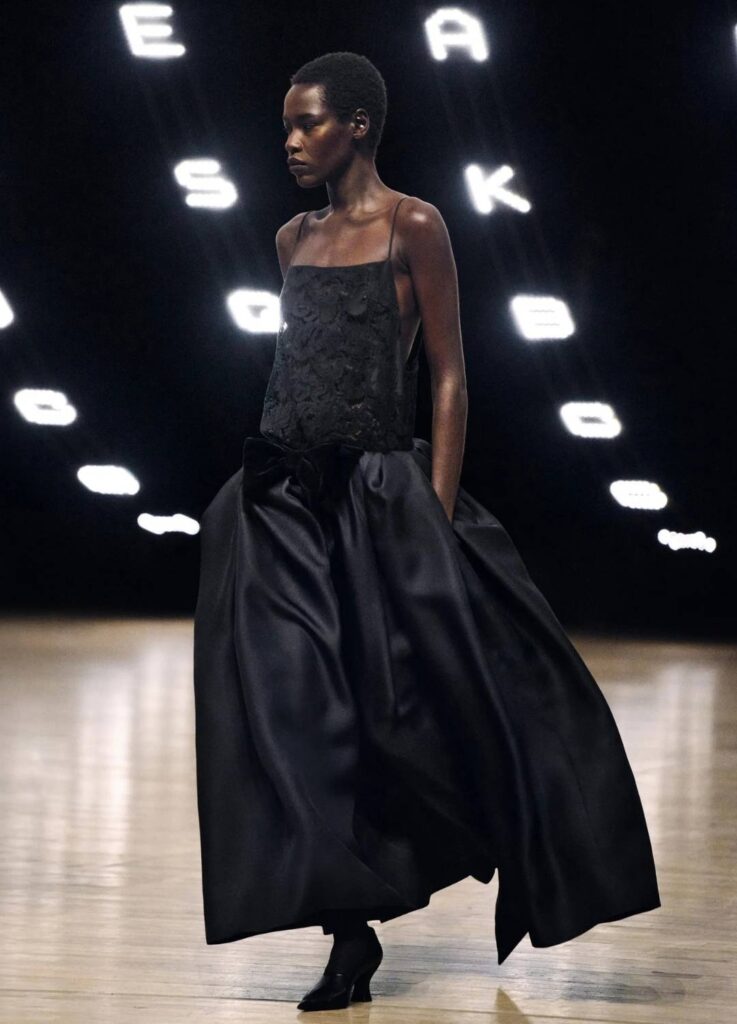
Staged at the Park Avenue Armory, the runway was framed by a monumental LED installation—flashing letters, symbols, fragments of words.
The scale was imposing, but the intent was conceptual rather than decorative.
Designer Catherine Holstein described the installation as a reflection on “the crushing weight of words”—language as something we breathe, internalize, and carry.
This framing is essential to understanding the clothes themselves.
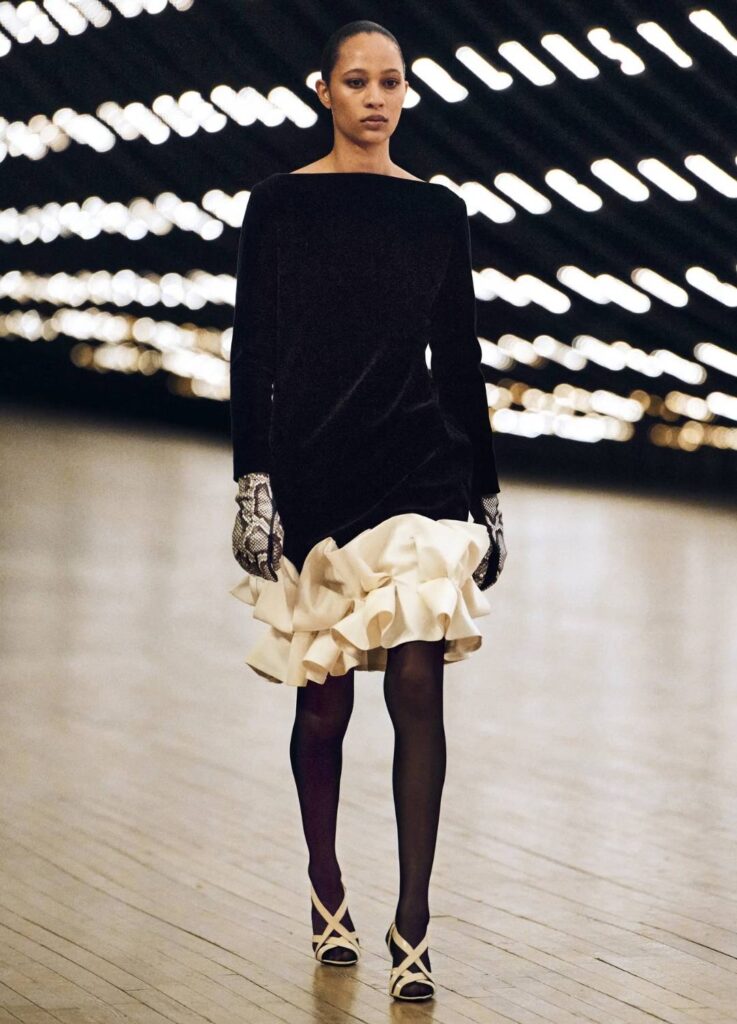
KHAITE’s garments function like language:
each silhouette a sentence, each material a clause, meaning formed through repetition, interruption, and contrast.
Throughout the show, traditional symbols of authority—military tailoring, ceremonial references, disciplined construction—were placed in dialogue with softness, transparency, and movement.
Not as opposition, but as coexistence.
1. Collection Philosophy: Structure as Syntax
KHAITE Fall 2026 is not a catalogue of dramatic statements.
Holstein’s strength lies in navigating between surface texture and underlying structure—between what is seen and what is implied.
Just as the LED text fractured and recombined language, the collection layered contrasting visual vocabularies:
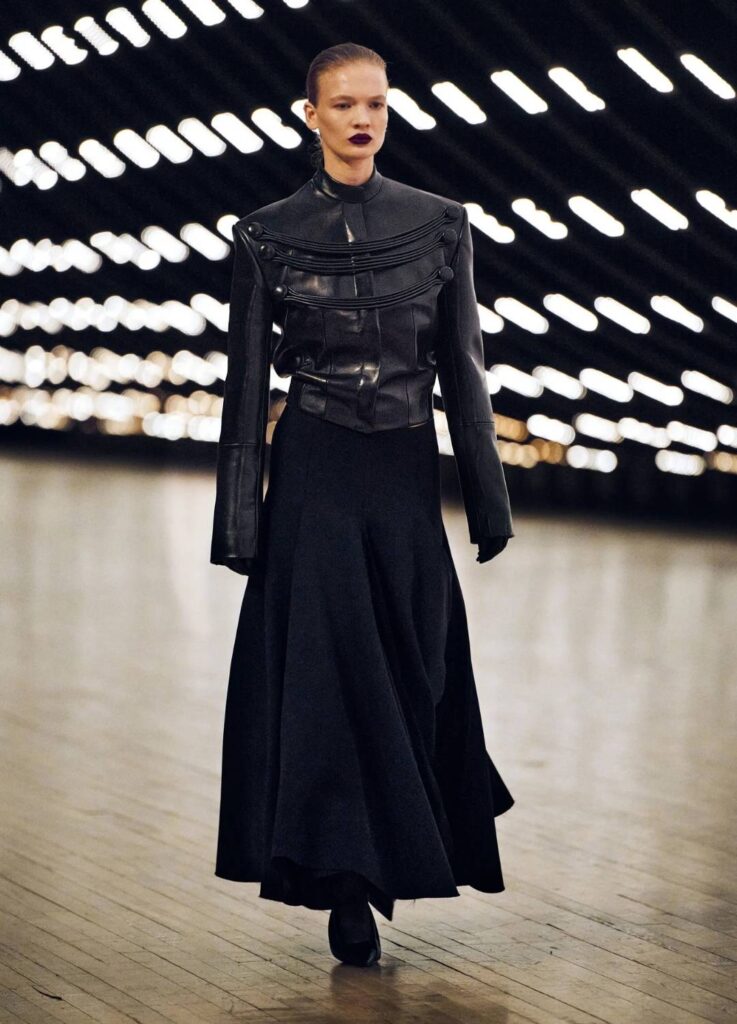
- Tailored jackets informed by military and uniform dressing
- Metallic and ornamental elements reminiscent of ceremonial attire
- Romantic materials—lace, organza, silk—introduced as release points
- Denim, leather, and trousers grounding the collection in urban reality
These elements were not blended for harmony, but arranged to test boundaries:
authority versus intimacy, ritual versus physical presence.
The resulting tension—between weight and lightness, control and flow—became the collection’s defining rhythm.
2. Theme: Authority Reconsidered
Beyond aesthetics, KHAITE Fall 2026 explored contemporary codes of power.
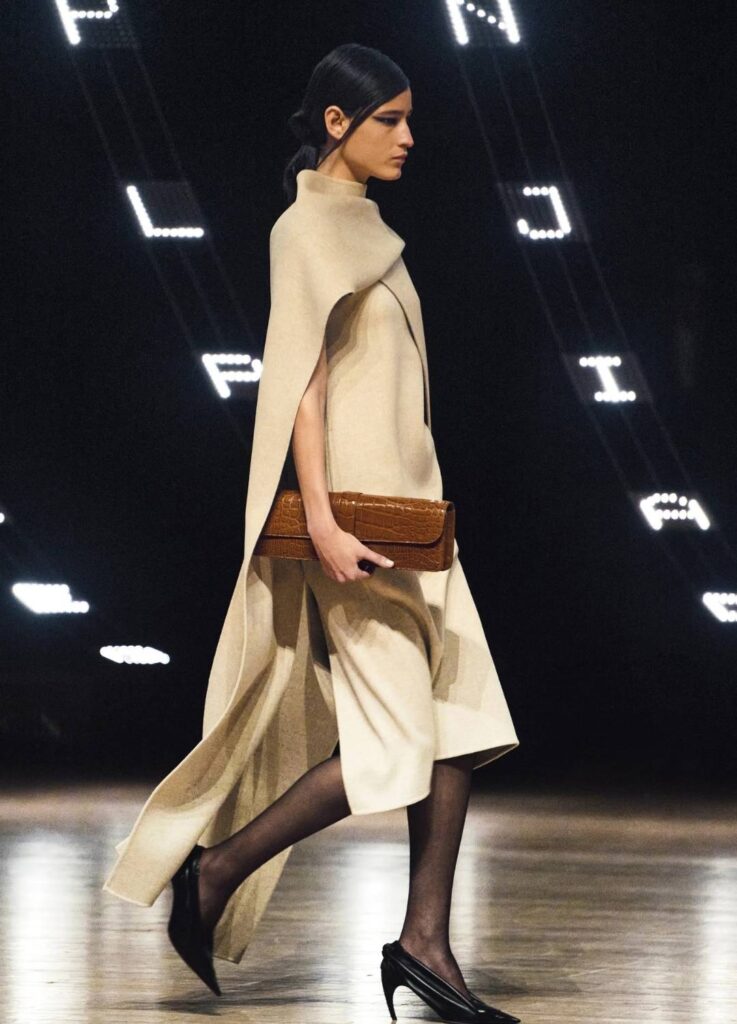
The LED installation did more than provide atmosphere; it reframed the runway as a linguistic space.
Words became environment. Authority became ambient.
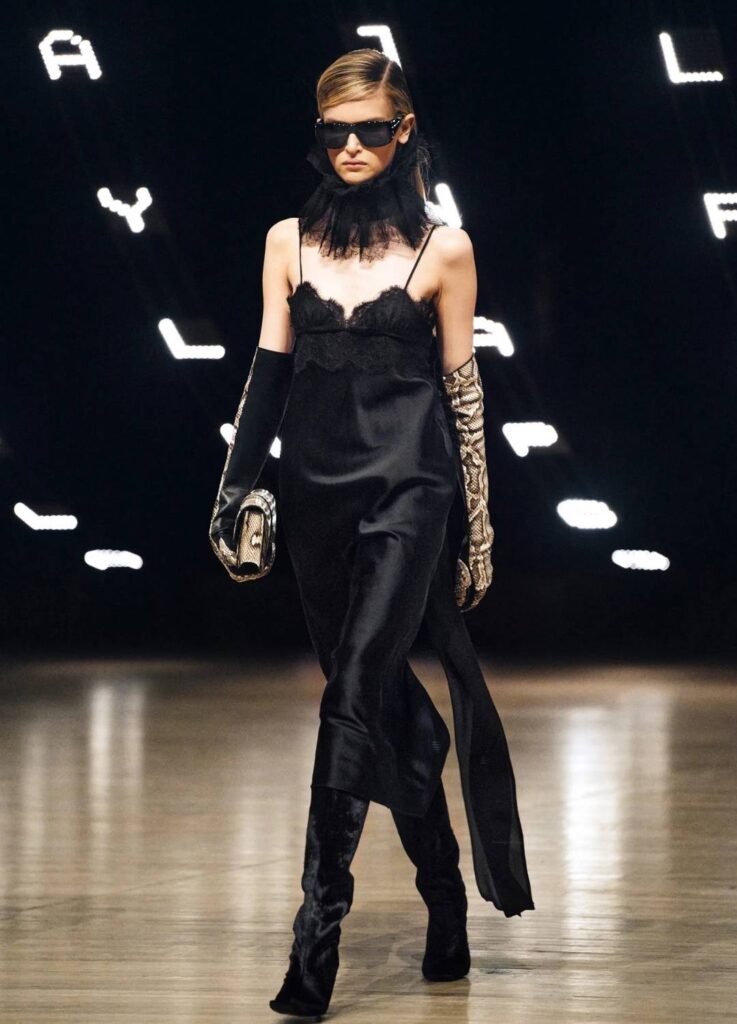
Seen through this lens, the predominance of black leather and stark contrasts transcends surface styling.
The collection repeatedly returned to three interconnected ideas:
- Narratives of power
- Traces of institutional authority
- The quiet dismantling of both
This is not rebellion through spectacle, but redefinition through precision.
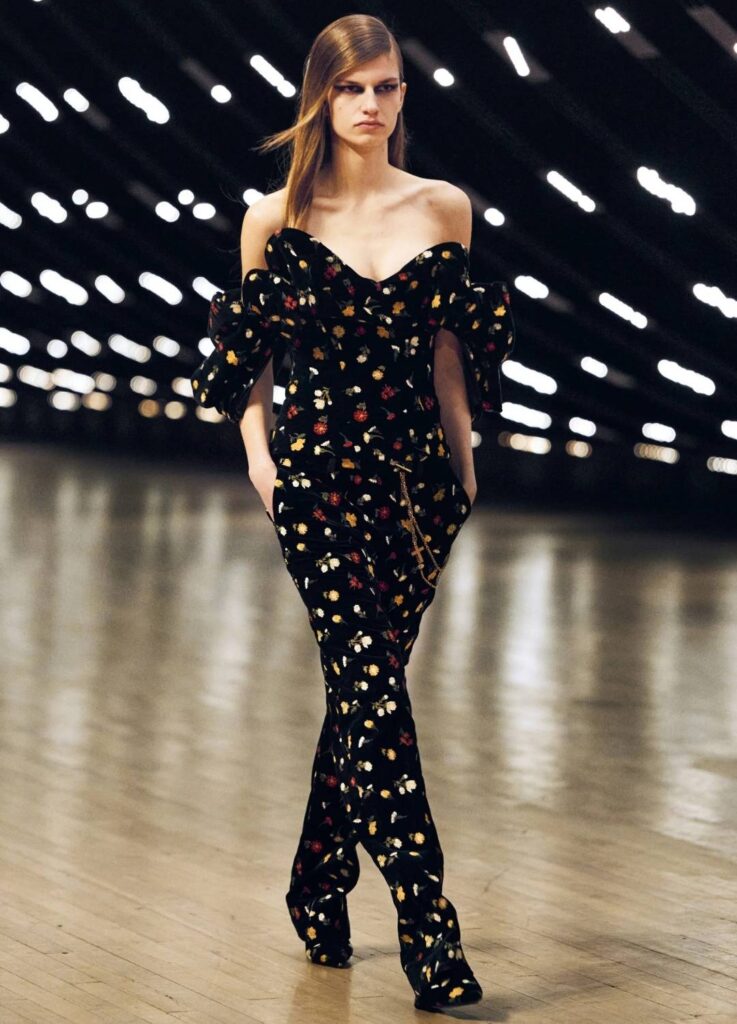
3. Five Key Looks
The following looks serve as narrative anchors—each revealing a different facet of KHAITE’s language this season.
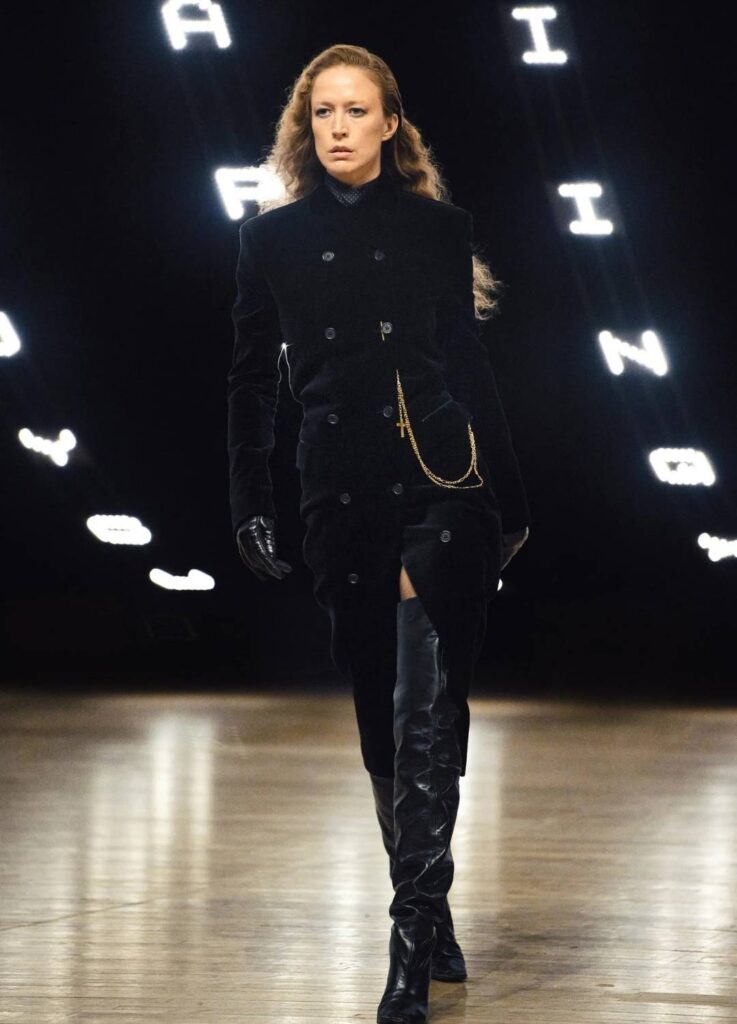
Look #1 — High-Collar Military Tailoring
Sharp black leather and a meticulously sculpted waist evoke traditional authority.
Yet the power here is not aggressive.
Instead, the silhouette asks a subtler question: Where does control reside—in the garment, or in the body wearing it?
Paired later with softer materials, the look becomes a study in contradiction: firmness without rigidity.
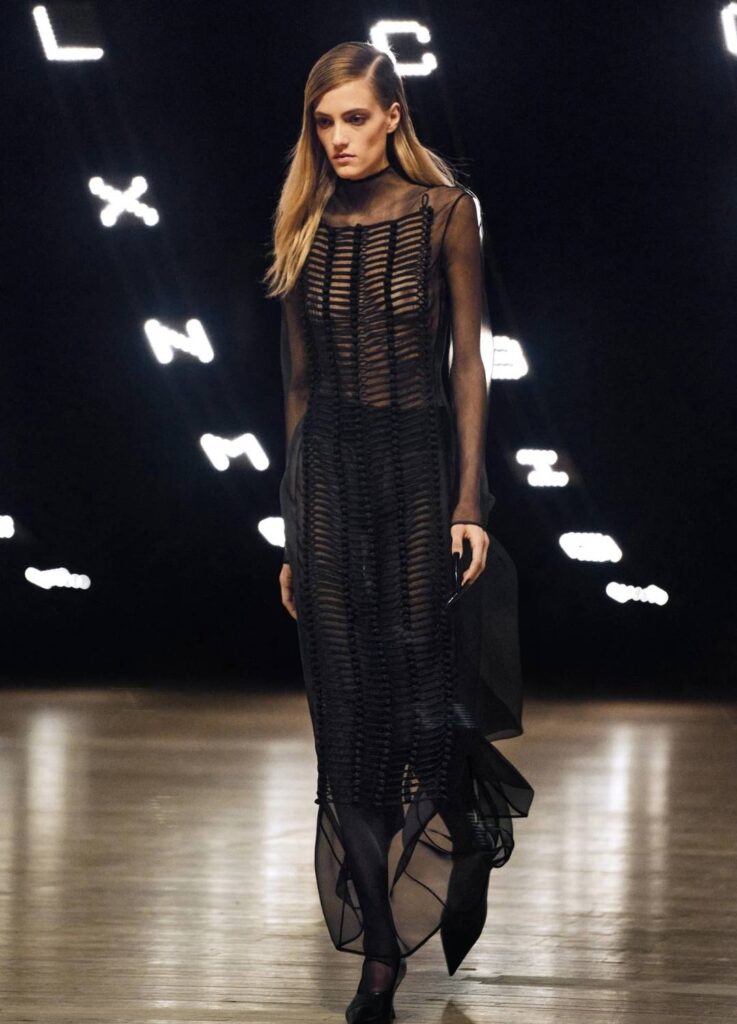
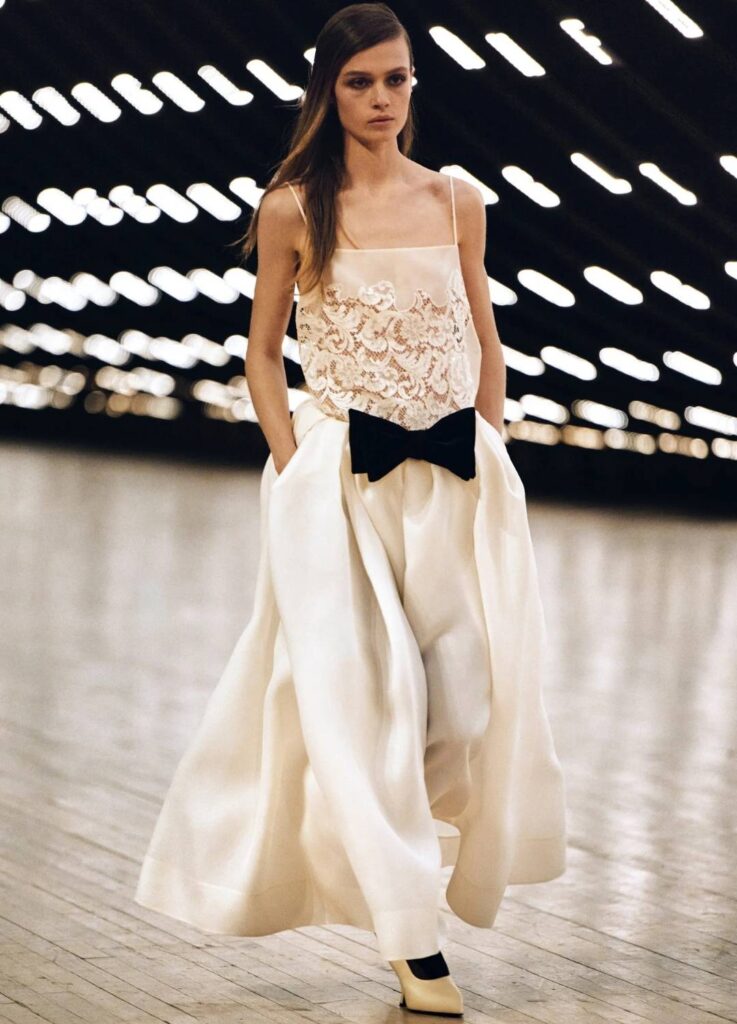
Look #2 — Sheer Organza with Subtle Lace
Placed after more rigid constructions, this look speaks in translucence.
Organza and lace counterbalance the severity of uniform-inspired tailoring, introducing permeability where structure once dominated.
This contrast forms the collection’s core cadence—authority softened, not erased.
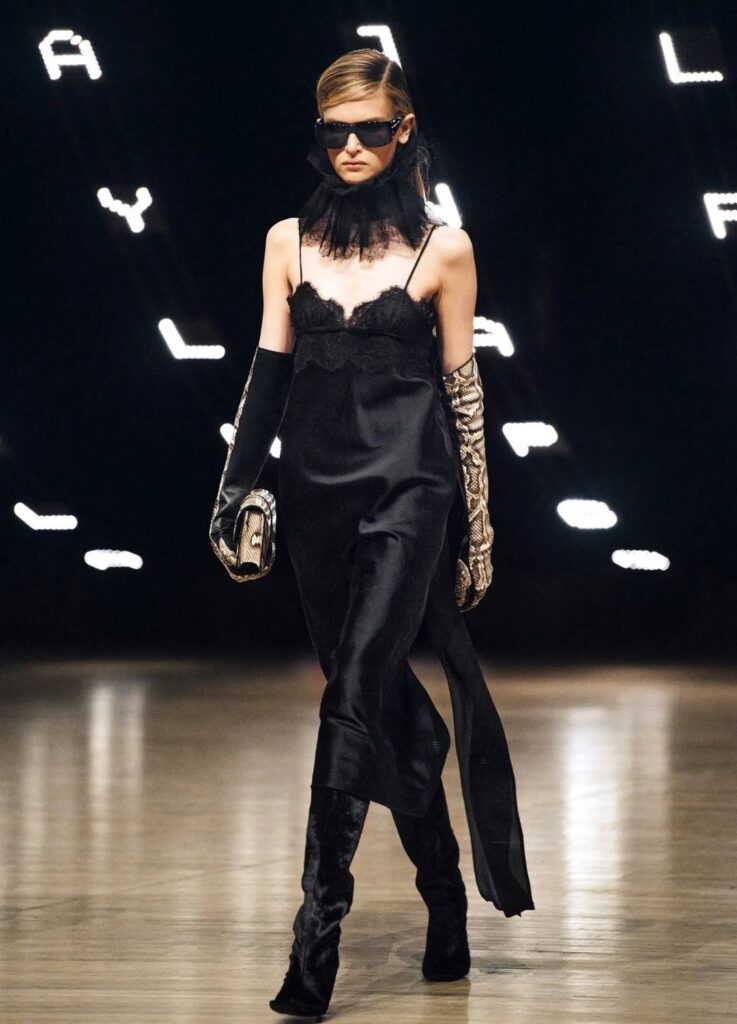
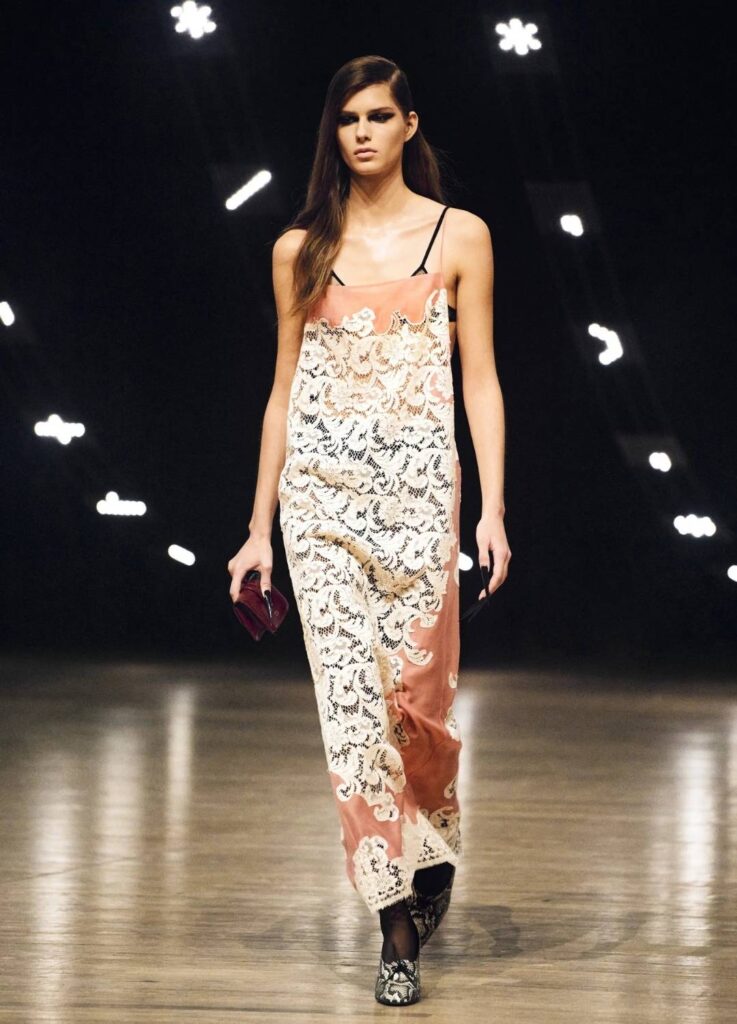
Look #3 — Midnight Slip Dress with Lace Insets
Cinematic and introspective, this dress recalls traditional femininity without nostalgia.
The darkened palette and restrained detailing suggest a softness existing under pressure—beauty that does not seek attention, but persists beneath it.
It reads as tenderness under linguistic weight.
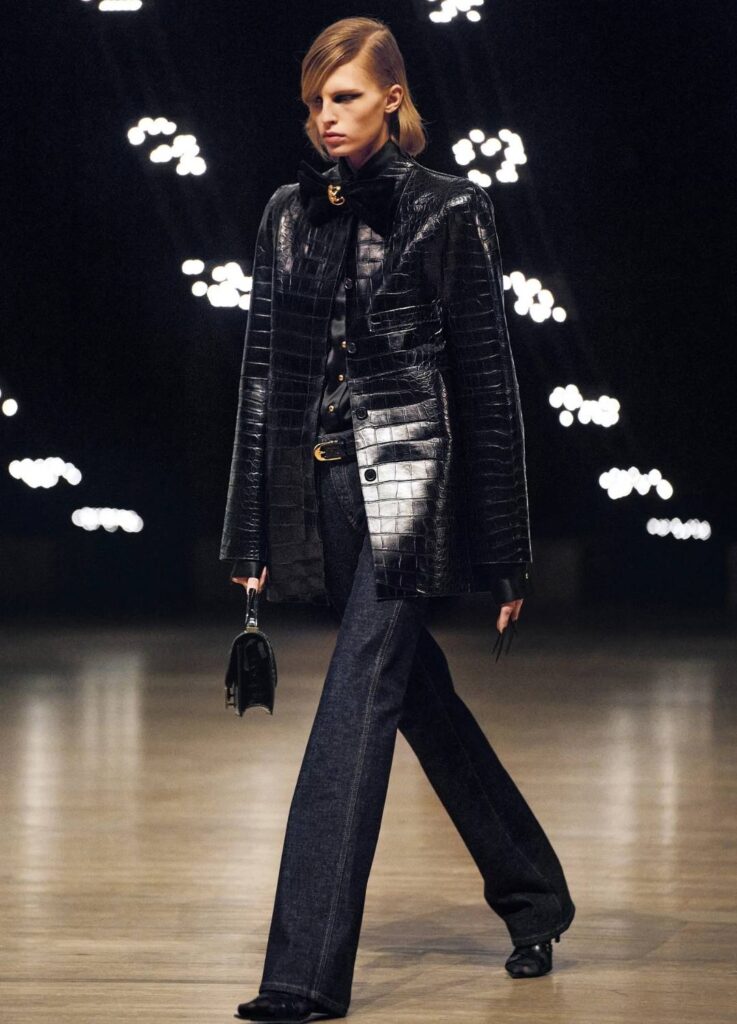
Look #4 — Denim and Tailoring
KHAITE resists limiting power to eveningwear or leather.
The pairing of denim trousers with tailored jackets translates authority into the everyday.
This is a crucial point: Holstein is not constructing icons, but garments designed to function in lived environments.
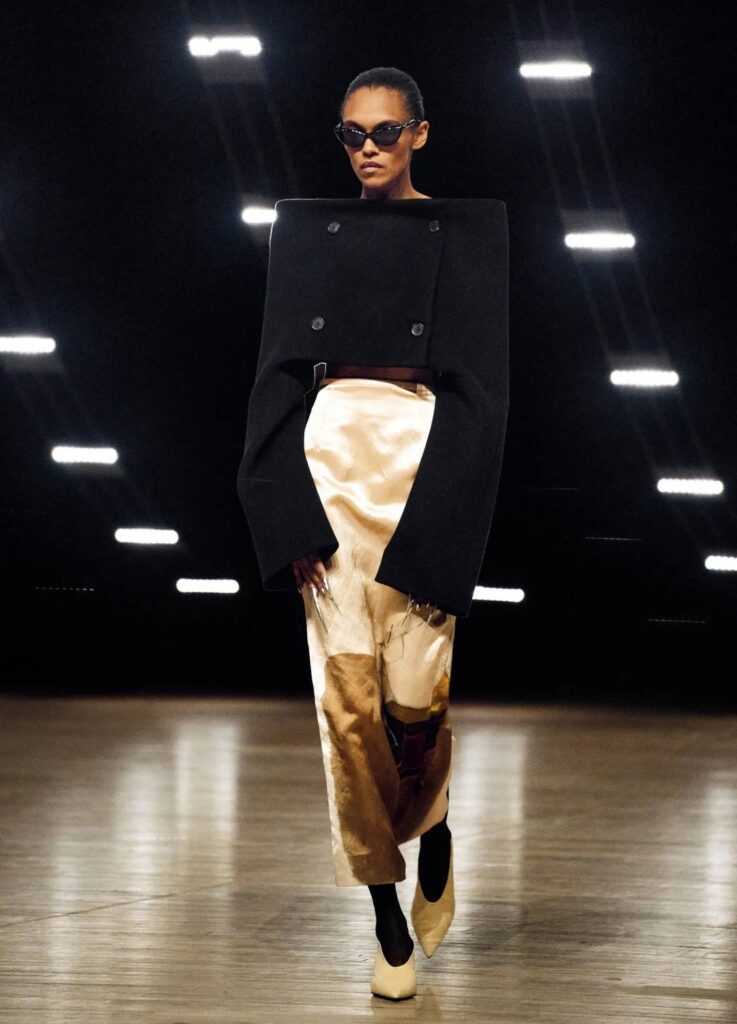
Look #5 — Oversized Structured Jacket
The collection’s visual fulcrum.
Exaggerated shoulders, elongated proportions, and deliberate detailing bridge classical tailoring with contemporary scale.
This look does not dominate the wearer—it frames them.
4. Critical Reception
Critical response reflected the collection’s complexity rather than consensus.
Some fashion editors described the show as a “gothic valentine,” noting the careful balance between severity and romance.
Others highlighted Holstein’s ability to translate linguistic concepts into visual structure, praising the collection’s intellectual restraint.
A number of critics questioned whether the reliance on familiar tailoring templates risked predictability.
Yet even those voices acknowledged the collection’s ambition: an attempt to interpret fashion not as imagery, but as language.
Conclusion: Clothing as a Quiet Sentence
KHAITE Fall 2026 is neither overtly dramatic nor immediately seductive.
It does not seek to overwhelm.
Instead, it asks how clothing can speak—how meaning can be constructed through proportion, repetition, and restraint.
What lingers after the runway is not a single image, but layers of implication:
between text and silhouette, between authority and softness.
These garments are not statements to be announced.
They are sentences to be lived in.
Quiet, precise, and enduring.
All images referenced in this post are drawn from Vogue Runway.
[ Related Editorials ]