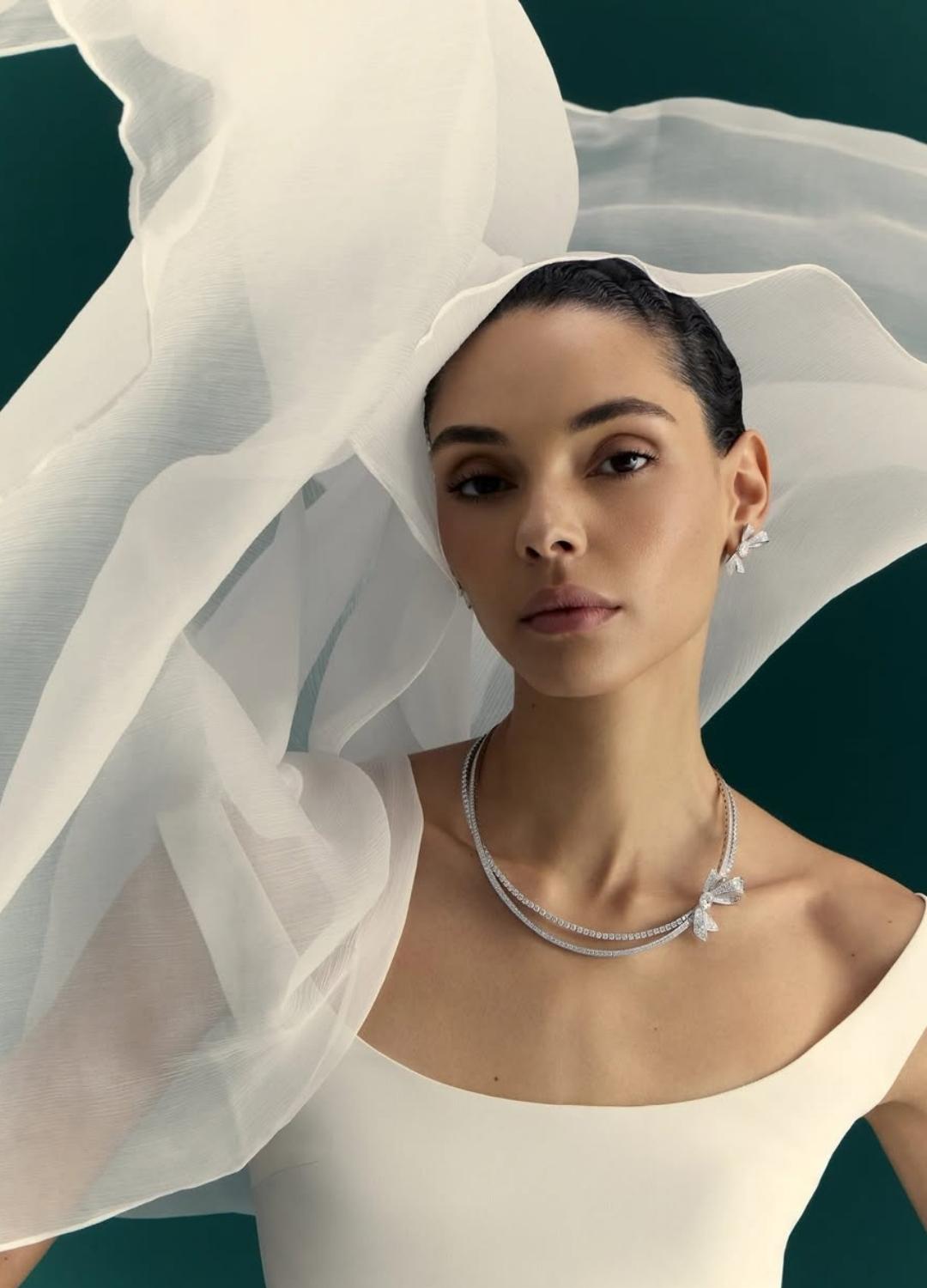
Inside Graff Tilda’s Bow
In recent months, Graff has significantly expanded its Tilda’s Bow collection, introducing a broader range of designs that extend across both fine jewelry and high jewelry.
At first glance, this expansion may appear to be a simple extension of a successful motif. However, a closer examination reveals something more deliberate: a dual-track development strategy.
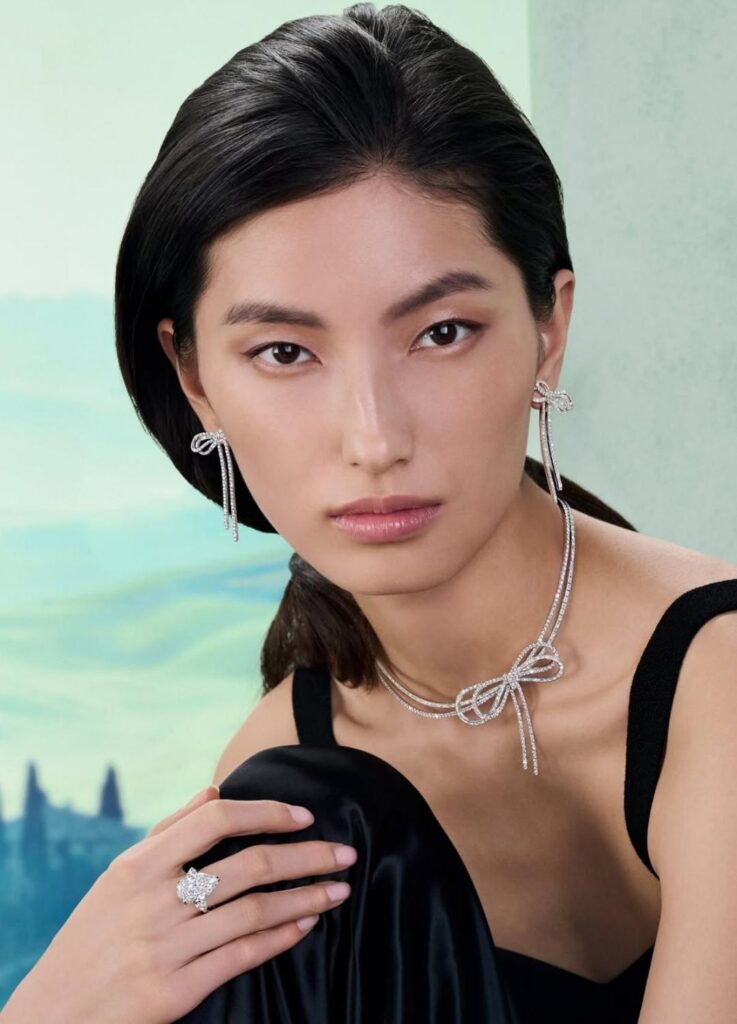
& Earrings(3.33 carats)
@graff / Instagram
On one side, Graff introduces wearable, commercially viable fine jewelry.
On the other, it simultaneously reinforces the sculptural identity of the motif through high jewelry pieces.
This duality is not incidental. It reflects a structural evolution of the collection itself—one that positions Tilda’s Bow as both an accessible signature and a platform for technical expression.
Within this expansion, the bow emerges not as a decorative element, but as a system of form.
Two Structural Interpretations of Bow
Plane Bow vs Sculptural Bow
A defining characteristic of the Tilda’s Bow collection lies in how the bow motif is interpreted across different scales and categories.
Broadly, the designs can be divided into two structural approaches:
- The plane bow
- The sculptural bow
This distinction is not merely aesthetic—it is architectural.
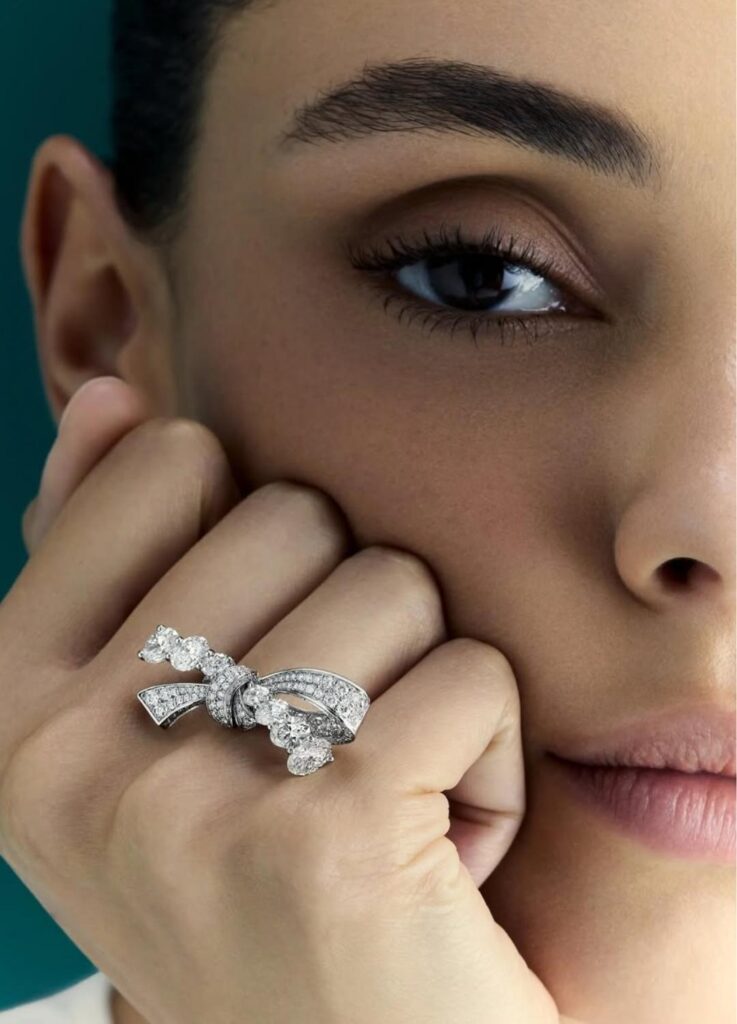
@graff / Instagram
Plane Bow: The Silhouette
The plane bow appears primarily within the fine jewelry line. It includes:
- Small bow earrings
- Bow-shaped rings
- Delicate pendant necklaces
In these pieces, the bow is not constructed as a fully volumetric object. Instead, it is reduced to a controlled silhouette.
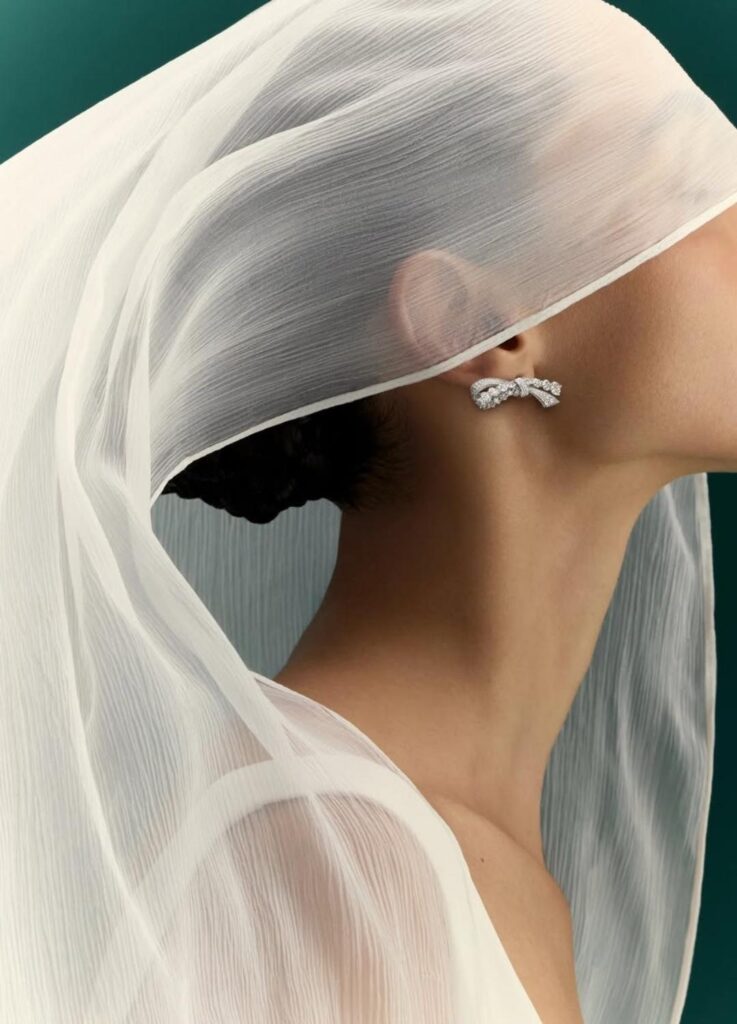
The structure is visually resolved on a relatively flat plane. Marquise-cut diamonds define the outline of the bow’s loops, while round brilliant pavé fills the surface with light. The overall thickness remains minimal.
As a result, the bow reads as a graphic form—a line drawing rendered in diamonds.
It sits lightly on the ear or hand, appearing more as a refined motif than a sculptural presence.
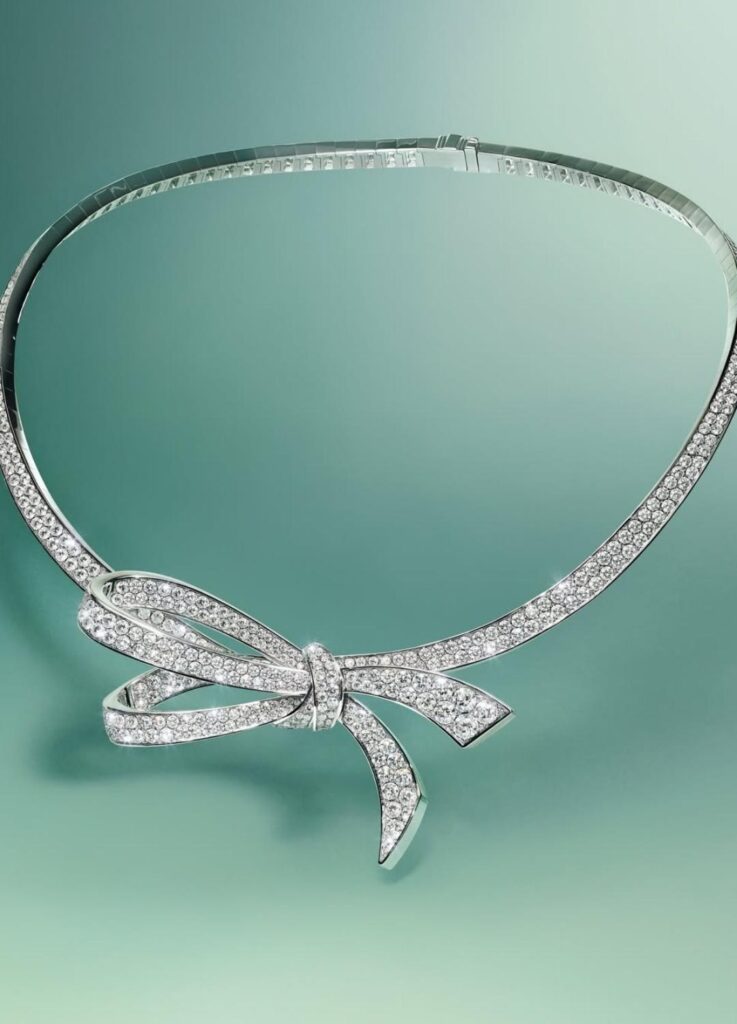
– A total weight of approximately 14.60 carats.
@graff / Instagram
Sculptural Bow: The Object
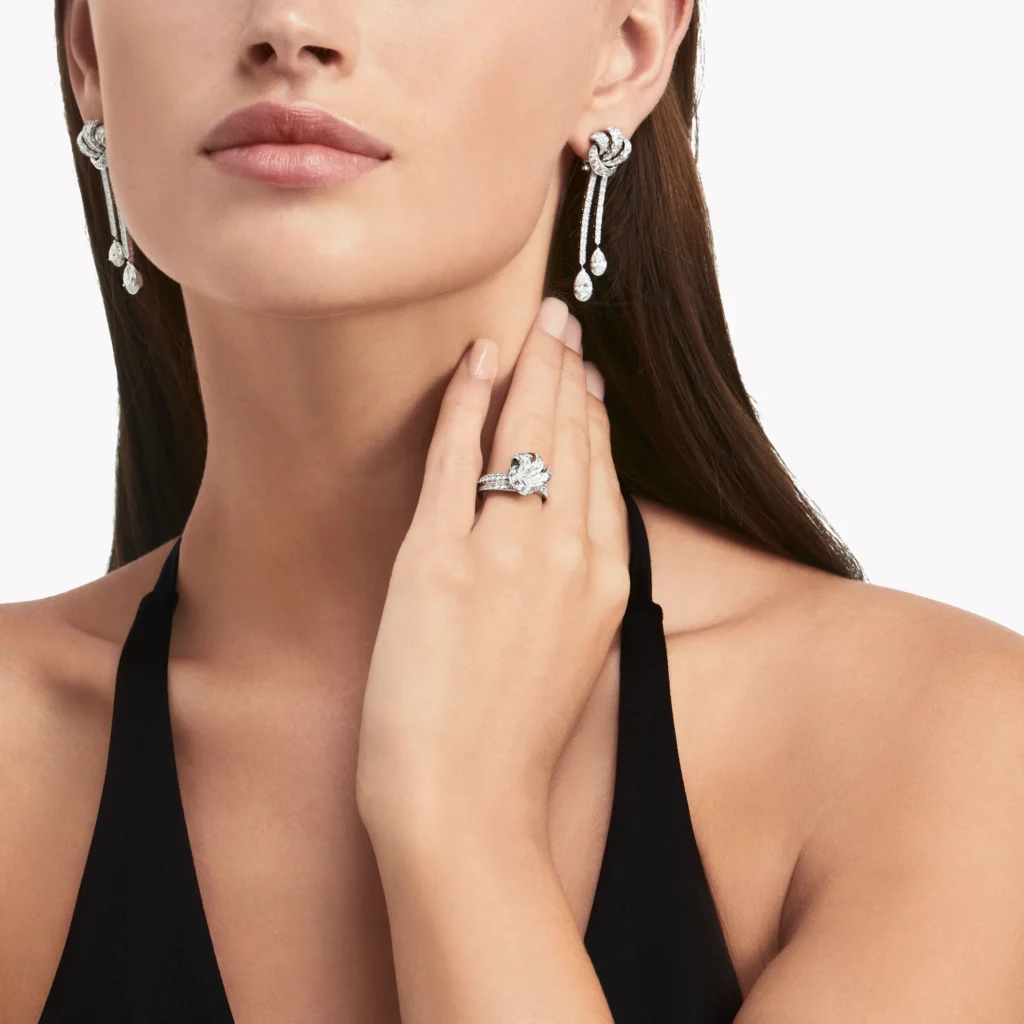
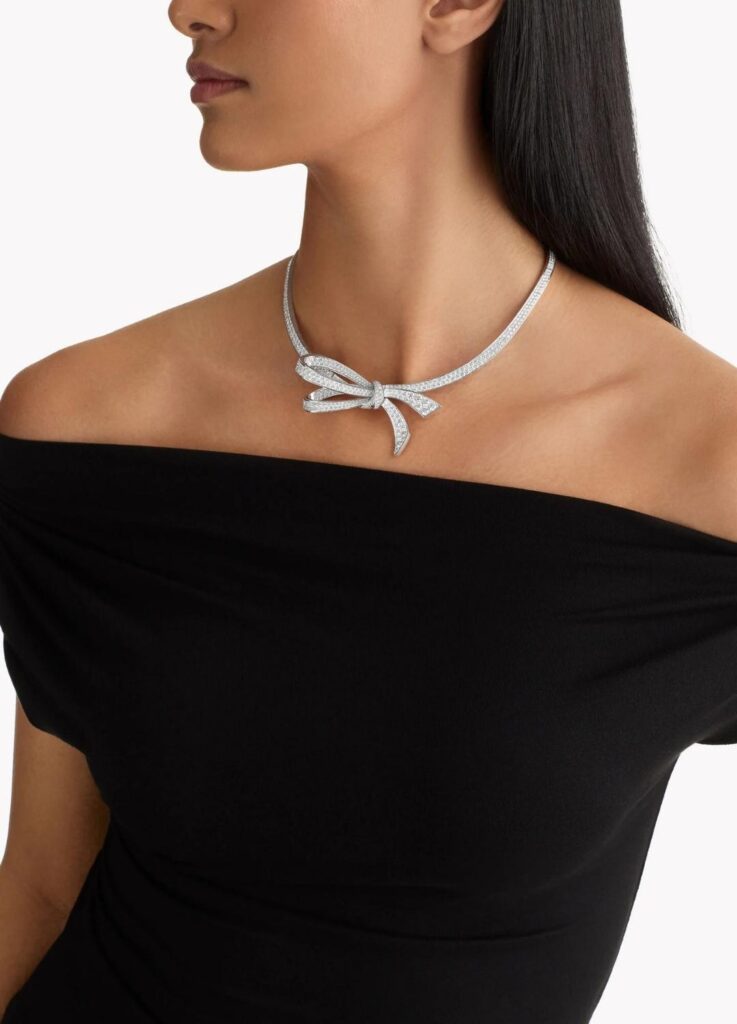
In contrast, the sculptural bow defines the high jewellery pieces.
Here, the bow is constructed as a fully three-dimensional form with distinct components:
- A central knot with volume
- Symmetrical loops extending outward
- Tails that fall downward in a draped movement
In this configuration, the bow is no longer a motif applied to the surface. It becomes a self-contained structure in space.
Marquise-cut diamonds form continuous curves, creating the tension and direction of the loops. Round pavé builds density and luminosity across the surface. Pear-shaped diamonds extend the form downward, introducing a sense of weight and gravity.
These pieces do not sit passively on the body.
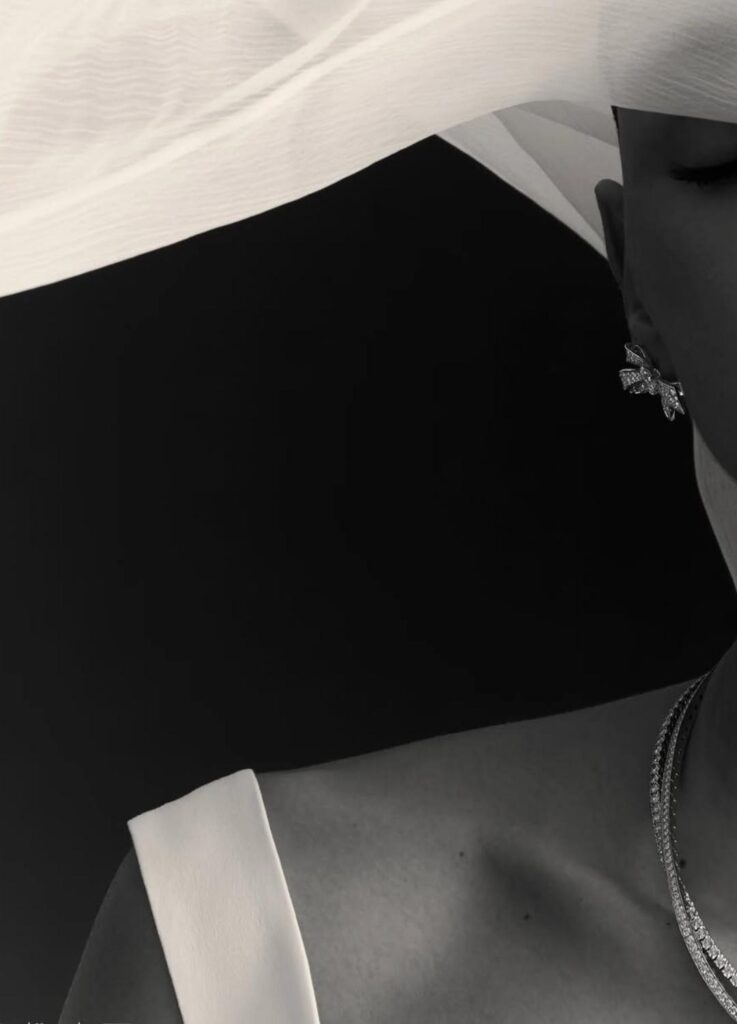
They interact with it—particularly along the neckline, where the bow unfolds as a sculptural object in motion.
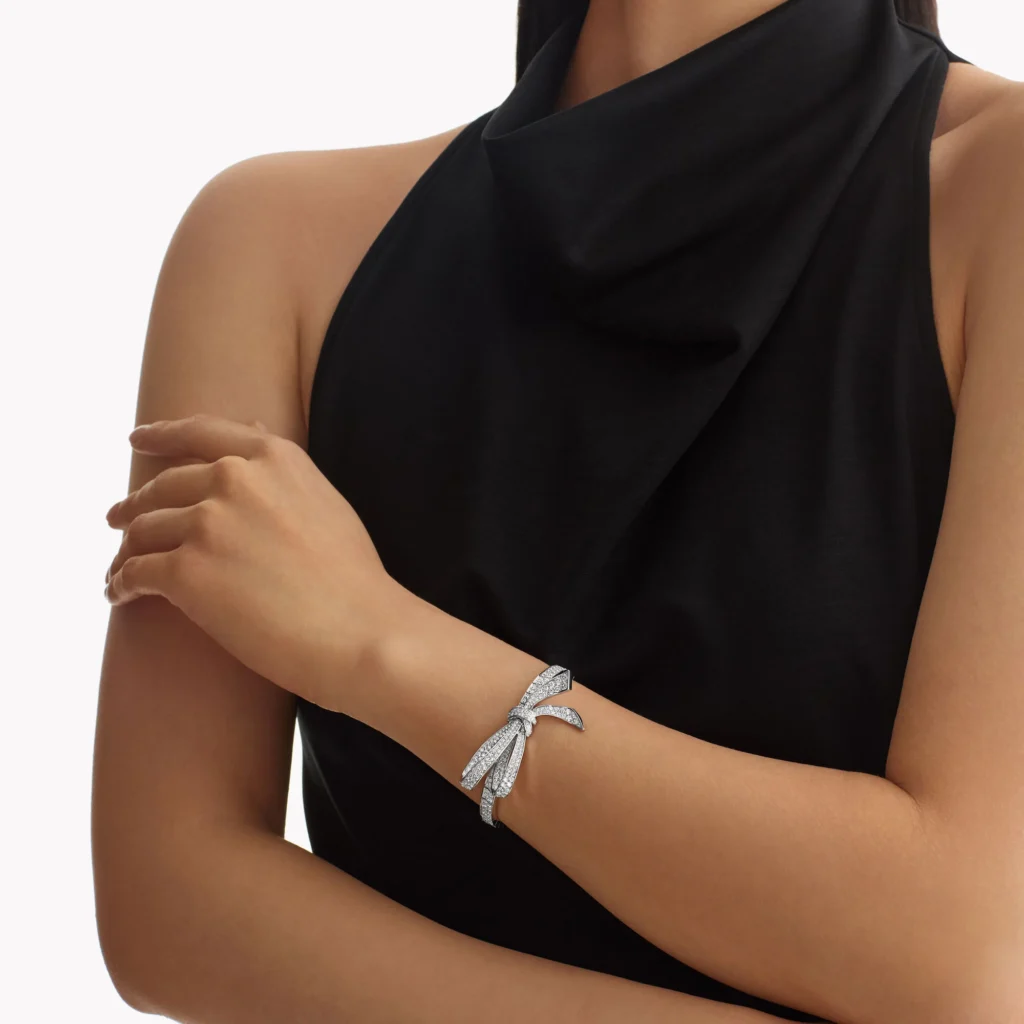
source: graff.com
Fine Jewelry
Wearable Structure and Controlled Light
The fine jewelry pieces in the collection are defined by restraint.
They rely on a limited palette of diamond cuts:
- Marquise cut
- Round brilliant pavé
This simplicity is intentional.
The marquise cut, with its elongated, pointed form, is particularly suited for constructing curves. When placed sequentially, it creates a fluid line that can suggest movement without requiring volume.
The pavé setting, in turn, fills the surface with uniform brilliance, ensuring that the structure remains visually continuous.
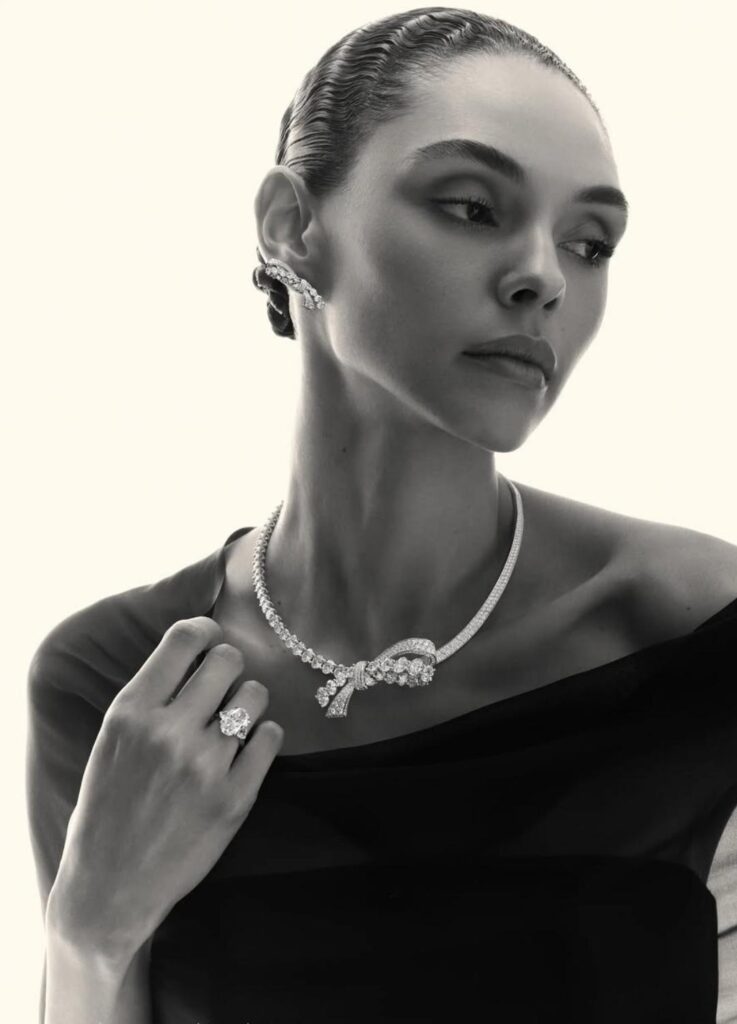
There are two key technical advantages in this approach.
First, visual elongation.
Marquise diamonds appear larger than their actual carat weight due to their extended surface area. This allows the design to maintain presence without increasing material weight.
Second, light continuity.
The pavé creates a consistent field of reflection, minimizing visual interruptions between stones.
The result is a bow that feels light, controlled, and wearable.
Among Graff’s broader portfolio, these pieces are notably adaptable. They transition easily into daily wear, not by reducing identity, but by refining structure.
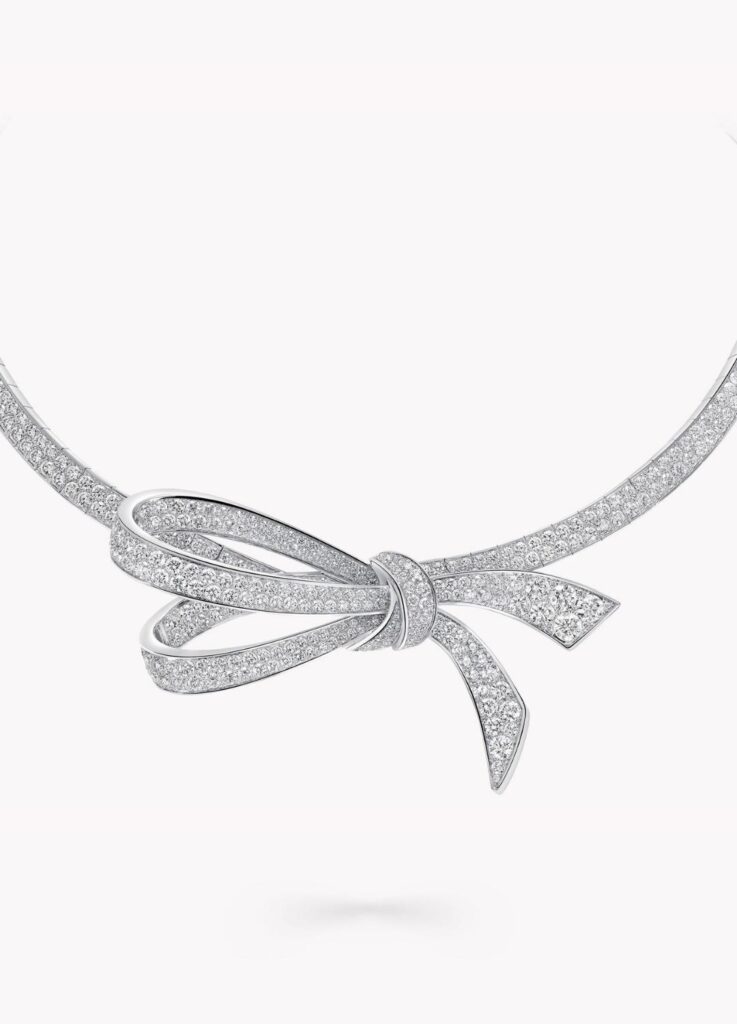
source: graff.com
High Jewelry
Volume, Movement, and Diamond Architecture
In the high jewelry pieces, the same motif is expanded into a far more complex system.
The bow becomes a compositional framework rather than a decorative reference.
Here, multiple diamond cuts are deployed simultaneously:
- Marquise cut → structural curves
- Round brilliant → surface brilliance
- Pear shape → directional movement
- Occasional oval stones → transitional volumes
Each cut performs a specific function within the composition.
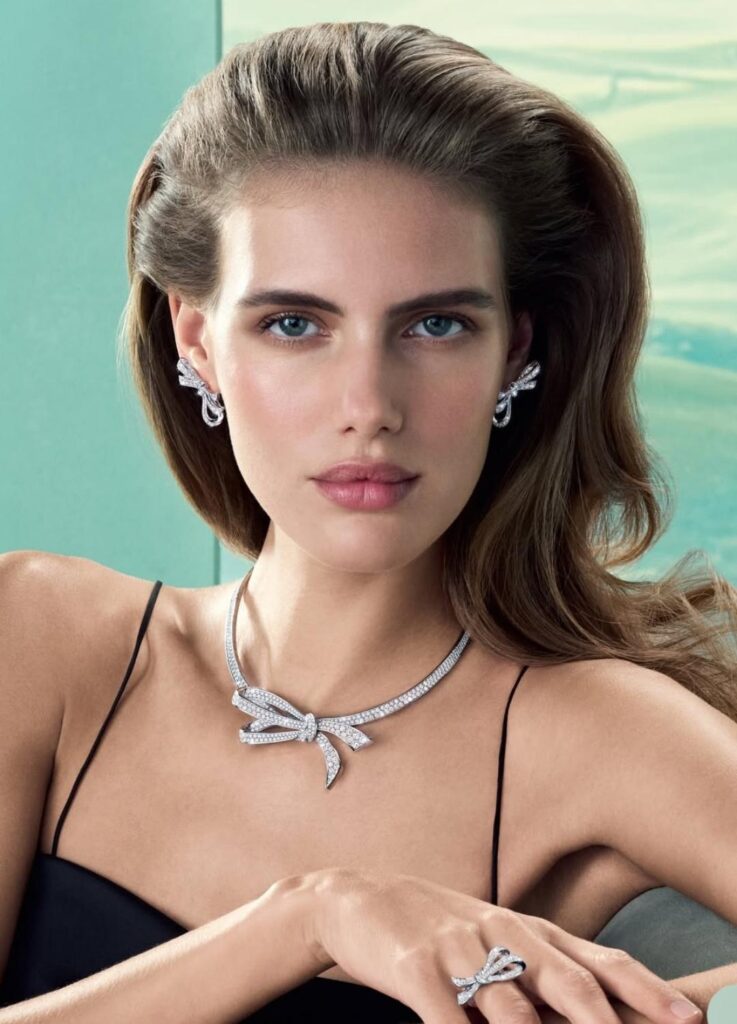
@graff / Instagram
The marquise stones define the trajectory of the line.
The pavé builds density.
The pear-shaped drops introduce downward motion, simulating the natural pull of gravity on fabric.
What distinguishes these pieces is the absence of visible hierarchy between metal and stone.
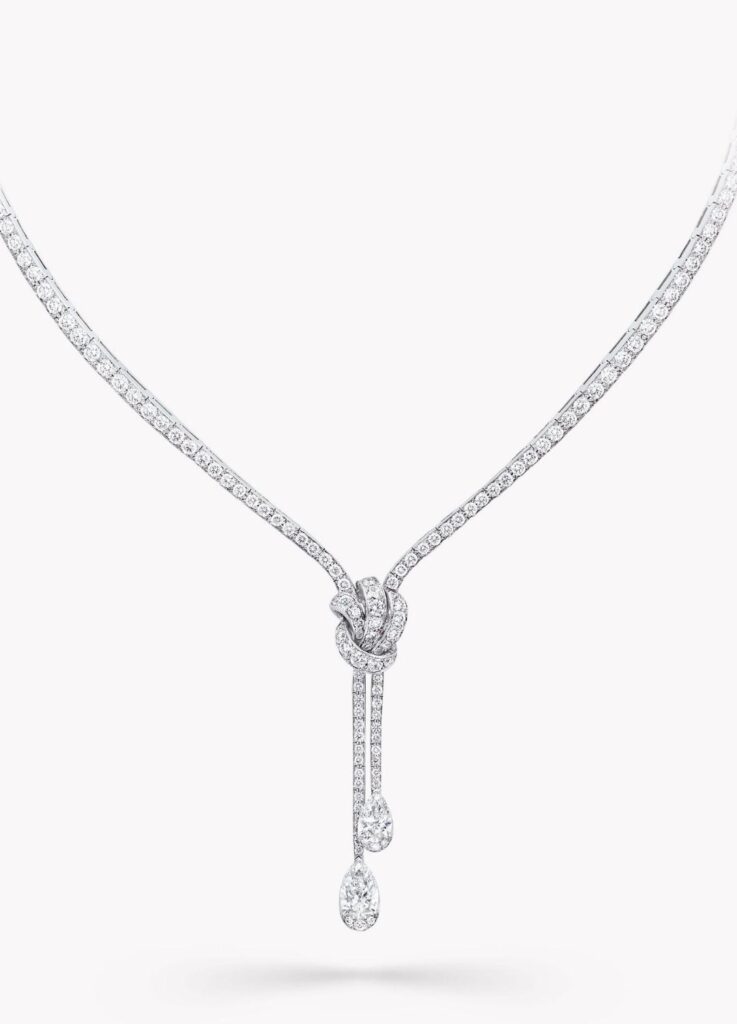
-7.40 carats, showcasing two 0.80 carat pear shape diamond drops.
source: graff.com
The diamonds do not appear set onto a structure.
They are the structure.
This illusion—of a bow formed entirely from light—is a hallmark of Graff’s technical precision.
Why the Marquise Cut Dominates Bow Motifs
The repeated use of the marquise cut in bow jewellery is not coincidental.
It addresses three core requirements of the motif.
1. Curvature
Unlike round brilliant diamonds, which excel in radial symmetry, marquise stones extend linearly. This allows them to be arranged into continuous curves.
In bow designs—where loops must appear fluid—this property is essential.
2. Surface Expansion
For the same carat weight, marquise diamonds cover a larger visual area. This creates a sense of scale without increasing material cost or weight.
3. Directional Light
The elongated geometry of the marquise cut distributes light along its axis. When multiple stones are aligned, light appears to travel along the curve.
In combination with pavé and pear shapes, this creates a layered effect:
@graff / Instagram
- Structure (marquise)
- Surface (pavé)
- Movement (pear drop)
- Some variations also incorporate baguette-cut diamonds, with the composition of cuts differing across models.
Graff’s Tilda’s Bow follows this classical framework, but refines it into a more precise architectural system.
source: graff.com
Body Proportion Analysis
Plane vs Sculptural Fit
The distinction between plane and sculptural bows also affects how the pieces interact with the body.
Fine Jewelry (Plane Bow)
Because the form remains relatively flat, the pieces adapt easily across a wide range of proportions.
@graff / Instagram
- Earrings work particularly well with oval or softly contoured face shapes
- Rings distribute horizontally, making them suitable for various finger lengths
- The visual weight remains low, reducing contrast against the skin
Overall, these pieces are structurally forgiving.
High Jewelry (Sculptural Bow)
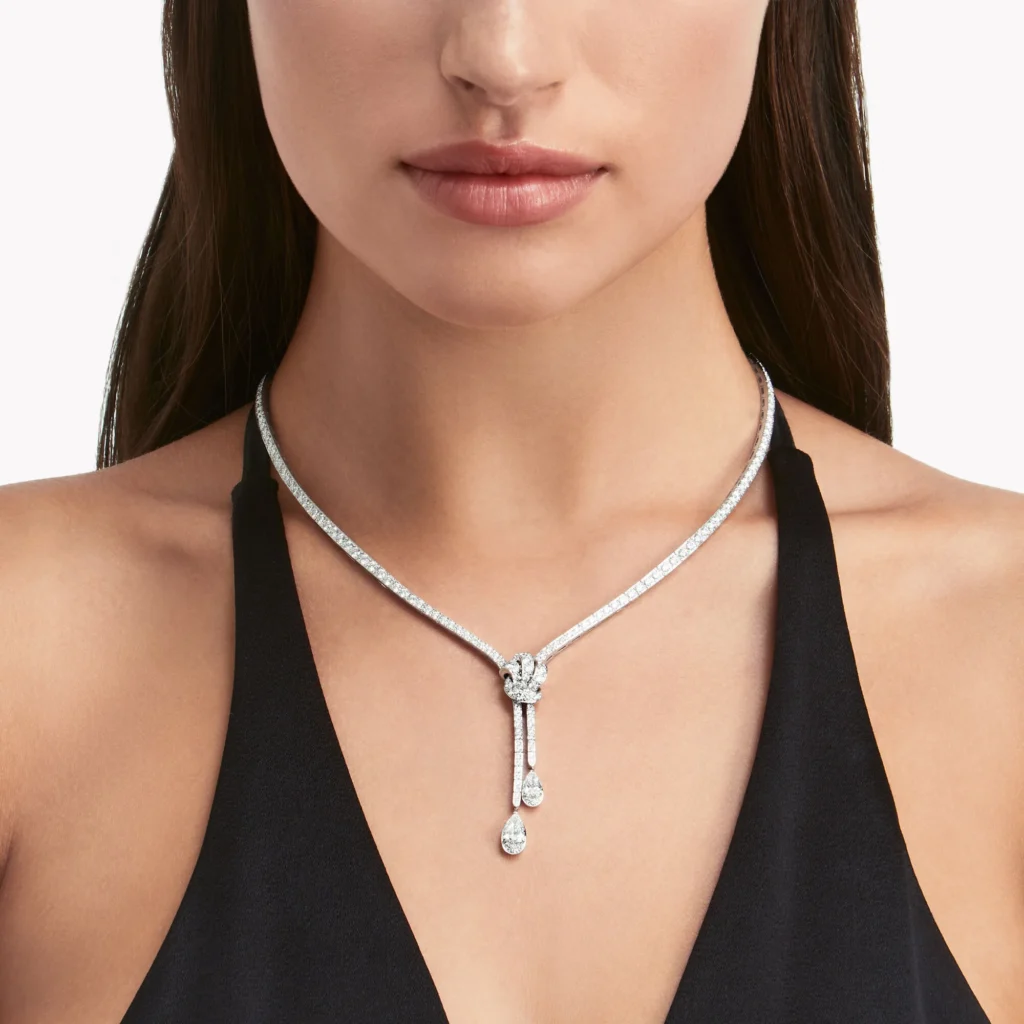
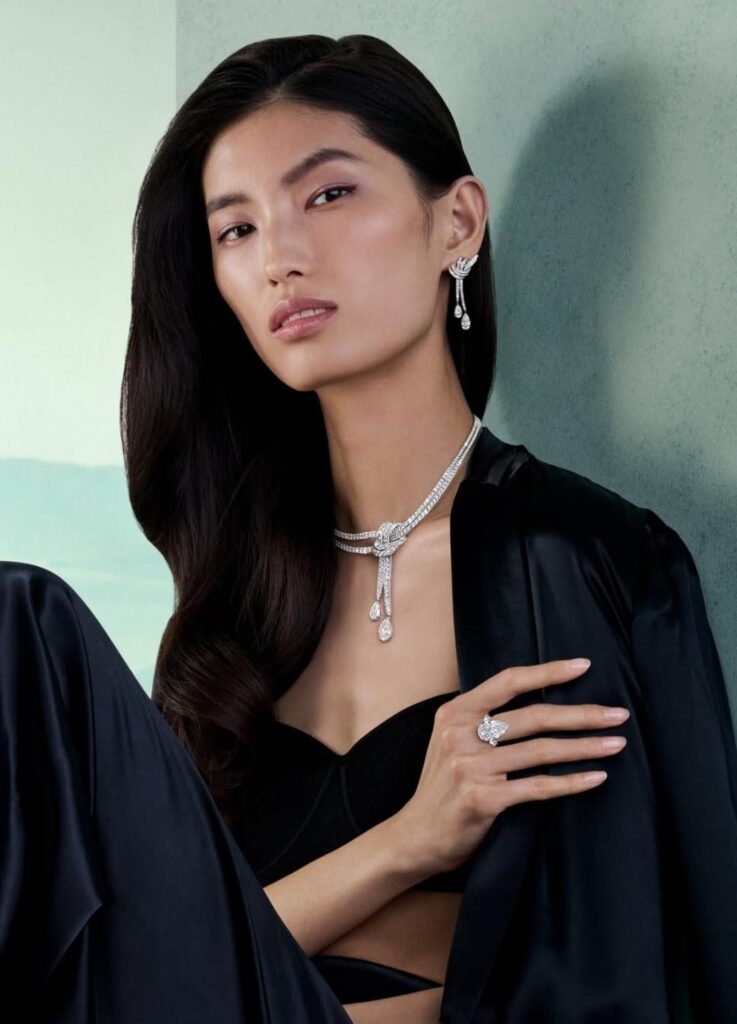
The high jewelry pieces, especially necklaces, are far more dependent on body structure.
They require:
- A defined neckline
- Visible clavicle structure
- Moderate shoulder width
@graff / Instagram
The central knot acts as a focal point. From there, the loops and tails extend outward and downward.
Without sufficient vertical space, the structure compresses.
With the right proportions, however, it unfolds fully.
These pieces are not simply worn—they are framed by the body.
source: graff.com
The Contemporary Bow in Fashion
Drape vs Construction
The re-emergence of the bow in recent fashion is not a return to ornamentation.
It is a shift in how structure is expressed.
source: Dior.com
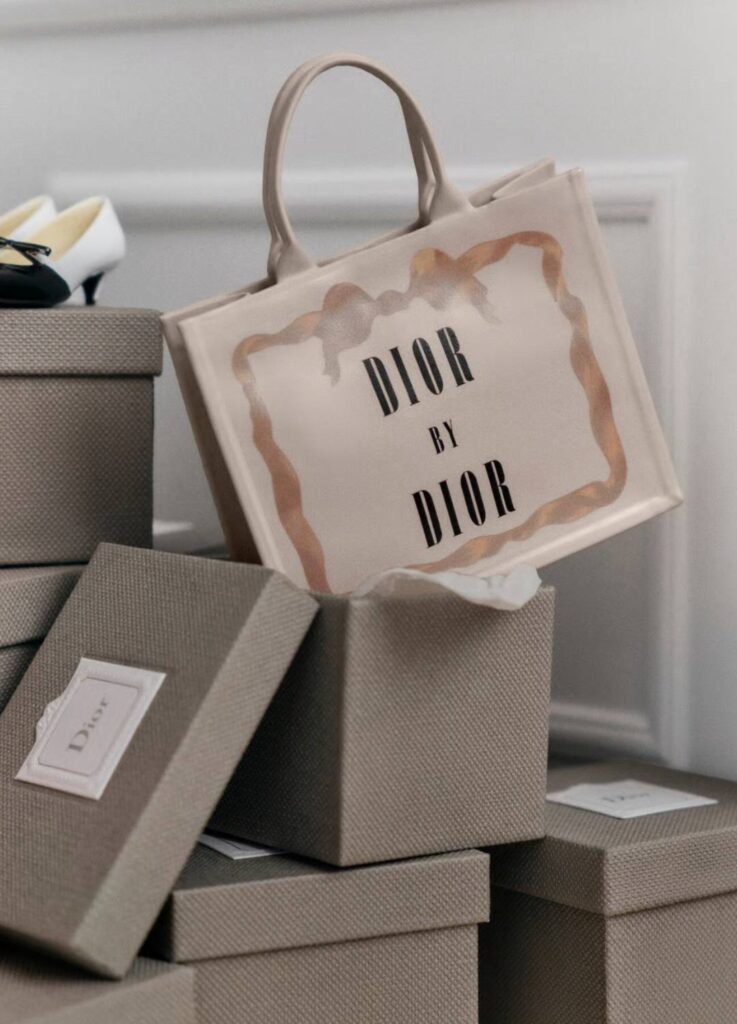
In recent collections from Dior under Jonathan Anderson, the bow appears not as an applied detail, but as a byproduct of drape.
A continuous length of fabric is gathered, tensioned, and released.
The bow emerges from this process.
There is no clear separation between knot, loop, and tail.
They exist as a single movement.
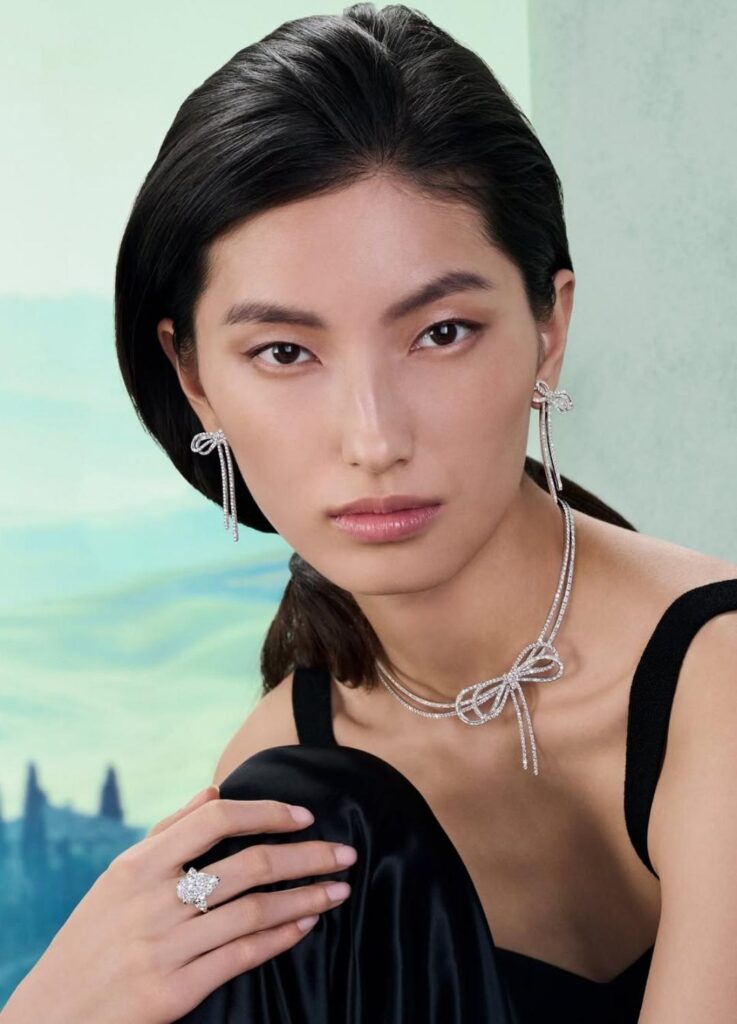
In contrast, Graff’s Tilda’s Bow maintains a more defined structure.
@graff / Instagram
The components remain legible:
- Knot
- Loops
- Tails
Yet in certain high jewellery pieces, a subtle convergence appears.
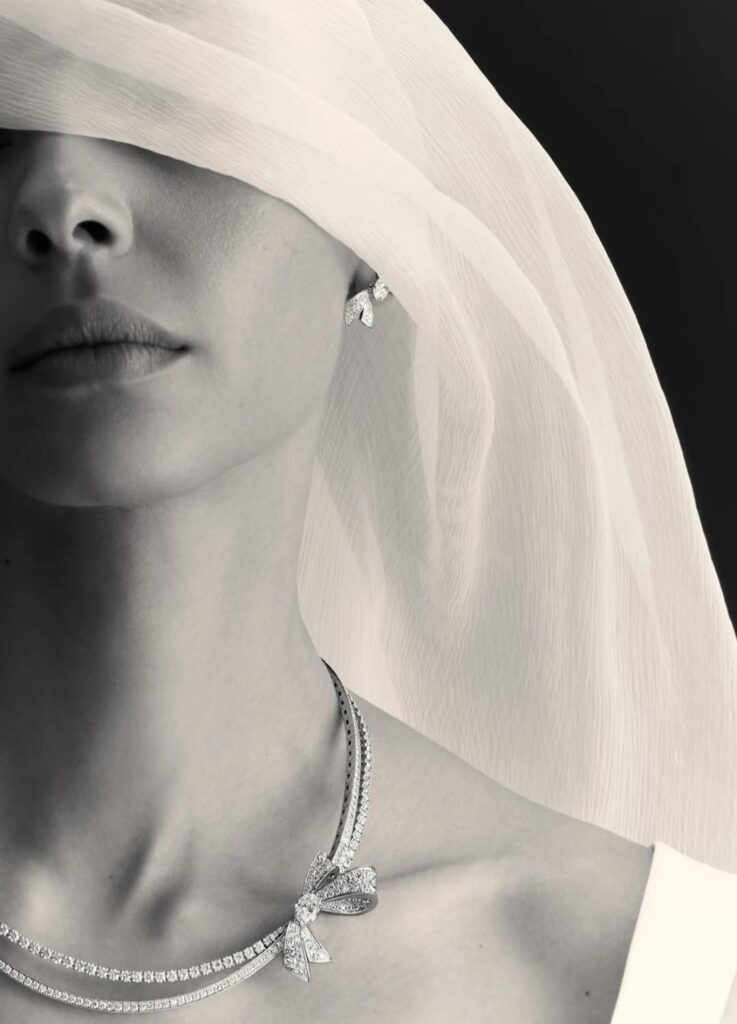
Diamond lines follow the neckline before converging into a knot-like formation.
Here, the bow is not placed—it forms.
This is where Graff intersects with contemporary fashion.
Not in material, but in principle.
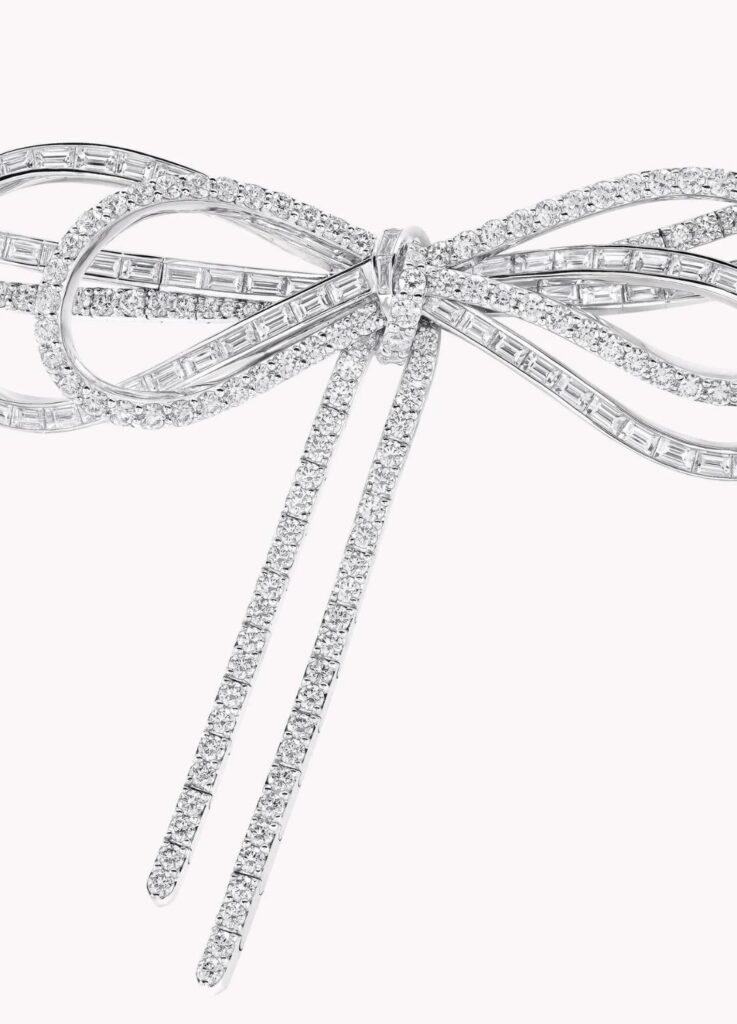
-a total weight of approximately 13.39 carats.
source: graff.com
Why Bow, and Why Now
The emergence of the bow within Graff’s portfolio is not purely aesthetic.
It reflects a broader shift in high jewelry.
Historically, Graff’s identity has been rooted in the singularity of the stone—its size, rarity, and brilliance.
But in recent years, emphasis has gradually shifted toward composition.
How stones relate.
How they move.
How they form a system.
Within this context, the bow is an ideal motif.
It requires:
- Curvature
- Tension
- Resolution
It is inherently structural.
Unlike floral or abstract motifs, the bow cannot be convincingly rendered without coherence between its parts.
This makes it a natural vehicle for demonstrating technical control.
Tilda’s Bow therefore functions not just as a design theme, but as a framework for expressing diamond architecture.
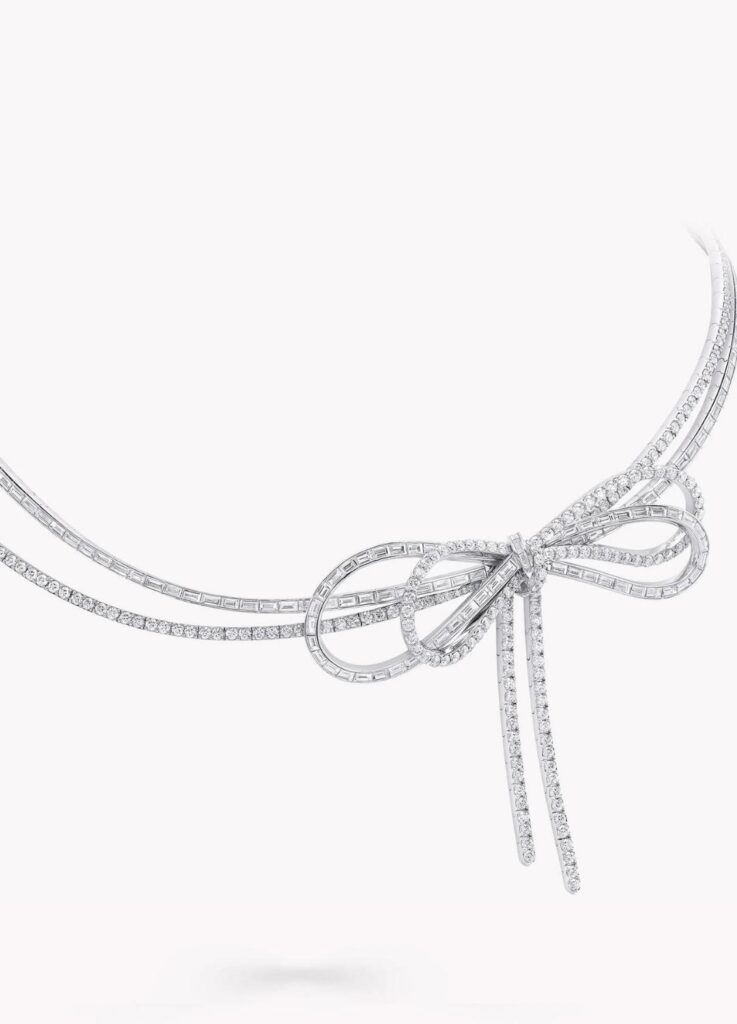
– a total weight of approximately 13.39 carats.
source: graff.com
Final Reflection
The bow is not new.
It has existed across centuries—as ornament, as symbol, as decoration.
But not all forms persist in the same way.
In contemporary fashion and high jewelry, the bow is no longer defined by its surface appearance. It is defined by how it is formed.
In Dior, it emerges from tension within fabric.
In Graff, it is constructed through the alignment of diamonds.
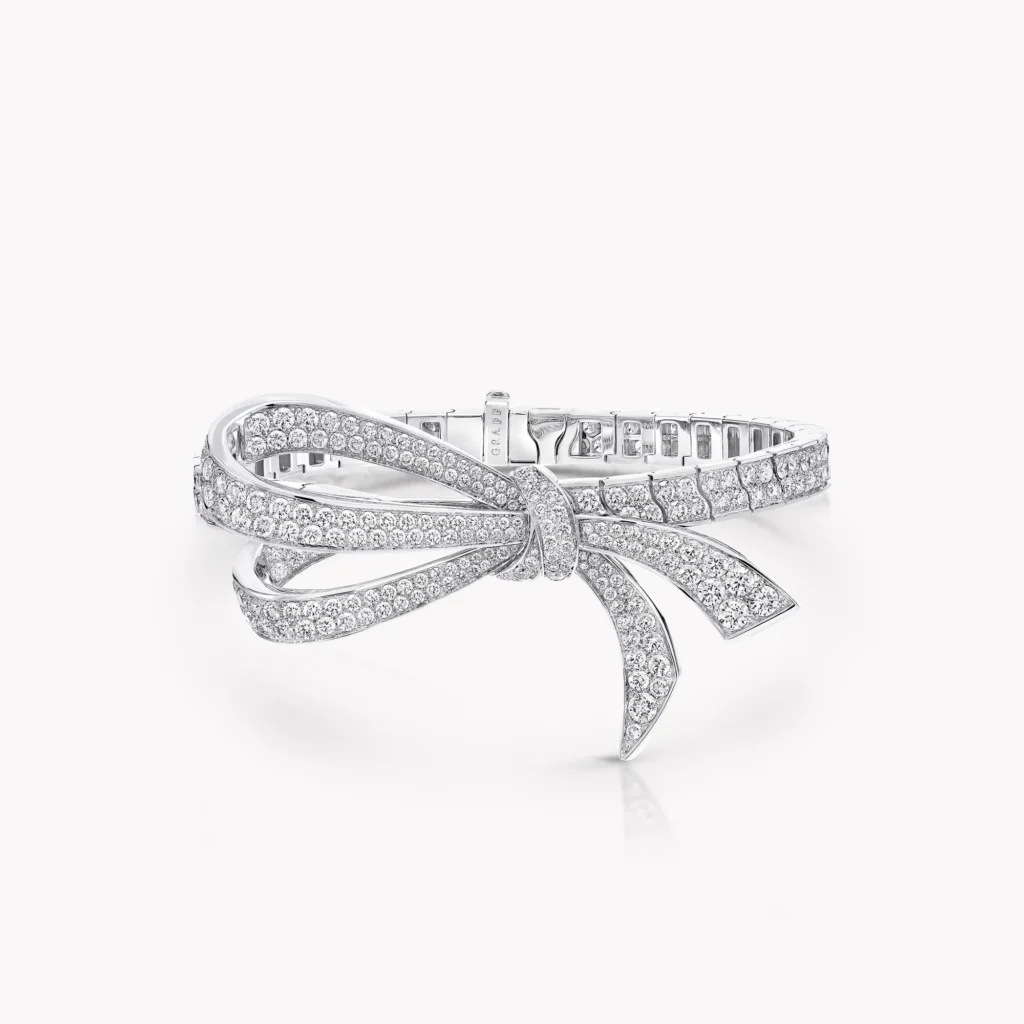
source: graff.com
One is shaped by gravity.
The other by precision.
In Tilda’s Bow, lines of diamonds follow the body before converging into a point of closure—a knot.
This moment is not decorative.
It is structural.
A point where direction resolves into form.
And perhaps that is what defines this collection.
Not the bow itself,
but the idea that form is created when lines meet—and hold.
source: graff.com
Featured Image via @graff / Instagram
[ Related Editorials ]