Context in Chloé Fall/Winter 2026
At a moment when much of the fashion industry is preoccupied with reinvention, Chloé Fall/Winter 2026 collection moves in a different direction: a careful re-centering of identity.
The Paris season has seen several houses searching for new visual languages after recent creative reshuffles. For many brands, the central question remains the same:
How does a house translate its historical codes into the present without becoming nostalgic?
For Chloé, the question carries particular weight. Unlike some luxury houses defined primarily by tailoring or hardware, Chloé’s legacy has always been anchored in a certain vision of womanhood. Since the late 1960s, the brand has been associated with a fluid, romantic, and slightly rebellious femininity—one that balances softness with independence.
From Karl Lagerfeld’s bohemian romanticism in the 1970s to Phoebe Philo’s quietly modern reinterpretations in the early 2000s, the house has repeatedly returned to the idea of the Chloé woman as a figure moving freely between romance and reality.
For Fall 2026, creative director Chemena Kamali revisits this lineage directly. Yet the starting point of the collection is not simply the familiar 1970s nostalgia often associated with the house.
Instead, Kamali frames the season around a deeper cultural reference: folk tradition and collective memory.
Her research reportedly included Dutch folk costumes, archival imagery of girls in lace bonnets and floral dresses, and photographs from the late twentieth-century cultural landscape—from the prairie romanticism of Joni Mitchell’s Ladies of the Canyon to the iconography of Kate Bush and early Kate Moss.
The result is a collection that does not simply reproduce bohemian aesthetics. Rather, it explores how these images of shared cultural femininity—passed down visually through generations—might be translated into contemporary fashion.
The Structural Center of the Collection
The defining characteristic of the collection lies in the way Kamali organizes two seemingly opposing ideas.
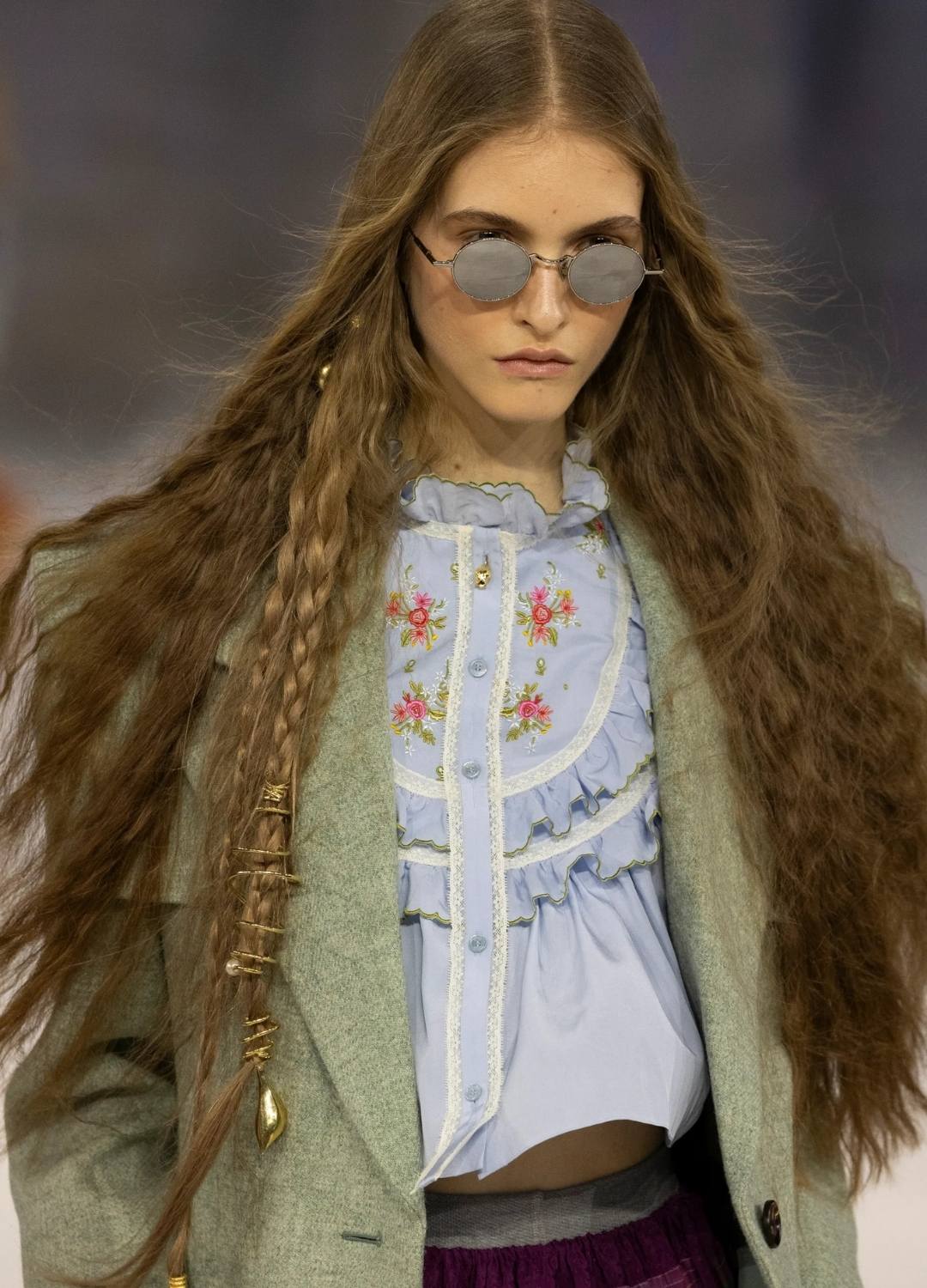
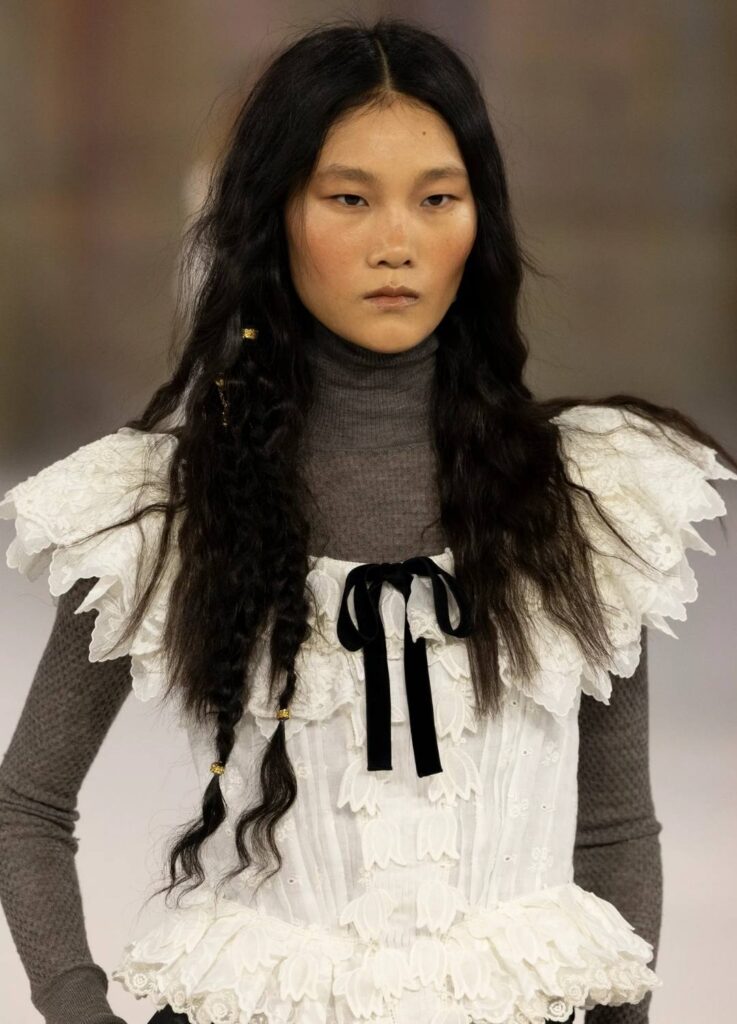
On one side stands folk romanticism: ruffled dresses, tiered skirts, soft blouses, and floral embroidery that evoke pastoral imagery.
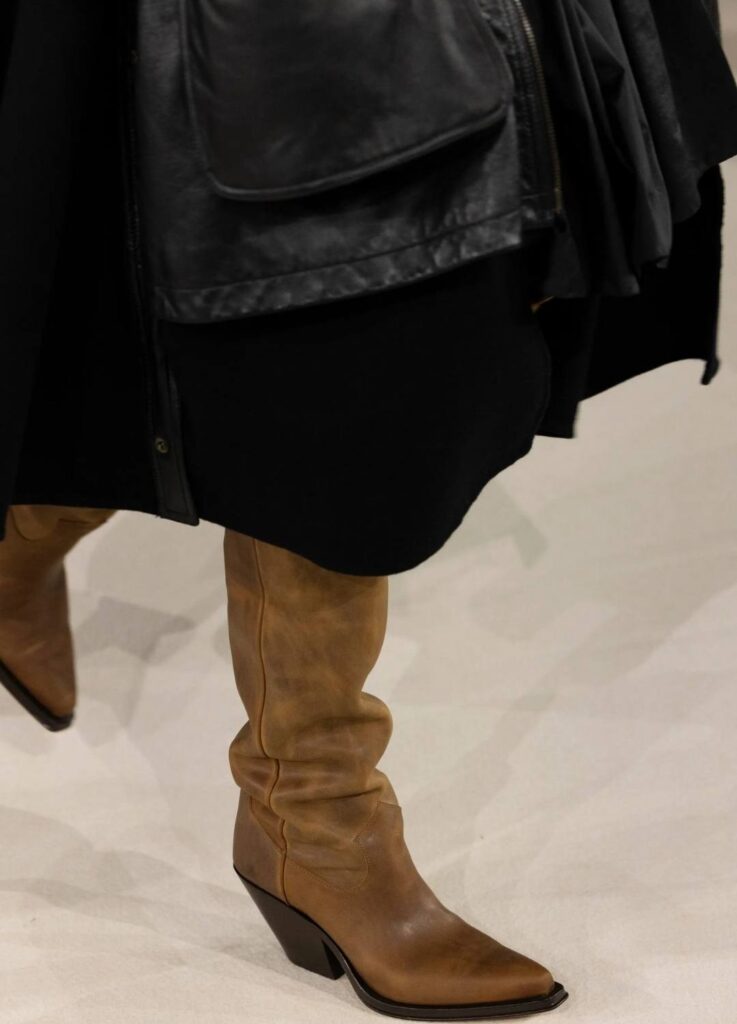
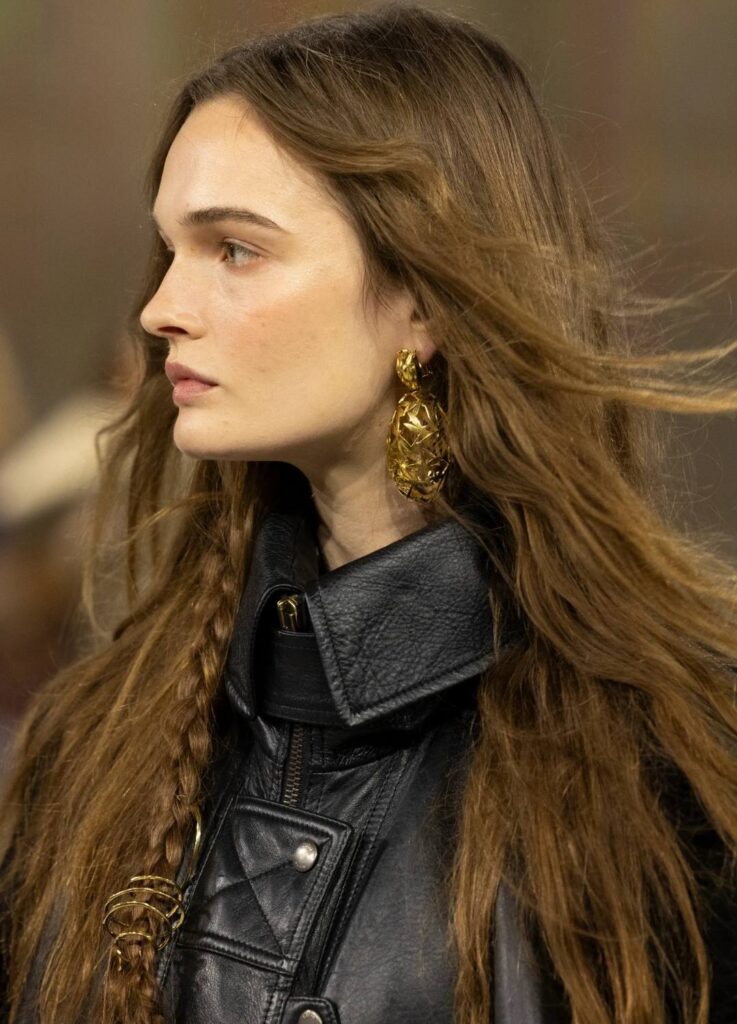
On the other side stands urban reality: tailored jackets, leather trousers, heavy outerwear, and Western boots.
Throughout the runway, these two worlds are not presented separately but layered together.
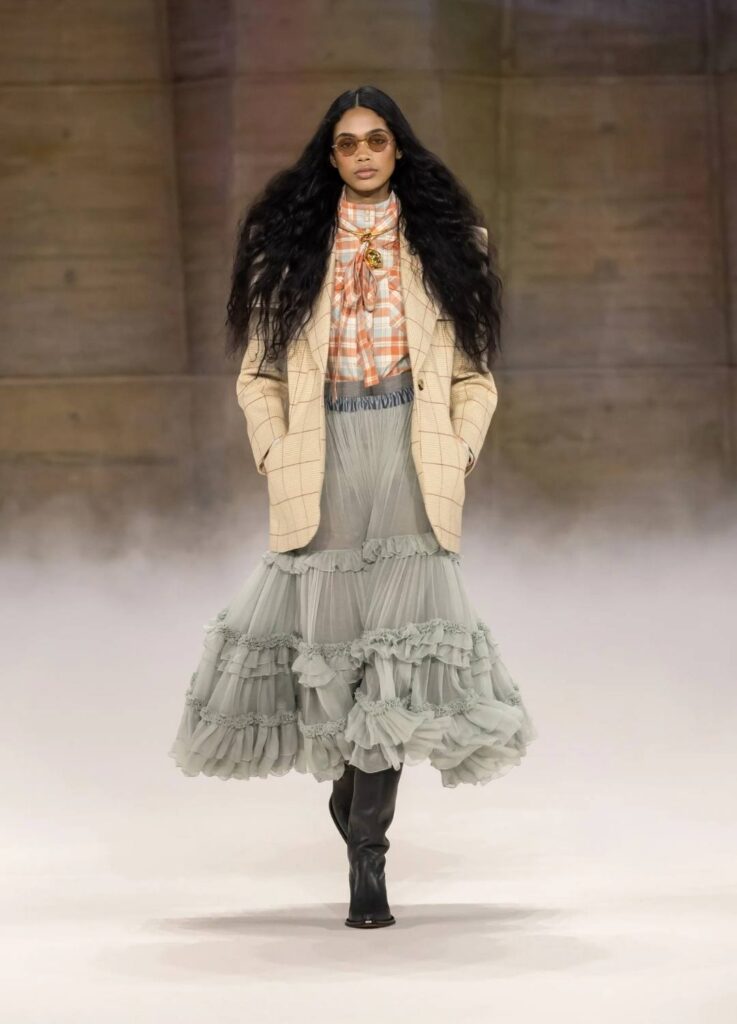
A delicate lace blouse appears beneath a structured blazer.
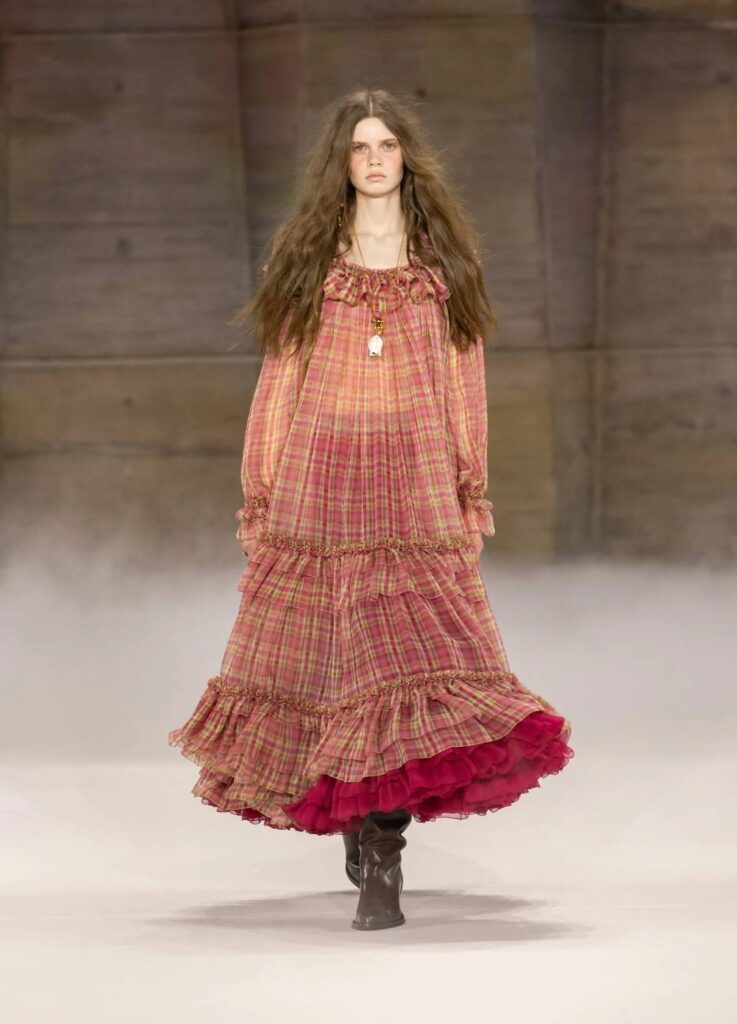
A prairie dress is paired with a masculine coat.
A romantic tiered skirt is grounded by leather trousers.
This interplay forms the structural core of the collection.
Rather than presenting nostalgia as an escape, Kamali frames it as a memory carried into the present—something worn within the everyday wardrobe of a contemporary woman.
Silhouette
Silhouette provides the clearest visual language of the collection.
Across the runway, the proportions remain consistent:
a soft, flowing upper structure paired with elongated vertical lines through the skirt or dress.
Key shapes include:
- Tiered maxi dresses
- Voluminous prairie skirts
- Loose romantic blouses
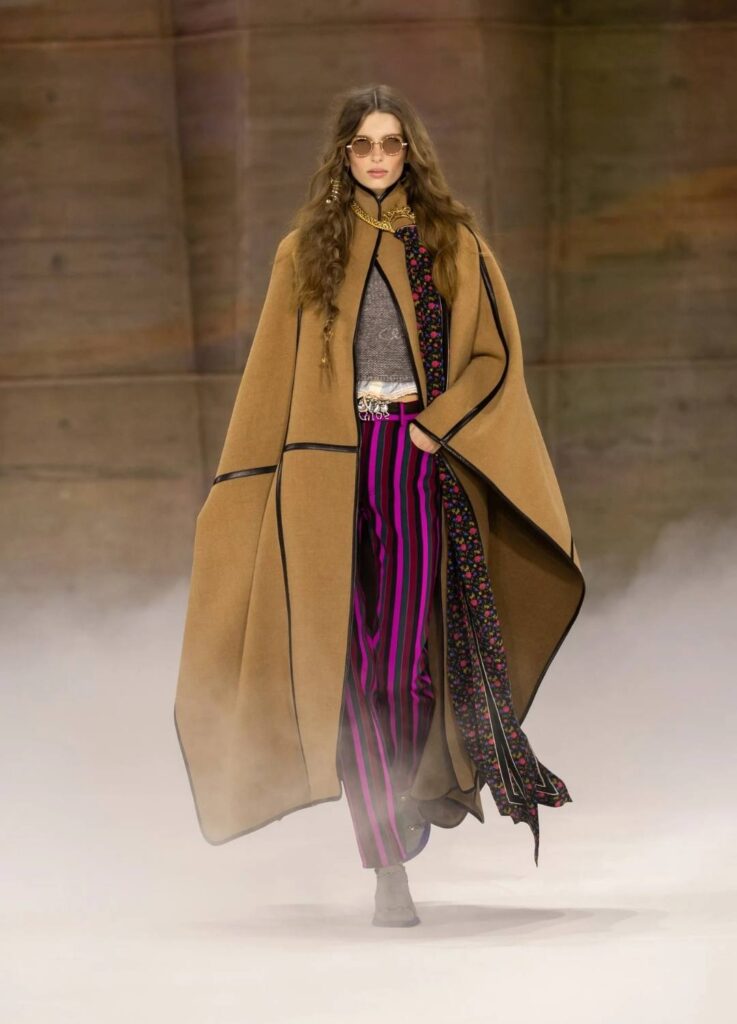
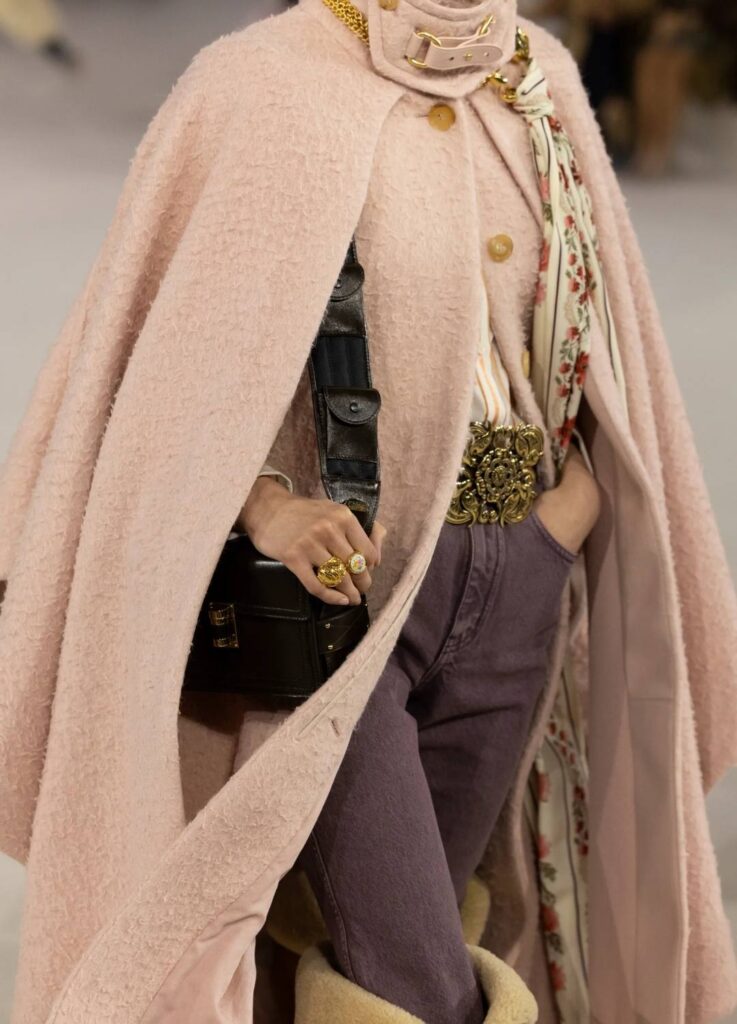
- Cape-like outerwear
- Relaxed tailoring
These silhouettes echo the visual grammar of 1970s bohemian fashion, yet they are subtly recalibrated for a modern context.
The dresses, while romantic, are rarely fragile. Their volume is controlled and grounded by heavier elements—boots, leather pieces, or structured coats.
The Meaning of the Silhouette Shift
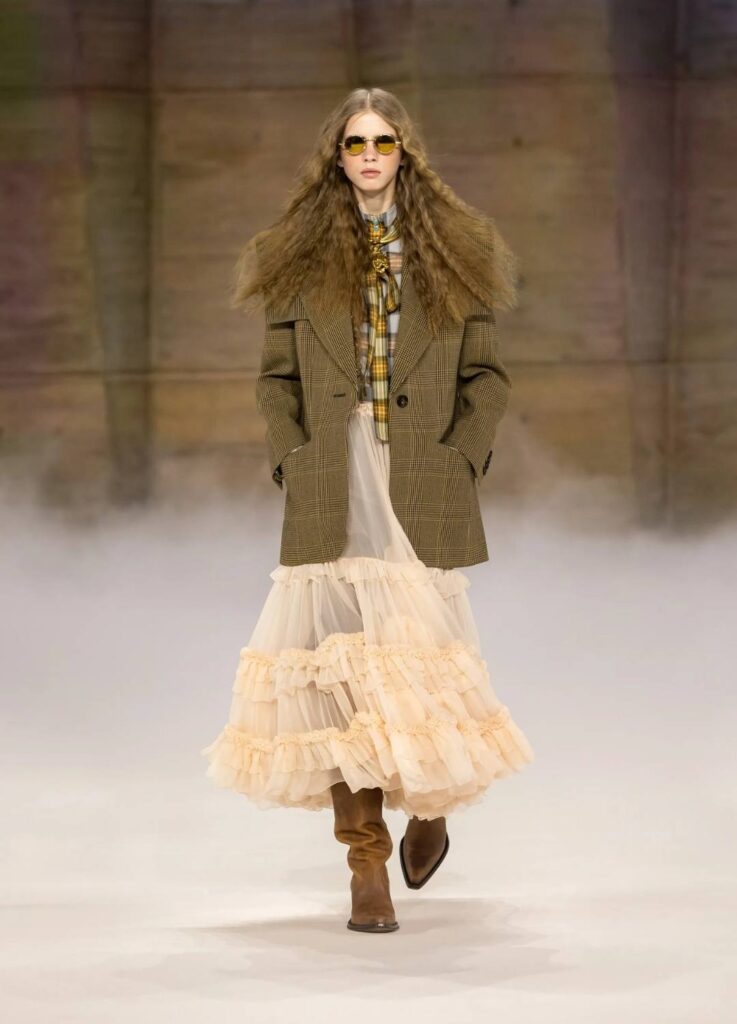
One of the most notable features of the collection is the repeated combination of romantic dresses with masculine outerwear.
Examples include:
- Prairie dresses layered beneath tailored jackets
- Lace blouses paired with leather trousers
- Tiered skirts worn under oversized coats
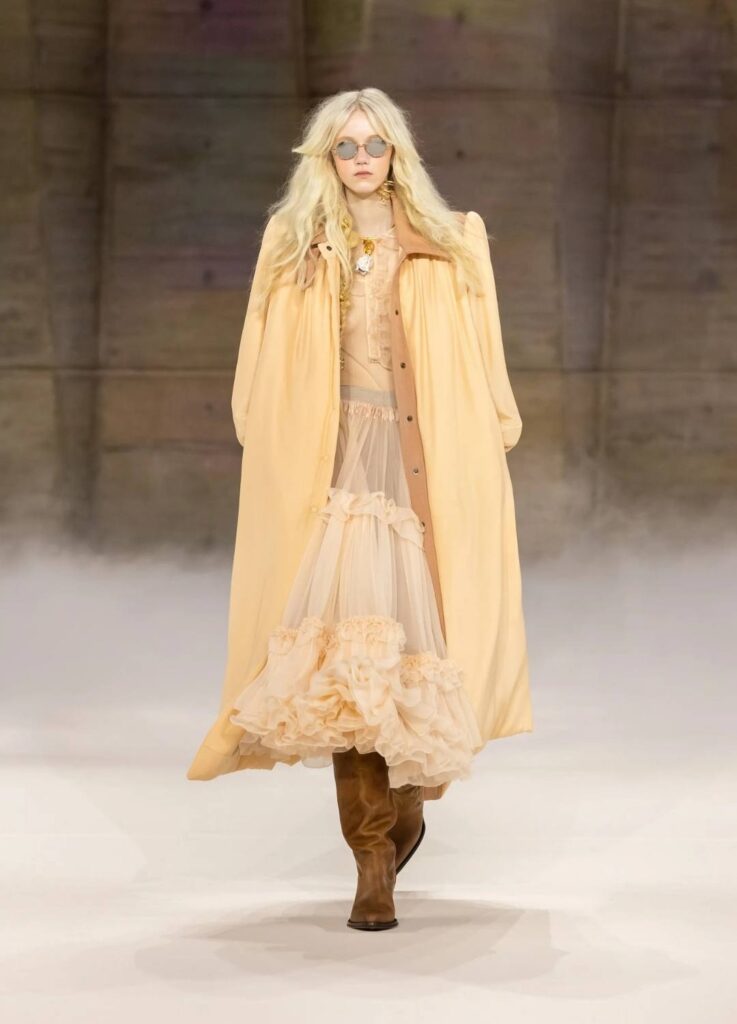
This pairing prevents the collection from drifting into purely nostalgic territory.
Historically, bohemian fashion has often leaned toward softness and escapism. By contrast, Kamali introduces a pragmatic balance. The romantic garments remain, but they coexist with elements associated with urban mobility and independence.
In this sense, the silhouette strategy quietly reinforces a broader narrative: the Chloé woman is romantic, but she is not fragile.
Materials
Material choices reinforce the tension between delicacy and structure.
The collection relies heavily on lightweight fabrics associated with romantic dressmaking:
- Silk mousseline
- Chiffon
- Cotton lace
- Soft knits
These materials allow the dresses and skirts to move fluidly as the models walk, emphasizing the kinetic quality that has long been central to Chloé’s aesthetic.
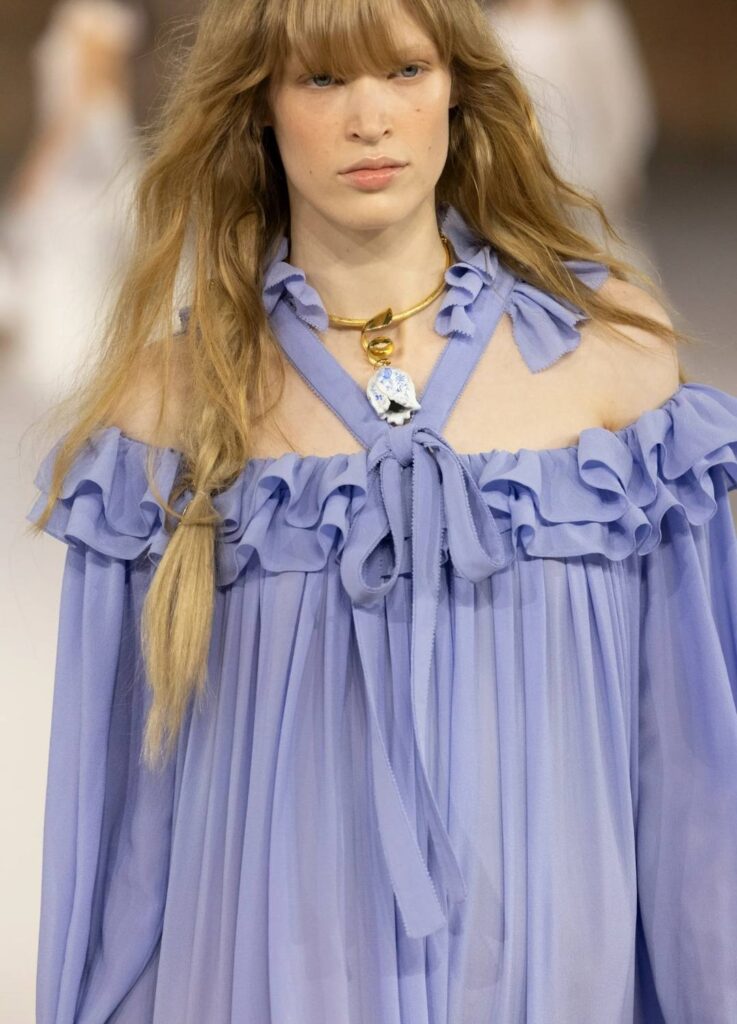
At the same time, the collection introduces heavier materials that anchor these softer textures.
Notably:
- Leather trousers
- Tailored wool coats
- Structured jackets
The contrast between airy textiles and more substantial materials produces a layered tactile experience.
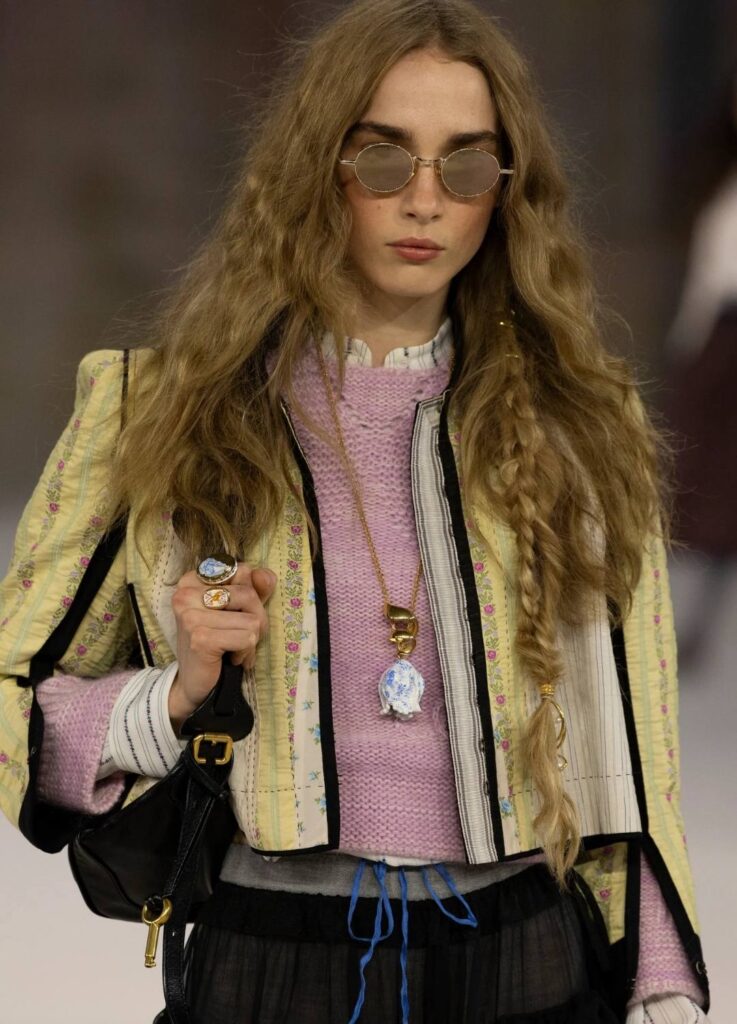
Styling as a Source of Tension
One of the most compelling aspects of the show lies in how these materials are styled together.
A lace dress might appear with leather pants beneath it.
A floating chiffon skirt might be paired with a sharply cut coat.
A delicate blouse might be worn with rugged boots.
These combinations create a subtle visual tension.
Rather than isolating romantic garments as special-occasion pieces, Kamali integrates them into everyday wardrobe logic. The dresses become wearable not because they are simplified, but because they are balanced.
Color
The color palette follows a naturalistic trajectory that feels deeply aligned with the house.
The foundation consists of soft, earth-oriented tones:
- Ivory
- Cream
- Sand
- Olive
- Dusty blue
- Deep brown
These shades evoke the landscape of countryside imagery often associated with folk aesthetics.
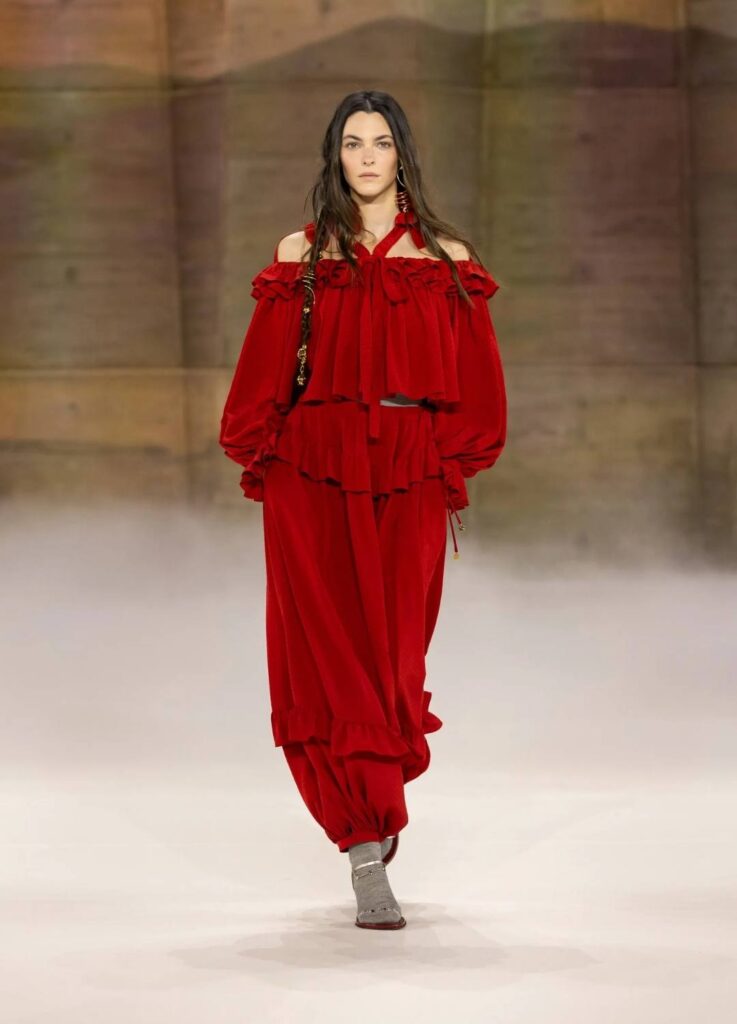
Midway through the collection, however, stronger color accents appear.
Particularly striking are:
- A vivid red ruffled dress
- Deep purple ensembles
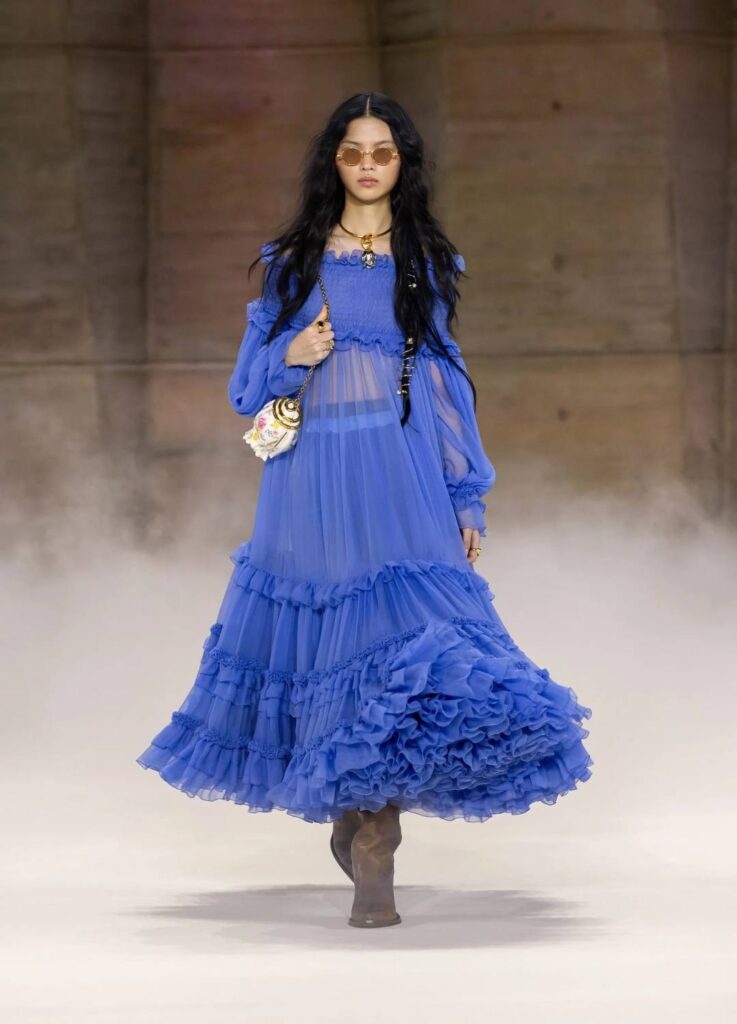
- Saturated cobalt blue looks
These moments punctuate the otherwise muted palette, drawing attention to key pieces without overwhelming the collection’s overall softness.
Unlike some recent runway seasons where color becomes the central theme, Kamali uses it sparingly—almost as punctuation within a larger narrative.
Five Key Looks
Several looks stand out as particularly representative of the collection’s direction.
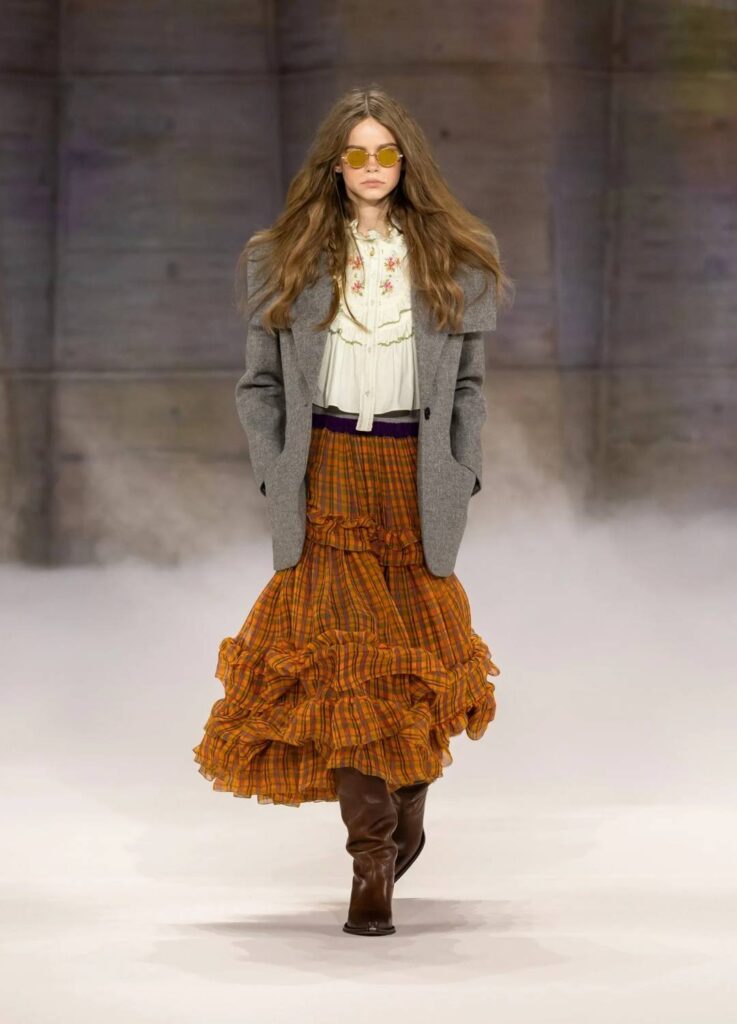
1. The Opening Prairie Skirt Look
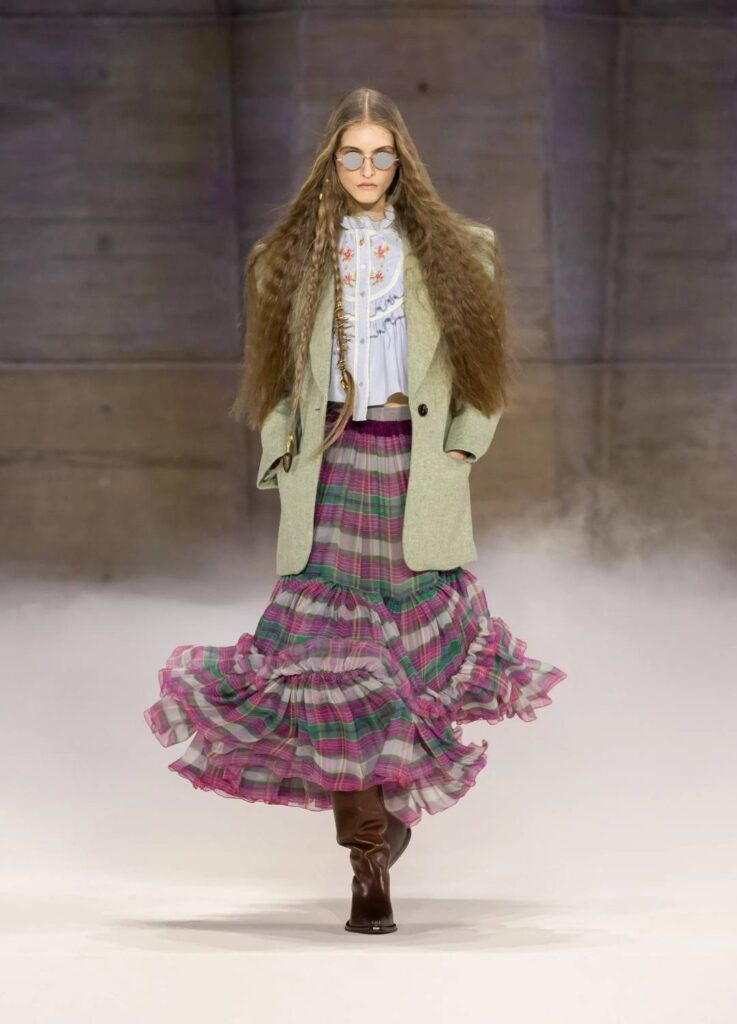
A layered check skirt paired with a softly tailored jacket establishes the tone immediately. The look captures the pastoral romance of the collection while grounding it in a modern silhouette.
2. The Red Ruffled Dress
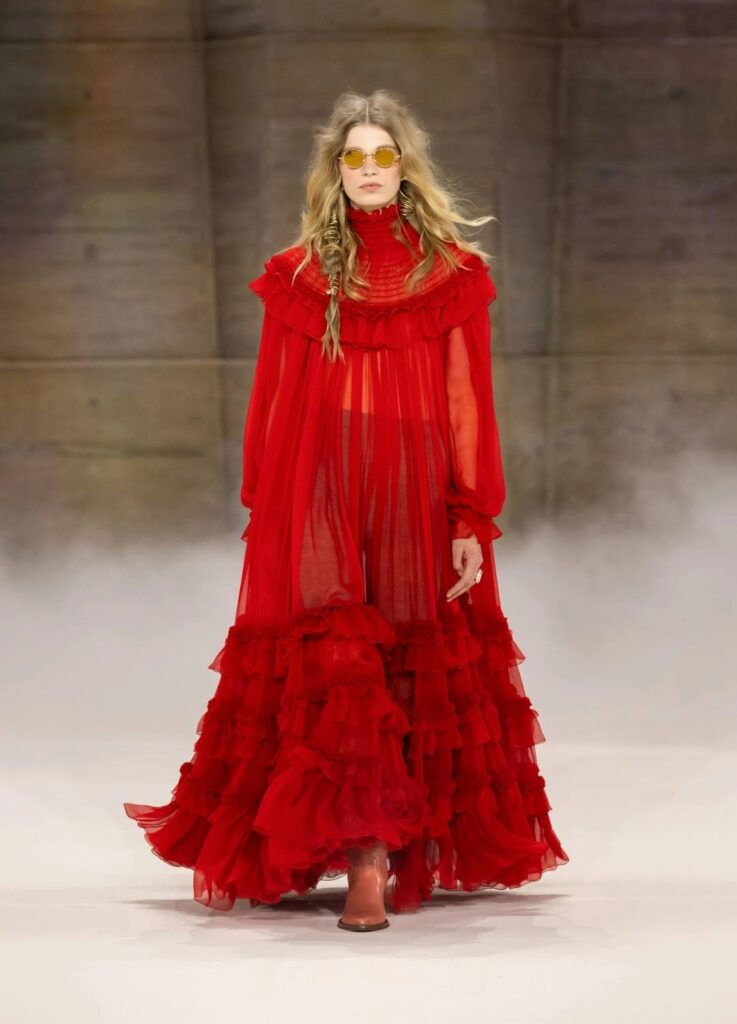
This vivid piece functions as a visual anchor in the middle of the runway. The intensity of the color contrasts with the otherwise subdued palette, emphasizing the emotional dimension of the collection.
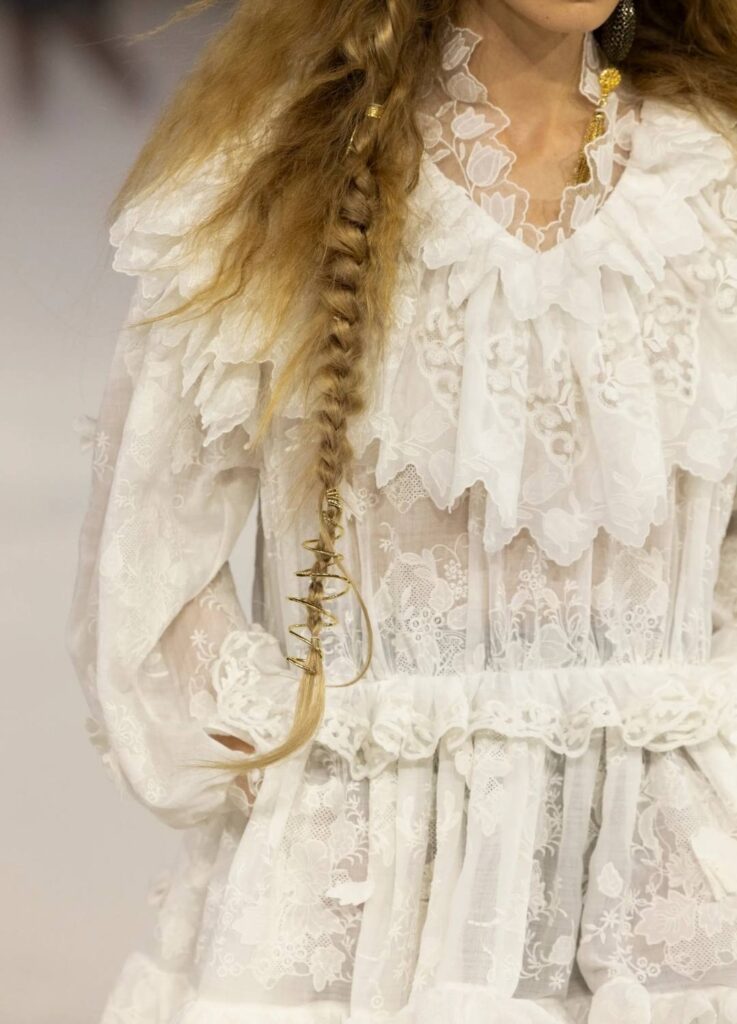
3. The White Lace Dress
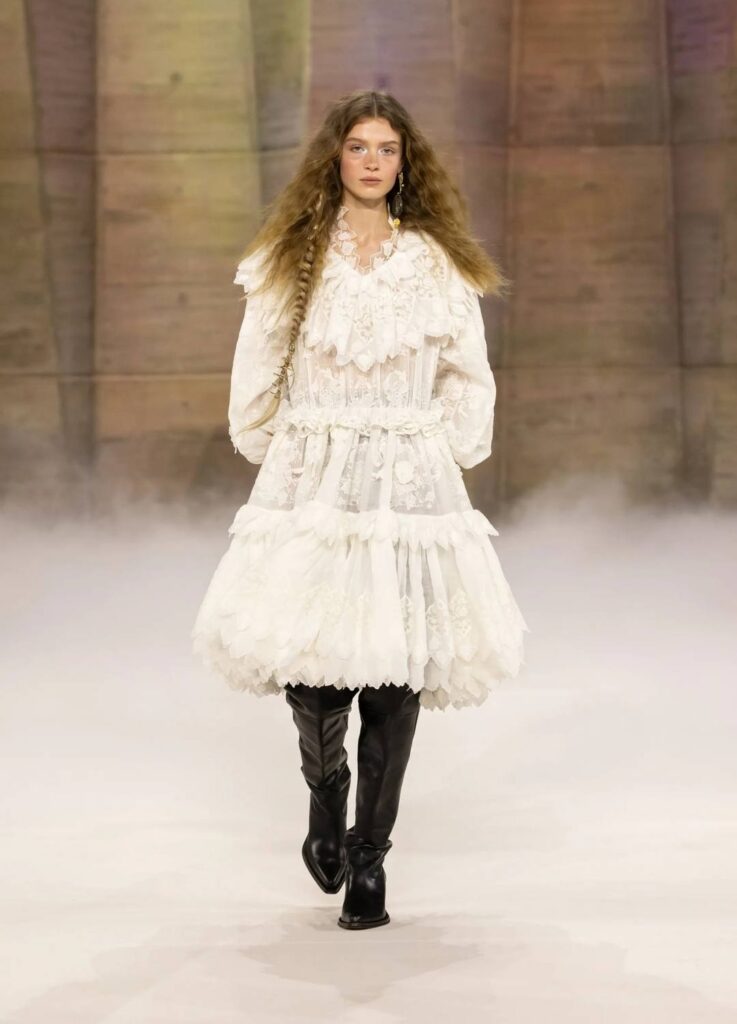
Arguably the most archetypal Chloé garment in the show, this piece reflects the house’s historical fascination with delicate femininity.
4. The Leather Trousers Styling
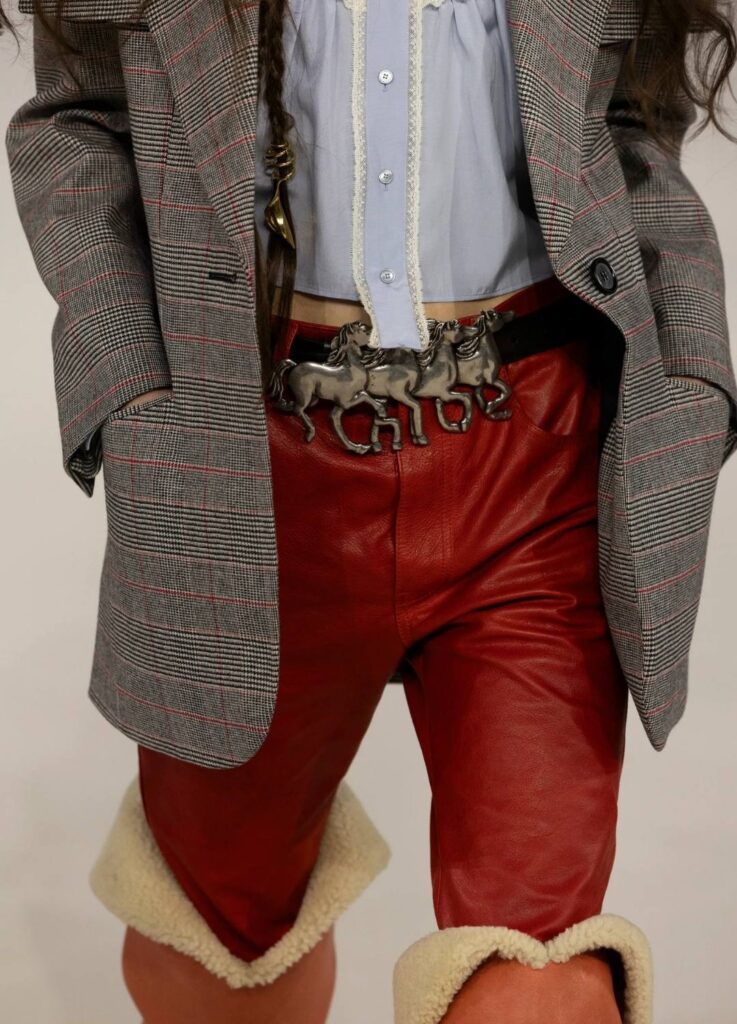
When paired with romantic blouses, the leather trousers introduce a note of realism. This combination illustrates Kamali’s approach to balancing softness with practicality.
5. The Cape Outerwear Look
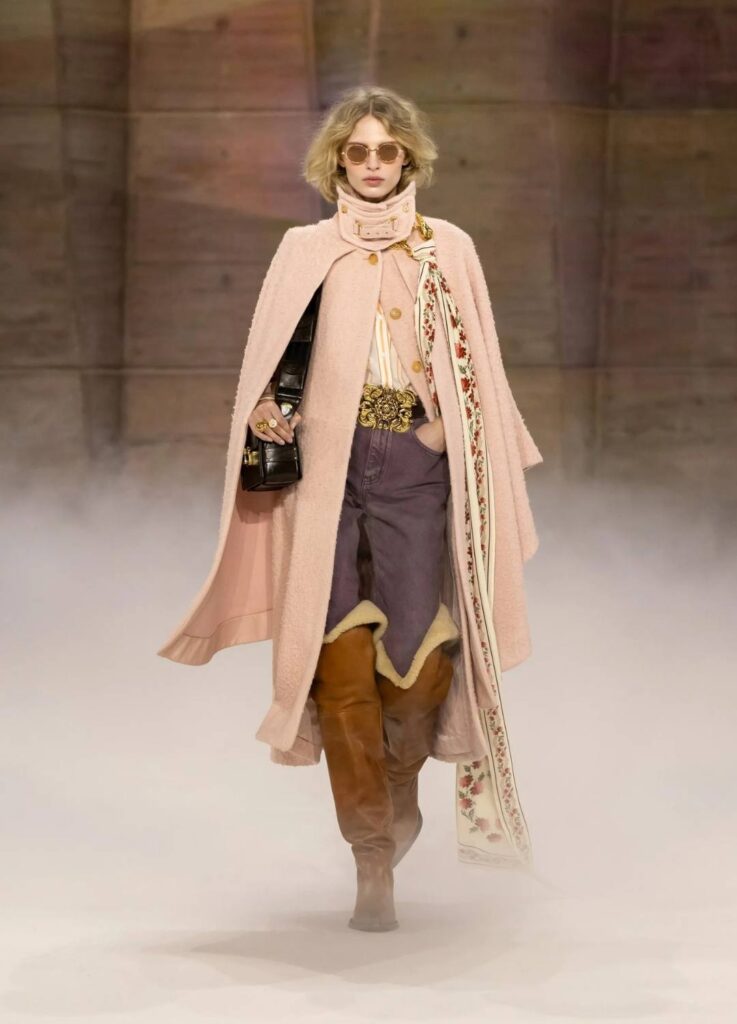
Loose, enveloping coats appear several times, reinforcing the sense of movement that defines the collection.
Industry Context
Within the broader fashion landscape, Chloé Fall/Winter 2026 collection arrives at a moment when romanticism is quietly returning to the runway.
After several seasons dominated by minimalism and utilitarian design, many houses are rediscovering decorative elements such as:
- ruffles
- lace
- draping
- embroidery
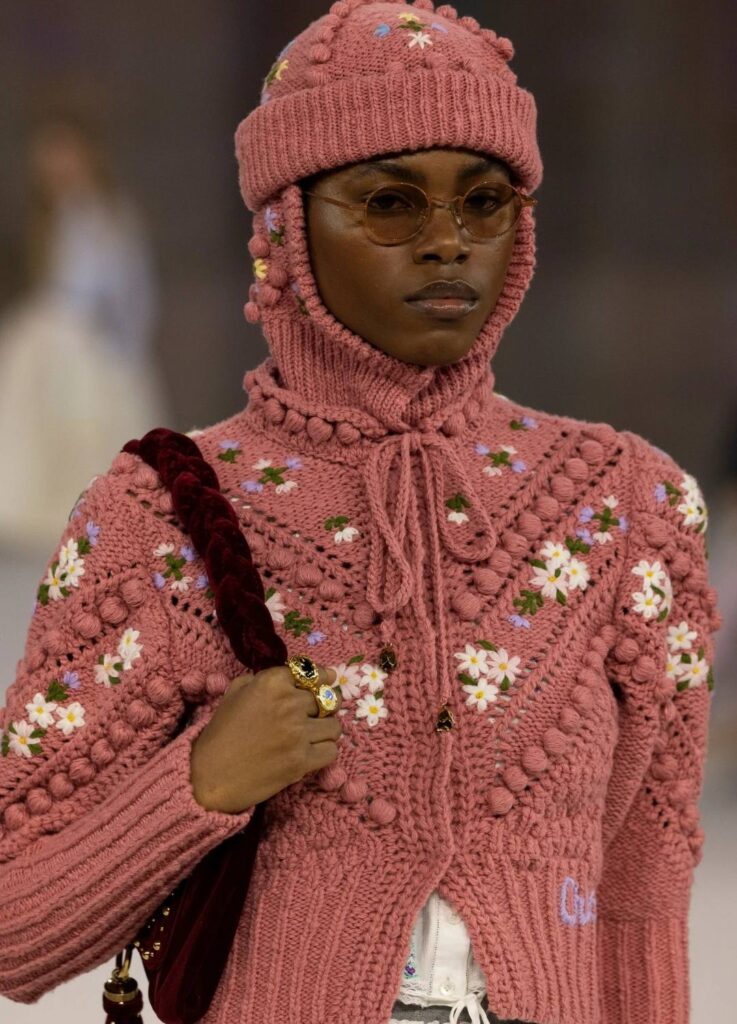
Brands like Valentino, Alexander McQueen, and even Gucci have recently leaned toward more expressive forms of femininity.
In this context, Chloé’s approach feels particularly authentic.
While other houses may be experimenting with romantic elements as a stylistic shift, Chloé has always held a natural claim to this aesthetic territory.
Kamali’s strategy therefore does not appear reactionary. Instead, it reads as a reactivation of the house’s historical DNA.
Commercial Perspective
From a commercial standpoint, the collection appears well calibrated.
Several categories stand out as likely retail performers:
- Outerwear
- Romantic blouses
- Leather trousers
- Tiered skirts
These pieces align with existing Chloé customer expectations while introducing subtle new variations.
The more dramatic prairie dresses may remain runway highlights rather than high-volume retail items. Yet they serve an important branding function, reinforcing the emotional narrative of the collection.
Final Assessment
Chloé Fall/Winter 2026 is not a collection driven by shock or radical reinvention.
Instead, it represents a quieter but equally significant achievement: the restoration of coherence.
By reconnecting the house with its romantic, bohemian roots while integrating contemporary styling strategies, Chemena Kamali offers a vision of Chloé that feels both familiar and forward-looking.
The collection suggests that the future of the house may not lie in abandoning its past, but in understanding it more deeply.
In a fashion industry often obsessed with novelty, this approach carries a certain confidence.
Sometimes the most radical move is simply remembering who you are.
All images referenced in this post are drawn from Vogue Runway.
[ Related Editorials ]