At Paris Fashion Week, Celine presented its Summer 2026 collection under the direction of Michael Rider—a season that read less as reinvention than as recalibration.
After the sharply linear, emotionally cool era shaped by Hedi Slimane, Rider’s first summer season felt like a deliberate act of restoration. What returned was not trend, but rhythm: the subtle cadence between straight lines and softened curves, between structure and feeling.
Scarves moved like breath. Tailored sets followed the body’s natural tempo. The noise of the previous resort collection—often described as scattered, even overly referential—was replaced by order. Not rigidity, but composure.
A Quiet Reset, Not a Rejection
This collection did not attempt to dismantle Slimane’s legacy. His disciplined silhouettes were still present. But where Slimane favored insistence and edge, Rider introduced modulation.
The runway, staged in the calm afternoon light of the Tuileries, mirrored this intent. The atmosphere was restrained, almost classical. Lines remained precise, yet they no longer felt sealed. Within the tailoring, there was room for movement—emotional, not just physical.
Several editors, including critics writing for Vogue, described the collection as a return to “Celine’s internal order,” noting how the clothes re-centered the house around wearability without sacrificing intellectual clarity.
Balance Restored: Straight Lines, Softened
Rider’s most significant intervention lay in balance.
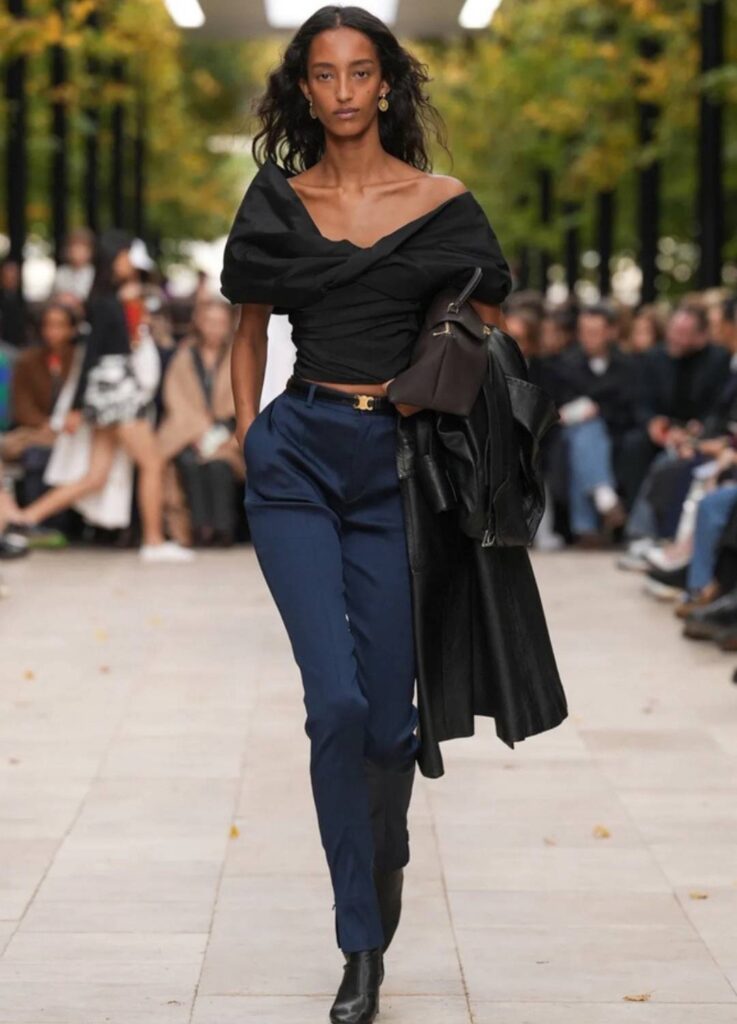
Jacket shoulders retained their geometry, but lapels curved gently along the neckline. Trousers flared subtly, never exaggerated. Shirts avoided overt emphasis on the waist, maintaining presence through proportion rather than contour.
The casual looseness and textural roughness seen in the previous resort season were replaced by density and refinement. Fabrics felt considered. Cuts were intentional. This was not nostalgia for Phoebe Philo’s era, nor continuation of Slimane’s rigidity, but a third position: structure with pulse.
Color as Controlled Emotion
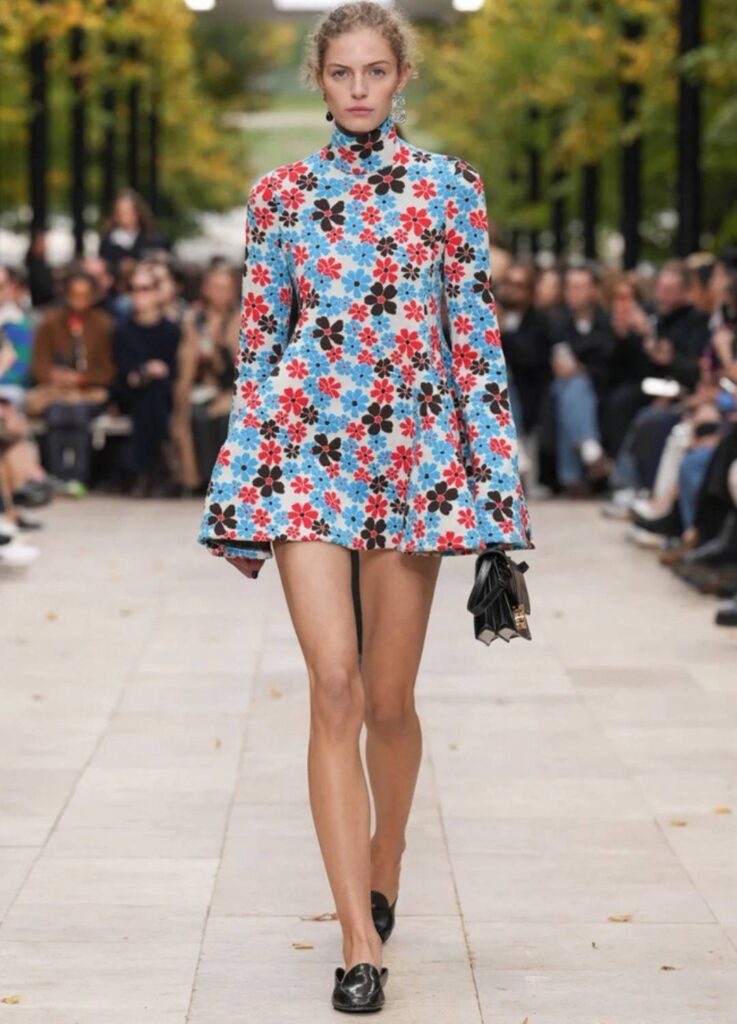
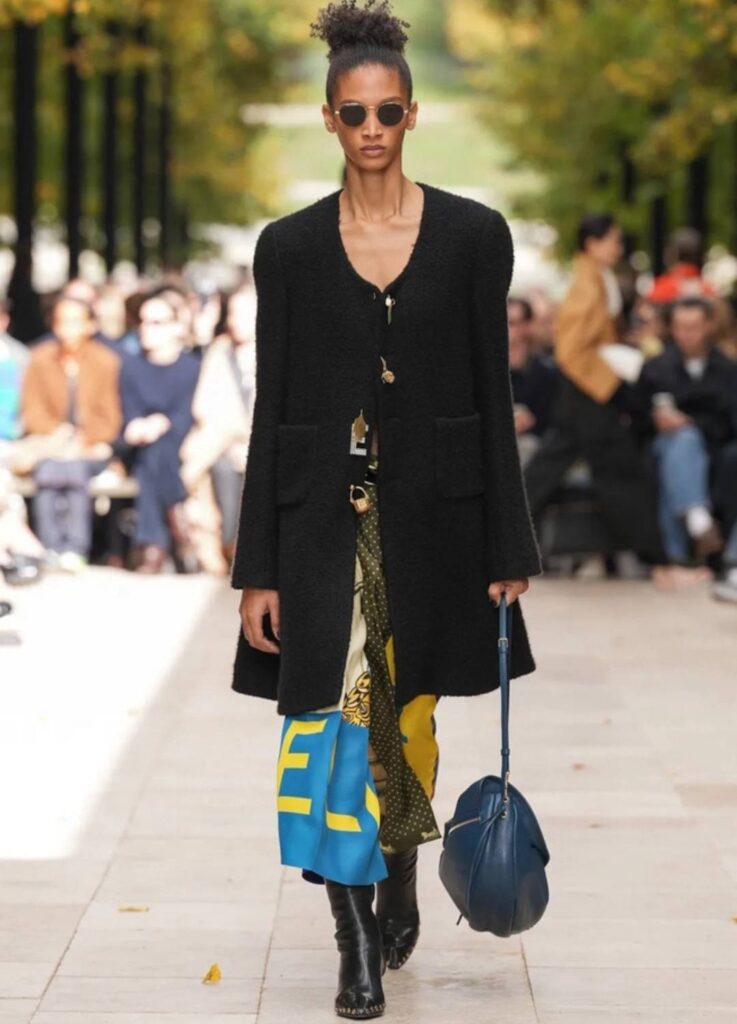
The palette revolved around black and navy, but was punctuated with royal blue, burgundy, ivory, and mustard yellow.
These colors did not function as decoration. Instead, they acted as stabilizers within the silhouette—adjusting emotional temperature without disrupting form. Against the calm authority of black dresses, mustard appeared not playful, but urban and grounded.
Compared to the taupe- and brown-heavy schemes of recent seasons, this was a clear shift. Rider’s approach to color suggested light radiating from a quiet center, rather than surface-level expression.
The Scarf: Extending the Line
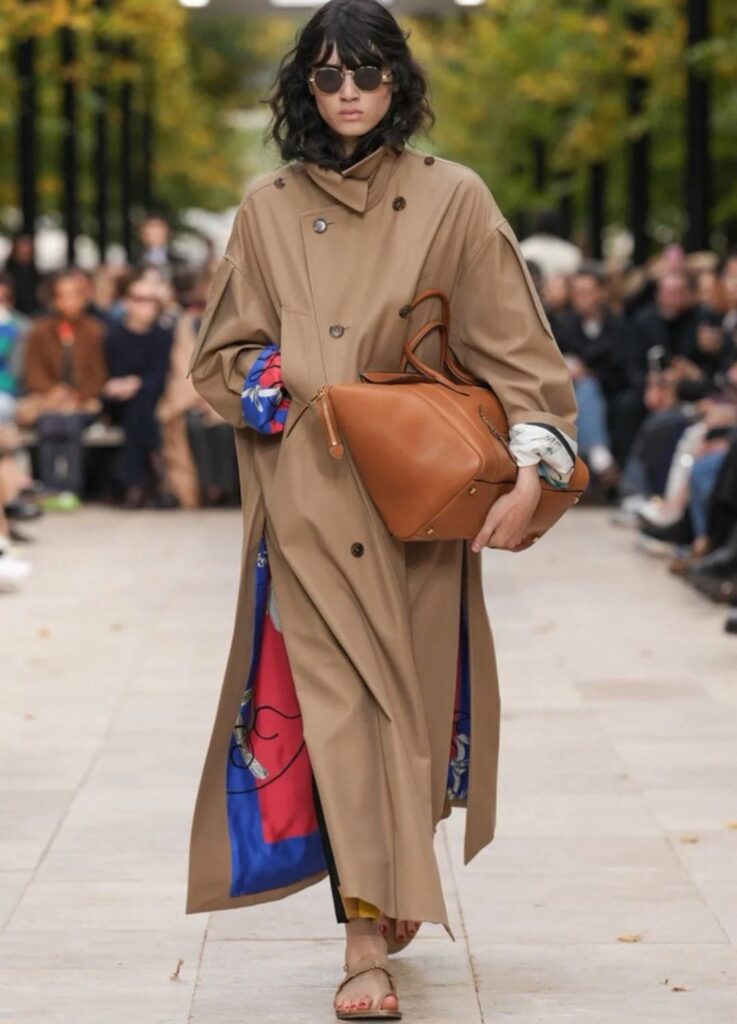
If one element defined the season’s visual language, it was the scarf.
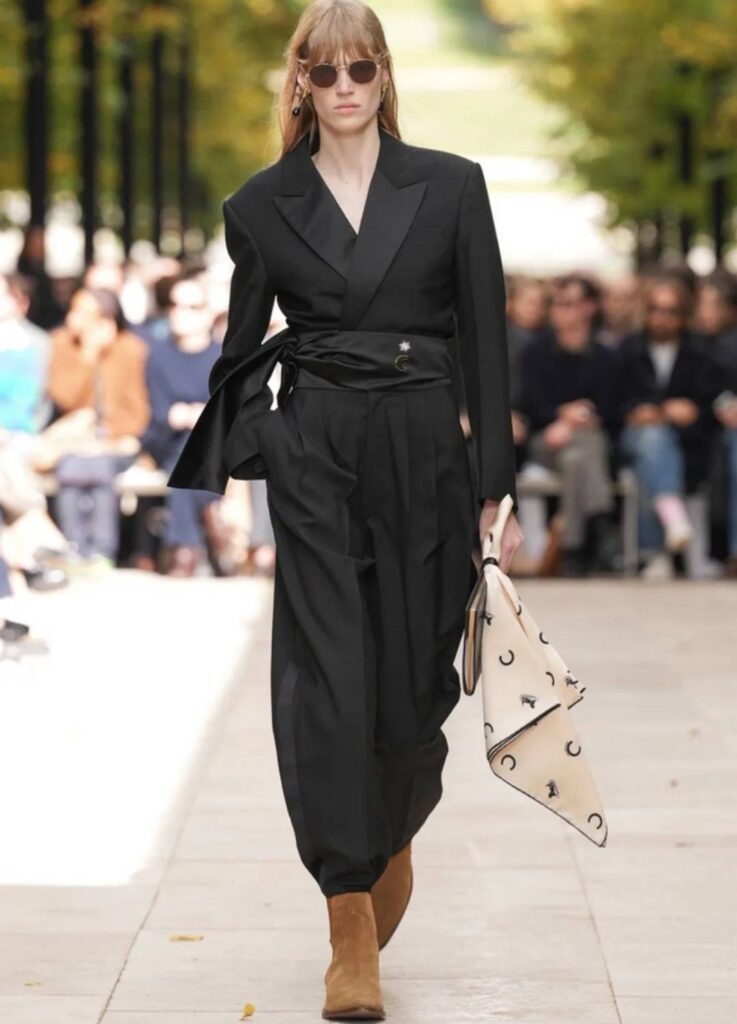
Rider treated it not as ornament, but as an extension of line. Draped along jacket fronts or held as a clutch, scarves softened structural tension while introducing rhythm.
A blue scarf against a white set conveyed urban coolness; a red scarf paired with a black dress introduced controlled heat. In each case, the scarf acted as connective tissue—linking Slimane’s austere minimalism with a newly restored sense of emotional afterimage.
This, perhaps more than any silhouette, marked Rider’s Celine as a living line rather than a fixed one.
Seven Defining Looks
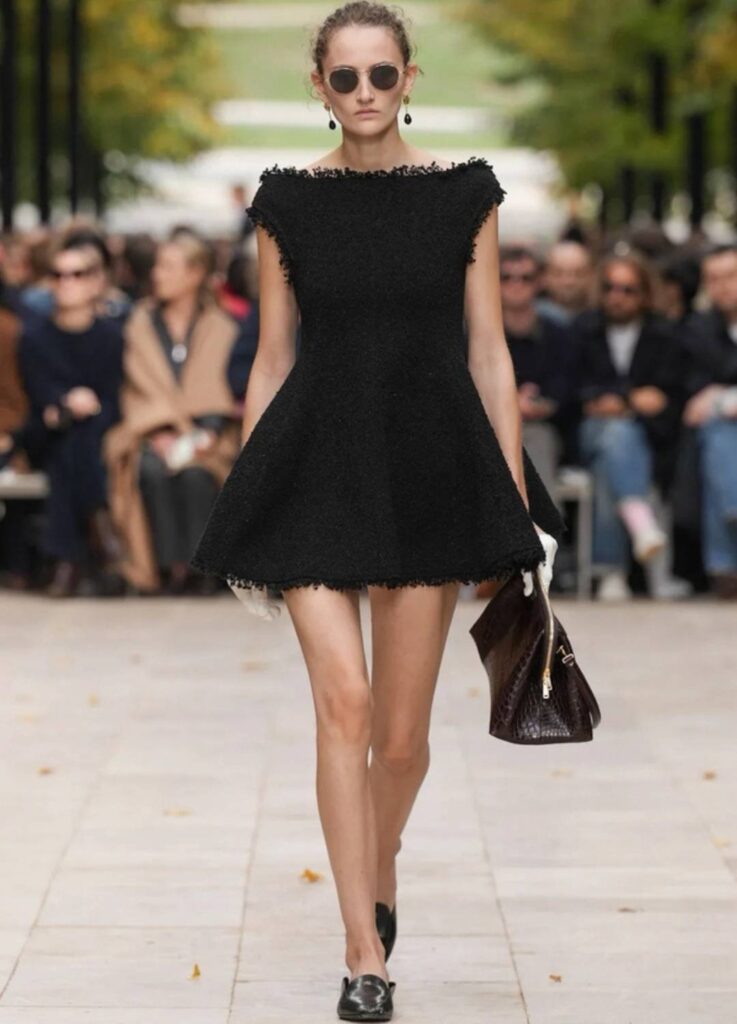
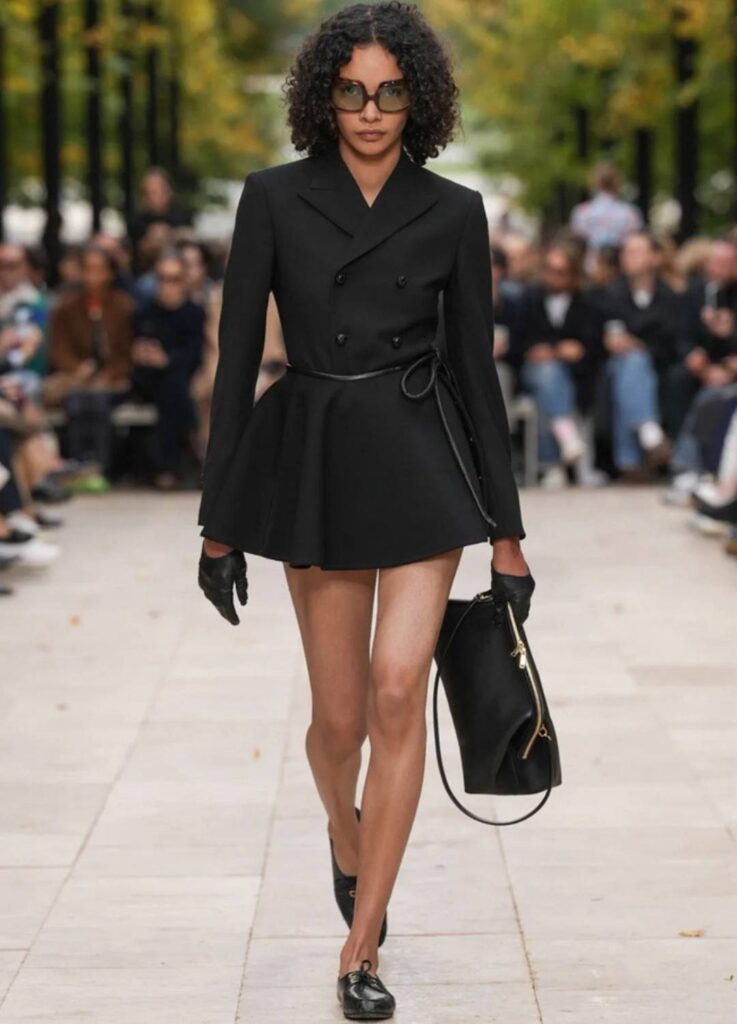
1. Black Mini Dress
The opening statement. Short in length, disciplined in structure. Black here read not as dominance, but as composure—tension held through restraint.
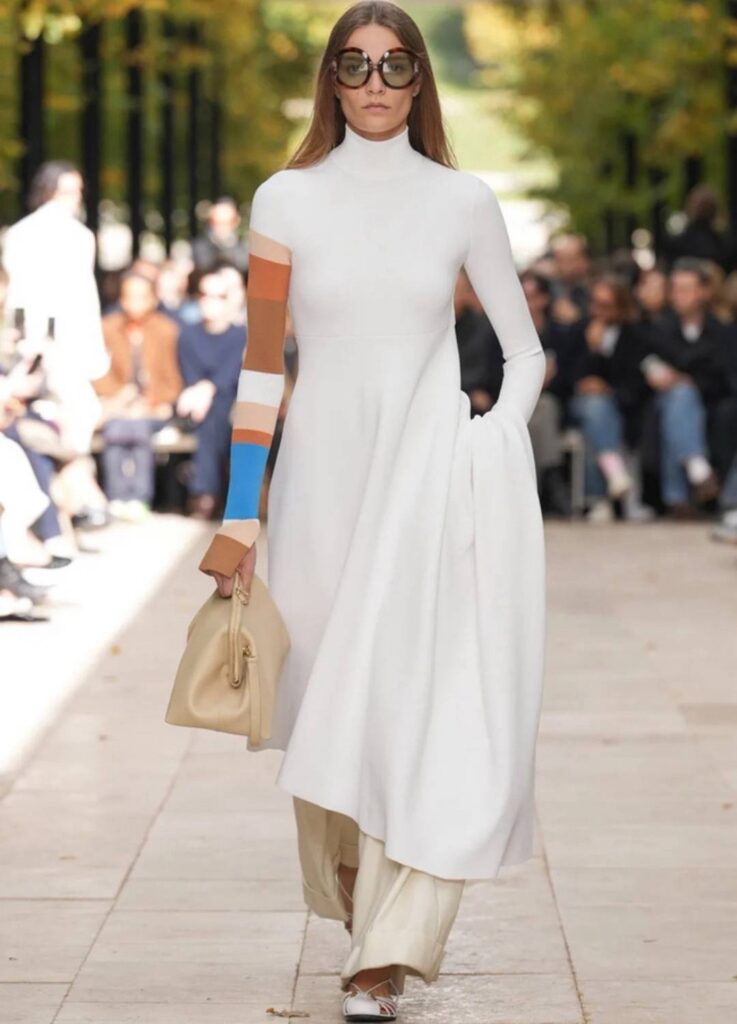
2. White Dress with Soft Sleeves
Fluid sleeves and subtle gathering introduced movement without instability. A clear evolution of Slimane-era tailoring into something more humane.
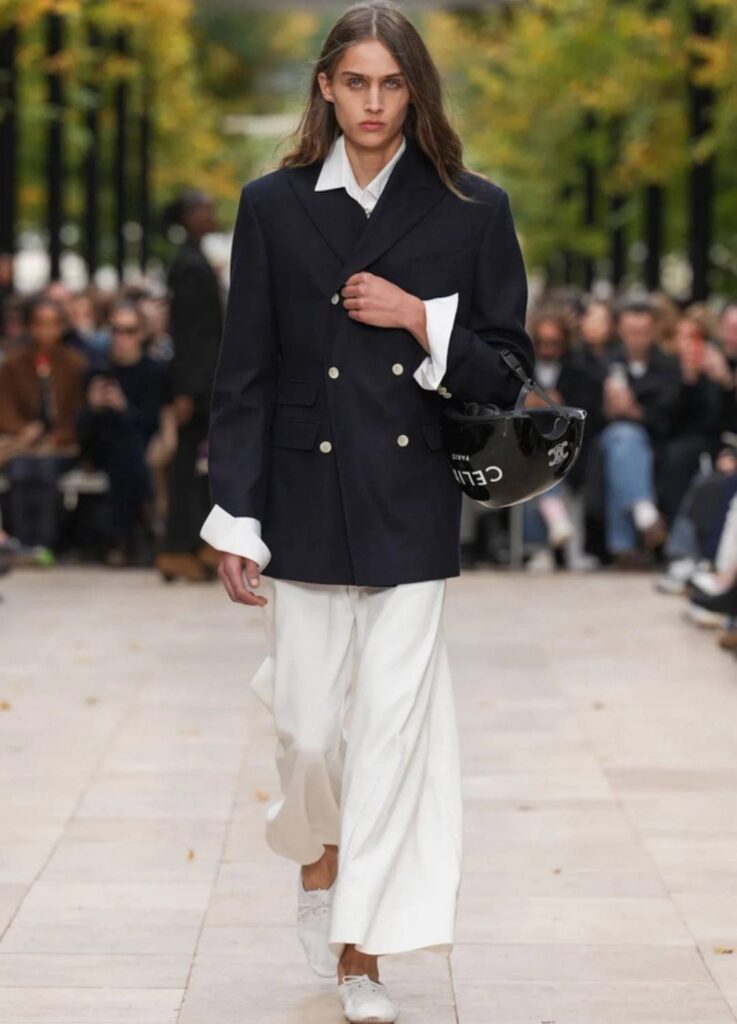
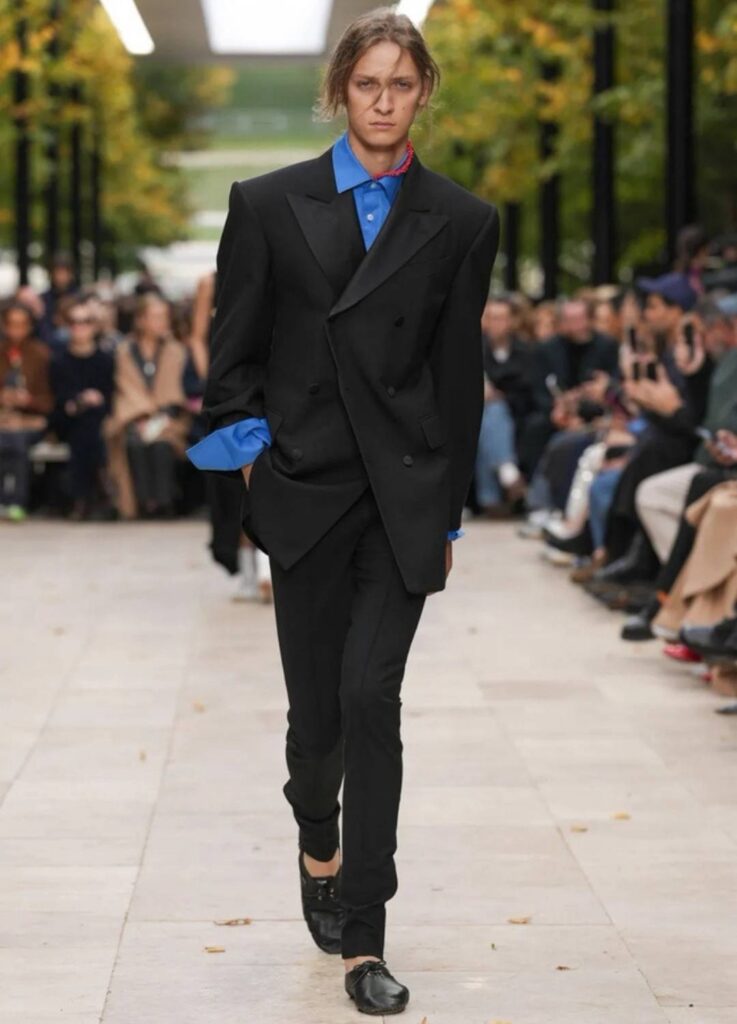
3. Navy Double-Breasted Jacket with White Trousers
The collection’s signature silhouette. Menswear structure, refined through proportion. A precise portrait of the “modern Parisian woman” Rider seems intent on defining.
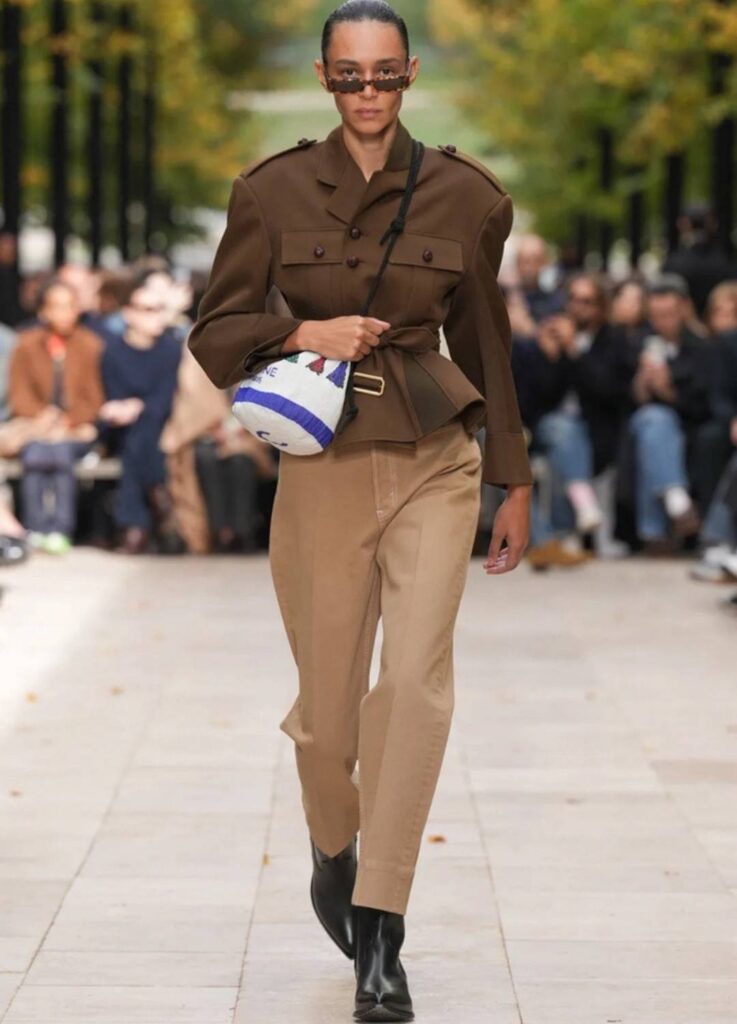
4. Brown Shirt Jacket with Beige Trousers
Echoing resort codes, but resolved with far greater clarity. Emotion emerged through tonal balance rather than contrast.
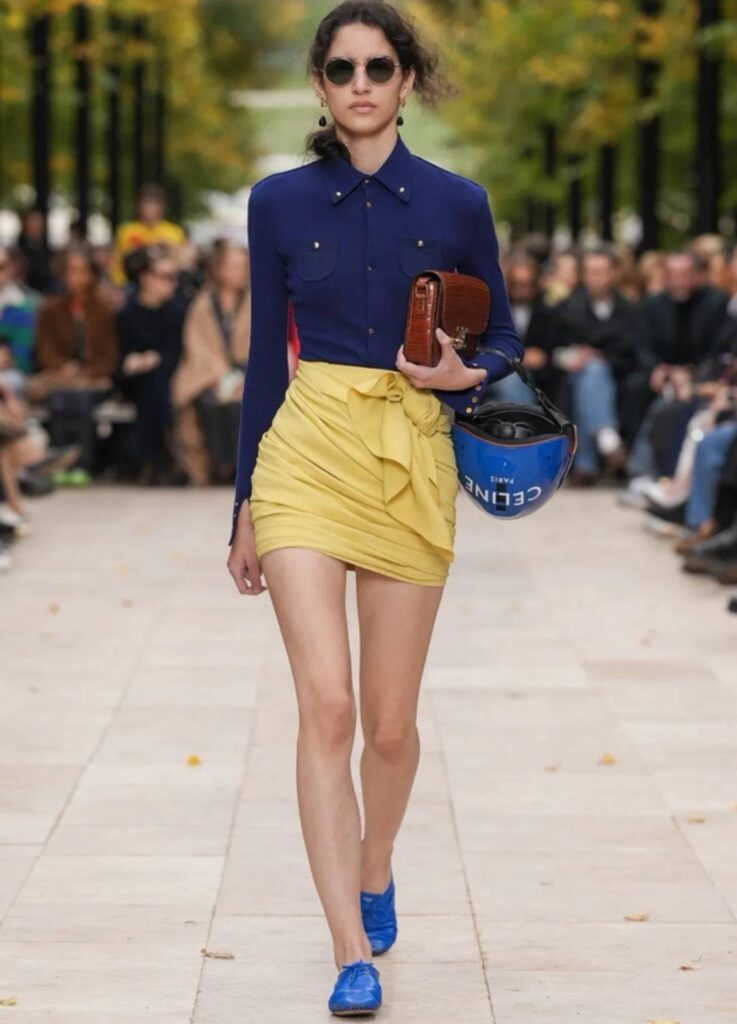
5. Dark Navy Top with Mustard Skirt
The emotional core of the season. Rational restraint met romantic realism. Color breathed rather than shouted.
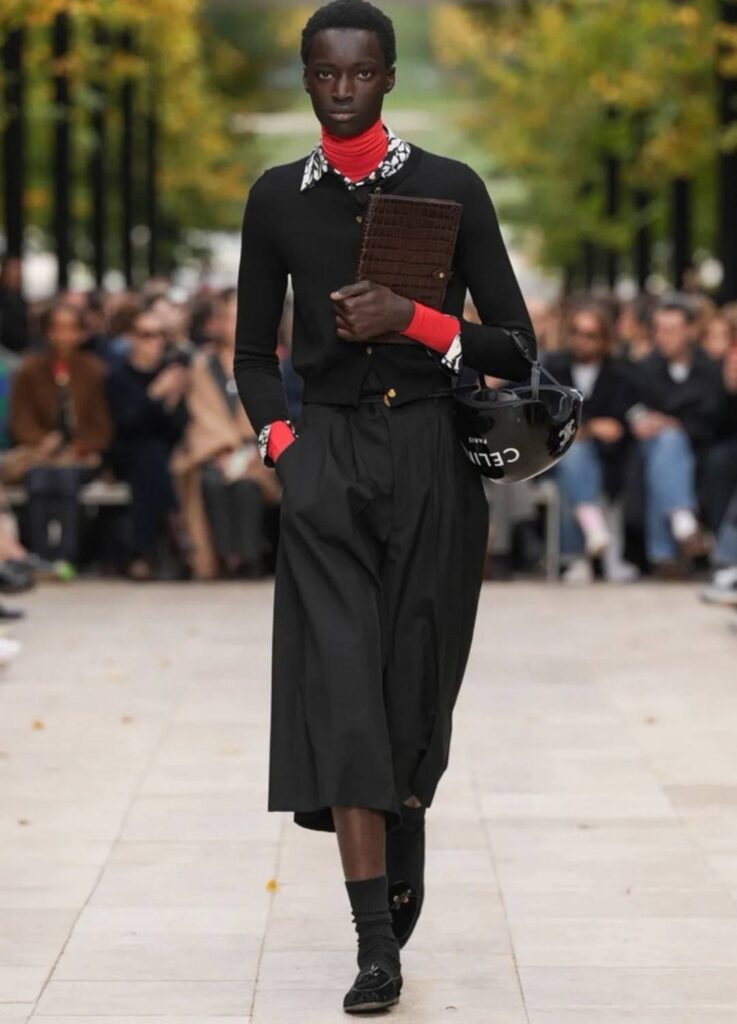
6. Black Knit Set with Red High Neck
One of the most striking moments. Black established order; red introduced temperature without disruption. Where Slimane’s black spoke of distance, Rider’s spoke of equilibrium.
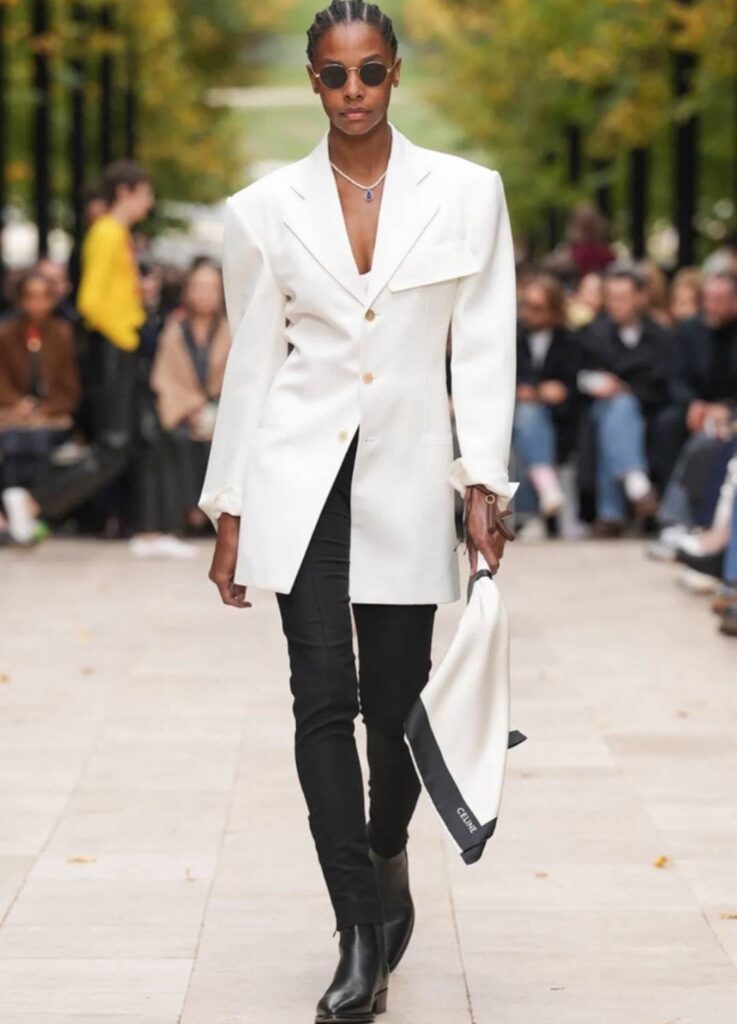
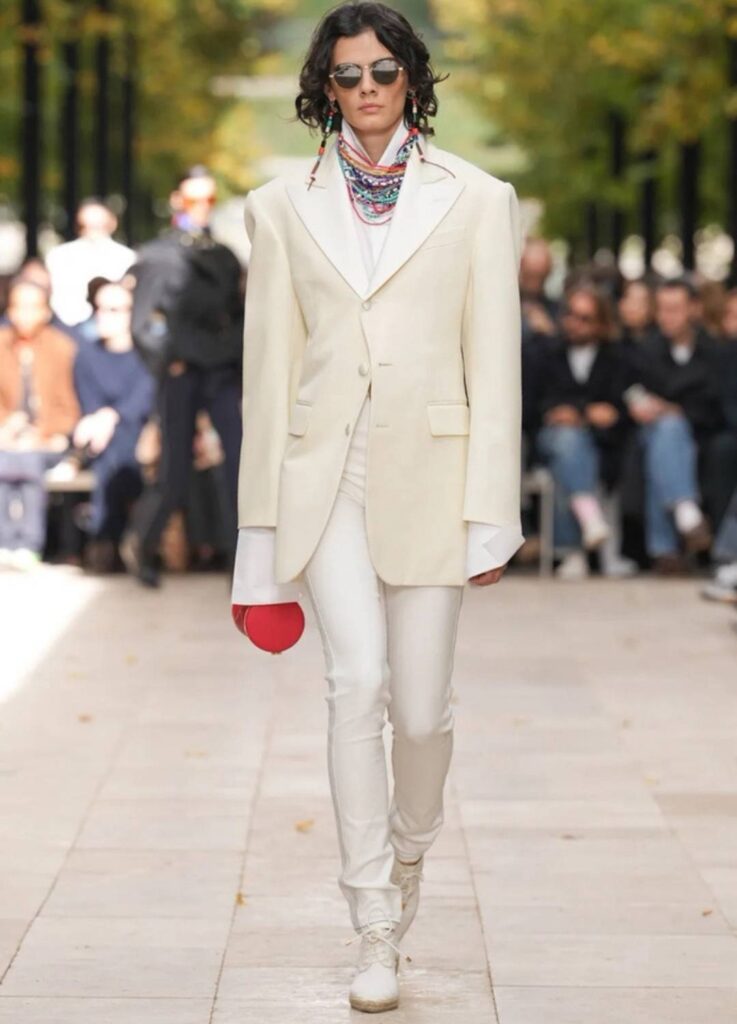
7. Ivory Jacket with White Scarf Clutch
The collection’s quiet climax. Traditional structure softened by gesture. The scarf, held rather than worn, visualized emotional space in motion.
Structural Comparison: After Slimane
Slimane’s Celine was defined by memorability—sharp, insistent lines that left little room for ease. Rider’s Celine, by contrast, is defined by movement.
Rather than replacing discipline, Rider reorganizes it. Fabric texture and bodily rhythm are allowed to converse. This shift signals the end of what many critics have described as Celine’s period of “rock-chic isolation.”
As WWD observed, the brand now appears to be reclaiming an accessible elegance—one that does not dilute sophistication, but redistributes it.
Critical Reception
- Vogue Singapore highlighted Rider’s ability to merge Philo-era precision with Slimane-era boldness.
- ELLE described the show as one where accessories and styling “quietly took the throne,” emphasizing approachability without loss of luxury.
- CR Fashion Book noted the controlled revival of ’80s references, carefully balanced rather than overstated.
Public response was more divided. Some fashion forums described the collection as an unresolved hybrid—too many ideas, not enough singular imagery. Others welcomed the shift, reading it as the necessary stabilization following years of visual extremity.
Closing Assessment
Michael Rider’s Celine now carries emotional temperature.
Not heat, not spectacle—but a form of warmth that lingers. His first summer season did not repeat the past. It reorganized it.
Celine is no longer defined by a single era or personality.
Instead, it speaks through refinement of line, restoration of feeling, and rhythm within restraint.
That triad—structure, emotion, space—now forms the grammar of Celine’s next chapter.
And it is, quietly, persuasive.
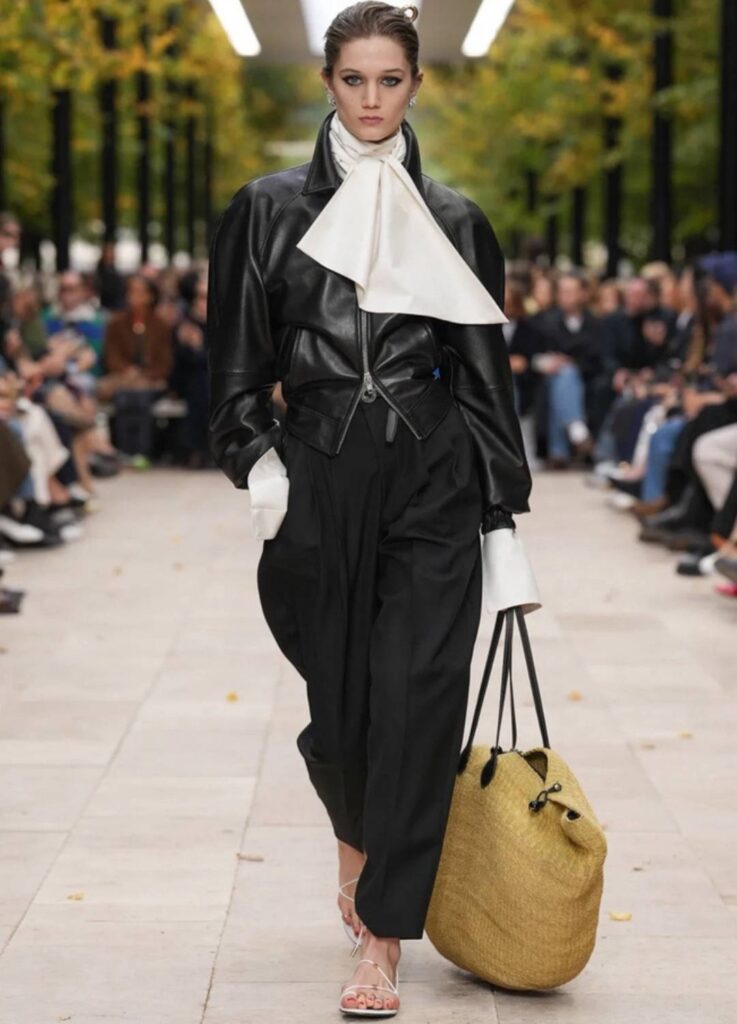
All images referenced in this post are drawn from Vogue Runway.
[ Related Editorials ]