Reading Le Palmier through Simon Porte Jacquemus’s return to the Musée Picasso
Over the past decade, Simon Porte Jacquemus has been defined by images that traveled faster than clothes. Lavender fields in Provence. Endless wheat paths. Salt-white deserts. Runways staged as postcards. Jacquemus became a brand you recognized before you necessarily understood.
Fall 2026 marks a clear pivot. This was not a collection built for virality. It was built for memory.
The show was staged at the Musée Picasso in Paris — Jacquemus’s second appearance at the venue, and the designer was direct about what the return meant. I’m back at the Musée Picasso. Where everything started for me, somehow, Jacquemus said in pre-show interviews. Where I launched the Chiquito in 2017. That show changed my life and, in a way, the history of Jacquemus. The 2017 collection introduced the Chiquito mini-bag, which Vogue would later call the viral icon that reshaped It-bag scale and humor. The return wasn’t sentimental. It was strategic — a deliberate marker of authorship at a moment when the brand is being repositioned for longer-term staying power.
The collection title — Le Palmier (the palm tree) — came from Jacquemus’s daughter and her palm-tree ponytail, the household detail that became the show’s organizing image. Guests received an oversized black comb on a cream card titled “Le Palmier,” formatted like a tiny etiquette manual: a numbered method for achieving the palmier look — head tipped forward, hair released, combed, gathered high, shaped into vertical volume, then adjusted without excess. The closing line landed somewhere between a punchline and a dress code: a correct Palmier is expected upon arrival.
From Image-Driven Fashion to Structural Confidence
The most striking shift this season is restraint.
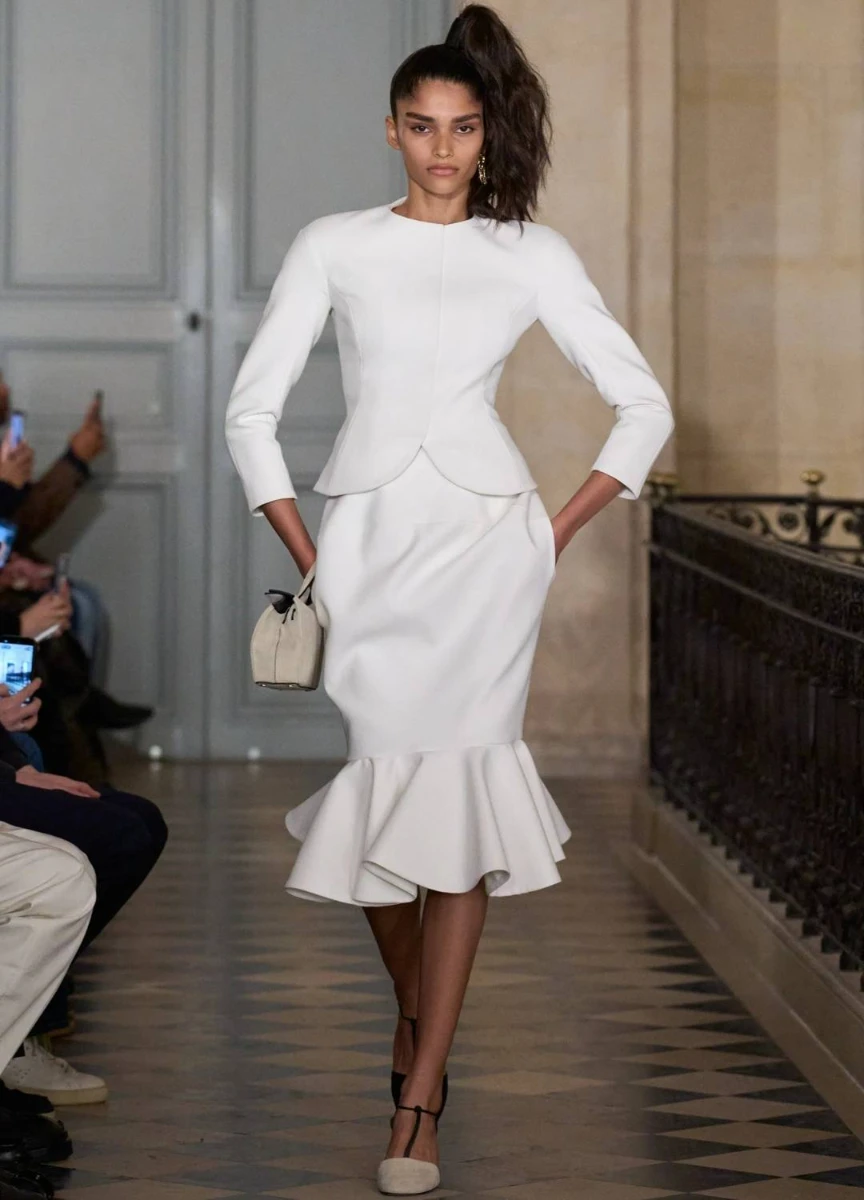
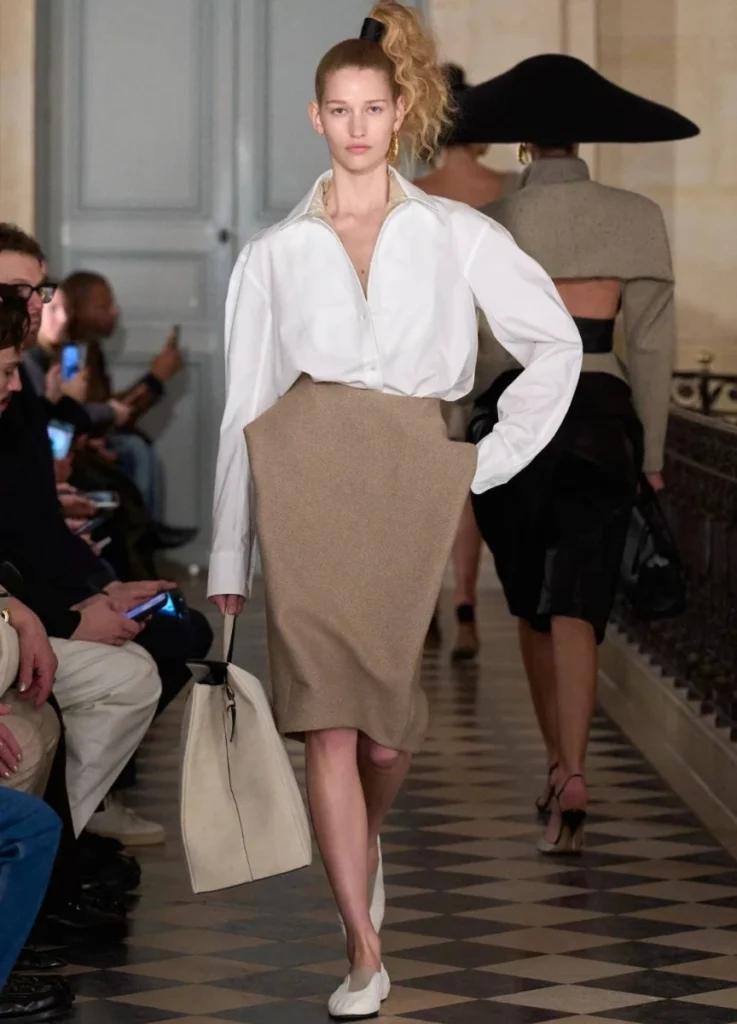
Silhouettes are pared back, but never emptied. Jackets are sharply tailored yet slightly displaced — lapels softened, shoulders rounded, waists drawn inward with intent rather than force. Dresses follow the body closely, not to provoke, but to clarify.
A recurring sense of garments being gently twisted runs through the collection. Seams that appear to slip. Hems that curve unexpectedly. Necklines that refuse perfect symmetry. Yet nothing collapses. The tension is controlled, architectural.
Jacquemus is moving away from the idea of exaggeration toward something more difficult — proportion.
A Dialogue with the Past, Without Costume
The season is framed as a three-part time capsule: 1950s couture shape, 1990s sensuality, and satirical 1980s humor. References to mid-century couture and the 1980s surface throughout the collection, but never as direct quotation.
Skirts flare subtly at the hips, recalling basque constructions without reproducing them. Jackets abandon collars entirely, exposing clean neckline geometry. Hourglass dresses appear in velvet, knit, and liquid jersey — not as nostalgia, but as discipline.
The result isn’t retro. It’s temporal. These clothes don’t belong to a specific decade. They belong to wearing.
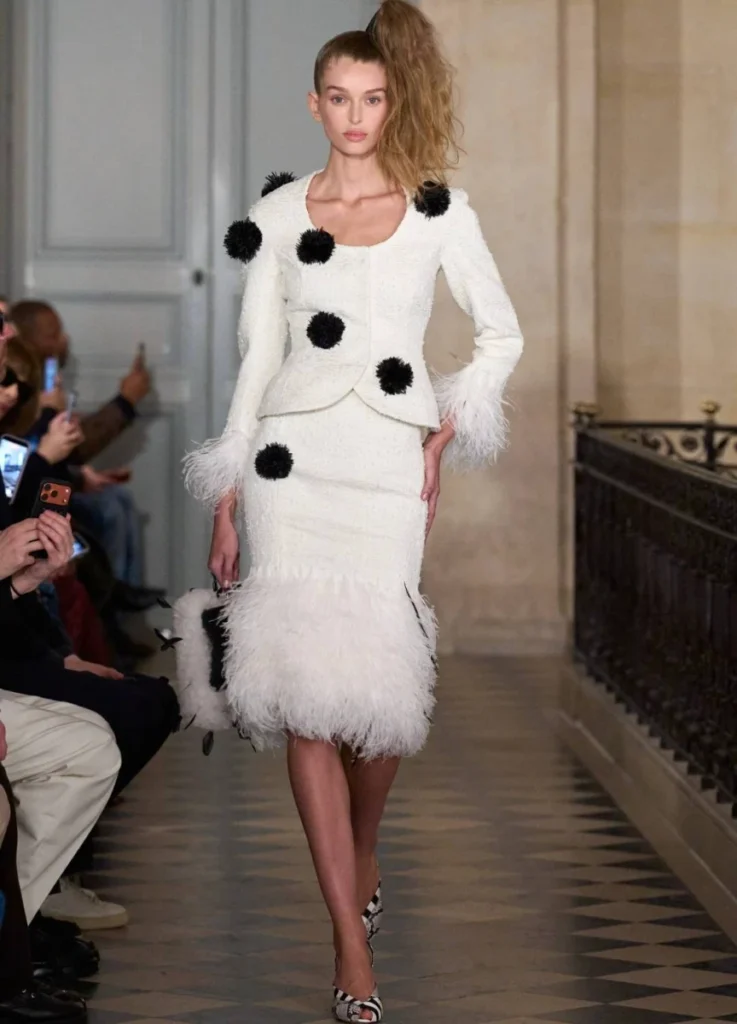
Pablo Picasso’s daughter Paloma surfaces as another layer in the reference architecture. The Impression identified her presence directly — unapologetic sex appeal, striking features, bold red lip, with the wide-brimmed hats reading as a callback to a 1980 Roxanne Lowit photograph of the jewelry designer. The closing asymmetric chest-revealing dress nodded to a 1983 Helmut Newton portrait. Whether those references add up to insight or to a season leaning too heavily on archive recognition is part of where critical opinion divided.
A Quieter Femininity
Femininity reads quieter this season. Less exposure, more tension.
Velvet dresses that move with the body. Silhouettes that loosen only at the waist. Fringe and texture that come alive only in motion.
What stands out is how the bust line, shoulder, and hip line are handled. Neither emphasized nor concealed. The lines stay where they need to. Restraint of this kind comes from confidence rather than from withholding. Jacquemus is no longer asking how to make women look. He’s asking how women stand.
Menswear — Soft Authority
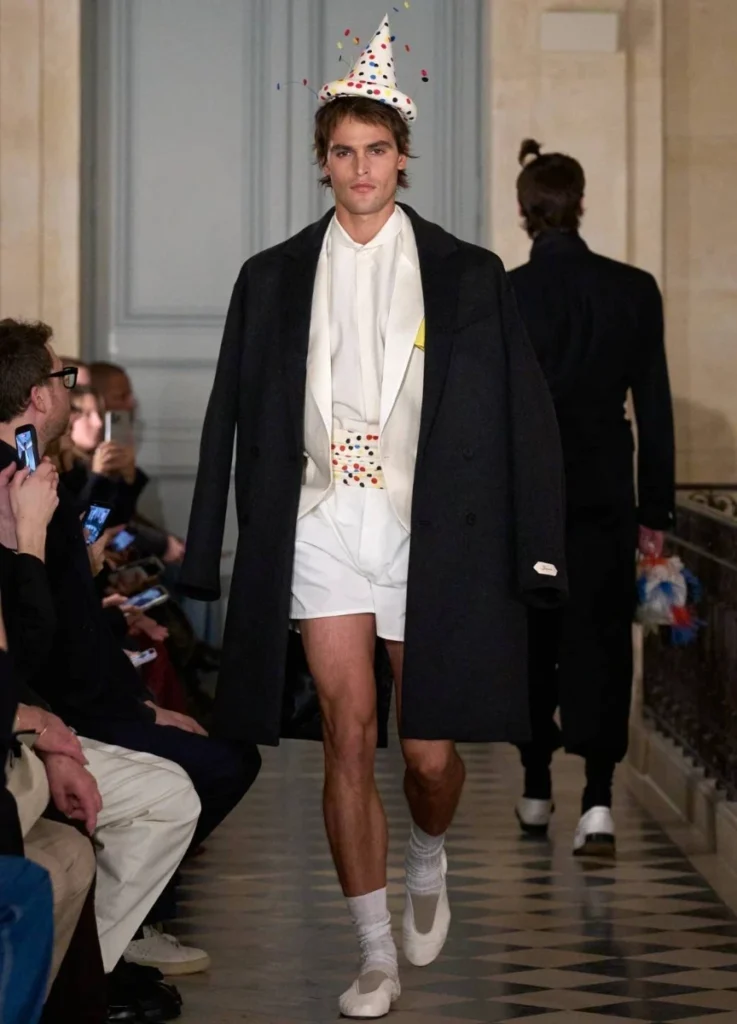
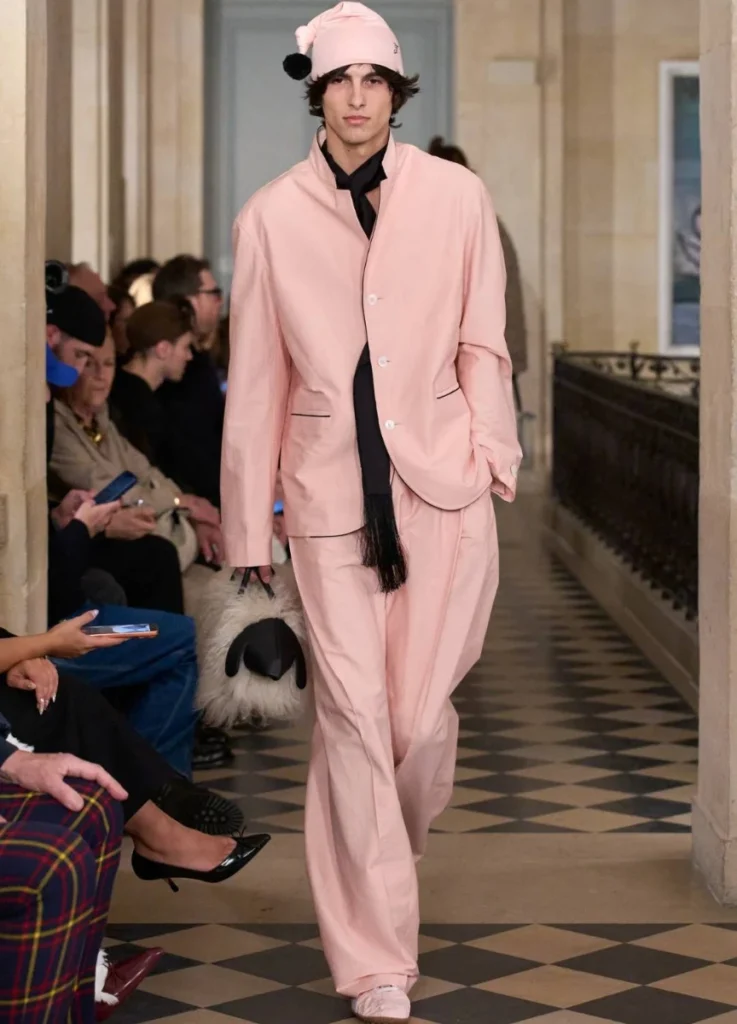
Menswear plays an unusually substantial role this season. Tailored coats over abbreviated shorts. Tuxedo jackets paired with bare legs. Sculpted blazers softened by knit underlayers. The thinking through masculinity mirrors the women’s line — whimsy held in check by fit.
Men’s RTW now equals women’s RTW in the brand’s commercial mix, driven by pants, shirts, and tailoring. The shift gives Fall 2026’s menswear a different weight than in earlier seasons. It’s no longer the playful counterpoint to the womenswear. It carries equal commercial gravity.
The menswear was uneven — that was WWD’s Joelle Diderich, flagging a suit in Play-doh colors — but she praised what worked: suede utility jackets, a mint green suit, boxer shirts paired with a cummerbund and opera coat. The Impression echoed the praise on the same pieces: flashes of brilliance.
Color as Mood, Not Branding
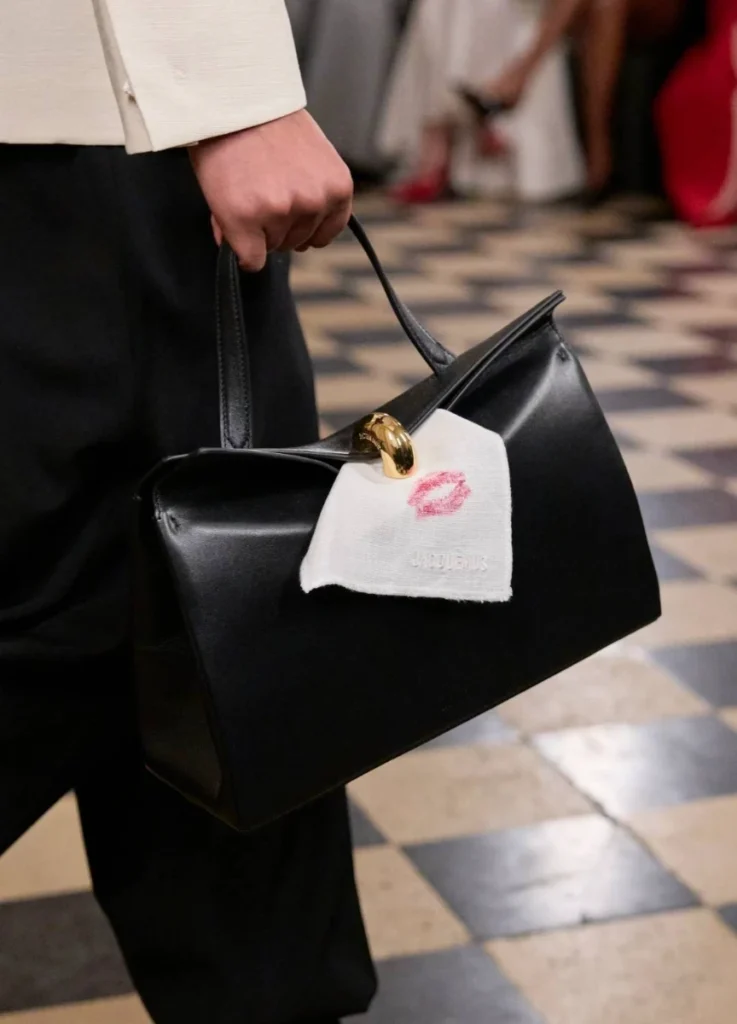
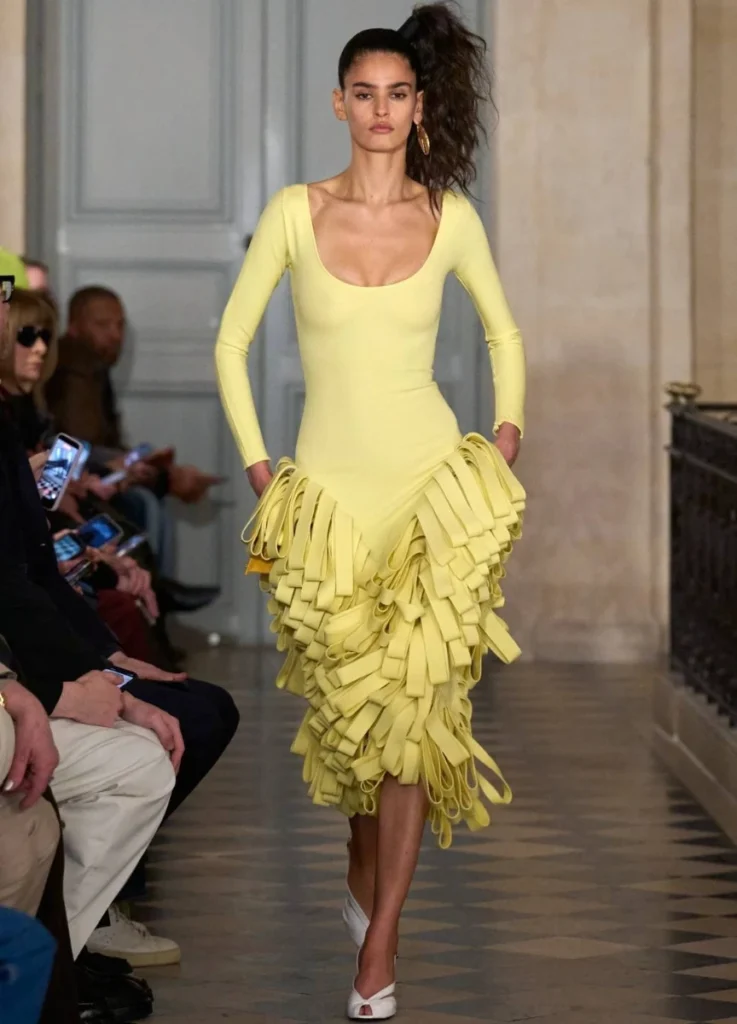
The palette moves deliberately — black, ivory, sand, butter yellow, and flashes of red. Even brighter hues — turquoise, mint, lemon — are tempered by silhouette. Color no longer shouts here. It resonates.
Jacquemus has often been associated with color as identity. Fall 2026 lets color recede into mood.
Red doesn’t insist on sensuality — it sharpens silhouette. Yellow doesn’t perform brightness — it reveals structure. The translation across both is consistent: color as proportional discipline rather than as branding signal.
Le Palmier — The Bag
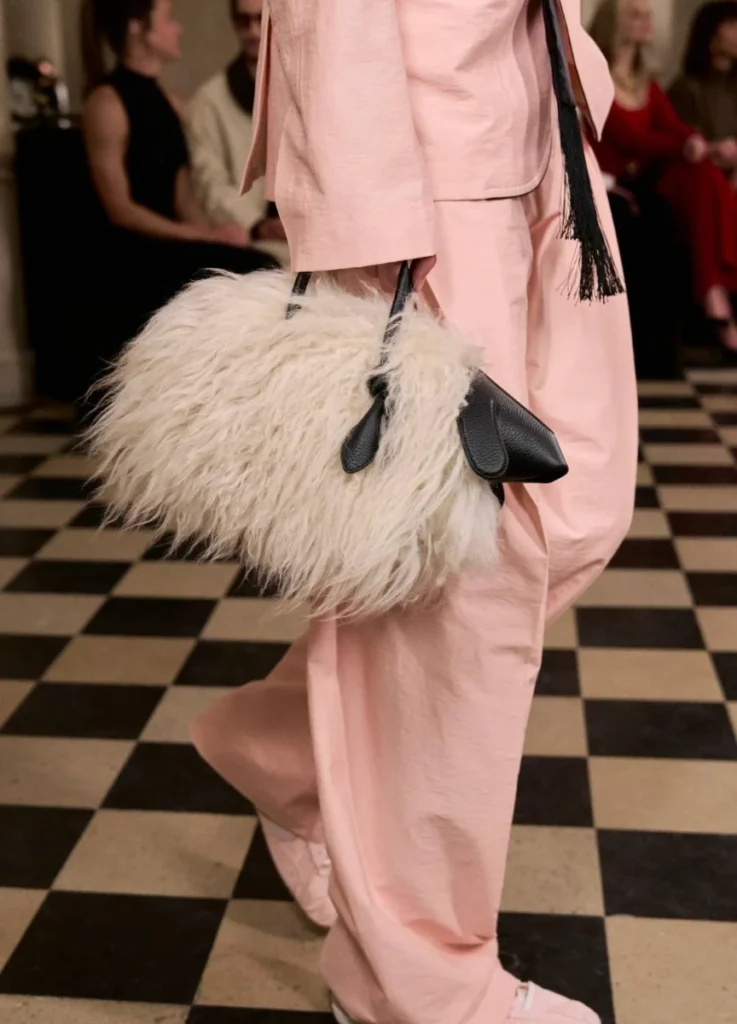
The bag introduced this season — also called Le Palmier — offers a clear view into how Jacquemus is recalibrating its accessory language.
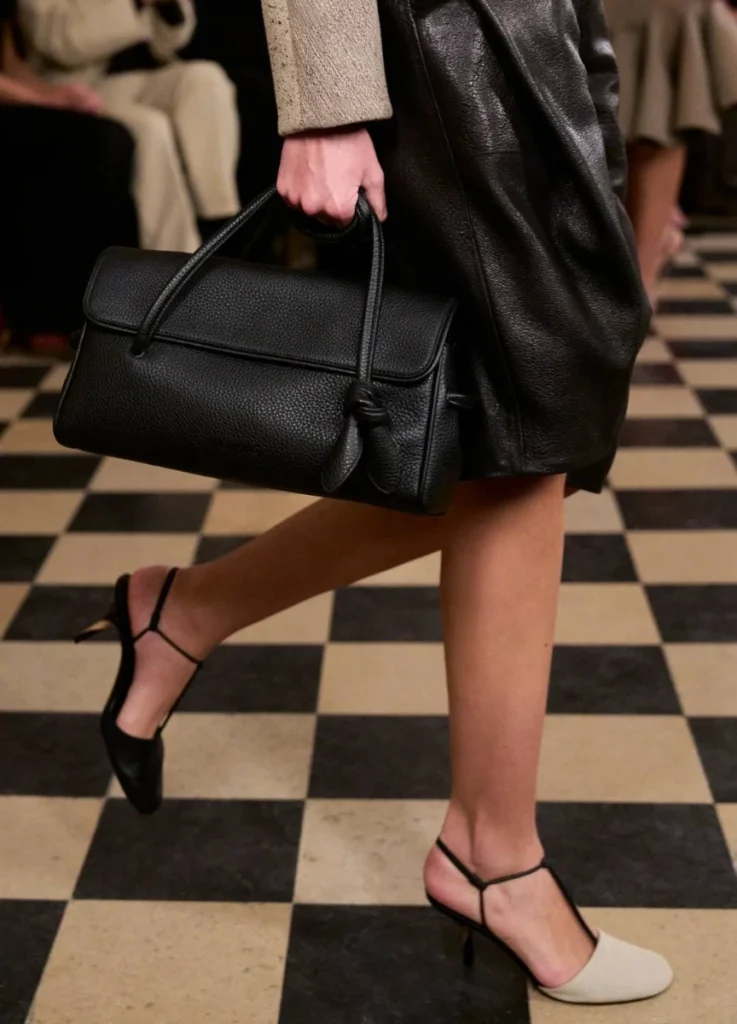
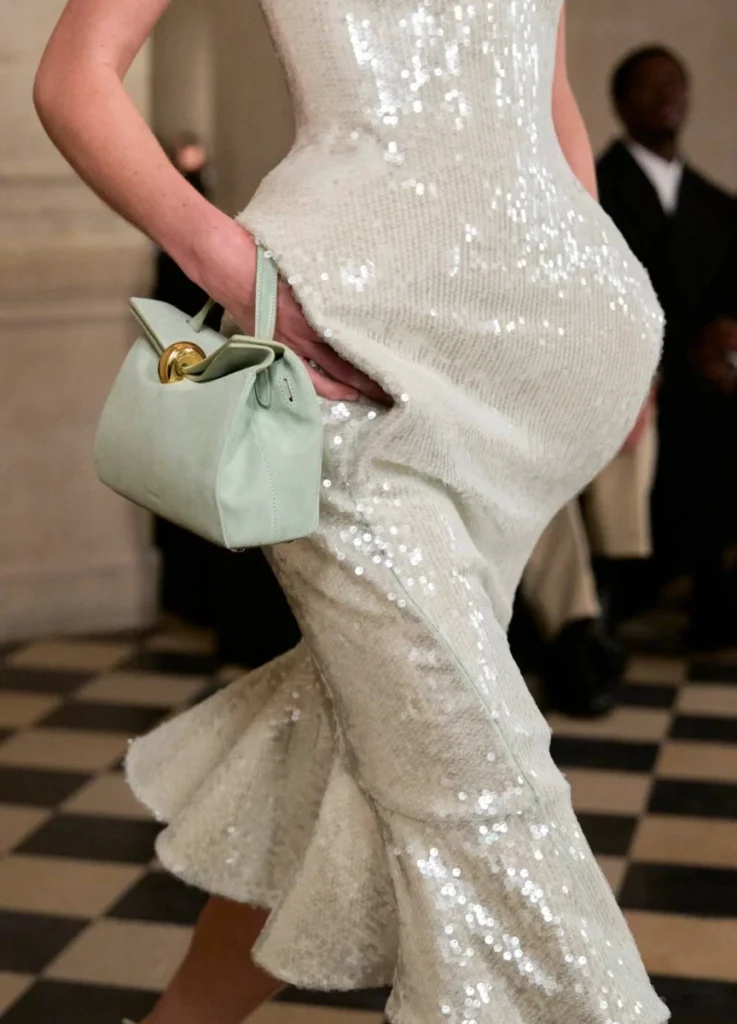
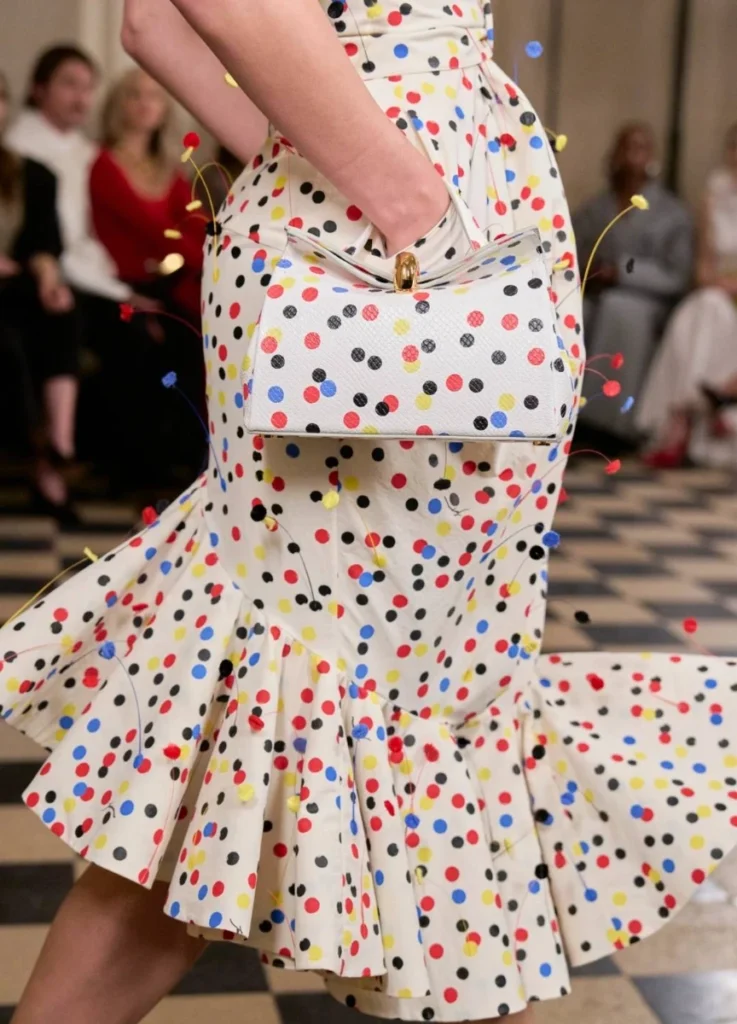
The piece reads as minimal. A clean, almost architectural body. A single curved handle. A discreet gold closure placed at the center. There’s no excess detail competing for attention. The restraint is deliberate. The bag is built around proportion rather than decoration.
It sits in a different register than the Chiquito. Where Chiquito was about scale-as-joke (the absurd miniaturization that made it viral), Le Palmier proposes something quieter — proportion as the design subject itself.
A Horizontal Proportion That Reframes the Body
What defines Le Palmier is its width.
Unlike the compact, vertical mini bags that once defined Jacquemus, this silhouette extends horizontally. The proportion is elongated, almost stretched, shifting how the bag sits against the body.
It doesn’t drop downward in the expected way. It moves outward, creating a lateral line across the torso.
On a smaller frame, this becomes particularly noticeable. Carried close, the bag stabilizes the look. It feels contained. When held slightly away, the structure becomes more assertive — almost reading as an object placed against the body rather than something that follows it.
The Handle as a Controlled Gesture
The handle introduces a more subtle constraint.
It sits between categories — not long enough for a relaxed shoulder carry, yet not short enough to read purely as a top-handle. This creates a specific way of holding the bag.
It’s either carried with intention or secured tightly under the arm. There’s little neutrality in how it behaves.
In use, it becomes part of the design language. The bag doesn’t disappear into movement. It asks to be positioned.
Material and Surface — Softness vs Structure
There is also a broader question of longevity.
The silhouette is distinctive. Its identity is tied closely to proportion rather than established codes. This gives it clarity now, but also makes it more sensitive to shifts in taste.
Whether it evolves into a lasting shape or remains specific to this moment will depend on how it is carried forward in future collections.
A Bag That Reflects the Collection’s Direction
Within the context of this collection, “Le Palmier” feels aligned.
The bag reflects the broader movement—cleaner lines, controlled volume, and a step away from overt playfulness toward something more resolved.
It does not attempt to redefine the category. It refines a position.
And in this season, that level of control feels intentional.
Five Key Looks That Define the Collection
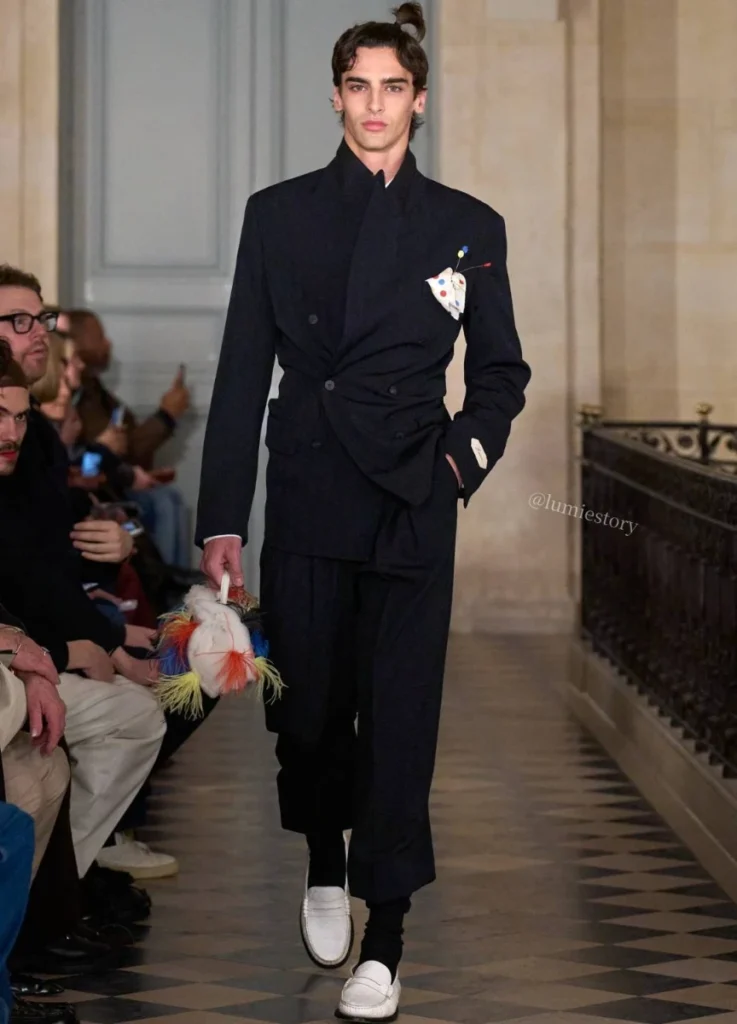
- The Black Tailored Suit with White Sneakers
A precise, almost severe silhouette undone by casual footwear. Authority without stiffness.
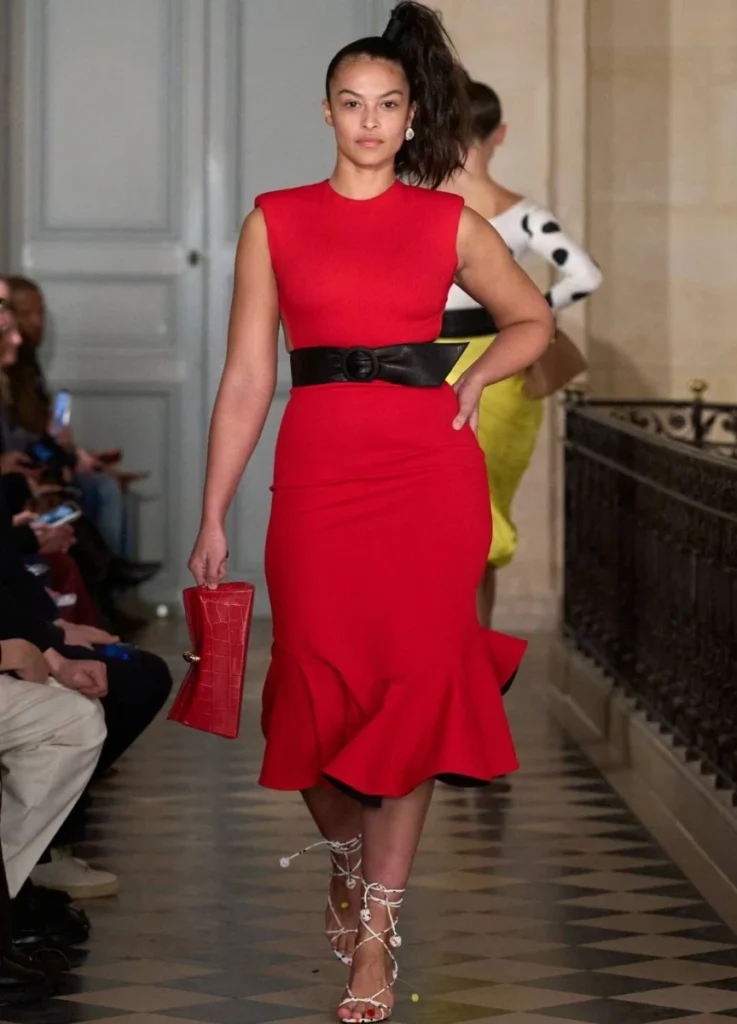
- The Red Column Dress with Cinched Waist. A study in restraint — saturated color, minimal cut, maximum presence.
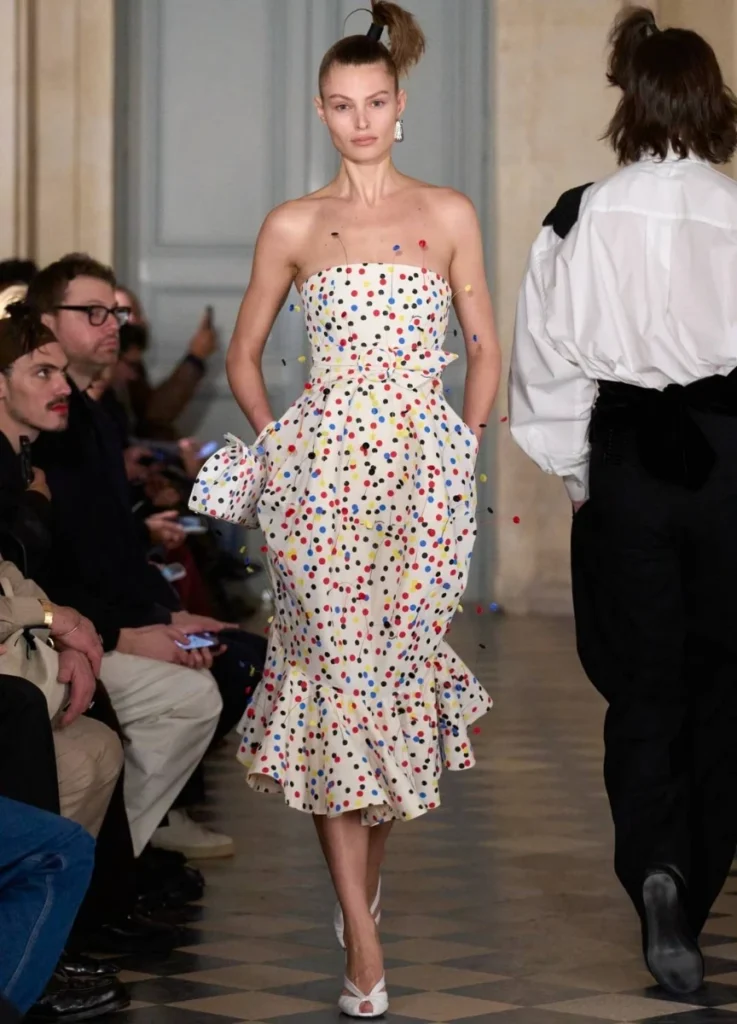
- The Polka-Dot Draped Dress. Jacquemus’s humor, finally disciplined by proportion.
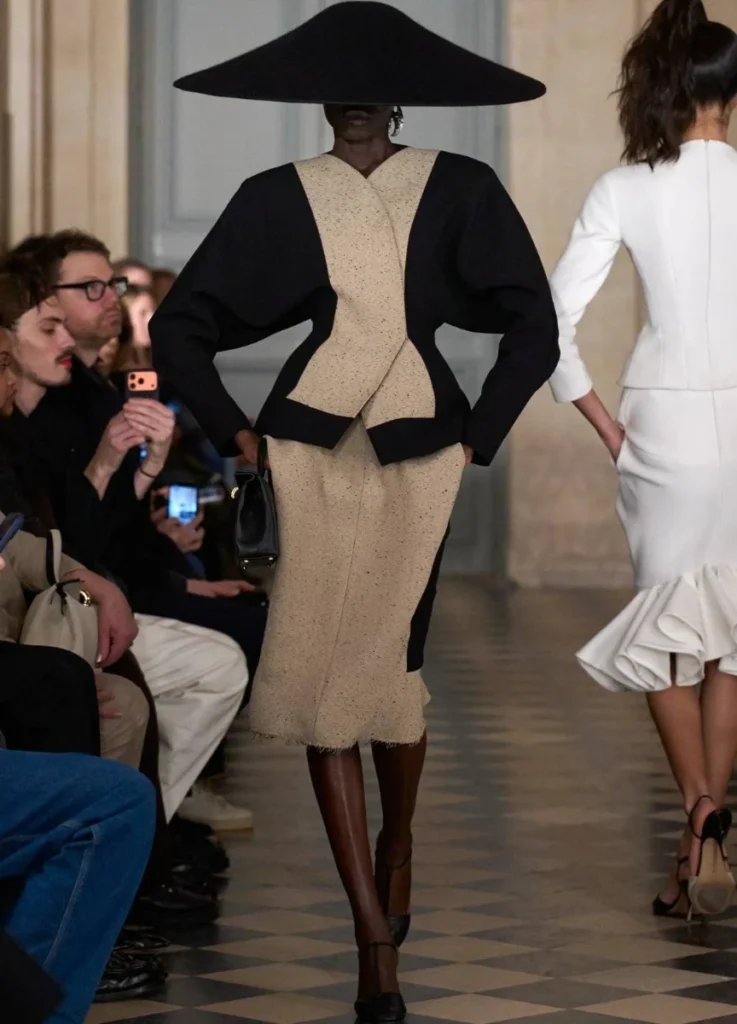
- The Sculptural Hat with Neutral Tailoring. A reminder that exaggeration still exists — but now serves structure rather than attention.
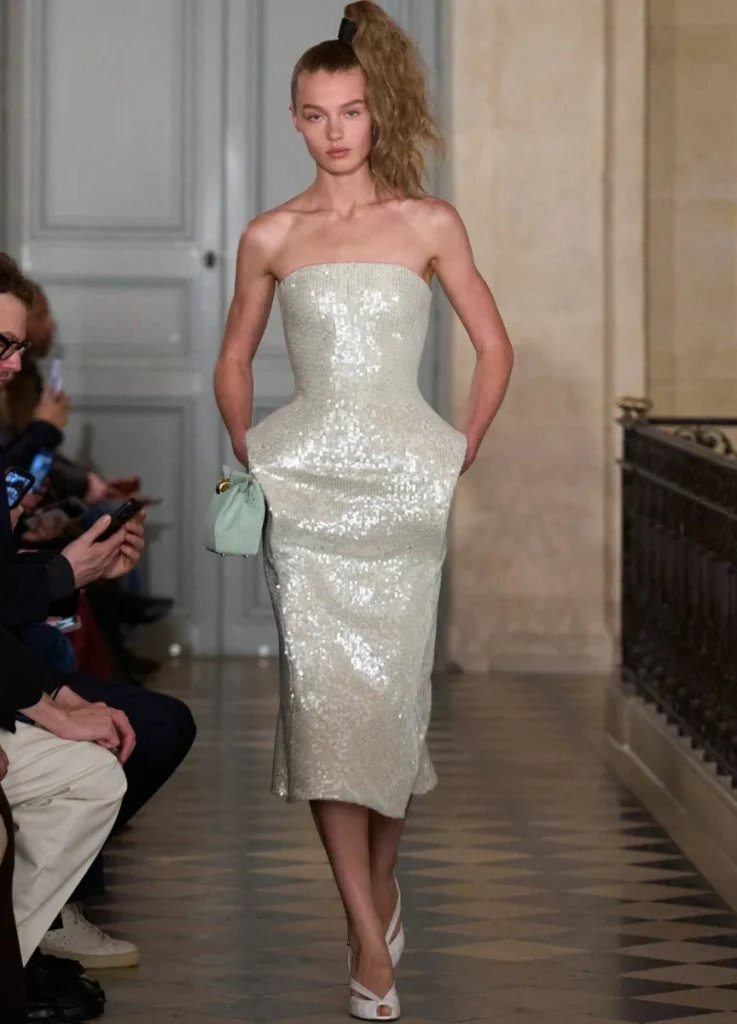
- The Strapless Evening Dress. Quiet, unembellished, devastatingly confident. Possibly where Jacquemus grows up.
Industry Response — Mixed Reception
The international response to Fall 2026 was more divided than recent Jacquemus shows.
In the favorable column: the brand’s own framing of full-circle moment at the Musée Picasso resonated as authentic, not staged. LA FORMA read the venue choice as a deliberate wink — a return to the room where the brand’s modern bag mythology began, now revisited with the confidence of everything that followed. The shift toward proportion over spectacle was widely registered as a maturation worth taking seriously.
In the more reserved column: The Impression identified the show as a missed opportunity, arguing it relied too much on the visual language of the 1950s and 80s given its setting. The Helmut Newton facsimile drew specific critique — these stunts don’t quite have the shock factor they once did, as a naked body on the runway is par for the course. WWD called the menswear uneven. The thread connecting the criticism is consistent: the playfulness needed pushing. The collection chose archive recognition over abstract risk, and some critics felt that choice came at the cost of edge.
The polarity itself is worth noting. Fall 2026 is the first Jacquemus collection in years where the critical reception has split this clearly. That’s likely a feature rather than a flaw of the new direction. A maturation phase reads differently than a viral moment, and a collection that asks to be considered rather than to be photographed will divide critics whose work is itself shaped by the demands of the spectacle economy.
The Business Context
The shift in tone tracks with a shift in commercial position. In Spring 2026 pre-show interviews, Jacquemus had been candid about operating during a slowdown — even after taking on French beauty giant L’Oréal as a minority partner. He flagged robust sell-throughs of runway looks at four-figure price tags, but acknowledged the need to cull wholesale accounts and funnel resources into freestanding stores. The Miami Design District boutique opens later this fall, cementing the U.S. as the linchpin market.
It’s a fight to be an independent designer in Paris from another social background, Jacquemus said in Spring 2026. People think, oh, Jacquemus is everywhere, it’s famous. But you know, it’s an everyday fight. I don’t rest.
Fall 2026’s restraint reads more clearly against this commercial backdrop. The shift away from spectacle isn’t aesthetic alone. It’s a positioning move toward a customer who buys at the four-figure RTW level and who reads the brand as something more durable than its earlier viral moments.
Why This Collection Matters
Fall 2026 feels like a turning point not because it’s louder or more ambitious, but because it’s settled. Jacquemus no longer needs to convince the audience of his vision. He assumes it.
Fashion is full of designers who reference history. Fewer manage to absorb it without being consumed. At this stage of his career, Simon Porte Jacquemus is doing something rarer — writing his own.
The mixed critical reception is part of the story. A maturation phase divides faster than a peak moment. The absence of a viral image was itself the design choice this season. Whether that choice translates into long-term equity or reads as a holding pattern will become clear over the next two or three collections.
What’s clearer now is the proposition. These clothes don’t demand attention. They reward time.
Perhaps that’s the most mature gesture of all.
All images referenced in this post are drawn from Vogue Runway.
[ Related Editorials ]
[Miu Miu 26SS] Runway Review | The Apron as Origin
[Miu Miu 2026] After Decoration: Crochet, Vests, and Aprons as a Language of Everyday Structure
[Prada 26SS] Runway Review | The Discipline of Color, the Rhythm of Control