Reading The Row’s Pre-Fall 2026 lookbook through 1930s couture portraiture
The Row Pre-Fall 2026 arrives with a rare kind of restraint — one that doesn’t rely on movement, spectacle, or narrative emphasis. It opens with a quieter proposition. Beauty that doesn’t need to move to resonate.
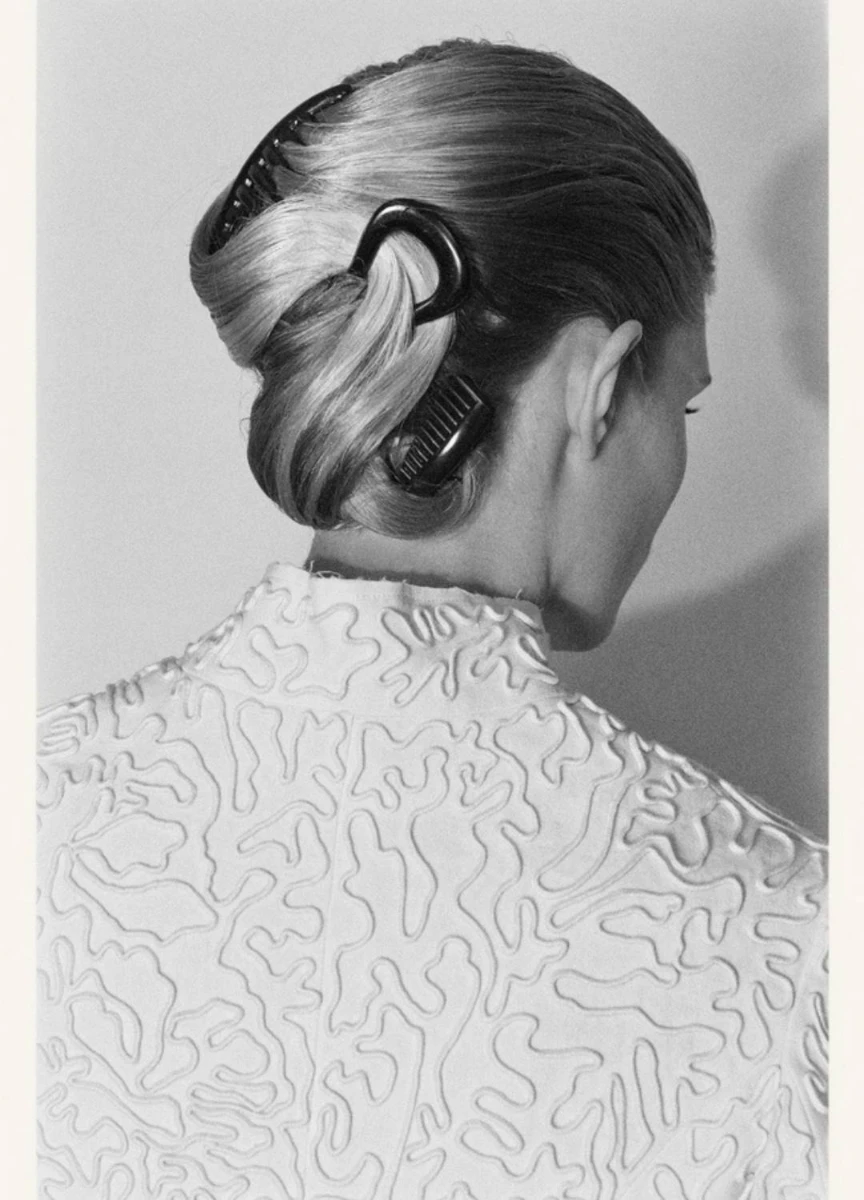
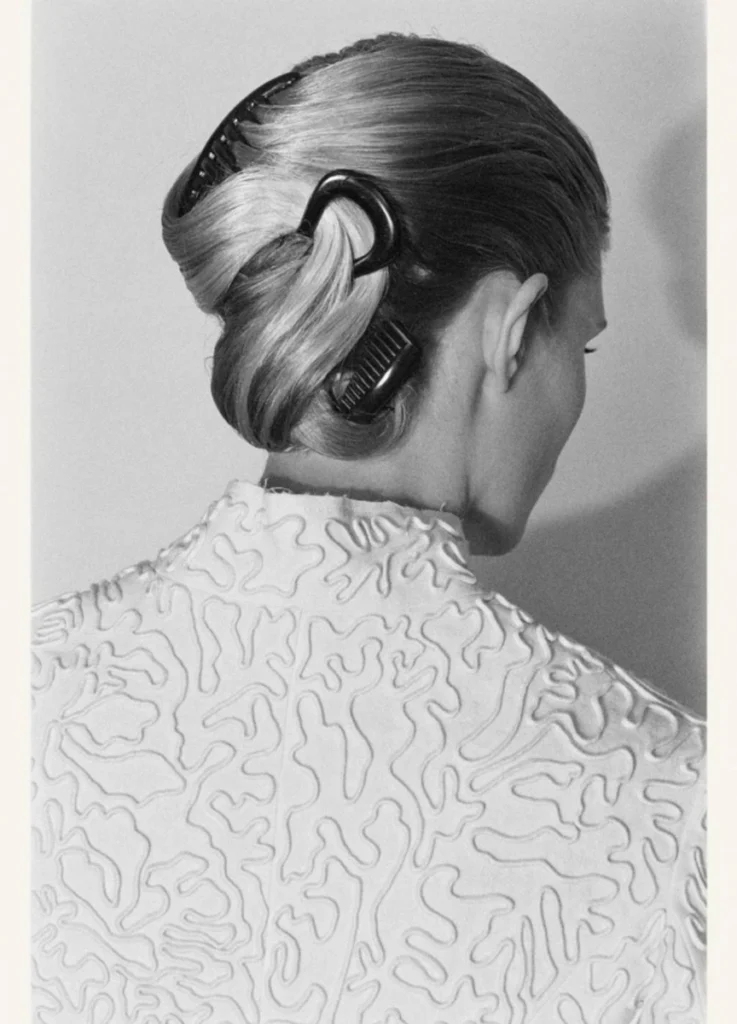
Hair is slicked back with intention. Silhouettes are precise, controlled, resolved. Emotion isn’t expressed through embellishment but through form. The Row leaves an impression this season not through decoration but through order — through garments that absorb light rather than reflect it, and through shapes that organize the wearer’s inner rhythm as much as their outer presence.
It’s a calm tension, carefully sustained. Perhaps the deepest emotional register the brand has offered.
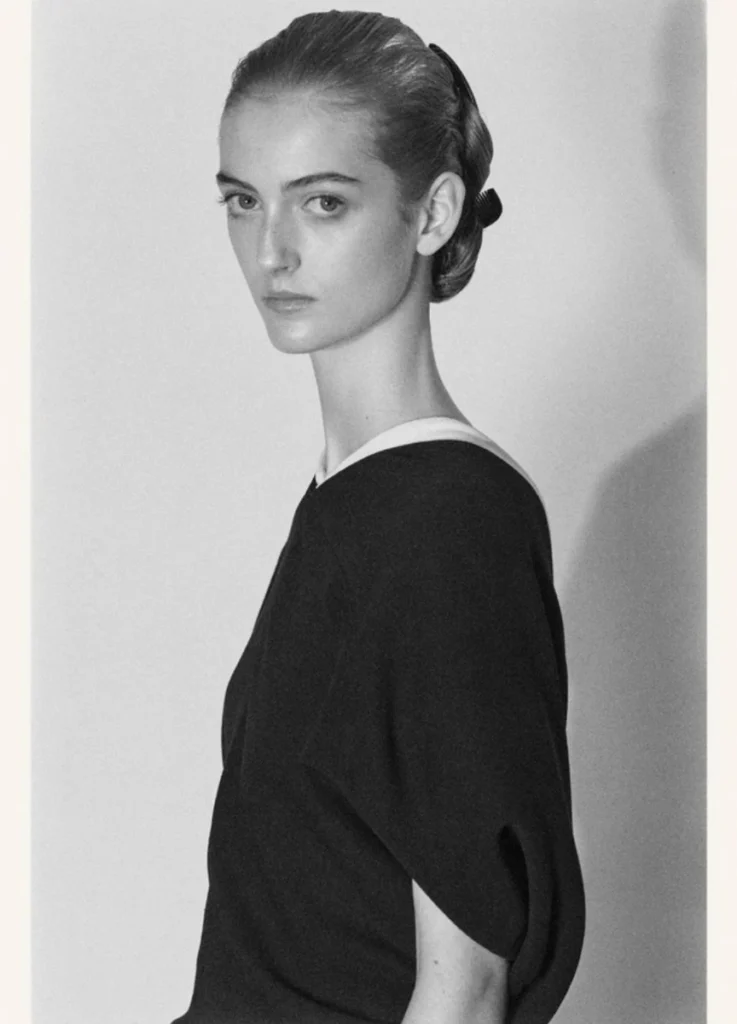
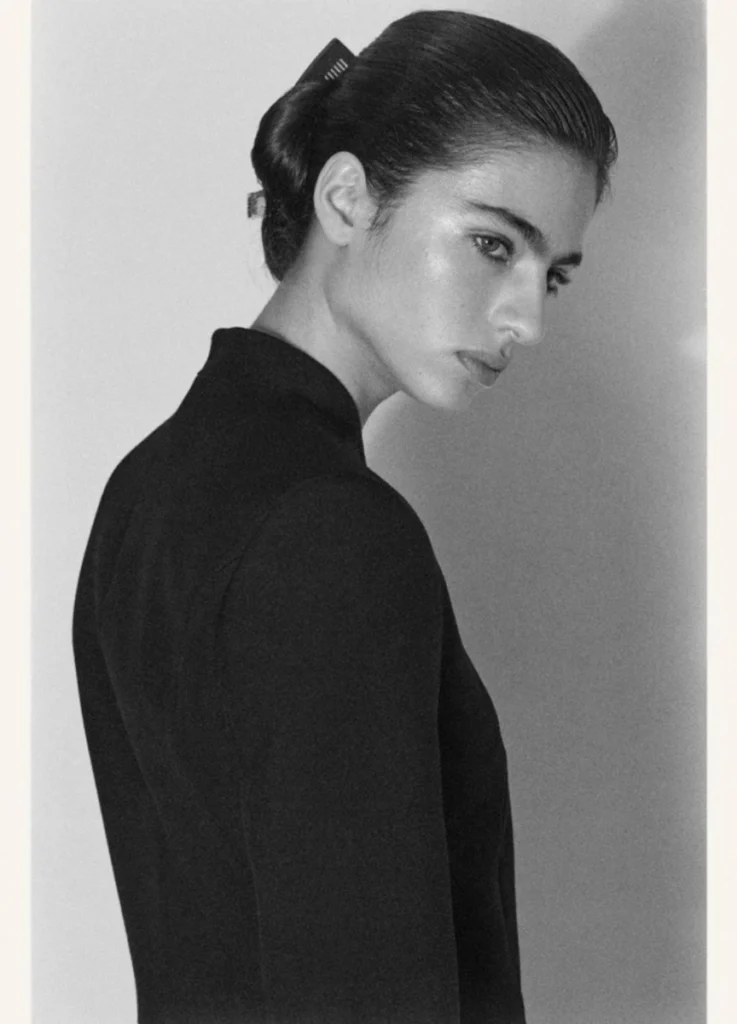
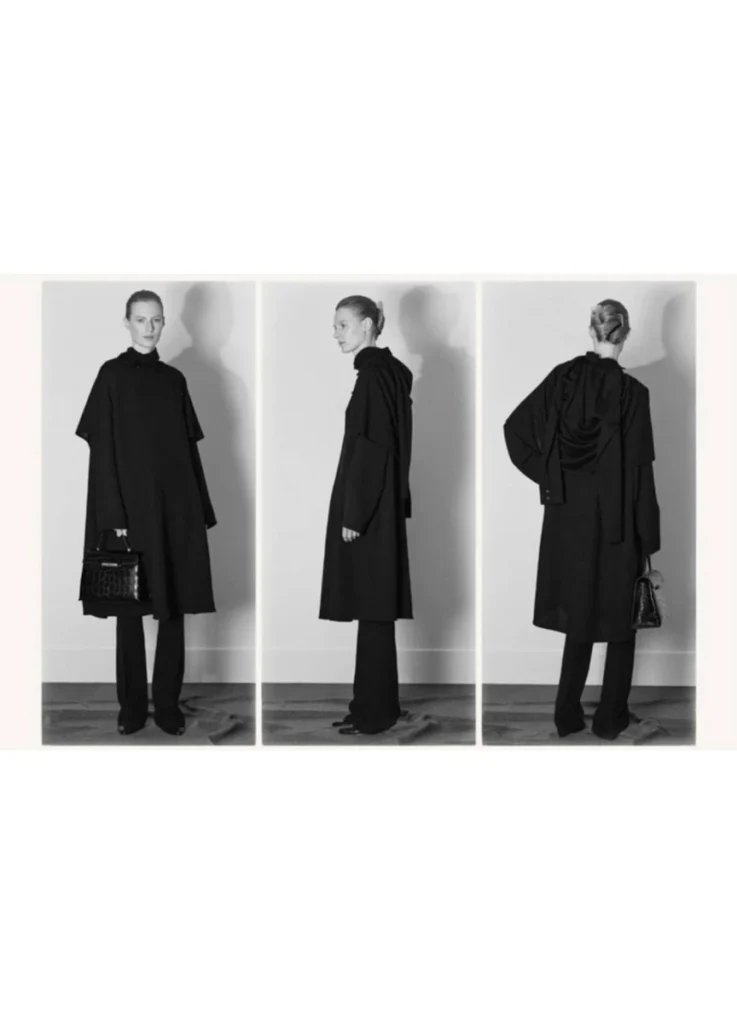
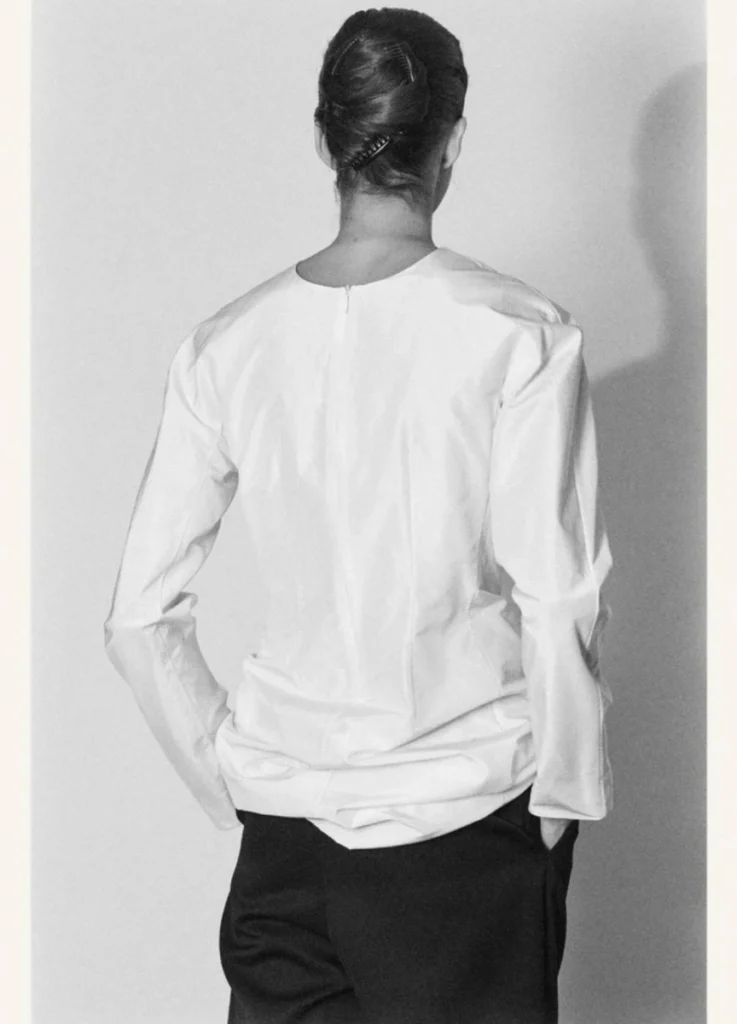
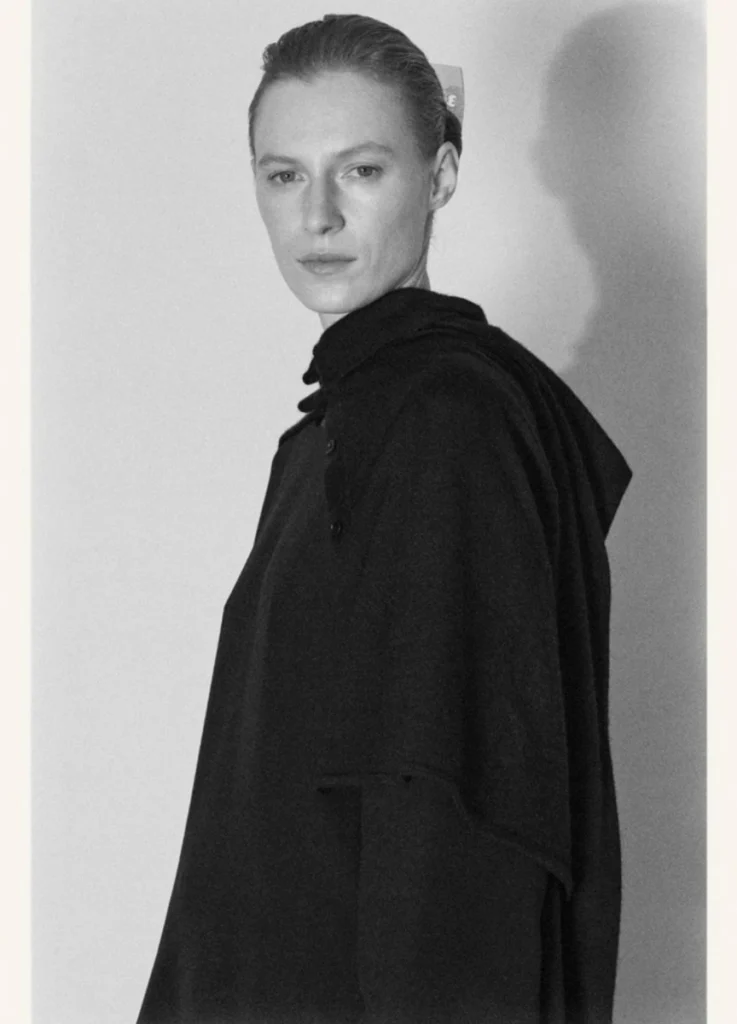
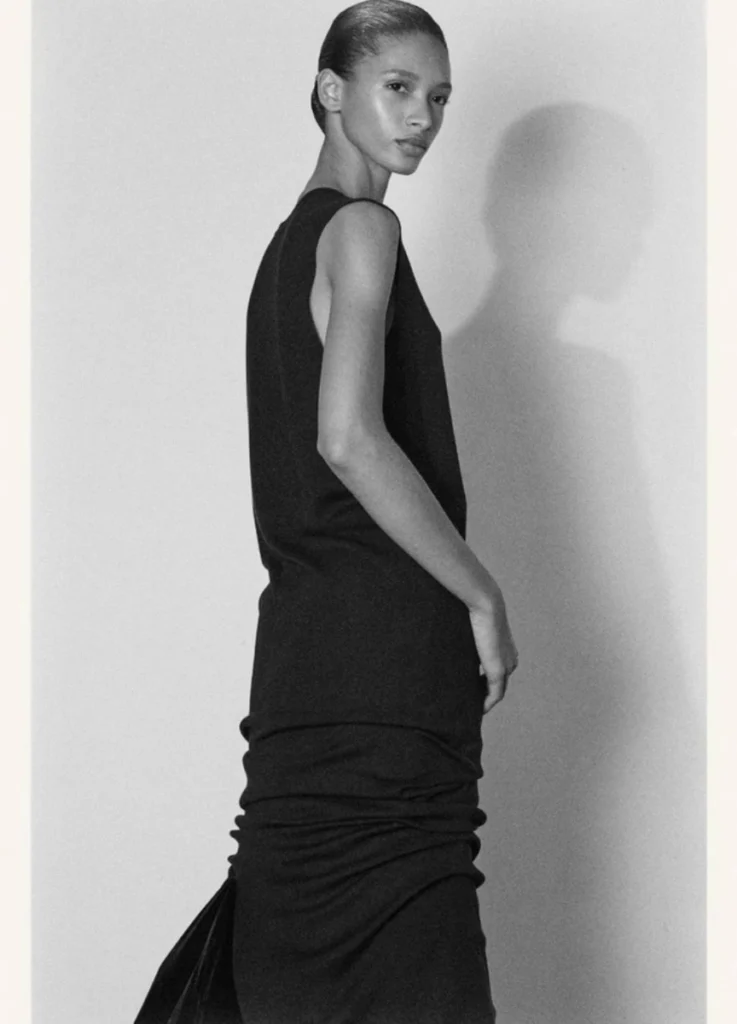
The lookbook arrived in October 2025 as black-and-white couture-style portraits — front, side, back — photographed in the traditional 1930s Parisian couture format. Mary-Kate and Ashley Olsen kept their signature no-photos policy intact at the intimate Paris presentation, releasing instead these stylized images that read closer to archival documentation than to seasonal marketing.
The framing is deliberate. The Row has achieved a rare level of distinctiveness shared only by designers like Yohji Yamamoto and Giorgio Armani, Edward Kanarecki of Design & Culture by Ed observed of the lookbook. You don’t need to see the full collection — just the silhouettes from afar — to know it’s theirs.
A Sculptural Language Rooted in Stillness
The Row Pre-Fall 2026 unfolds as a sequence of garments designed to resonate even in complete stillness. Models appear in static poses that allow each piece to reveal its architecture without interference.
This is not minimalism for its own sake. It is a deliberate belief that rhythm can exist without motion — and that structure, when held in suspension, becomes more legible.
The collection insists on pause rather than emphasizing flow. Éditaires called it a study in restraint and refinement, capturing the essence of quiet luxury with deliberate simplicity. The architectural purity of each piece, in their framing, makes the complicated simple — which has been The Row’s central proposition since its founding in 2006, but which lands here with unusual clarity.
]
The Dialogue Between Line and Curve
Throughout the collection, straight cuts and softened curves coexist in quiet negotiation. Waist seams on coats, subtle slits, and gently contoured side lines establish a restrained visual rhythm.
A cape-like overcoat in the opening look envelops the upper body with protective calm while its hem opens fluidly below. Containment balanced against release. Éditaires flagged a similar piece — a matte black silk A-line tunic, paired with slim fluted pants and a cashmere sweater draped over the shoulders — as exemplifying the brand’s approach to layering and proportion.
It isn’t the silhouette itself that commands attention. It’s the way the silhouette handles space.
The deliberate volume of a full, paneled skirt in washed silk faille, which introduces volume at the hip, in the Éditaires reading, creates a contemporary take on classic shapes. Edward Kanarecki extended the observation: sublime sack dresses, an absolutely heavenly full skirt with a beautifully cinched waist, airy balloon pants that convey sophistication rather than laziness, and a handful of crisp cotton shirts, probably meticulously studied on Charvet.
The Charvet reference matters. The Row’s approach to shirting depends on heritage menswear sources rendered into a feminine register, and Pre-Fall 2026 makes that lineage visible without quoting it directly.
Designing with Air and Absence
One compelling aspect of this collection is its treatment of negative space. The distance between garment and body. The shadows cast by fabric in suspension. The deliberate gaps left unfilled. All of these contribute to its sculptural clarity.
Color takes a secondary role. Tension emerges through texture instead.
Gloss against matte. Soft surfaces beside more resistant weaves. The drama of the collection lives not in contrast of hue but in contrast of material behavior. The black-and-white lookbook reinforces this. By stripping color from the photography, the Olsens force attention onto how each fabric responds to light rather than how each color appears in light.
The choice aligns with The Row’s broader anti-Instagram positioning. The brand’s no-photos policy at presentations — like the imposition of not being able to use the phone before entering Berghain in Berlin, as NSS Magazine put it — extends into the lookbook itself. The images aren’t designed for screens. They’re designed for the kind of slow, considered viewing that fashion publications have largely abandoned.
Hair as Structural Counterbalance
Hair isn’t an accessory this season. It’s part of the architecture.
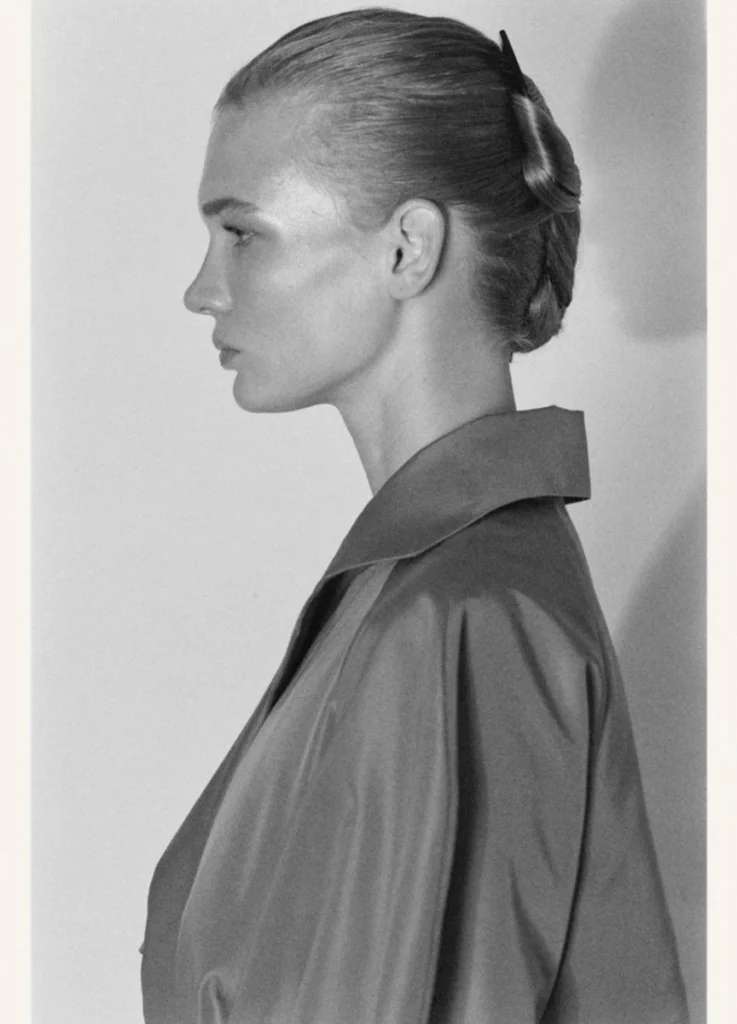
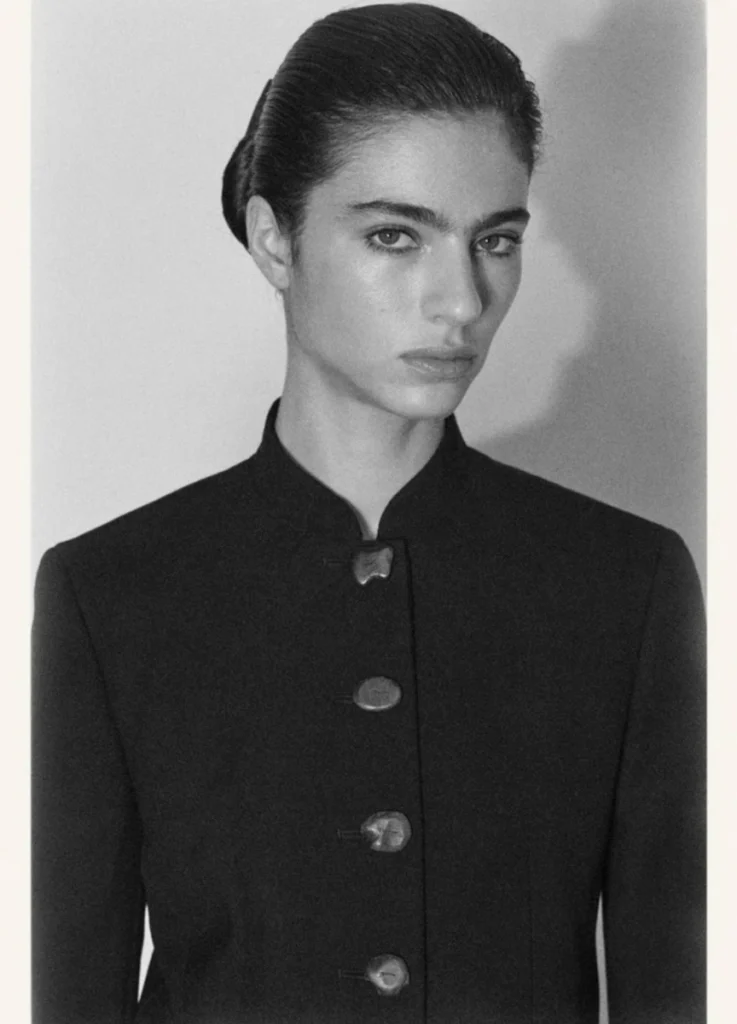
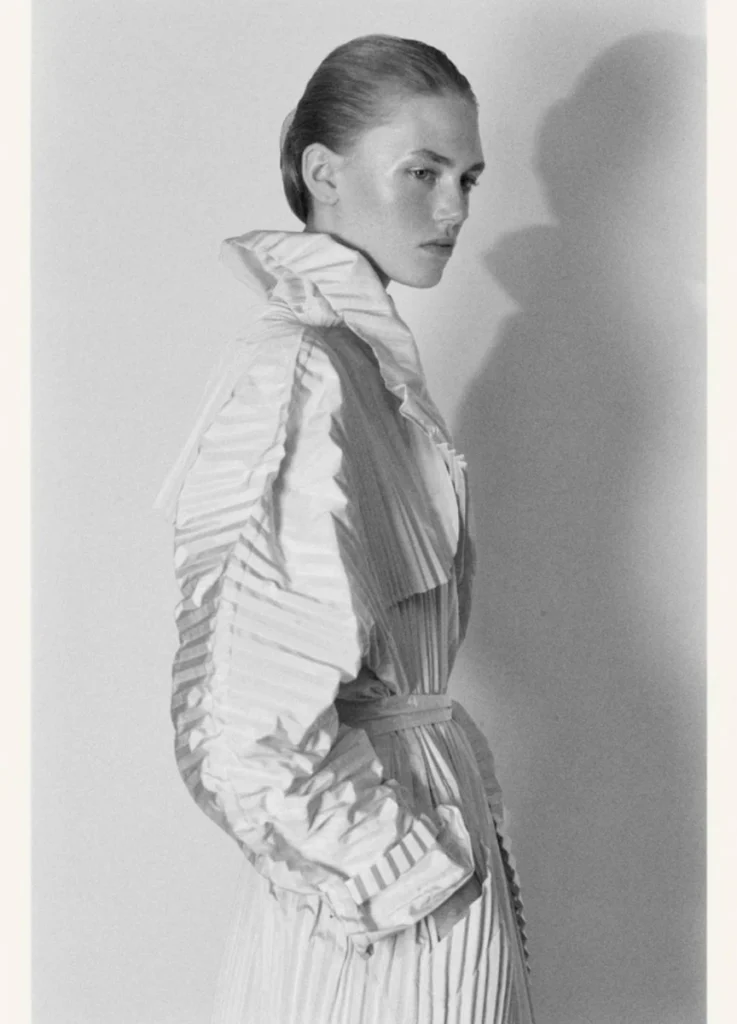
Models wear their hair slicked back with a wet, reflective finish that exposes the neck, shoulders, and collar lines with precision. The styling sharpens the garments’ geometry, reinforcing the clarity of shoulder seams and lapel angles.
In earlier seasons, The Row favored slow, fluid motion. Here, the effect is closer to sculpture. Coats with subtly firm shells. Jackets with unwavering shoulder lines. Trousers that fall straight to the ankle. The result is beauty that’s complete even before movement begins.
This is luxury expressed through composure.
Three hair elements stand out across the lookbook. The polished, almost lacquered sheen echoes satin and velvet surfaces, building visual continuity between hair and garment. Asymmetrical pulls are secured with visible clips, where structure is revealed rather than concealed — a small detail but one that reinforces the collection’s broader argument that beauty doesn’t need to hide its construction. Curves in the hair mirror garment seams and drapes, allowing the entire look to read as a single sculptural unit.
Hair and clothing become inseparable — two expressions of the same formal language.
Materials and Ornament — Quiet Depth
The Row has long resisted overt decoration, and Pre-Fall 2026 continues that philosophy with nuance.
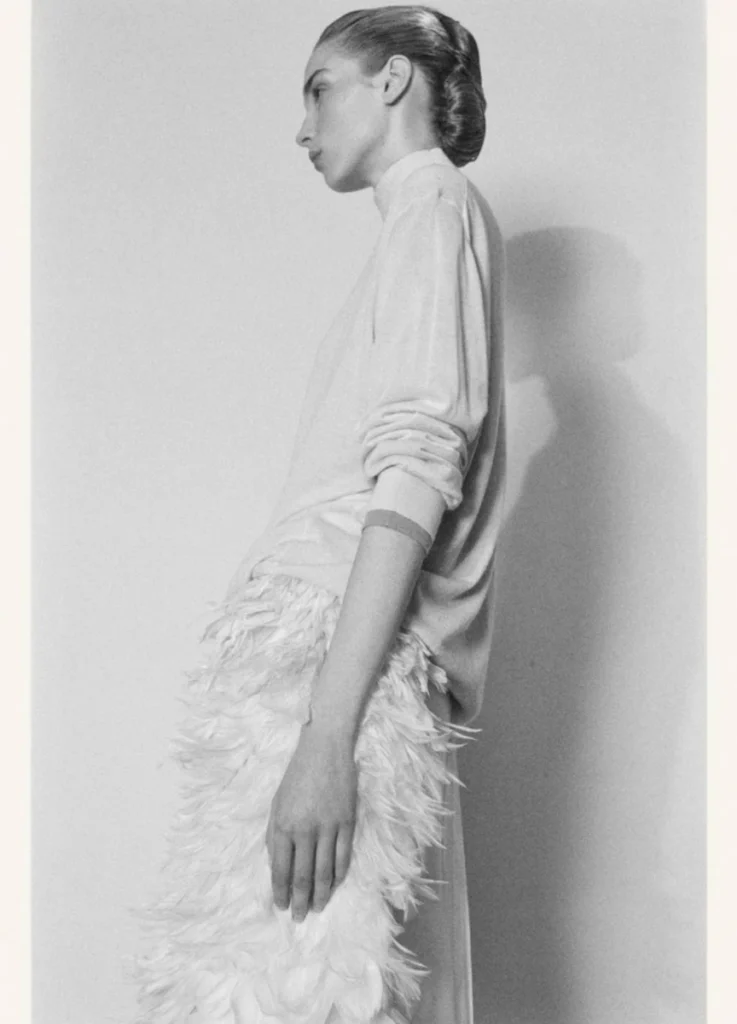
Feathers appear not as spectacle but as afterimage — felt more in silhouette than in motion. Sequins are treated less as sources of sparkle than as textural interruptions, leaving behind shadow and surface rather than shine.
Throughout the collection, satin, velvet, wool, silk, and pleated fabrics intersect without disruption. Matte wool sits beside restrained satin. Fluid pleats soften more rigid weaves. The effect is seamless, never fragmented.
The brand remains committed to light as texture rather than reflection. Matte satins absorb illumination. Wool gabardine offers a dry, grounded presence. Silk organza introduces translucency without fragility.
Several satin dresses stand out as emotional anchors of the season. Their sheen reveals itself more fully in natural light, allowing silhouettes to emerge through luminosity rather than outline. Waistlines aren’t emphasized. Curves follow air rather than anatomy.
This is fashion completed through presence, not performance.
Between Abstraction and Wearability
Despite its sculptural restraint, Pre-Fall 2026 remains firmly grounded in reality. Jackets and coats are formal in structure, yet their materials carry warmth and approachability. Rounded shoulders soften otherwise disciplined forms. A restrained palette — ivory, taupe, deep brown — creates tonal depth without distraction.
Light interacts with these colors gently, building a narrative within grayscale. The exploration of neutrality as emotional language continues.
The wearability matters more than the lookbook initially suggests. Many of these pieces — the coat-and-trouser ensembles, the white shirt with slip skirt, the satin sets — translate cleanly from the lookbook to actual life. The Row’s customer isn’t primarily a runway viewer.
She’s a buyer who needs to wear these garments to dinner, to meetings, to travel. Pre-Fall 2026 reads as restrained on the page, but its commercial intelligence is precise. The pieces are designed to integrate into a wardrobe rather than to dominate a single occasion.
The Beauty of Imperfect Balance
Rather than striving for symmetry, the collection embraces subtle imbalance. Button placements, hem lengths, even fabric creases resist complete alignment. These imperfections introduce a quiet tension — one that feels alive rather than rigid.
In combinations such as knit dresses paired with satin skirts, material contrast generates a restrained emotional vibration. Lines remain cool, but never detached.
The balance feels deliberate, deeply considered. Controlled coolness, rather than emotional withdrawal.
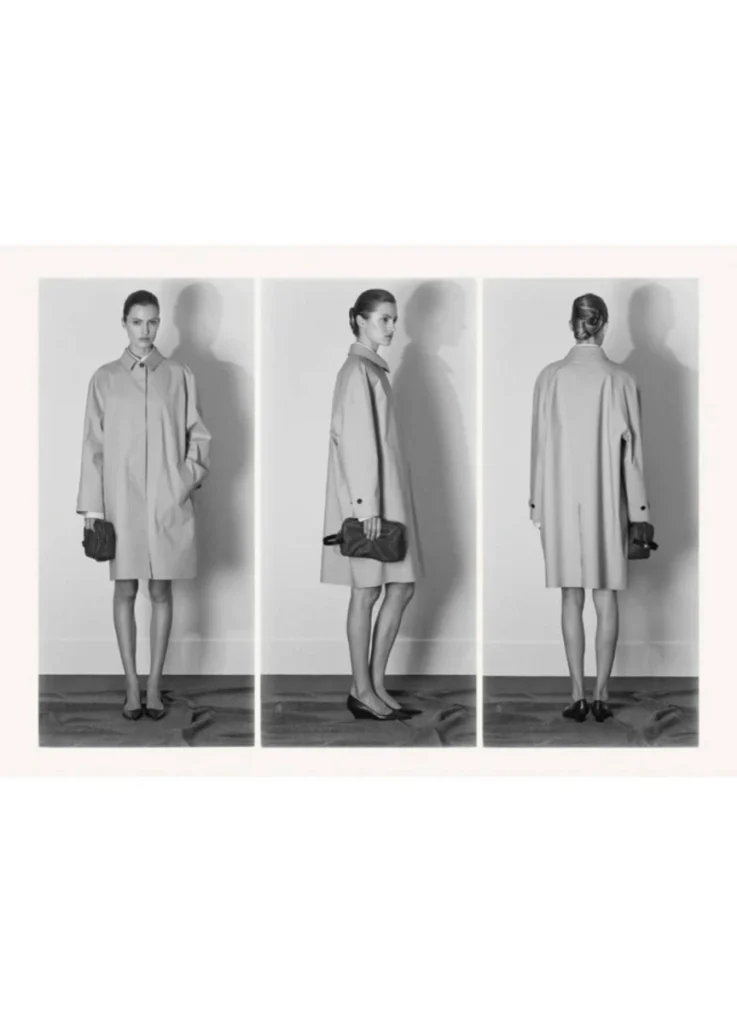
Five Looks That Define the Season
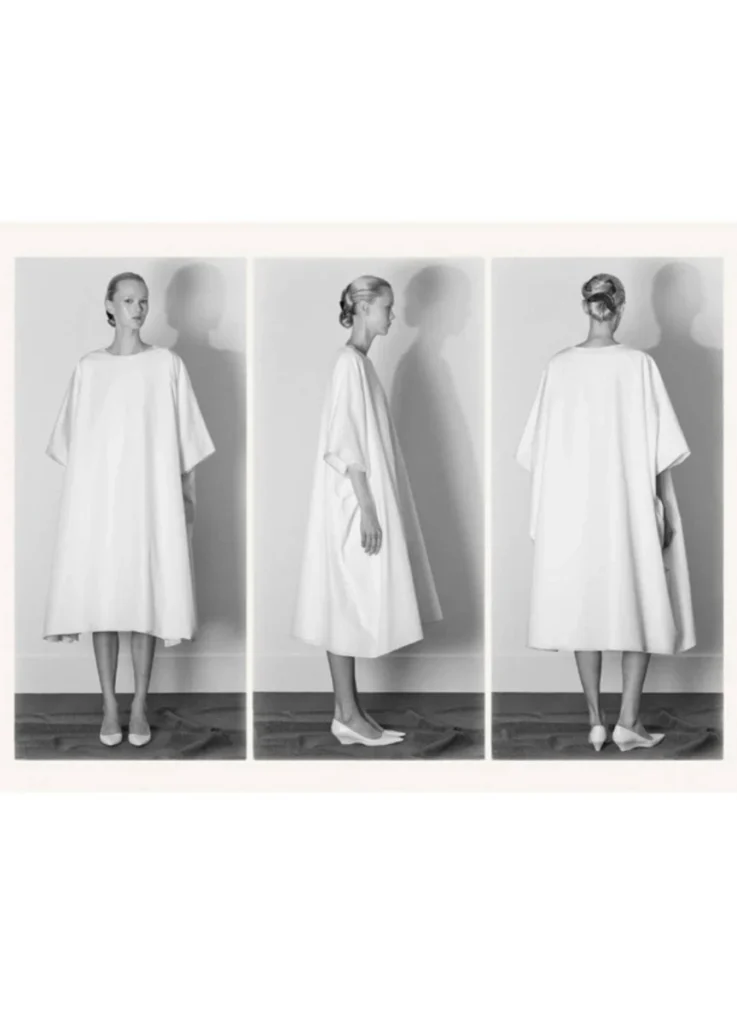
Ivory Satin Slip Dress. Light is absorbed rather than reflected, allowing the fabric to trace the body with restraint. Paired with slicked-back hair, the look captures a moment suspended in time. The opening anchor of the collection’s emotional vocabulary.
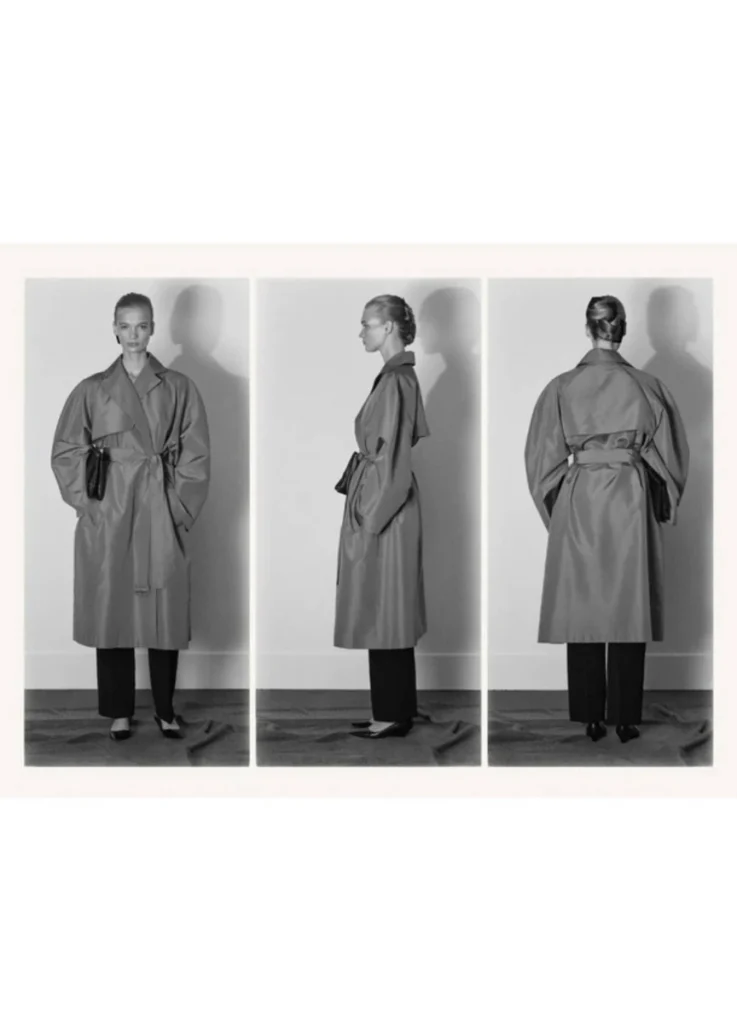
Coat and Trousers Ensemble. Rounded shoulders offer warmth while architectural construction maintains discipline. Practical, yet quietly poetic. This is the look that demonstrates The Row’s commercial intelligence most clearly — formal enough for a boardroom, quiet enough for a private dinner.
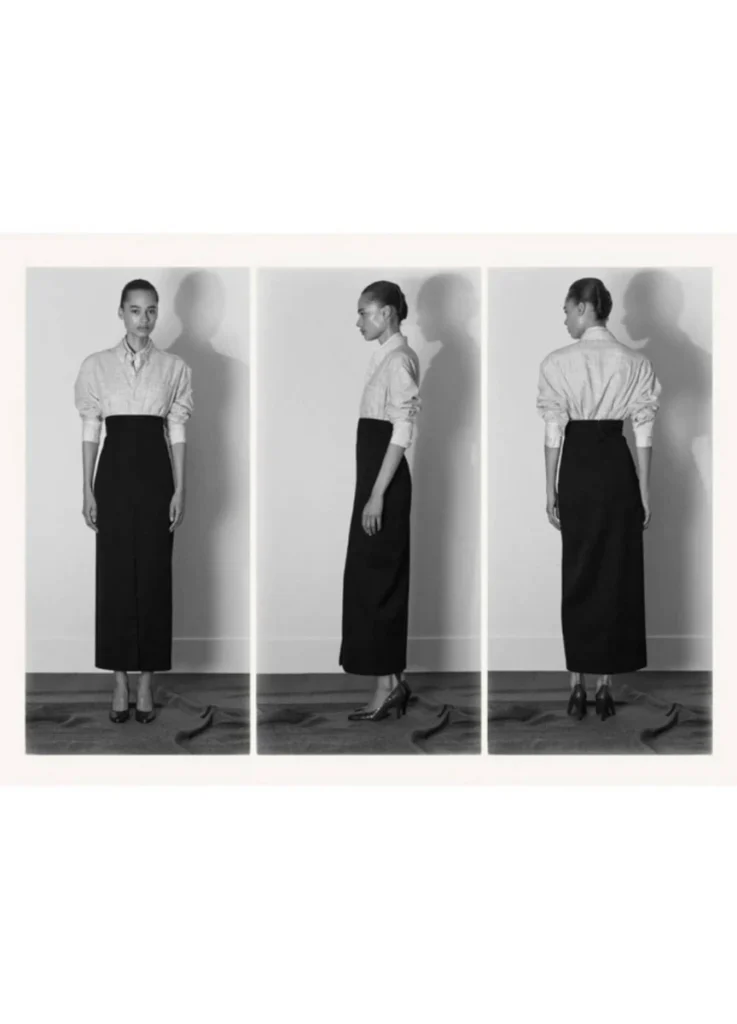
White Shirt with Slip Skirt. A dialogue between structure and fluidity. Intellectual, composed, subtly off-balance. The shirt is the kind Edward Kanarecki suspected was meticulously studied on Charvet — and the slip skirt softens the structural top without diluting it.
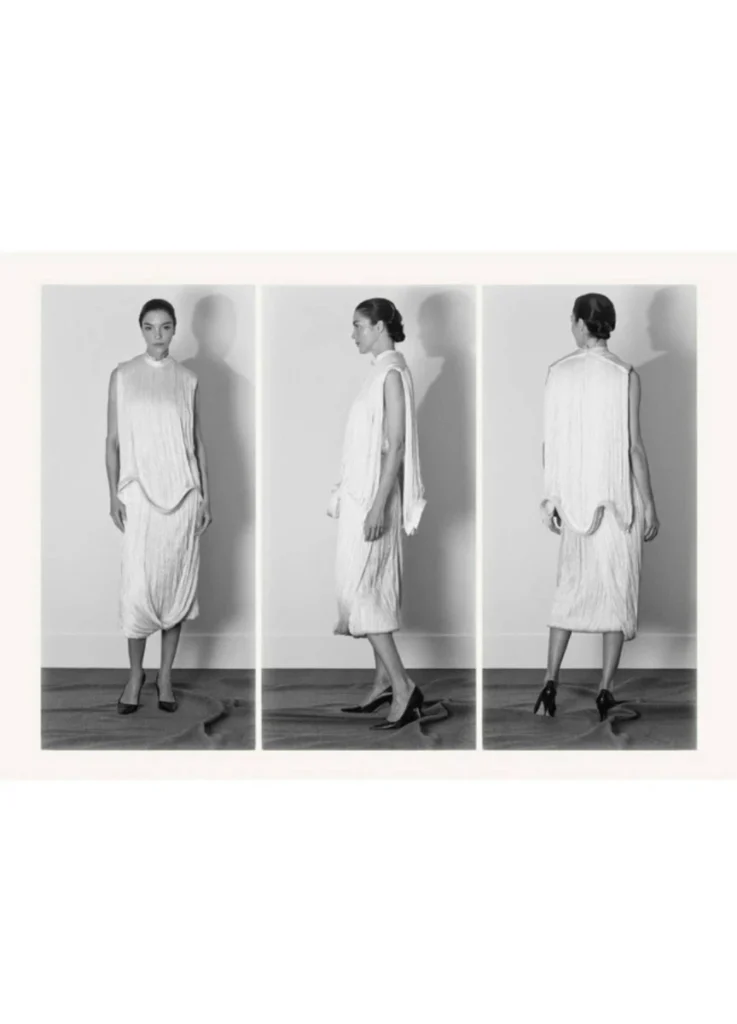
Satin Set with Black Shoes. Minimalism distilled. By choosing low-sheen satin, the silhouette asserts itself through form rather than light. The kind of look that requires confidence in fit and posture rather than confidence in a statement piece.
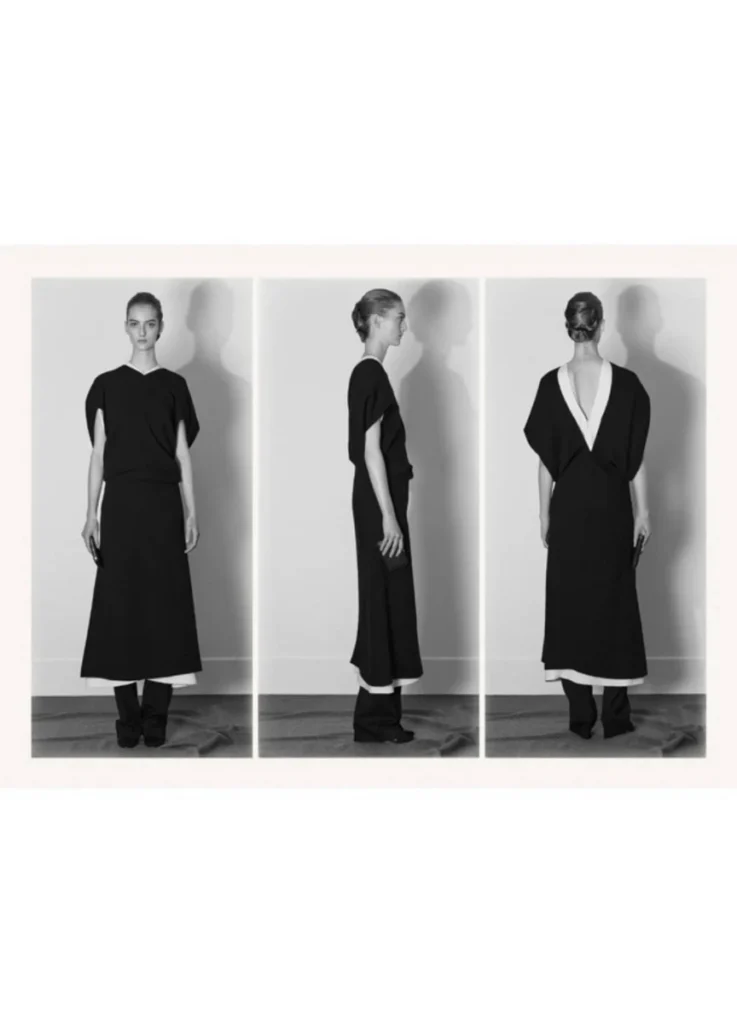
Black Knit Dress with Low Bun Hair. Possibly the emotional core of the collection. Unadorned, controlled, complete. An image of stillness that carries weight. If the rest of the collection reads as architecture, this look reads as the foundation.
Stillness as an Emotional State
Pre-Fall 2026 proposes beauty not through movement, but through pause.
These garments feel as though they exist in the moment just before action — the tension of readiness held in place. In an era when fashion often overexplains itself, The Row continues to answer through silence.
That silence isn’t empty. It’s precise.
The position has been increasingly rare across contemporary luxury. Most fashion houses, even those committed to quiet aesthetics, organize their seasons around runway shows that demand spectacle. The Row’s no-photos policy, its lookbook-only release strategy, and its commitment to slow viewing all push against the platform-driven economy of contemporary fashion.
The brand operates as if Instagram doesn’t exist — and the resulting clarity of its visual language is exactly what Design & Culture by Ed identified as that rare distinctiveness shared with Yamamoto and Armani.
The Business Position — From Independent Label to $1 Billion Brand
The Row’s commercial scale reframes how Pre-Fall 2026 should be read. The brand was founded by Mary-Kate and Ashley Olsen in 2006 with a 7-piece collection — a perfect T-shirt, cotton sateen leggings, and a cashmere wool tank dress — that Barneys New York bought in its entirety. The Olsens initially didn’t want their names attached to the brand. They preferred to let the clothes speak for themselves and gave no interviews about The Row for the first three years.
Two decades later, the brand has reached scale without abandoning that founding posture. In 2024, Chanel owners Alain and Gérard Wertheimer alongside L’Oreal heiress Françoise Bettencourt Meyers acquired stakes in The Row, valuing the company at approximately $1 billion. The Olsens remain majority stakeholders. The brand operates five monobrand stores and is available in 37 countries, with menswear (launched 2018) and children’s (launched 2021) extending the wardrobe across categories. The Cut estimated annual sales reached $100 million in 2021. The 2024 stake sale signals that figure has grown substantially since.
More notable is how the commercial scale has accumulated without compromising the brand’s anti-marketing position. The no-photos policy at presentations. The black-and-white lookbook releases. The refusal to participate in the runway-as-content economy. Pre-Fall 2026 demonstrates that the strategy is working at scale — luxury that resists the platforms can still command billion-dollar valuations.
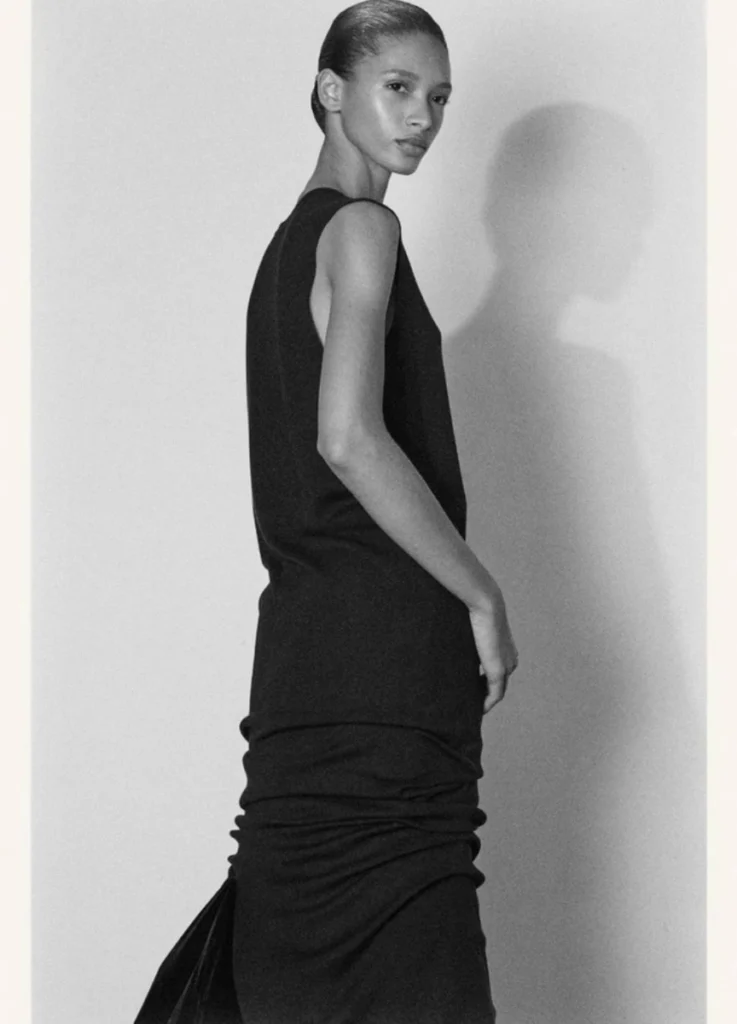
Reading Pre-Fall 2026 Within the Broader Trajectory
Pre-Fall 2026 sits at a specific moment in The Row’s evolution arc. The collection arrived in October 2025 — six months before the brand’s Summer 2026 show, which Who What Wear read as the era of quiet luxury that they were so crucial in establishing has reached its demise, and in its place is a brand-new era of opulence, flair, and (tasteful) maximalism.
Pre-Fall 2026 now reads as the last sustained statement of The Row’s quiet-luxury vocabulary at full register. Summer 2026’s feathers, sequins, and dramatic silhouettes signal a deliberate pivot. Pre-Fall 2026 is the closing chapter of one era rather than a transitional piece. The collection’s commitment to stillness, to grayscale, to the architecture of pause reads differently in retrospect than it did in October 2025. What seemed at the time like a continuation of The Row’s standing language now reads as the maison’s clearest articulation of that language before the shift.
For collectors, in this context, the practical implication is direct. These pieces represent The Row’s quiet-luxury vocabulary at its most refined — and the maison has signaled it won’t return to this exact register in the immediate future. Summer 2026’s drama and Resort 2026’s Margiela-leaning layering both move in different directions. Pre-Fall 2026 is the holding still before the shift.
The Row vs. Phoebe Philo — Two Architectures of Restraint
Pre-Fall 2026 also clarifies the contrast with Phoebe Philo, whose Collection E arrived in March 2026 — five months after this lookbook. Both designers operate in adjacent territory. Both prioritize neutral palettes, considered fabrication, and refusal of theatrical display. The differences sit in how each handles the body.
The Row’s approach treats the garment as architecture and the body as the structure that lives inside it. Pre-Fall 2026’s slip dresses don’t trace the body so much as create a clean envelope within which the body exists. The clothes are designed to look complete in stillness — and, more pointedly, to reward viewing without a body inside them. The black-and-white lookbook works precisely because the silhouettes carry meaning independent of the wearer.
Phoebe Philo’s Collection E reverses the logic. The body is the active site. Fabric meets skin and movement in ways the garment is designed to register and respond to. Slip dresses there don’t cling, but they don’t separate either — they sit at a specific middle distance from the body that’s only legible when the body moves through them.
The same distinction applies here. The Row delivers structure that doesn’t require a body. Phoebe Philo delivers a body inside the structure. Pre-Fall 2026 is The Row at its purest expression of that proposition. Both readings are valid responses to the same broader minimalist conversation. The Row’s architectural minimalism and Philo’s embodied minimalism aren’t competing for the same customer. They’re answering different questions.
Closing Notes
This collection ultimately asks a familiar The Row question. How much can form express without words?
Even shadow carries intention here. Hair, fabric, and air operate together, revealing how quiet can be deeply emotional when handled with care.
These clothes don’t demand attention. They remain.
Pre-Fall 2026 may be less about dressing the body than about providing a structure for presence itself — a framework into which the wearer’s inner life can settle. And in The Row’s world, that’s luxury at its most enduring.
The position is rarer than it was when the brand launched in 2006. Quiet luxury has become a category, then a marketing language, then a cliché. The Row’s Pre-Fall 2026 is the kind of collection that reminds the conversation what the original proposition actually meant. Not minimalism as marketing. Minimalism as a sustained discipline of fewer choices, executed at higher precision, designed to last beyond the season that produced them.
The Olsens have spent twenty years building the brand toward this exact register. Pre-Fall 2026 is what arrives when that work is allowed to settle.
All images referenced in this post are drawn from Vogue Runway.
[ Related Editorials ]