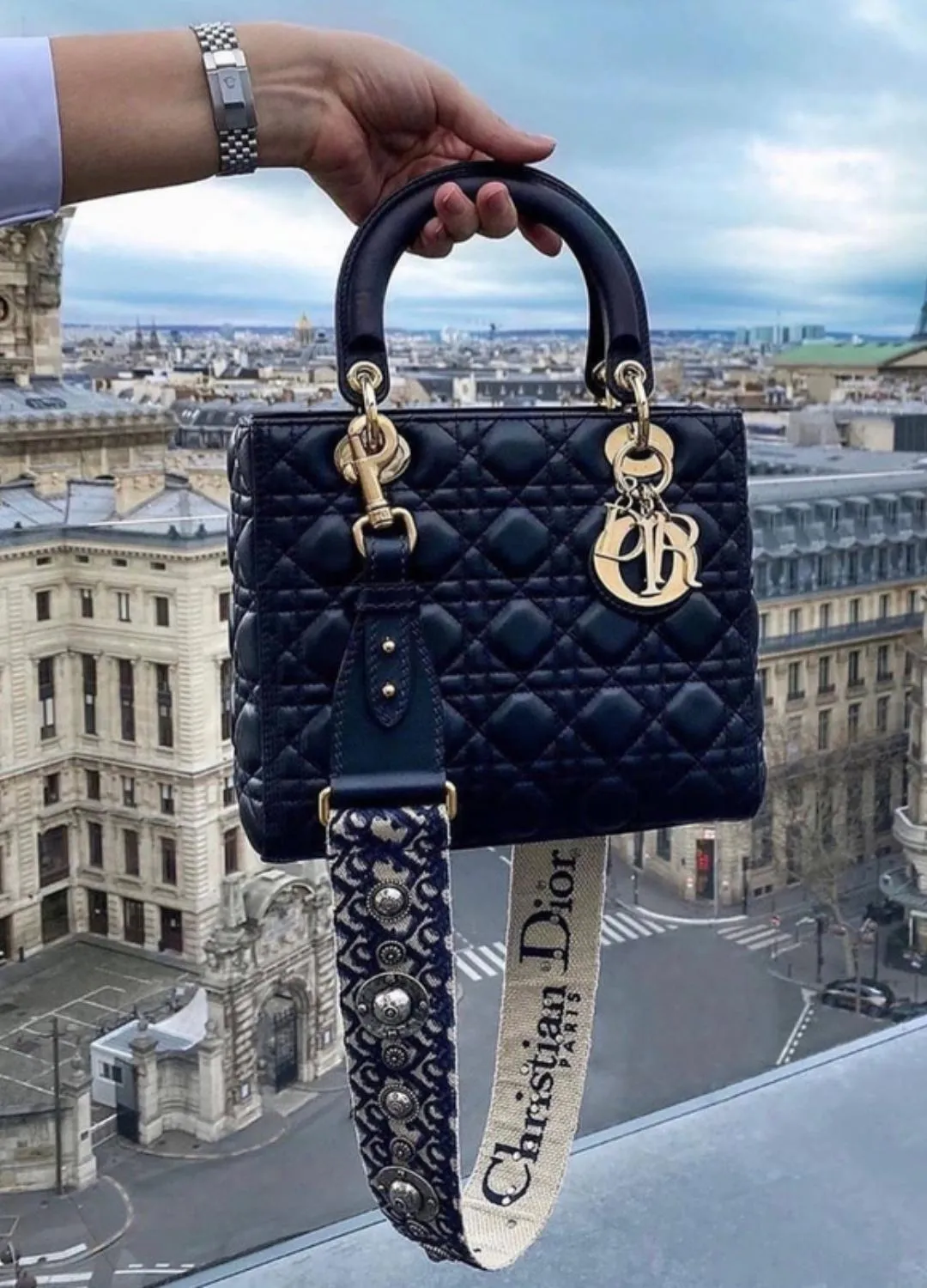
Dior Bags — How Fit Changes the Experience
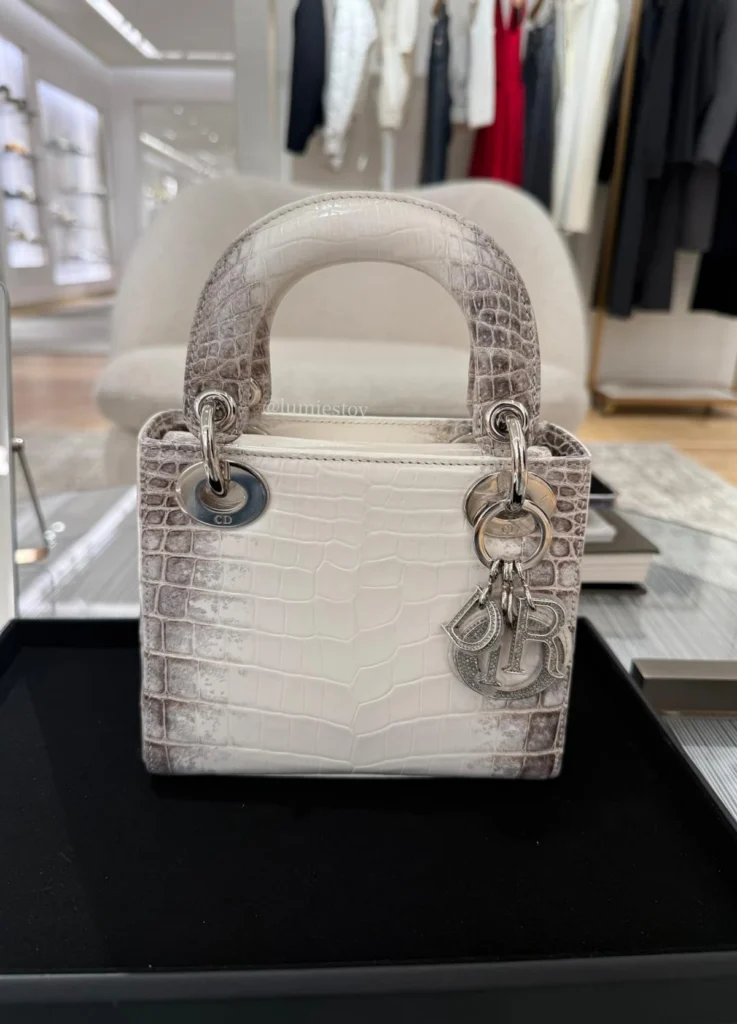
Dior bags leave an afterimage in the hand.
That afterimage goes beyond weight on a scale. It is the sensation of carrying an object engineered to preserve its form at all times — a load that is perceptual, structural, and directional. It travels into the fingers, the wrist, and sometimes the elbow.
“Why do Dior bags feel heavy?” is a design question, not a complaint.
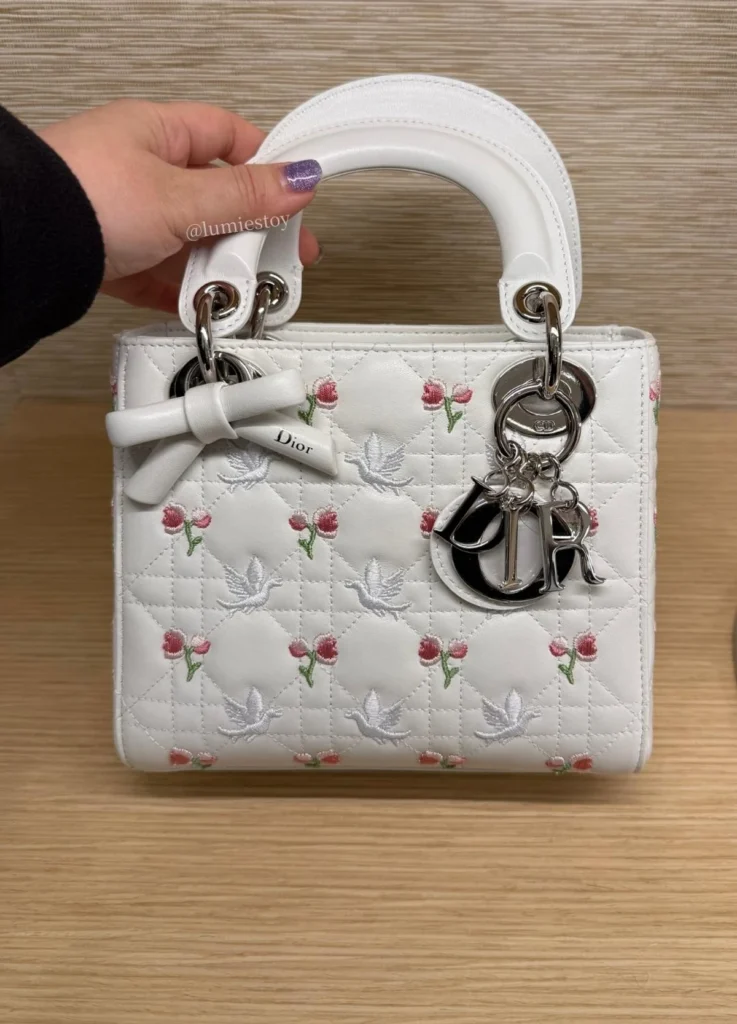
Dior has long favored control over collapse, line over softness, form over accommodation. Even its more practical silhouettes follow the logic that once defined Christian Dior’s tailoring: when he introduced the New Look in 1947, the core was structural curve and a rigid waistline. That architectural discipline transferred directly into the house’s leather goods. Dior bags are built to look complete — standing, settled, and visually composed — even when empty.

@yunakim / Instagram
To understand how that commitment translates into physical experience, three models tell the story most clearly: the Book Tote, the Lady Dior, and the Toujours.
Structural Load, Not Just Weight
Dior bags carry their weight in a concentrated way.
Two bags with similar weight can feel completely different depending on load distribution. Dior’s construction relies on a three-layer build:
- Outer skin — leather or embroidered canvas
- Reinforcement layer — fiber or composite panels that fix the shape
- Inner lining — a final stabilizing layer that locks the structure in place
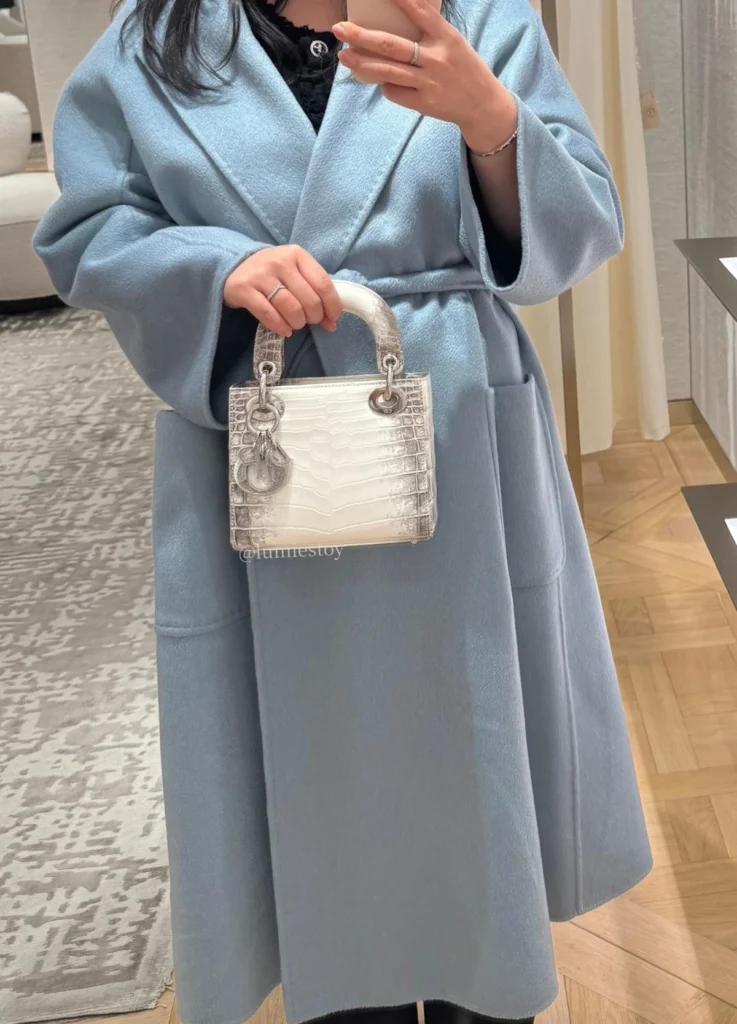
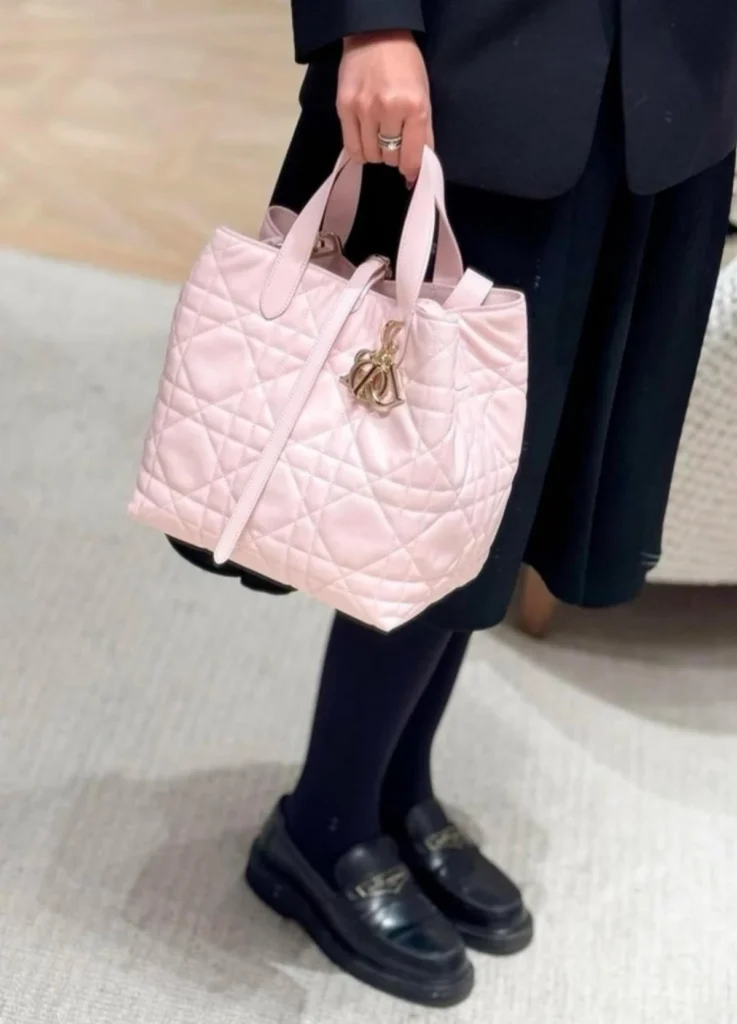
Once combined, the bag gains integrity. It stands. It resists collapse. It holds an ideal outline. But the cost of that integrity is density. The reinforced base and upright walls keep the center of gravity low, and that load travels directly into the wrist. The bag concentrates force downward rather than dispersing it gently.
The body registers pressure, not grams. A Dior tote loaded with daily essentials may seem unremarkable on paper, but the structured base sends everything straight to the hand.
@yunakim / Instagram
Different bodies experience the same bag very differently. A highly structured bag on a taller frame with longer arms may feel stable and grounded. The same bag on a shorter frame with a smaller wrist and shorter forearm can feel disproportionately demanding.
@aishtiworld / Instagram
Chanel and Dior: Two Theories of Construction
One of the clearest ways to understand Dior’s weight is to place it next to Chanel.
Chanel quilting creates softer volume. Thin foam batting sits inside, allowing the leather to move naturally — a margin of give that absorbs slight compression without looking visually compromised. There is room for motion inside the object. When held, the pressure diffuses.

@sooyaaa__ / Instagram
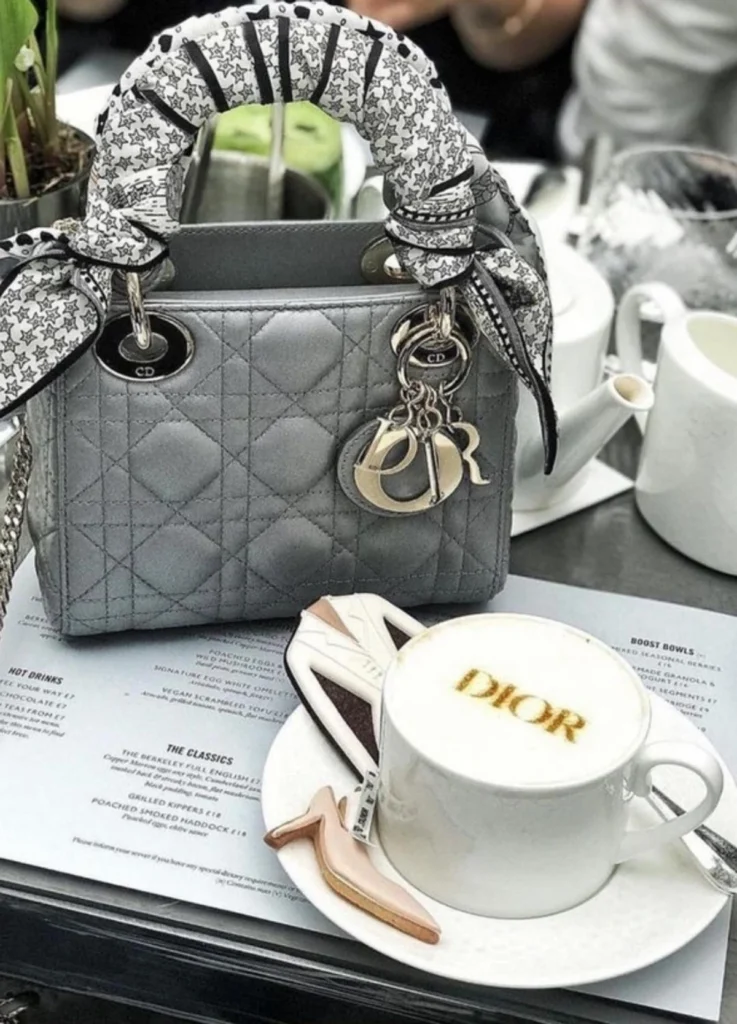
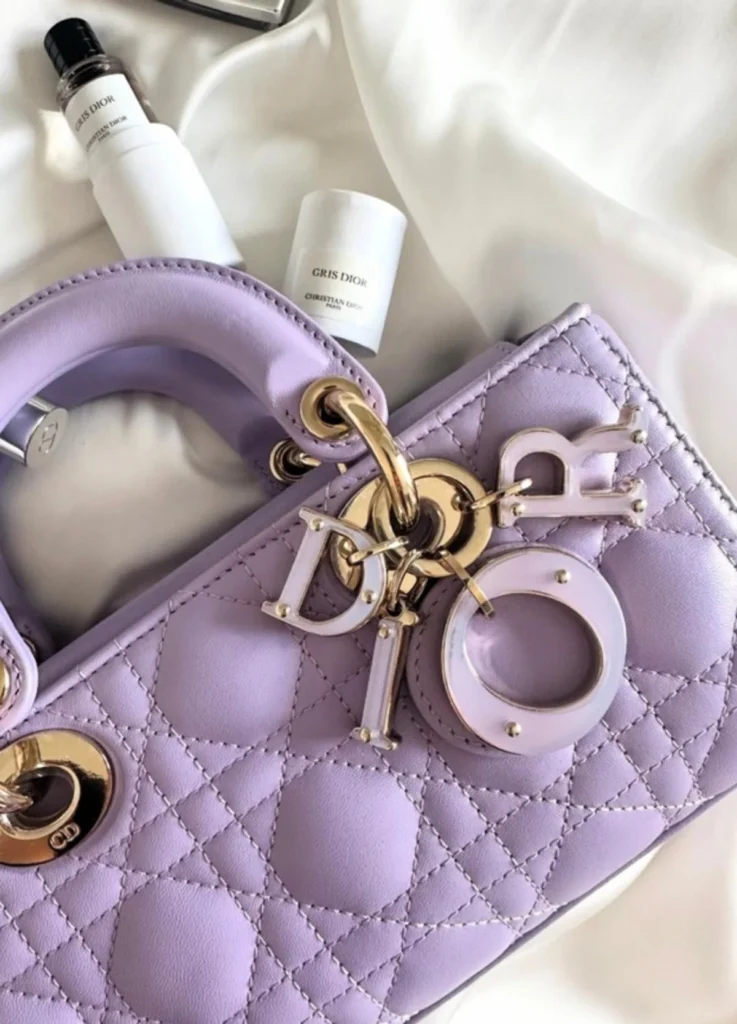
Dior’s Cannage quilting works differently. The internal stitching penetrates deeply, locking the outer skin, reinforcement layer, and lining together as a single rigid unit. The result is visually rich — the surface catches light with remarkable consistency — but the tactile experience is firm. The outer layer does not float above softness. It is held in place by a disciplined internal framework.
@sarahthenelizabeth / Instagram
Chanel’s softness diffuses pressure. Dior’s precision concentrates it.
Material choice reinforces the gap. Chanel frequently uses lambskin or goatskin for flexibility. Dior favors calfskin — a tighter grain, a more polished surface, and superior shape retention. Calfskin is beautiful, but it is also denser: roughly 15–20% heavier per unit of surface area than lambskin. That density is part of the bag’s structural system, not merely a material preference.
Neither approach is superior. They solve different aesthetic problems. Chanel allows movement to remain visible. Dior works to eliminate visible compromise.
@ladydiorella / Instagram
The Book Tote: The Weight of an Upright Surface
The Book Tote appears straightforward — a large open tote with simple geometry. The simplicity is deceptive.
A Book Tote is built to remain a Dior tote even when empty. The walls, base, and edges all hold an expectation of form. The embroidered canvas versions add thickness thread by thread, making the surface heavier and less flexible than plain canvas. Then the reinforced base enters the equation. A tote that looks practical, but behaves like a structured object.
For reference, the embroidered canvas Book Tote (medium) weighs roughly 250–300g more than a Chanel Deauville of equivalent size.

@kopi.cat / Instagram
Many people misread the Book Tote. Because it is open and rectangular, it seems casual. But when loaded with an iPad, notebook, water bottle, and wallet, the force goes straight to the hand. For stronger wrists or longer arms, this registers as manageable seriousness. For slimmer fingers or a shorter arm line, the fatigue arrives much faster.
A practical tote should accommodate daily life. Dior’s tote often asks daily life to accommodate it.

@je.suis.lou / Instagram
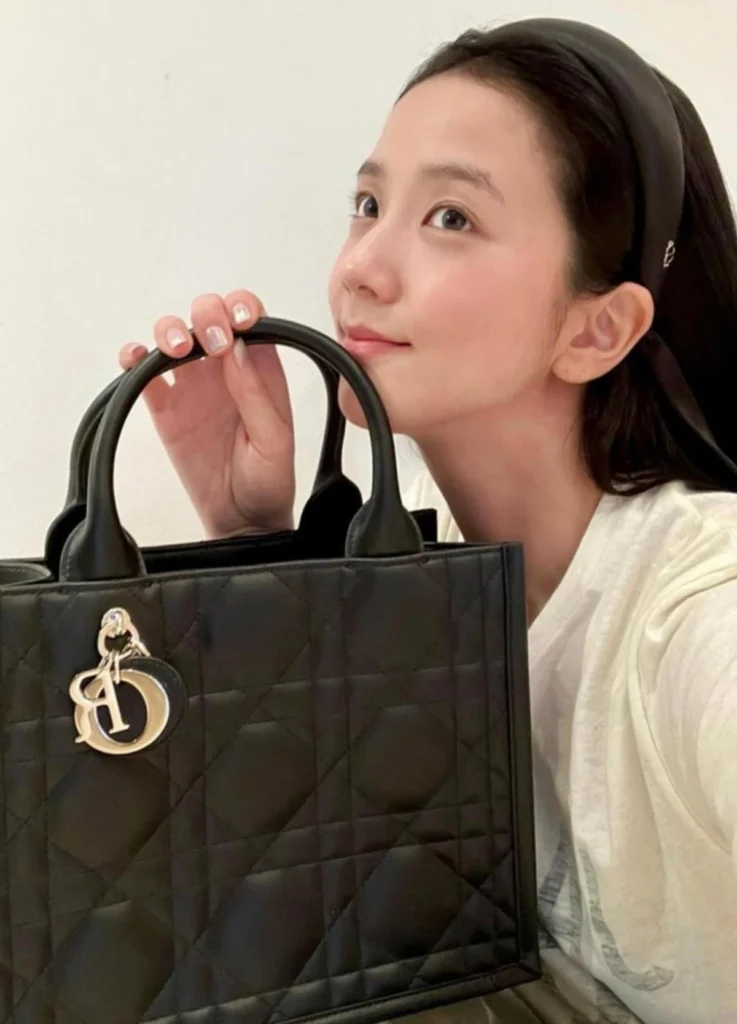
I have repeatedly tried this bag and never bought it. The fabric versions looked like they should solve the problem, but they did not. The leather versions, when they appeared, only confirmed the point. The bag’s visual appeal remained intact. The carrying experience did not.
The Book Tote works best when volume is useful but contents remain relatively light. Once the bag is expected to function as a true load-bearing everyday tote, its elegance begins to cost more than it gives.
@sooyaaa__ / Instagram
Lady Dior: Iconic Density and the Pull of Vertical Handles
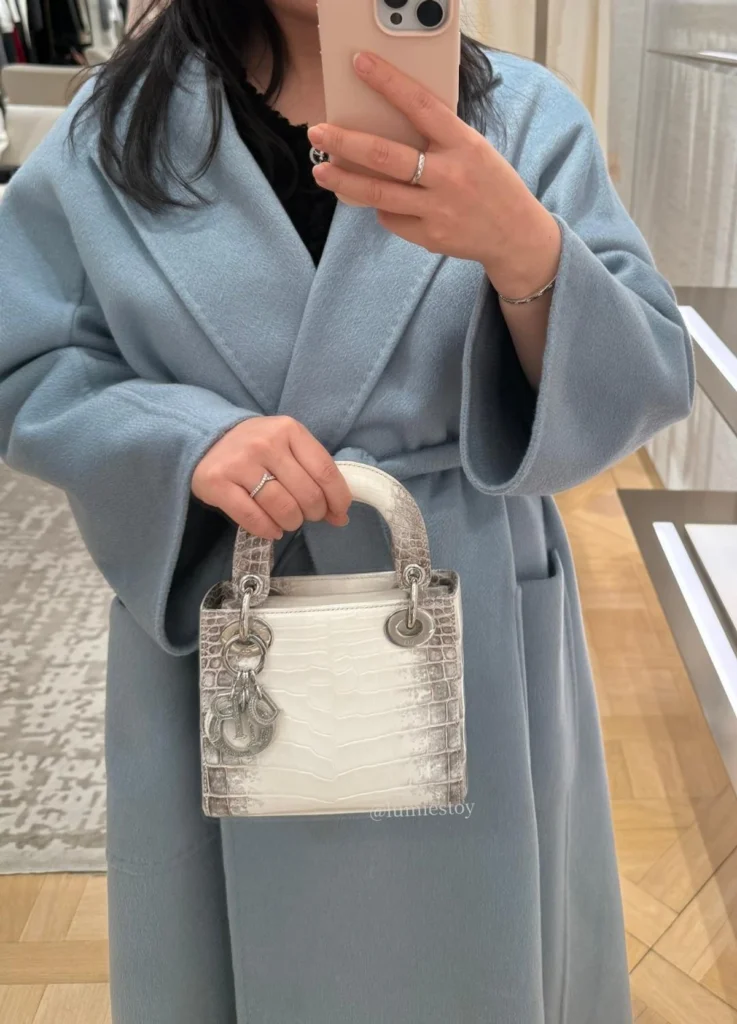
The Lady Dior is structurally very different from the Book Tote, but the sensation of load is just as distinctive.
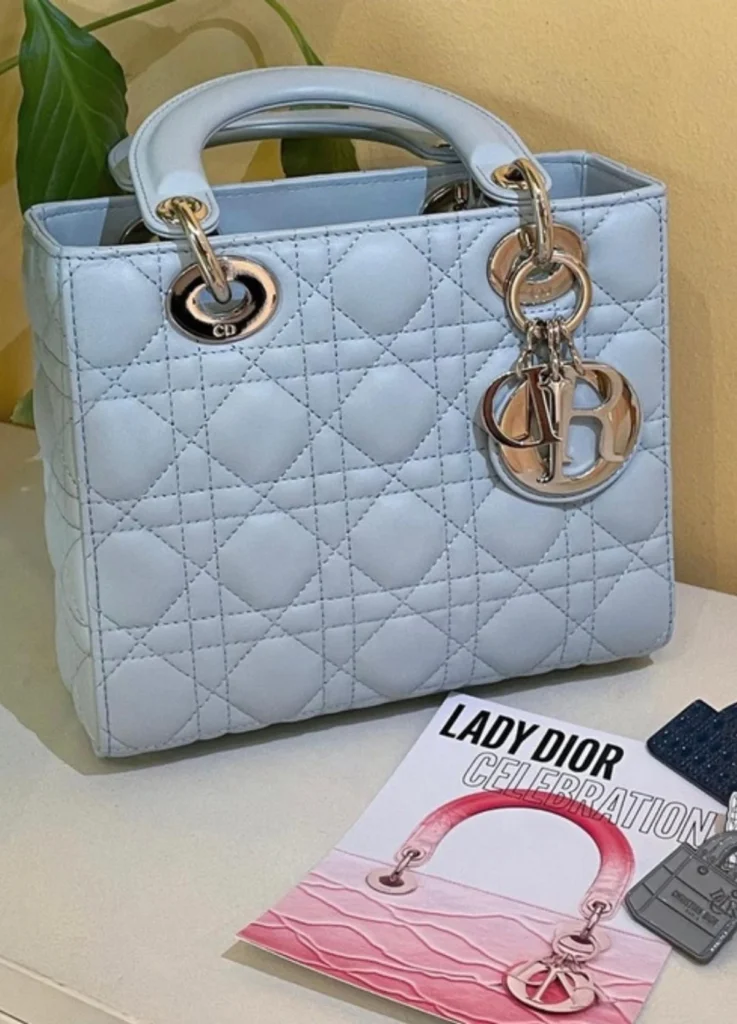
The issue here is controlled compression. The bag is dense, compact, and visually refined. The Cannage pattern, the upright body, and the polished hardware all contribute to a sense of finished perfection.
But that perfection carries a price.

@sooyaaa__ / Instagram
The top handles rise vertically and connect firmly to the body, reducing natural hand movement. The bag does not swing in a forgiving way. It pulls directly downward — a concentrated load that registers clearly in the wrist.
On smaller frames, this becomes especially noticeable. Under 160 cm / 5’3″, the mini or small versions usually make the most sense — physically, not just visually. Once the scale increases, the Lady Dior’s fixed geometry begins to dominate the carrying relationship. The bag remains beautiful, but it becomes less about companionship and more about maintenance. You do not simply carry it. You manage it.
That density is also what gives the Lady Dior its authority. The stiffness preserves light reflection across the quilted surface in a very specific way. The bag almost always looks camera-ready — a controlled front-facing impression that looser constructions cannot replicate.
The bag gives you exactitude — and bills you in comfort.
Dior Toujours: Softer in Appearance, Not Lighter in Experience
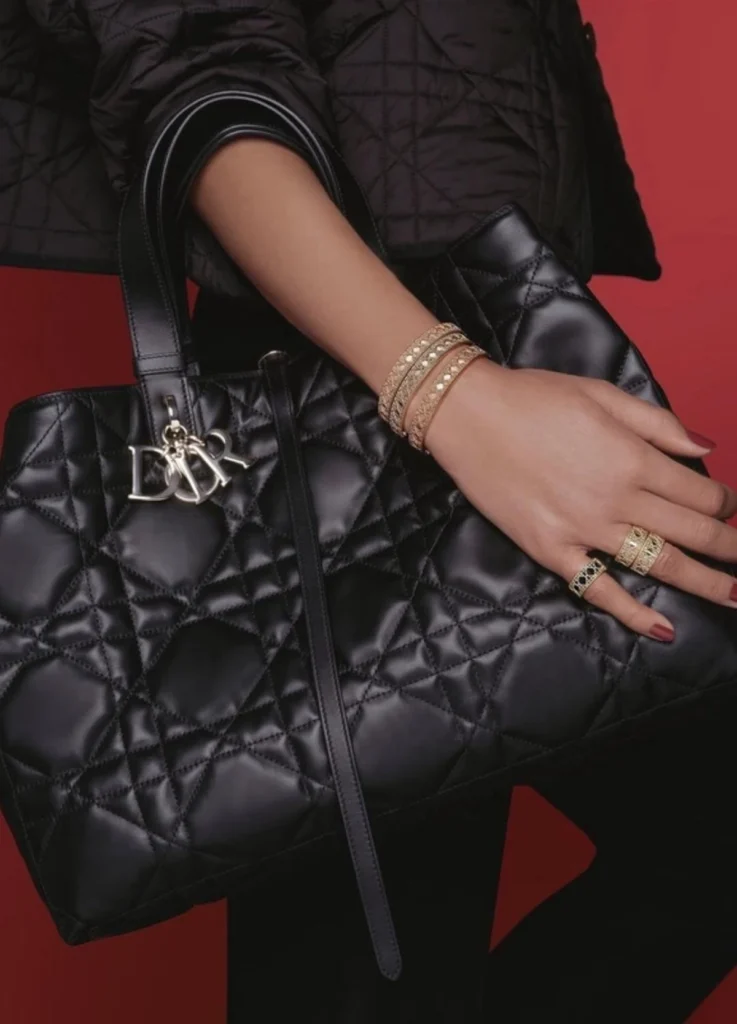
The Toujours is the most interesting case because it appears more relaxed.
Compared with the Book Tote, less rigid. Compared with the Lady Dior, less ceremonial. The visual message is softer. But visually softer and structurally light are different things.
@aishtiworld / Instagram
The body is more pliant than the Book Tote, yes. But reinforcement still exists inside. The bag still wants to preserve a controlled silhouette. The longer handles and deeper body create a different kind of load distribution — instead of driving force only into the wrist, the sensation shifts upward toward the forearm or elbow, especially over longer carrying periods.
The bag looks easier than it is.

@sooyaaa__ / Instagram
The weight accumulates rather than arriving all at once. The Toujours does not shock the hand immediately like a rigid tote might. It builds.
When I tried the medium leather version, it felt substantially heavier in experience than an Hermès Garden Party 30 — a bag not exactly known for lightness either. I did not buy it.
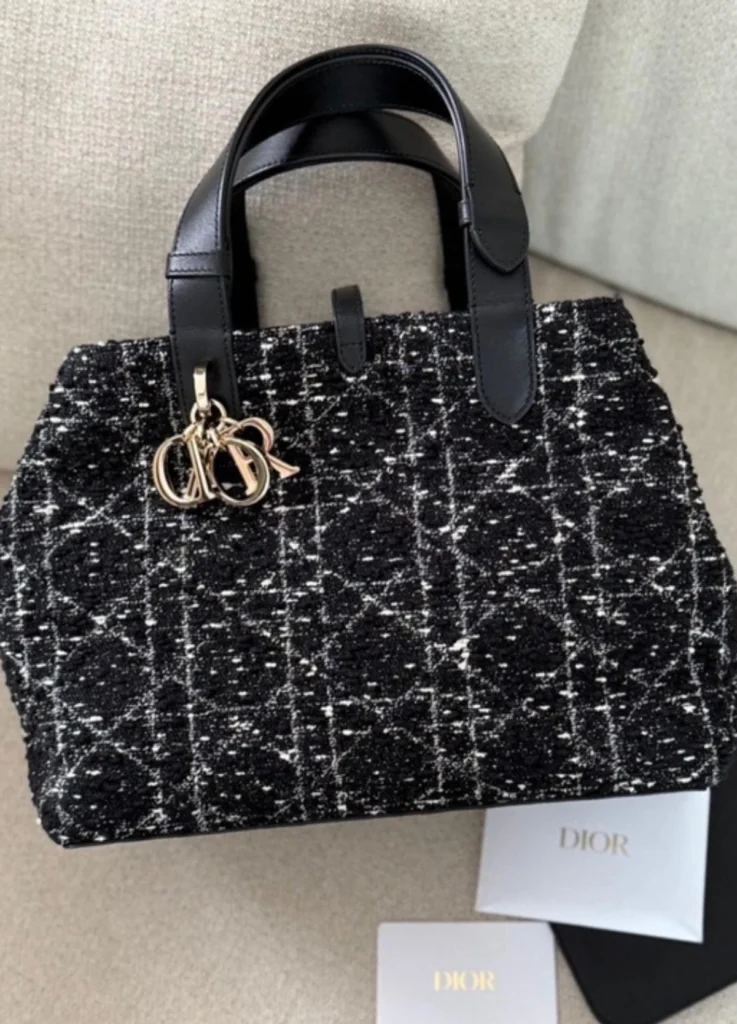
Looking back, the tweed version might be the better entry point. The core structure remains similar, but the reduced material density makes the accumulation slower. A purchase I am still considering.
@kanni.brandcc / Instagram
The tweed or textile versions might look as though they solve the weight problem, but the leather trims, base reinforcement, and internal build create the true sense of weight — not the visible outer textile alone.
The Toujours is not Dior’s easy tote. It is Dior’s softer-looking one.
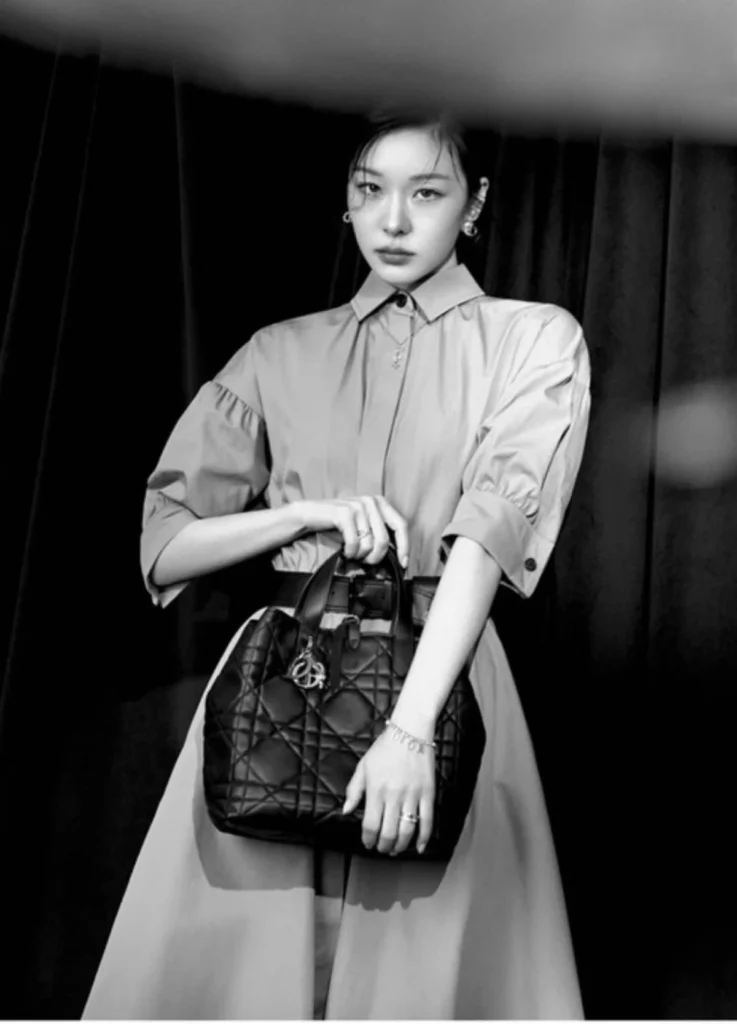
@yunakim / Instagram
Why Height and Body Structure Change the Answer
The same Dior bag behaves differently on every body.
Weight becomes experience through proportion. An absolute gram count tells you very little without context.
Under 160 cm / 5’3″ with shorter arms: When a tote hangs past mid-thigh, the wrist angle becomes unstable and the load doubles. Fatigue arrives fast.

@yunakim / Instagram
- Narrow shoulders: Shoulder-carry bags sit farther from the torso, increasing drag. The load shifts from the shoulder to the elbow — heaviness multiplies.
- Lower arm strength: The wrist and fingers absorb the load instead of sharing it with the upper arm. Even a well-made bag becomes tiring because the body takes weight at the wrong points.
The same 900g bag feels completely different on someone 165 cm / 5’5″ versus someone under 160 cm.
Dior’s structured beauty rewards larger frames with stability. On smaller frames, it can begin to behave like burden.
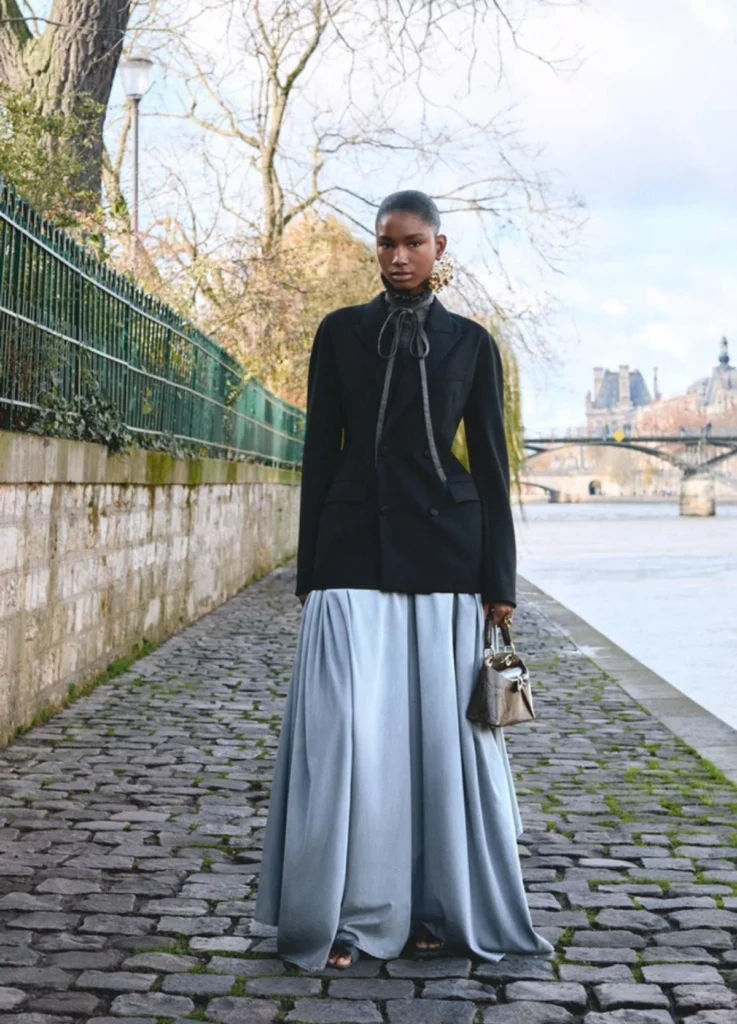
source: Vogue Runway
Practical Checks Before Buying
The simplest way to test a Dior bag is to simulate real life, not admire it.
Carry it for more than a few minutes. Put your actual essentials inside. Try it in the hand and at the elbow. Notice where the strain begins.
- Weight threshold: Once a tote-style Dior bag crosses about 1.3–1.4 kg / 2.9–3.1 lbs fully loaded, many smaller-framed users hit the point where elegance turns into fatigue.

@sooyaaa__ / Instagram
- Organizer: An internal fabric insert distributes weight and protects shape, reducing wrist load by roughly 10%. Helpful, but it cannot change the bag’s structural philosophy.
- Leather choice: Calfskin for maximum visual discipline. Lambskin for more ease and less weight – though with greater susceptibility to wear. For smaller frames, lambskin’s flexibility often produces a more stable carrying experience.
- The elbow test: Carry the bag at the crook of the arm, not only in the hand. If the experience changes dramatically, the bag’s structure is placing too much emphasis on one contact point.

@sooyaaa__ / Instagram
Dior’s Weight as a Form of Perfectionism
Dior’s weight is evidence of choice.
Dior chooses form over collapse. It chooses visual control over accommodation. It chooses stillness over ease.
If Chanel expresses elegance through movement, Dior expresses it through arrest. A Dior bag does not want to soften into your day. It wants to remain itself in spite of it.
Dior bags can feel so seductive. They offer a visual certainty that many softer bags do not. They look finished before you begin. They carry a built-in resolution.
The real question: can that beauty travel through an ordinary day without overtaking it?
The moment a bag begins to lead the body instead of accompanying it, style loses part of its grace.
The right weight is not measured in grams. It is measured in how long you can carry it without thinking about it at all. The point where structure and life remain in balance.
I am still looking for the Dior bag that meets me there.
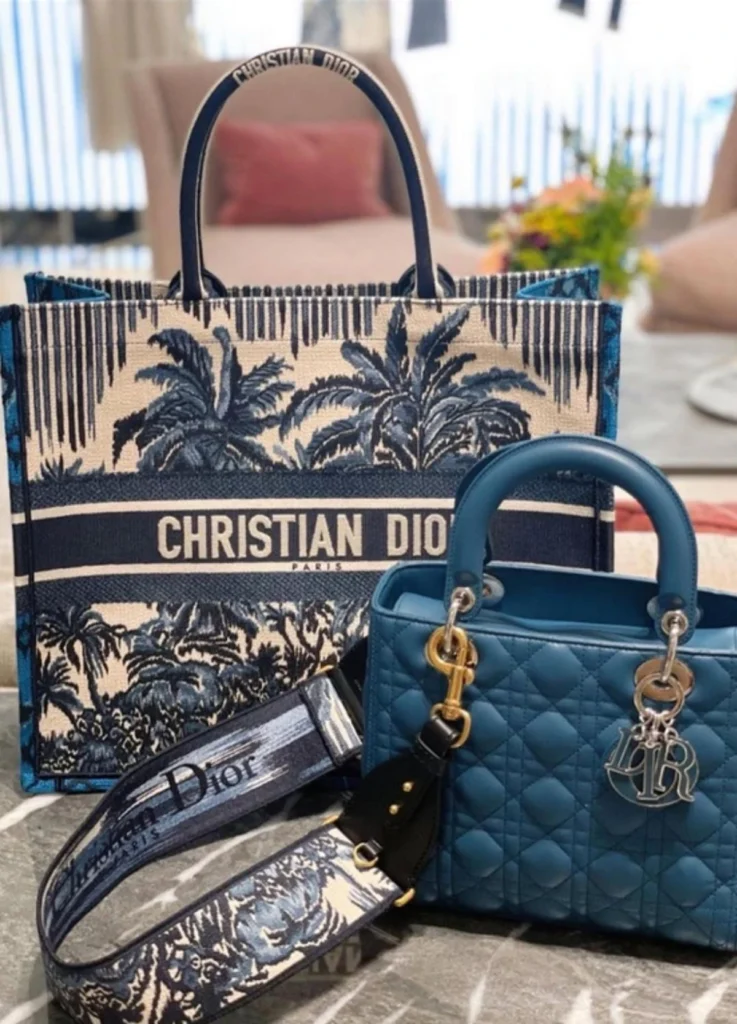
@insluxc_dior / Instagram
Final Reflection
There is a point at which a bag stops complementing the body and begins to lead it.
When that happens, the balance shifts.
The most refined choice is rarely the lightest or the most structured. It is the one that aligns with the rhythm of your own movement.
Your sensibility finds its direction in the weight your hands are willing to carry.
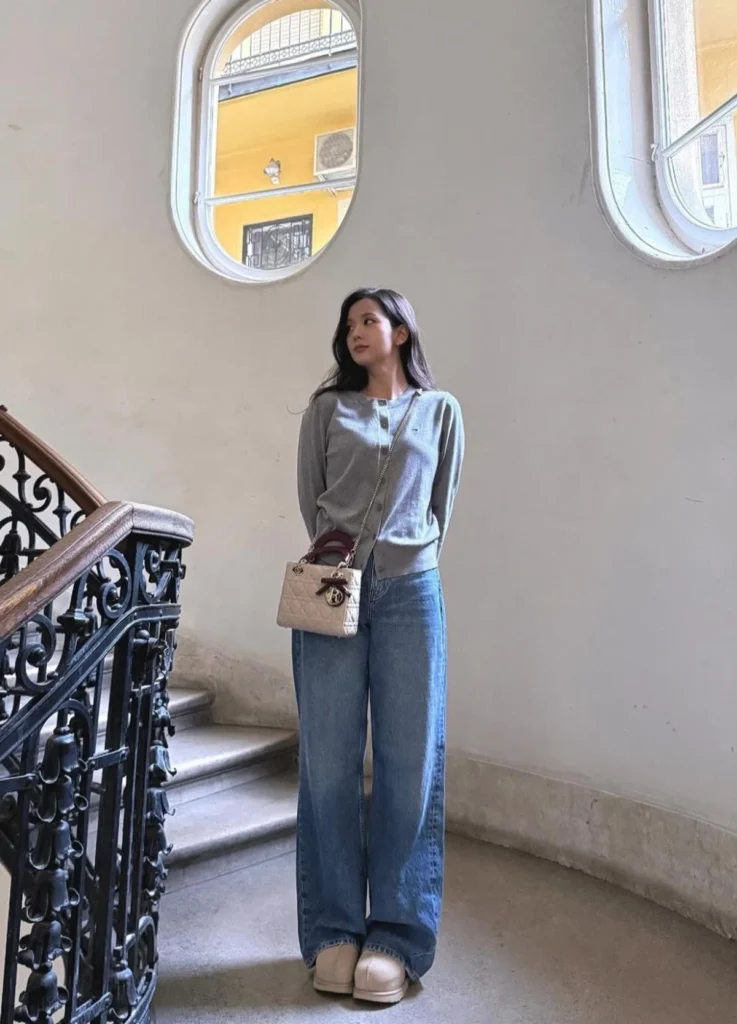
@sooyaaa__ / Instagram
Featured Image via @mawooshlit21 / Instagram
[ Related Editorials ]