The Season That Refused to Impress
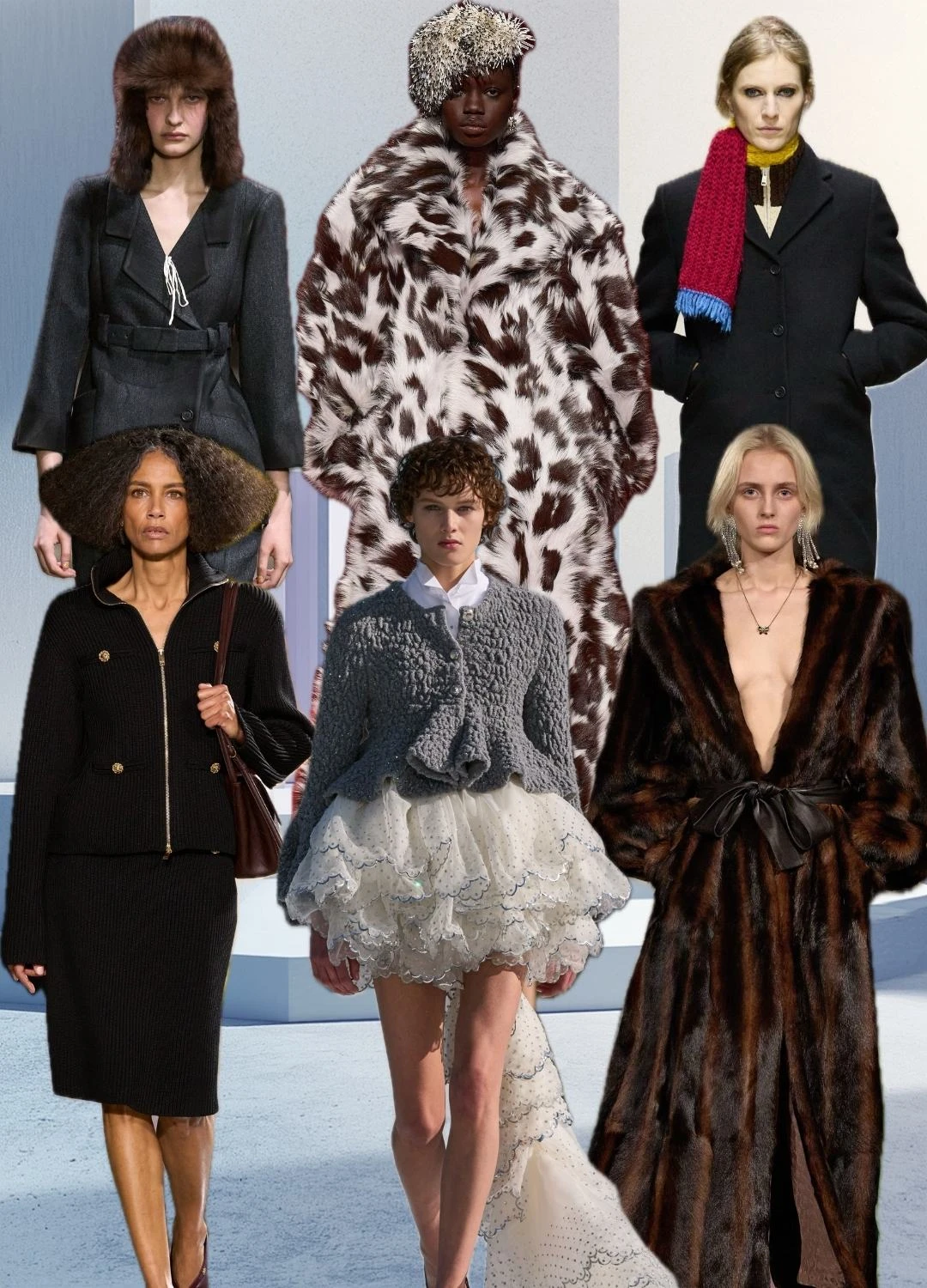
Paris and Milan Fashion Week Fall 2026 is difficult to summarize through the usual terms — the return of tailoring, the expansion of fur, the growing practicality of bags.
This season does not try to impress. At least, not in any way fashion typically defines it.
No silhouette read as immediately directional. No single image compressed neatly enough to circulate and reduce into trend. No look resolved itself within a single glance.
Instead, something far less accommodating emerged.
The clothes did not present themselves as finished ideas. Interpretation was deliberately deferred. What appeared simple at first required more time than expected before any coherent logic surfaced.
This was not accidental.
Luxury is passing through a quiet but unmistakable shift. Prices have already climbed far enough. But the mechanisms that justify those prices — image, heritage, logo — have not kept pace.
The three pillars that once sustained the structure no longer hold it completely.
Something else has to enter.
This is not a change in style. It is a change in function.
Luxury no longer assumes trust. It has to build it.
The Slow Runway — Clothes That Refuse to Resolve
The most compelling shift this season was not speed. It was the delay of comprehension.
The runway moved at its usual pace. The clothes did not land at the same speed.
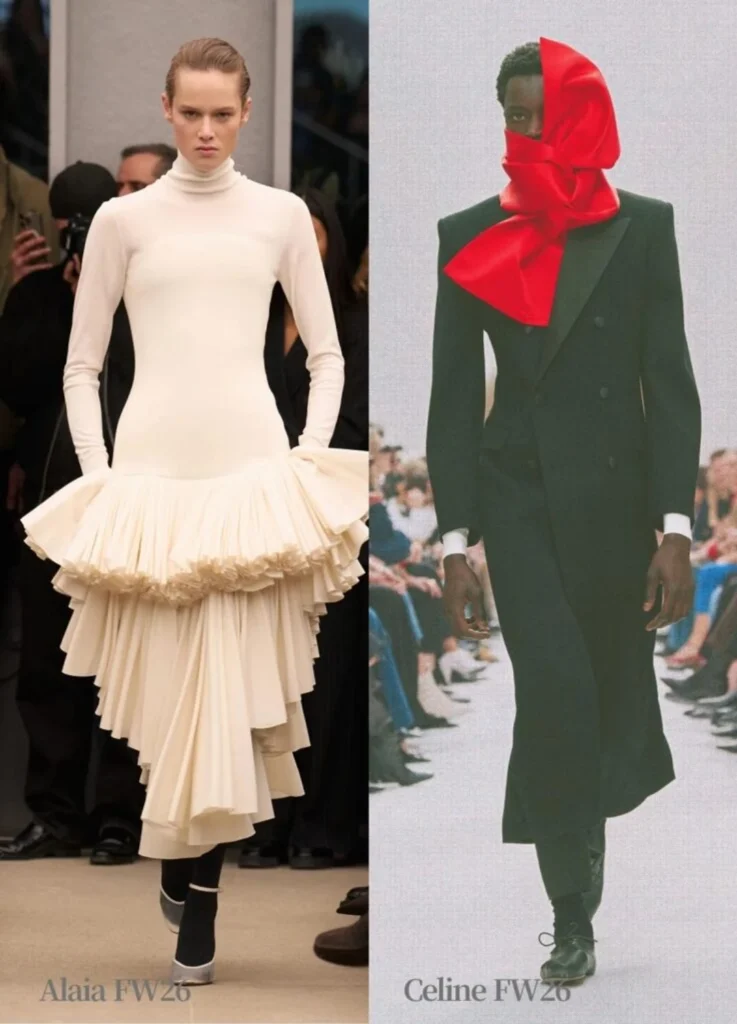
At Celine, the delay was produced through removal. Coats elongated into unbroken vertical planes. The waist nearly disappeared. Without interruption points, the silhouette appeared simple — yet the absence of anchoring made it harder, not easier, to read.
This was not minimalism. It slowed interpretation by design.
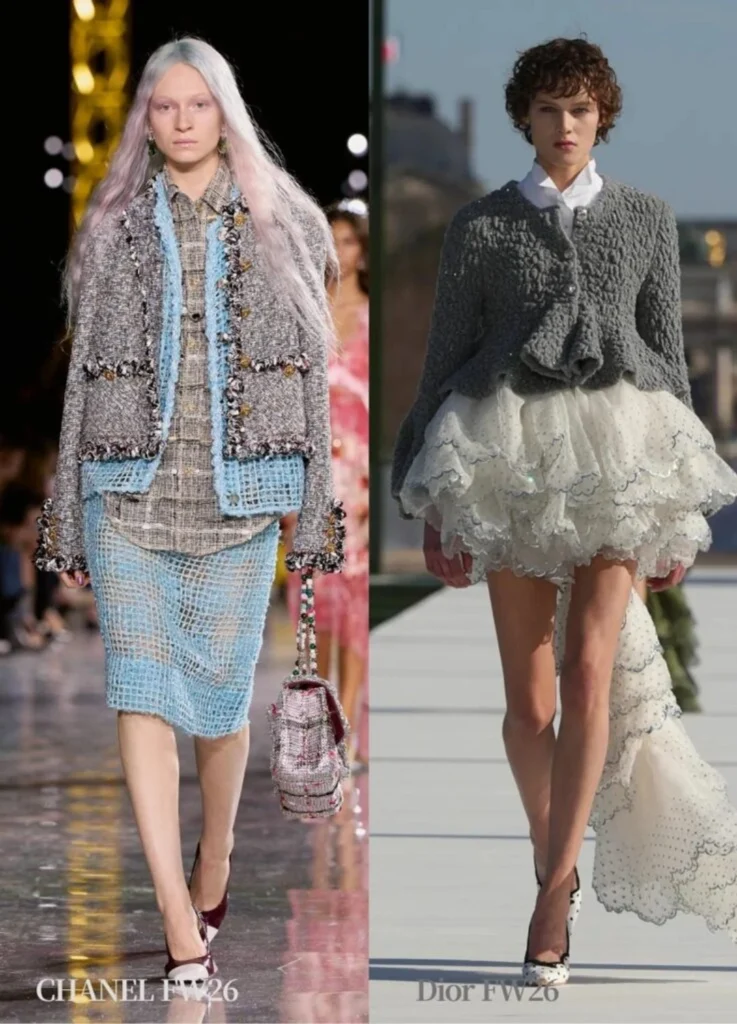
Dior worked in the opposite direction. Rather than stripping information, the house layered it. Tailoring served as the base, then fur, embroidery, and texture were stacked on top — redirecting the eye before it could settle. The garment unfolded sequentially. It asked to be read, not glanced at.
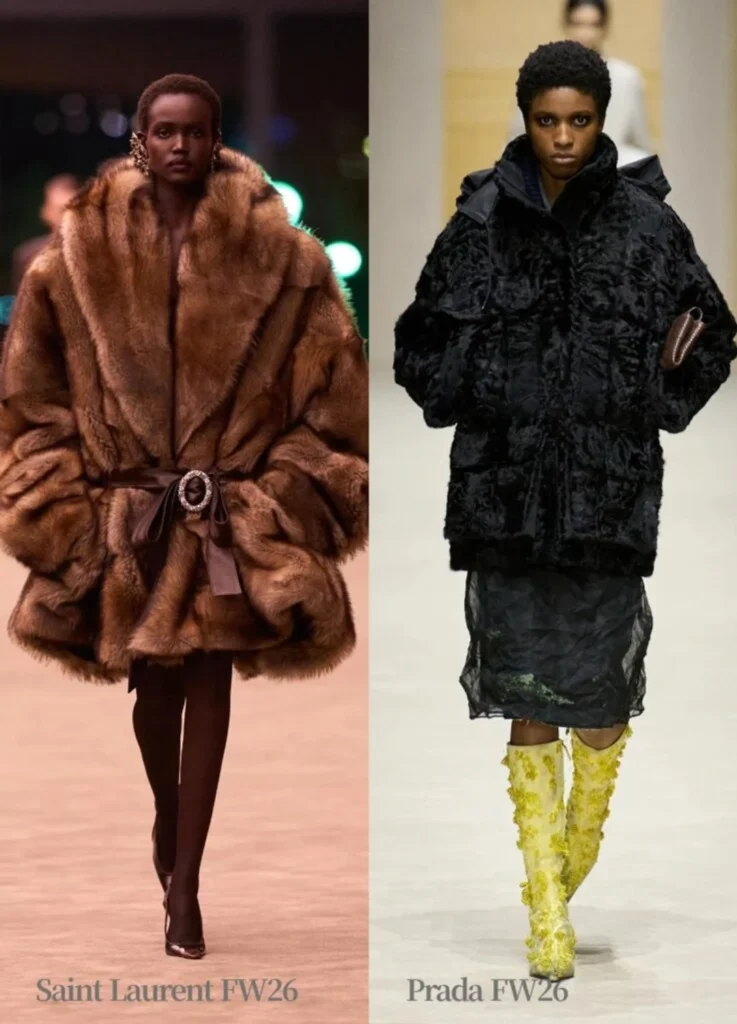
Prada refused resolution altogether. Tailoring looked stable from a distance but fractured up close. Proportions misaligned. Layers ended without closure. Structures opened where they should have held.
These were deliberate refusals, not inconsistencies.
The divide sits here.
Clothes are no longer constructed to be understood immediately. They are engineered to resist completion.
Material as Evidence — From Decoration to Proof
If earlier seasons hinted at material emphasis, Fall/Winter 2026 formalizes it.
Material is no longer decorative. It has become proof.
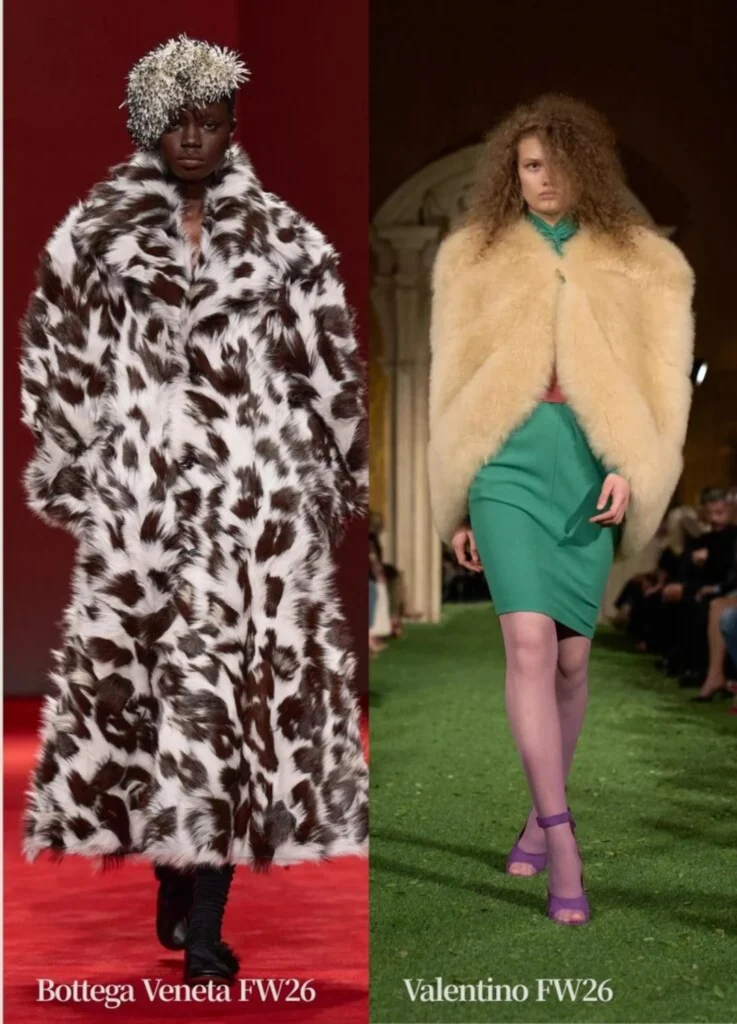
At Bottega Veneta, the shift is almost confrontational. Fur arrives with its grain intact, its density exposed, its volume uncontrolled. The pile remains directional and uneven. The garment does not refine the material — it reveals it.
The value is communicated not through narrative but through physical resistance. The garment occupies space with a force closer to architecture than to clothing.
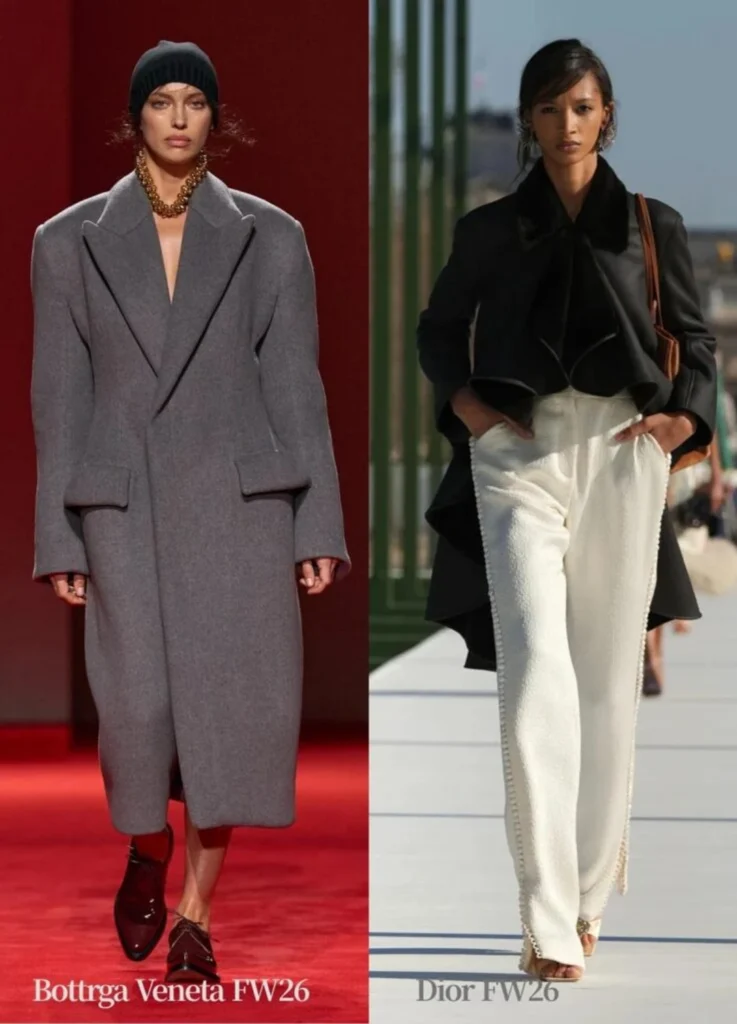
Dior takes the opposite approach. Fur is disciplined — placed along collars, seams, and structural edges where it reinforces construction without overwhelming it. Value is expressed through precision, not mass.
Bottega exposes. Dior calibrates.
Prada, predictably, resists both. Material is rarely foregrounded as spectacle. Instead, it is built through contrast — dense wool against fluid silk, rigid tailoring against collapsing layers. Material becomes relational rather than absolute.
Across all three, material becomes the point.
It no longer decorates the garment. It justifies it.
Fur — Not a Trend, but a Condition
The increased visibility of fur this season invites an obvious reading: a return.
That reading misses the point.
Fur, this season, functions closer to a requirement than a revival.
At Bottega Veneta, fur appears with a density that resists refinement. The texture is left raw, almost unprocessed. The garment does not soften the material. It presents it directly.
Fur performs something few materials can: it translates cost into immediate perception. In a market where pricing has become increasingly abstract, fur restores tangibility. The expense is felt before it is calculated.
Dior operates within the same logic but with a different method. Fur is woven into structure — reinforcing edges, articulating seams — signaling labor and precision without overt display.
The execution differs. The principle does not.
Fur did not return because it is beautiful. It returned because it is legible.
Tailoring — Authority Without Certainty
Tailoring returned across the major houses this season. But not in the form we remember.
At Celine, tailoring is distilled to its most refined state. Shoulders stabilize. Lines extend. The waist recedes almost entirely. Authority is not declared — it is implied.
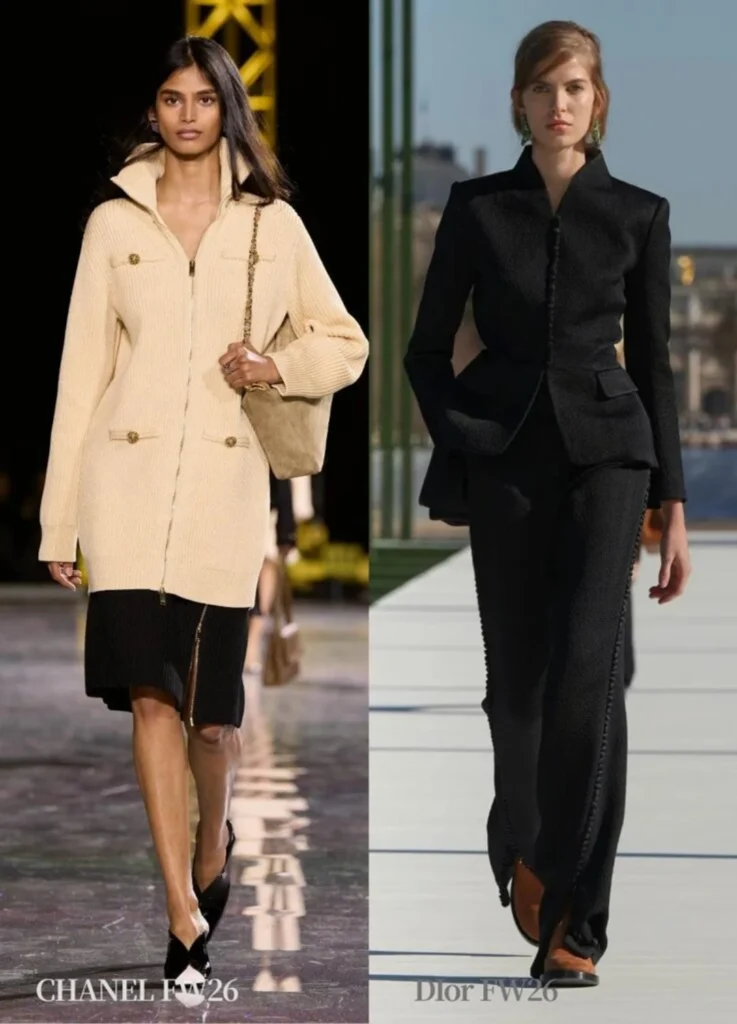
At Dior, that authority is not fully maintained. Other elements layer on top of the tailored base, and tailoring ceases to function as the definitive framework. It becomes one layer among several.
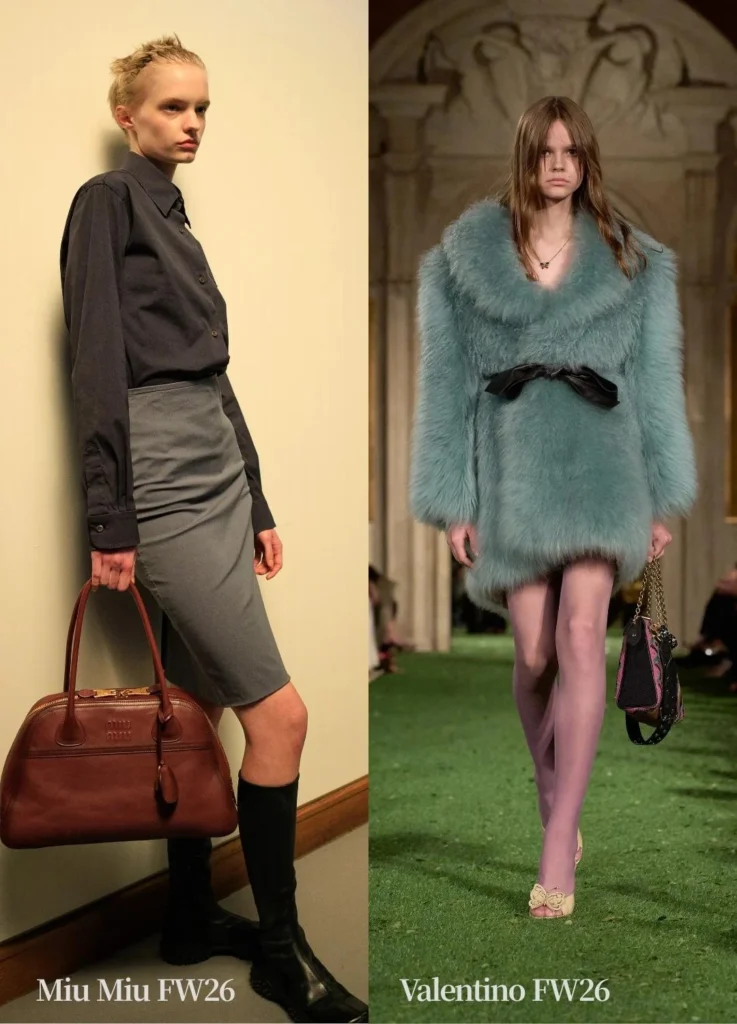
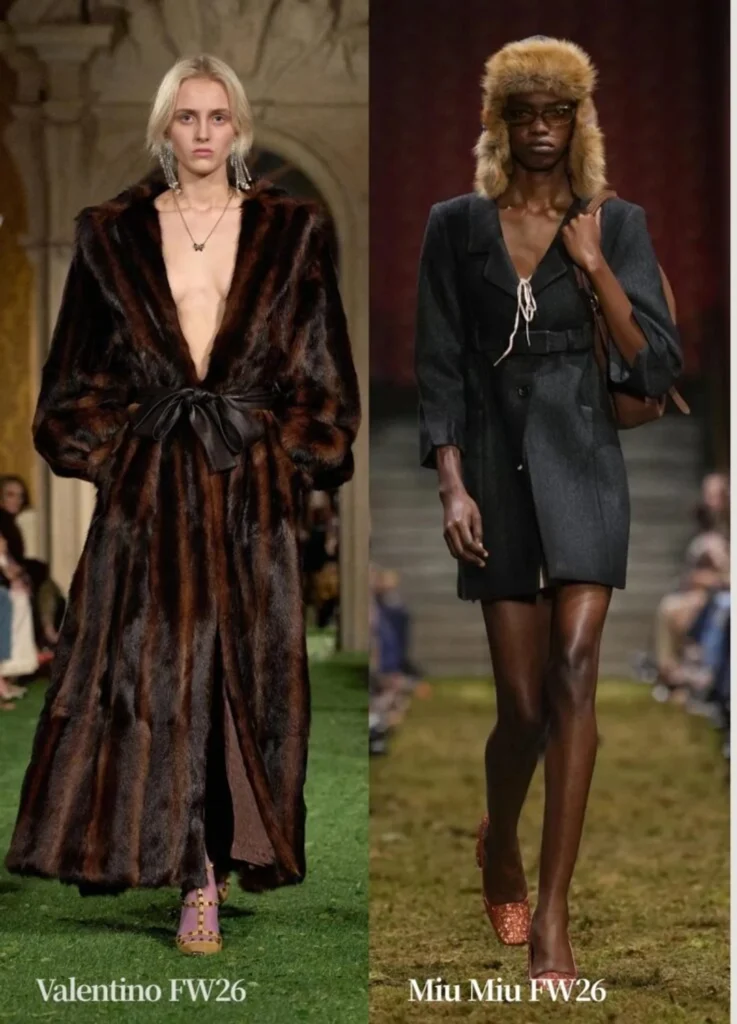
Miu Miu presents tailoring that has settled closer to reality than in previous seasons. Jackets align more precisely. Silhouettes hold more consistently. Yet something remains subtly unstable — preventing full resolution.
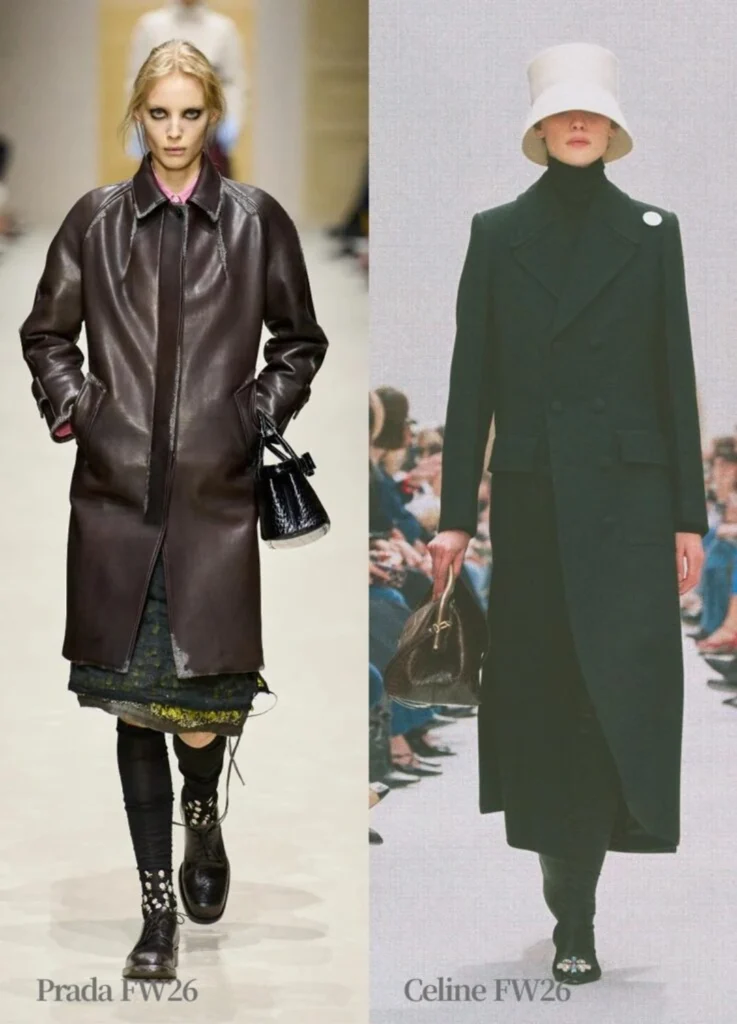
Prada goes further. Tailoring appears, then dismantles itself. A coat begins with recognizable structure and collapses into asymmetry or incompletion.
Tailoring is no longer the answer. It is a condition.
Bags — Where Strategy Becomes Visible
If garments reveal direction, bags reveal strategy.
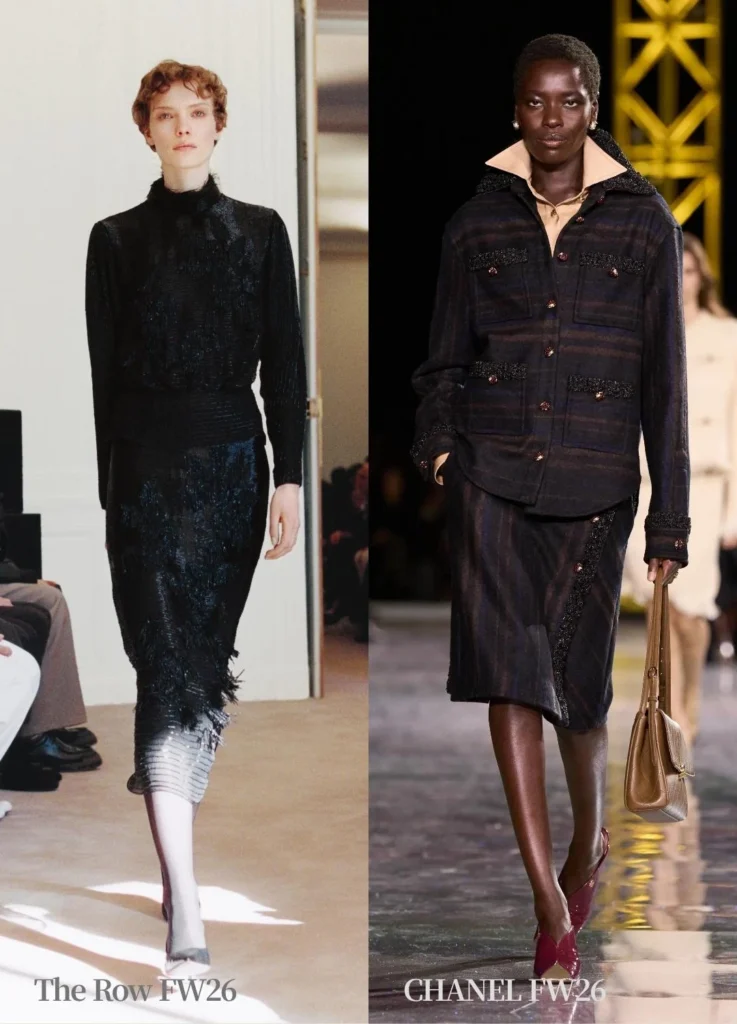
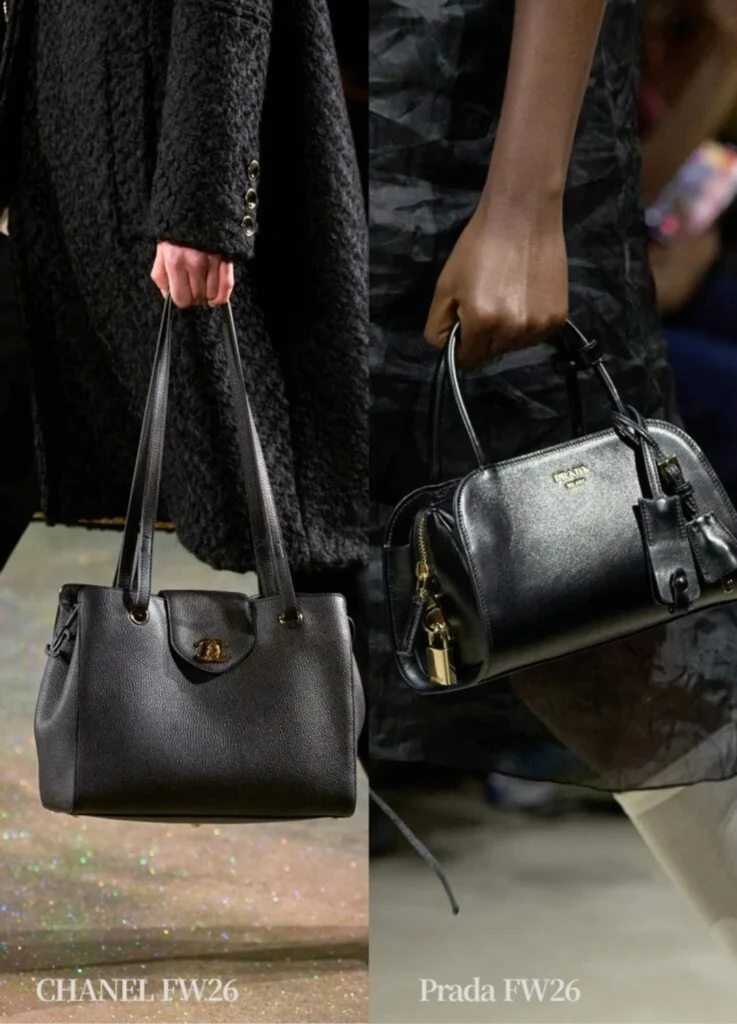
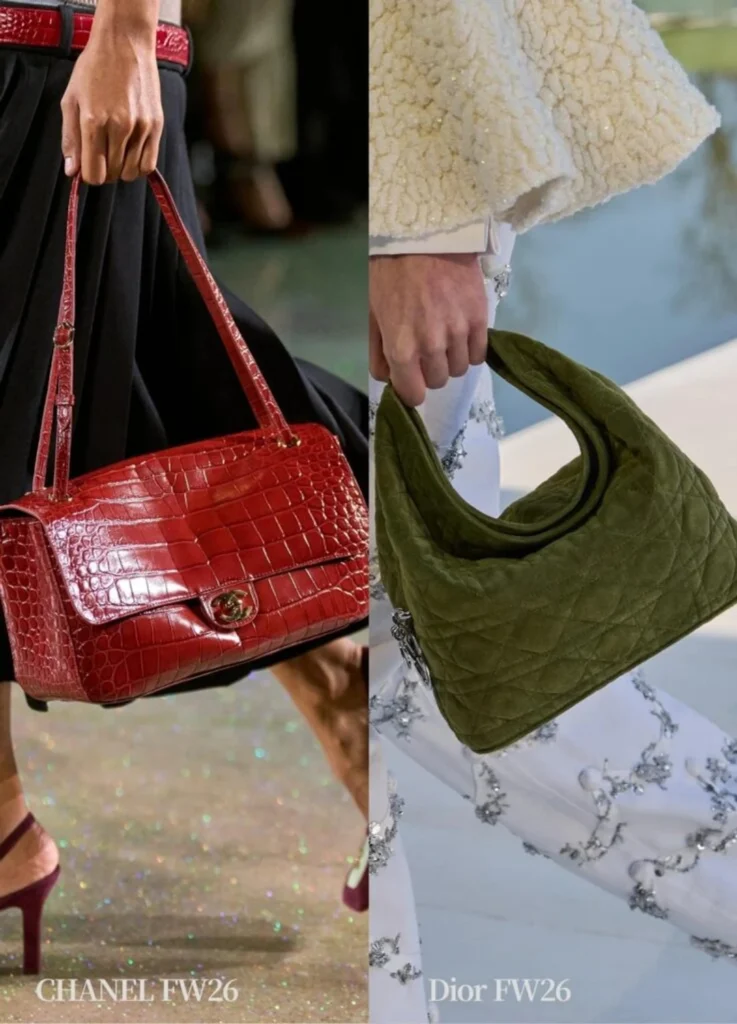
At Chanel, the shift is clear. Chain strap dominance is reduced. Leather straps and larger formats take their place. But alongside the bigger silhouettes, bags that are friendlier to a broader range of body types also appeared.
This is not a design experiment. It is an adjustment. The bag is moving from symbol toward use.
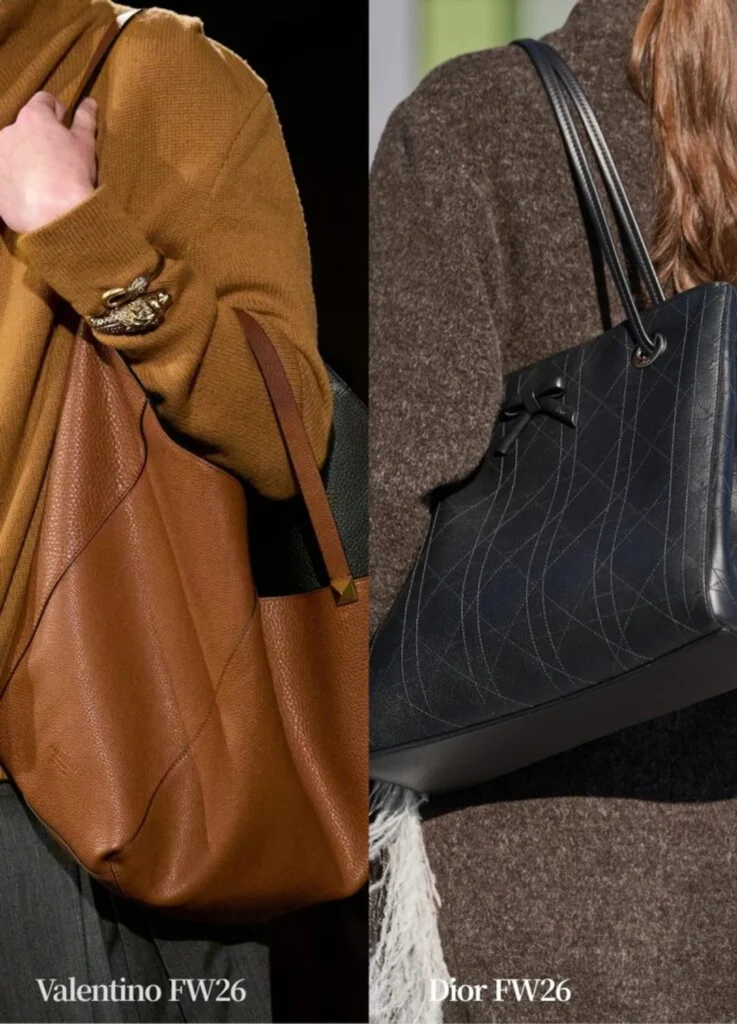
Dior maintains structural continuity while adjusting proportions and carrying positions to align with real movement.
Bottega Veneta extends its material language into scale. Larger formats carry the same textural density as the garments — material and utility coexisting without compromise.
Prada remains deliberately undefined. Bags appear familiar but resist full categorization. Proportions, closures, and structures stay subtly misaligned.
Across all four, a shared pattern emerges.
Bags are no longer insulated from reality. They are designed to exist within it.
The Consumer — From Desire to Justification
These shifts cannot be separated from the consumer.
At current price levels, in an era of sustained inflation, impulse alone does not sustain a luxury purchase. Desire remains essential — but something else now accompanies it.
Justification.
A product must attract, but it must also explain. It must signify, but it must also substantiate.
Material, construction, and usability converge at this point. They do not replace desire. They support it.
The Market — When Value Stops Being Assumed
The broader market context reinforces this transition.
Luxury pricing has reached a level where implicit value is no longer sufficient. Brand, history, and image continue to matter — but they no longer function as complete explanations.
Brands are adjusting accordingly. Material is foregrounded. Construction is clarified. Usability is integrated.
These are not aesthetic coincidences. They are structural responses.
Value is no longer assumed. It is demonstrated.
Luxury, Explained
This was not a season of spectacle. It was a season of recalibration.
Across Paris and Milan, brands did not attempt to redefine fashion. They attempted to stabilize it.
Material became more visible. Structure became more deliberate. Usability became unavoidable.
Differences between houses remain significant. But the direction is shared.
Luxury no longer operates on belief alone.
It is moving — slowly, deliberately — toward explanation.
And once luxury begins to explain itself, it does not return to what it was before.
All images referenced in this post are drawn from Vogue Runway.
[ Related Editorials ]