How Chanel’s Bag Codes Are Shifting
source: Vogue Runway
Chanel Fall Winter 2026 begins with an absence: a new icon. This is not a season about launching another It-bag. It is a season about rewriting the language Chanel already owns.
That distinction matters. From a distance, most of these bags read as unmistakably Chanel — the flaps, the quilting, the chains, the turn-locks, the tweed, the controlled tension between polish and desire that the house has held for decades. Look closer and the changes are structural rather than cosmetic. Chanel hasn’t enlarged its logos or reached for futuristic silhouettes. It has altered the grammar from inside.
The lineup organizes around five anchors: the Layered Classic Flap, the 2.55 Reissue, the Classic 11.12, the Trapezoid Flap, and the Maxi Flap. The order is the argument. Rather than introducing something new, Chanel returns to its strongest existing forms and reworks them one at a time. Some get layered. Some get flattened. Some get longer. Some expand into entire proportion families. Some shed ornament for structure.
@marcoavisconti / Instagram
The work is design logic, not decoration. Quilting flattens. Flaps double or reframe. Closures rotate where they used to lock. The Maxi Flap evolves not just in materials but in proportion family. Even when a silhouette stays familiar, the way the eye moves across it has changed.
These bags are doing more than they appear to. Chanel isn’t abandoning its classics; it is taking them apart and putting them back together.
source: Vogue Runway
Season Context | Why the Bags Feel New Without Feeling Unfamiliar
The Fall Winter 2026 lineup extends the work Matthieu Blazy began in his debut season — a slow recalibration of Chanel’s house codes. The silhouettes still belong to the house’s vocabulary, but closures, chain treatments, quilting, and surface finishes have shifted just enough to make the same bags read as different objects.
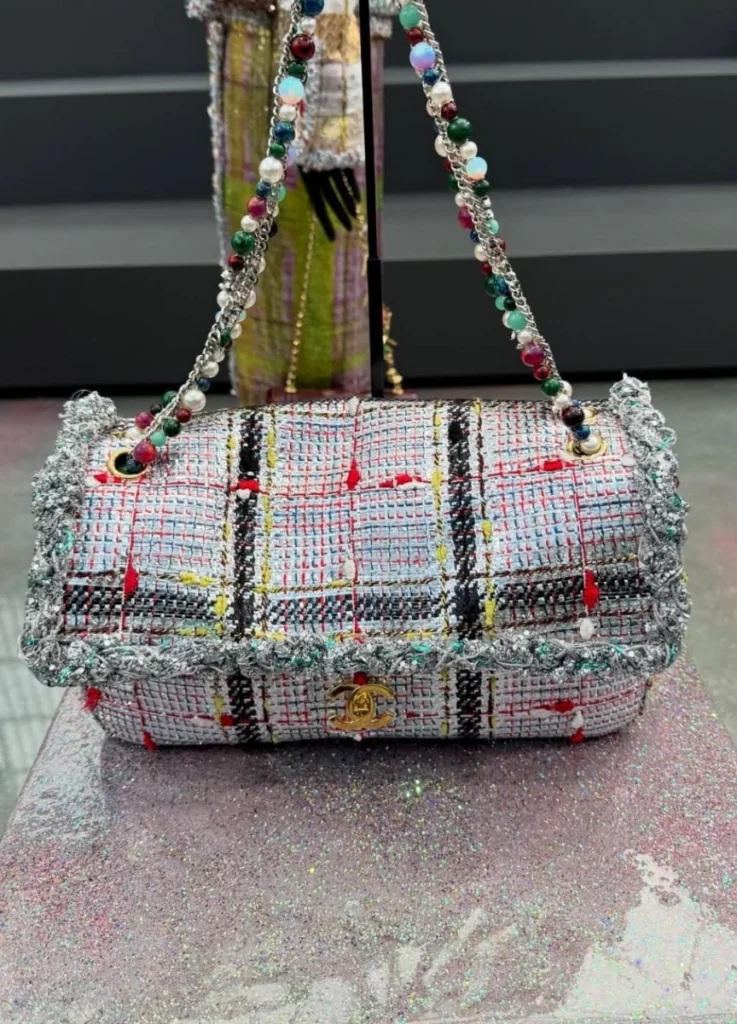
This isn’t a season built to declare a new icon. It repositions authority within the existing system. The 2.55, the 11.12, the flap, the Maxi Flap are all present, but their internal logic has been adjusted. What changes isn’t only how each bag looks, but how the bags relate to one another.
@annadellorusso / Instagram
The approach aligns with the current luxury bag market. Novelty for novelty’s sake has lost momentum; the question that holds attention now is whether a familiar classic can still feel current. Buyers are sensitive to proportion, wearability, and small construction shifts in a way they weren’t five years ago.
Chanel answers that question directly here. The classic stays intact, then becomes flatter, longer, broader, layered, or more architectural. The result reads less like a product rollout and more like a study in redesign.
Fall Winter 2026 is recalibration, not release.
@lucialiustylist / Instagram
Chanel Layered Classic Flap | The Bag That Best Explains the Season
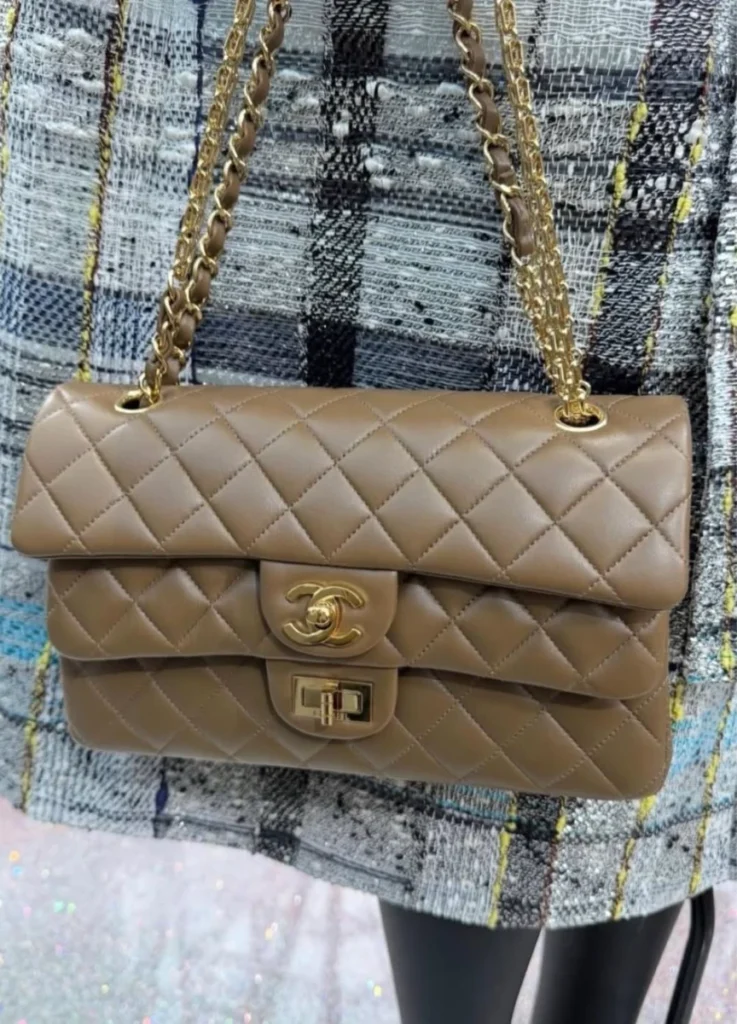
If one bag carries the central idea of this collection, it’s the Layered Classic Flap.
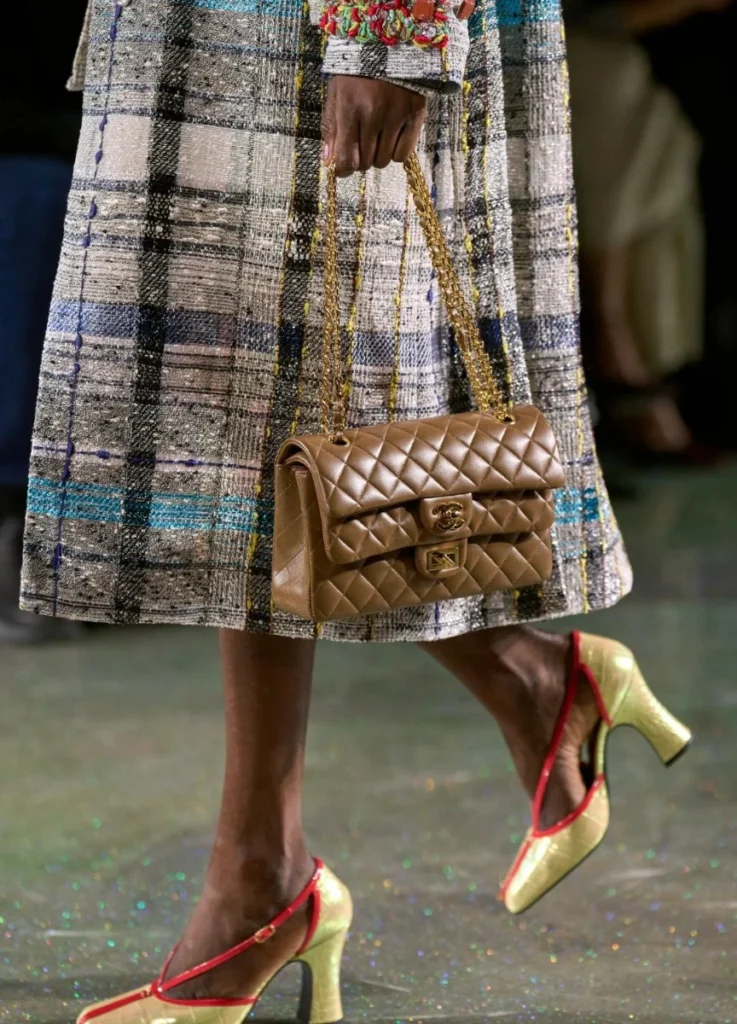
The construction overlays the visual codes of the 2.55 Reissue and the Classic 11.12 onto a single object. The body sits in plush quilted lambskin. The lower flap closes with a Mademoiselle lock; the upper flap closes with the interlocking CC turn-lock. Even the chains double up — one reads closer to bijoux jewelry, the other recalls the traditional leather-interwoven Chanel strap.
The bag is compelling not because it’s “double” in construction, but because of what the doubling implies about Chanel itself. Rather than asking which house code is the truer expression of the brand, the bag proposes that Chanel has always been a layered house — built not from one pure symbol but from overlapping historical codes.
That’s also why it may divide opinion. At first glance it reads familiar. Then the eye registers two closures, two historical references, two parallel readings of what a Chanel flap can be. It is the clearest articulation of the season’s recurring vocabulary: layering, duality, structural overlap.
source: Vogue Runway
Proportion and Body Compatibility
This is not a Chanel bag that disappears into the body. It carries enough visual authority to set the visual axis of the outfit. On smaller or softer frames, that authority can dominate rather than integrate.
- Works best on: women with reasonably defined shoulders, those who regularly wear denser garments (coats, jackets, tweed), medium-to-tall proportions, and bodies whose upper half isn’t unusually compressed.
- Less natural on: very petite frames, especially when arm length and wrist scale are delicate. The bag tends to arrive before the wearer.
This isn’t a pretty Chanel bag that sits nicely. It’s a Chanel bag that dictates the look.
source: Vogue Runway
Chanel Trapezoid Flap | The Most Convincing New Shape of the Season
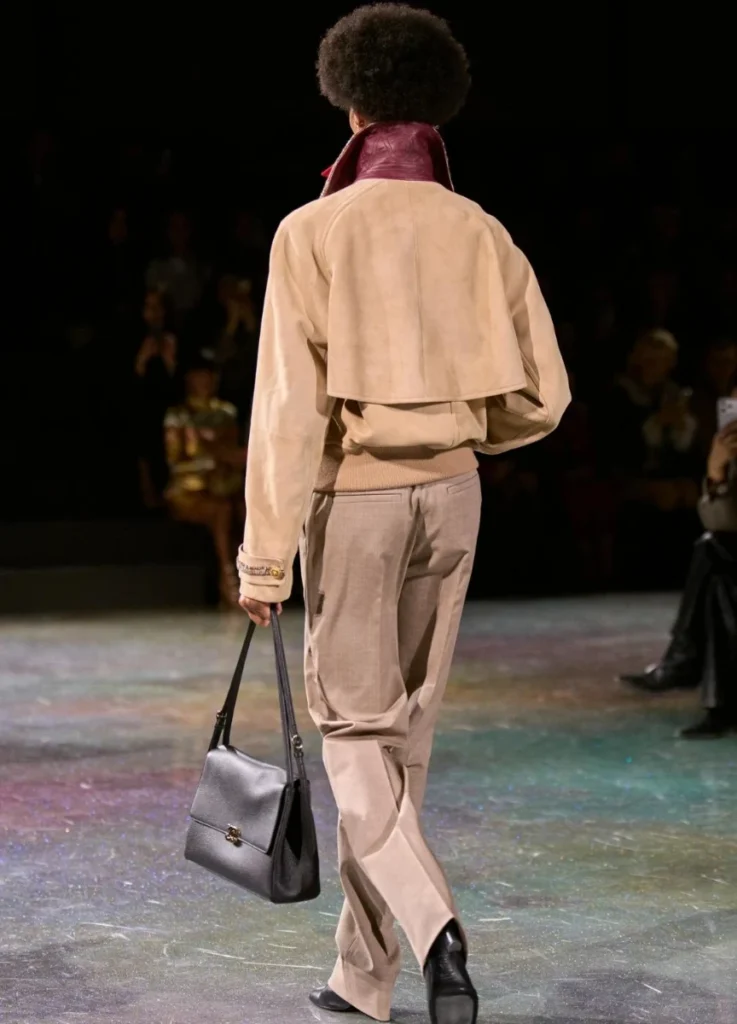
Among the new silhouettes, the Trapezoid Flap is the most important.
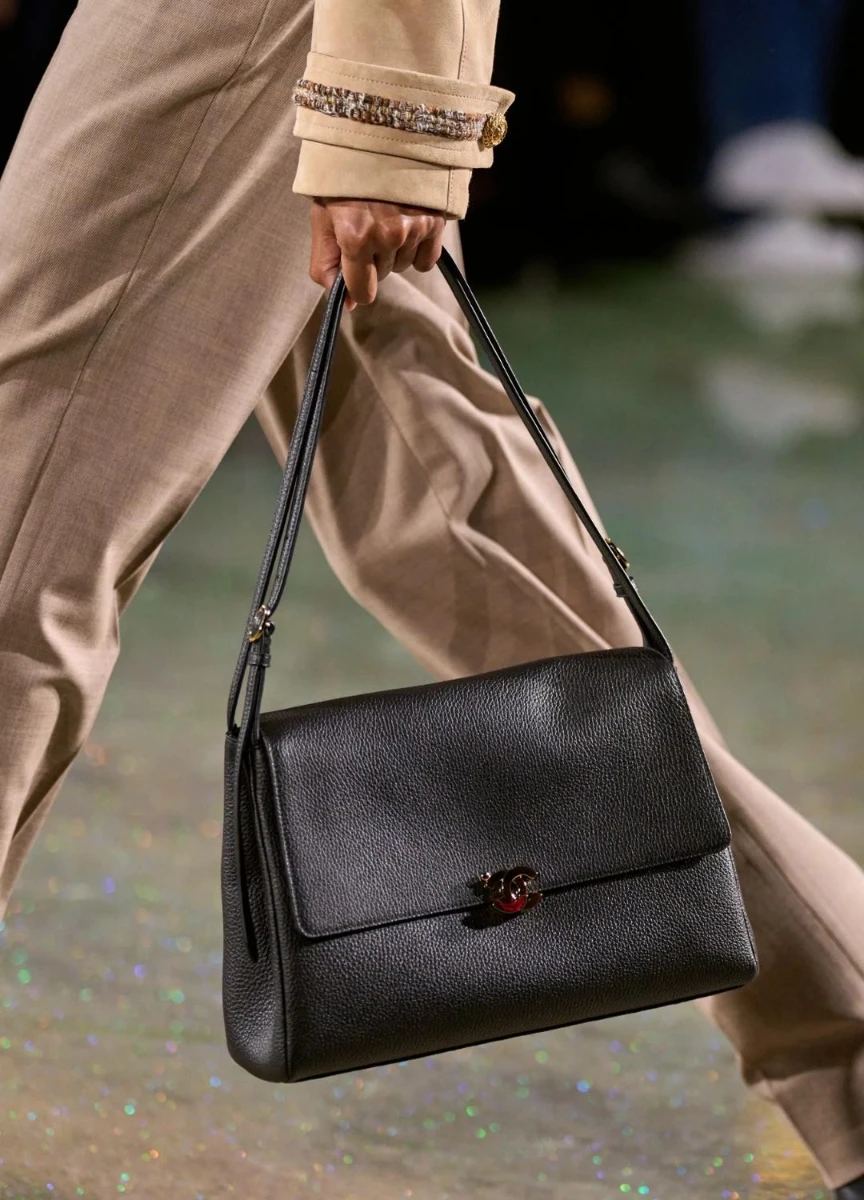
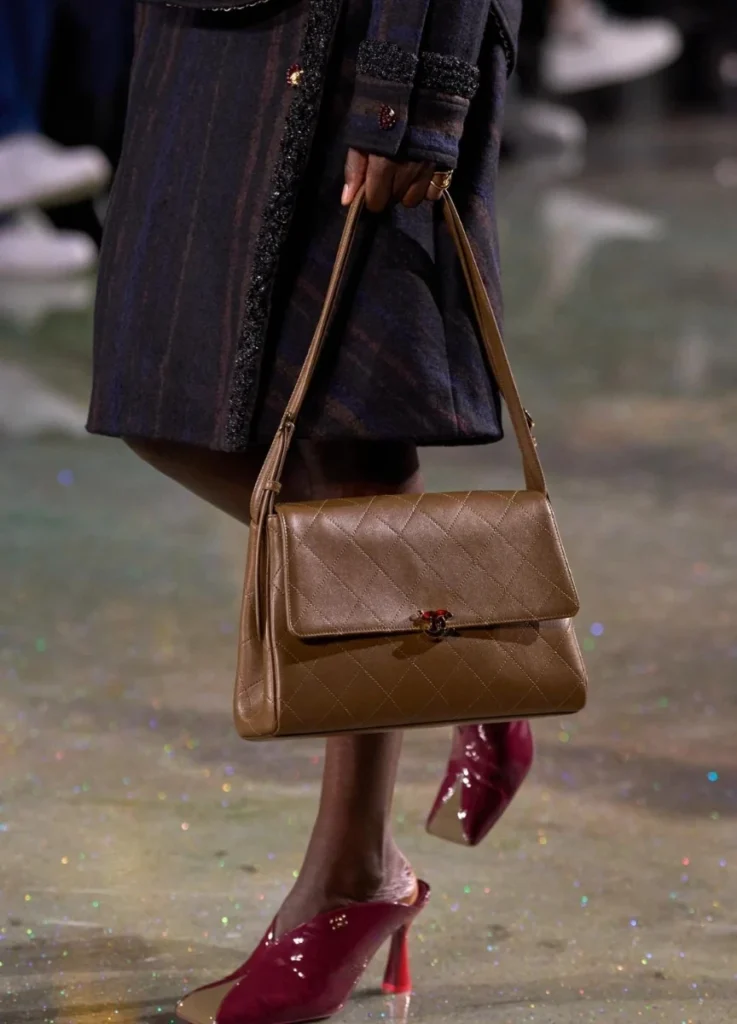
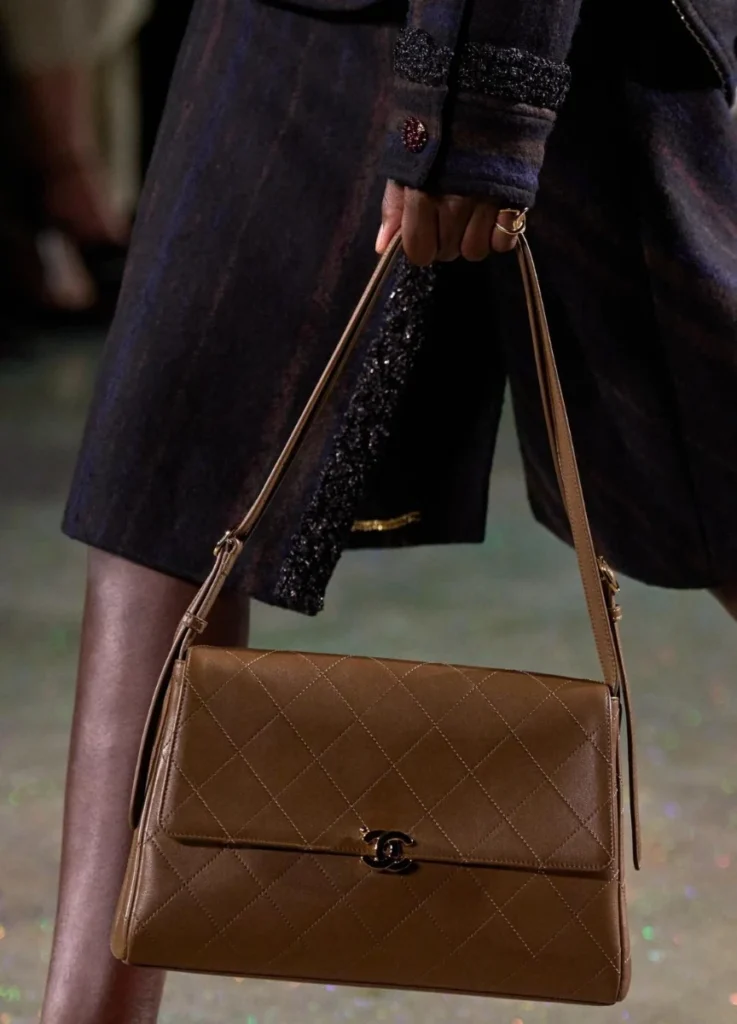
It takes the more minimal direction first introduced through the Maxi Flap and translates it into something more architectural, more practical, and more wearable. The defining elements: a slim double leather strap, controlled and clean proportions, and a rotating CC closure rather than the standard central turn-lock. Chanel showed it in flat-quilted versions and in non-quilted grained calfskin, with darker neutrals and an emerald suede variant adding range.
Chanel has stopped looking for new ways to decorate the classic flap. With the Trapezoid, the house shows how the classic flap can be rewritten for a more contemporary wardrobe.
source: Vogue Runway
The slightly outward-widening trapezoidal silhouette reads broader and lighter than the traditional Classic Flap. It belongs unmistakably to Chanel’s universe but feels less formal, less burdened by inherited codes. The slim leather straps replacing the chain-heavy treatment carry that further. The bag is less adorned, less ceremonial, more usable.
This marks Chanel’s move from old Chanel to post-classic vocabulary.
source: Vogue Runway
Proportion and Body Compatibility
This is also one of the more forgiving bags in the lineup. It has structure without becoming rigid, and the silhouette opens slightly outward, so it doesn’t cut the body the way a more compact, boxy flap can.
- Works particularly well for: medium frames with balanced shoulders, women who want a daily luxury or work bag but find the Classic Flap too formal, and shorter women whose upper torso isn’t extremely compressed.
In terms of arm length, wrist proportion, and upper-to-lower balance, the Trapezoid has a lower entry threshold than most of the runway styles. The non-quilted grained calfskin version expands particularly well into real life.
This was, candidly, the most convincing bag in the collection for me.
source: Vogue Runway
Chanel Maxi Flap | The Clearest Expression of Blazy’s Chanel
If the Trapezoid Flap is the season’s most practical proposal, the Maxi Flap is its clearest statement of intent.
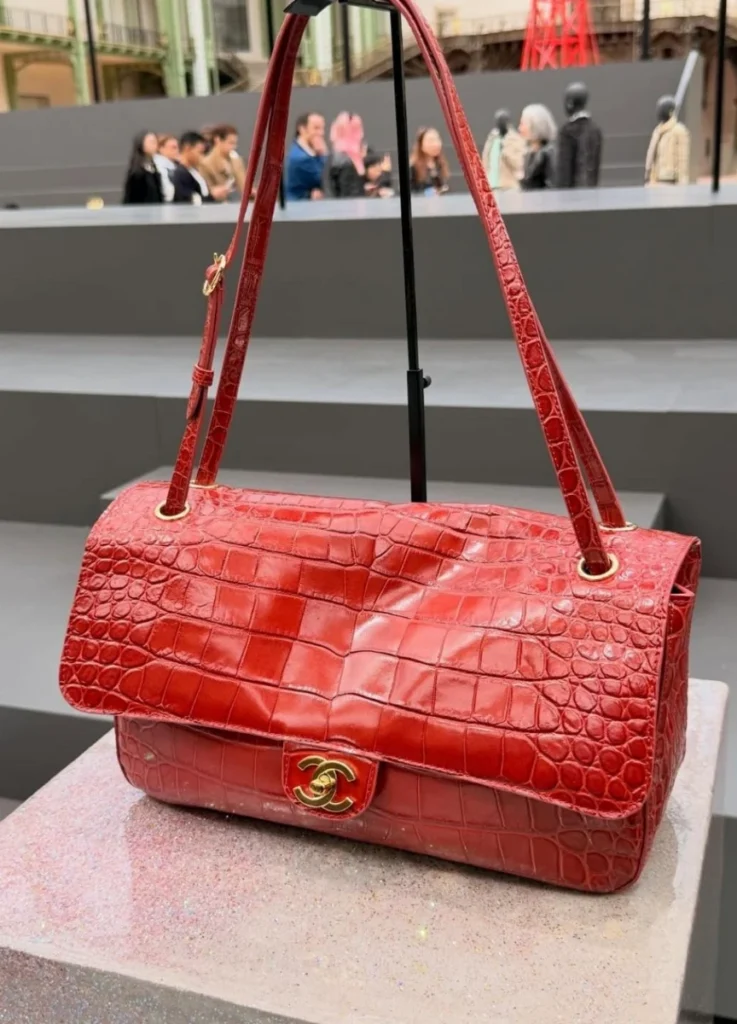
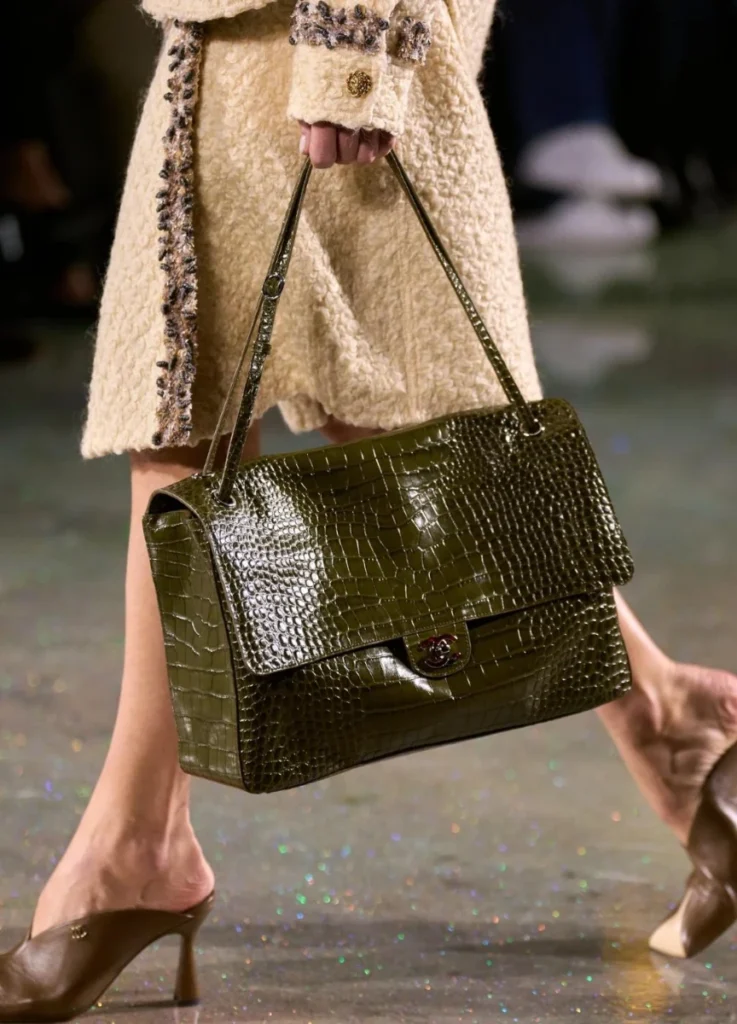
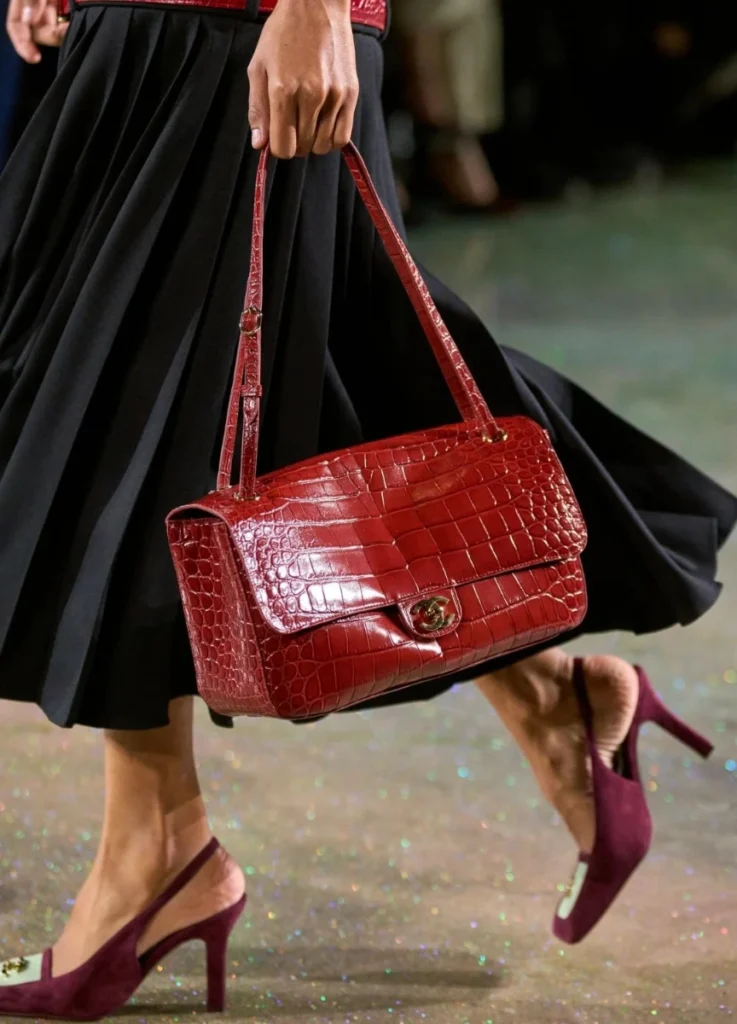
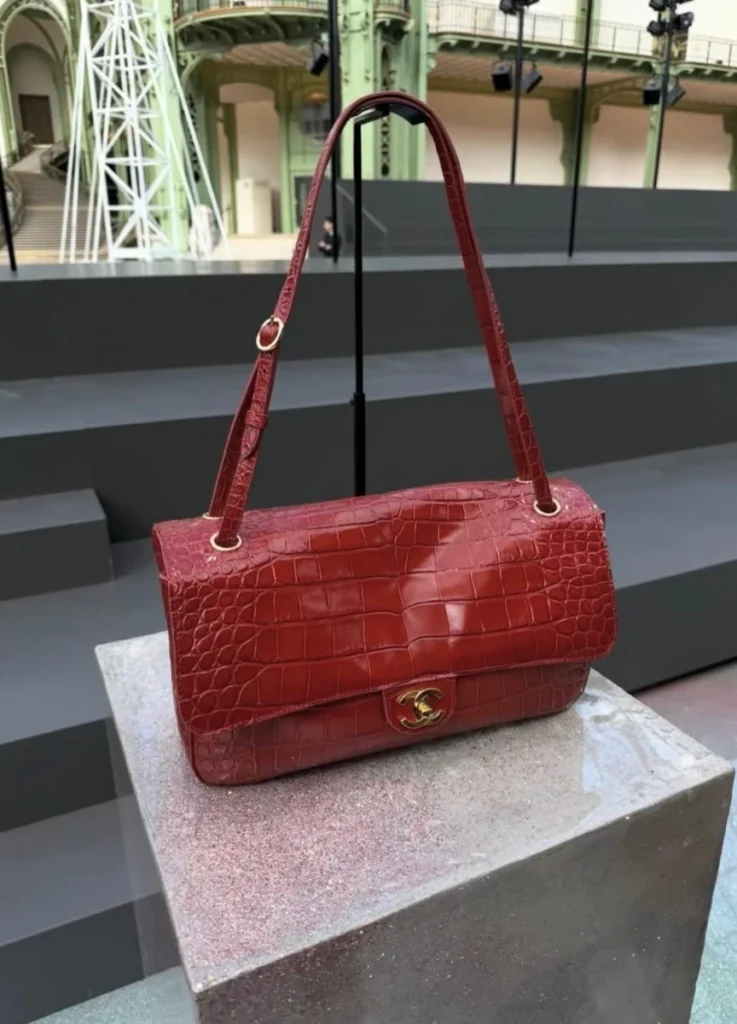
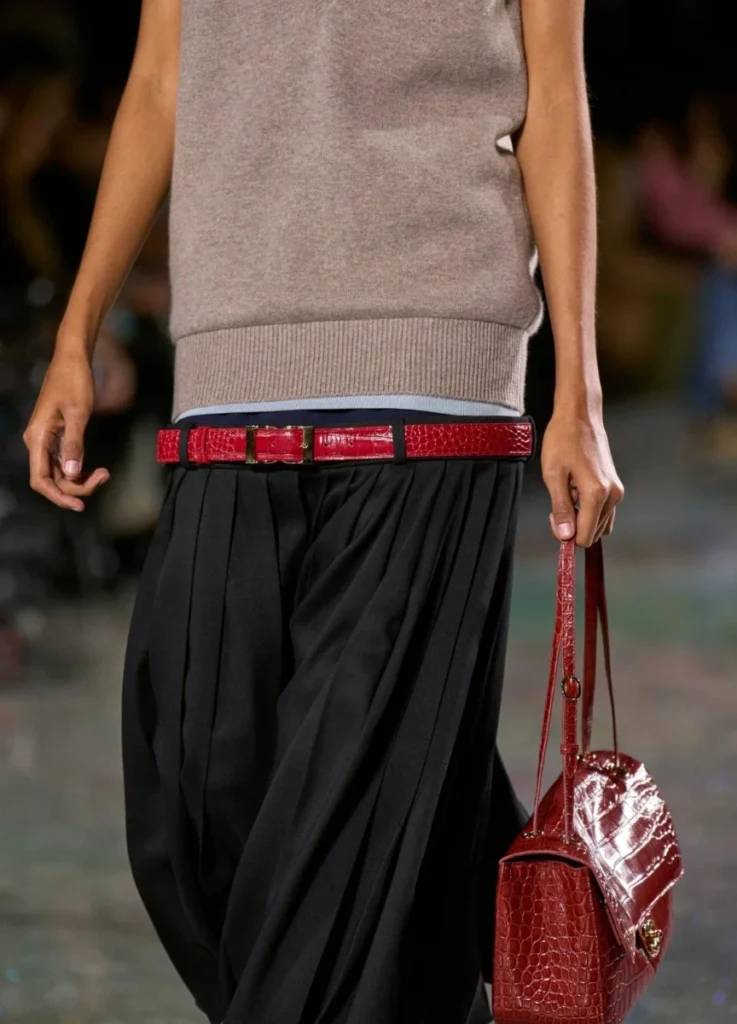
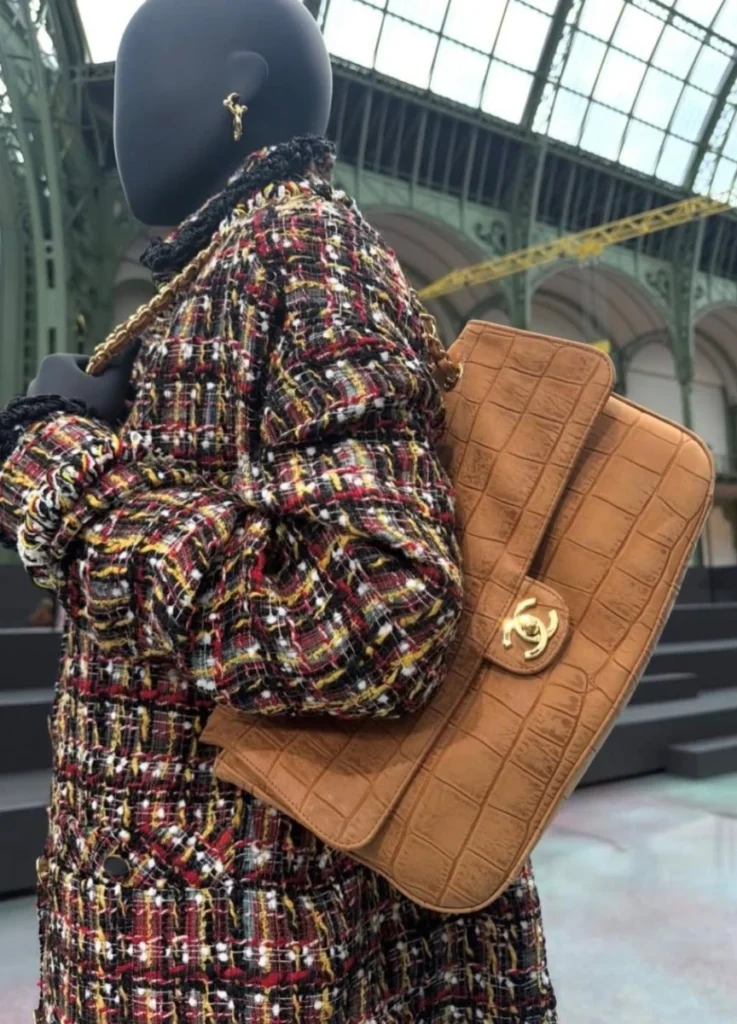
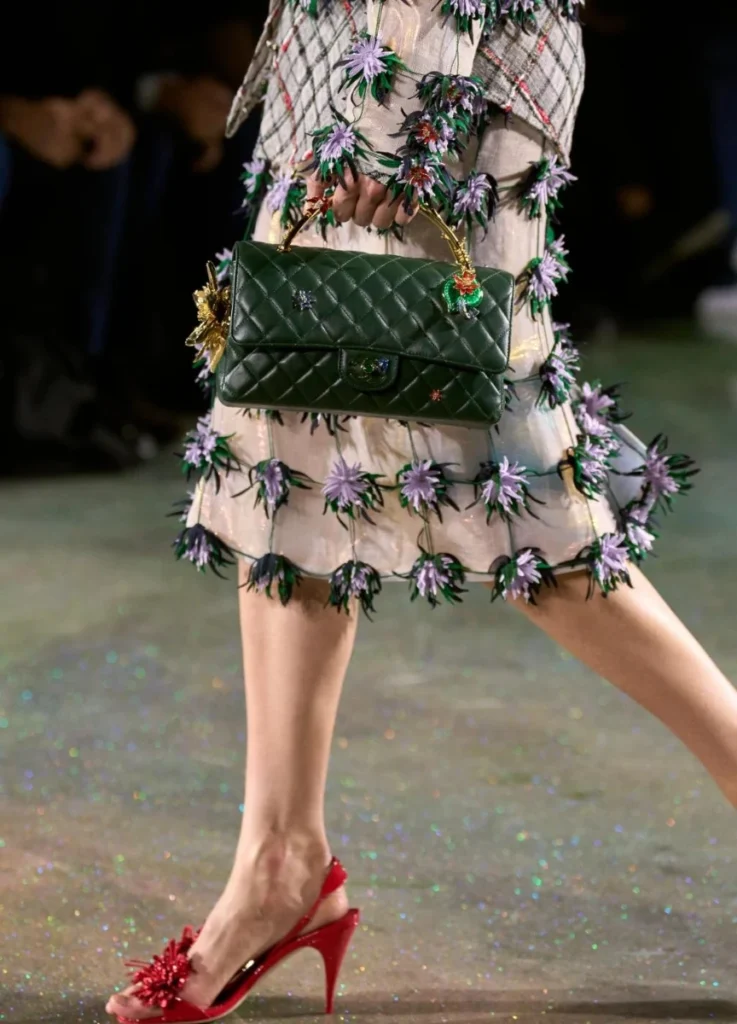
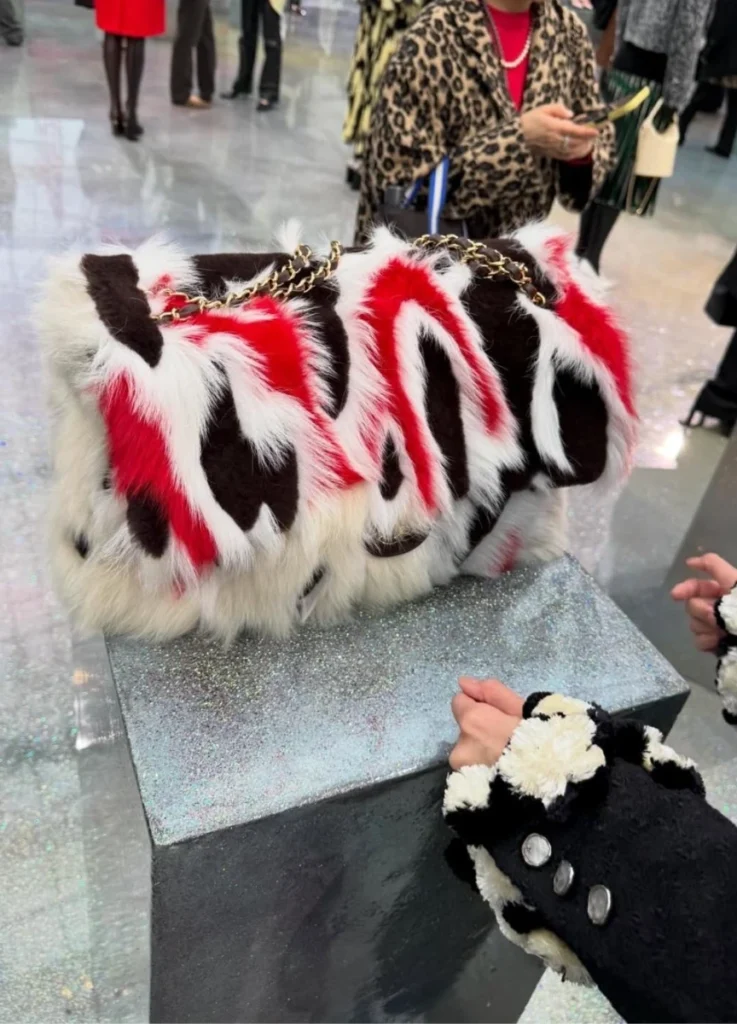
The line first appeared in Spring/Summer 2026. For Fall/Winter 2026 it returns in croc-embossed calfskin, fur-textured tweed, beaded-strap variants, and smaller scaled-down versions. Deep olive green and a vivid red anchor the key shades.
The Maxi Flap matters because it loosens the classic Chanel flap formula on purpose. Traditional Chanel flap bags hold a tight balance of quilting, chain, and proportion. The Maxi Flap relaxes that structure deliberately. Quilting reduces or disappears. Leather straps carry visual weight where chains used to. The body lengthens, widens, becomes more shoulder-bag in feel.
It translates the Chanel flap from an aristocratic handbag into a contemporary oversized shoulder bag.
That shift first arrived in Spring/Summer as a proposition. In Fall/Winter it becomes serious. The line now reads less as a runway experiment and more as a real product family. That’s what makes it significant — this isn’t simply an enlarged bag. It’s a new silhouette system inside Chanel.
source: Vogue Runway
Proportion and Body Compatibility
The Maxi Flap is highly proportion-dependent. On the right body, it looks unmistakably modern. On the wrong one, it overwhelms.
- Works best on: taller women, bodies with strong vertical proportion, wearers comfortable in long coats, long skirts, and volume, and frames with enough upper-body presence to support a larger bag.
@aboutchanelhere / Instagram
- More difficult for: petite wearers, shorter arms, compact upper bodies, and wardrobes built around visually light tops.
The smaller variants change the equation, though. Those versions preserve the line’s elongated modernity while becoming far easier to manage. The Maxi Flap can no longer be read as a single oversized runway object — it functions as a differentiated line now. The smaller version, in fact, is one of the most appealing bags of the season.
source: Vogue Runway
Chanel 2.55 Reissue | Changing the Rhythm Without Changing the Blueprint
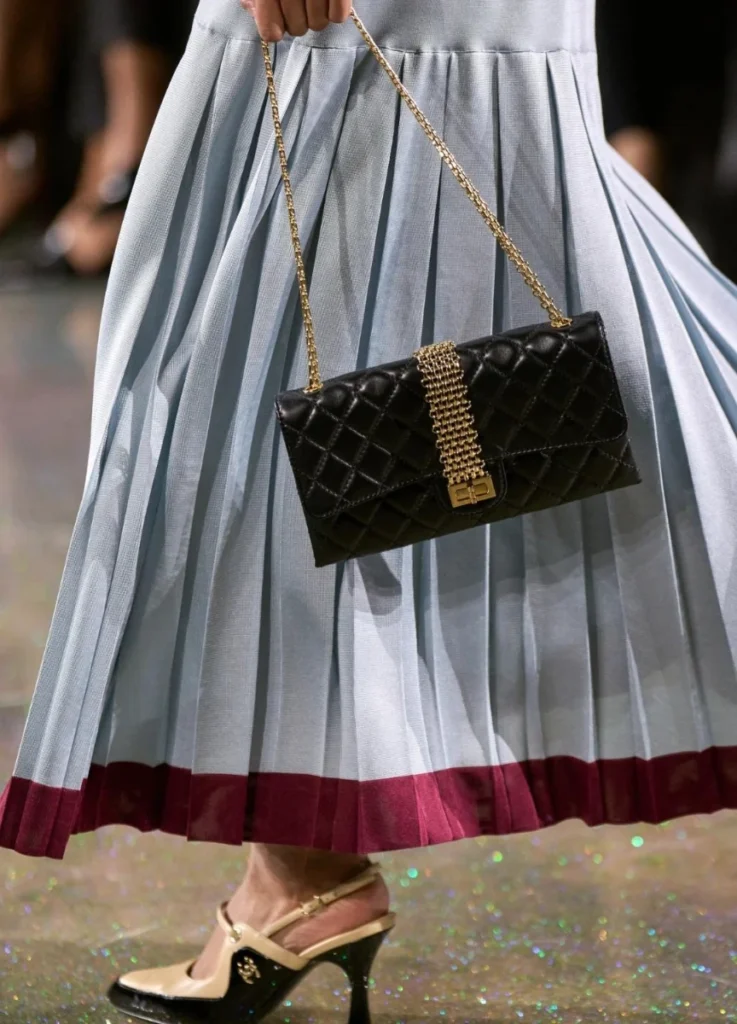
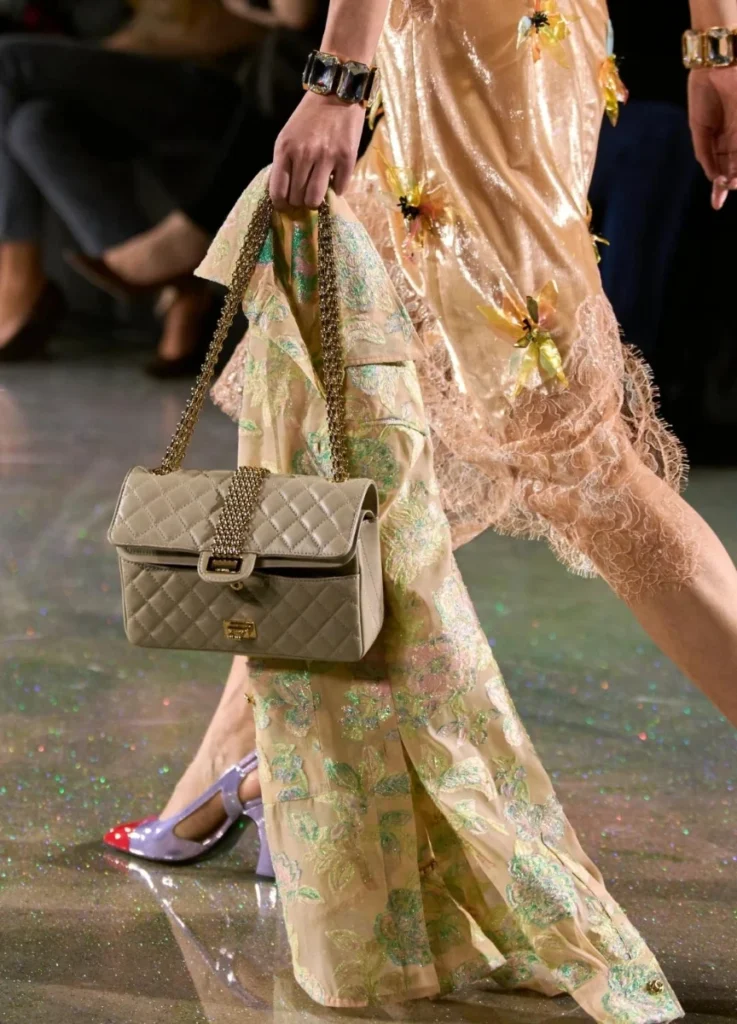
The Fall Winter 2026 2.55 is one of the most intelligent bags in the lineup.
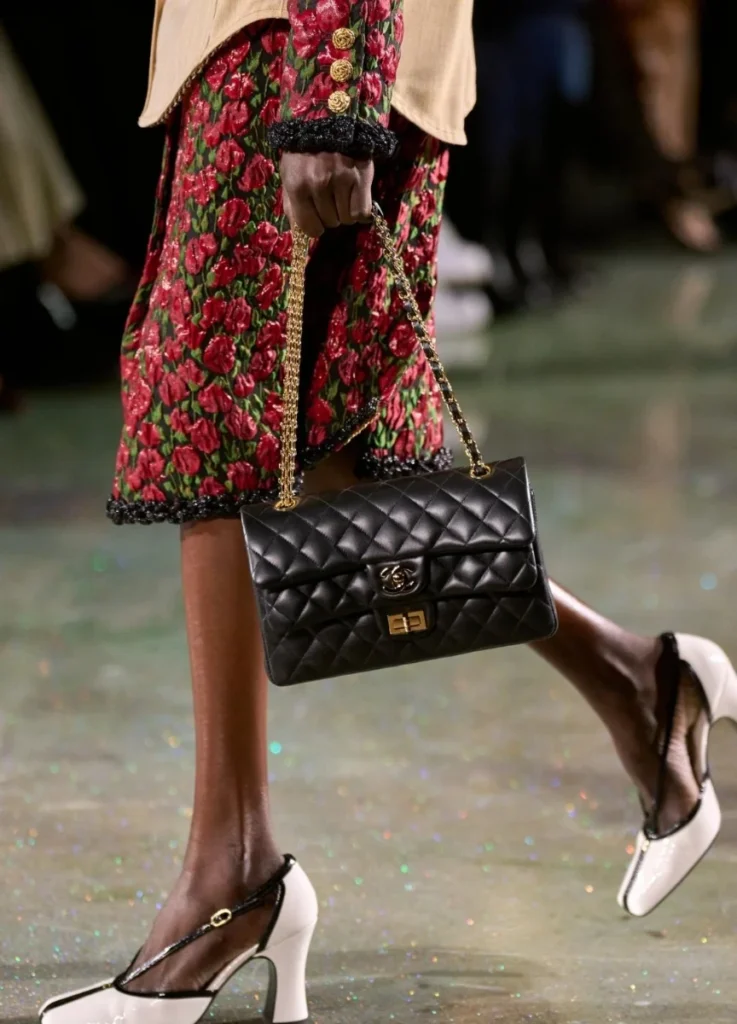
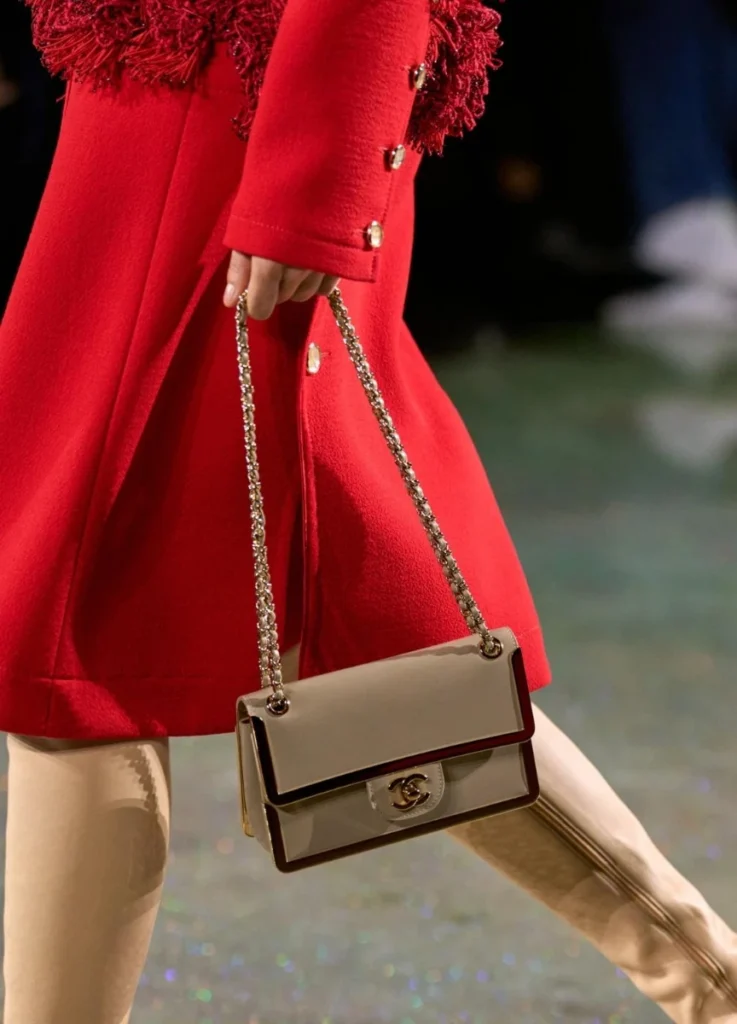
This season’s version comes in quilted lambskin rather than the more familiar aged calfskin, while keeping the Mademoiselle lock and bijoux chain. The most visible intervention: the chain drapes across the front of the body, turning what was once a functional component into an ornamental one.
The move is subtle. It also matters more than it appears.
The 2.55 may be the Chanel bag that feels most historically complete. Its blueprint is already resolved. So rather than redrawing its face, this season changes the rhythm of looking. The eye no longer reads only the flap, lock, and body — it reads the chain as surface movement.
The house doesn’t restructure the icon. It overlays a new cadence onto it.
That’s why the design is interesting — and why it may divide opinion. It touches one of Chanel’s most resolved classics without dismantling it.
source: Vogue Runway
Proportion and Body Compatibility
The 2.55 is normally one of Chanel’s more universally adaptable bags, but this season’s chain treatment pulls attention more strongly toward the center of the upper body.
- Works especially well for: defined collarbone lines, visible necklines, upper bodies with some structure but not excessive density, wardrobes built around shirts, fine knits, and minimal outerwear.
On fuller busts or visually dense upper halves, the added chain activity can feel congested. The physical weight is also worth factoring in for those who find heavier chain details fatiguing over time.
@marcoavisconti / Instagram
Chanel Classic 11.12 | This Season, the Change Is in the Surface
If the 2.55 is altered by moving its chain language, the 11.12 is altered by changing its skin.
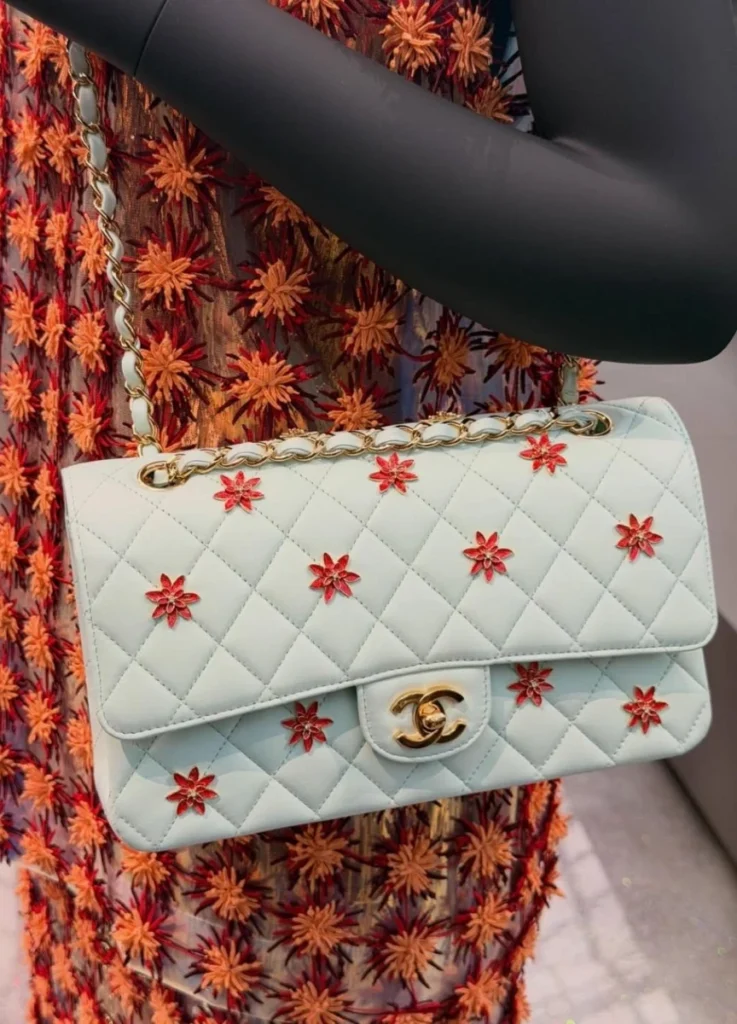
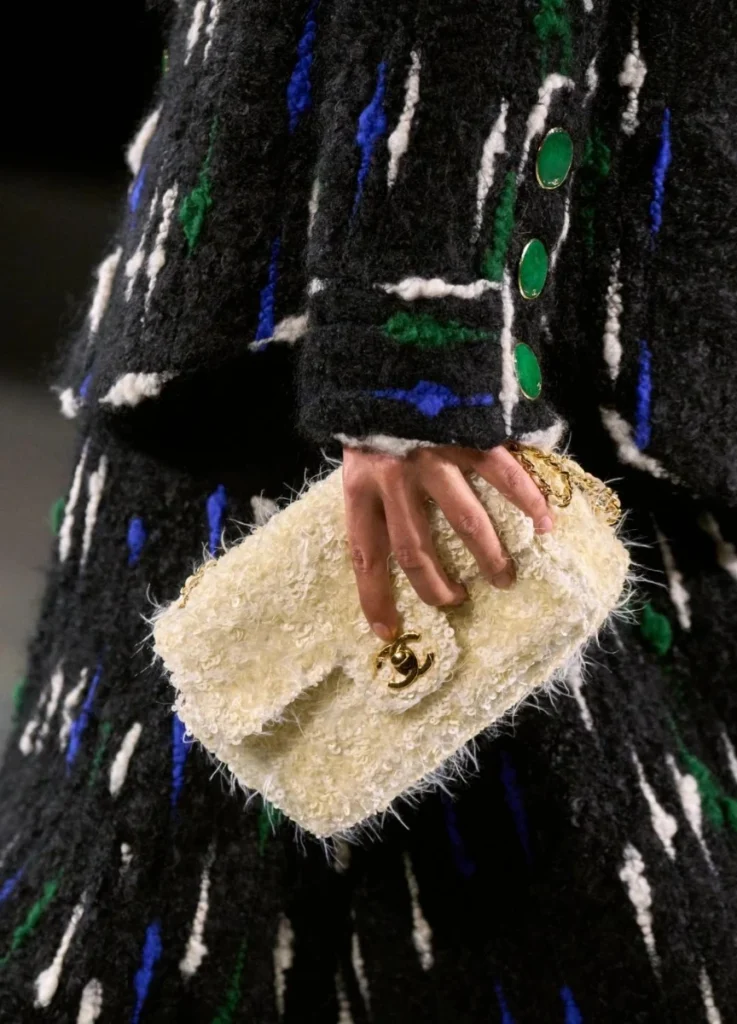
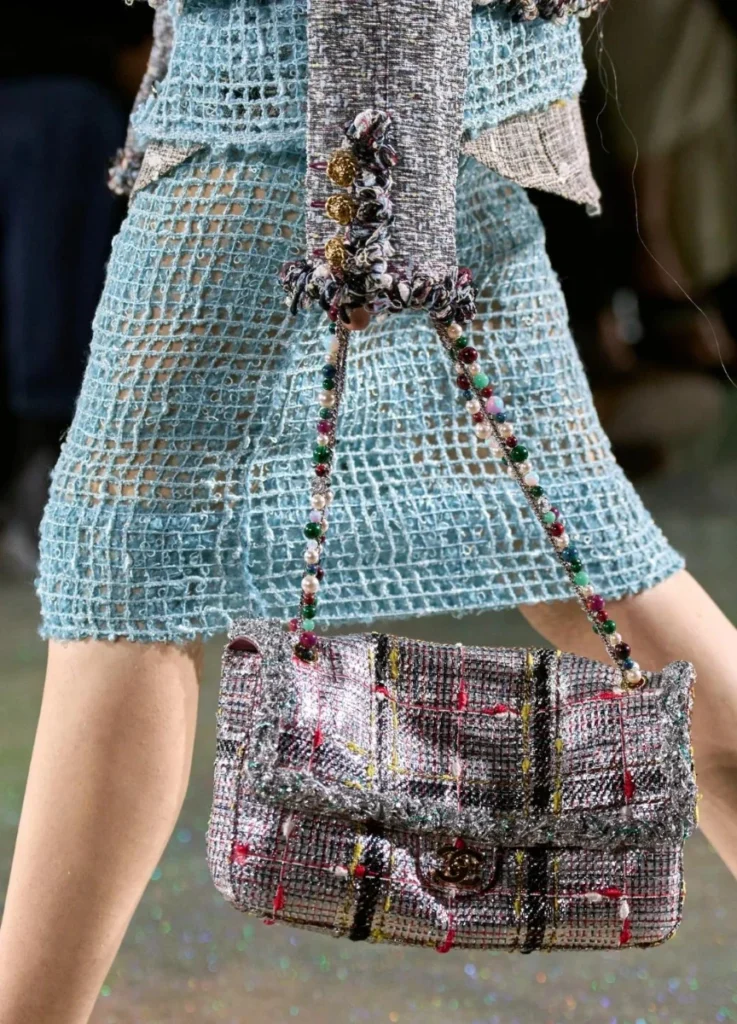
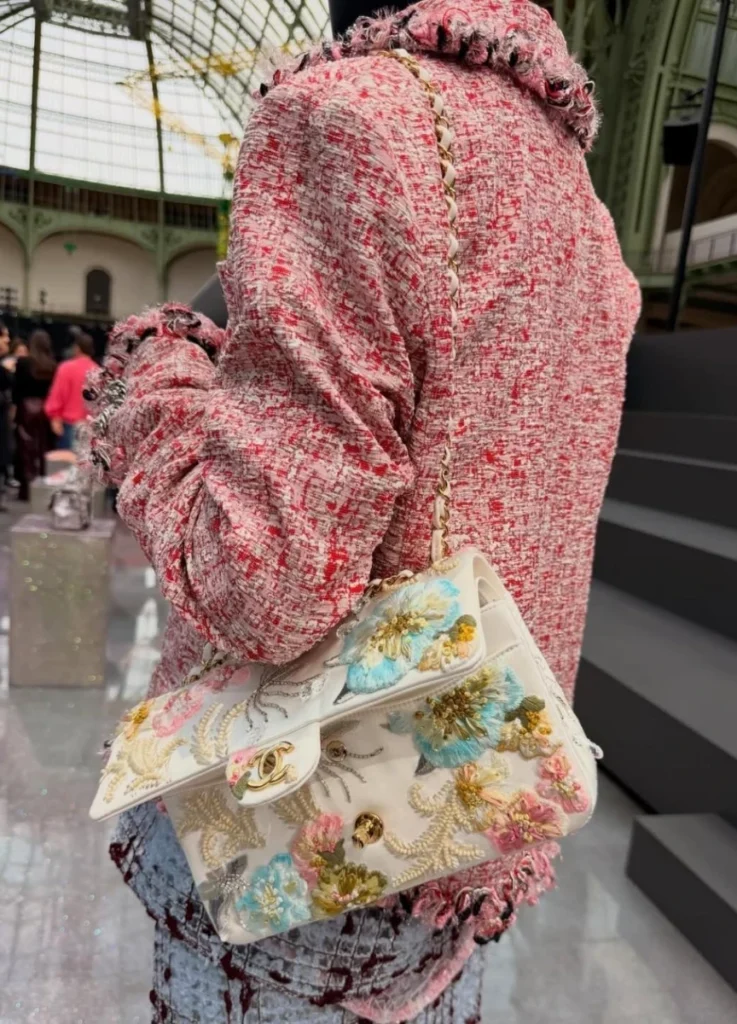
The shift here is in surface, not silhouette. One notable version overlays pale pink lambskin with satin, creating a near-sheer effect and replacing traditional quilting with embroidered florals and fine beading. Another shows baby blue quilted lambskin scattered with red enamel flower charms. A tweed version grounds the line back into Chanel’s familiar textile world.
source: Vogue Runway
This is an intelligent way to handle the 11.12. The bag is too iconic for aggressive structural interference to feel natural. Surface, however, leaves room for reinterpretation without breaking recognition.
So the 11.12 stays itself. What it expresses changes. Some of these versions move the bag away from urban polish and toward romance, couture surface, and textile fantasy.
The satin-overlay and embroidered versions are the most interesting precisely because they pull the 11.12 closer to the language of decorative craft than to its usual urban authority.
source: Vogue Runway
Proportion and Body Compatibility
The 11.12 stays one of Chanel’s more adaptable bags overall, but once the surface becomes decorative, body harmony matters more.
- Floral embroidered or beaded 11.12: best on softer facial lines and wearers who already suit romantic textures
- Baby blue with red floral charms: ideal for clearer skin tones and wardrobes that can absorb one decorative focal point
- Tweed 11.12: strongest on bodies that can support jackets, coats, and a little more visual density
On very petite frames, or in outfits with low visual density, the more embellished 11.12s can appear to float away from the body. In those cases, the plainest version often looks the most refined.
@annadellorusso / Instagram
What Changed Most from Previous Seasons?
Three shifts stand out against earlier collections.
First, the structural reassembly of Chanel’s core icons. The Layered Classic Flap overlays the 2.55 and the 11.12 into one object. The Trapezoid Flap rewrites the classic flap in a more architectural language. This is well past a seasonal color update — it’s a rewriting of Chanel’s basic handbag sentence.
Second, a flattening of the surface. The bags step back from the puffy classic quilting that has been one of Chanel’s signatures, in favor of flatter quilting, smoother surfaces, and more controlled finishes. The shift makes the bags feel less inherited and slightly less aristocratic — more modern, more pared back, more design-led.
source: Vogue Runway
Third, the actual expansion of the Maxi Flap. What started as a directional runway shape now reads as an internal family — different materials, different textures, different scaled variations. It’s one of the clearest signals of where Blazy’s Chanel intends to go.
If I had to put the season in one sentence: Chanel has moved from respecting the classic to assembling the classic. The house isn’t just preserving its icons anymore. It’s pulling them apart and rebuilding them at the level of lock, strap, flap hierarchy, and proportion.
The Shift in Proportion | From Designer Logic to Wearable Logic
One of the more interesting movements this season happens in proportion.
In Blazy’s earlier proposals, the logic was assertive. Bags became longer, larger, sometimes almost insistently stretched. Those were unmistakably designer proportions — they pushed the familiar balance of the Chanel handbag into a more demanding, less accommodating direction.
This season, that insistence softens.
source: Vogue Runway
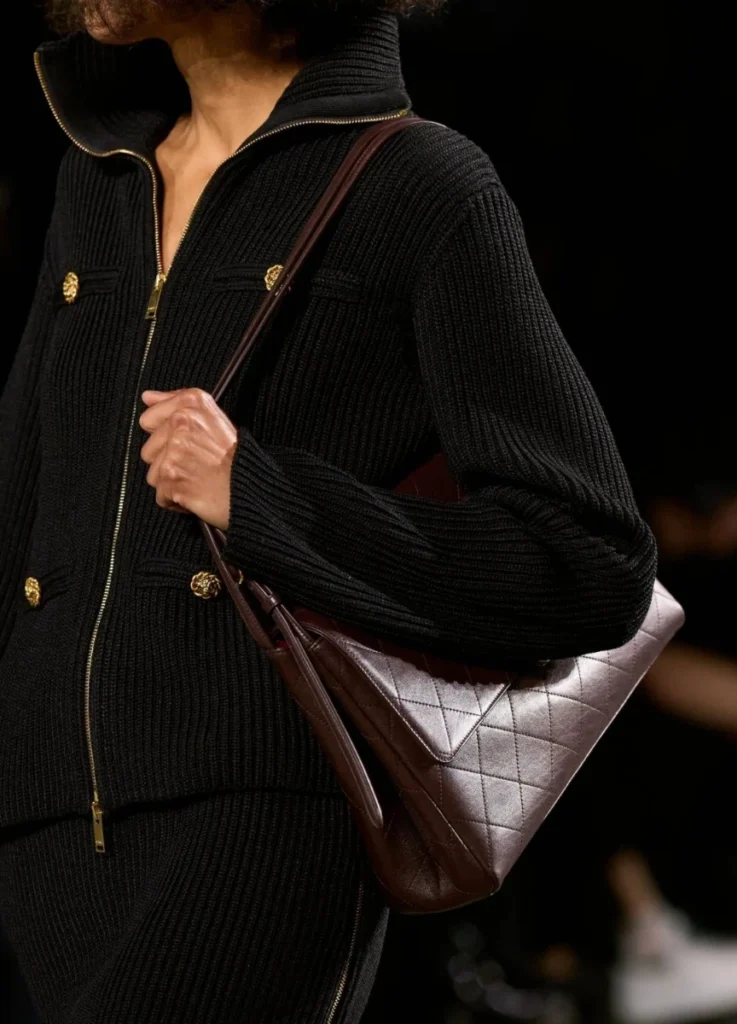
The long line and broader silhouette remain, but the overall balance feels more responsive to actual wear. The Trapezoid Flap sits more comfortably on the body’s centerline. The Maxi Flap now exists in more than one size logic. Even some of the more experimental flap reinterpretations distribute their visual weight more cleverly.
The earlier stage proposed the designer’s proportion first. Fall/Winter 2026 brings that proportion back into conversation with the user.
A new creative era runs in stages. A designer arrives and declares a worldview through strong proportion. The next stage adapts that worldview to real bodies and real wardrobes. That’s exactly what’s happening here. The bags aren’t just changing style — they’re testing the point at which designer proportion meets consumer proportion.
@declanchan / Instagram
Beyond the Main Icons | Chanel Extends Its Design Logic Into Daily Use
If the first half of the lineup redesigns the symbolic center of Chanel’s bag world, the second half extends that new logic into actual use.
The secondary styles share a common direction: quilting reduces or disappears, flap structures stay but simplify, leather straps gain importance over chains, and curved ease begins to matter more than square authority. Where the first half reworks Chanel’s classicism, the second half translates that reworked classic into daily life.
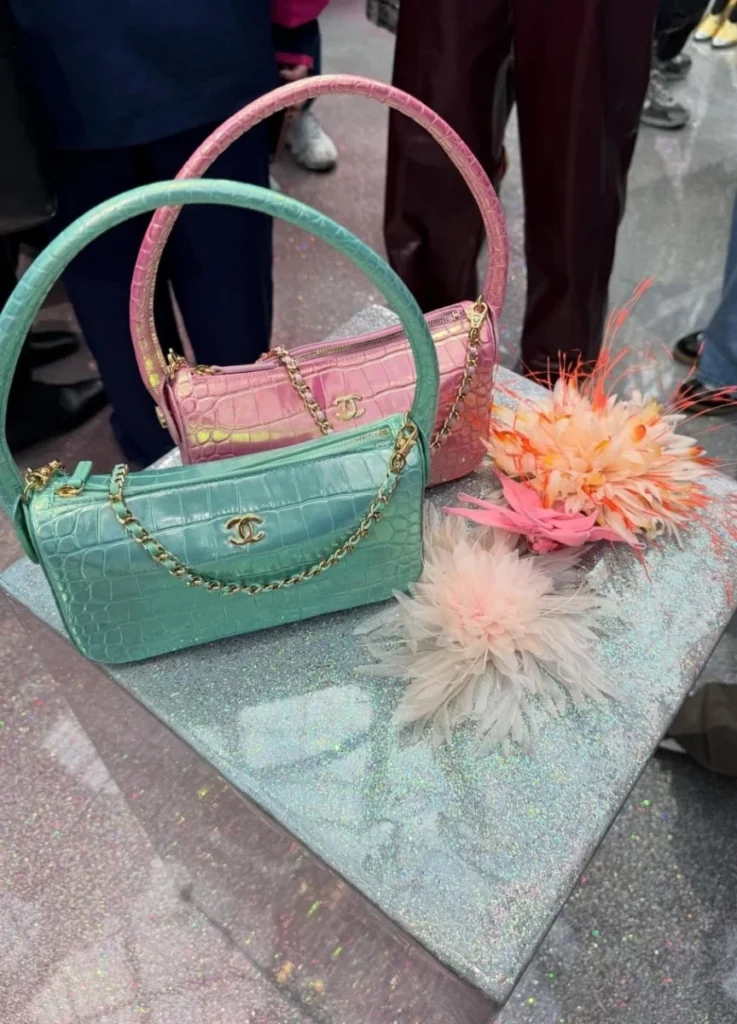
Other Chanel Flap Bags | Lighter, Looser, More Varied Readings of the Flap
This group isn’t built around a single hero bag. It shows how many directions Chanel is willing to take the flap structure now. Rather than protecting the flap as a fixed sacred form, the collection loosens it into several sub-types — architectural, bourgeois, softened, editorial.
@annadellorusso / Instagram
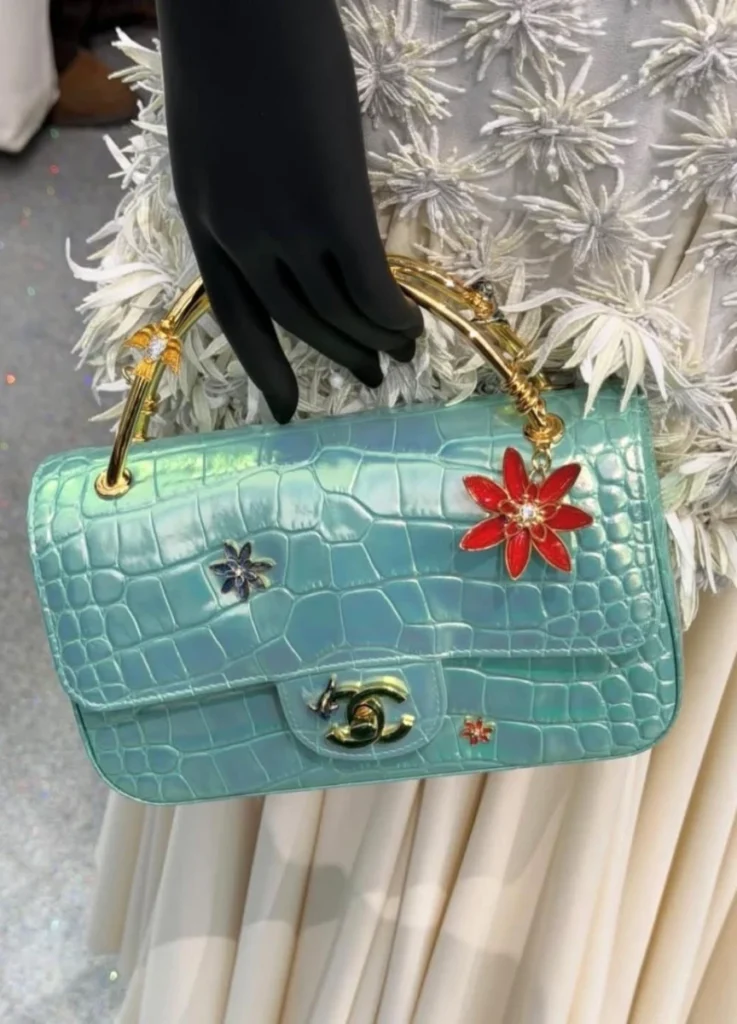
Top Handle | The Decorative End of the Spectrum
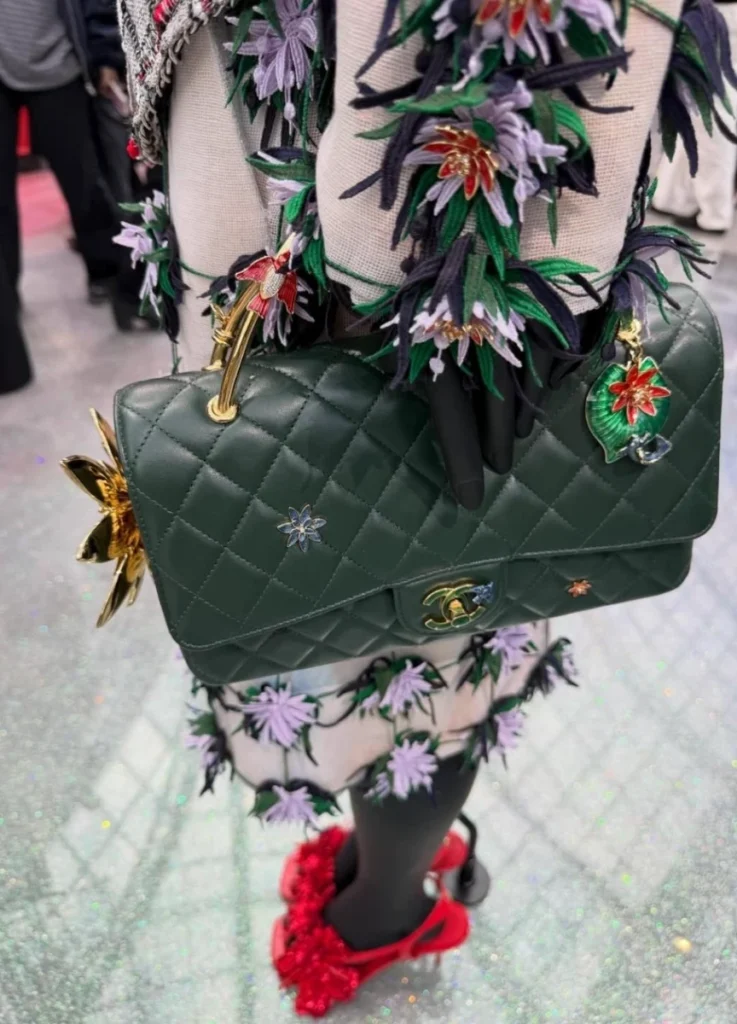
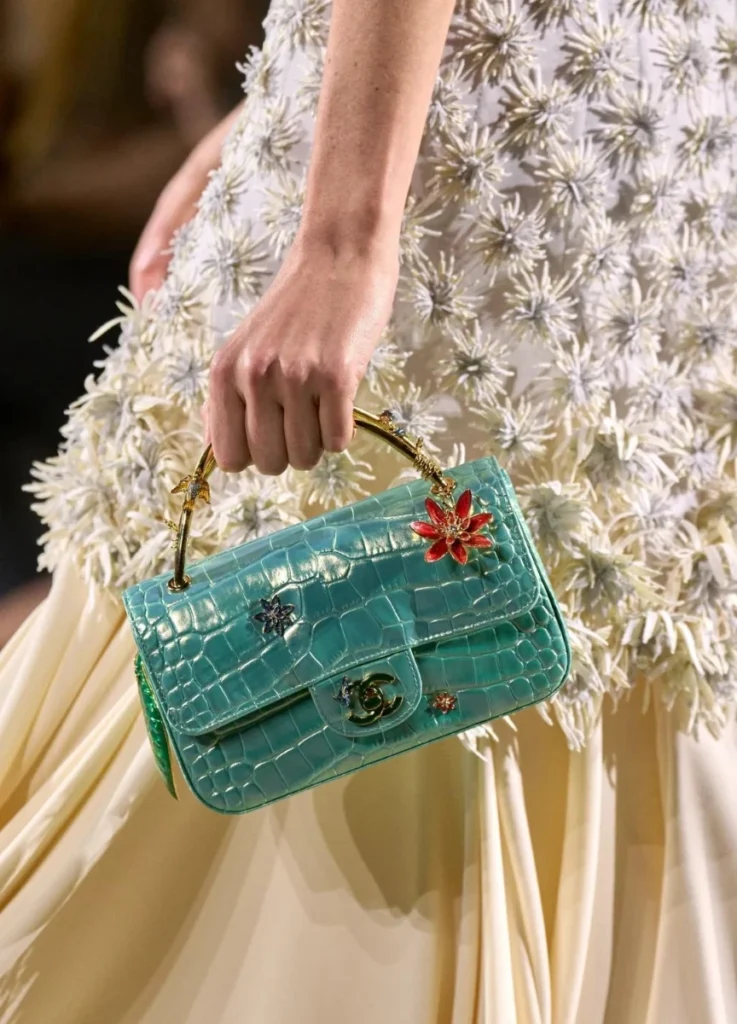
This bag sits at the most decorative end of the secondary flap group.
The mint croc surface, floral accents, metallic handle, and object-like finish put image ahead of practicality. Every component — handle, surface, charms, color — operates almost sculpturally.
@lucialiustylist / Instagram
The bag matters not because it’s elaborate but because it bridges two currents in the season at once. It connects to the more decorative, surface-led 11.12 experiments shown earlier in the lineup, and it pushes the later “other bags” section toward something looser and more expressive than strict utility.
In that sense, it’s evidence that Chanel hasn’t abandoned editoriality in the latter part of the handbag lineup. Even as the collection becomes more user-oriented, it still leaves room for overtly fashion-facing objects.
source: Vogue Runway
Wearability
This is less about body type than about wardrobe density.
Because the bag carries so much information on its own, it works best when the outfit stays clean, controlled, visually pared back. If the clothing is also busy, the entire look tips into excess quickly.
source: Vogue Runway
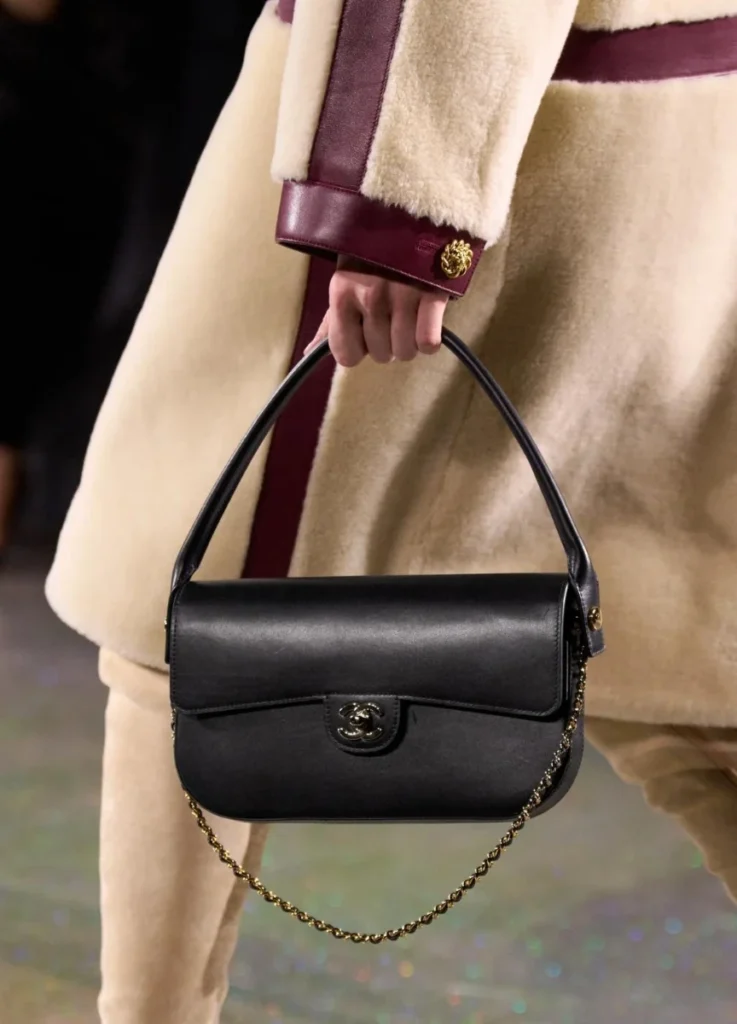
The Curved Flap Shoulder Bag | The Quiet Modernization
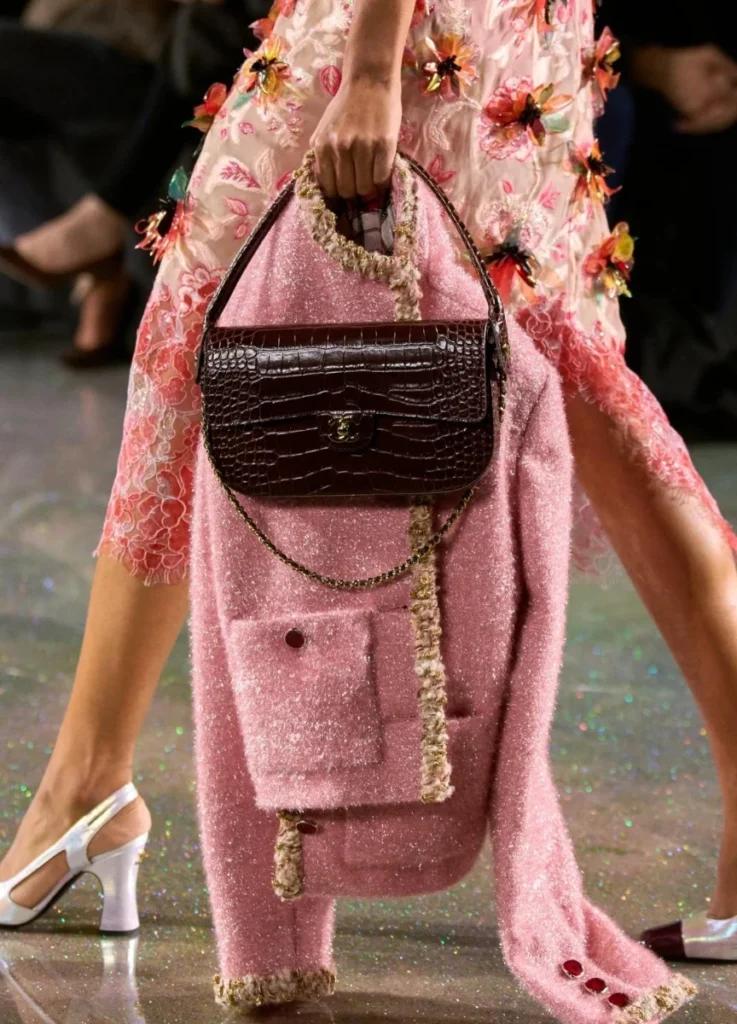
This is one of the more important bags in the secondary group, precisely because of how quietly it shifts the Chanel flap into a more modern register.
The bag sits between a traditional flap and a hobo. The upper line rises in a curved shoulder-bag shape; the front retains flap logic. The result is far softer than the classic rectangular Chanel silhouette.
The softness is the point.
Chanel has essentially inserted the flap into a more flexible body. The front structure stays inside the house’s classic vocabulary, but the body itself becomes lighter, more pliable, more everyday in feel. This kind of design could become quite important commercially — it preserves the face of the classic flap while making the actual carrying experience feel contemporary.
source: Vogue Runway
Wearability
The model is relatively friendly to smaller frames because the curve allows it to sit naturally against the upper body.
- Works especially well for: women whose shoulders aren’t overly broad; those whose upper body has presence without feeling heavy; clients who want a daily shoulder bag but find the traditional Classic Flap too rigid or too ceremonial.
This isn’t the most dramatic bag in the collection. It’s exactly the sort of design that becomes unexpectedly useful in real life.
source: Vogue Runway
Hobo Bags | Where User-Friendliness Becomes Most Visible
Here, Chanel moves most clearly toward real-life usability.
The question changes. It’s no longer only how Chanel can redesign its icons — it’s how far those codes can extend into categories built around softness, capacity, and daily wear.
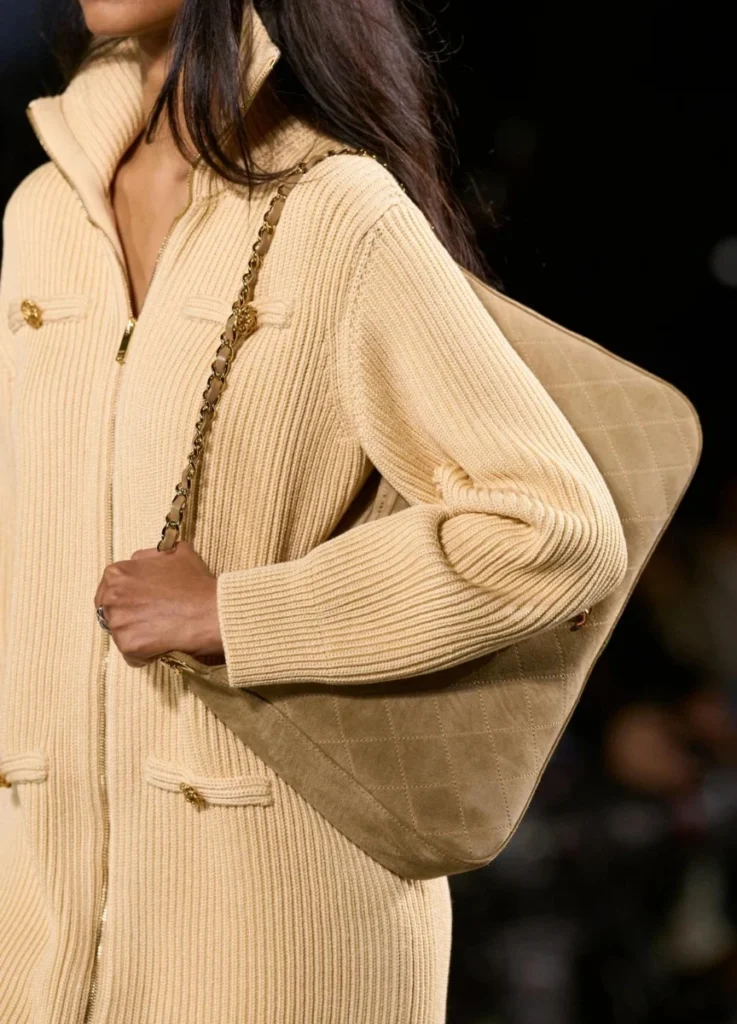
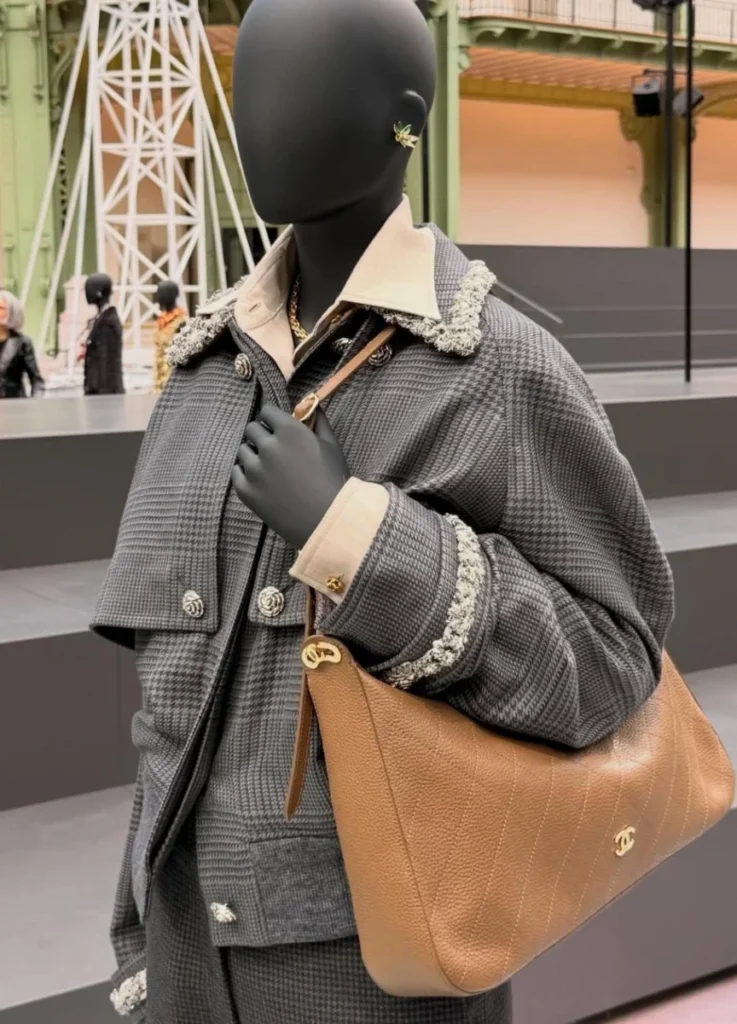
The Large Quilted Hobo
source: Vogue Runway
This is arguably the most memorable hobo of the season.
The bag has a generous body, a long fluid shoulder line, and a wide open proportion that sits close to the body. Chanel’s quilting stays, but the usual tension of a classic diamond-quilted handbag is softened considerably. What emerges is a large shoulder bag that reads as practical before it reads as ceremonial.
Chanel is finally taking the winter shoulder bag seriously — not as a secondary category, but as a proper extension of the house’s bag language. This is the kind of bag designed to be worn over coats and thick knitwear, not displayed.
@declanchan / Instagram
Wearability
This bag responds clearly to body scale.
- Works best for: medium-to-tall frames, wearers with shoulders that aren’t too narrow, and wardrobes already built around coats, oversized jackets, and winter volume.
@marcoavisconti / Instagram
- More difficult for: petite frames, short upper bodies, and short arms — the bag can visually swallow the wearer.
What matters here isn’t prettiness in the conventional sense. The appeal sits in the practical elegance of wearing it. It feels less like a showpiece and more like a directionally correct everyday bag.
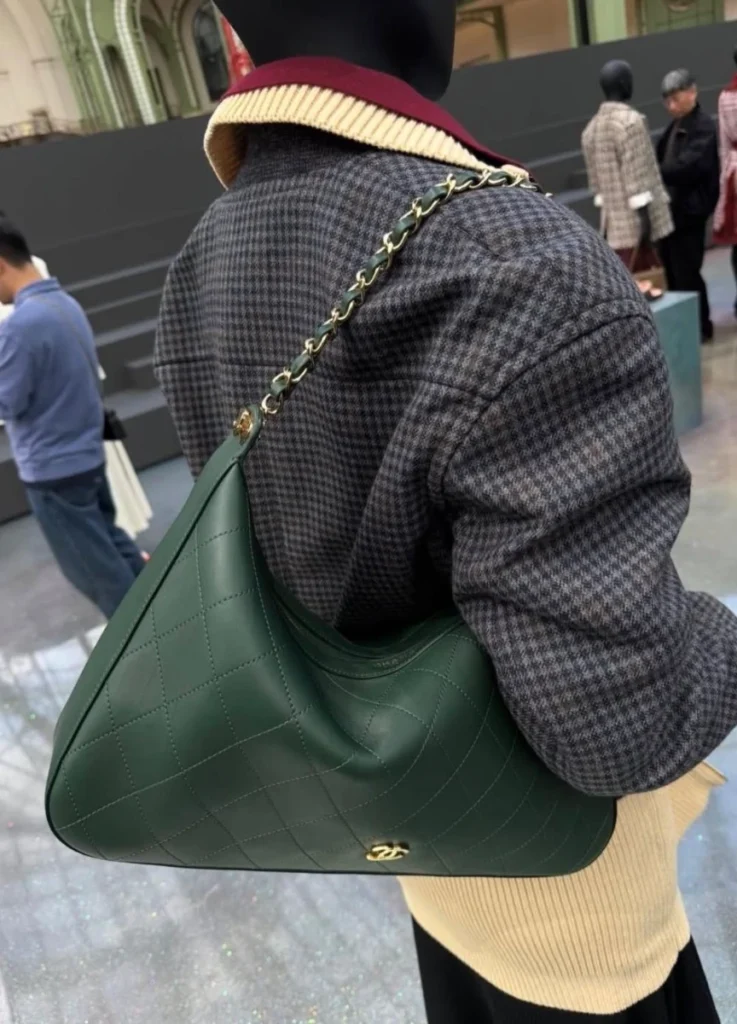
The Large-Logo Hobo
The most overtly fashion-facing of the hobo group.
The silhouette pulls closer to a crescent or moon shape, and the contrast between outer and inner tones gives the bag a clear chromatic structure. The logo hardware sits more assertively on the front, making it visibly more decorative than the taupe hobo.
This isn’t a daily bag. It reads more like a styling device.
It almost compresses the color logic of the entire collection into a single accessory: darker green tones, lighter interior contrast, and a heightened hardware presence that pushes the bag into a more performative space.
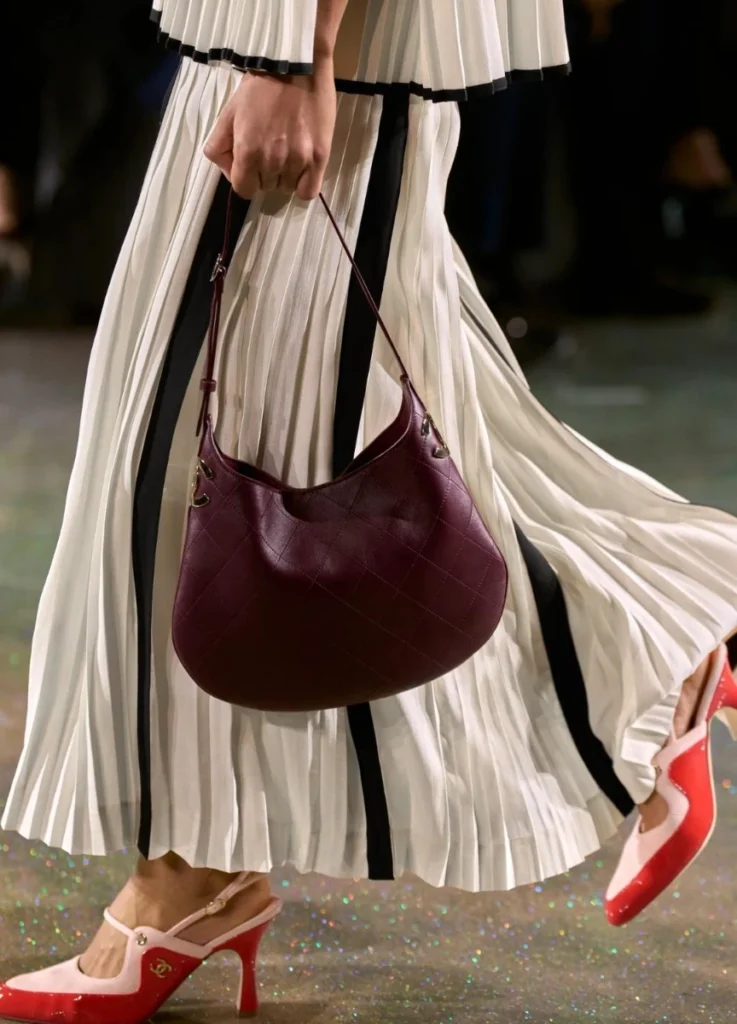
source: Vogue Runway
Body Compatibility and Wearability
This model is less about body type than about styling fluency.
- Suits: women who use color confidently in winter wardrobes; those who wear coats, knits, and skirts with intentional palette control; anyone who treats the bag as an active part of the outfit’s composition rather than a container.
It isn’t the safest work bag. Styled well, though, it becomes far more fashion-forward than the other hobos.
Shopping Bags and Totes | The Most Market-Aware Section of the Collection
If one part of the latter lineup is likely to perform commercially, it’s this one.
Chanel is clearly strengthening the category of true shopping bags and totes — bags designed less as symbolic objects and more as useful luxury tools.
The Executive Tote
The bag is built from long leather shoulder straps, a large rectangular body, a front tab closure with CC emblem, and grained leather.
The most important detail: like some of Blazy’s earlier shopping totes, this one removes the chain entirely. In place of Chanel’s historic leather-and-chain strap language, the Executive Tote uses all-leather shoulder straps, immediately shifting the bag toward a more practical, work-oriented reading.
That isn’t a minor change. It changes the entire purpose of the bag.
This is closer to a Chanel office tote than a Chanel tote — a bag that strips away some of the house’s ornamental language and prioritizes winter functionality, ease over outerwear, and actual use.
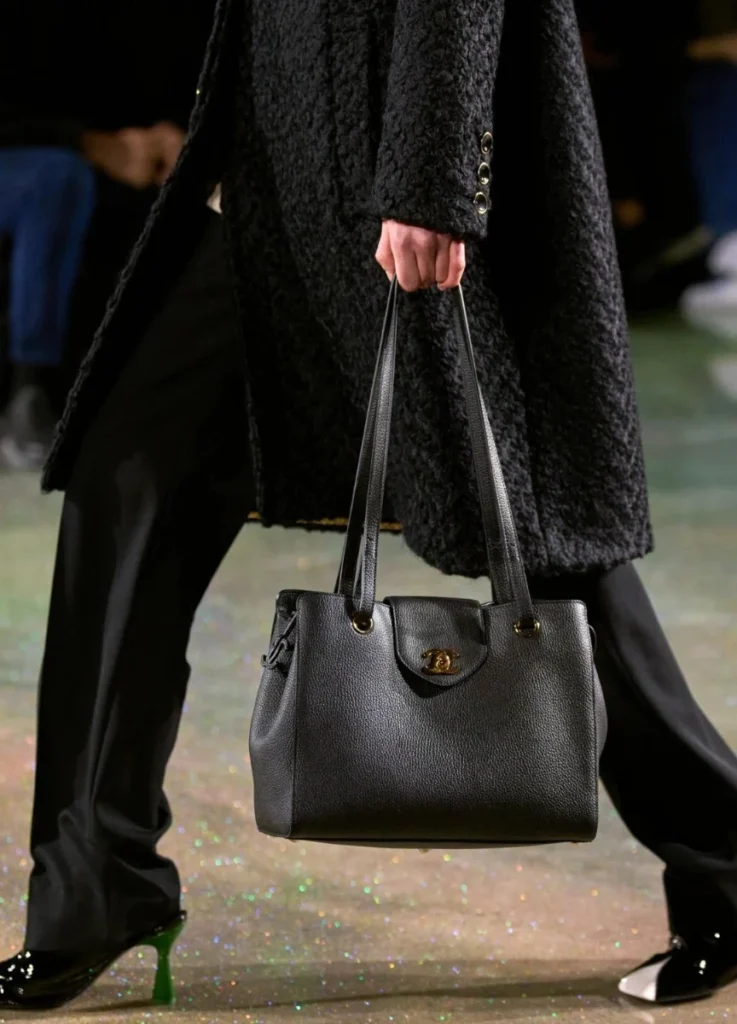
source: Vogue Runway
Body Compatibility and Wearability
The bag is highly practical, but not proportionless.
- Works best for: women whose shoulders aren’t too narrow; regular tote users; wearers with enough upper-body presence to support a larger rectangular bag without being dominated by it.
- More difficult for: petite frames, narrow shoulders, or anyone whose body risks being visually split in half by a large tote.
Even so, this remains one of the strongest candidates in the latter lineup for actual purchase conversion. It’s also, in practical terms, one of the most realistic bags in the collection — third on my own list this season.
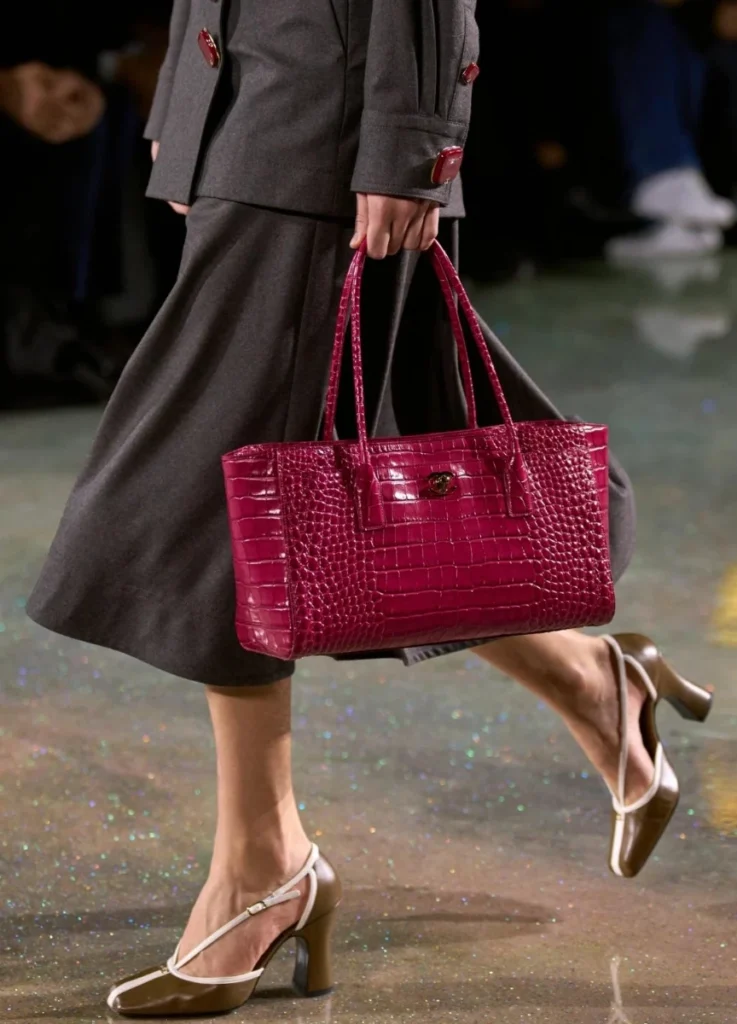
source: Vogue Runway
The Small Shopping Bag
The smaller version continues a direction first introduced in Spring/Summer 2026, and that continuity matters.
Because it keeps an everyday-friendly silhouette, it lowers the burden of proportion and increases ease of use in real life. This is where the collection’s user-centered logic becomes clearest — not in the most dramatic runway shape, but in the bag that quietly adapts luxury design to daily rhythm.
Wearability
- Especially well suited for: petite wearers; those looking for a hybrid work-and-everyday bag; women who find the Classic Flap too rigid but a large tote too overwhelming.
It’s probably one of the most realistic options in the entire collection for a wide range of actual users.
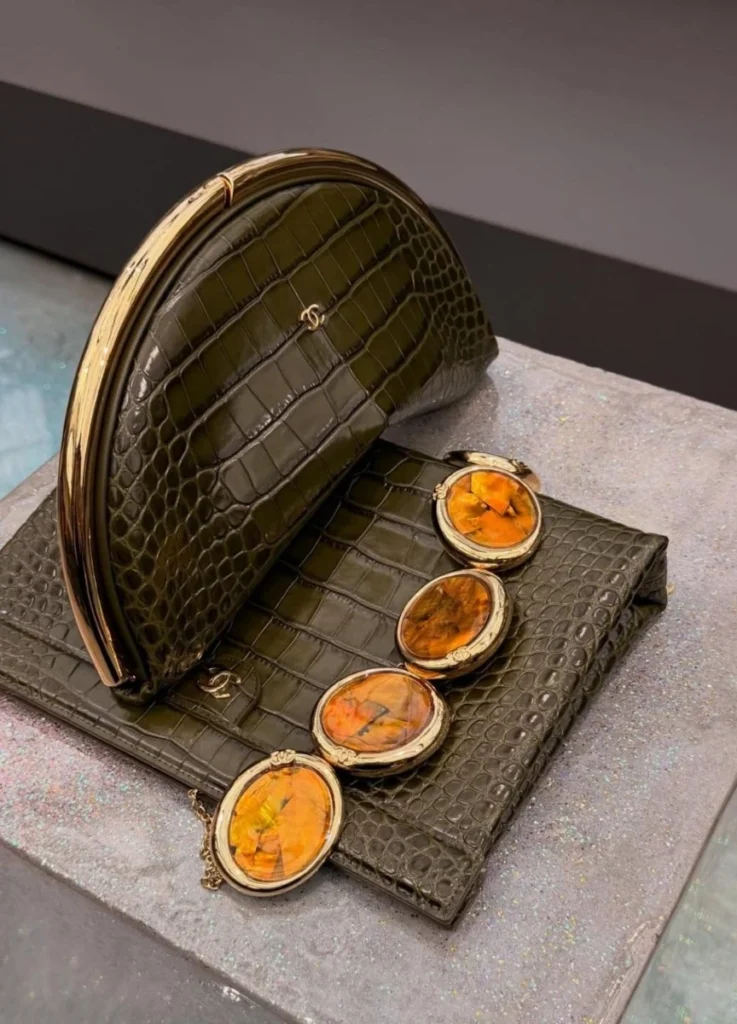
@marcoavisconti / Instagram
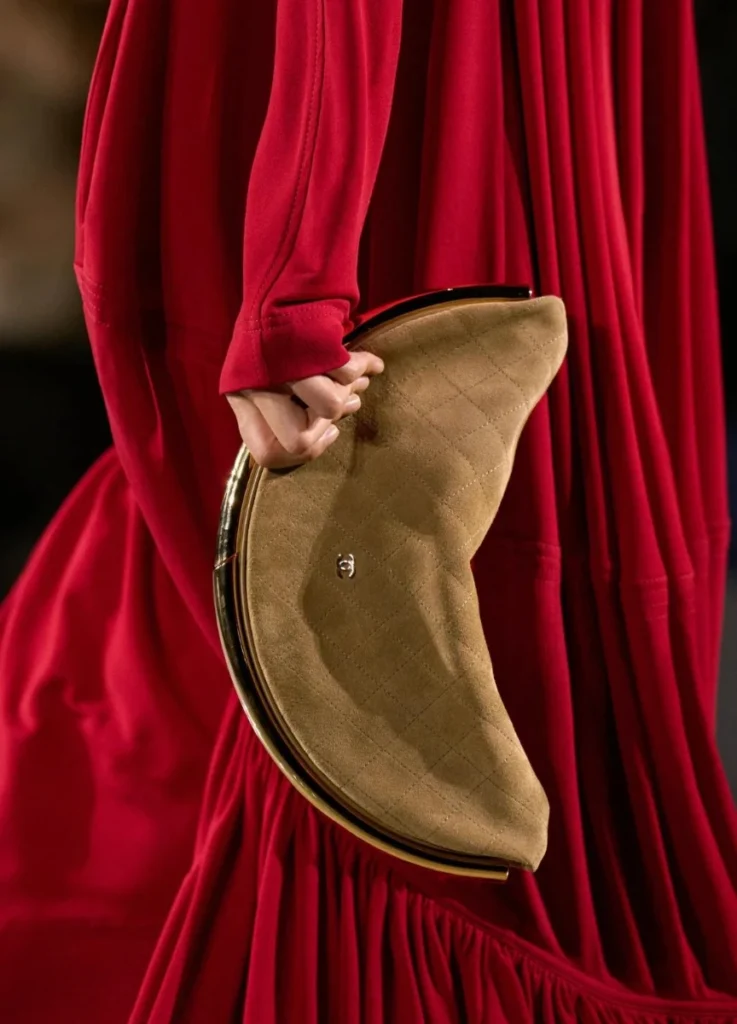
Chanel Clutch and Frame Bags | The Quietest, Sharpest Pieces
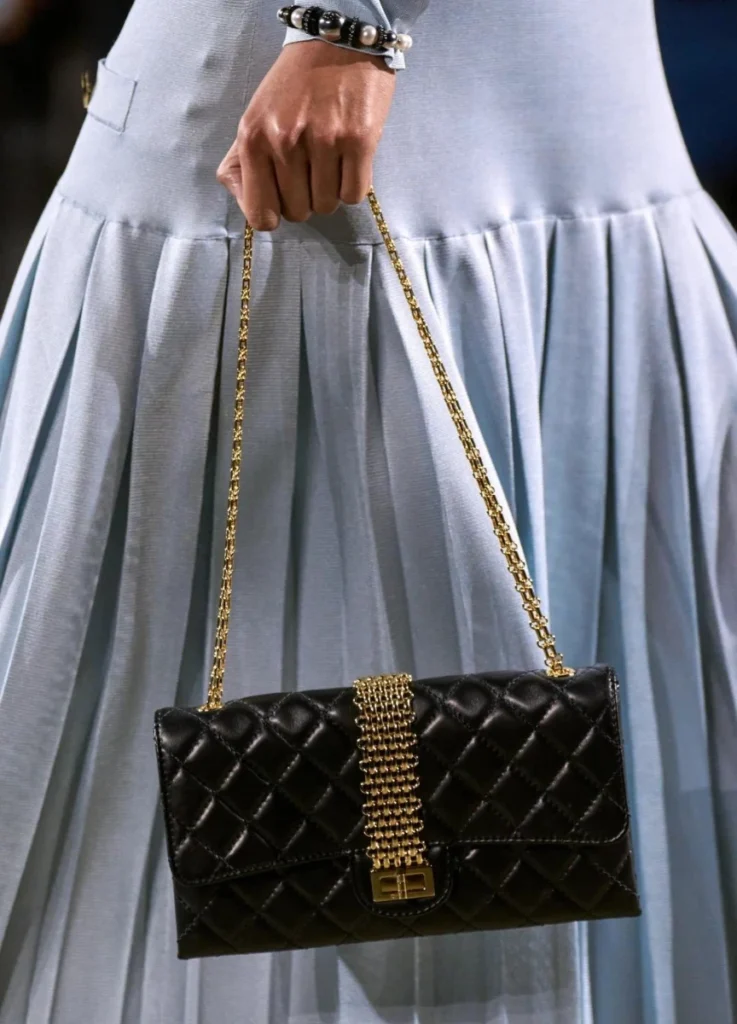
The smooth leather frame-style clutch is one of the quietest but sharpest pieces in the latter half of the collection.
It feels less like a traditional clutch and more like a structural evening object. The interest sits in the fact that the metal frame changes the carrying logic entirely. The bag is held differently, read differently, seen less as a soft accessory than as a line-and-surface object.
In several of these latter styles, Chanel seems increasingly willing to create presence through outline and construction rather than through visible decorative density.
source: Vogue Runway
Which Bag Makes the Most Sense to Buy?
The most talked-about runway bag isn’t always the one that makes the most sense in stores.
The most emblematic bag of the season is the Maxi Flap, without question. It represents Blazy’s Chanel most clearly. In practical market terms, though, the strongest performer is likely the Trapezoid Flap.
The reasoning is straightforward. The Trapezoid keeps enough of Chanel’s authority to remain unmistakably recognizable, while becoming lighter in proportion, more wearable across body types, and easier to integrate into daily life. In a market where clients increasingly want modern daily luxury rather than strict archival performance, that balance matters.
By contrast, the Layered Classic Flap, the more decorative 11.12 versions, and the largest Maxi Flaps are fascinating from a fashion perspective but will likely appeal to narrower client segments.
The season reads in three layers:
- Symbol of the collection: Maxi Flap
- Fashion experiment: Layered Classic Flap and decorative 11.12
- Market center: Trapezoid Flap, plus the more practical tote and hobo direction
source: Vogue Runway
Final Thoughts | Why This Season Matters
Chanel Fall Winter 2026 bags are visually rich, but at heart this is a structural season.
The 2.55 redirects its chain into surface rhythm. The 11.12 turns its skin into a site of textile experimentation. The classic flap becomes layered or trapezoidal. The Maxi Flap expands into a real silhouette family. And the latter part of the lineup translates these reworked codes into hobo bags, shopping totes, and frame clutches that speak more directly to actual use.
These bags are best understood not in terms of whether they’re beautiful or desirable, but in terms of what they reveal about Chanel’s current design logic.
The answer is now quite clear. Chanel isn’t simply preserving its classics anymore. It’s reassembling them.
Fall/Winter 2026 is more than another seasonal handbag release. It is one of the clearest signals of how Chanel bags will continue to evolve under Blazy.
@annadellorusso / Instagram
[ Related Editorials ]
- Chanel Fall Winter 2026 Runway Review | Reframing Tweed and the Gradual Softening of Chanel’s Silhouette
- Chanel 2026SS Bags Review | How Matthieu Blazy Redefined Structure, Ease, and Everyday Luxury
- Chanel Cruise 2027 | Biarritz, the Collision of Two Aesthetics, and What This Collection Could Not Decide
- [CHANEL Métiers d’Art 2026] Runway Review