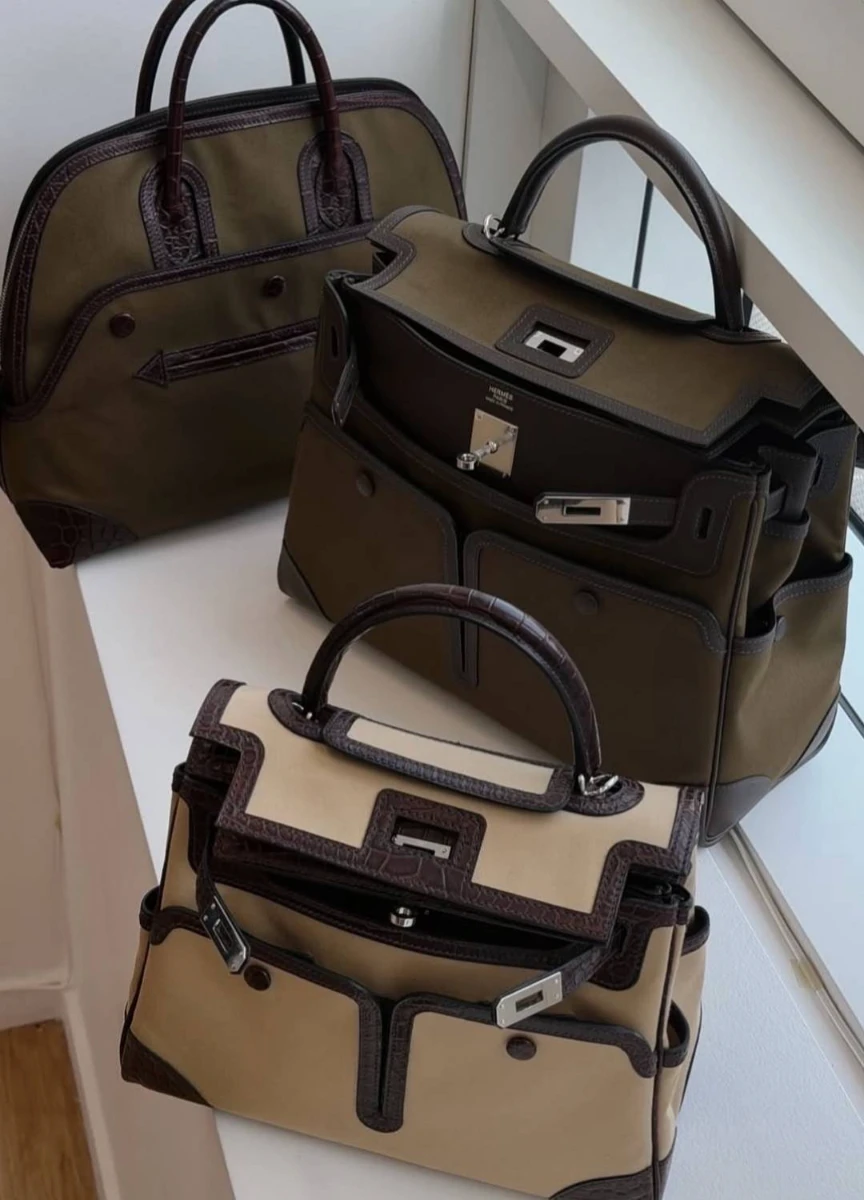
Nadège Vanhée’s Return to the Equestrian Logic of Objects
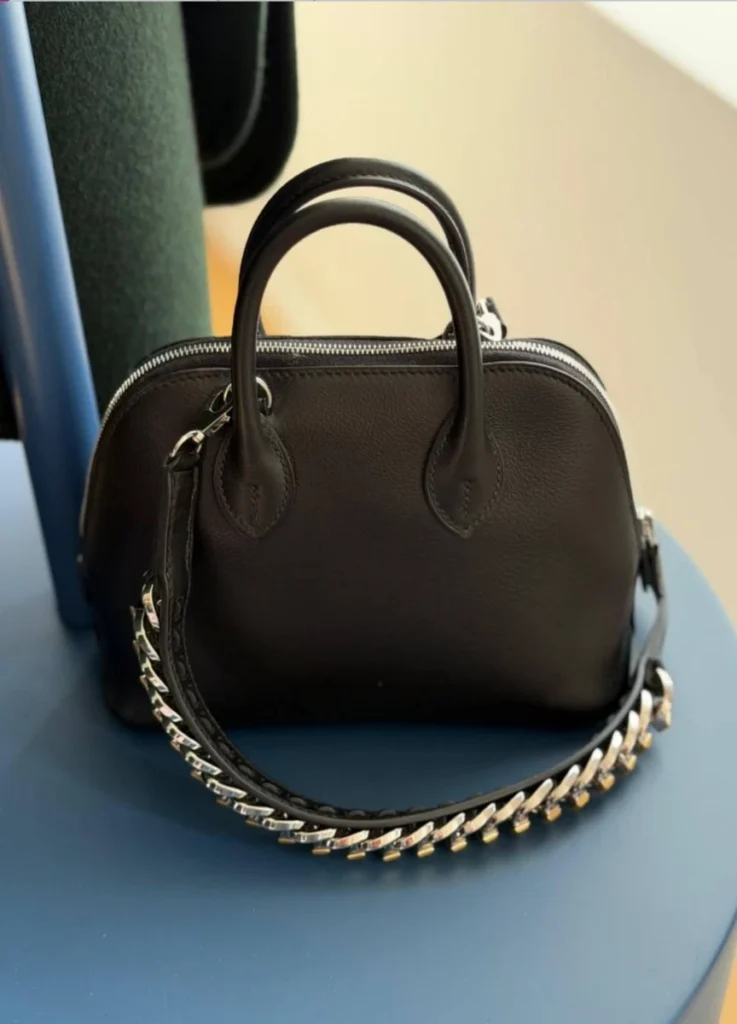
– Bolide Chain
@pursebop / Instagram
Most luxury houses build each season around a new handbag icon. A silhouette appears on the runway, editors speculate about its name, and within months it becomes the object around which marketing narratives are constructed.
Hermès has never operated that way.
Rather than introducing new bag concepts each season, the Parisian house evolves its existing structures slowly and deliberately. The language of the Hermès bag is rarely reinvented; it is recalibrated. Small changes in proportion, material, or detail are enough to shift how a familiar object reads.
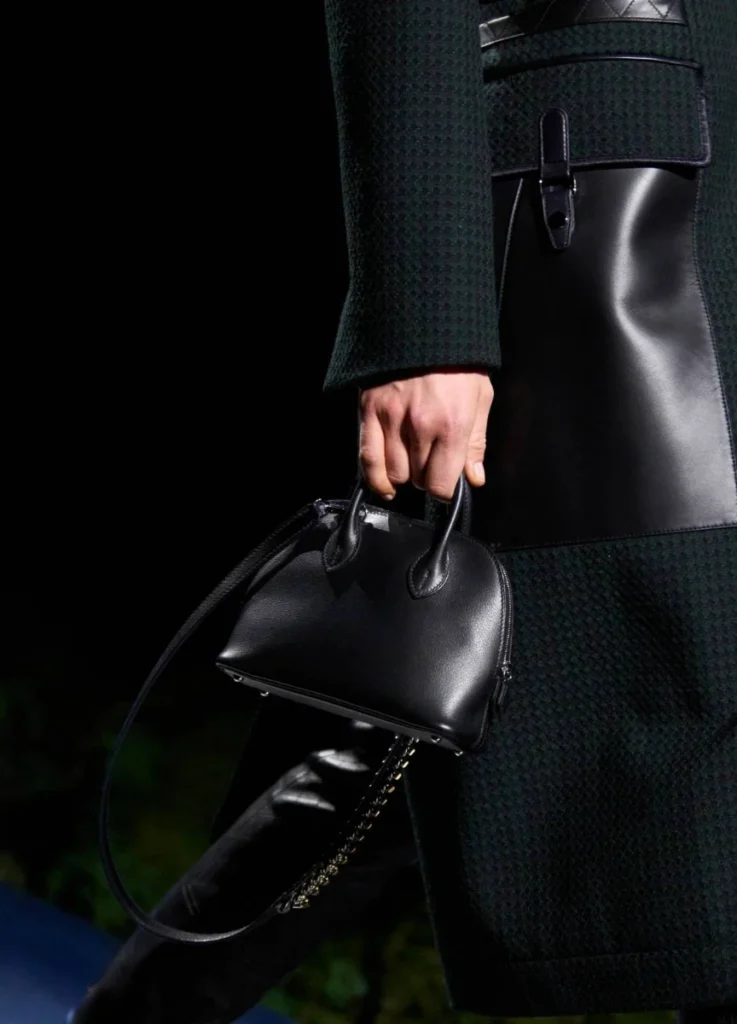
– Bolide Chain
source: Vogue Runway
Fall Winter 2026 makes that philosophy visible. The runway didn’t present a singular new bag designed to replace the house’s classics. It revealed a series of subtle structural adjustments across several models, and those adjustments add up to something larger than the sum of the changes.
Four movements organize the season:
- The fashionization of the Kelly structure
- The instrumentalization of the handbag through cargo and utility overlays
- The return of travel-derived silhouettes, most notably the Plume
- A renewed emphasis on material as form, particularly Doblis suede and Box calfskin
Fall 2026 is not about novelty. It’s about repositioning the roles of existing objects within Hermès’ ecosystem — and, more specifically, returning the handbag to something Hermès has been building toward for several seasons under Nadège Vanhée-Cybulski: the handbag as instrument, not as ornament.
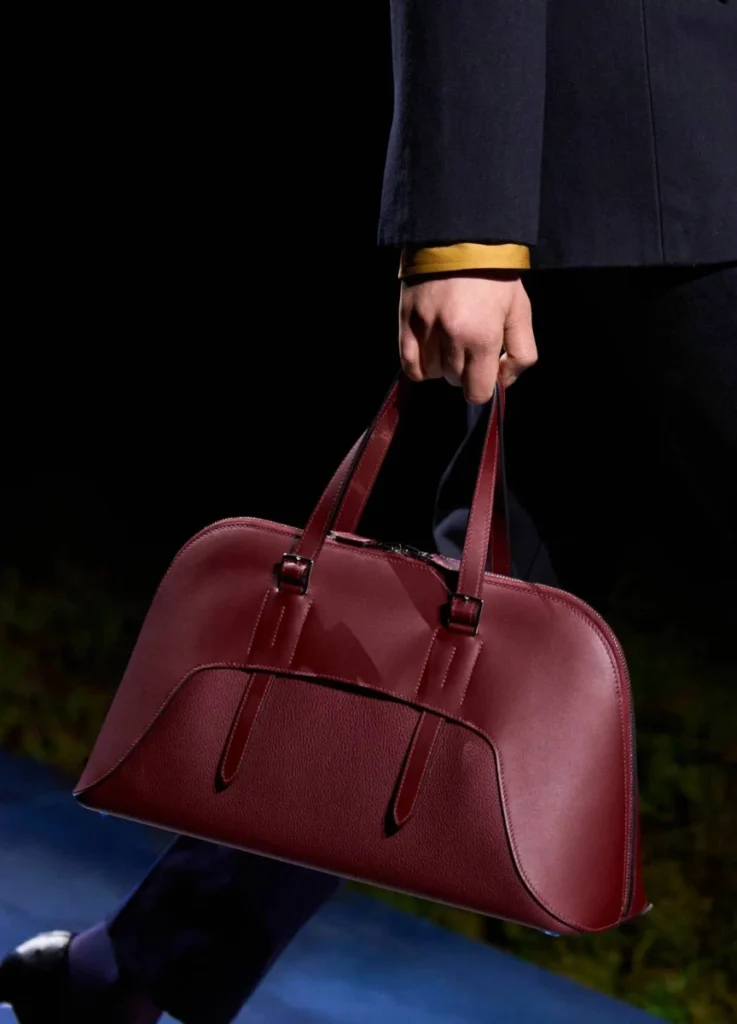
– Bolide-Inspired Zip Top Bag
source: Vouge Runway
Industry Context | The Two-Tier Strategy of Hermès Handbags
Hermès’ bag design decisions are inseparable from its commercial architecture.
For the past decade, the brand has operated through two distinct handbag tiers.
The first tier consists of the iconic investment bags — the Birkin and the Kelly. These models form the cultural and financial backbone of Hermès. Their scarcity, controlled production, and long waiting lists reinforce their status as luxury objects with both symbolic and resale value. That exclusivity also limits accessibility; only a small number of clients can acquire these pieces each year.
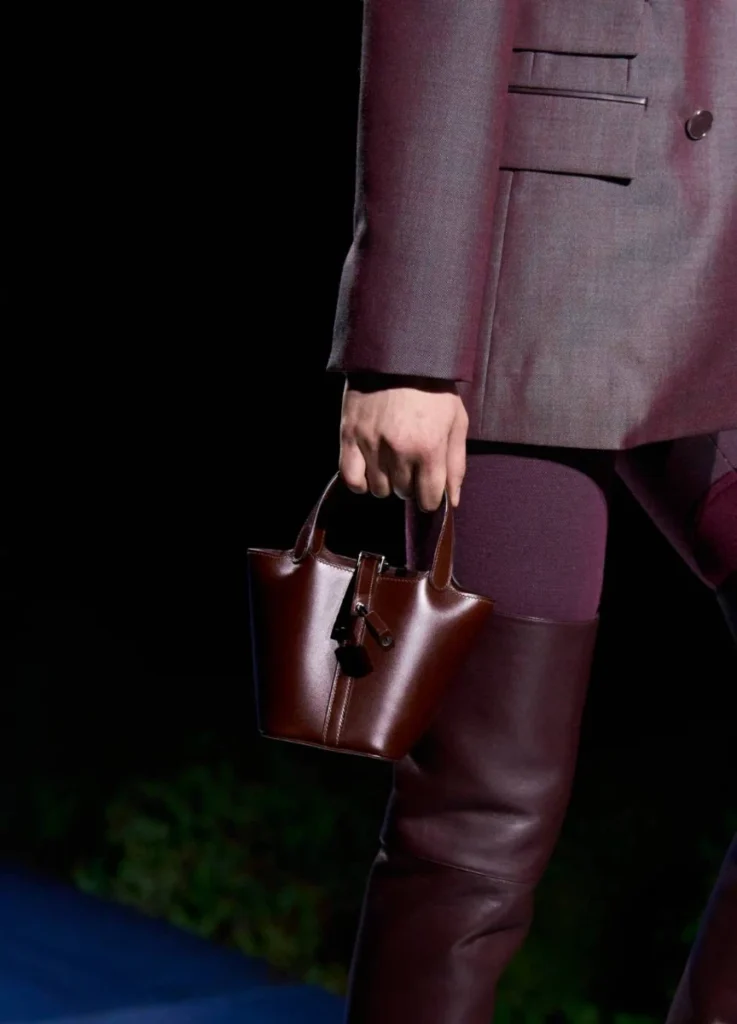
– Micro Picotin 14
source: Vogue Runway
To sustain broader revenue growth, Hermès relies on a second tier — accessible structural classics. The Picotin, Garden Party, Evelyne, and Bolide live here. These bags are easier to obtain, less constrained by allocation, and essential to the house’s retail ecosystem.
Several Fall 2026 designs sit clearly within this framework.
The Picotin Micro 14 isn’t simply a smaller bag. It’s a variation within an already popular model that stimulates renewed demand. Hermès uses this strategy frequently — instead of introducing new designs, it modifies proportion, material, or hardware to generate fresh desire around an existing structure.
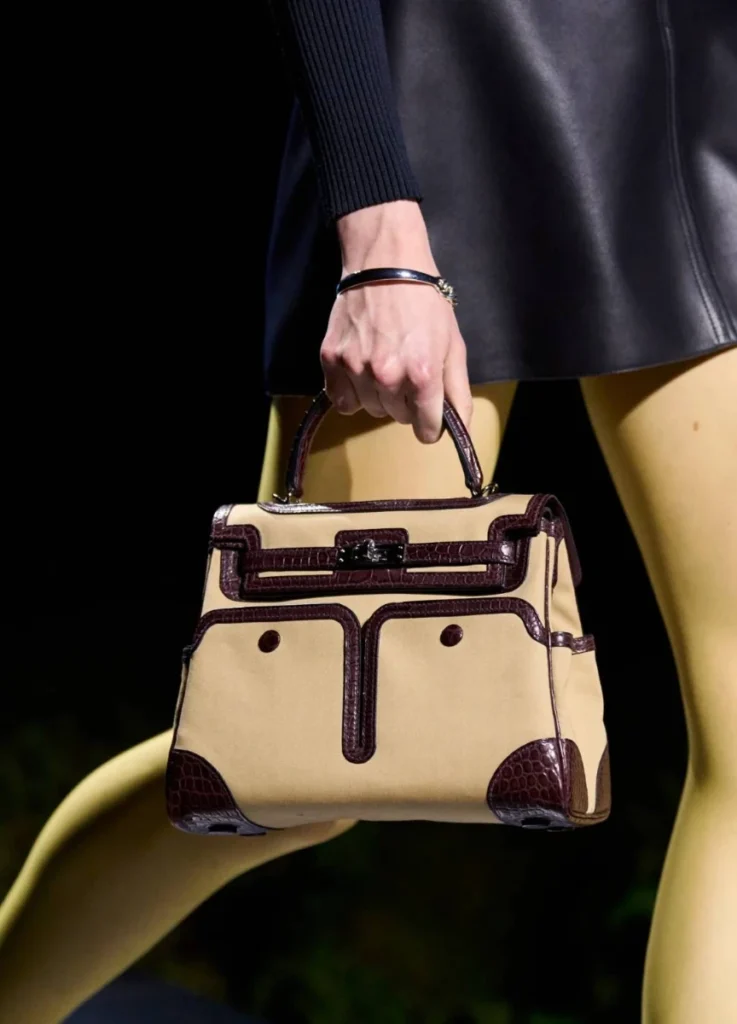
The Cargo Kelly operates similarly. Rather than replacing the Kelly, it reframes it. By introducing a cargo cover layer, Hermès expands the conceptual territory of the Kelly while preserving the integrity of the original design.
The strategy does two things at once: maintain the symbolic power of its icons, and expand product diversity without diluting brand identity. Hermès has practiced this maneuver for decades.
– Cargo Kelly
source: Vogue Runway
The Return of the Plume | Why the Mini Plume Matters
The return of the Plume matters.
The Plume is one of Hermès’ older designs, originally developed within the brand’s travel goods lineage. Its structure reflects that heritage: lightweight construction, rounded lines, elongated handles built for mobility. For several seasons, the Plume has been largely absent from the center of Hermès collections.
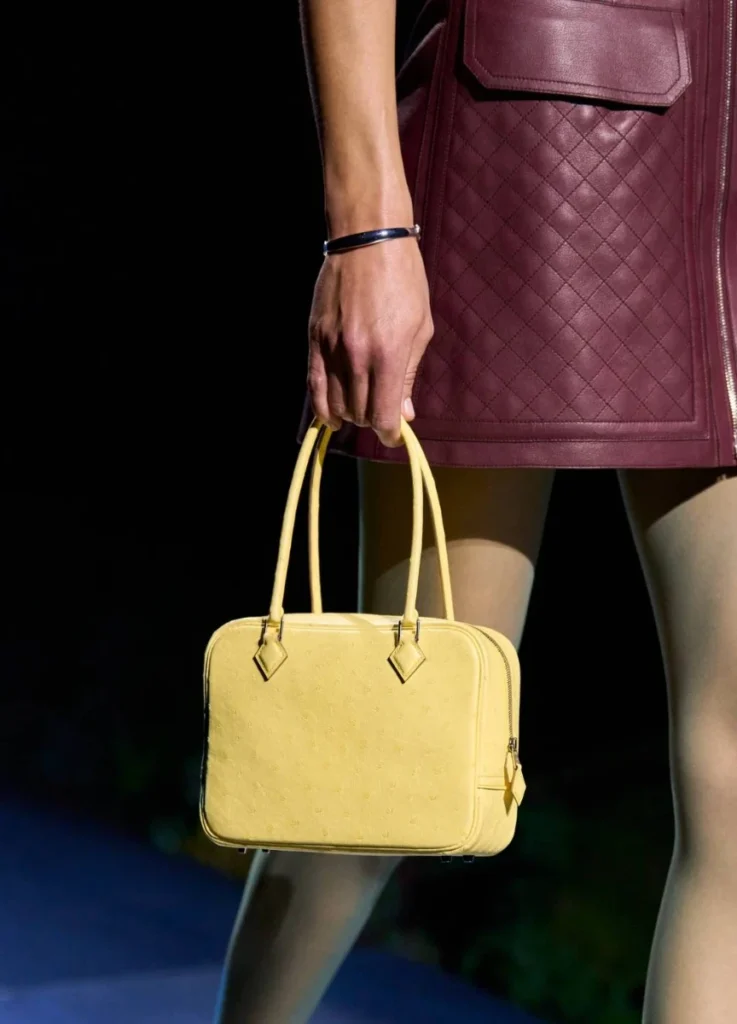
Its reappearance as the Mini Plume reads less as nostalgia and more as strategic repositioning.
The handbag market has moved away from rigid architectural shapes toward soft, curved silhouettes. After a decade dominated by structured top-handle bags, many brands are exploring fluid forms again.
– Mini Plume
source: Vogue Runway
The Plume fits this transition precisely. It’s light, flexible, softly curved — the opposite of the rigid geometry that defines the Birkin.
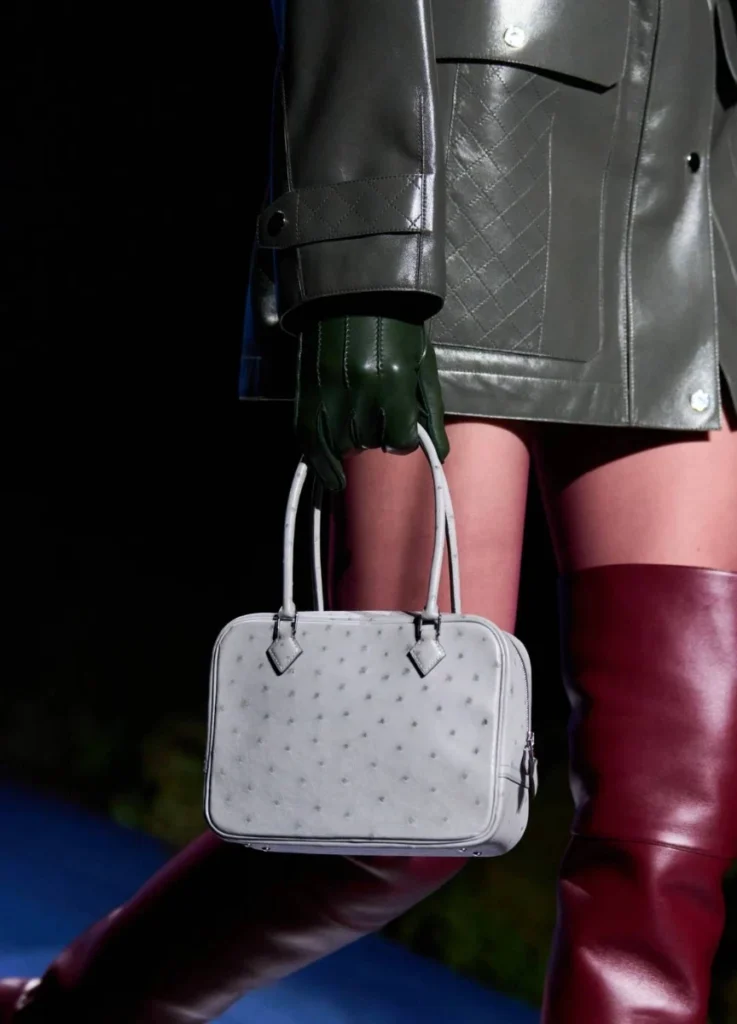
The Plume also occupies a different conceptual space from Hermès’ primary icons. It doesn’t compete with the Birkin or Kelly. It operates as a complementary structure, expanding the range of the house’s handbag ecosystem rather than crowding it.
This ability to revive archival designs without disrupting hierarchy is one of Hermès’ key advantages.
– Mini Plume
source: Vogue Runway
Kelly | Ornament Within Structure
The most visually striking adjustment of the season happens within the Kelly.
The Kelly is arguably the most structurally disciplined bag Hermès makes. Its architecture rests on four elements: the flap, the sangles, the touret, and the turn-lock closure. Together, these components produce a balanced geometric composition that has remained largely unchanged for decades.
The Kelly has long placed structure before ornament.
In Fall 2026, that hierarchy shifts.
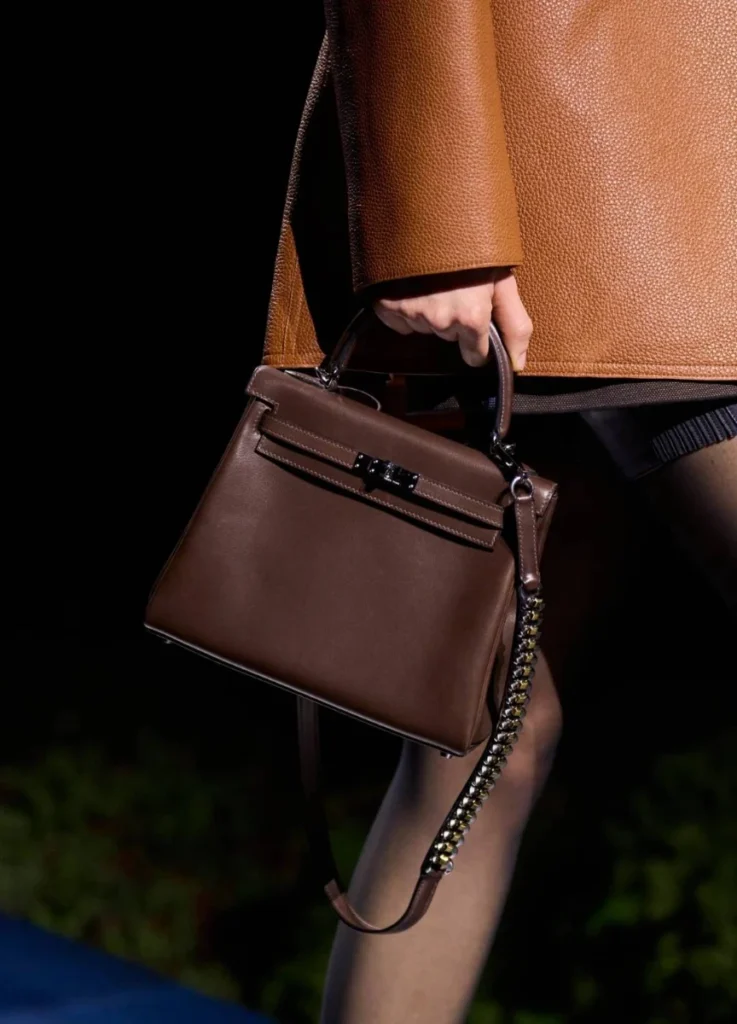
Several runway versions introduce a chain-integrated strap.
– Kelly Chain
source: Vogue Runway
Traditionally, the Kelly’s shoulder strap has been purely functional — a simple leather band attached to the bag’s hardware. Adding metal chain links changes that dynamic. The chain becomes a visual focal point, introducing movement, reflection, and a degree of fashion-oriented decoration to a bag known for restraint.
The Kelly’s structure itself stays intact. Proportions, hardware placement, and silhouette remain unchanged. Only the strap language evolves.
A classic Hermès maneuver: preserve structure, update detail. Through a single element, the Kelly shifts slightly from a purely classical object toward a more fashion-conscious accessory.
Kelly Chain — Practical Considerations
Advantages:
- Stronger visual identity than traditional Kelly versions
- Functions as a styling centerpiece
Limitations:
- Increased weight from the metal chain
- Potential shoulder discomfort during prolonged wear
Cargo Kelly and Bolide Utility | When the Handbag Becomes Equipment
– Cargo Kelly
source: Vogue Runway
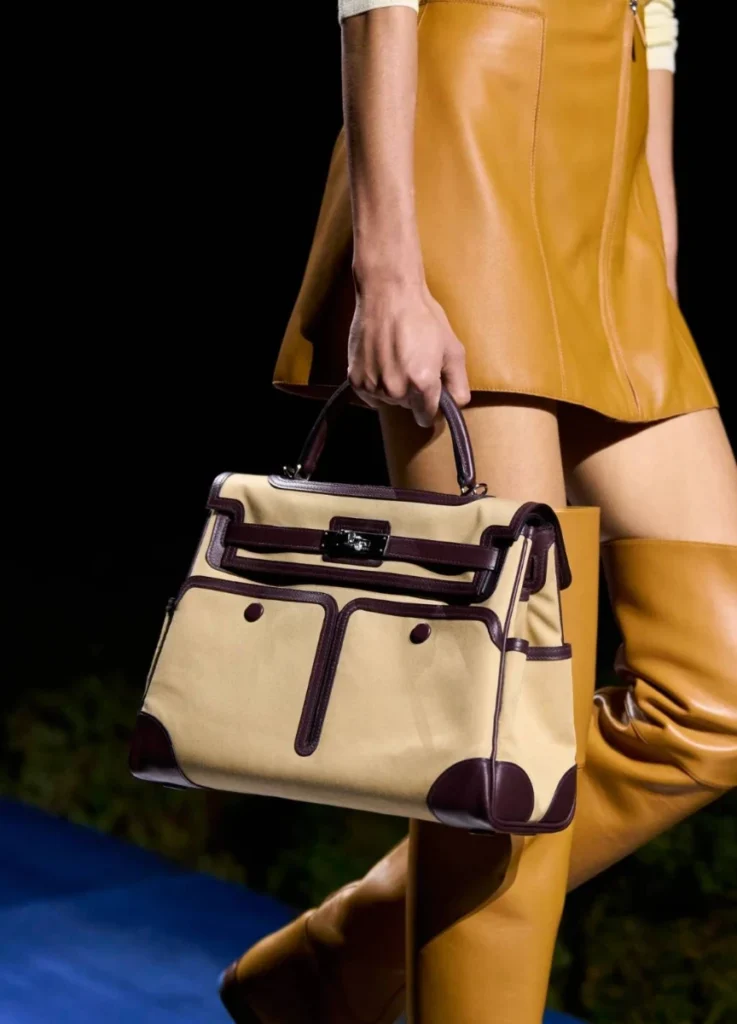
A second movement introduces equipment-like overlays.
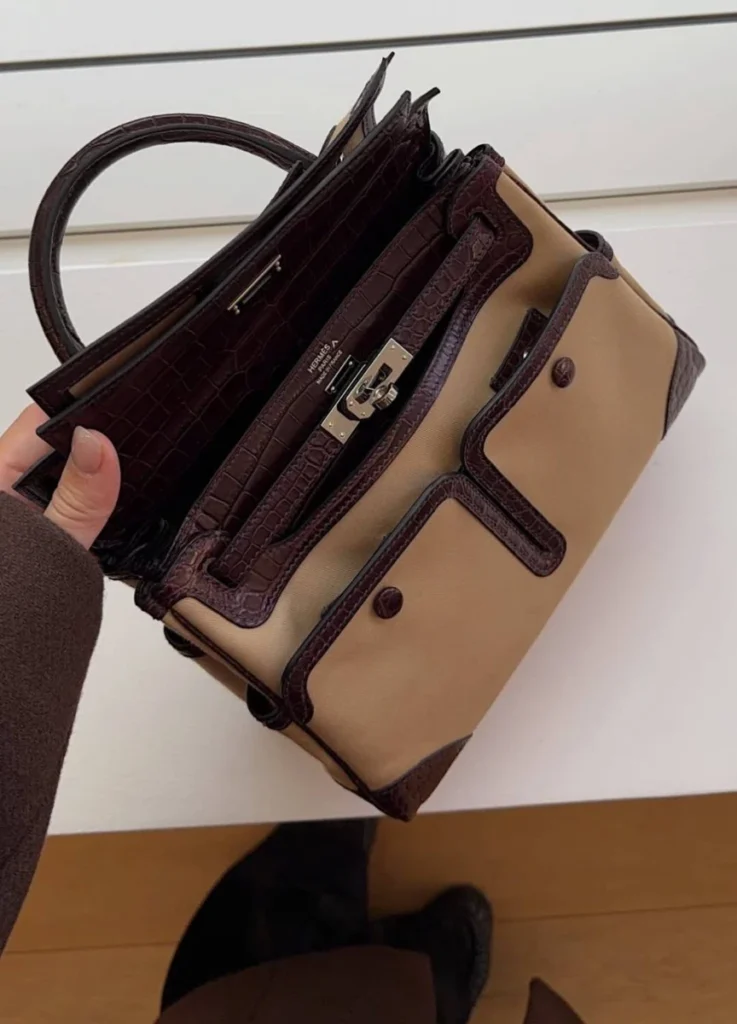
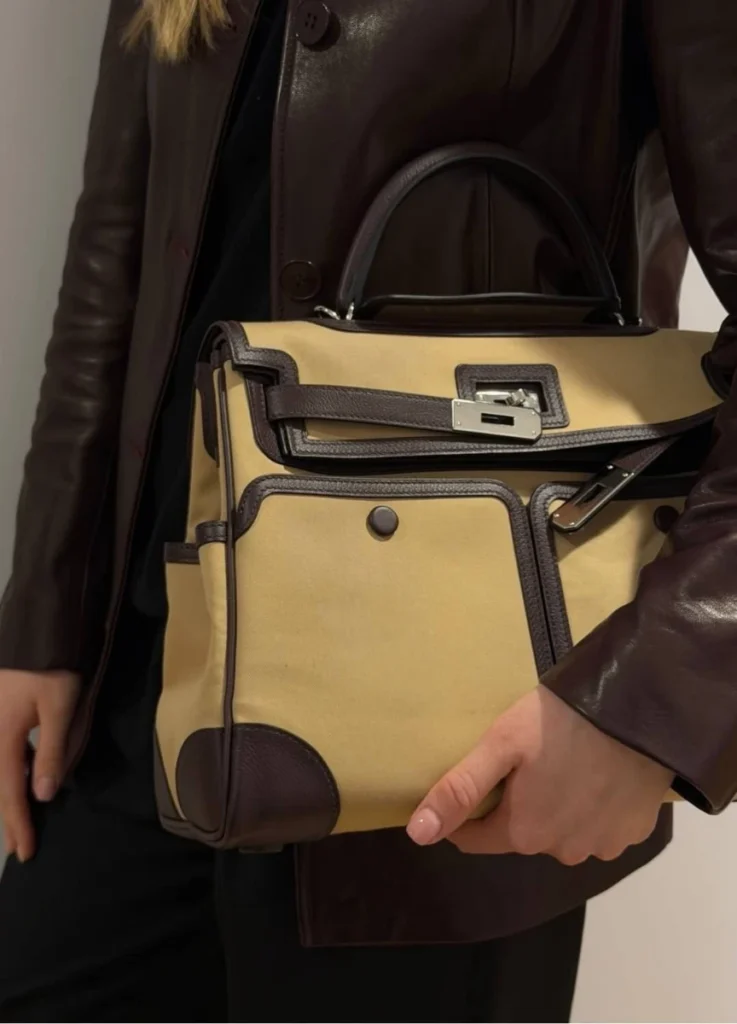
The Cargo Kelly Cover demonstrates the idea. Rather than altering the Kelly itself, Hermès adds a canvas outer layer featuring cargo pockets, textile panels, and leather or exotic trim. The result resembles protective gear more than ornamentation. The bag appears outfitted rather than decorated.
Cargo Kelly — Practical Considerations
Advantages:
- Expanded storage capacity
- Visually distinctive design
Limitations:
- Additional weight
- More complex structure may complicate maintenance
– Cargo Kelly
@dianmondsindubaii / Instagram
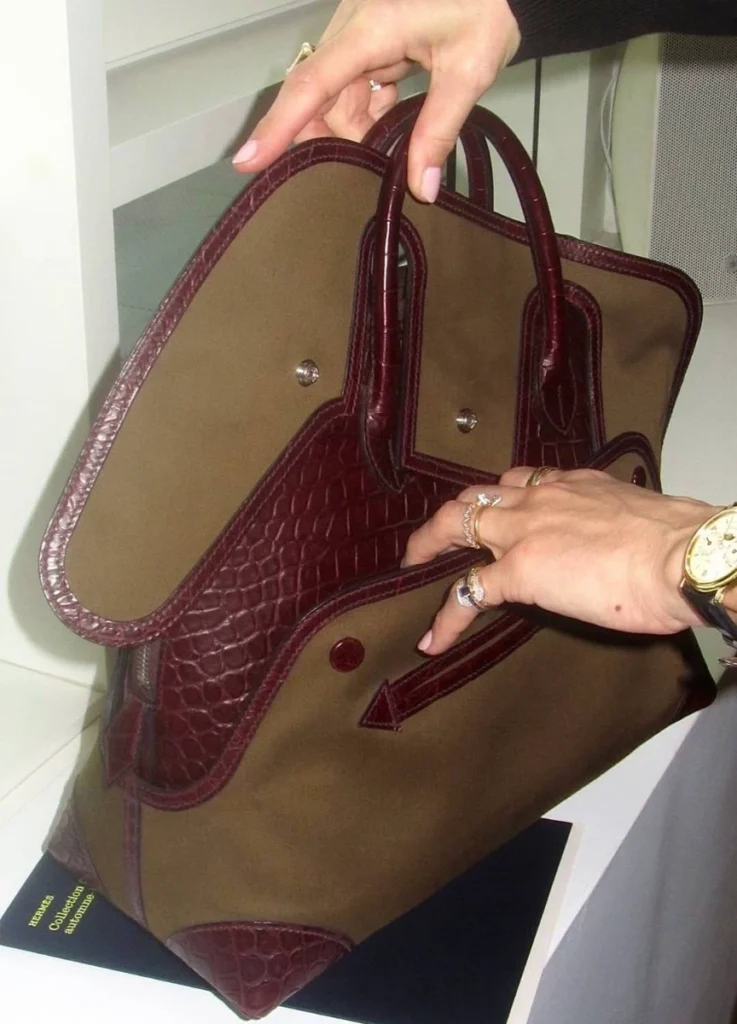
A similar concept appears on the Bolide, where the Bolide Utility Cover introduces layered panels and additional compartments.
This direction reaches deeply into the house’s origins. Before Hermès became synonymous with luxury handbags, it produced saddlery, equestrian equipment, and travel trunks. The Fall 2026 cargo overlays reconnect the handbag to that functional heritage. Rather than presenting bags as decorative objects, Hermès repositions them as instruments — objects designed to accompany movement and use.
– Bolide Utility
@alisontoby / Instagram
Mini Plume | The Return of Travel Geometry
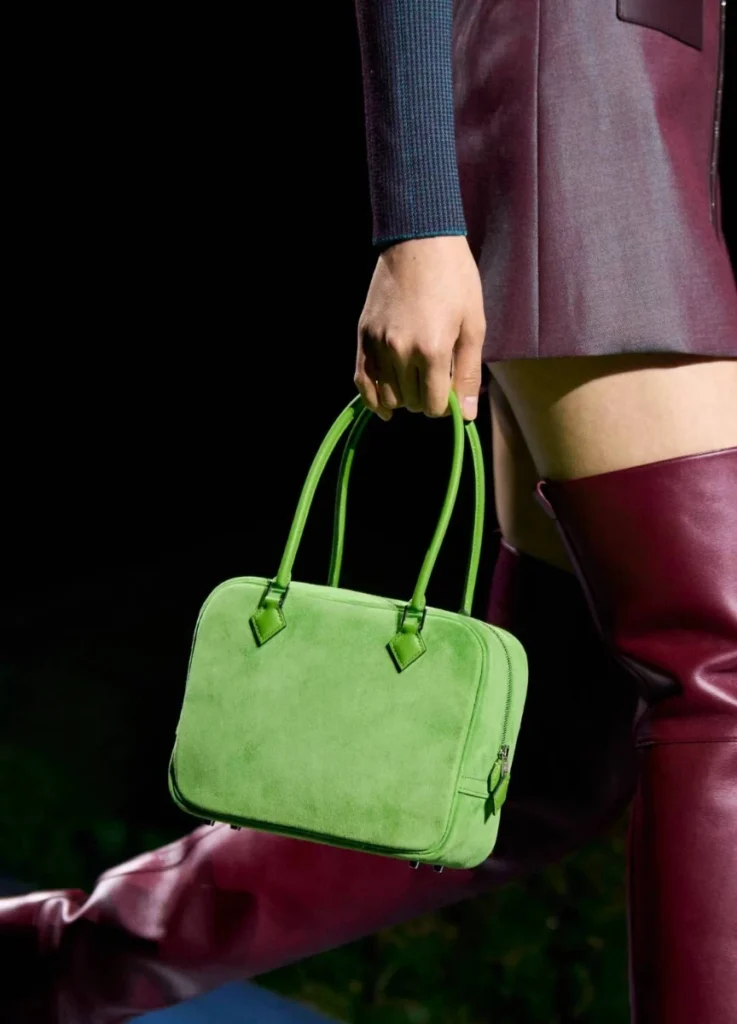
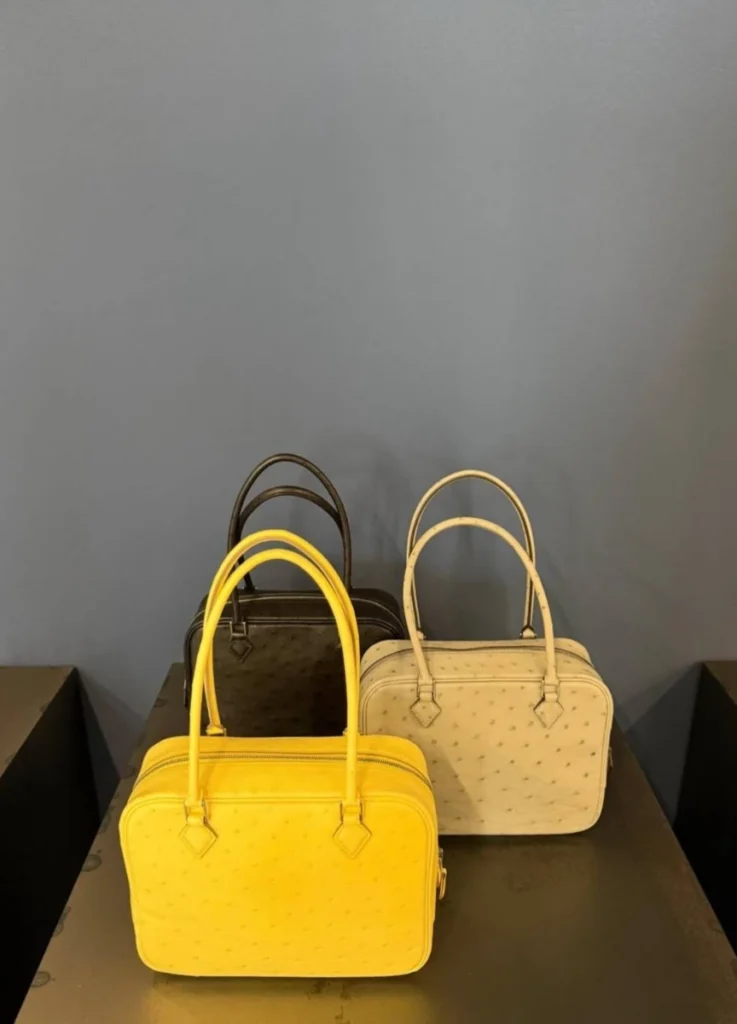
The Mini Plume is one of the season’s quietly significant developments.
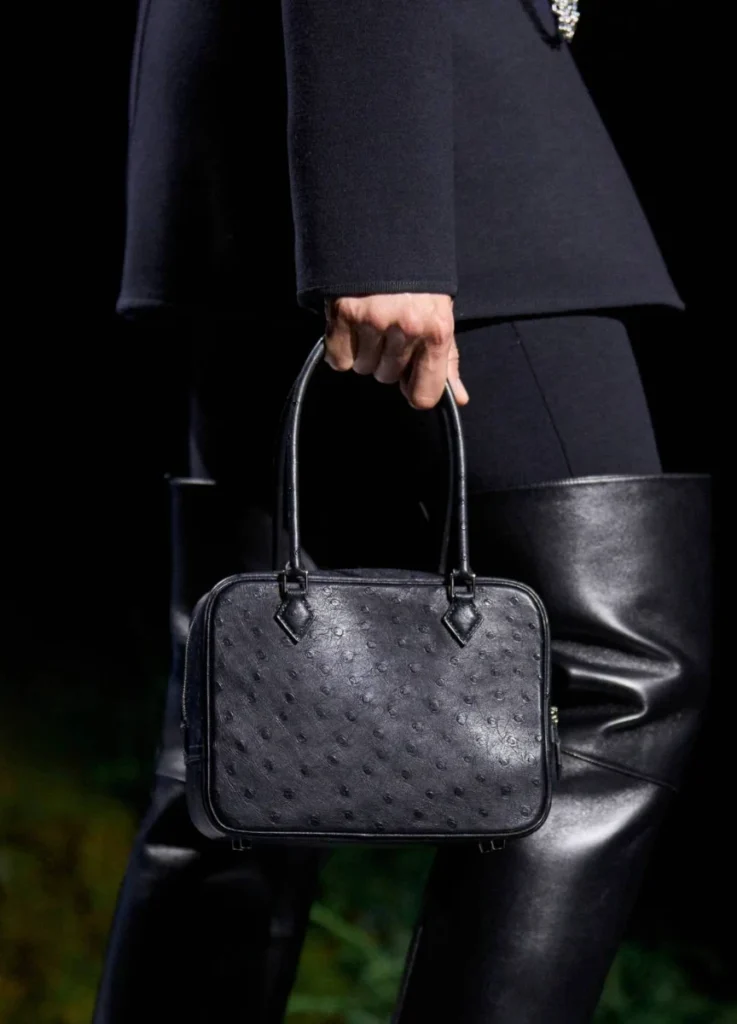
While the Kelly and Birkin rely on rigid geometry, the Plume introduces softness into the Hermès universe. Its curved body and lightweight construction reflect its travel luggage origins.
Fall 2026 keeps those qualities and adapts the bag for contemporary city life. The Mini Plume appears in several materials, including ostrich, Doblis suede, and smooth calfskin. The variation reinforces the bag’s versatility — it functions equally well as a day bag or evening accessory.
– Mini Plume
source: Vogue Runway
Mini Plume — Practical Considerations
Advantages:
- Extremely lightweight
- Timeless silhouette
Limitations:
- Absence of shoulder strap
- Limited interior capacity
– Mini Plume
@pursebop / Instagram
Picotin Micro 14 | A Study in Proportion
The Picotin has always been one of Hermès’ most minimal designs.
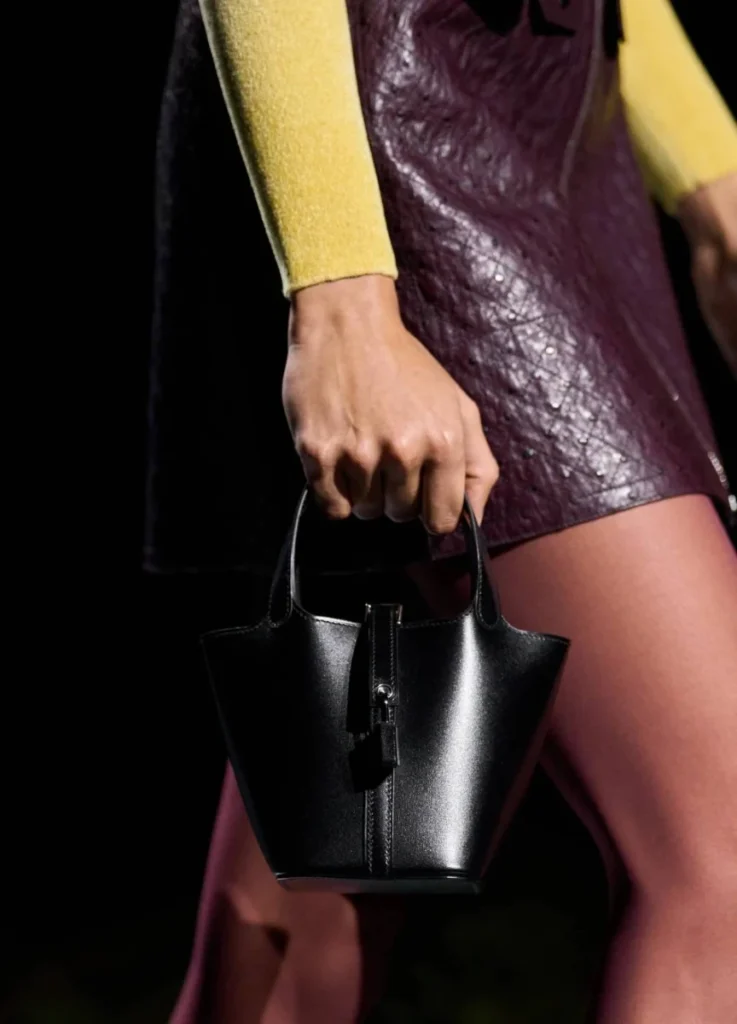
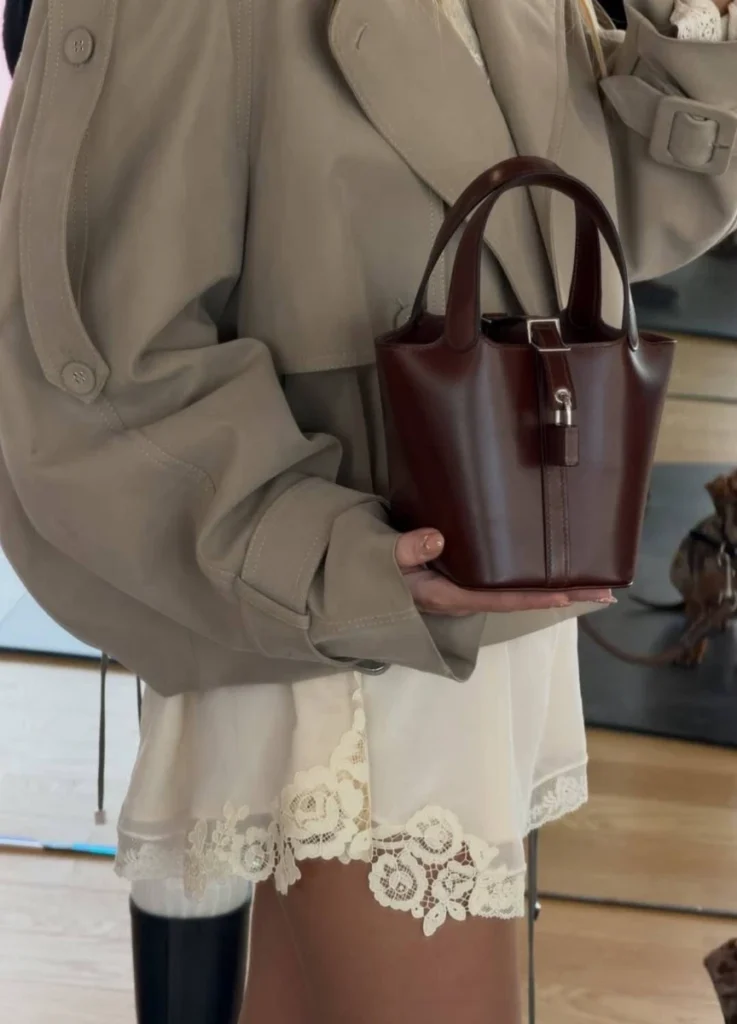
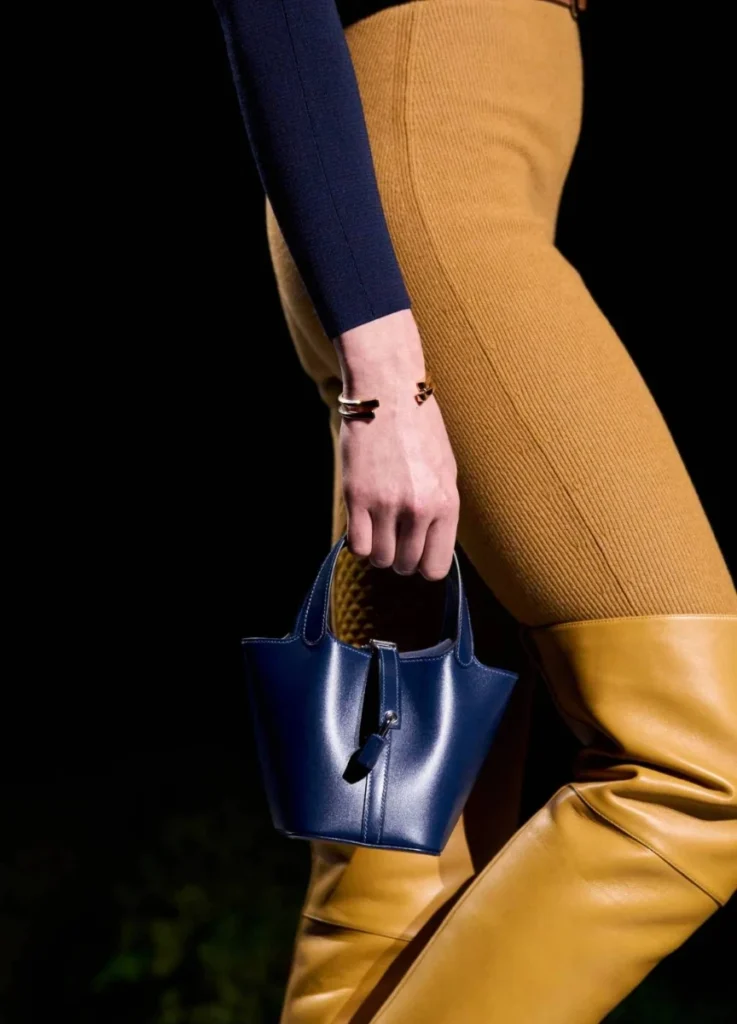
Inspired by horse feed buckets, it’s defined by simplicity — no flap, minimal hardware, a cylindrical structure. The Picotin Micro 14 pushes this simplicity to its limit. Its extremely small scale transforms the bag from a practical accessory into an object of design experimentation.
Box calfskin intensifies the effect.
Unlike softer leathers, Box calfskin maintains crisp edges and reflective surfaces. Applied to a tiny bag structure, it creates the impression of a miniature sculptural object.
– Picotin Micro 14
source: Vogue Runway
Picotin Micro — Practical Considerations
Advantages:
- Strong collector appeal
- Unique proportions
Limitations:
- Minimal functionality
- Primarily decorative rather than practical
– Picotin Micro 14
@je.suis.lou / Instagram
East-West Handheld Bag
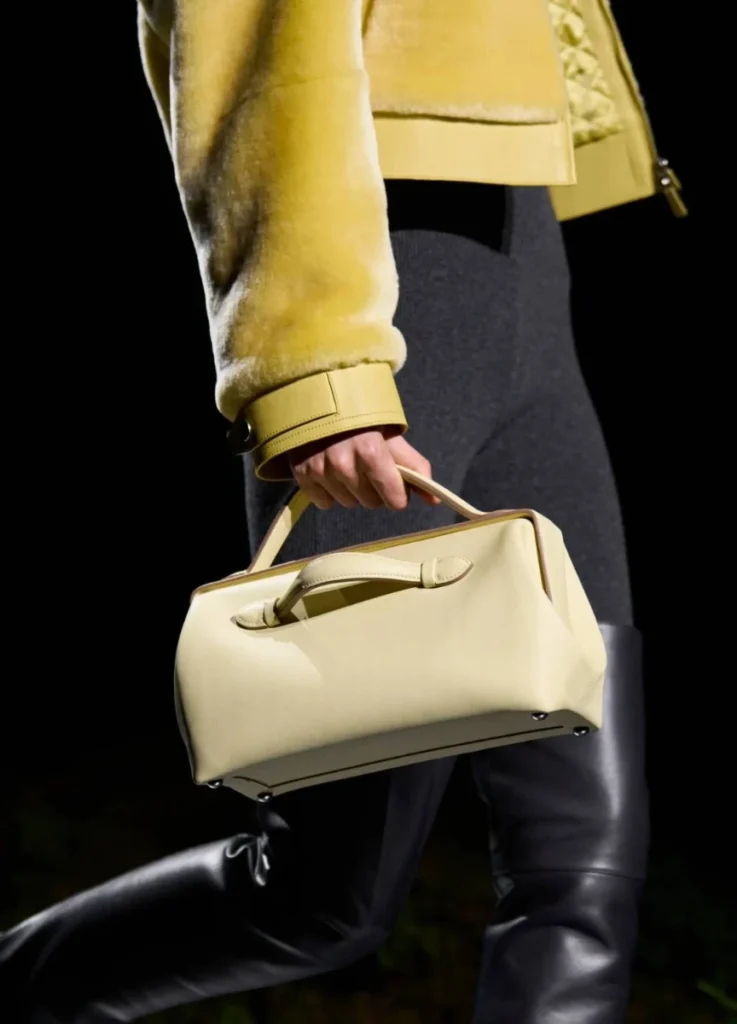
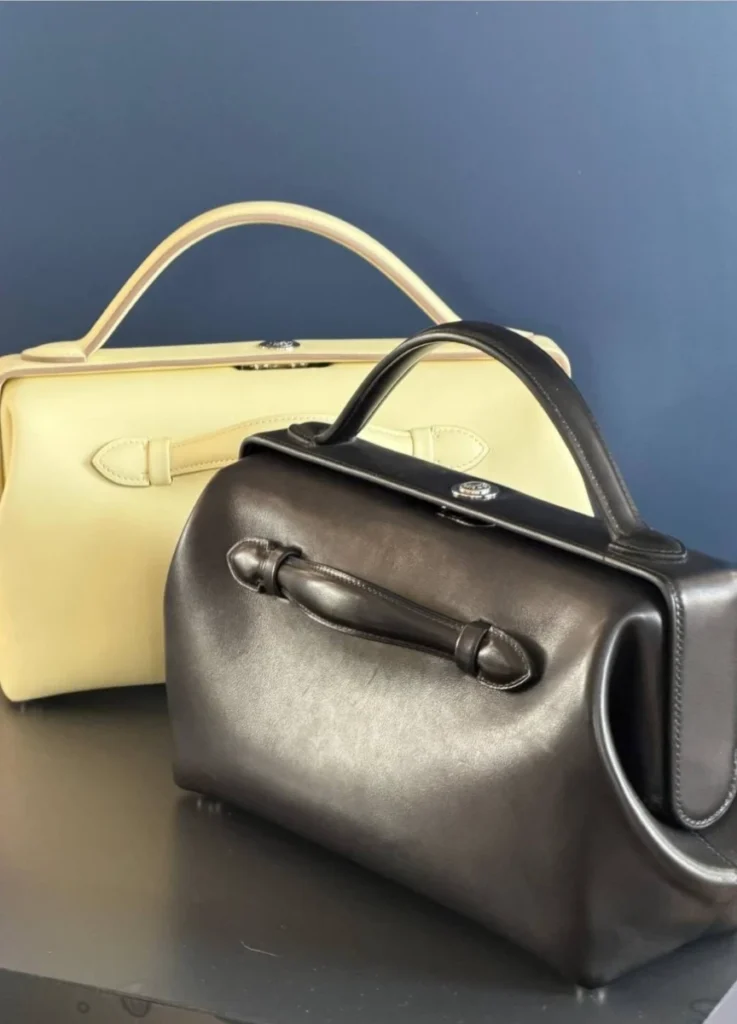
One of the season’s most unexpected introductions in Fall/Winter 2026 is an elongated East-West mini handbag. Hermès rarely experiments with exaggerated horizontal proportions, and this piece introduces a sculptural interpretation of the mini bag.
The bag features a flat top handle stretching across the entire width of the silhouette, recalling the proportions of the Kelly Pochette but extended dramatically into a horizontal axis. The leather body tapers slightly inward at the sides, creating a refined architectural shape that feels both compact and deliberate.
– East-West Handheld Bag
source: Vogue Runway
Opening the bag reveals a hinged frame construction, secured by a metal button engraved with the Clou de Selle motif — one of Hermès’ subtle equestrian signatures. This structural frame gives the bag a rigid, almost box-like backbone despite its elongated proportions.
A secondary flat strap attaches directly to the body, offering an alternate carrying method, while four metal feet protect the base. The runway version appeared in a tone similar to Jaune Milton, alongside classic black.
The East-West reflects a broader trend in contemporary accessories — the shift toward micro architecture, where small bags are treated as sculptural design objects rather than purely functional accessories.
Advantages
• Distinctive silhouette within the Hermès lineup
• Strong architectural identity
Limitations
• Limited storage capacity
• Best suited for evening or styling pieces rather than everyday use
– East-West Handheld Bag
@pursebop / Instagram
Arçon
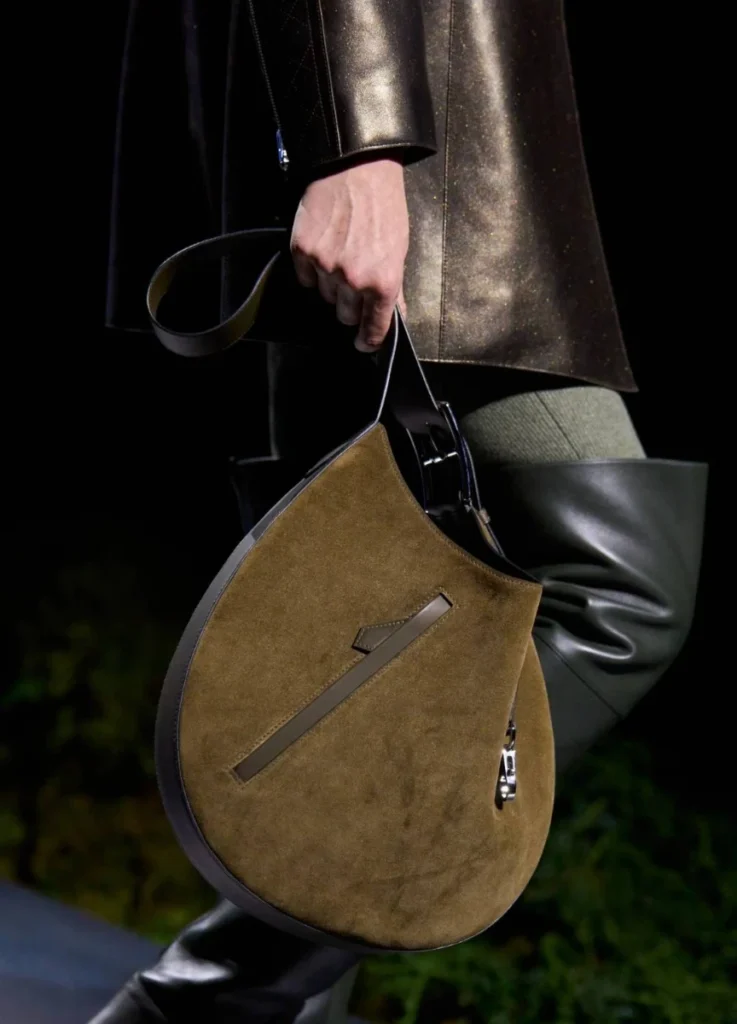
First introduced in Spring/Summer 2023, the Arçon has quickly become one of the most recognizable contemporary Hermès silhouettes. Its crescent-shaped body references saddle construction, aligning directly with the house’s equestrian heritage.
For Fall/Winter 2026, the bag returns in soft suede, with the handle and structural accents rendered in Swift leather. The material contrast produces a subtle tonal layering that enhances the bag’s curvature.
The Arçon’s defining feature remains its saddle-like geometry. The bag hangs naturally against the body, creating a relaxed yet sculptural silhouette that differs markedly from rigid icons like the Birkin and Kelly.
– Arçon
source: Vogue Runway
In brown suede, the bag evokes the texture and color palette of traditional equestrian equipment. The design was carried by hand on the runway, though its shape lends itself naturally to shoulder wear.
The Arçon’s continued presence underscores Vanhée-Cybulski’s ongoing interest in translating equestrian forms into modern accessories.
Advantages
• Comfortable curved silhouette
• Strong identity linked to Hermès heritage
Limitations
• Less internal structure than classic Hermès bags
• Limited internal organization
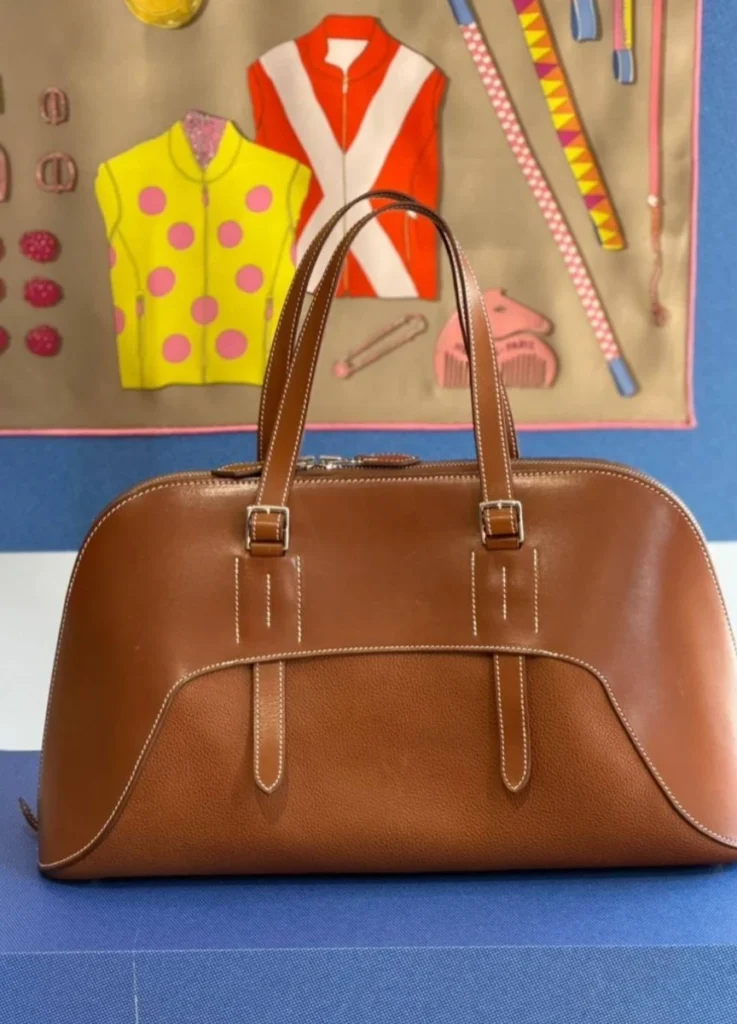
Bolide-Inspired Zip Top Bag
– Bolide-Inspired Zip Top Bag
source: Vogue Runway
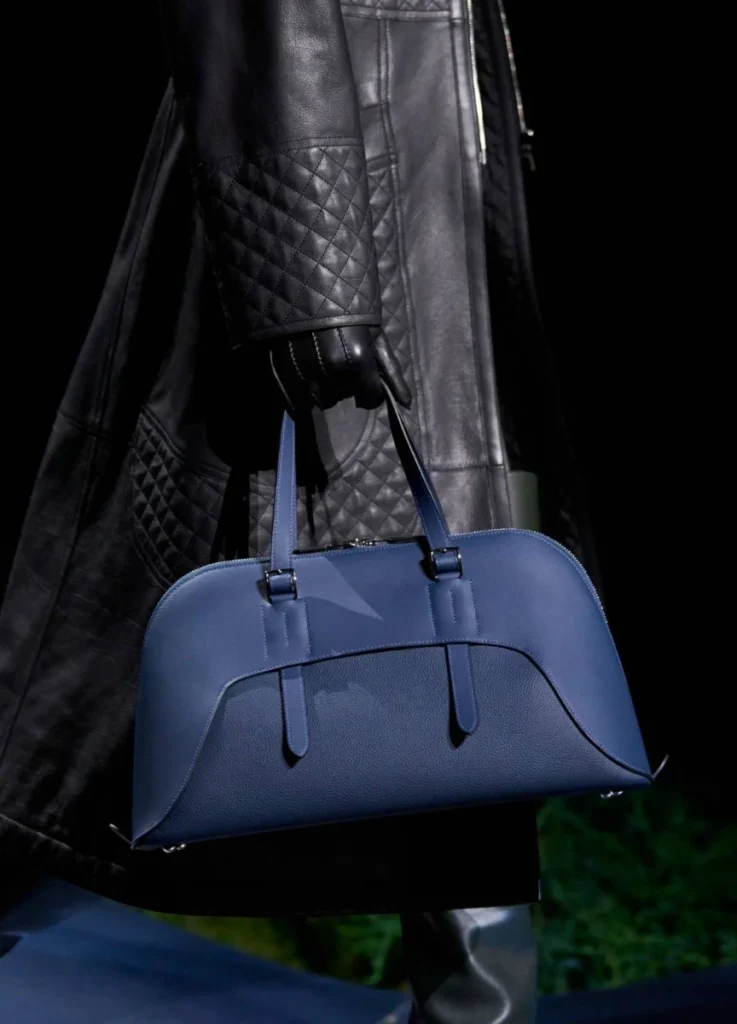
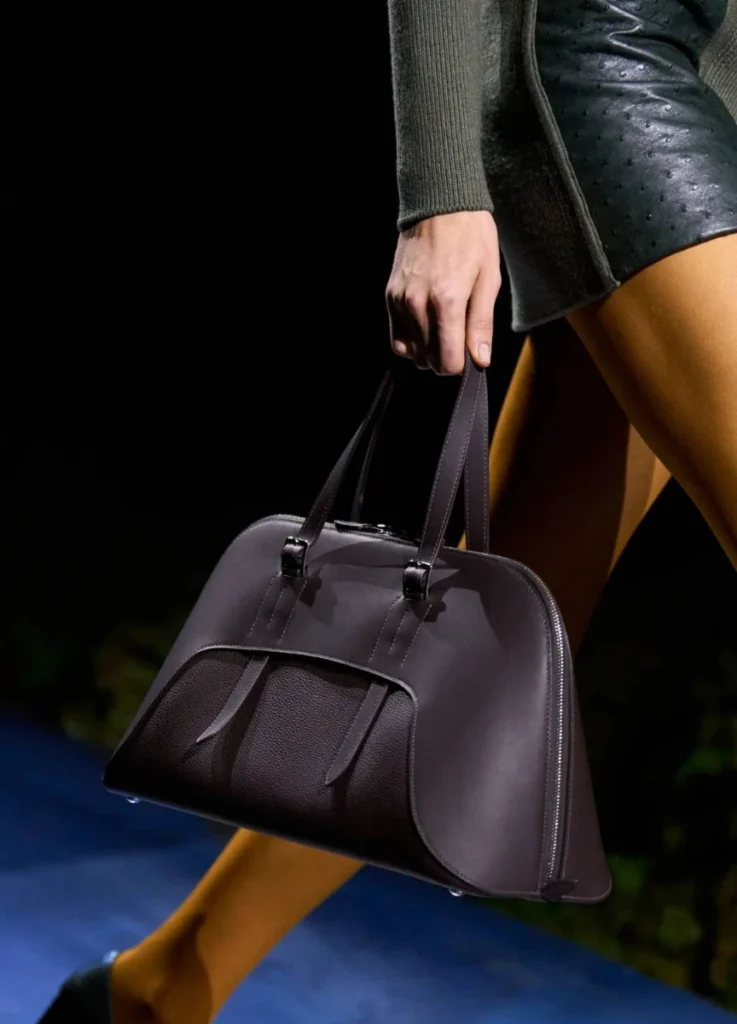
Among the season’s quieter introductions is a Bolide-inspired structured handbag, reinterpreting the classic Hermès travel bag through a more contemporary lens.
The silhouette stays recognizably connected to the Bolide lineage, but the design introduces a curved leather panel sweeping across the top of the bag, creating a layered effect between two contrasting leathers — appearing to combine supple Swift leather with grained Togo.
The dual top handles feature buckle detailing and emerge organically from beneath the curved leather panel, giving the impression that they “peek out” from the body of the bag. The structural gesture quietly references equestrian girth straps, reinforcing the connection between Hermès bag design and saddle construction.
The bag closes with a two-way zipper spanning the full length of the top, while four metal feet stabilize the base.
Presented in colors such as Gold, Rouge Sellier, and Black, the bag offers a more understated interpretation of Hermès travel heritage.
– Bolide-Inspired Zip Top Bag
source: Vogue Runway
Advantages
• Balanced proportions suitable for everyday use
• Structured yet softer than traditional Bolide
Limitations
• Zipper opening slightly narrower than expected
• Less recognizable than classic Hermès icons
Flap Shoulder Bag
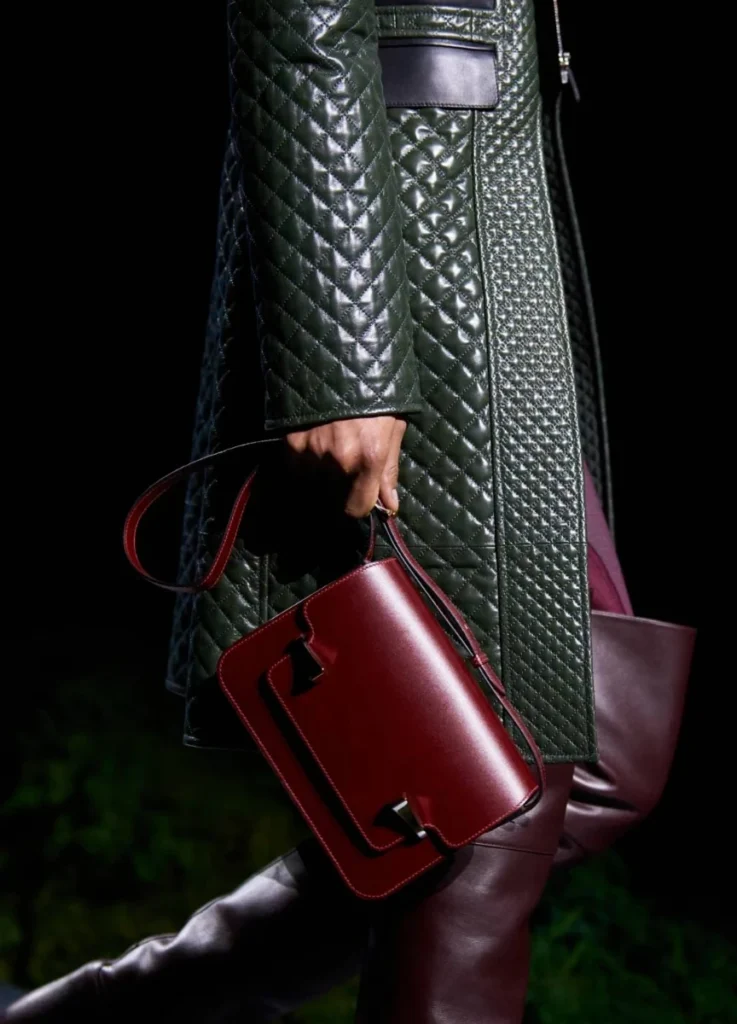
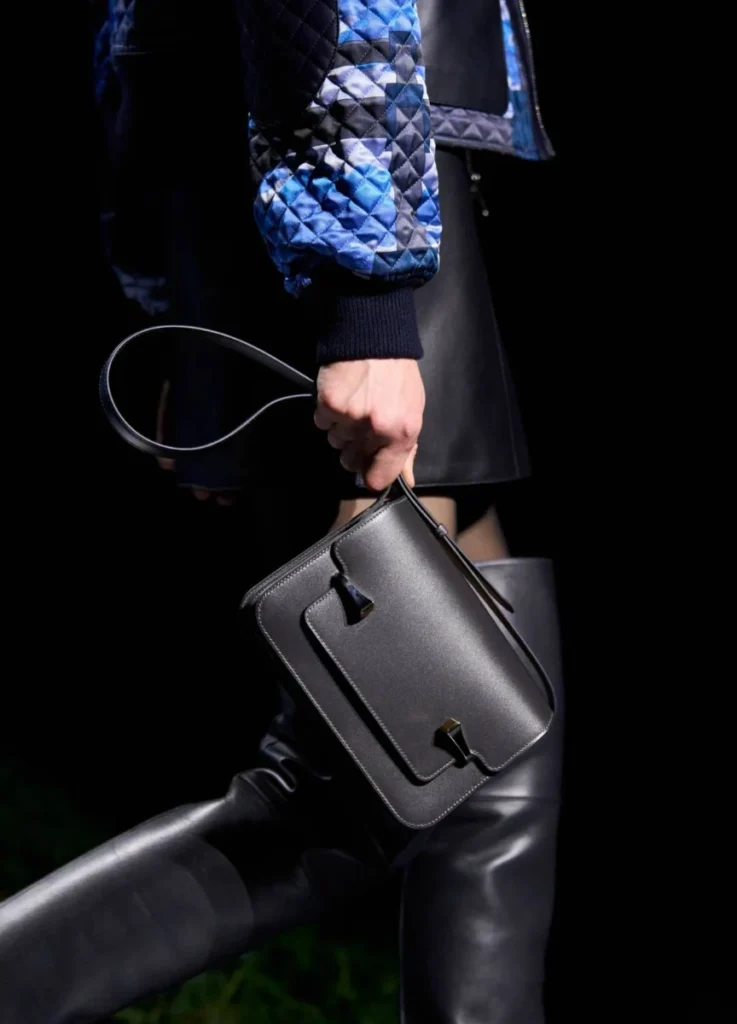
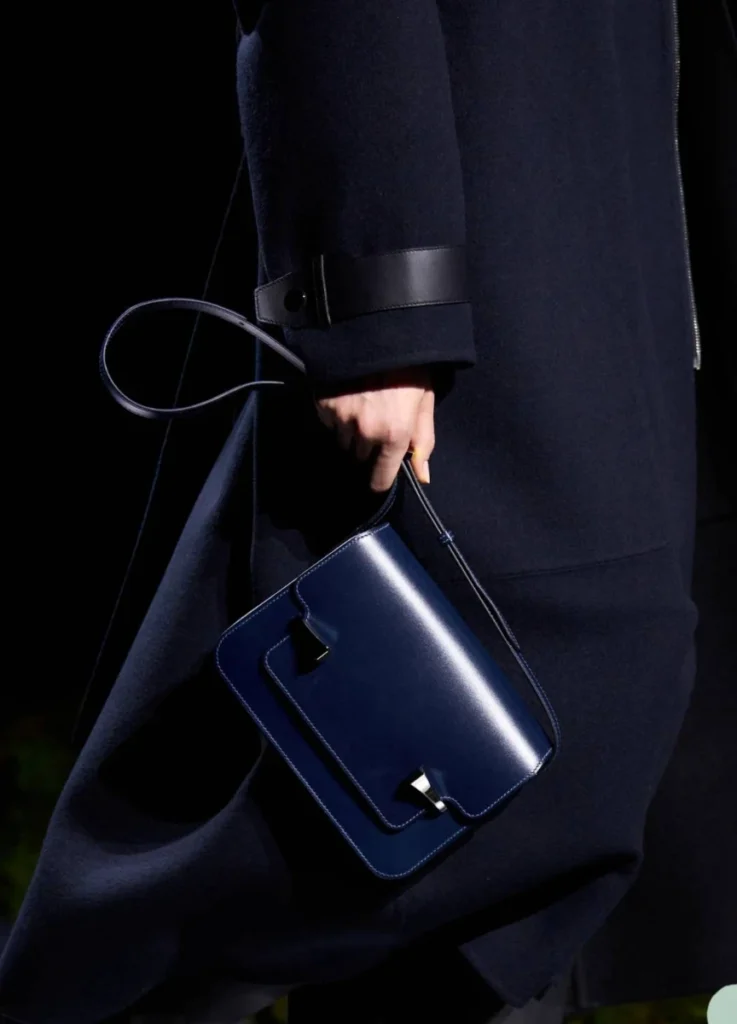
Another new design introduced in Fall/Winter 2026 is a box-structured flap shoulder bag, defined by its rigid geometry and minimal surface treatment.
Crafted in glossy Box calfskin, the bag emphasizes sharp lines and reflective surfaces. The structure features an accordion-like interior with two main compartments, providing a surprisingly practical layout beneath its minimalist exterior.
– Flap Shoulder Bag
source: Vogue Runway
The front flap covers roughly three-quarters of the bag’s body and is secured by Electrum hardware, whose curved shape hooks elegantly over the flap. The hardware treatment creates a subtle sculptural accent without disrupting the bag’s restrained aesthetic.
An adjustable slim leather strap allows the bag to be worn on the shoulder, though many models on the runway carried it by hand.
Presented in shades such as Black, Deep Blue, and Rouge Sellier, the design reflects Hermès’ ability to introduce new silhouettes while keeping a disciplined visual language.
– Flap Shoulder Bag
source: Vogue Runway
Advantages
• Highly structured design with strong architectural presence
• Functional interior compartments
Limitations
• Rigid Box leather requires careful handling
• Less relaxed than other bags in the collection
Materials | Doblis and Box Leather
Beyond individual models, the material palette reveals another conceptual thread.
Two leathers dominate the season: Doblis suede and Box calfskin.
At first glance they appear opposite. Doblis suede absorbs light, producing a soft matte surface that emphasizes volume and curvature.
– Flap Shoulder Bag
source: Vogue Runway
Box calfskin, by contrast, reflects light sharply, highlighting edges and structural lines.
The two materials serve the same purpose, though. Both accentuate form. Doblis reveals the fluid geometry of bags like the Arçon and Plume. Box leather sharpens the architectural clarity of pieces such as the Picotin Micro. In both cases, decoration becomes secondary to structure.
– Micro Picotin 14
source: Vogue Runway
Nadège Vanhée and the Equestrian Aesthetic
To fully understand Fall 2026’s direction, the philosophy of women’s creative director Nadège Vanhée-Cybulski needs to be considered.
Since taking the helm of Hermès women’s ready-to-wear, she has consistently emphasized what might be called equestrian modernism — functional structures, restrained ornamentation, and garments and objects designed for movement.
Many Hermès bags originate directly from equestrian life.
– mini Plume
source: Vogue Runway
The Picotin references feeding buckets. The Garden Party evokes stable equipment bags. The Arçon derives from saddle forms.
In Fall 2026, designs such as the Cargo Kelly reinterpret these origins through a contemporary lens. The handbag becomes, once again, an extension of equipment — and this is the connecting thesis of the entire collection. Not new bags, but old logic reactivated.
– Cargo Kelly
@dianmondsindubaii / Instagram
Strategic Direction | Kelly vs Birkin
A final observation emerges from the season’s bag lineup.
Hermès has been quietly differentiating the roles of its two most famous handbags over the past several years.
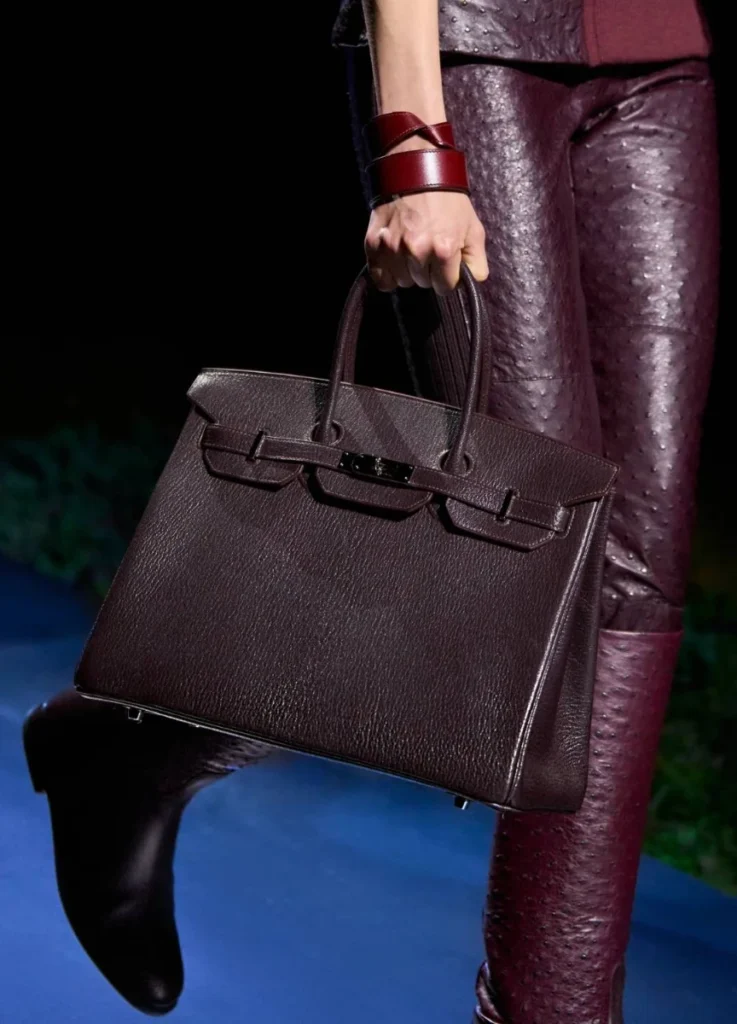
The Birkin increasingly functions as a symbol of long-term value and investment. The Kelly, by contrast, is gradually moving toward a more fashion-oriented position.
Models like the Mini Kelly, Kelly Pochette, and Kelly Danse have already expanded the Kelly’s stylistic range. The chain-strap Kelly introduced in Fall 2026 continues that trajectory.
The strategic logic is clean. The Birkin holds the value register; the Kelly captures the fashion register. Together they cover both ends of the luxury bag market — without forcing either model to compromise its character.
– Birkin
source: Vogue Runway
Final Assessment | The Handbag, Returned to Instrument
Hermès Fall 2026 in one sentence:
Hermès did not create new bags this season. It reassigned the roles of the ones it already had.
The Kelly becomes slightly more fashion-driven. The Picotin becomes an experiment in proportion. The Plume returns as a soft counterpoint to rigid icons. Cargo overlays transform handbags back into equipment.
In doing so, Hermès reconnects its contemporary objects with the deeper logic of its past. Long before it was a luxury fashion house, Hermès was a maker of tools — objects designed for movement, travel, and use.
Fall 2026 is a reminder that beneath the aura of exclusivity, the Hermès handbag remains what it has always been: an instrument.
– Bolide-Inspired Zip Top Bag
@pursebop / Instagram
Featured Image via @dianmondsindubaii / Instagram
[ Related Editorials ]