Inside Chanel Fall Winter 2026
Chanel Fall Winter 2026 feels familiar.
Tweed jackets, knit dresses, pleated skirts, chain bags — the elements that have defined the visual language of the house for decades appear in abundance. Nothing in the collection initially signals a dramatic shift. The silhouettes and materials read comfortably aligned with the brand’s established codes.
A quiet recalibration emerges beneath the surface. Proportions soften. Tweed appears in unfamiliar contexts. The silhouette gradually shifts in ways that reflect broader movements within the luxury fashion landscape.
Rather than proposing a new aesthetic direction, Fall Winter 2026 operates within the architecture of the house itself. The collection reads less as reinvention and more as refinement — adjusting the tension between tradition and contemporary wearability.
This approach aligns with Chanel’s position within the industry. While many brands pursue radical reinvention each season, Chanel moves differently. Its language evolves incrementally — through proportion, styling, and texture rather than through dramatic conceptual shifts.
The collection appears restrained, but its internal logic becomes clear through structure.
Context | Chanel in a Moment of Transition
The mid-2020s have become a period of realignment within the luxury fashion system. Major houses are redefining their identities through strong creative direction and distinctive visual languages.
Under new creative leadership, brands across Paris have embraced sharply defined aesthetics. Houses like Dior under Jonathan Anderson and The Row under the Olsens have developed highly recognizable silhouettes and material philosophies that shape how contemporary luxury is perceived.
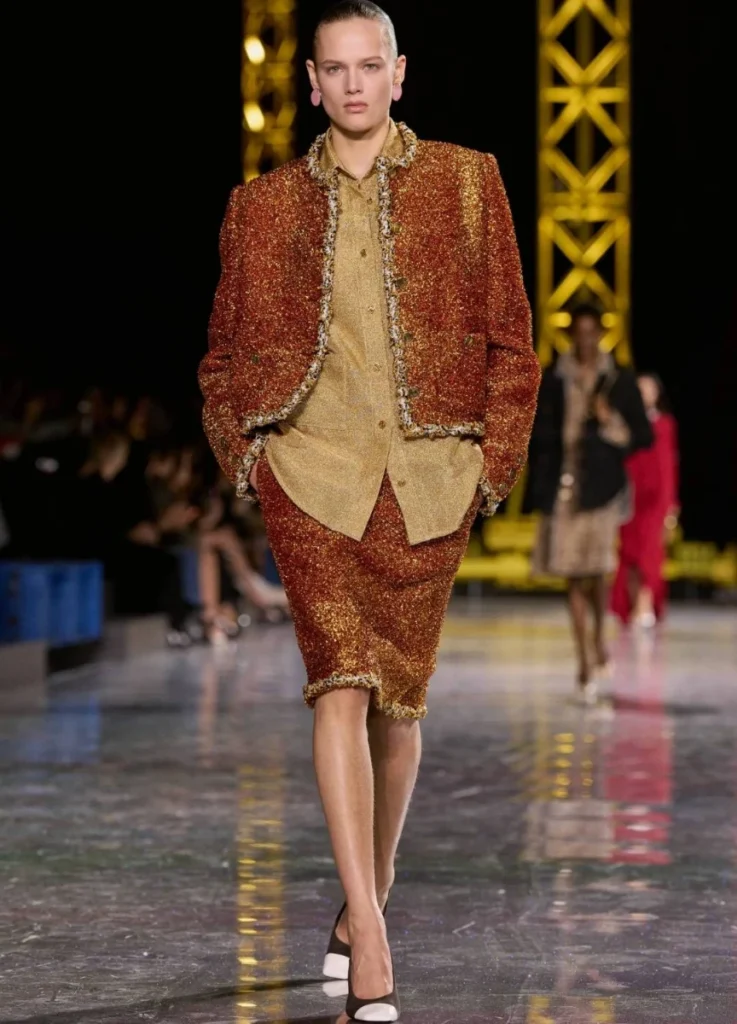
Chanel occupies a distinctive role within this broader shift.
Unlike younger brands that rely on visible aesthetic disruption, Chanel operates as one of the most powerful heritage houses in fashion. Its strength lies in the continuity of its codes — tweed, chains, camellias, quilting, and the iconic balance between masculine tailoring and feminine elegance.
Chanel’s runway collections function differently from those of its peers. They focus less on radical visual statements and more on subtle recalibration within a stable system of symbols.
Fall Winter 2026 follows precisely this pattern. Rather than announcing a stylistic turn, the show refines the context in which Chanel’s most recognizable elements appear.
The Theme | Reframing Tweed
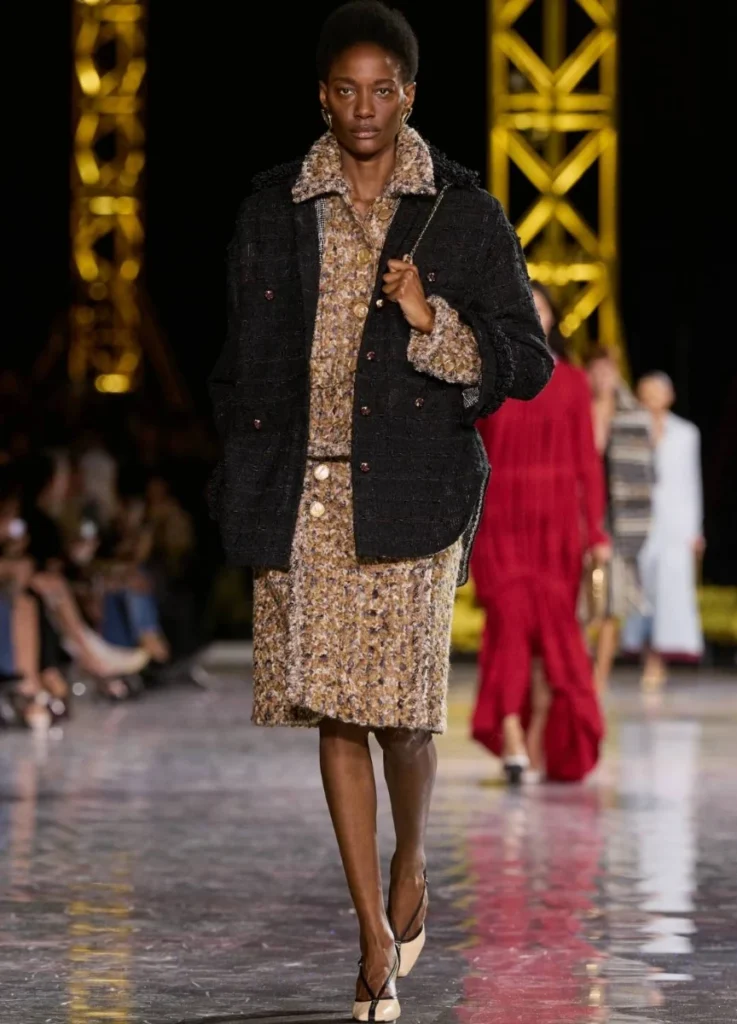
The collection’s central concept lies in the reframing of tweed.
Tweed has been inseparable from Chanel’s identity since the 1950s, when Gabrielle “Coco” Chanel introduced the material into women’s tailoring after drawing inspiration from British menswear fabrics. The material became one of the house’s most recognizable visual signatures over time.
Tweed itself is not radically transformed in Fall Winter 2026. The context surrounding it shifts.
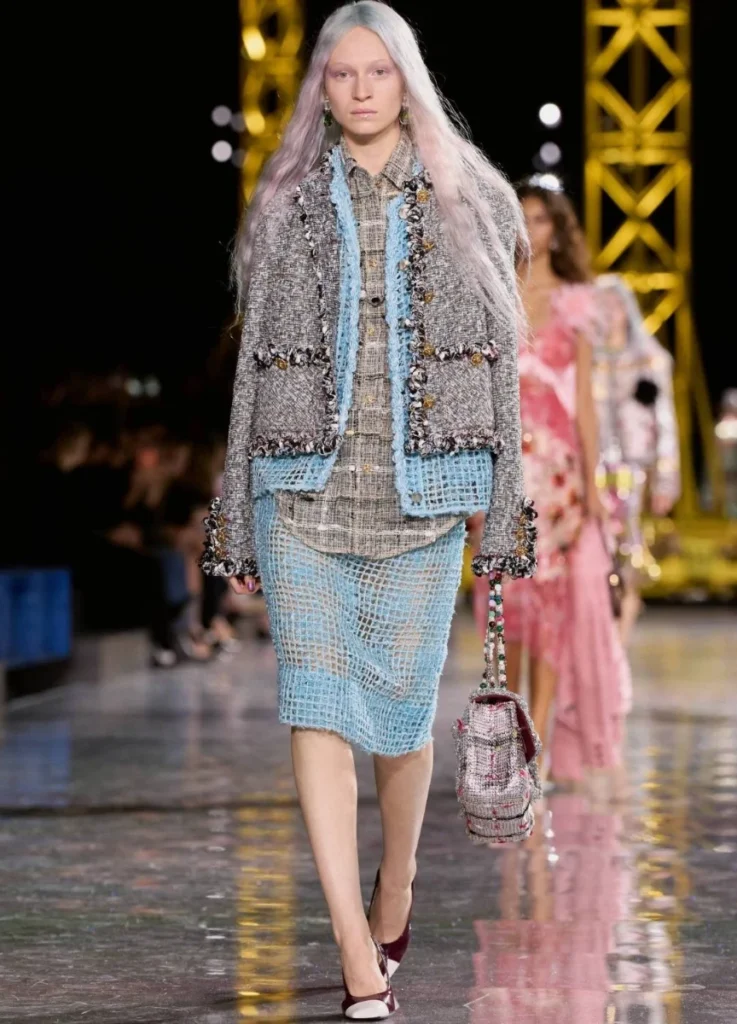
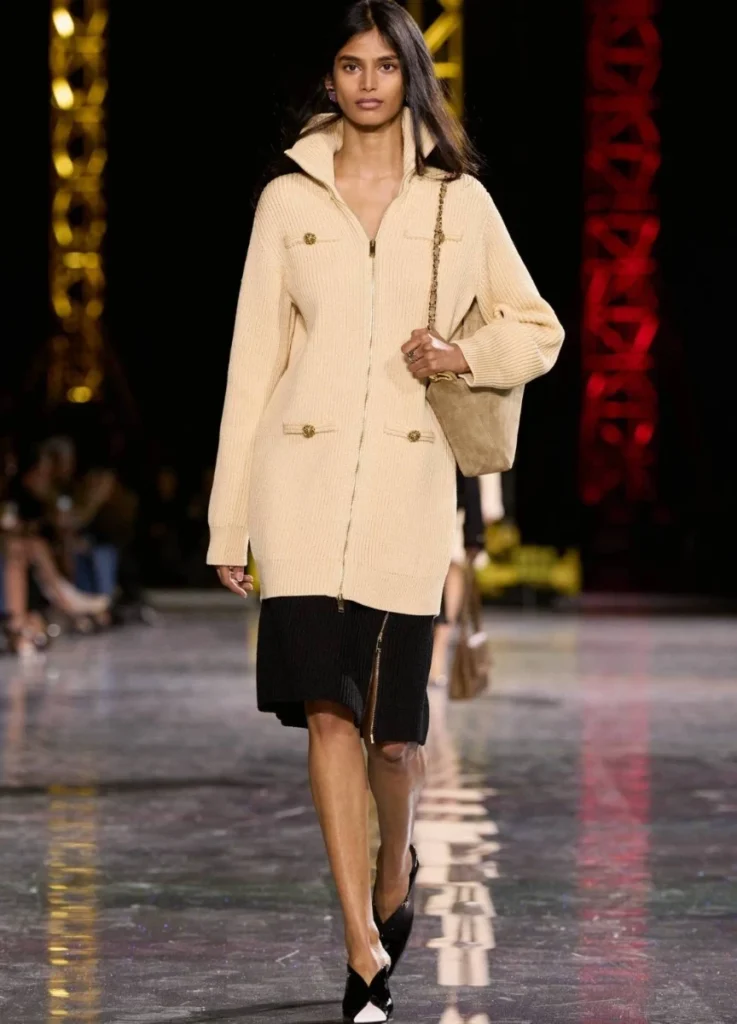
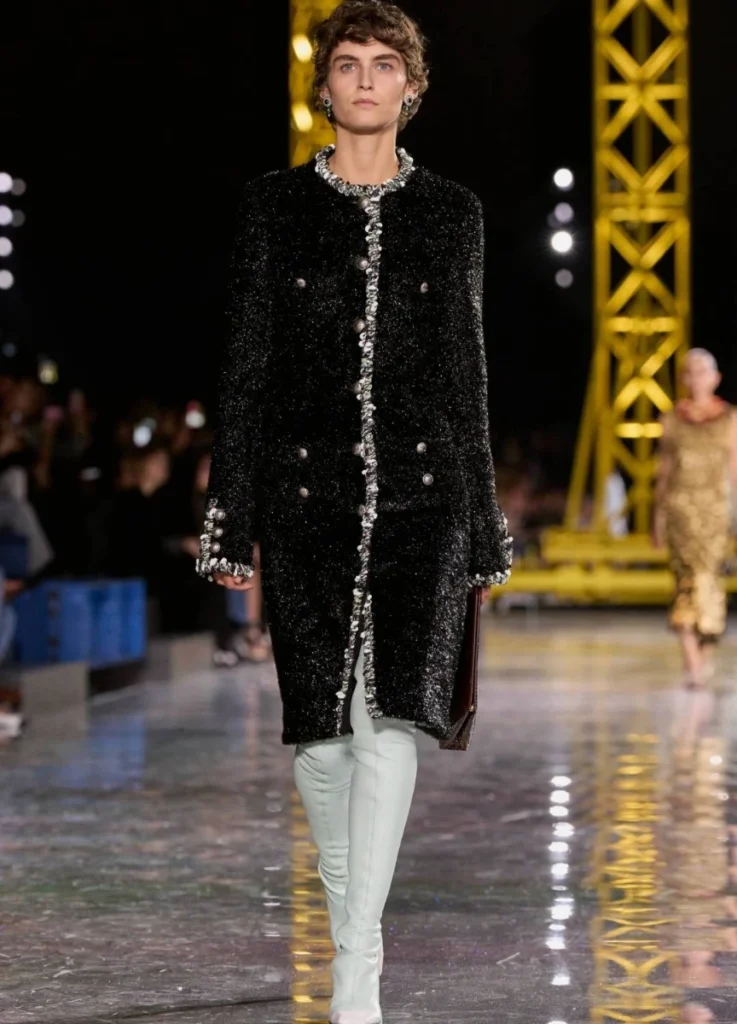
Tweed jackets remain central, but they appear alongside softer materials and looser silhouettes. Knit dresses are layered beneath structured coats. Pleated skirts soften the traditional suit structure. In some cases, oversized tweed coats replace the classic fitted jacket entirely.
The effect is subtle but meaningful. The collection doesn’t redesign tweed — it adjusts how tweed interacts with the rest of the wardrobe.
This follows a long-standing Chanel method. The house rarely abandons its core codes; it repositions them through proportion and styling.
Fall Winter 2026 reads less as a transformation of Chanel’s identity and more as a reinterpretation of how that identity functions in a contemporary wardrobe.
Silhouette | A Longer, Looser Balance
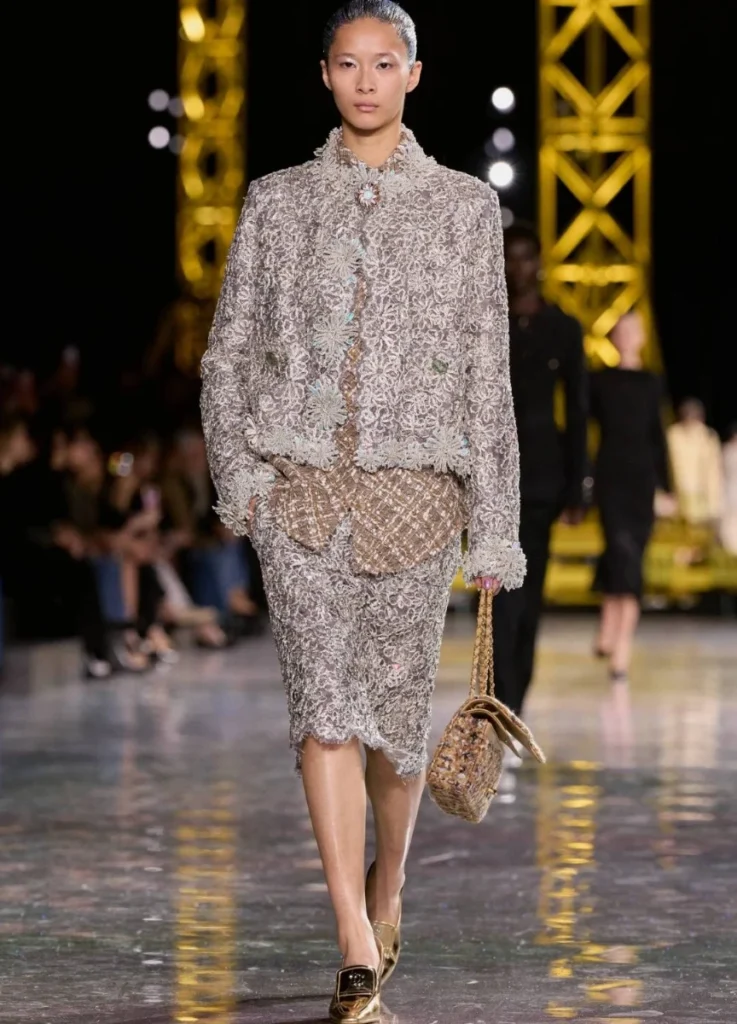
The most noticeable development lies in silhouette.
Traditionally, the Chanel suit is built around a short jacket paired with a knee-length skirt — a proportion that balances structure with mobility. The format has remained remarkably consistent since its introduction in the mid-20th century.
In Fall Winter 2026, the proportions shift.
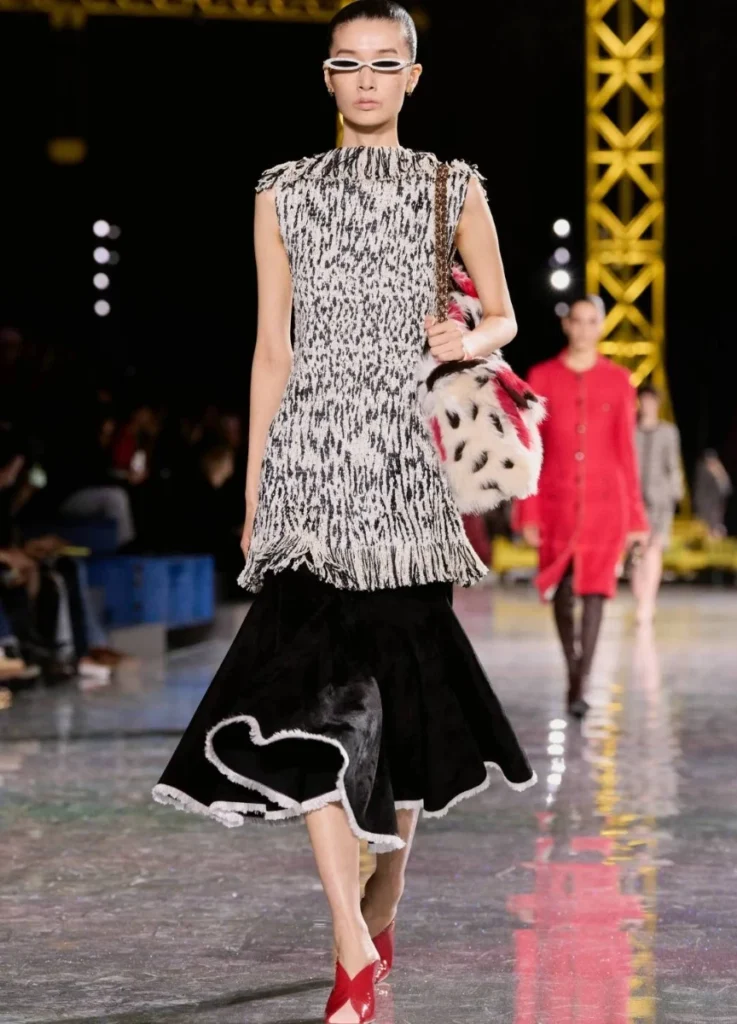
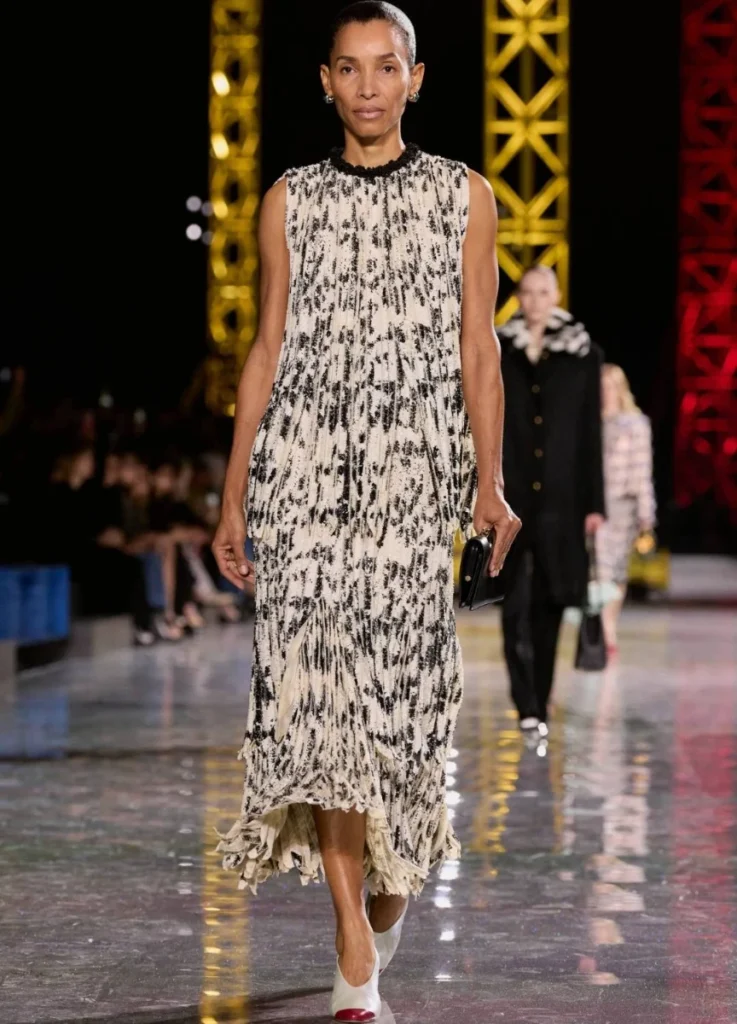
Jackets appear slightly longer. Coats adopt a more relaxed structure. Dresses emphasize verticality rather than compact tailoring. Pleated skirts introduce fluid movement, while knit dresses create elongated silhouettes that soften the rigid geometry historically associated with Chanel tailoring.
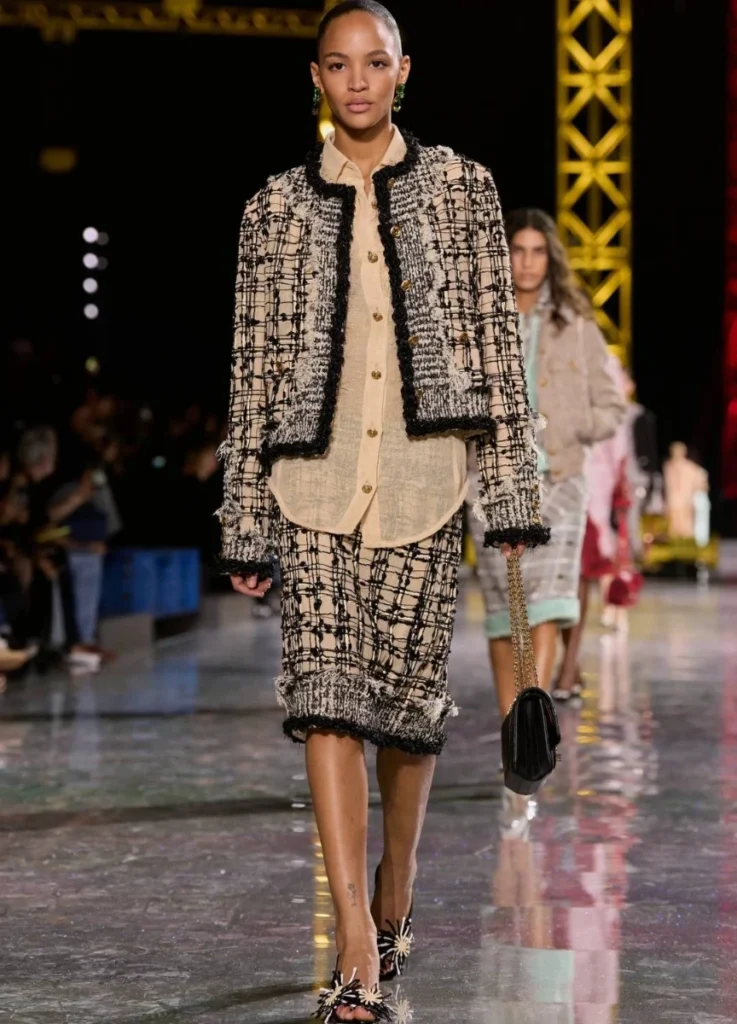
Several patterns emerge across the runway:
- Extended jacket lengths
- Fluid skirts with pleats or drape
- Knit dresses forming vertical silhouettes
- Oversized coats layered over softer garments
These elements create a more relaxed silhouette than the traditional Chanel suit structure. The change doesn’t abandon the house’s codes; it adjusts the balance between structure and softness.
The shift aligns with a broader industry movement toward longer, more fluid silhouettes — a direction increasingly visible across luxury brands that emphasize understated elegance over rigid tailoring. Chanel’s response is careful rather than radical, introducing softness while maintaining the recognizable geometry of the house.
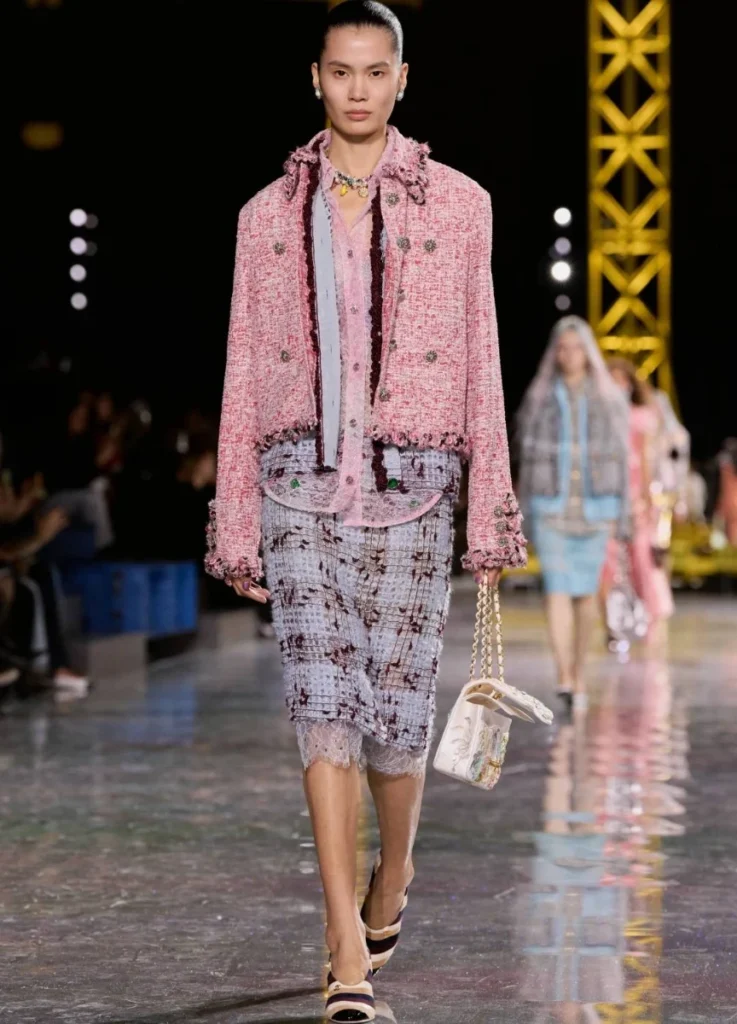
The Subtle Shift of the Chanel Waistline
A subtle shift appears in the waistline and overall proportion.
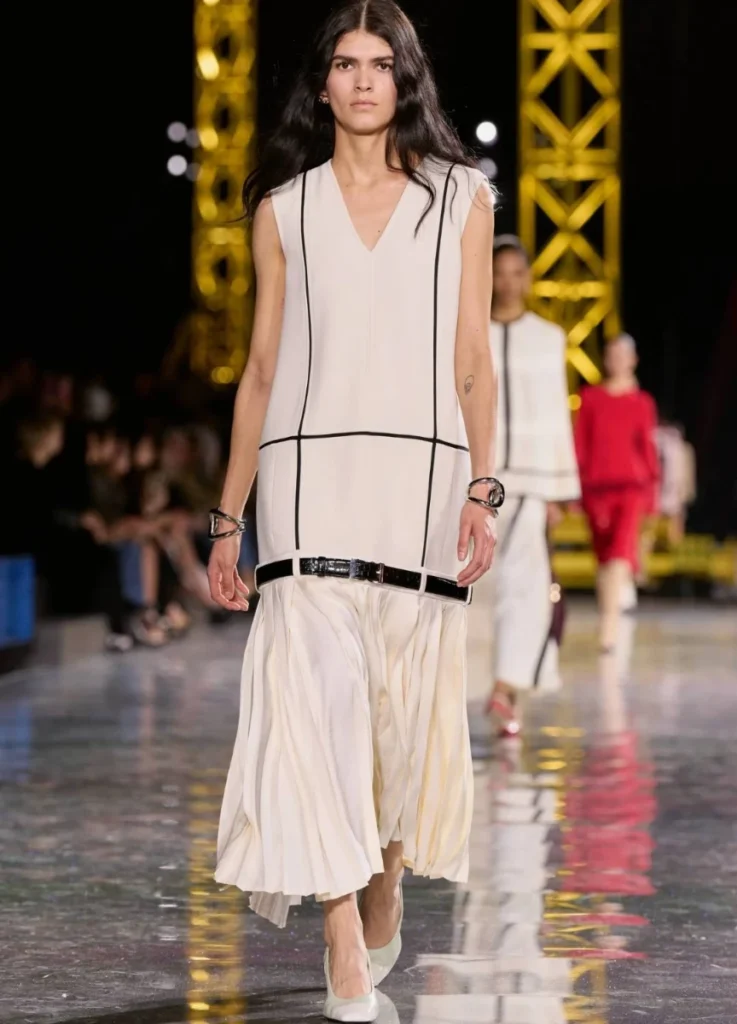
Several looks introduce a slightly lowered visual balance through layering and garment length. Sleeveless tops, knit vests, and tailored jackets are often paired with skirts or underlayers that extend below the natural waistline, creating a softer transition between the upper body and the skirt.
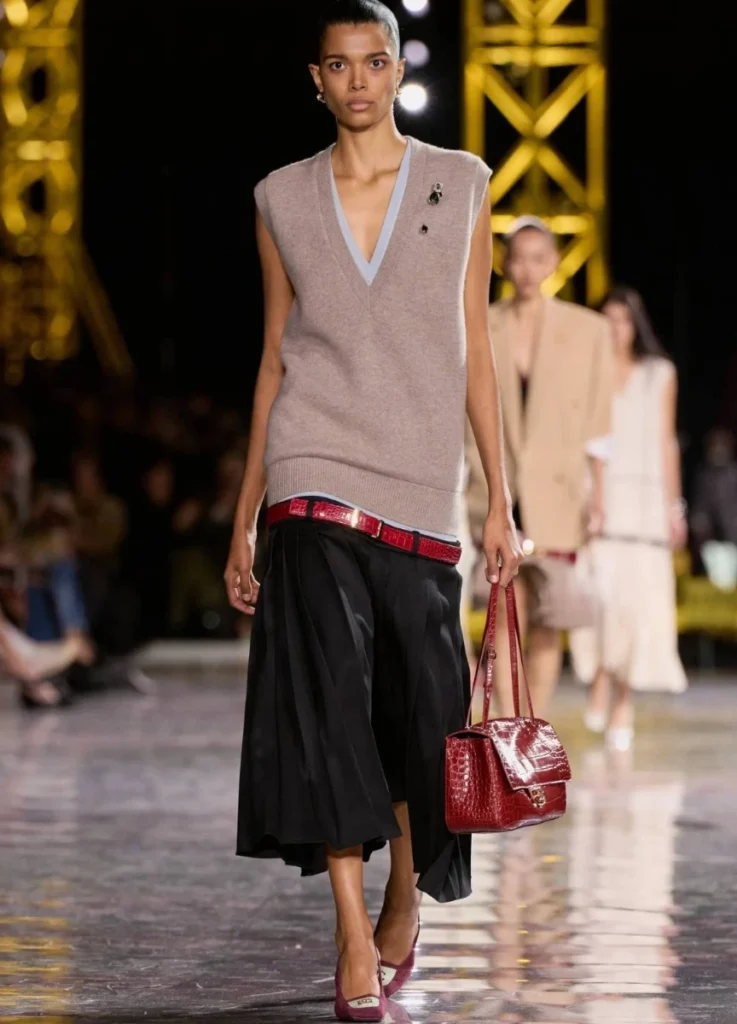
Rather than emphasizing a sharply defined waist, the silhouette becomes more vertical and fluid. Jackets appear slightly longer. Skirts fall with relaxed movement. The overall proportion feels more elongated than in traditional Chanel tailoring.
This small adjustment contributes to the broader mood of the collection. The classic Chanel structure remains intact, but the proportions are gently softened, allowing the garments to move with greater ease.
Structural Center | Styling as the Engine of the Collection
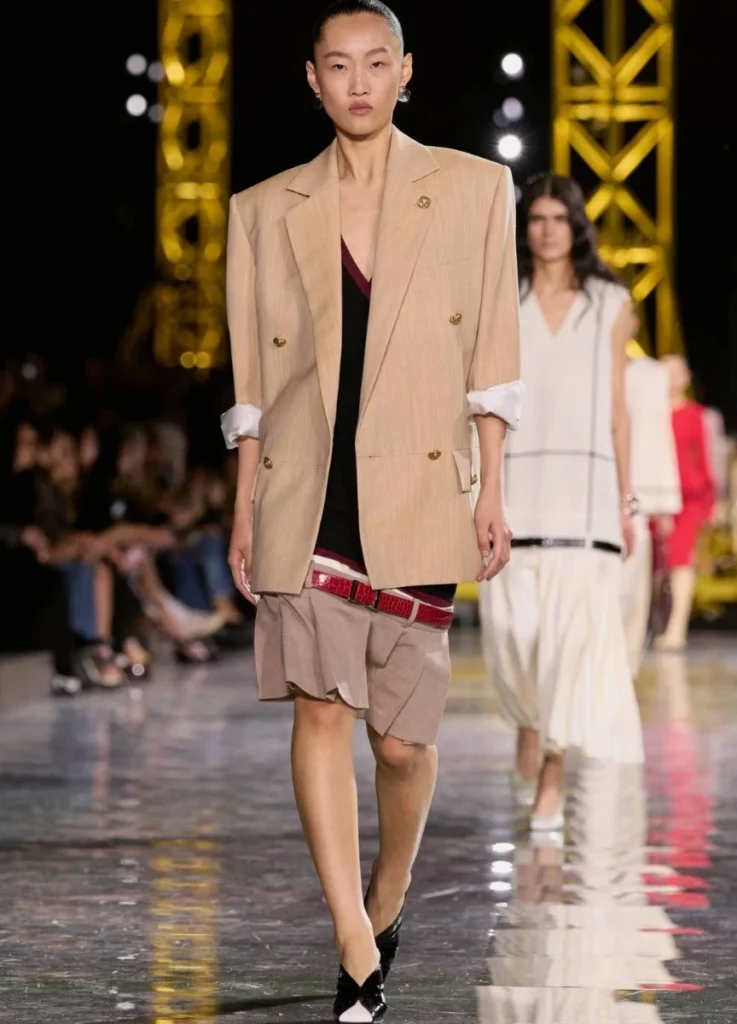
The structural core of the collection sits in styling rather than in the garments themselves.
Chanel has long relied on the total composition of a look to construct its identity. Accessories, layering, and contrasts between garments play a crucial role in shaping the runway’s narrative.
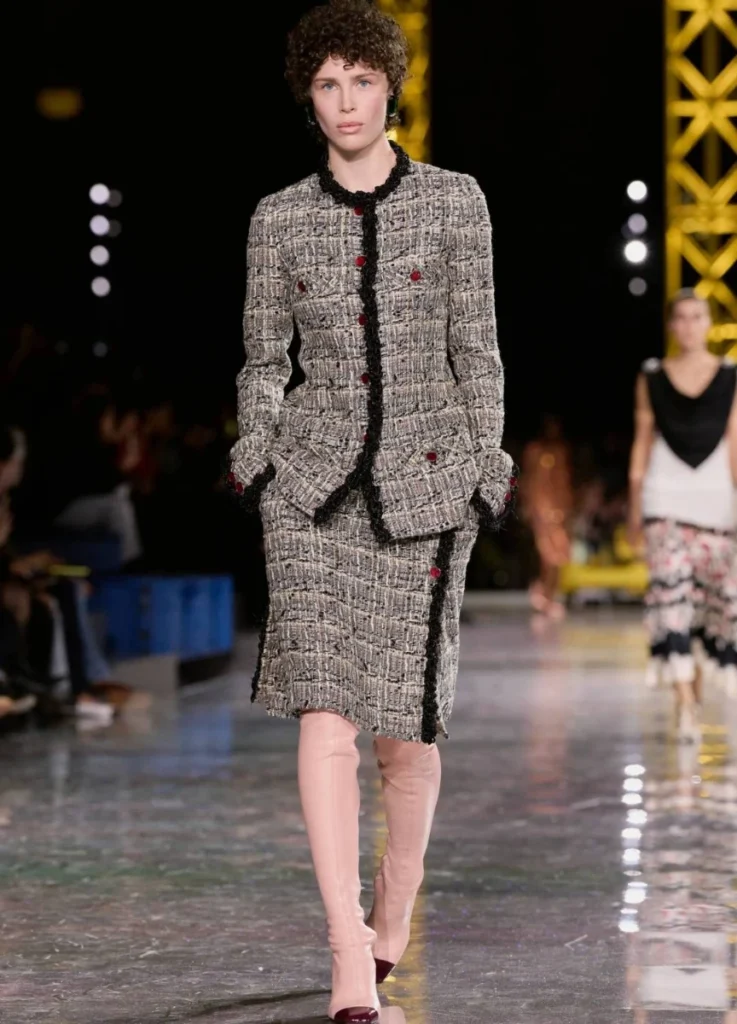
Several styling strategies recur in Fall Winter 2026:
- Jackets layered over knit dresses
- Tweed coats paired with slip dresses
- Structured tailoring contrasted with fluid fabrics
These combinations blur the boundary between daywear and eveningwear, a technique Chanel has used for decades to maintain versatility within its collections.
The juxtaposition between structure and softness becomes a defining rhythm of the show. A structured tweed jacket might appear over a delicate dress. A heavy coat might be paired with lightweight fabrics beneath. Through these contrasts, the collection creates visual tension without resorting to dramatic silhouettes.
Materials | Expanding the Language of Tweed
Materiality has always been central to Chanel’s design language, and Fall Winter 2026 continues this emphasis.
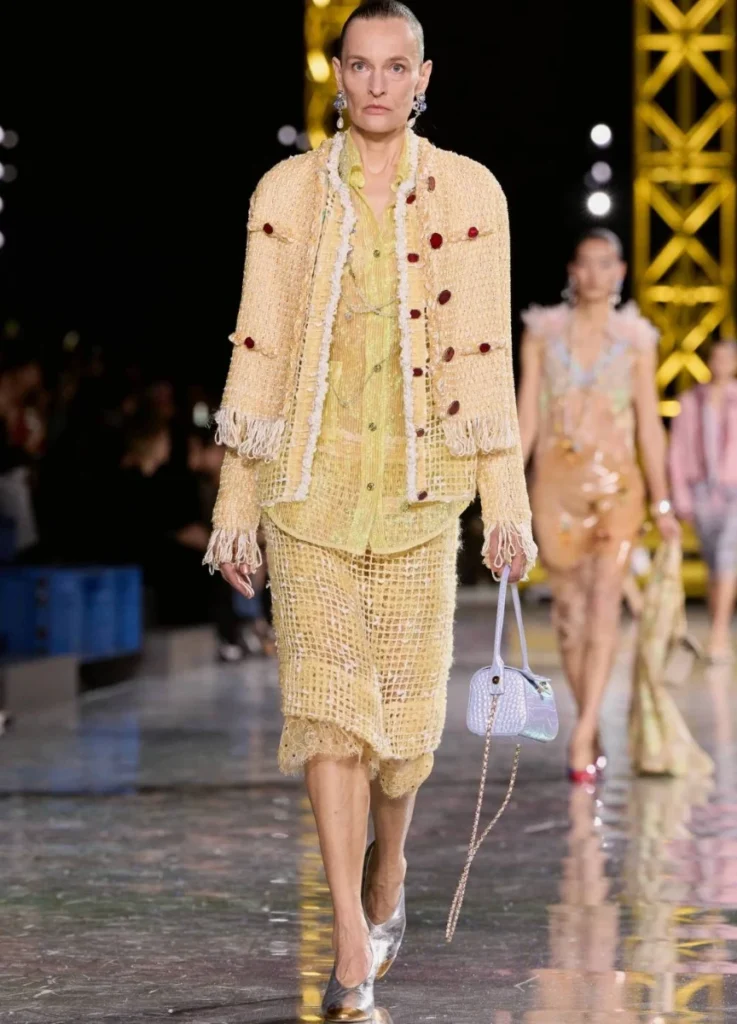
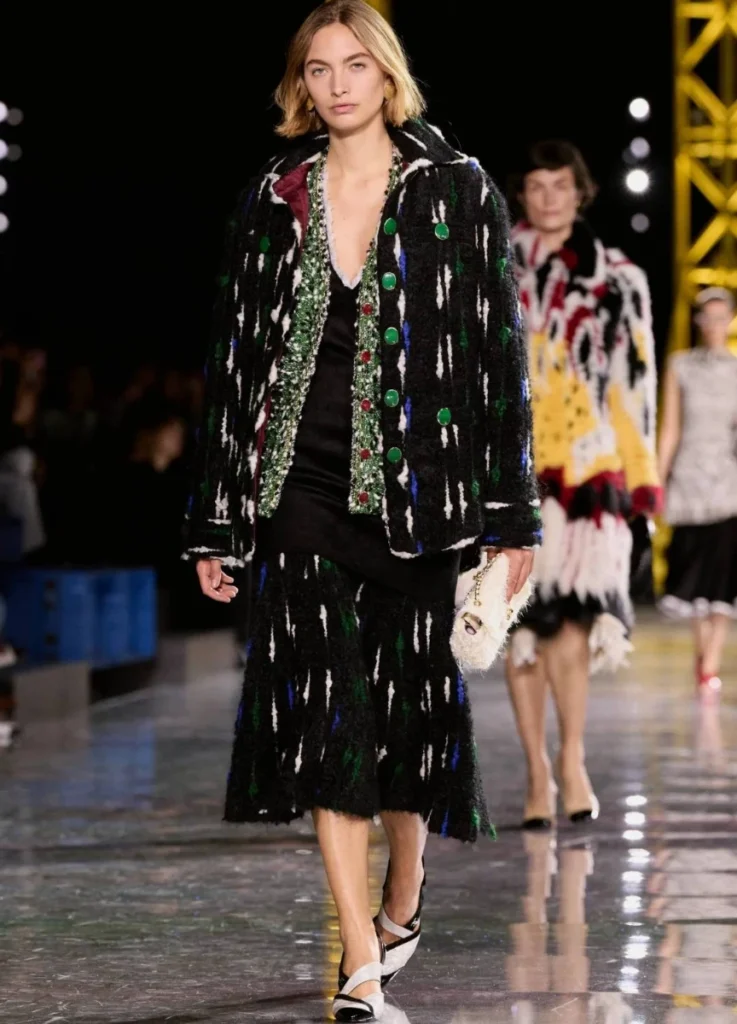
Tweed remains the dominant fabric, but its interpretation expands across several variations:
- Classic black tweed
- Colored tweed
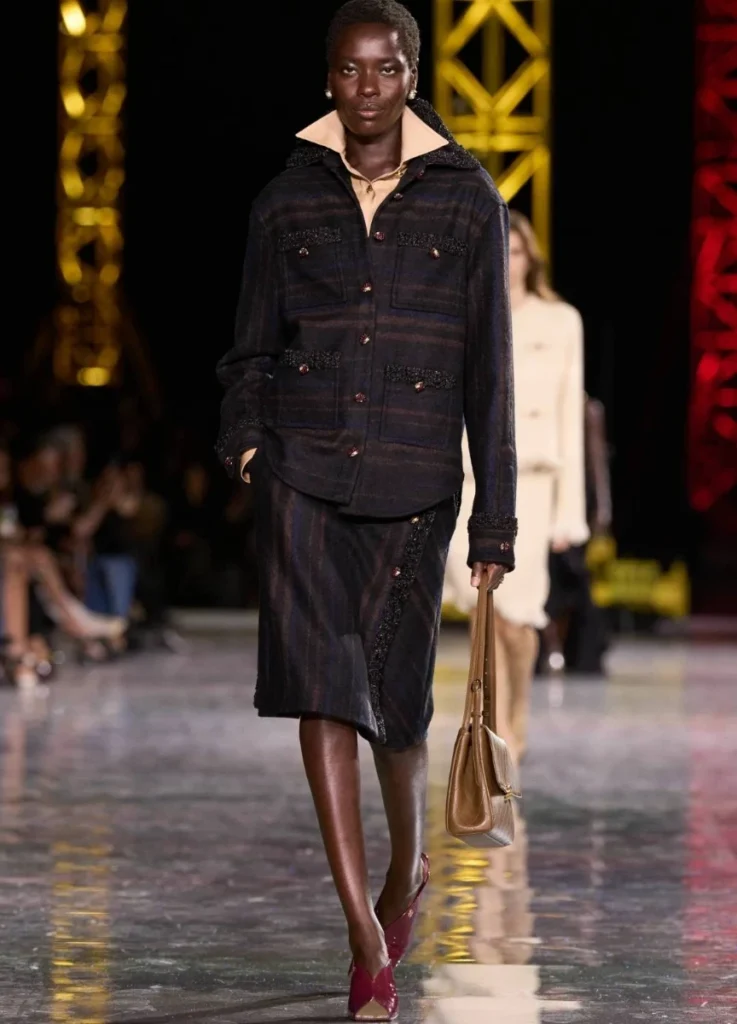
- Patterned tweed
- Embellished tweed
These variations create visual diversity while preserving the house’s material heritage.
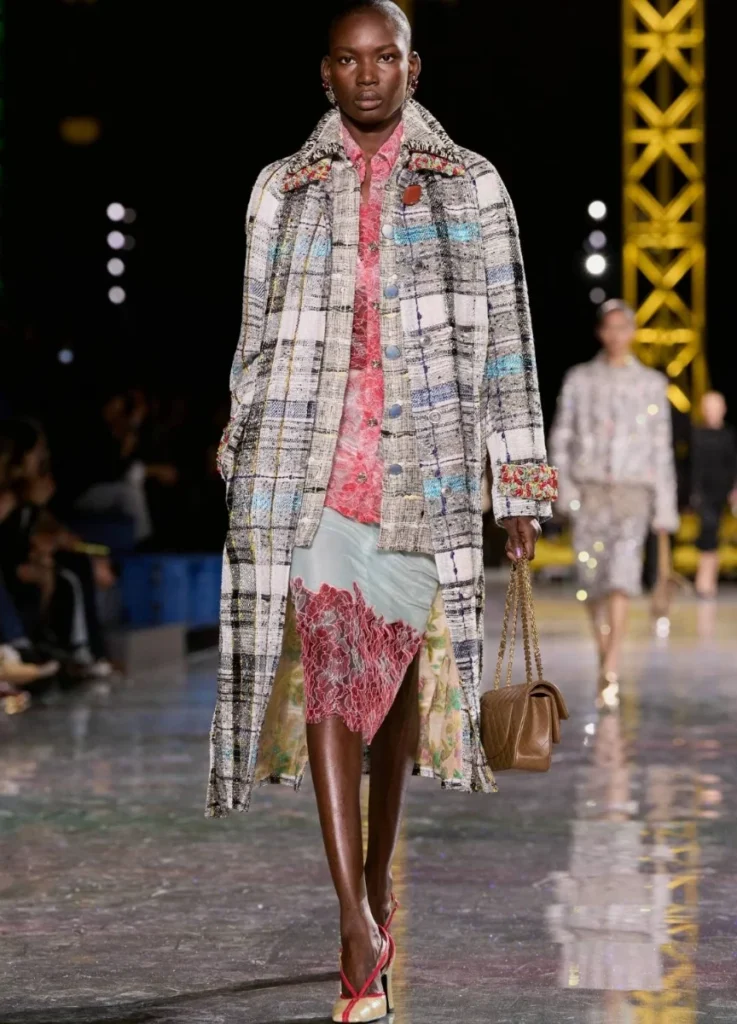
Each tweed appears differently across the runway. Traditional Chanel suit structure holds in some looks, but the proportions soften in others. Tweed coats appear layered over knit dresses or slip dresses, producing a balance the classic Chanel suit doesn’t typically allow.
The core of the collection isn’t a new material or a dramatic design shift. It’s the way tweed — the most iconic Chanel fabric — gets recontextualized through silhouette and styling adjustments.
Equally significant is the prominence of knitwear. Knit dresses and tops appear throughout the runway, introducing a softer texture into the collection’s visual field. Their presence reinforces the broader movement toward comfort-oriented luxury that has shaped recent seasons across the industry.
Luxury knitwear has become an increasingly important category in contemporary fashion, particularly as brands respond to growing demand for garments that combine elegance with wearability. Chanel’s integration of knitwear feels both strategic and culturally aligned within this context.
Color | Classical Foundations with Controlled Variation
The color palette follows Chanel’s established framework.
Core tones dominate the runway:
- Black
- Ivory
- Beige
- Brown
- Red
These colors anchor the collection in the brand’s historical palette.
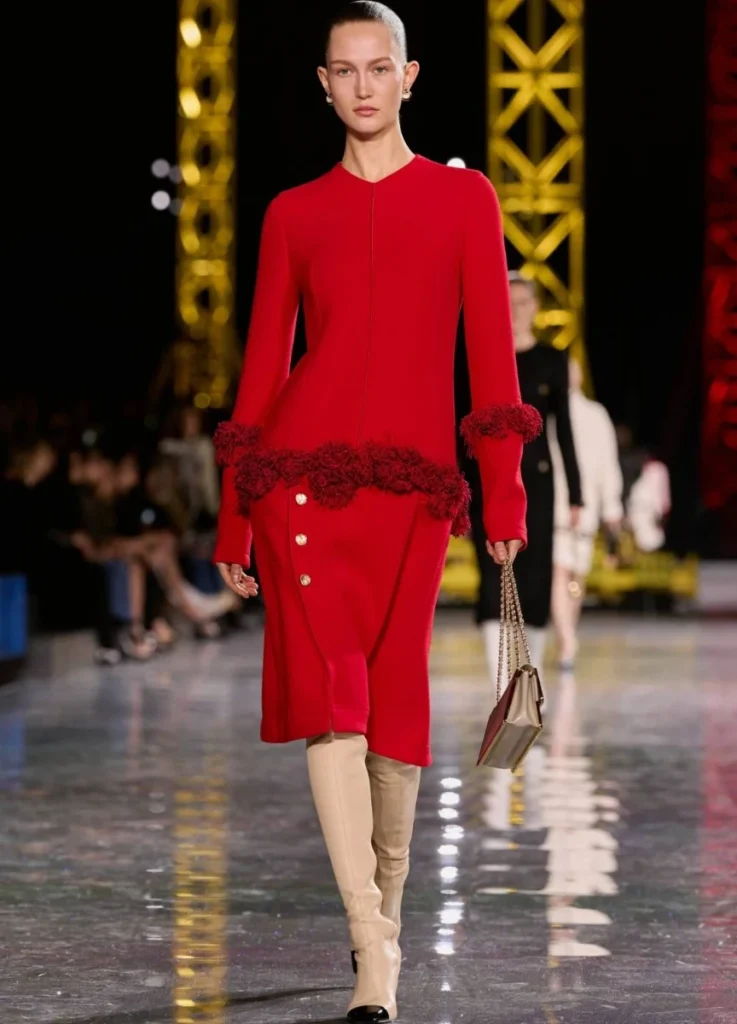
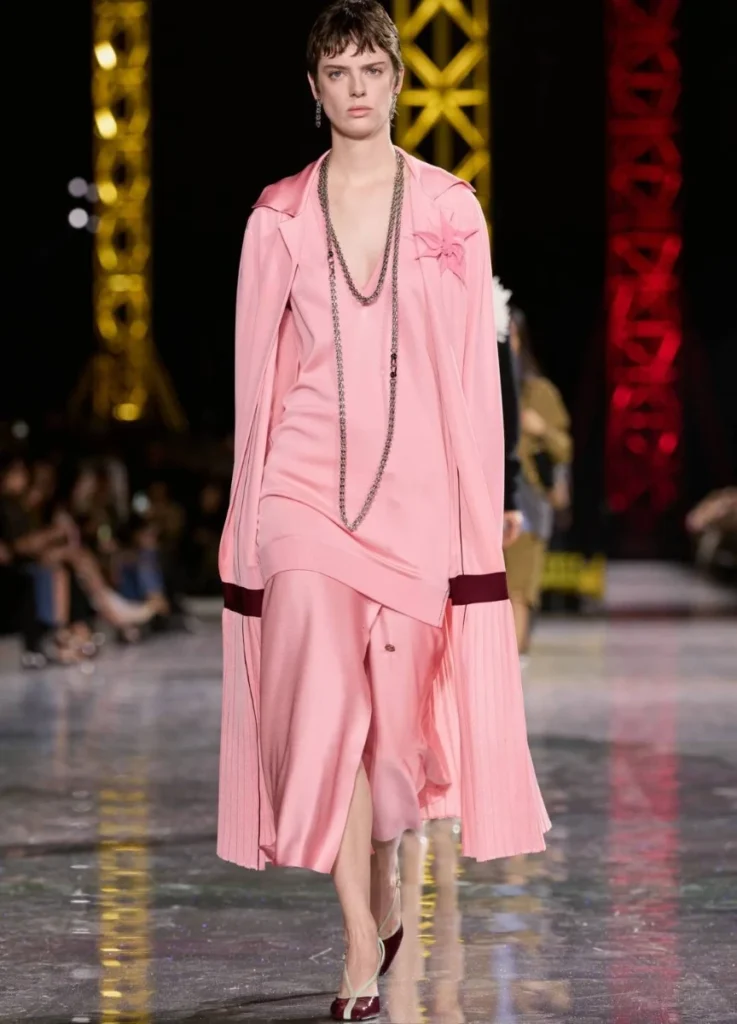
Subtle variations appear through accent shades — pastel pink, light blue, mint green. Graphic patterns introduce additional color contrasts that break the visual rhythm of the more neutral sections.
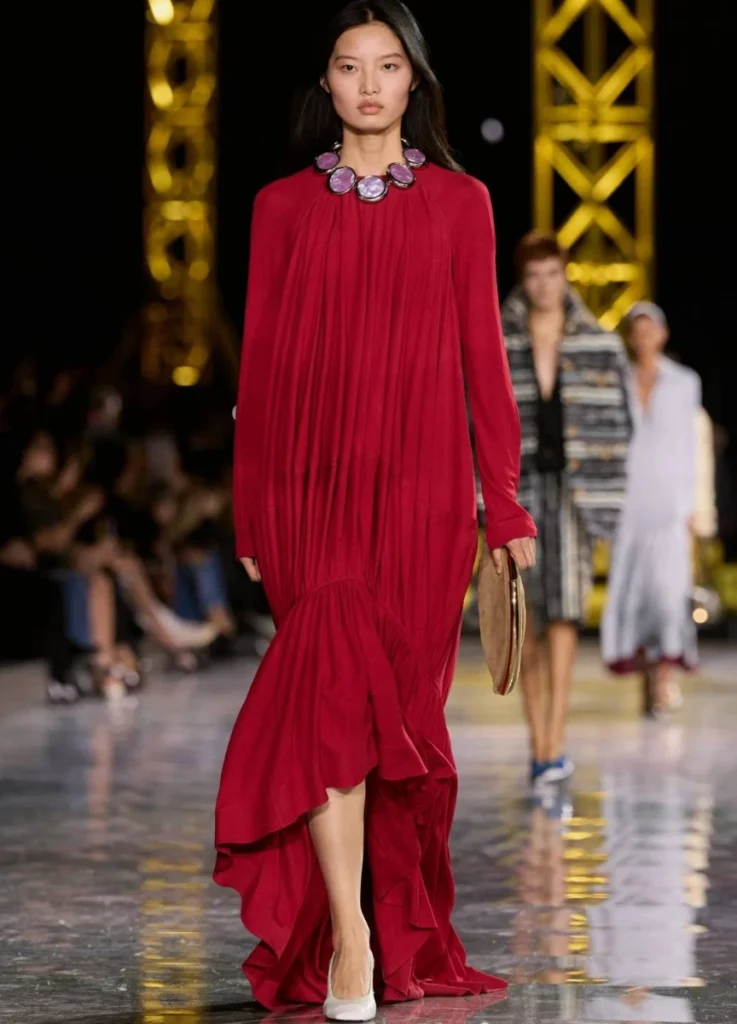
Particularly striking moments occur when stronger colors punctuate the runway. A red pleated dress, for example, introduces a dramatic shift in tone within the otherwise restrained palette.
This strategy reflects a familiar Chanel approach — maintaining a classical foundation while introducing strategic bursts of color to create visual rhythm.
Key Looks from the Runway
Although the overall structure of the collection is deliberately stable, several looks stand out as particularly representative.
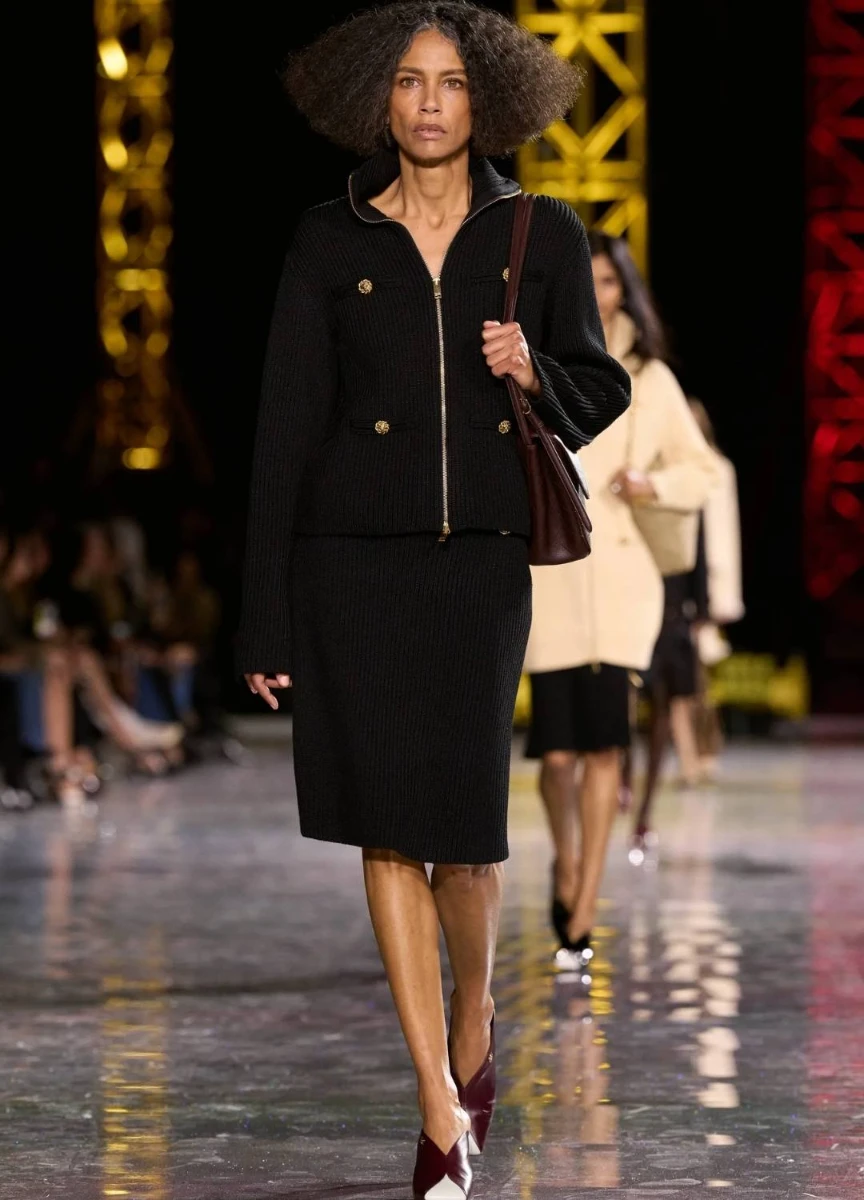
Look 1 — The Knit Jacket Opening Look
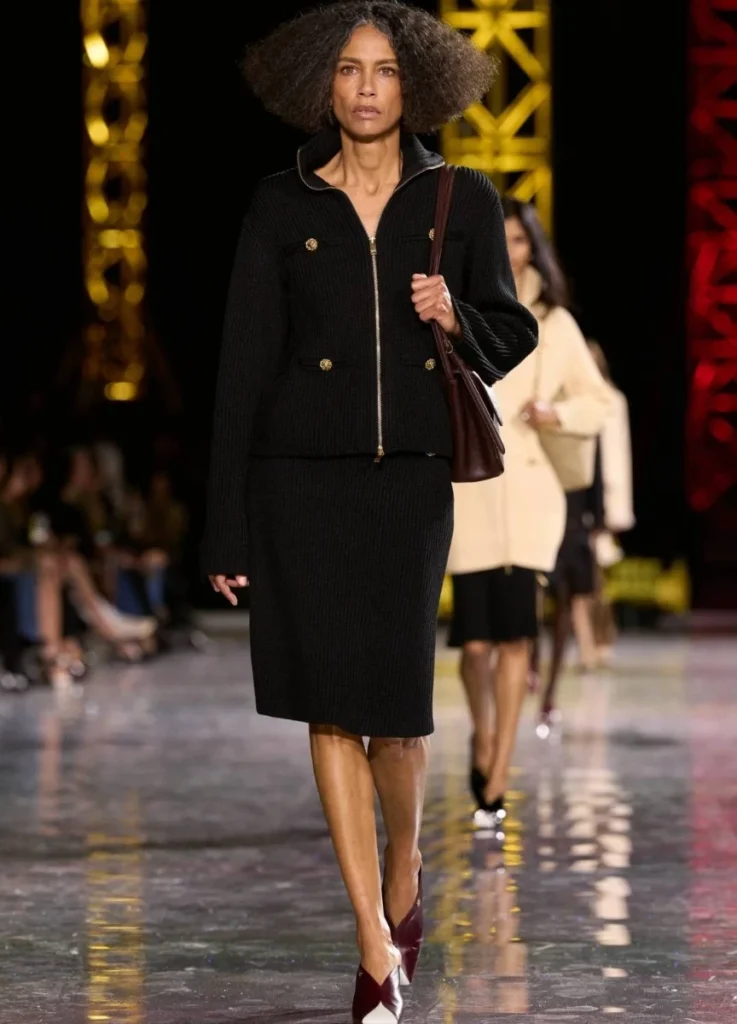
The show opens not with a traditional tweed suit but with a softly structured knit jacket paired with a skirt.
The silhouette recalls the classic Chanel suit, but the material is noticeably lighter and more flexible than tweed. Knit jackets have long been part of Chanel’s design vocabulary, offering a softer alternative to rigid tailoring while preserving the familiar balance of jacket and skirt.
As an opening look, this choice subtly sets the tone for the entire collection. Instead of emphasizing the strict structure historically associated with the Chanel suit, the silhouette appears slightly more relaxed and fluid.
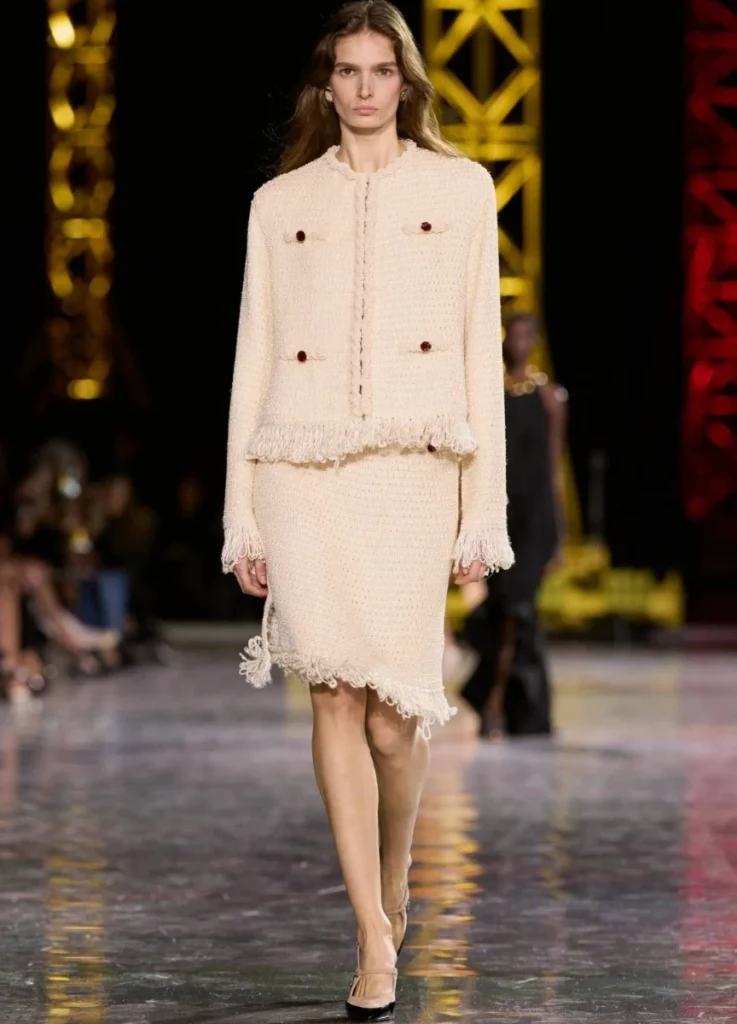
Look 2 — The Ivory Fringed Tweed Set
A soft ivory tweed suit trimmed with fringe represents the evolution of the classic Chanel uniform. The proportions are slightly relaxed compared to historical versions, allowing the look to feel lighter and more contemporary while maintaining the house’s tailoring heritage.
Look 3 — The Red Pleated Dress
Midway through the runway, a vivid red pleated dress interrupts the restrained palette. Its fluid movement and elongated silhouette introduce a moment of dramatic color within the otherwise controlled visual rhythm of the show.
Look 4 — The Shirt-Style Day Dress
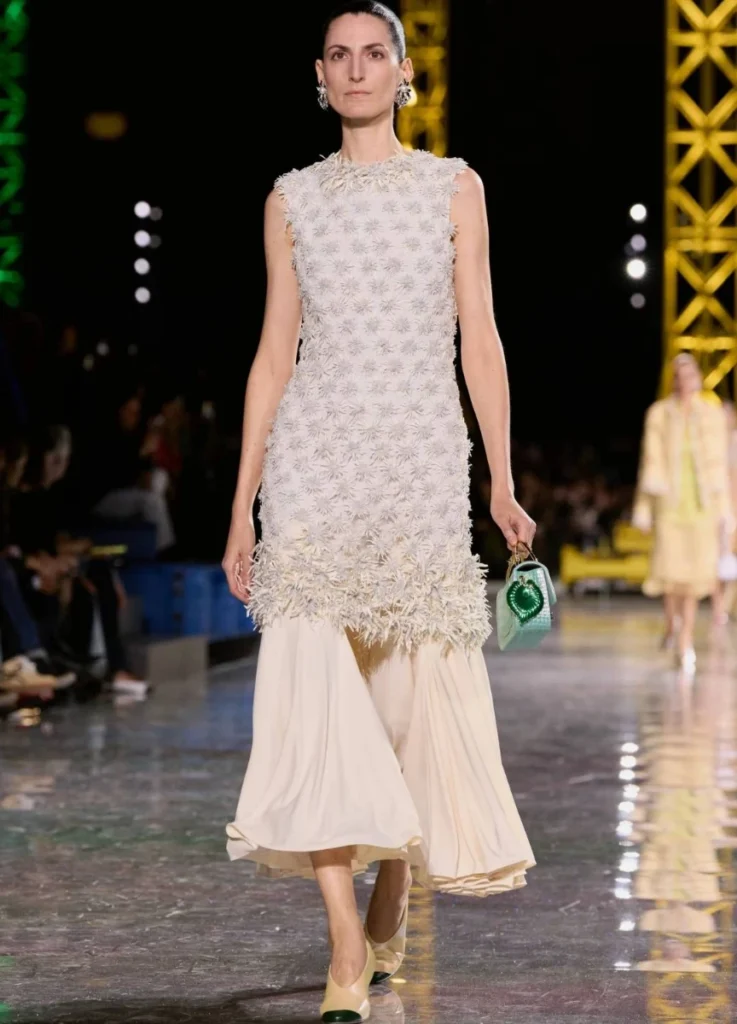
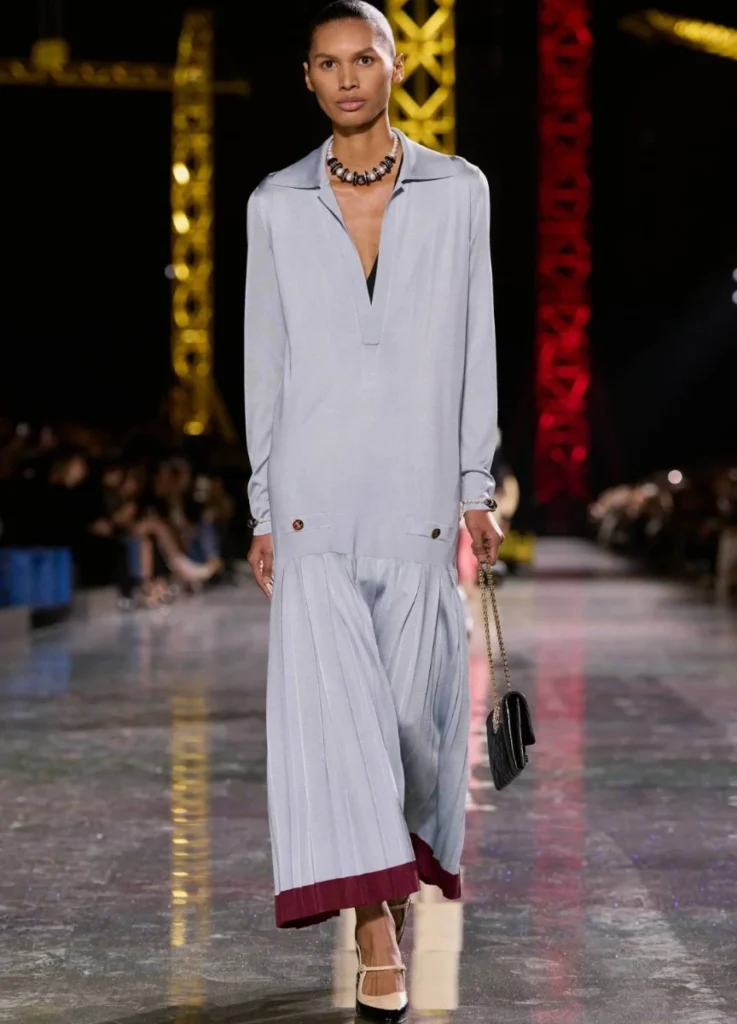
One of the quieter yet meaningful silhouettes in the collection appears in the form of a shirt-style day dress.
The look features a clean upper structure with a soft collar and long sleeves, while the body of the garment falls straight from the shoulders without strongly emphasizing the waist. Below the hip line, a pleated panel introduces movement, allowing the dress to shift fluidly as the model walks.
This construction creates a silhouette that feels more relaxed than the traditional Chanel dress. Instead of relying on the structured tailoring often associated with the house, the garment emphasizes vertical line and ease of movement.
The contrast between the simple upper portion and the pleated lower panel introduces subtle rhythm into the look. In the context of the collection, this dress reflects one of the show’s quieter developments — a gradual softening of the classic Chanel silhouette.
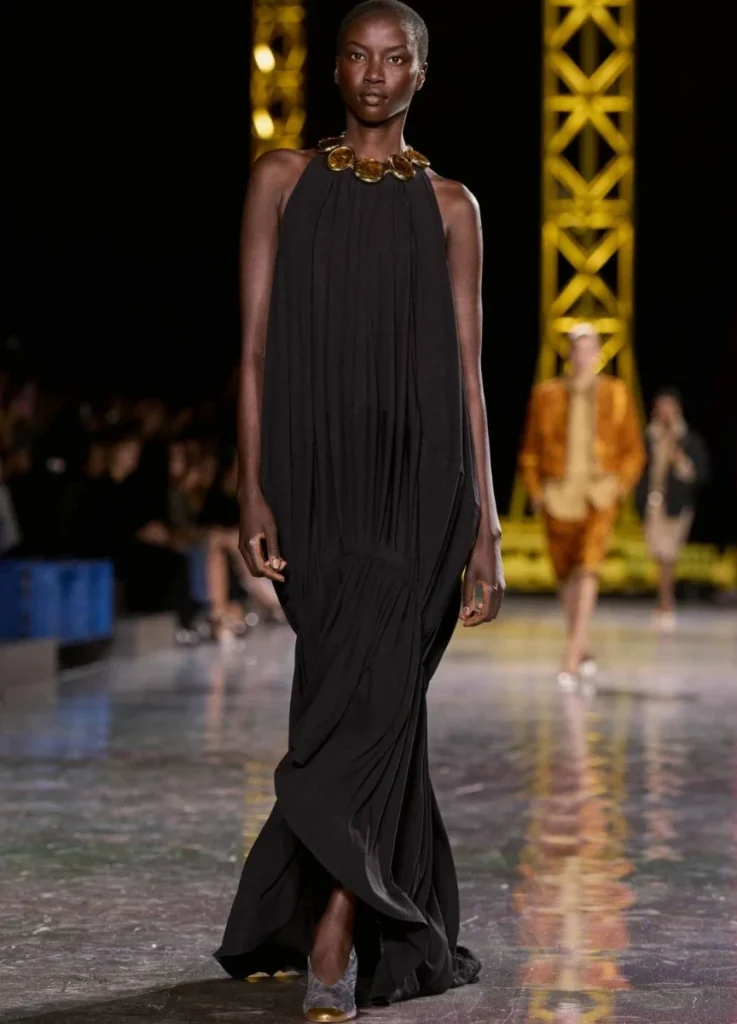
Look 5 — The Black Draped Evening Dress
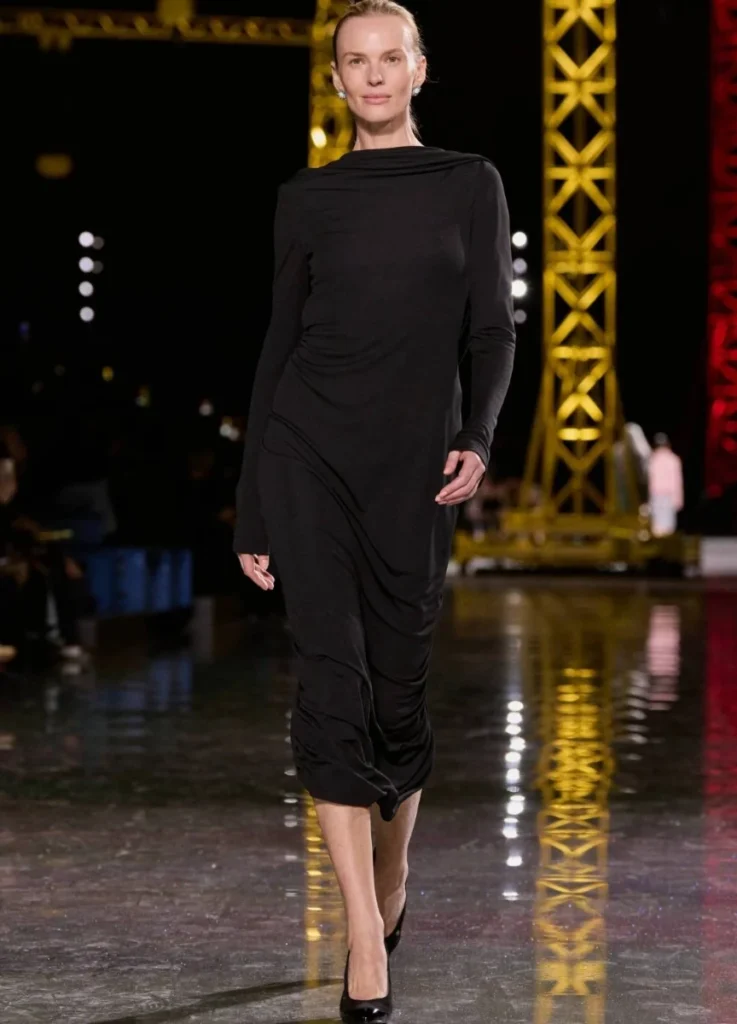
Near the end of the show, a draped black evening dress provides a quiet closing statement. The minimal design highlights movement and silhouette rather than embellishment, suggesting a softer direction for Chanel eveningwear.
Predictability and the Quiet Nature of the Collection
One recurring impression is the collection’s predictability.
Many of the looks follow recognizable Chanel formulas — tweed jackets, skirts, knit dresses, classic coats. As these elements repeat, the visual rhythm of the collection becomes more uniform.
This predictability contributes to the sense that the show feels quieter than some previous Chanel presentations.
Such restraint shouldn’t necessarily be interpreted as a weakness, though.
For a house of Chanel’s scale and cultural significance, stability can be a strategic choice. Rather than redefining its aesthetic each season, the brand often focuses on preserving its visual identity while introducing gradual adjustments.
Within that framework, Fall Winter 2026 reads less as a dramatic creative statement and more as a careful recalibration of Chanel’s established vocabulary.
Industry Context | Stability as Strategy
Early industry responses to the collection largely describe it as a “stable” or “classically Chanel” season. Fashion media coverage has emphasized the continuity of the brand’s codes and the reliability of its aesthetic direction.
This reaction reflects Chanel’s broader position in the luxury market. As one of the most powerful fashion houses globally, the brand doesn’t necessarily need to pursue radical innovation every season. Maintaining a coherent identity often becomes more valuable than chasing novelty.
In recent years, the luxury industry has increasingly prioritized brand clarity — the ability of a house to communicate its identity consistently across products and seasons. From this perspective, Fall Winter 2026 reinforces Chanel’s enduring narrative rather than attempting to redefine it.
The Meaning of the Softer Silhouette
The most meaningful development in the collection lies in the gradual softening of Chanel’s silhouette.
While the traditional Chanel suit emphasizes compact tailoring, Fall Winter 2026 introduces longer proportions and more fluid garments. Knit dresses, relaxed coats, and pleated skirts collectively shift the visual balance of the collection.
This adjustment reflects broader movements in contemporary luxury fashion.
In recent seasons, brands such as The Row and Loro Piana have demonstrated the growing appeal of garments defined by softness and ease rather than rigid structure. The market’s interest in understated elegance has reshaped the visual language of luxury.
Chanel’s response is incremental rather than transformative.
Rather than abandoning its historic tailoring, the house subtly loosens it — allowing silhouettes to extend and fabrics to move more freely. In doing so, Chanel aligns itself with contemporary preferences while preserving the recognizable codes that define the brand.
This pairs interestingly with what’s happening on the bag side of the same collection. Where the Fall Winter 2026 bags work through reassembly — taking apart and rebuilding the house’s iconic structures (the Layered Classic Flap, the Trapezoid Flap) — the runway works through softening. Two different operations, one shared logic: take the existing Chanel grammar and rearrange how it sits in a contemporary wardrobe.
Together, the bag reassembly and the silhouette softening tell a clearer story about Blazy’s intent than either reads on its own.
Chanel Moves Slowly, but It Moves
Watching Chanel’s runway collections, one thought recurs.
This isn’t a house that seeks dramatic experimentation every season. Chanel evolves through subtle adjustments that accumulate over time.
Fall Winter 2026 illustrates this philosophy clearly.
Tweed remains central. Chains and classic silhouettes continue to define the visual language. Yet within these familiar structures, changes appear — silhouettes lengthen, styling softens, materials introduce new textures.
These small shifts gradually move the brand forward.
Fashion sometimes advances through radical disruption. Chanel has built its legacy through a different method: controlled evolution. That measured pace — the careful balancing of continuity and change — has allowed Chanel to remain one of the most enduring forces in fashion.
How this quiet recalibration will be evaluated in the years ahead remains an open question. But for now, Fall Winter 2026 offers a clear reminder: Chanel may move slowly, but it never stands still.
All images referenced in this post are drawn from Vogue Runway.
[ Related Editorials ]