Inside Balenciaga Fall/Winter 2026
Balenciaga Fall Winter 2026 is where Pierpaolo Piccioli starts to define a direction for the house.
Instead of an abrupt aesthetic shift, the collection reads as an attempt to locate balance between two powerful legacies — the architectural couture of Cristóbal Balenciaga and the dystopian, street-inflected language Demna developed over the past decade.
The show is not about replacing one identity with another. It’s about negotiating the coexistence of both. Silhouette, materials, color, and styling all reveal a brand carefully testing how these two histories might occupy the same runway.
The vision is not fully resolved yet. What appears instead is the structural conversation between them.
Season Context | A House With Two Inheritances
Fall 2026 Paris Fashion Week unfolded under a broader atmosphere of creative recalibration.
Major houses have undergone leadership transitions over the past few years, placing the industry once again in a familiar cycle — designers revisiting archives while attempting to reposition brands within a rapidly shifting luxury market.
Few houses present a challenge as layered as Balenciaga.
The brand carries the legacy of Cristóbal Balenciaga, whose work in the 1950s and ’60s fundamentally reshaped the relationship between garment and body. His cocoon coats, sculptural tailoring, and radical rethinking of silhouette remain some of the most influential innovations in fashion history.
The past decade under Demna transformed Balenciaga into one of the most culturally dominant brands of contemporary fashion. Through oversized proportions, confrontational styling, and a distinctly dystopian tone, Demna repositioned the house within youth culture and streetwear.
Piccioli inherits both worlds.
The question he faces is unusually complex — how does one reconcile the precision of couture architecture with a brand identity built on anti-fashion energy? Piccioli’s own legacy at Valentino was built on couture drape and saturated color, neither of which sits naturally within Demna’s grammar. His arrival at Balenciaga creates a three-way negotiation rather than a two-way one.
Fall 2026 begins to outline an answer.
The Structural Center | Two Languages on One Runway
The most striking aspect of the collection is the simultaneous presence of two visual languages.
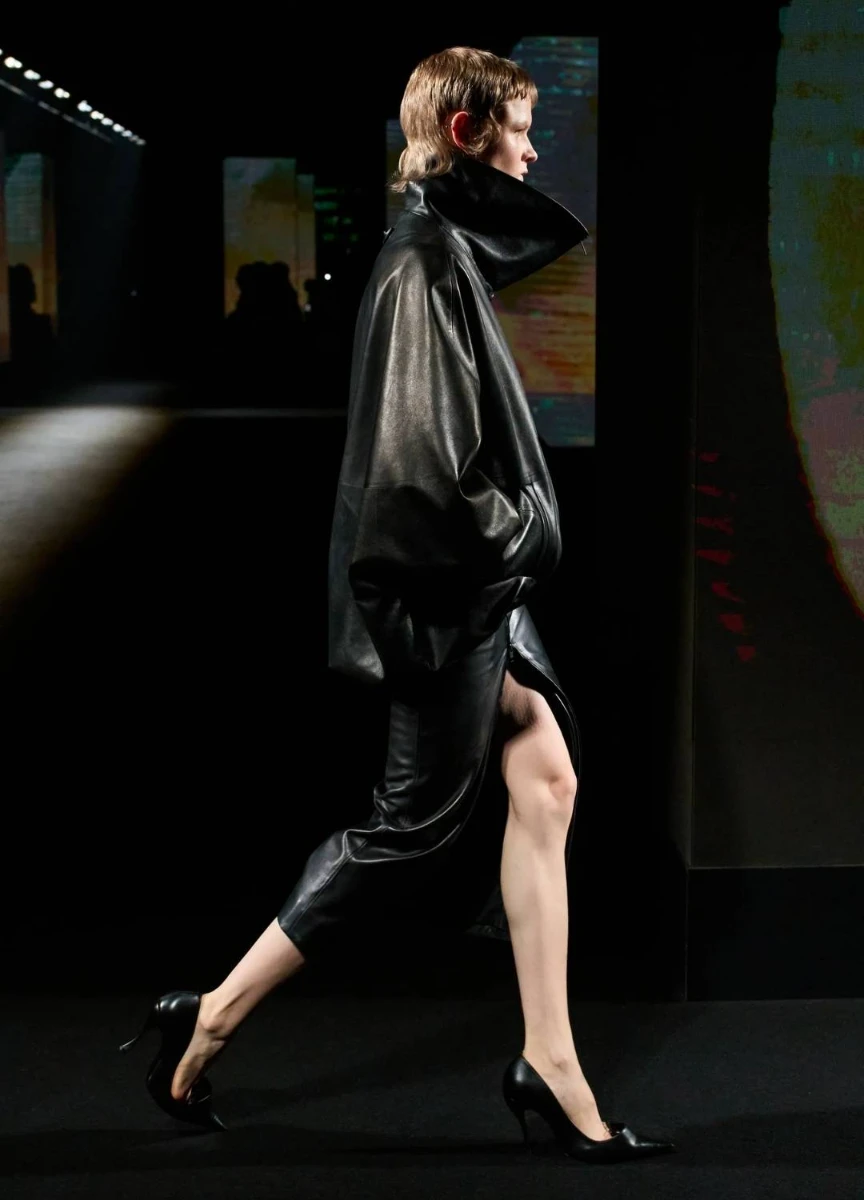
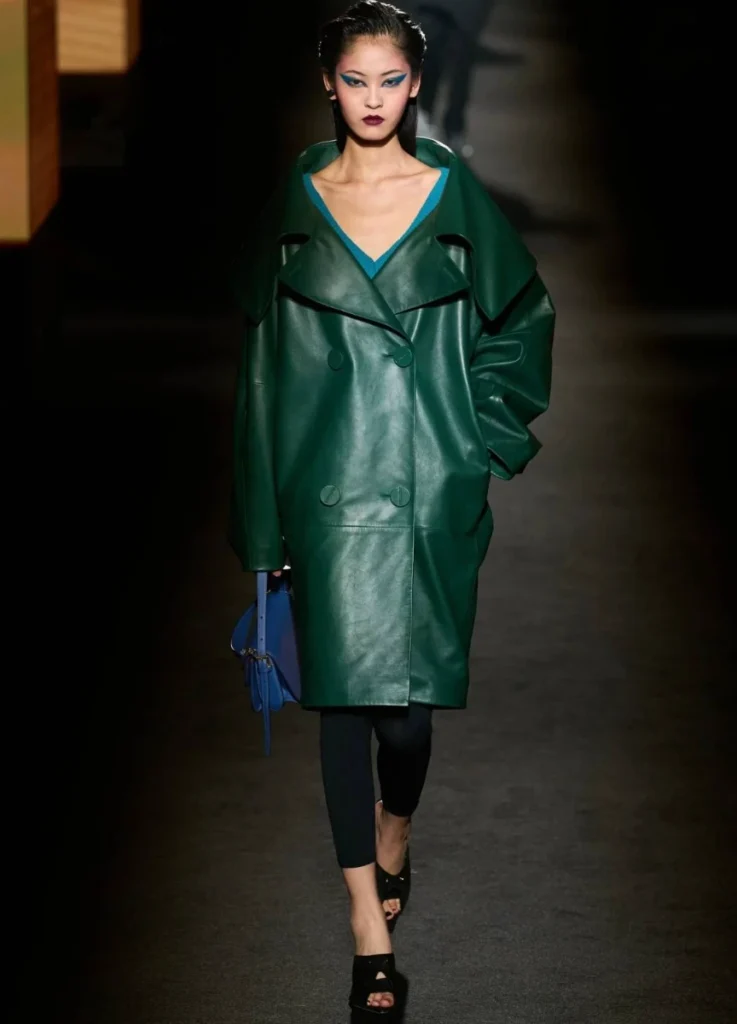
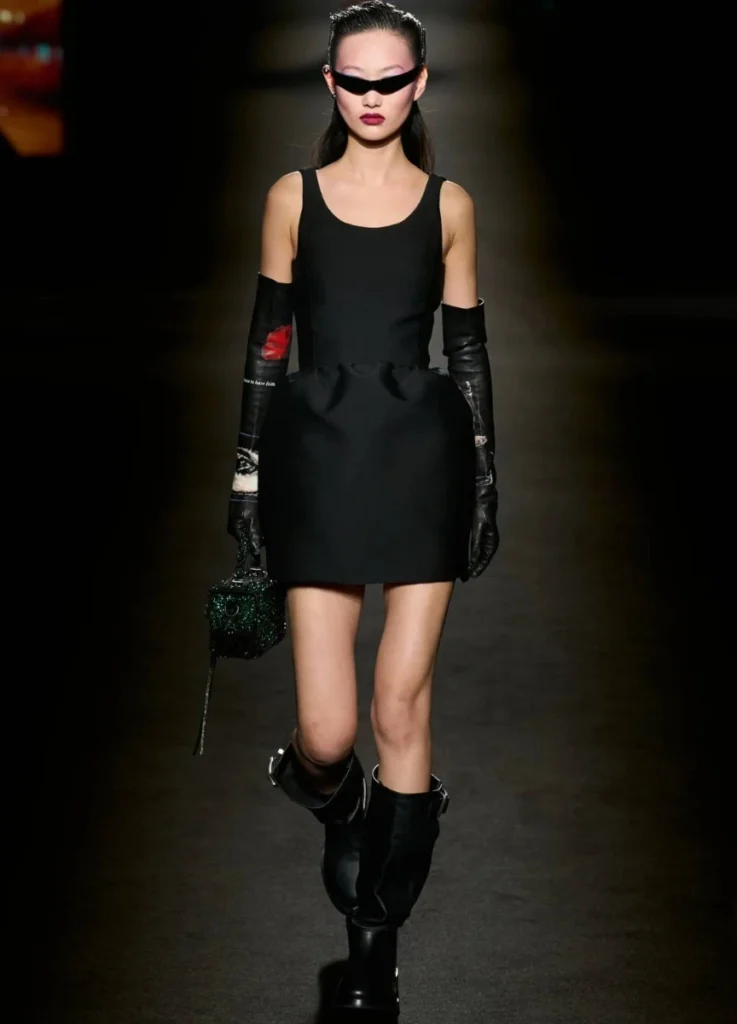
The opening sequence leans clearly toward the Demna era. Leather dominates the early looks, accompanied by oversized coats, dark palettes, and a styling vocabulary rooted in urban streetwear.
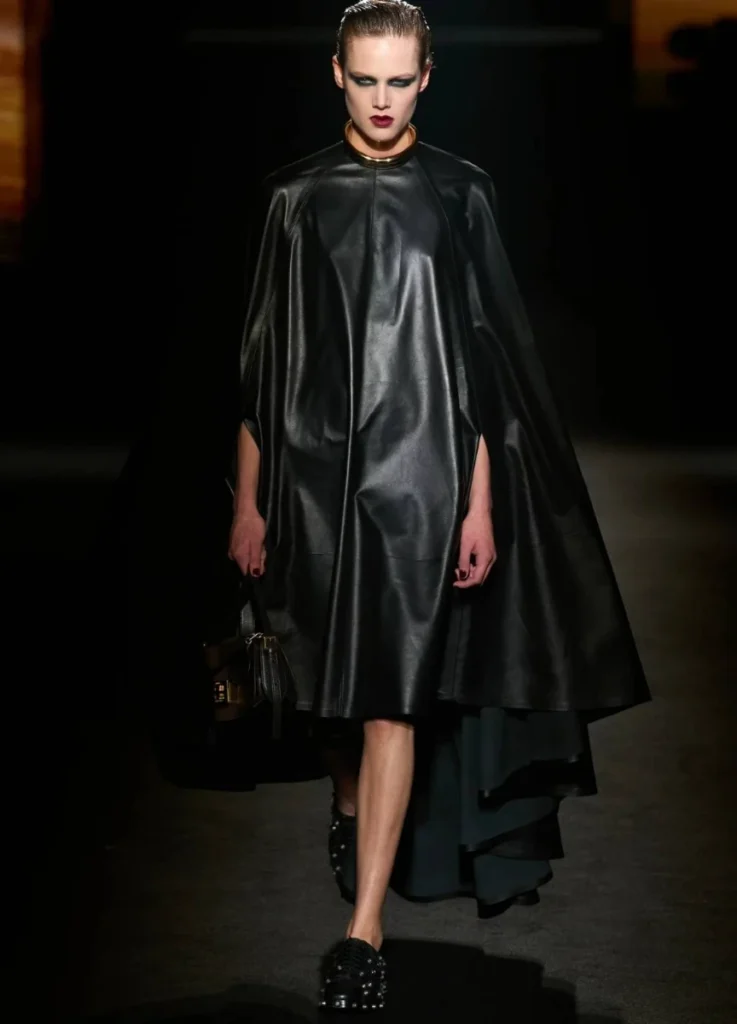
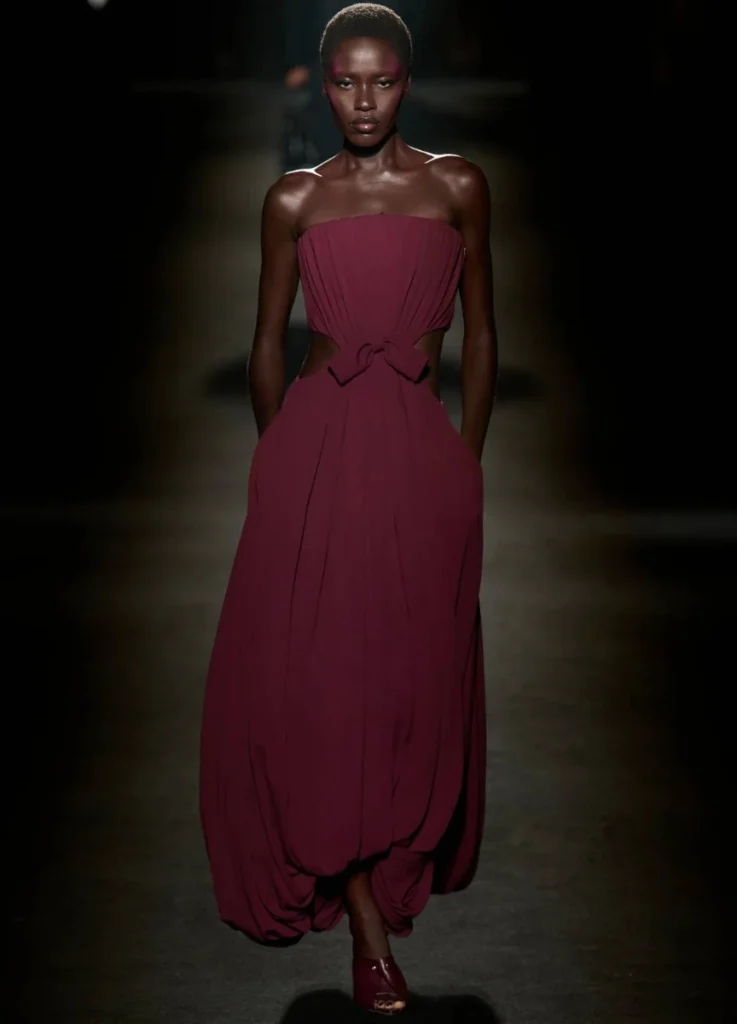
As the show progresses, Piccioli’s signature sensibility gradually surfaces. Draped dresses appear. Softer lines begin to interrupt the severity of the silhouettes.
The collection doesn’t declare a singular direction. It operates almost as a runway dialogue between two Balenciagas.
One is the Balenciaga shaped by Demna’s dystopian street culture. The other is the Balenciaga that remembers couture as a form of emotional architecture.
Piccioli’s role this season seems less about choosing between them and more about observing how they might coexist.
Silhouette | Volume Above, Control Below
Silhouette emerges as the clearest organizing principle of the collection.
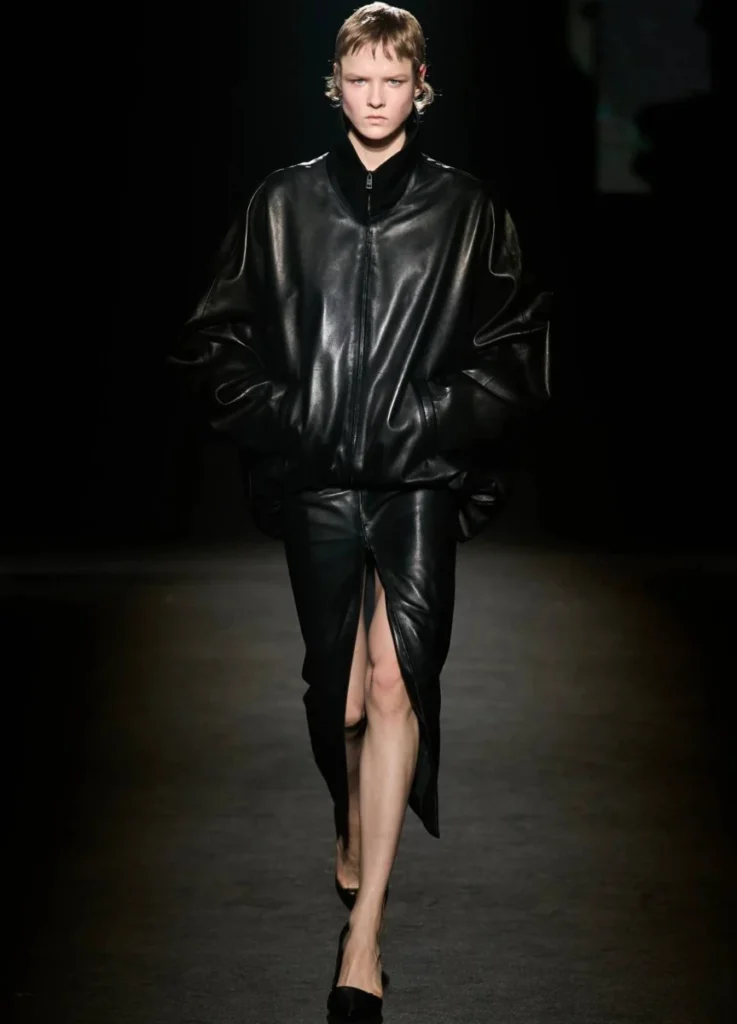
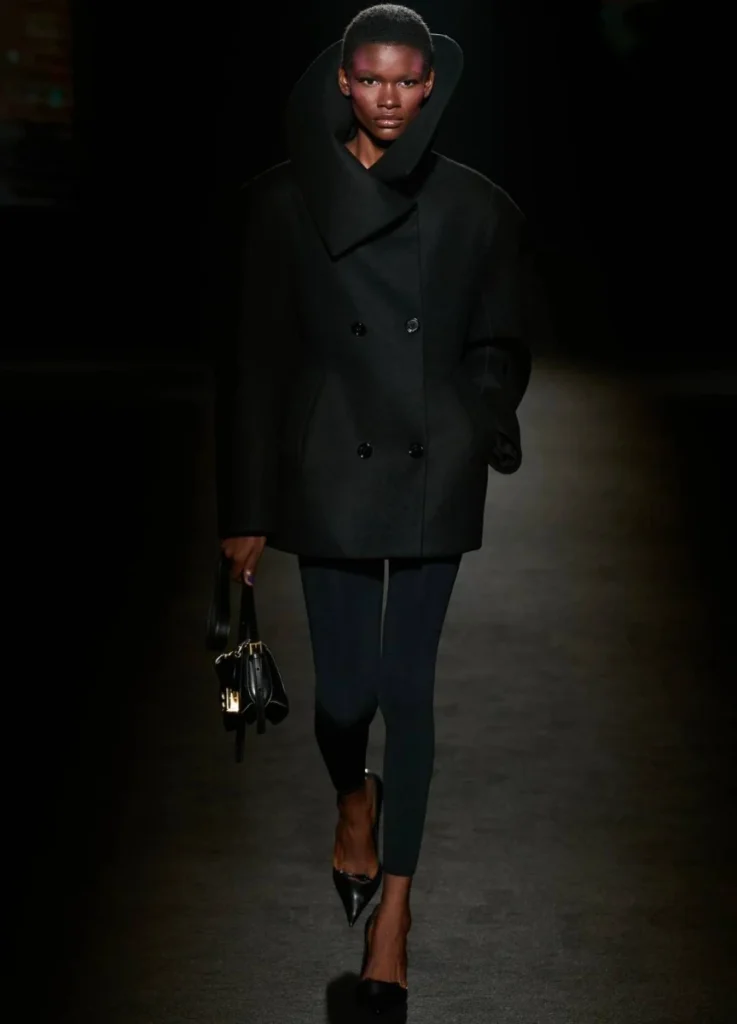
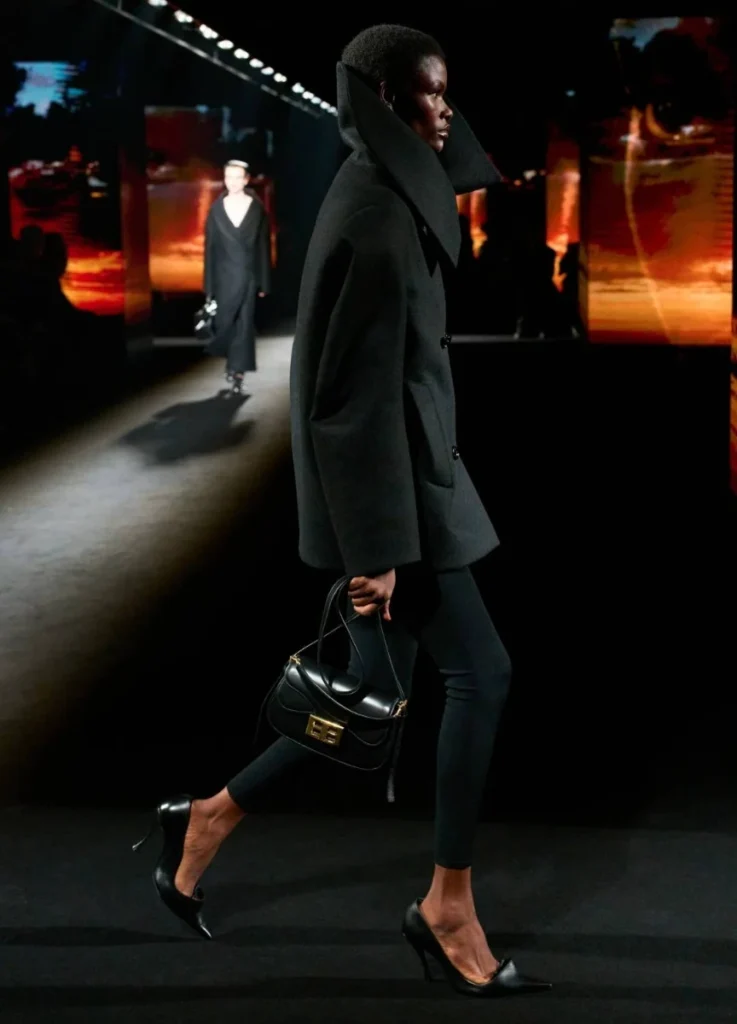
Across much of the runway, the upper body expands outward while the lower body remains relatively narrow and elongated. The dynamic creates a distinct visual tension between volume and control.
The opening look demonstrates the approach perfectly — a black leather balloon bomber integrated with a pencil skirt, zipped continuously from hem to neckline. The garment sits somewhere between streetwear outerwear and couture coat-dress.
Similar proportions continue throughout the show.
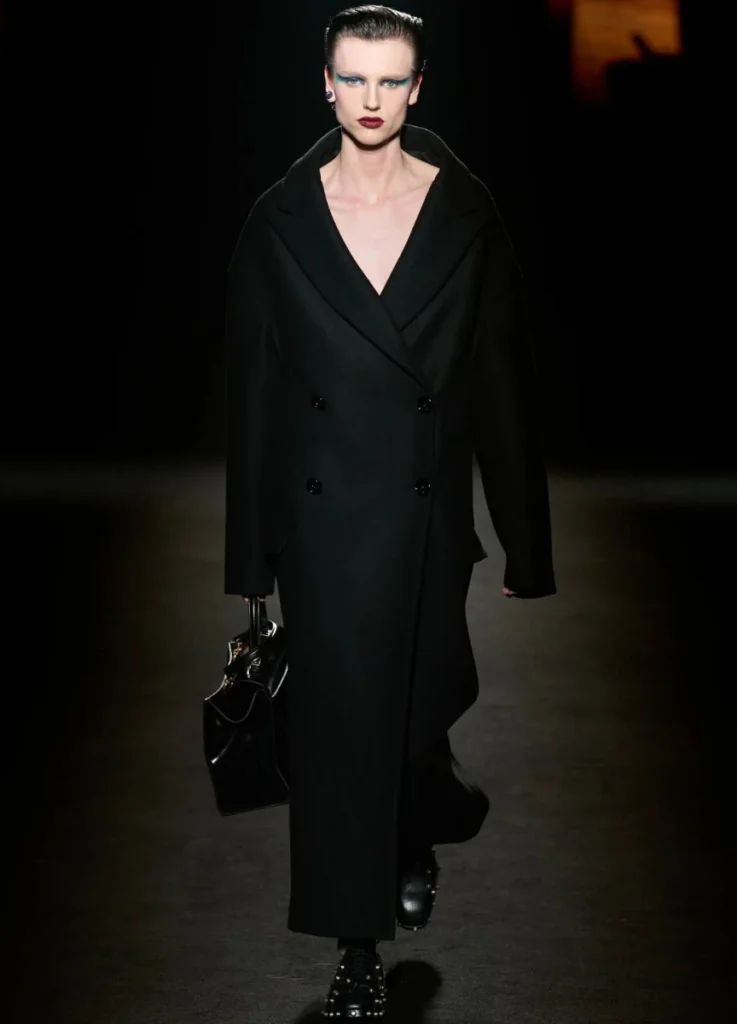
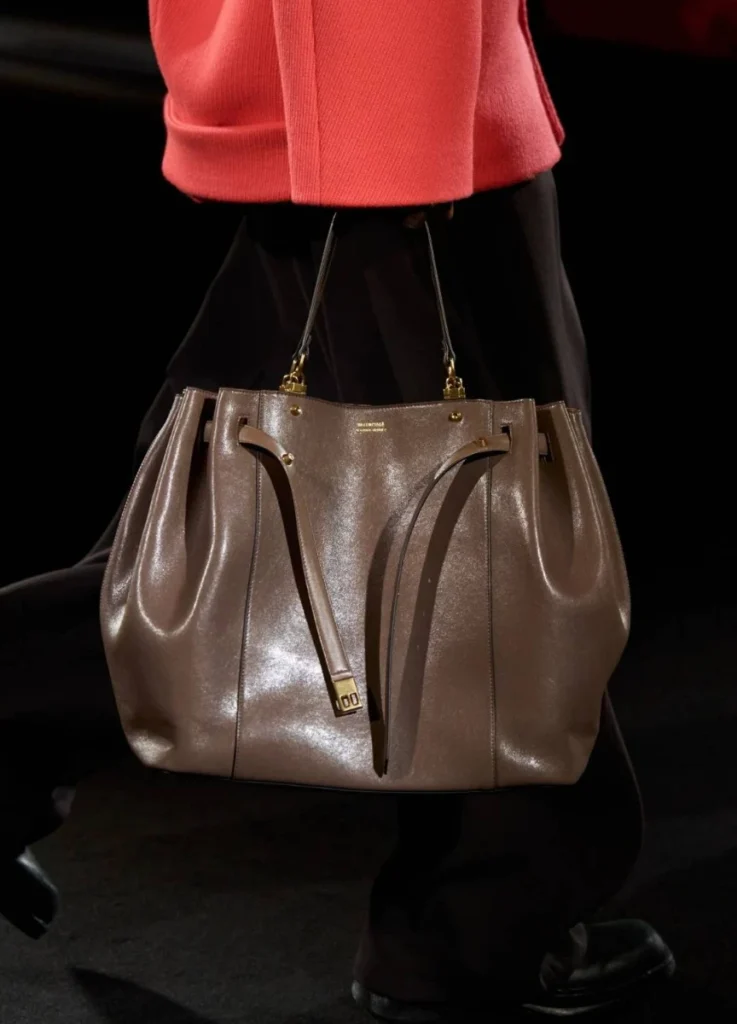
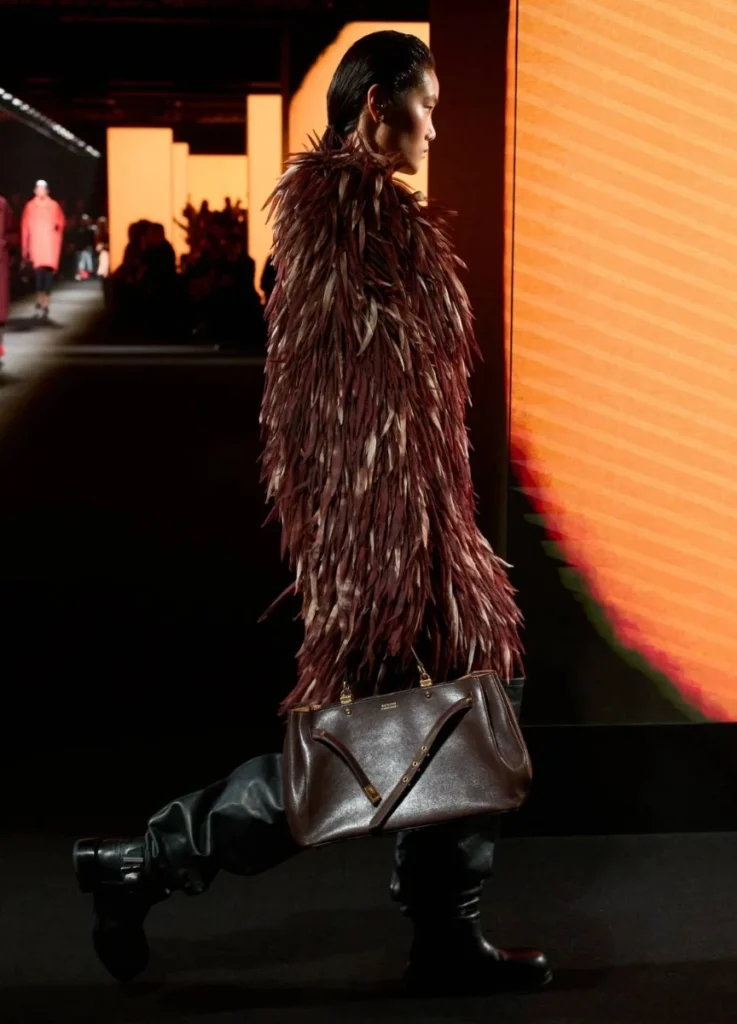
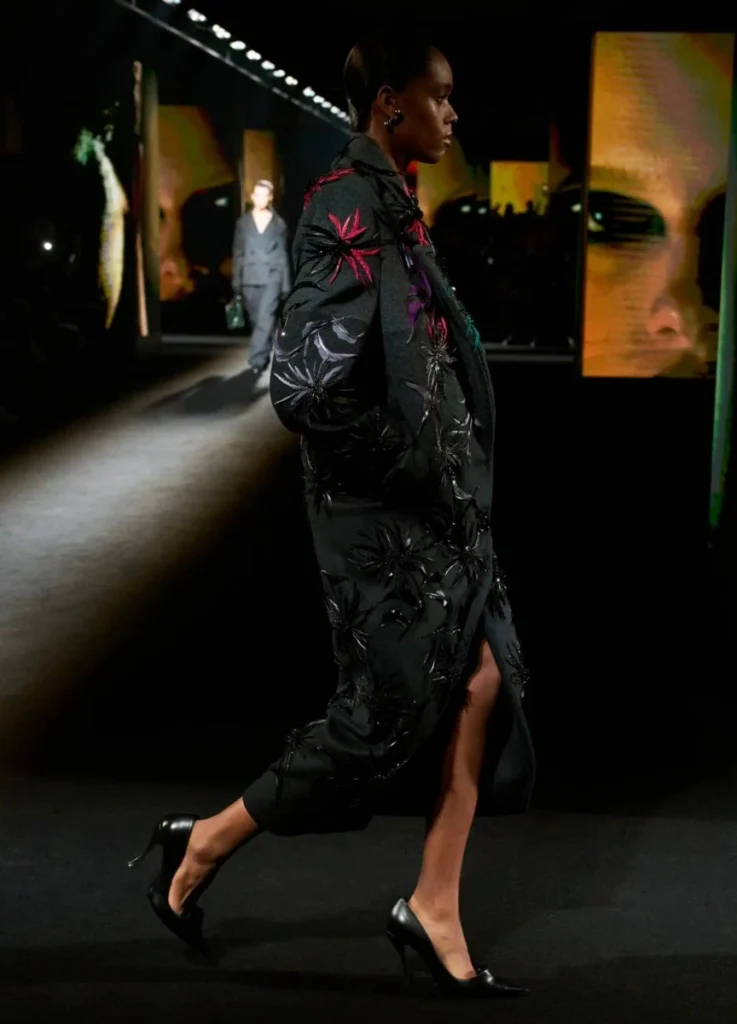
Oversized leather bombers appear repeatedly. Cocoon-shaped car coats echo Cristóbal Balenciaga’s historical silhouettes. Structured tailored coats maintain sharp architectural lines.
The silhouette language feels simultaneously historical and contemporary.
The cocoon volumes recall Cristóbal Balenciaga’s sculptural experiments. The exaggerated scale also belongs unmistakably to the oversized streetwear silhouette popularized by Demna.
The garments don’t replicate couture shapes directly. They reinterpret them through the lens of modern proportion.
The silhouettes might be described as streetwear garments carrying the memory of couture construction.
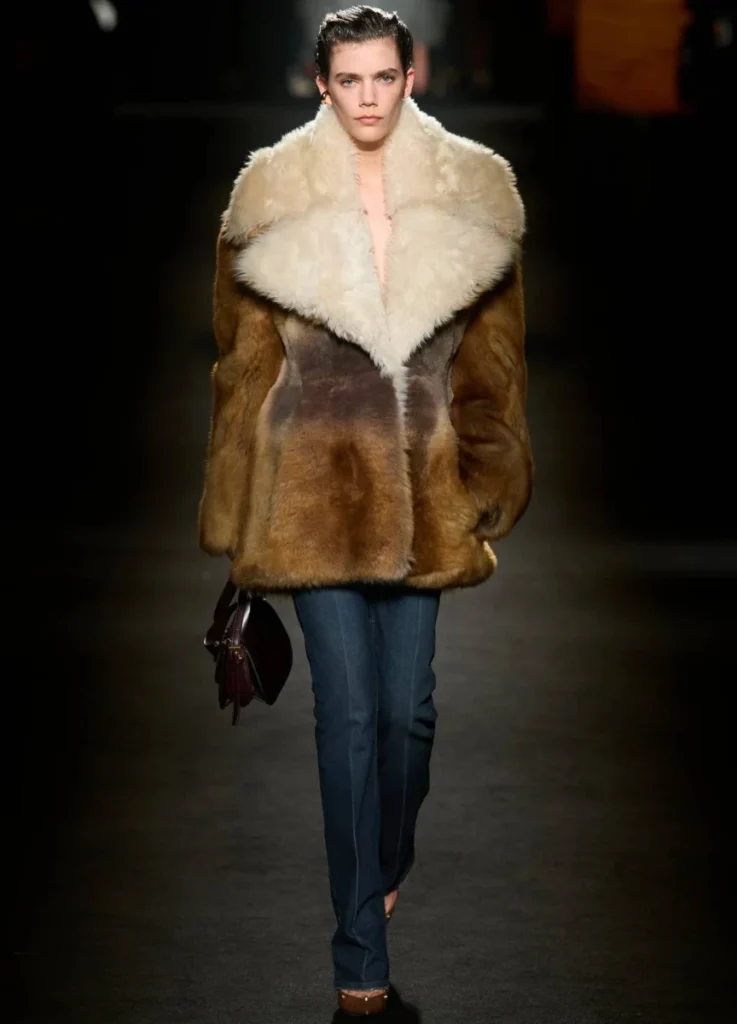
Silhouette as Negotiation
The approach is deliberate.
Rather than reconstructing archival couture forms, Piccioli integrates those structural ideas into contemporary fashion language. The garments maintain modern wearability while subtly referencing the house’s historical DNA.
The effect moves toward layered temporality rather than nostalgia. Two eras of Balenciaga appear to exist simultaneously within the same silhouette system.
Materials | Hard Then Soft
Material choices reinforce the duality.
The first portion of the show relies heavily on dense, tactile fabrics associated with urban outerwear.
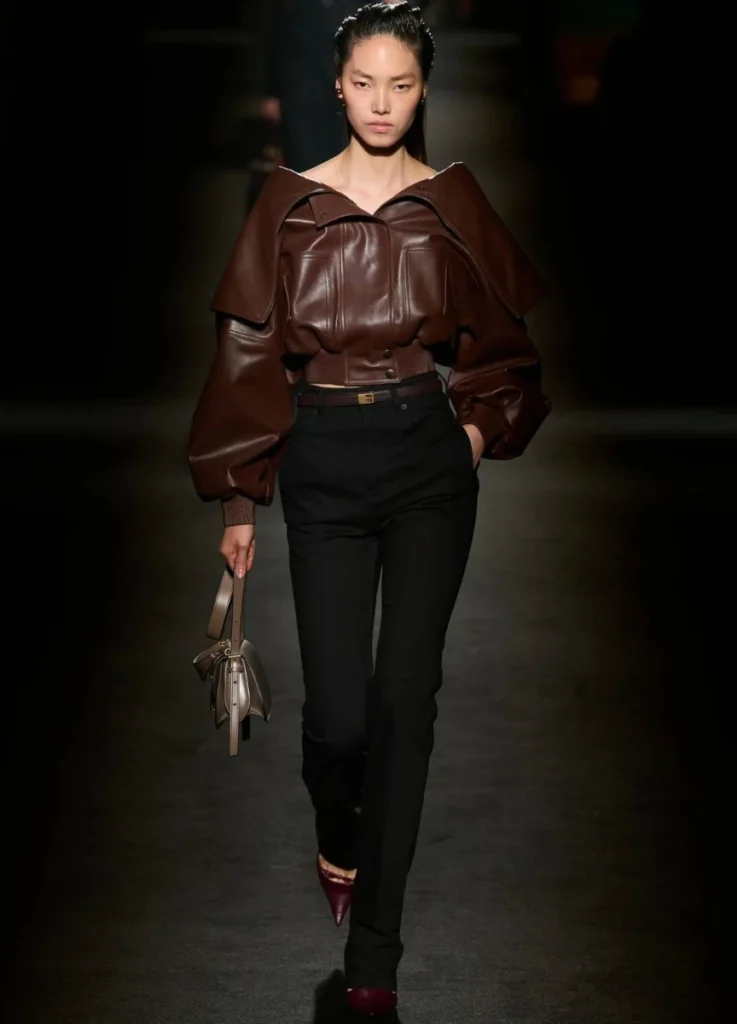
Leather plays a central role. Leather bombers, leather mini dresses, and leather coats dominate the early runway sequence, establishing a hard, almost confrontational mood.
Heavy wool coatings and parka fabrics appear alongside leather, emphasizing a pragmatic, city-oriented sensibility.
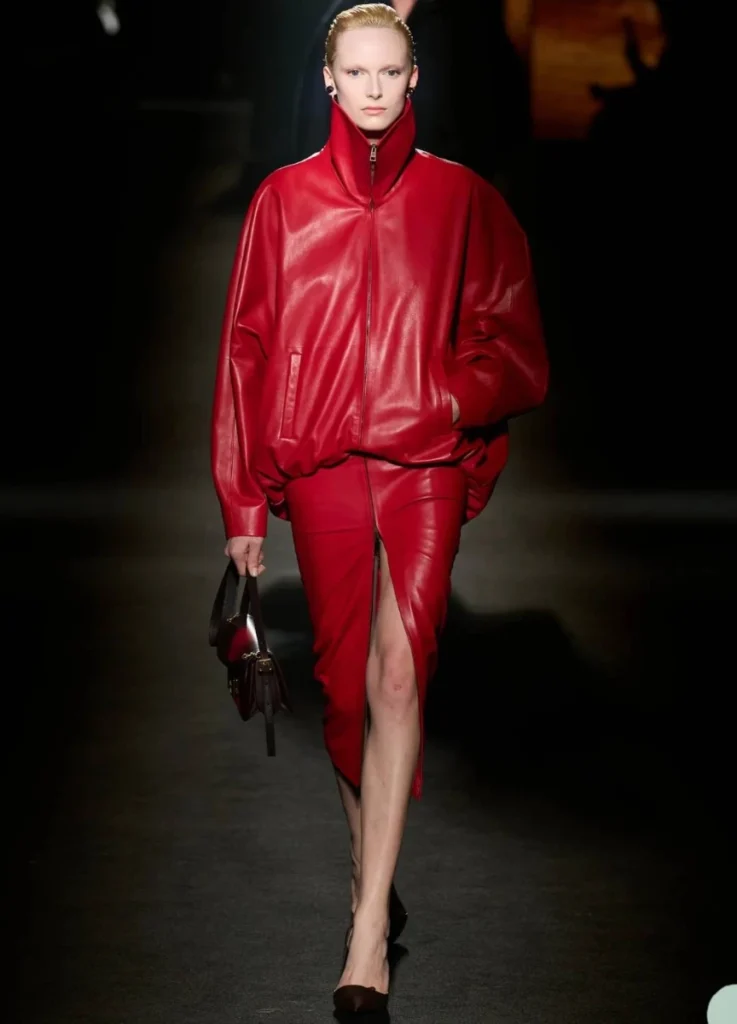
These materials extend the visual language established during the Demna years — one grounded in realism, grit, and a certain deliberate severity.
A different textile vocabulary emerges midway through the collection.
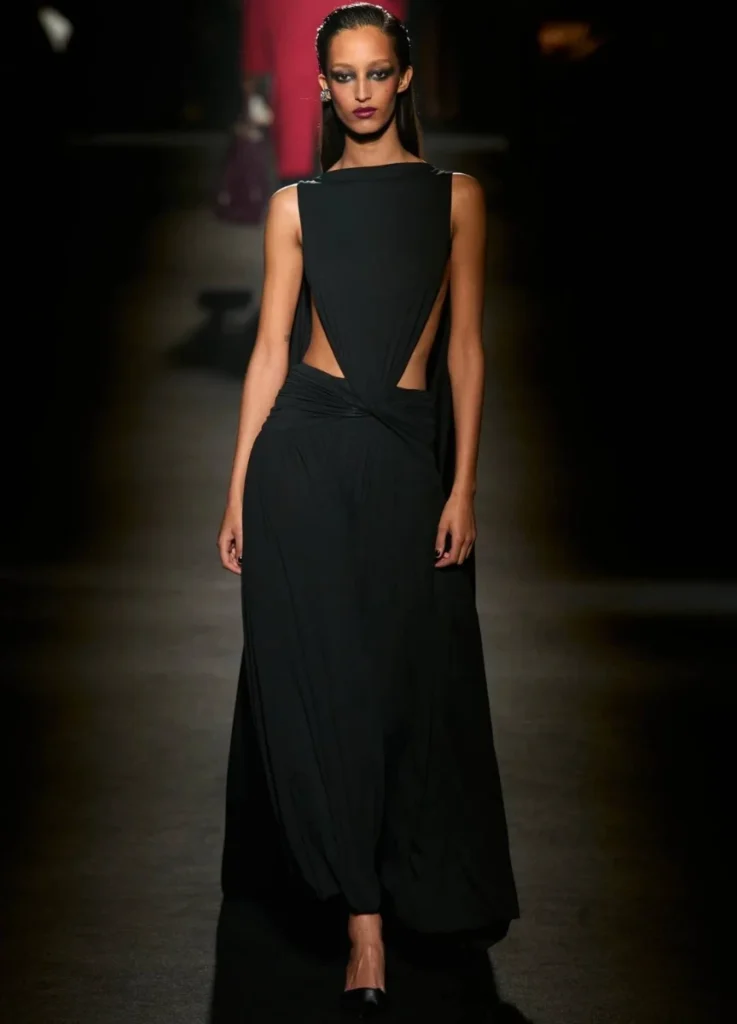
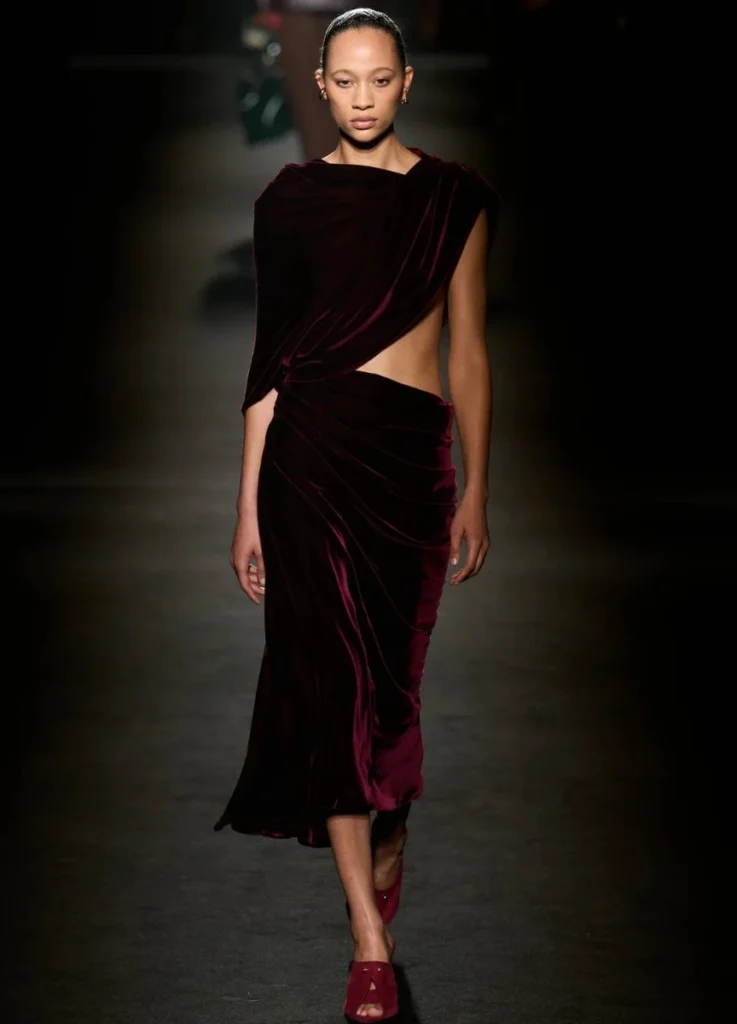
Silk jersey appears in draped dresses. Velvet introduces a sense of softness and fluidity. Fabric begins to move around the body rather than holding rigid structure.
These garments echo Piccioli’s long exploration of drapery during his tenure at Valentino. They introduce emotional softness into an otherwise severe runway narrative.
Styling Tension | Severity Meets Softness
The tension of the collection sits at this intersection.
Placed within a runway environment dominated by leather and oversized tailoring, the appearance of fluid draped dresses feels almost disruptive.
The shift is intentional.
Rather than erasing Balenciaga’s recent visual world, Piccioli layers his aesthetic language over it gradually. The draped pieces appear as moments of interruption within the darker rhythm of the show.
The controlled friction between severity and softness becomes one of the defining stylistic mechanisms of the collection.
Color | Restraint Over Statement
The color palette follows a similarly bifurcated logic.
The opening sequence remains firmly within a dark spectrum.
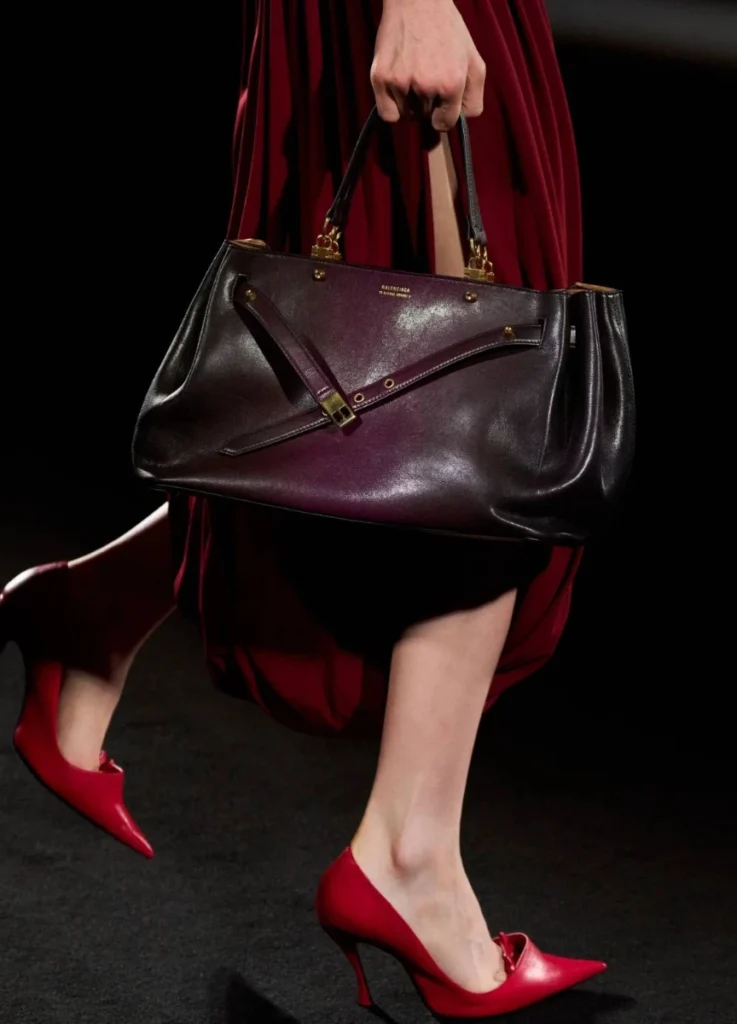
Black dominates the runway. Charcoal, deep brown, and burgundy maintain a subdued atmosphere consistent with the dystopian tone associated with recent Balenciaga collections.
Stronger colors begin to surface as the show progresses.
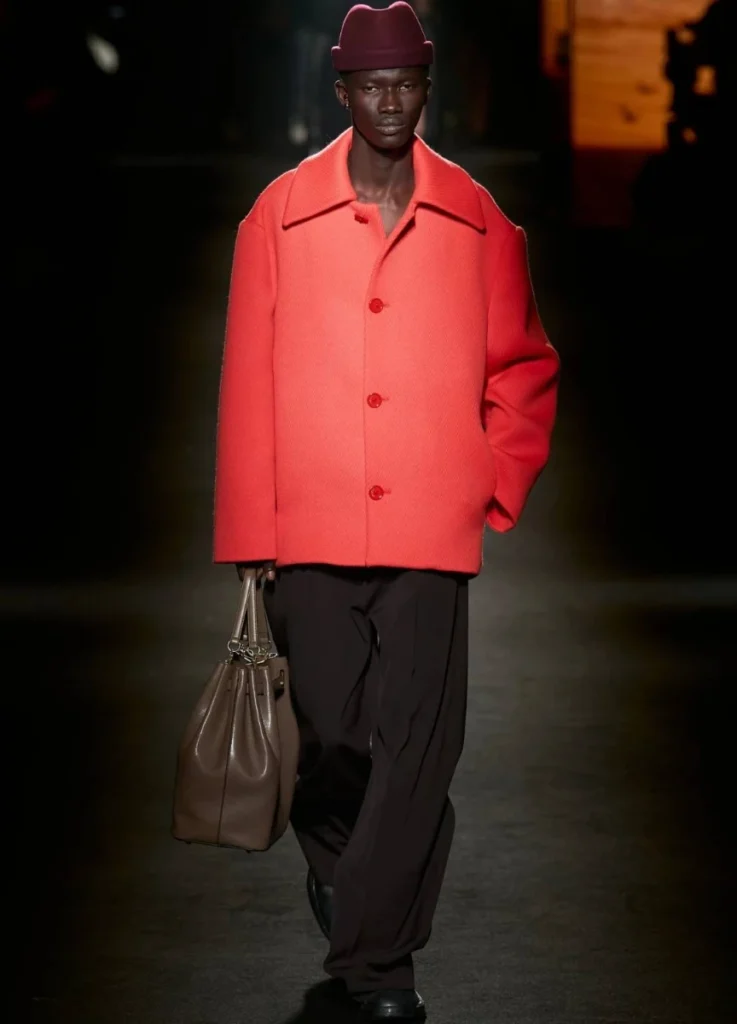
Vivid red coats punctuate the lineup. Deep greens and occasional purples appear in dresses, creating visual contrast against the otherwise dark environment.
Even here, Piccioli holds back.
Unlike his work at Valentino — where color often became the central narrative device — color in this collection operates more subtly. It appears as strategic accents rather than as the defining identity of the collection.
The restraint suggests an awareness of Balenciaga’s existing aesthetic ecosystem. Piccioli introduces his color sensibility carefully, rather than overwhelming the brand’s established visual codes.
This is one of the more telling moves of the season. A designer arriving with a known signature has two options — assert it immediately or hold it back. Piccioli holds it back. The choice reads as discipline rather than dilution.
Key Looks
Several looks define the collection’s structure most clearly.
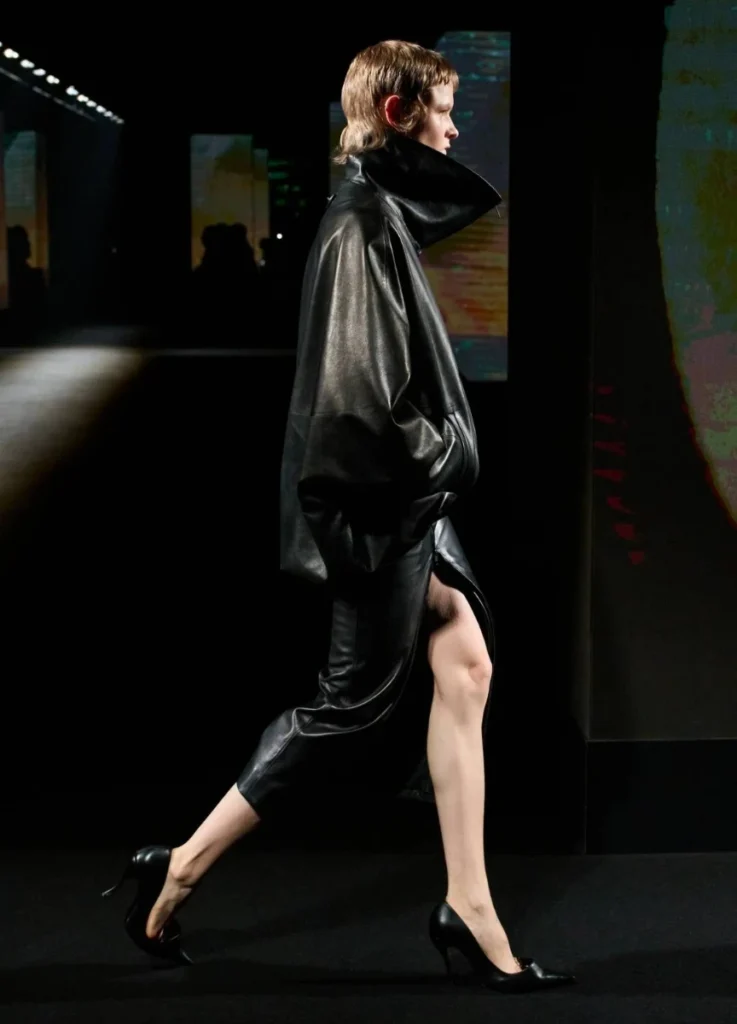
The opening leather bomber dress sets the tone immediately, blending streetwear proportions with couture references.
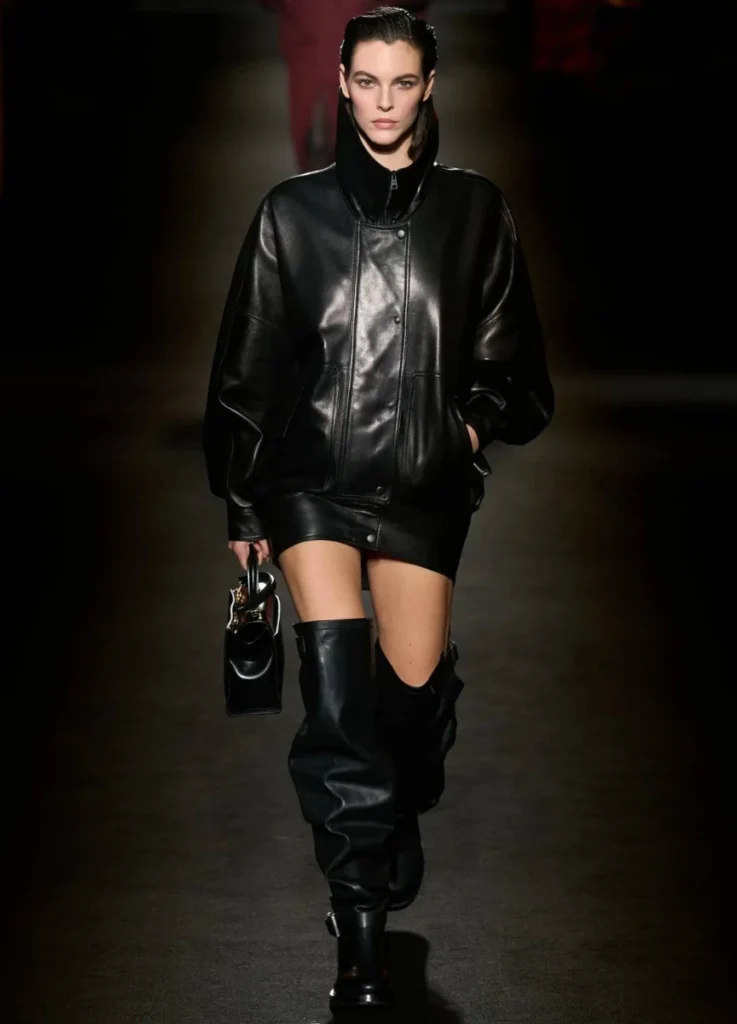
The leather look paired with thigh-high boots continues the darker character archetypes associated with Balenciaga’s recent past.
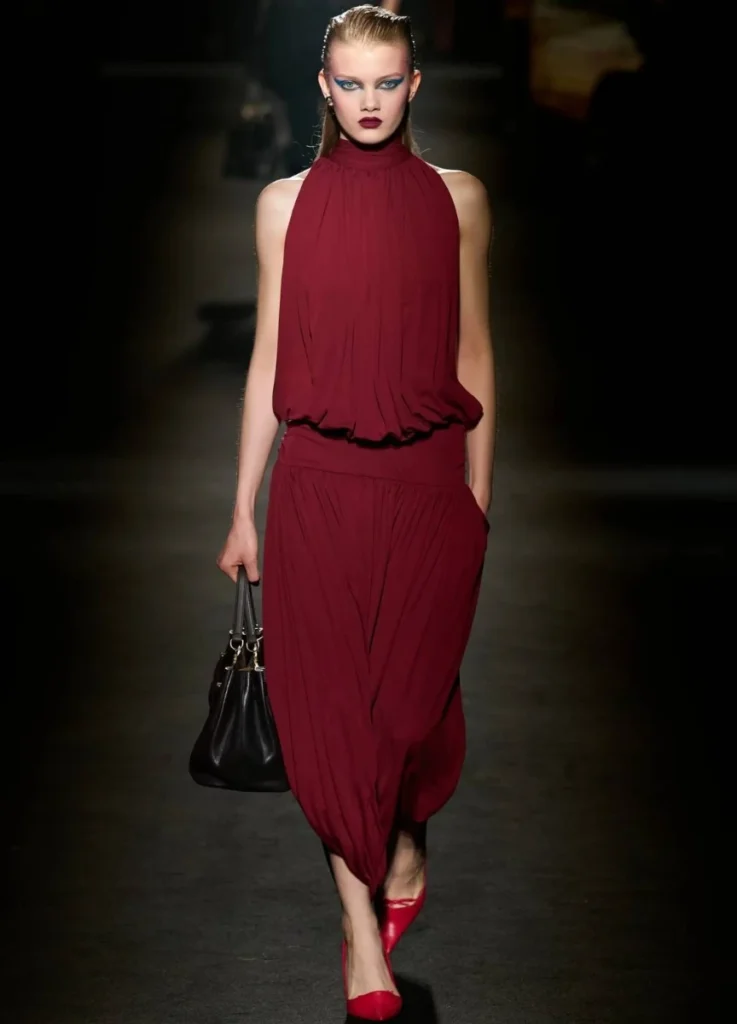
The draped jersey dresses introduce Piccioli’s signature softness and emotional fluidity midway through the show.
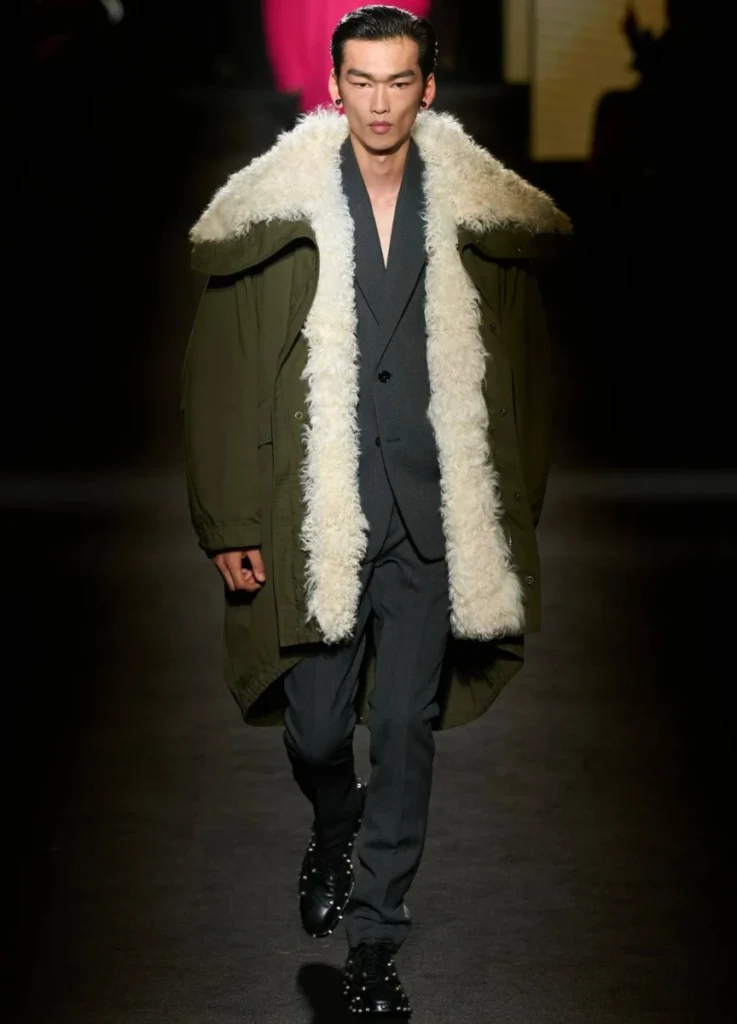
The cocoon-shaped car coats in menswear reinterpret Cristóbal Balenciaga’s architectural volumes within a contemporary context.
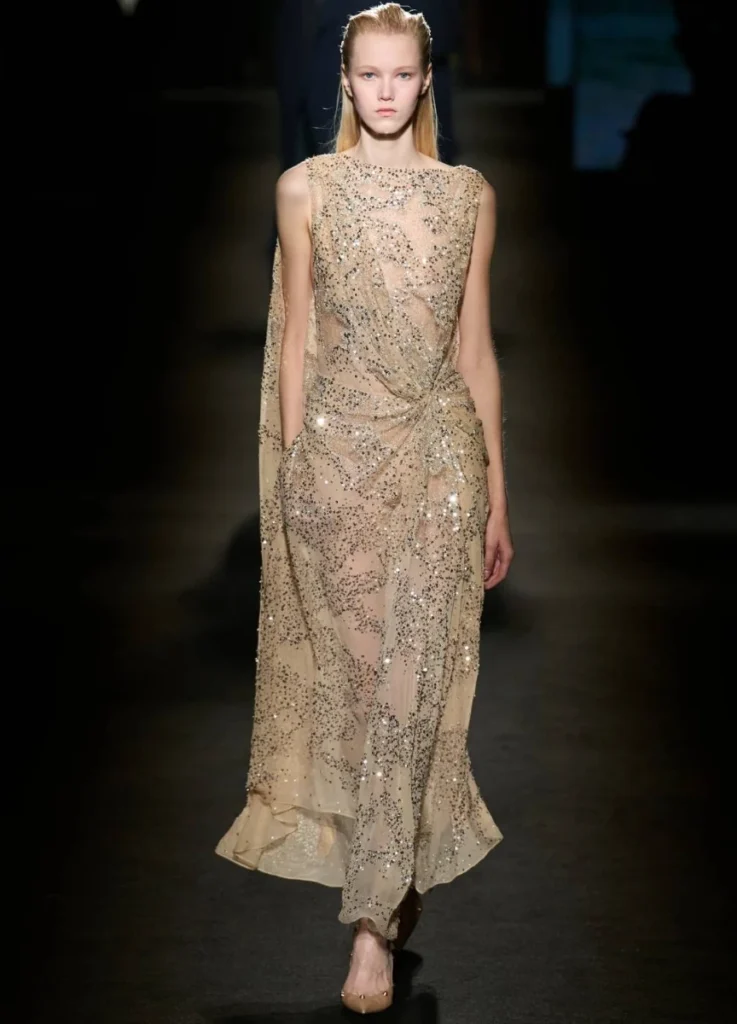
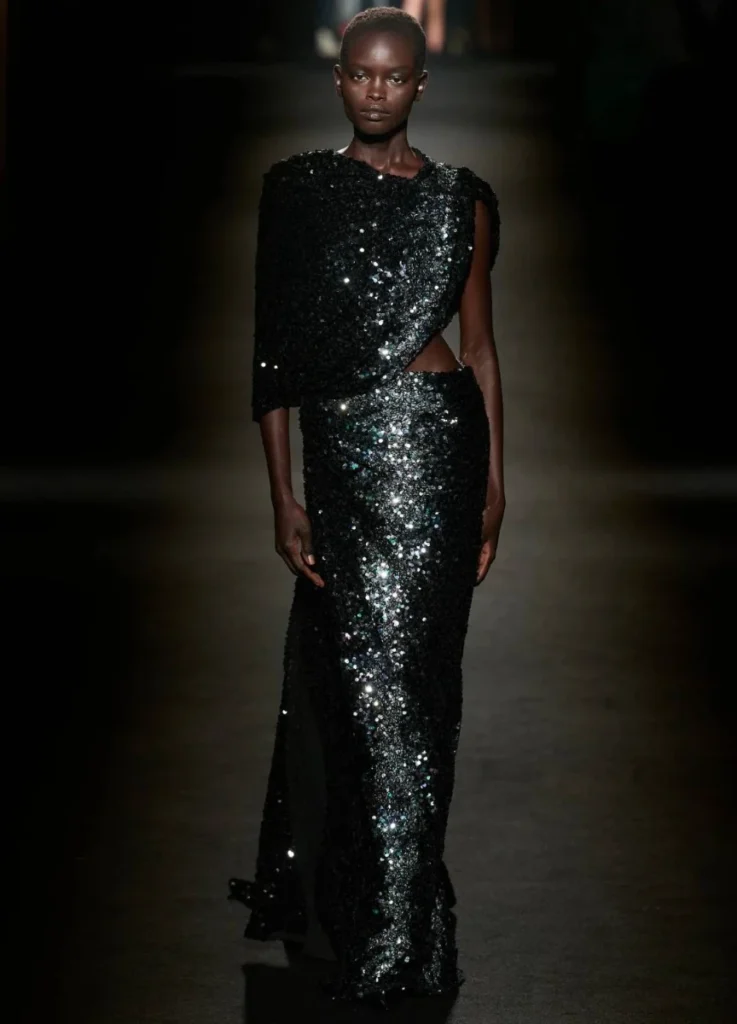
The closing sequined evening dresses reveal Piccioli’s instinctive understanding of red-carpet couture — an area where his design voice remains unmistakably strong.
Industry Context | A Transitional Chapter
The collection reads as a transitional chapter within the broader fashion conversation.
When a new creative director takes over a house with a strong identity, immediate transformation is rarely the goal. The first seasons typically focus on observation and gradual recalibration.
The Demna era left an unusually dominant imprint on Balenciaga’s visual culture, which makes the negotiation more complex than at most houses currently changing hands.
Piccioli’s approach suggests patience.
Rather than rejecting that legacy outright, he appears to be studying how his own design language might integrate with it.
The collection reads less as a definitive statement and more as the beginning of a longer negotiation.
Commercial Viability | Outerwear Stable, Drape Experimental
The structure of the collection is pragmatic from a commercial perspective.
Outerwear remains the most commercially stable category.
Oversized coats, leather bombers, parkas, and cocoon car coats align closely with Balenciaga’s established retail strengths. These items are already familiar to the brand’s customer base and likely to translate well into store environments.
Draped dresses occupy a more experimental position.
Piccioli’s draped silhouettes are aesthetically compelling, but they diverge from the style language Balenciaga consumers have been purchasing in recent years. Their commercial impact will likely be more limited.
The collection appears to maintain the brand’s existing revenue structure while slowly introducing new design ideas.
This is a common strategy during leadership transitions at major luxury houses. Rather than attempting to reshape consumer behavior immediately, designers often preserve the commercial backbone of the brand while gradually shifting its aesthetic language.
Final Thoughts | A House in Mid-Transition
Balenciaga Fall Winter 2026 doesn’t announce a dramatic reinvention.
It feels like a careful exploration.
Piccioli hasn’t yet rewritten the language of Balenciaga. What he has begun to do is examine the space between two powerful histories — the sculptural couture of Cristóbal Balenciaga and the dark street culture constructed by Demna.
The current collection occupies the intersection of those eras. It shows a house in mid-transition, where past and present coexist rather than compete.
In the broader 2026 conversation, this puts Balenciaga in interesting company. Chanel under Blazy, Valentino under Michele, Chloé under Kamali — each new director is working through the same question from a different angle. What does an incoming designer owe to the house they inherit? Blazy reassembles. Michele interferes. Kamali restores. Piccioli holds the line, then pushes against it.
The final shape of his Balenciaga will become visible over the next few seasons. For now, the most interesting thing about Fall Winter 2026 is the patience itself — a designer arriving at one of the loudest brands in fashion and choosing, deliberately, not to shout.
All images referenced in this post are drawn from Vogue Runway.
[ Related Editorials ]