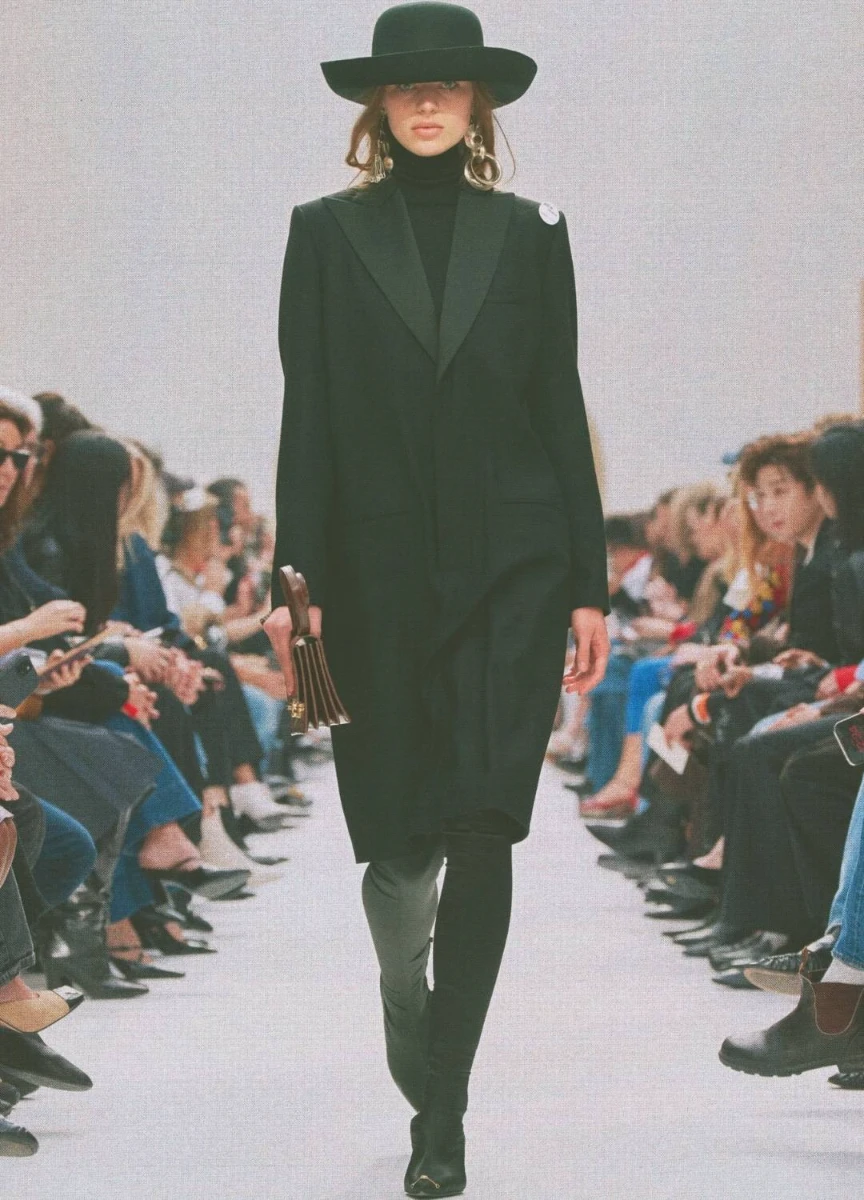
Inside Celine Fall/Winter 2026 collection
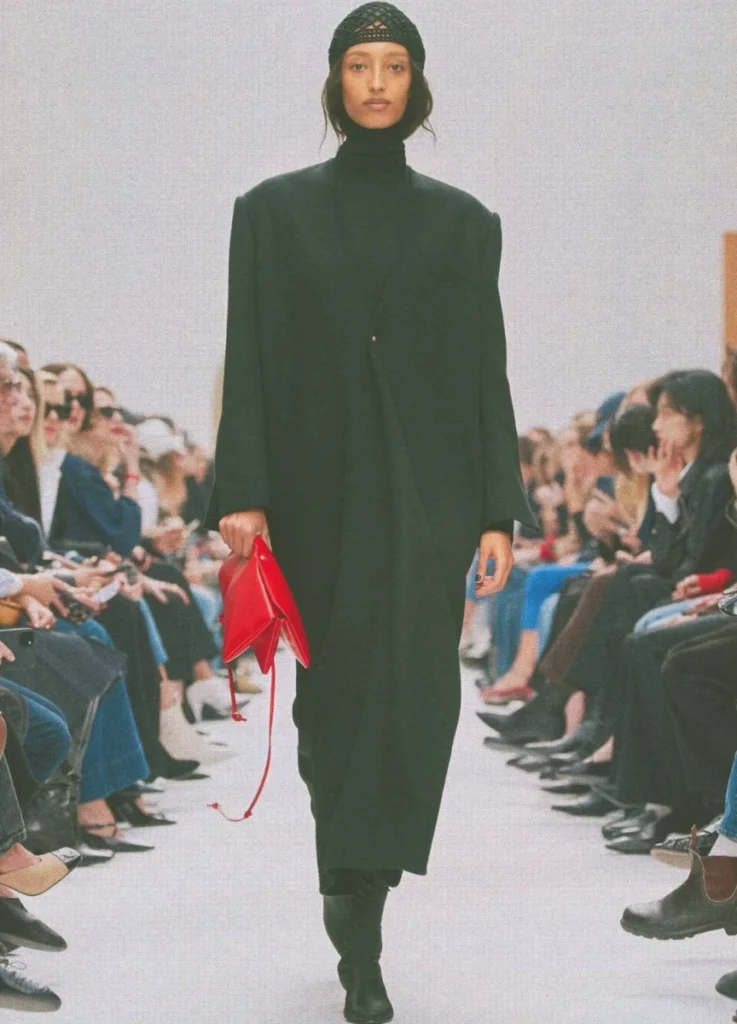
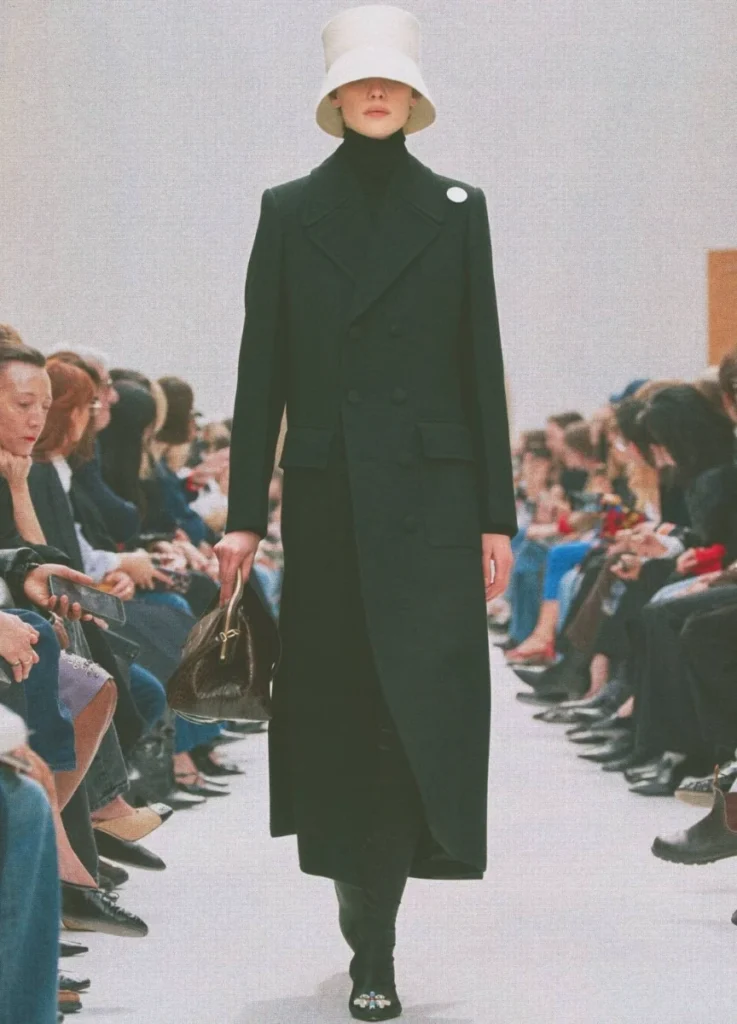
Celine Fall/Winter 2026 begins with a simple image — a long black coat moving through space with absolute precision.
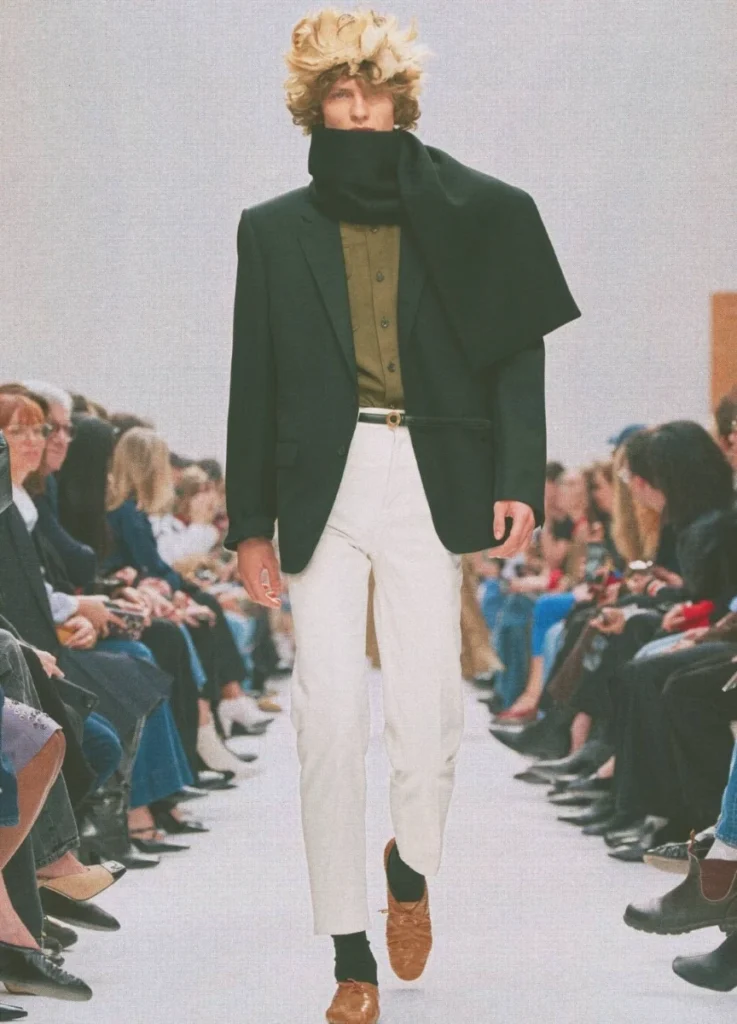
From the opening look to the final exit, the collection revolves around one central visual language. Clean tailoring. Elongated silhouettes. A restrained color palette. The show never feels static, though. Subtle disruptions appear throughout the styling — scarves wrapped high across the face, dramatic feathered headpieces, flashes of saturated red, sudden appearances of leopard print.
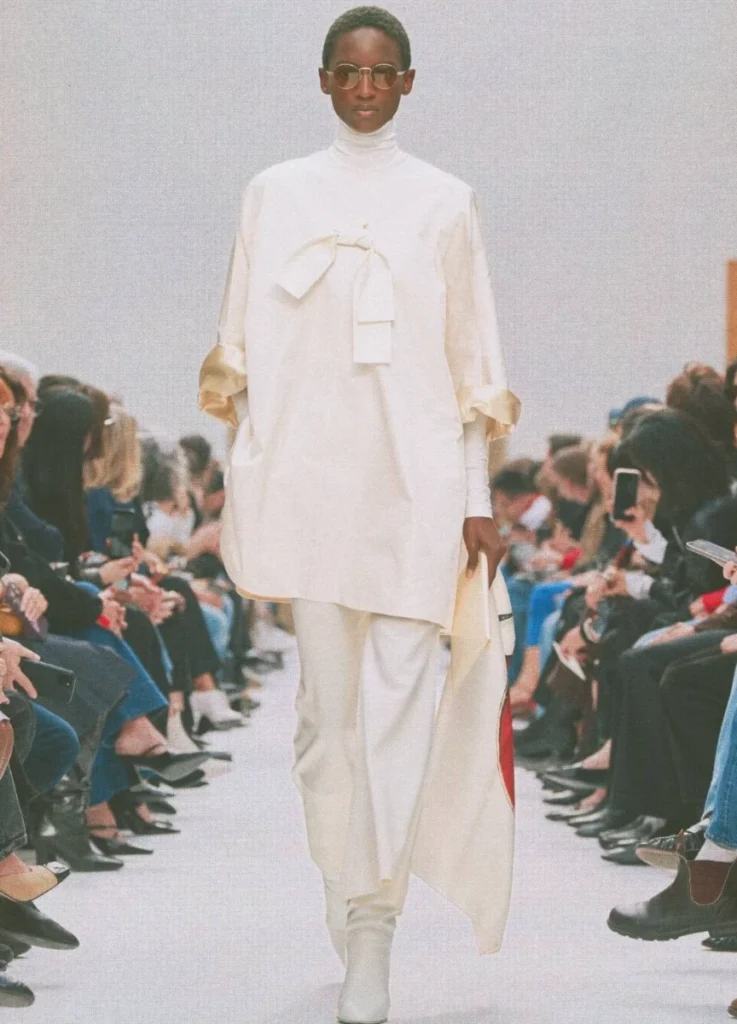
These elements create controlled tension within an otherwise disciplined wardrobe.
Instead of spectacle or radical reinvention, the collection operates through a quieter mechanism. Perfectly constructed garments are paired with styling choices that introduce small fractures in the visual order. The runway is built on balance — precision in the clothes, instability in the presentation.
It’s a study in how restraint can coexist with disturbance.
Context | Re-centering Parisian Tailoring
Celine has long been defined by a particular interpretation of urban tailoring. Across different creative periods, the house repeatedly returns to certain structural principles — narrow shoulders, elongated coats, a silhouette that moves vertically rather than outward.
Fall Winter 2026 revisits that foundation with unusual clarity.
The majority of the runway is composed of sharply tailored coats, structured jackets, and slim trousers. The garments maintain close proximity to the body without appearing restrictive, emphasizing clean proportion rather than volume.
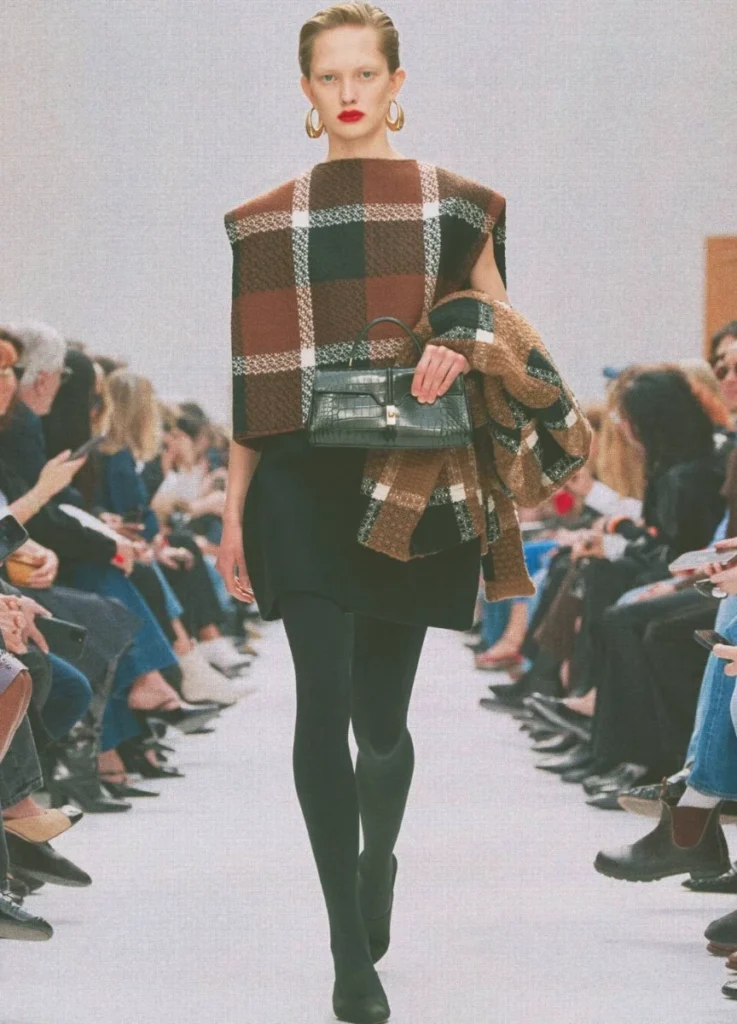
This decision sits clearly within the broader fashion context of the past decade. For several seasons, oversized silhouettes and street-influenced proportions dominated the runway landscape. Celine’s approach here feels deliberately calibrated. The collection favors refinement over exaggeration.
The silhouette is compressed and clarified rather than expanded.
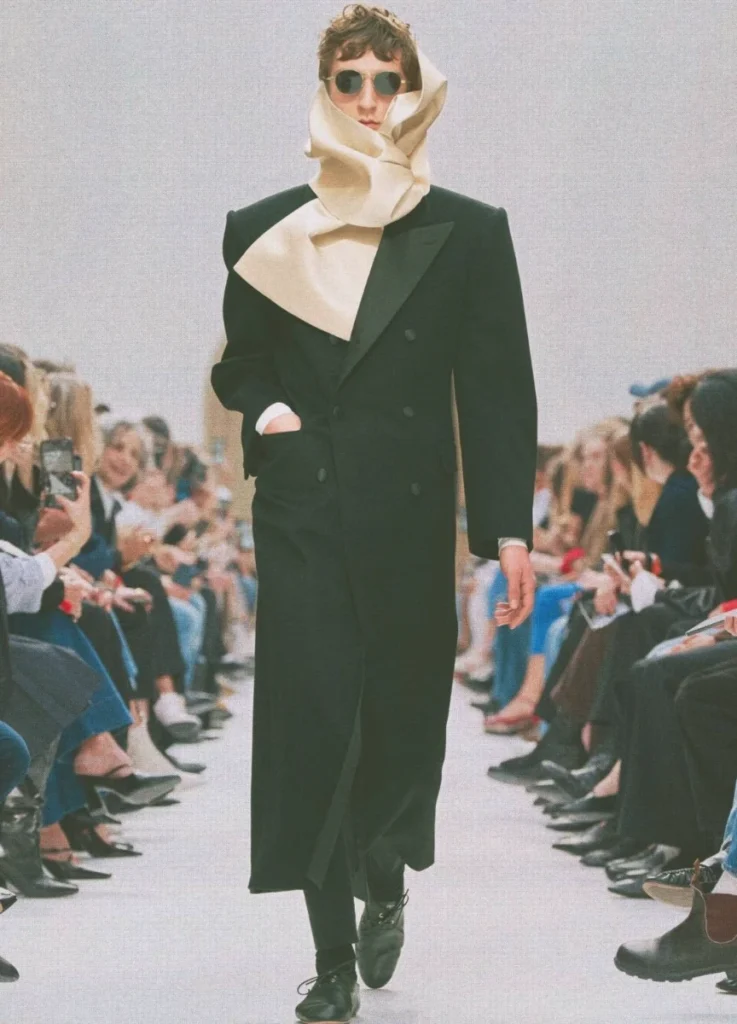
This is not nostalgia for classic tailoring. It’s a strategic reaffirmation of identity. In a period when many houses are redefining their aesthetic language, Celine appears to be consolidating its own. The house remains fundamentally committed to the discipline of well-made clothes.
For Michael Rider, who joined Celine after working closely with Phoebe Philo at the house’s Old Celine era and later with Matthieu Blazy at Bottega Veneta, this consolidation reads as a deliberate creative position.
Celine has moved through three distinct phases over the past decade — Phoebe Philo’s intellectual minimalism, Hedi Slimane’s rock-and-roll Parisian glamour, and now Rider’s recalibration. Rider’s approach doesn’t reject either predecessor. It returns the house to the structural discipline that has always been Celine’s core, while letting traces of both eras coexist within the styling.
Structural Center | Precision vs Disruption
If the garments themselves represent order, the styling introduces instability.
This tension defines the structural center of the collection.
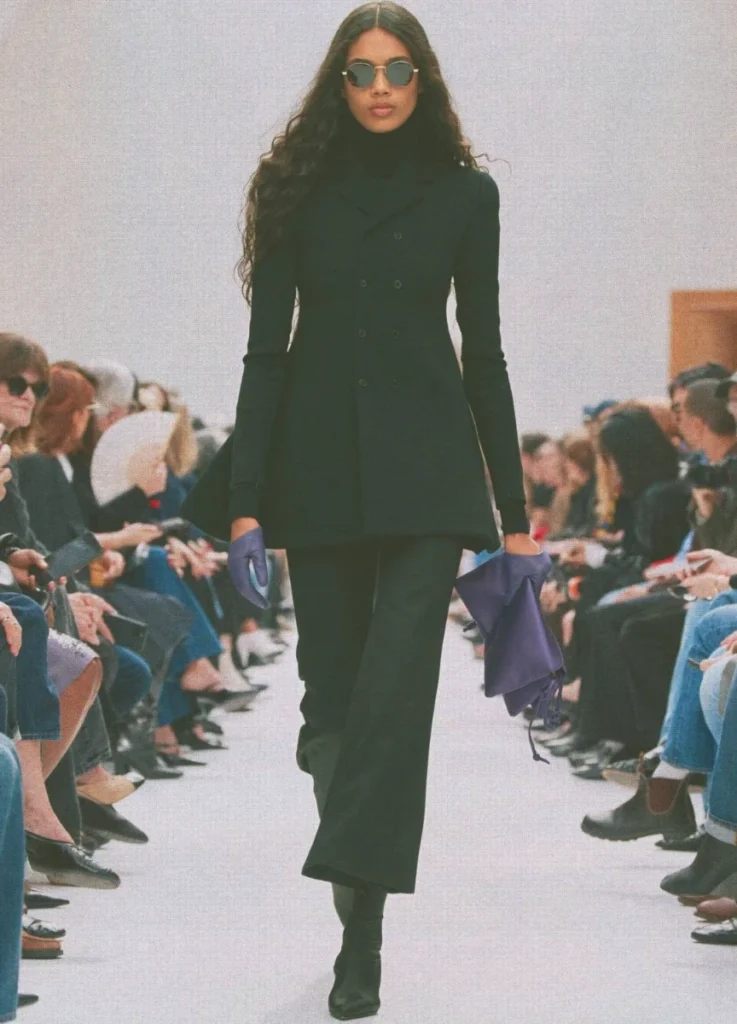
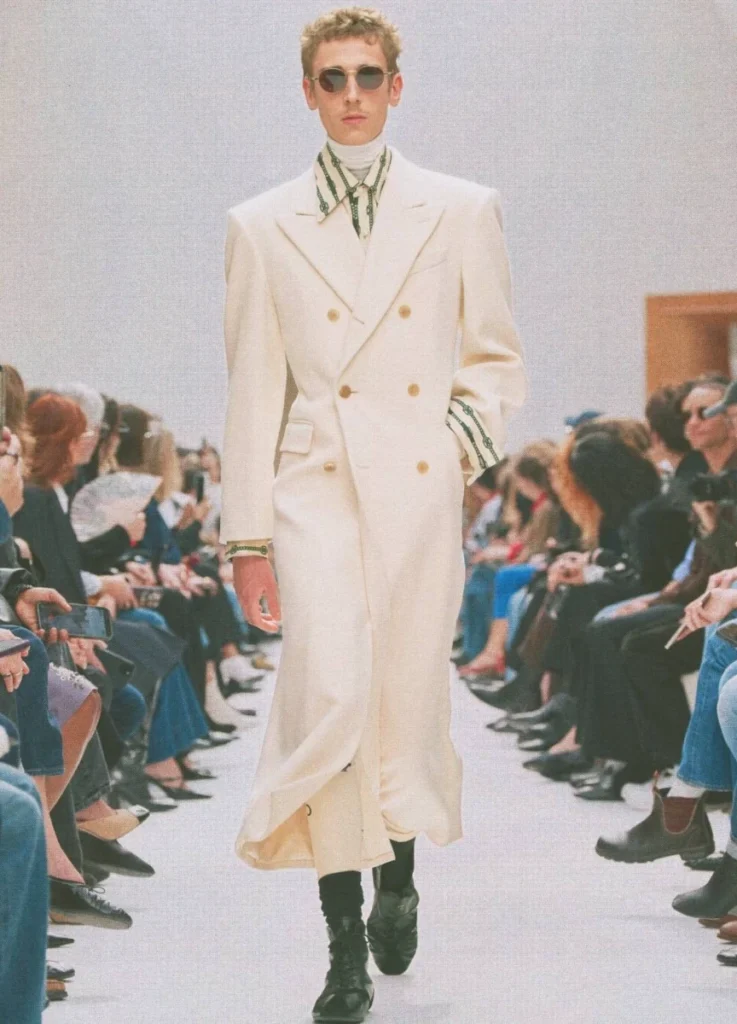
The tailoring is exacting — clean lapels, precise seams, controlled proportions. These garments are frequently paired with elements that feel slightly excessive or displaced, though.
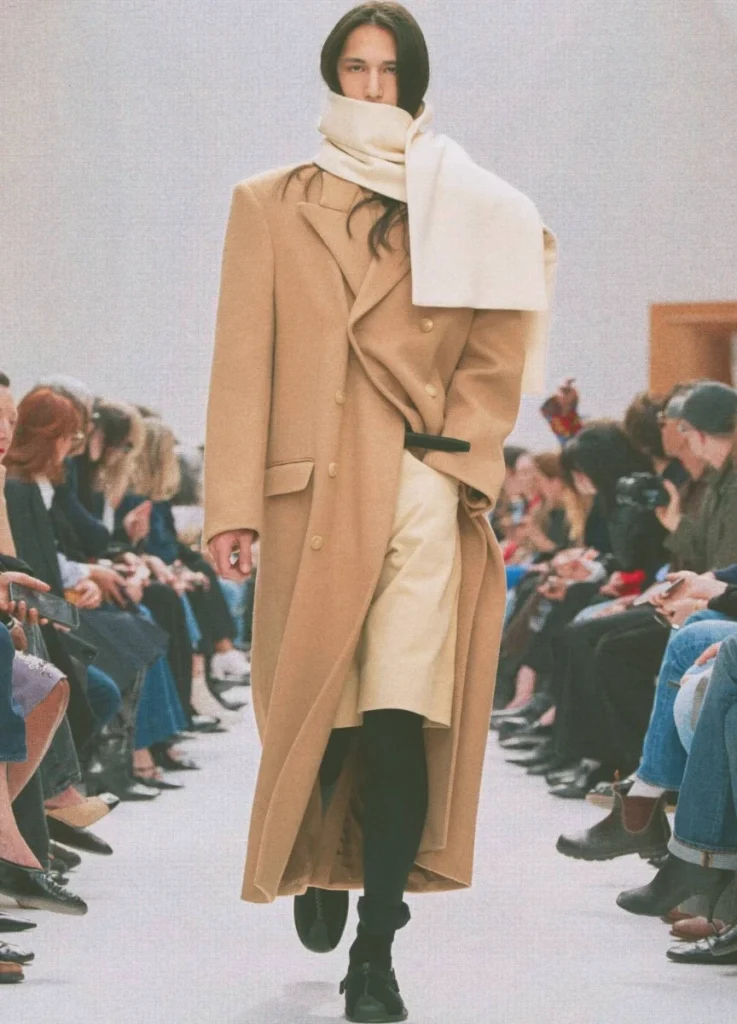
Scarves wrap high across the face, partially obscuring the models. Feathered headpieces extend upward in dramatic forms. Certain looks introduce sudden bursts of saturated color within an otherwise restrained palette.
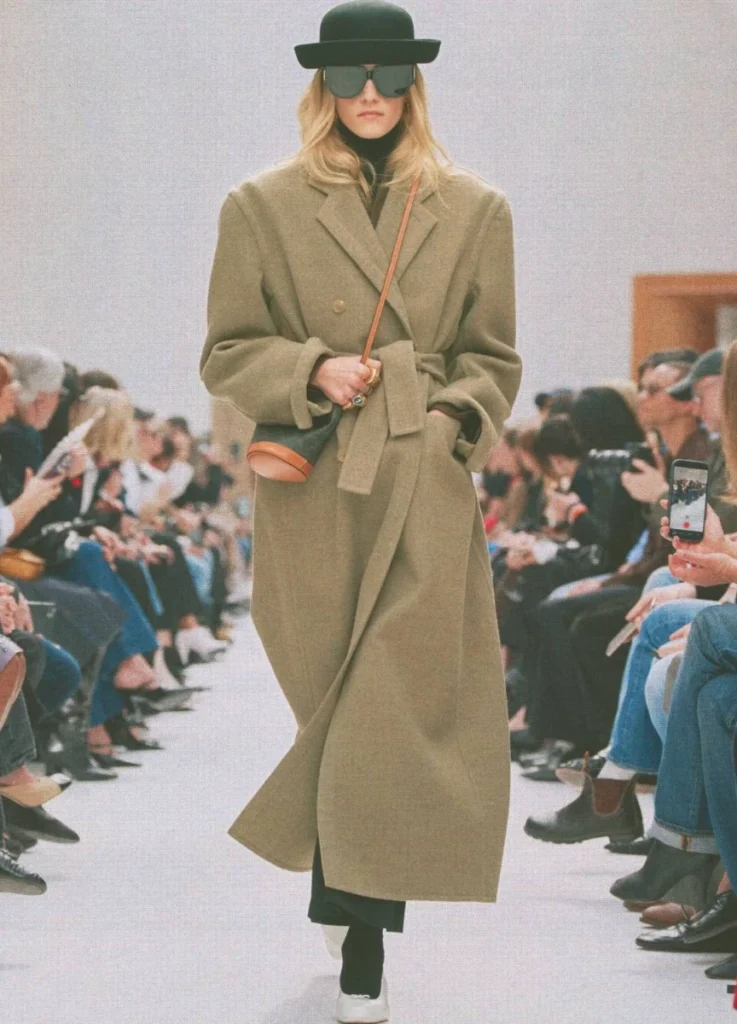
These gestures never overwhelm the clothing. They function as interruptions — visual signals that prevent the collection from becoming too resolved.
The show constructs a deliberate imbalance: perfect garments presented within imperfect compositions.
This subtle friction becomes the primary source of energy on the runway.
French Bourgeois Codes, Quietly Disturbed
Another principle of the collection is its sustained engagement with French bourgeois codes.
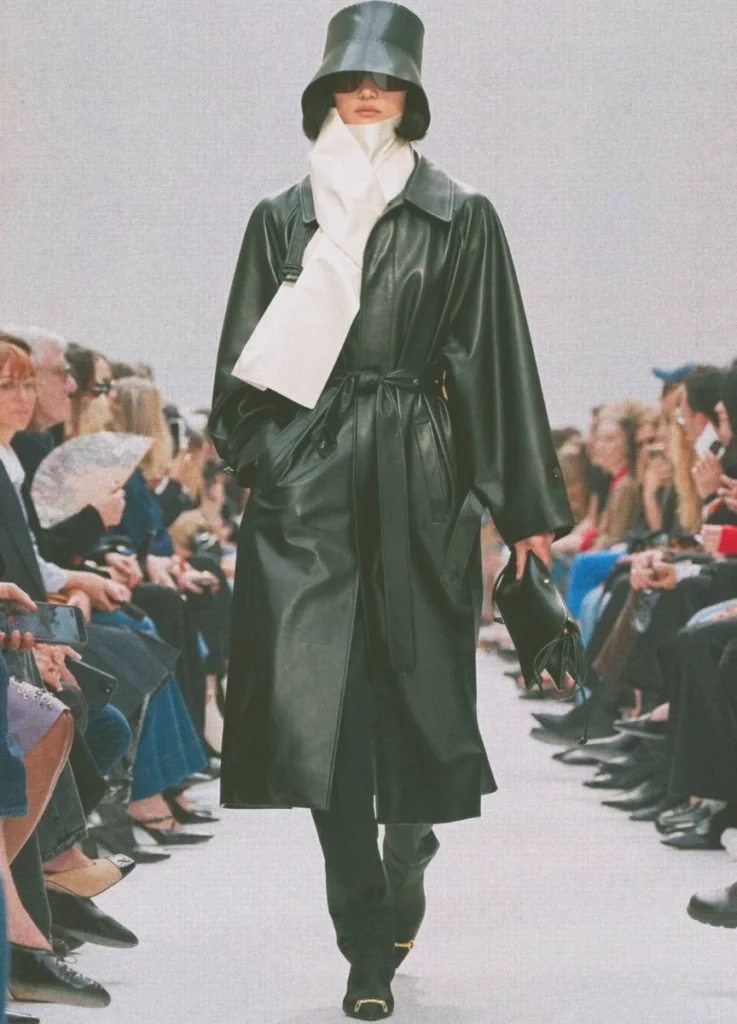
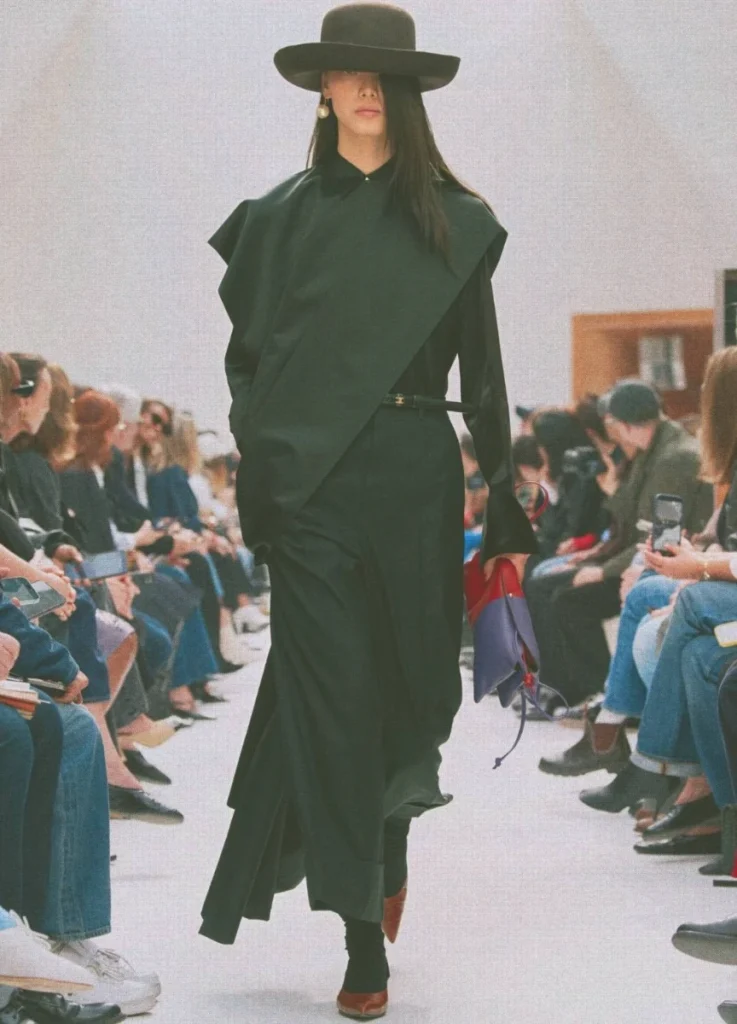
Wide-brim hats. Long coats. Silk scarves and leather gloves. These elements all evoke an older, almost archival image of upper-class Parisian dress — one Celine has returned to repeatedly across different creative directors.
In Fall Winter 2026, that imagery remains central. The collection doesn’t try to ironize or update bourgeois codes from the outside. It inhabits them.
The styling adjustments are what prevent the look from becoming purely classical. A perfectly tailored coat is paired with a scarf that rises almost to the eyes. A bourgeois silhouette is interrupted by an exaggerated headpiece.
These small disturbances keep the bourgeois reference contemporary. The collection wears the codes seriously, then unsettles them just enough to prevent costume.
Silhouette | The Discipline of Vertical Line
The silhouette of the collection operates around two primary axes.
The first is tailored structure.
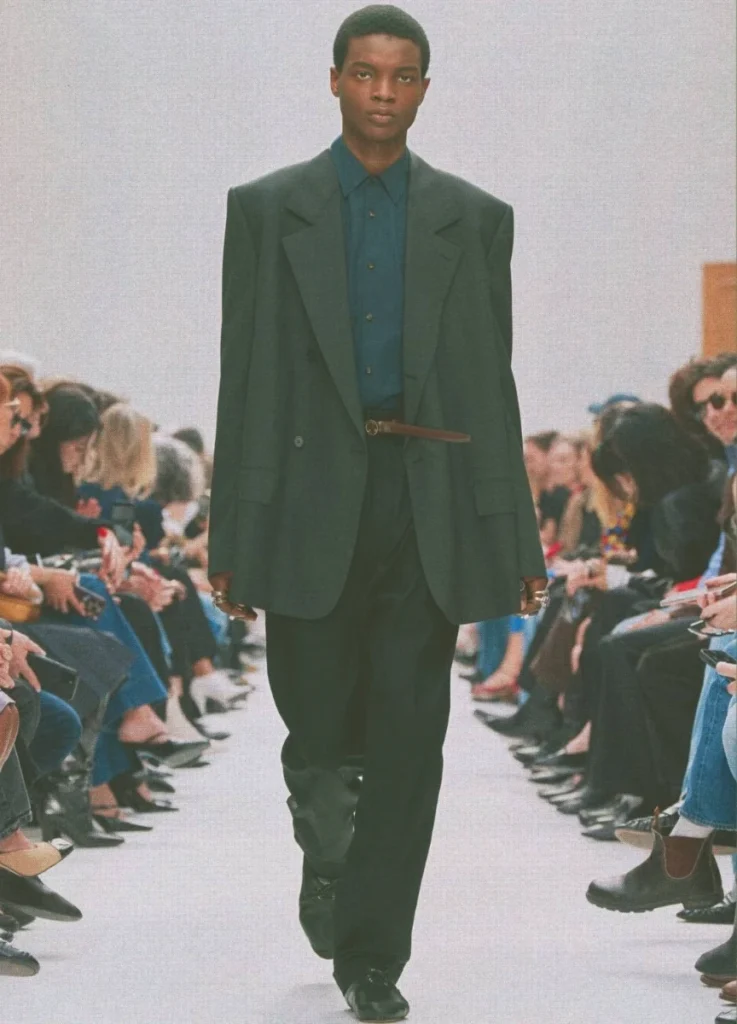
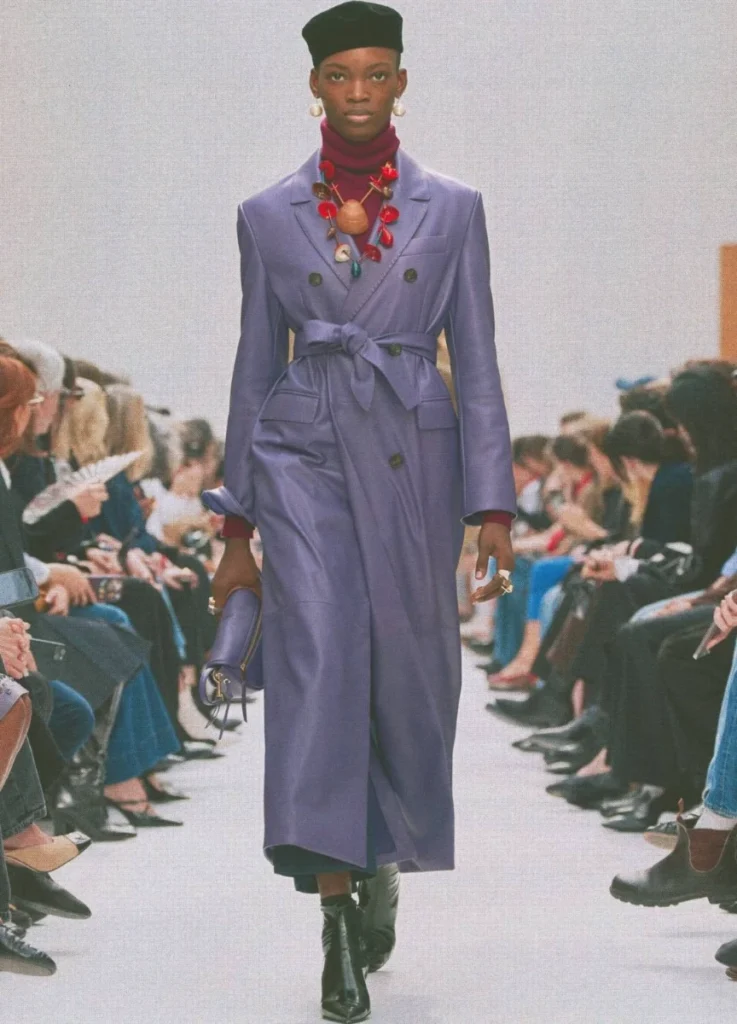
Coats and jackets dominate the runway — particularly double-breasted overcoats and long tailored outerwear. The shoulder line remains clean and controlled, avoiding exaggerated padding. From the shoulder, the garments fall vertically, creating a narrow column that elongates the body.
These long coats are arguably the most important pieces of the collection. Their proportions establish the visual rhythm of the entire show. When viewed sequentially, the coats form a repeating architectural motif — tall, narrow, sharply defined.
The second axis introduces softness.
Flowing dresses in silk or satin appear intermittently throughout the lineup. These pieces contain minimal structural ornamentation and rely instead on movement. As the models walk, the fabric shifts and drapes naturally around the body.
The Blurring of Masculine and Feminine Codes
Another subtle but notable aspect of the collection is the increasingly fluid relationship between menswear and womenswear silhouettes.
Many of the tailored garments appear in nearly identical proportions across male and female looks. Long overcoats, double-breasted jackets, and slim trousers recur with minimal variation between the two.
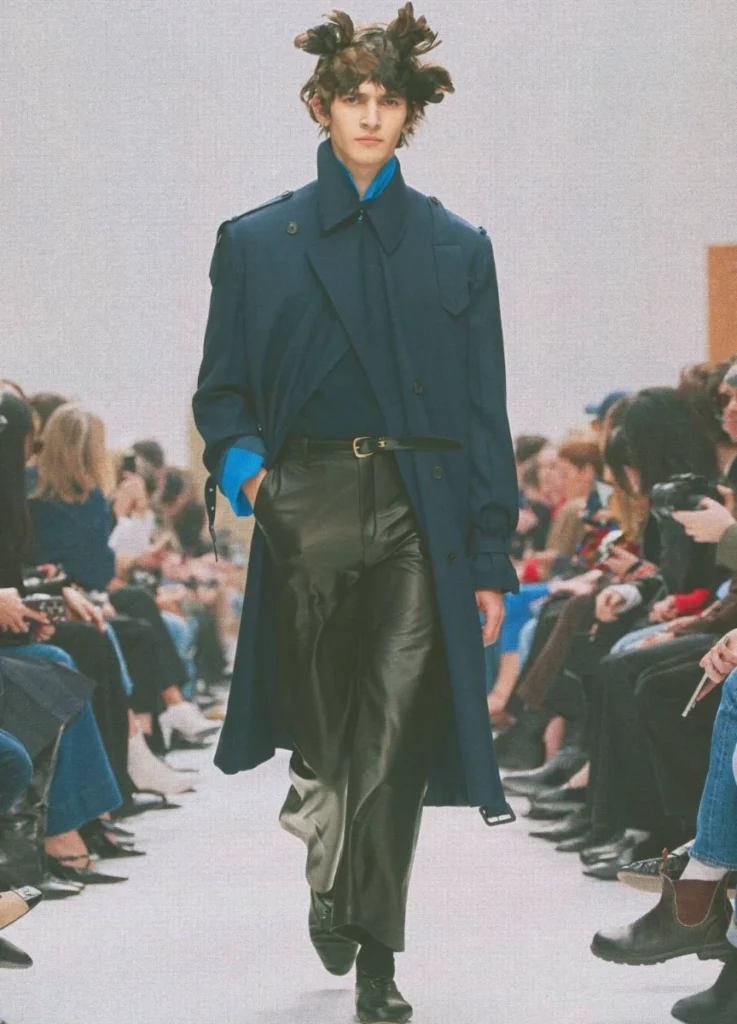
This is not overtly gender-neutral design in the contemporary marketing sense. Celine is prioritizing silhouette over gender coding.
The question becomes less about whether a garment belongs to menswear or womenswear, and more about whether the proportions produce a refined urban line.
The shift reflects a broader transformation within the fashion industry, where rigid gender distinctions in tailoring are gradually dissolving. Celine’s interpretation feels less ideological and more aesthetic.
The emphasis remains on form.
Materials | The Density of Classic Fabrics
The material palette remains within the realm of classic European tailoring fabrics.
Key materials include:
- Structured wool coating
- Leather outerwear
- Silk and satin dresses
- Knitwear
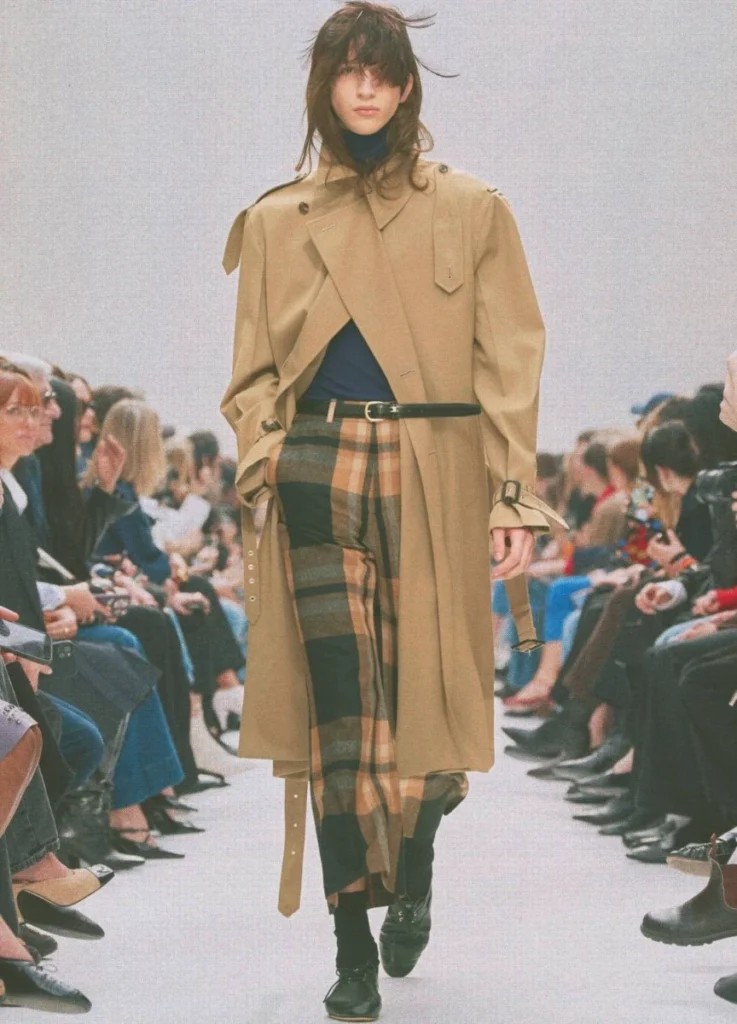
The wool coats display notable density. The fabric holds its structure without collapsing, allowing the coats to maintain their architectural shape as the models move.
Leather plays a crucial role. Celine has long maintained a reputation for strong leather tailoring, and Fall Winter 2026 continues that tradition. Leather jackets and coats introduce a sharper visual tension into the lineup, reinforcing the collection’s urban character.
Unlike some contemporary runways that emphasize experimental textiles, this show relies on materials that have historically defined luxury tailoring. The emphasis lies not in novelty but in execution.
The fabrics support the silhouette rather than compete with it.
Color | Restraint Interrupted by Intensity
The color palette of the collection is tightly controlled.
The foundational colors include:
- Black
- Deep green
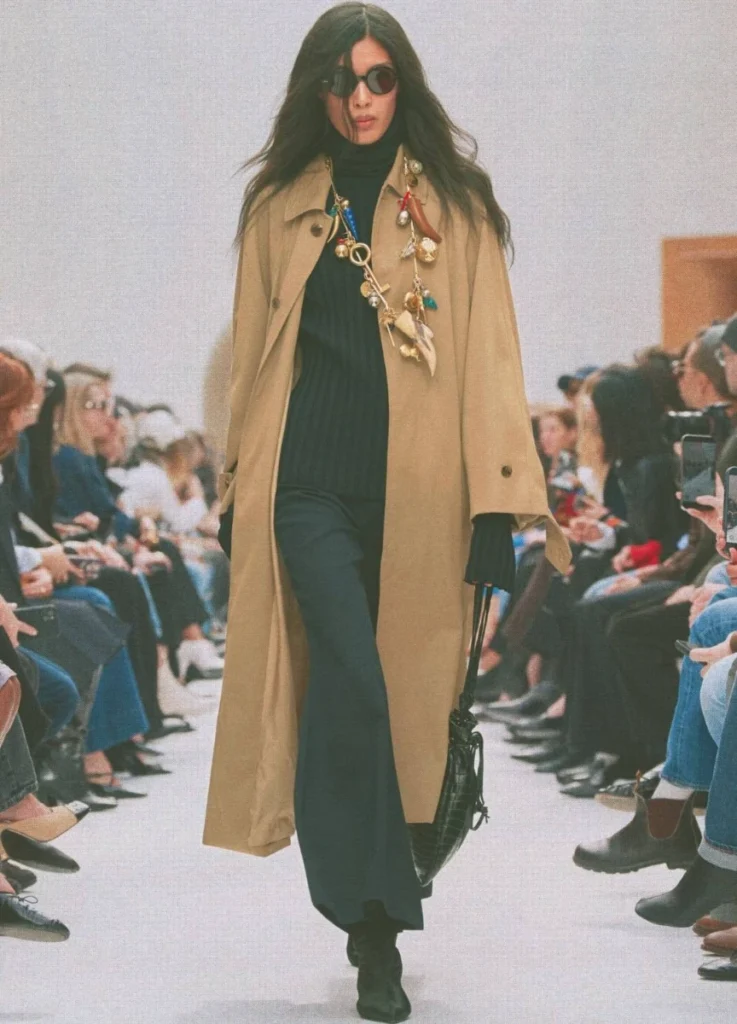
- Camel
- Cream
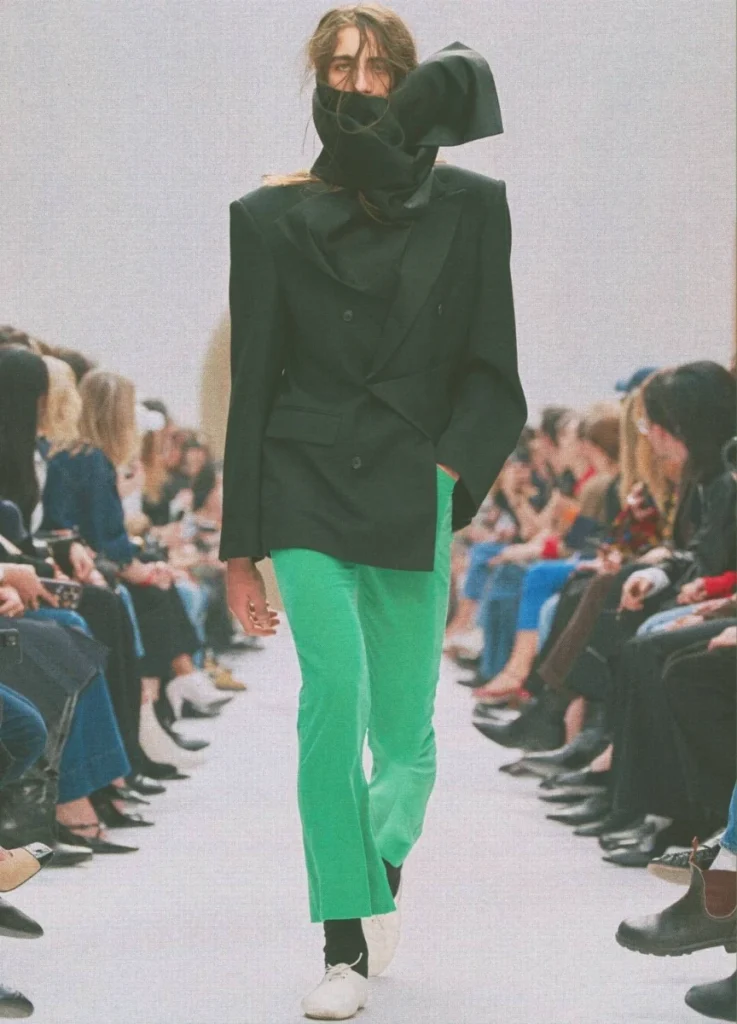
These shades establish a muted and sophisticated base for the runway. They also reinforce the architectural clarity of the tailoring.
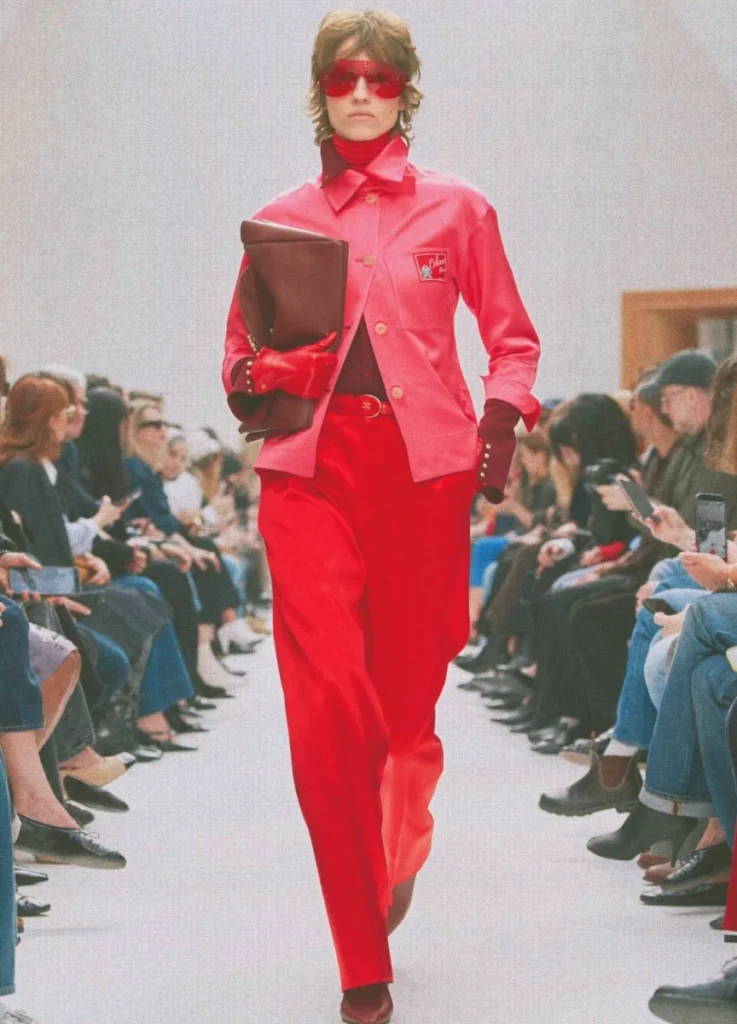
Against this restrained background, occasional bursts of color appear. Red emerges as the most striking accent within the collection. When introduced, it immediately shifts the visual rhythm of the runway.
Leopard print functions in a similar way. Rather than dominating the collection, it appears selectively — often within tailored coats — injecting a sense of wildness into the otherwise composed wardrobe.
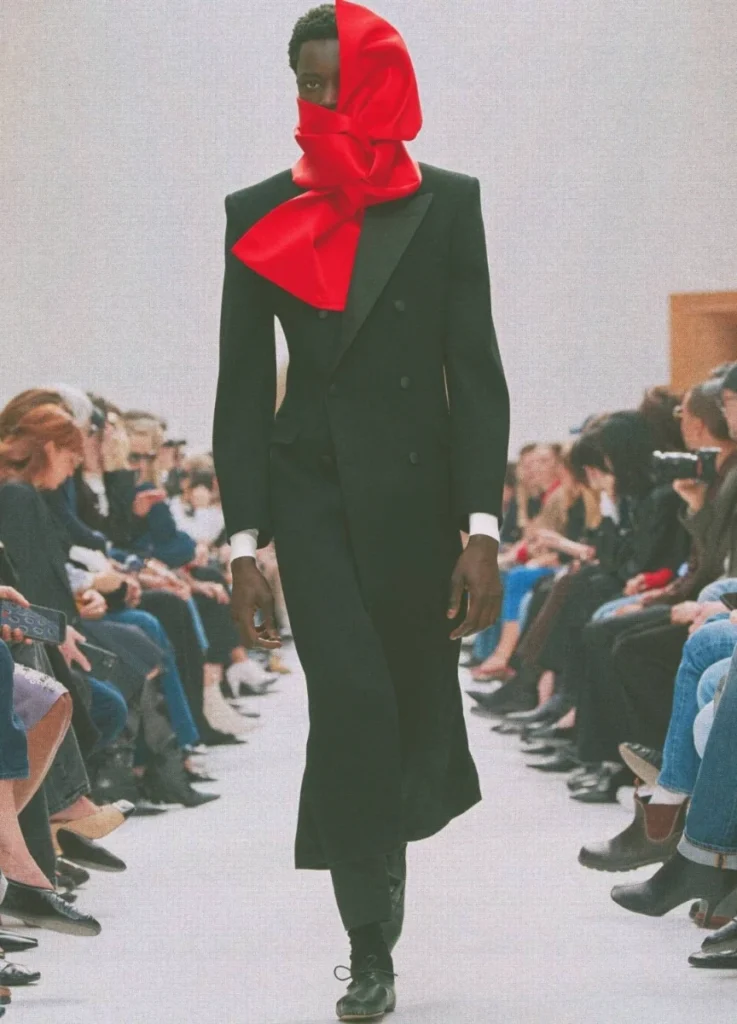
This strategy aligns with Celine’s approach to color.
The majority of the collection remains neutral and controlled. At specific moments, an unexpected element disrupts the visual continuity.
These interruptions prevent the show from becoming monotonous.
Key Looks
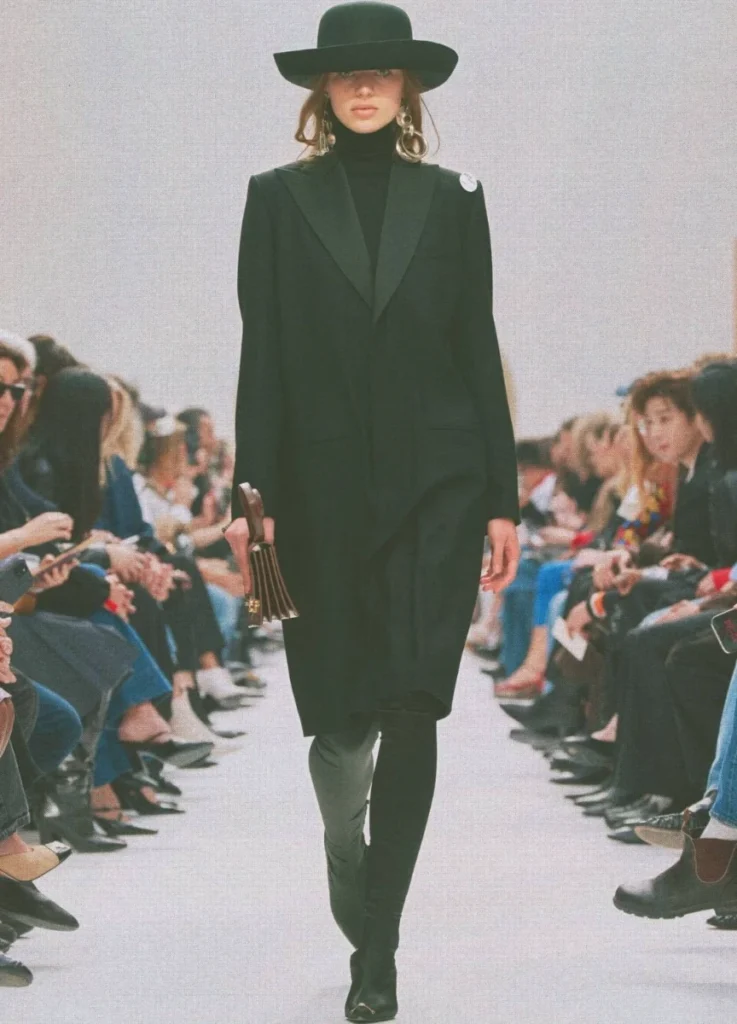
1. The Long Black Overcoat
The look encapsulates the core language of the collection. A sharply tailored black coat falls in a clean vertical line from shoulder to hem. The silhouette is narrow, disciplined, and unmistakably urban.
The purest expression of Celine’s Parisian tailoring tradition.
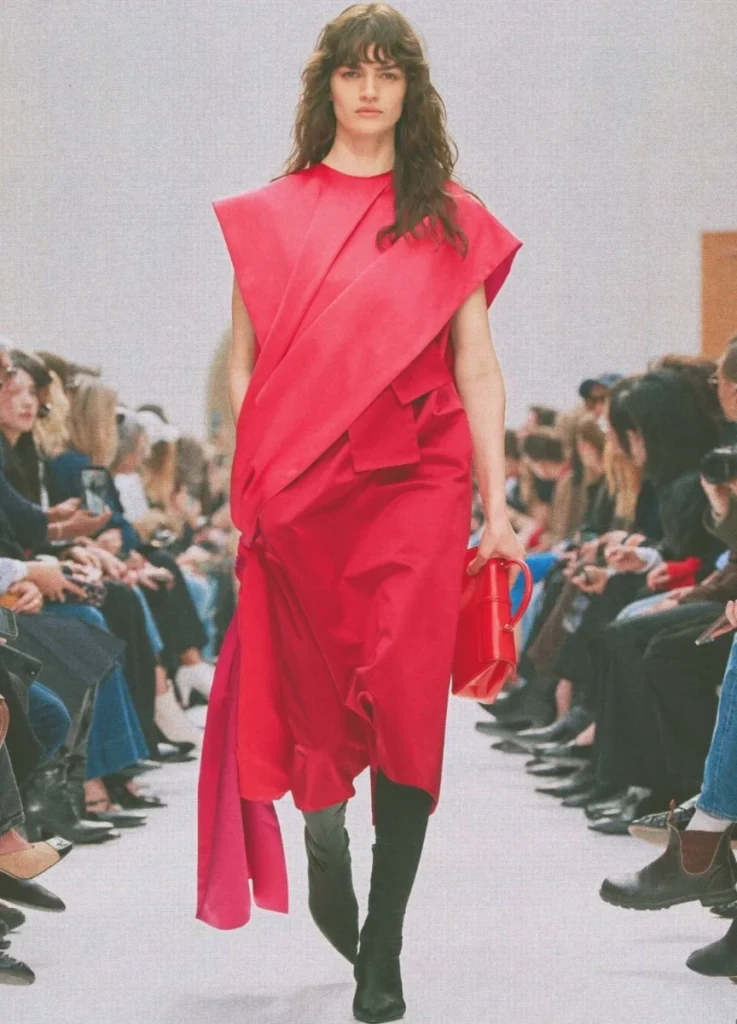
2. The Red Statement Look
Among the otherwise restrained palette, the red look stands out immediately. The color injects energy into the runway sequence and marks a visual turning point within the show.
Its impact lies in contrast.
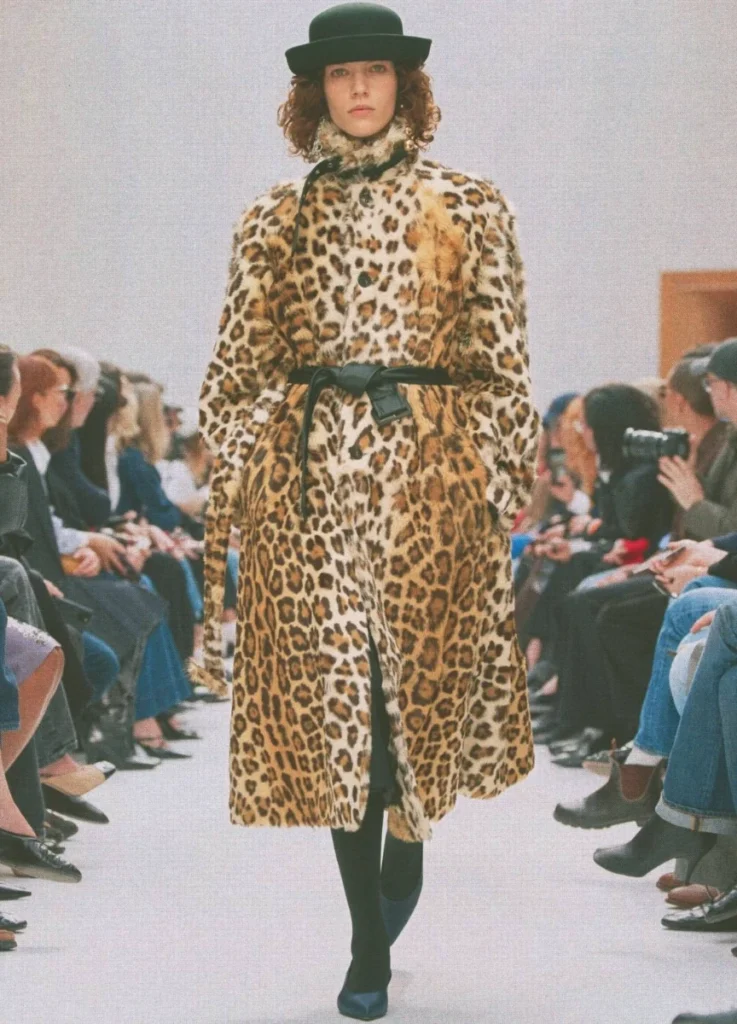
3. The Leopard Coat
The leopard print coat introduces a slightly wild element into the otherwise controlled wardrobe. By applying the pattern to a classic tailored silhouette, the collection merges bourgeois elegance with a touch of unpredictability.
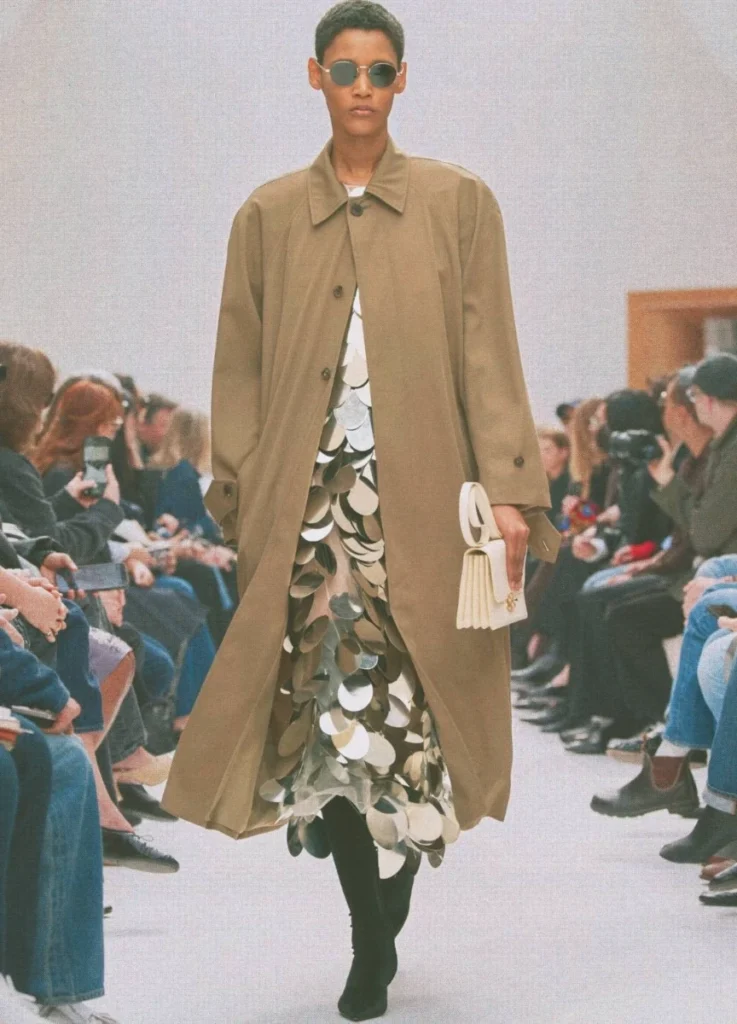
4. The Camel Trench
The camel trench revisits one of the most recognizable garments in European outerwear. It appears here in modernized proportions, maintaining the traditional structure while aligning with the collection’s elongated silhouette.
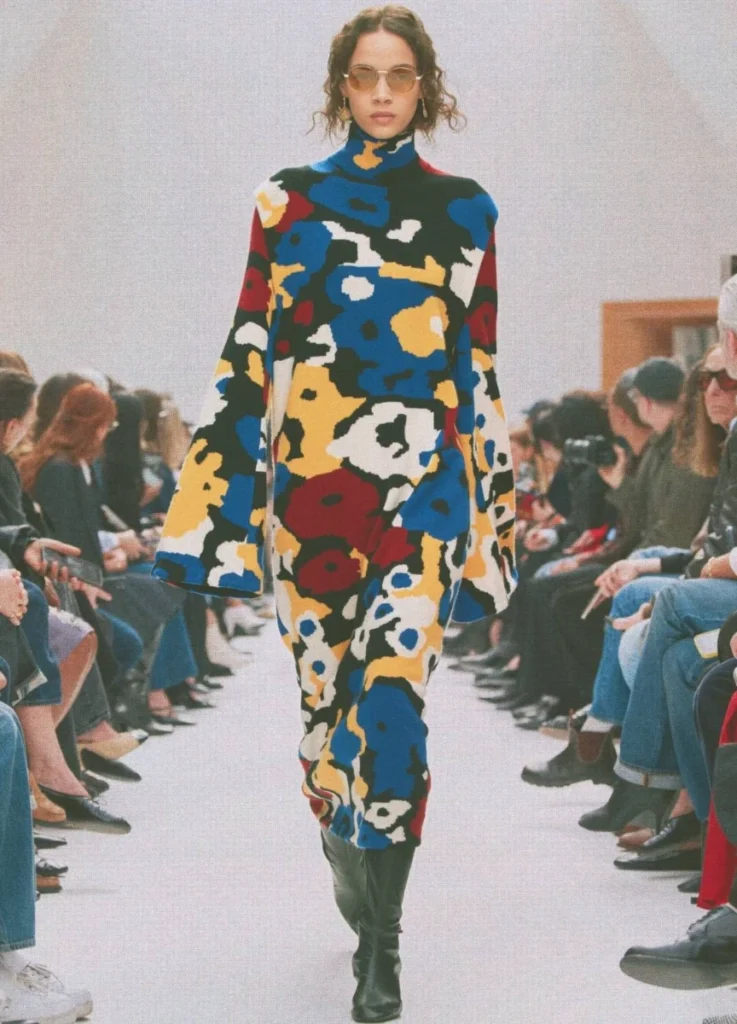
5. The Graphic Knit Dress
Toward the later part of the runway, patterned knit dresses expand the visual vocabulary of the collection. These looks introduce subtle graphic movement, offering a softer counterpoint to the rigid tailoring seen earlier.
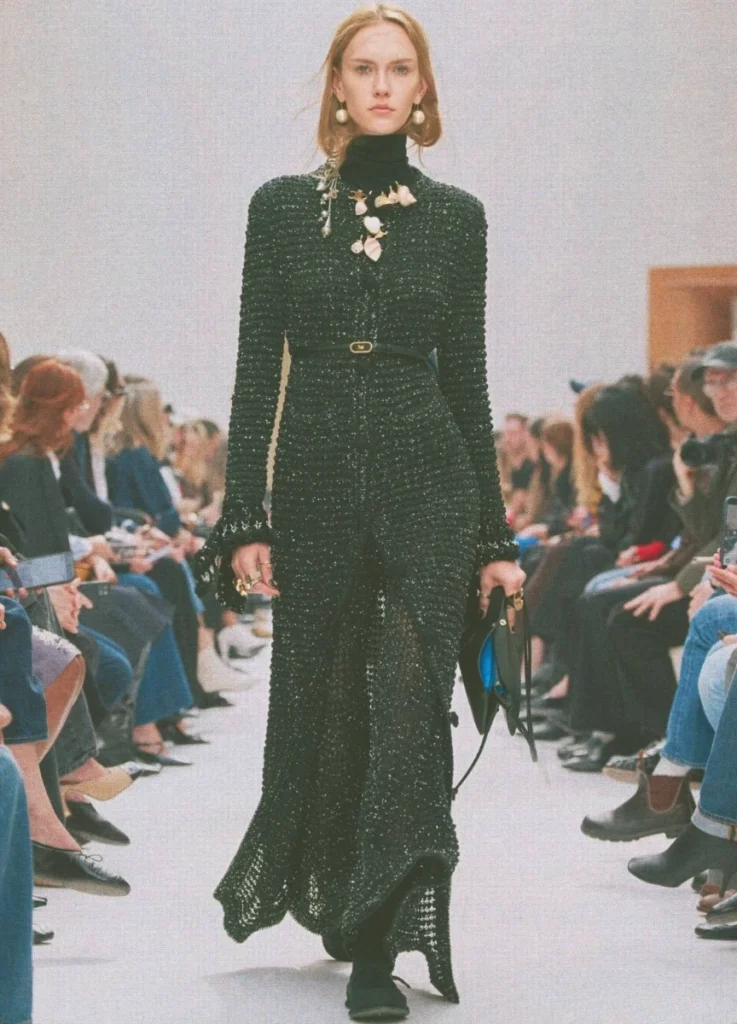
Industry Context | After Quiet Luxury
Over the past several seasons, the fashion industry has been shaped by the concept often described as “quiet luxury.” Runways across multiple houses emphasized minimalism, neutral colors, and restrained design.
Recent collections suggest the phase may be gradually evolving.
Many brands still maintain minimalist foundations, but they’re increasingly incorporating bolder elements — color, pattern, or styling gestures that introduce visual contrast.
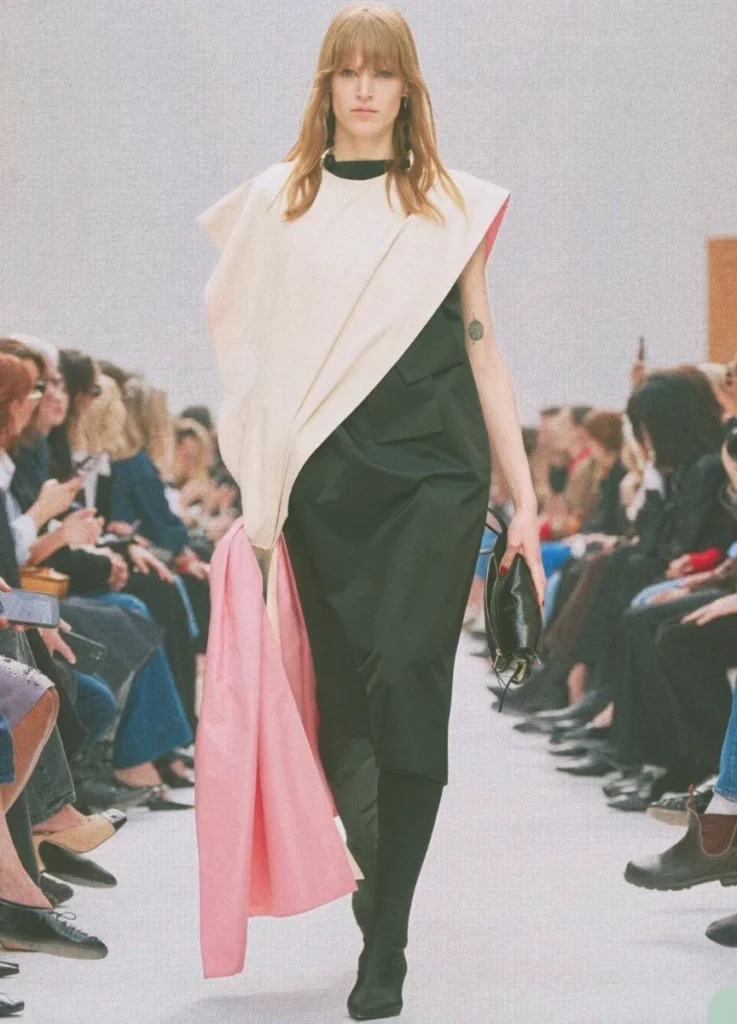
Celine Fall Winter 2026 sits precisely within this transitional moment.
The structural framework of the show remains minimalist and disciplined. The presence of red, leopard print, and exaggerated styling elements indicates a subtle shift, though.
The industry may be moving away from pure restraint toward a more nuanced balance between minimalism and expression.
Celine’s interpretation is characteristically controlled.
In the broader 2026 conversation, this places Celine alongside Chanel, Valentino, Chloé, and Balenciaga — five major houses each working through new creative direction this season. Blazy reassembles. Michele interferes. Kamali restores. Piccioli holds the line at Balenciaga. Rider, at Celine, consolidates. Each designer answers the same fundamental question through a different mechanism — what does an incoming designer owe to the house they inherit?
Final Assessment | Balance Above Statement
Celine Fall Winter 2026 doesn’t attempt dramatic reinvention. It functions as a recalibration of the house’s core language.
Precise coats, elongated silhouettes, and restrained colors reaffirm the brand’s longstanding commitment to disciplined tailoring. Carefully placed disruptions — through styling, color, or pattern — prevent the collection from becoming overly rigid.
The runway is defined by balance.
Classic French bourgeois elegance remains present, but it’s no longer perfectly composed. A small measure of disorder has been allowed to enter the system.
That may be what makes the collection feel contemporary.
The garments themselves remain controlled and exact.
The world around them is slightly unsettled.
All images referenced in this post are drawn from Vogue Runway.
[ Related Editorials ]