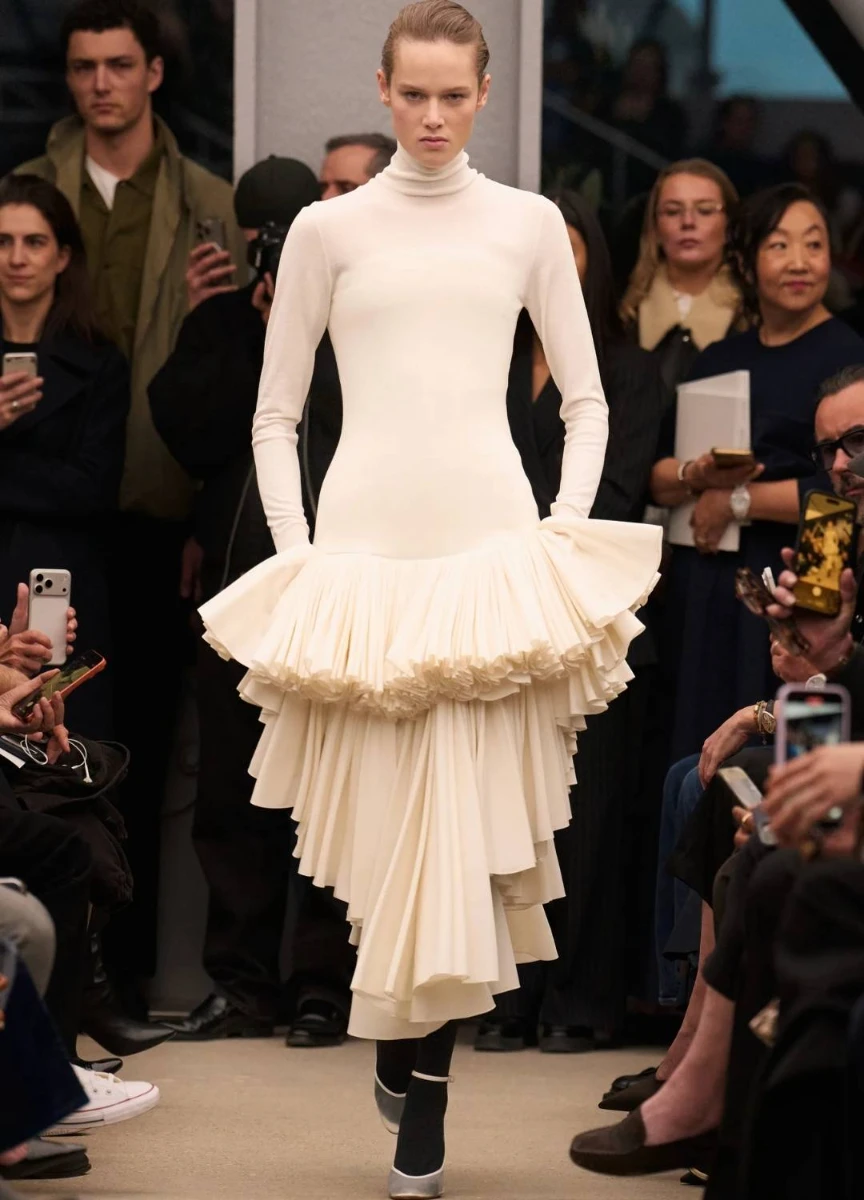
Inside Alaïa Fall/Winter 2026
This season leaned toward spectacle across most houses — dramatic staging, digital installations, oversized theatrical gestures. Alaïa Fall/Winter 2026 took the opposite path.
Pieter Mulier’s final collection for the house rejected visual excess. There were no elaborate set pieces, no technological distractions, almost no accessories on the runway.
The focus returns to something more fundamental: the clothes themselves.
Mulier explained the intention backstage with a single sentence:
“Clothes for real people, not clothes for an image.”
The collection holds that line with disciplined consistency. Every look emphasizes cut, proportion, and the relationship between fabric and body — the principles that defined Azzedine Alaïa’s own work.
Mulier could have staged a dramatic farewell. He chose a quieter exit, and a more meaningful one — a final demonstration of what Alaïa has always stood for.
Season Context | Mulier’s Last Chapter at Alaïa
Fall 2026 marks a particular moment for the industry. It is Pieter Mulier’s final season at Alaïa, before his widely reported move to Versace.
A grand finale was the obvious move — an emotionally charged show, retrospective references, archive callbacks layered through every look.
The runway felt almost deliberately restrained instead.
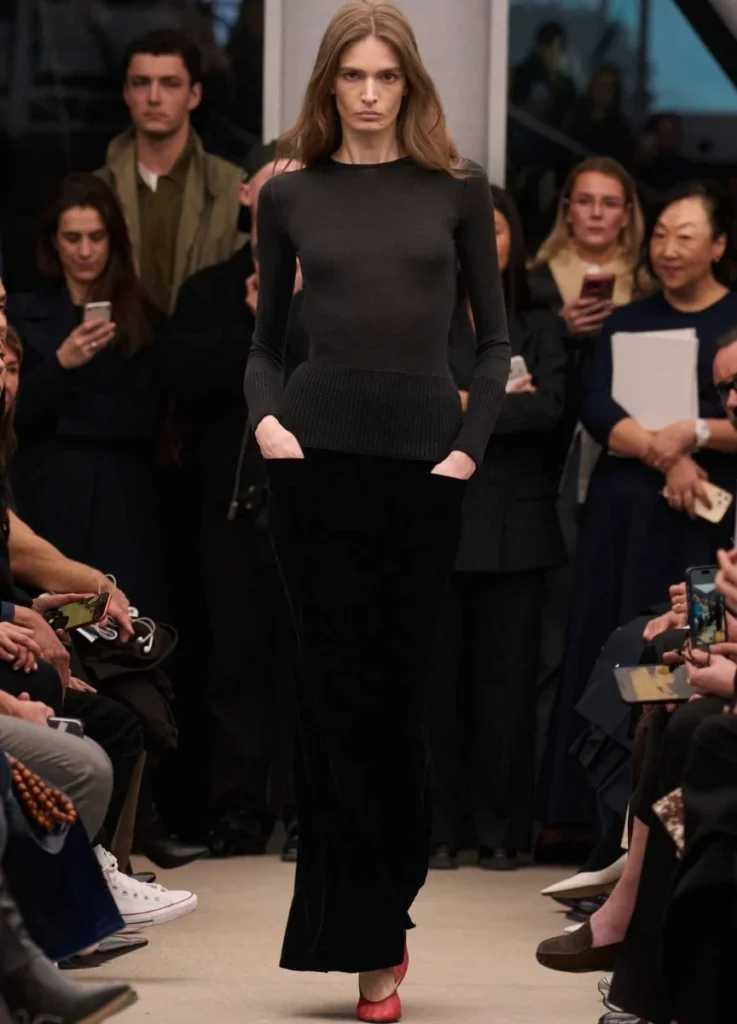
There were no handbags. No jewelry. Almost no styling intervention. The presentation stripped fashion down to its essential elements — silhouette, fabric, fit.
This decision aligns closely with Alaïa’s heritage. Azzedine Alaïa believed that real luxury lived in the precision of construction rather than in decoration. Clothing, in his view, existed in direct dialogue with the body.
Mulier’s final collection honors that principle without performing it.
Silhouette | The Architecture of the Body
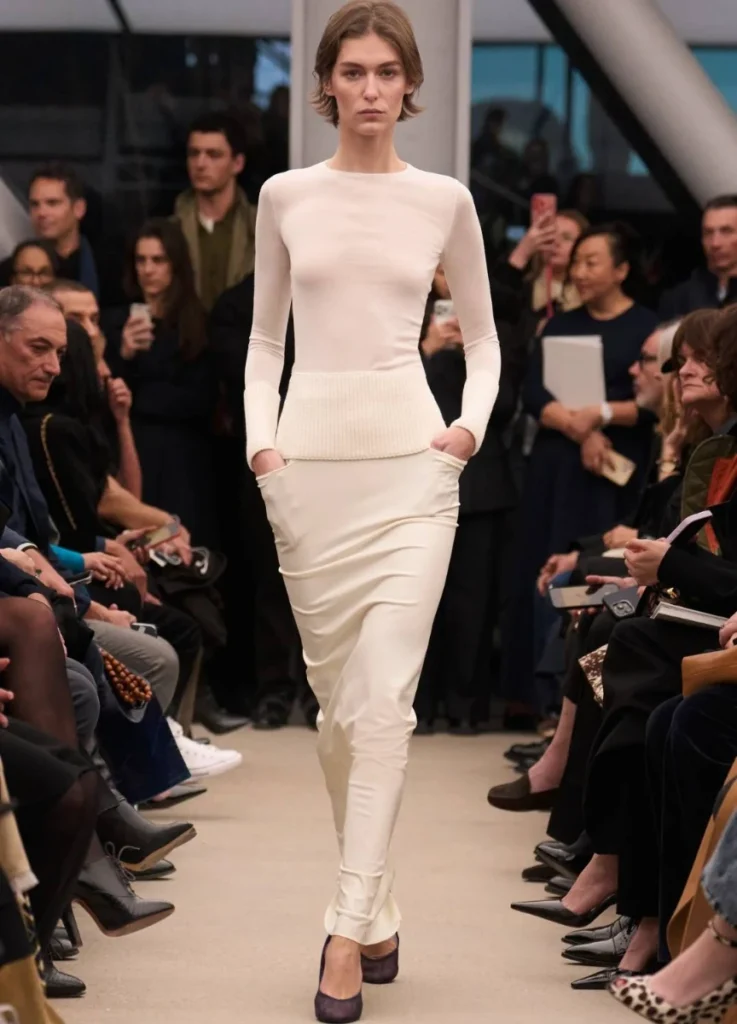
Alaïa has always been defined by its relationship to the human form.
The house’s tradition treats the body as the structural foundation of the garment, allowing clothes to follow natural curves rather than imposing geometry from outside. Form reveals architecture instead of concealing it.
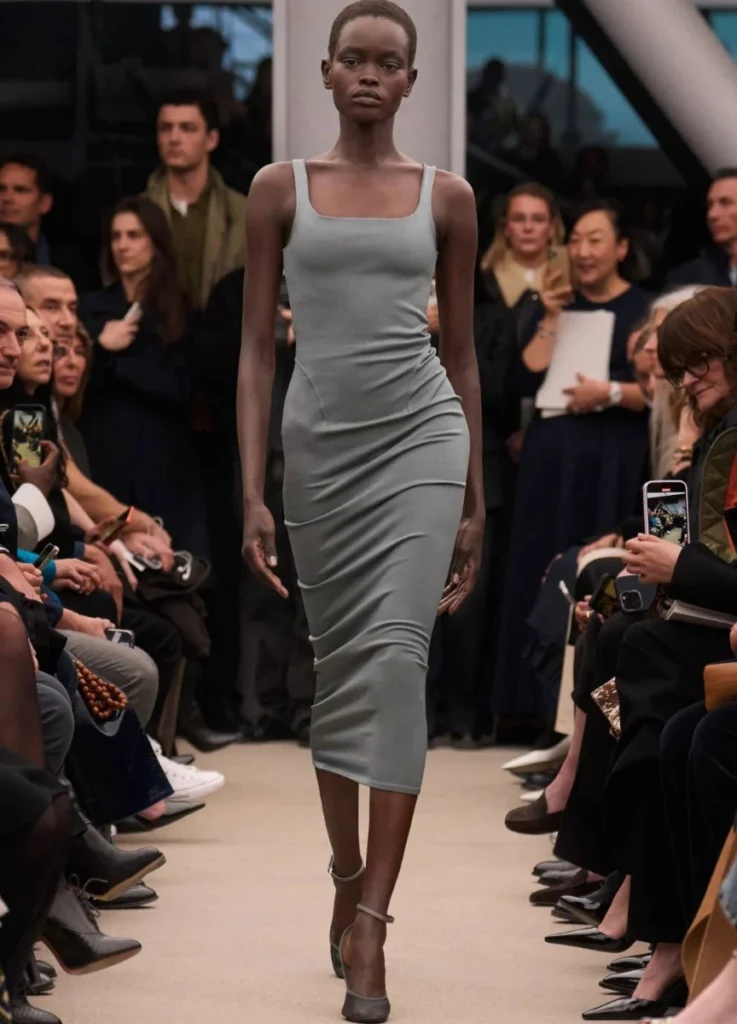
Fall 2026 carries this approach forward through a series of body-conscious silhouettes that read both controlled and fluid.
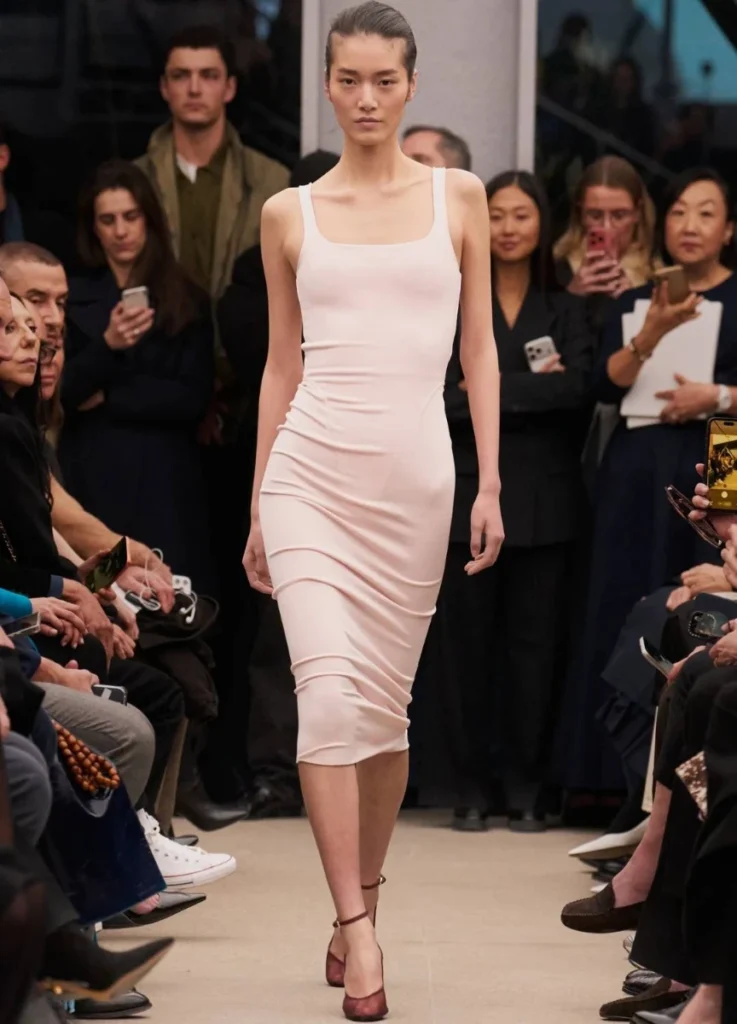
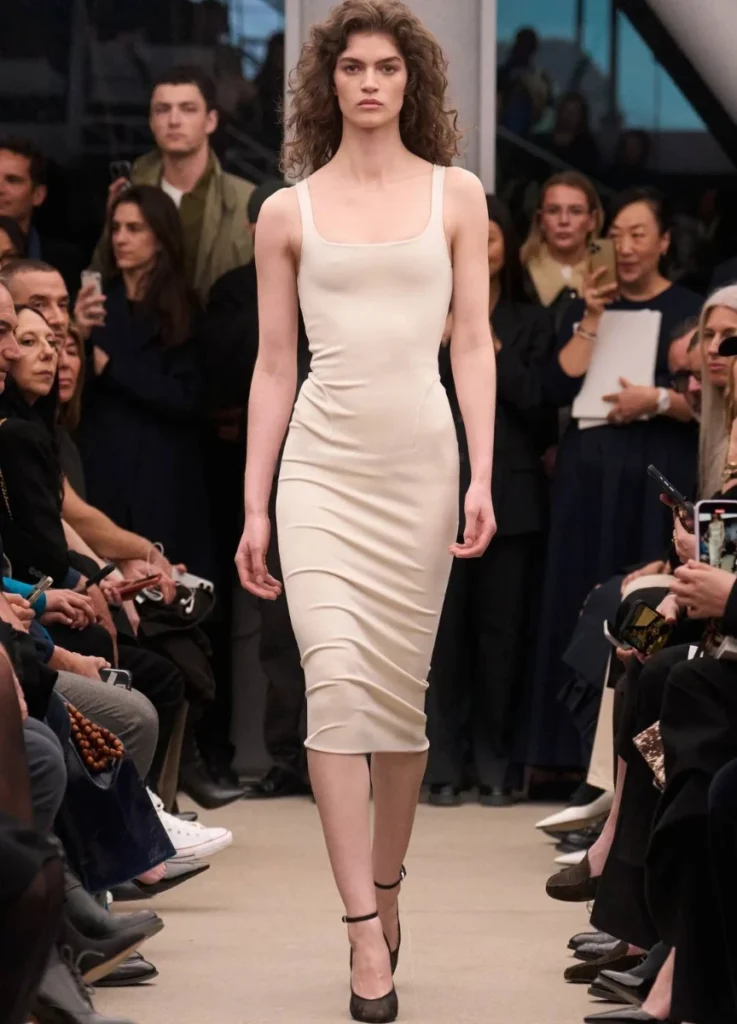
The opening sequence introduces several scoop-neck knit dresses engineered to trace the torso and hips with subtle precision. These pieces don’t rely on compression. They glide across the body, allowing movement while maintaining sculptural clarity.
Slim column dresses and softly draped jersey pieces extend the figure vertically. The total effect is less about overt sensuality than about architectural elegance.
In Alaïa’s grammar, the body isn’t merely dressed. It’s framed.
Materials and Construction | The Technical Language of Knitwear
Alaïa is read through its knitwear.
Throughout the house’s history, knit technology has served as both technical tool and aesthetic signature. This season carries that legacy through several carefully engineered materials:
- engineered jersey dresses
- knit flared skirts
- sculptural knit tops
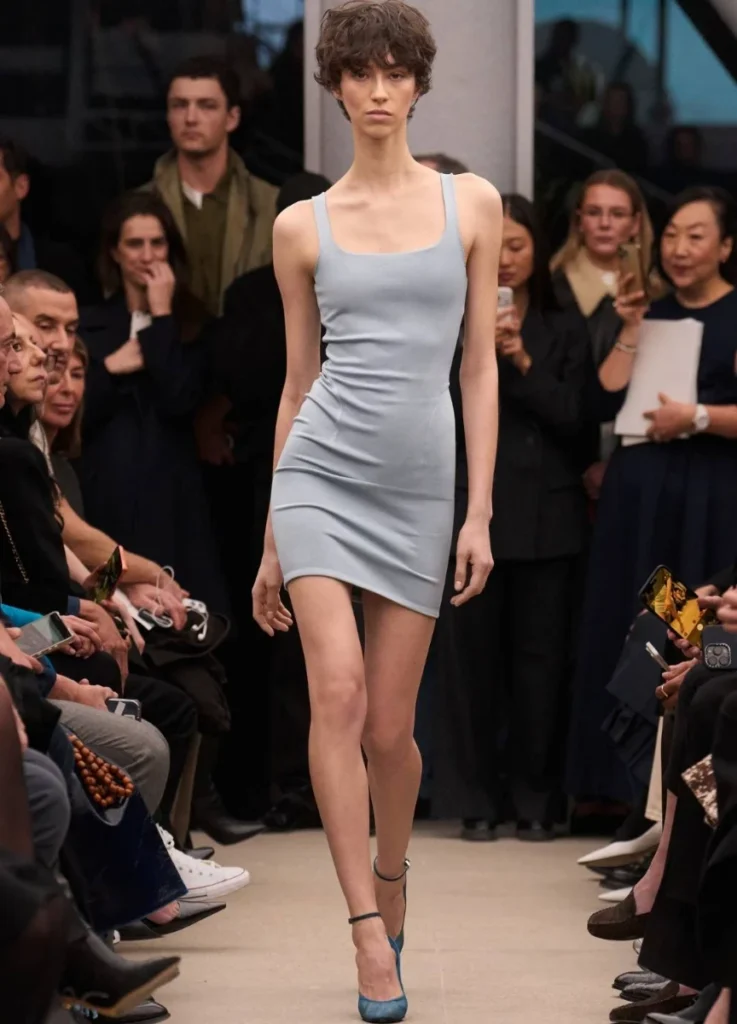
The opening sequence introduces several scoop-neck knit dresses engineered to trace the torso and hips with subtle precision. These pieces don’t rely on compression. They glide across the body, allowing movement while maintaining sculptural clarity.
Slim column dresses and softly draped jersey pieces extend the figure vertically. The total effect is less about overt sensuality than about architectural elegance.
In Alaïa’s grammar, the body isn’t merely dressed. It’s framed.
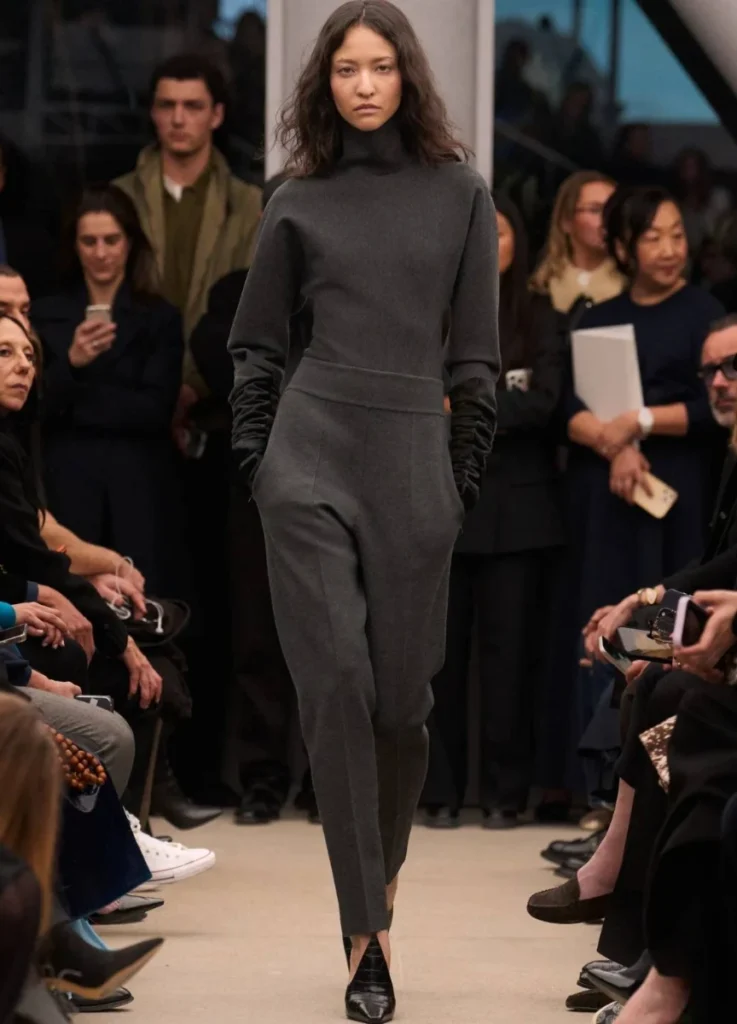
Materials and Construction | The Technical Language of Knitwear
Alaïa is read through its knitwear.
Throughout the house’s history, knit technology has served as both technical tool and aesthetic signature. This season carries that legacy through several carefully engineered materials:
- engineered jersey dresses
- knit flared skirts
- sculptural knit tops
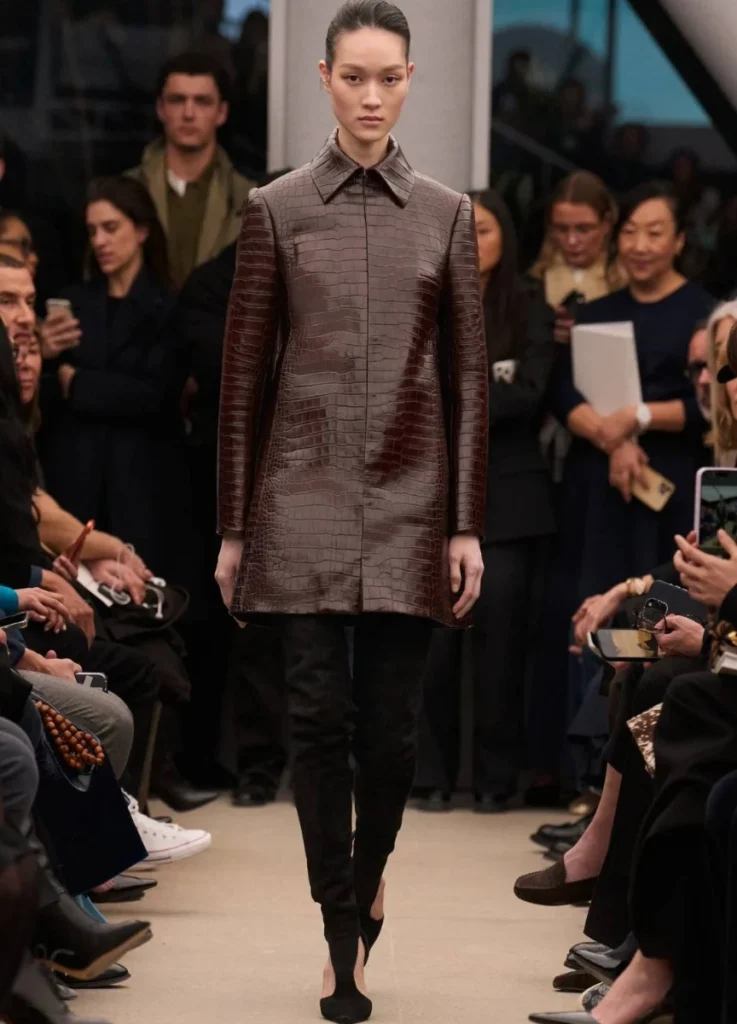
Knit fabric usually suggests softness and casual wear. In Alaïa’s hands, knit becomes structural material instead. The garments cling precisely where they should and release where movement requires it. The balance between flexibility and form remains one of the most distinctive technical achievements in modern fashion.
Comfort and architectural precision coexist in the same garment. Few houses can claim that combination. Alaïa has held it as a core competency for decades.
Tailoring | Quiet Precision
Knitwear forms the backbone of the collection. Tailoring carries equal weight.
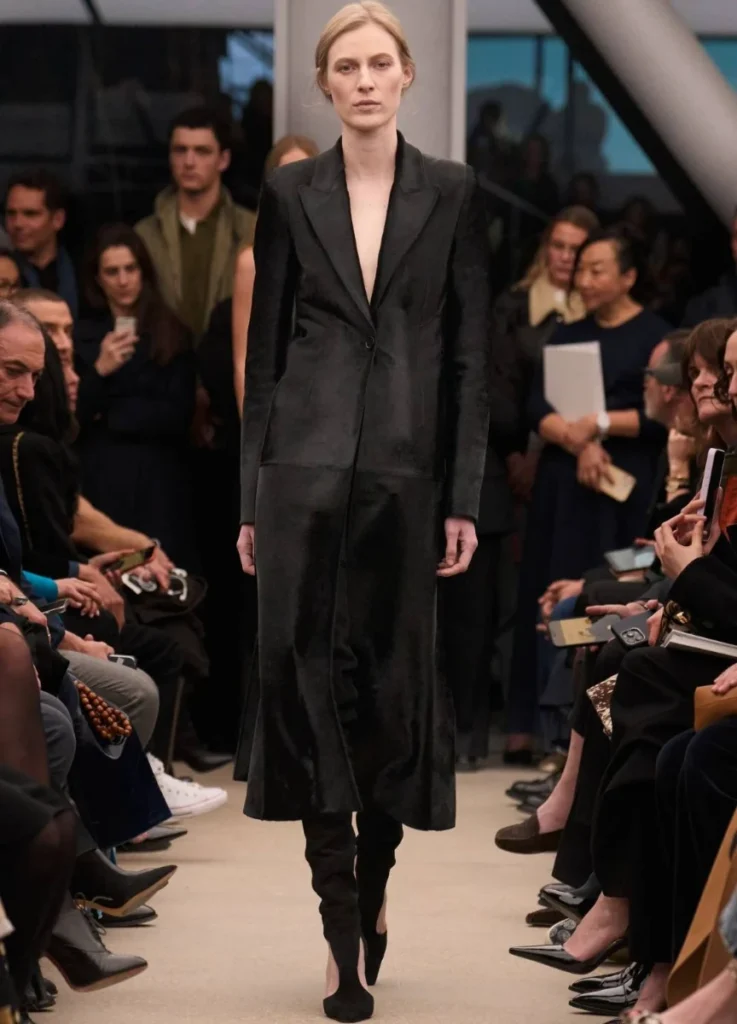
Several pieces introduce a sharper architectural language to the runway:
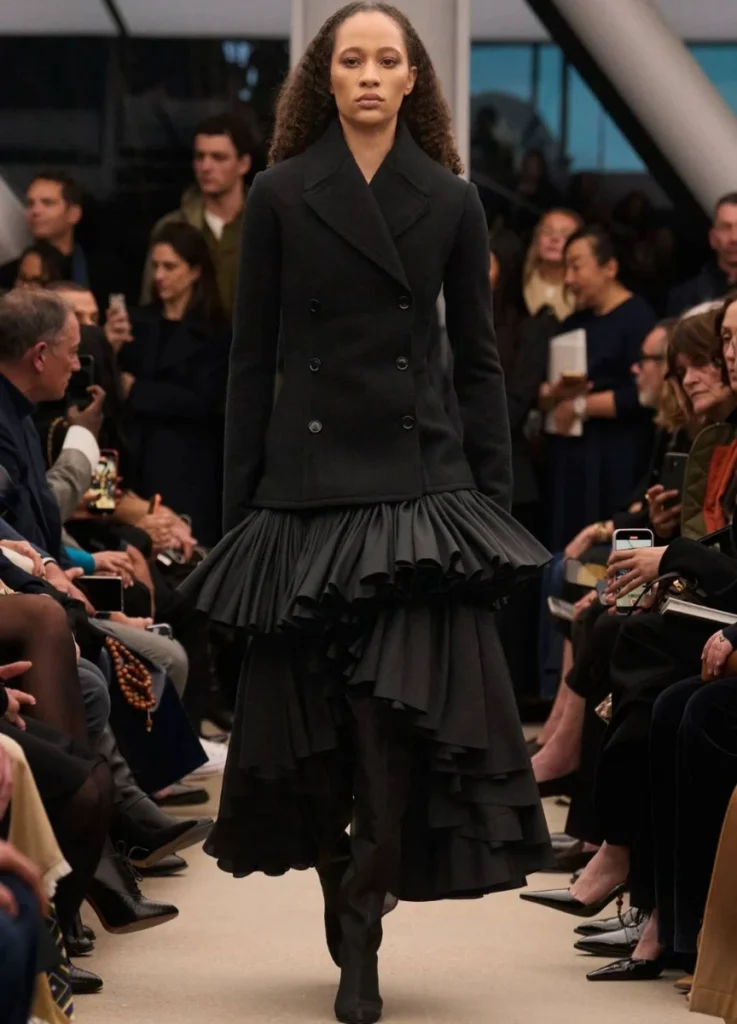
- double-breasted coats
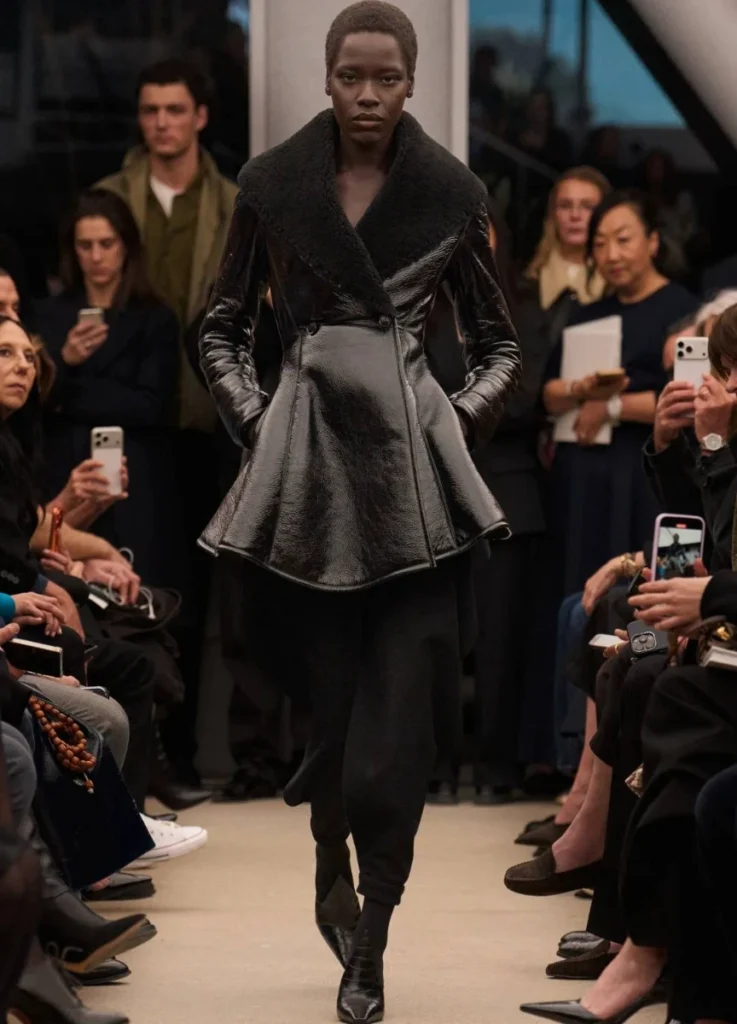
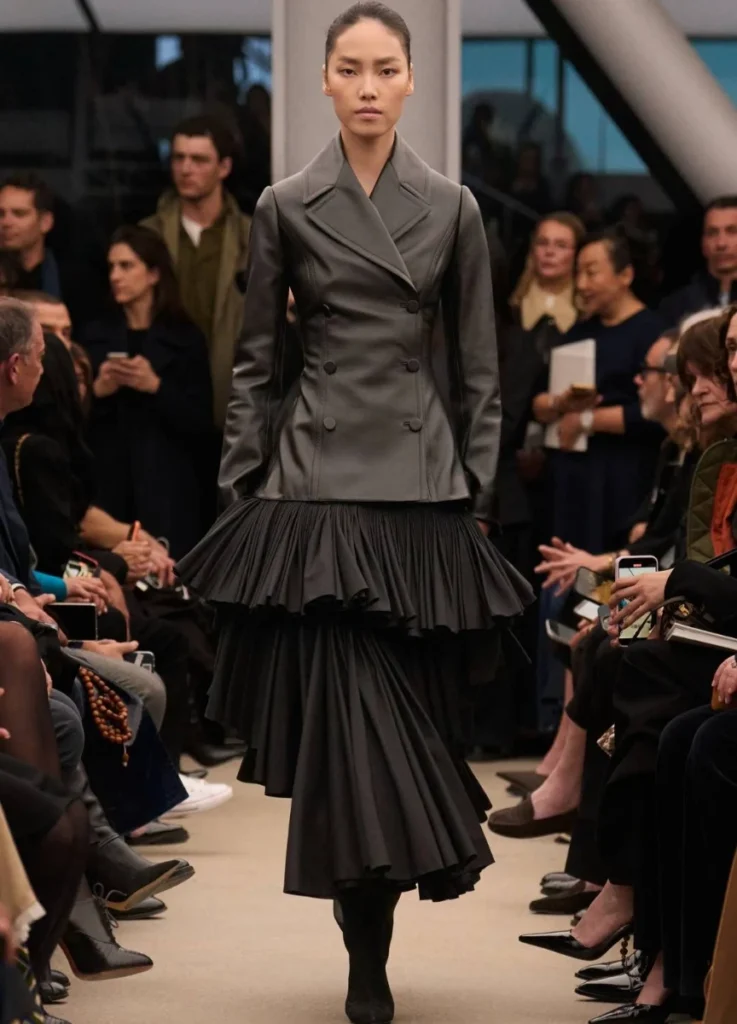
- leather blazers
- slim-cut trousers
These garments avoid overt decoration. The impact comes from perfectly calibrated proportions.
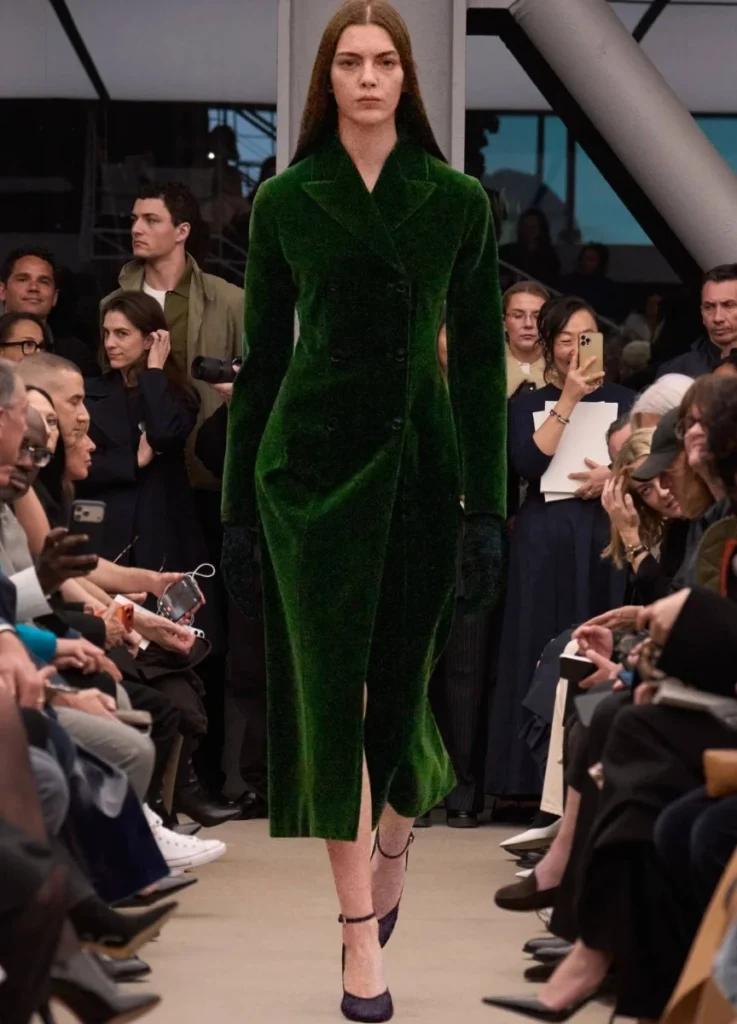
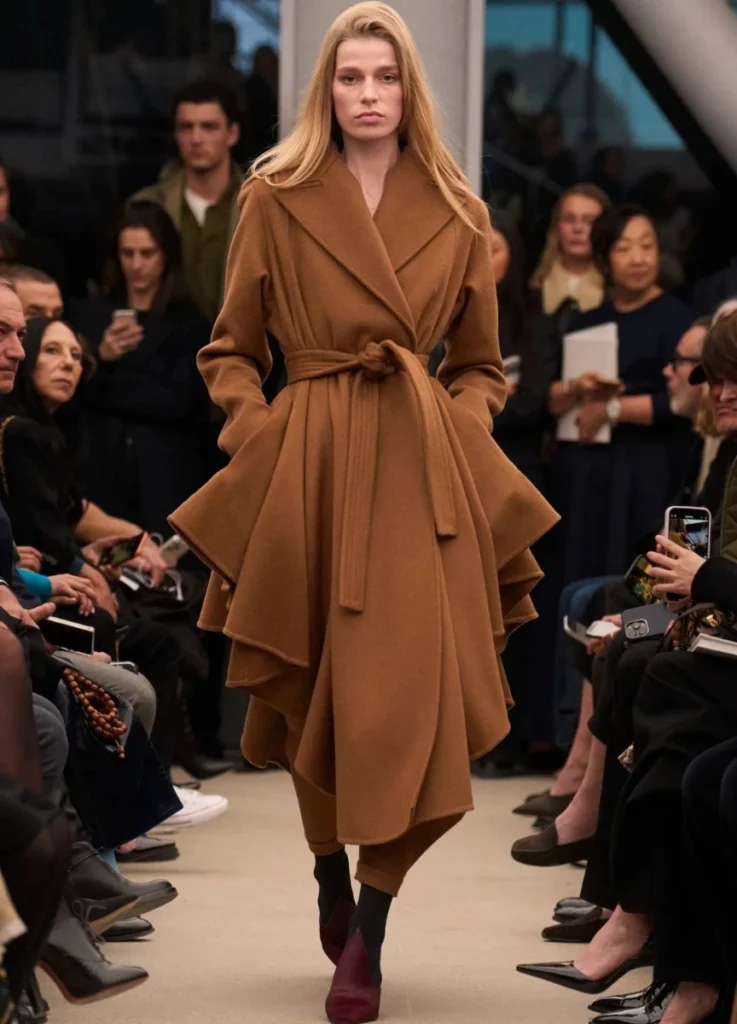
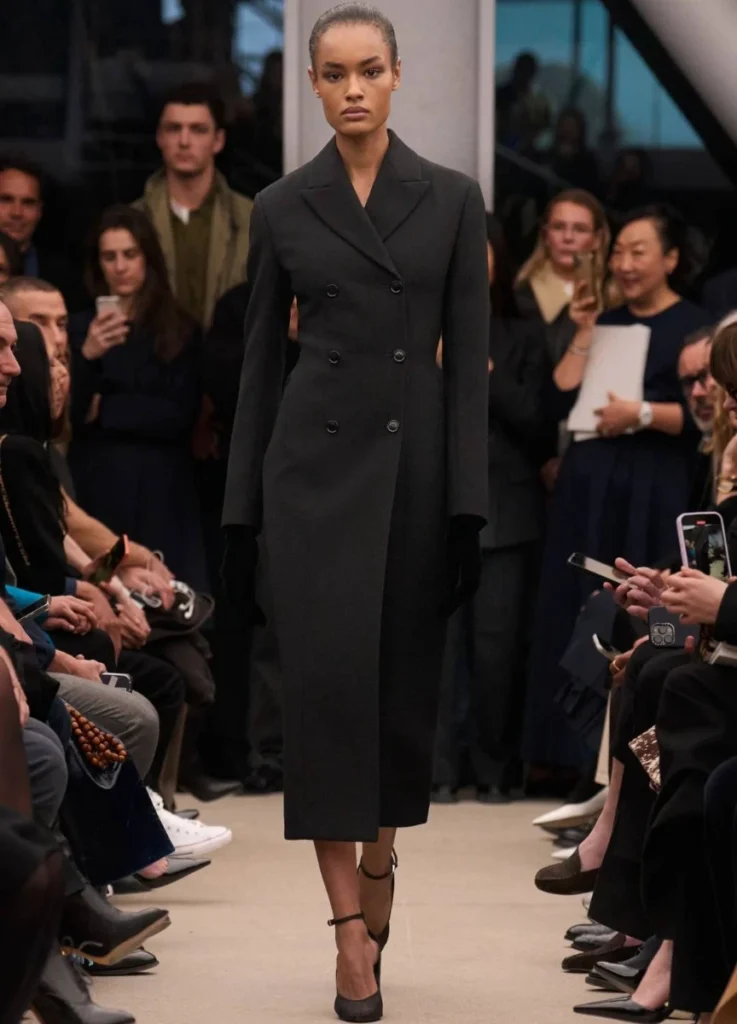
The coats are particularly notable. They emphasize the waist while maintaining long, uninterrupted lines through the body. The result is an elegant vertical silhouette that feels refined rather than dramatic.
These pieces demonstrate a philosophy contemporary fashion often overlooks — precision can be more powerful than spectacle. When the cut is right, decoration becomes redundant.
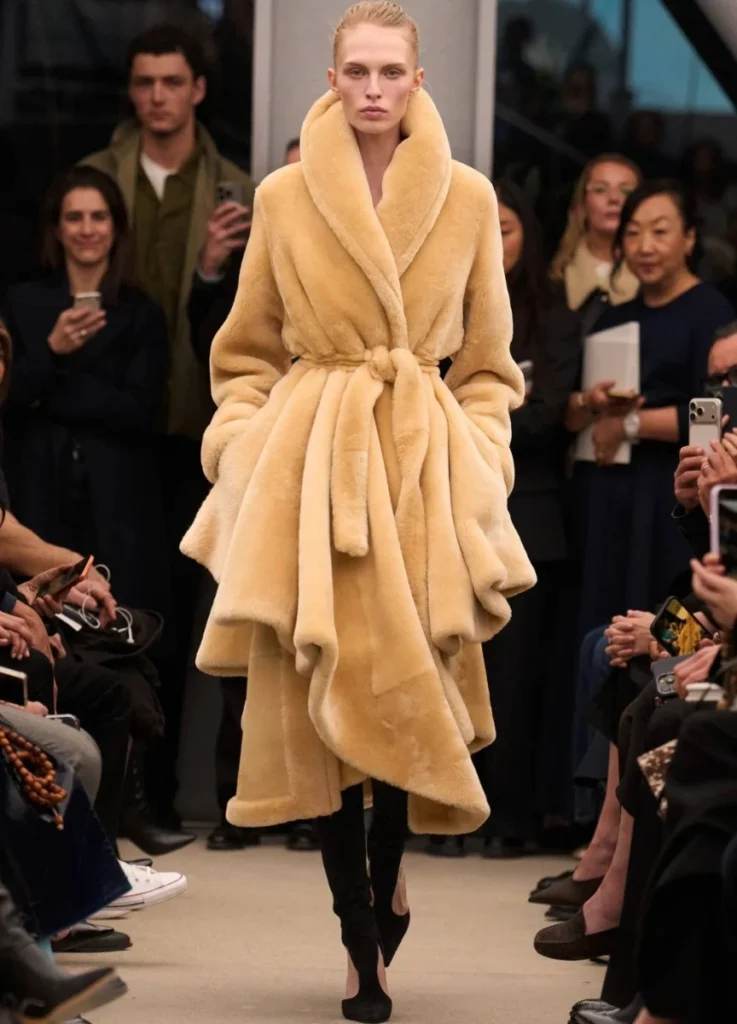
Color Strategy | A Disciplined Palette
The collection’s color palette stays restrained.
Dominant shades:
- black
- cream
- beige
- dark green
- burgundy
- red
There are few prints and almost no graphic elements. Most garments appear in solid tones, allowing attention to remain on silhouette and fabric structure.
Without the distraction of patterns or excessive embellishment, the garments reveal their technical construction more directly.
Five Key Looks
Several pieces define the collection.
1. Scoop-Neck Dress
The most recognizable Alaïa silhouette. The dress follows the body’s curves with remarkable subtlety.
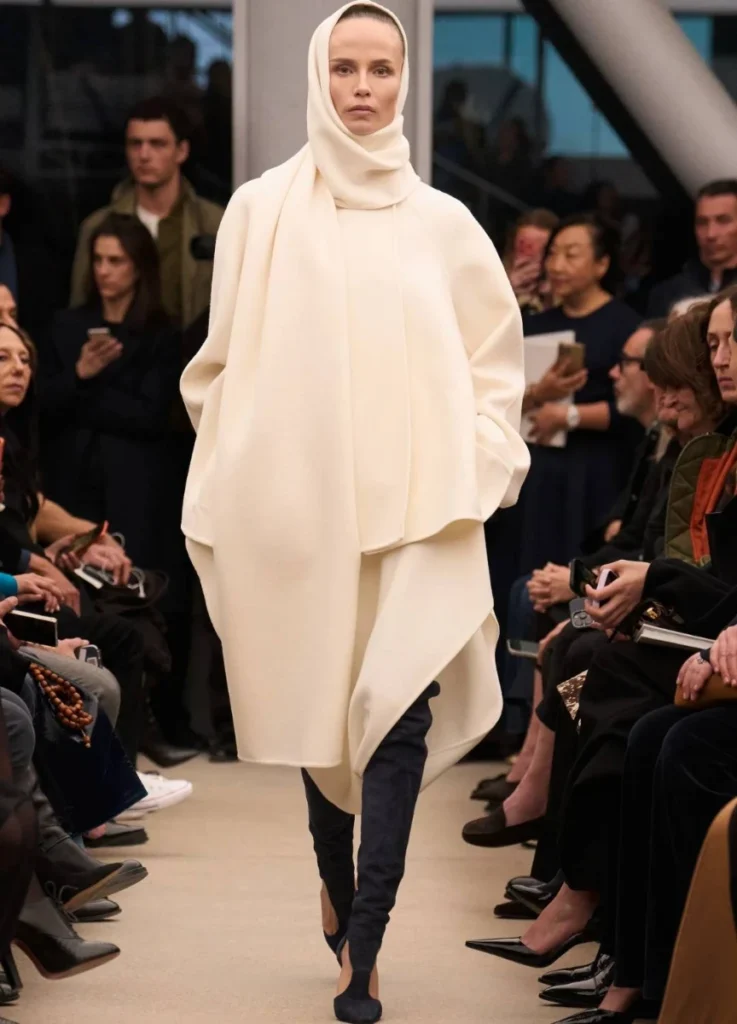
2. Double-Breasted Coat
A sculptural coat with a sharply defined waistline. The piece reads as the cleanest expression of the house’s tailoring expertise this season.
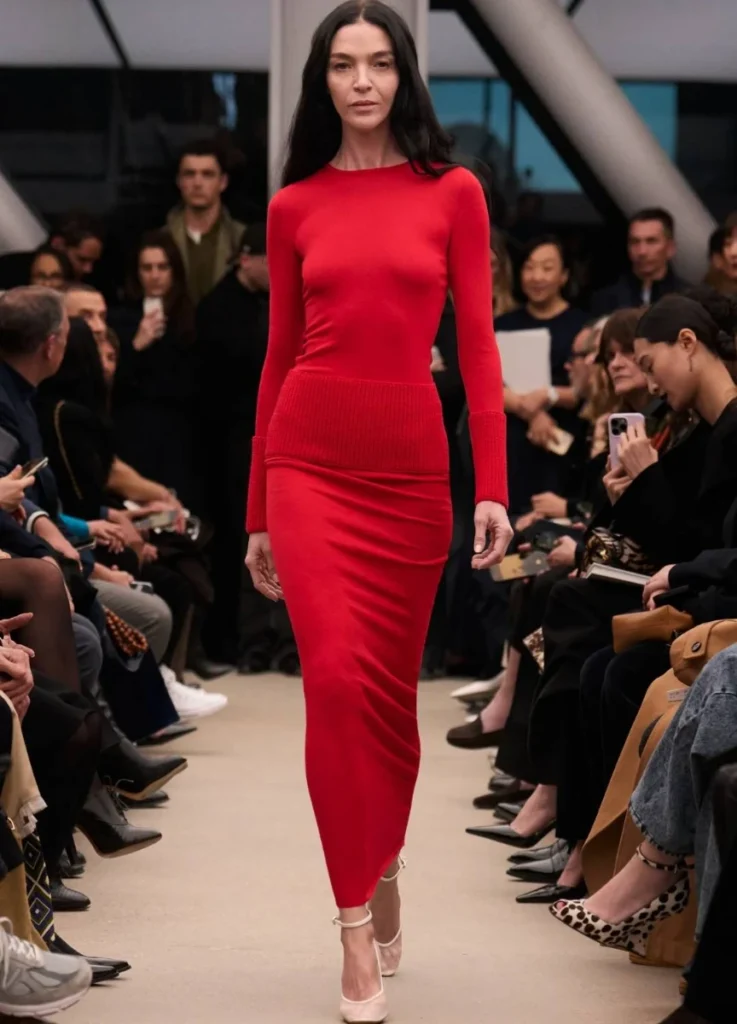
3. Red Body Dress
The collection’s most visually striking moment. Color and silhouette work together as a single statement.
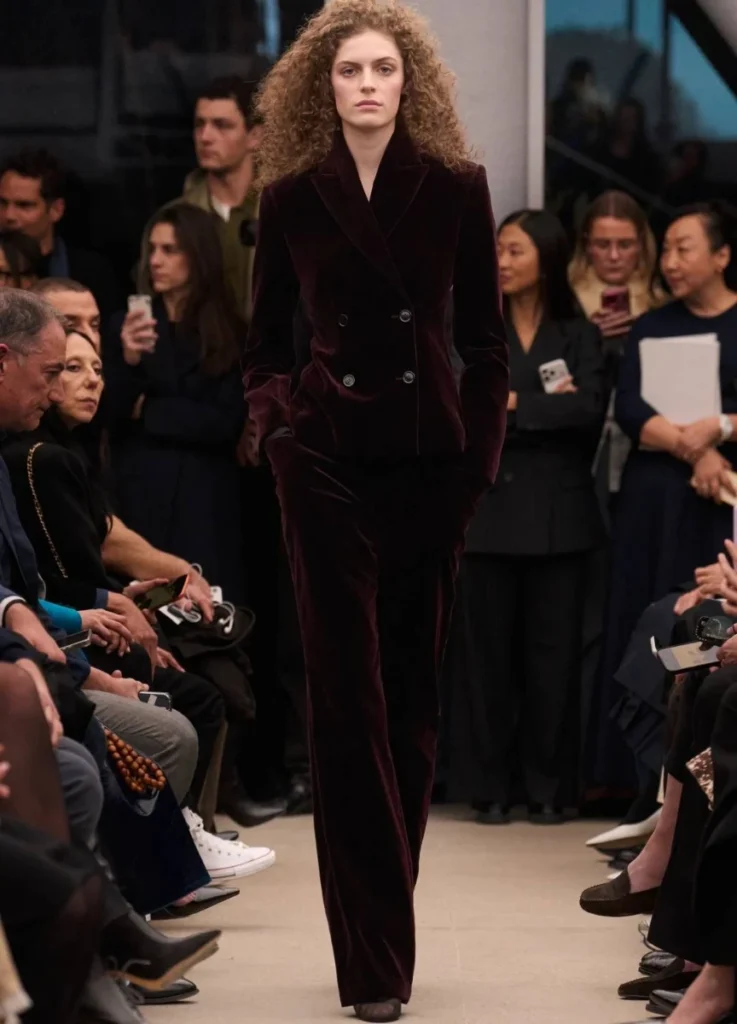
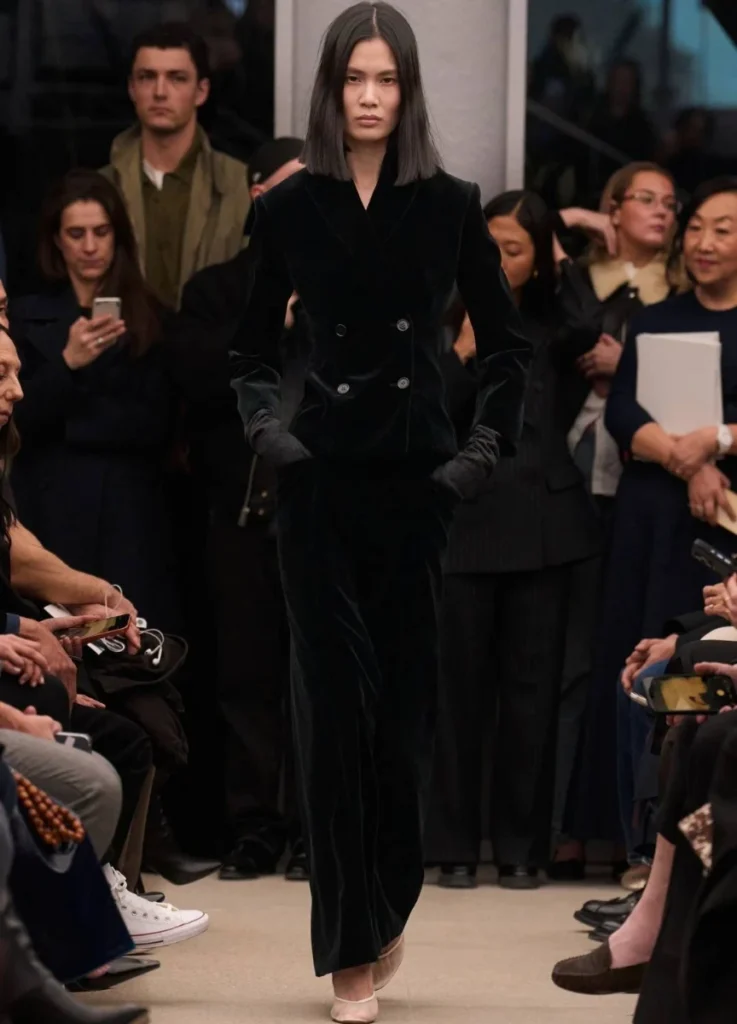
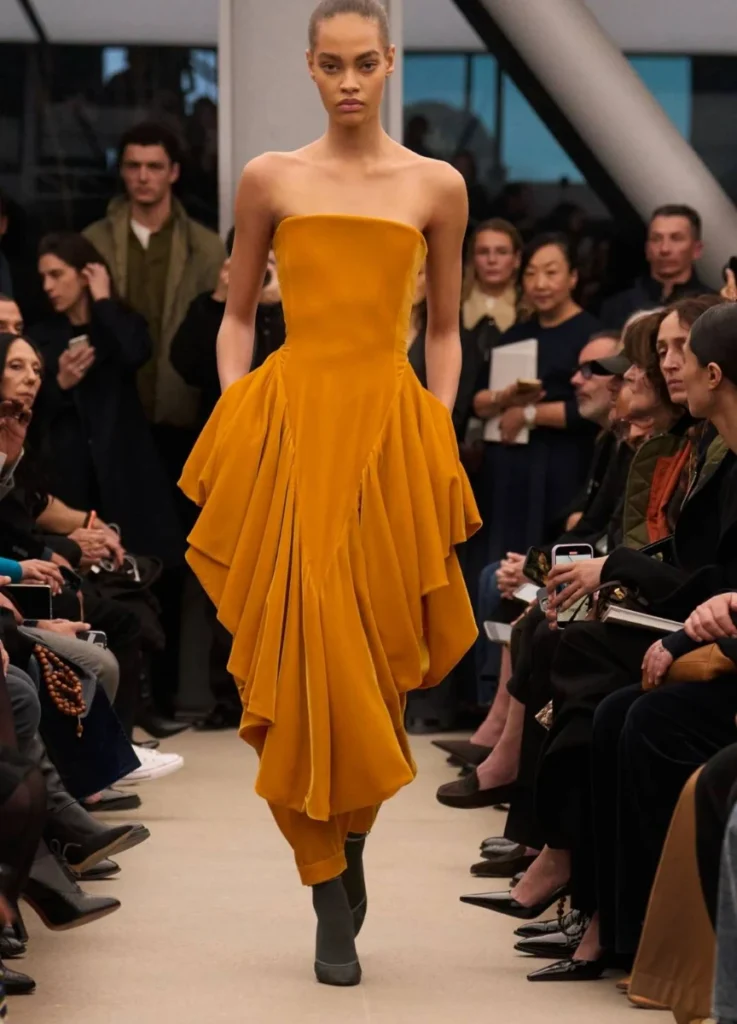
4. Velvet Trouser Suit
A quietly luxurious interpretation of tailoring. Softness and structure hold each other in balance.
5. Knit Flared Dress
A technically complex garment showing how knitwear can produce architectural volume rather than the casual ease the material usually implies.
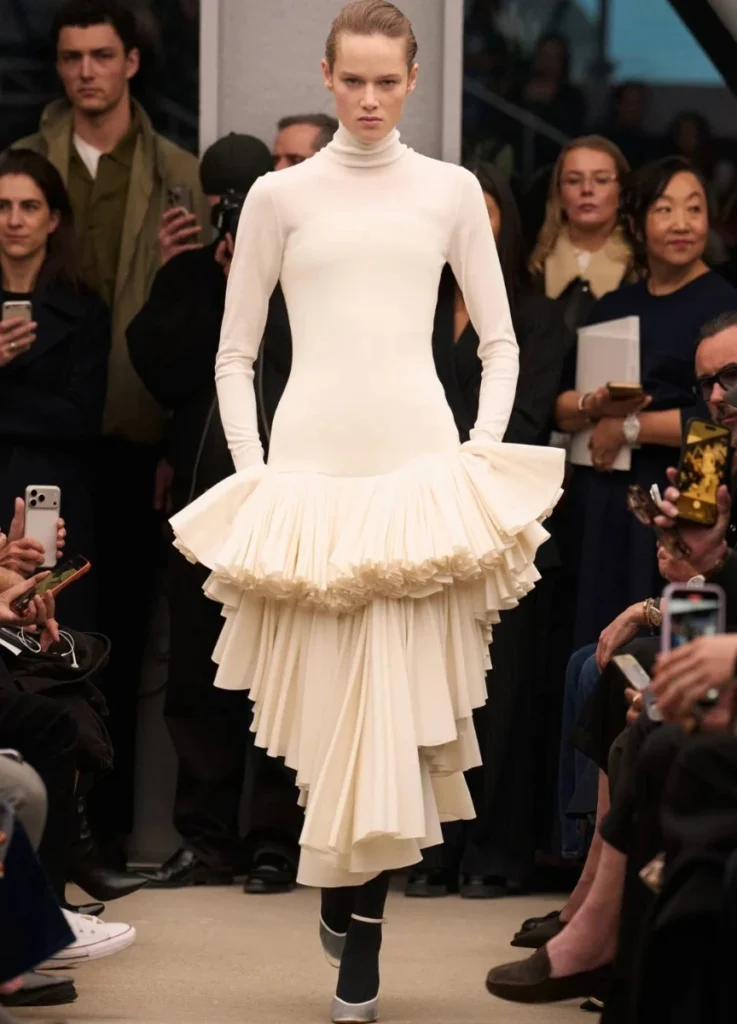
Together, these looks articulate the collection’s dual language — sculptural knitwear paired with restrained tailoring.
Retail Perspective | Wearable Luxury
The collection’s commercial viability is clear.
Unlike many runway shows designed primarily for editorial impact, Alaïa Fall 2026 contains numerous pieces that translate directly into retail.
Likely commercial winners:
- knit dresses
- structured coats
- leather blazers
- slim trousers
Alaïa’s clientele has historically favored craftsmanship and fit over logos or visible branding. The understated character of this collection aligns precisely with that audience’s expectations.
Luxury, here, is defined by construction rather than visibility. The customer who carries an Alaïa knit dress isn’t buying a logo or a silhouette of the season. They’re buying the cut.
Body Proportion Analysis | The Body Alaïa Assumes
The garments assume a particular body structure.
The silhouettes flatter:
- defined waistlines
- balanced hip proportions
- naturally curved silhouettes
Because many of the knit dresses reveal the body’s shape directly, the wearer’s natural structure becomes part of the garment’s final appearance. The body and the garment construct the silhouette together.
This reflects the house’s longstanding philosophy. Clothing shouldn’t disguise the body. It should enhance the body’s architecture.
Industry Response | “Quiet Perfectionism”
Critical reception has remained consistent.
Many fashion editors described the show as an exercise in quiet perfectionism. Without elaborate staging or theatrical gestures, the garments were presented in close proximity to the audience, allowing viewers to examine details of construction and fit.
That proximity reinforced the collection’s confidence. Without distraction, craftsmanship carries the show.
In this case, it did.
What Is Real Luxury?
One remark from Mulier during the show captured the spirit of the collection.
“Real luxury isn’t expensive fabric.
Real luxury is the perfect cut.”
That statement runs through the runway.
It also echoes the philosophy of Azzedine Alaïa himself, who held that a garment’s true value lived in the way it interacted with the body. Mulier’s final words at the house return Alaïa to its founder’s first principle.
Final Assessment
Alaïa Fall/Winter 2026 doesn’t try to shock or reinvent the house.
It returns to something more fundamental.
The most radical gesture in fashion isn’t excess. It’s restraint. When decoration disappears and spectacle fades, what remains is the relationship between fabric and form.
A precise garment. A moving body. The quiet confidence of clothes that don’t need to shout.
That has always been Alaïa’s idea of luxury. Mulier’s last collection at the house ends exactly where Azzedine Alaïa started — and that’s the most fitting farewell the brand could have received.
All images referenced in this post are drawn from Vogue Runway.
[ Related Editorials ]