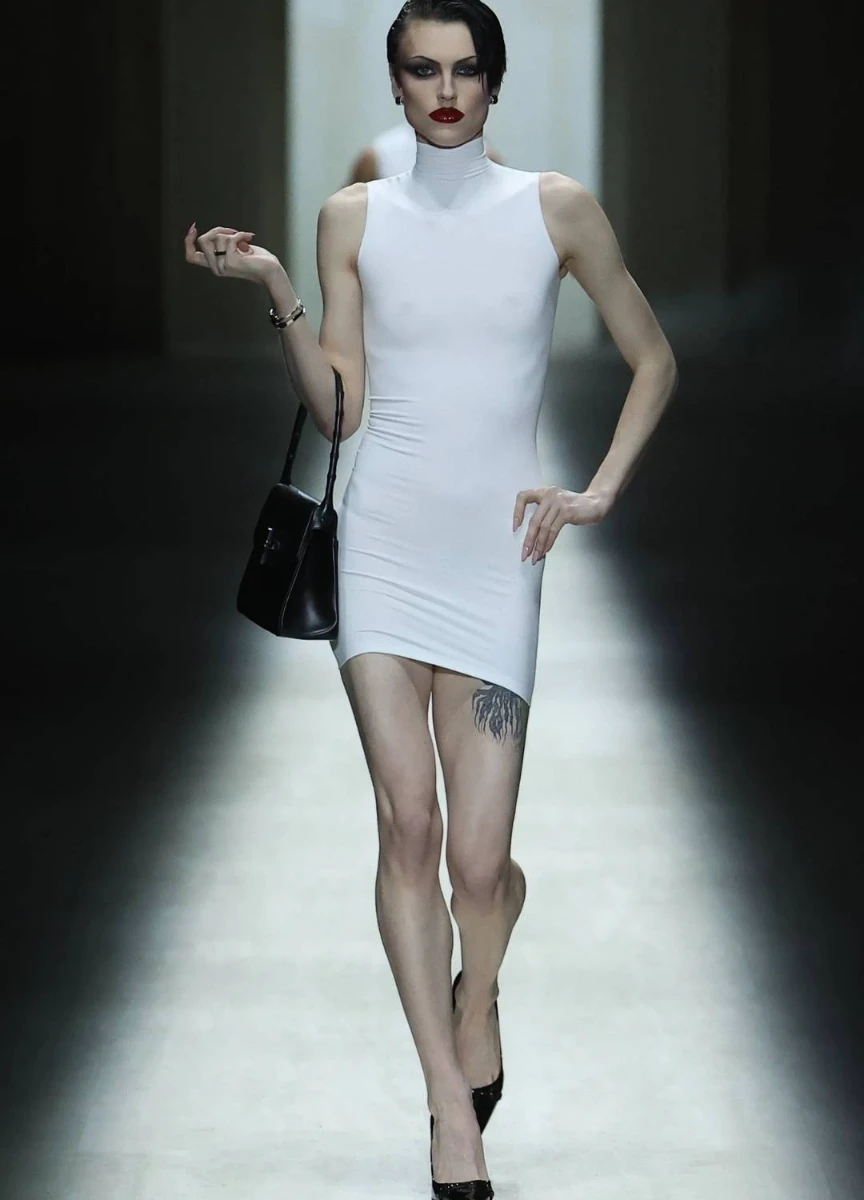
Inside Gucci Fall/Winter 2026
Gucci Fall/Winter 2026 isn’t another seasonal runway.
It’s a strategic inflection point.
Following several years of declining momentum after the height of Alessandro Michele’s maximalist era, the brand moved into a transitional phase. The romantic eclecticism that once energized Gucci’s global growth eventually produced saturation.
The broader luxury market shifted toward so-called Quiet Luxury — minimal branding, subdued palettes, understated tailoring. Gucci’s ornate aesthetic began to feel excessive to a new wave of consumers.
Demna’s Fall/Winter 2026 collection — titled Primavera, and his first physical runway for the house following the lookbook-only La Famiglia debut six months earlier — addresses that tension directly.
This wasn’t merely a design statement. It was a business recalibration.
Brand Context | From Maximalism to Market Correction
During the Michele era, Gucci achieved extraordinary commercial success by embracing maximalist ornamentation, vintage references, and narrative layering. The strategy created strong emotional attachment and cult loyalty.
Luxury market dynamics evolved:
- consumers increasingly favored investment dressing
- logo fatigue began to surface
- discretion gained aspirational value
Gucci’s challenge wasn’t creative irrelevance. It was image dilution.
Demna’s response wasn’t to follow Quiet Luxury. It was to reinterpret Gucci’s own historical power code.
The 1990s Reference | Nostalgia or Strategic Recall?
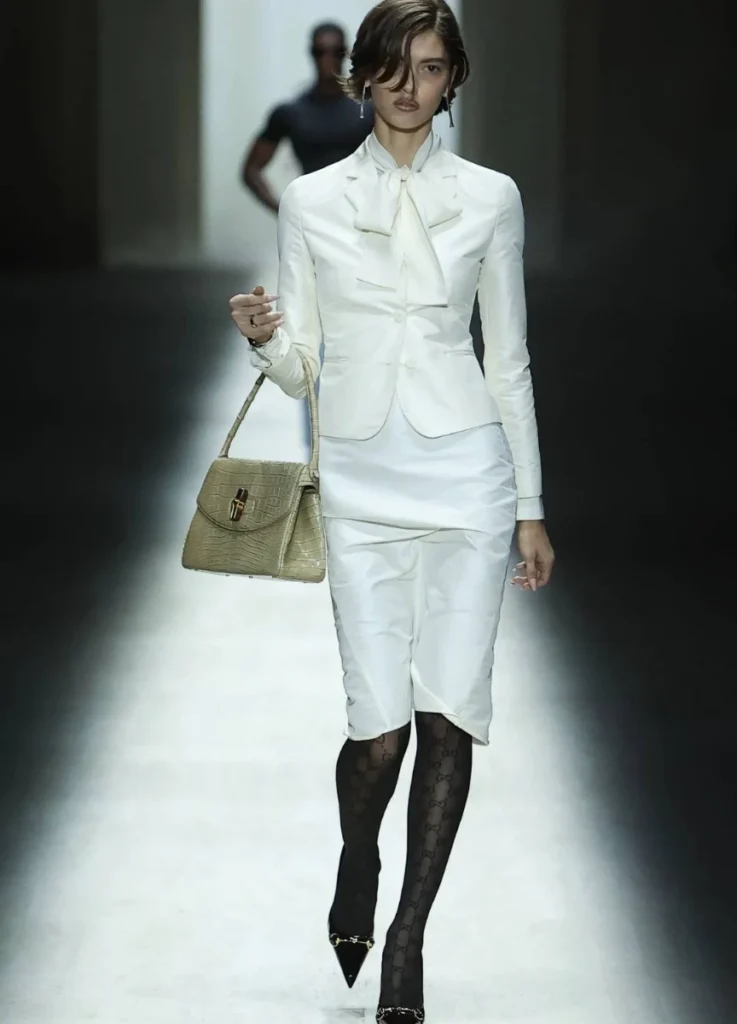
The most immediate visual reference was the late 1990s Tom Ford era.
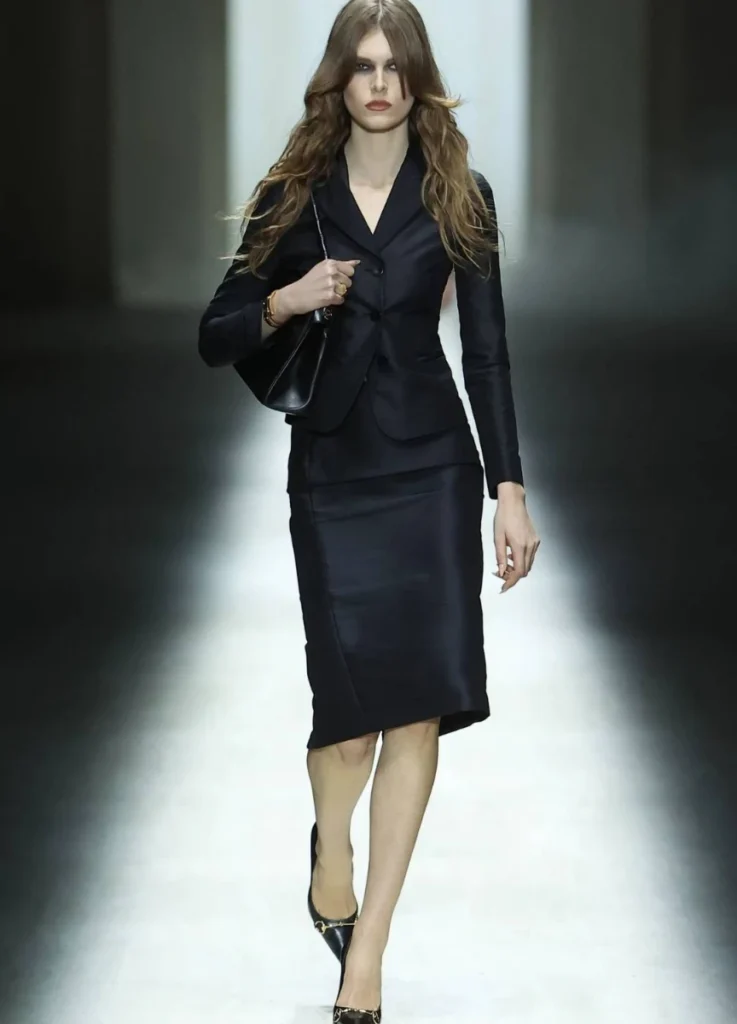
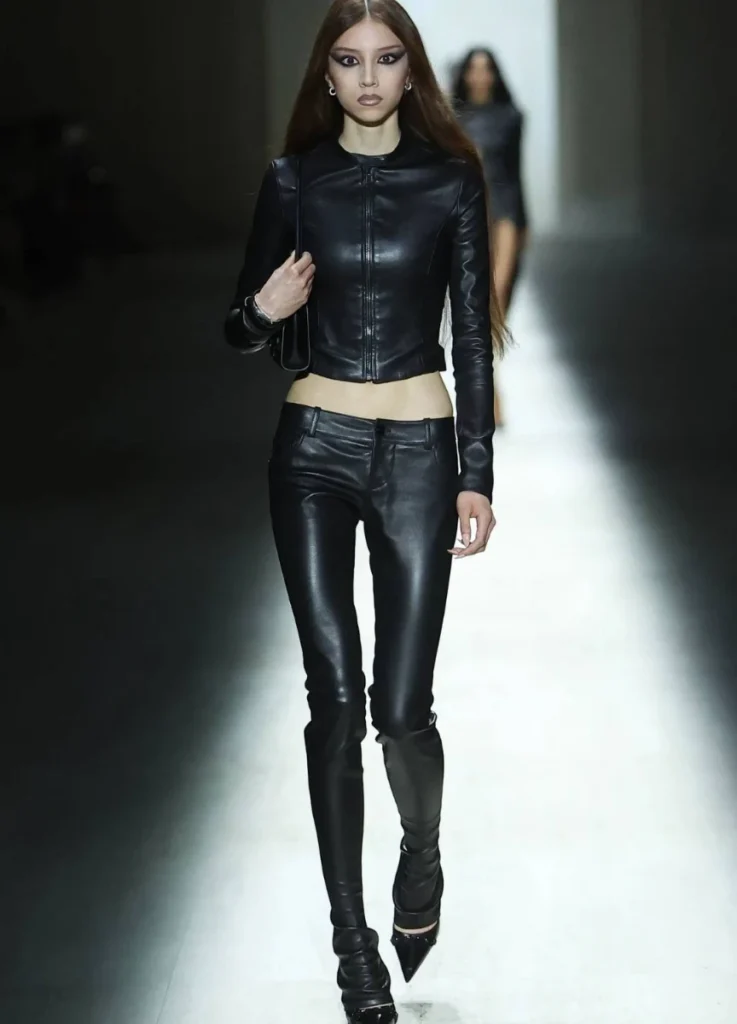
- slim tailoring
- deep-cut shirts
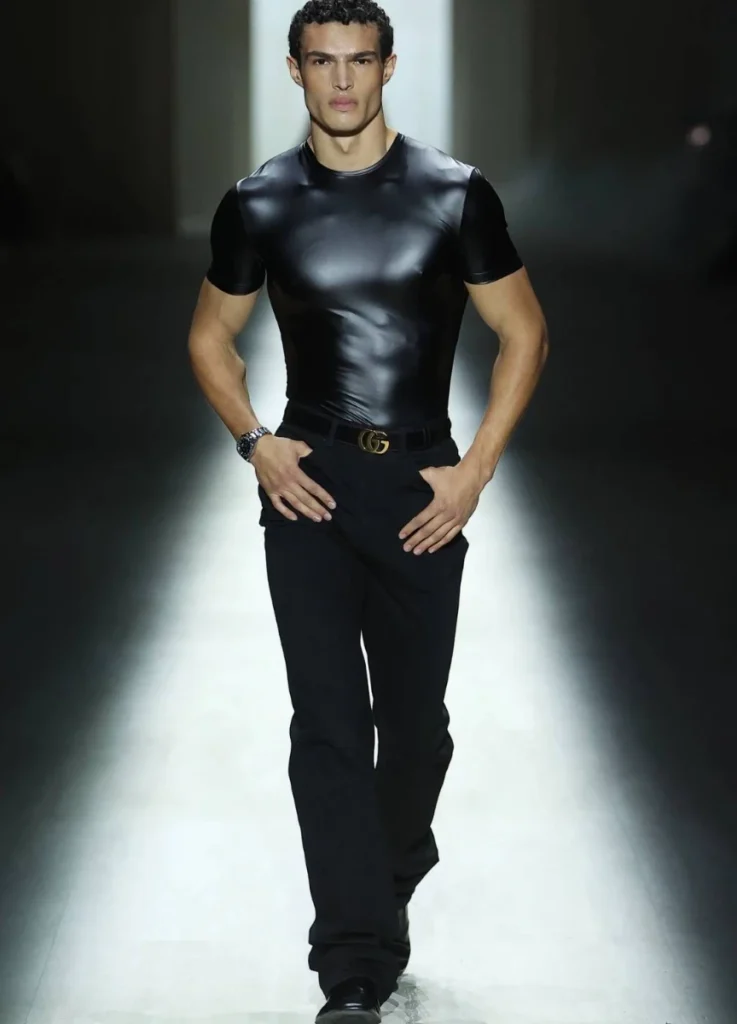
- glossy leather
- low-rise silhouettes
- body-skimming evening dresses
This is not simple nostalgia. It carries a strategic layer.
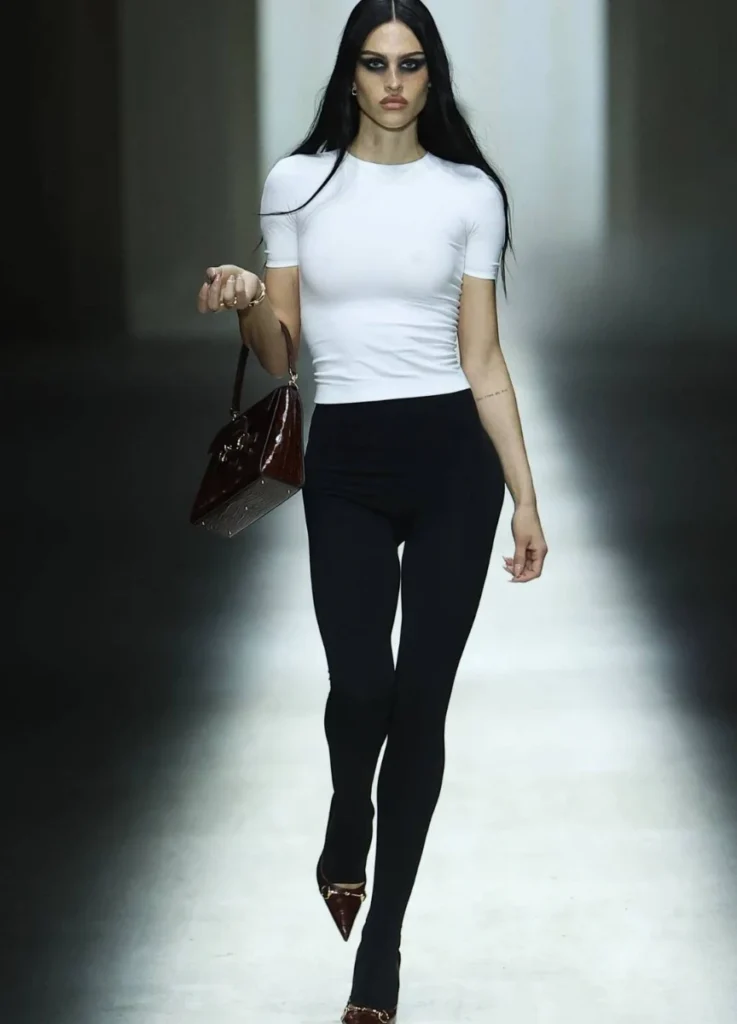
Demna isn’t recreating Tom Ford’s Gucci for aesthetic homage. He’s reactivating the formula that once delivered commercial clarity.
The 1990s marked Gucci’s explosive global expansion. The brand combined sexuality with authority — creating a direct, unmistakable image in the luxury marketplace.
The collection pursues three objectives:
- reactivate heritage memory
- reinforce high-margin categories (leather, eveningwear, accessories)
- present a sharper global brand image
This is structural recall, not sentimental revival.
Demna at Balenciaga vs Demna at Gucci
The most revealing aspect of the collection is what’s missing.
At Balenciaga, Demna built a creative language around irony, deconstruction, and conceptual disruption — oversized silhouettes, intentional distortion, IKEA bags presented as luxury, hoodies treated as couture. The work was intellectually rigorous and culturally provocative. It was rarely body-clarifying.
By his second Gucci collection, that language has been deliberately set aside.
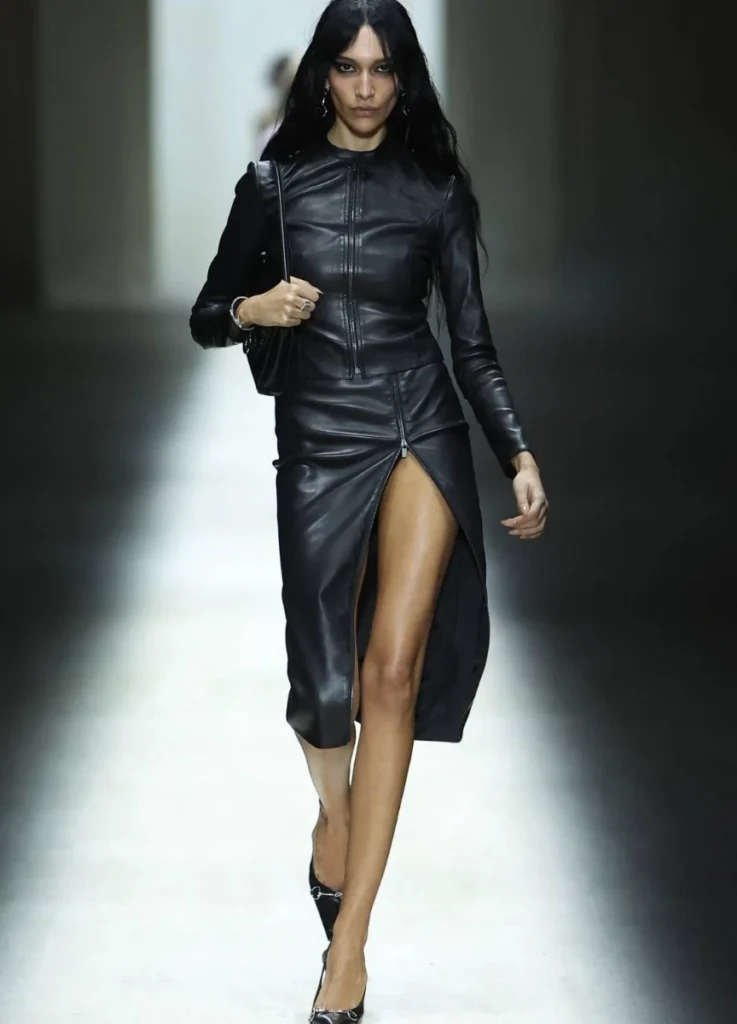
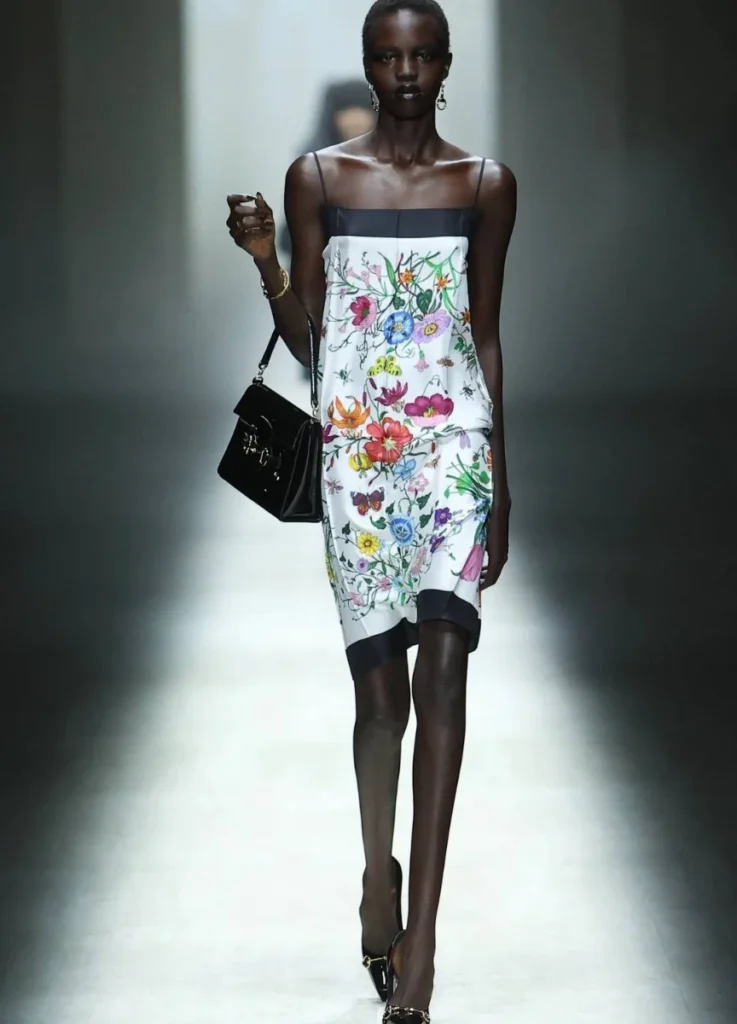
The lines are direct. The body is defined. There’s no irony in the leather suits. No deconstruction in the slip dresses. No distortion in the tailoring. Demna is choosing precision over disruption.
This isn’t a softening of his sensibility. It’s a recognition that Gucci needs different tools than Balenciaga did.
Balenciaga, when Demna arrived, was a sleeping luxury house that needed cultural reactivation. Conceptual provocation worked. Gucci, in 2026, doesn’t need provocation. It needs sharpening. The brand had nine years of narrative density under Michele. What it needed wasn’t more story. It needed clarity.
Demna read that correctly.
Material Strategy | Leather as Authority
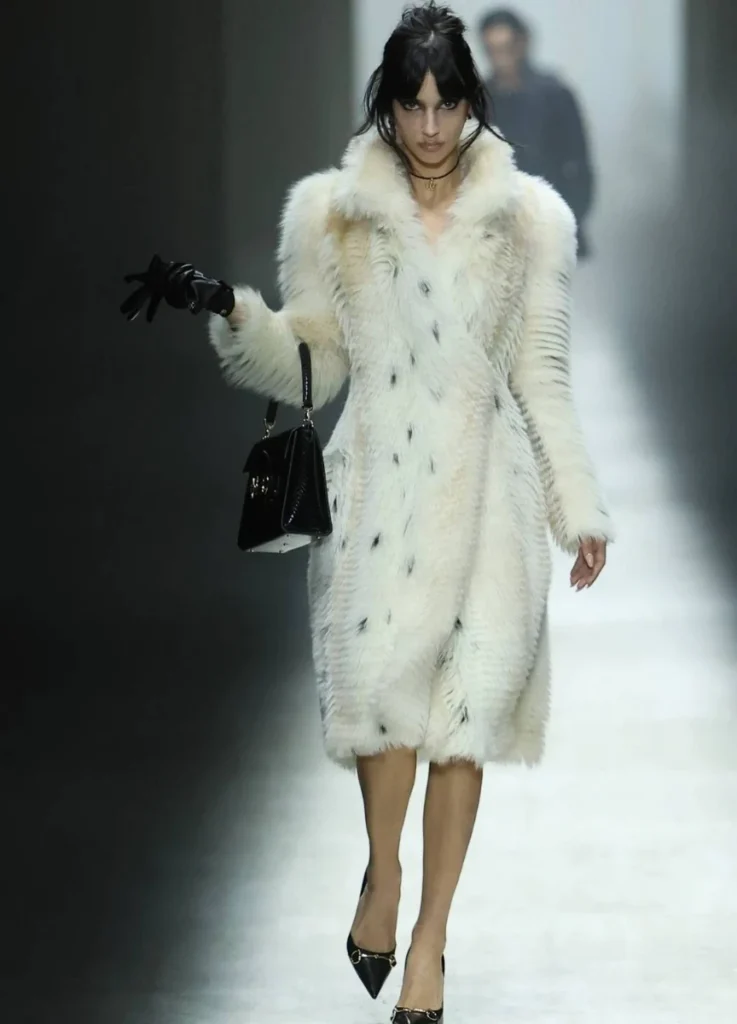
Leather dominates the collection.
- slim leather jackets
- gloss-finished leather suits
- long leather coats
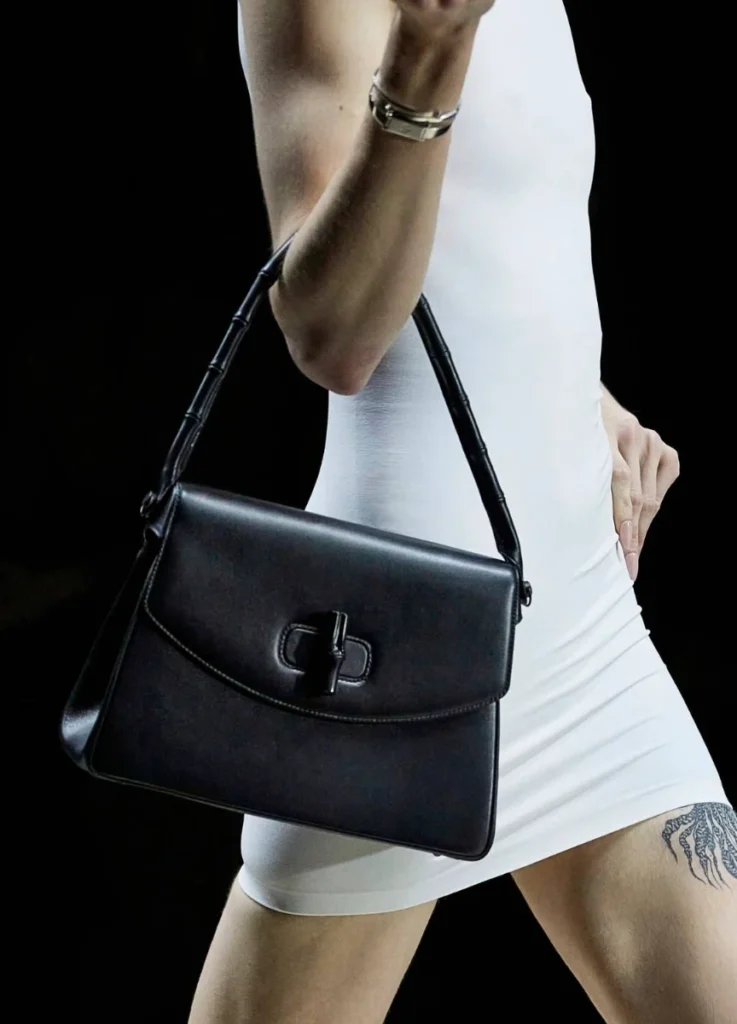
- structured leather accessories
Leather isn’t incidental here. It functions as a strategic anchor.
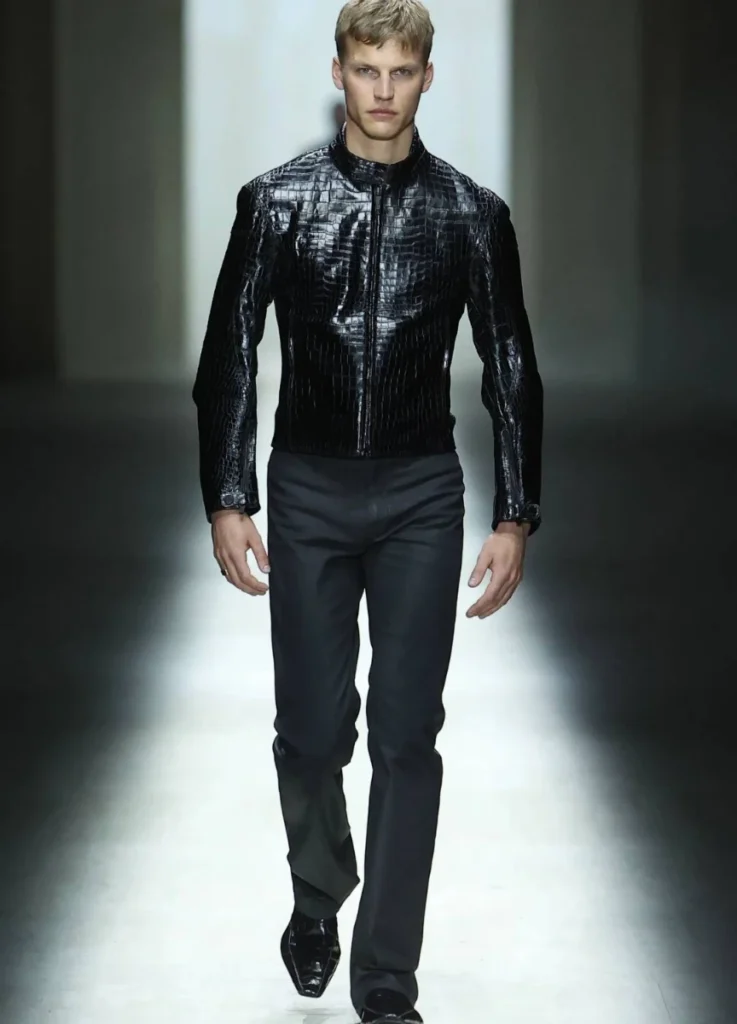
Gucci has historically excelled in leather goods. By re-centering leather in ready-to-wear, Demna reinforces the house’s material legitimacy.
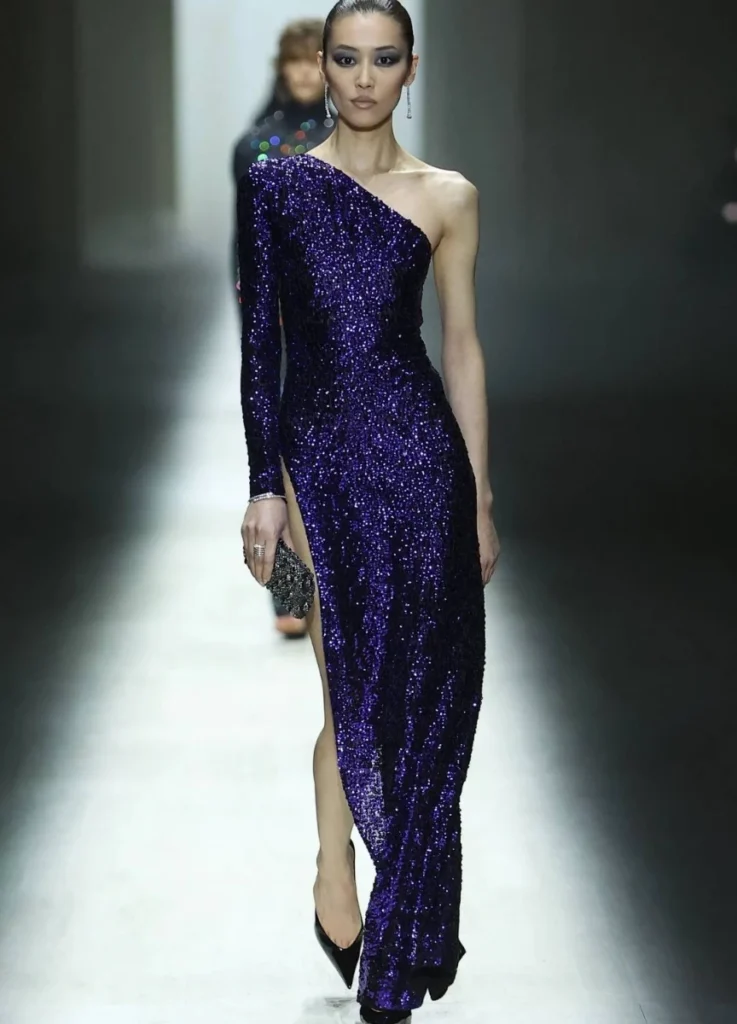
Eveningwear elements — sequins, lamé, satin — extend the narrative into Night Gucci. This signals renewed emphasis on event dressing, red-carpet relevance, and high-margin occasion categories.
Leather authority plus evening impact equals commercial recalibration.
Color Strategy | Controlled Darkness with Strategic Illumination
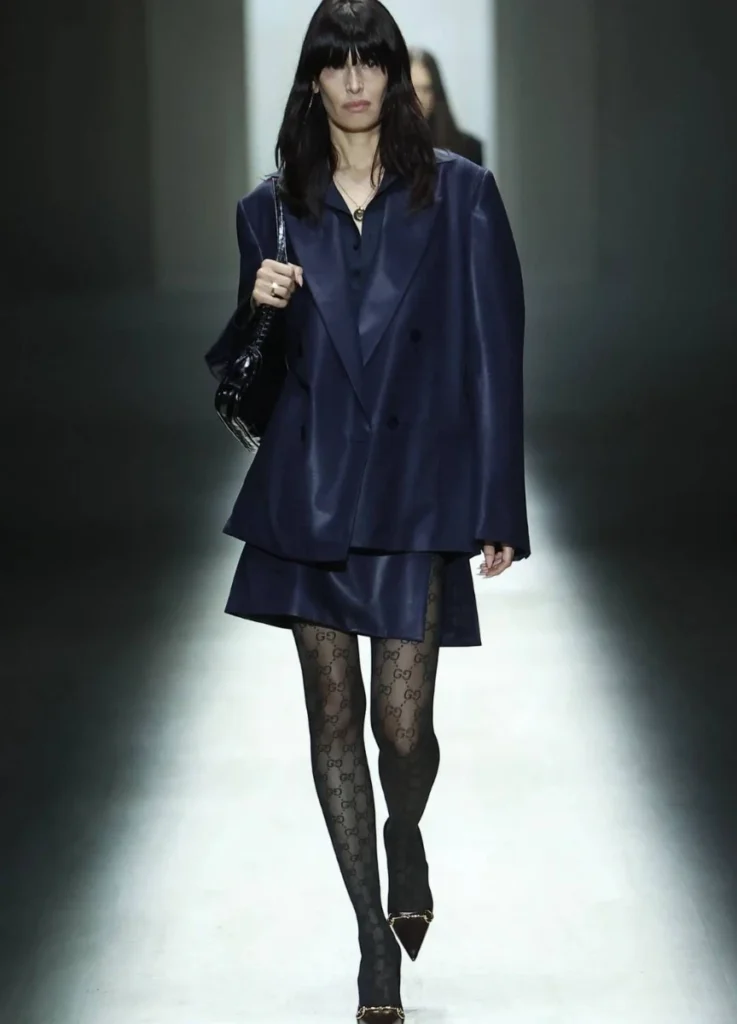
The palette is disciplined.
Black dominates. Charcoal and navy reinforce structure.
Metallic silver, gold sequins, purple accents, and red tailoring appear selectively. These tones function as illumination rather than saturation.
Color doesn’t define the collection. Contrast does.
The darkness stabilizes the brand image.
Cultural Positioning | A Rejection of Quiet Luxury?
Quiet Luxury has shaped mainstream luxury discourse over the past several years. Reduced logos. Understated cuts. Subtle fabrications.
Demna’s Gucci responds indirectly.
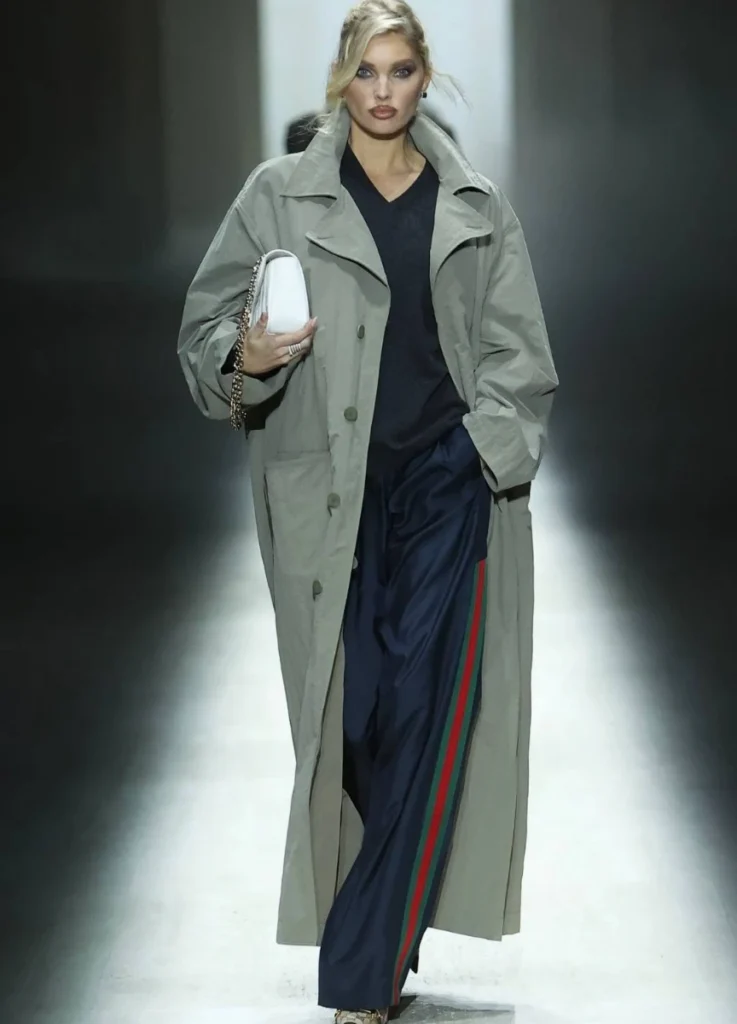
It doesn’t amplify logos excessively. It refuses invisibility.
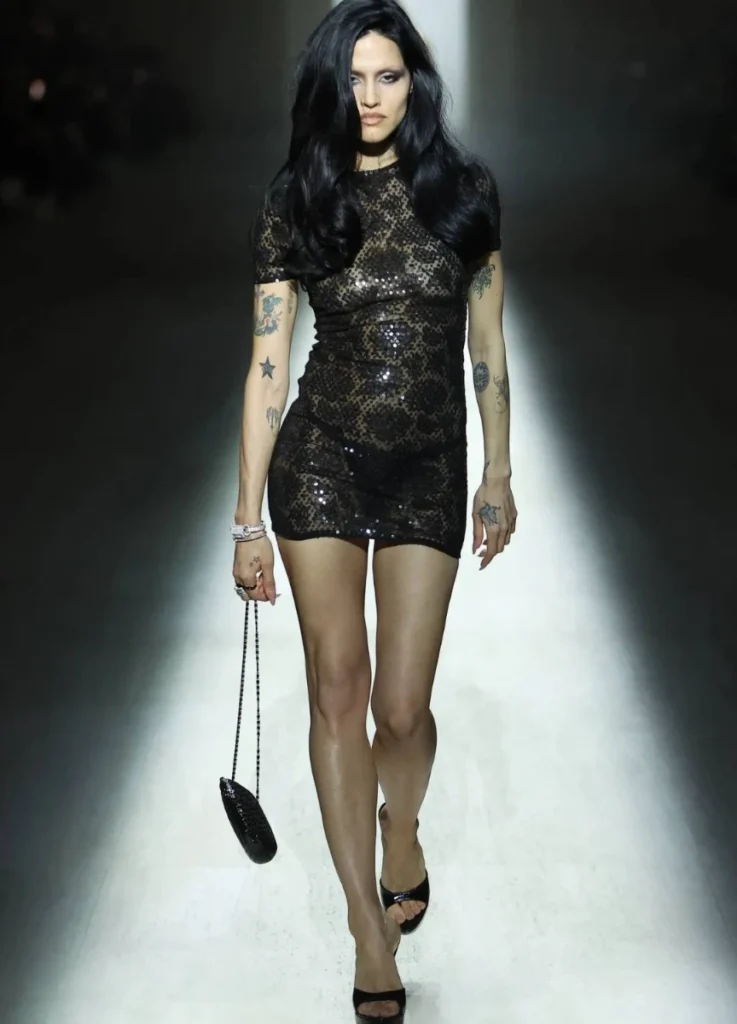
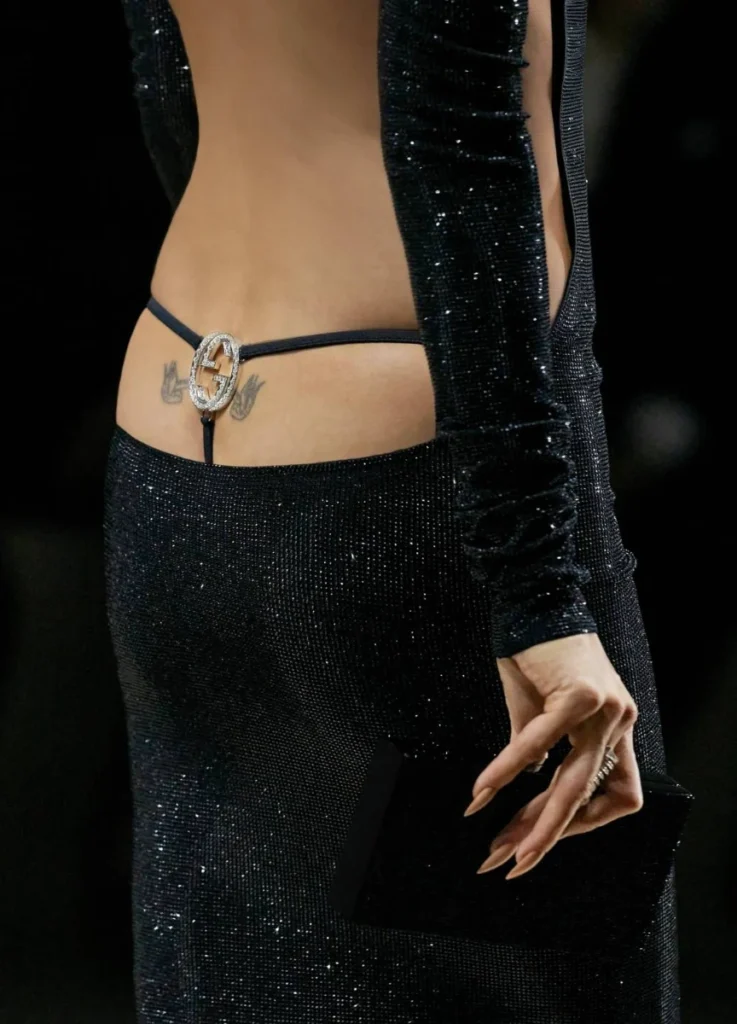
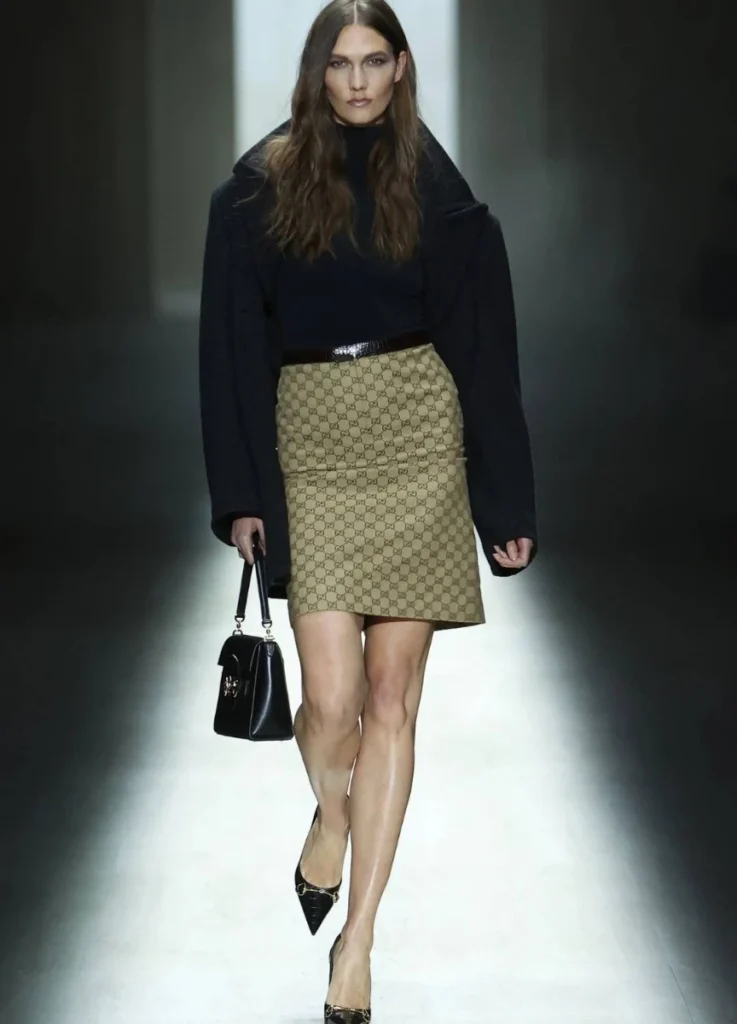
Body-conscious tailoring, shine, and iconography signal a form of post-minimalism. Luxury here is visible.
Luxury doesn’t need to whisper.
This places Gucci alongside Saint Laurent’s Le Smoking revival and a few other Paris and Milan collections this season — houses pushing back against the quiet luxury consensus from different directions. The pendulum is moving.
Kate Moss Finale | Memory Activation as Strategy
The show concluded with Kate Moss in a deep-back black dress adorned with the Double G emblem.
Her presence wasn’t decorative. It was symbolic.
Kate Moss embodies 1990s Gucci. Her appearance activates collective brand memory — what can be described as luxury memory recall strategy.
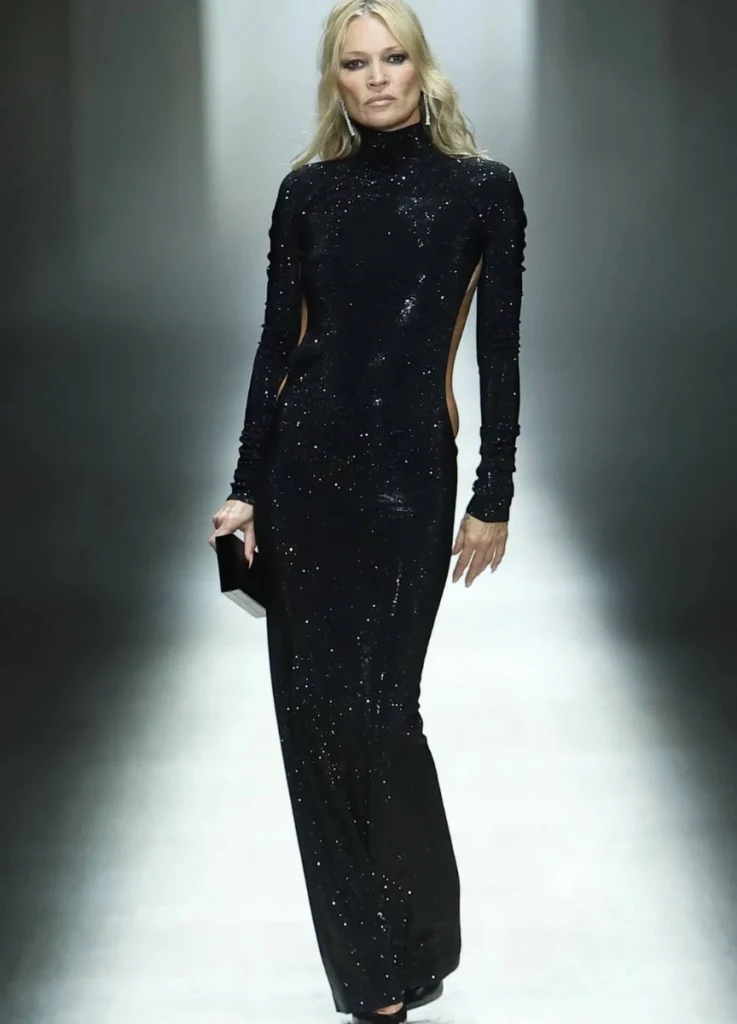
The casting also reframes continuity. Younger models delivered assertive sensuality. Moss delivered restraint.
The message moves beyond nostalgia. Sexuality transcends generational framing.
This is icon recycling with contextual recalibration.
The same week, Madonna sat front row at Dolce & Gabbana — another house performing brand memory through an archive figure. The strategy is the same in shape, different in execution. D&G summons Madonna to confirm continuity. Gucci sends Moss down the runway to announce return. One holds. The other reactivates.
Comparison to Previous Seasons | From Experimentation to Position Clarity
Under Demna, the messaging turns declarative.
- decoration is reduced
- layering is minimized
- silhouette clarity replaces storytelling density
This isn’t radical innovation. It’s position sharpening.
Brand repositioning begins with clarity, not spectacle.
Consumer Application | Who Can Wear This?
The collection favors defined structure.
Most adaptable for:
- narrow shoulder lines
- clear waist definition
- slim or athletic builds
The tension of body-conscious tailoring may feel restrictive for consumers preferring volume-based silhouettes.
This limitation appears intentional. The season prioritizes image sharpness over universal accessibility.
Critical Reception
Industry commentary remains divided.
Some critics describe the collection as predictable 90s revival. Others interpret it as strategic correction — Gucci returning to its commercially potent codes.
What isn’t debated is clarity. The direction is visible.
In luxury branding, clarity often precedes recovery.
Final Assessment | What Did Demna Choose?
If Prada posed questions this season, Gucci delivered a declaration.
Gucci Fall/Winter 2026 isn’t experimental. It’s centralizing.
- sexuality becomes structural
- leather becomes authority
- icons become strategic devices
The collection doesn’t attempt revolution. It seeks recalibration.
Demna restores visual sharpness to Gucci’s global image. The 1990s aren’t being replayed. They’re being deployed — selected as the brand’s clearest historical moment, reactivated as commercial signal.
Whether the strategy succeeds will depend on the next four to six seasons. A single declaration doesn’t rebuild a brand. Sustained execution does.
What this season confirms is the position. The September lookbook proposed it. The February runway built it out.
In luxury, sharpness is currency. Demna spent it visibly.
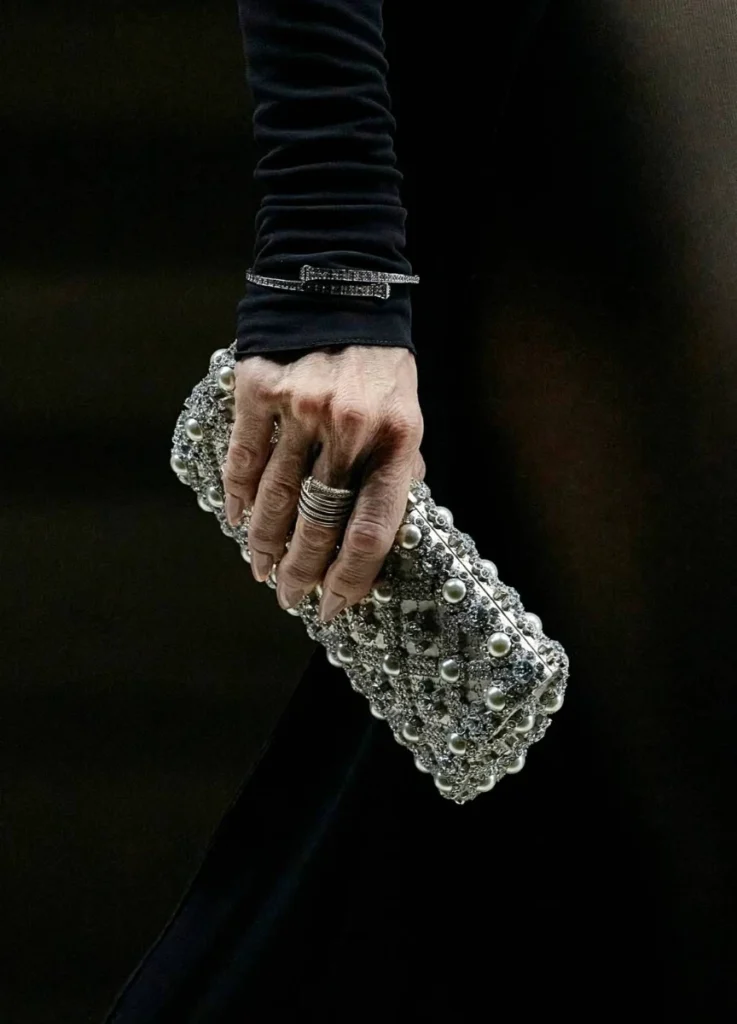
All images referenced in this post are drawn from Vogue Runway.
[ Related Editorials ]